

GIARDINO DI NINFA
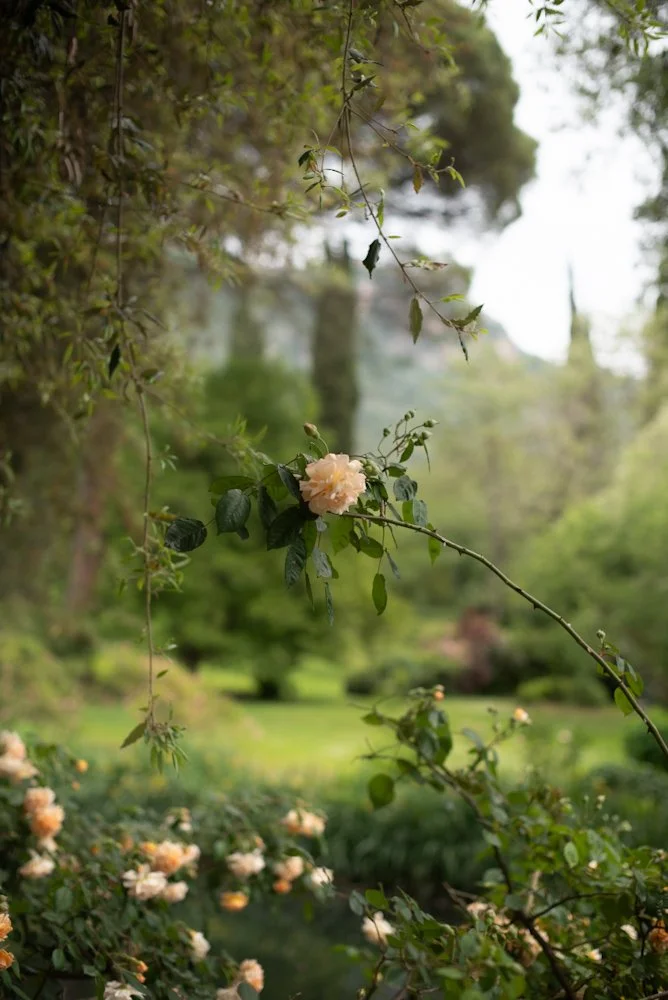
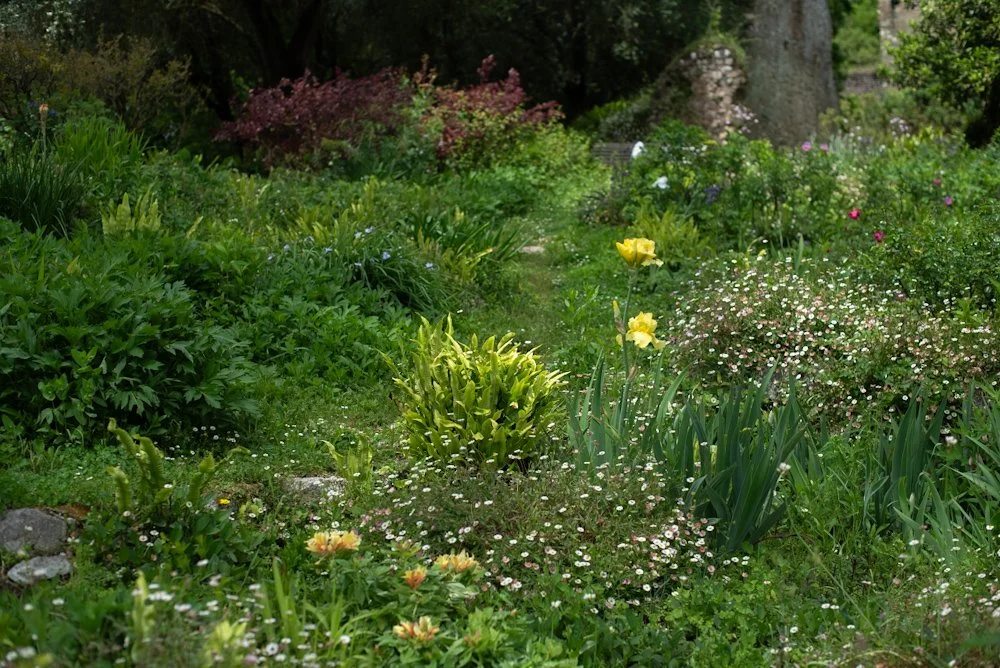
Forty-five miles south-east of Rome in the province of Lazio, there is a garden called Ninfa. Iconic among gardeners and horticulturalists the world over, it is widely known to be one of the most romantic, atmospheric places in the world.
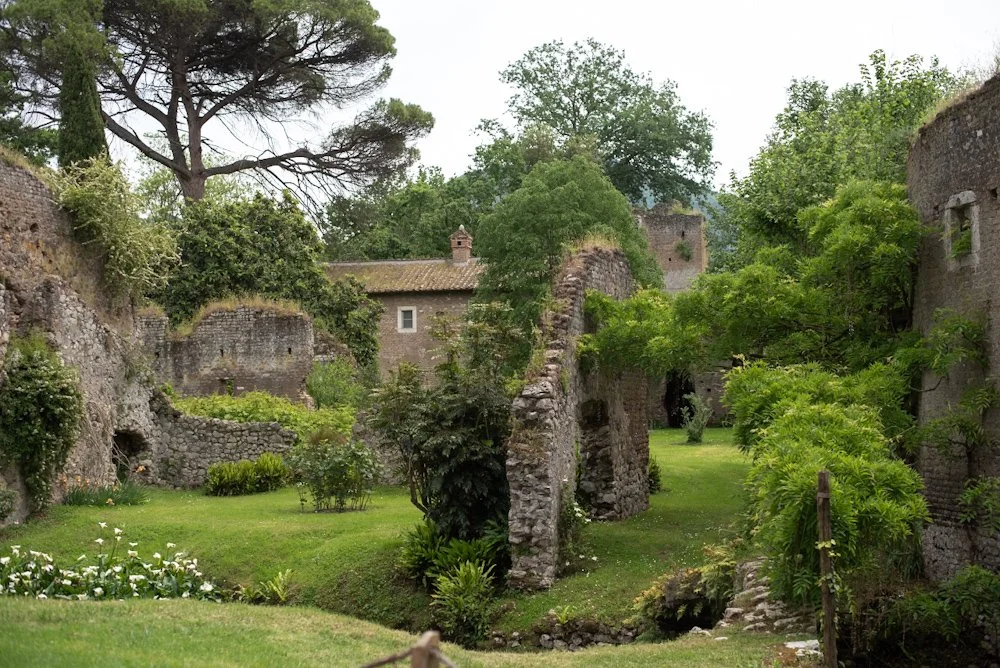
Forty-five miles south-east of Rome in the province of Lazio, there is a garden called Ninfa. Iconic among gardeners and horticulturalists the world over, it is widely known to be one of the most romantic, atmospheric places in the world.
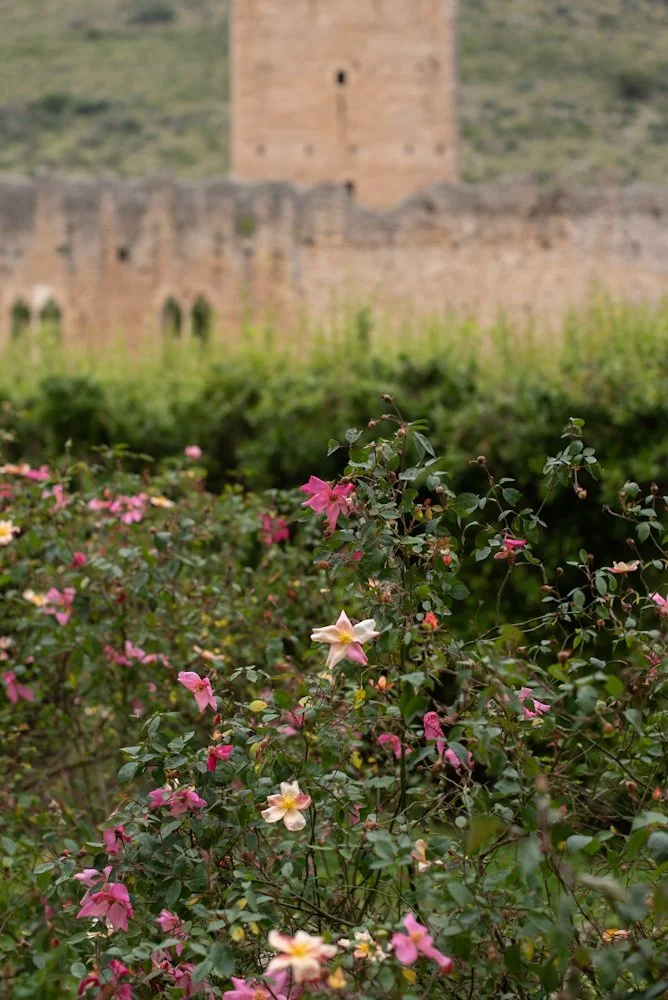
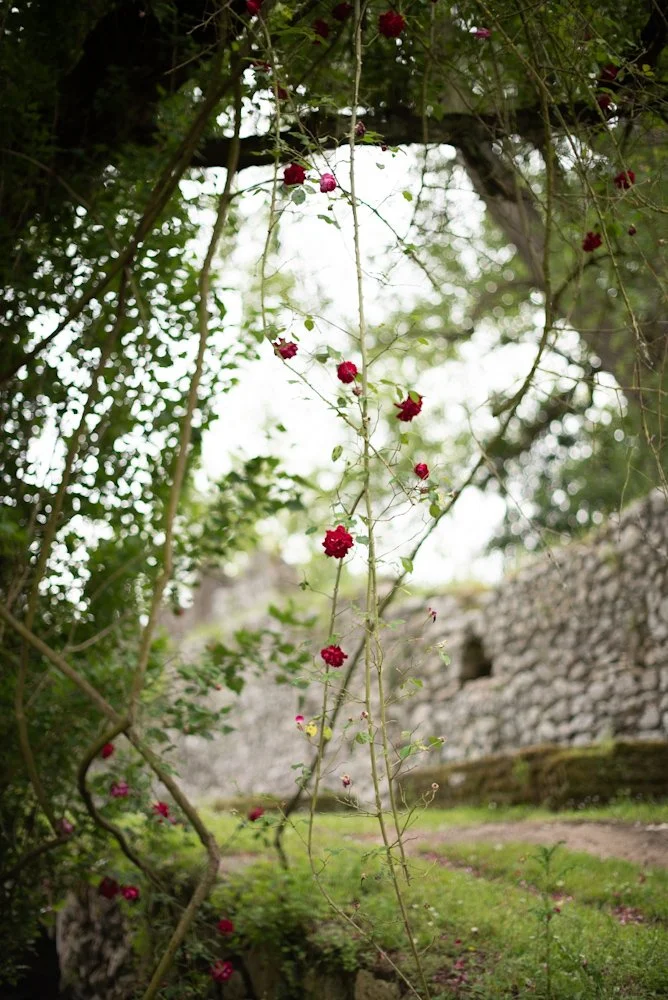
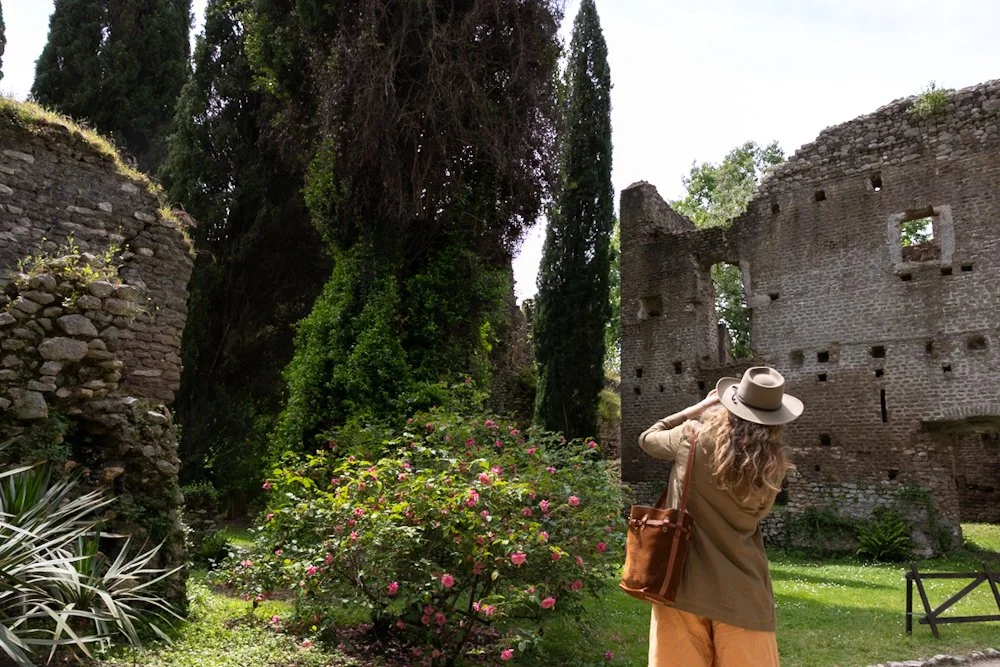
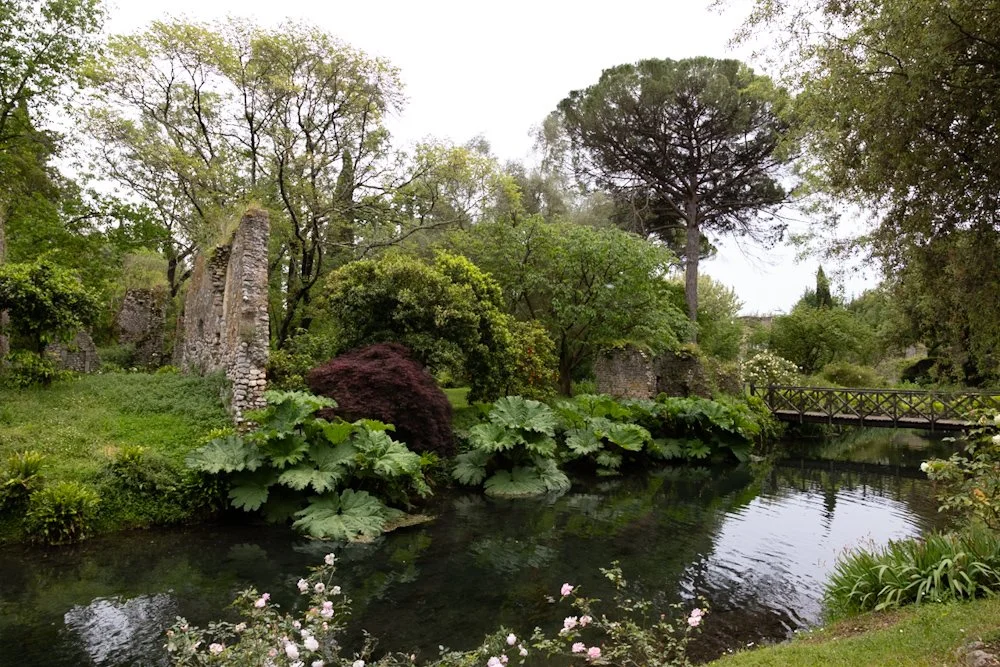
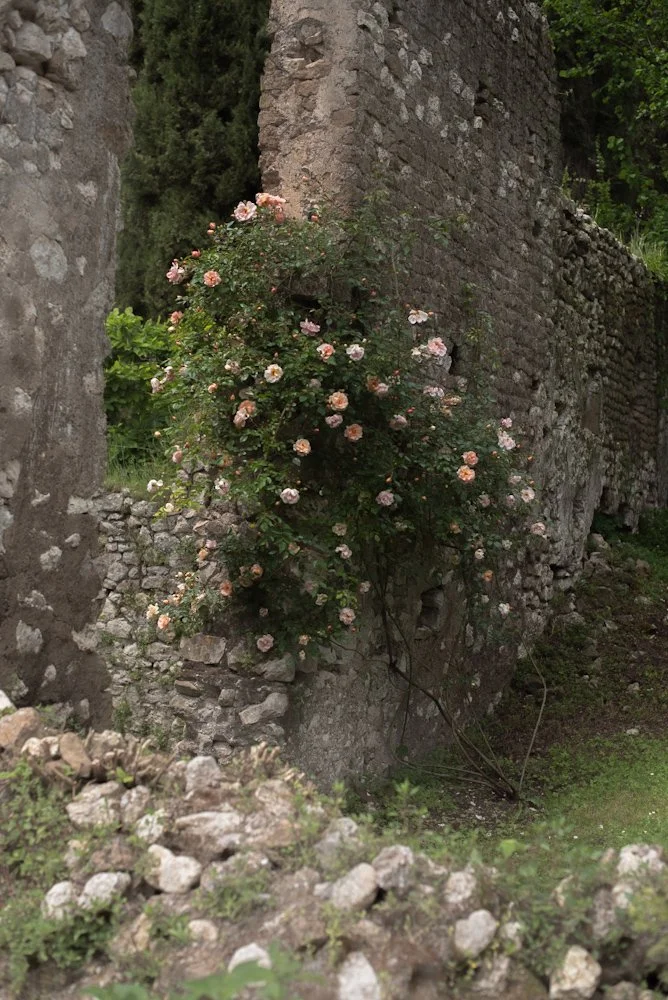
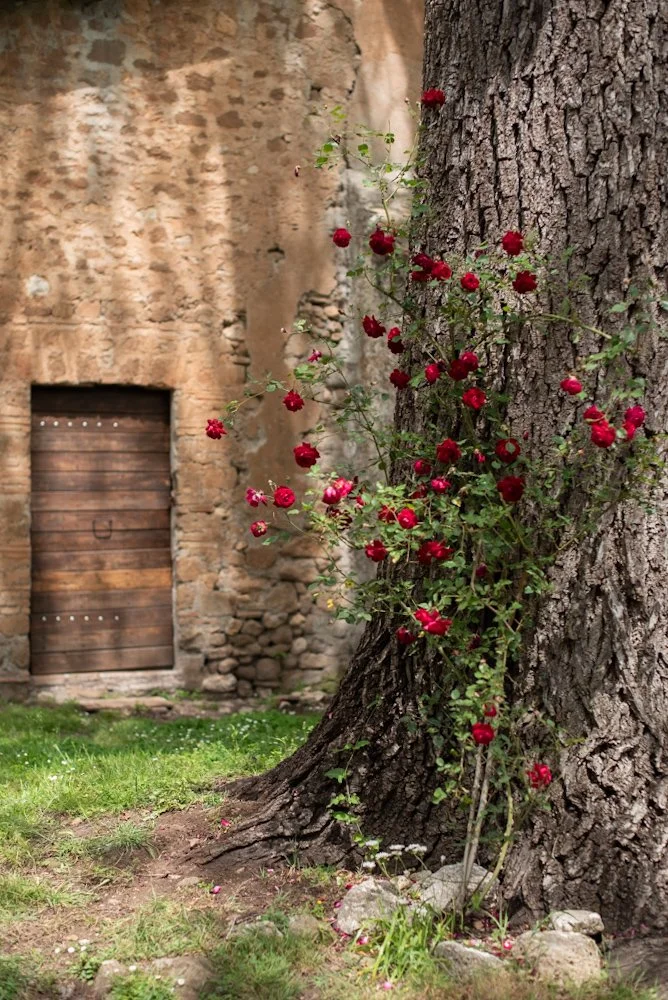
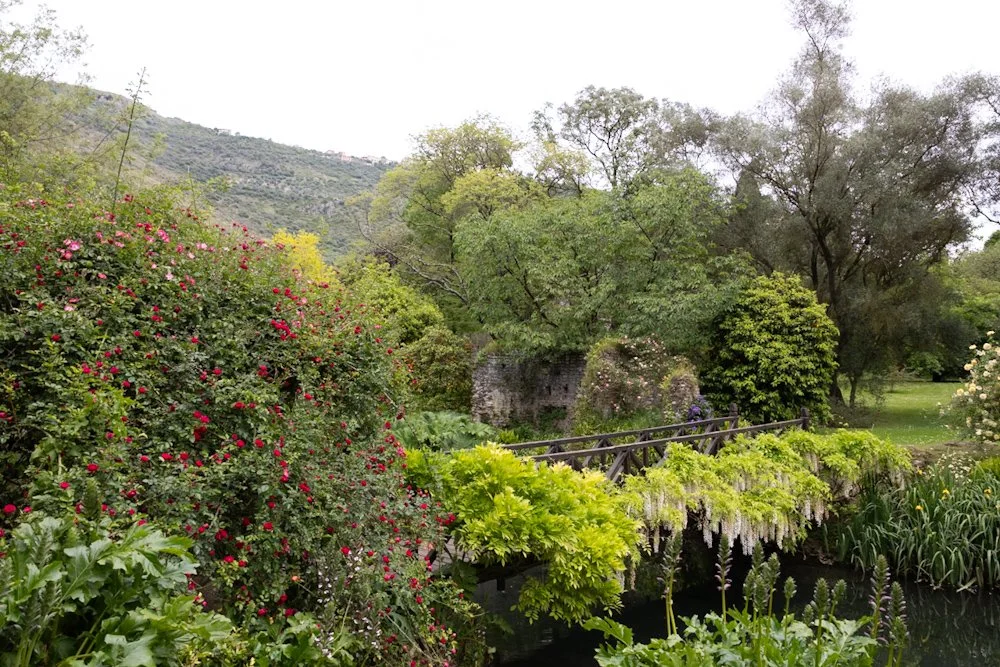
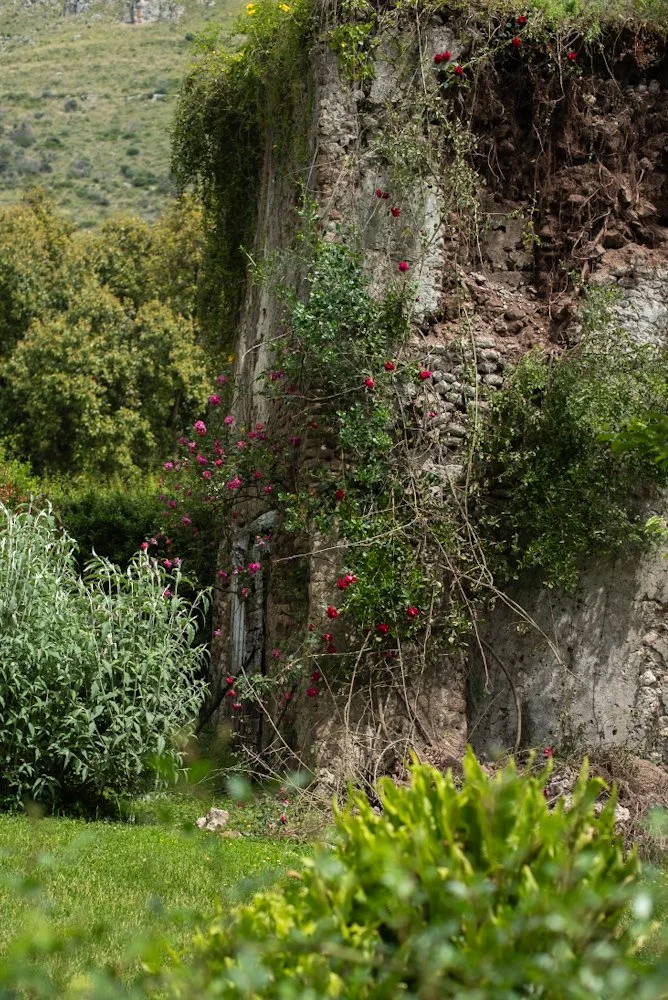
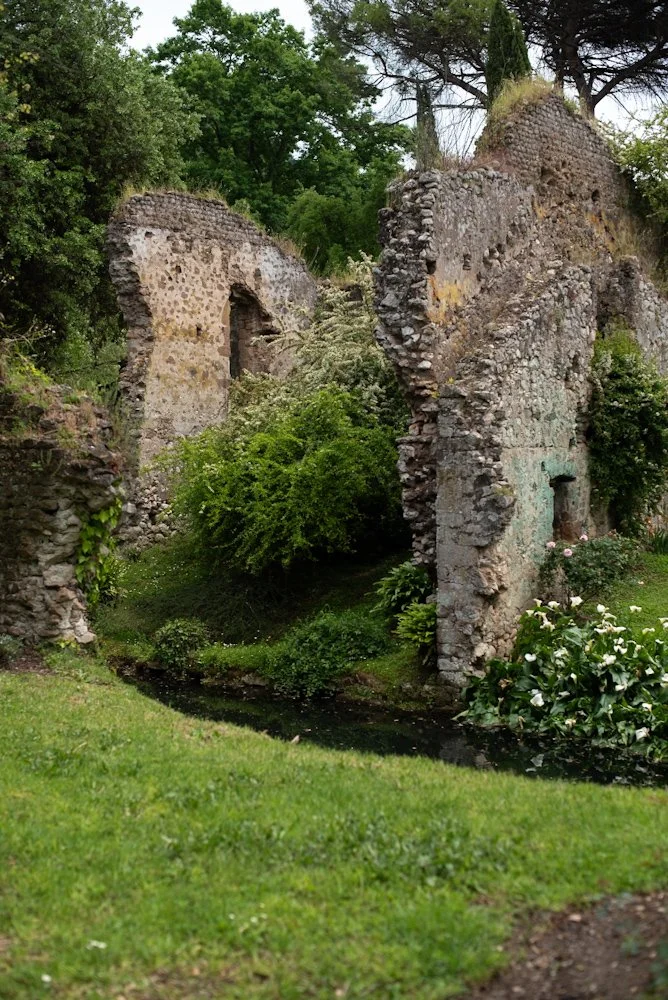
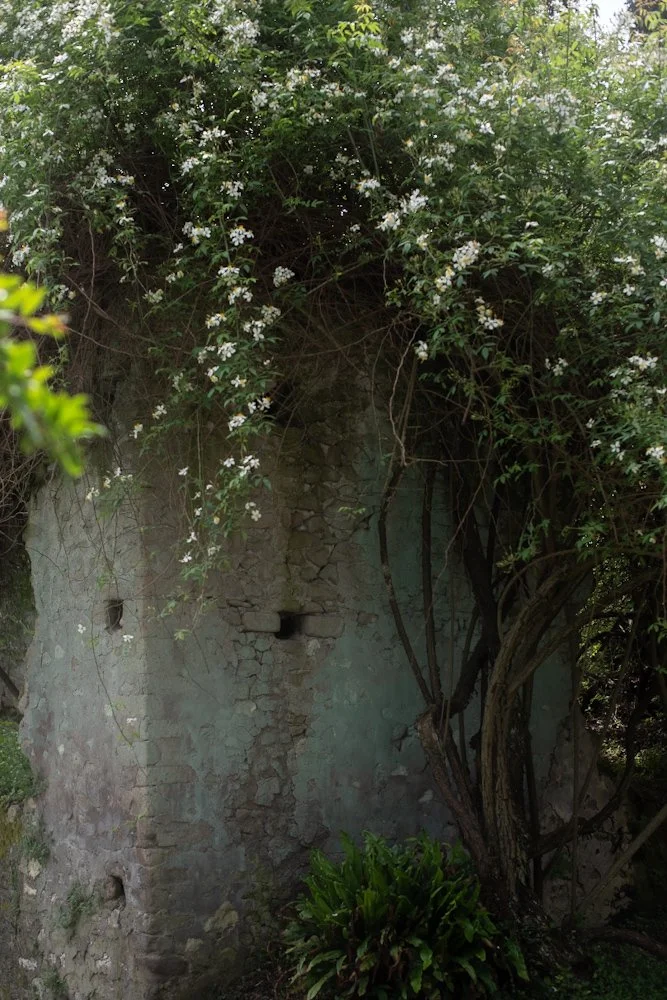
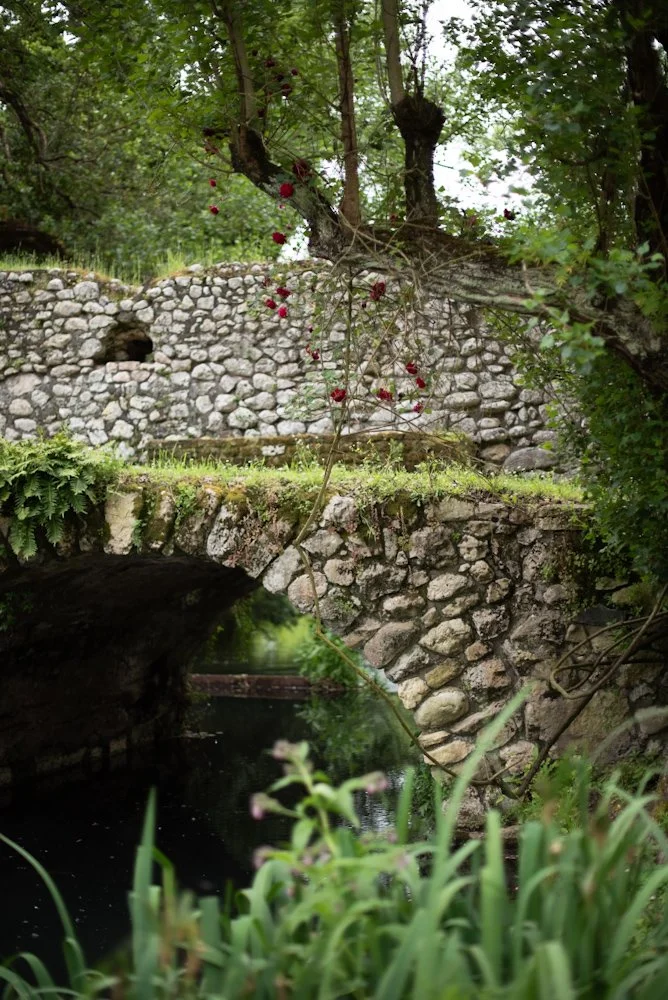
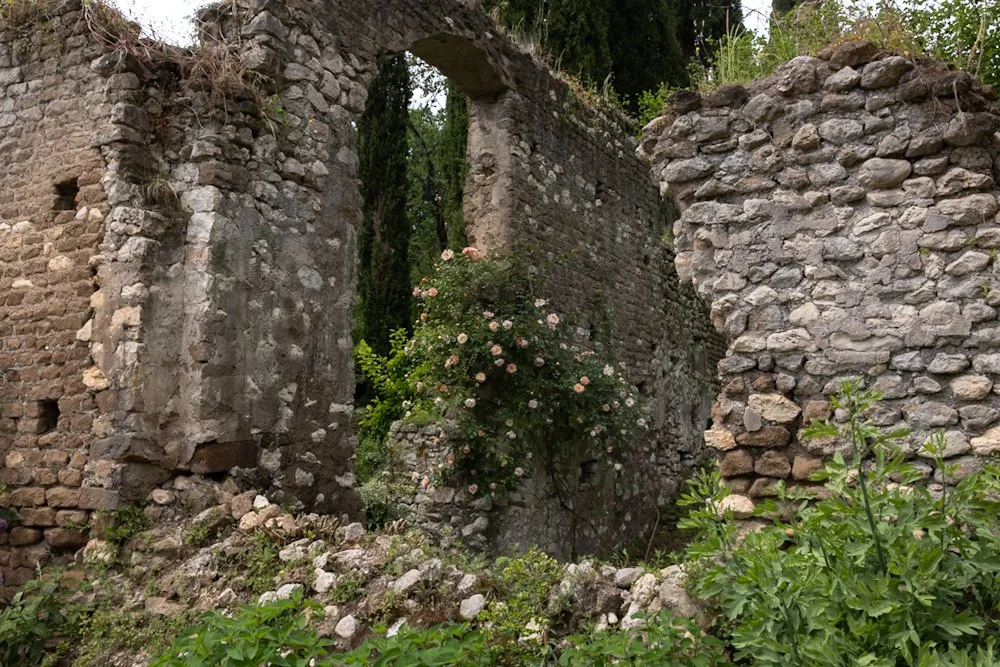
I first heard of Ninfa over a decade ago when I visited the gardens of Aberglasney in Carmarthenshire; it was the inspiration behind the ‘Ninfarium’ created in the ruins of the original mansion. I looked it up. Ever since it has been flitting in and out of my consciousness, a place among many, in a list among many. So many places to try to get to in this life. When I heard the name it would conjure certain images. A medieval bridge festooned with wisteria trailing over a clear river thick with aquatic plant-life. Crumbling stone ruins, pink and dusty, interwoven with climbing roses. Arcadian views. Faded frescoes in the shadows of the mountains. Water - both falling and slow moving - he mirrored surface of it creating a heightened sense of the unreal as if the rippling reflection could be passed through, might lead to another realm. Jess and I have often said to eachother over the years – someday we’ll get to Ninfa. Well, we finally did!
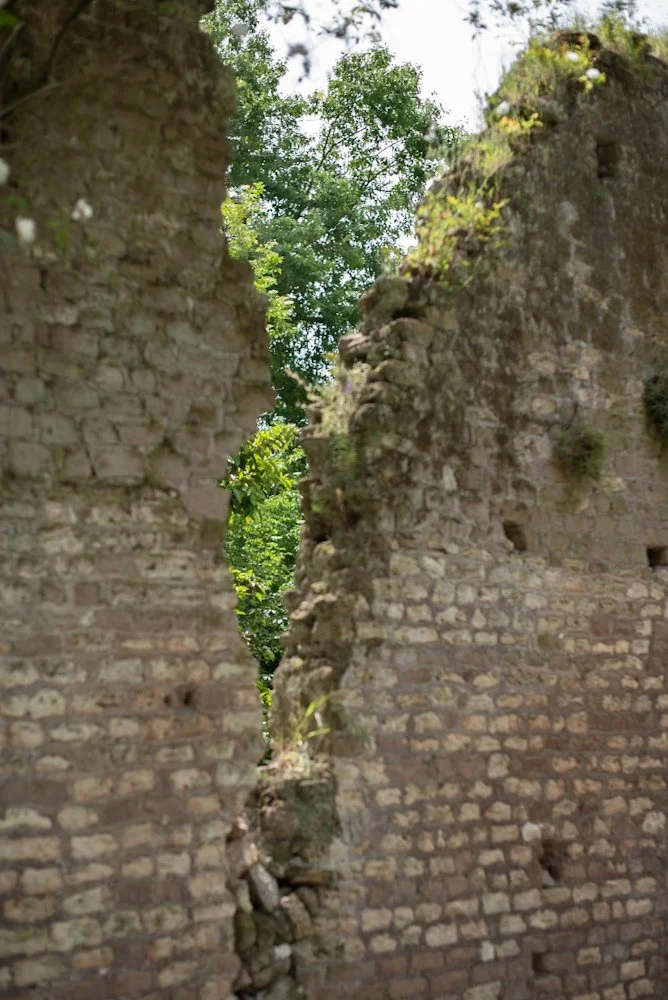
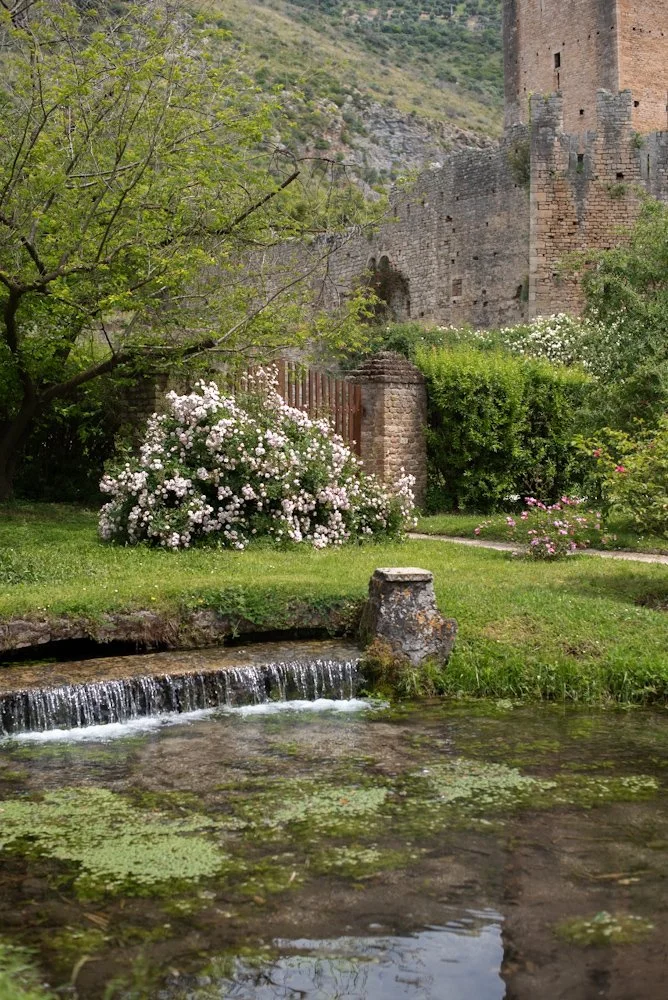
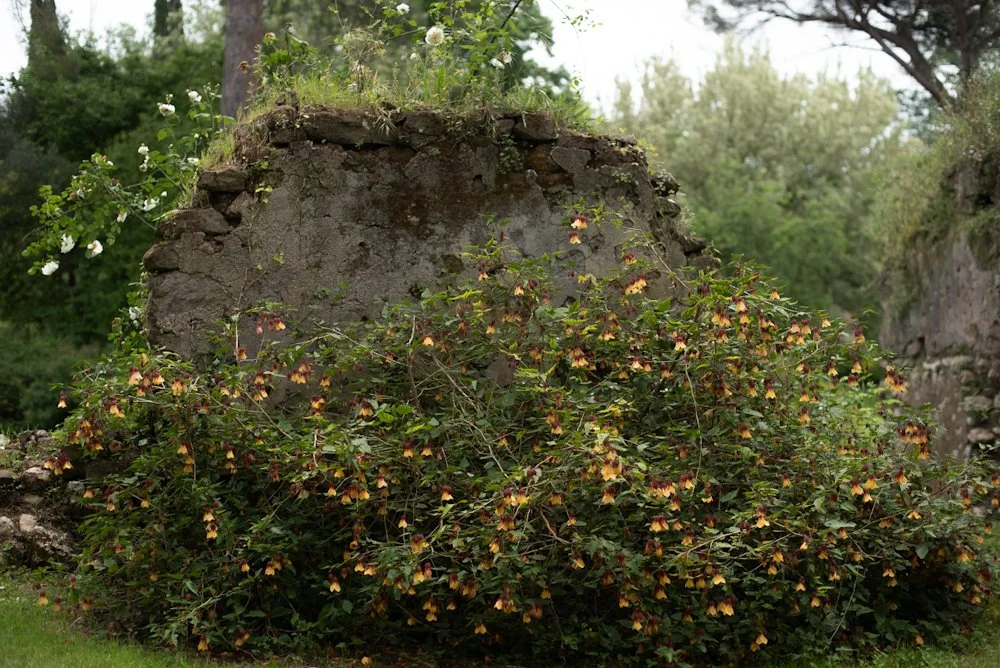
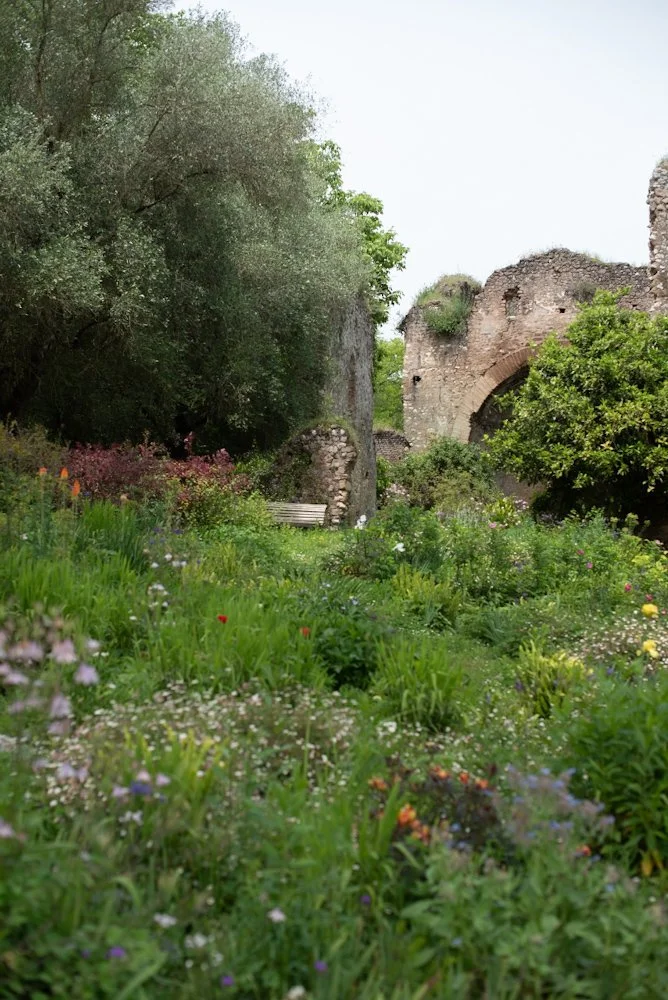
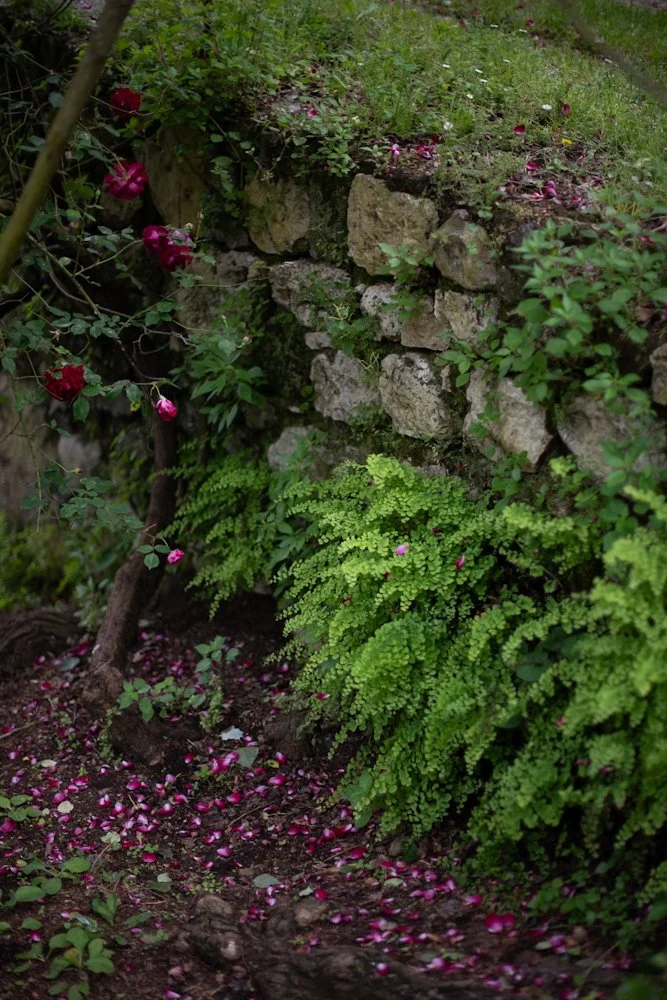
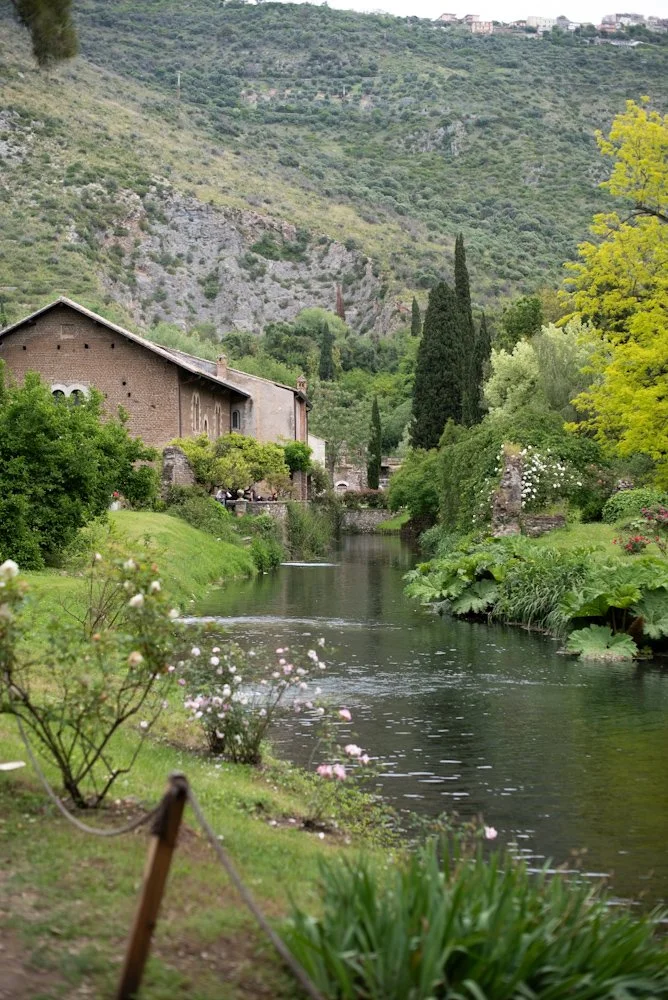
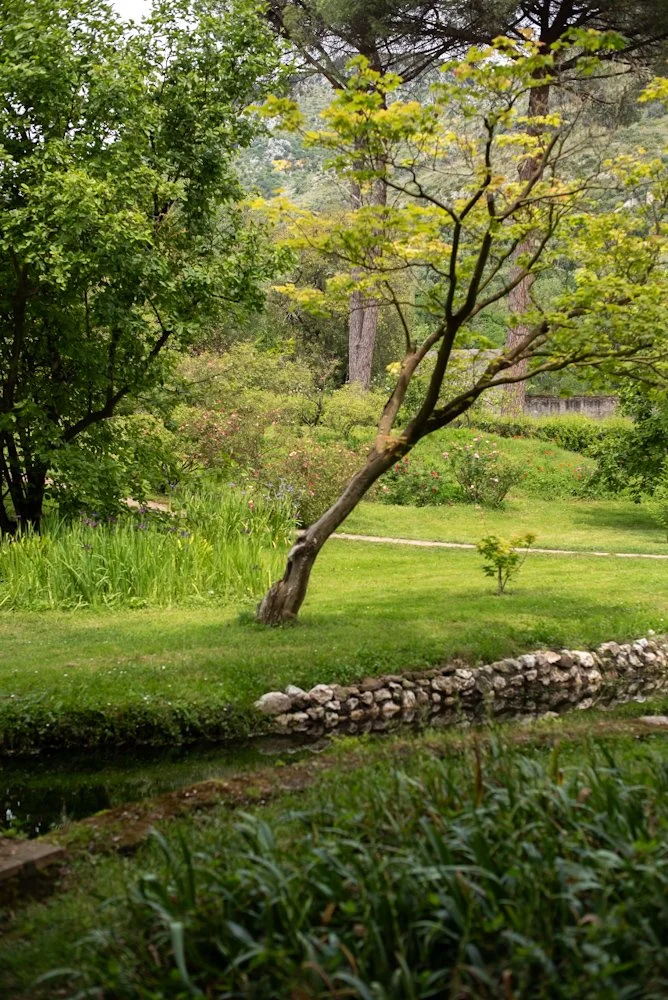
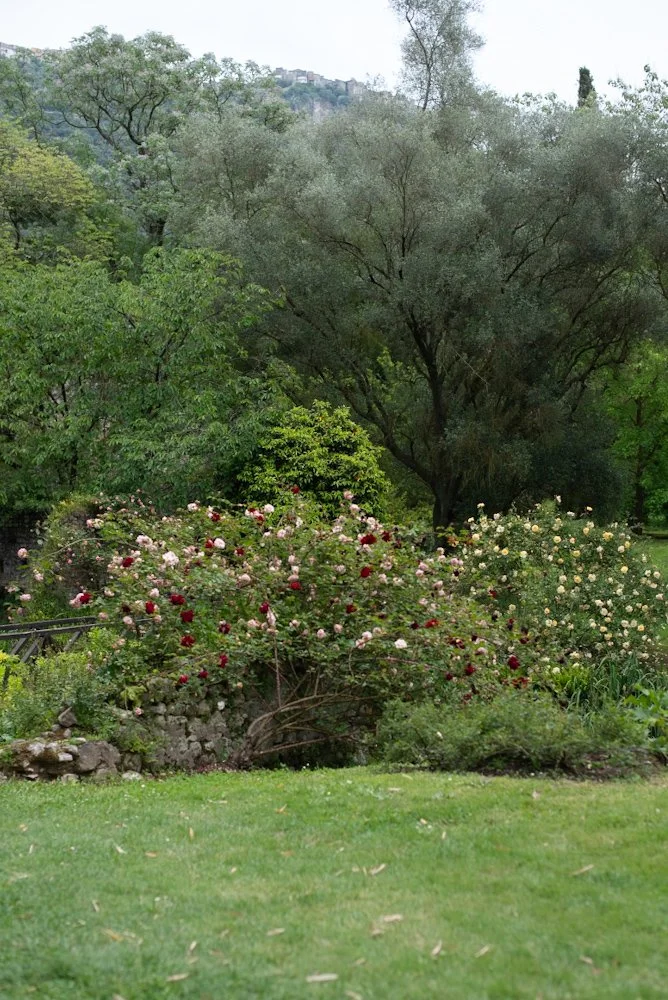
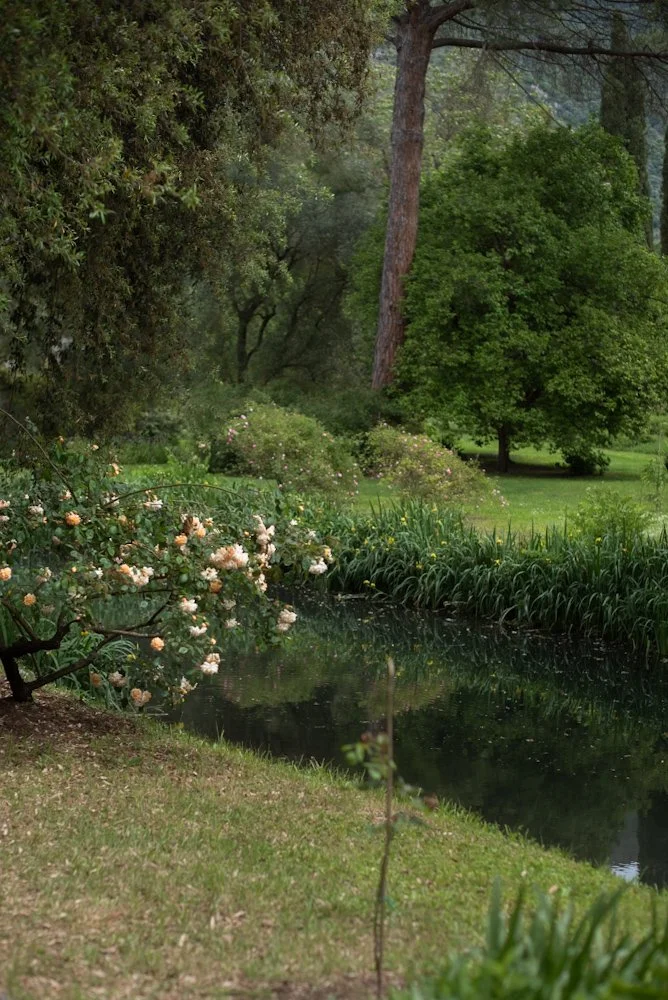
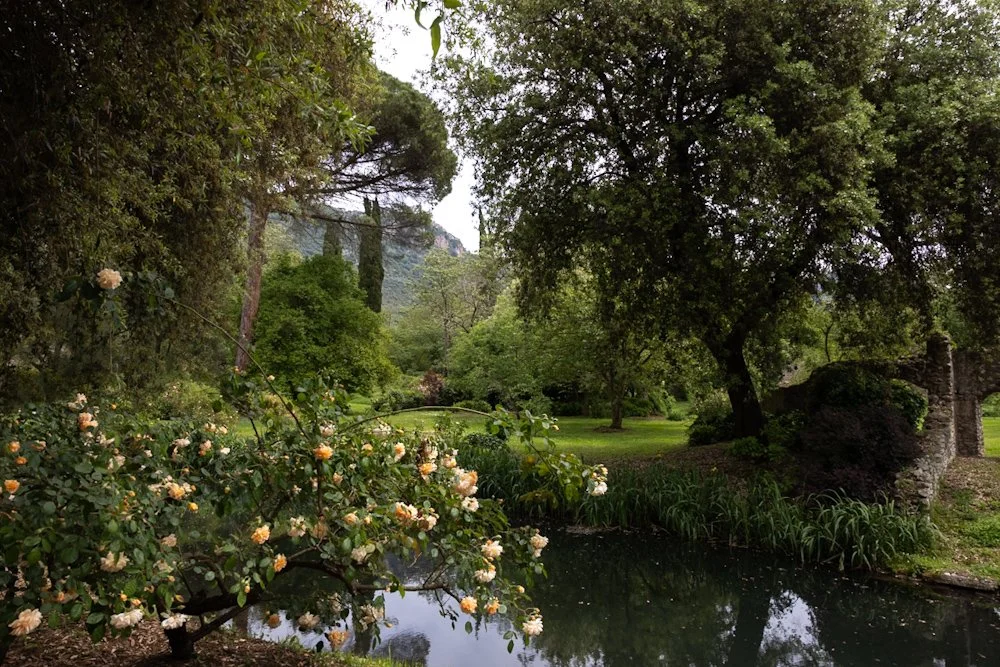
What makes this garden so unique is the fascinating history of the site, the passion and skill of successive generations of the same family, and its geographical position, where it sits beside a small lake fed by natural springs at the foot of the Lepini Mountains. The water here is clean, pure and abundant, making it possible for this small pocket of land to become a lush oasis, a microclimate of thriving temperate plants that wouldn’t otherwise withstand the dry heat of an Italian summer. The mountain range protects the garden from cold northerly winds -look up and you can see the village of Norma peering down over the cliff above - but to the south it is open to the warmth of the Mediterranean - the sea being just fifteen miles west. This combination of warmth and moisture and rich, well-drained soil makes for an incredibly verdant, biologically diverse garden.
NINFA: A POTTED HISTORY
The twenty-acre landscaped garden as it is seen today was originally laid out in the 1920s among the ruins of the medieval town but the site’s known history dates back to the eighth century. It’s a deliciously intriguing tale of twists and turns, dynastic feuds and violence, wealth and power. Should you be interested, I have included a few books below, so you can immerse yourself in the full chronology, if that’s your thing. Here I shall give you the drastically précised version of events, focussing on the juicy / planty bits.
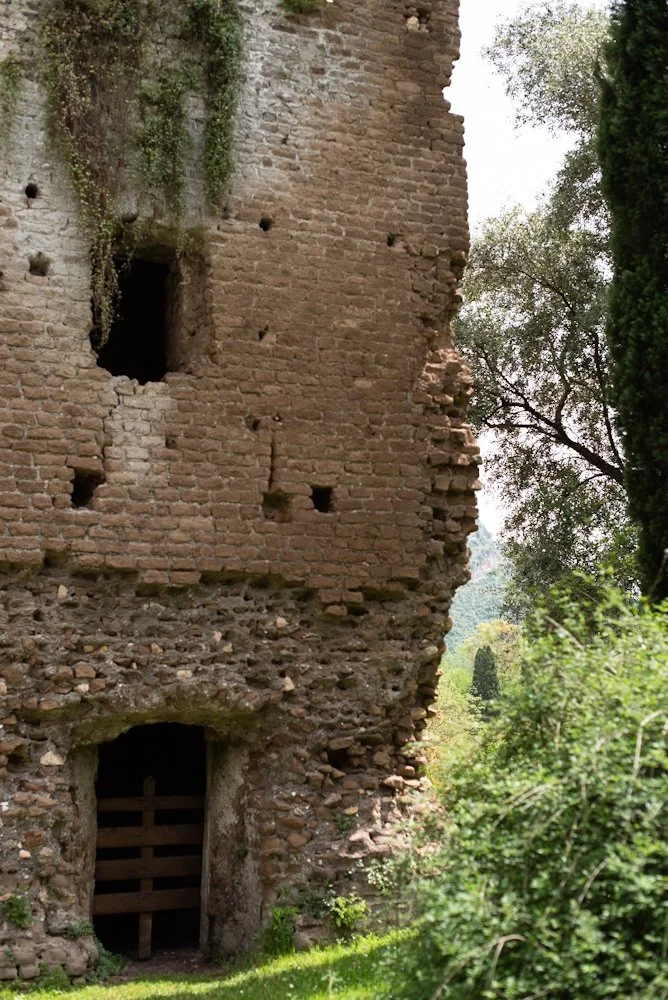
The name Ninfa derives from the island temple on the neighbouring lake, dedicated to nymphs, water deities believed by the Romans to dwell in cool springs, rivers and forests. The first documentation of the site refers to Ninfa as a resting place for travellers where they would water their horses and pay a toll. It occupied a strategic position; when the Pontine marshes flooded the Appian Way, travellers would use the foothill route, or Via Pedemontana, connecting Rome and Naples. Subsequently Ninfa formed part of a vast and richly agricultural estate owned by the church; the fortified town was built in the eleventh century and by the end of the twelfth it was a thriving community governed by various noble families. In 1297 Ninfa was given to Pietro Caetani by his uncle, Benedetto Caetani, Pope Bonifacio VIII, who, through farming, fishing and successful administration including the establishment of various mills and tanneries, further enriched the fortunes of the town and its inhabitants. At this time the lake was dammed and the abundant flow of water through Ninfa allowed the townsfolk to establish many small gardens. Throughout the thirteenth and fourteenth centuries, under the Roman Caetani family, Ninfa continued to expand and flourish; the town boasted over two thousand inhabitants, a castle and town hall and seven churches.
In 1381 during the civil war Ninfa was sacked by mercenary troops from Brittany and the Basque country supporting the anti-Pope in the Great Schism. The town was burned and its people scattered and for many decades it was considered a place of fear and desolation. Later generations who attempted to resettle were plagued by rampant outbreaks of malaria and for the next six hundred years Ninfa remained a fiefdom of the Caetani (who had removed to Rome) but in ruin, overgrown and silent.
In the 16th century, Cardinal Nicolò III Caetani, created a ‘garden of delights’ at Ninfa that included the ‘hortus conclusus’ (a walled garden) beside the medieval castle. Some of the ornamental fountains can still be seen today. In the 1600’s Duke Francesco Caetani IV (viceroy of the two Sicilies, governor of Milan and keen gardener) created a formal Italianate garden of geometric hedges, densely planted tulip bulbs and rare citrus varieties, including the Citrus ‘Cajetanus’, within the walls of the old town.
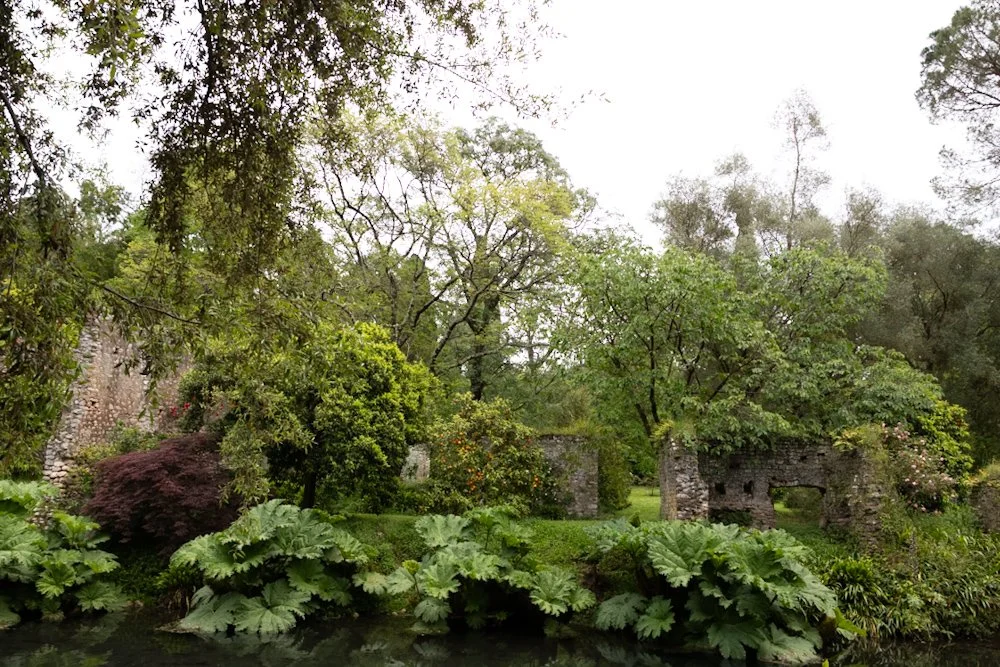

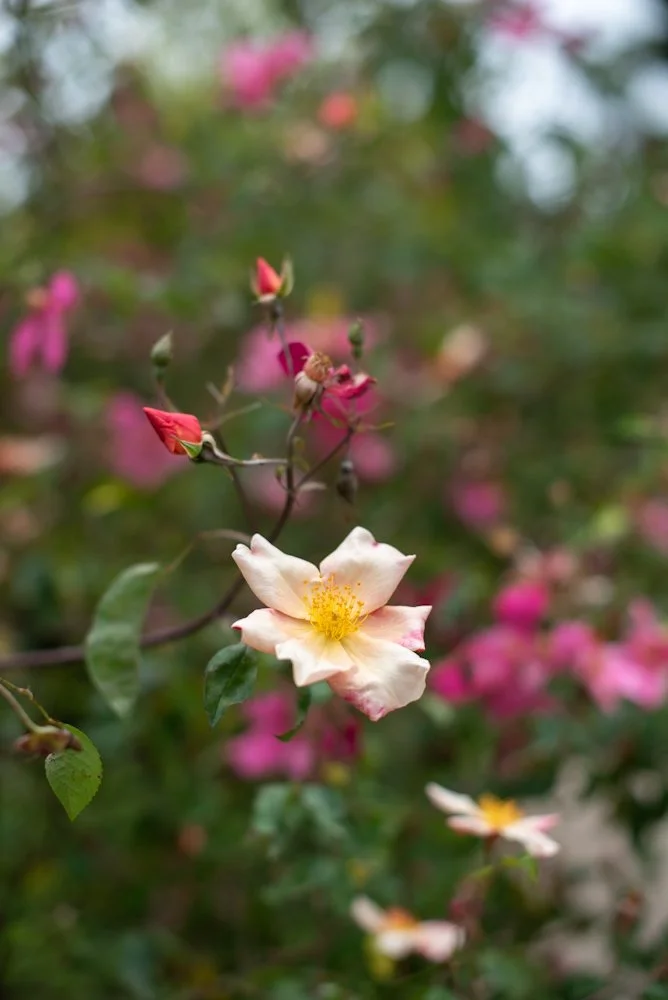
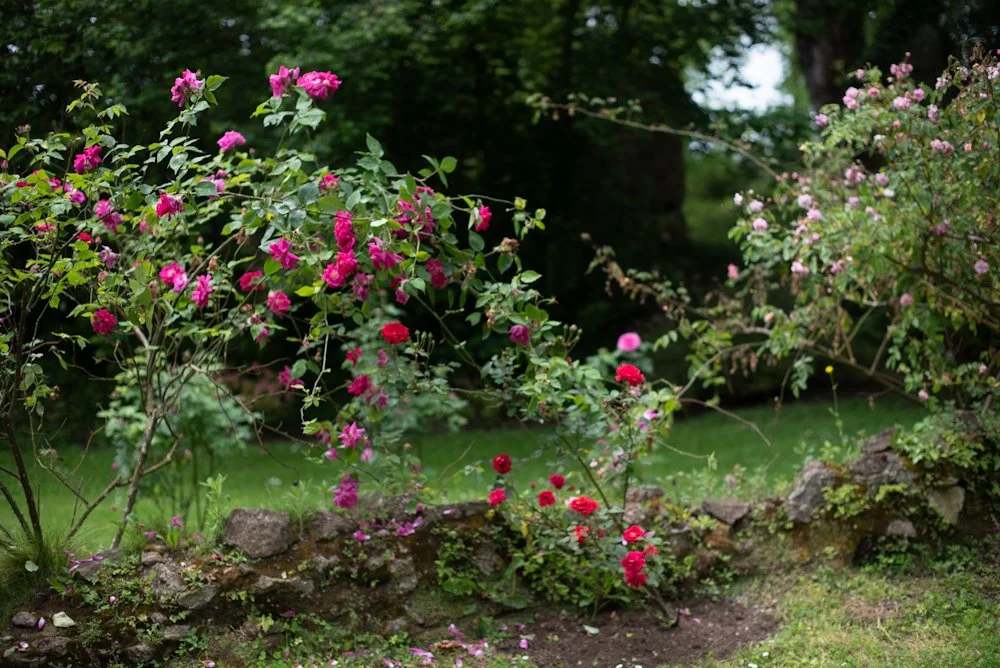
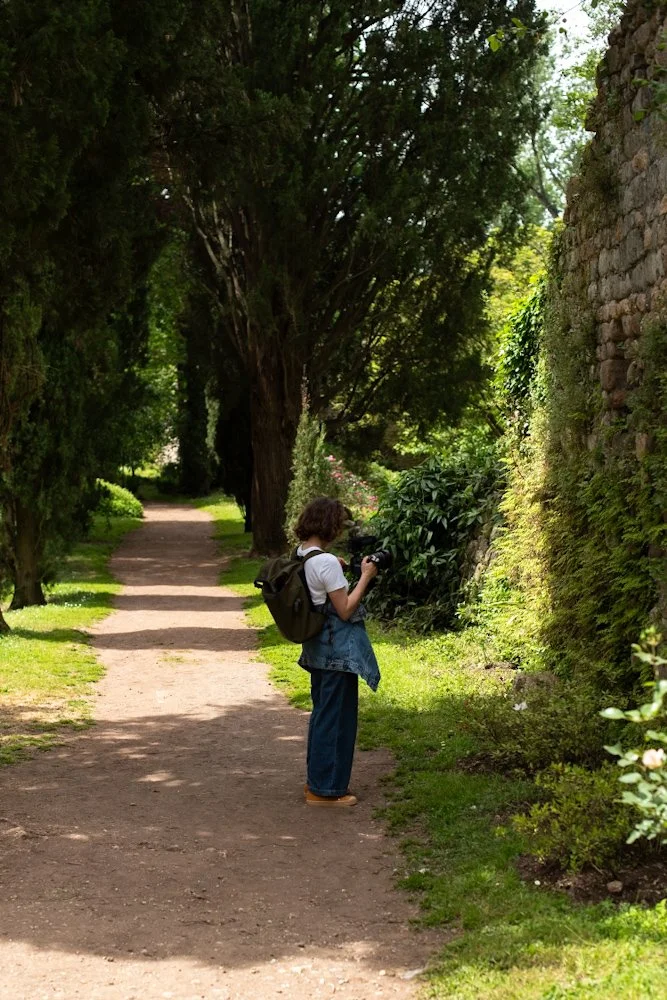
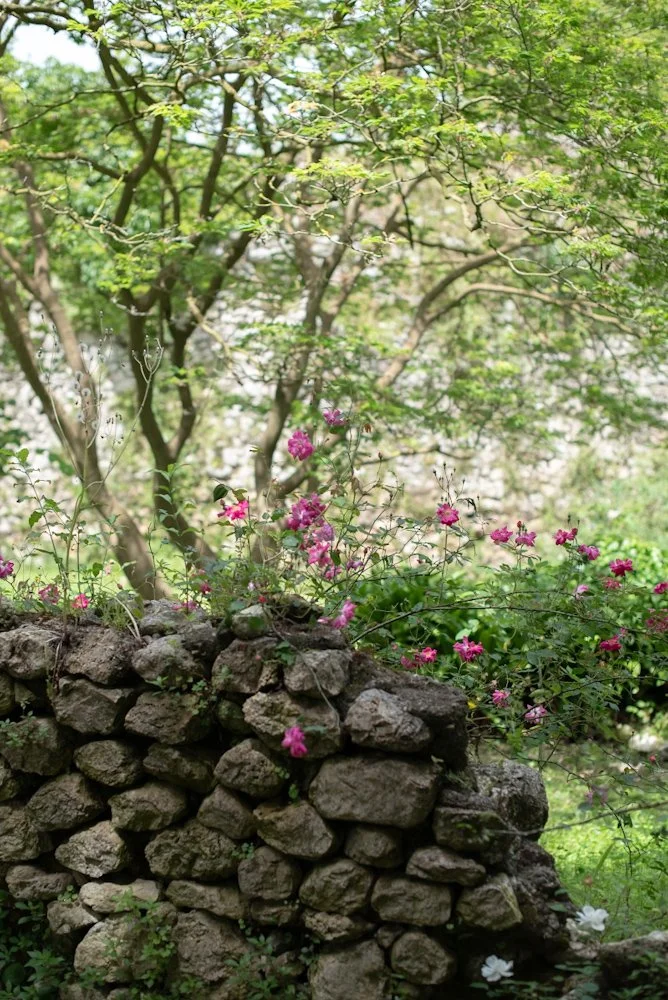
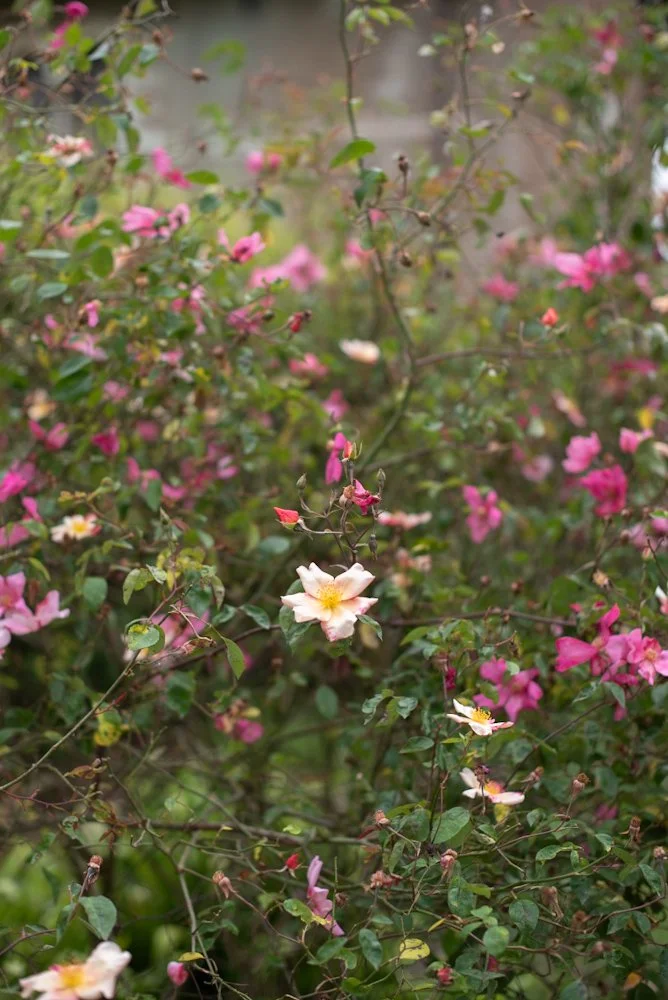
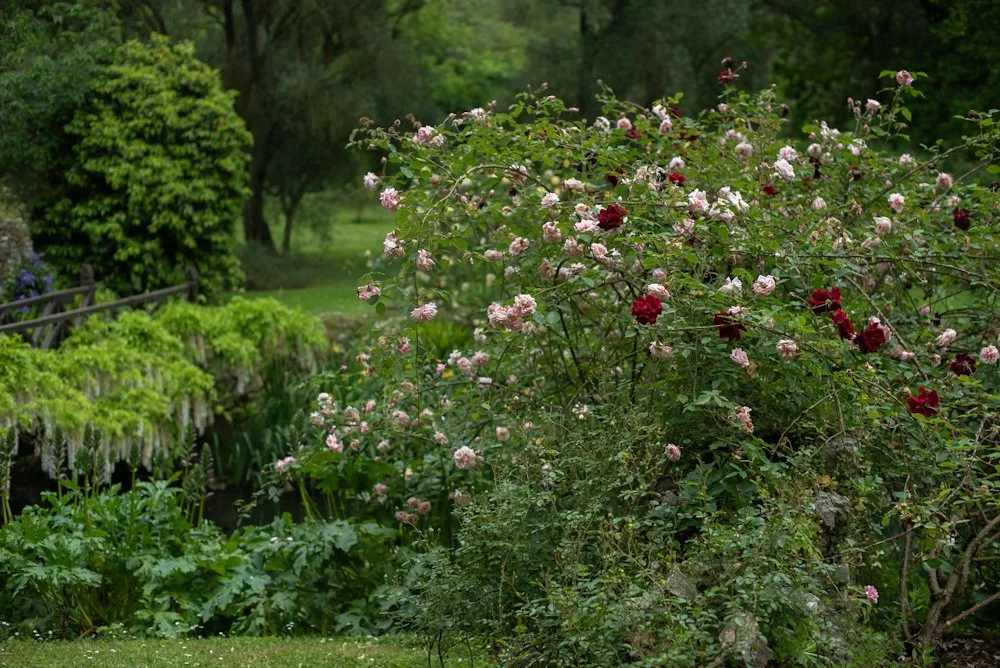
Ninfa’s current incarnation as a botanical garden is down to the work of the three latest generations of exceptionally passionate, and talented, Caetani owners. In 1921 Prince Gelasio Caetani inherited Ninfa and set about excavating and restoring the ruined buildings from its entombment in the thick vegetation. His mother, Ada Bootle-Wilbraham, the eccentric English-born Duchess of Sermoneta, was a capable garden designer, horticulturalist and horsewoman - the original conception of an informal, intensely romantic garden among the ruins – and part of them - was the result of this extraordinary mother-son collaboration. Much of the original Anglo-Saxon, Victorian layout of the garden was conjured from their imaginations including many of the tall trees, the holm oaks, copper beech and cypresses avenues that mark out the ancient streets, the bamboo grove and the climbing roses that Ada planted during her weekend visits.
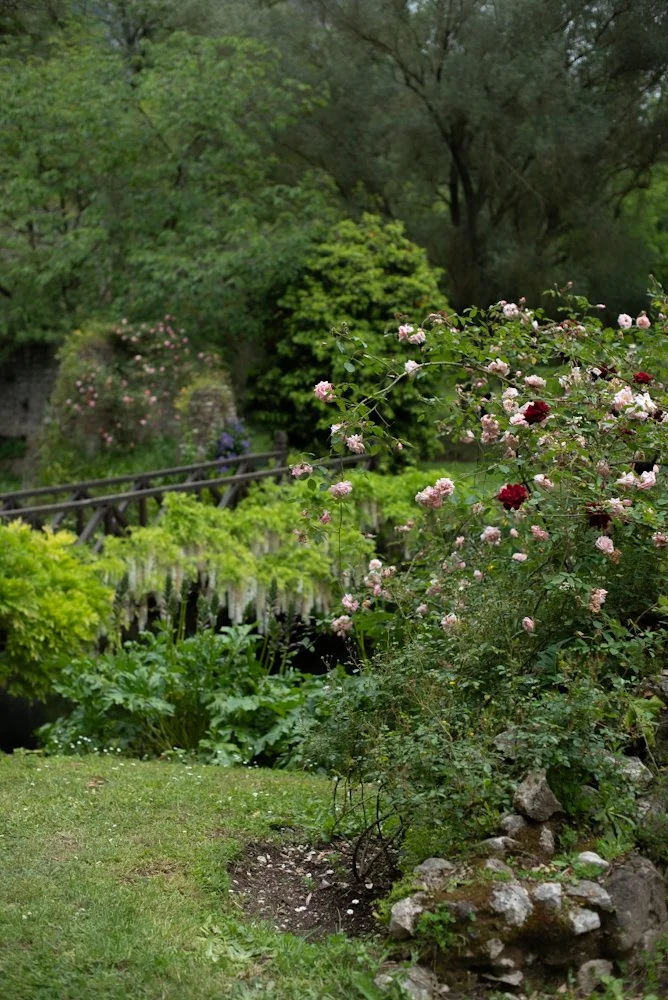

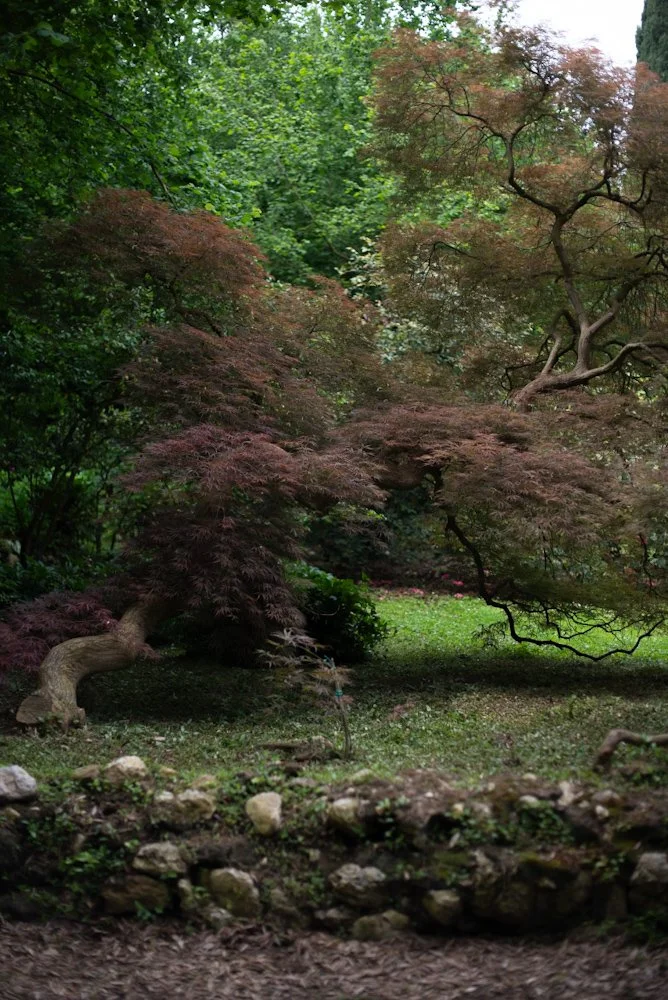
Following Gelasio’s death, his American sister-in-law, Marguerite, Duchess of Sermoneta oversaw the continued development of the garden. Moving from Paris to Rome she fell increasingly under Ninfa’s spell and, a plant addict, she added to the garden lavishly, including the large magnolias and over one hundred and twenty roses. She and her husband designed many of the watercourses and waterfalls and opened Ninfa to their wide circle of friends, including notable writers and artists. Their son Camillo was killed during World War Two and so the estate passed to their daughter, the Princess Lelia Caetani, who took over the project of Ninfa in the 1950s. An artist, Lelia had a painterly eye for colour and harmony which she used to great effect in the gardens, collecting over ten thousand plants including cherries, magnolia and climbing roses. Each year a lorry would arrive from Hillier & Sons in Hampshire laden with new trees and shrubs; the nursery supplied the garden with plants for over forty years. Ahead of her time in many ways, Lelia banned the use of chemical pesticides on-site, insisting that they be managed sensitively and thoughtfully with minimal intervention to preserve the spontaneity and spirit of the garden.
It was Lelia Caetani and her half-English husband, Hubert Howard who set up the Roffredo Caetani Foundation to preserve the memory of the Caetani family and conserve the garden of Ninfa and the nearby castle in Sermoneta. Lelia died in 1972 and Hubert in 1987 and, since they were childless, the Caetani line ended but the management of the garden was continued by Lauro Marchetti, the son of the estate manager, who had become Howard’s protégé. Of his management style Marchetti has said “Care and husbandry follow the principle of controlled disorder and yet every single plant growing in a ruined building or a hedge, or peeping from a medieval window, is known and cared for.”
VISITING NINFA: OUR EXPERIENCE
If you’re planning a visit I would highly recommend getting in touch to see if you can pay to book a private tour, or at least an English speaking guide. The garden tour is exactly an hour long and follows a prescribed route – you are not permitted to leave the path or the group at any point. In this sense it is very different to, say, Sissinghurst where you can take the whole day, wander at will, brush against the plants, linger in corners to take notes and photographs. The tour is rushed and the guide stops at various points to explain the history (in Italian) – for us it was a frustrating and rather unsatisfying visit although we are still glad we were able to experience it in the flesh, however briefly, because if you like ruins and roses it’s unlike anywhere else.
TRAVELLING TO NINFA FROM ROME
Getting to Ninfa was relatively straightforward. We took a Trenitalia train from Roma Termini to Latina Scalo which takes around 35 minutes, stopping at Campoleone and Cisterna di Latina (make sure you get off at the next stop, Latina). At the station there are taxis, which are an absolute rip-off at 50 euros for a return trip (it’s a 10-12 minute drive) but there is no other way to reach the garden (it’s not a very nice walk) so you are a sitting duck. Make sure to ask the driver to collect you after the tour or to take a business card so you can call as there aren’t taxis at the garden itself. Once there it is very busy and the tours are all pre-booked as the garden is only open on specific dates. There is a café for water, snacks and sandwiches.
FURTHER READING
The first three books are out of print but can be found on Amazon, eBay or Abe Books online.
Ninfa: A Roman Enchantment by Lauro Marchetti and Esme Howard with photographs by Claire de Virieu
An American Princess: The Remarkable Life of Marguerite Chapin Caetani by Laurie Dennett
Ninfa: The Most Romantic Garden in the World by Charles Quest Ritson
Roses in the Garden by Ngoc Minh Ngo

WET & WILD JULY
I am writing this at the kitchen table on a wet and stormy afternoon - the last of July. The baby and dog are both asleep and all is quiet. As is now apparently customary (despite being July) the wind is blowing and rain drizzling and it’s chilly enough to light the fire.
I am writing this at the kitchen table on a wet and stormy afternoon - the last of July. The baby and dog are both asleep and all is quiet. As is now apparently customary (despite being July) the wind is blowing and rain drizzling and it’s chilly enough to light the fire.
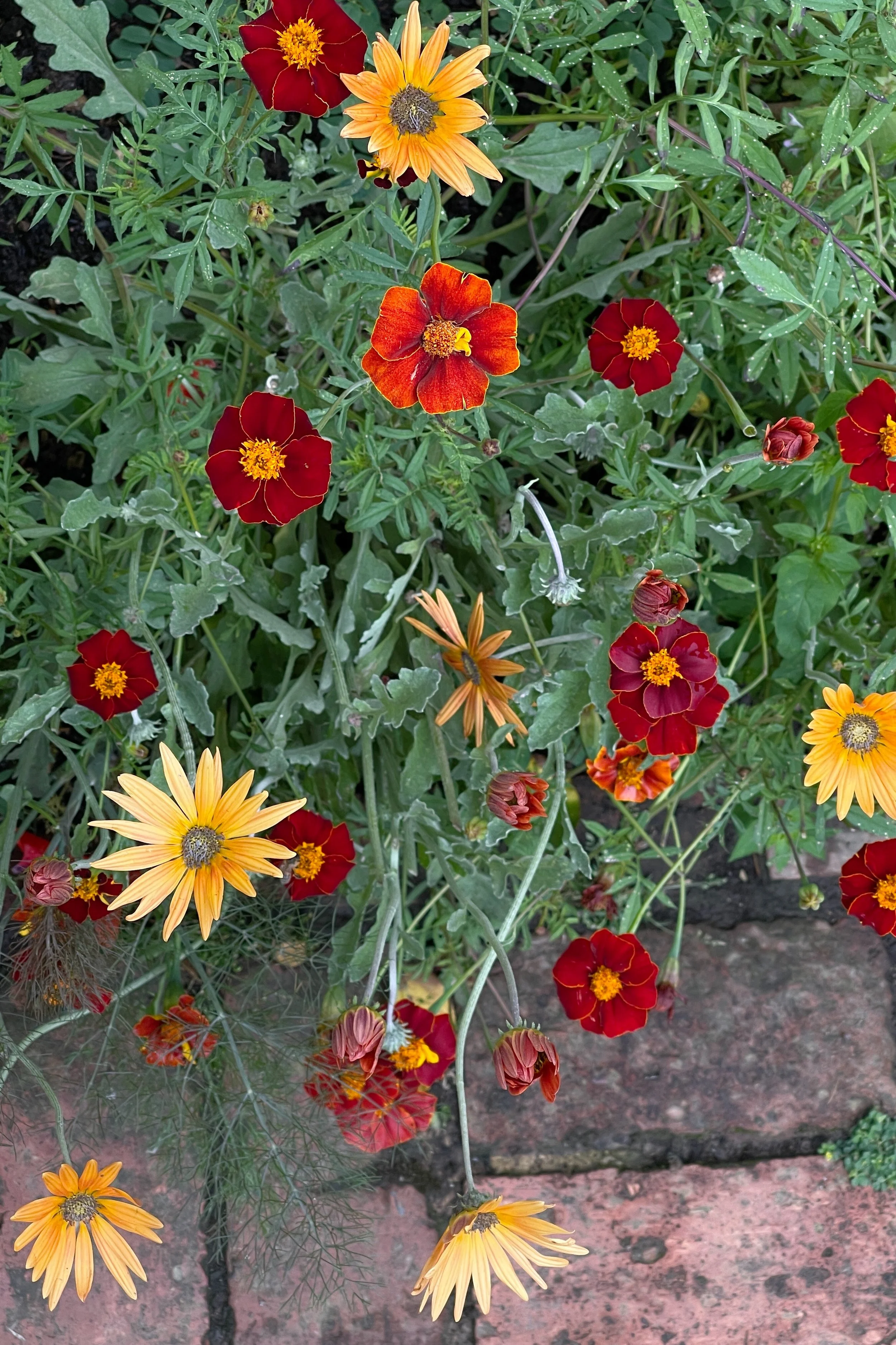
Looking back through the (copious number of) photographs that I took this month, a recurring theme appears to develop. Grey skies, red flowers. Dusky red, brown red, tomato red, raspberry red, reddy pinks. Also a lot of pink, blue pinks, baby pink.
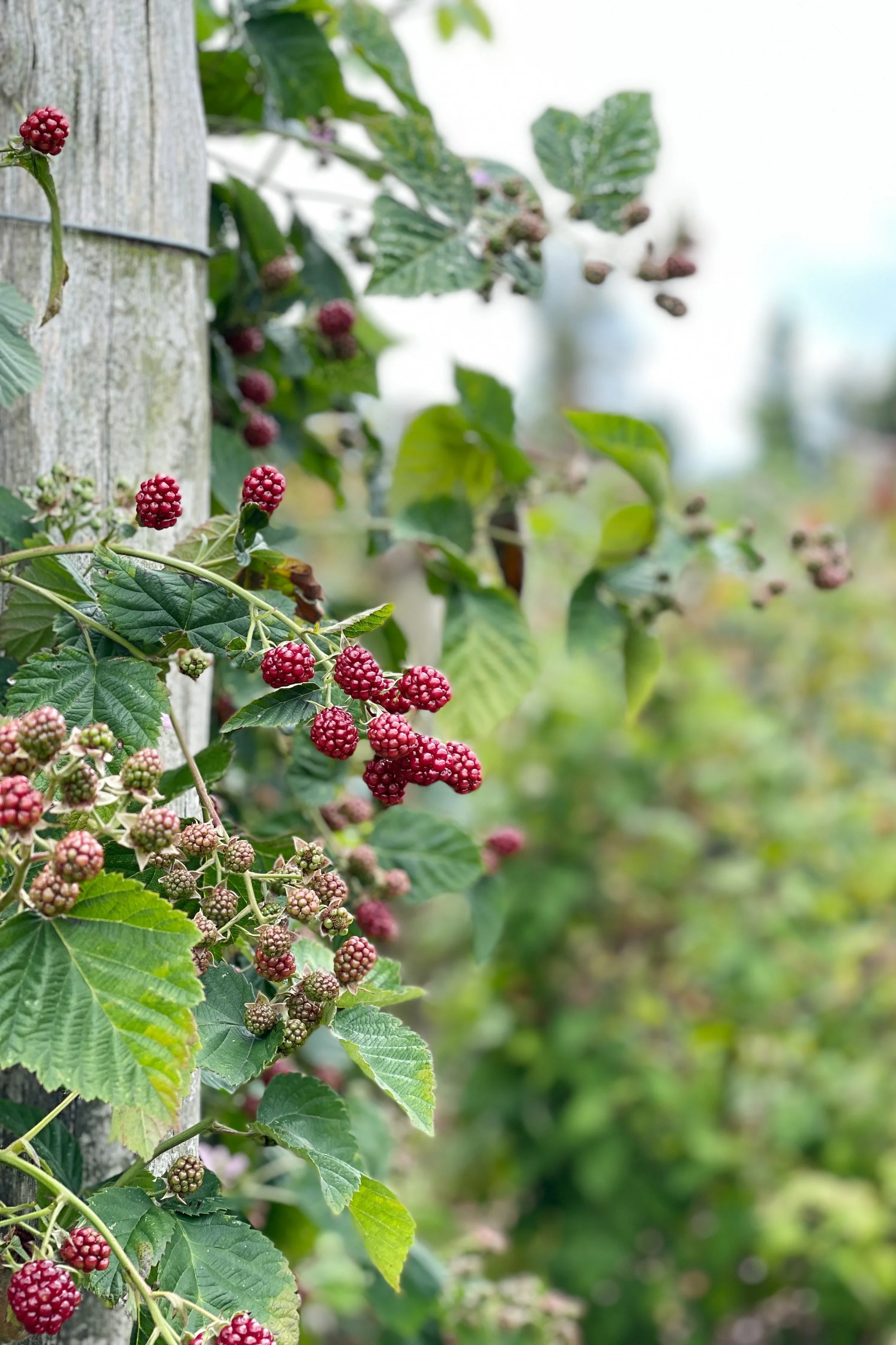
In the hedgerows the blackberries are beefing up and plumping out now. Somewhere between red and pink. A reddy pink, a pinky red. Does putting a ‘y’ on the end of a colour begin to explain its shifting ambiguity? I wonder.
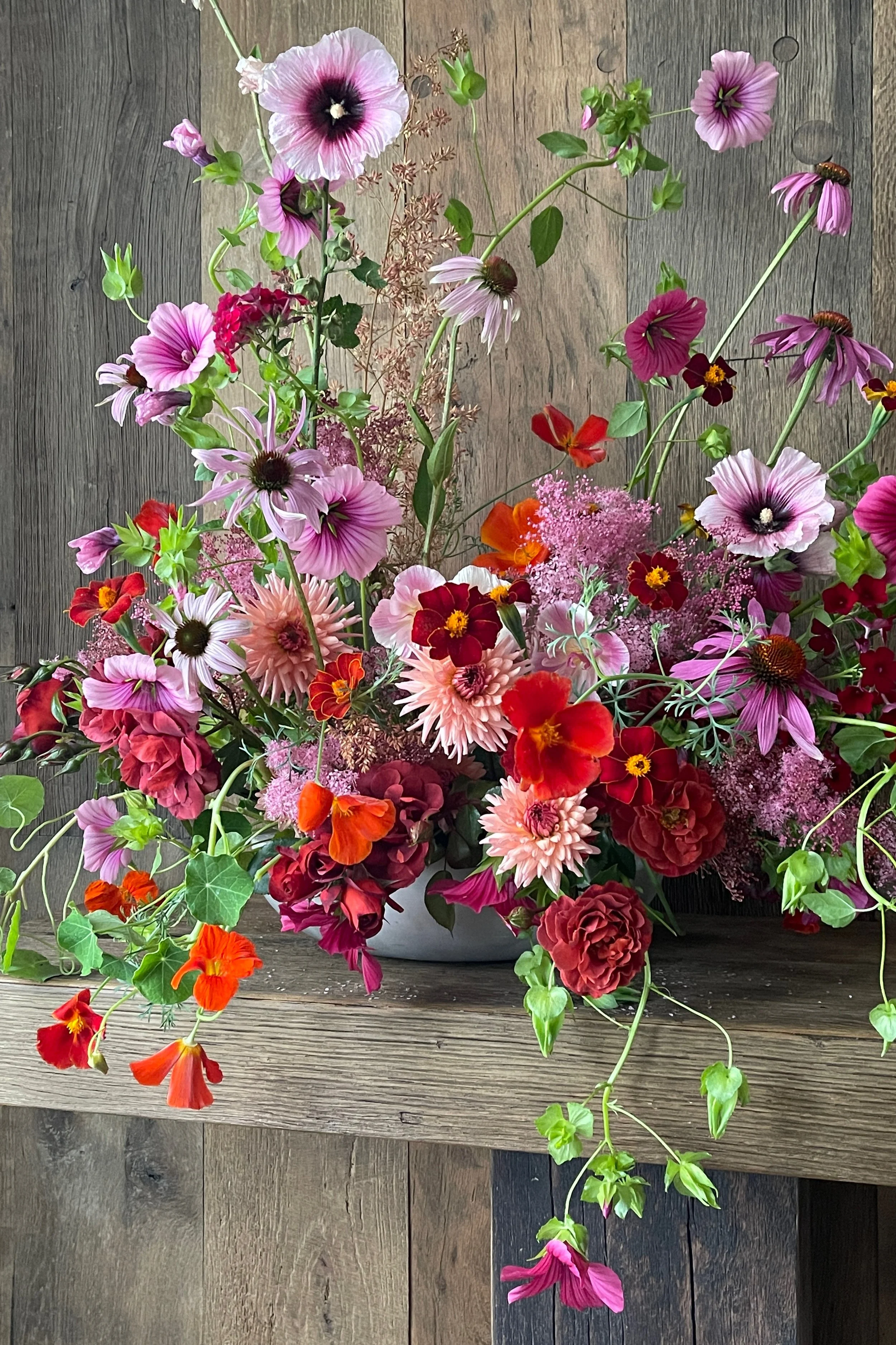
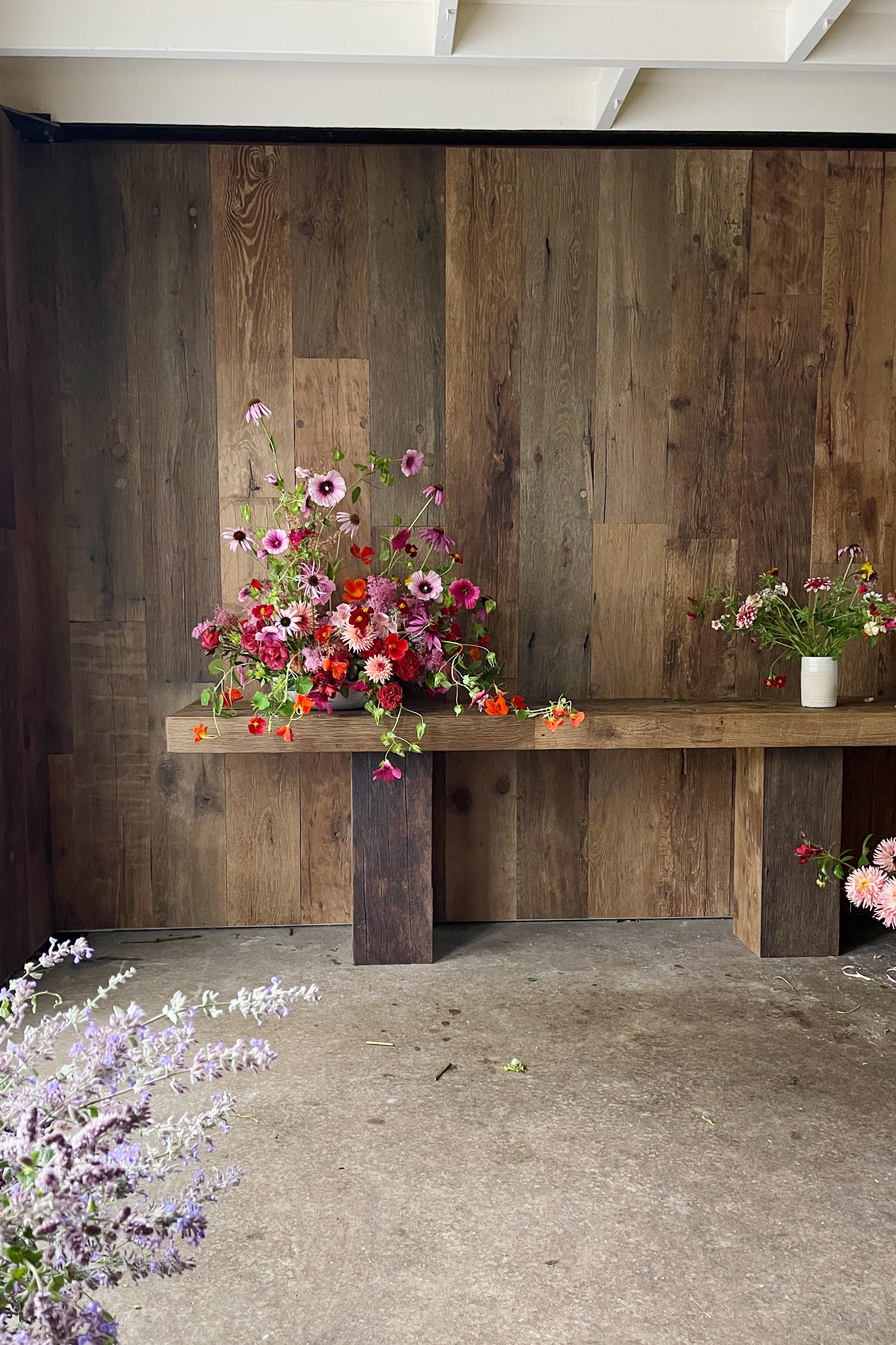
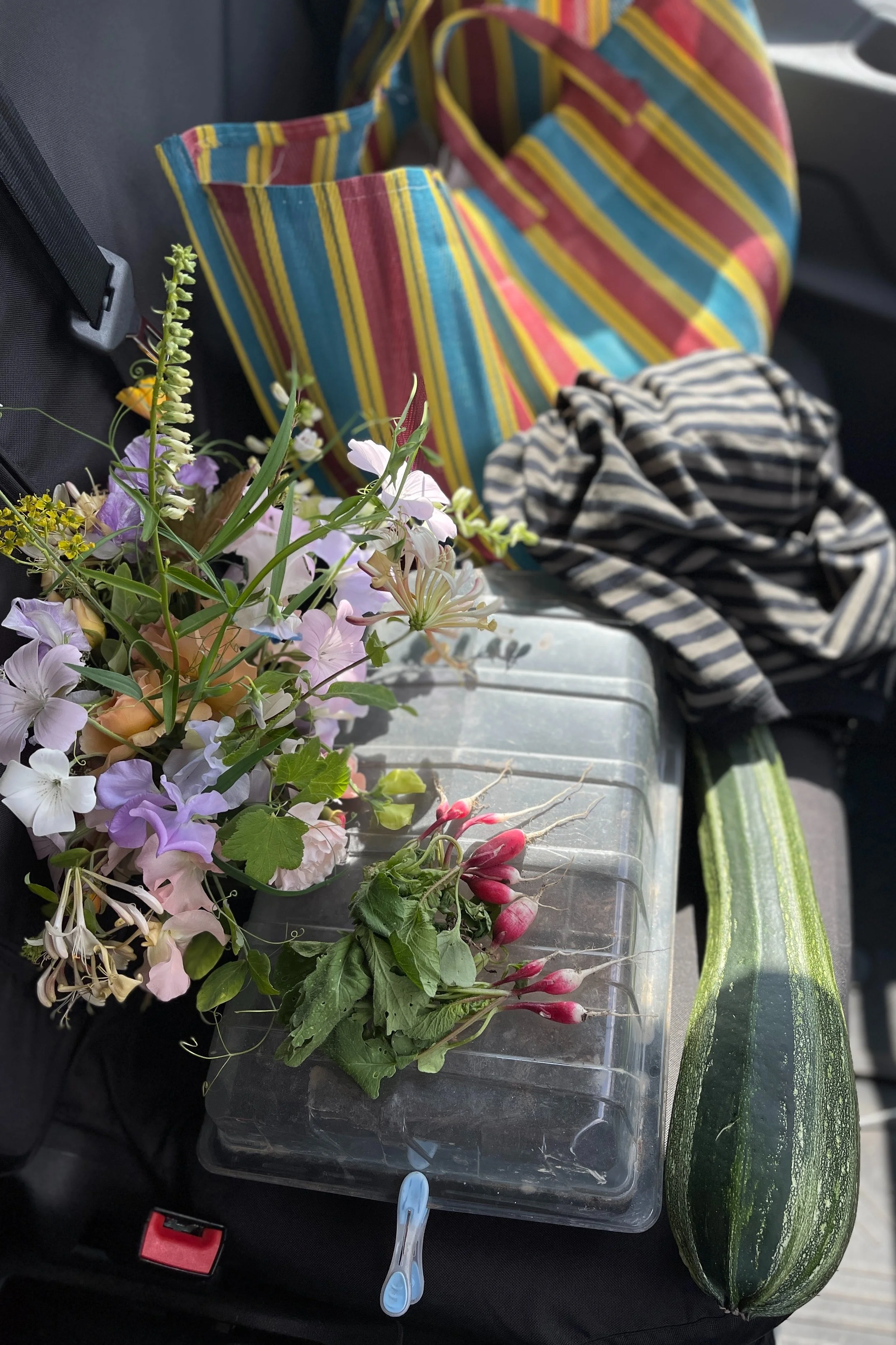
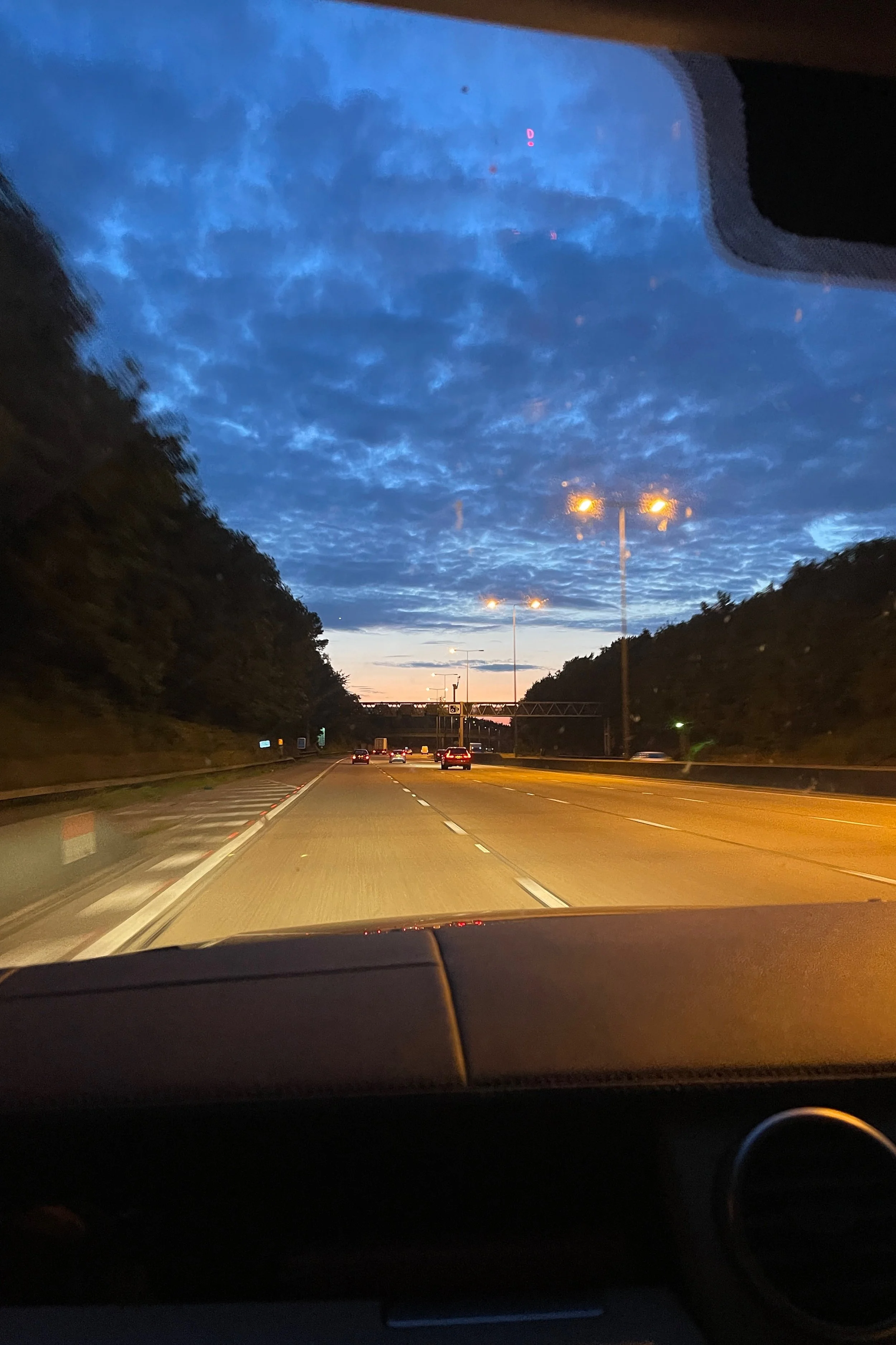
So yes, it’s been a ‘weathery’ month. A lot of rain, a lot of storms, hurrying clouds. Hurrying to hang the washing out when the sun appears, dashing out to bundle it all in when it starts raining again. Falling asleep to the applause-like sounds of the latest deluge, waking to gentle mizzle. The London suburbs are suddenly quieter, now that the schools have broken up, and a listless summer-holiday energy has settled over the city.
The garden, on the other hand, has never looked better at this time of the year. Lush and verdant, teeming with insects. The perennial beds are awash with shivering golden grasses and pale spires on tall stems.
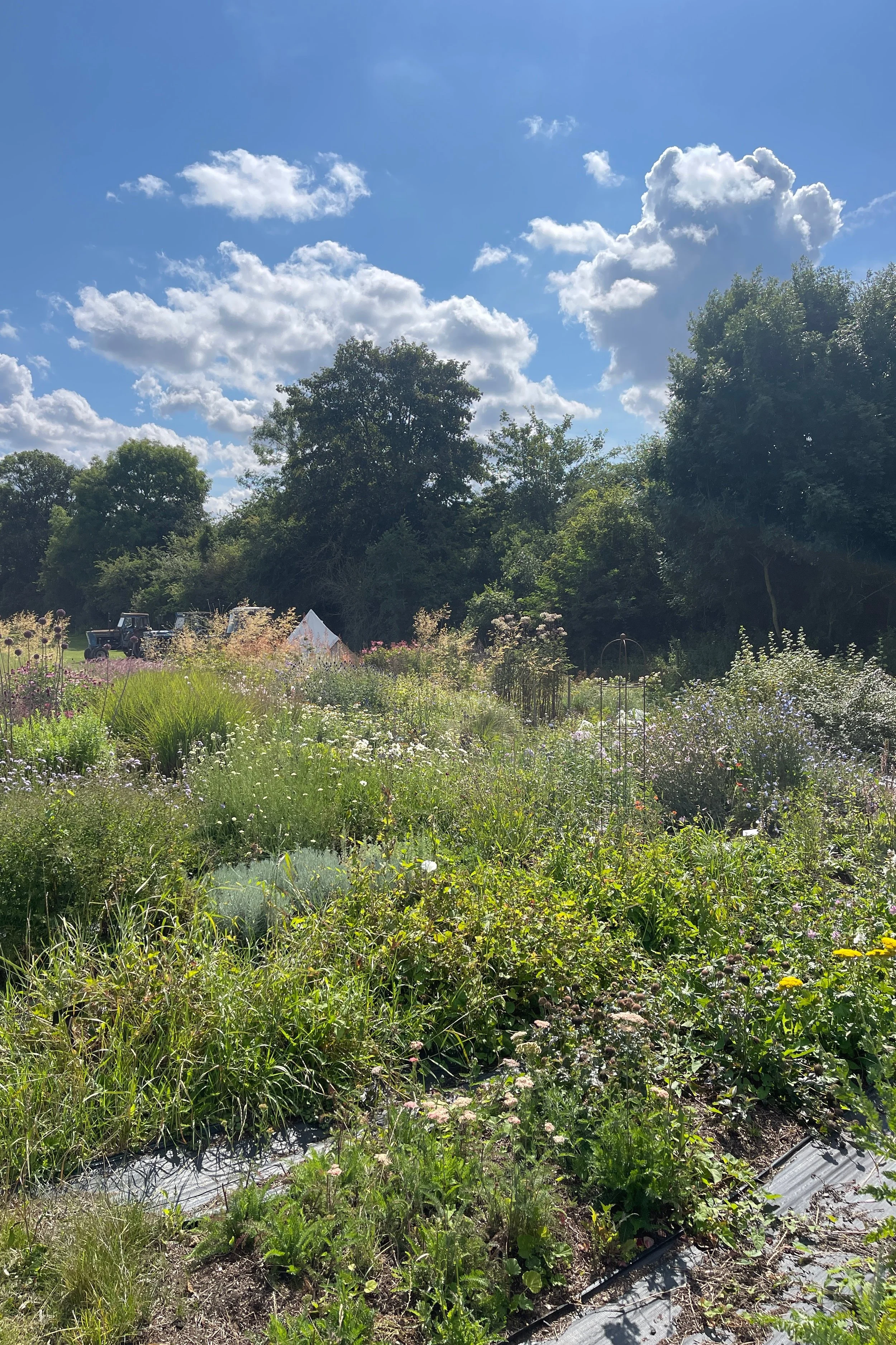
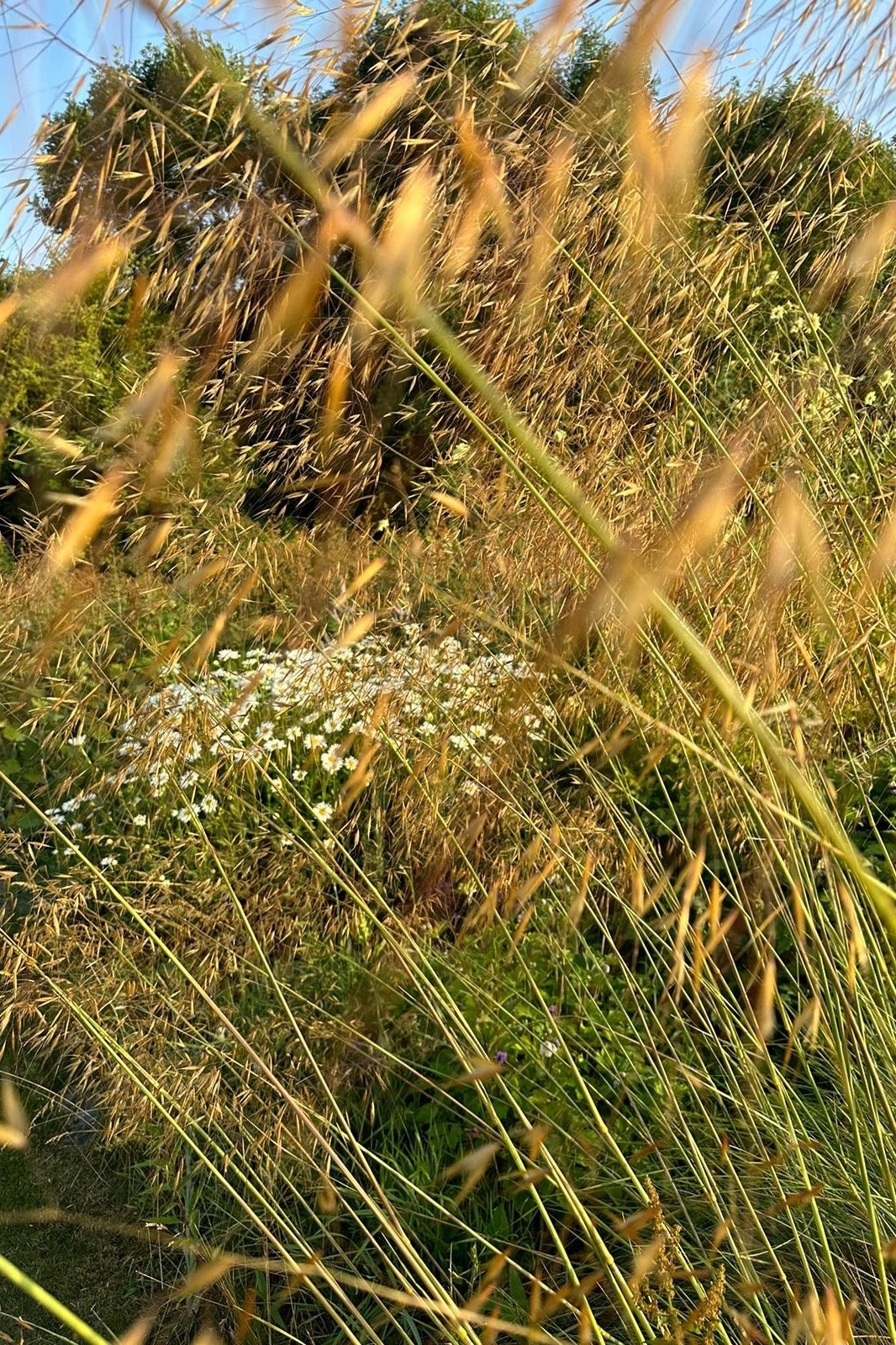
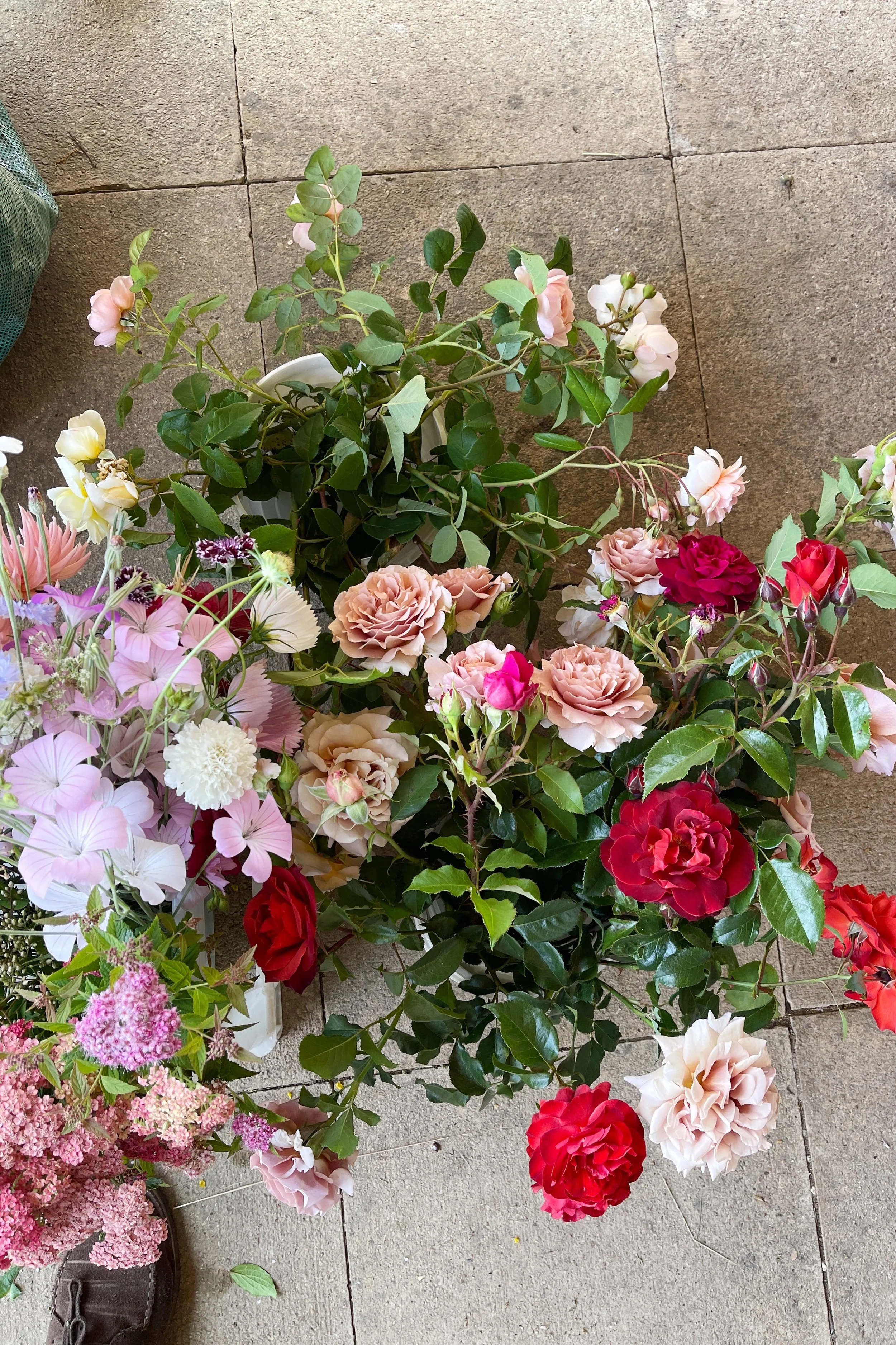
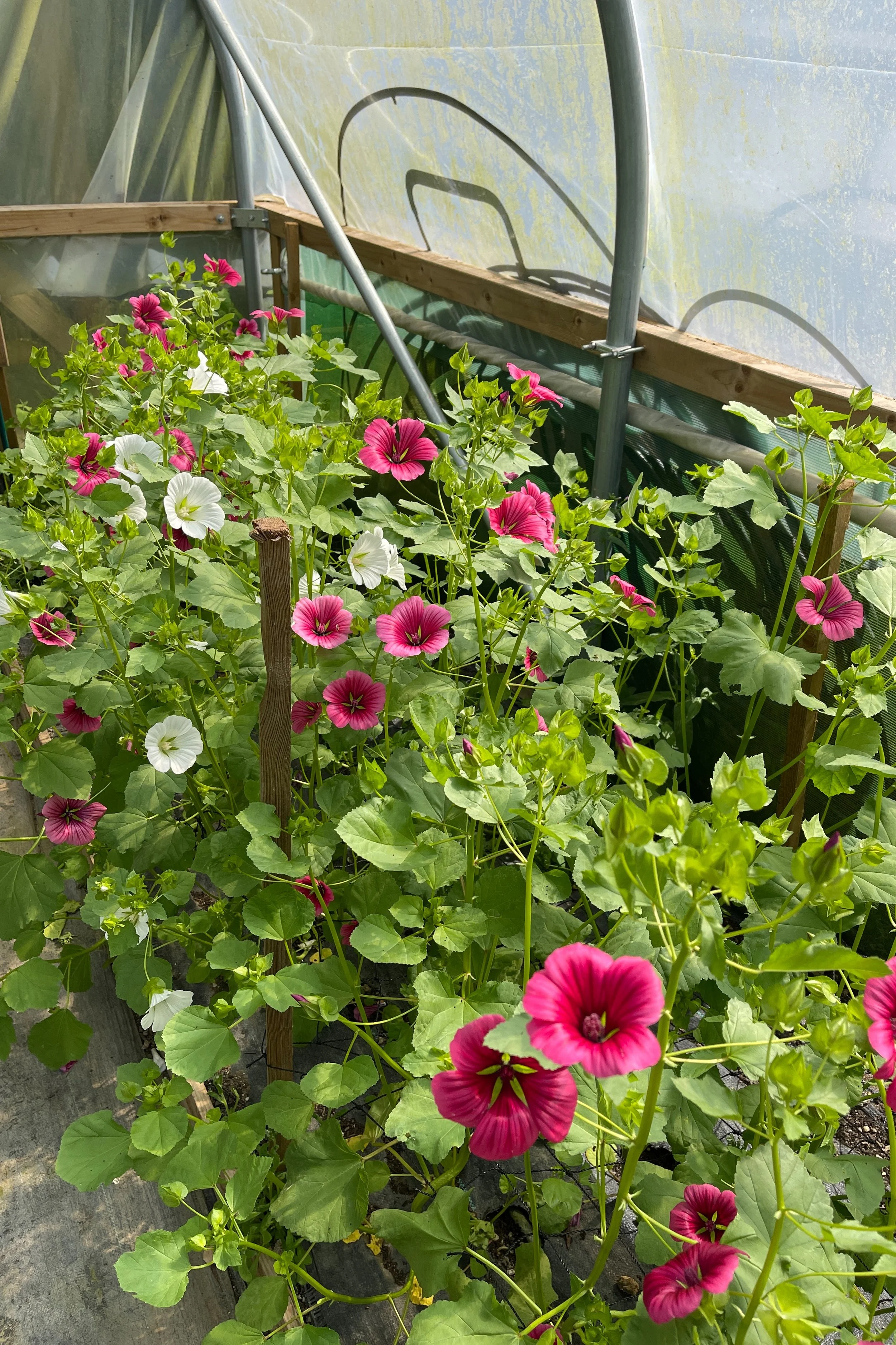
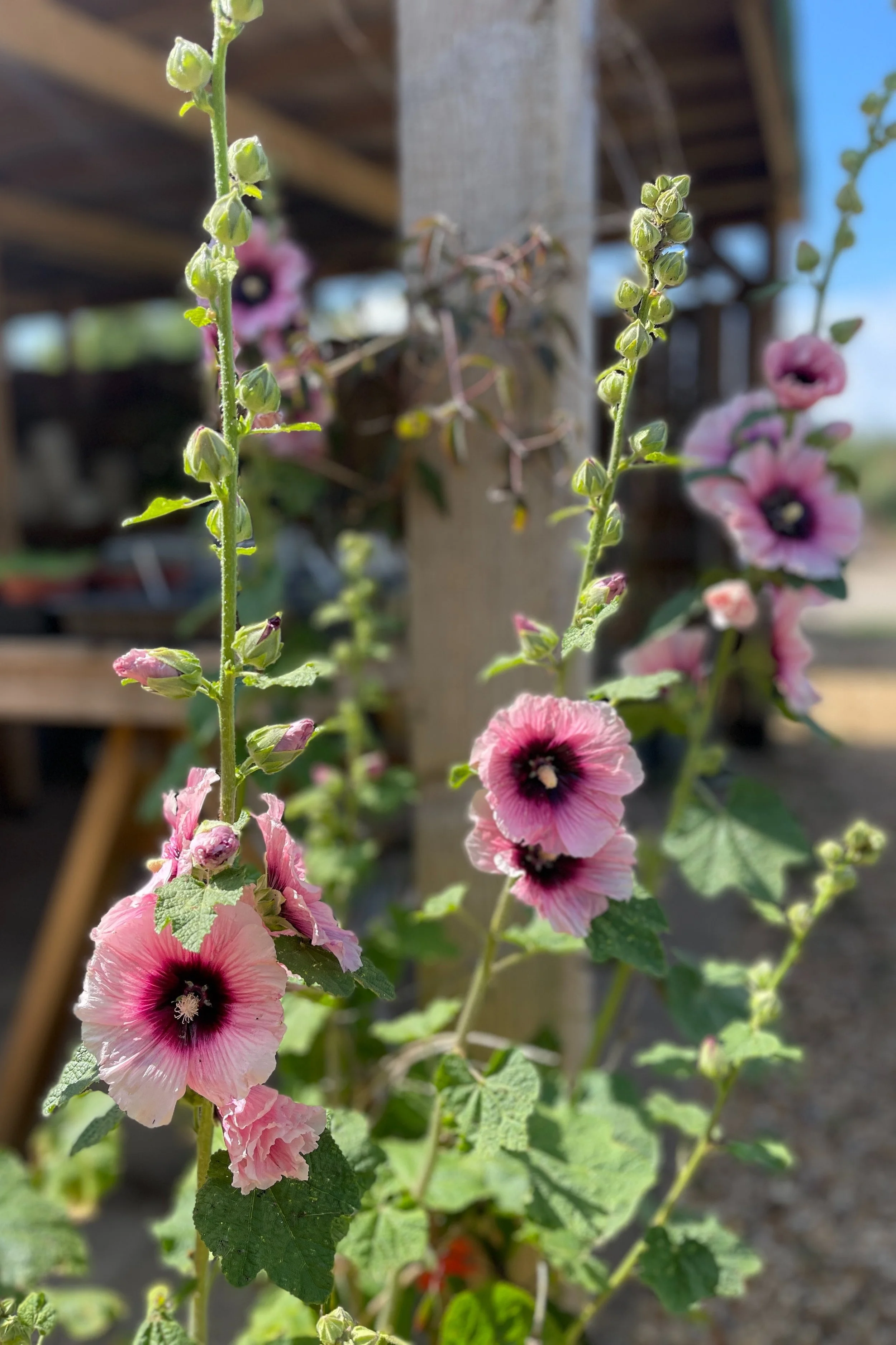
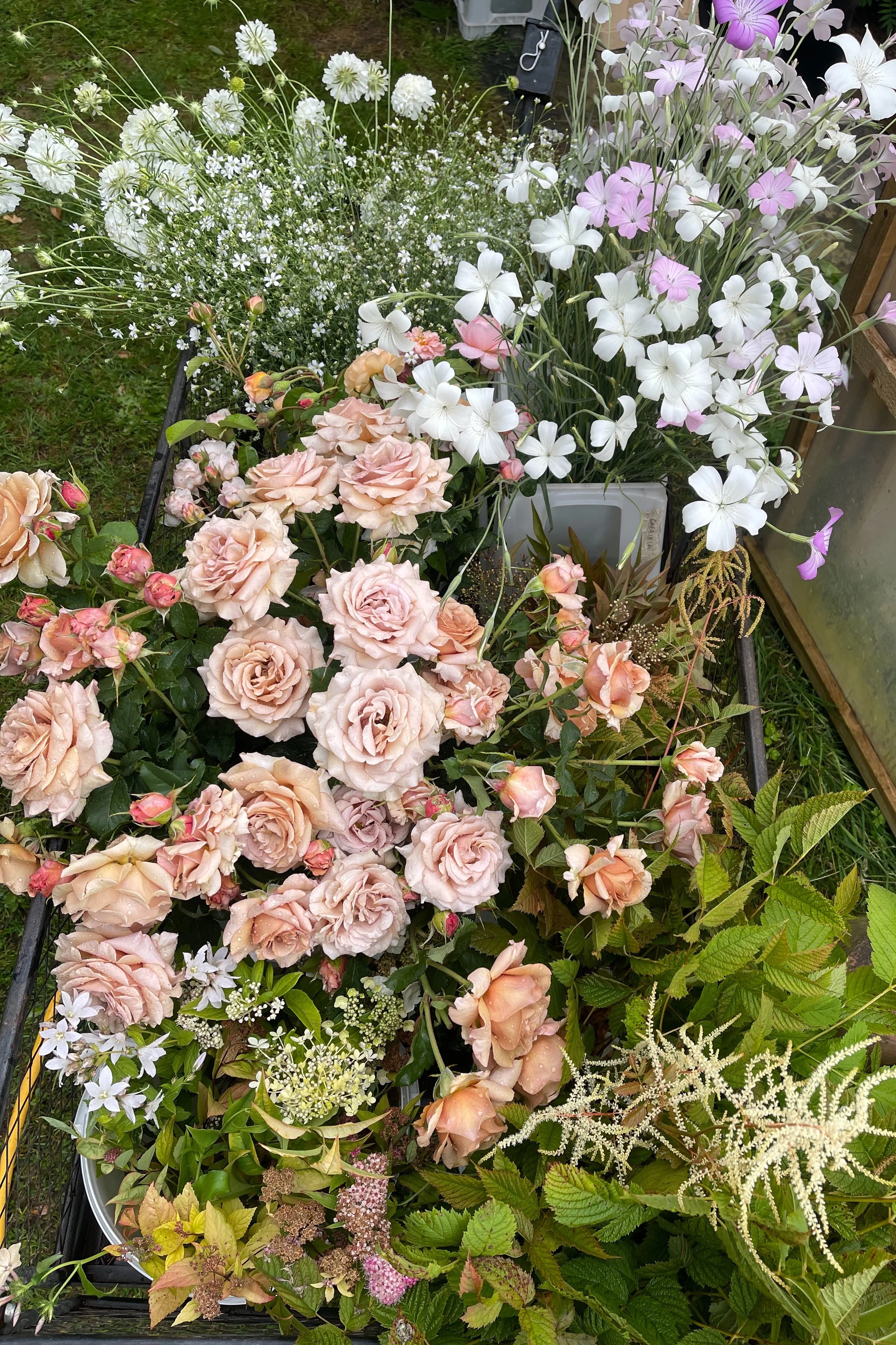
Mid July is the annual viewpoint with two seasonal vistas, one ahead and one just behind. Early summer is past and in shadow now. The next season - I hesitate to even say the word - comes into sight up ahead, still blurry and a way off but inching closer with its crisp mornings and langourous afternoons of mellow sunlight.
A reminder to breathe, taste, swim in these longer days for as long as possible, to squeeze every last drop of summer ‘til the pips squeak.
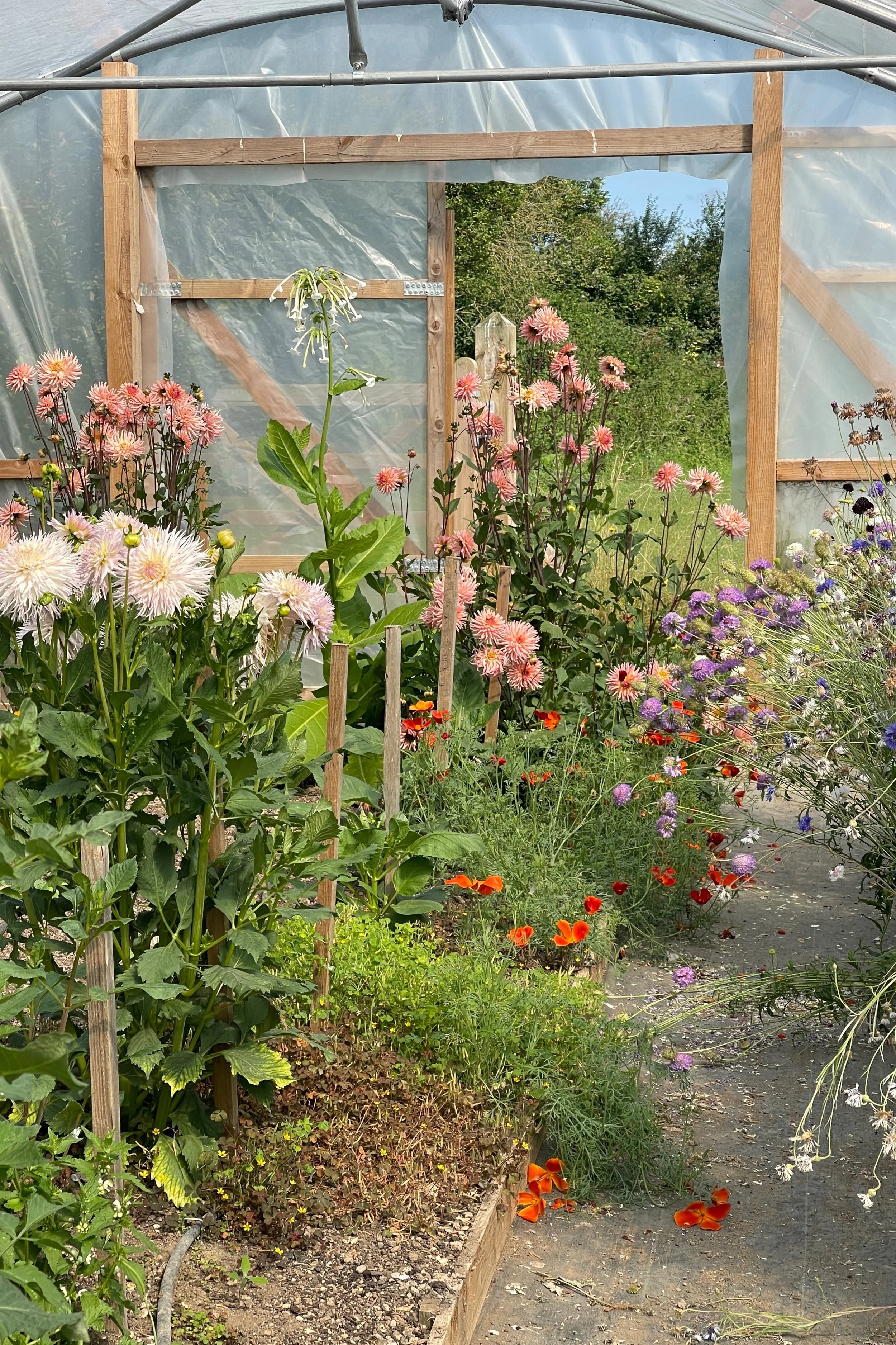
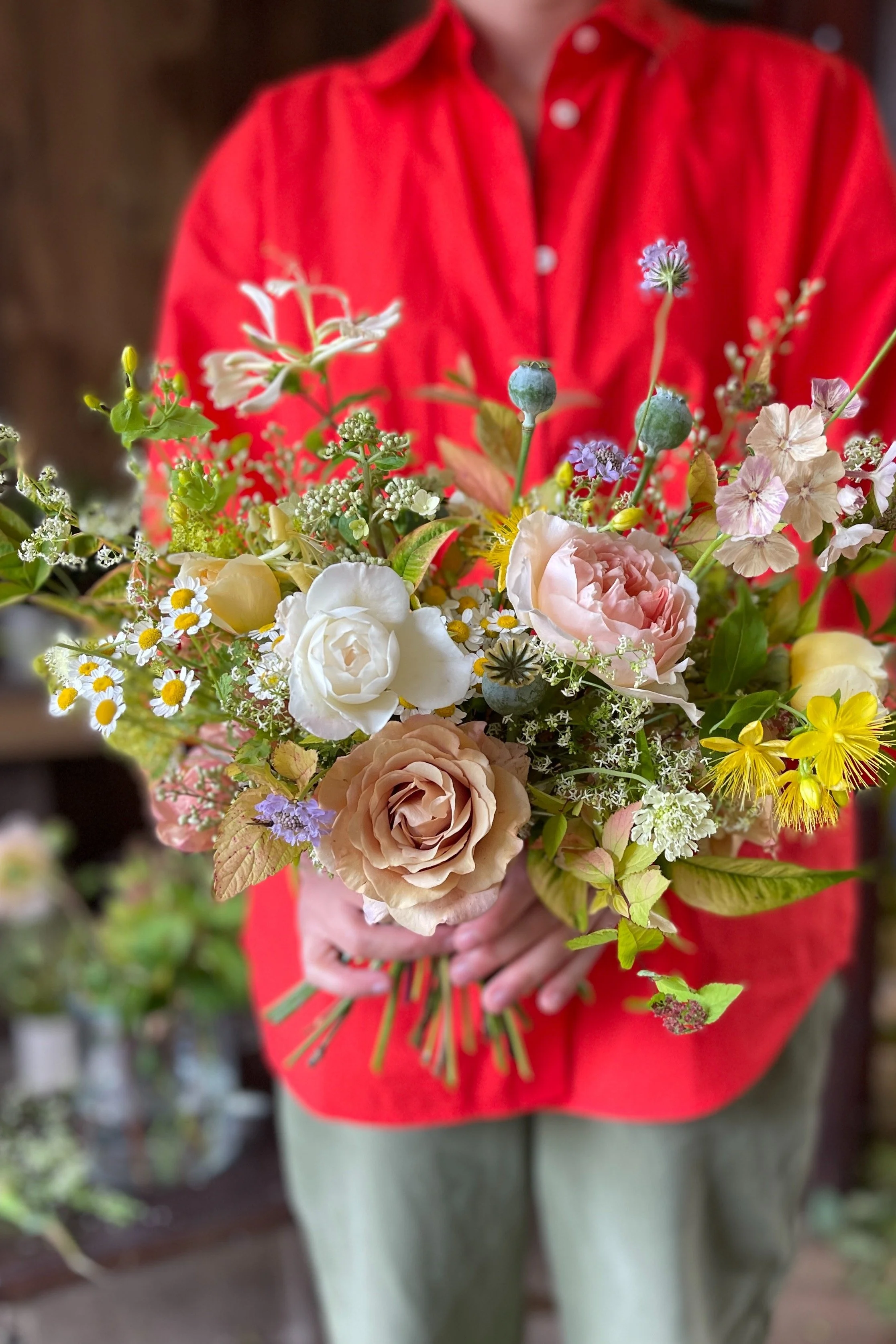
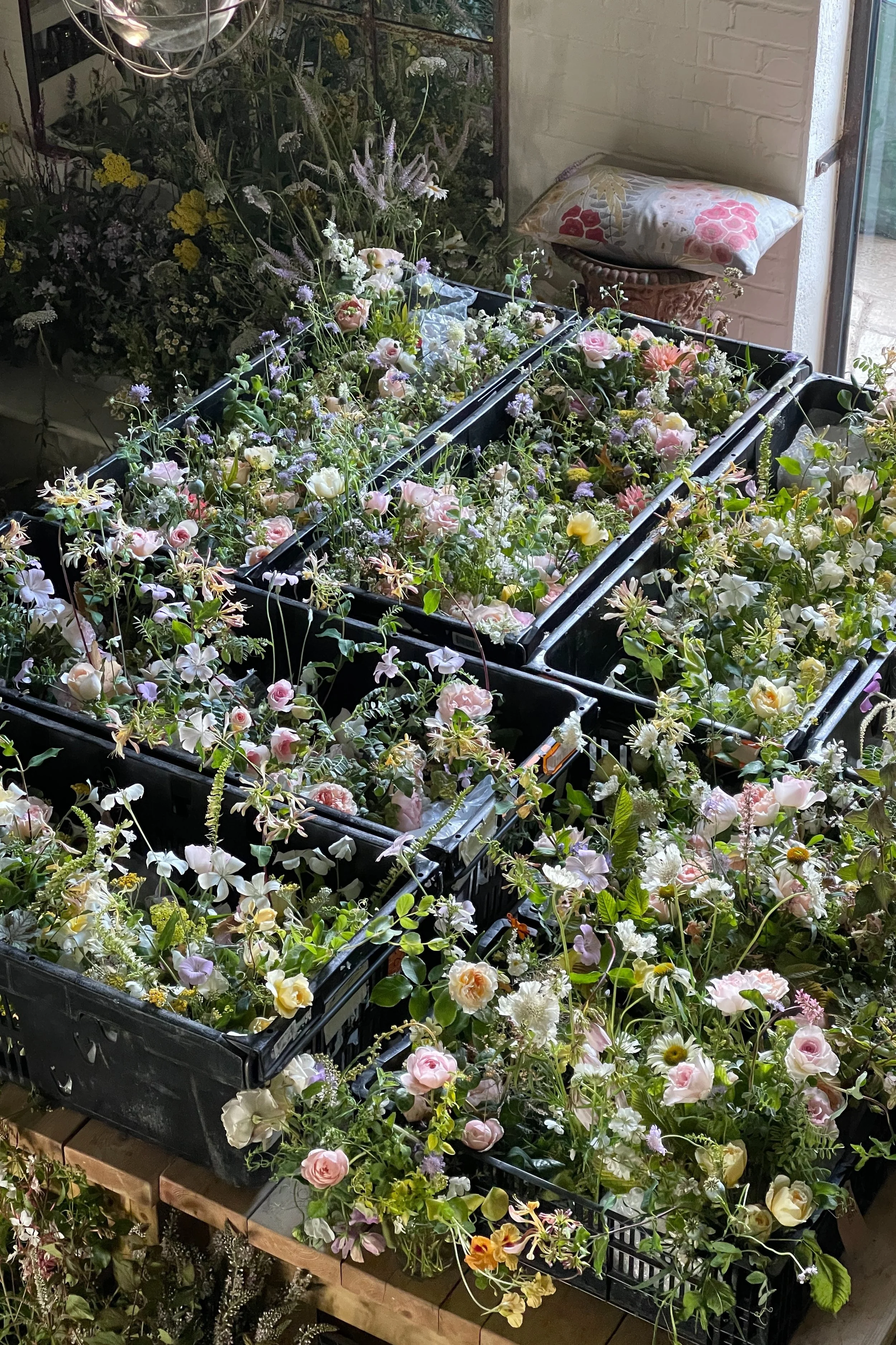
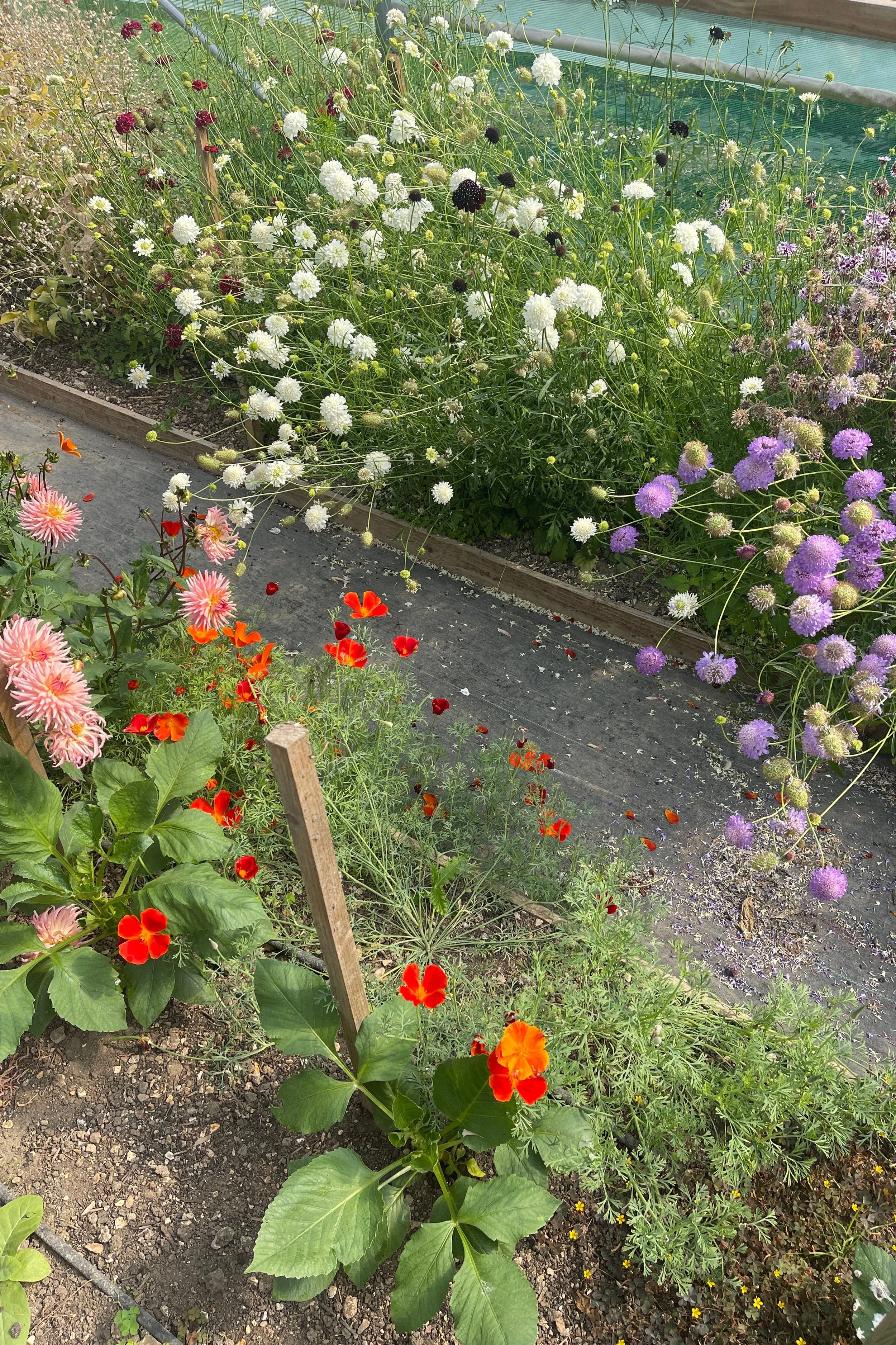
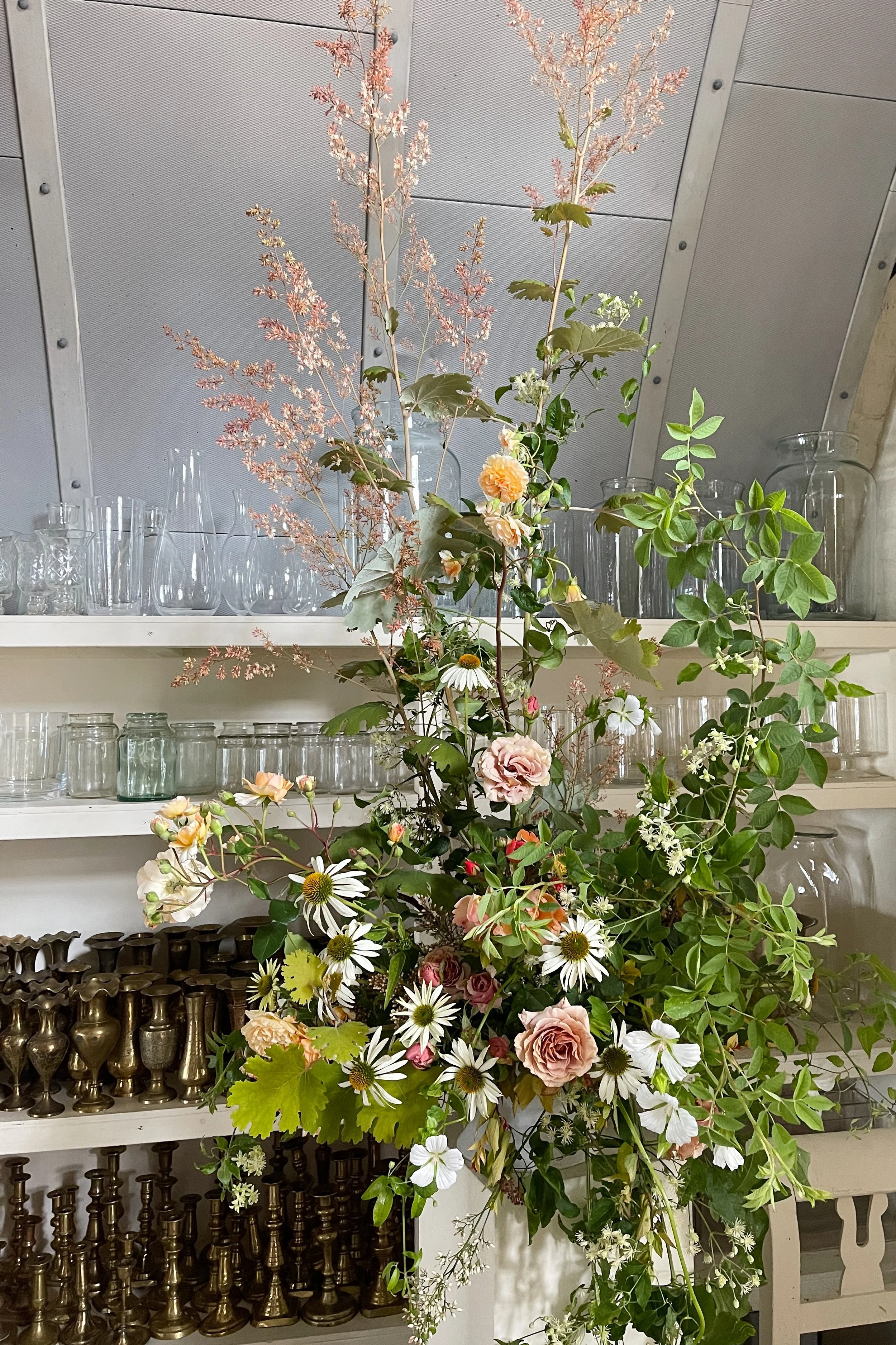
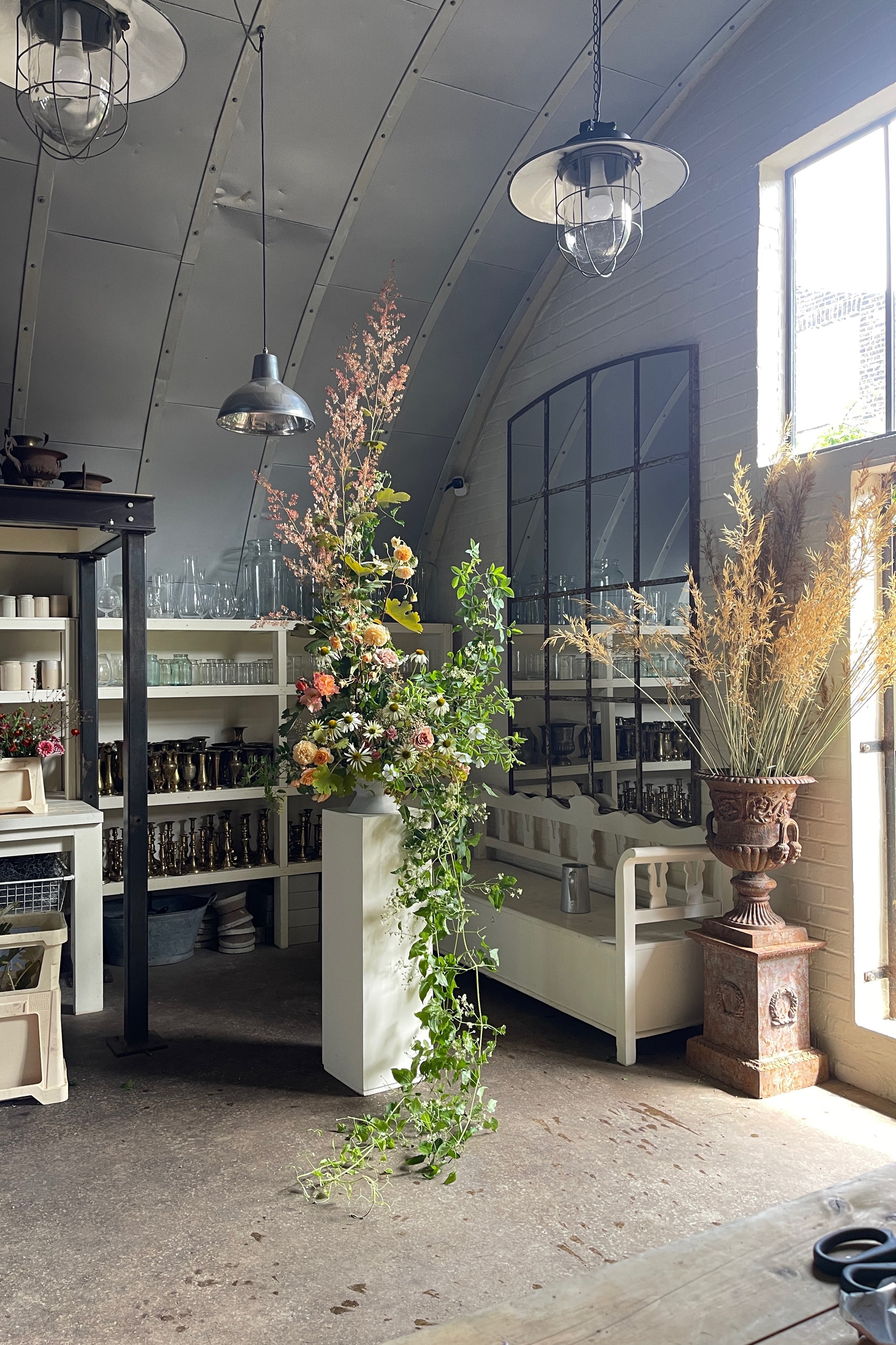
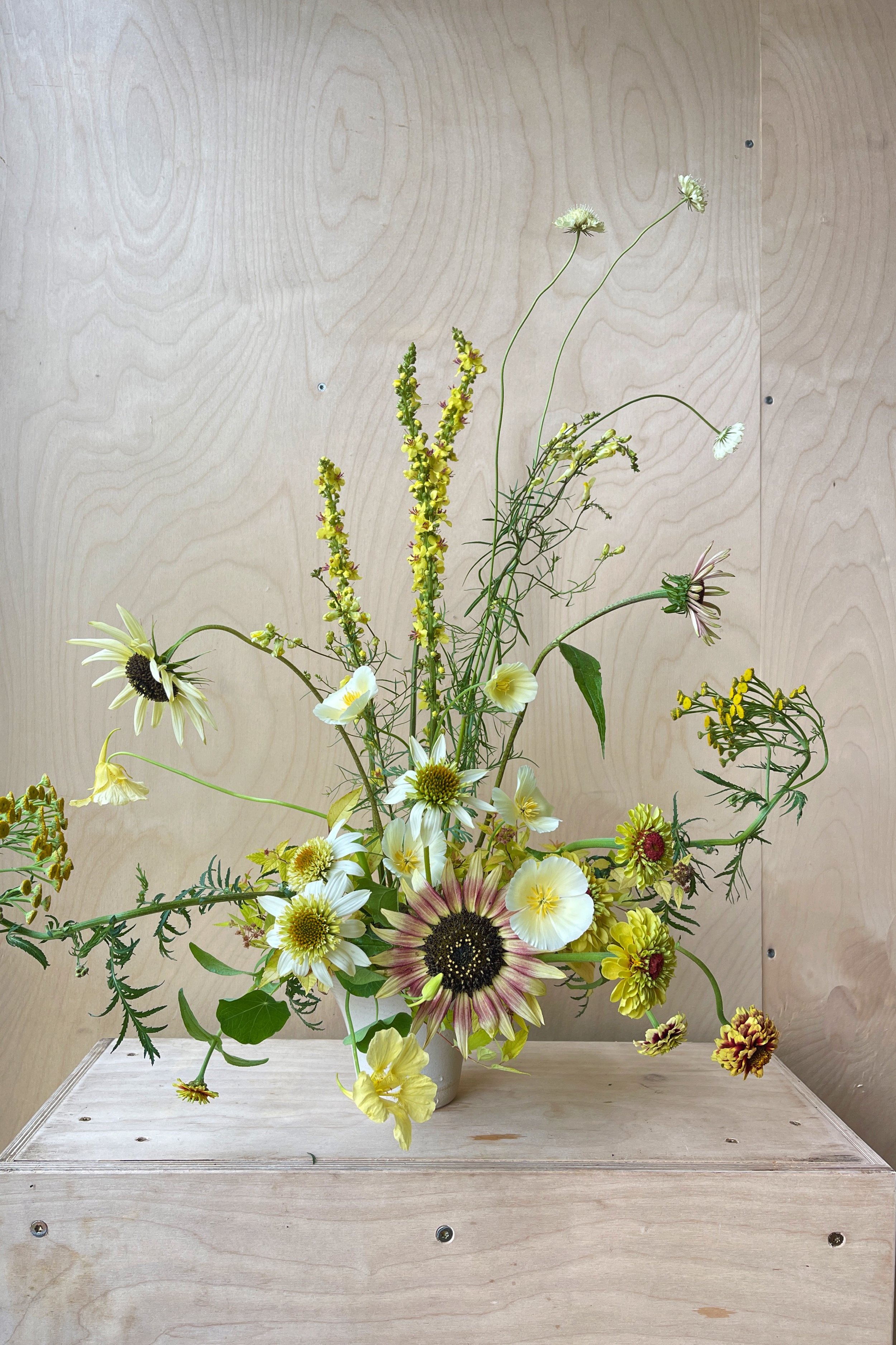
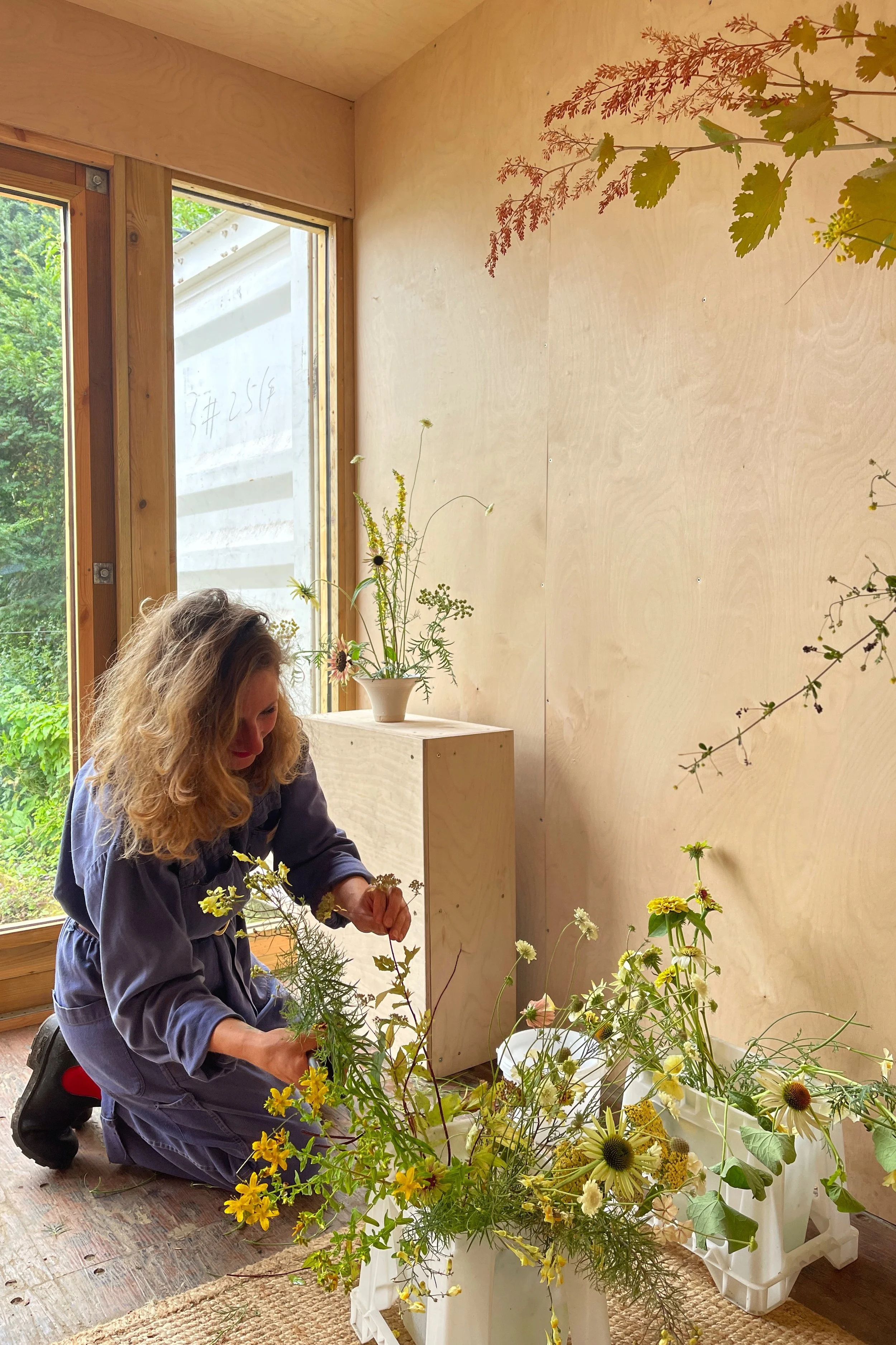
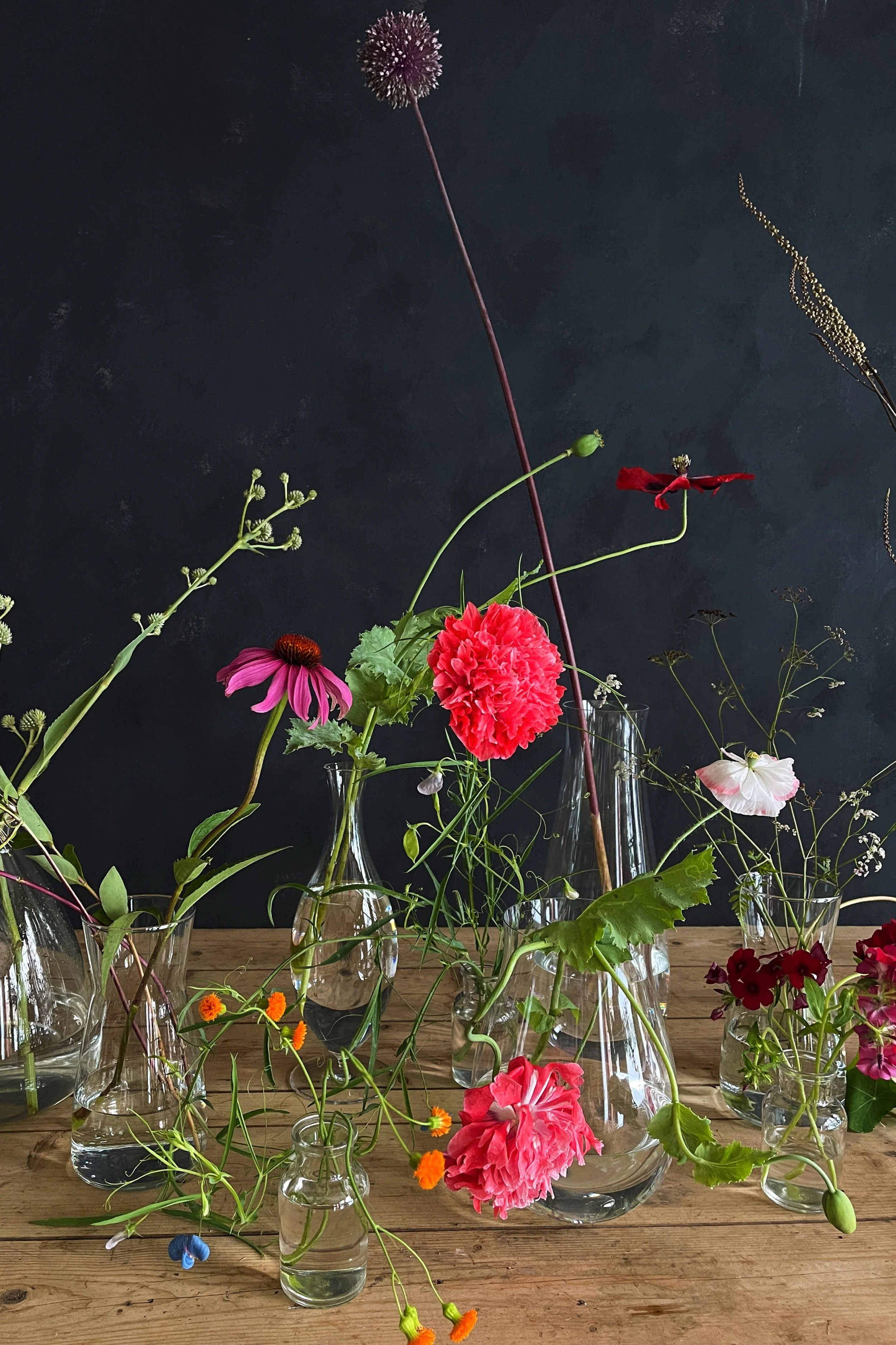
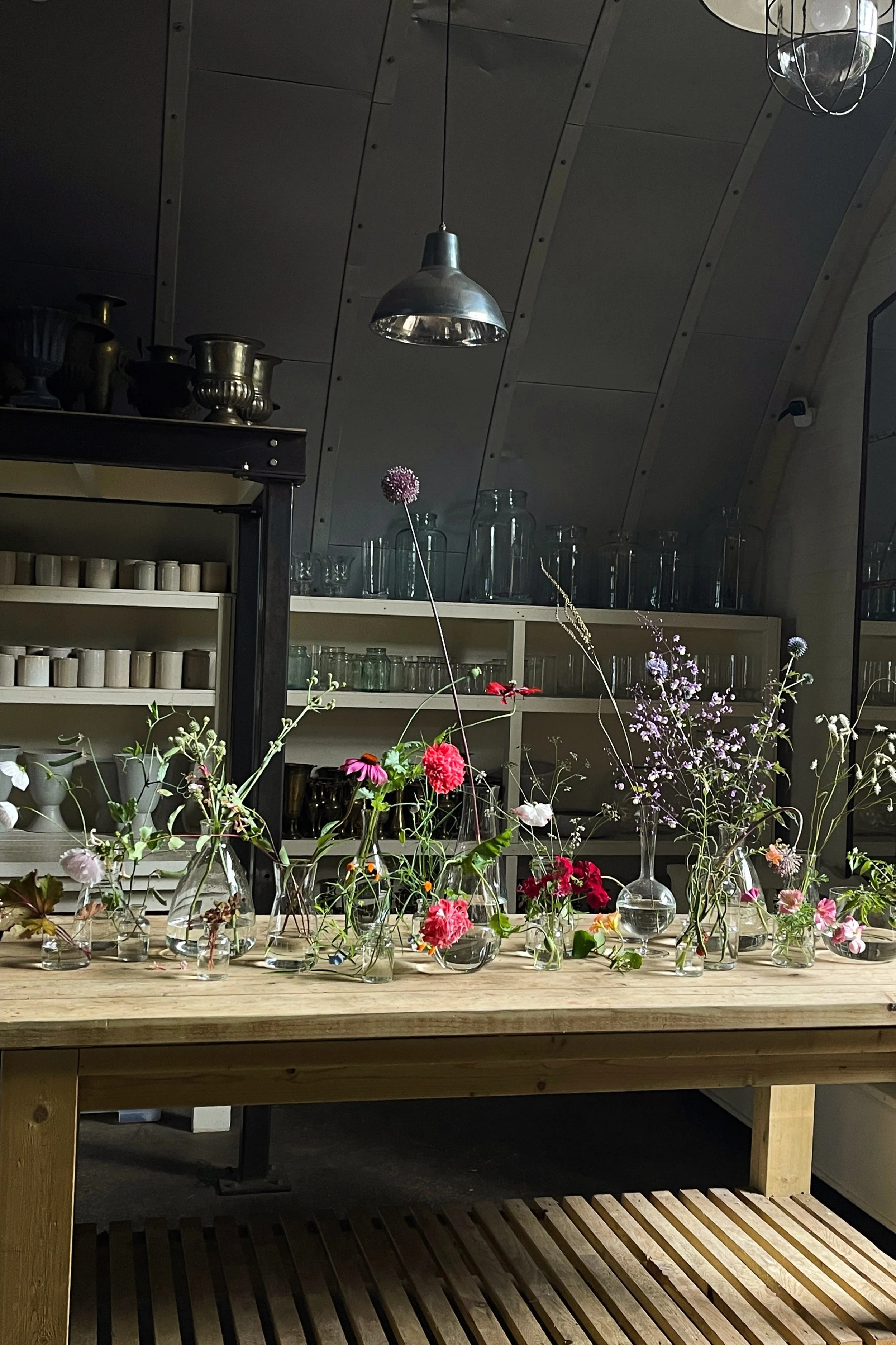
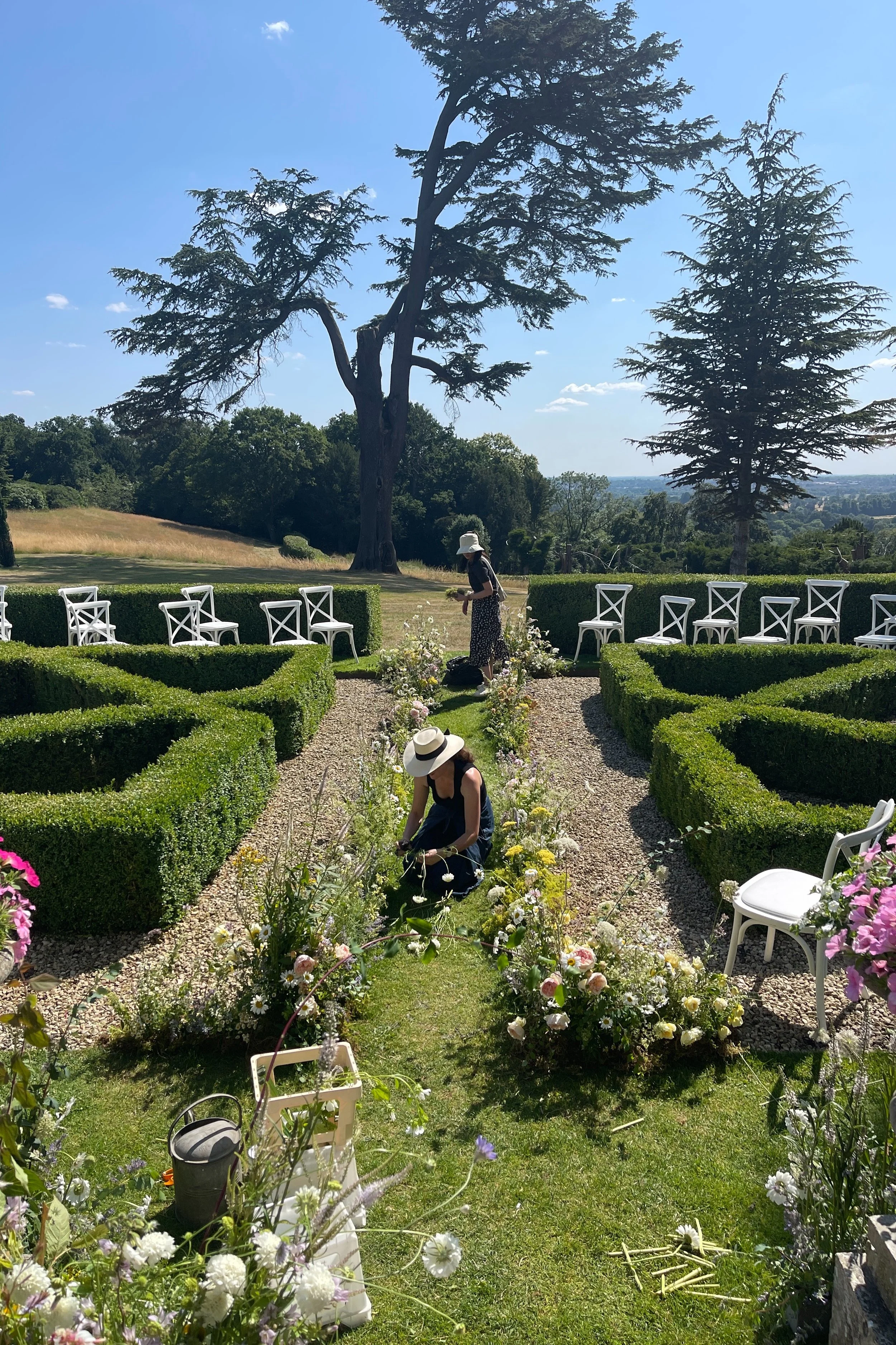
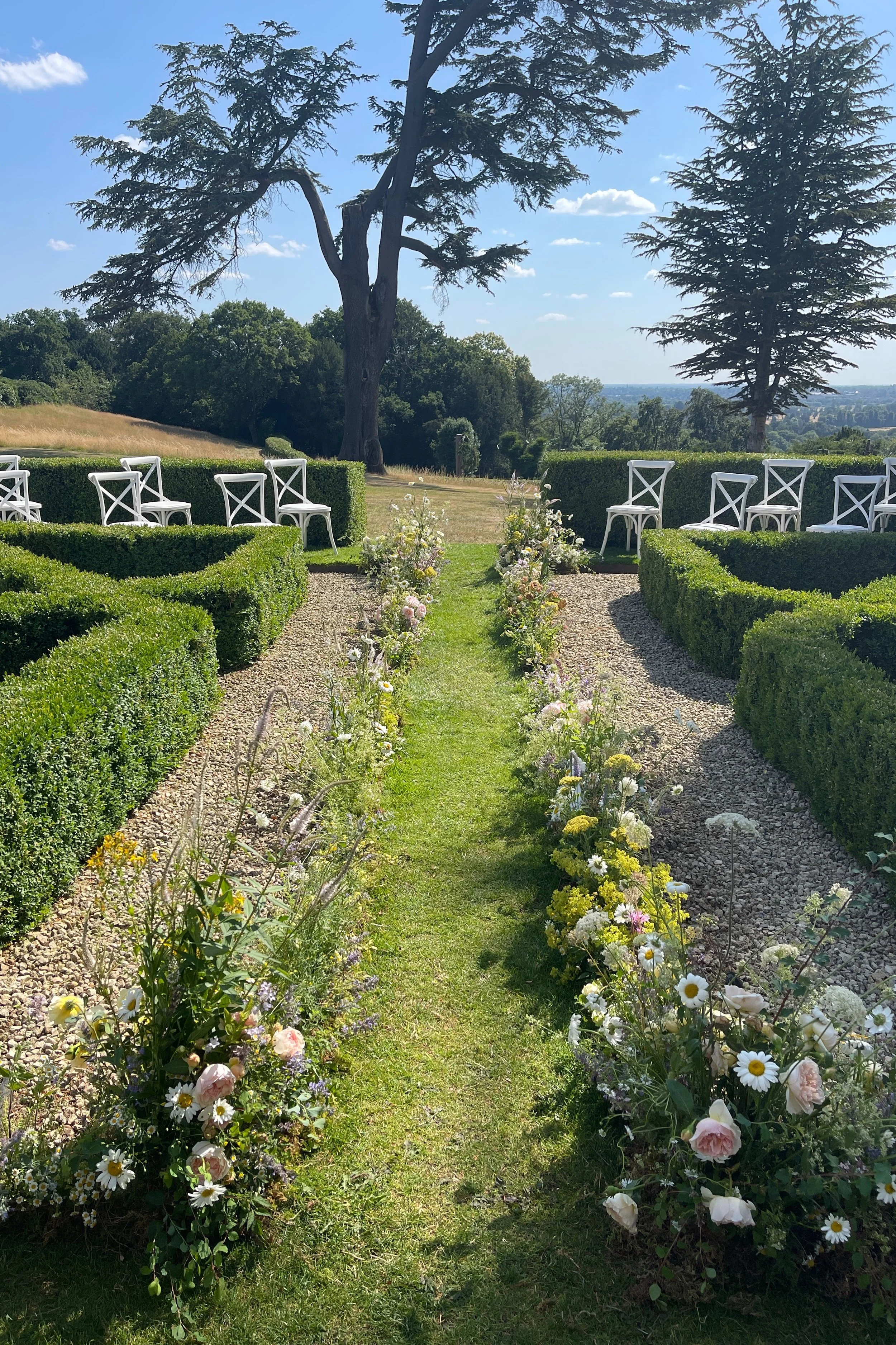
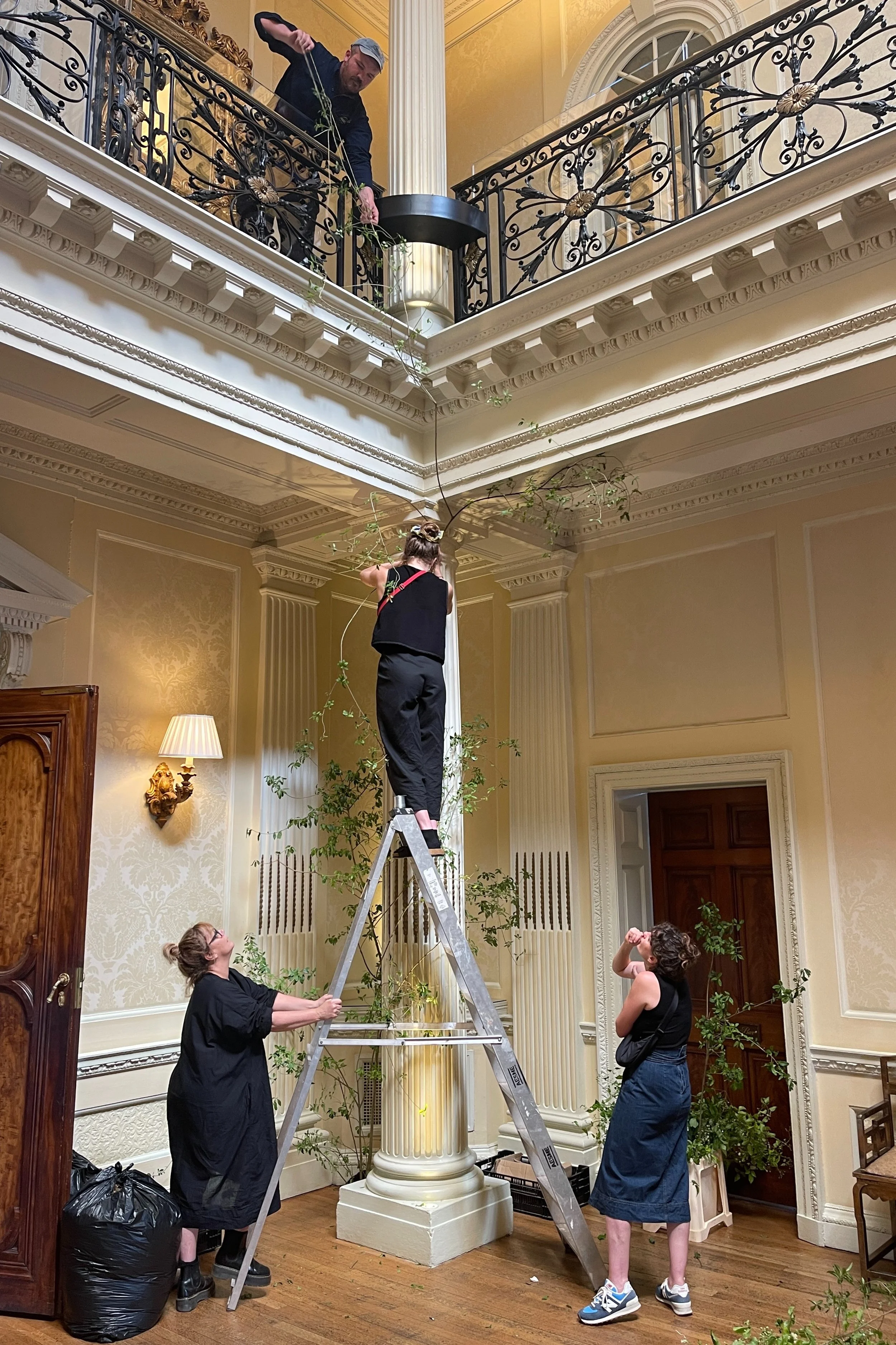
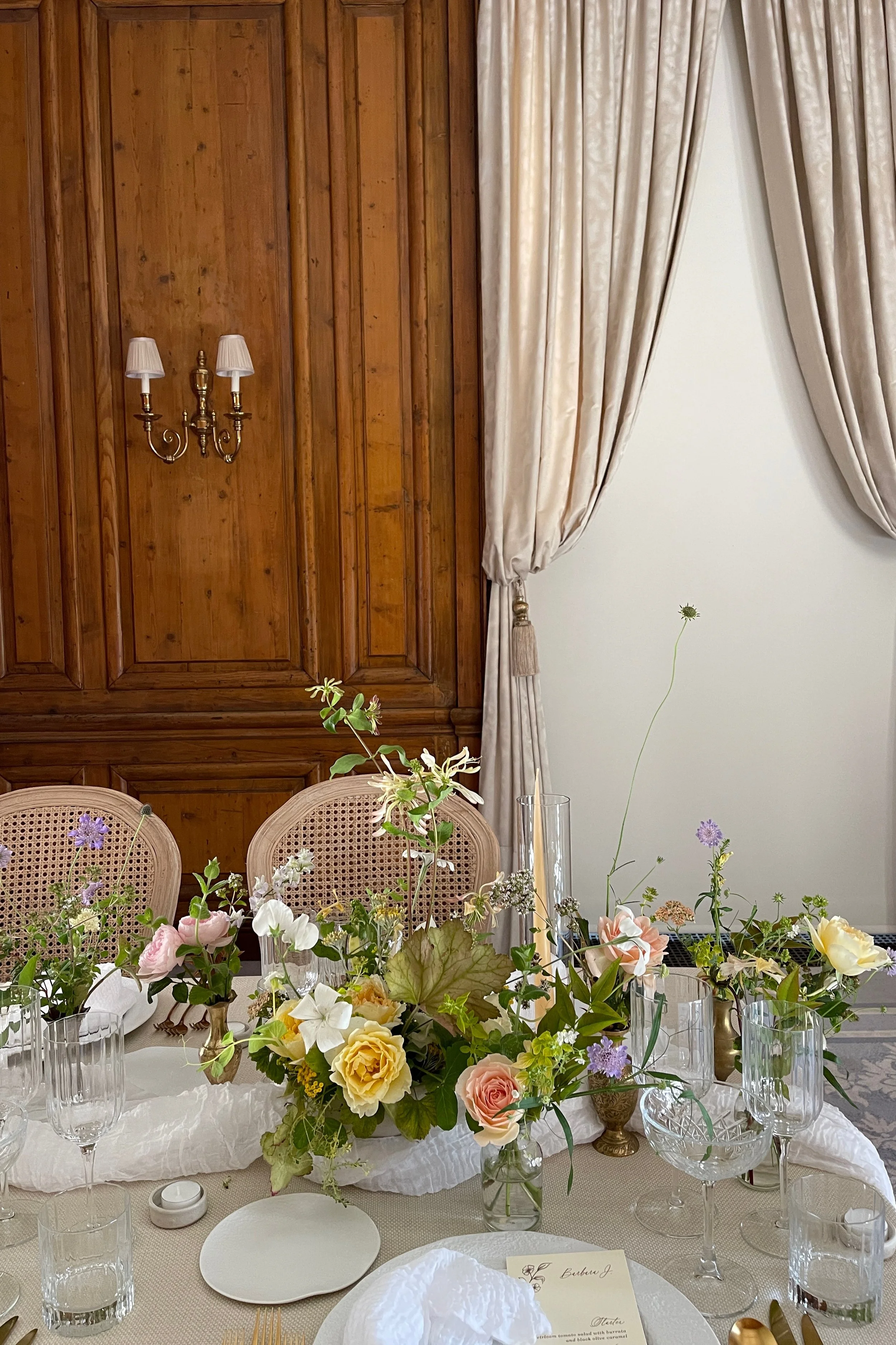
Early in the month we installed a wedding at Hedsor House for which - for once - it was a balmy 28 degrees and very windy. The ceremony was held outdoors in a small topiary garden for which we created an undulating floral border of perennials and garden roses. In the hall we wound spindly leafy branches up around the columns with honeysuckle and sweet pea vines entwined around them.
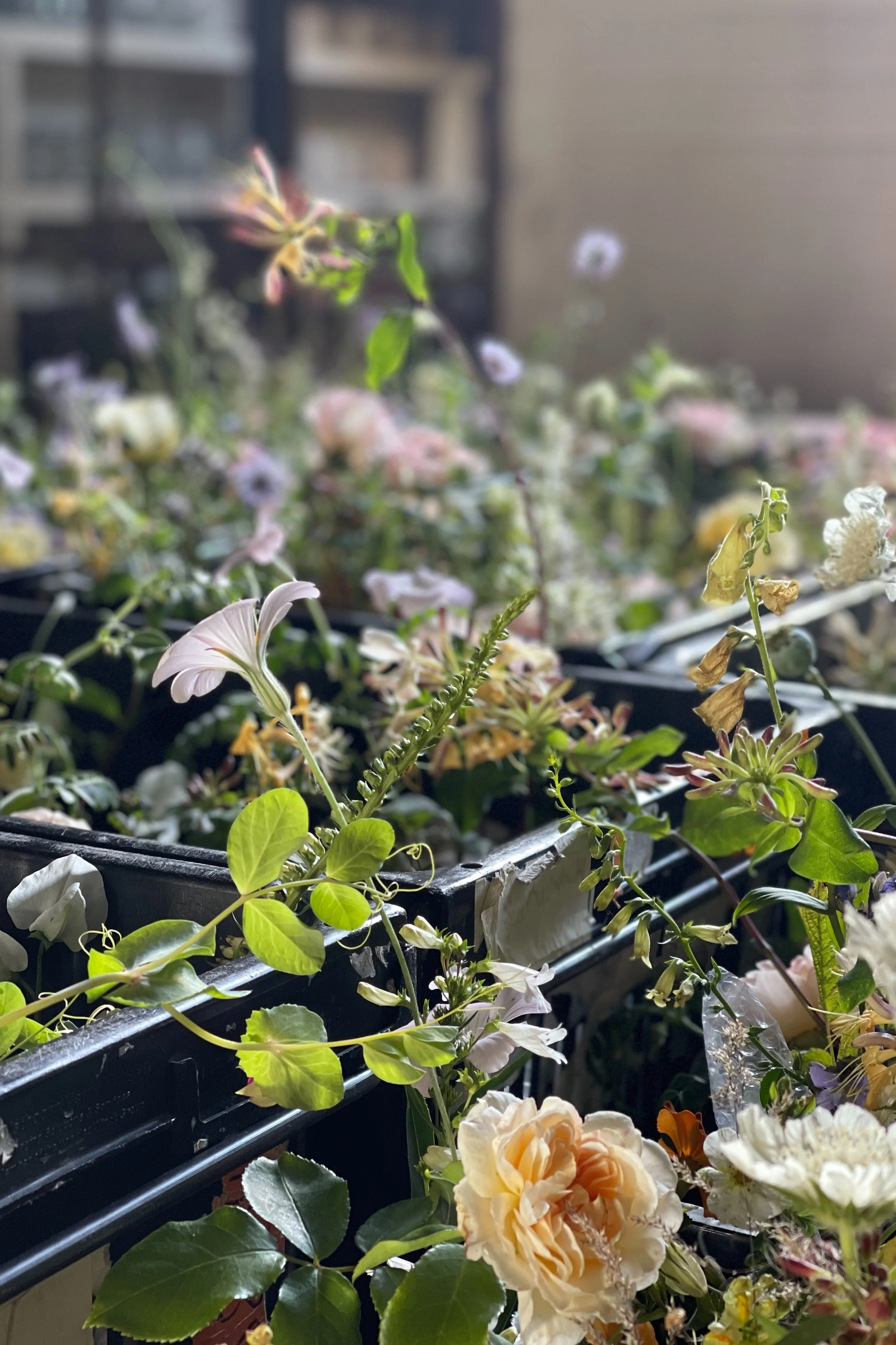
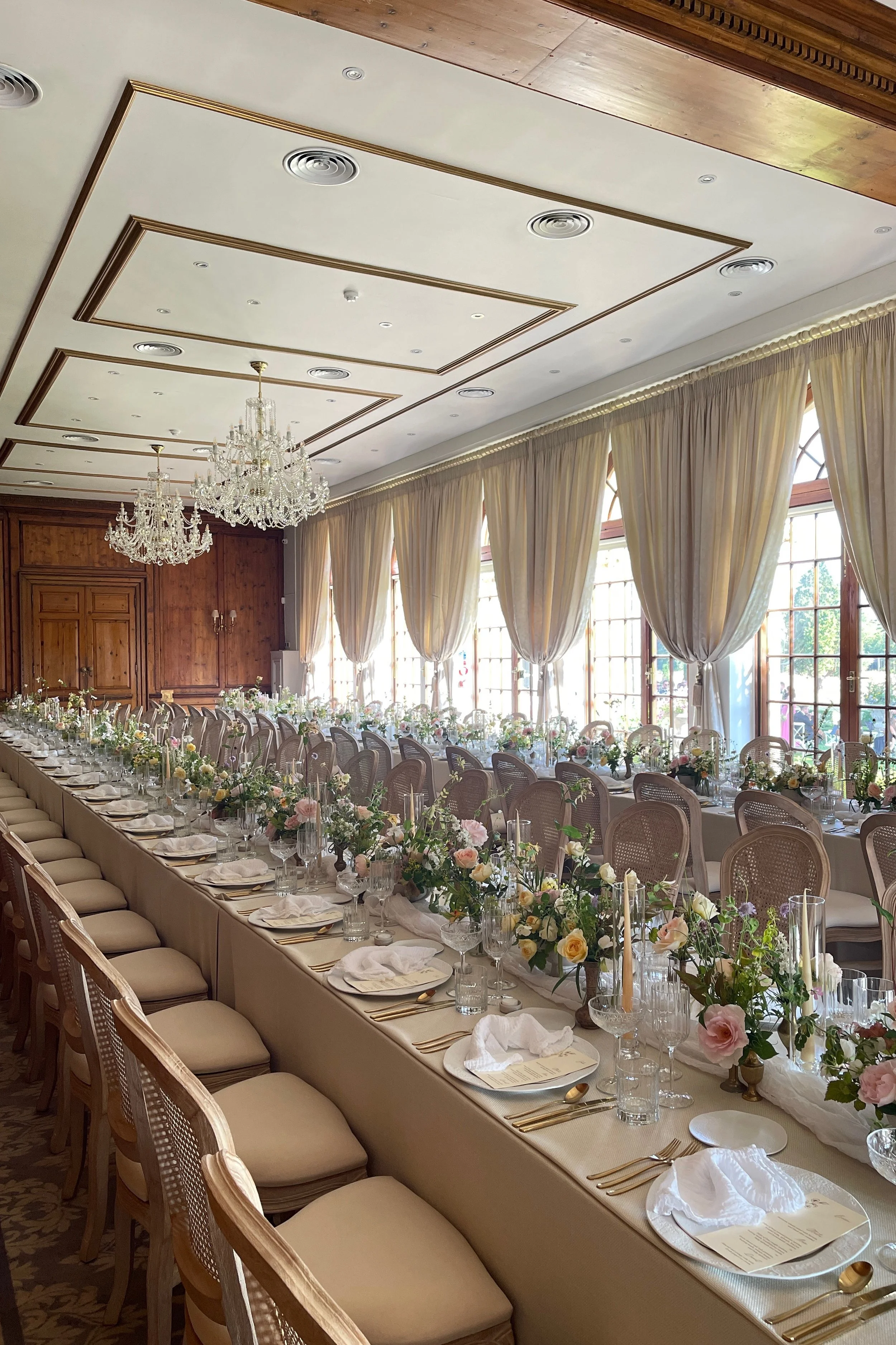
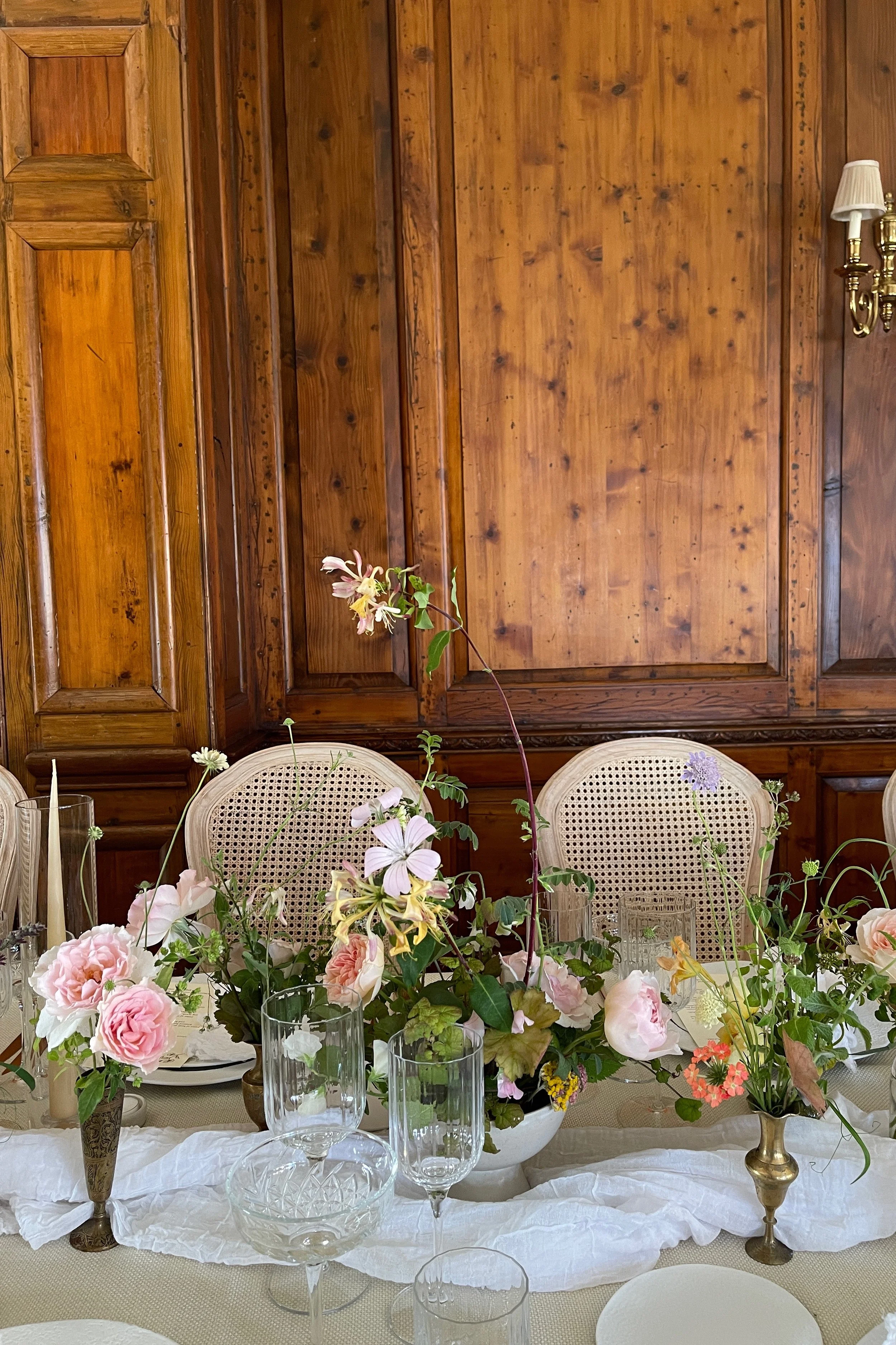
We made the tables luxuriously laden with a continuous stream of flowers the full length, arching vines of honeysuckle, tiny perennial foxgloves, blush, apricot and pale lemon roses among the candles and glassware. Just as the guests were coming in for dinner, it must have been about 8pm, I snuck a glimpse of the room with all the candles lit and the sunlight beginning to soften, the peach roses glowing. It was all very warm, very scented, very romantic!
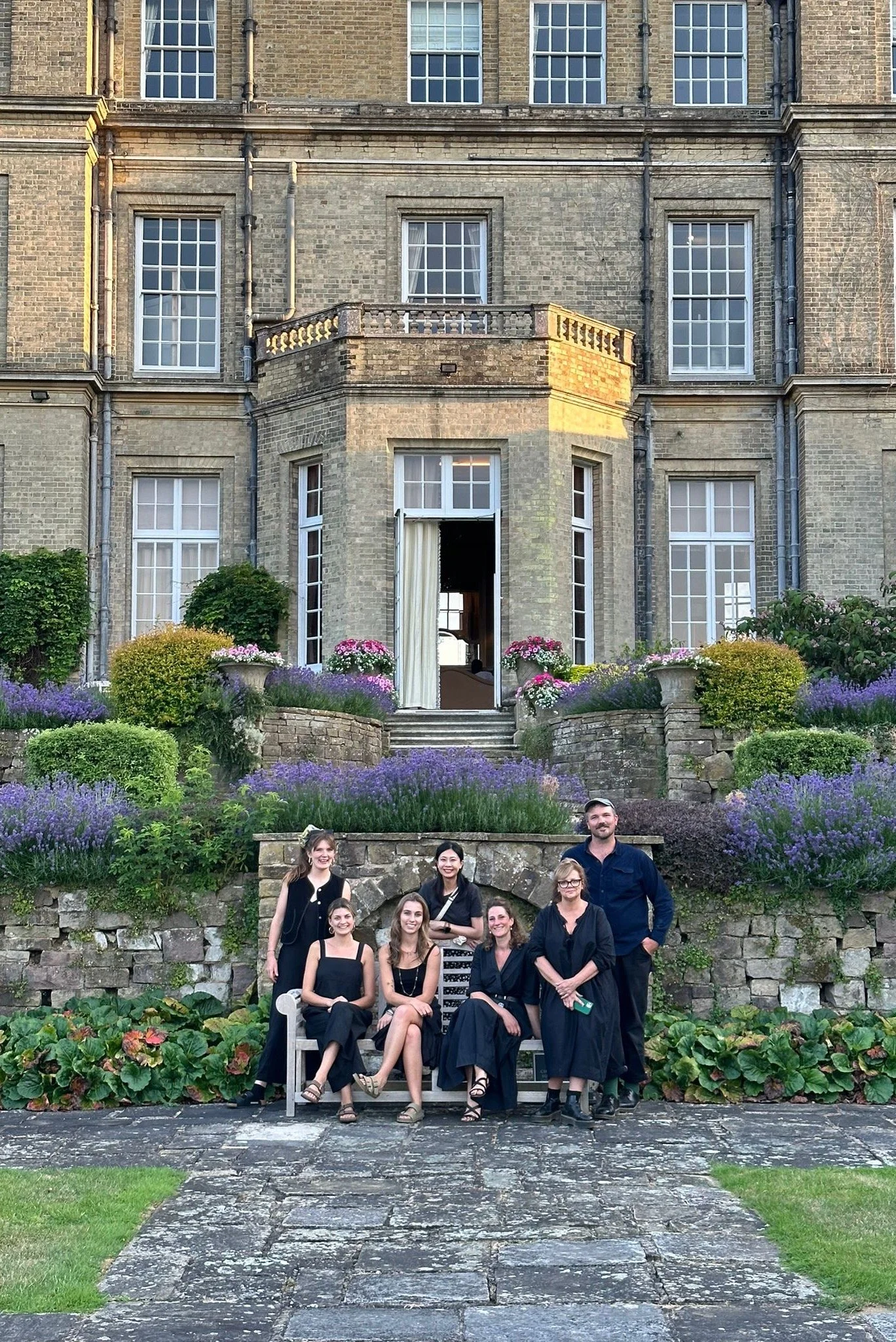
Many congratulations to our clients, Alex and Peter.
Thank you to our lovely team - Zeph, Charlotte, Aila, Fionne, Eliza, Emma, Felicity and Daniel - for bringing the imagined brief to life. And thank you to Alexis from Willow & Oak for an expertly crafted event; we loved working with you.
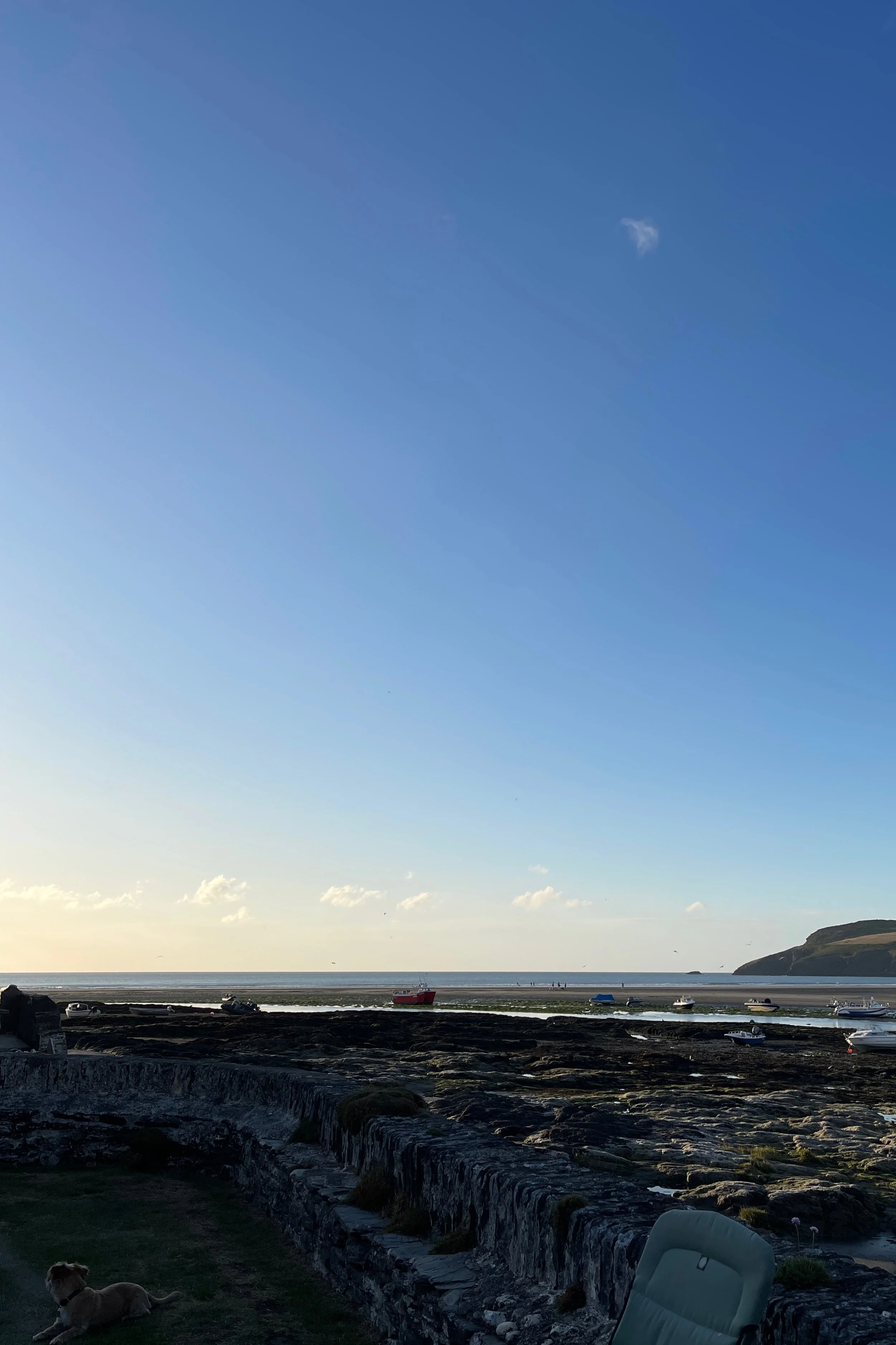

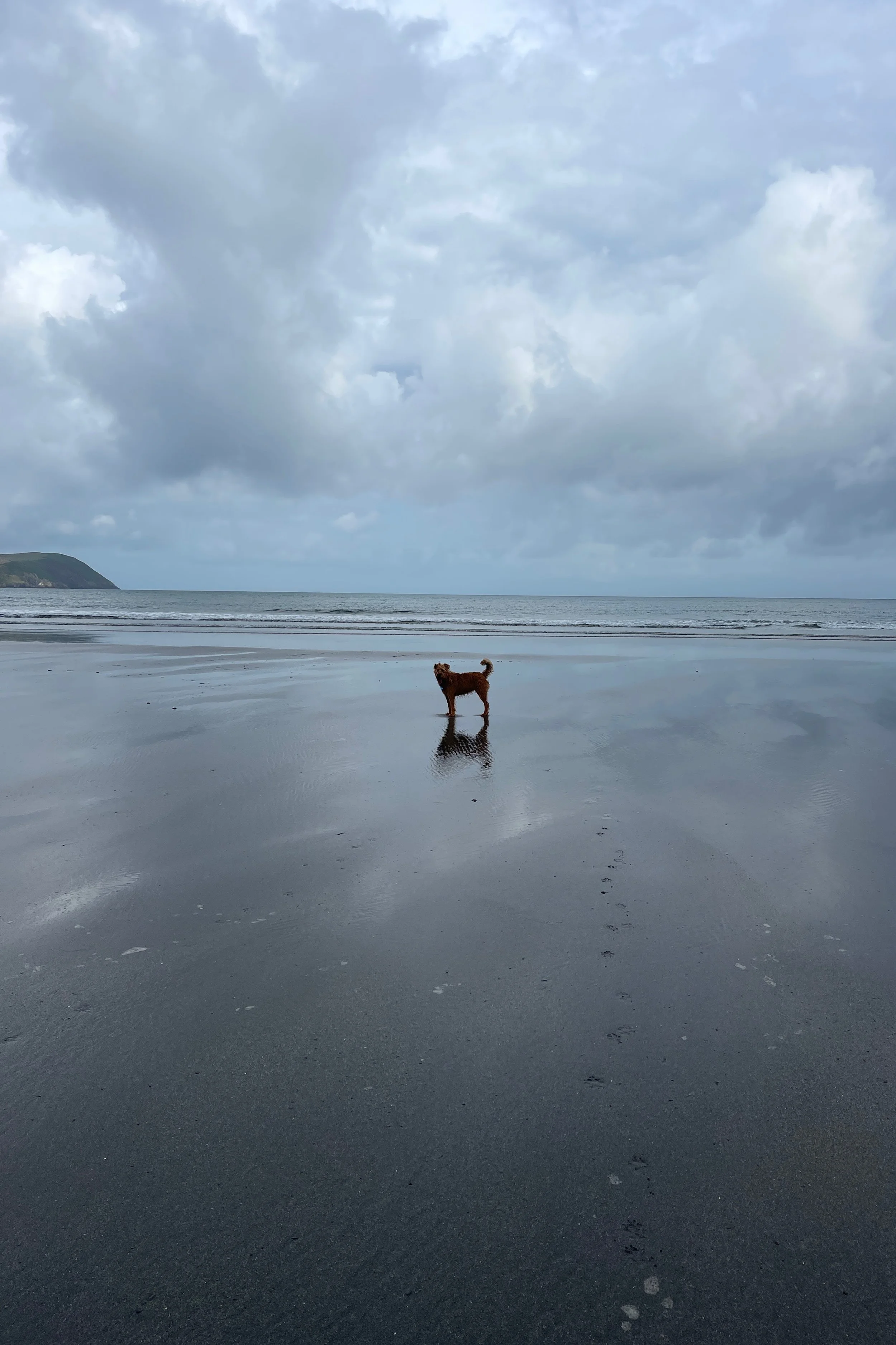
Mid July - a brief jaunt to Pembrokeshire.
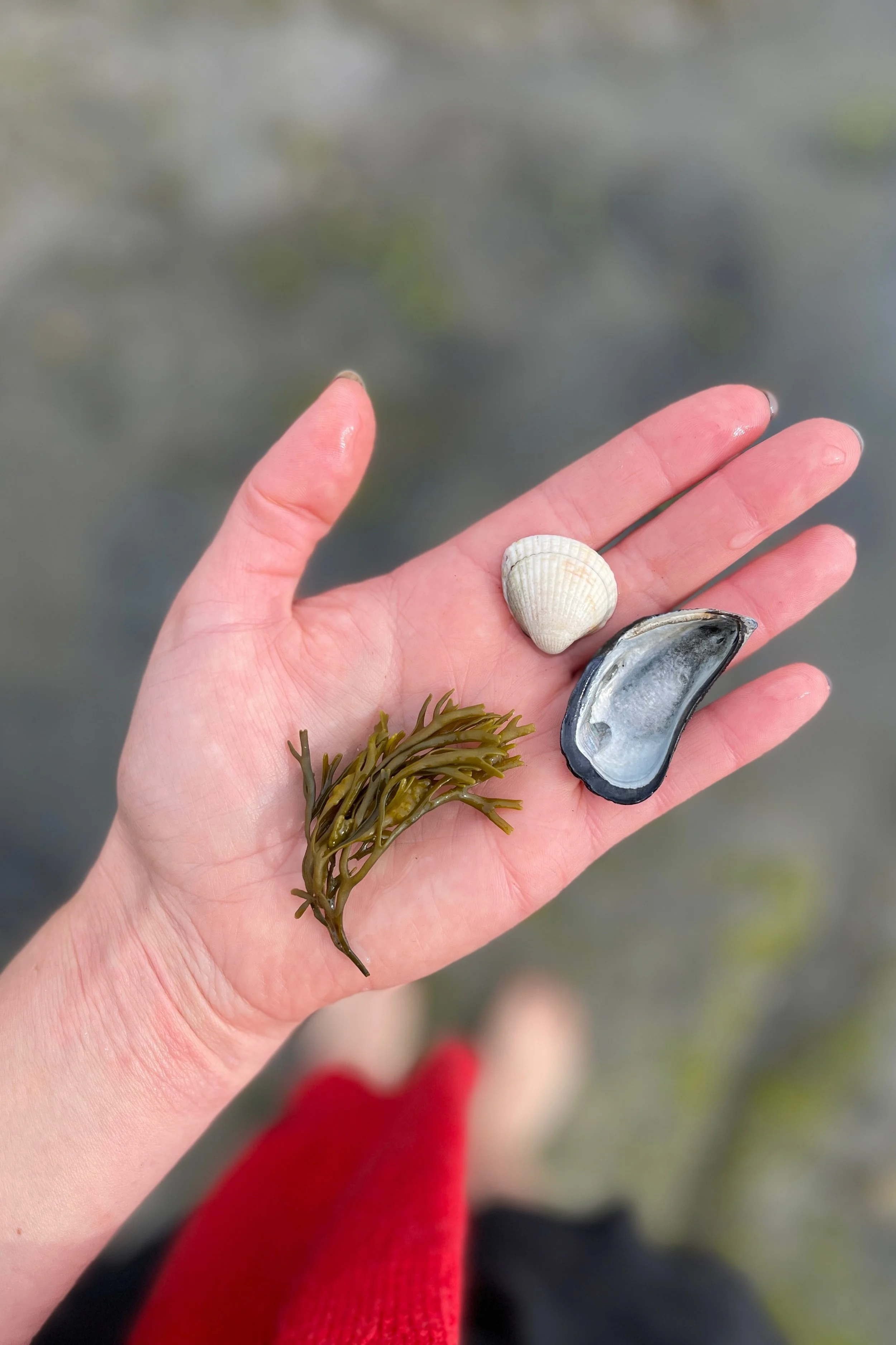
Rockpools, drizzle, fish and chips, stretching the legs and eyes. Mavis is at her very happiest and most prance-y on this beach.
The annual pilgrimage to Sissinghurst Castle.
Always a lot to see and inspire…
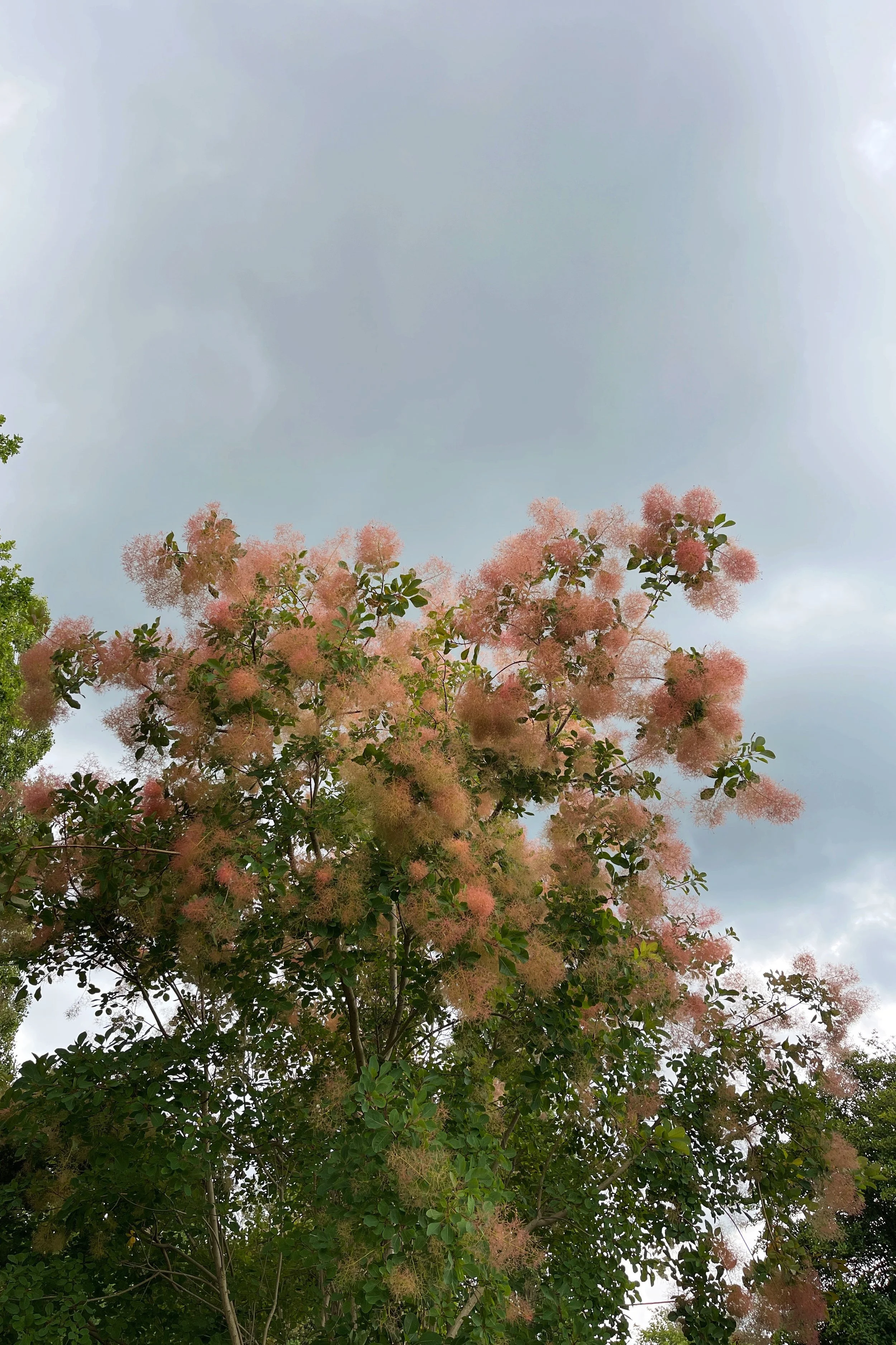
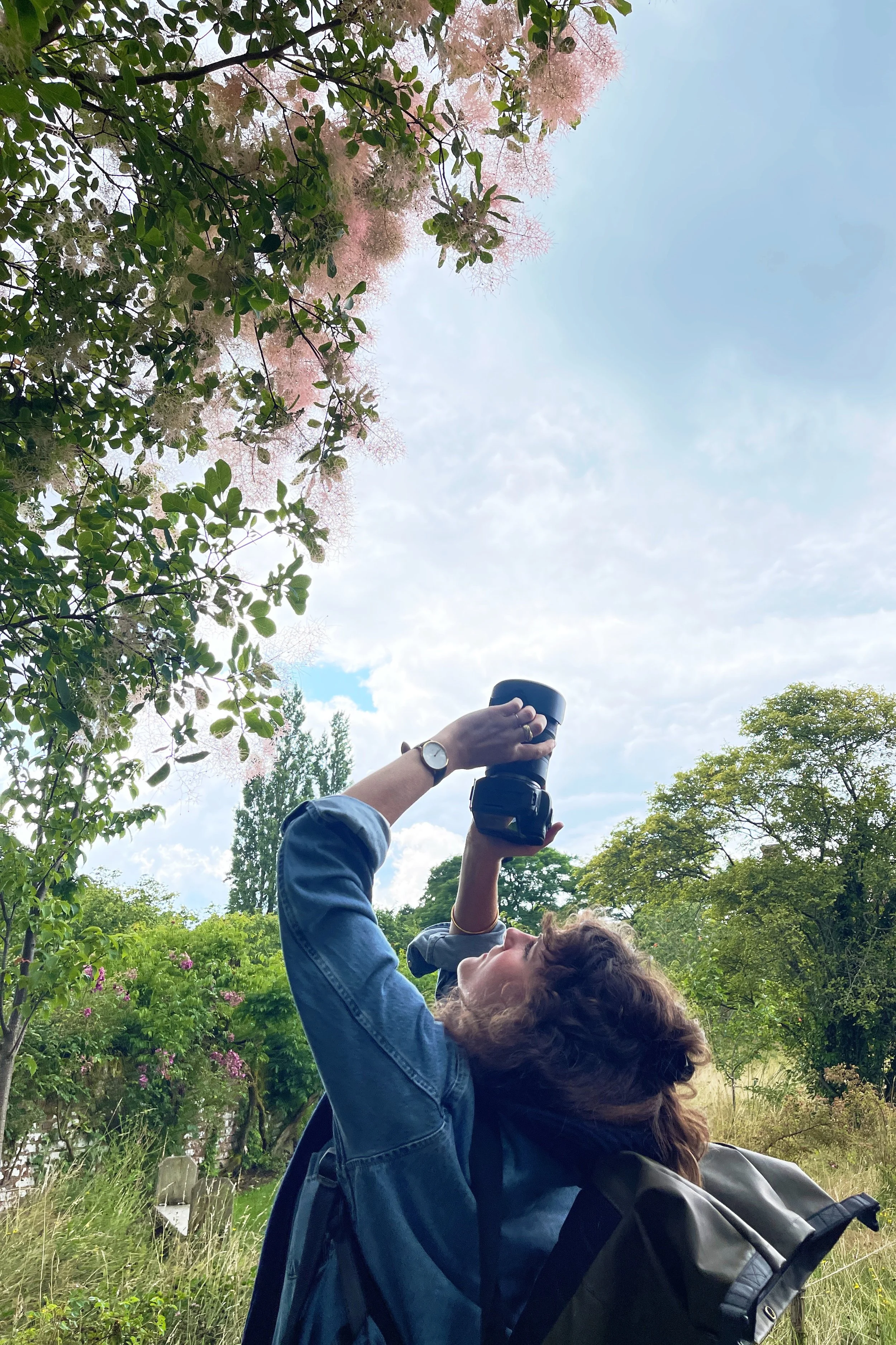
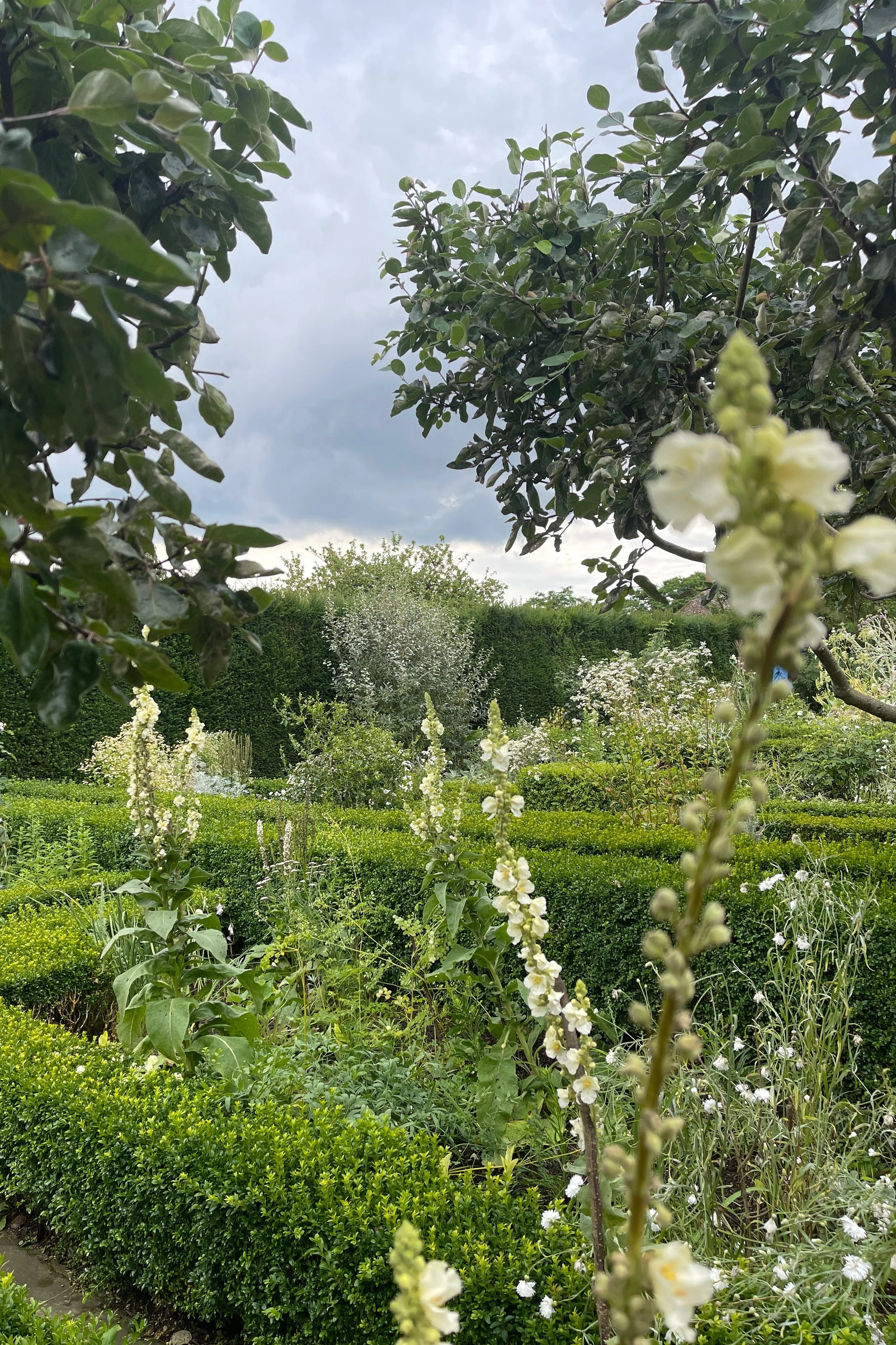
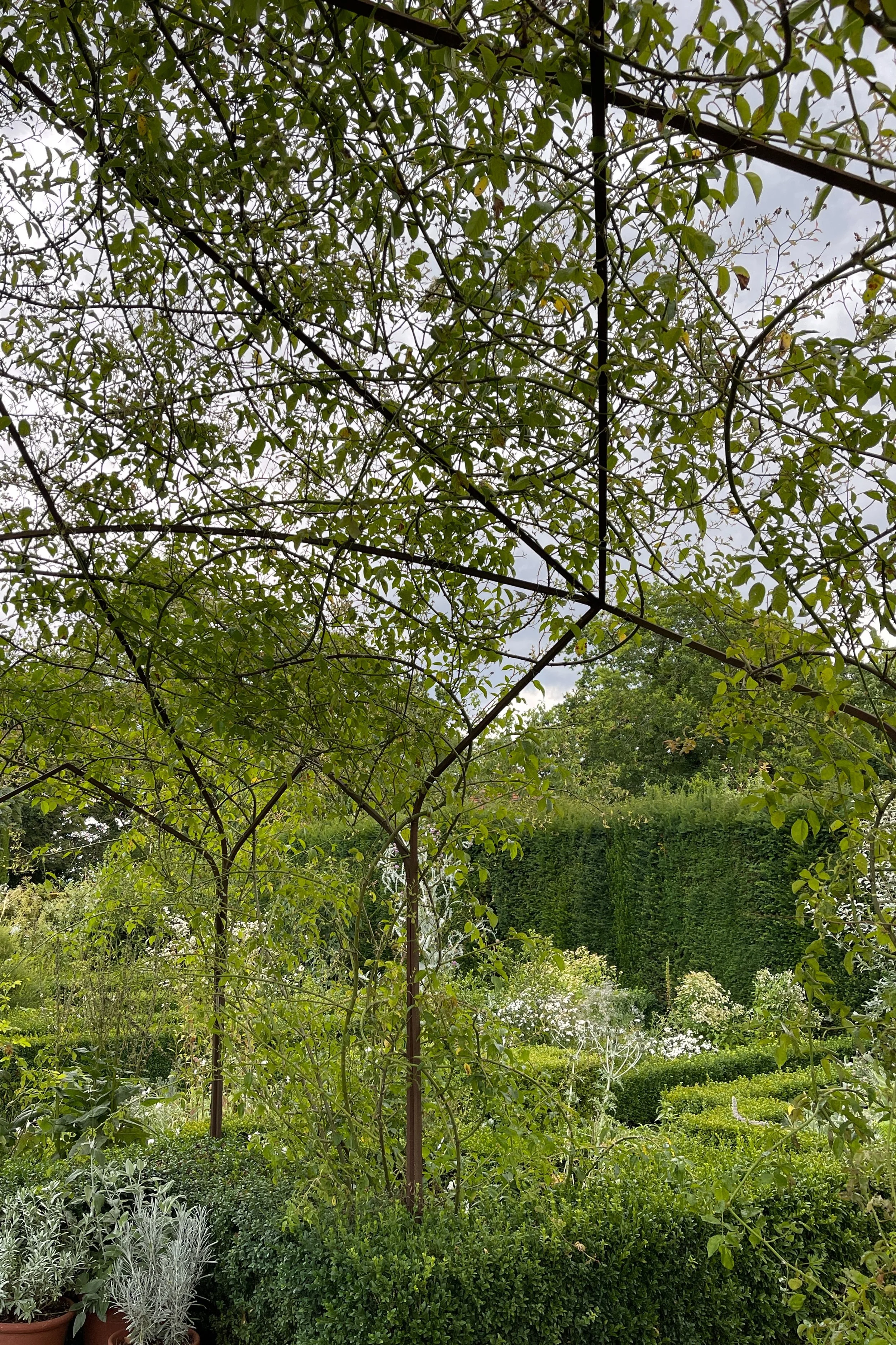
The white, silver and greens of Vita Sackville West’s ‘White Garden’, which is like diving into a refreshingly cool pool.
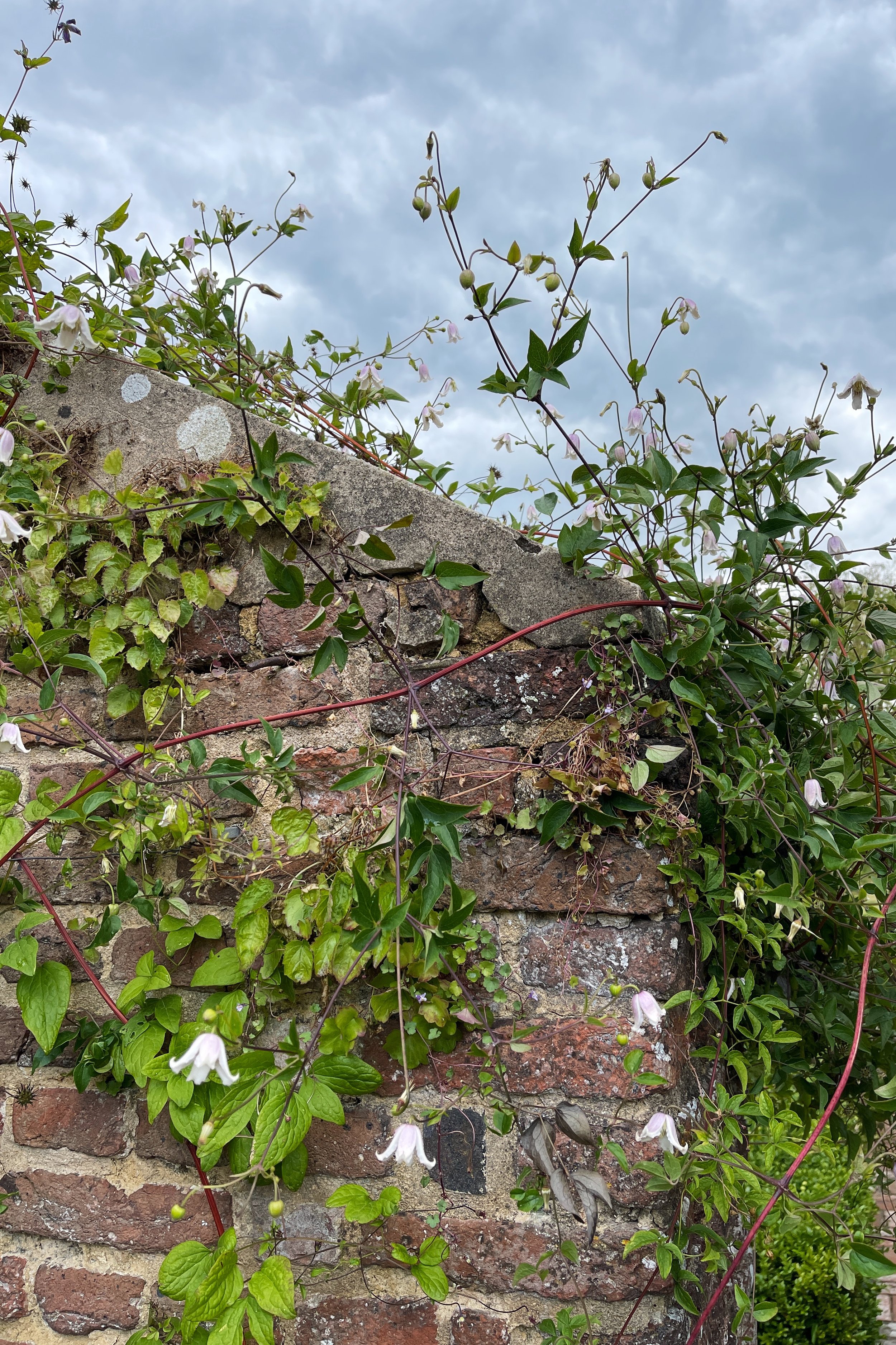
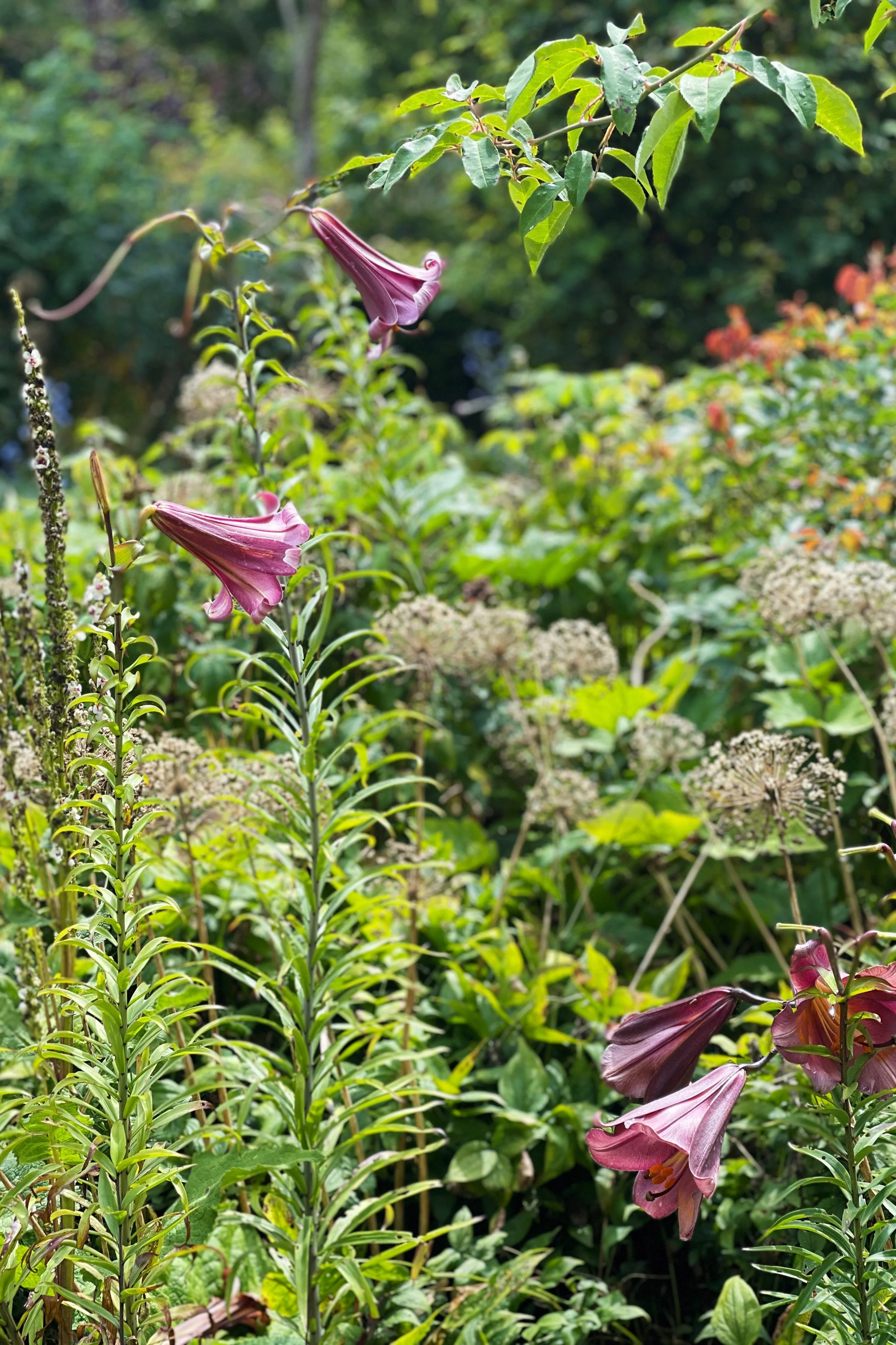
The Clematis was extraordinary this year, as were Dan Pearson’s beautiful reimagined ‘Delos’ under the bruised sky and the clouds of dusky red smokebush.
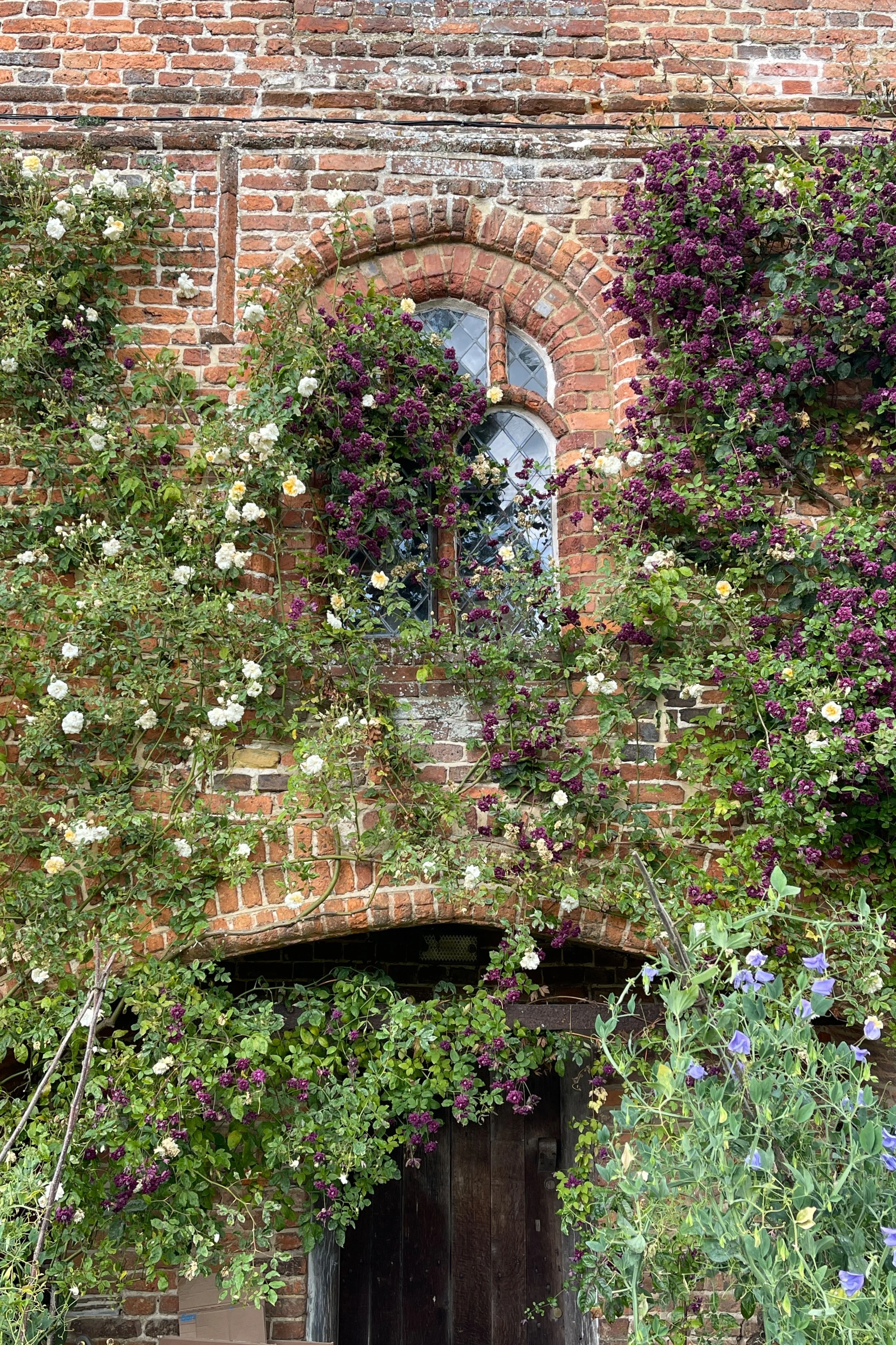
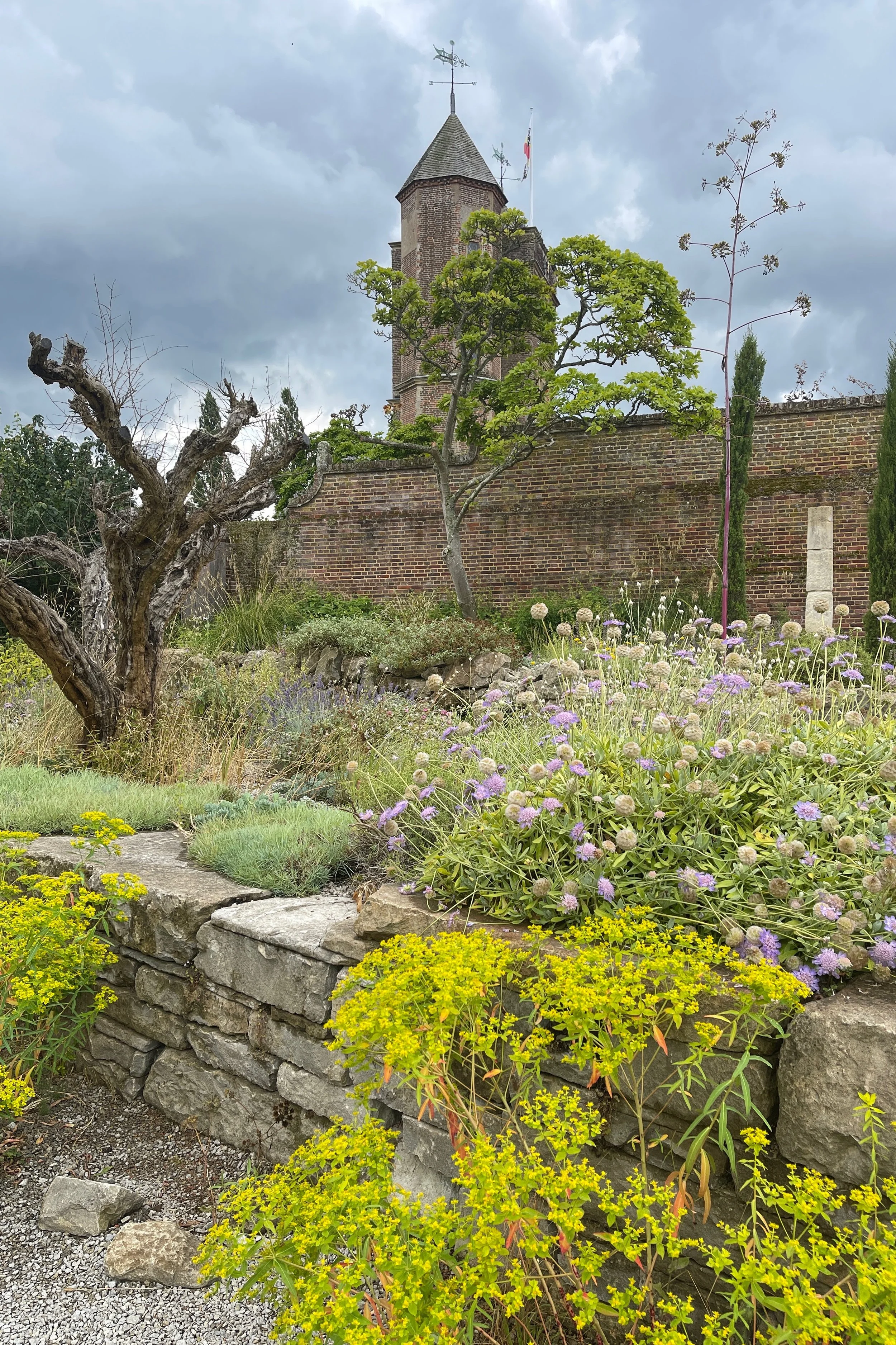
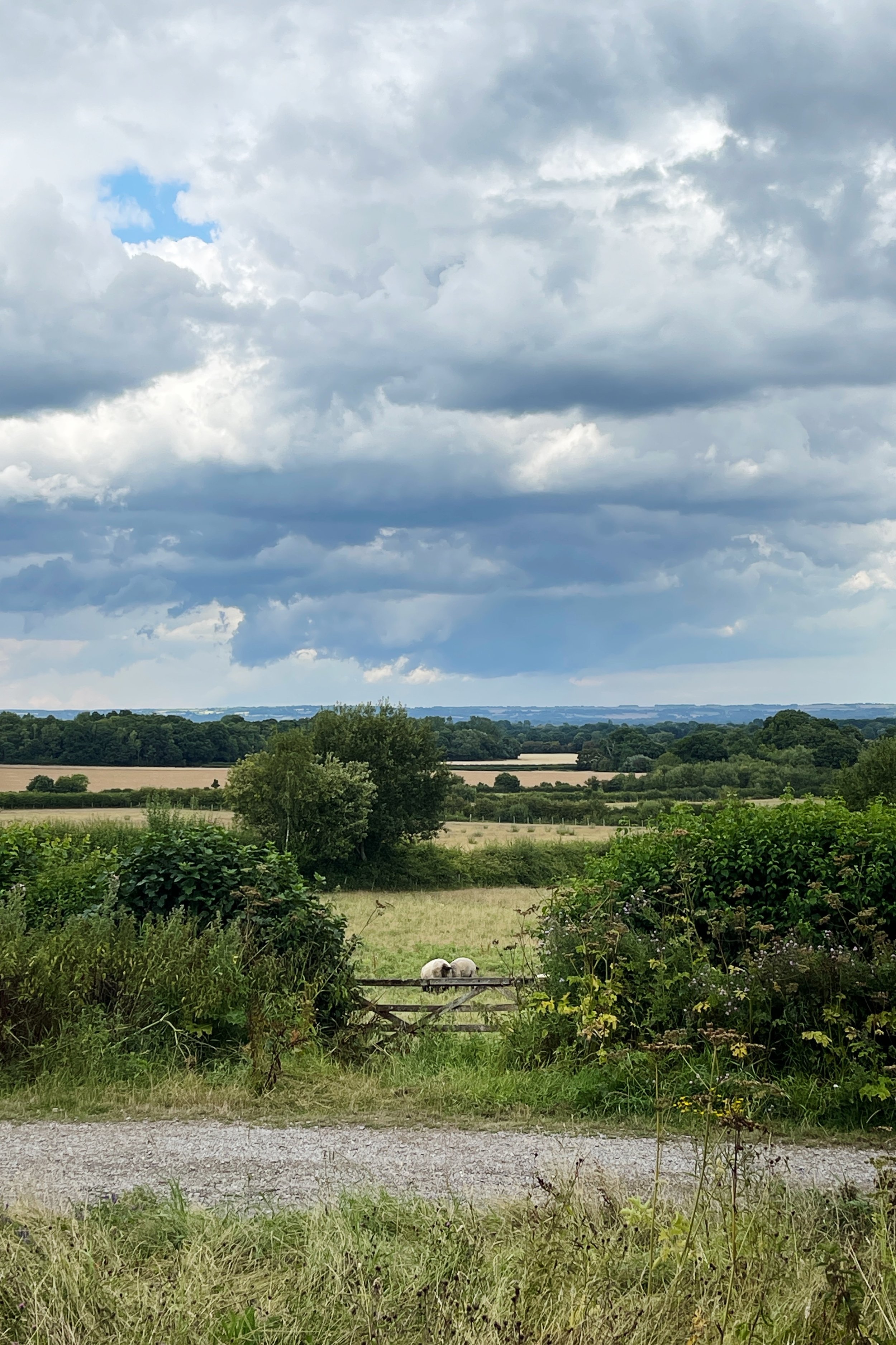
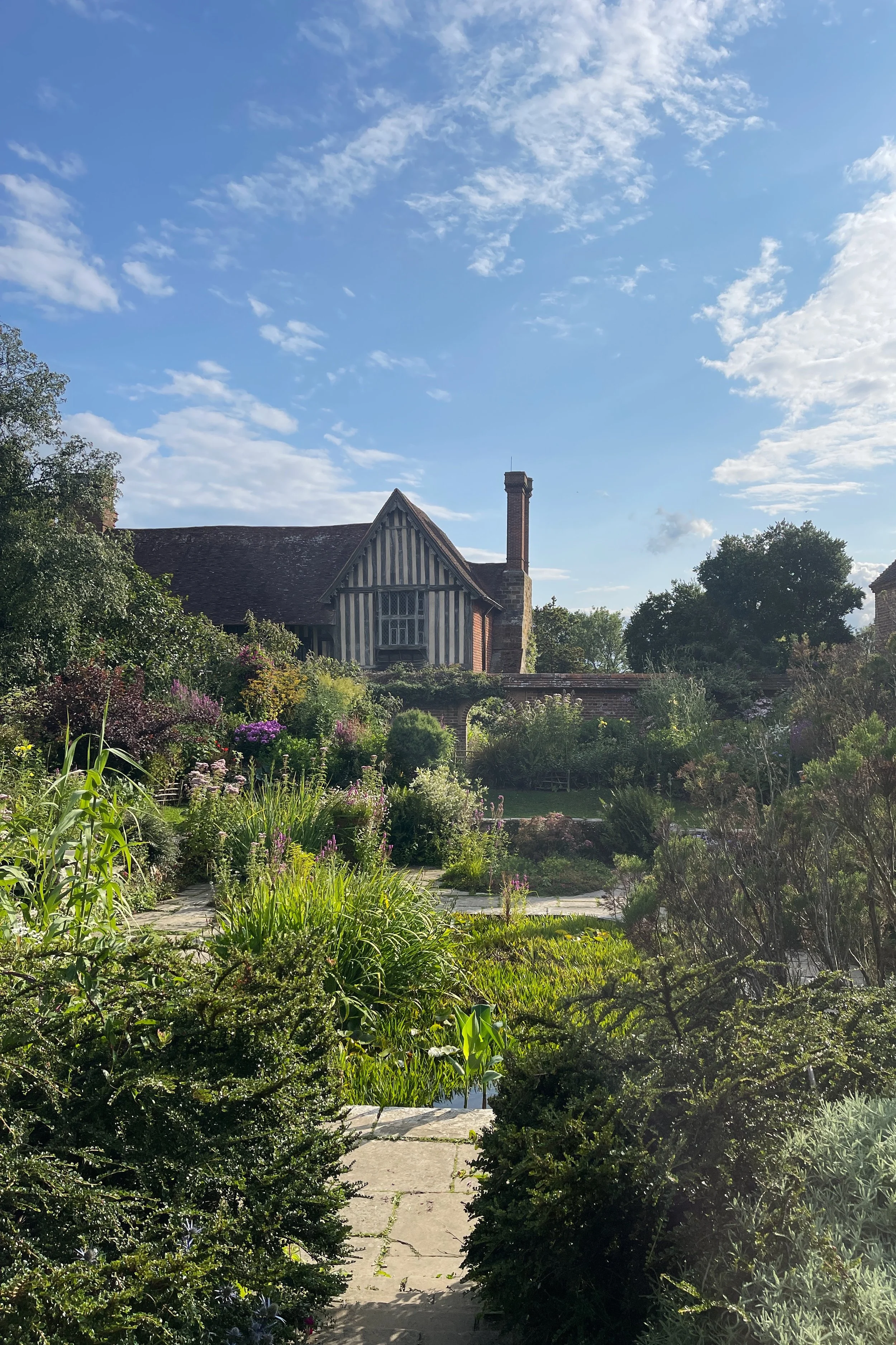
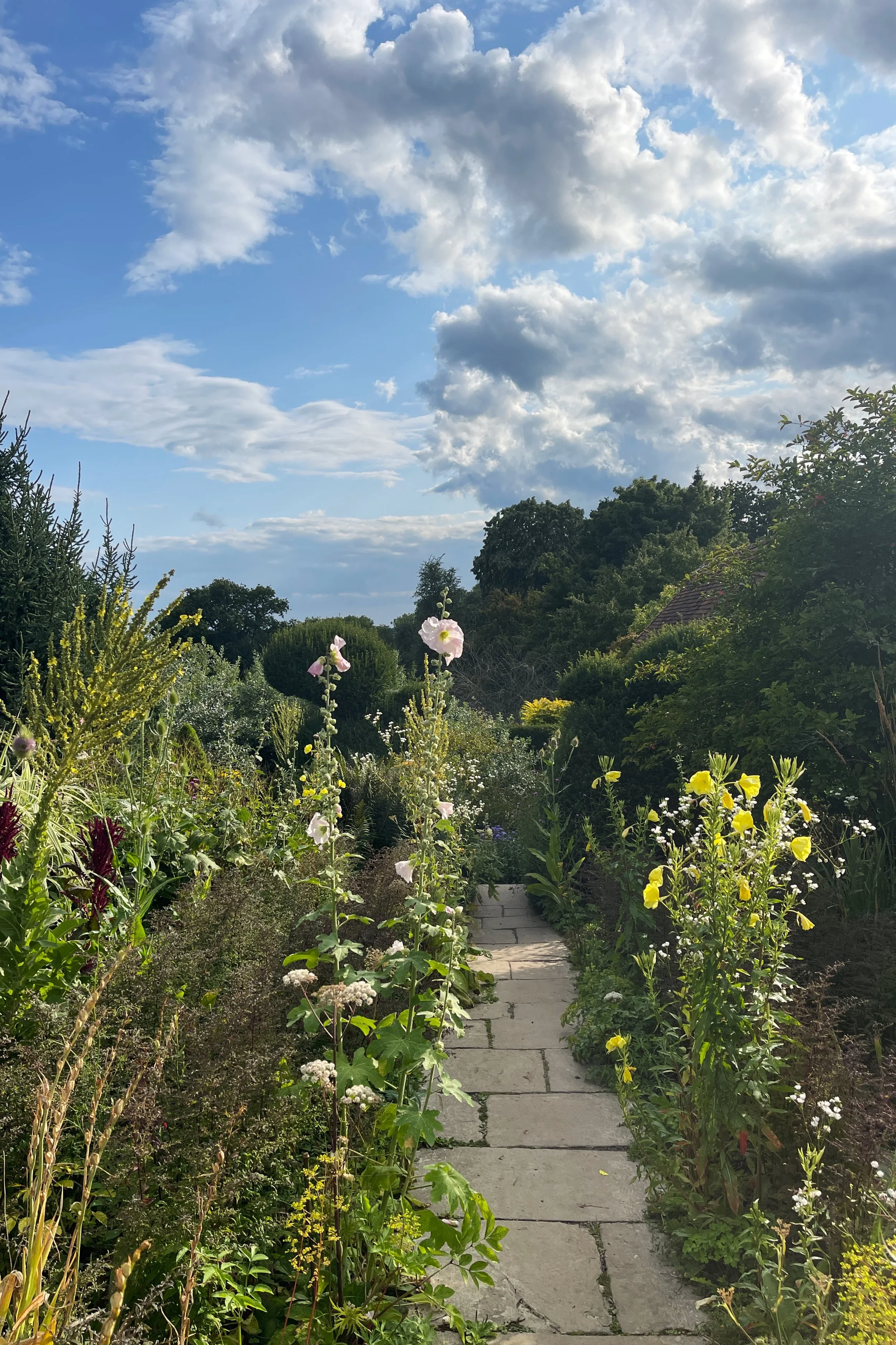
And then on to Sussex and Dixter.
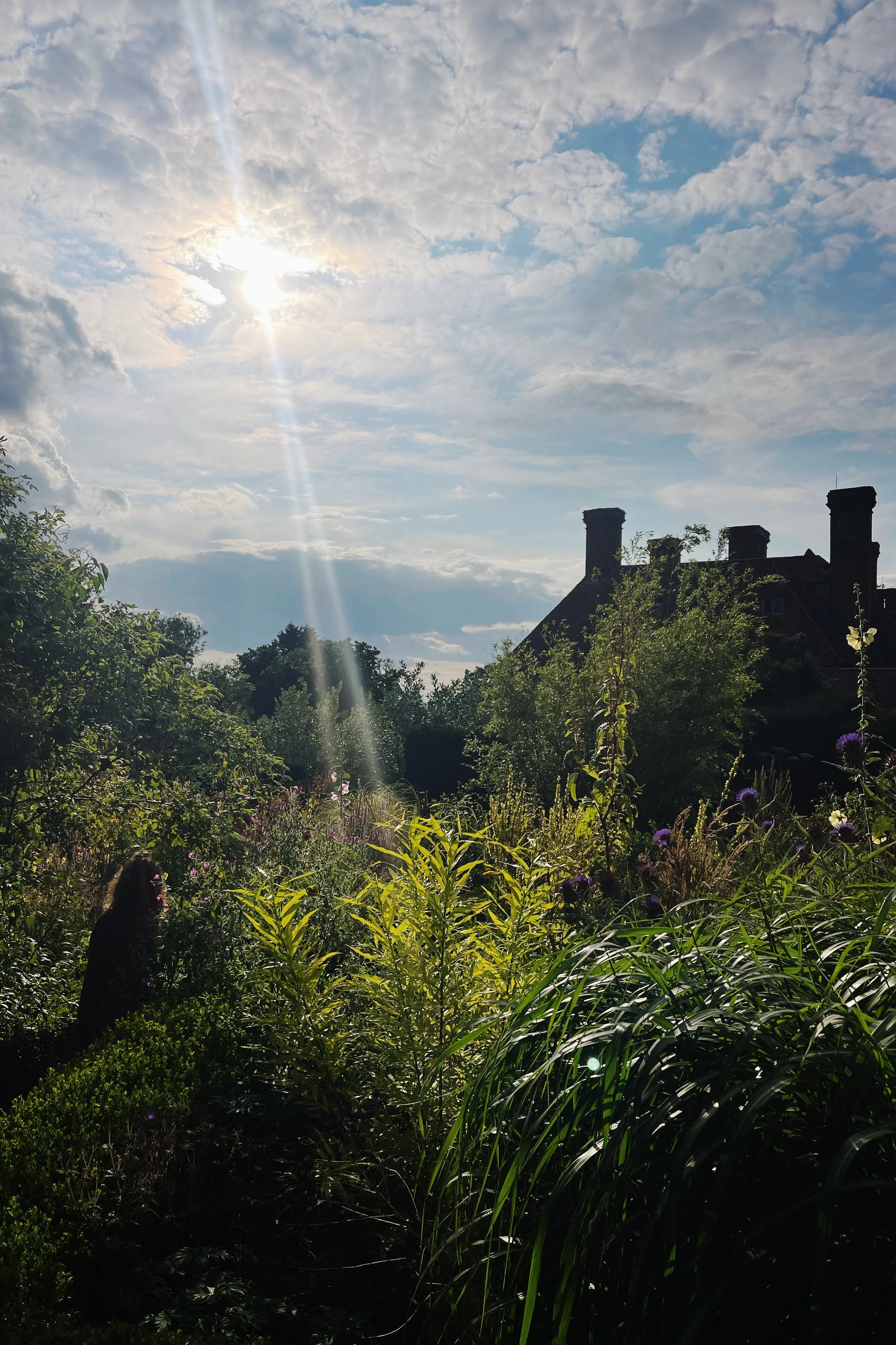
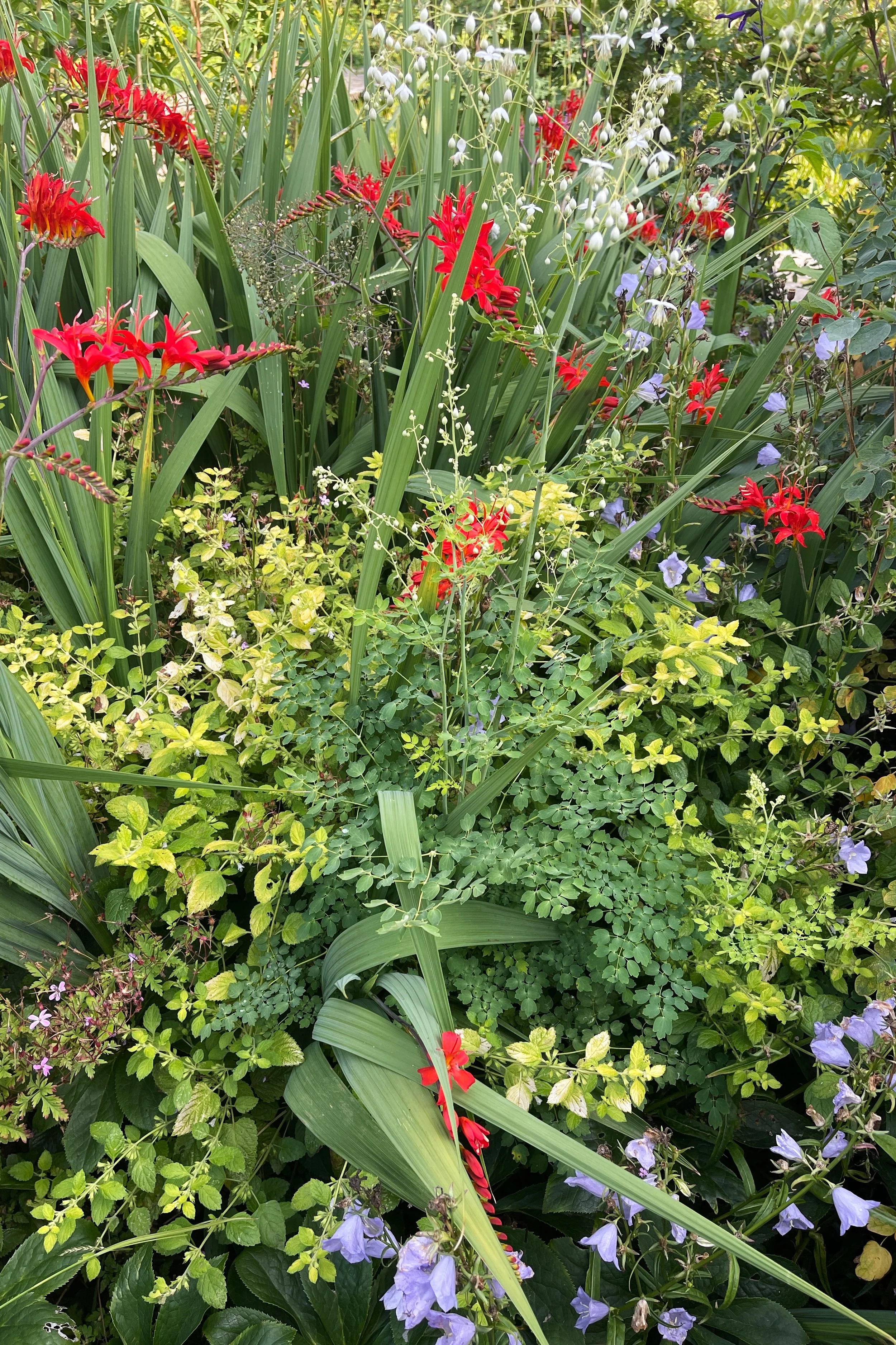
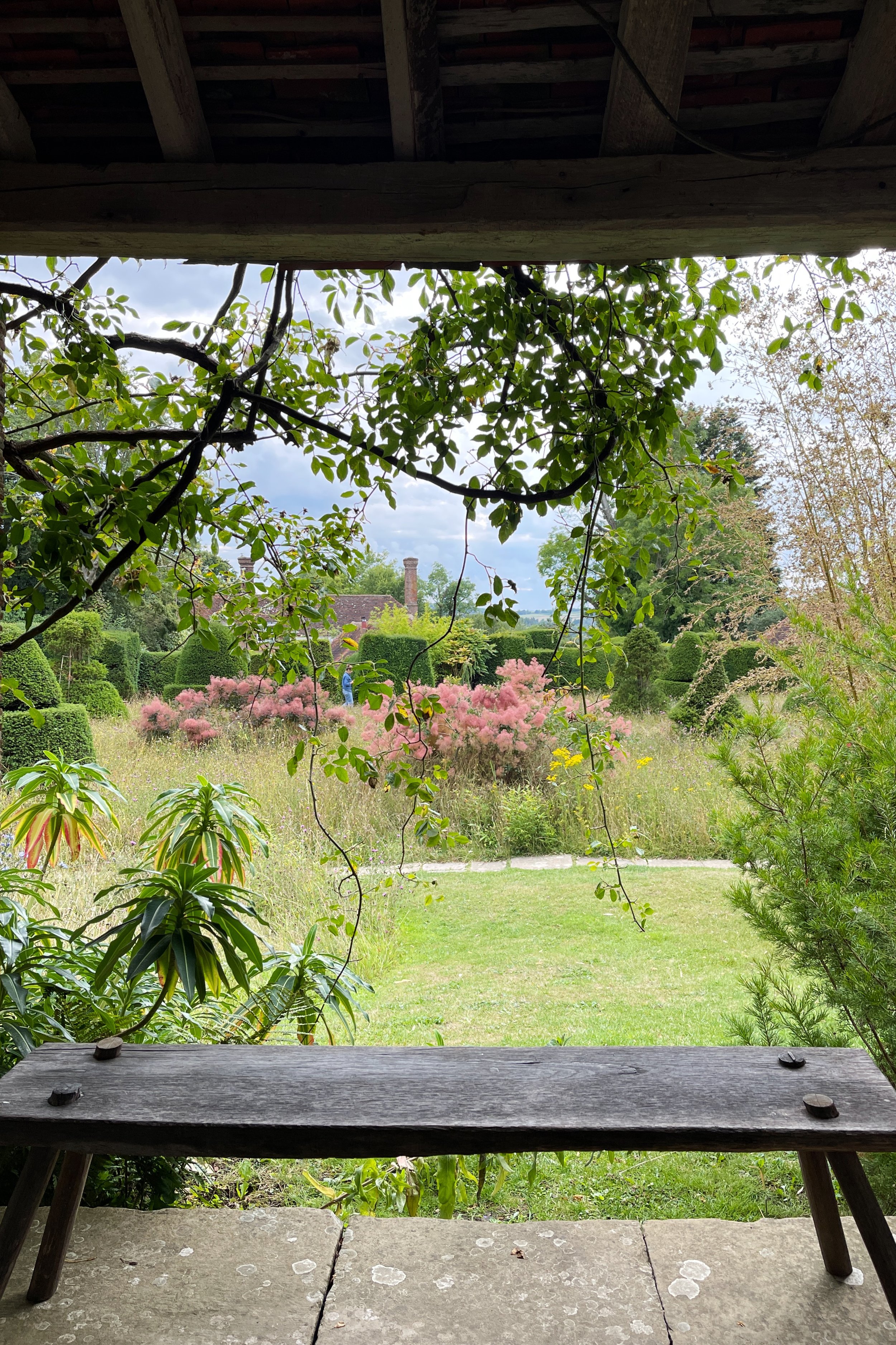
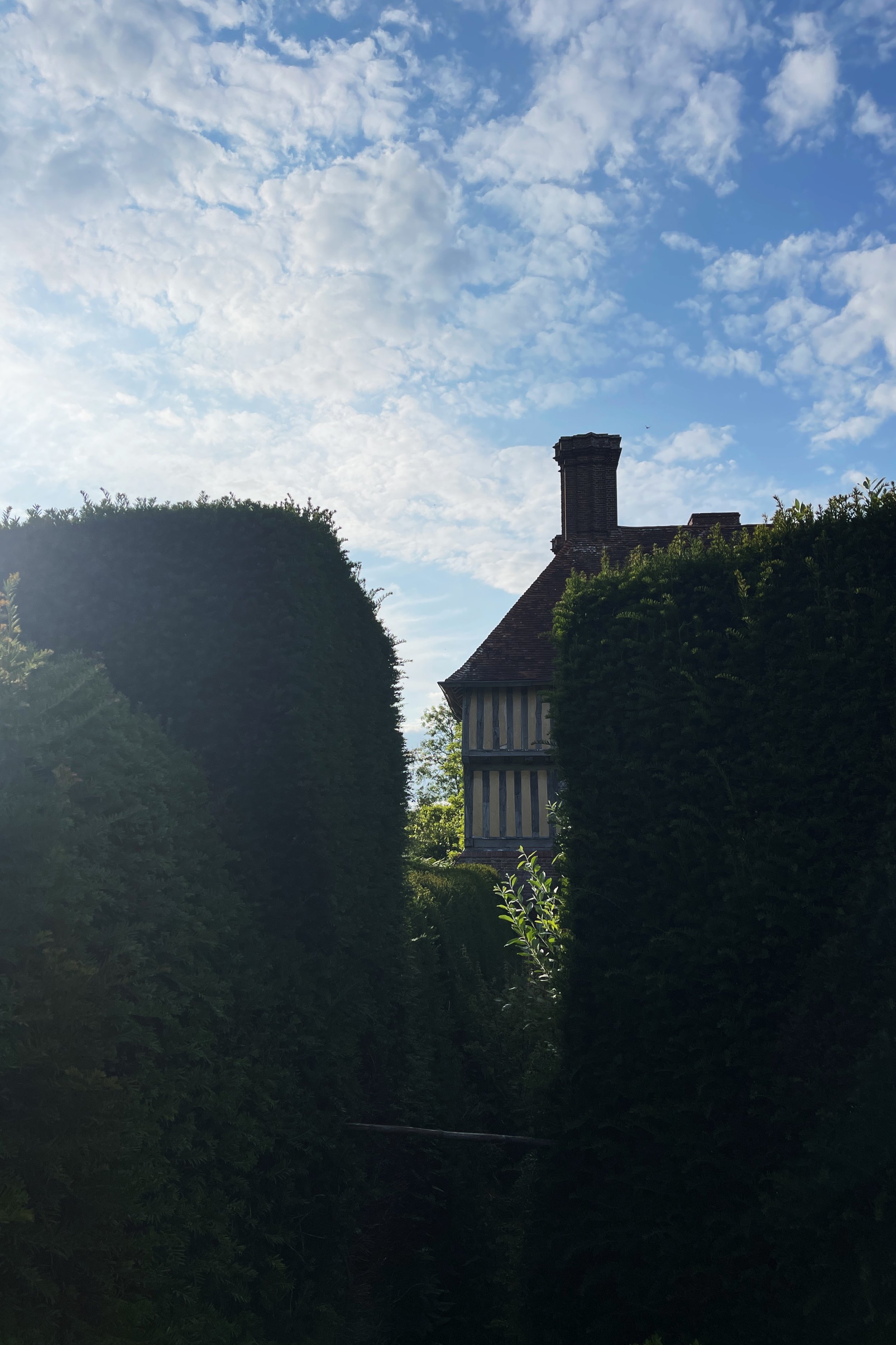
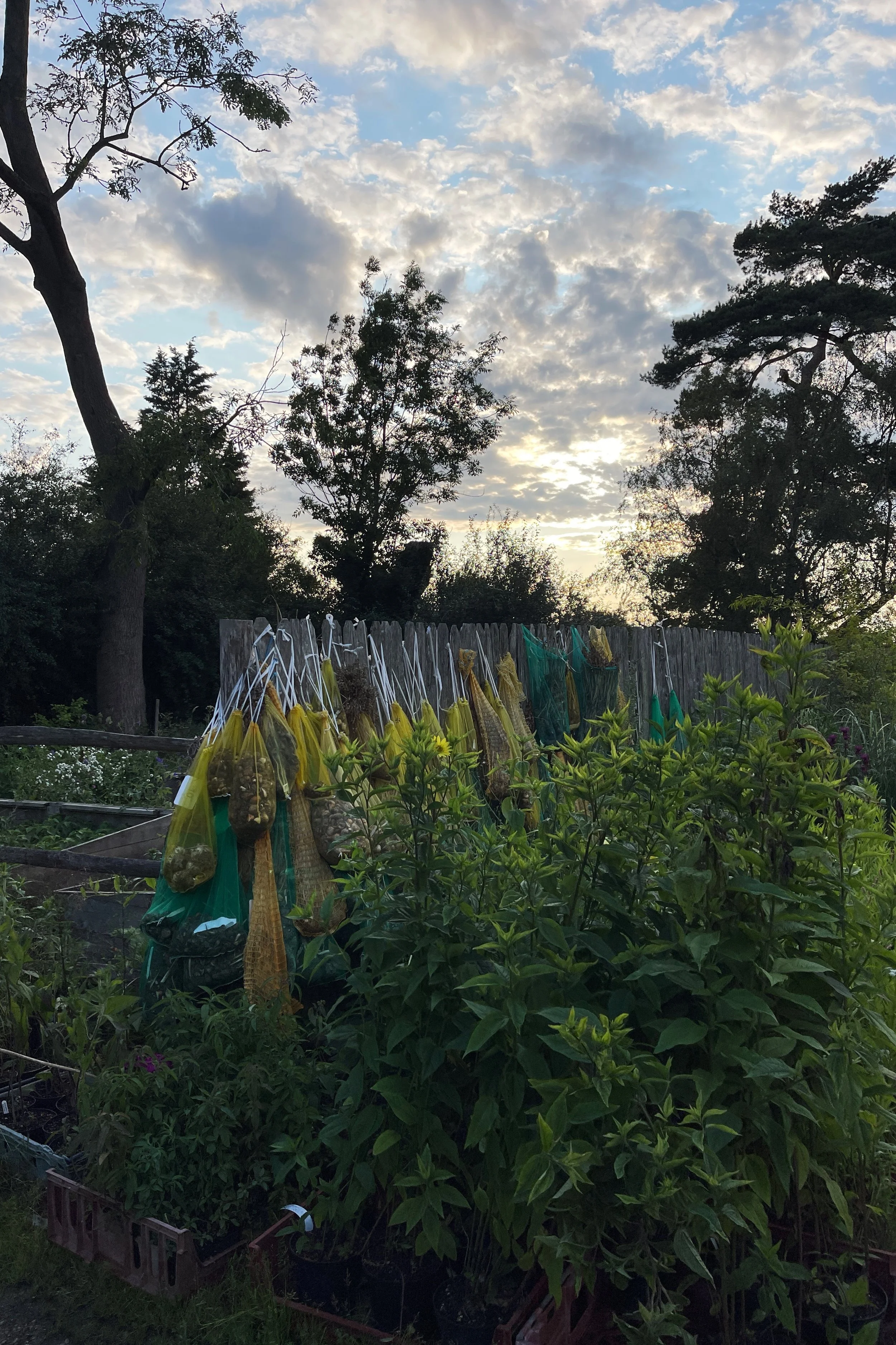
It was obviously meant to be our lucky day that day. We got the last two scones in the house, the sun came out for the evening, our friend Daniel who works in the nursery took us on a tour of the garden after closing time AND I got to eat my first mulberries straight from the tree. Delicious.
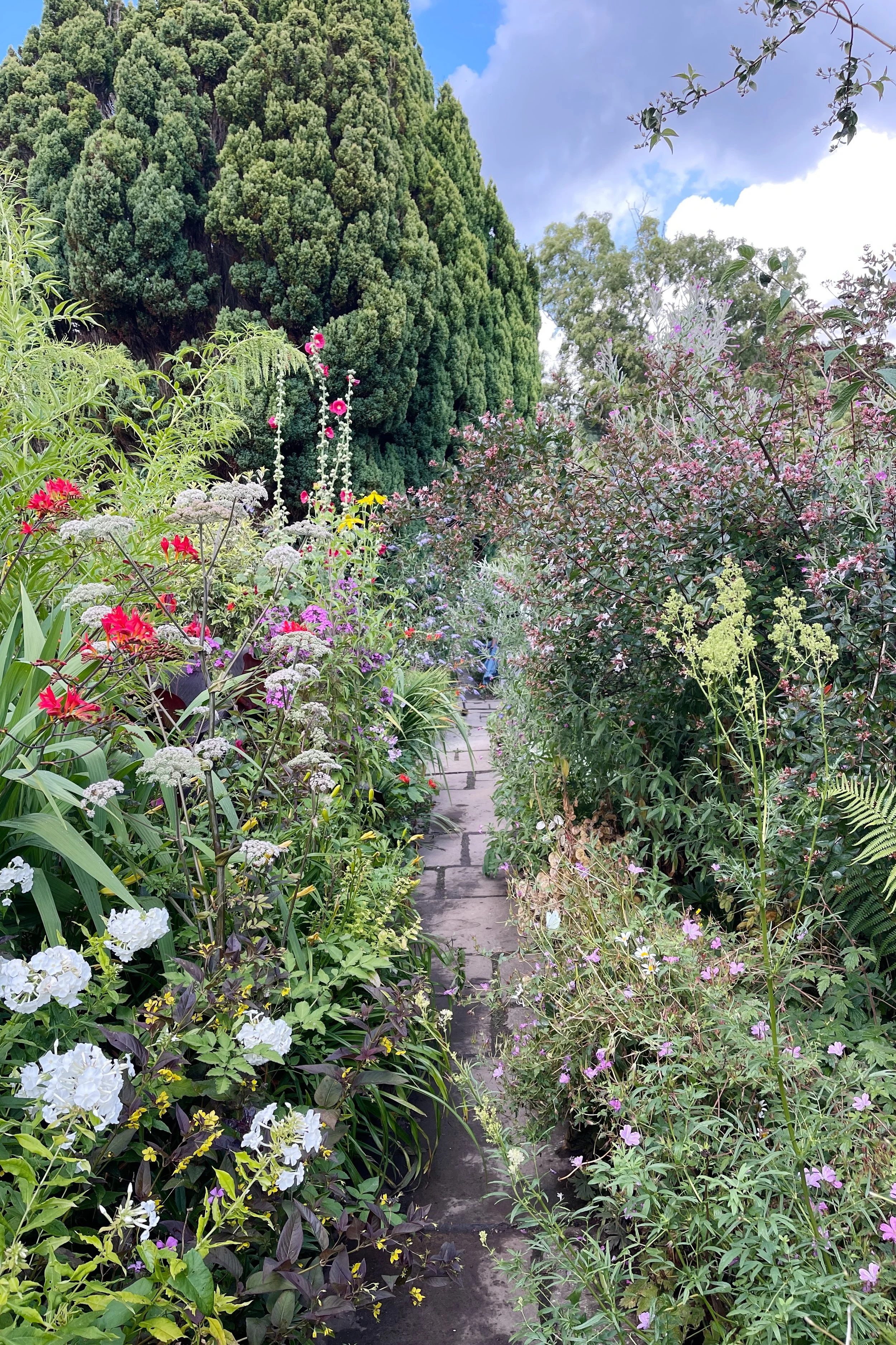
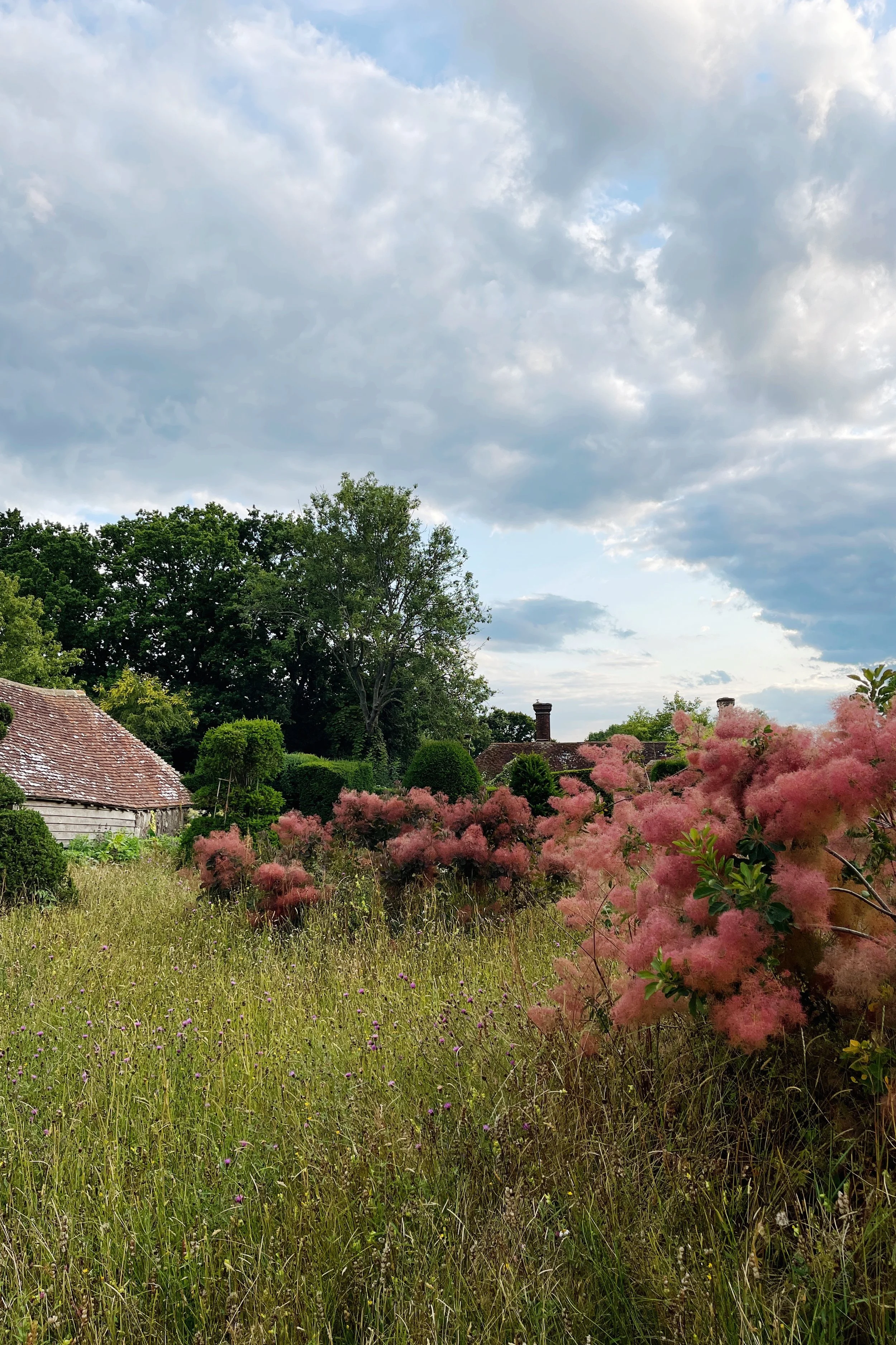
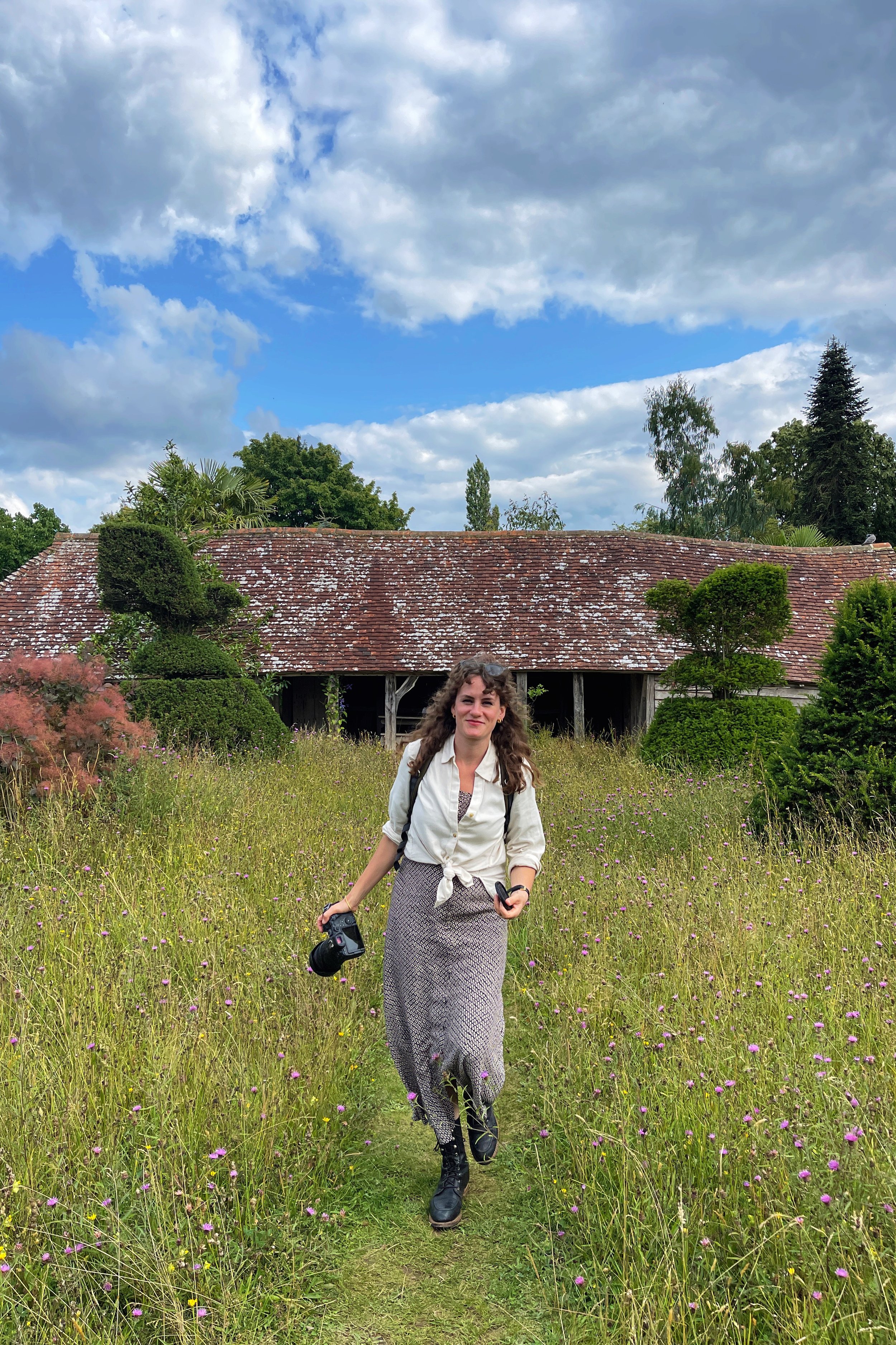
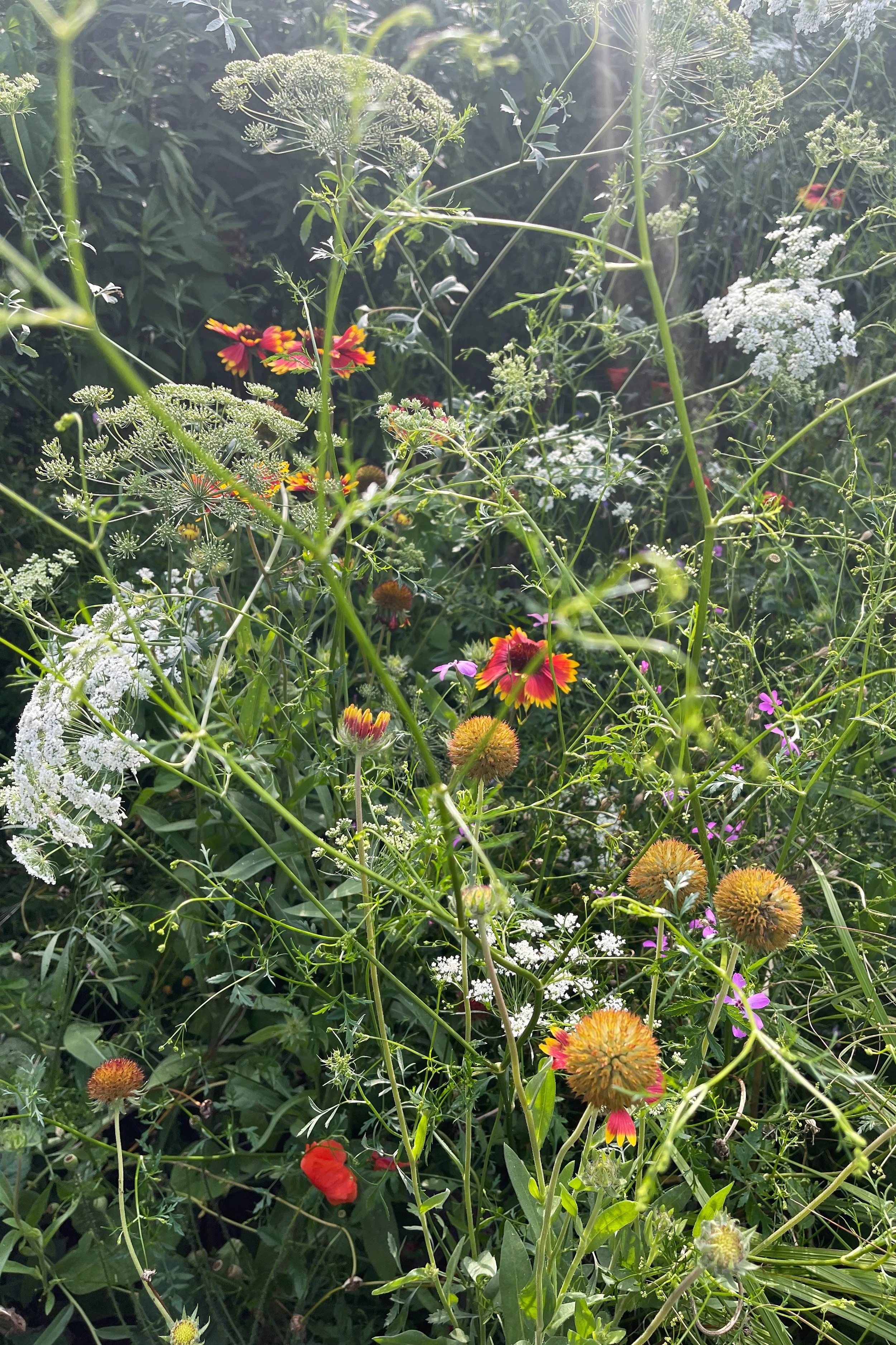
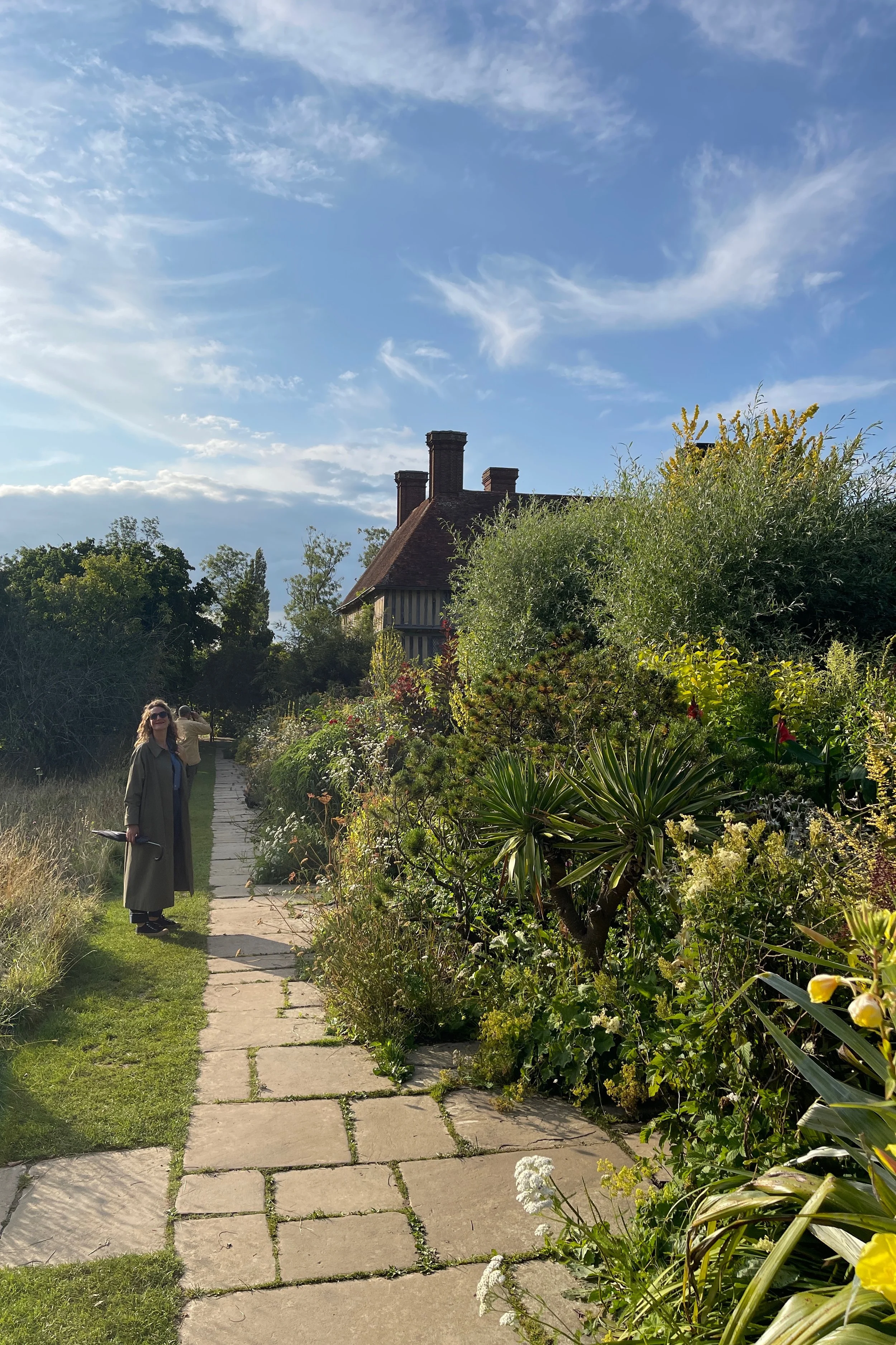
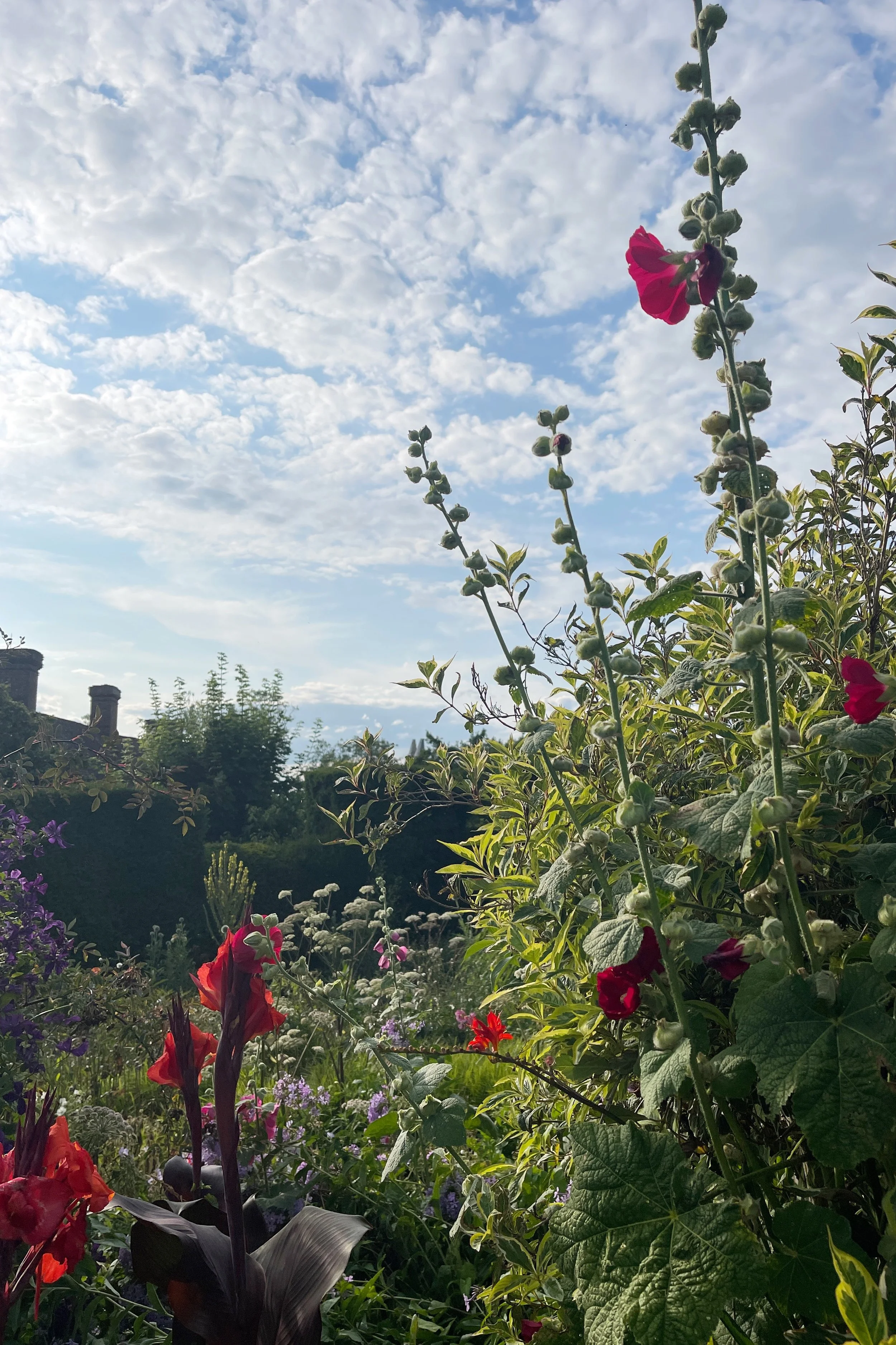
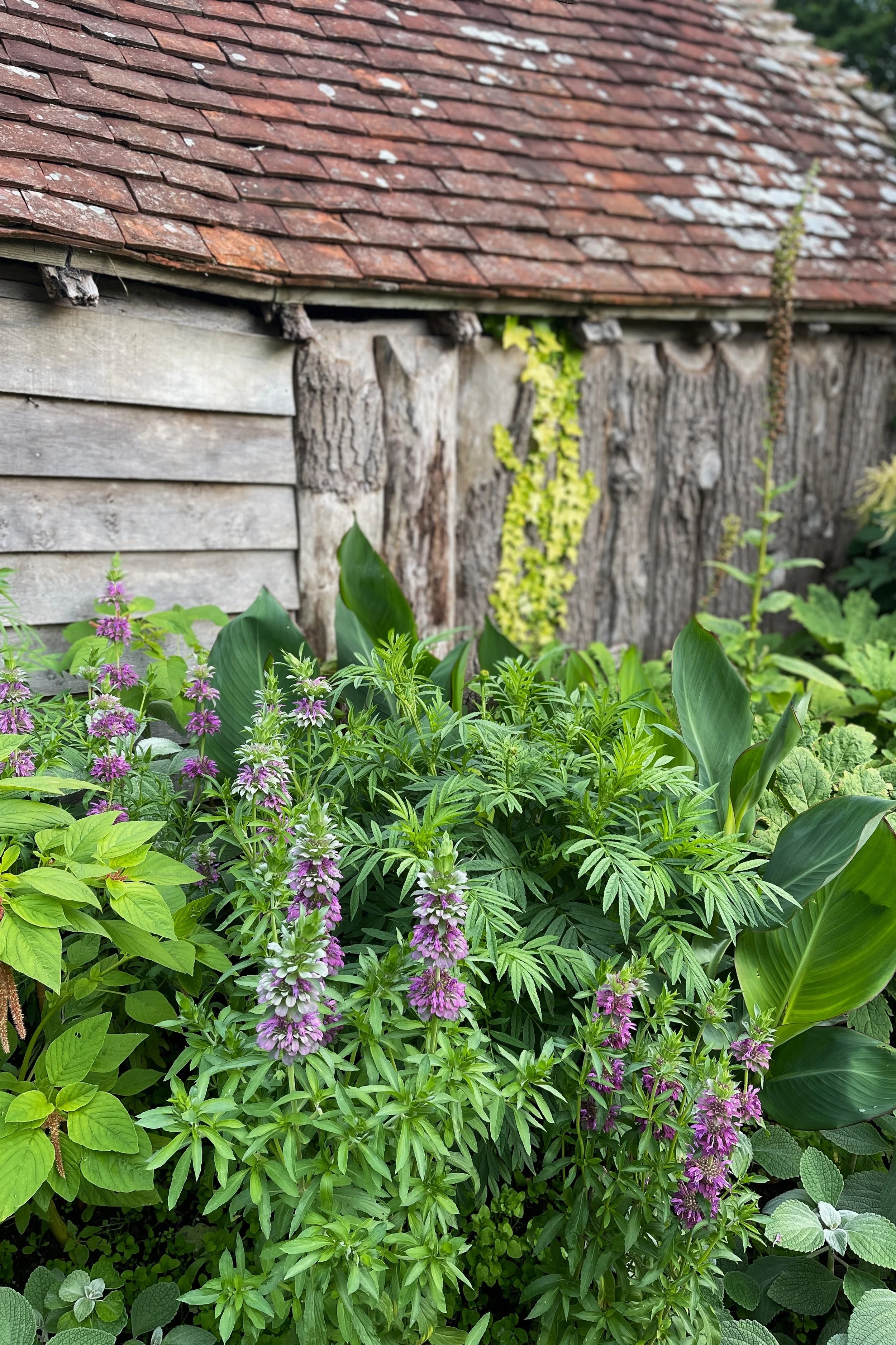
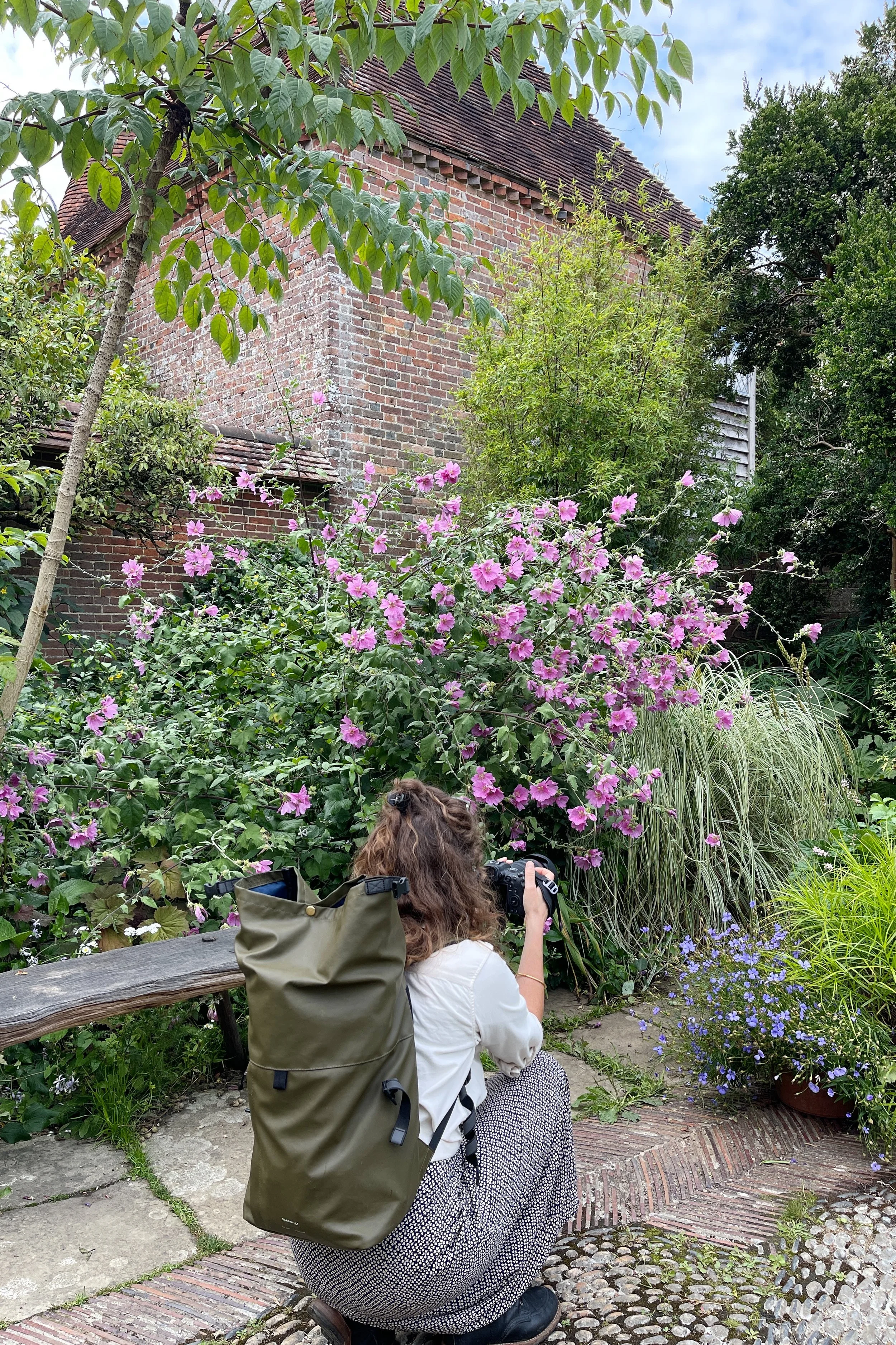
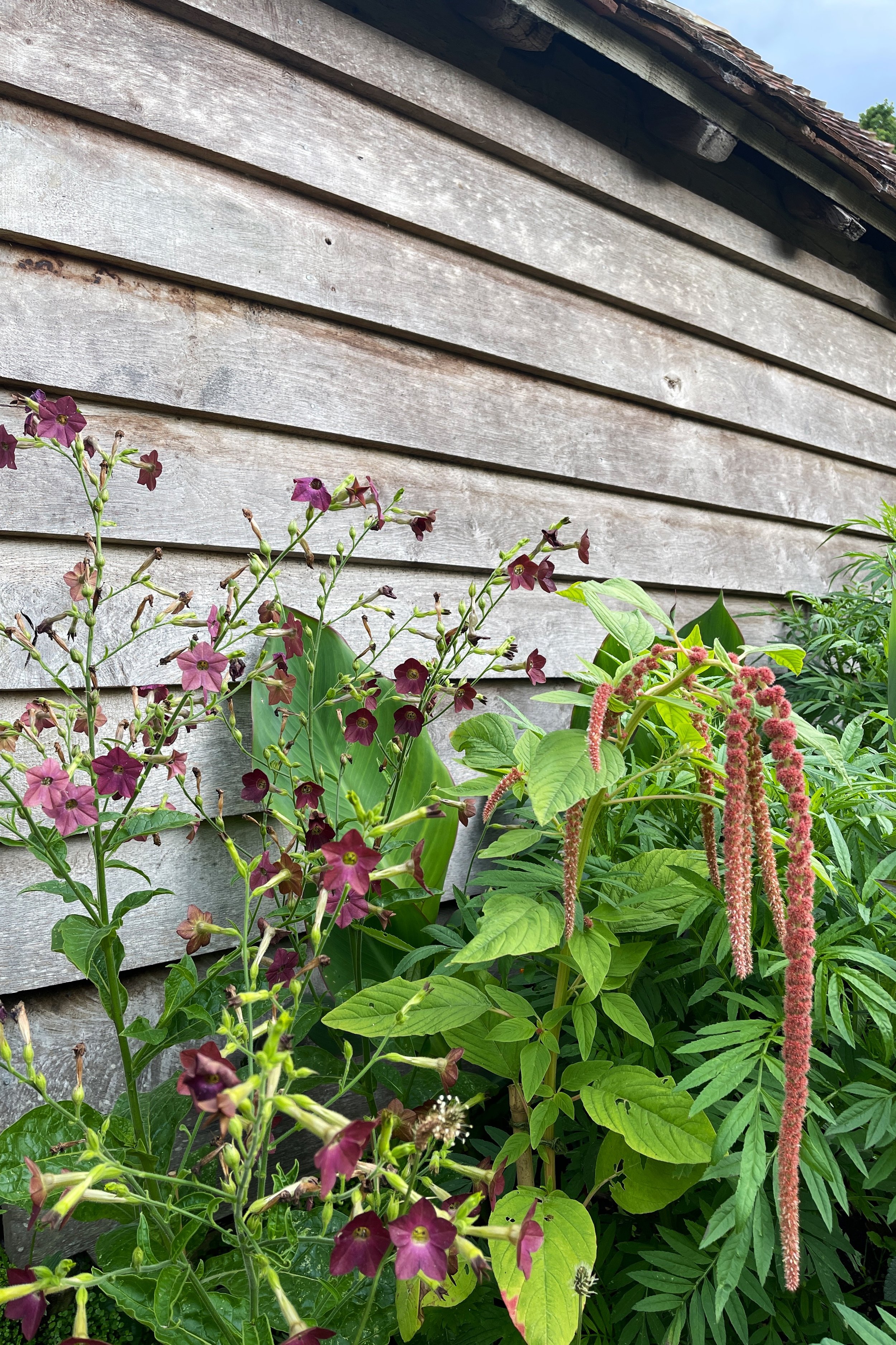
There is nowhere in the world like Dixter. To borrow an expression from the writer Diane Ackerman, it is just '“sense-luscious”. Fizzing with life and colour and creativity and ideas.
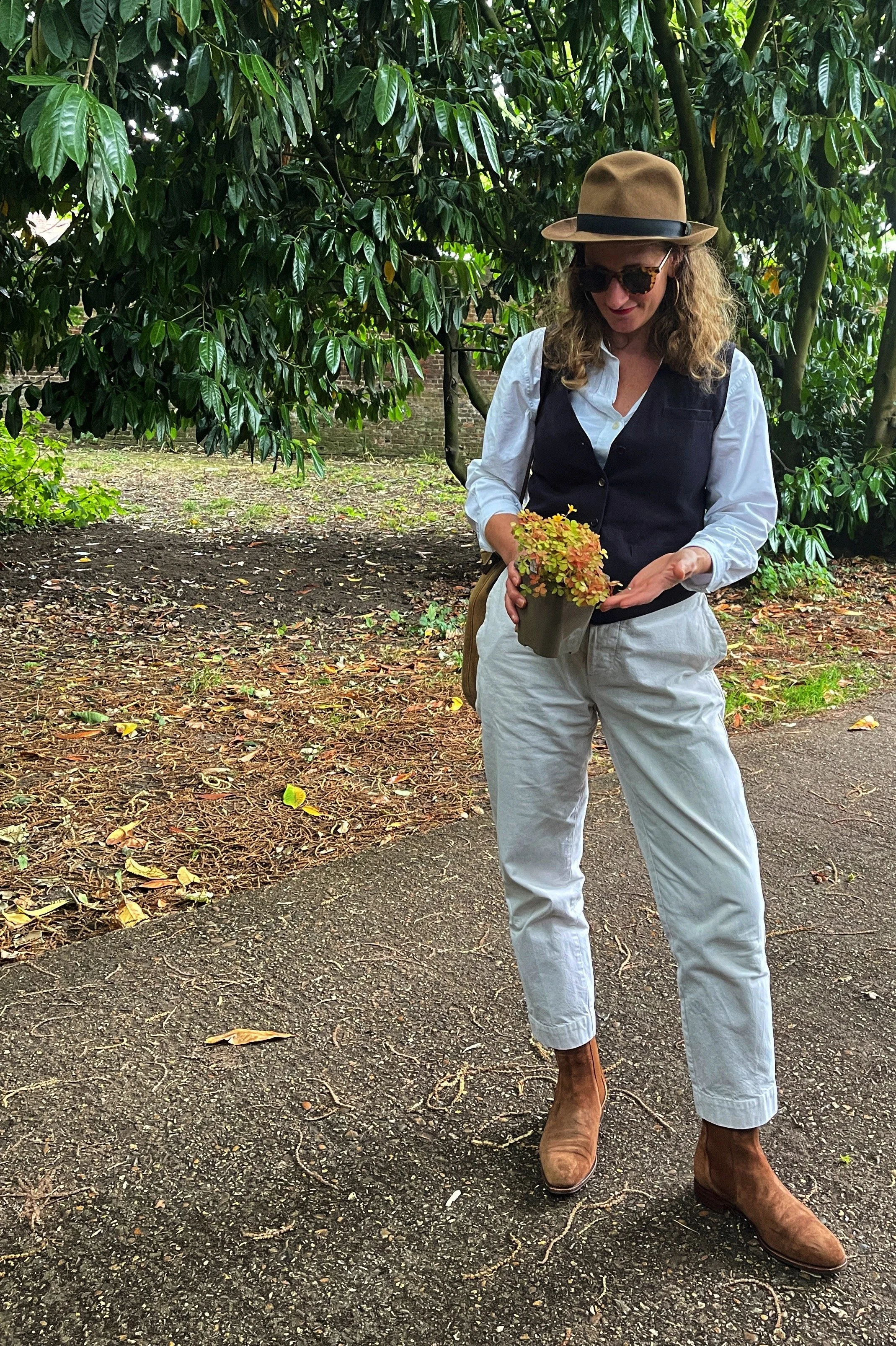
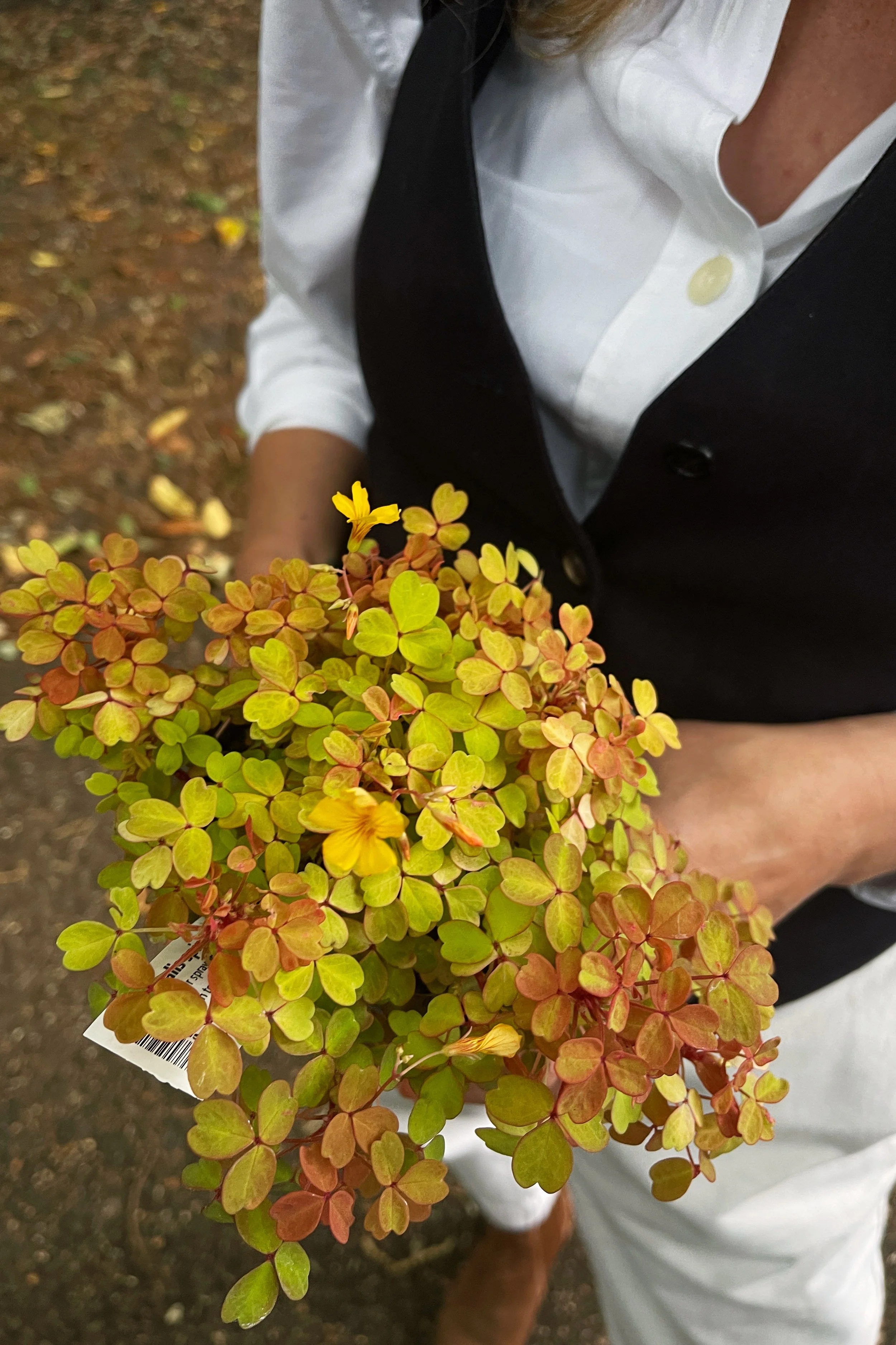
As usual we came away with some lovely plants, about a million photographs and many quick scribbles in our notebooks.
Thank you very much for reading.
We hope you’ve all had a wonderful month and managed to stay dry!
Until next time.
X