
BOTANICAL INSTALLATION CLASS
11 JUNE
Composing naturalistic floral installations is generally considered to be the most logistically challenging aspect of event design. If you’re new to working at scale it can be understandably intimidating. During this class we will demystify the process, providing you with the knowledge and tools you need to feel confident and excited to create large freestanding displays.
In this half day class you will learn how to apply the principles of naturalistic floral design to large-scale installations: embracing seasonal materials and natural shapes, building a strong, structural foundation, concealing water sources utilising re-useable vessels and sustainable mechanics, as well as taking down and preparing materials to be composted - a vital part of the cycle.
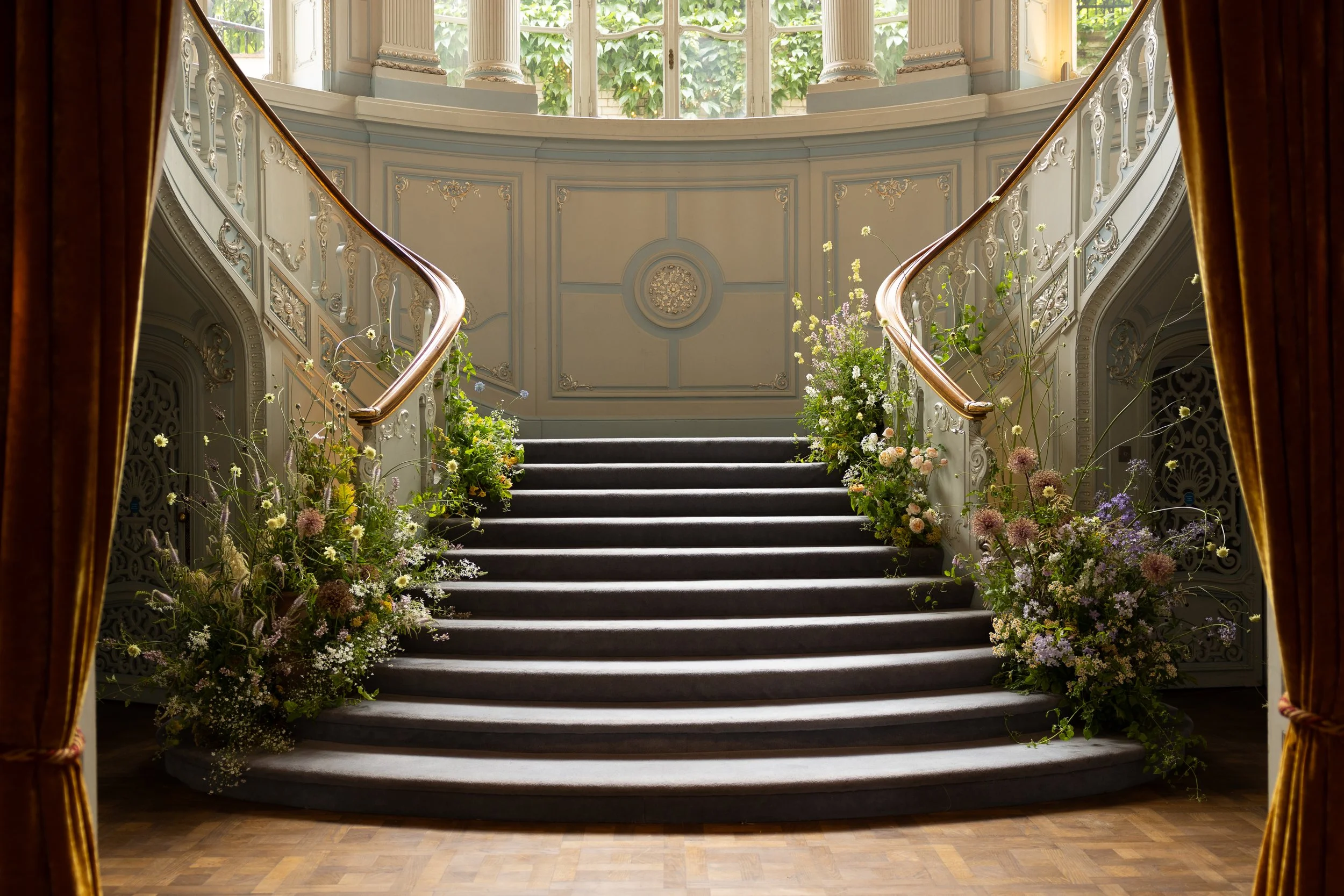
Deeply evocative of June in our Hampshire garden where stems of Cephalaria gigantea (giant scabious) soar over spires of Campanula (bellflower), smoky blue Delphinium requienii and the golden globes of Allium ‘Gladiator’. At ground level there are white flecks of Omphalodes linifolia (Venus’s navelwort). Tropaeolum majus (garden nasturtium) vines creep, climb and spill.
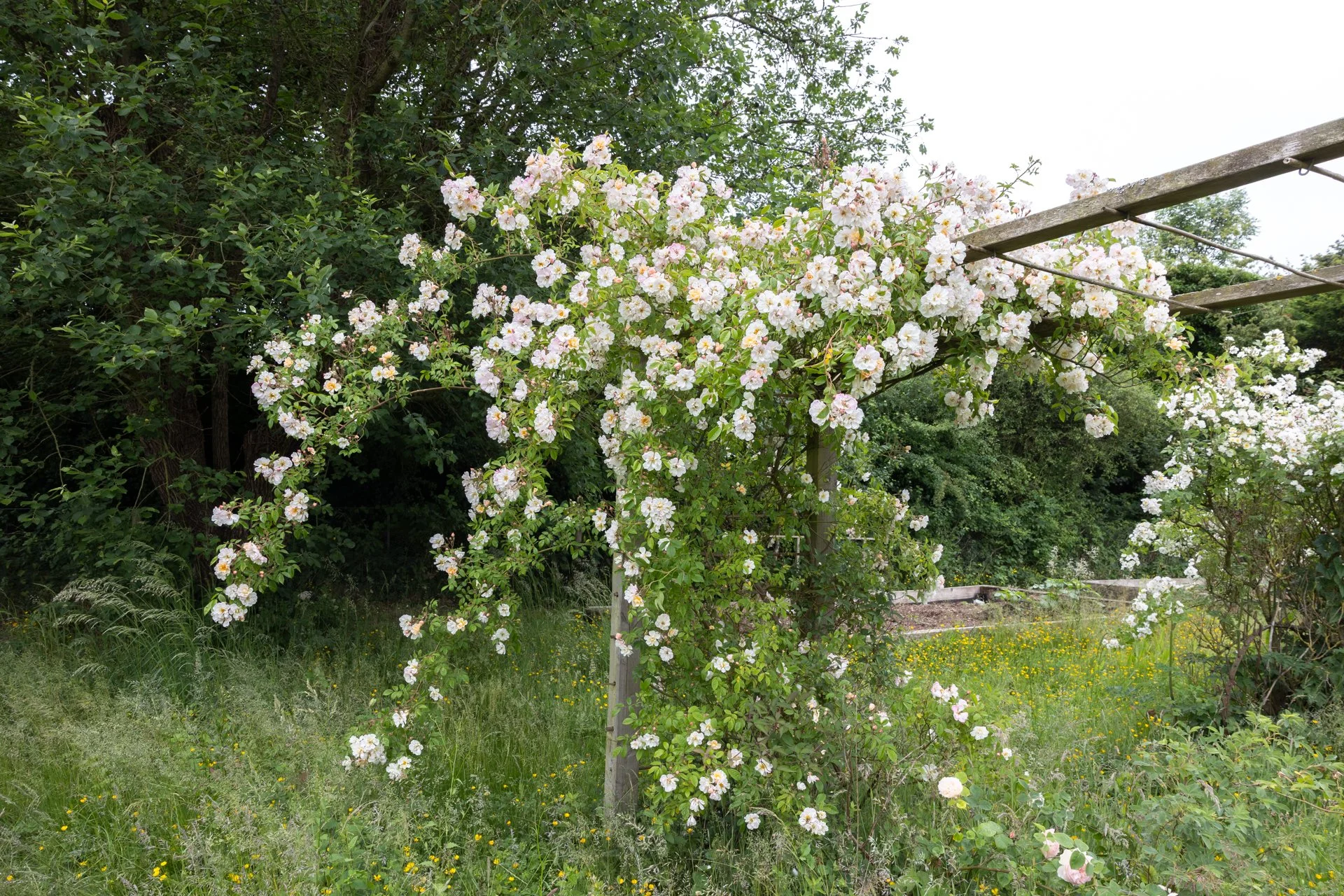
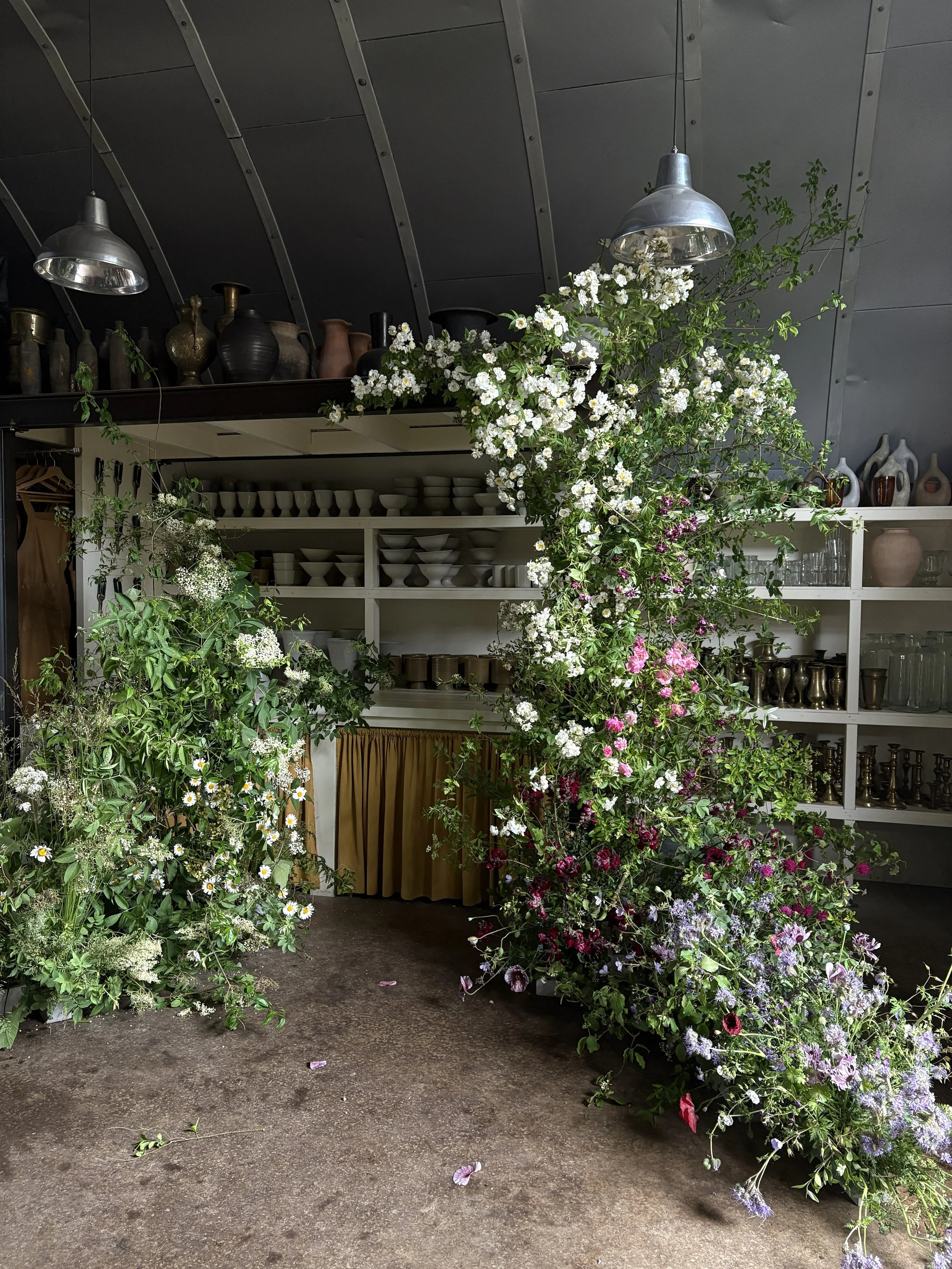
Cutaways of the early summer garden. In naturalistic design close observation of how plants behave and change with the seasons is key.
Arranged as they naturally grow, spread, climb, clump and ‘pop up’ these displays honour the materials first and foremost but they also allow for play with colour groupings and gradations, fluctuation and contrast of texture and volume.
11 JUNE
During the class we will create an ethereal and romantic botanical installation that evokes the natural world at this precise moment in the year. Working together as a group you’ll be taken through the process and techniques involved to realise a design that is apparently effortless, convincingly growing in-situ, undulating through areas of sparsity and abundance.
£375
BOOK YOUR PLACE
ADDITIONAL INFORMATION
DEPOSIT
You can pay in full for this course at the time of booking or reserve your place with a 50% deposit. The remaining balance is due six weeks before the course start date.
TIMINGS
This is a half day class which will run from 10am to 1pm. Please arrive no earlier than 10 minutes before the start of the class.
REFRESHMENTS
Teas, coffees and water are provided.
WHAT TO WEAR
The studio is in a converted railway arch that is shady and cool (perfect for the flowers!) We recommend bringing additional layers, wearing comfortable shoes and to bear in mind that you will be handling organic flower material throughout the day.
EQUIPMENT
Snips, aprons, flowers, vases and mechanics are all provided. We also stock a small range of our own brand ceramics, books and Japanese tools to buy at the studio.
DIRECTIONS
Directions to the studio in Shepherd’s Bush can be found here. If you are visiting from outside of London you can find suggestions on where to stay, shop and eat here.
Ts & Cs
Please read our Terms and Conditions in full before booking.