SISSINGHURST
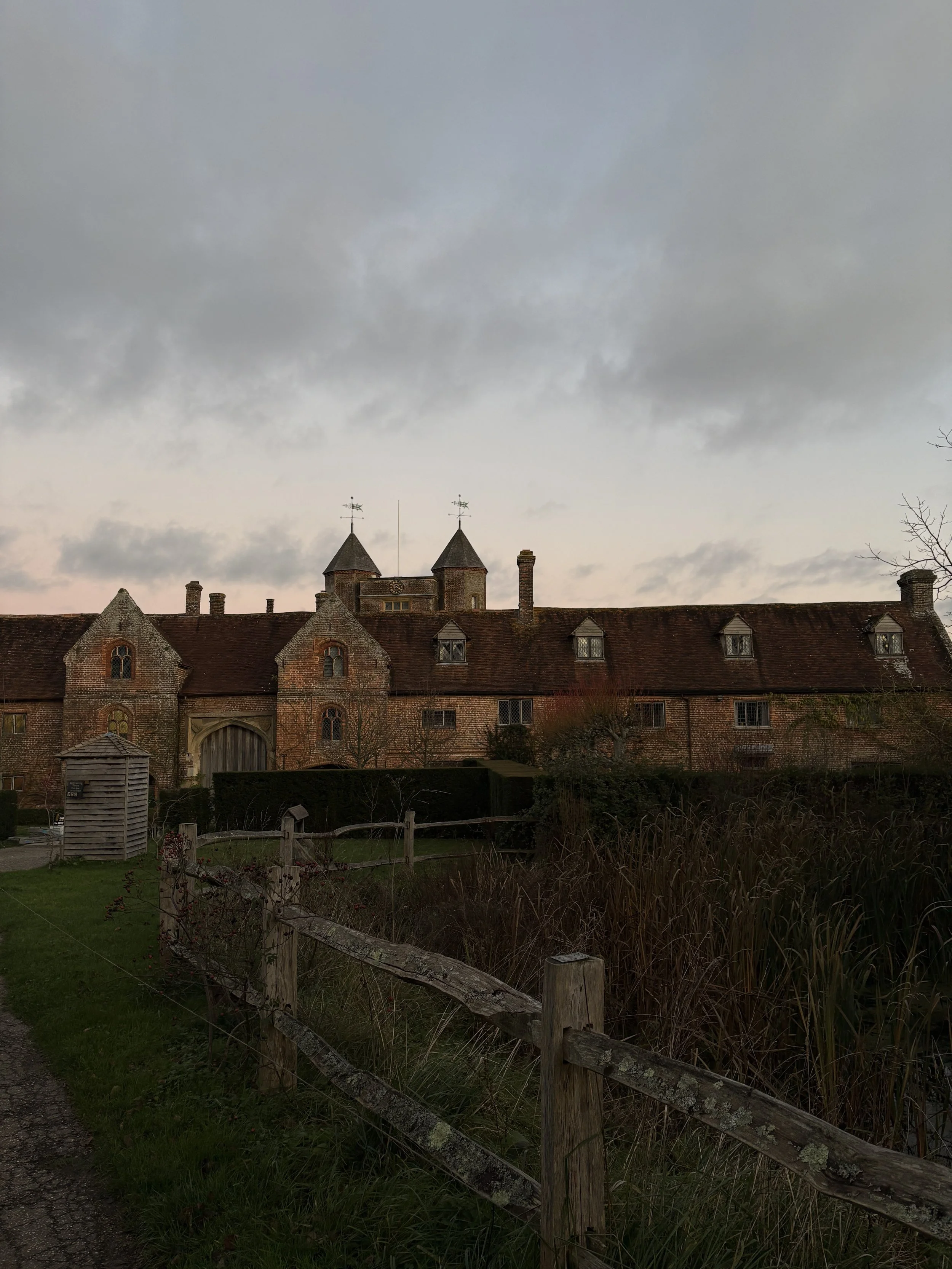
We were very happy to be invited back to Sissinghurst Castle this winter; this time to dress Vita’s tower for the festive season. My default in decorating during the winter is to go super seasonal, my philosophy being that simplest is best
We were very happy to be invited back to Sissinghurst Castle in Kent this winter; this time to dress Vita’s tower for the festive season. My default in decorating during the winter is to go super seasonal, my philosophy being that simplest is best and that if you great ingredients all you need to do is honour them and you’ll have a beautiful display.
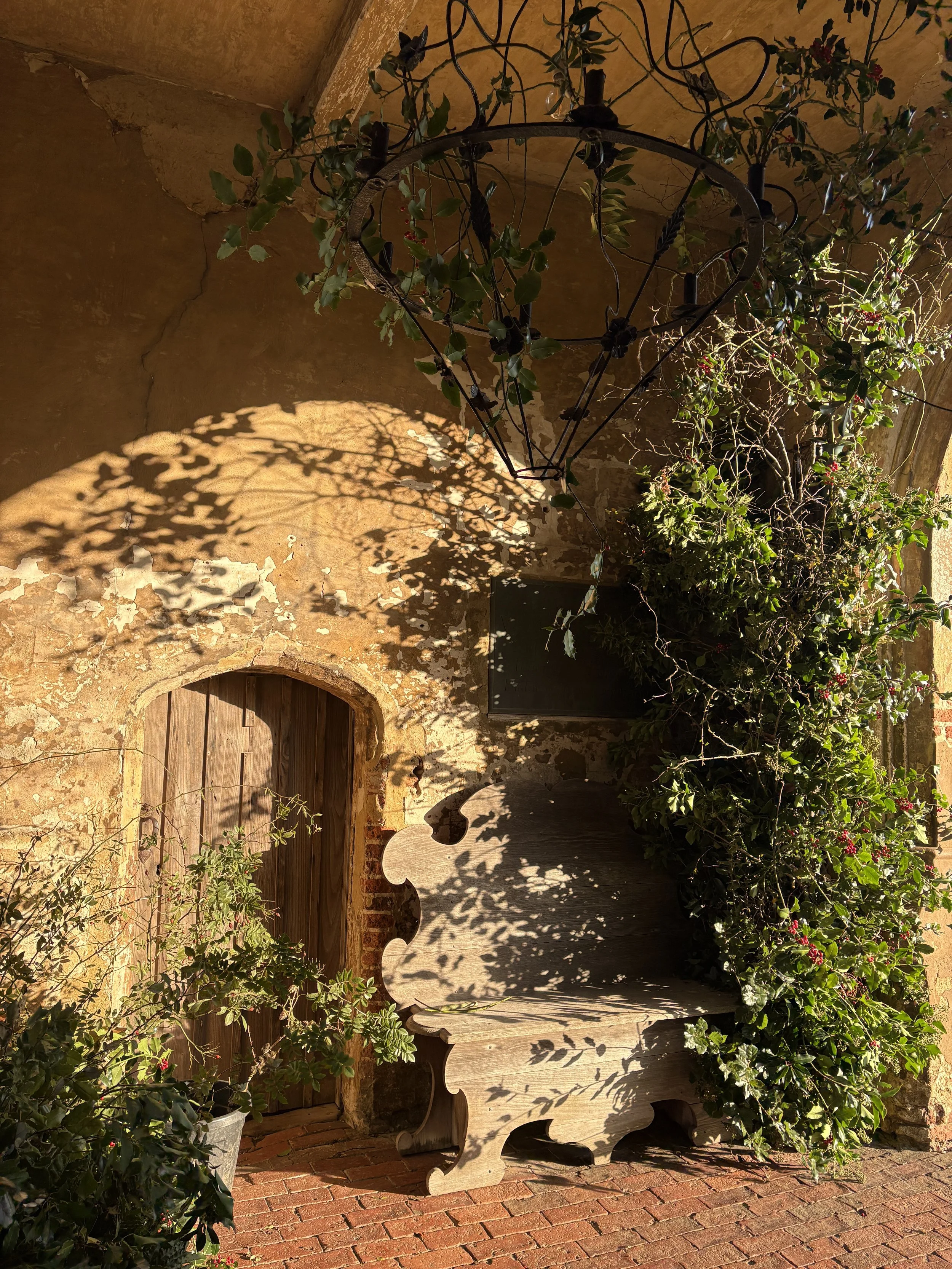
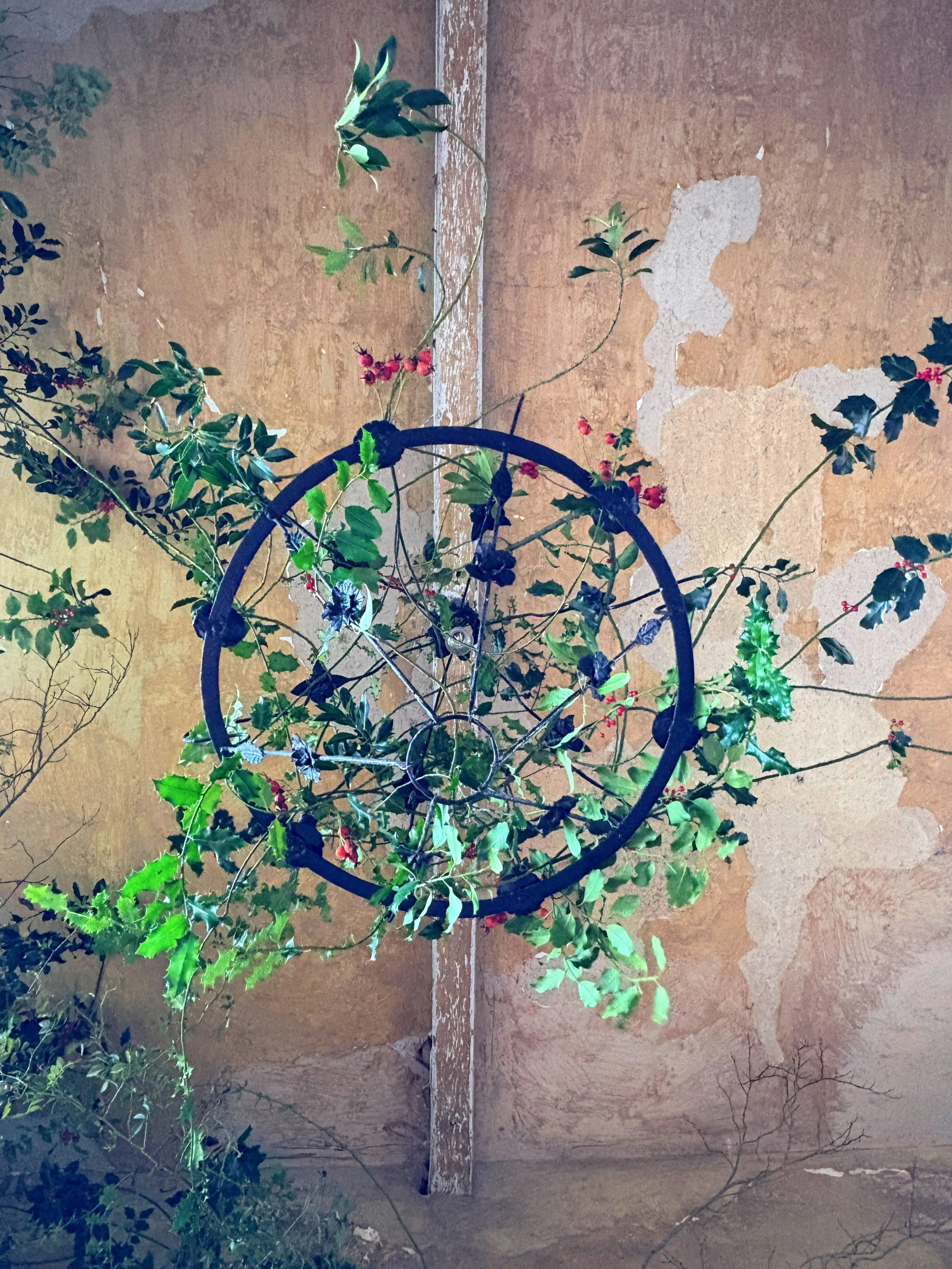
Last year at Sissinghurst we installed an evolving series of four designs November to February and in collaboration with the gardening team our priority was to create designs inspired by the surrounding gardens and landscape with as much of the produce used supplied by them also - rose prunings, a cherry tree due for felling provided multiple huge branches that to our delight slowly unfurled their blossom over the months of the exhibit and were still on display when we dismantled at the end of the winter.
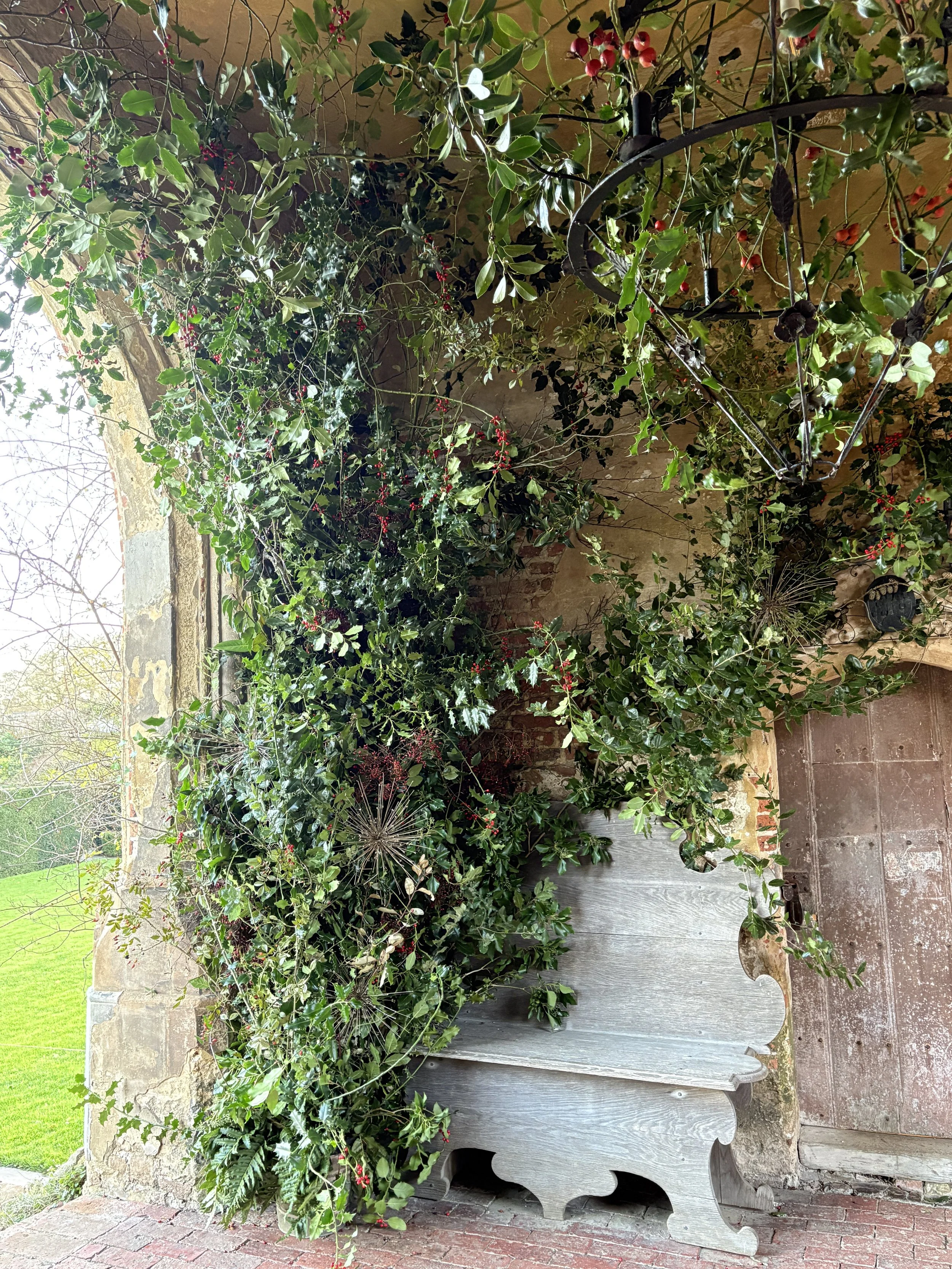
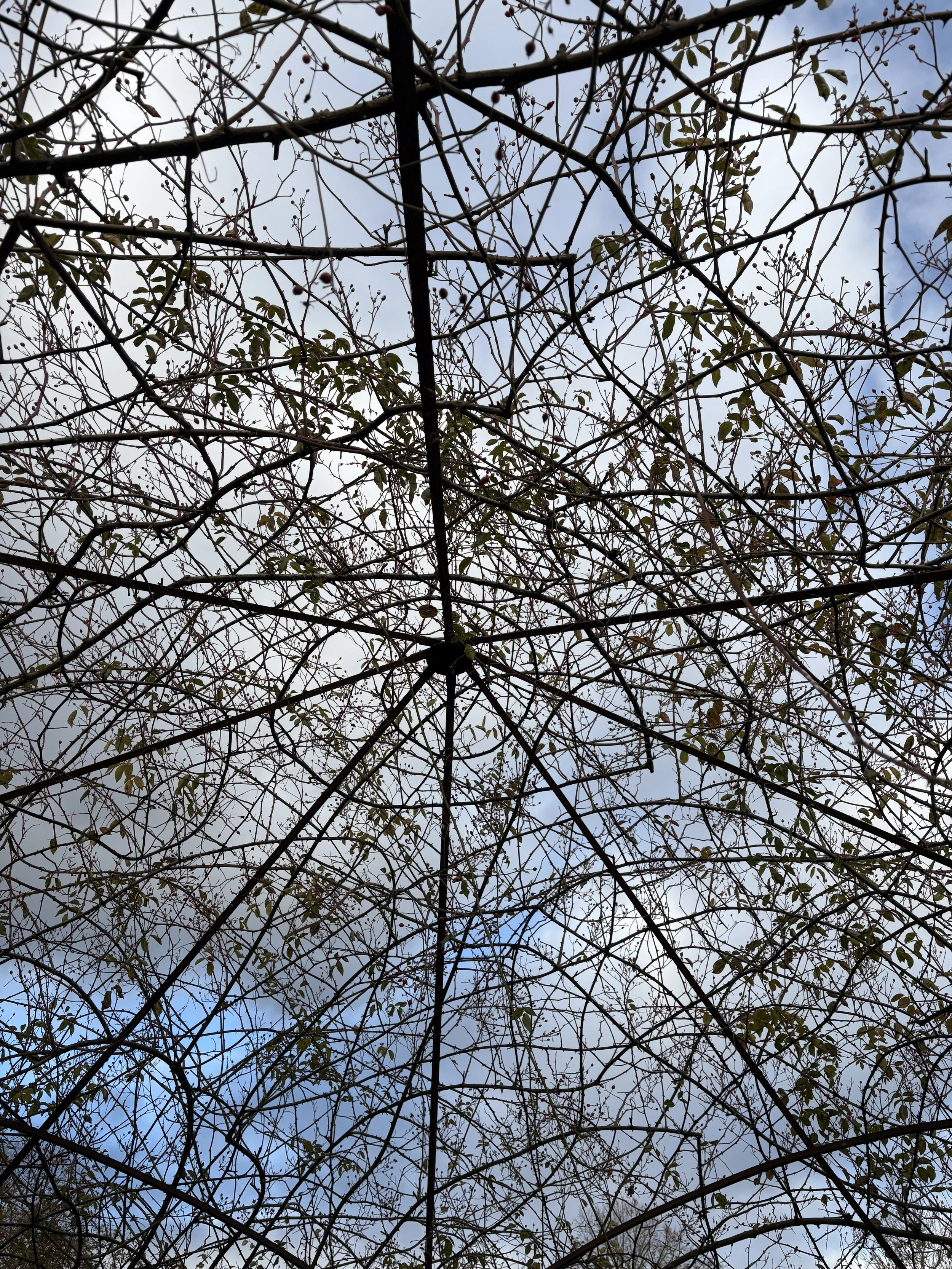
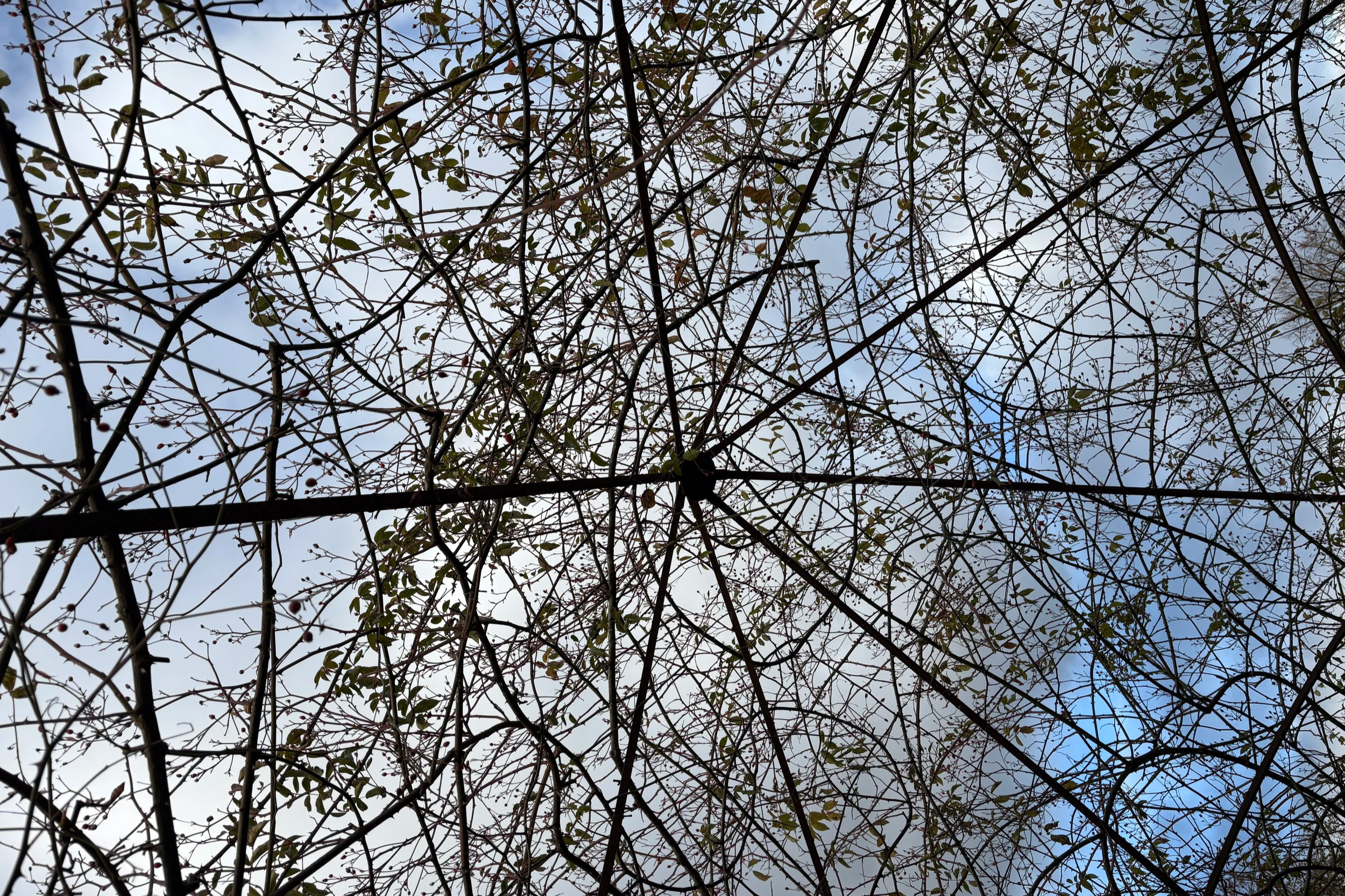
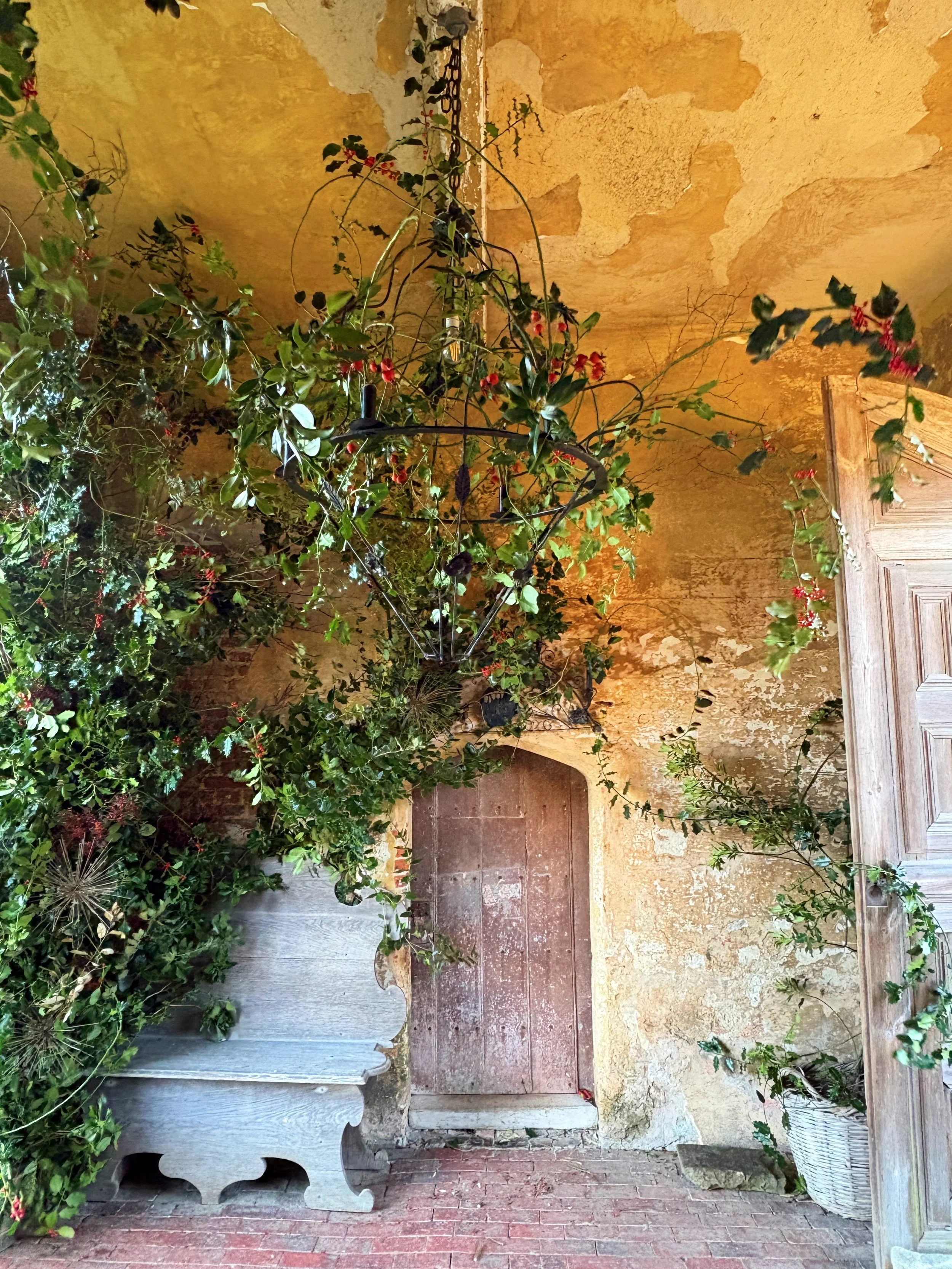
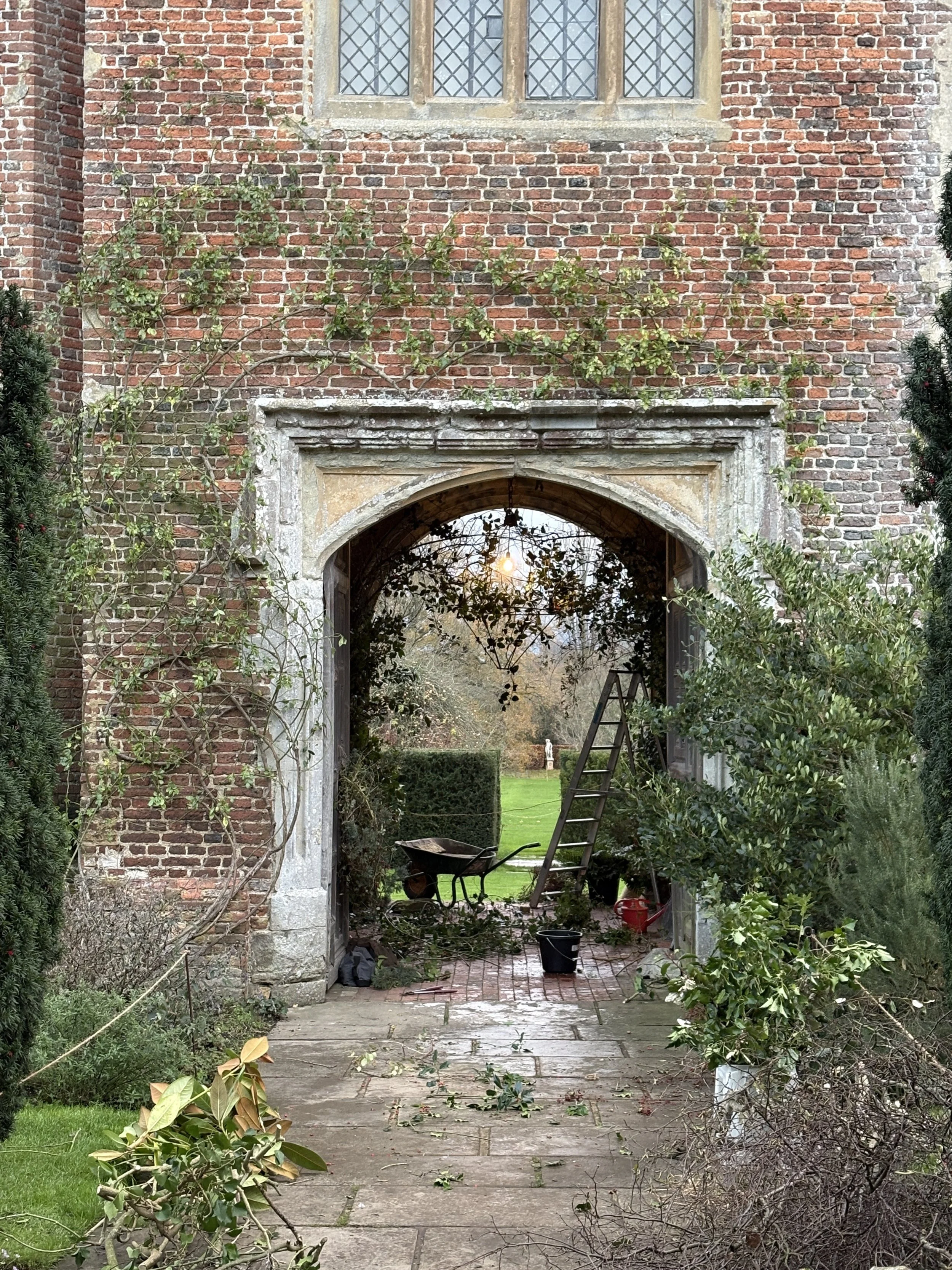
This year I wanted to frame the view from Vita’s tower over the orchard beyond with a wild, scribbled sketch of beckoning branches and briars. The concept was magical but simple, very green, very fragrant. If you know the tower you’ll know how huge the archway is - it doesn’t always translate in photographs - it takes a lot of material to make an impact. I don’t always know exactly what the ingredients will be in advance so some decisions are made in-situ and on the spot. First thing Monday morning we did a recce, noting down particular shrubs and trees to cut from, riffling through piles of rose clippings, recently pruned and glowing with red and orange hips. The rangers brought us a huge bundle of birch headed for the shredder. John and I went in search of curving, looping stems of berried holly and found ivy, tassel bush and Portuguese laurel along the way. Ingredients assembled we started with a base of gnarled apple branches and then layered with evergreens, ensuring we were mindful of the natural shapes of the materials and building a frothy sense of volume in some places, with sparser areas that trailed off into negative space.
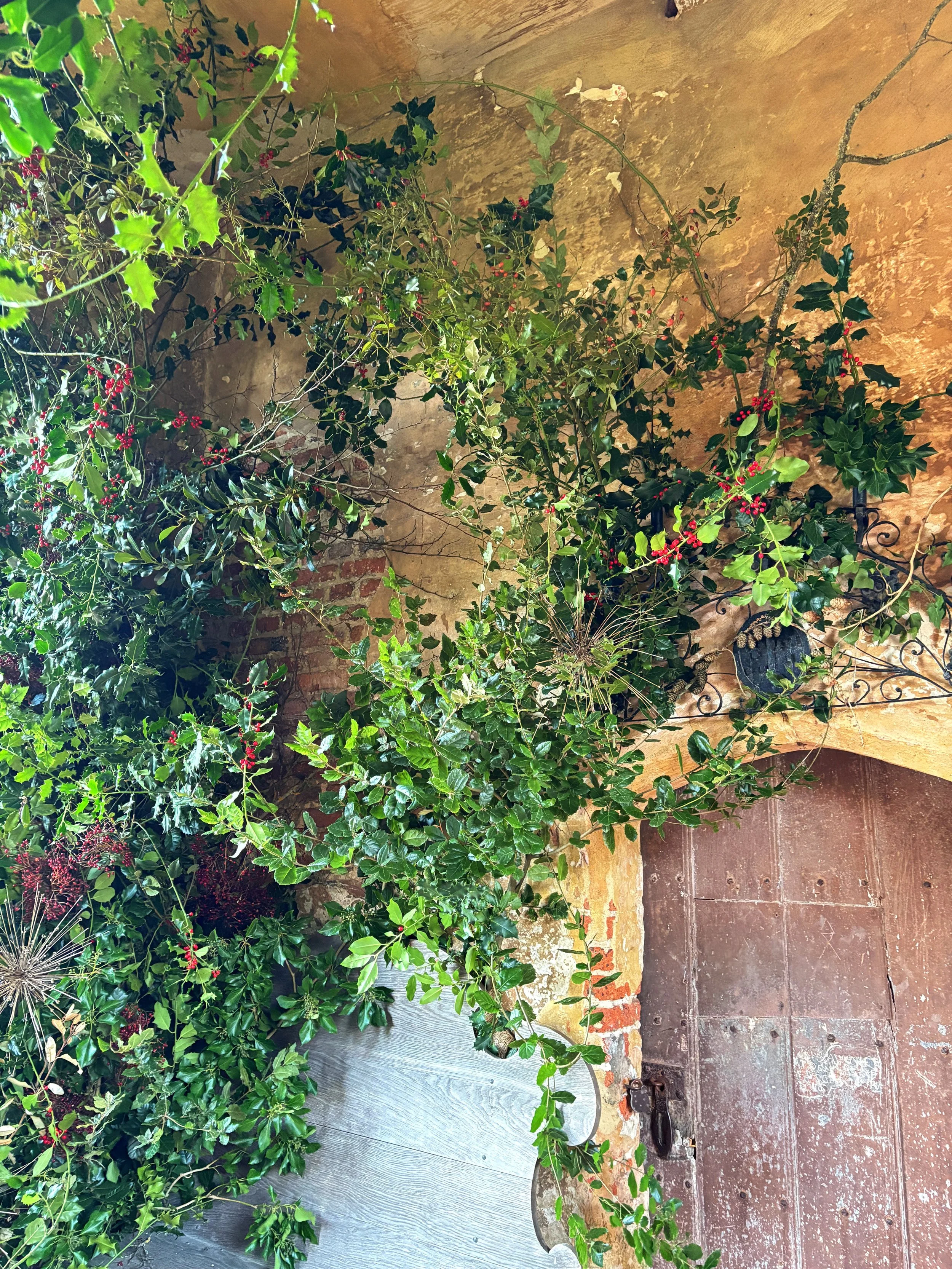
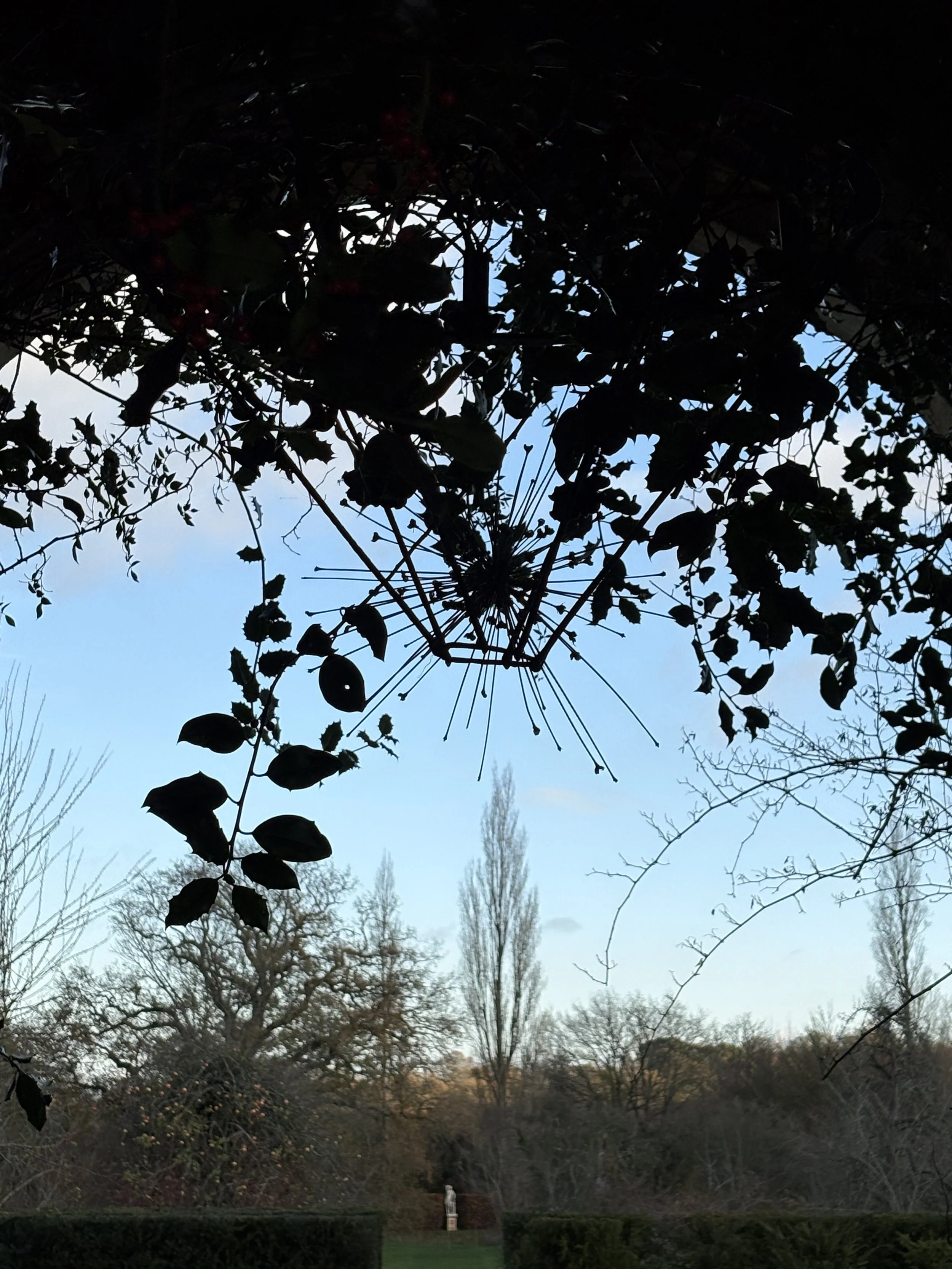
Here and there you might spot the golden, spherical forms of Allium schubertii and Allium cristophii - additions from our own garden, harvested just prior to the autumn storms. Allium heads make impactful natural ornaments with a metallic, textural, almost bauble-like effect. Each stem and seedhead was carefully wired and attached to the branches beneath. The archway under the tower is an absolute wind tunnel so firm fixings are essential or there’ll be nothing left come January!
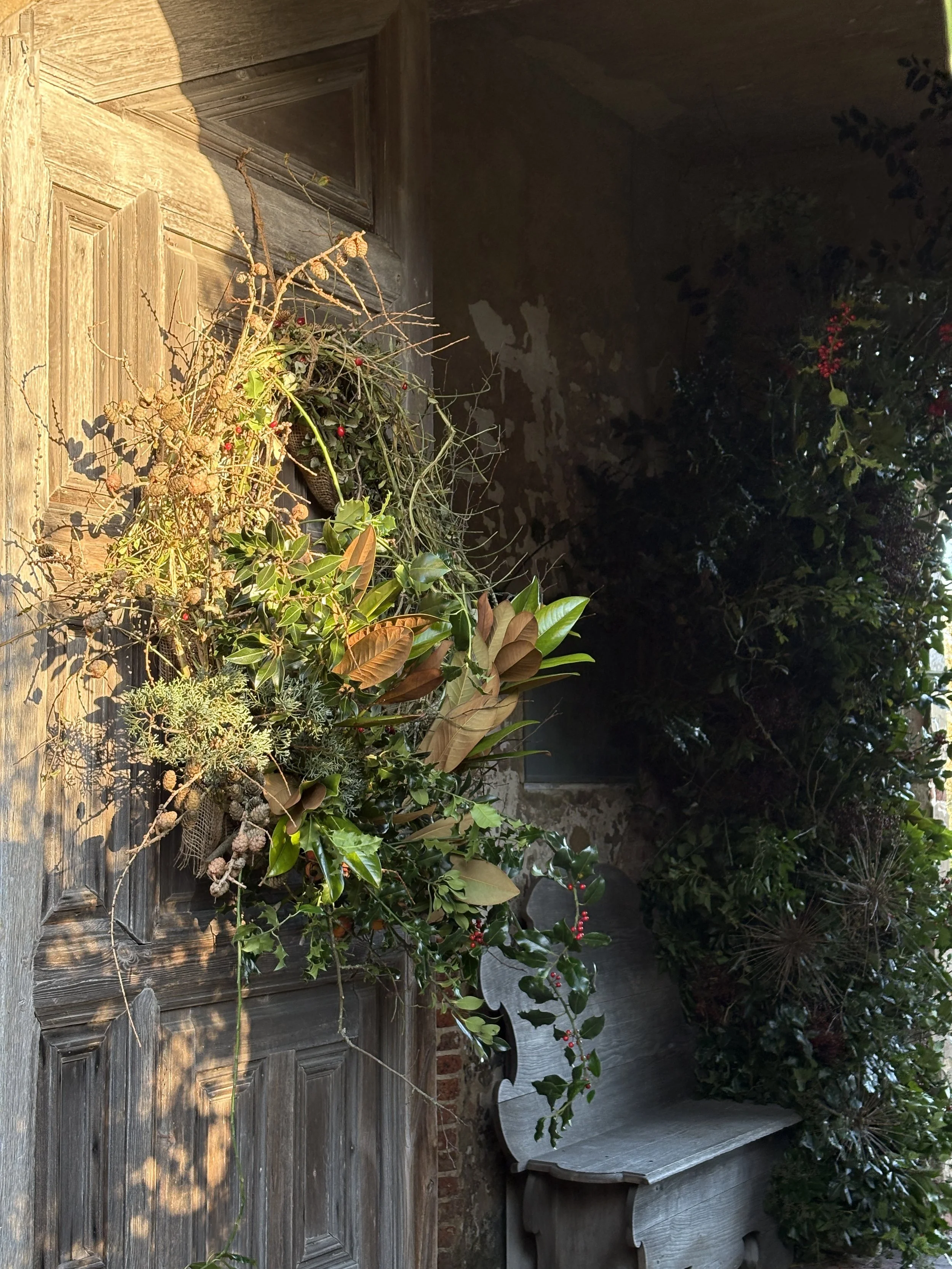
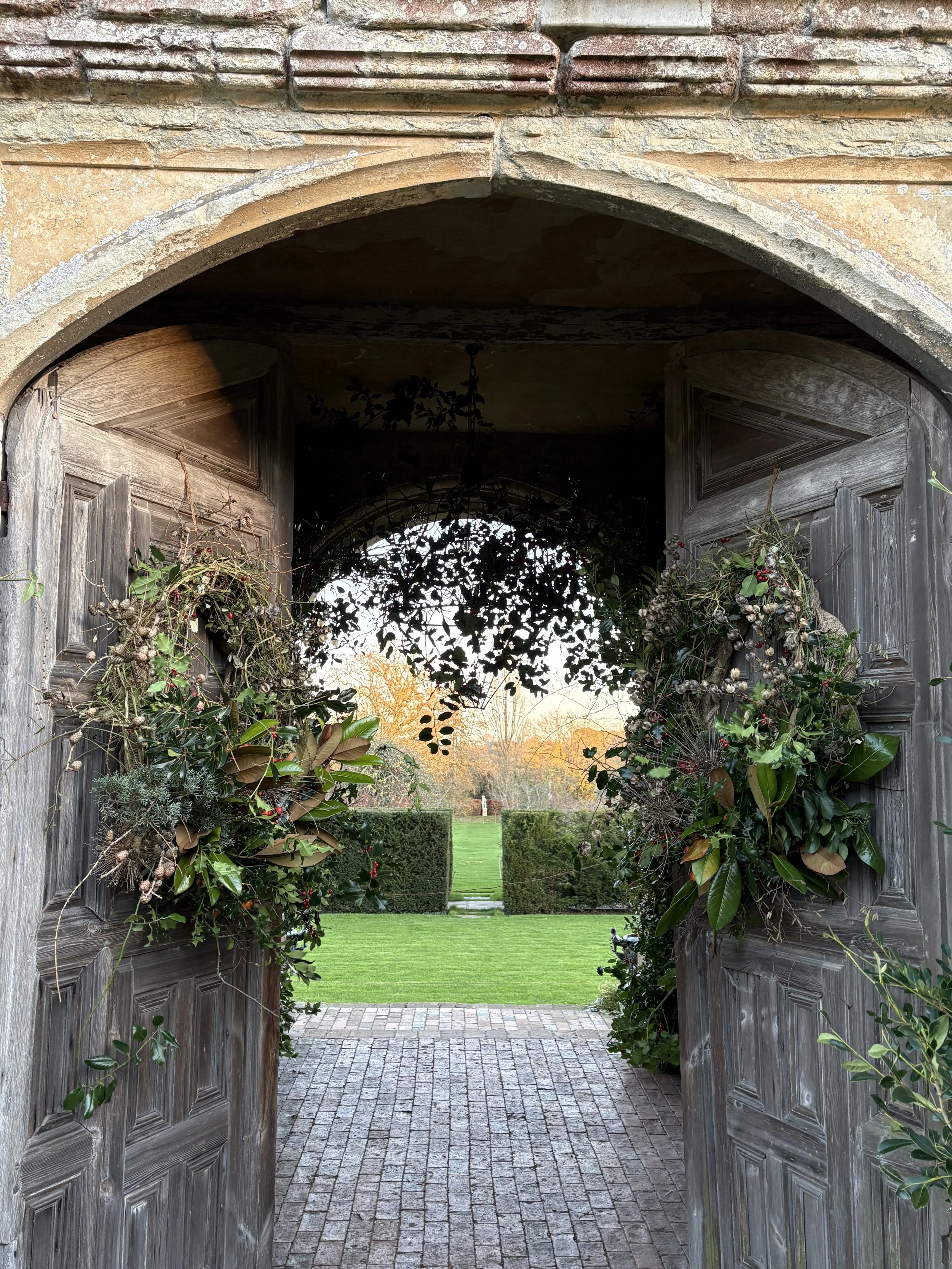
We hung a pair of wreaths to the beautiful wooden doors that flank the entrance. I made the bases a week ago using wild rose, bramble and sweet pea and these were decorated on-site with sculptural branches, foliage, berries and seedheads.
The installation will be on display until early January; we hope you can visit!
Thank you to Johnny @jsutherland84 and Jo @_gardening_adventures_ for helping me bring this design to life.
The ingredient list can be found below.
WREATHS
Rosa canina (dog rose)
Rubus fruticosus (bramble)
Malus - assorted (apple)
Larix decidua (larch)
Lathyrus latifolius (everlasting pea)
Ilex aquifolium 'Pendula' (English holly)
Nicandra physalodes (Apple-of-Peru)
FOLIAGE ARCHWAY
Malus - assorted (apple)
Hedera helix (European ivy)
Ilex aquifolium 'Pendula' (English holly)
Prunus lusitanica (Portuguese laurel cherry)
Garrya elliptica (silk tassel bush)
Magnolia grandiflora (bull bay)
Rosa ‘Wickwar’ (rose)
Rosa ‘Cupid’ (rose)
Allium cristophii (star of persia)
Allium schubertii (Schubert’s allium)

KNEPP
Knepp is the home of Isabella Tree, a journalist and the author of Wilding: the return of nature to a British farm and the conservationist Charlie Burrell. Since 2000 they have ‘pioneered the ‘rewilding’ of their estate constituting 3,500 acres of rural west Sussex including areas of lowland…
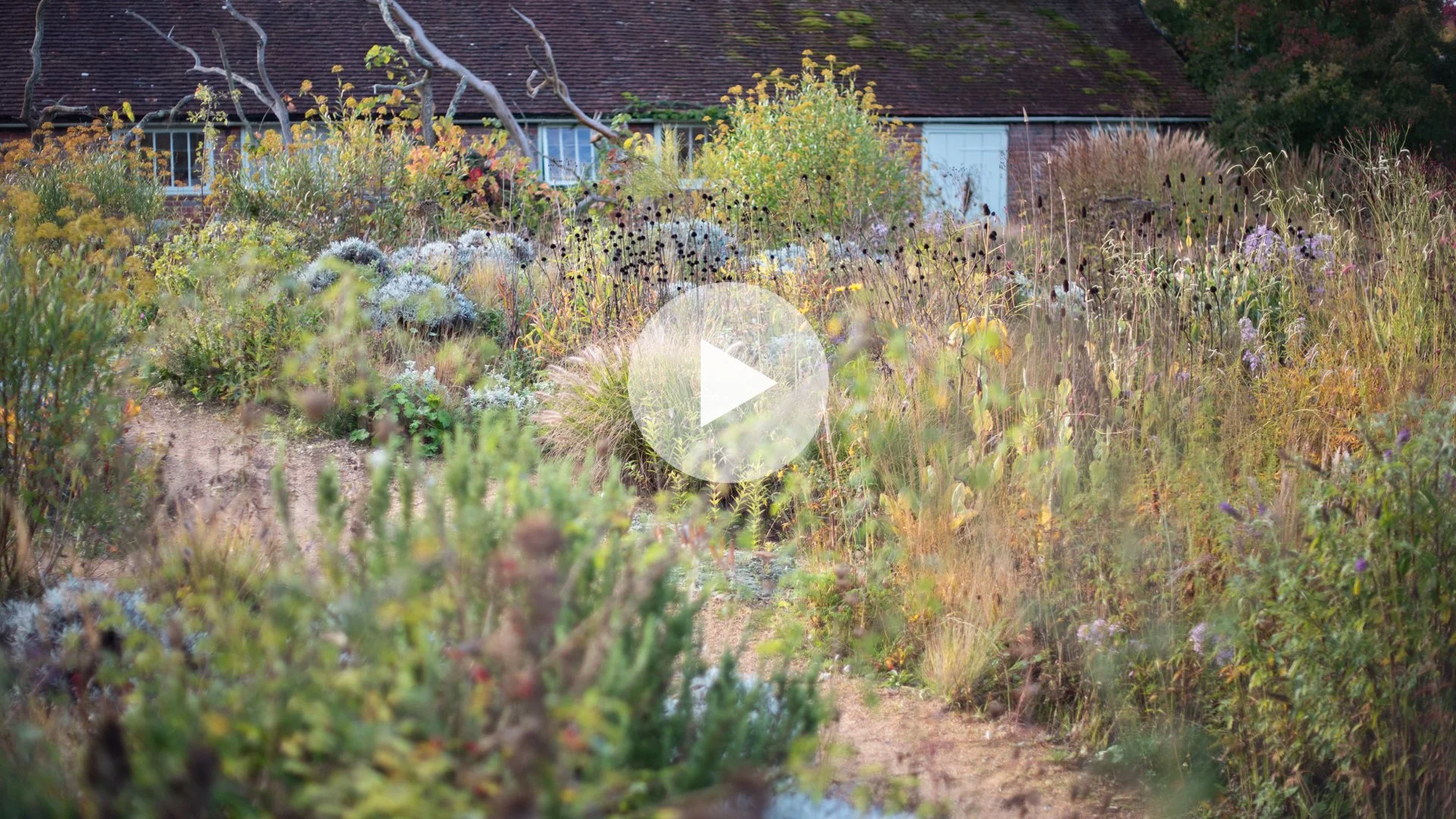
Watch the trailer for Arranging the Garden: Knepp on Flowers on Film
Knepp is the home of Isabella Tree, a journalist and the author of Wilding: the return of nature to a British farm and the conservationist Charlie Burrell. Since 2000 they have ‘pioneered the ‘rewilding’ of their estate constituting 3,500 acres of rural west Sussex including areas of lowland, scrub, grassland, water and woodland. After seventeen years of trying to compete with bigger industrialised farms and failing to turn a profit due to the unsuitability of the soil for modern intensive farming methods (“concrete in summer and unfathomable porridge in winter”) the decision was taken to sell the sheep, dairy herds and machinery, halt the production of all the arable land and roll out an experimental, long-term conservation project across the entire estate. It took a decade of highs and lows for the project to achieve the support of the government but in 2010 the project was awarded higher level stewardship funding and Knepp is now recognised as one of the most exciting, hopeful conservation projects in Europe.
Free-roaming herds of semi-wild Exmoor ponies, English longhorn cattle, Tamworth pigs and red and fallow deer have been introduced to drive natural regeneration through grazing, browsing and rootling creating a complex mosaic of habitats and restoring dynamic natural processes, resulting in extraordinary increases in wildlife. The estate supports many rare species including turtle doves, nightingales, black and white storks, falcons, beavers, bats and the largest breeding colony of purple emporer butterflies in the country. There’s a brilliant film available to buy or rent on Apple TV - Wilding - released in 2023 which I highly recommend if you’re interested in learning more.
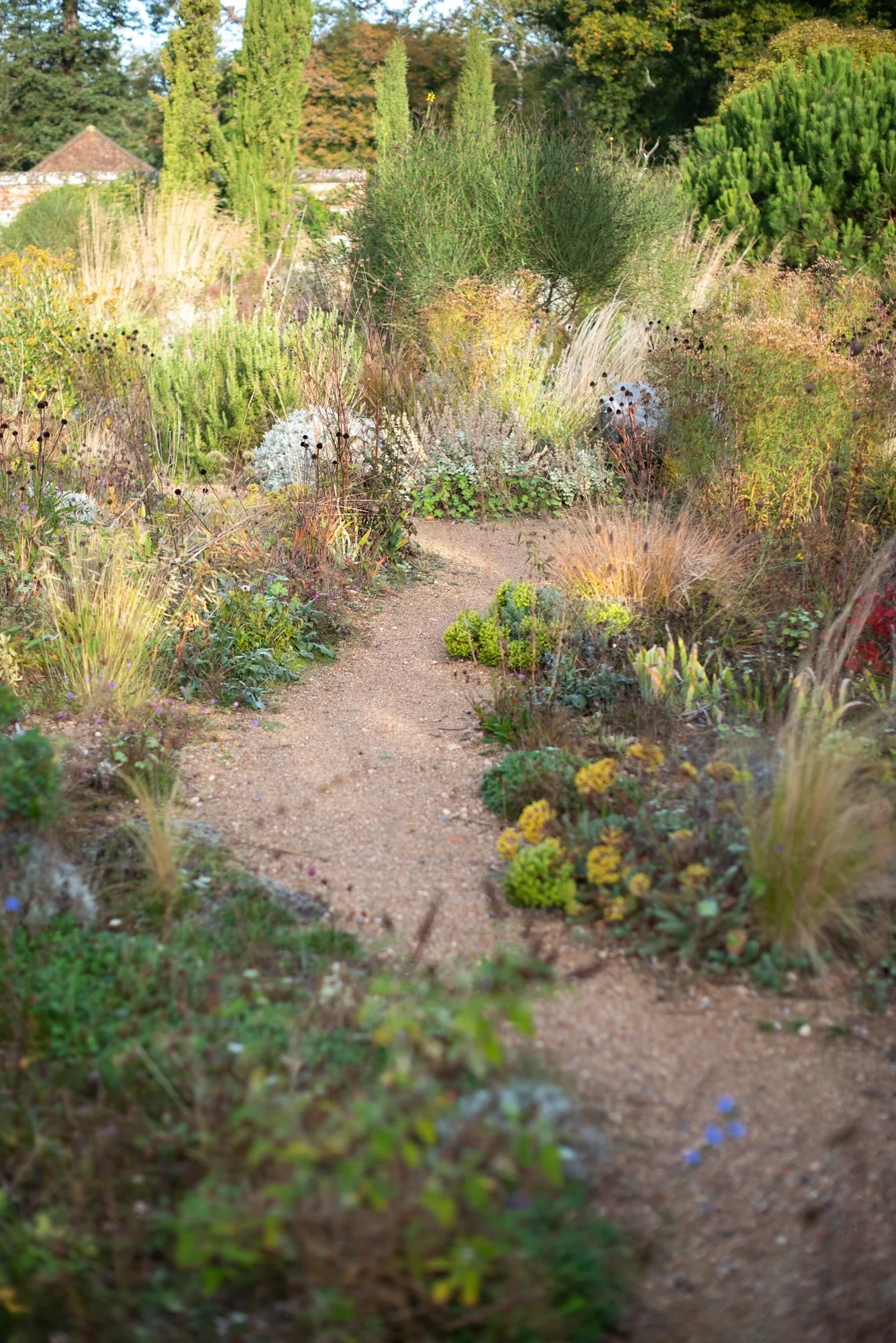
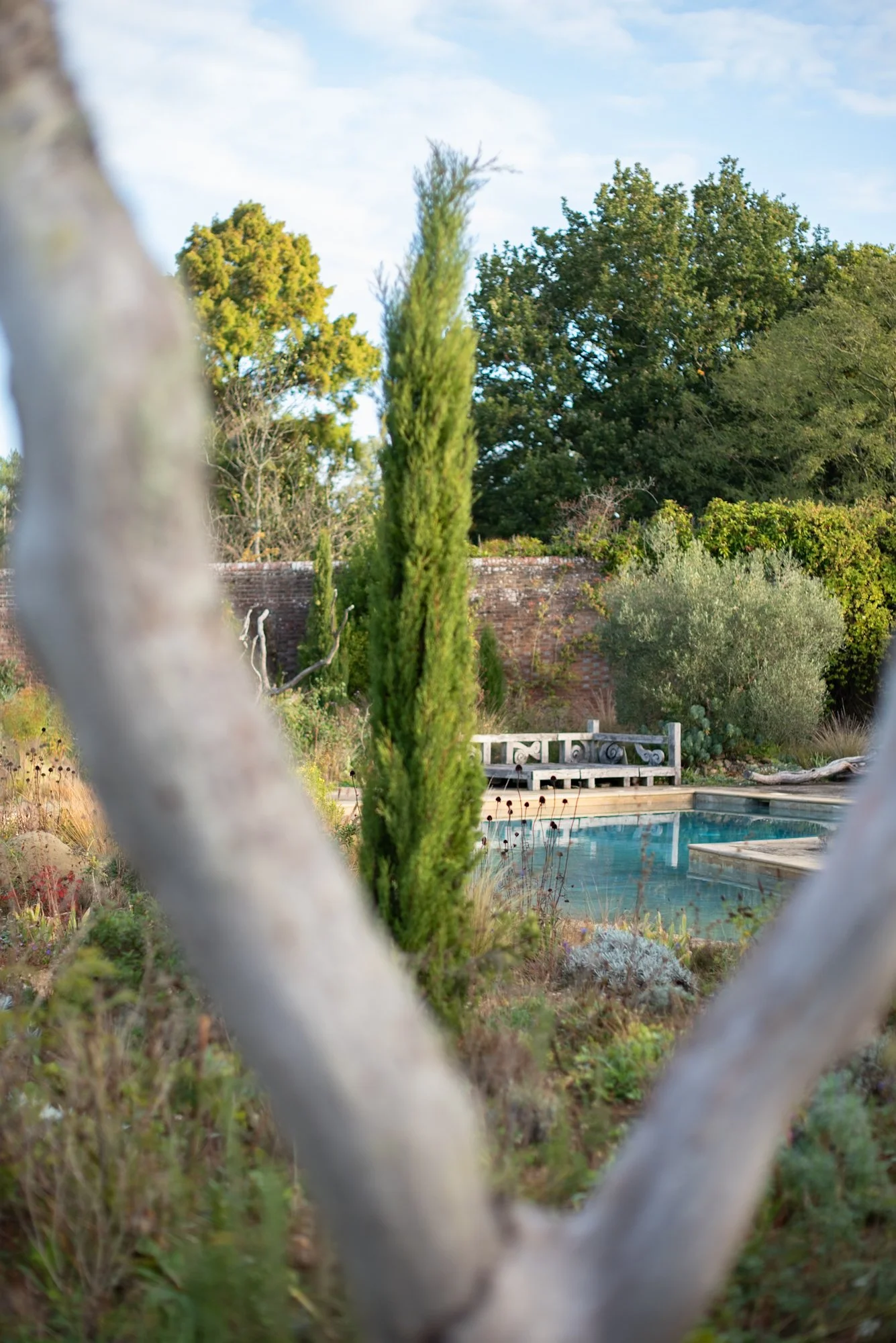
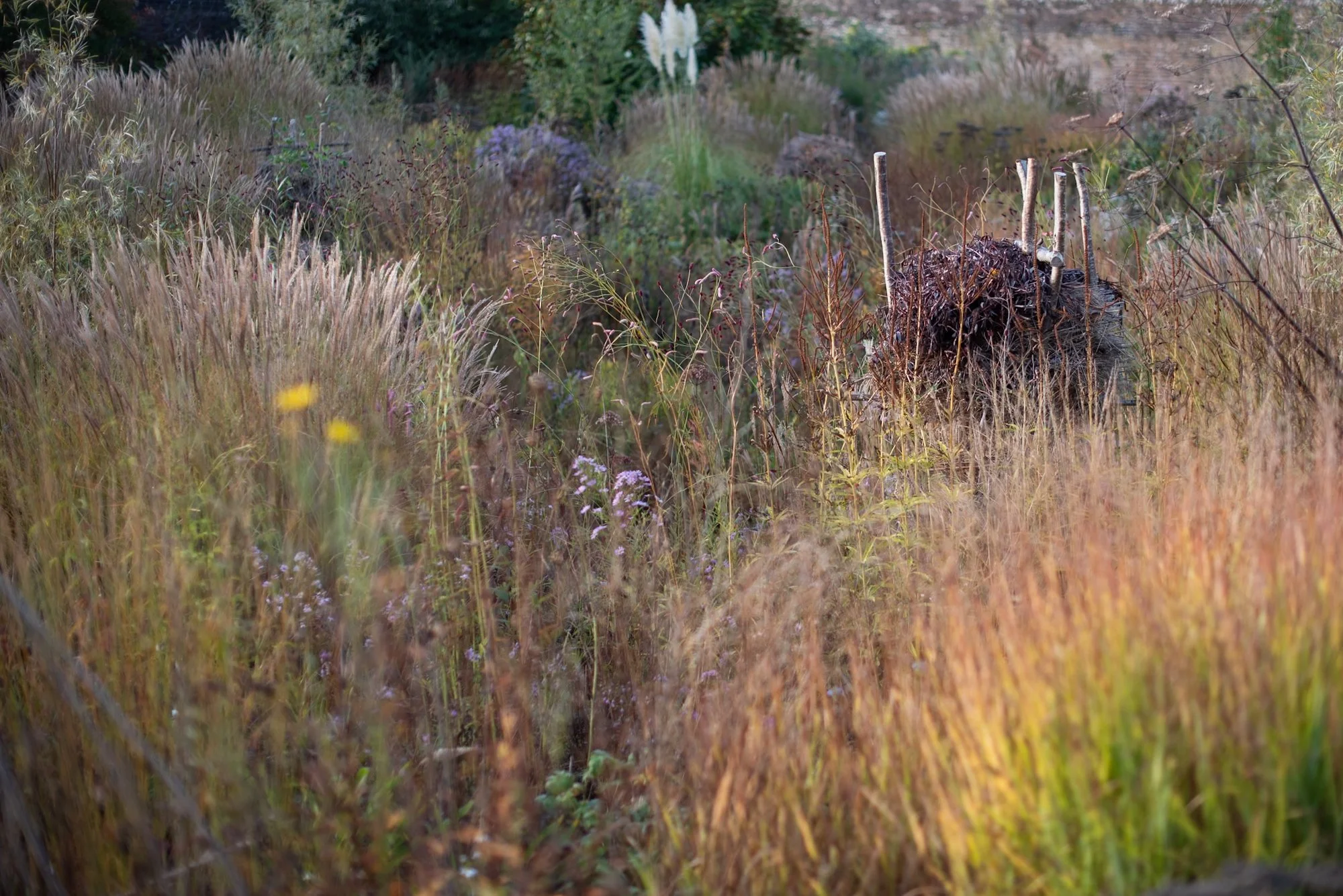
Until 2021 the walled garden beside Knepp castle was a perfectly flat croquet lawn. The creation of the garden was - and still is - an experiment in how to apply what has been learned through the wider rewilding project and attempting to initiate new ideas in how we think gardens can function as dynamic ecosystems. The garden was designed by Tom Stuart-Smith in collaboration with James Hitchmough (professor of horticultural ecology at the University of Sheffield), Mick Crawley (emeritus professor of plant ecology at Imperial College, London) and Jekka McVicar (an organic gardening expert). To create a garden of varying aspects and soil conditions, crushed building waste was dumped on the site to establish an undulating surface of humps and hollows, planted with drought resistant varieties that can thrive with limited fertility and water.
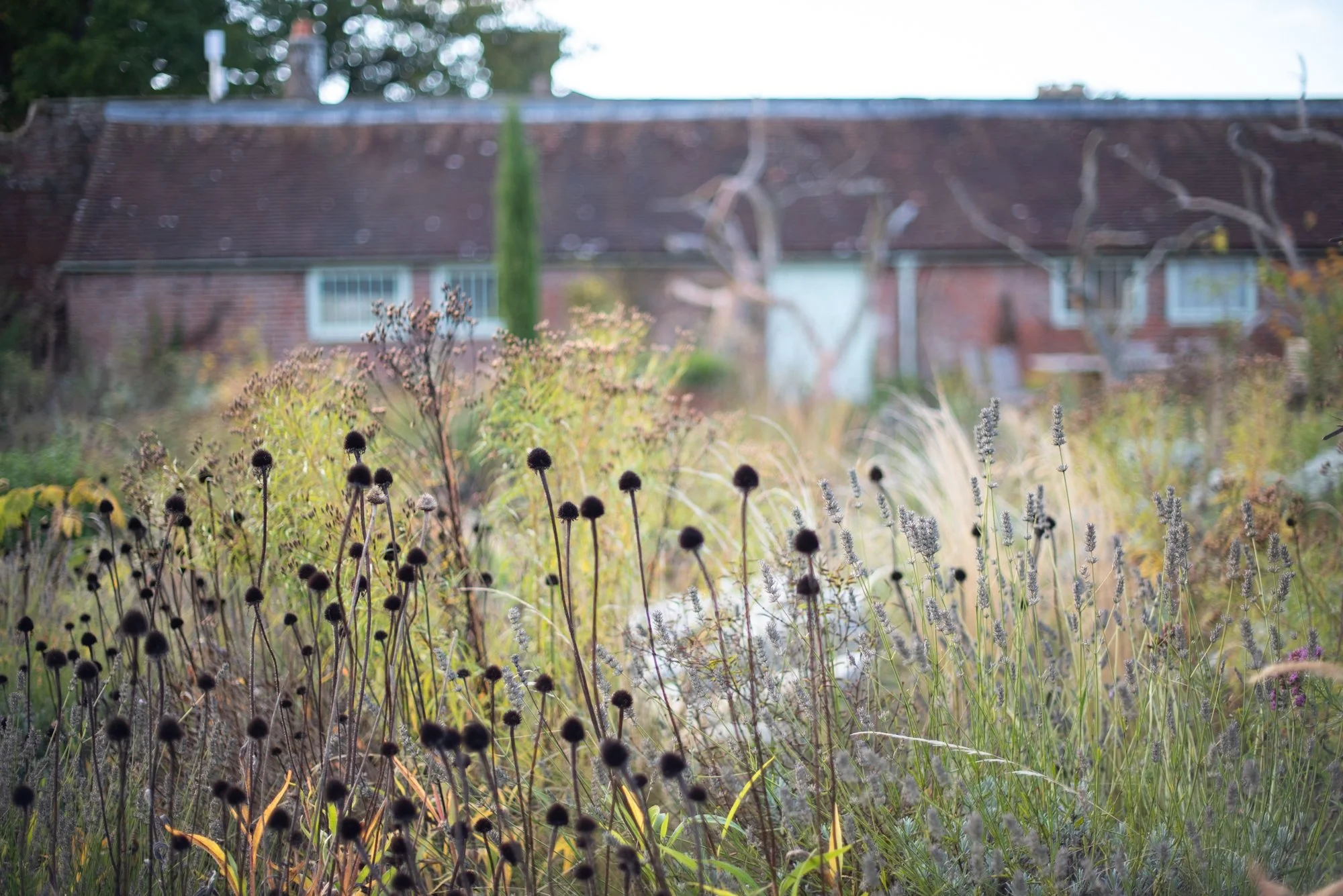
The Walled Garden at Knepp is beautiful - it’s a luxurious planty pleasure to behold and to experience - to sit in, to walk through. But it is also somewhere that gets your mind racing. It raises really important questions about how to grow and harvest flowers in a garden setting more sustainably and with the promotion of biodiversity always in mind. Thinking of ourselves - the gardeners - as a ‘keystone species’ sounds bizarre at first, but if we think of our movements and activities in the garden as mirroring those of larger herbivores, creating disturbances that allow opportunities for other species to thrive, it really makes sense.
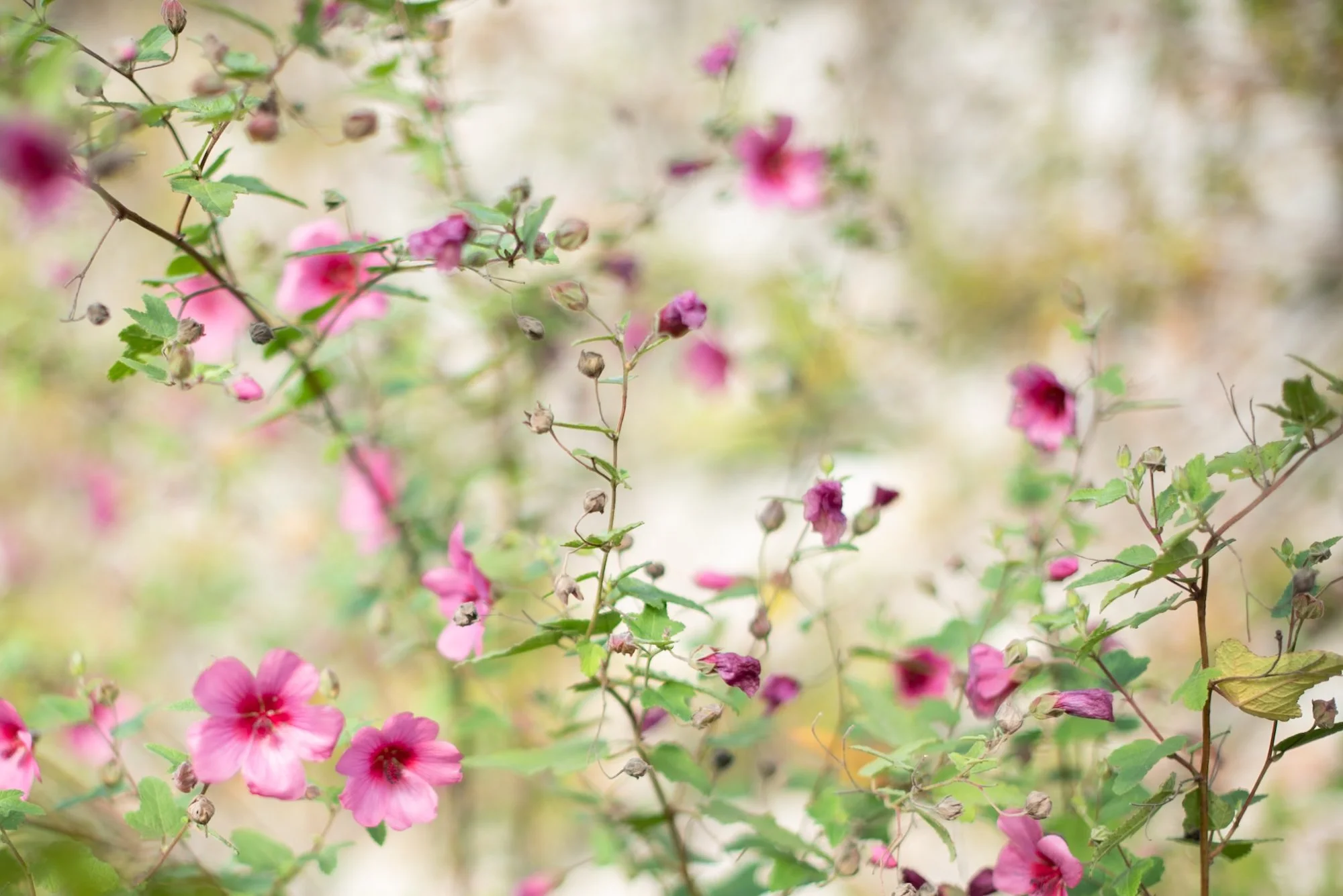
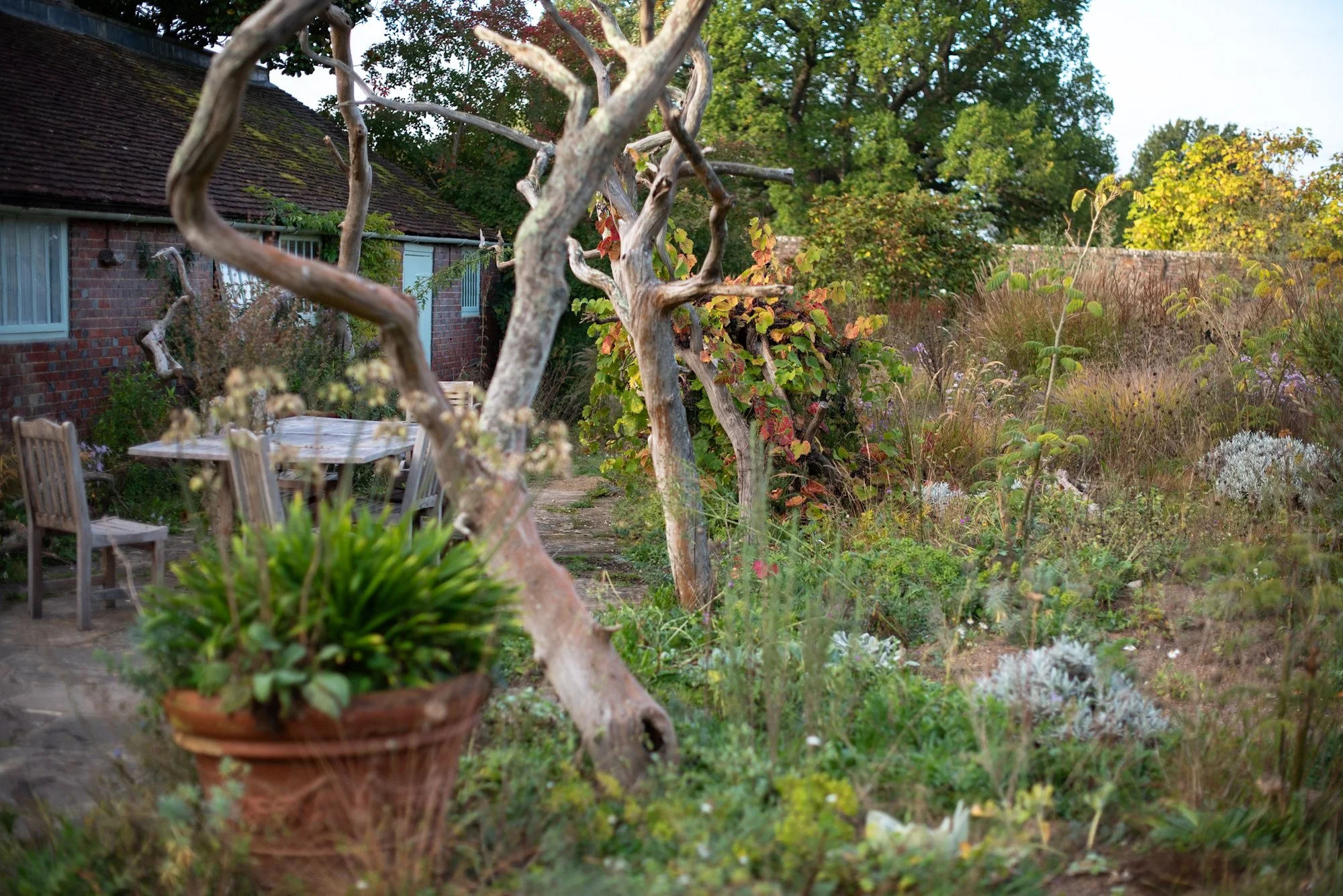
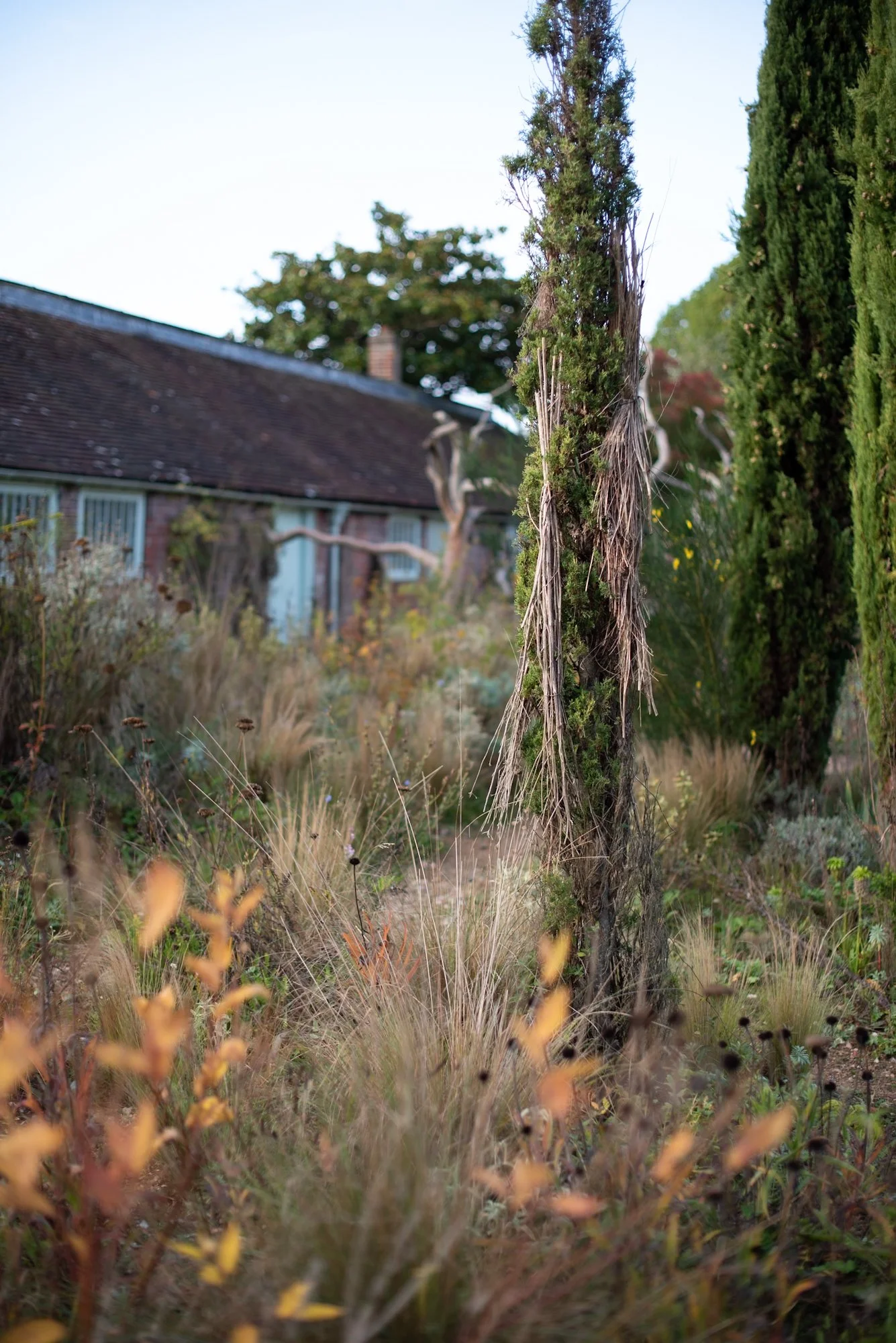
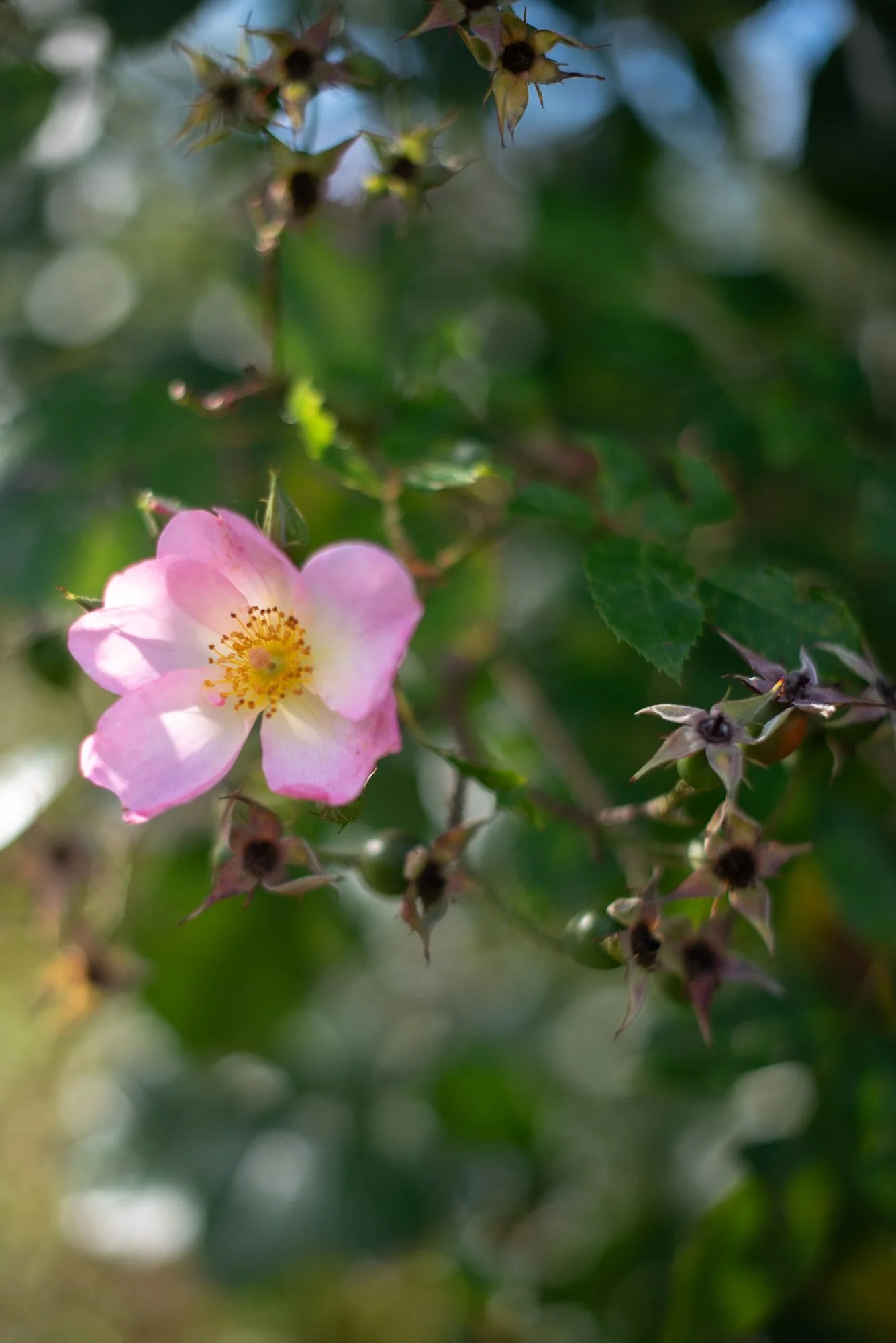
I love the Knepp expression ‘judicious intervention’ applied to a garden context. This isn’t letting go; it isn’t an excuse for laziness or neglect - far from it. In fact it means looking closer, really looking. Keeping an eye on the plants that dominate and thinning them out, or ‘grazing;’ only when and where it’s necessary. Noticing the opportunities our plants provide for insects, birds and other wildlife. Working with nature rather than battling against it.
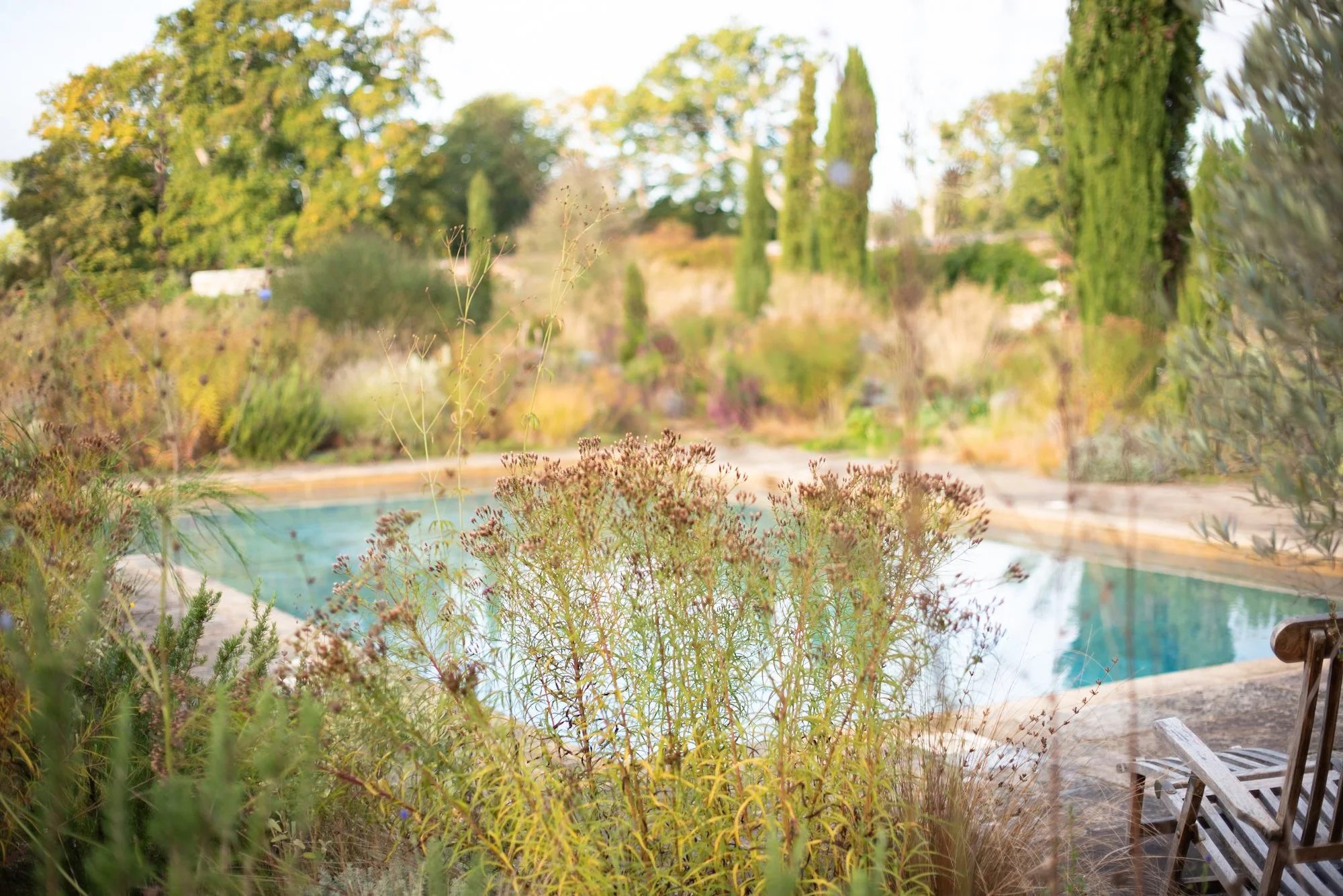
Jess has been following the project with a great deal of interest - she was first in line for Isabella’s book Wilding, which was published in 2023 and visited Knepp last summer on one of their (she says excellent) garden tours. I’ve often noticed that the way Jess gardens is relatively gentle. She’s an active gardener (certainly not hands-off) but there’s a thoughtfulness to her approach that leaves space for things to develop - she doesn’t rush in, she watches and waits and then acts very decisively once the way ahead becomes clear to her. In the latest post of her excellent blog, Knepp’s deputy head gardener Moy Fierheller writes “observe, reflect, adapt”. I think this is the most valuable lesson we can learn as gardeners and as caretakers of our own natural spaces. Watch and wait, exercise patience, practice restraint.
As a cut flower business to also be our own producer is still relatively uncommon. Not without its challenges or frustrations - and not for the faint hearted - I would nevertheless say that it is intrinsic to how we work. Not only does it inform and inspire the naturalistic style of the designs we create for events and teach, it also gives us both control and freedom in terms of the supply of our materials - we can grow unusual varieties that aren’t available wholesale, we can change the varieties, quantities and colours of what we grow on a seasonal basis, we can cut the stems in a way that suits our designs which is very different to how stems are presented when commercially grown and harvested and (most of the time) we’re self sufficient and therefore not subject to the fluctuations of price or supply of the wholesale markets. On the other hand we are very beholden to the vagaries of Mother Nature.
Our growing site has evolved significantly every year since we first started the cutting garden in 2016. From a tiny allotment it quickly developed along the recognisable lines of the small-scale flower farm set-up. We were greedy for plants and experience rather than with a wholesale business plan in mind. We did a lot of events in those years but even so were vastly over-producing in terms of the quantity of cut flower stems needed to supply the studio, especially because we were mainly concentrating on cut-and-come-again annuals (on the plus side the insects were having a field day). In 2020 Jess decided to develop the garden, adding a larger area of mainly drought-tolerant perennials that could withstand our increasingly hot summers and in the five years since has continued to evolve the space, gradually reducing the very labour intensive production of flowering annuals and allowing some areas to return to a wilder state. It has been an interesting experiment, particularly in the top garden which was once regimented rows of tulips in spring, dahlias in summer - and is now a miniature orchard of crab apple trees, wild flowers and grasses. We still cut from this area all the time - we use the grasses, we use the buttercups, the wild carrot, the yarrow, the teasels and buddleia and honeysuckle. It’s a ‘managed wilderness’ but still incredibly productive and supportive of insects, birds, field mice, toads and slow worms too.
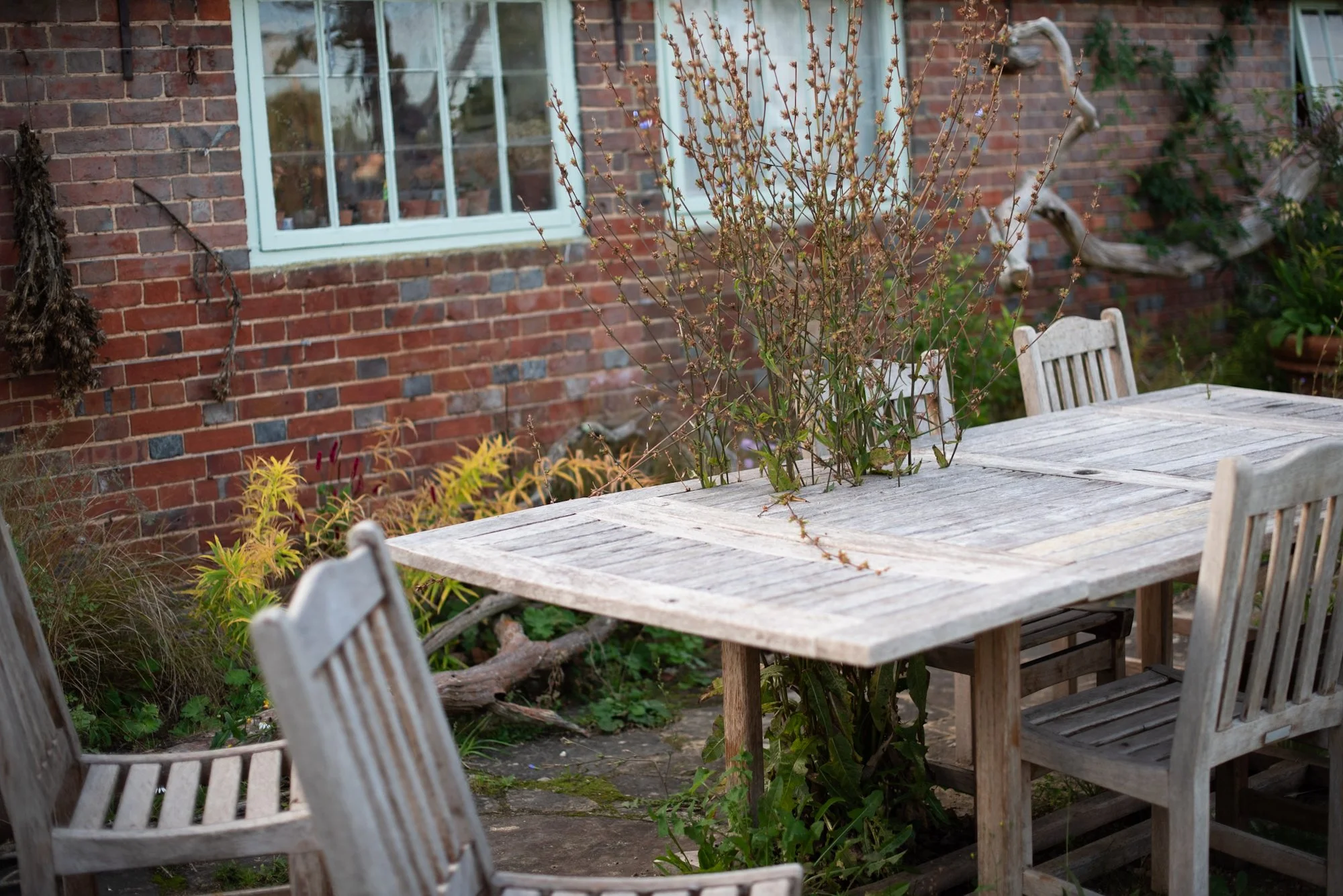
I’ve always rather bristled at the traditional hierarchy imposed upon the materials that we use in floral design. The idea that cow parsley has no value because it grows wild on roadside verges is absolute madness to me. It is extremely beautiful and in profuse supply in May when it is useful as a frothy ingredient in designs that aim to evoke the natural abundance of early summer. It is also an early source of nectar for hoverflies, bees and orange-tip butterflies.
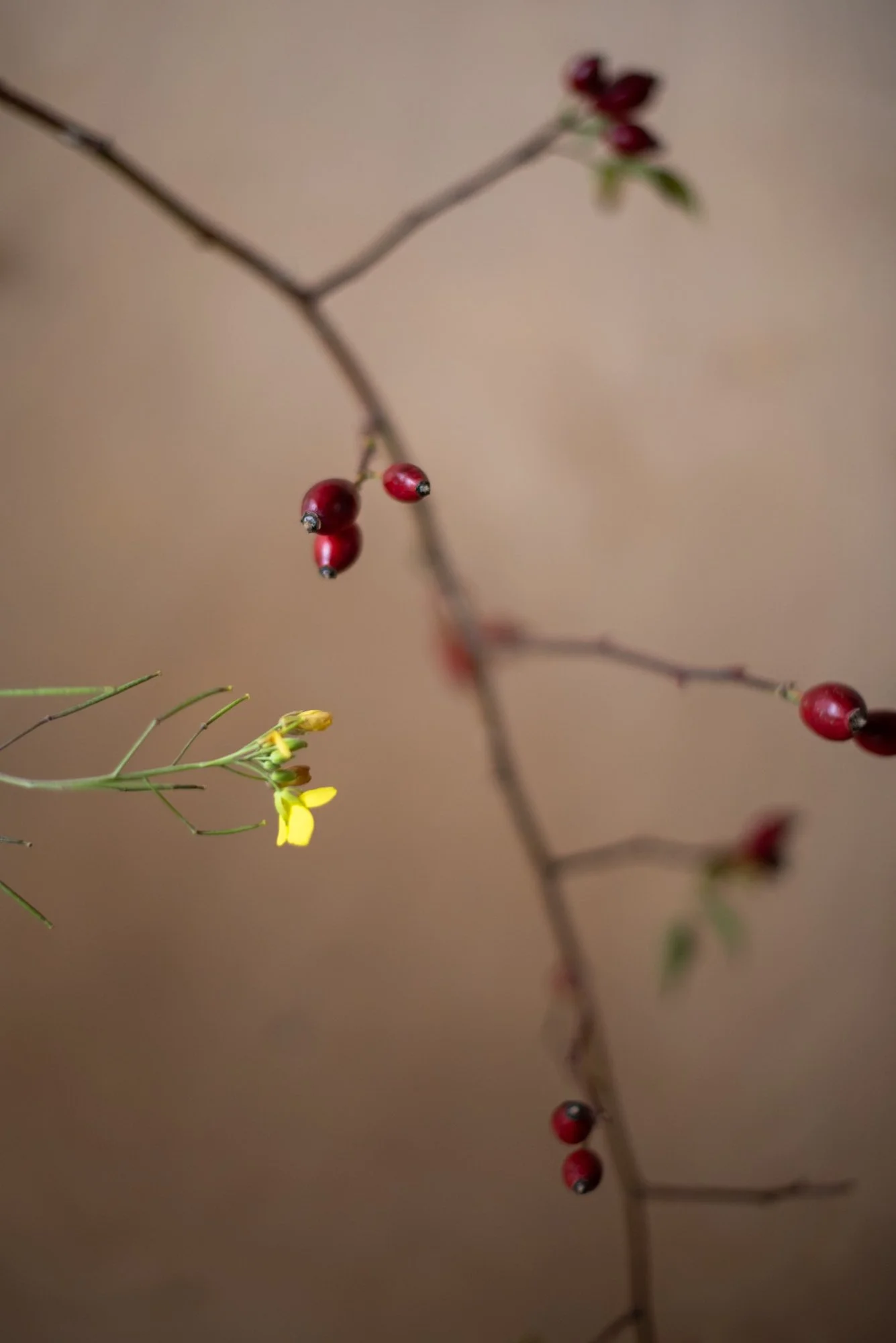
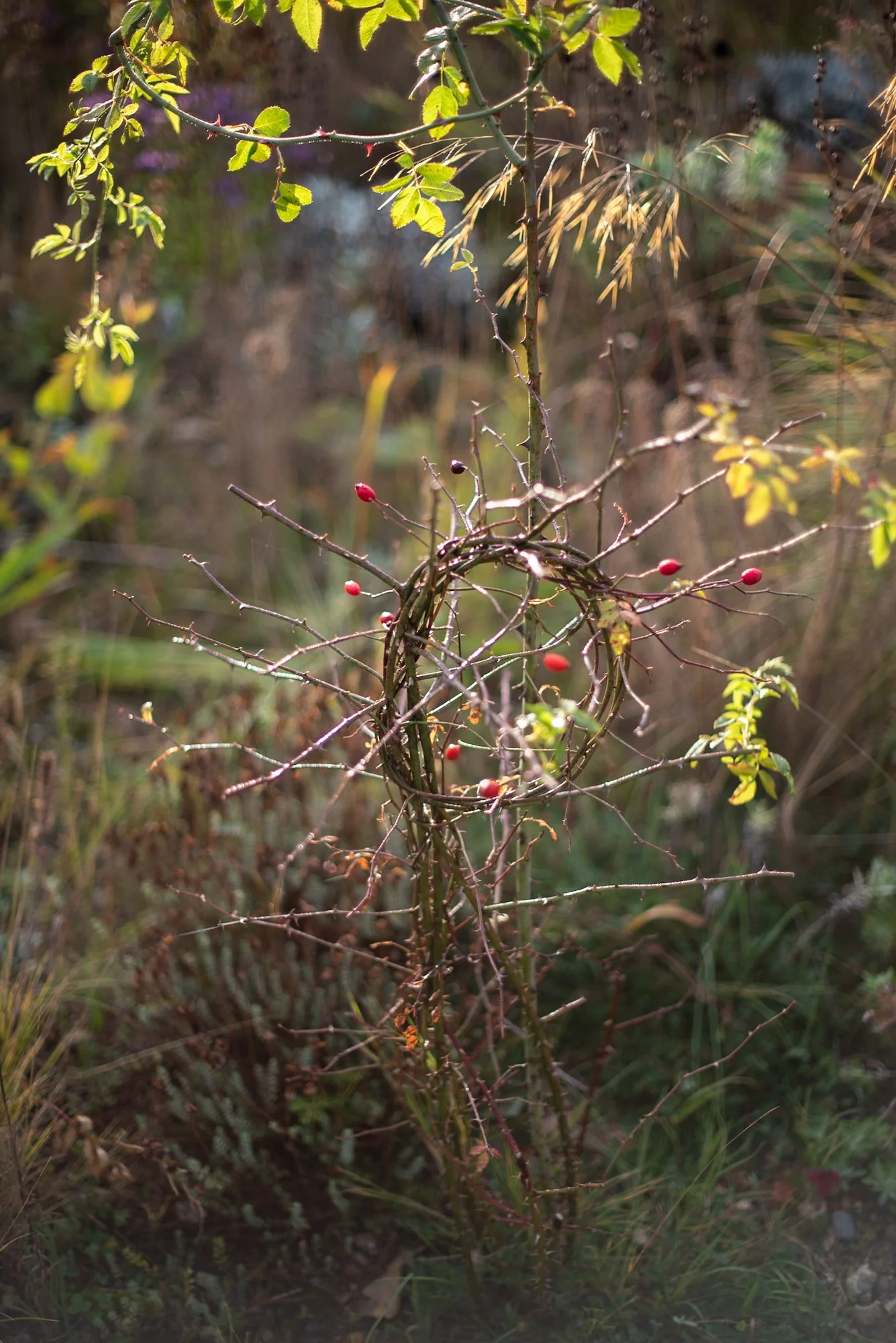
We’re advocates of accepting and utilising, within reason, the wild plants that crop up in the garden of their own accord. Thistles we mostly pull out. Nuisances like dandelions that can quickly get too big for their boots. We’ll always be battling the creeping buttercup, brambles and bindweed. Things that will hinder the growth of the cultivated plants that we need to harvest, yes, we ‘weed’ those out.
But the definition of a weed is highly subjective, and there are numerous examples of plants that are commonly thought of as weeds that we find either attractive or useful, or both and so, rather than constantly battling against them we simply use them, and welcome their additional complexity they provide in the natural habitat of the space. I mentioned the wild carrot and the yarrow but there are so many others - field poppies, greater celandine, wild clematis, mugwort, fleabane, ox-eye daisy, cow parsley, fireweed, bramble, dog rose, herb Robert, field scabious, forget-me-nots, St John’s wort, hemp agrimony, self heal, feverfew, hedge and Lady’s bedstraw, evening primrose, campion, common mallow, dead nettle, field pennycress, teasels. Reevaluating what to take out means we’re leaving plants that have a high ecological value because they provide food for pollinators and birds. But they also have uses for shape, colour, form, filler and texture in floral designs and are often in such abundant supply in the surrounding countryside that the small amount we take barely makes a dent.
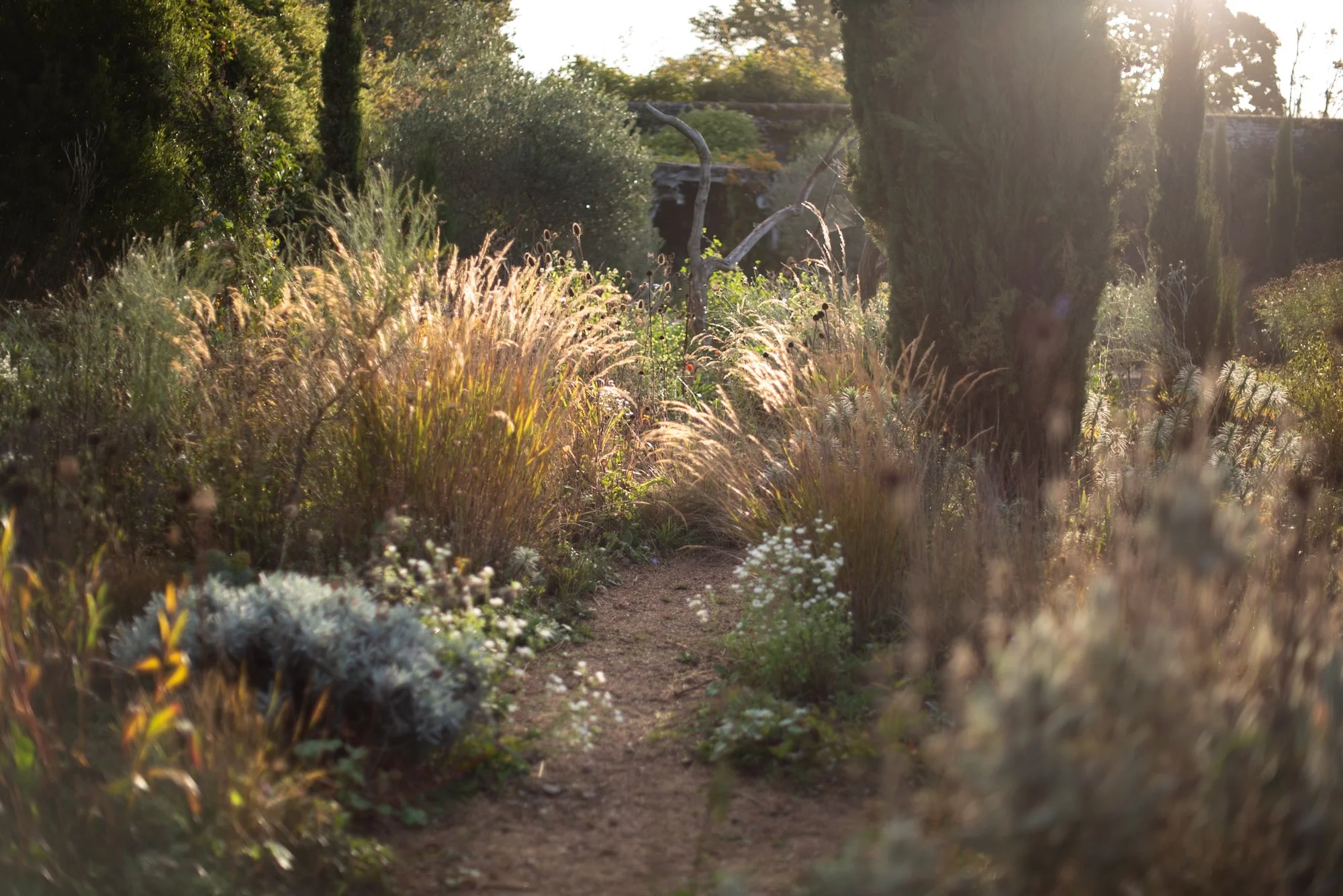
When I raise my head above the parapet of our little, very particular bubble I am often disheartened by what I see in the floriculture industry. Wastage, wire, chemicals, plastic, air miles, excess, thoughtlessness, flagrant mis-use of words like ‘natural’ and ‘seasonal’ when the products are anything but. BUT I really do believe there are positive steps being taken too - and there are people working incredibly hard to make that happen. Education around reducing the use of floral foam, being the main example I can think of in terms of sustainability. In this country there has been a resurgence of small-scale flower farms growing organically and presumably (though we’re not flower farmers) there is corresponding demand from the florists they provide. I often wonder whether so much of what we do as gardeners and as flower arrangers, too, is because we’re on auto-pilot, and because we’ve inherited ways of doing things that its time to move beyond, or at least to think through, to question. Do these methods serve us - as producers, as consumers, as designers, as caretakers. Do they improve our world?
Something to think about. Thank you to Knepp for raising the questions.
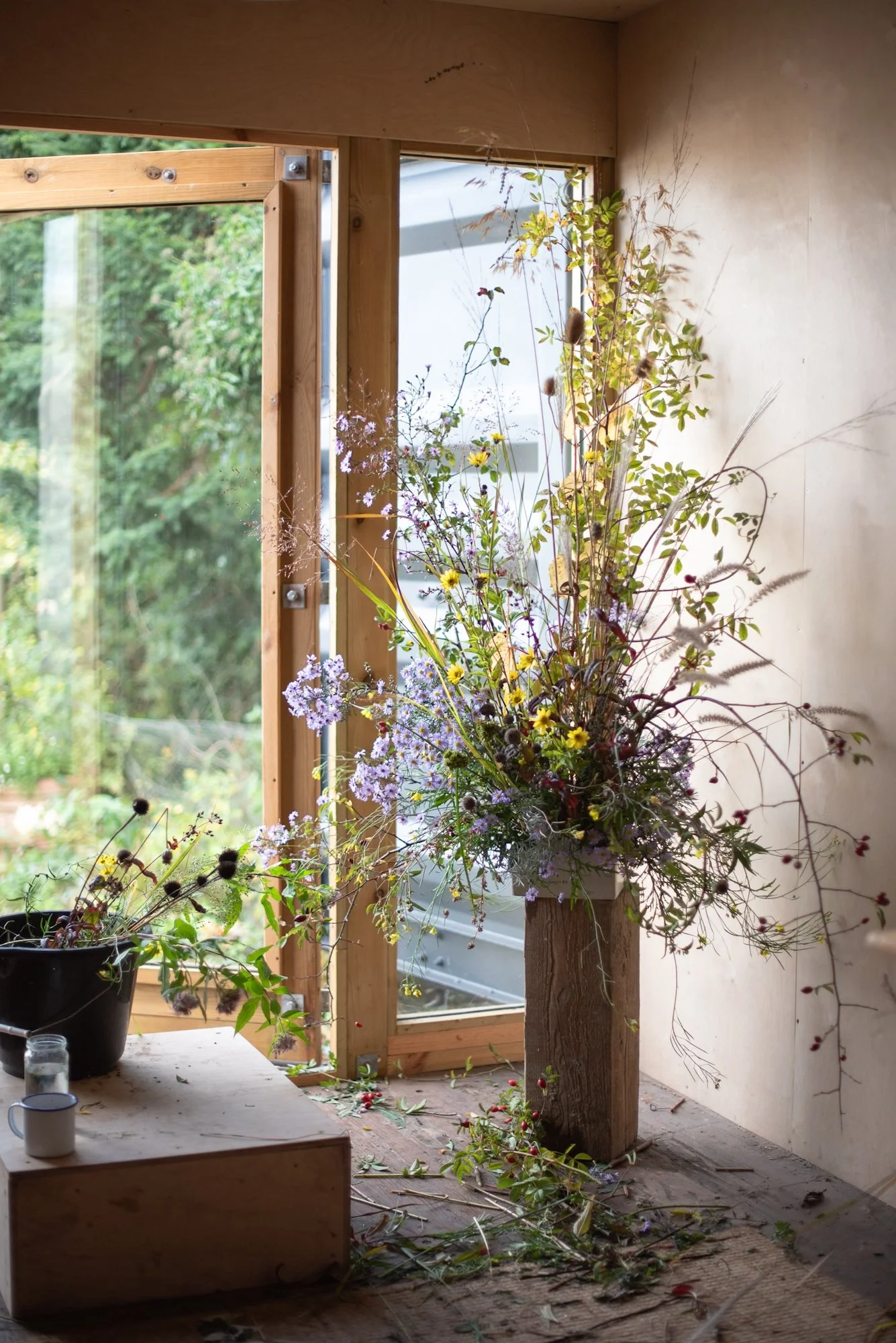
In our latest Flowers on Film episode we visit the Knepp Walled Garden on a glitteringly beautiful autumn day and dive into a conversation with Head Gardener, Charlie Harpur. The next day we continued mulling the links and overlaps and I made an arrangement inspired by the garden there, trying to incorporate as many of these threads as possible. In the spirit of Knepp it’s an experiment - a fun one. We hope you enjoy it.
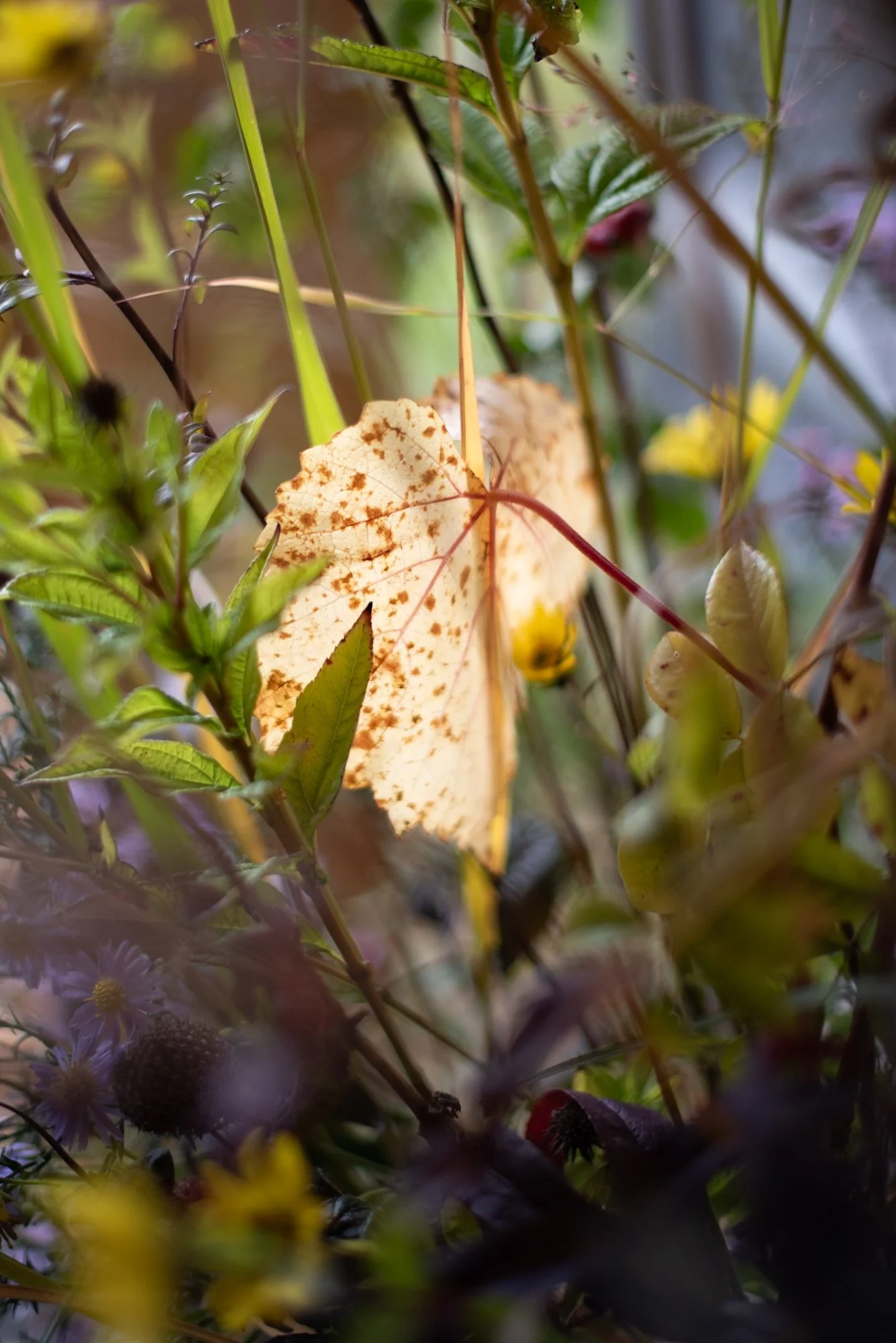
If you’re able to get to Knepp to experience the garden - and the wider estate - first hand I’d highly recommend it. If not, or not for a while, there are plenty of ways you can learn more in the meantime.
Knepp Website
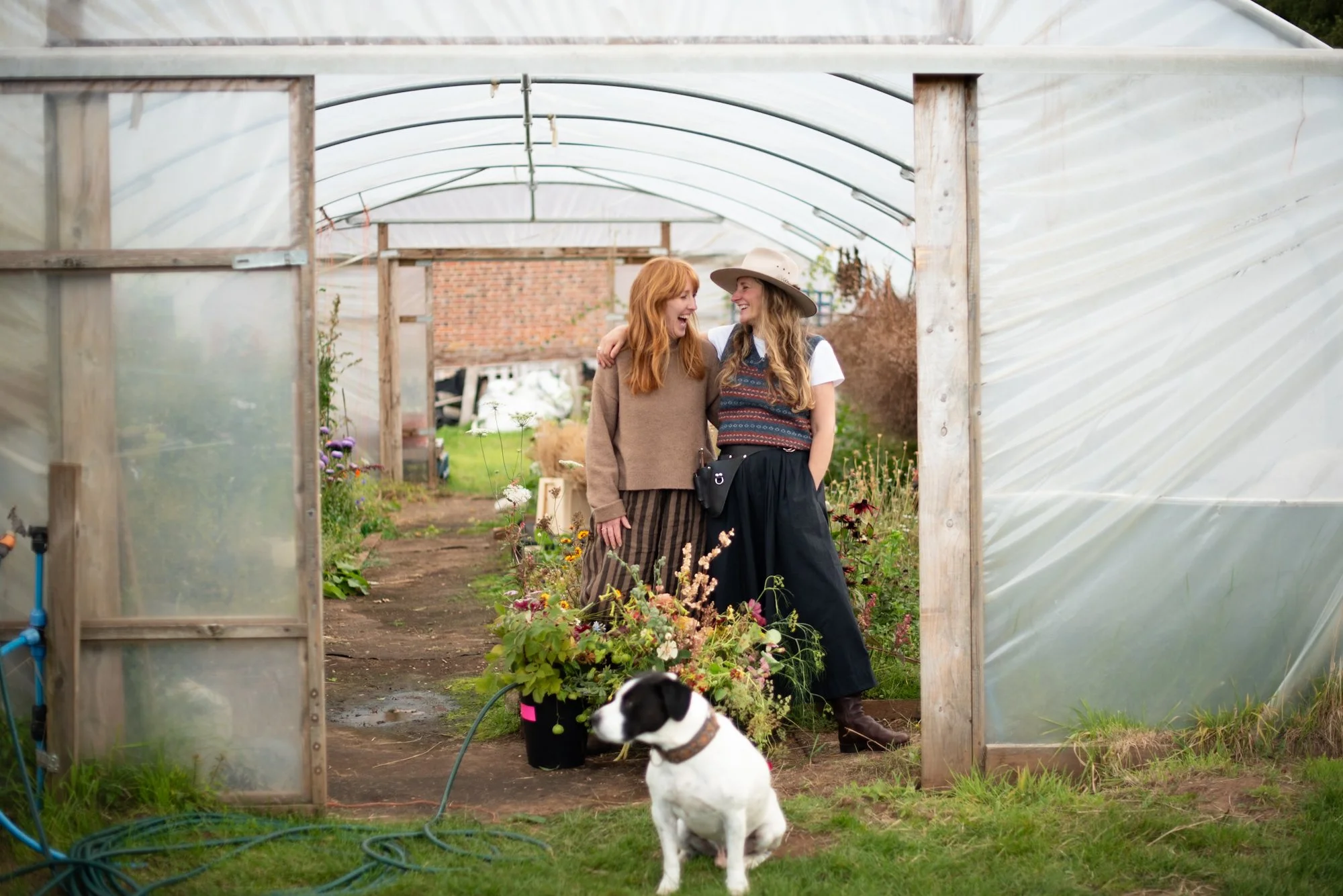
PYRUS BOTANICALS
Enclosed by high walls, Fiona Inglis of PYRUS has curated a growing space where every variety is chosen and cherished. At this time of the year the apple trees are smothered with fruit and the roses draped with necklaces of nasturtium, their vibrant petals streaked with…
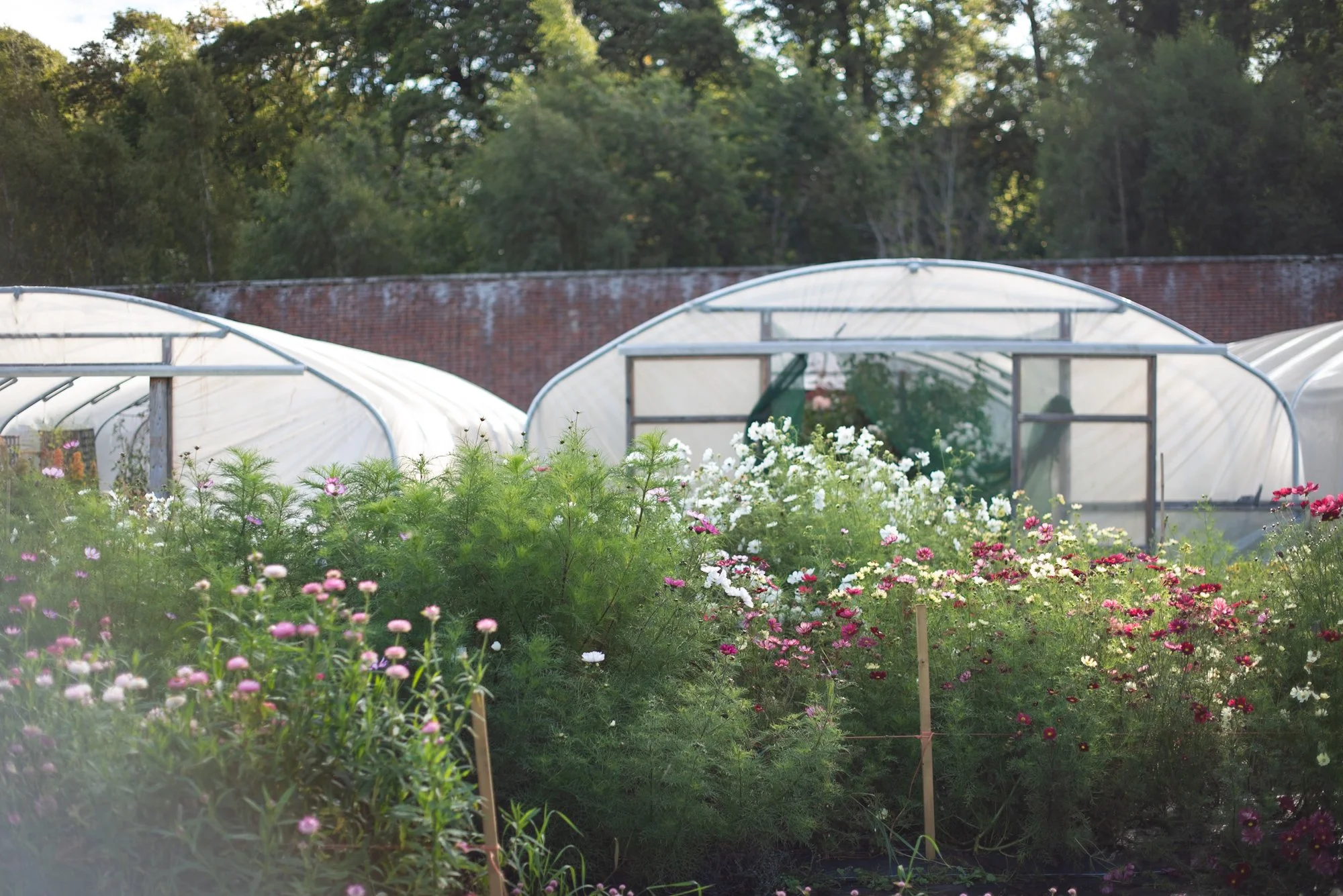
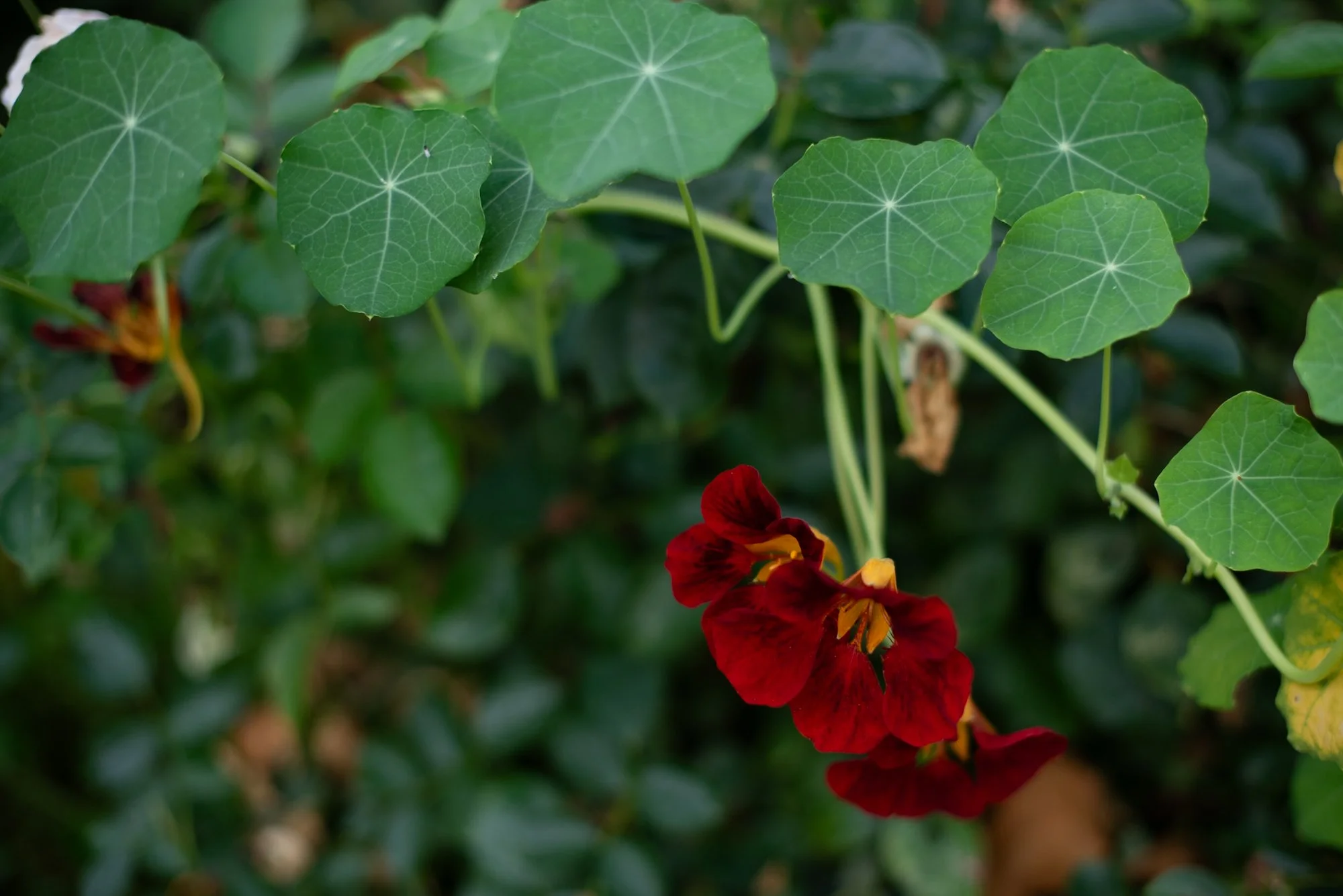
Enclosed by high walls, Fiona Inglis has curated a growing space where every variety is chosen and cherished. At this time of the year the apple trees are smothered with fruit and the roses draped with necklaces of nasturtium, their vibrant petals streaked with intricate lines as if some had dipped a brush in maroon ink and finely marked each petal by hand.
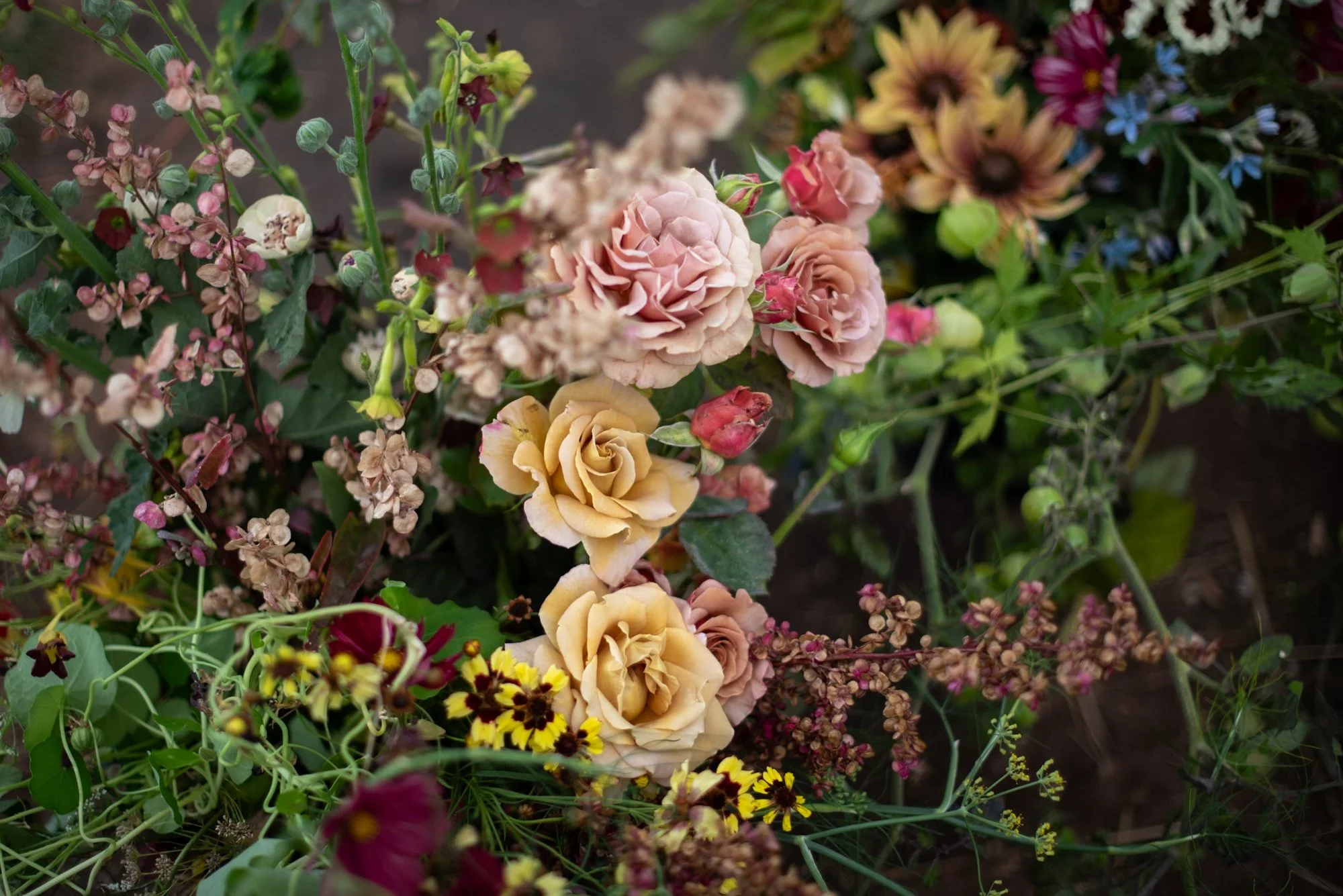
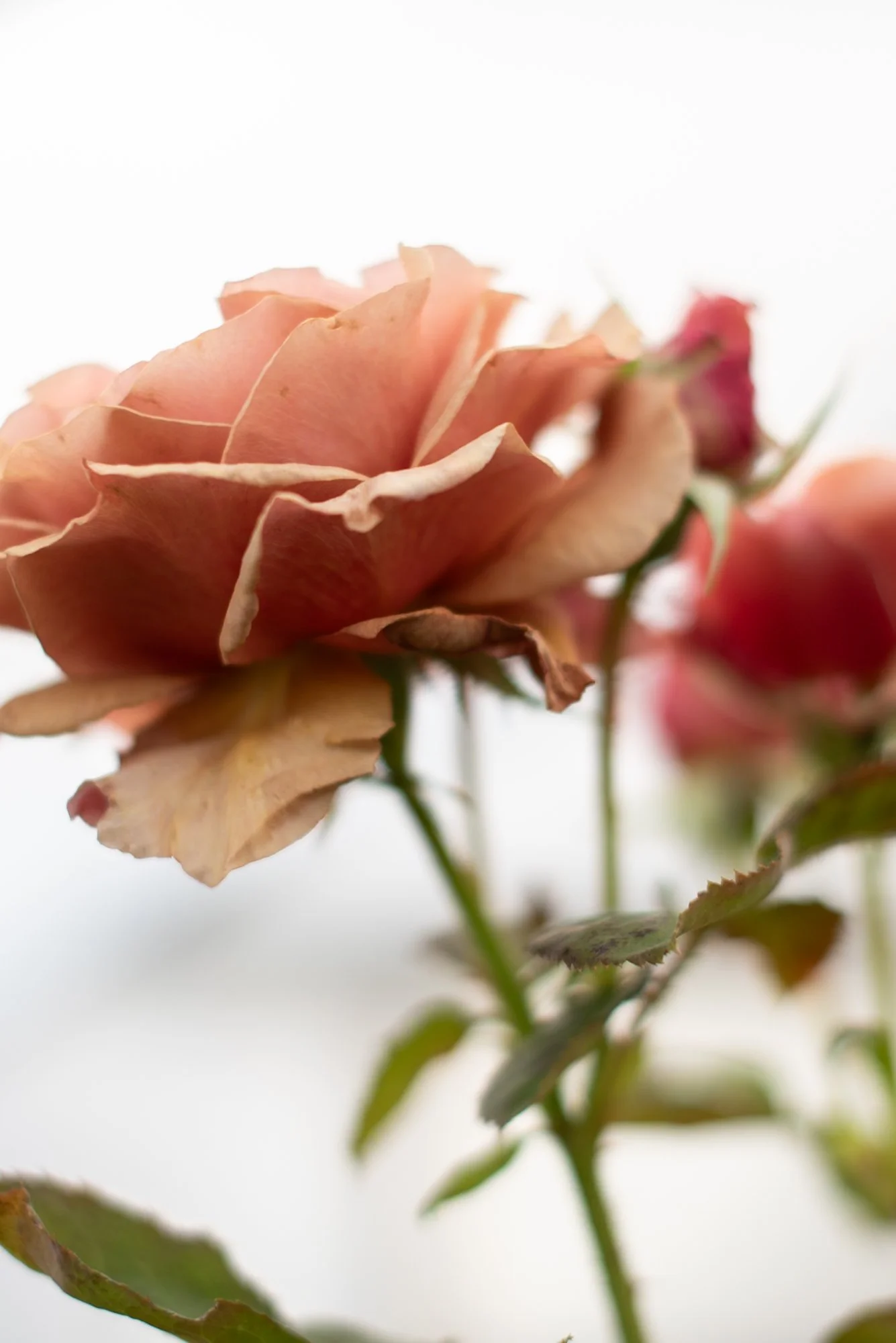
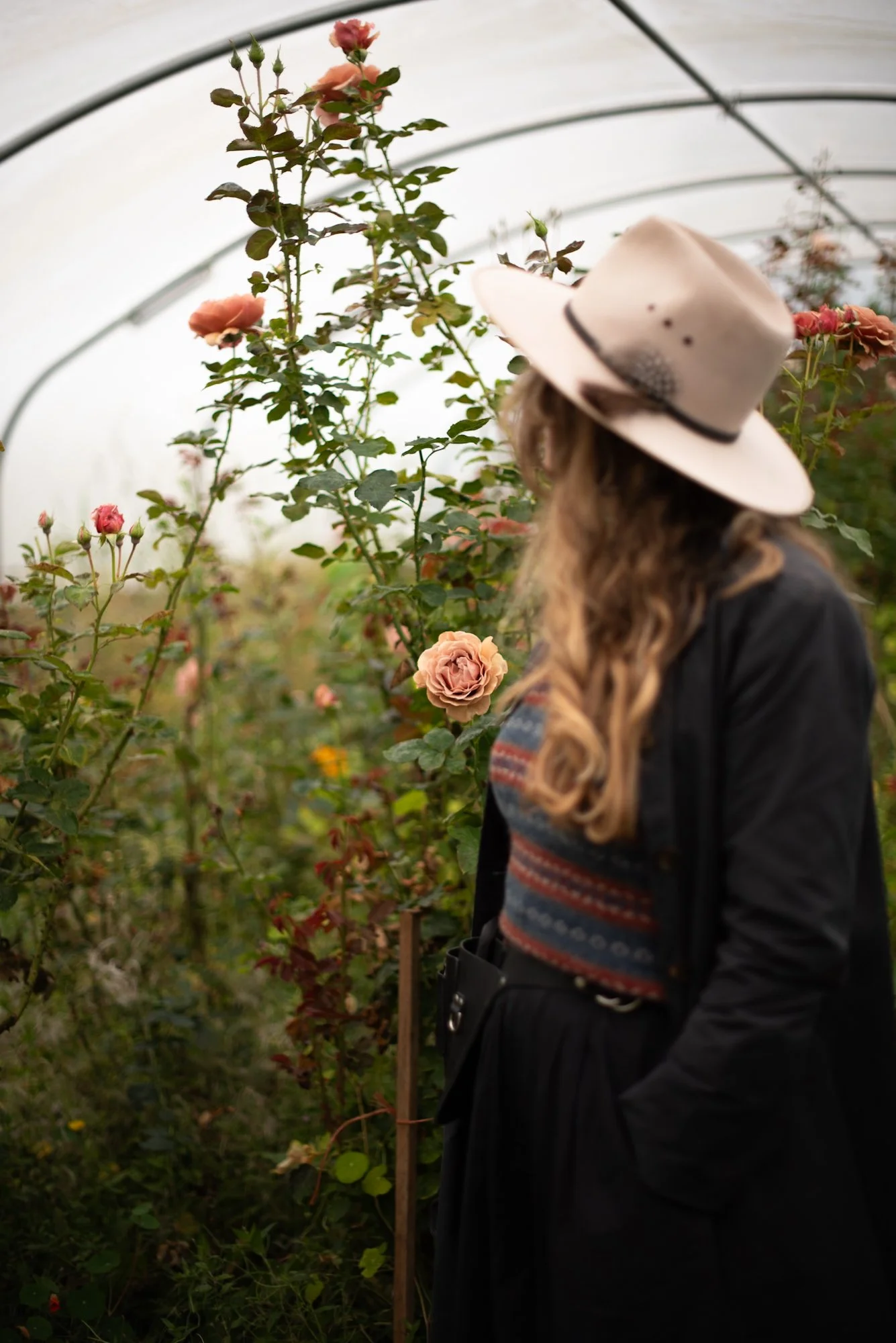
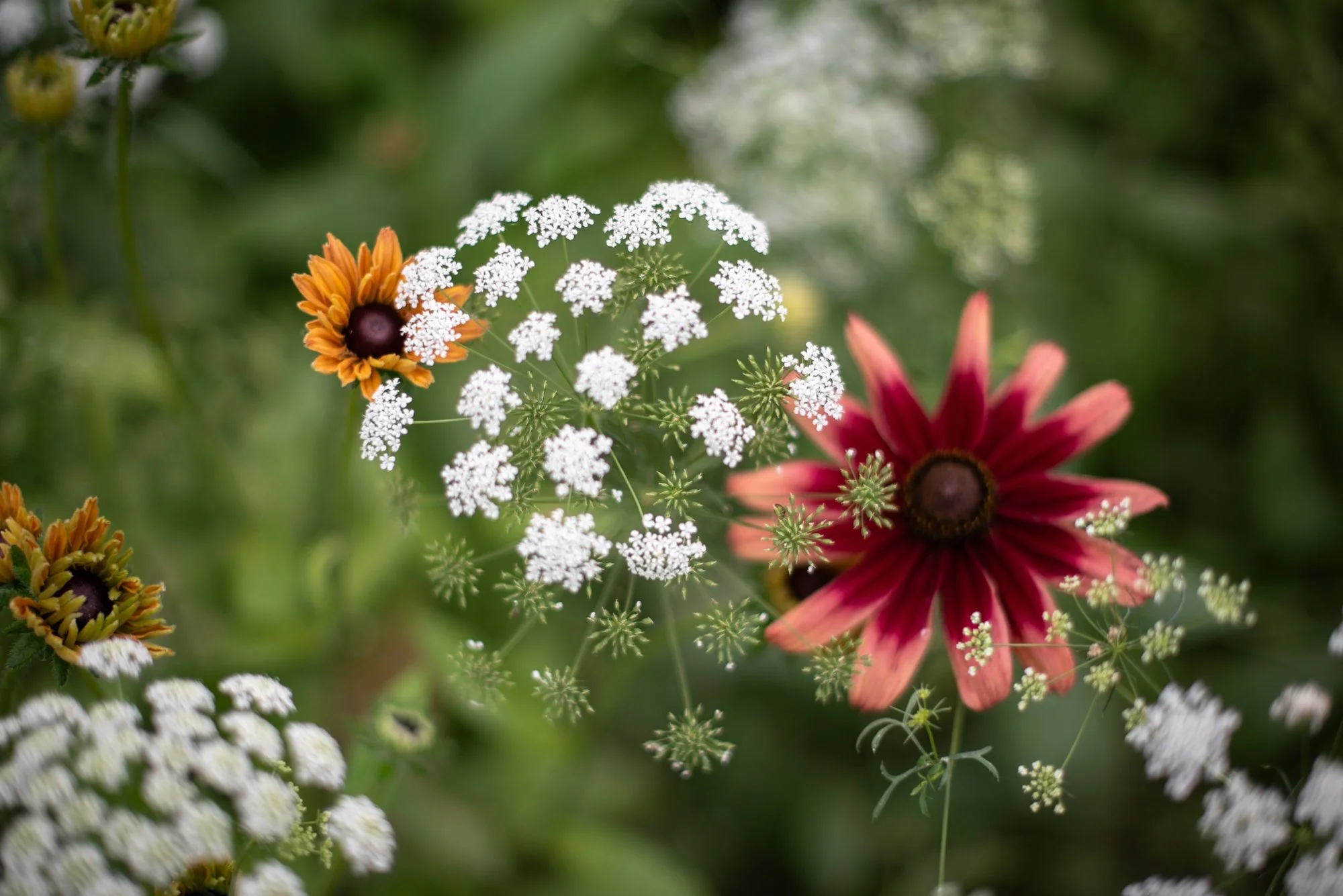
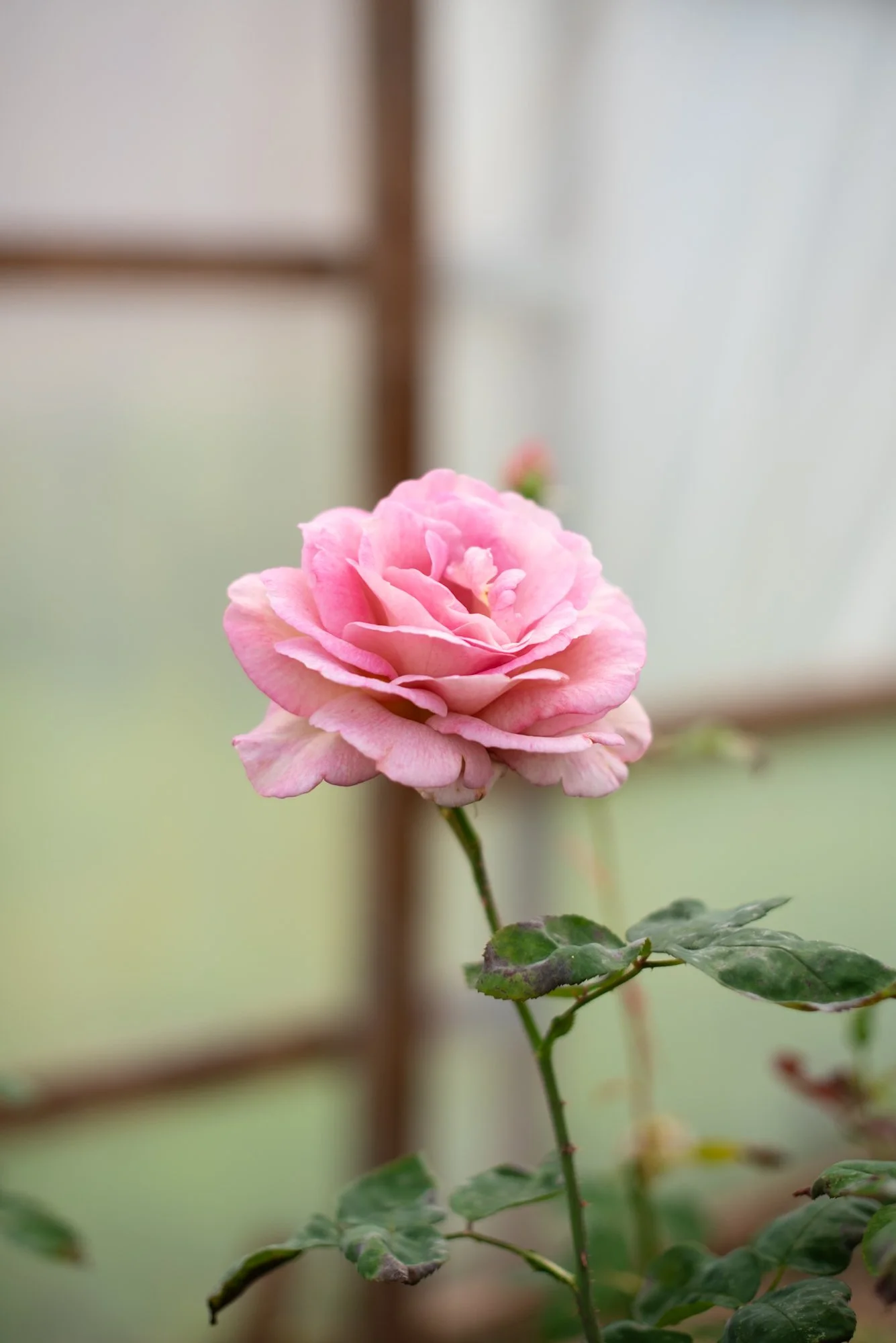
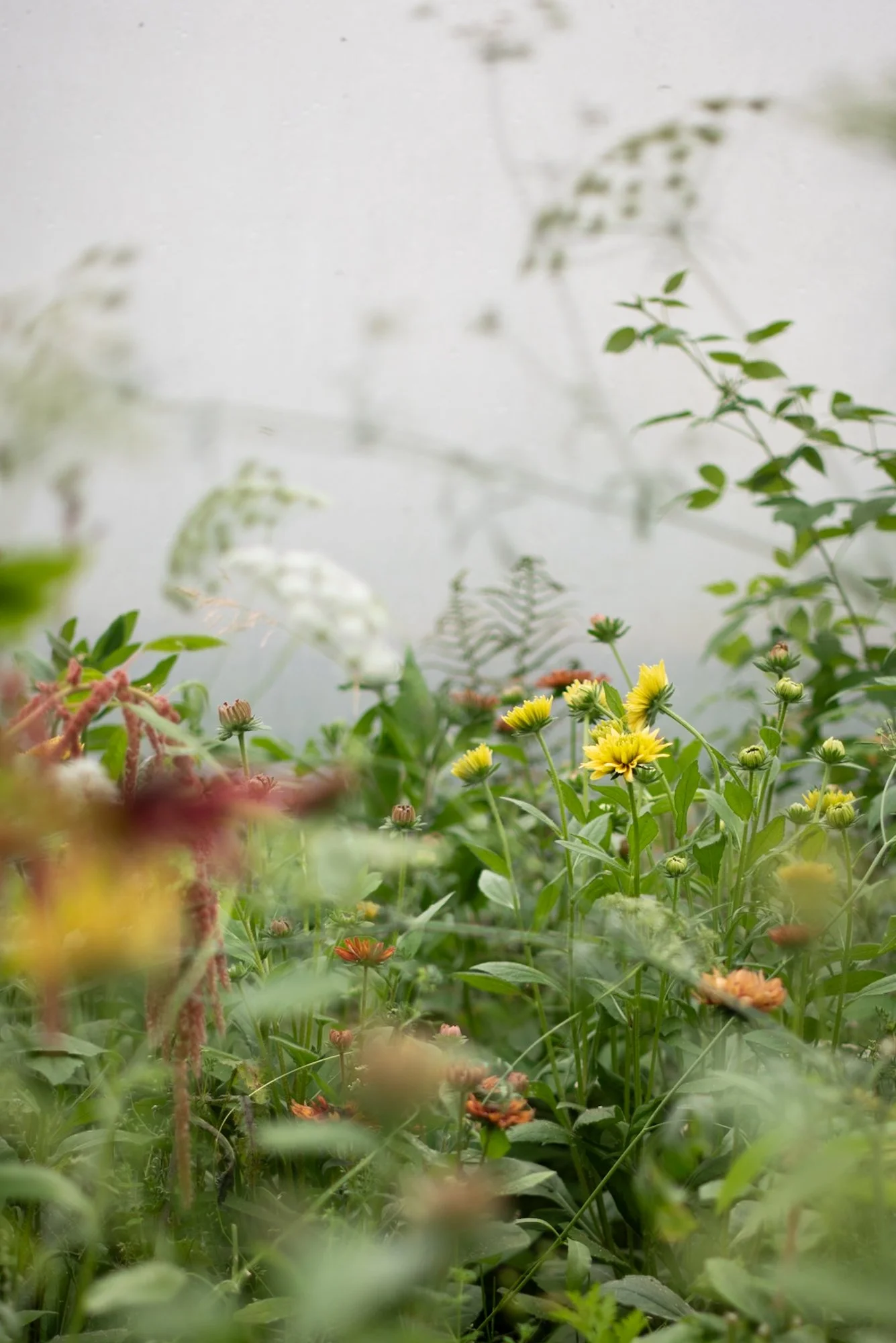
Distracted by so many delicious corners and moments, grappling a notebook and camera, I found it quite the challenge to focus on the task at hand - choosing the materials for my demonstration the following day at Elliott’s. I wanted to include as many edibles as possible, to tie in with the season and lunch menu and Fiona didn’t hold back - cutting me the cream of the crop of her beans and tomatoes as well as dusky coffee and mustard roses. Once I could envisage the colour palette - a blend of raspberry, soft browns and yellow - I was off to the races and quickly filled a bucket with tickseed and cosmos for colour, garden orache and fennel for shape and texture.
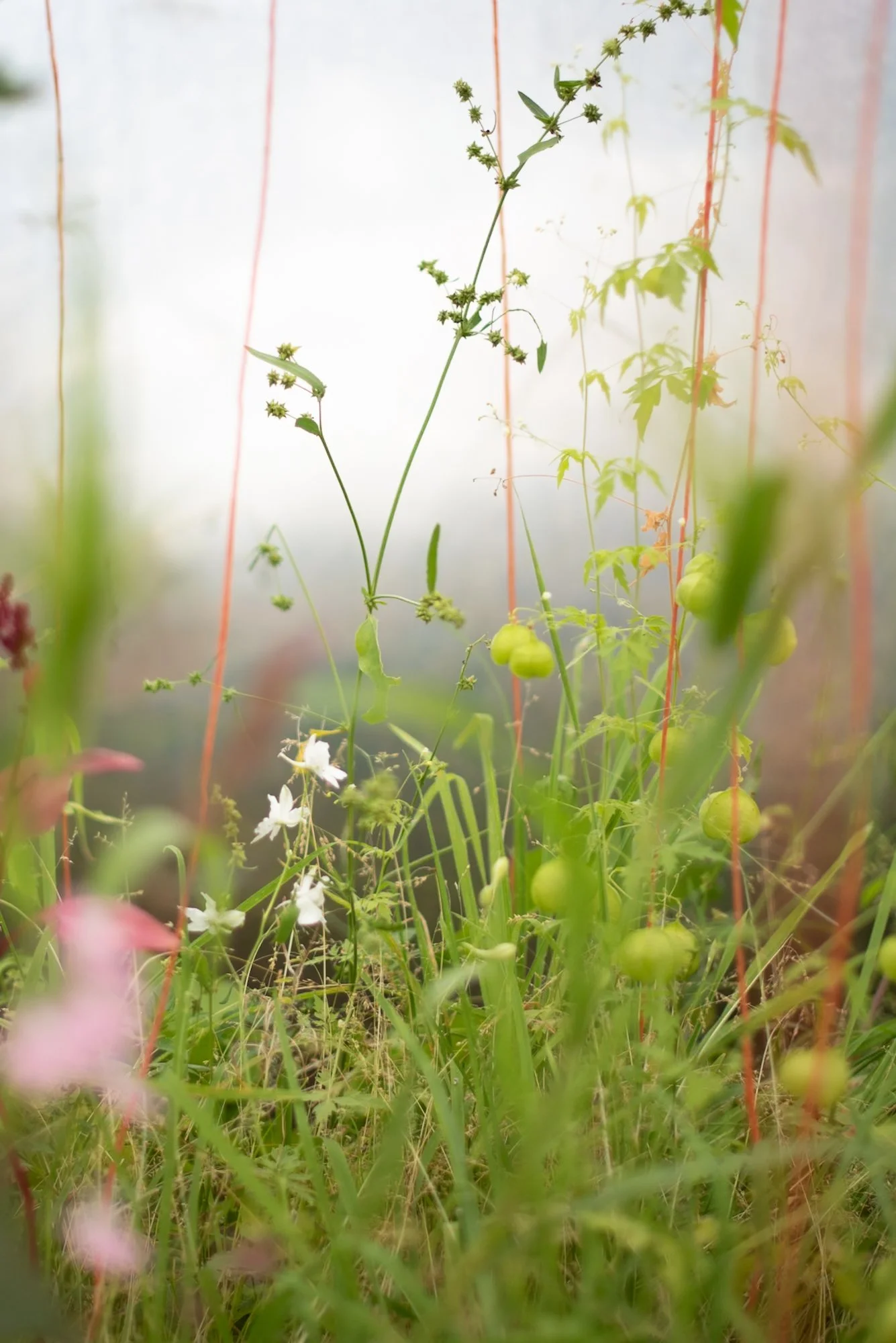
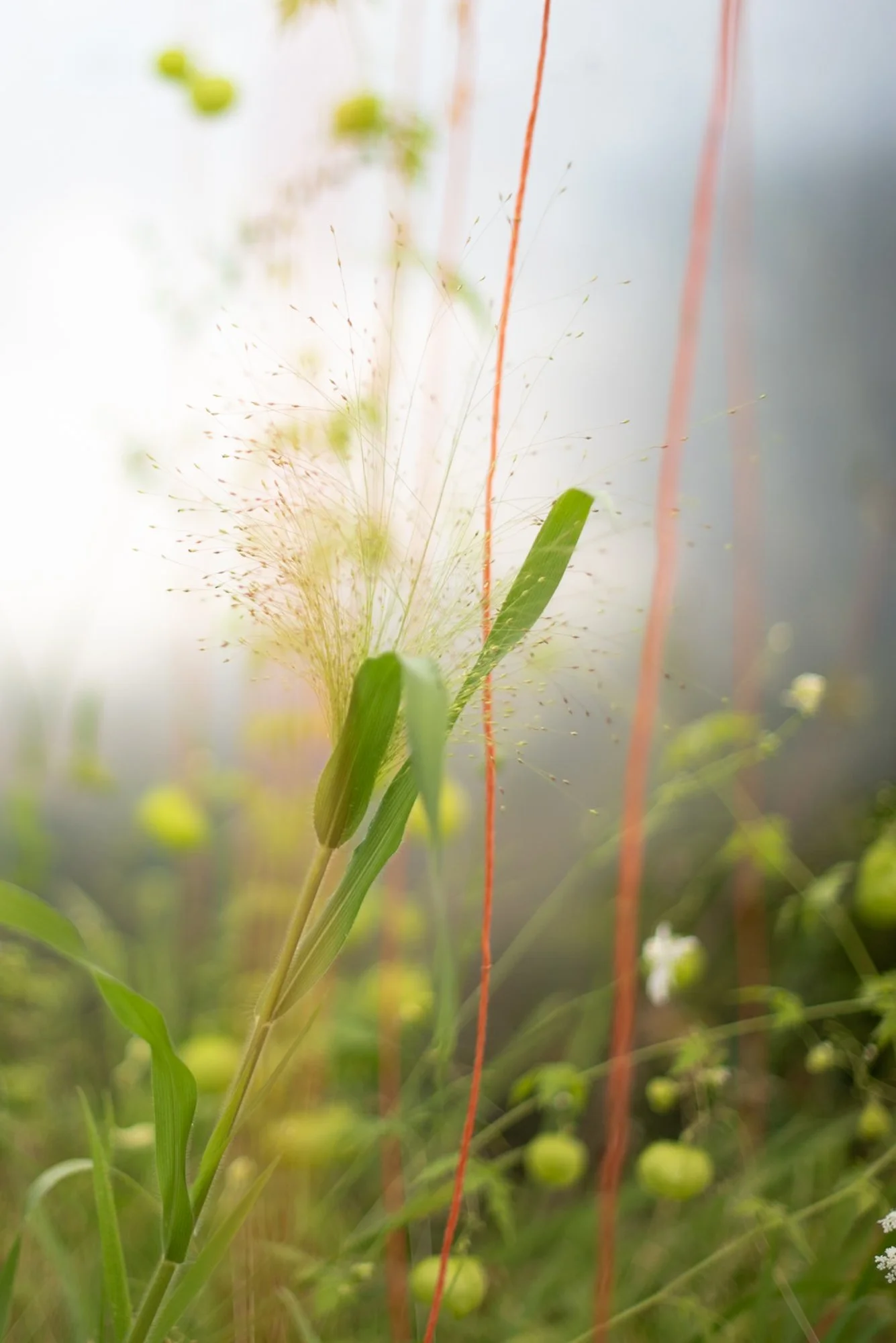
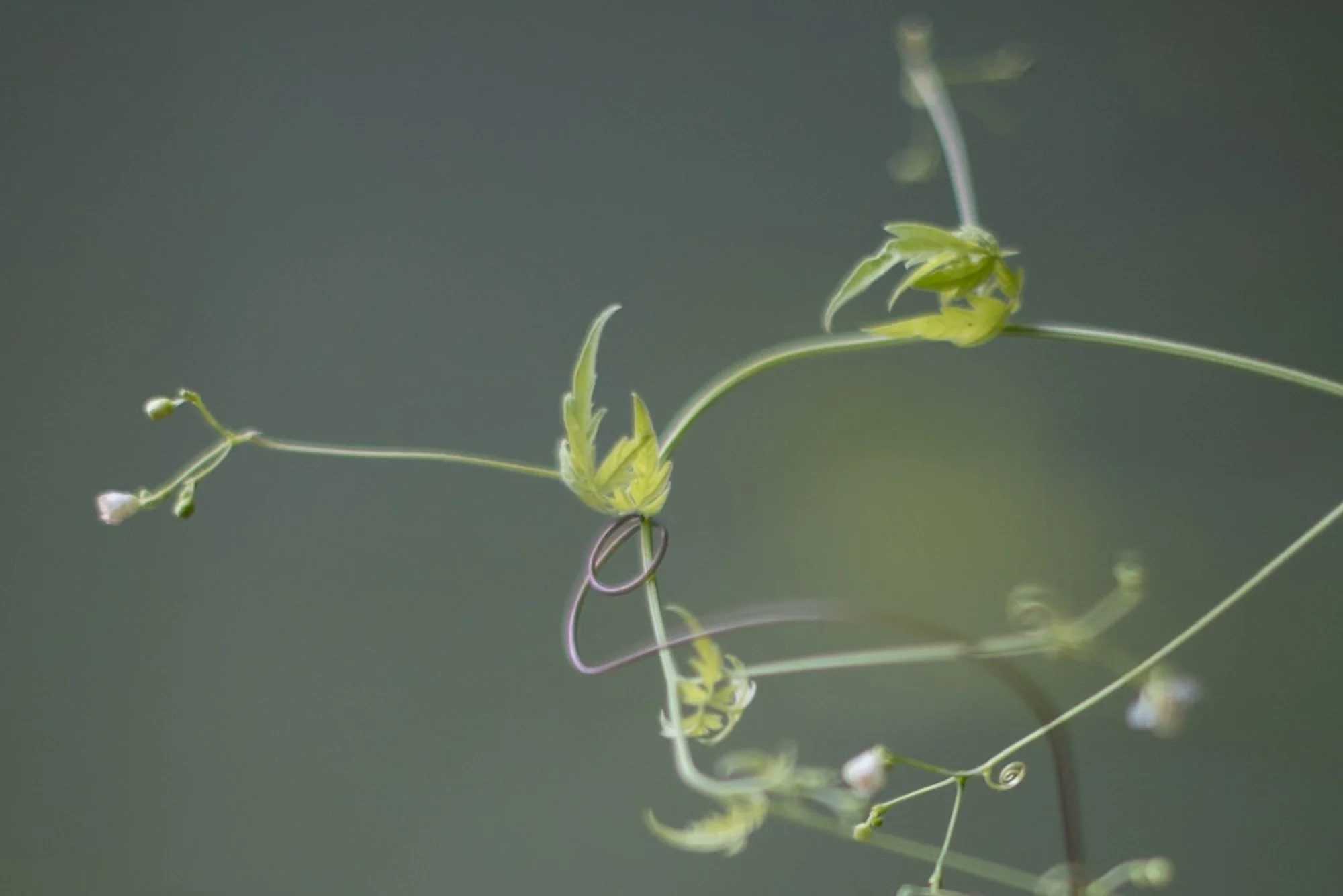
I also couldn’t resist the love-in-a-puff vine (Cardiospermum halicacabum). We haven’t grown this in a couple of years - I think I OD’d on it and fancied a change but it was great to be reunited with those delicate little tendrils and balloon-like seedpods.
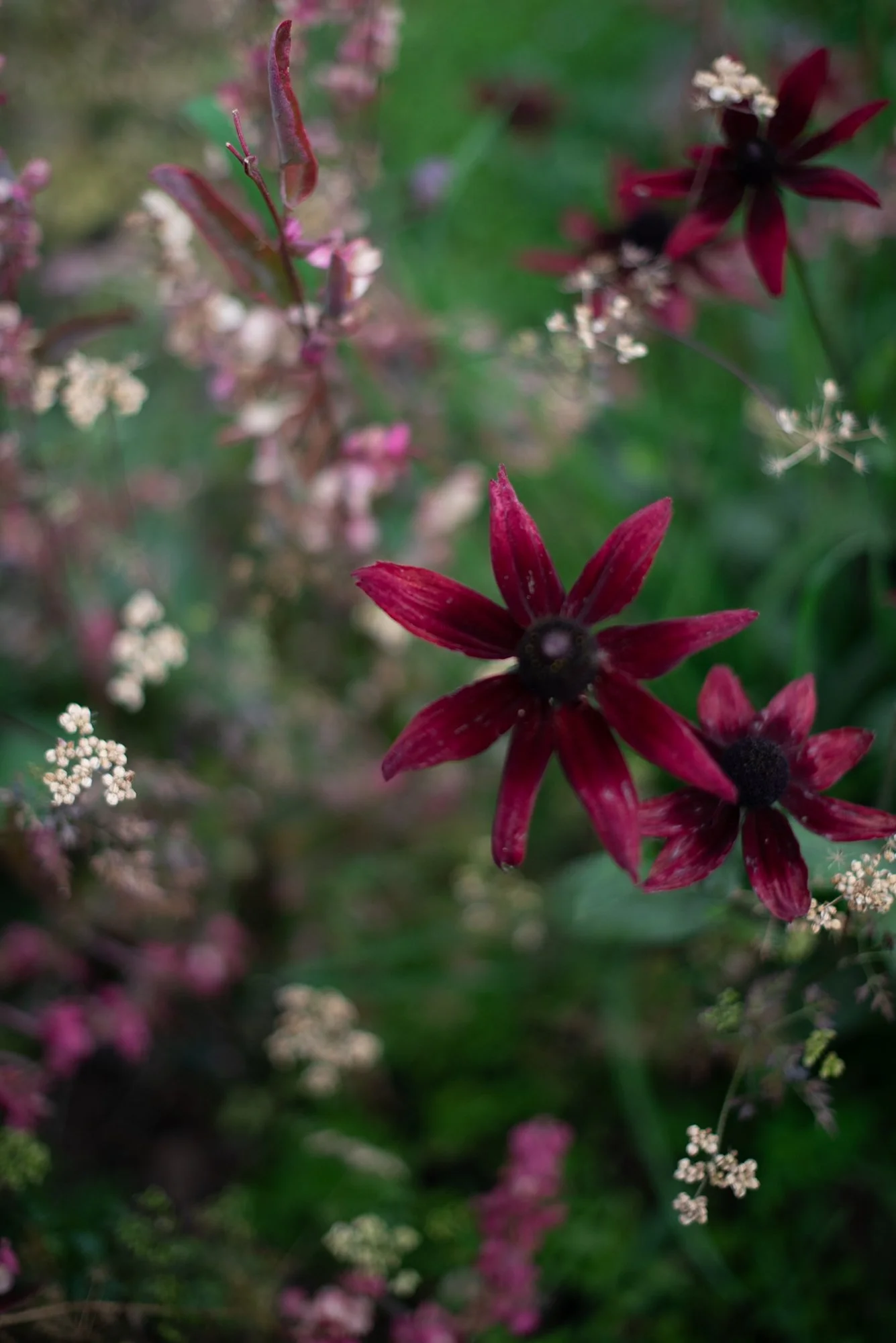

A recent addition to the garden is a beautifully designed pavilion and Fiona and I settled down with coffee and pastel de nata to a long discussion that can soon be watched in full over at Flowers on Film. During our conversation we meandered from the joys (and challenges!) of a garden-led approach to floral design, to small-scale growing, to personal reflections on balancing work and motherhood, knuckling down through the hard times, to what’s next for PYRUS and Fiona’s goals for the future.
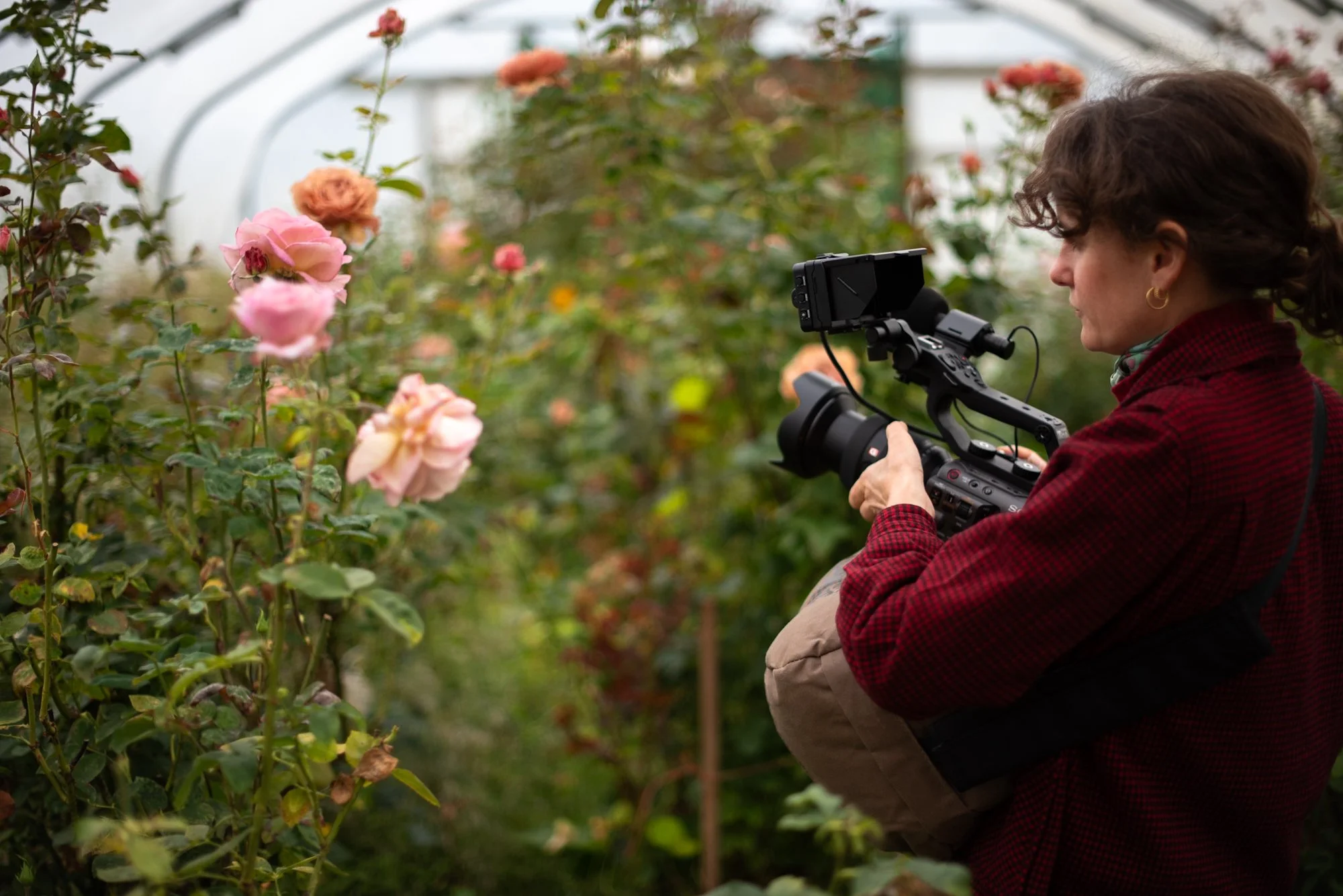
Fiona is an incredibly humble person and an absolute artist; she rarely does interviews so we’re honoured that she agreed to share her time and thoughts so candidly and generously on the channel. After our conversation she was off to don a tiara for a jewellery shoot that was taking place in the garden, while in the studio arrangements were being lined up for an event - all in a day’s work!
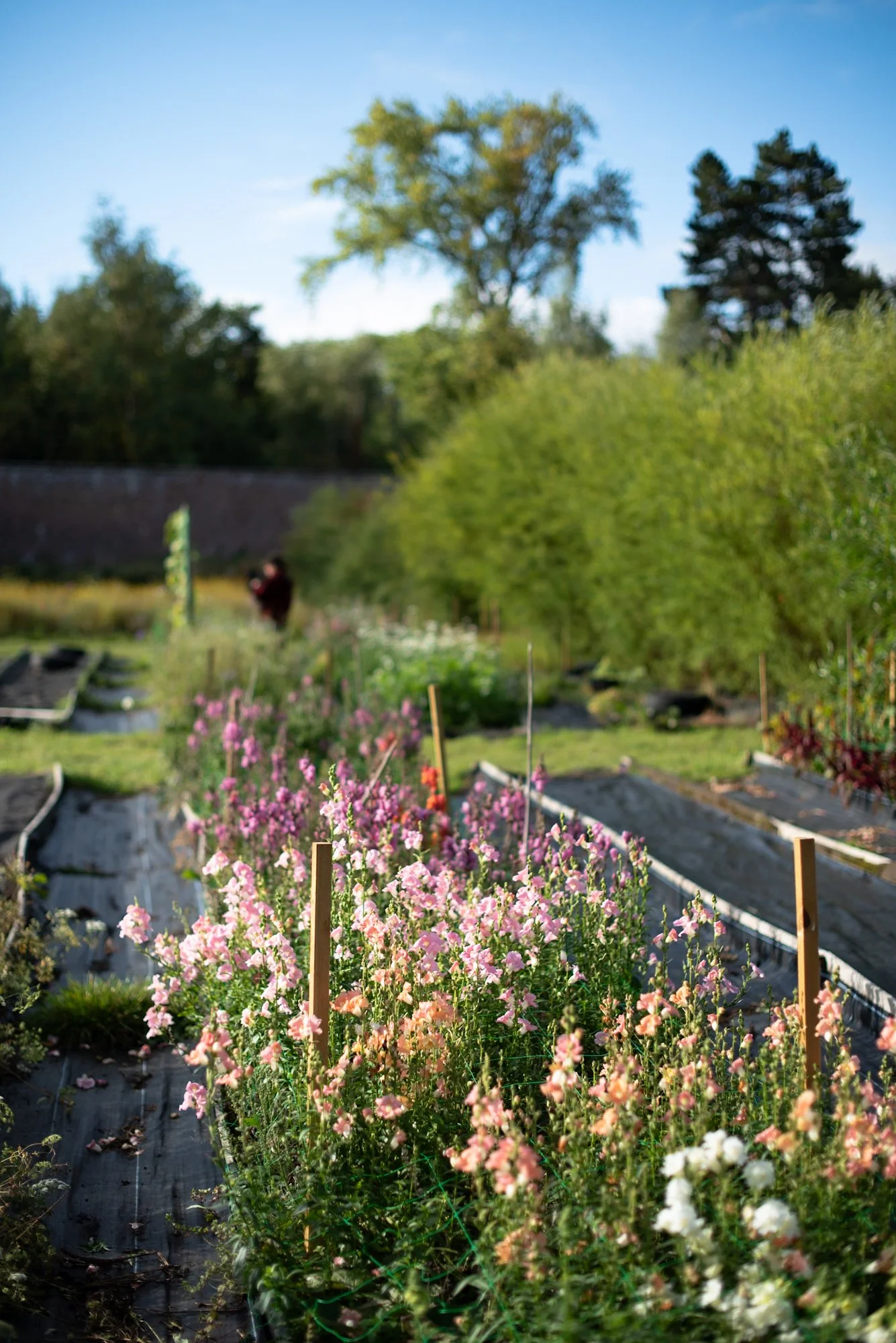
My main takeaway from our day at PYRUS was a reminder of how richly varied this world is that we are lucky enough to call our work, from turning compost and tending to plants to gently placing flowers in the most luxurious of settings. Every day is different and though flowers are the very epitome of ephemerality, capturing them on film means that we can enjoy their exquisite forms and colours for a little longer; a way to preserve their beauty.
Food & Flowers | The Edinburgh Episodes is a five-part film series available to watch on our digital platform Flowers on Film.
Join our Mailing List to save 10% off a year of Flowers on Film

GIARDINO DI NINFA
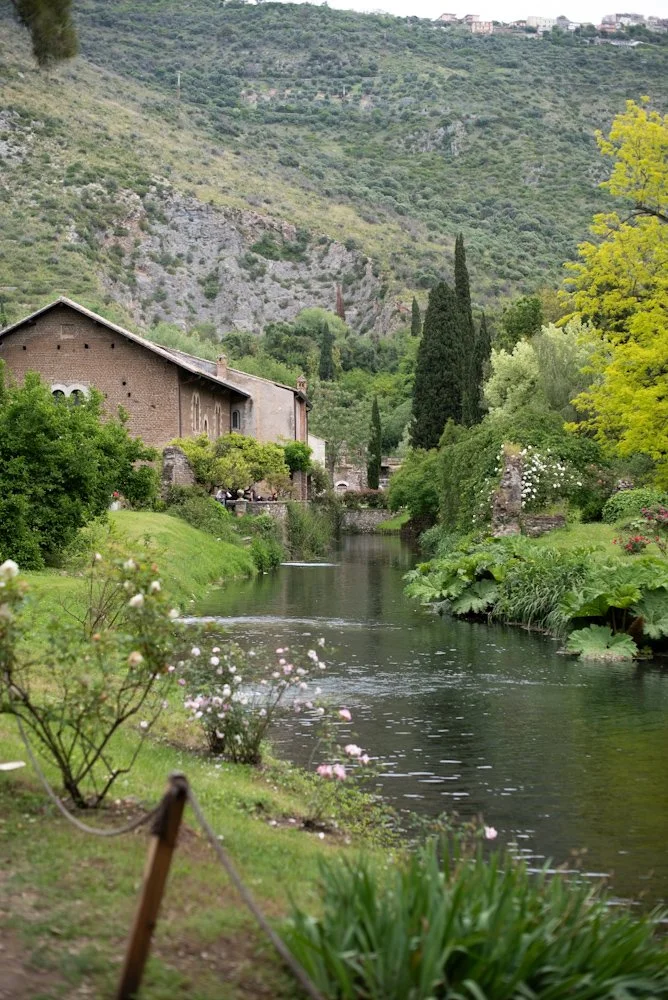
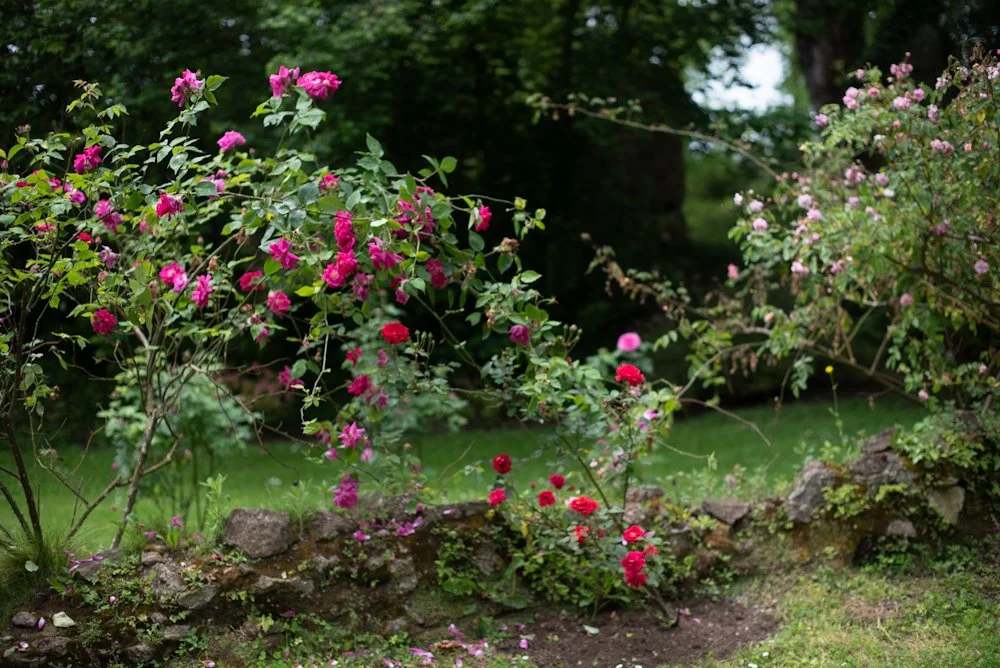
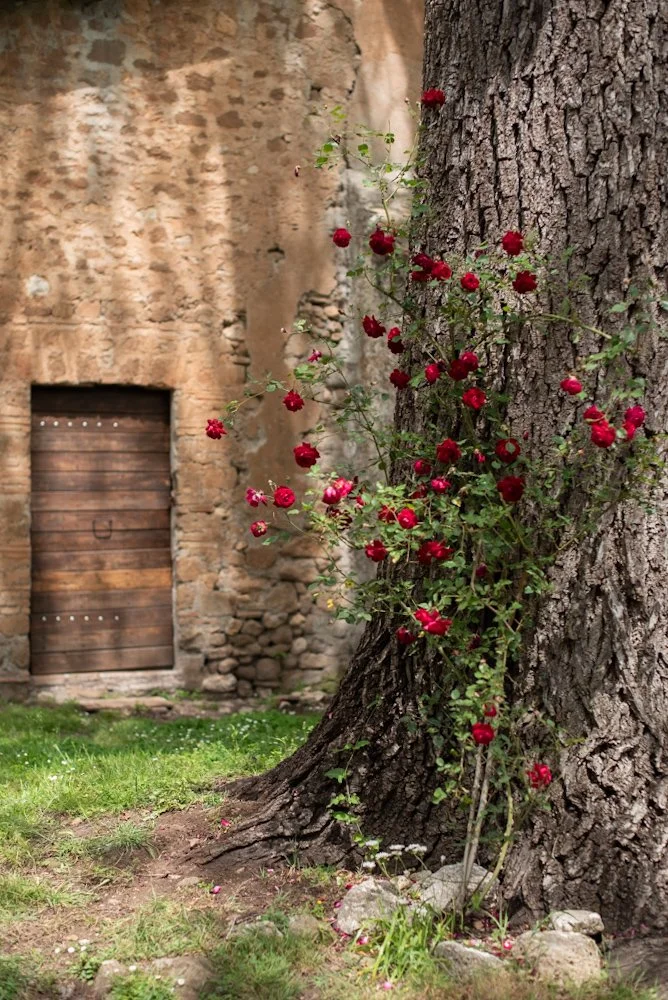
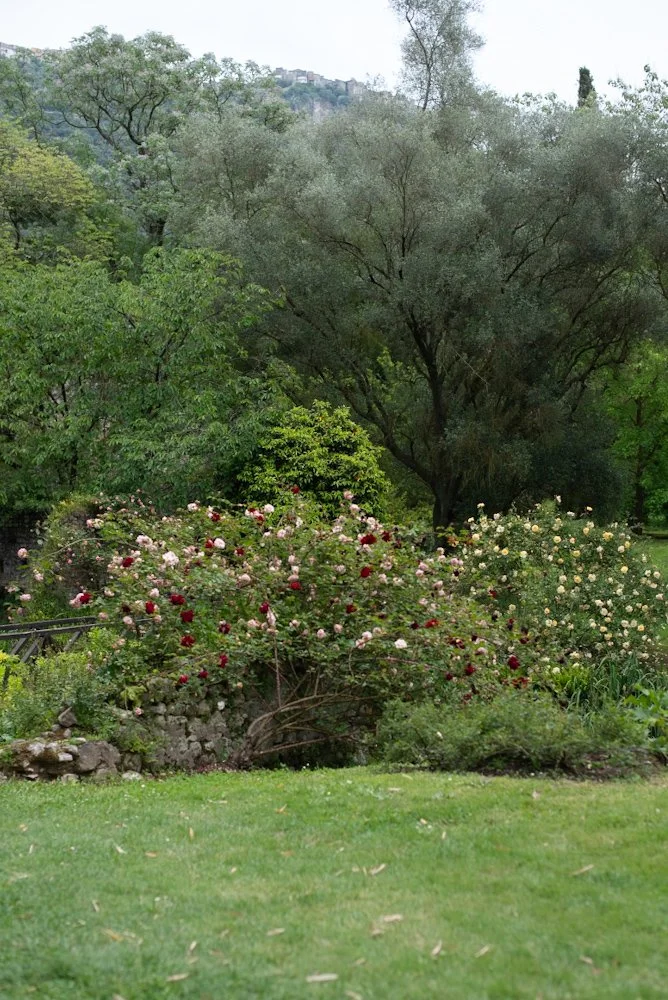
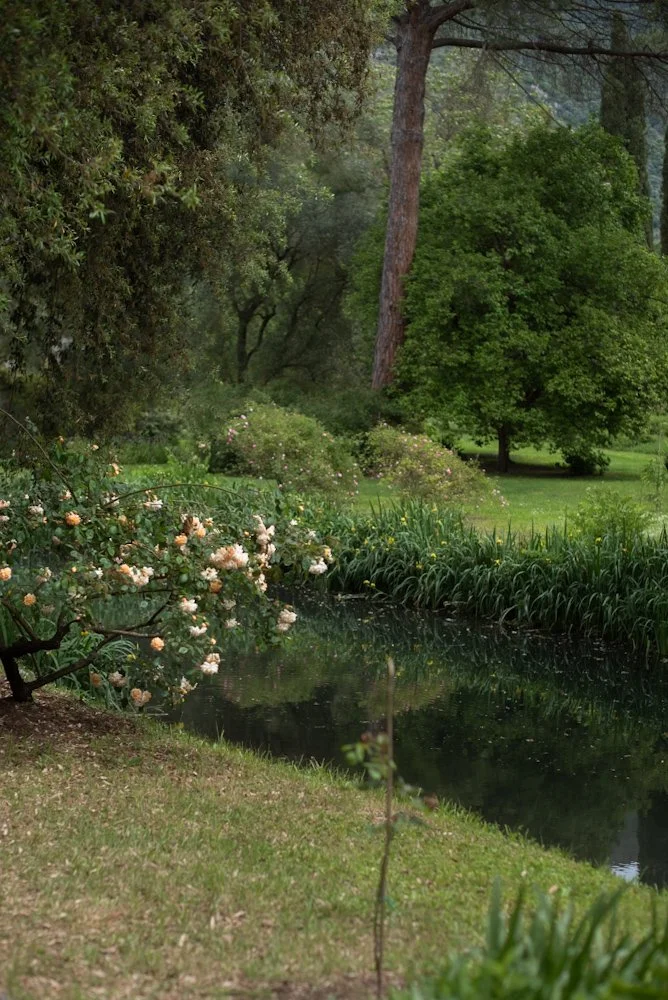
Forty-five miles south-east of Rome in the province of Lazio, there is a garden called Ninfa. Iconic among gardeners and horticulturalists the world over, it is widely known to be one of the most romantic, atmospheric places in the world.
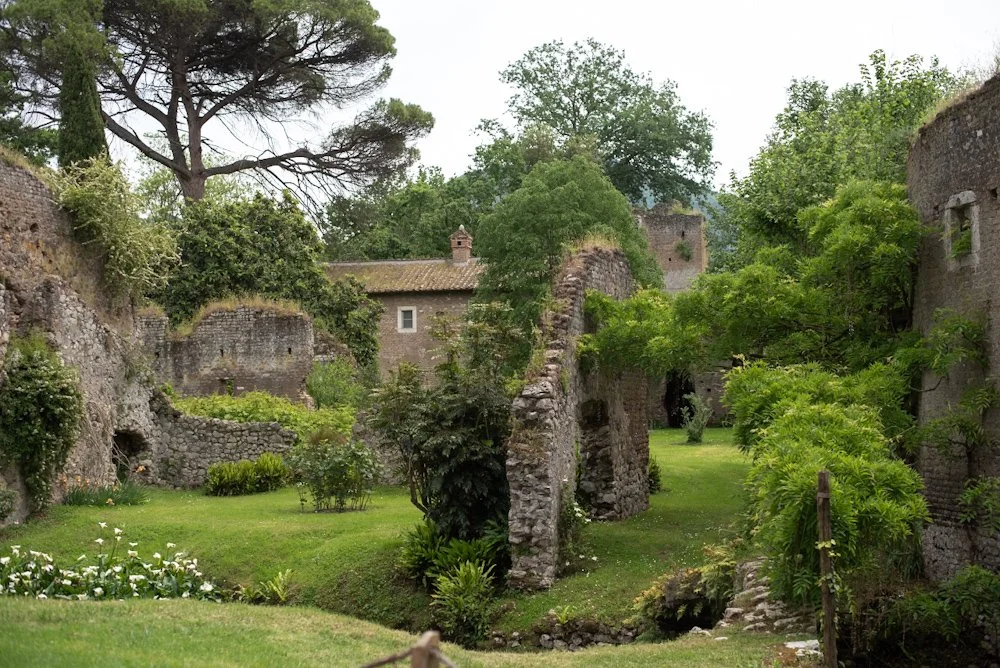
Forty-five miles south-east of Rome in the province of Lazio, there is a garden called Ninfa. Iconic among gardeners and horticulturalists the world over, it is widely known to be one of the most romantic, atmospheric places in the world.
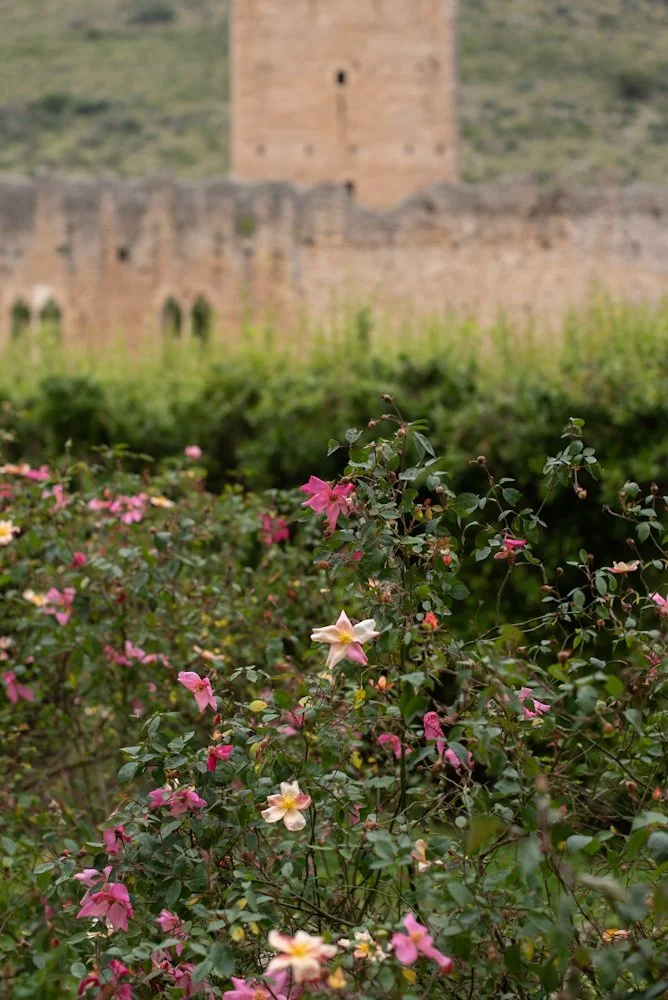
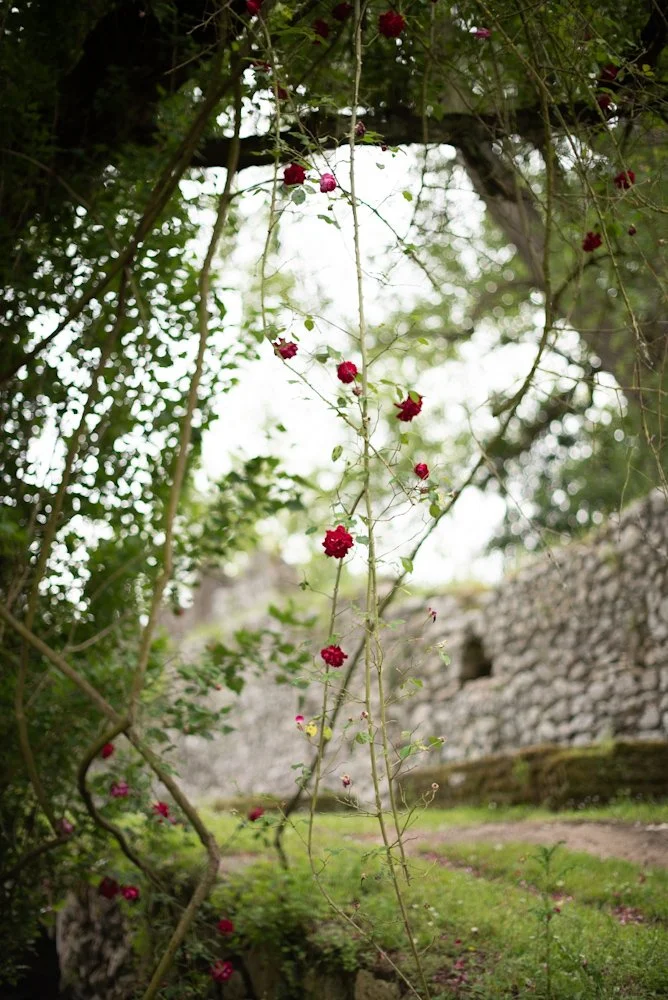
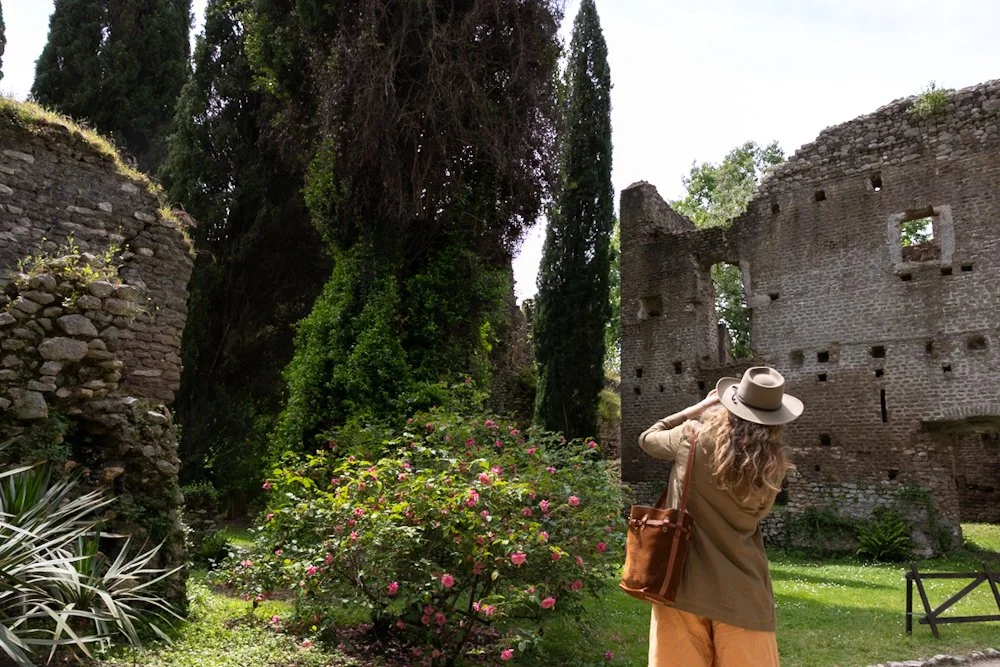
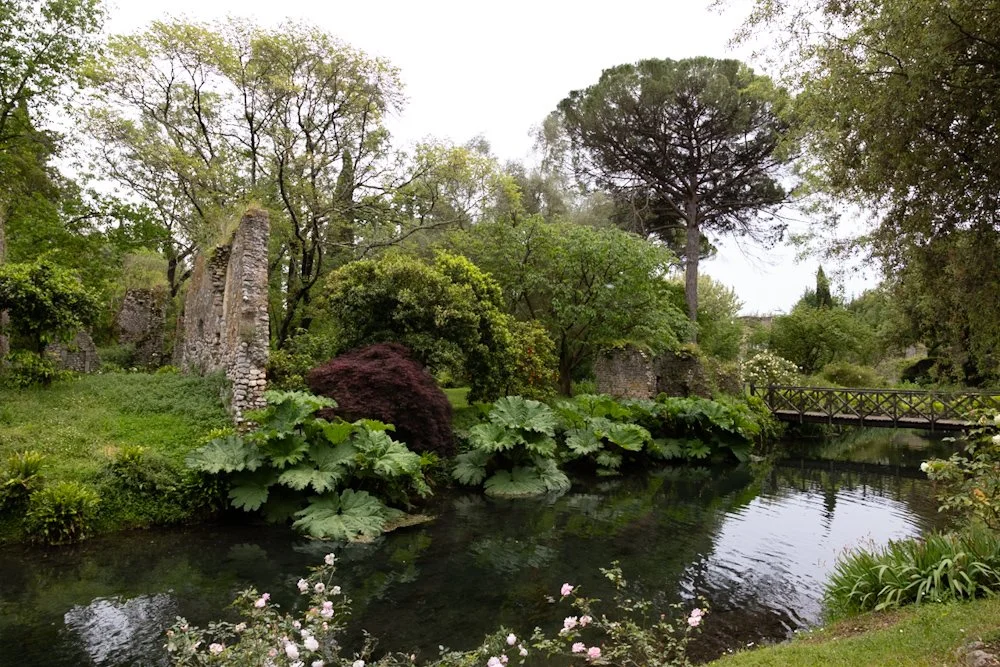
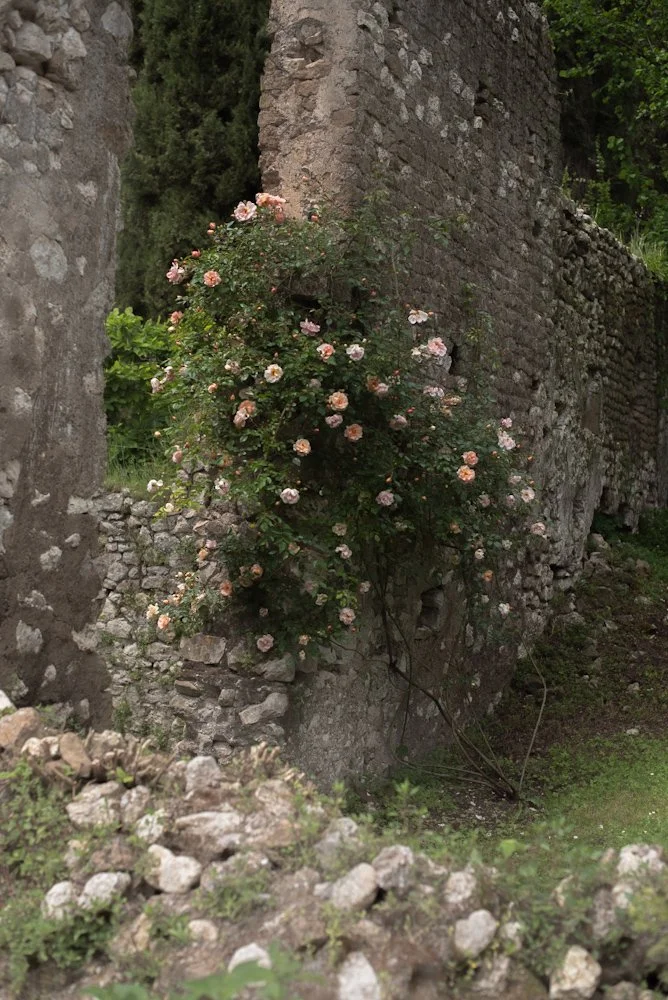
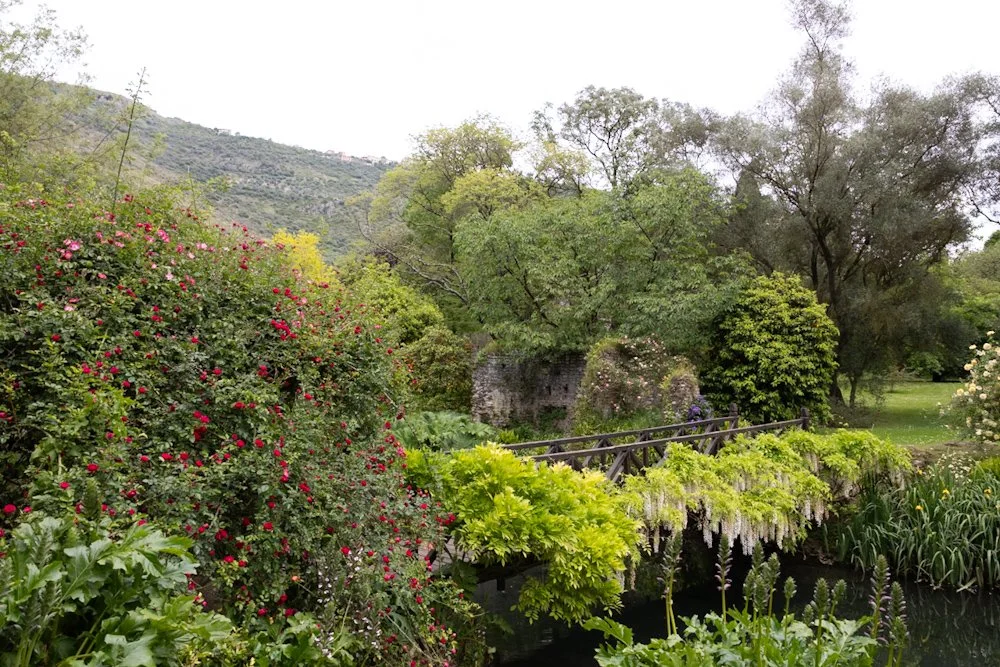
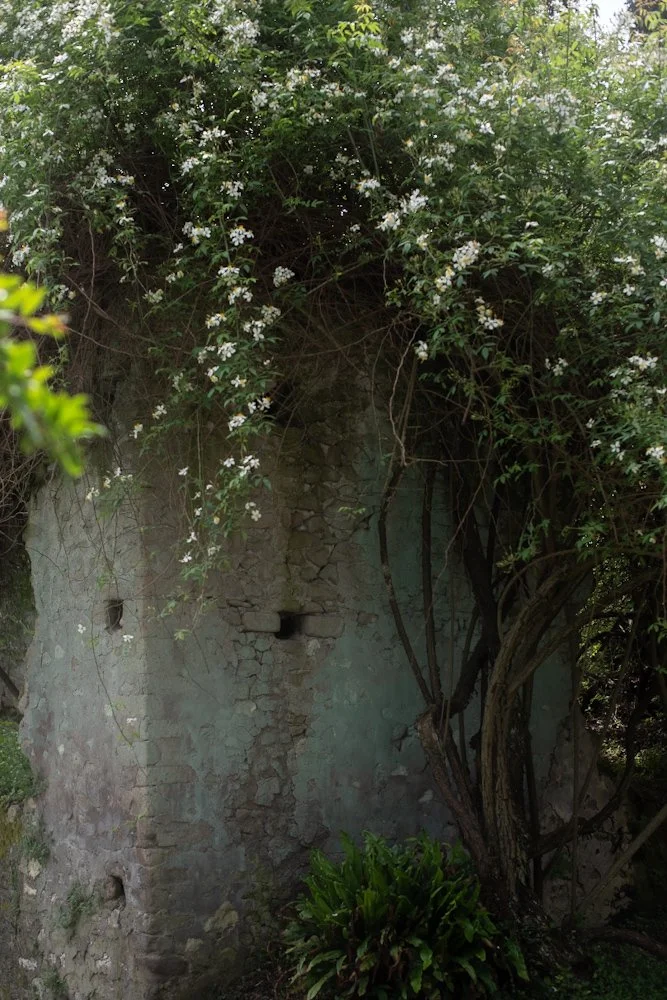
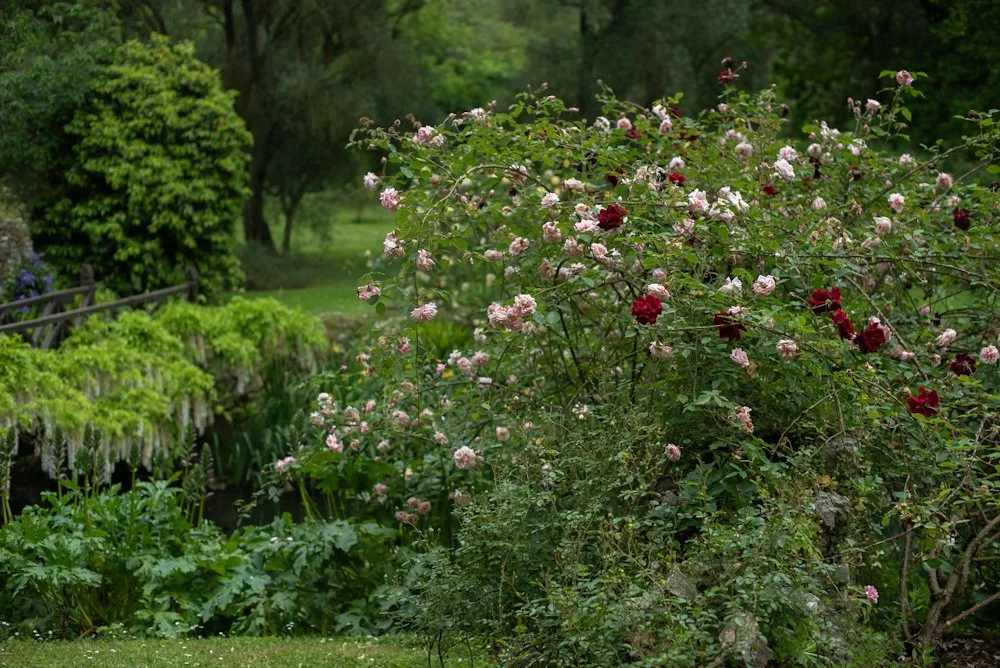
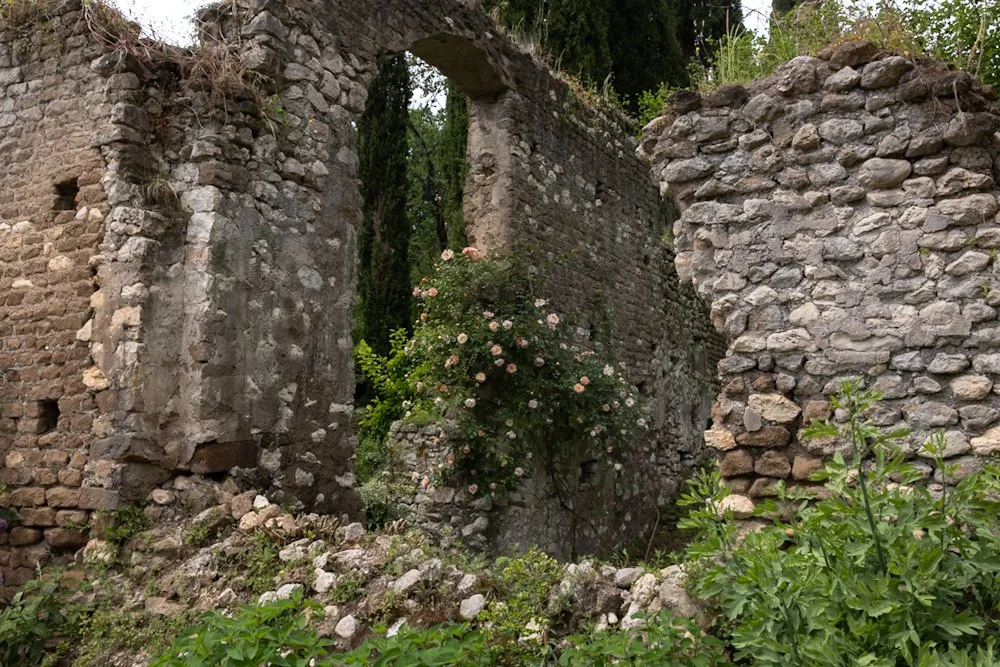
I first heard of Ninfa over a decade ago when I visited the gardens of Aberglasney in Carmarthenshire; it was the inspiration behind the ‘Ninfarium’ created in the ruins of the original mansion. I looked it up. Ever since it has been flitting in and out of my consciousness, a place among many, in a list among many. So many places to try to get to in this life. When I heard the name it would conjure certain images. A medieval bridge festooned with wisteria trailing over a clear river thick with aquatic plant-life. Crumbling stone ruins, pink and dusty, interwoven with climbing roses. Arcadian views. Faded frescoes in the shadows of the mountains. Water - both falling and slow moving - he mirrored surface of it creating a heightened sense of the unreal as if the rippling reflection could be passed through, might lead to another realm. Jess and I have often said to eachother over the years – someday we’ll get to Ninfa. Well, we finally did!
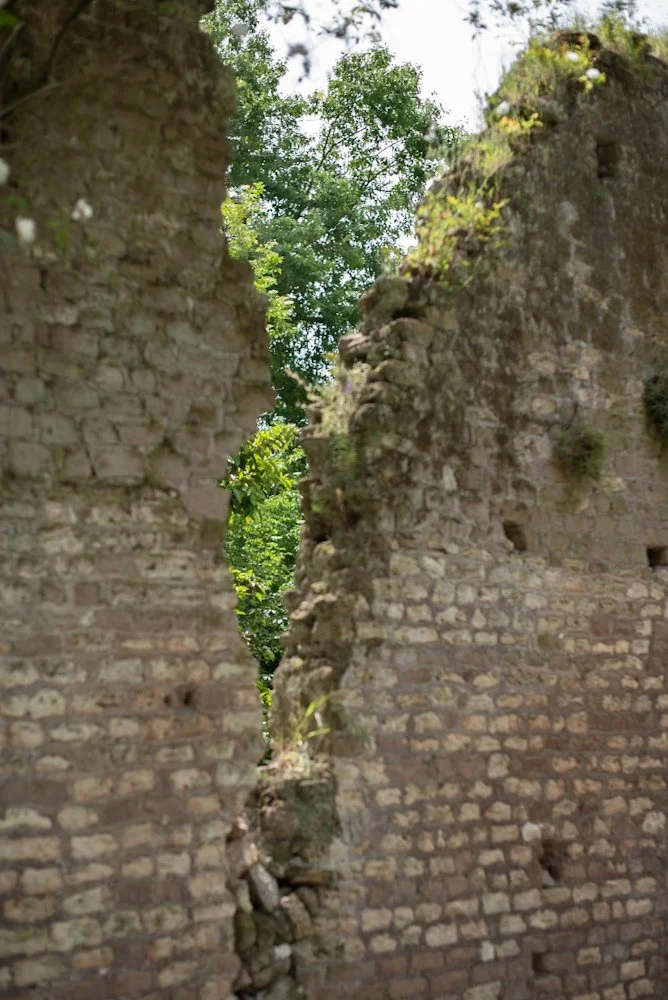
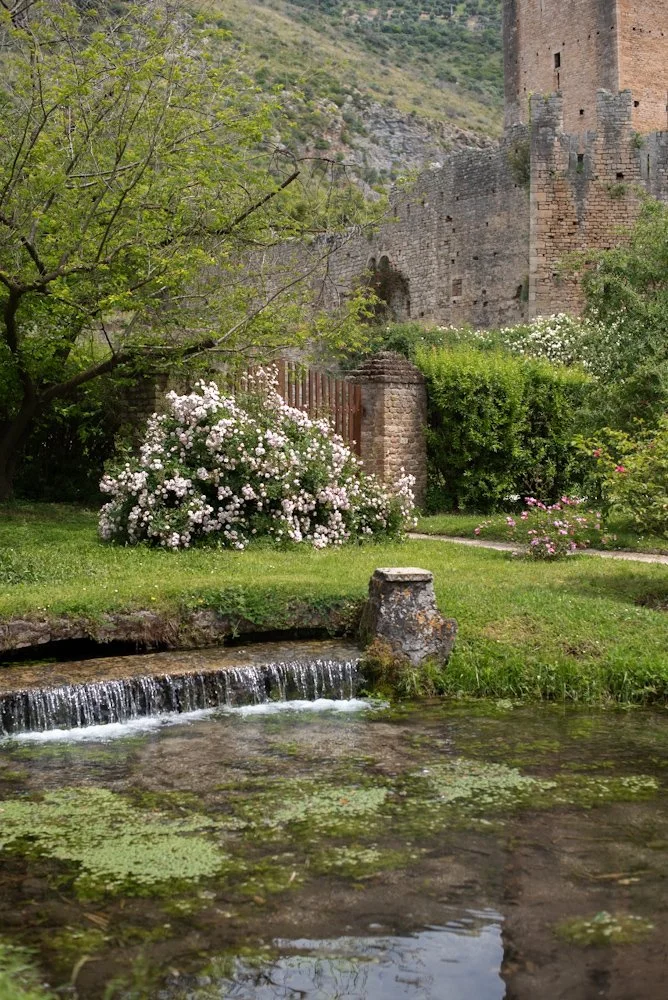
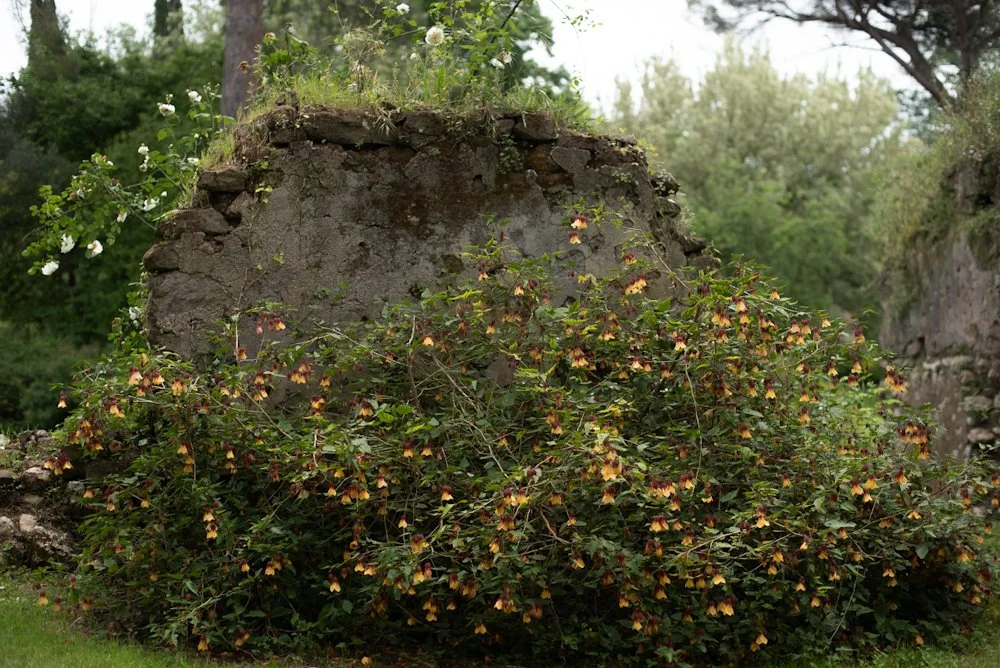
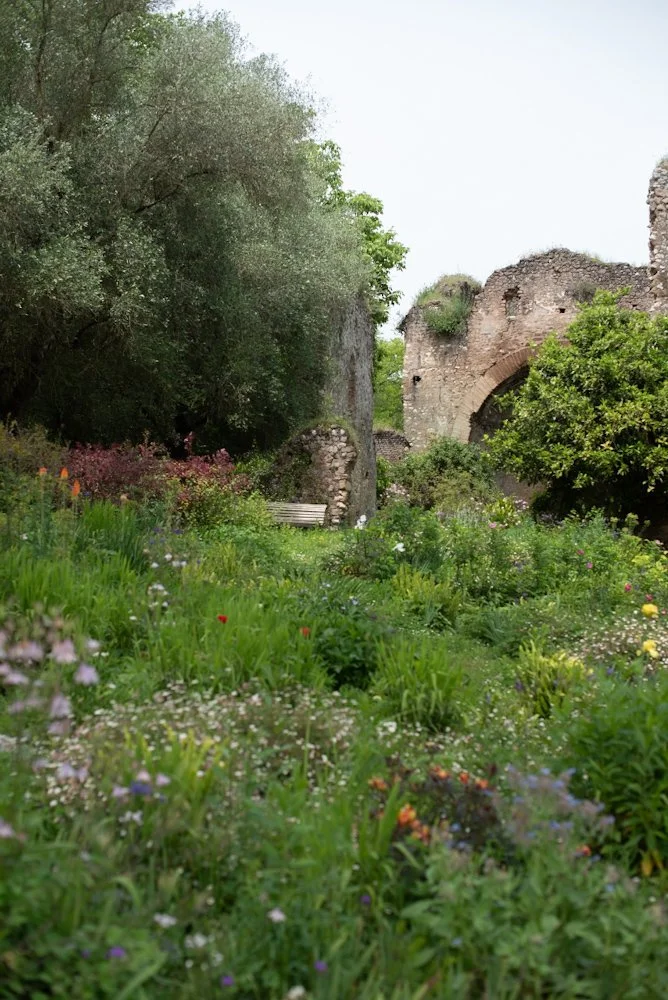
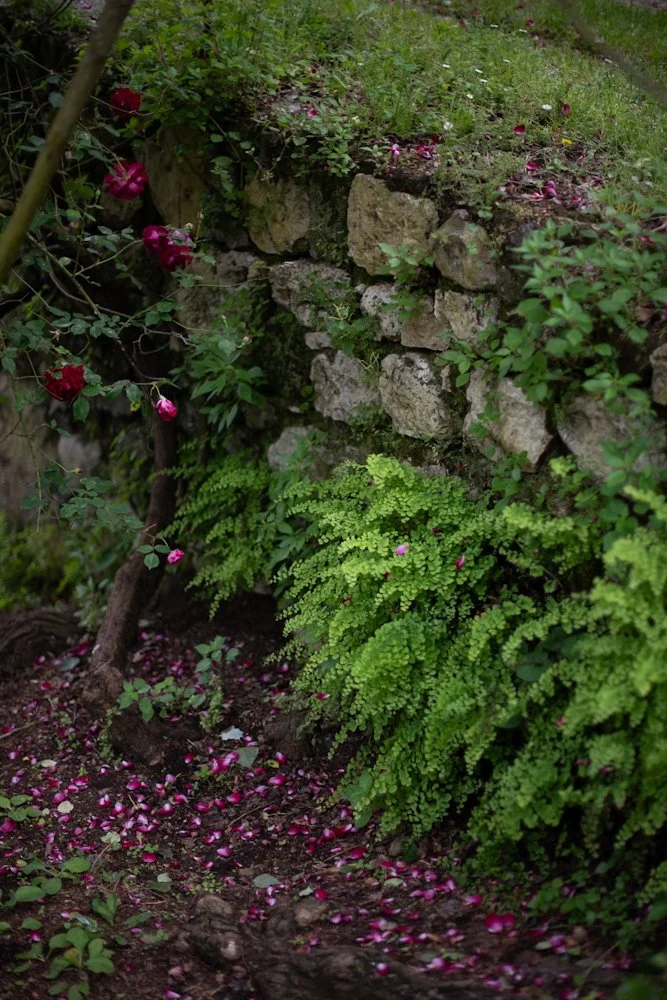
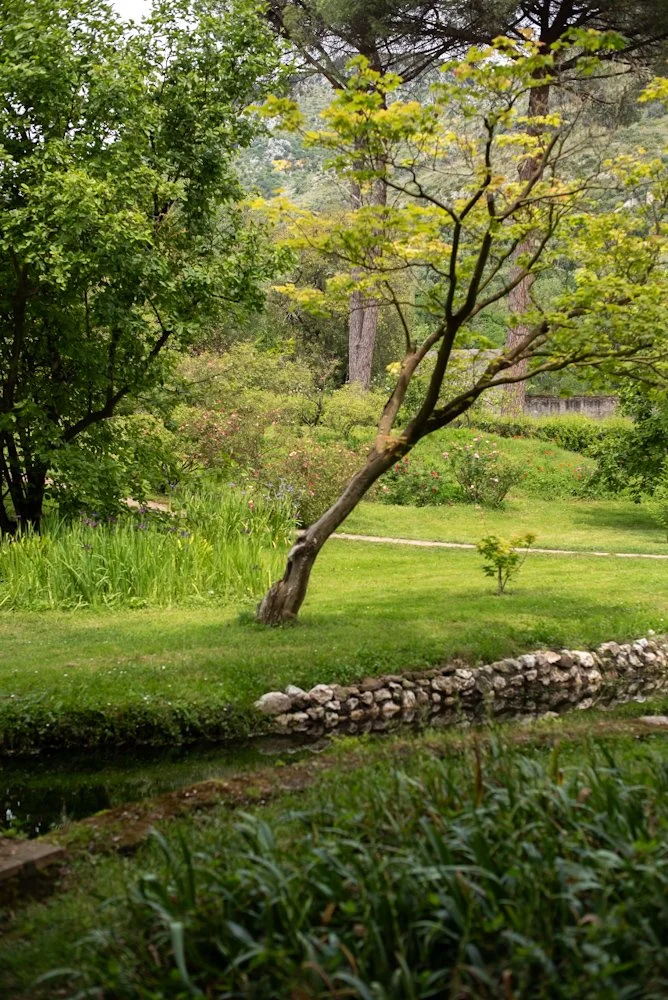
What makes this garden so unique is the fascinating history of the site, the passion and skill of successive generations of the same family, and its geographical position, where it sits beside a small lake fed by natural springs at the foot of the Lepini Mountains. The water here is clean, pure and abundant, making it possible for this small pocket of land to become a lush oasis, a microclimate of thriving temperate plants that wouldn’t otherwise withstand the dry heat of an Italian summer. The mountain range protects the garden from cold northerly winds -look up and you can see the village of Norma peering down over the cliff above - but to the south it is open to the warmth of the Mediterranean - the sea being just fifteen miles west. This combination of warmth and moisture and rich, well-drained soil makes for an incredibly verdant, biologically diverse garden.
NINFA: A POTTED HISTORY
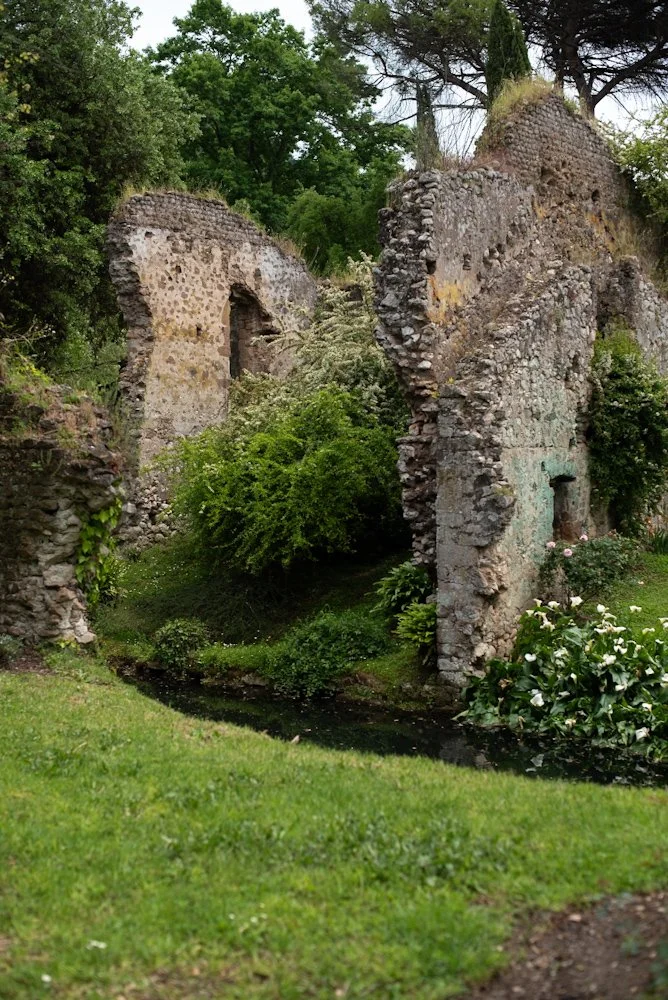
The twenty-acre landscaped garden as it is seen today was originally laid out in the 1920s among the ruins of the medieval town but the site’s known history dates back to the eighth century. It’s a deliciously intriguing tale of twists and turns, dynastic feuds and violence, wealth and power. Should you be interested, I have included a few books below, so you can immerse yourself in the full chronology, if that’s your thing. Here I shall give you the drastically précised version of events, focussing on the juicy / planty bits.
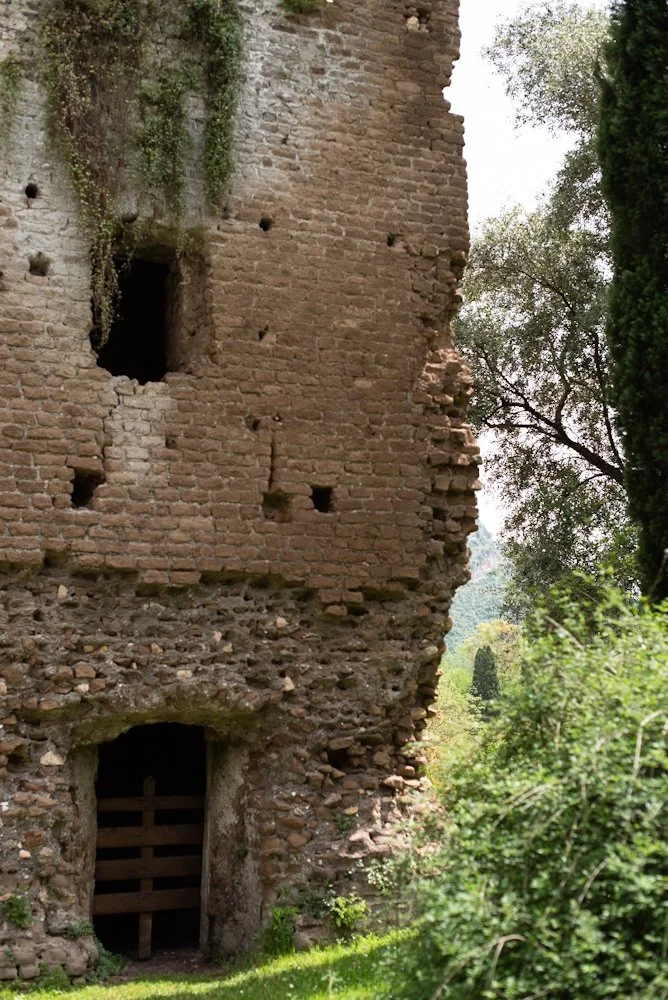
The name Ninfa derives from the island temple on the neighbouring lake, dedicated to nymphs, water deities believed by the Romans to dwell in cool springs, rivers and forests. The first documentation of the site refers to Ninfa as a resting place for travellers where they would water their horses and pay a toll. It occupied a strategic position; when the Pontine marshes flooded the Appian Way, travellers would use the foothill route, or Via Pedemontana, connecting Rome and Naples. Subsequently Ninfa formed part of a vast and richly agricultural estate owned by the church; the fortified town was built in the eleventh century and by the end of the twelfth it was a thriving community governed by various noble families. In 1297 Ninfa was given to Pietro Caetani by his uncle, Benedetto Caetani, Pope Bonifacio VIII, who, through farming, fishing and successful administration including the establishment of various mills and tanneries, further enriched the fortunes of the town and its inhabitants. At this time the lake was dammed and the abundant flow of water through Ninfa allowed the townsfolk to establish many small gardens. Throughout the thirteenth and fourteenth centuries, under the Roman Caetani family, Ninfa continued to expand and flourish; the town boasted over two thousand inhabitants, a castle and town hall and seven churches.
In 1381 during the civil war Ninfa was sacked by mercenary troops from Brittany and the Basque country supporting the anti-Pope in the Great Schism. The town was burned and its people scattered and for many decades it was considered a place of fear and desolation. Later generations who attempted to resettle were plagued by rampant outbreaks of malaria and for the next six hundred years Ninfa remained a fiefdom of the Caetani (who had removed to Rome) but in ruin, overgrown and silent.
In the 16th century, Cardinal Nicolò III Caetani, created a ‘garden of delights’ at Ninfa that included the ‘hortus conclusus’ (a walled garden) beside the medieval castle. Some of the ornamental fountains can still be seen today. In the 1600’s Duke Francesco Caetani IV (viceroy of the two Sicilies, governor of Milan and keen gardener) created a formal Italianate garden of geometric hedges, densely planted tulip bulbs and rare citrus varieties, including the Citrus ‘Cajetanus’, within the walls of the old town.
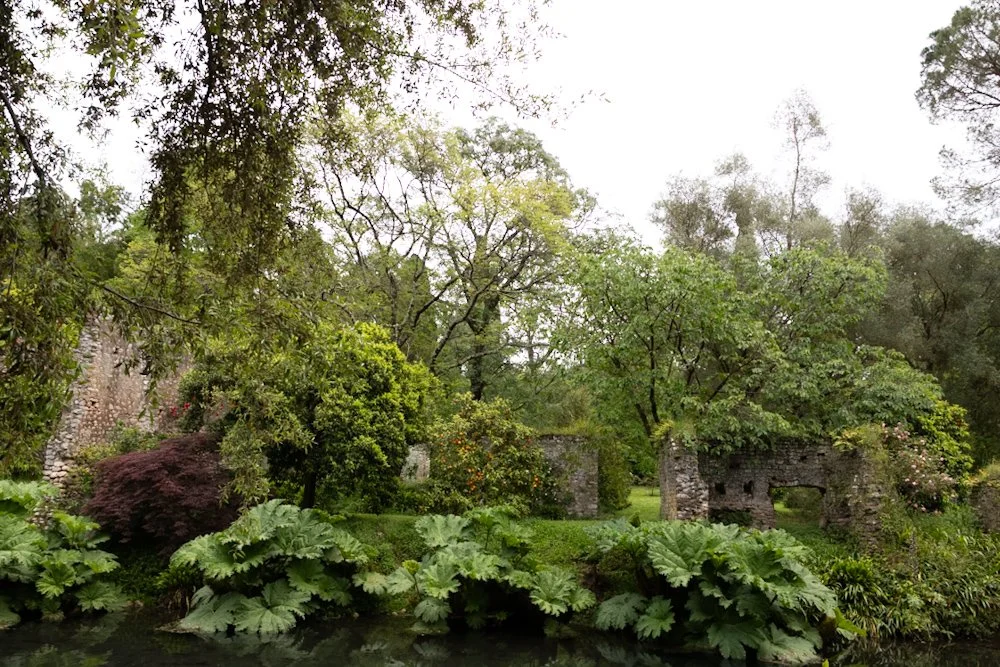

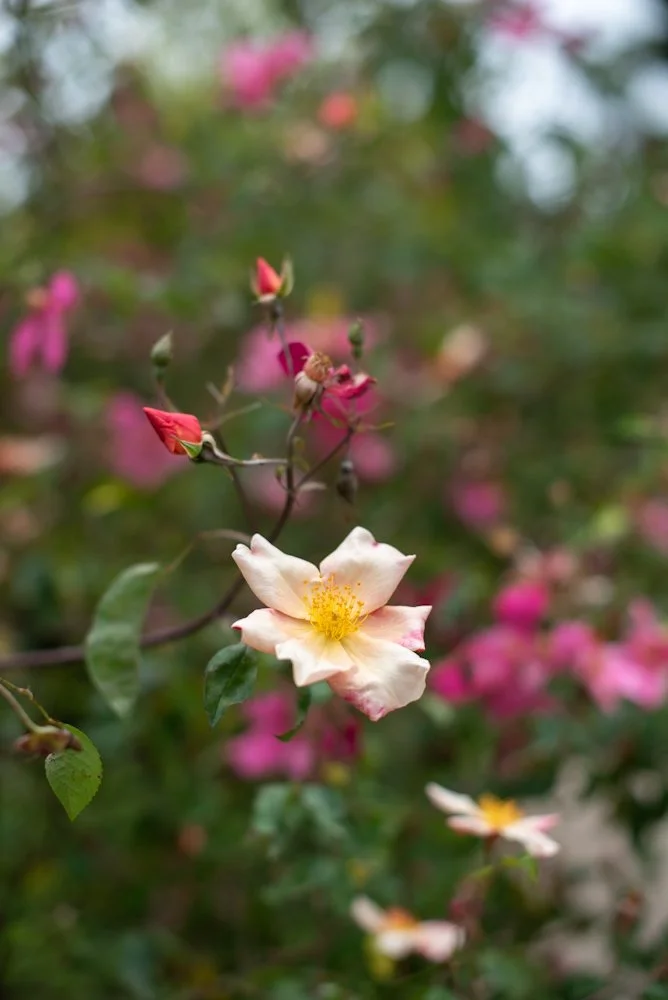
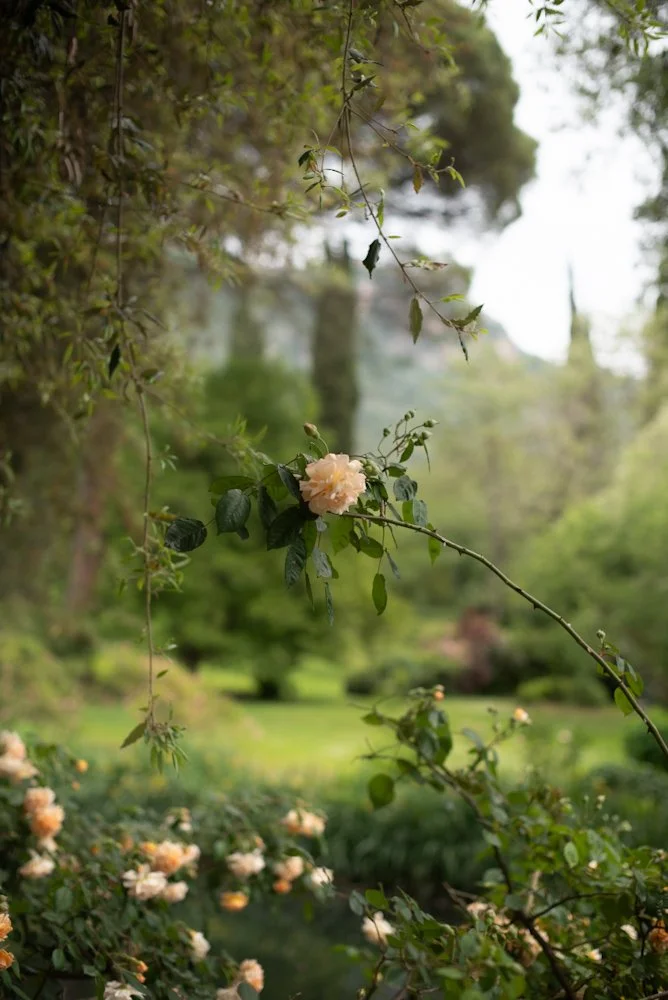
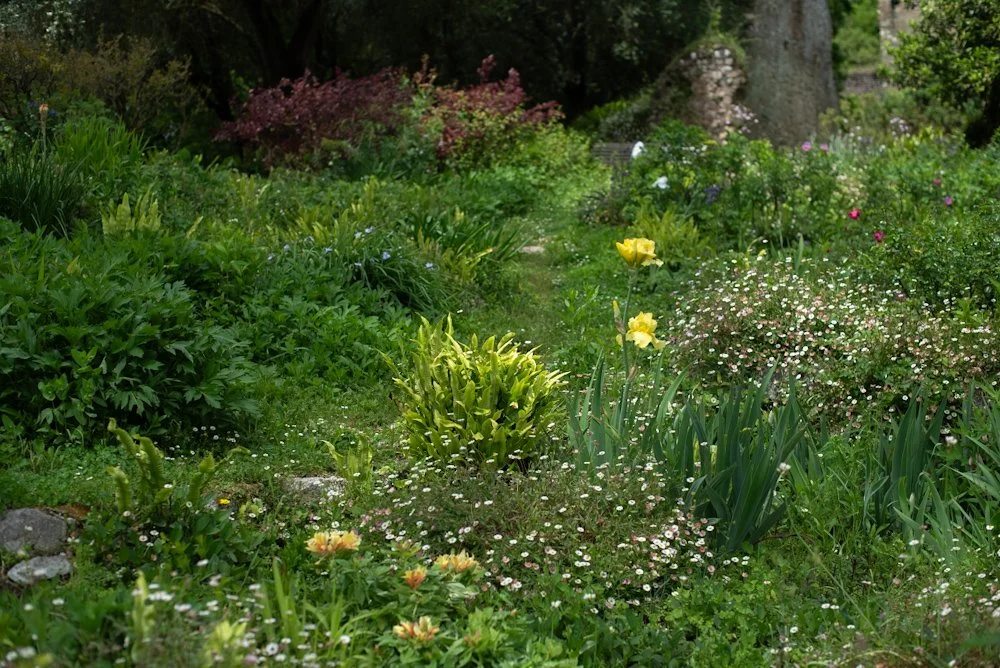
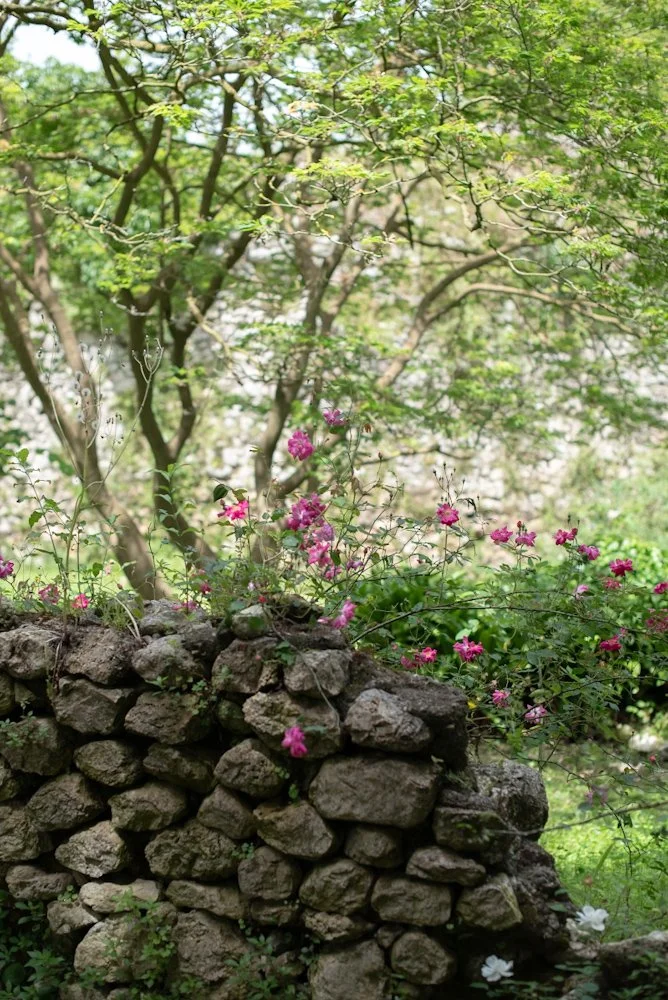
Ninfa’s current incarnation as a botanical garden is down to the work of the three latest generations of exceptionally passionate, and talented, Caetani owners. In 1921 Prince Gelasio Caetani inherited Ninfa and set about excavating and restoring the ruined buildings from its entombment in the thick vegetation. His mother, Ada Bootle-Wilbraham, the eccentric English-born Duchess of Sermoneta, was a capable garden designer, horticulturalist and horsewoman - the original conception of an informal, intensely romantic garden among the ruins – and part of them - was the result of this extraordinary mother-son collaboration. Much of the original Anglo-Saxon, Victorian layout of the garden was conjured from their imaginations including many of the tall trees, the holm oaks, copper beech and cypresses avenues that mark out the ancient streets, the bamboo grove and the climbing roses that Ada planted during her weekend visits.
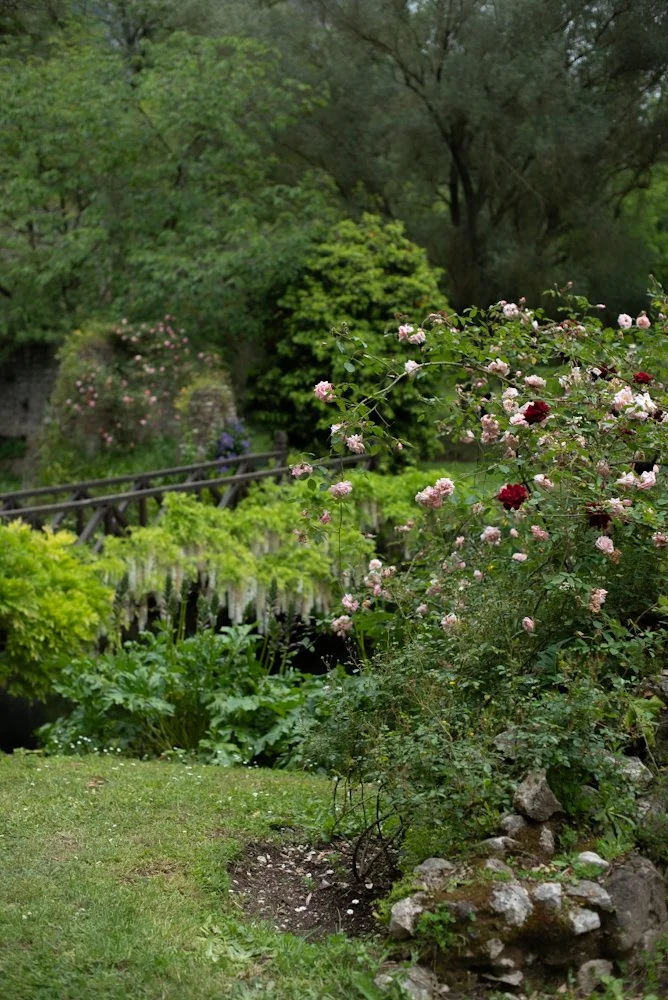

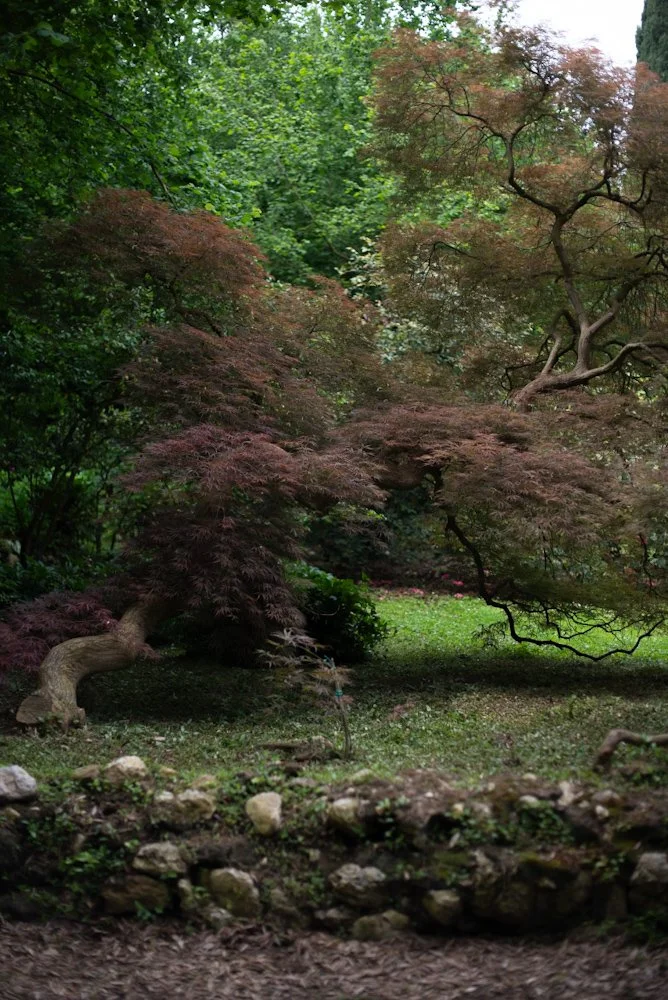
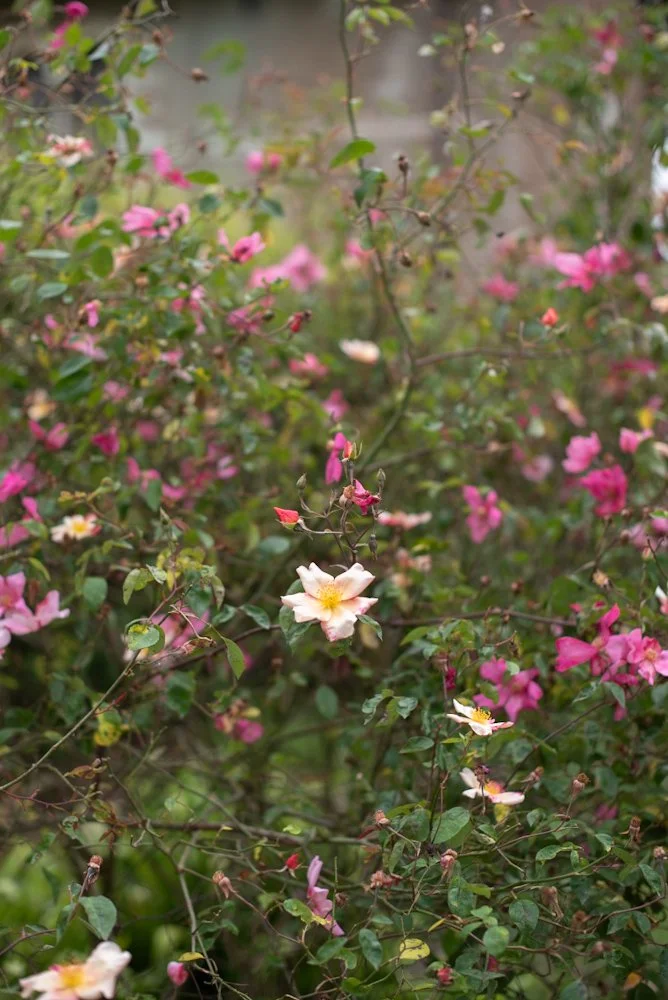
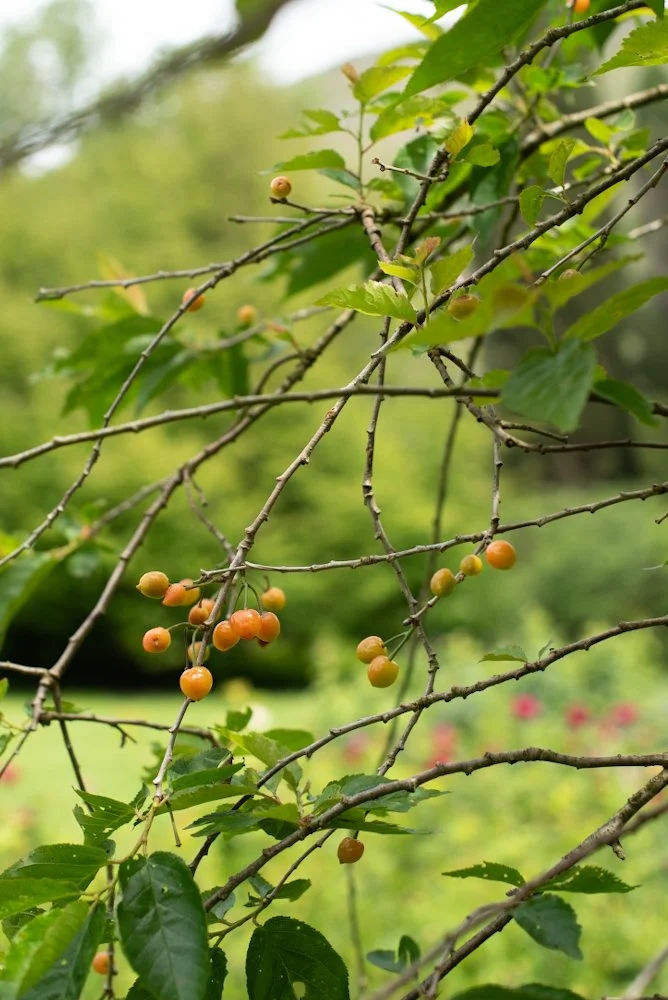
Following Gelasio’s death, his American sister-in-law, Marguerite, Duchess of Sermoneta oversaw the continued development of the garden. Moving from Paris to Rome she fell increasingly under Ninfa’s spell and, a plant addict, she added to the garden lavishly, including the large magnolias and over one hundred and twenty roses. She and her husband designed many of the watercourses and waterfalls and opened Ninfa to their wide circle of friends, including notable writers and artists. Their son Camillo was killed during World War Two and so the estate passed to their daughter, the Princess Lelia Caetani, who took over the project of Ninfa in the 1950s. An artist, Lelia had a painterly eye for colour and harmony which she used to great effect in the gardens, collecting over ten thousand plants including cherries, magnolia and climbing roses. Each year a lorry would arrive from Hillier & Sons in Hampshire laden with new trees and shrubs; the nursery supplied the garden with plants for over forty years. Ahead of her time in many ways, Lelia banned the use of chemical pesticides on-site, insisting that they be managed sensitively and thoughtfully with minimal intervention to preserve the spontaneity and spirit of the garden.
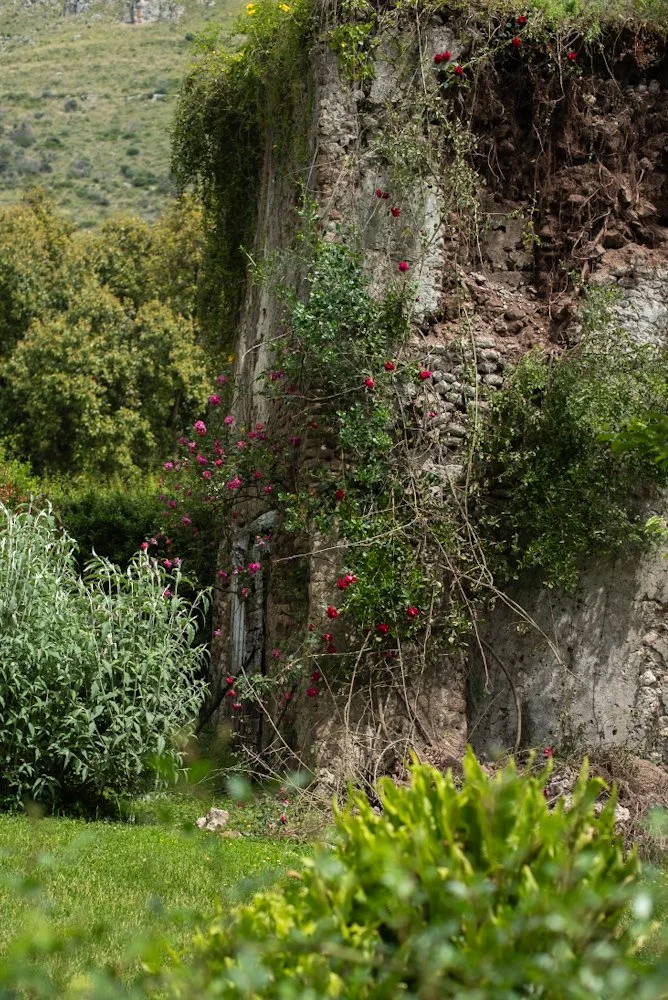
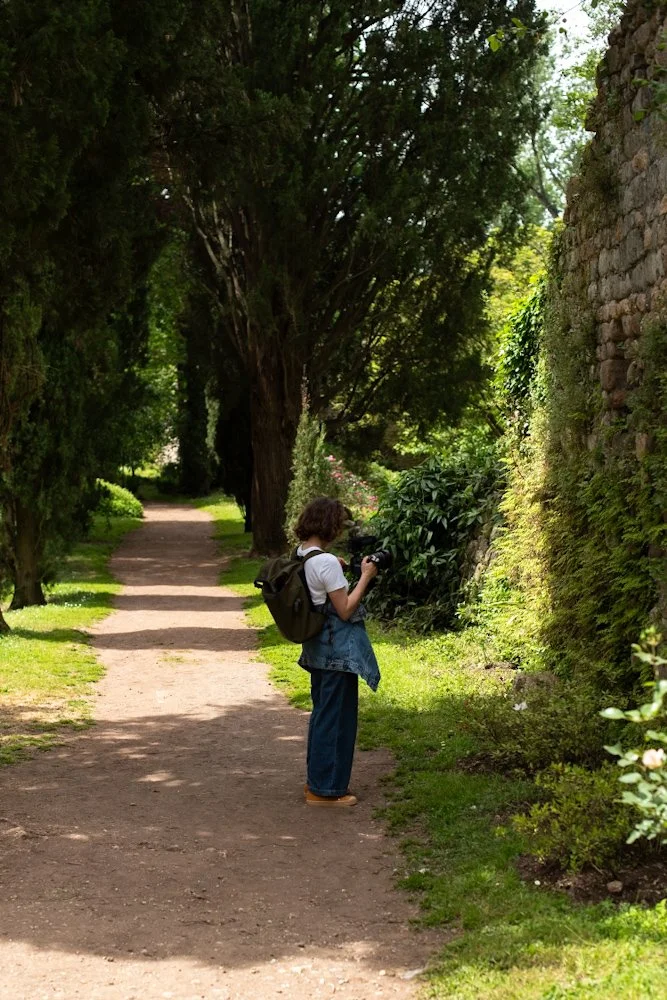
It was Lelia Caetani and her half-English husband, Hubert Howard who set up the Roffredo Caetani Foundation to preserve the memory of the Caetani family and conserve the garden of Ninfa and the nearby castle in Sermoneta. Lelia died in 1972 and Hubert in 1987 and, since they were childless, the Caetani line ended but the management of the garden was continued by Lauro Marchetti, the son of the estate manager, who had become Howard’s protégé. Of his management style Marchetti has said “Care and husbandry follow the principle of controlled disorder and yet every single plant growing in a ruined building or a hedge, or peeping from a medieval window, is known and cared for.”
VISITING NINFA: OUR EXPERIENCE
If you’re planning a visit I would highly recommend getting in touch to see if you can pay to book a private tour, or at least an English speaking guide. The garden tour is exactly an hour long and follows a prescribed route – you are not permitted to leave the path or the group at any point. In this sense it is very different to, say, Sissinghurst where you can take the whole day, wander at will, brush against the plants, linger in corners to take notes and photographs. The tour is rushed and the guide stops at various points to explain the history (in Italian) – for us it was a frustrating and rather unsatisfying visit although we are still glad we were able to experience it in the flesh, however briefly, because if you like ruins and roses it’s unlike anywhere else.
TRAVELLING TO NINFA FROM ROME
Getting to Ninfa was relatively straightforward. We took a Trenitalia train from Roma Termini to Latina Scalo which takes around 35 minutes, stopping at Campoleone and Cisterna di Latina (make sure you get off at the next stop, Latina). At the station there are taxis, which are an absolute rip-off at 50 euros for a return trip (it’s a 10-12 minute drive) but there is no other way to reach the garden (it’s not a very nice walk) so you are a sitting duck. Make sure to ask the driver to collect you after the tour or to take a business card so you can call as there aren’t taxis at the garden itself. Once there it is very busy and the tours are all pre-booked as the garden is only open on specific dates. There is a café for water, snacks and sandwiches.
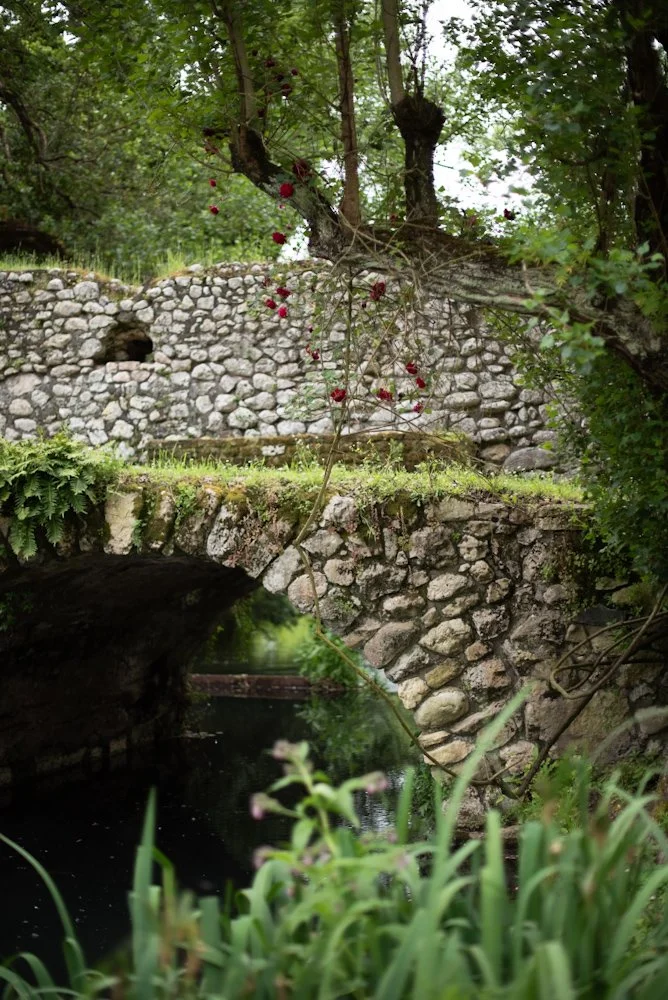
FURTHER READING
The first three books are out of print but can be found on Amazon, eBay or Abe Books online.
Ninfa: A Roman Enchantment by Lauro Marchetti and Esme Howard with photographs by Claire de Virieu
An American Princess: The Remarkable Life of Marguerite Chapin Caetani by Laurie Dennett
Ninfa: The Most Romantic Garden in the World by Charles Quest Ritson
Roses in the Garden by Ngoc Minh Ngo
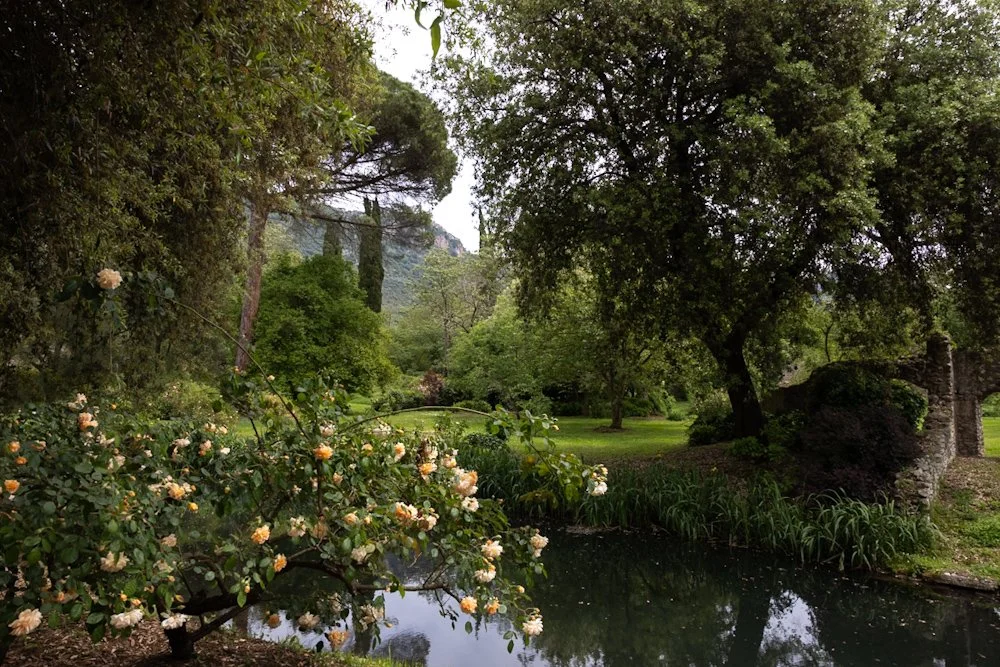

Villa Balbianello, Italy
Gardens are the greatest source of inspiration to us in our work as flower arrangers and growers. Seeing how natural materials converge, how plants are grown together, witnessing their shapes, colours and textures - these are fuel for so many creative ideas and revelations in our studio. In this photographic journal series we share the gardens that we visit throughout the year, both in England and abroad. We hope you enjoy the journey!
Gardens are the greatest source of inspiration to us in our work as flower arrangers and growers. Seeing how natural materials converge, how plants are grown together, witnessing their shapes, colours and textures - these are fuel for so many creative ideas and revelations in our studio. In this photographic journal series we share the gardens that we visit throughout the year, both in England and abroad. We hope you enjoy the journey!
VILLA BALBIANELLO, LAKE COMO





Tokyo & Kyoto, Japan
Gardens are the greatest source of inspiration to us in our work as flower arrangers and growers. Seeing how natural materials converge, how plants are grown together, witnessing their shapes, colours and textures - these are fuel for so many creative ideas and revelations in our studio.
Gardens are the greatest source of inspiration to us in our work as flower arrangers and growers. Seeing how natural materials converge, how plants are grown together, witnessing their shapes, colours and textures - these are fuel for so many creative ideas and revelations in our studio.
ON THE STREET | TOKYO

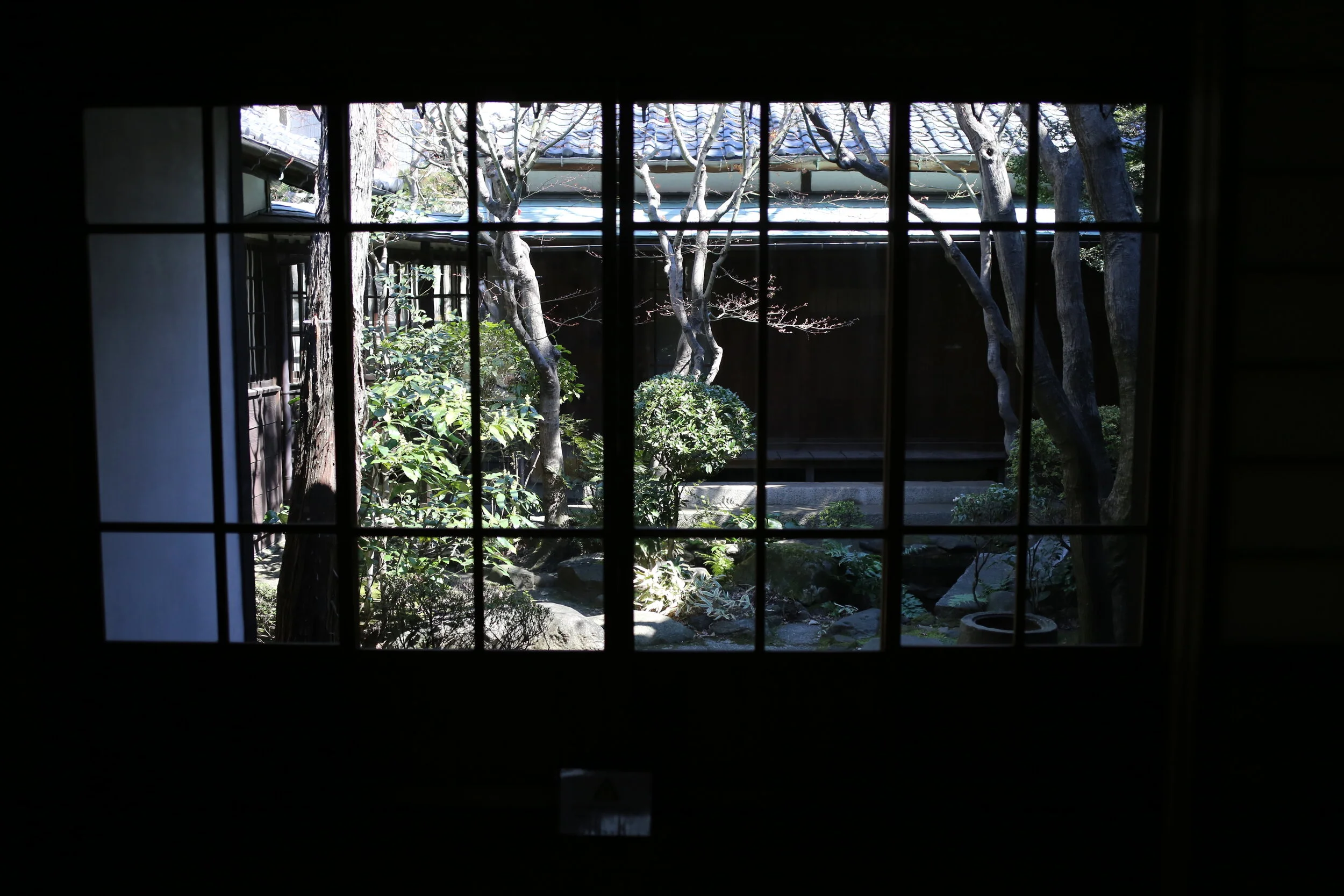
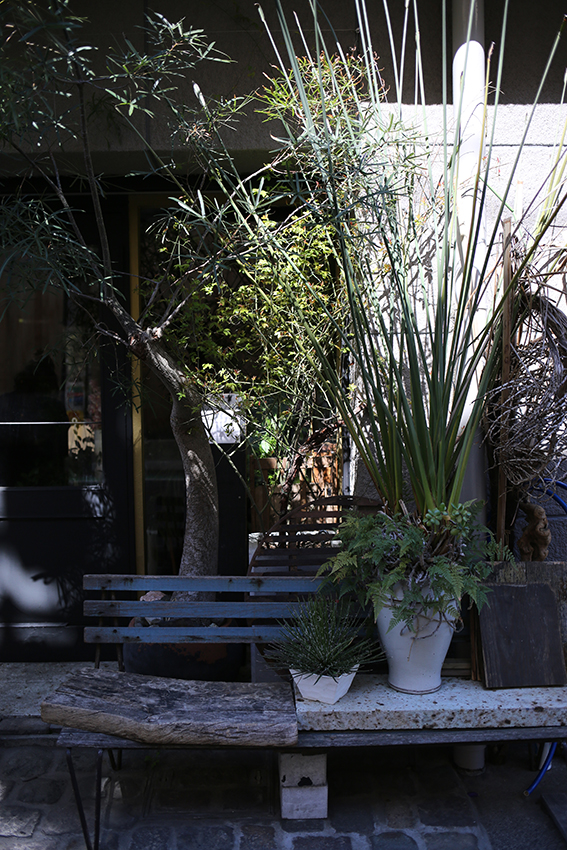
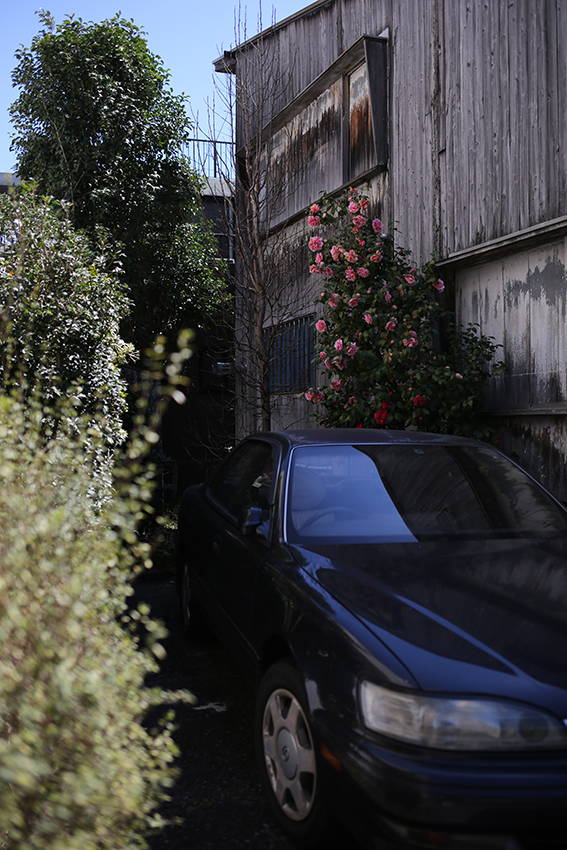
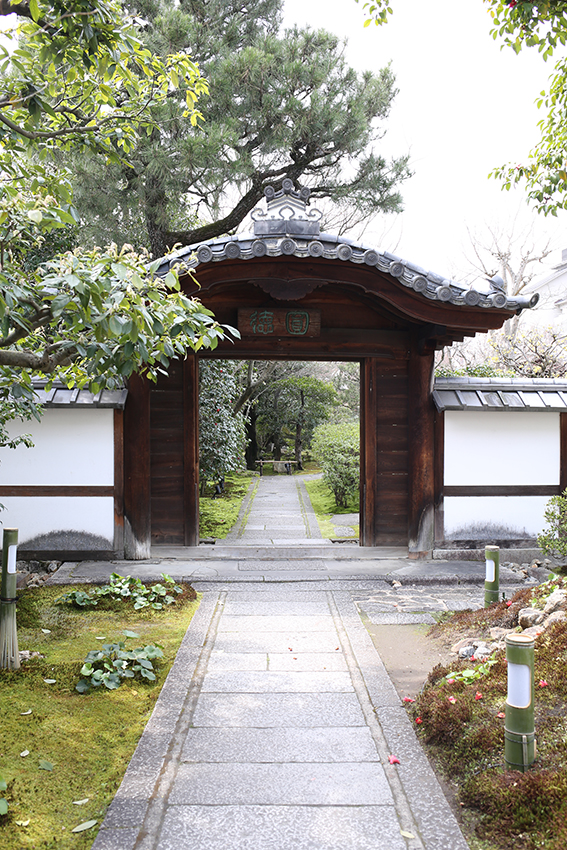
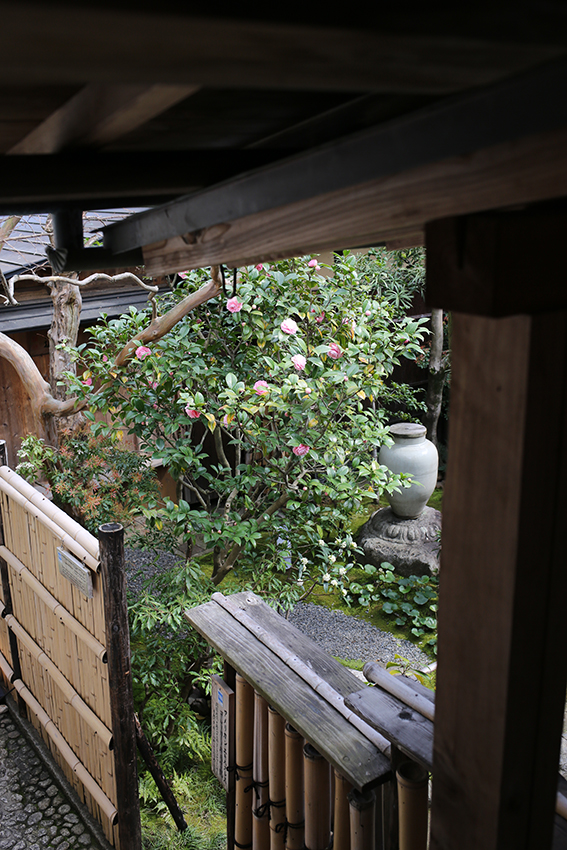
Late March in Japan. It seems a long time ago now but this week - being the week of Chelsea Flower Show -seemed a fitting time to finally share a few of the garden photographs Jess took on our trip earlier in the spring. We had wanted to visit Japan for a long time having developed a recent interest in Ikebana, a love of Japanese ceramics and an interior designer mother who has always been inspired by Japanese aesthetics and minimalism. We particularly wanted to visit some temple gardens while we were there (we stayed first in Tokyo, then Kyoto) but what we hadn’t expected were all the millions of beautifully curated mini-gardens outside every home, apartment building and shop - acers and bamboo and bonsai, of course, but also lots of photinia and nandina, ferns, pine and camellia. And so this collection of photographs holds many ‘roadside’ moments as well as Zen temples. In a week we barely scratched the surface but we completely fell in love with Japan and will be going back as soon as we can (perhaps to witness the leaves turning in autumn which must be a magical sight). At home in London I’ve grown even fonder of the Japanese maple in my little courtyard garden, which is branching out at an alarming rate, casting its leafy shadow-shade over the Acanthus and grey pebbles below. Every time I wake up and look out of the window I am back in Japan, wandering this strange and beautiful land.


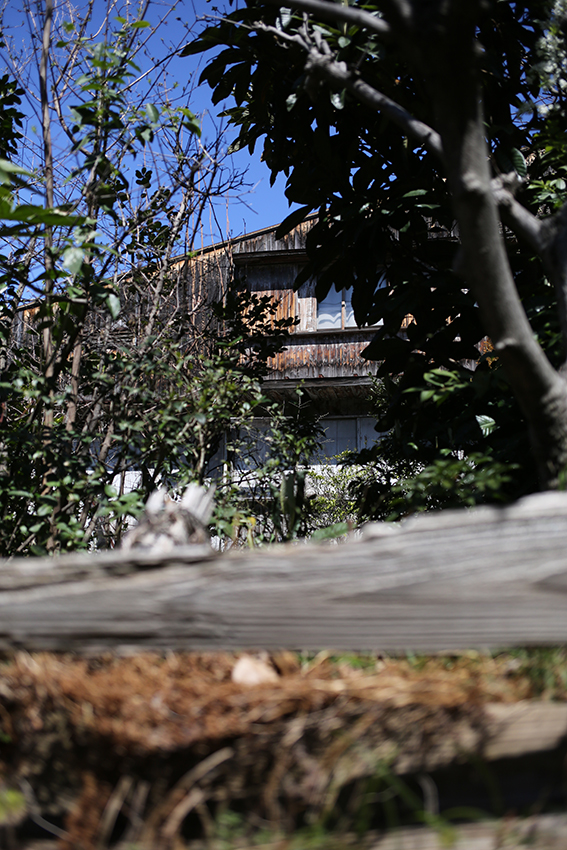
KYU ASAKURA house | TOKYO
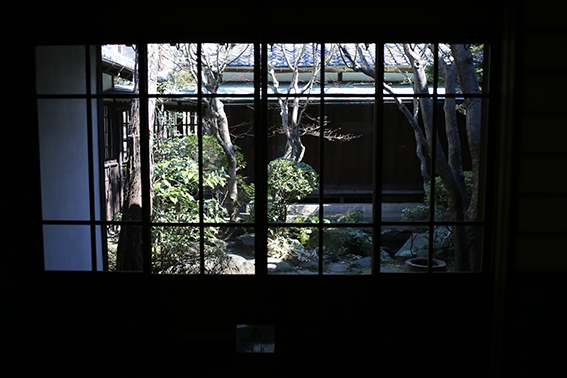


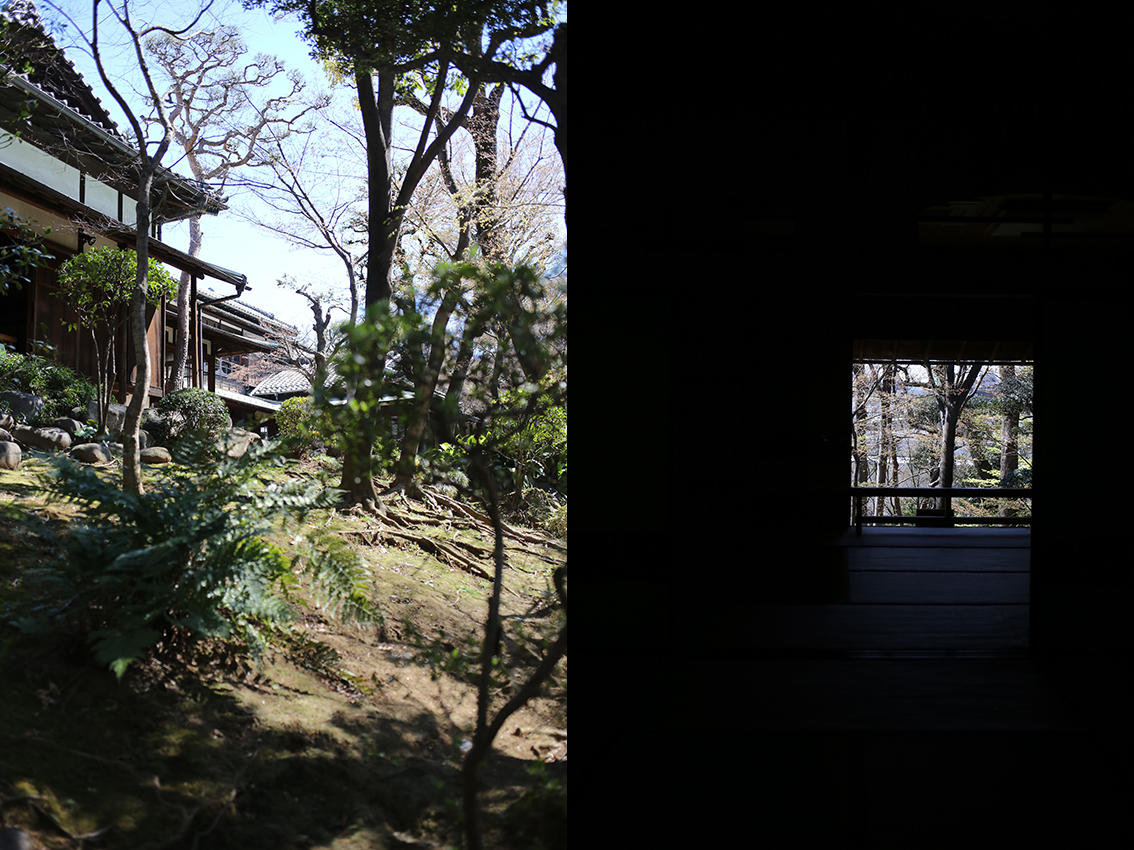


NEZU MUSEUM | TOKYO



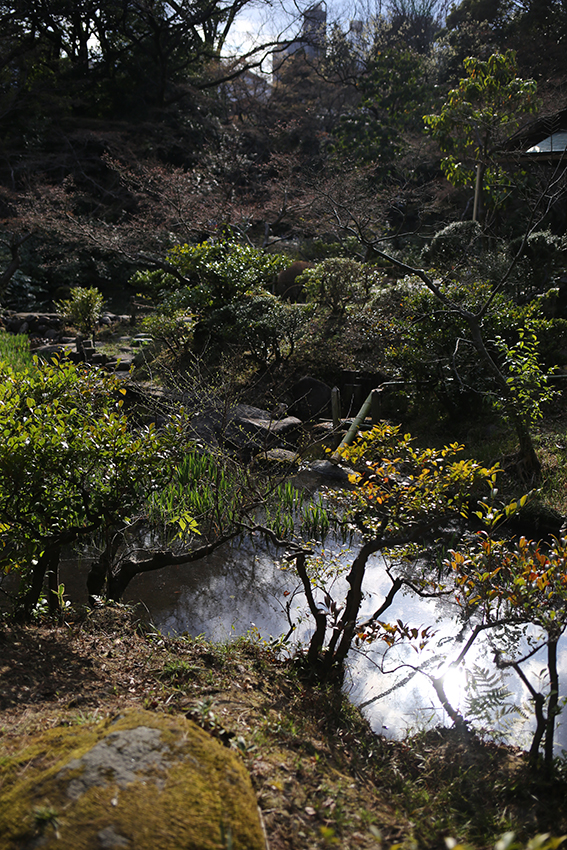


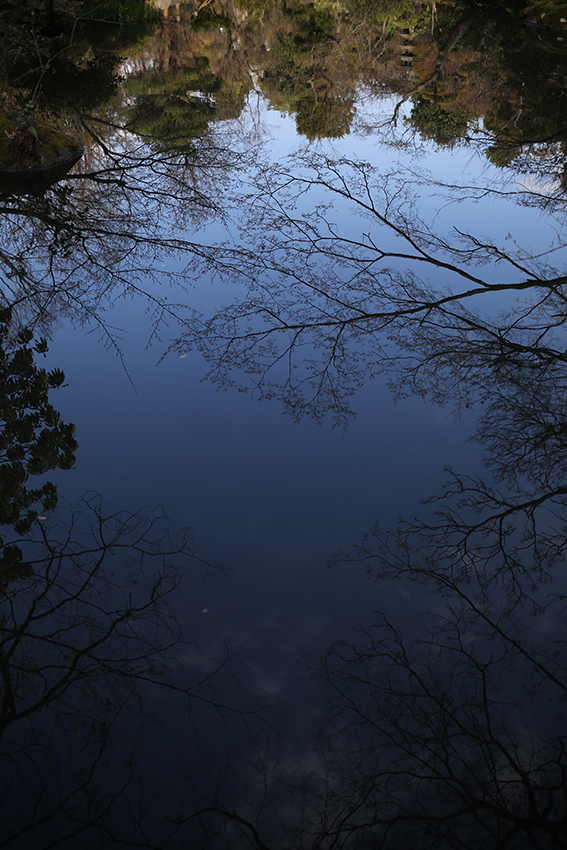


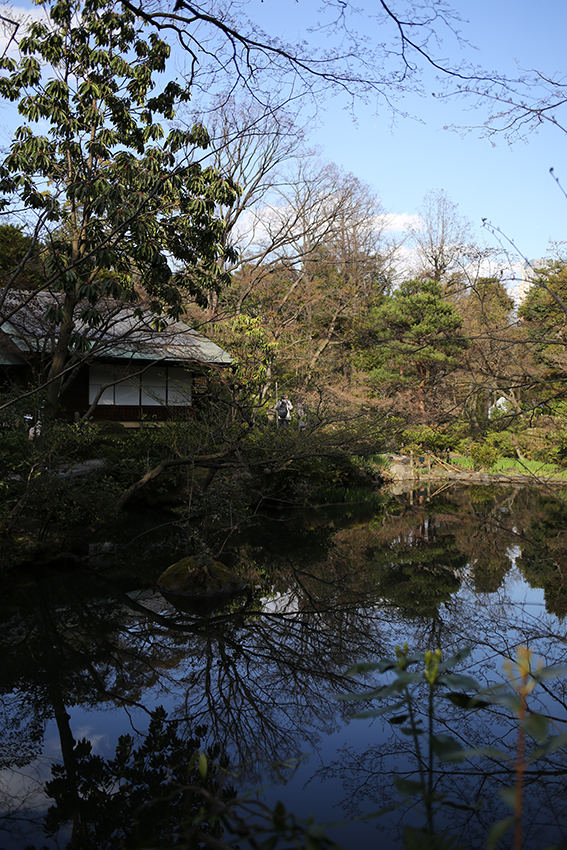
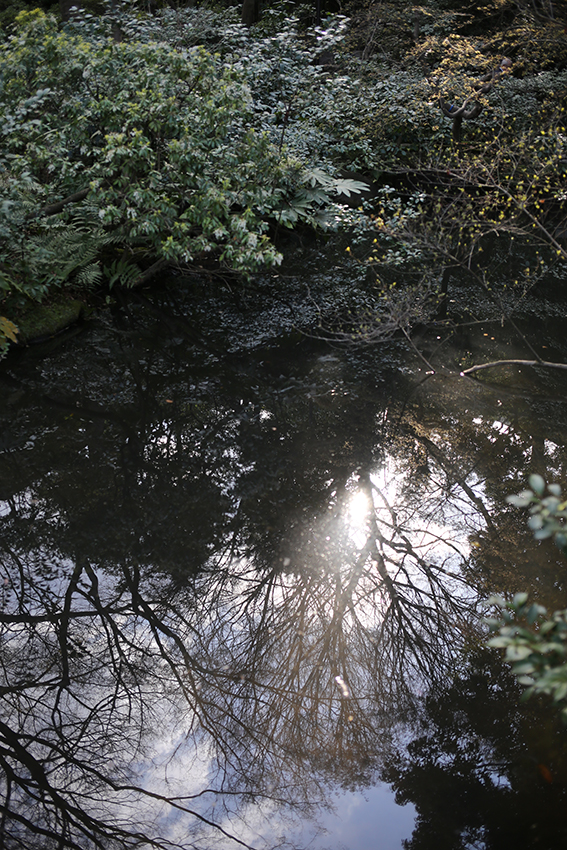

Ryoan-ji ZEN TEMPLE | KYOTO


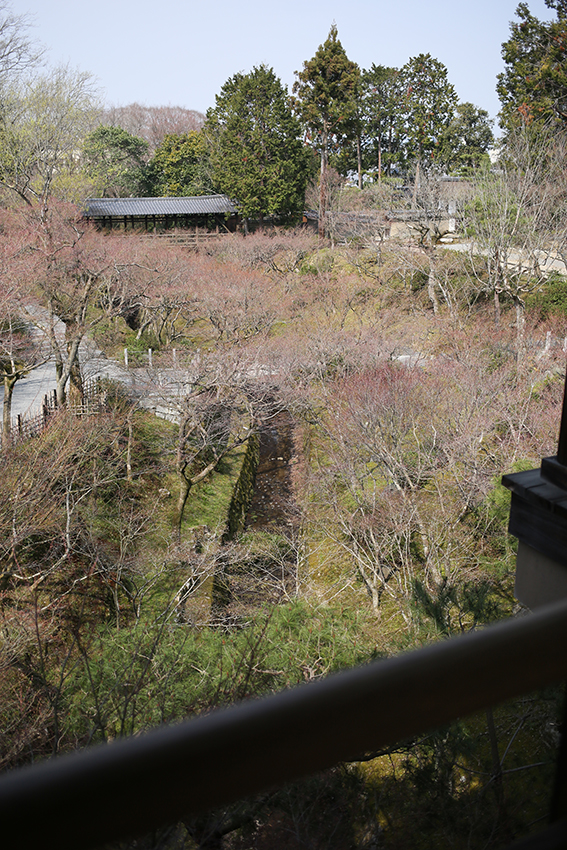



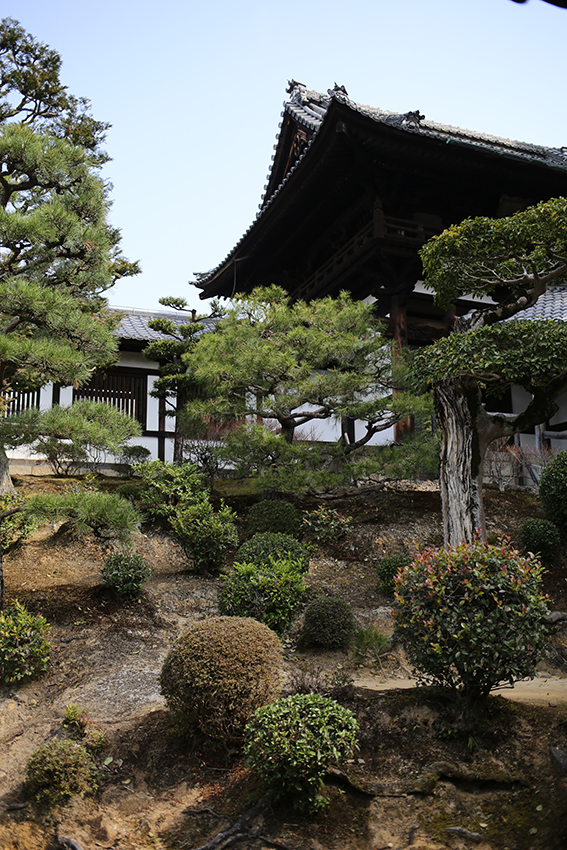


KYOTO




Jeju Island, South Korea
What a way to start the season, hosting a destination workshop on a little volcanic island off the coast of South Korea covered in pine trees and mandarin groves! Starting in Japan (we’ll be sharing a couple of the gardens we visited in Tokyo & Kyoto here soon) we flew to Seoul to spend a few days getting adjusted and preparing for the workshop before heading south to Jeju Island. The workshop was held at a wonderful cafe with views out over the blue waters of the Korea Strait. It was the perfect spot - modern, tastefully designed and with atmospheric music, delicious lunches and some of the best coffee we found on our trip.
All the flowers, foliage and plants were part-shipped, part-flown from Seoul where we had chosen them at the flower market early the preceding mornings. The choice of materials (from Korea, Japan and Holland) was exceptional - I’ve never seen so many flowers and branches in one place, the Seoul market is labyrinthine and just goes on and on… Our palette for the workshop was soft and feminine, with pops of yellow to reference the canola flowers that can be seen everywhere around the island, and mandarins, since Jeju is a tapestry of unending groves of these sweet, fragrant fruits. While travelling I was deep into reading all about citrus via Jess’ recommendation in our last post - it was surreal to be preoccupied with lemons in Italy while speeding through an Eastern landscape dominated by orange fruits.
For three days the sun shone and the sea sparkled and lapped against the dark, craggy rocks. We foraged dried grasses and silverberry from the coast-path and strange pitted black rock formations (they say there are three-hundred and sixty-five volcanoes on the island; one for every day of the year) for a setting-specific installation on the final afternoon. It was such a privilege to be working somewhere entirely new and unfamiliar and yet be made to feel so at home.
JEJU ISLAND | SOUTH KOREA

What a way to start the season, hosting a destination workshop on a little volcanic island off the coast of South Korea covered in pine trees and mandarin groves! Starting in Japan (we’ll be sharing a couple of the gardens we visited in Tokyo & Kyoto here soon) we flew to Seoul to spend a few days getting adjusted and preparing for the workshop before heading south to Jeju Island. The workshop was held at a wonderful cafe with views out over the blue waters of the Korea Strait. It was the perfect spot - modern, tastefully designed and with atmospheric music, delicious lunches and some of the best coffee we found on our trip.
All the flowers, foliage and plants were part-shipped, part-flown from Seoul where we had chosen them at the flower market early the preceding mornings. The choice of materials (from Korea, Japan and Holland) was exceptional - I’ve never seen so many flowers and branches in one place, the Seoul market is labyrinthine and just goes on and on… Our palette for the workshop was soft and feminine, with pops of yellow to reference the canola flowers that can be seen everywhere around the island, and mandarins, since Jeju is a tapestry of unending groves of these sweet, fragrant fruits. While travelling I was deep into reading all about citrus via Jess’ recommendation in our last post - it was surreal to be preoccupied with lemons in Italy while speeding through an Eastern landscape dominated by orange fruits.
For three days the sun shone and the sea sparkled and lapped against the dark, craggy rocks. We foraged dried grasses and silverberry from the coast-path and strange pitted black rock formations (they say there are three-hundred and sixty-five volcanoes on the island; one for every day of the year) for a setting-specific installation on the final afternoon. It was such a privilege to be working somewhere entirely new and unfamiliar and yet be made to feel so at home.


Flower School | A selection of materials lined up for our bouquet class including ranunculus, sweet peas, flannel flower and mandarin branches


Left: a spring centrepiece of ranunculus, tulips & fritillaria
Above: Urn of willow, ranunculus, tulips and mandarin branches

Flower School | our wonderful group of students with their ruffly garden-inspired bouquets

Flower School | table styling & props: beach pebbles, shells, intricate vines and ochre linen

Flower School | spring wreaths of moss and alpine plants


Left: a bouquet of spring flowers and locally foraged silverberry foliage
Above: a student’s sketches of the bouquet demonstration


Above: pale pink urchins and creamy shells to reference the coastal setting
Left:: Jess’ demo bouquet with spiraea and ranunculus


Flower School | Installations: a site-specific design using the local dark rocks with willow, spiraea, tulips, dried orchid leaves and rockery plants


Flower School | Colour: our palette for the workshop was soft pink with accents of orange and yellow, as a nod to the cherry blossom, mandarin groves and canola flowering all over the island in spring

Flower School | a friendly mandarin farmer who gave us permission to roam his greenhouses and gorge on the sweet ripe fruit as we picked


Thank you to Flower Workshop Korea for inviting us, arranging everything so beautifully and being the most generous and welcoming hosts, and to all the suppliers and assistants who helped make this workshop the magical few days it was. And to our students, for travelling the distance and being the most enthusiastic, giggly and talented band of flower-lovers we could ever hope to meet.
In the STUDIO

Back in the studio we unpacked our cases laden with Japanese kenzans, bamboo sticks, scissors and secateurs, as well as a new collection of beautiful Japanese and Korean tea bowls and ceramics in beautiful uneven, earthy glazes.
The rest of the April has been spent gearing up for the start of wedding season and holding the first of our spring classes. The evenings are lighter and longer now, the temperature rising almost imperceptibly but enough for the doors and windows to be open in the afternoons. The workbenches have been strewn with narcissus and tulips up from the garden - primrose yellow and rust and milky-white.


Flower Studio | Table styling 1:1 class: clustered small bowls with garden-grown flowers & beeswax candles

Flower Studio | Left: Narcissus ‘Moonlight Sensation’ & ‘Segovia’

Flower Studio | ‘Belle Epoque’ tulips, at their most beautiful as they fade and crumple



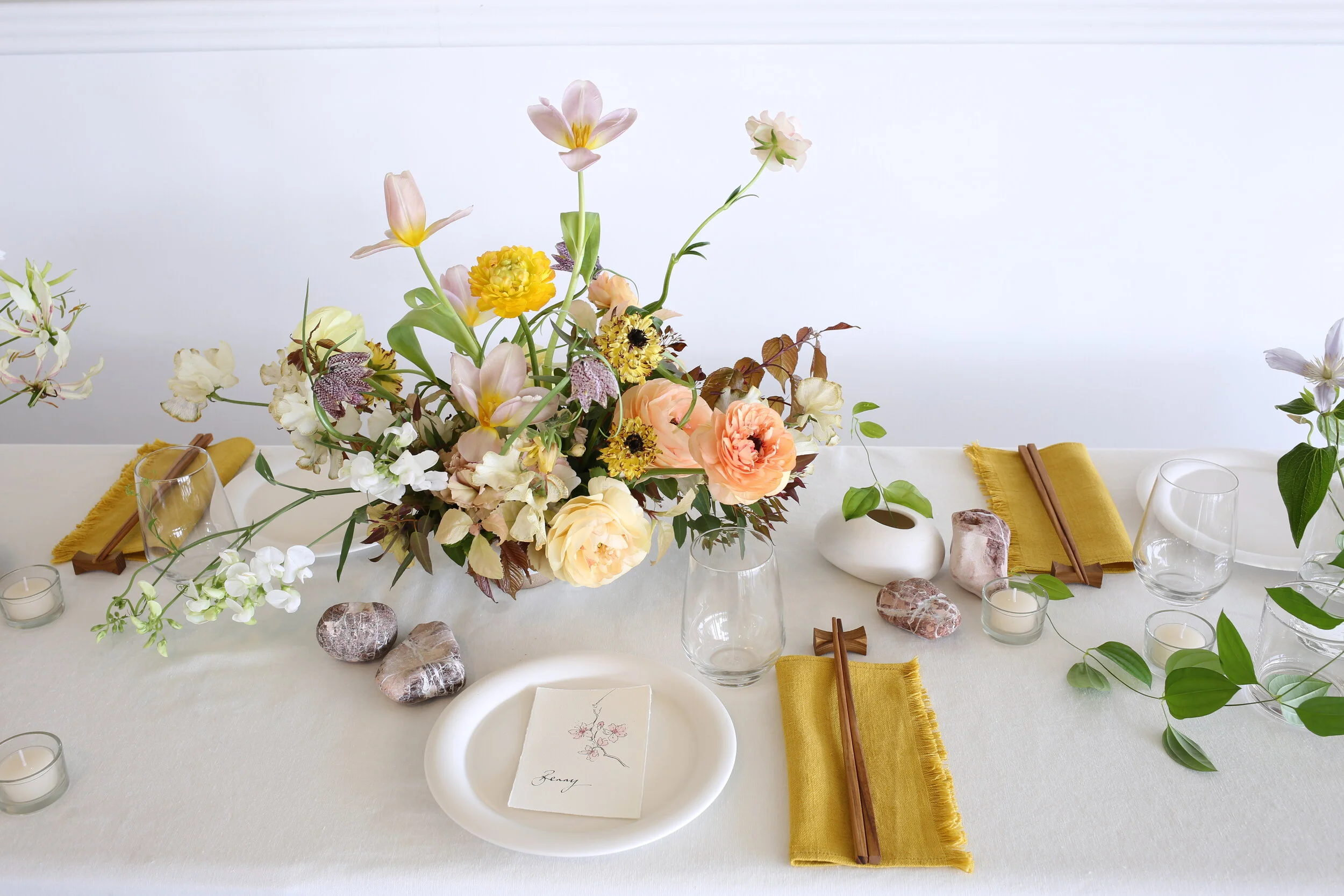
Flower School | Table styling group workshop: antique Indian brass vessels and florals in a palette of red, gold and lime


Flower School | Left: a section of the inspiration board for our Spring Masterclass, referenced during a discussion on colour theory
Last week we held our Spring Masterclass - a three day intensive course in flower arranging with a focus on seasonal, naturalistic and sustainable botanical design for weddings and events (with a difference - i.e. no flower foam, no traditional wiring, rule breaking encouraged etc). In these seasonal courses we focus on using the finest ‘produce’ or ingredients we can grow, source and forage, designing in a nature-led, garden-inspired style and taking inspiration from place, art, fashion and garden design.


Flower School | 1:1 class hanging installation: a suspended trough layered with tulips, geranium, narcissus and fritillaria

The intention on our Flower School courses is to create at atmosphere of open-mindedness, collaboration and creativity; we are always inspired by our students’ enthusiasm and curiosity, and their willingness to think outside the box. Last week the group was made up of students from the UK, Hong Kong and Portugal; everyone was fairly new to flowers, one ran a dried flower business, one wanted to enjoy flower-arranging as a pastime, others were considering career changes. By Friday afternoon we were having such a lovely time we didn’t want it to end - we’d shared a wonderful few days of creation and brainstorming, made lots of beautiful arrangements together, discussed business and social media and colour theory, shared some lovely food and listened to a lot of French jazz. There is an alchemy to what happens in the studio on weeks like this and that evening as we were blowing out the last of the candles, I think we all felt very grateful that we are able to live and work in this way, and to meet other like-minded people who share in the things we love.

Flower School | Table styling 1:1 class: bronze, blue, plum and accents of peach in ceramic vessels


Above: Akebia quinata (chocolate vine) with runner and French climbing beans for planting


Flower School | Spring Masterclass table styling: linear trough vases in a brown, mauve and pale yellow palette


Flower School | Urn design 1:1 class: an ornate French urn with fresh spring greens, leggy tulips and butterfly ranunculus

Flower School | Spring Masterclass demo: Jess’ loosely layered and romantic demo bouquet


Flower Studio | Actinidia kolomikta (variegated-leaf hardy kiwi) with tulip Clusiana ‘peppermint stick’
With a new workbench installed to give us a little more space in the studio, we have decided to open up two additional places on our Summer Masterclass | 5th - 7th June. These spots are first come first served and full details can be found on the website.
In the GARDEN

Cutting Garden | Scabiosa potted on and waiting to be planted in the outside beds
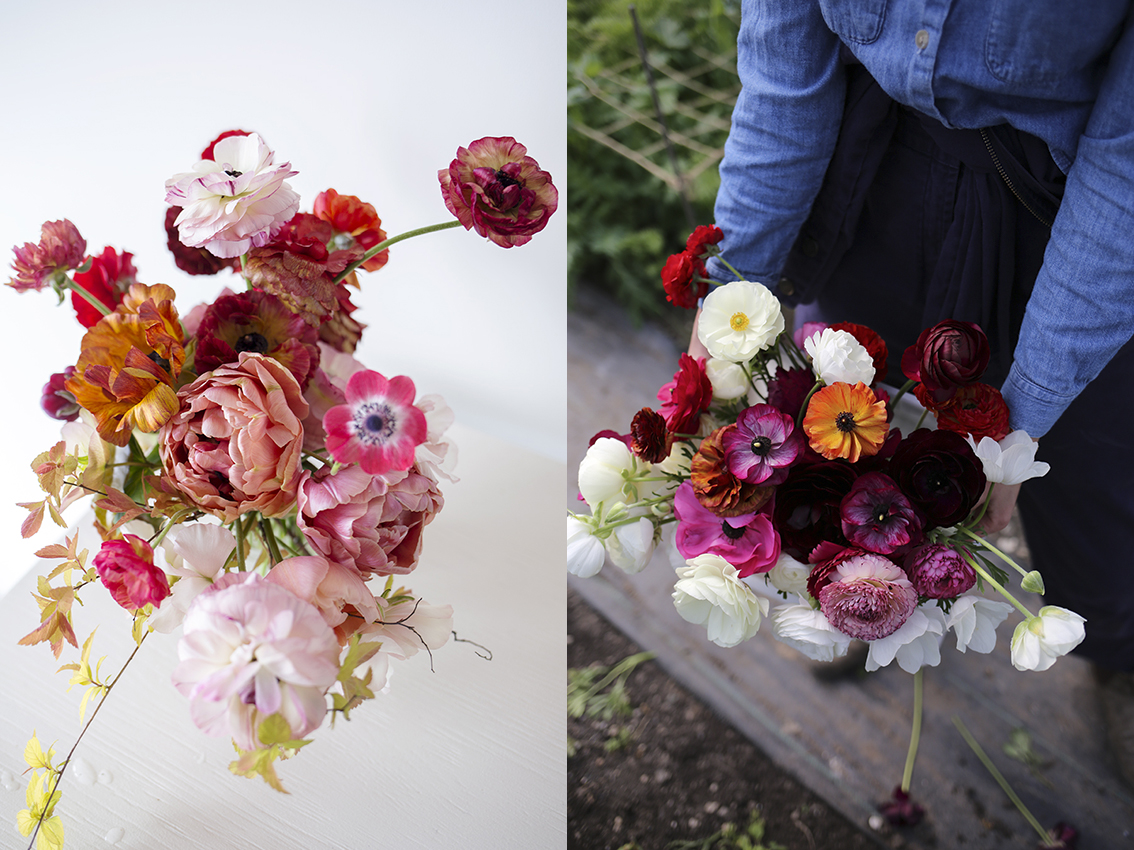
‘Naught you can do about the weather’ one of the landscapers said as we surveyed the rows of ageing tulips in one of the tunnels after our trip overseas. An unseasonably warm spell late March (while we wrapped up and drank hot chocolate in chilly Tokyo) saw many of our tunnel-grown bulbs flowering a few weeks earlier than expected this year. You win some, you lose some. The outdoor planted beds made up for it however, where we were trialling small quantities of a number of different varieties of tulips and narcissus. The ranunculus are flowering prolifically; hundreds of white, pink, plum and bronze, with excellent stem length and ruffly petals opening to those seductive opaque centres. Fritillaria - persica, uva vulpis and imperialis, have been filling the studio with their ‘cannabis’ scent, along with peonies, aquilegia and the last of the anemones, which are very leggy now, with tiny little faces.
So begins the summer - or what I think of as the summer, anyway - the half segment of the year that is measured by bi-weekly deliveries from the garden to the studio and the constantly evolving stock of new, delicious colours and textures that we take from their unprepossessing buckets and that result in branchy urns and beautiful spilly bowls.


Cutting Garden | Tulips in the early evening sun in one of the outdoor beds

Cutting Garden | Ranunculus ‘Aviv white’


In the Ether
A few things we’re loving at the moment…
R E A D I N G - Food for Free (the complete guide to help you safely identify edible species that grow around us, together with detailed artwork, photographs, field identification notes and recipes) by Richard Mabey
L I S T E N I N G T O - Piano & A Microphone, 1983 by Prince. The Table Manners podcast with Jessie Ware
F O L L O W I N G - Samuji, Somewhere Magazine, Arne Maynard Garden Design
C O O K I N G - Steamed kale with capers, thyme, chilli flakes, garlic and creme fraiche and toasted breadcrumbs (inspired by Gill Meller). Melon, buffalo mozzarella and Parma ham salad (via The Kitchen Diaries by Nigel Slater)
V I S I T I N G - Anthracite Coffee Roasters (a beautiful disused warehouse / overgrown ruin / coffee shop in Jeju Island). Chenies Manor in Buckinghamshire (for the displays of tulips and gorgeous walled vegetable and herb gardens)


Rajasthan, India
Gardens are the greatest source of inspiration to us in our work as flower arrangers and growers. Seeing how natural materials converge, how plants are grown together, witnessing their shapes, colours and textures - these are fuel for so many creative ideas and revelations in our studio.
Gardens are the greatest source of inspiration to us in our work as flower arrangers and growers. Seeing how natural materials converge, how plants are grown together, witnessing their shapes, colours and textures - these are fuel for so many creative ideas and revelations in our studio.
RAAS HOTEL | JODPHUR


In my notebook:
Kachnar tree, the “orchid” or “camel’s foot” tree has bright purple pink flowers that drop their petals into the water channels and ornate squares of gravel below. The garden is neatly organised into symmetrical sections. An avenue of green, rustling trees leads towards the spa in the old haveli building, behind which looms the Mehrangarh Fort - a cascade of water in front. Pennisetum lines the pool. Gardeners with brushes made from gathered grasses painstakingly sweep the squares of grass beneath the trees clear of fallen leaves, which they gather in wicker baskets. The aromatic beds are full of kumquat trees and frangipani, and dried agastache seed heads. White and cream bougainvillea cascades over our private garden wall. They have placed shallow terracotta bowls for the ring-neck doves and pigeons to drink from.
At night the gardens are lit with small lanterns at ground level and hundreds of flickering tea lights in the crevices of the stone walls. The air is thickly scented with burning incense and charcoal.