

THE MONTH OF MAY
May. This is the month when things have really got going for us, flower-wise. Later than usual after a cold and wet spring and, as opposed to previous years when we’ve been in the deep end from March onwards, it’s been a serene and gentle incline to the busy summer season.
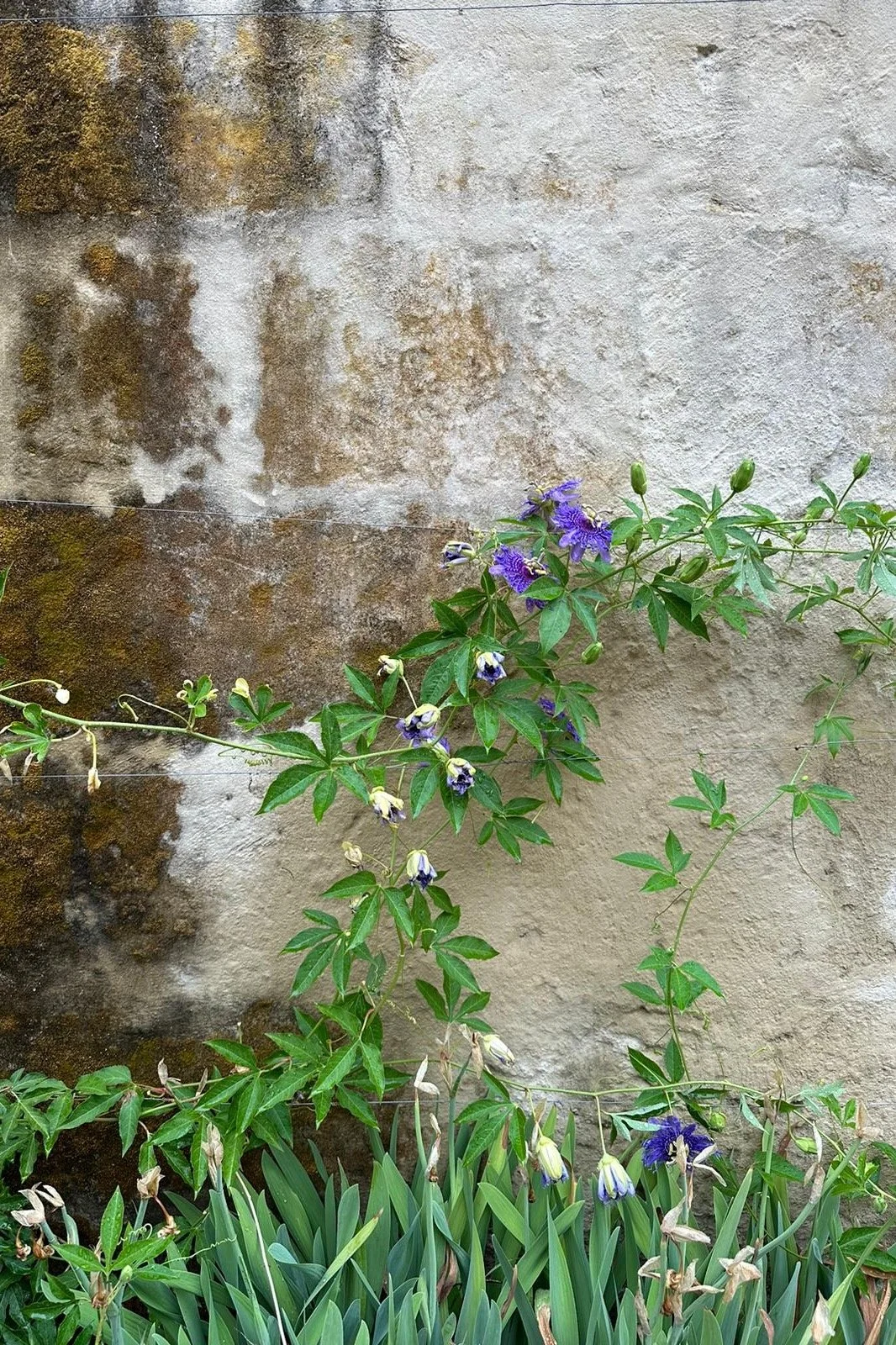
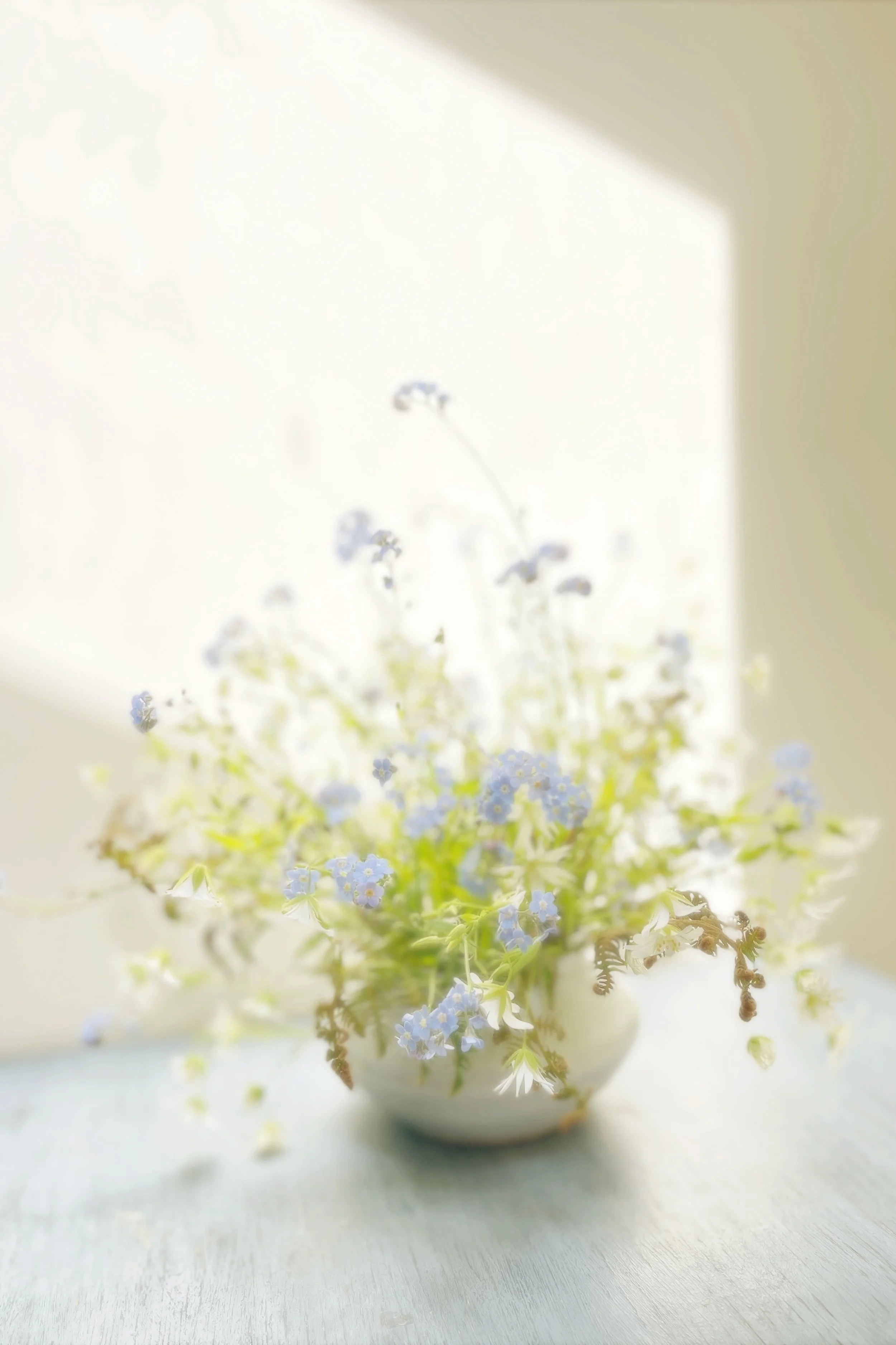
May. This is the month when things have really got going for us, flower-wise. Later than usual after a cold and wet spring and, as opposed to previous years when we’ve been in the deep end from March onwards, it’s been a serene and gentle incline to the busy summer season.
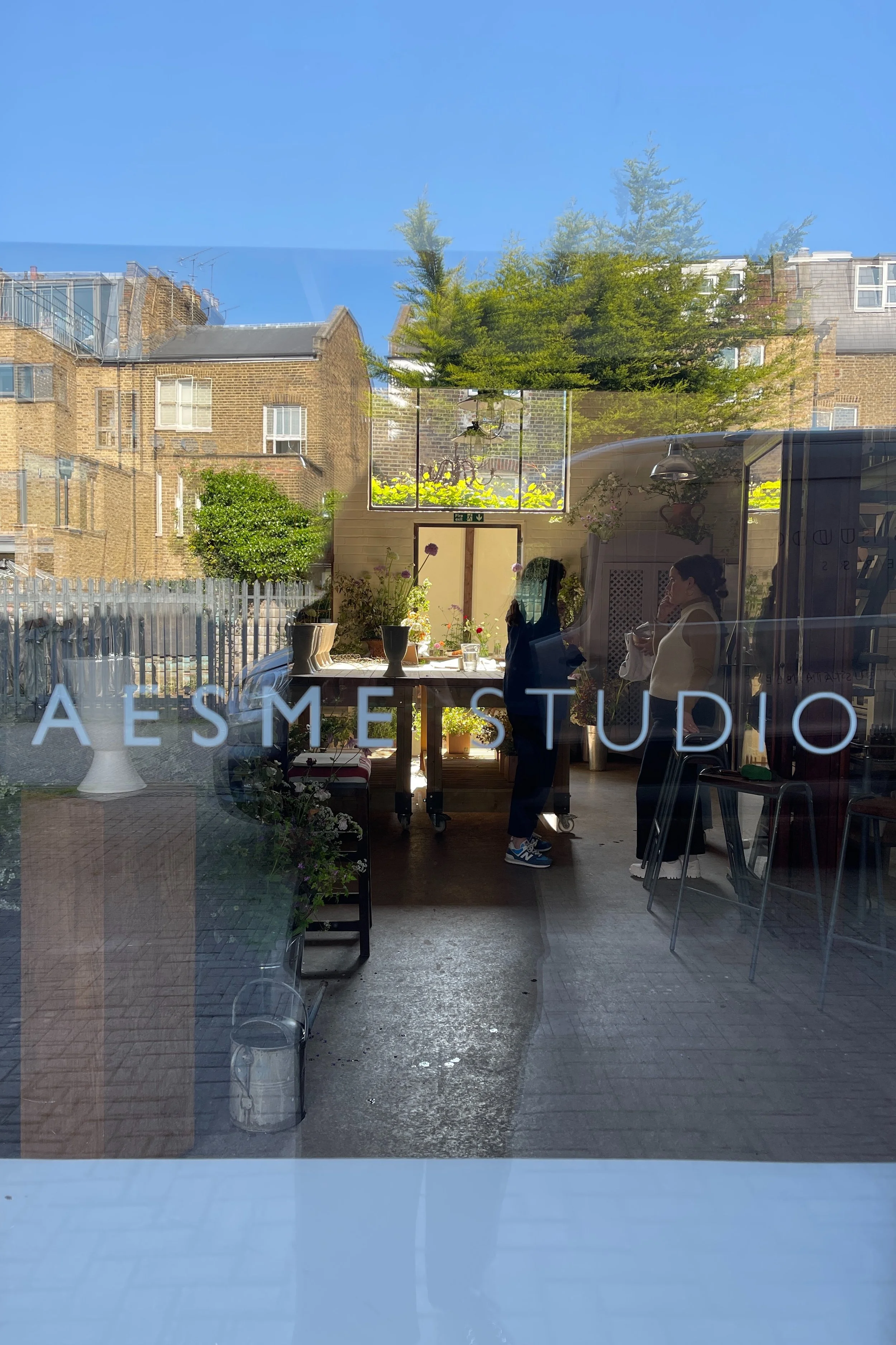
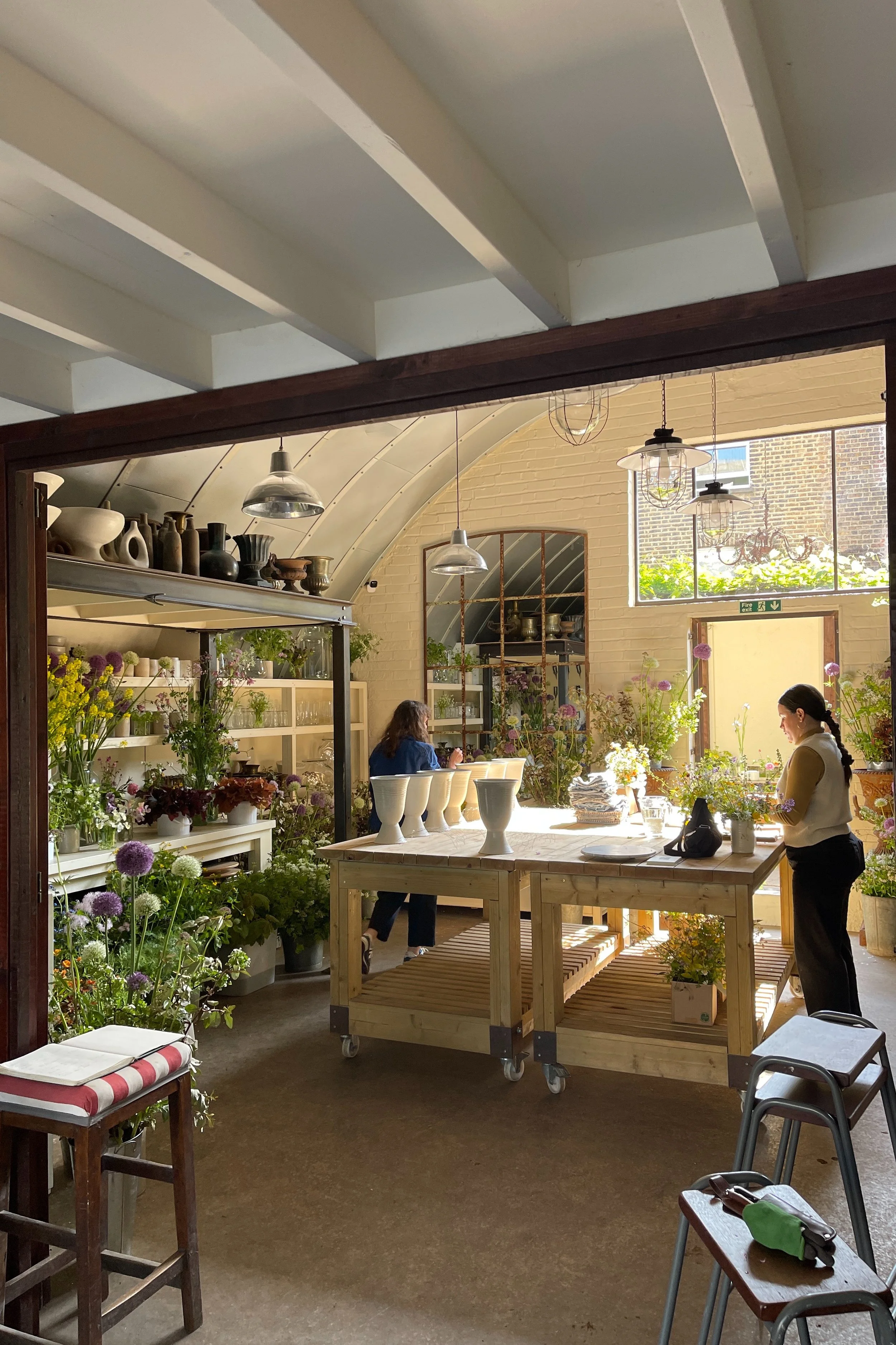
After weeks of brooding skies and drizzly mornings the sun finally deigned to make an appearance.
Londoners became markedly more cheerful overnight and there followed a grateful rush of alfresco socialising, ice-cream eating and premature states of undress.
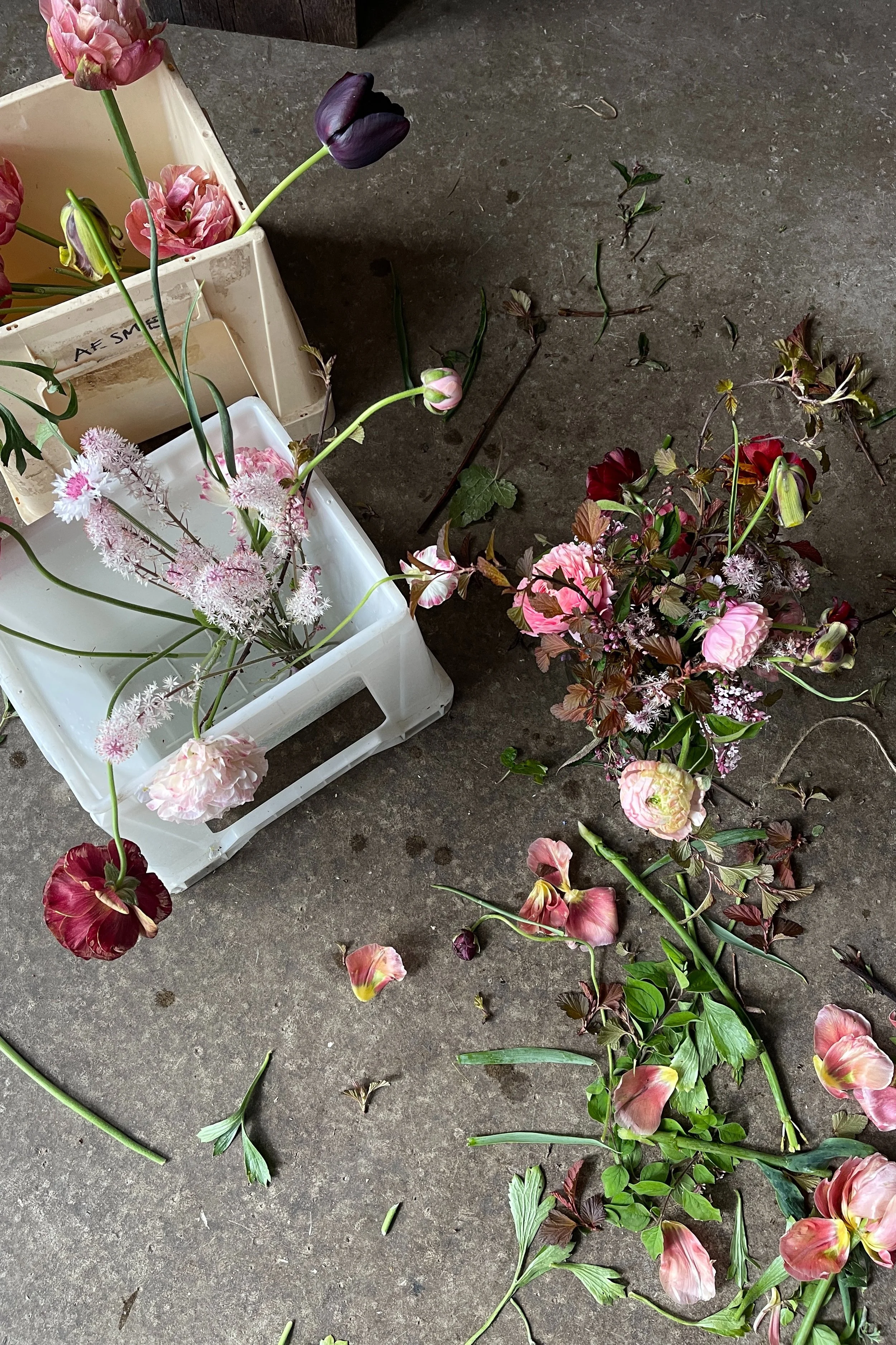
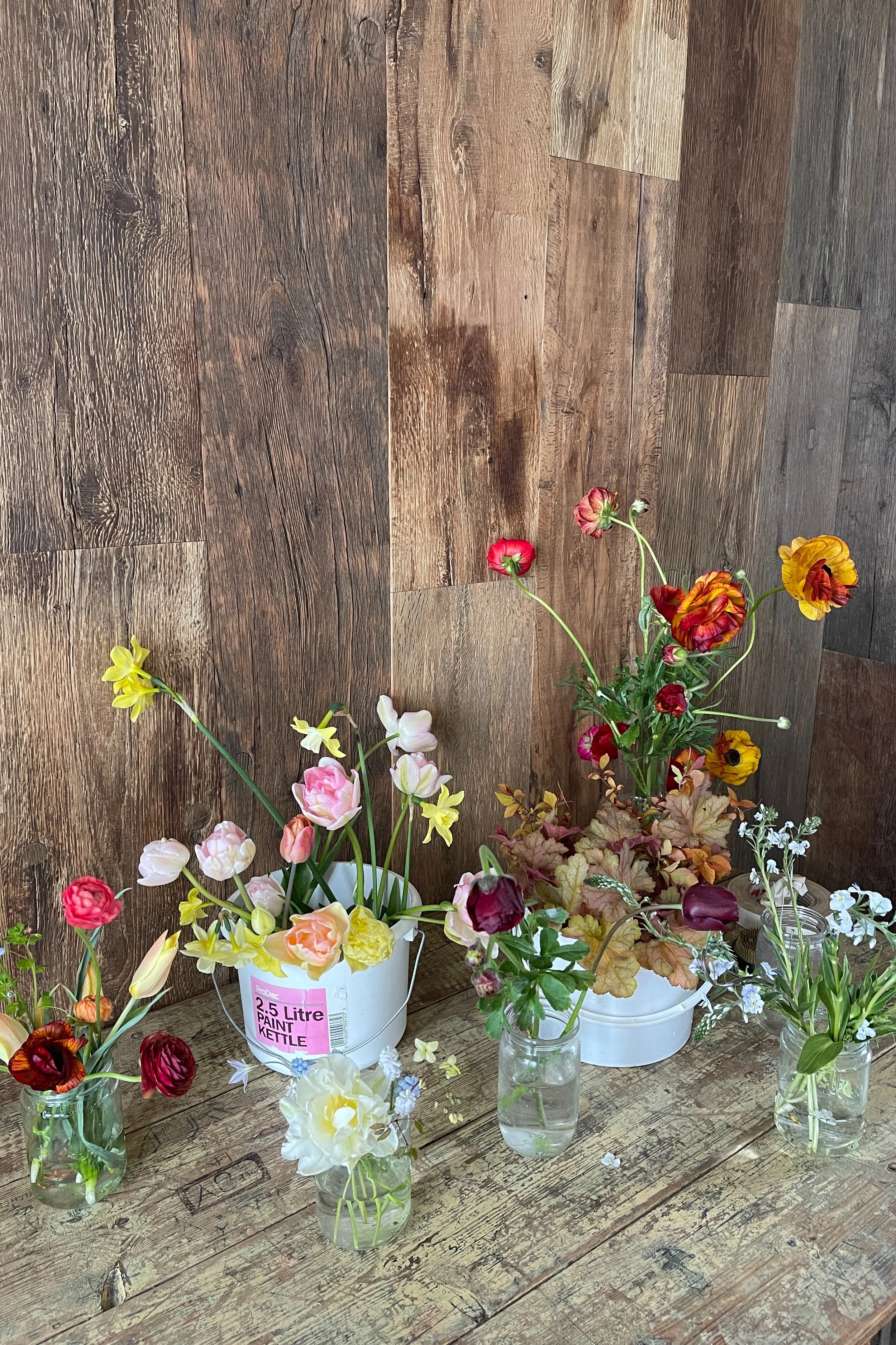
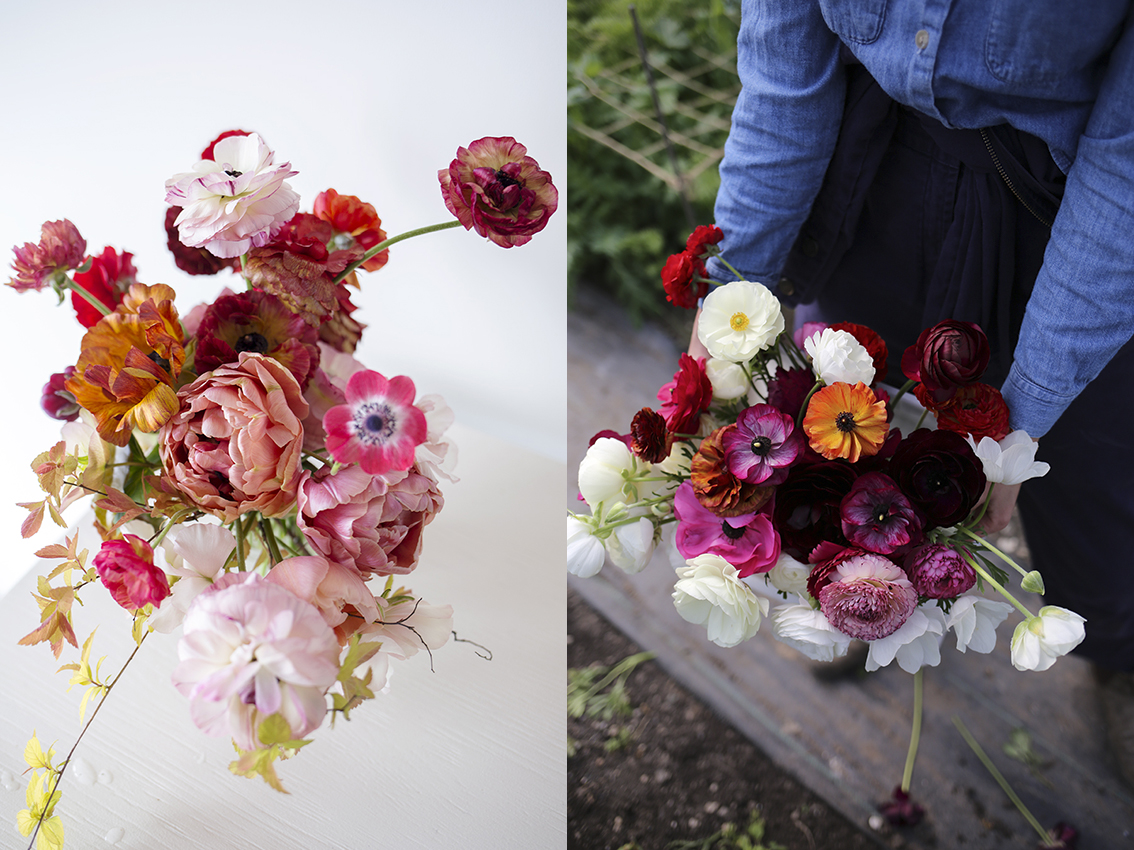
Earlier in the month we bade a fond farewell to the tulips, Narcissi, Muscari and Fritillaria. Our Ranunculus have not fared too well this year so they’re rather thin on the ground but glorious nonetheless - whirling, ruffled and burnished, petals streaked with fine, feathery brushstrokes.
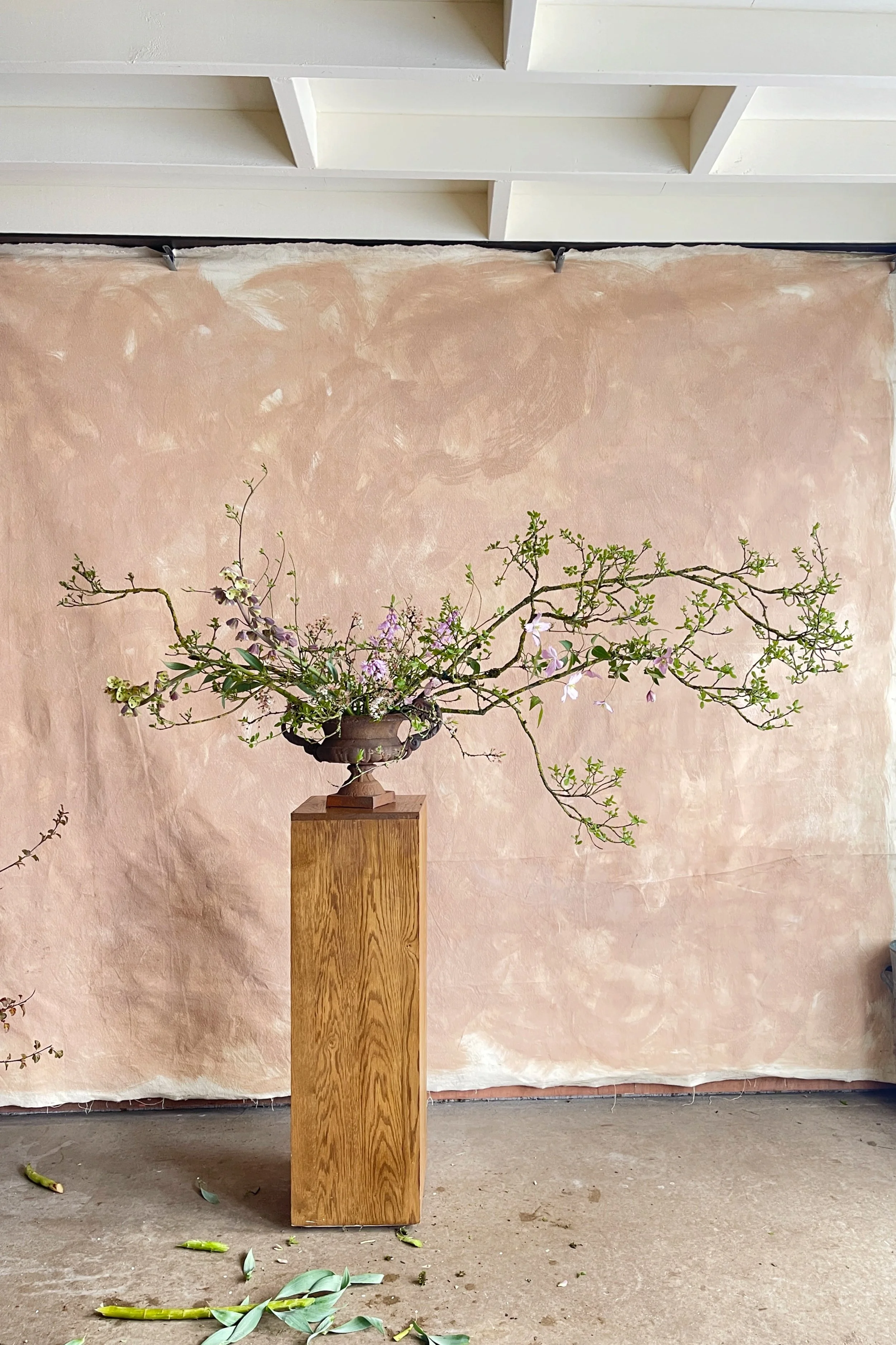
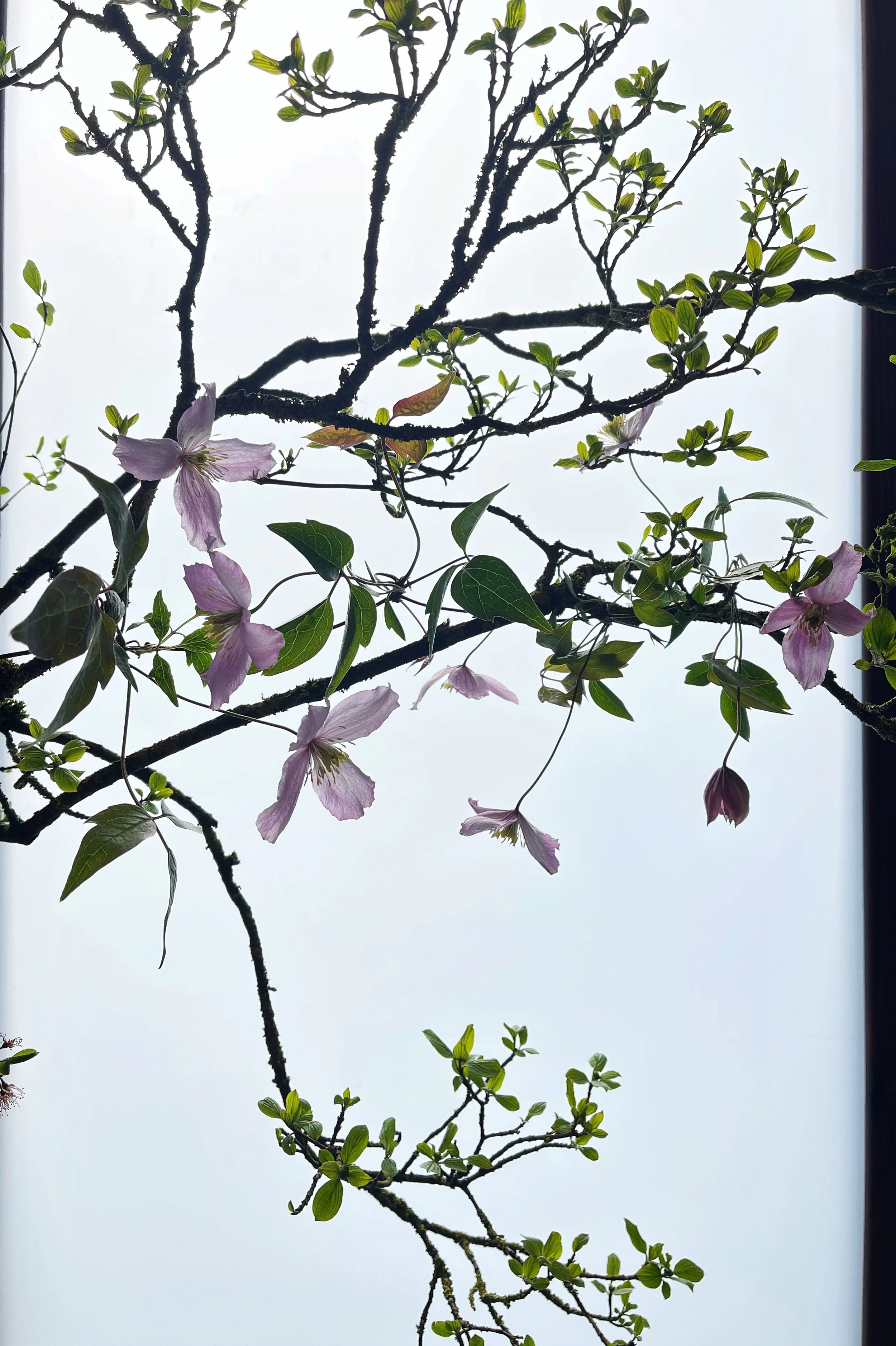
The above arrangement was inspired by one we saw in the window of an incense boutique in Kyoto in 2019. We have been meaning to try this asymmetric linear shape ever since and the small, low urn was the perfect container for these sculptural dogwood branches. We used the incredibly two-tone Fritillaria persica ‘Green Dreams’ and Scilla hispanica (pink bluebells) and threaded Clematis montana through the foliage.
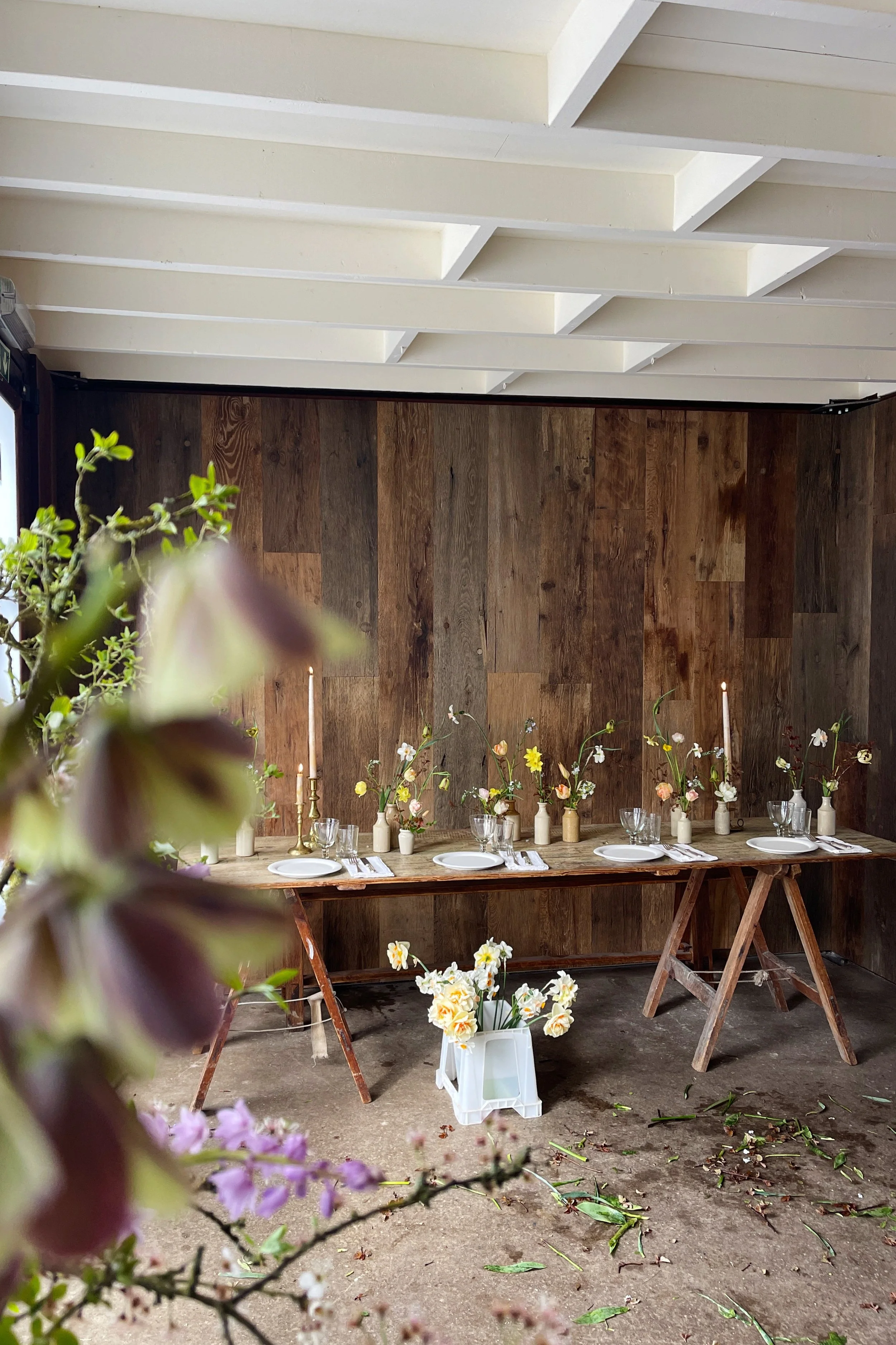
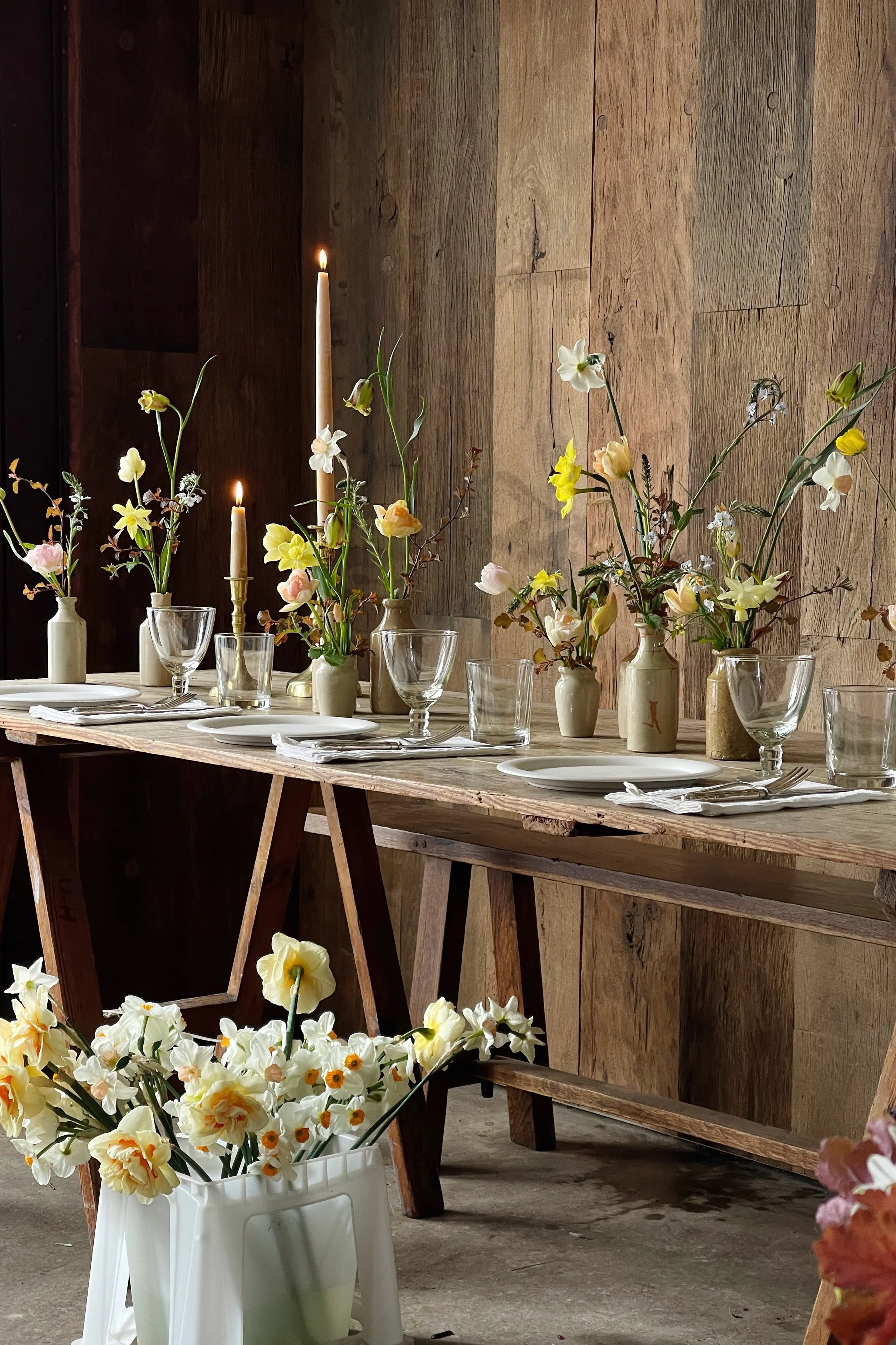
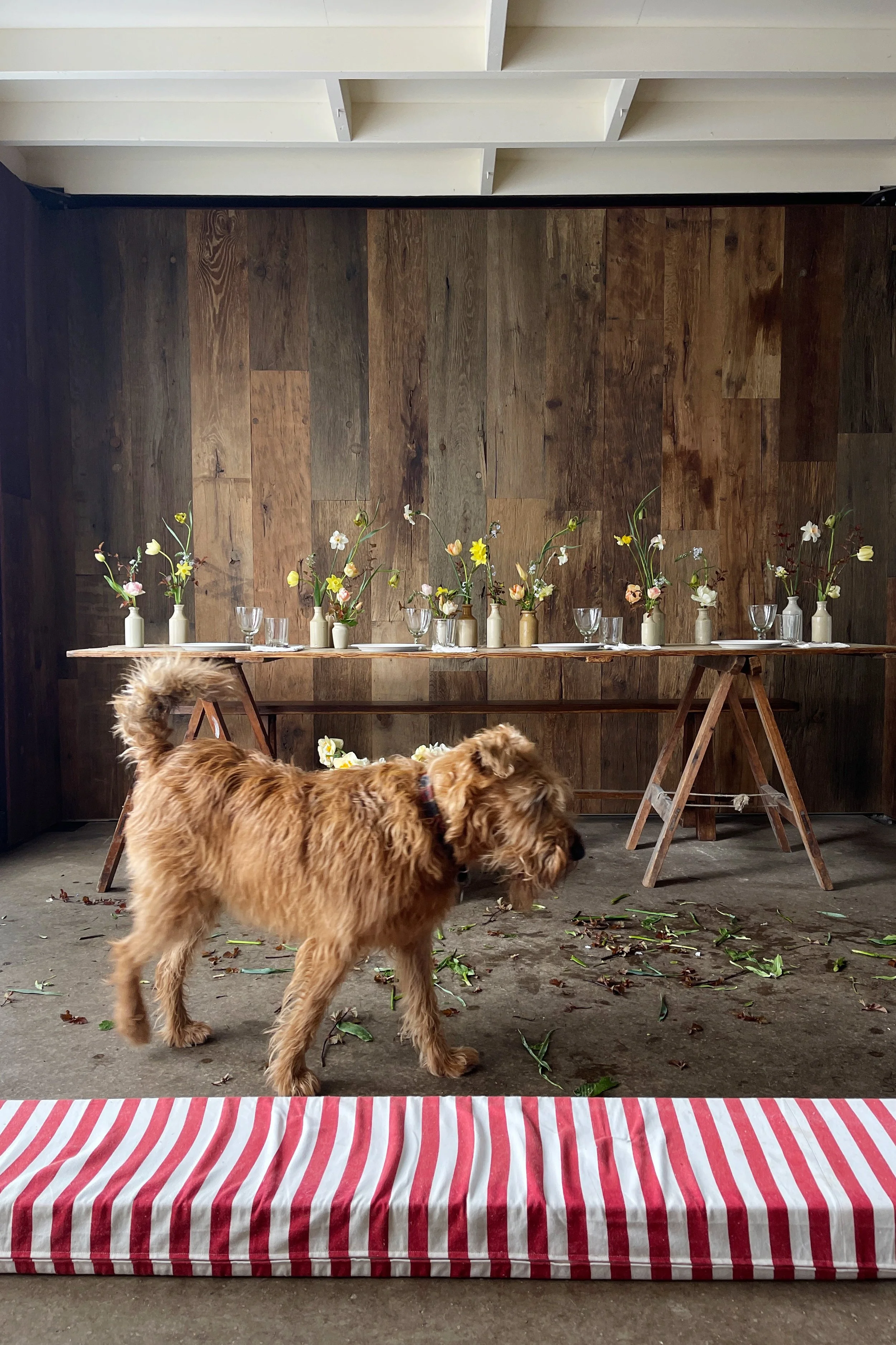
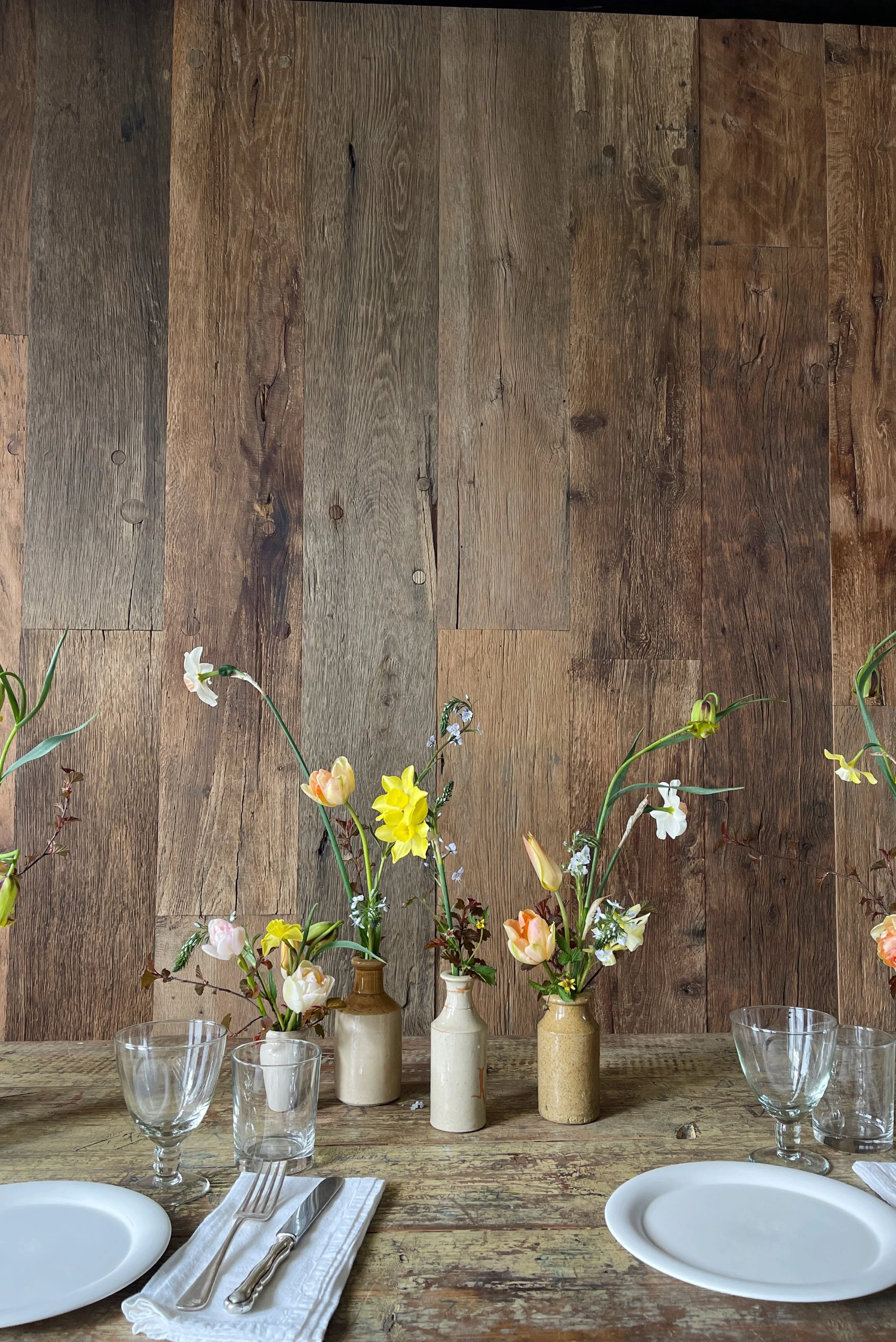
Above a tablescape of tulips, Narcissi, Veronica, Fritillaria and Physocarpus arranged simply in stoneware bottles. These ceramic vessels are commonplace Victorian containers and were ‘reclaimed’ from their burial place under a Welsh hillside where they had been disposed of in bulk. The beautiful thing about them is that every one is different, the heights, shapes and glazes vary from bottle to bottle. The earthy tones are nicely offset by a lively pop of lemon yellow - and a shaggy red dog (an Irish Terrier will do if you can manage to get hold of one).
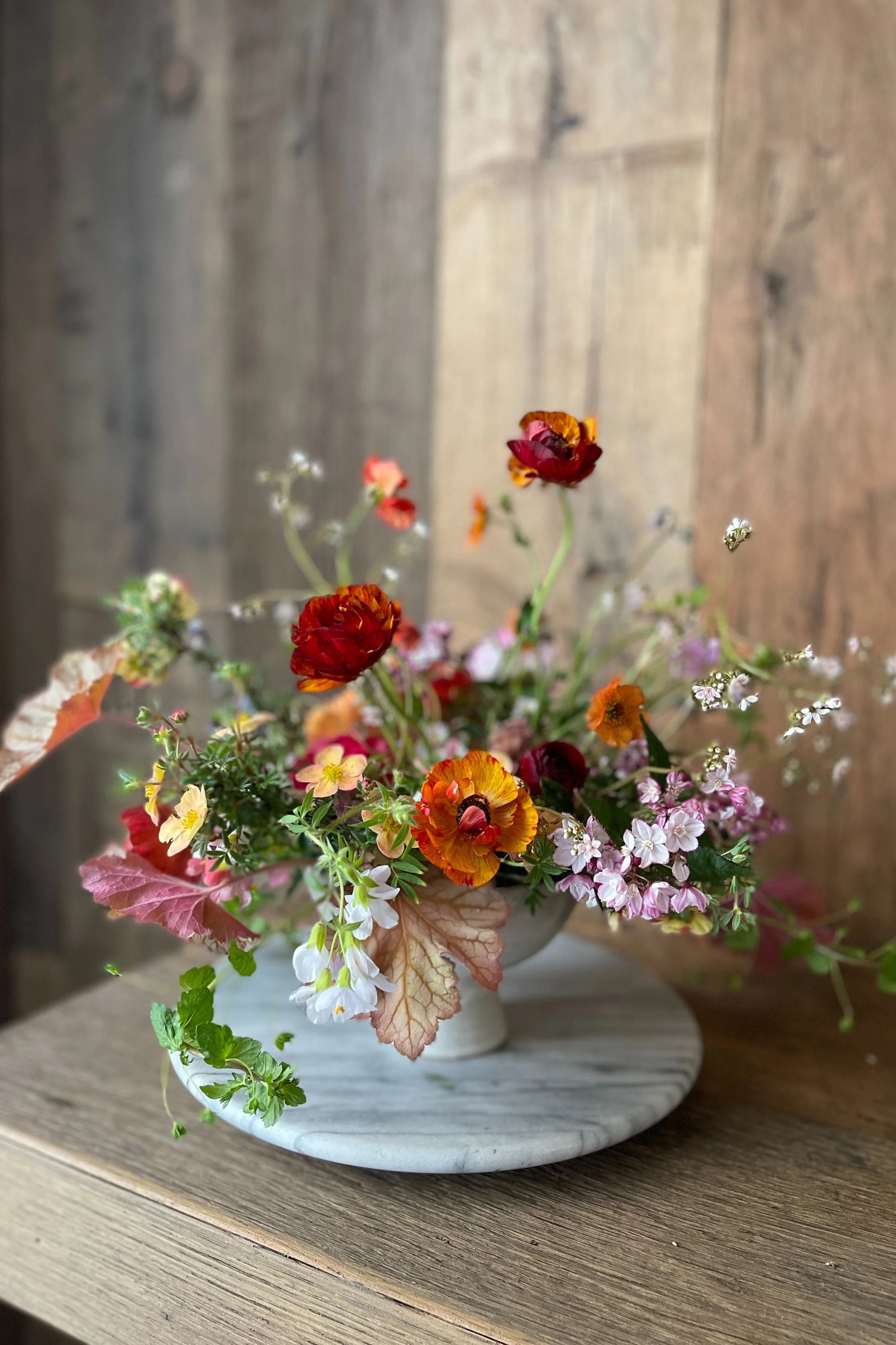
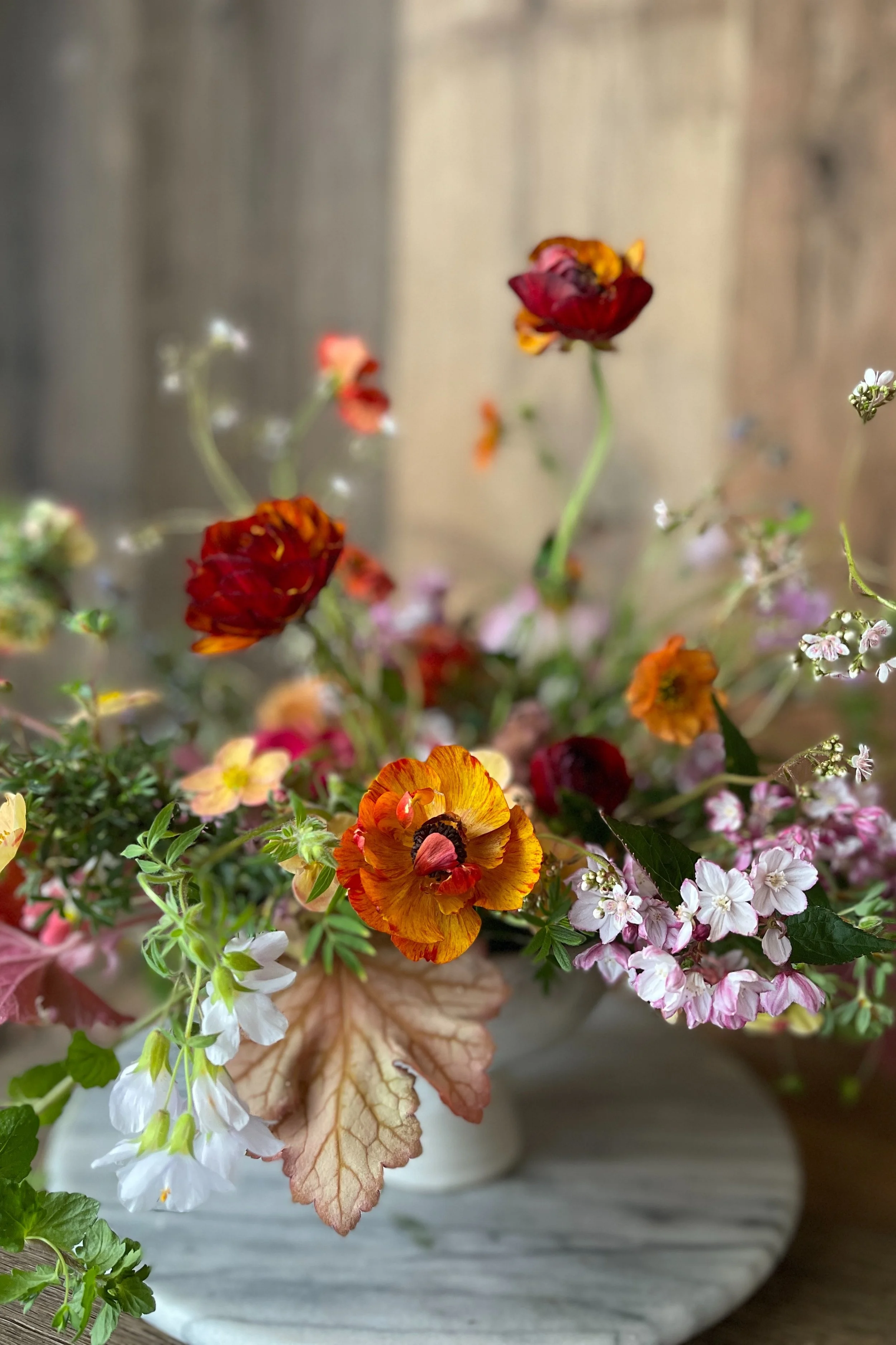
Speaking of red - a study of the spring garden with a sprinkling of our favourite ‘Cafe au Lait’ Ranunculus which is a glowing ember of a flower, amber on the upper petals with a dusky red underbelly. Arranged with veined peach Heuchera leaves, sprigs of Potentilla, Deutzia, and dusted with a few Geum, Polemonium and Saxifraga.
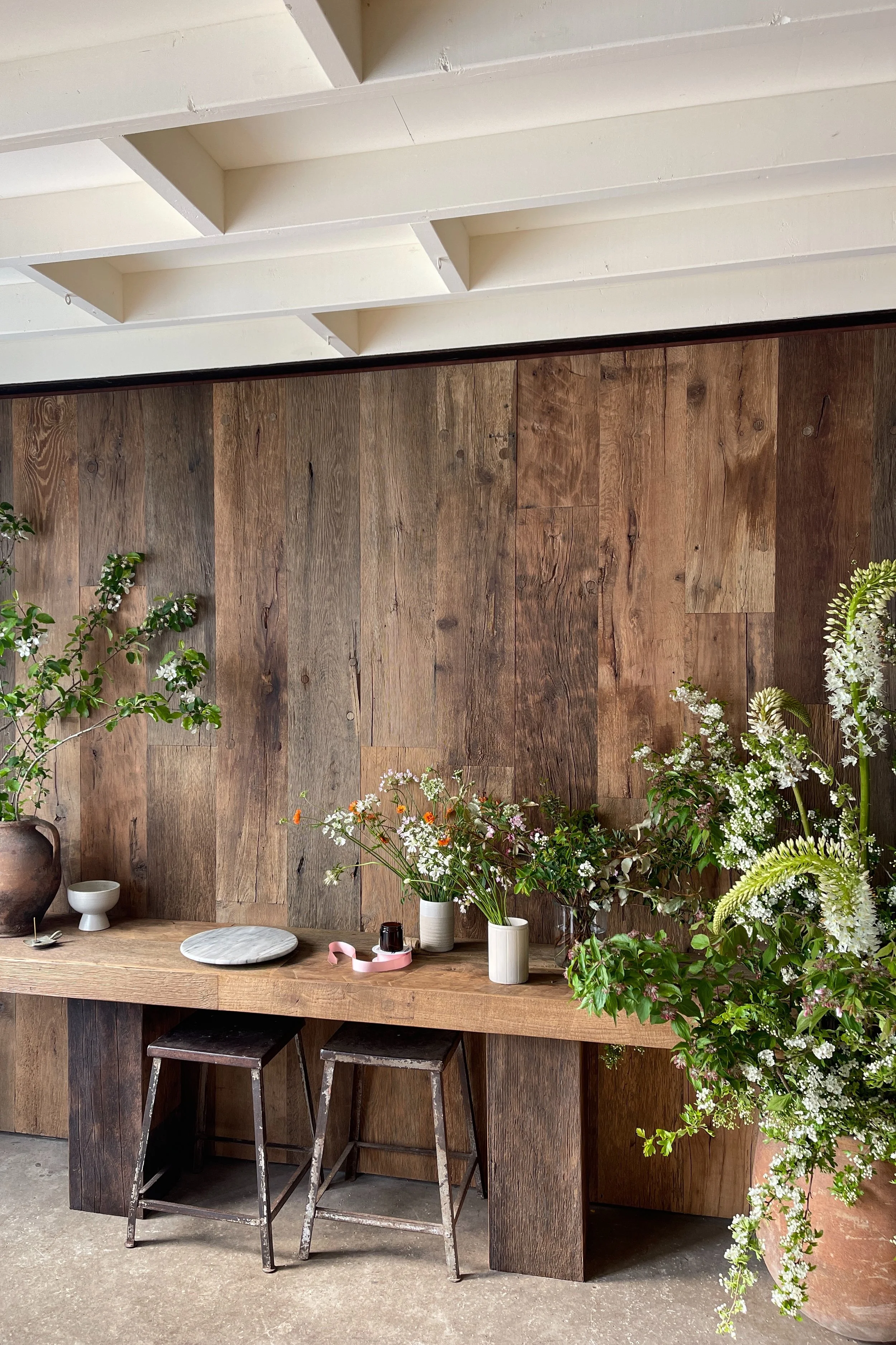
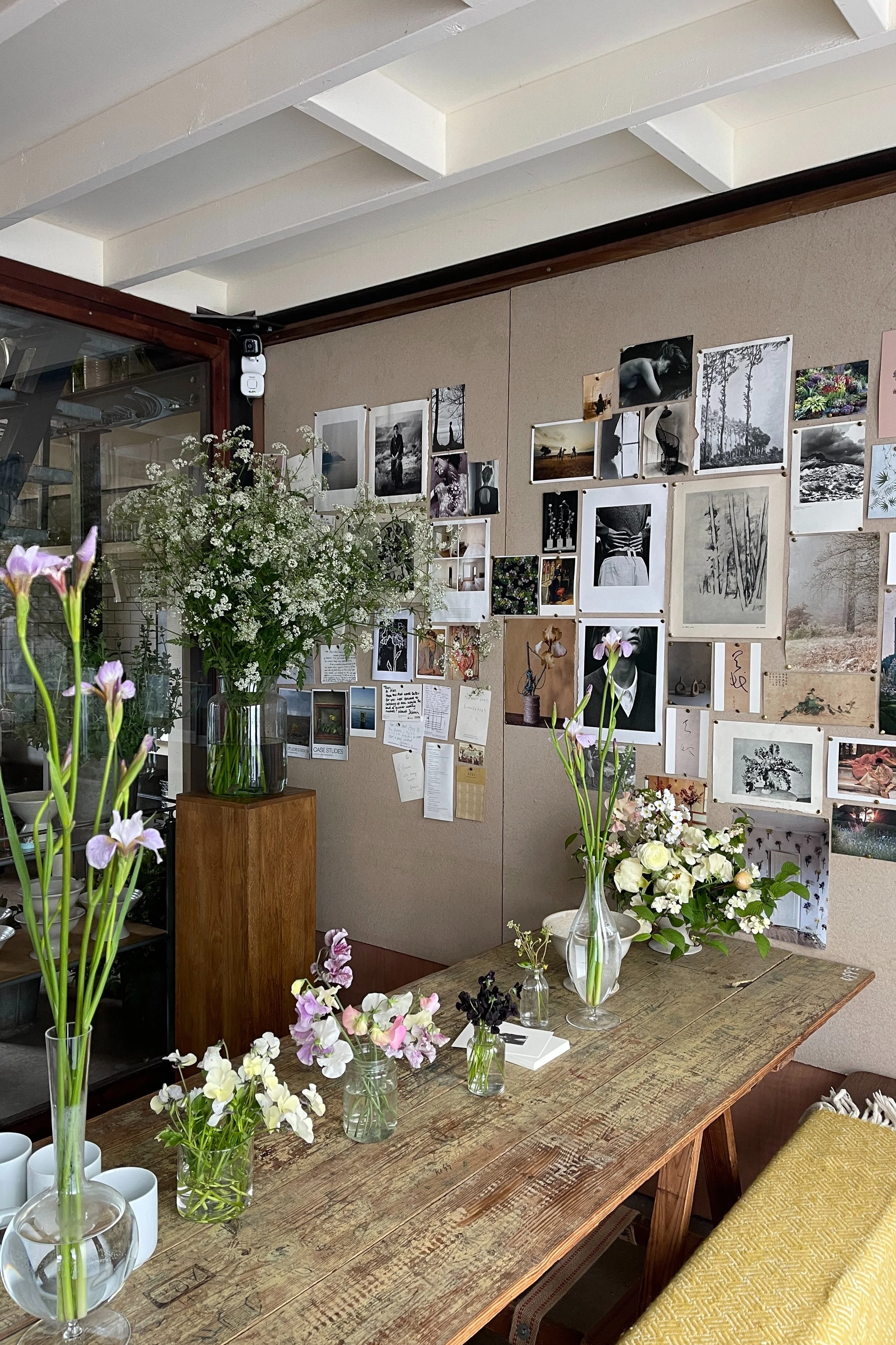
The studio has filled with flowers every week - special favourites being fussed and coo’ed over as new varieties begin to bloom - Iris siberica ‘Dance Ballerina Dance’, the Japanese peonies, the foxtail lilies, black pansies, branches of apple blossom with palest pink petals.
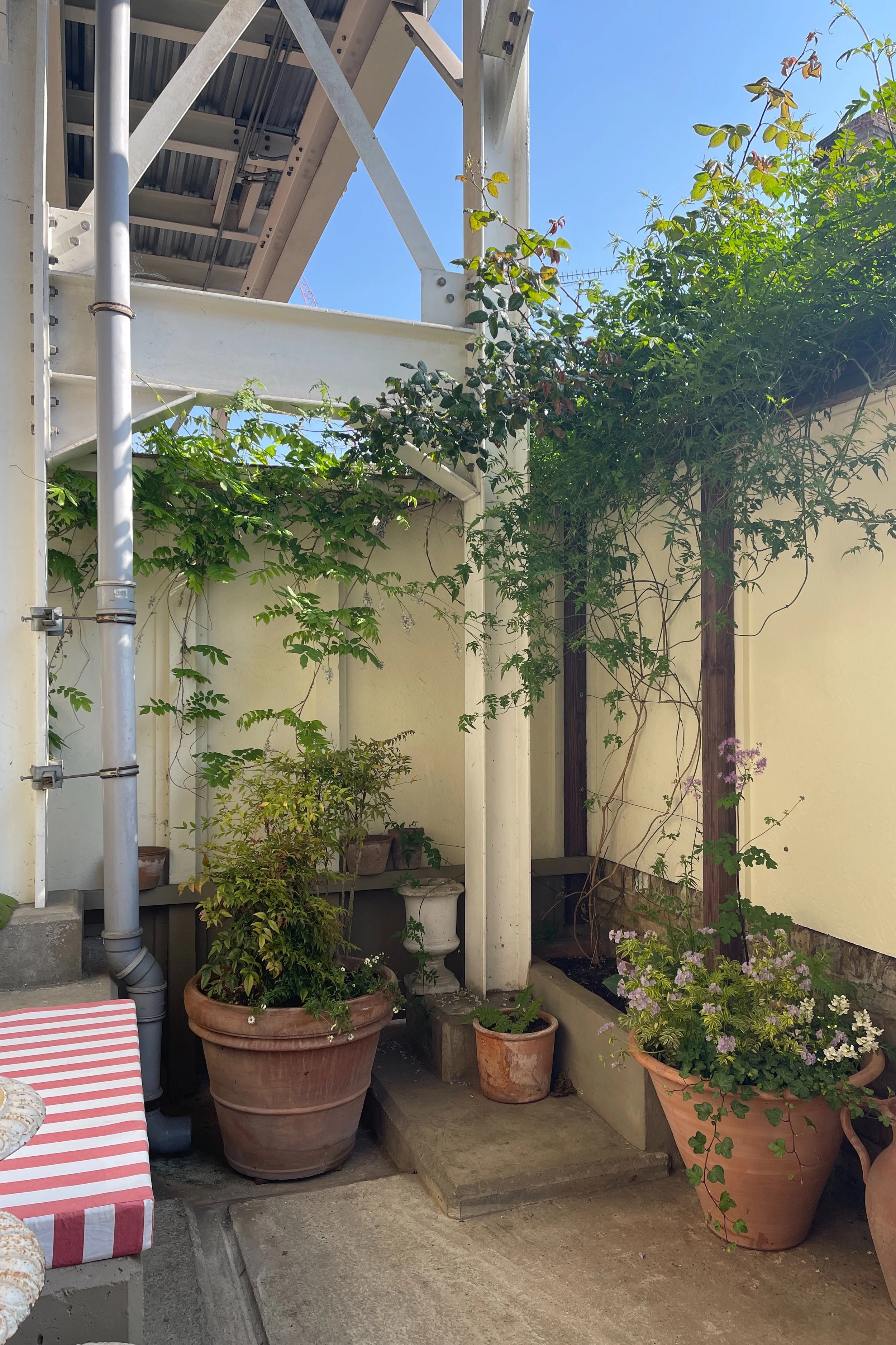
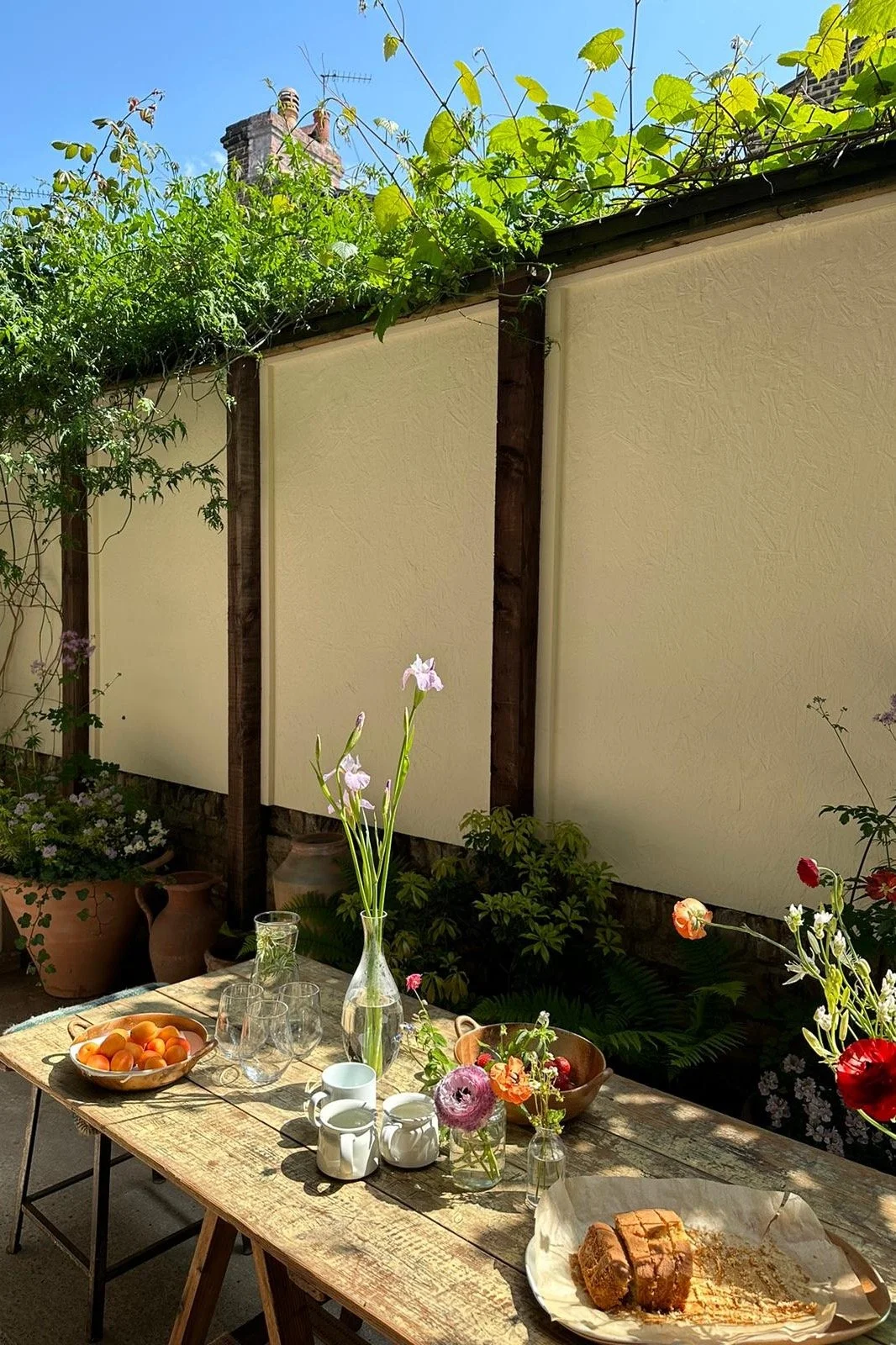
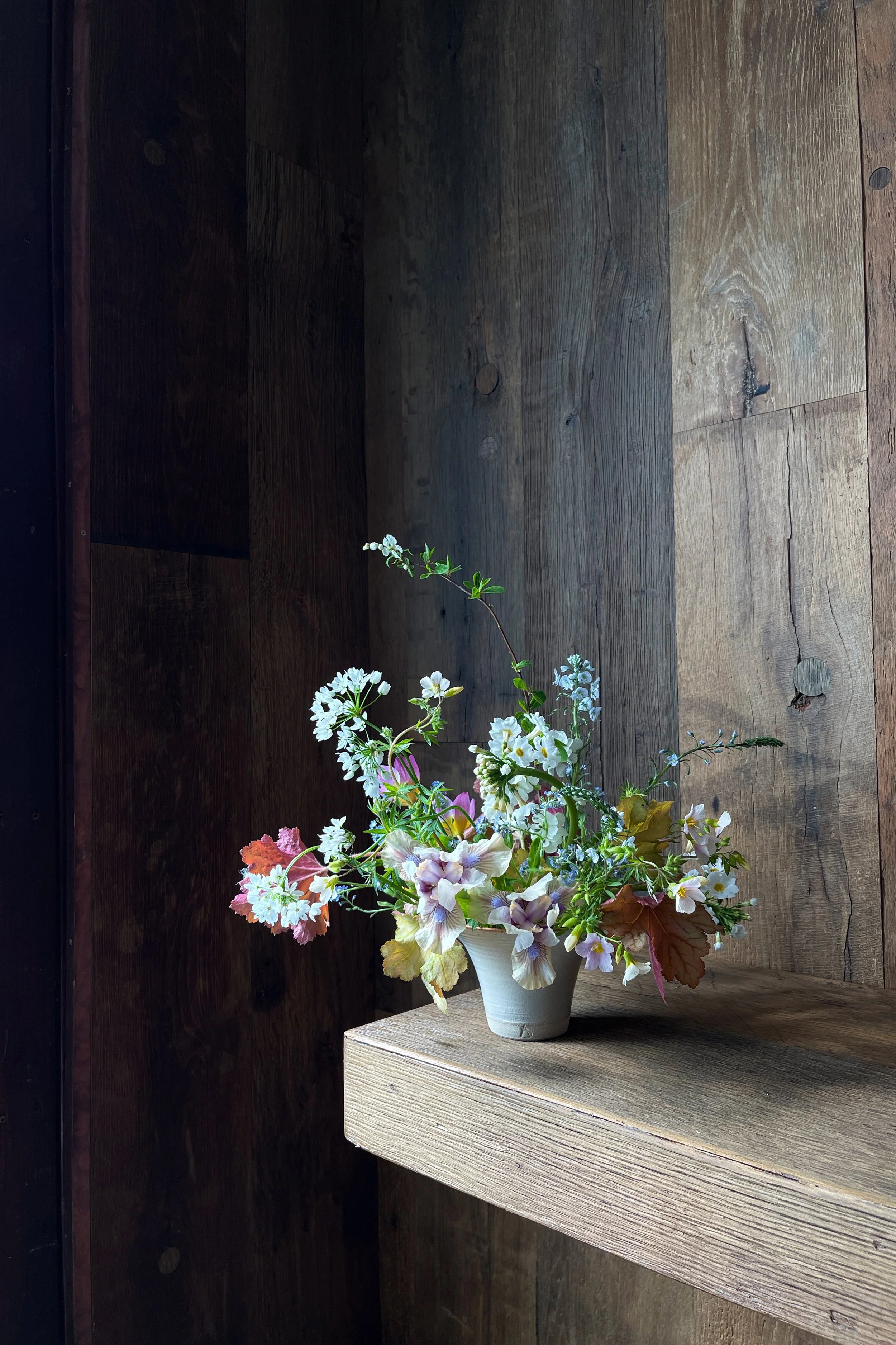
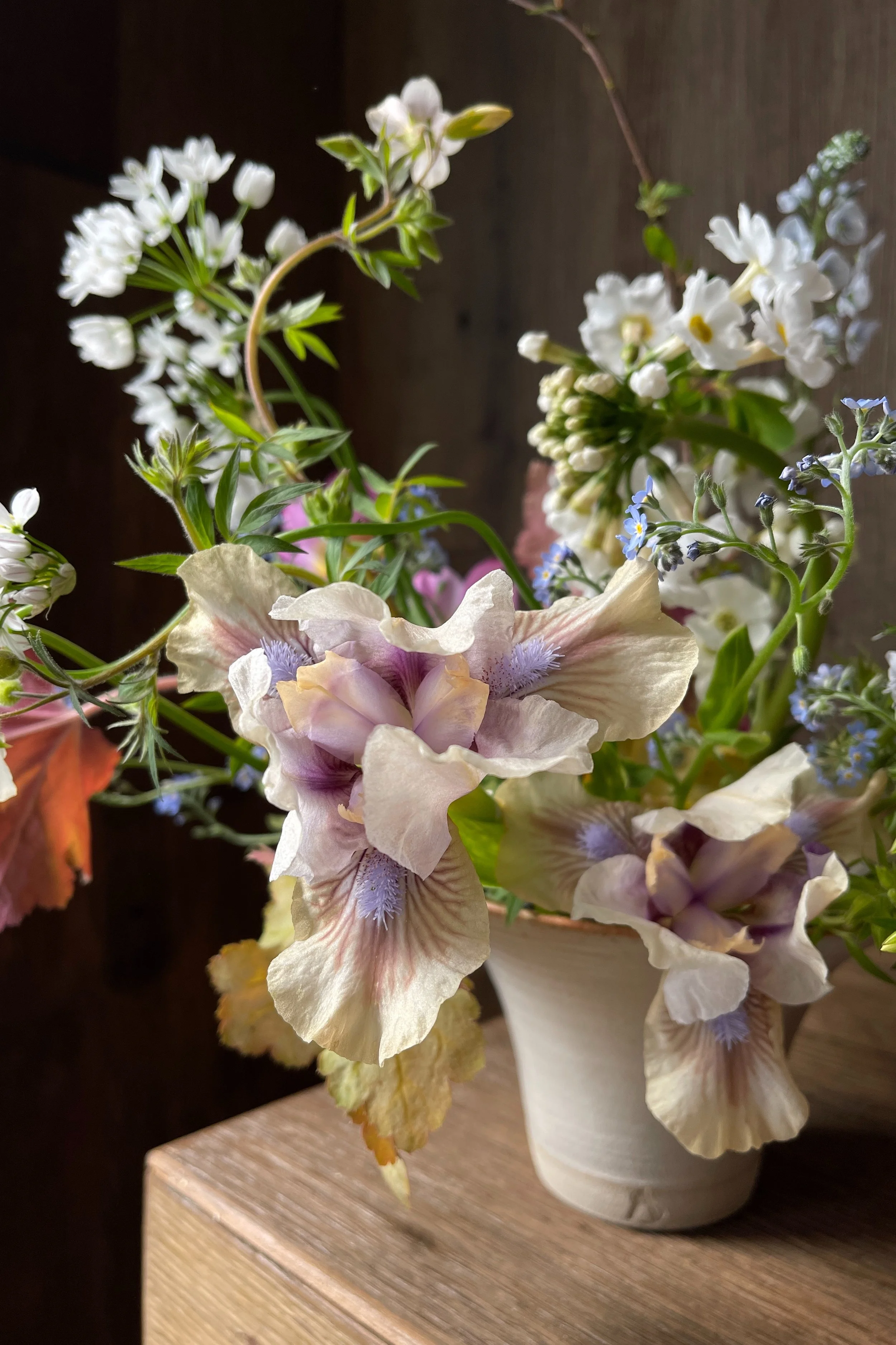
We hosted the first of our 2023 Flower School workshops this month, welcoming guests from the UK, Italy, France, Switzerland, South Korea, the US and Canada for two days of high octane flower appreciation. It was such a pleasure, especially after a four year hiatus from teaching, to host such an enthusiastic group of women - every one genuinely exploring their own creativity with flowers and plants in a different way.
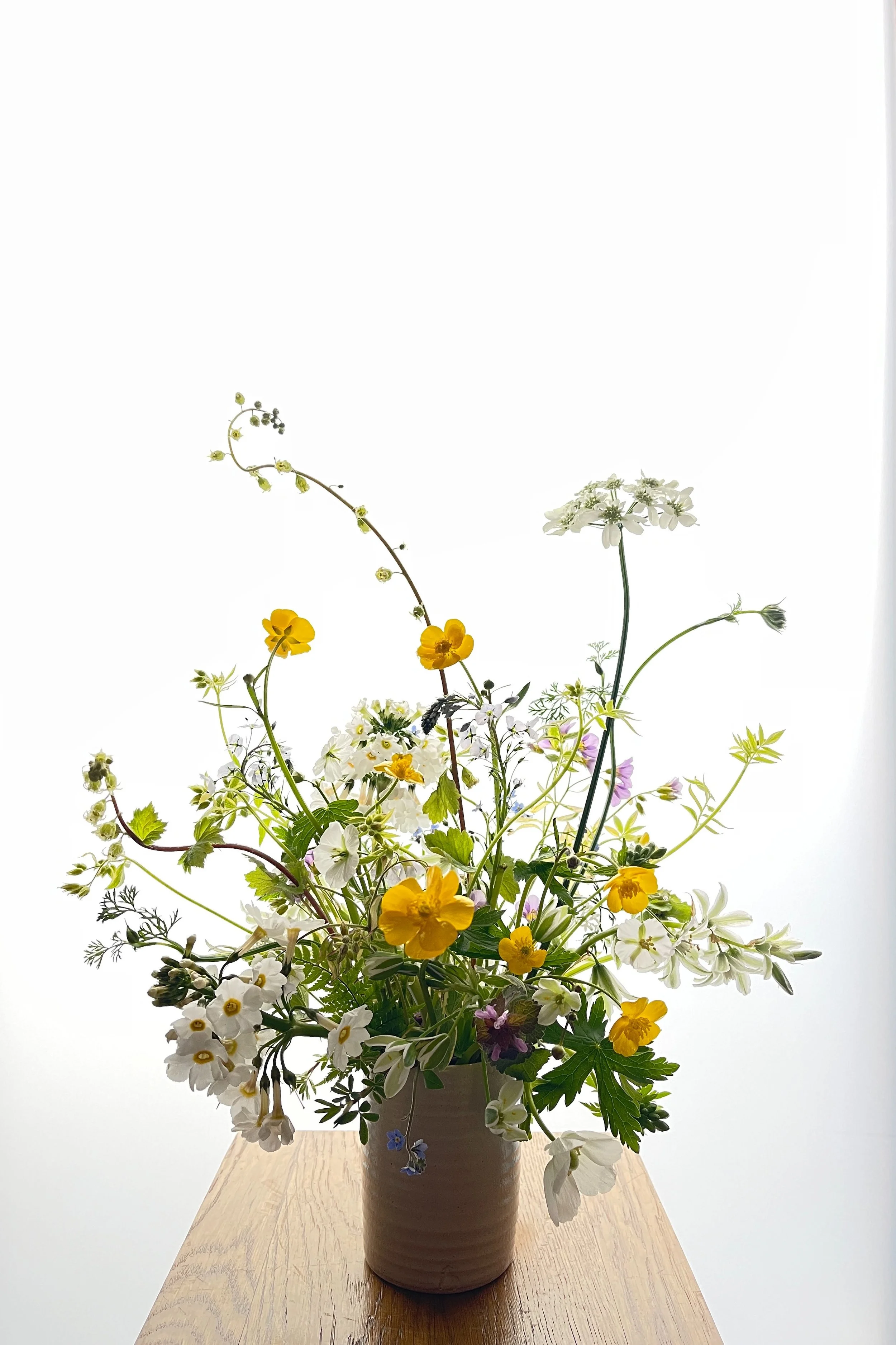
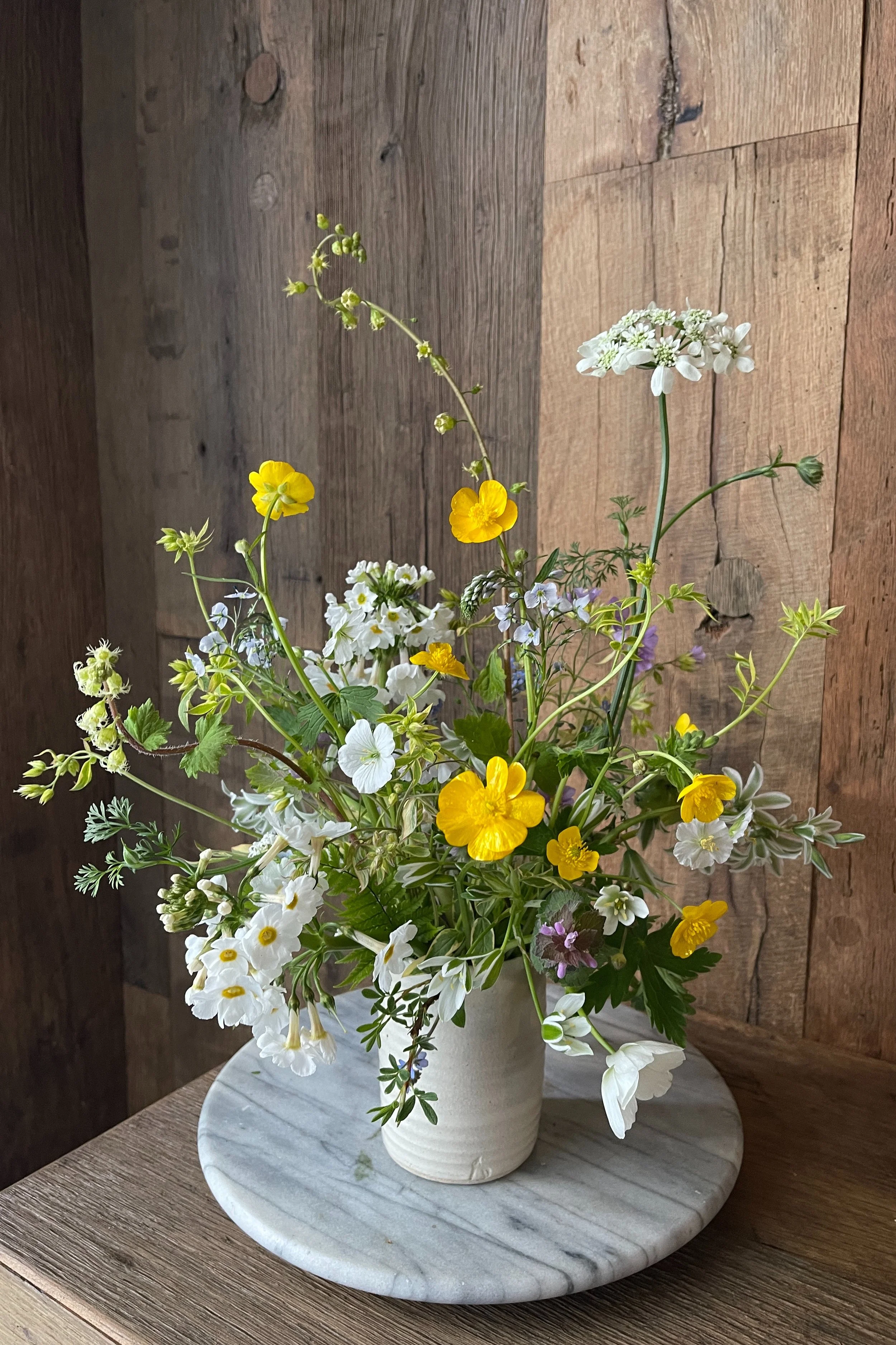
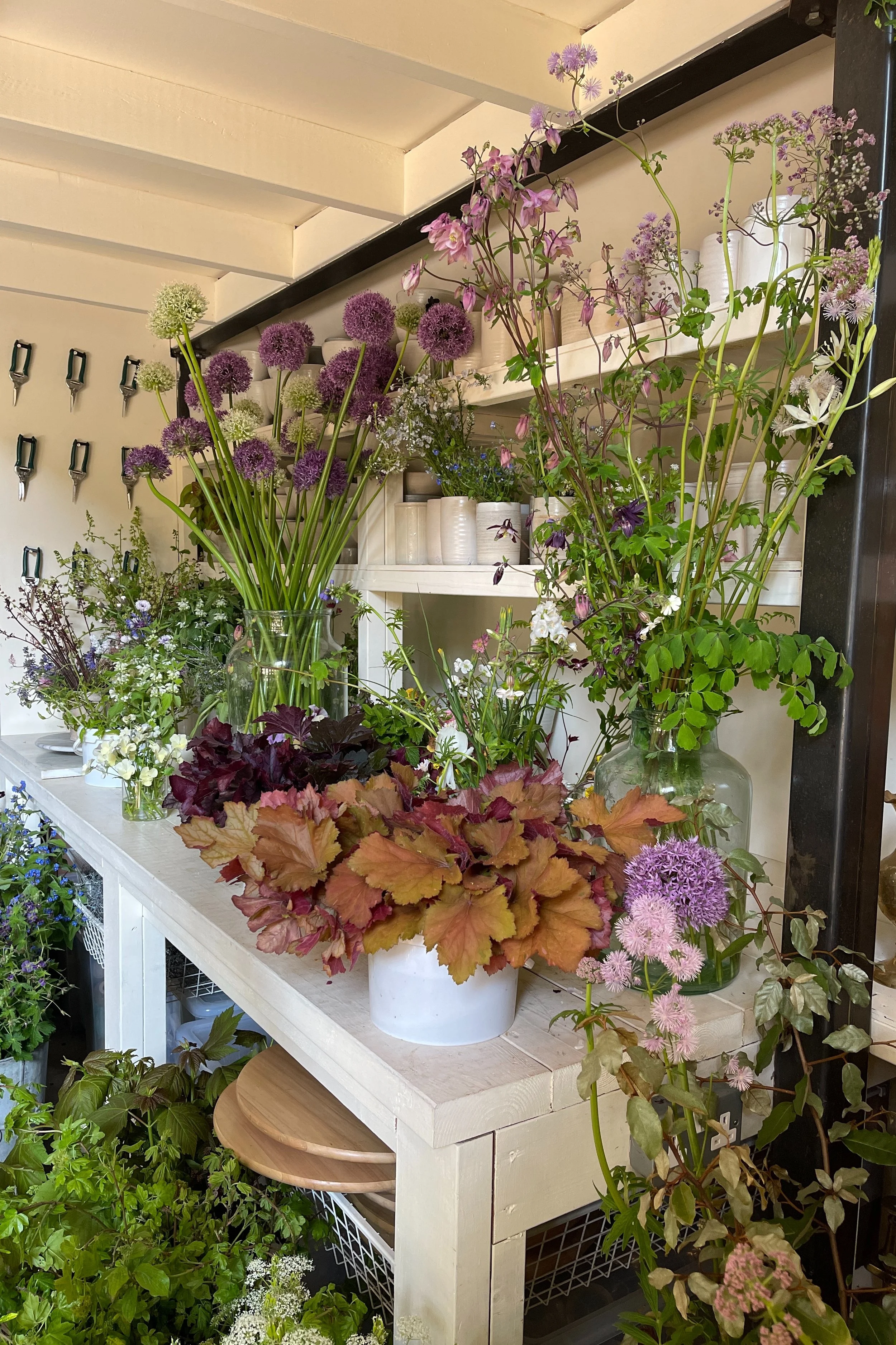
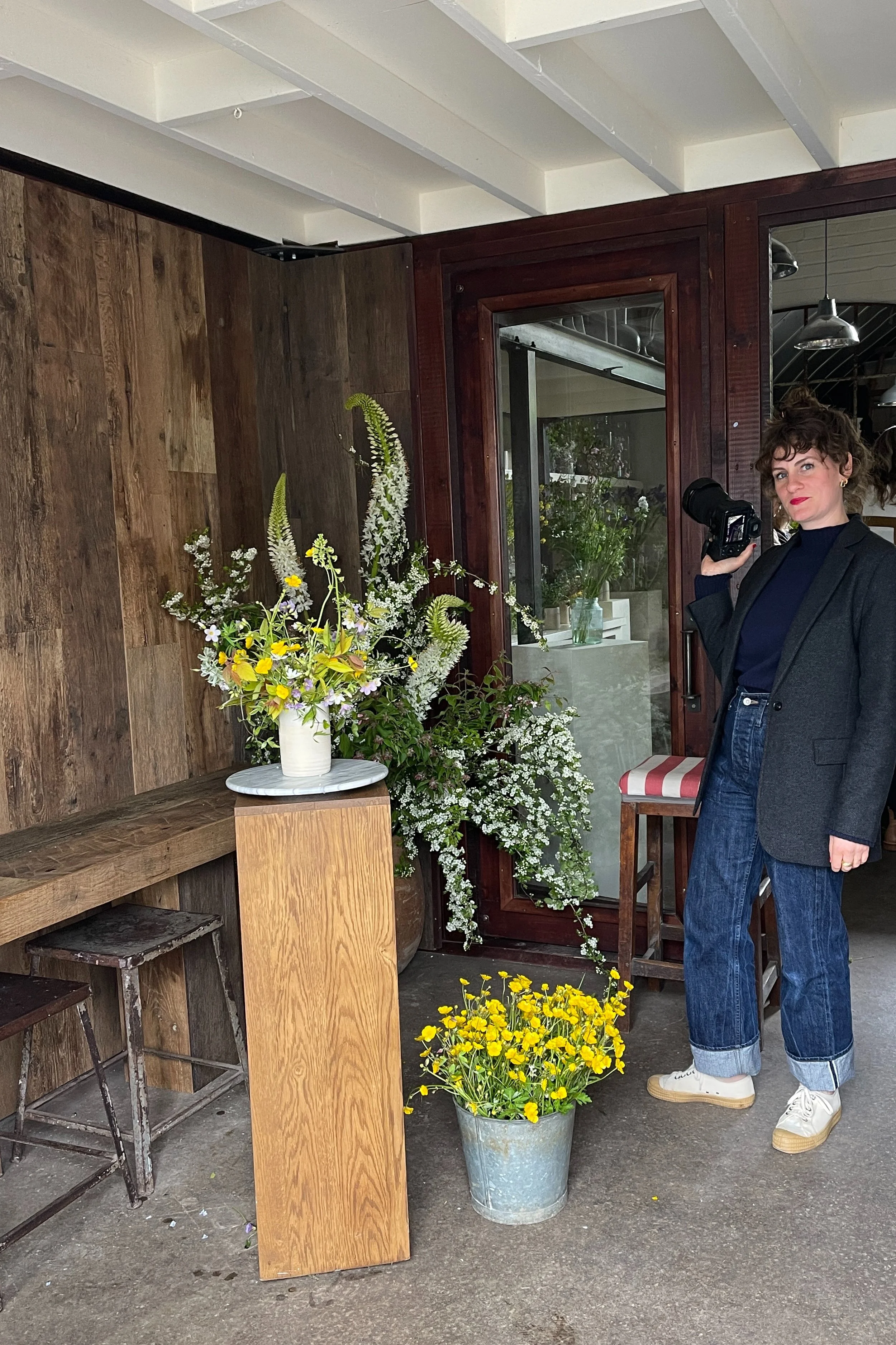
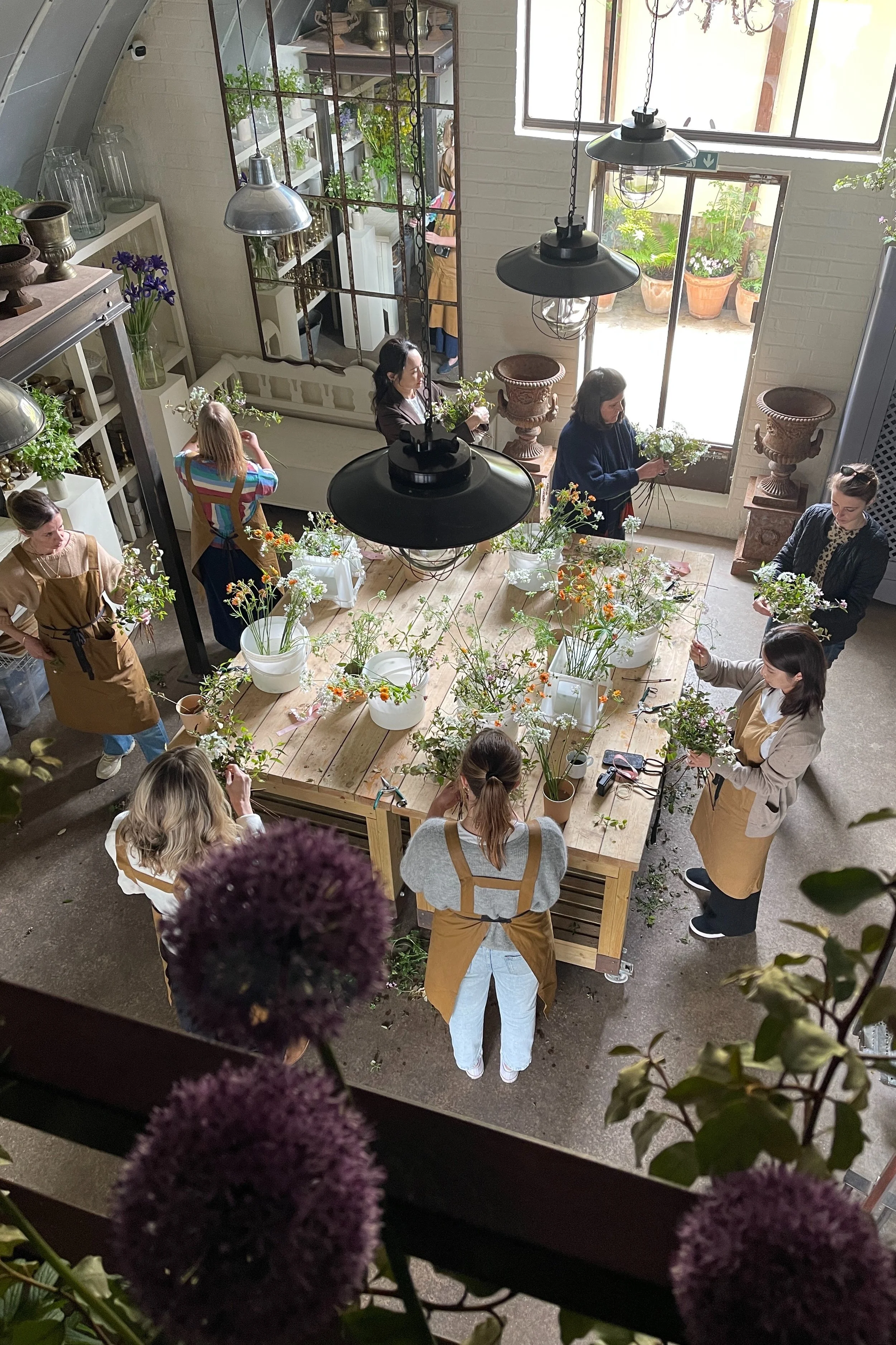
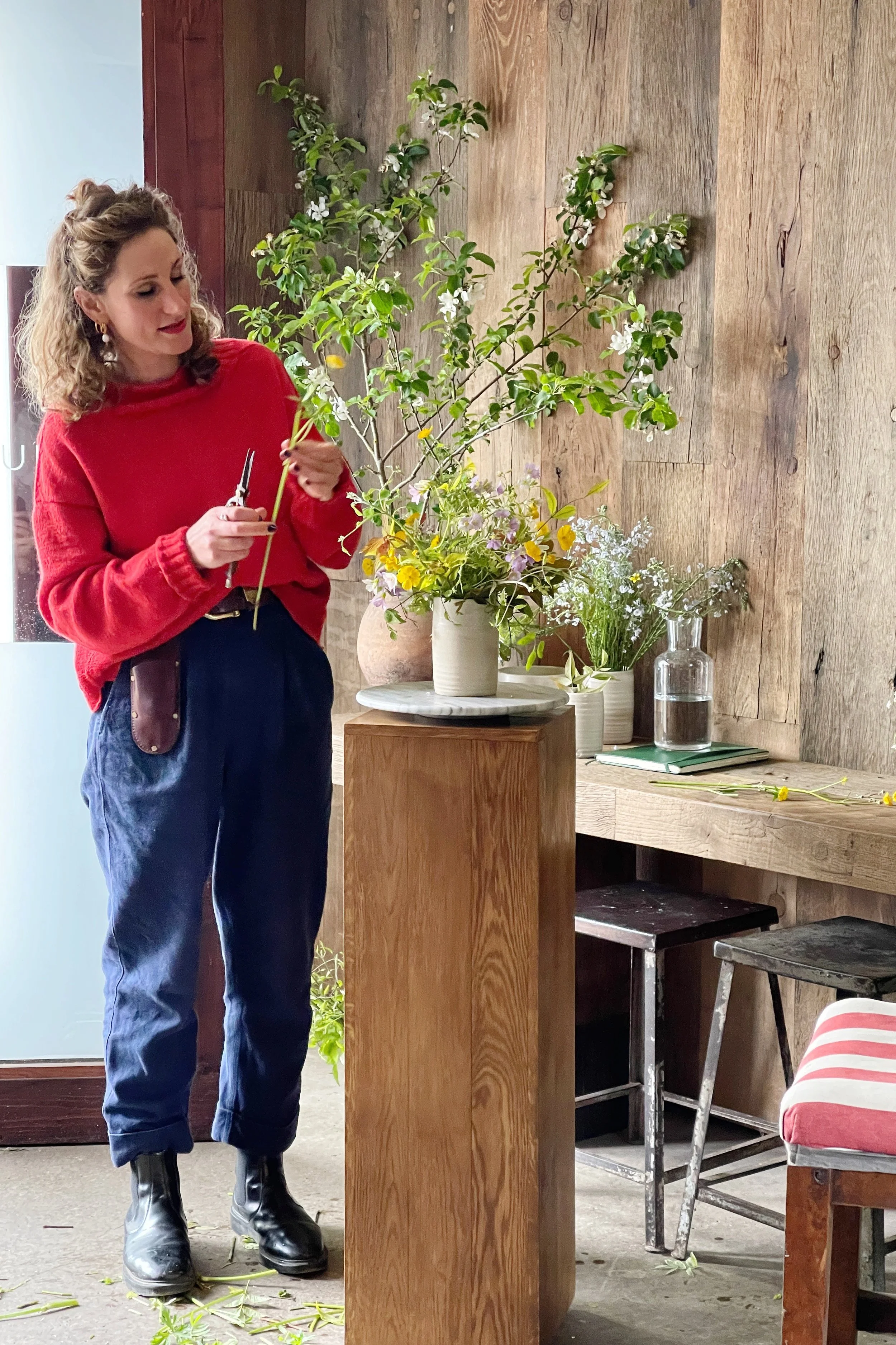
The month of May is all about the little speckly, freckly details and this workshop was a chance to really delve into that. It isn’t a month for large, showy flowers and instead the dainty and delicate come to the fore. In the garden we call this the ‘May Gap’, in between the tulips and just before the peonies, roses and iris. Every workshop we host is highly seasonal, using what is readily available naturally and locally - from our own garden and the immediate fields surrounding it. We don’t want to think of this in a ‘theme-y’ way but rather as a chance to focus upon that particular moment in that particular year. Every week is different, the weather, the ingredients.
Our May workshop was an opportunity to celebrate the exquisite details the garden and hedgerows were offering us and we had some incredible varieties to tuck into - Spiraea, Ornithagalum, Polemonium, Thalictrum, Clematis, Alliums, Geranium, Aquilegia, Tellima, Valerian, Heuchera… too many to mention.
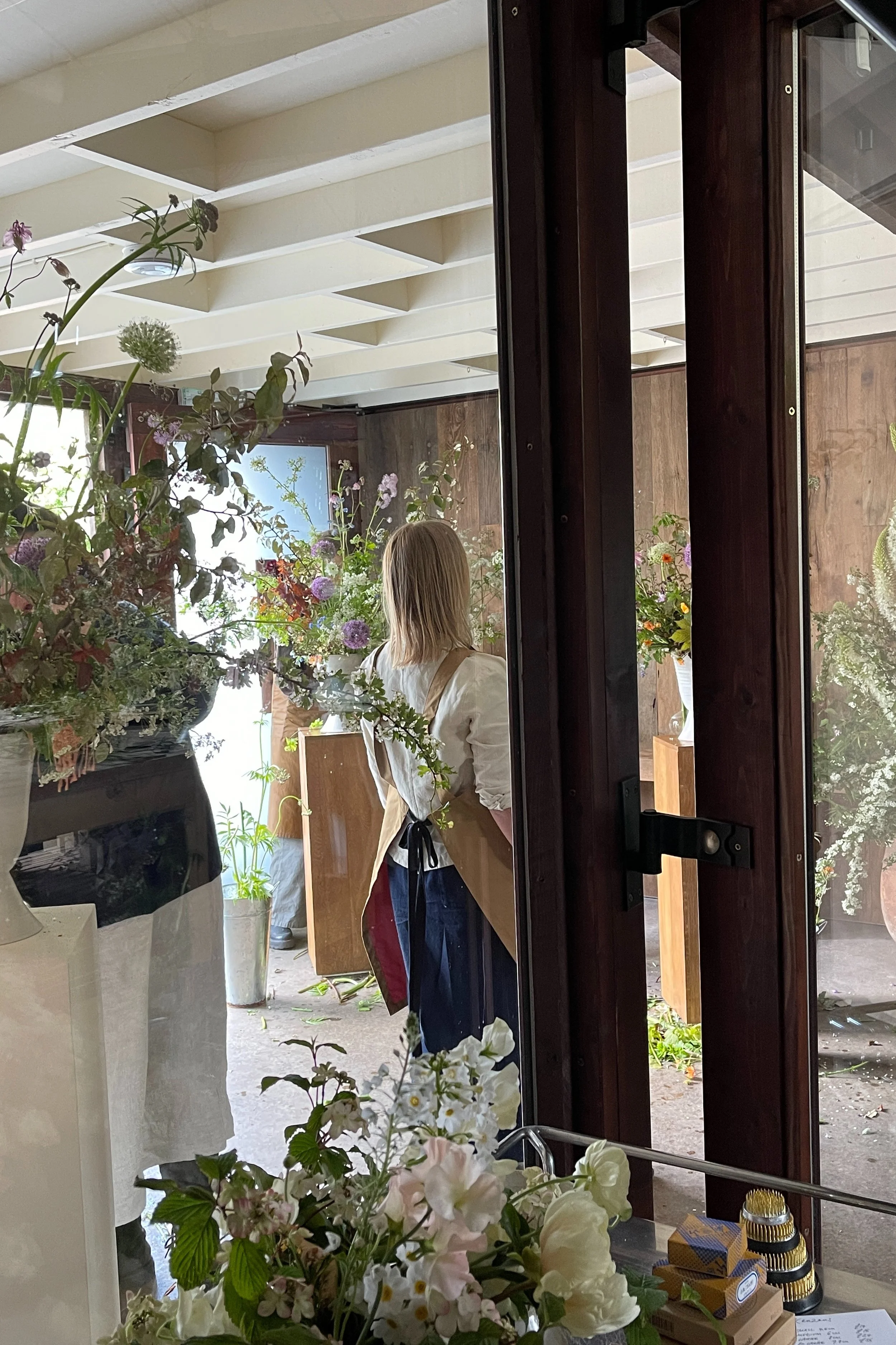

There were some notably show-stealing foraged ingredients among the arrangements too - glistening buttercups, herb Robert, hawthorn, green alkanet, comfrey, dead nettle, speedwell.
One of the best things about this time of the year, matched only by autumn in the colour stakes, is the spring foliage and that was something we had a lot of fun with in choosing the materials for the workshop. For the urn arrangements we mixed the metallic bronze leaves of Physocarpus and the matt silver of Eleagnus in among the greenery and blossom which gave a particularly ethereal, shimmery look to the designs.
Thank you so much to all our wonderful guests and helpers who made this workshop a very special one.
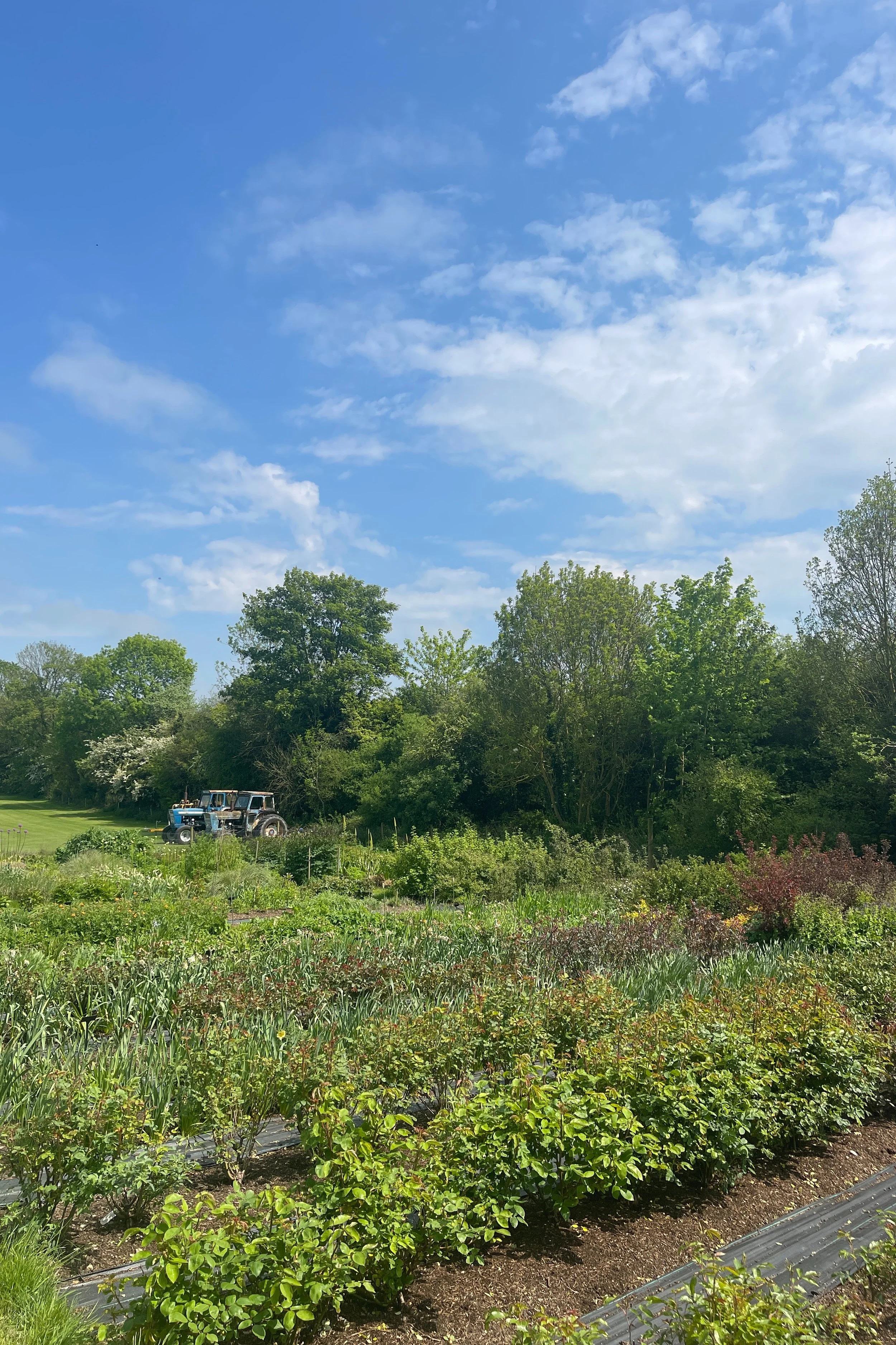
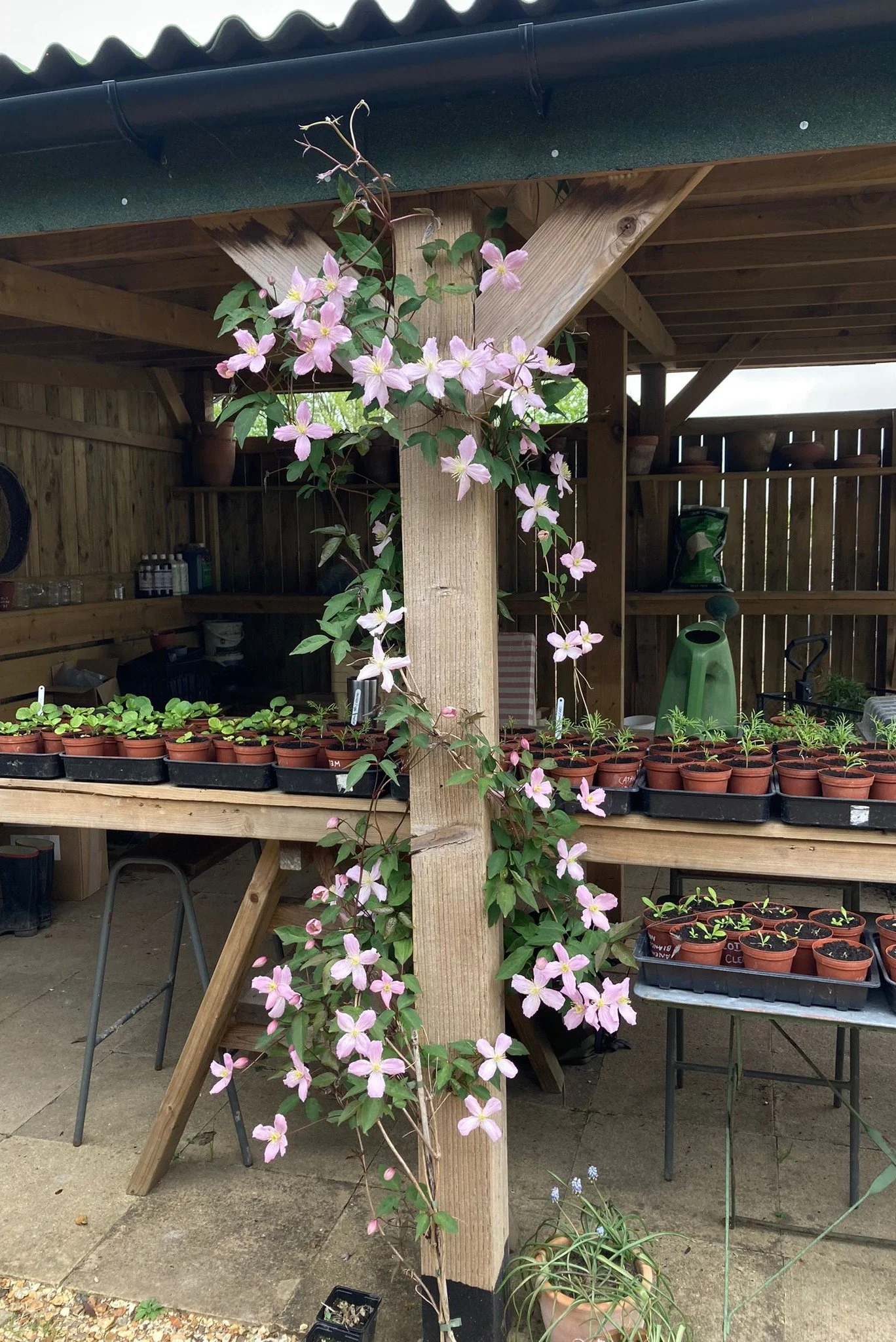
Well after all that rain the garden was just waiting for a little sun to explode into flower and colour! And it does feel explosive - so much growth in so little time.
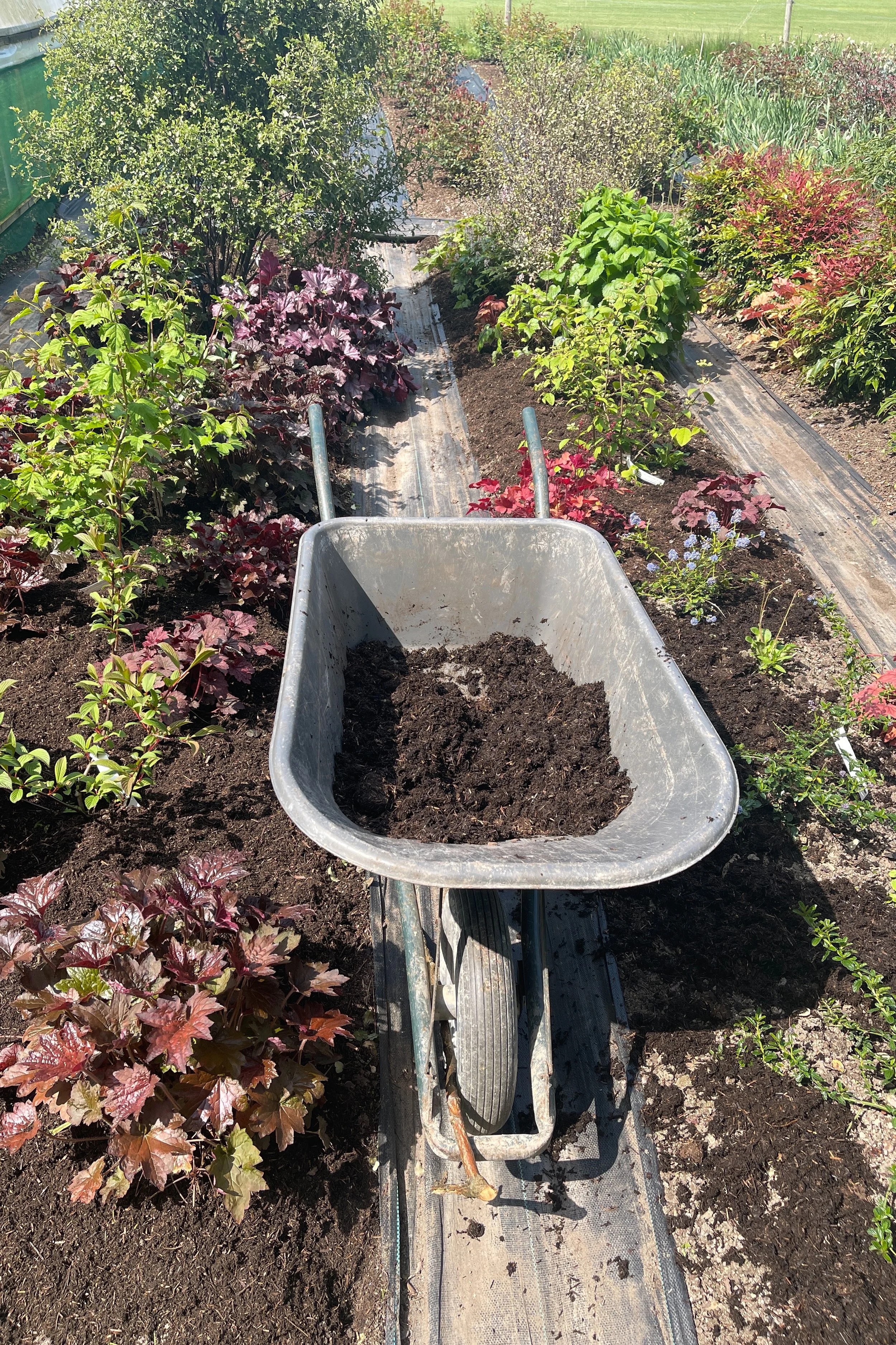
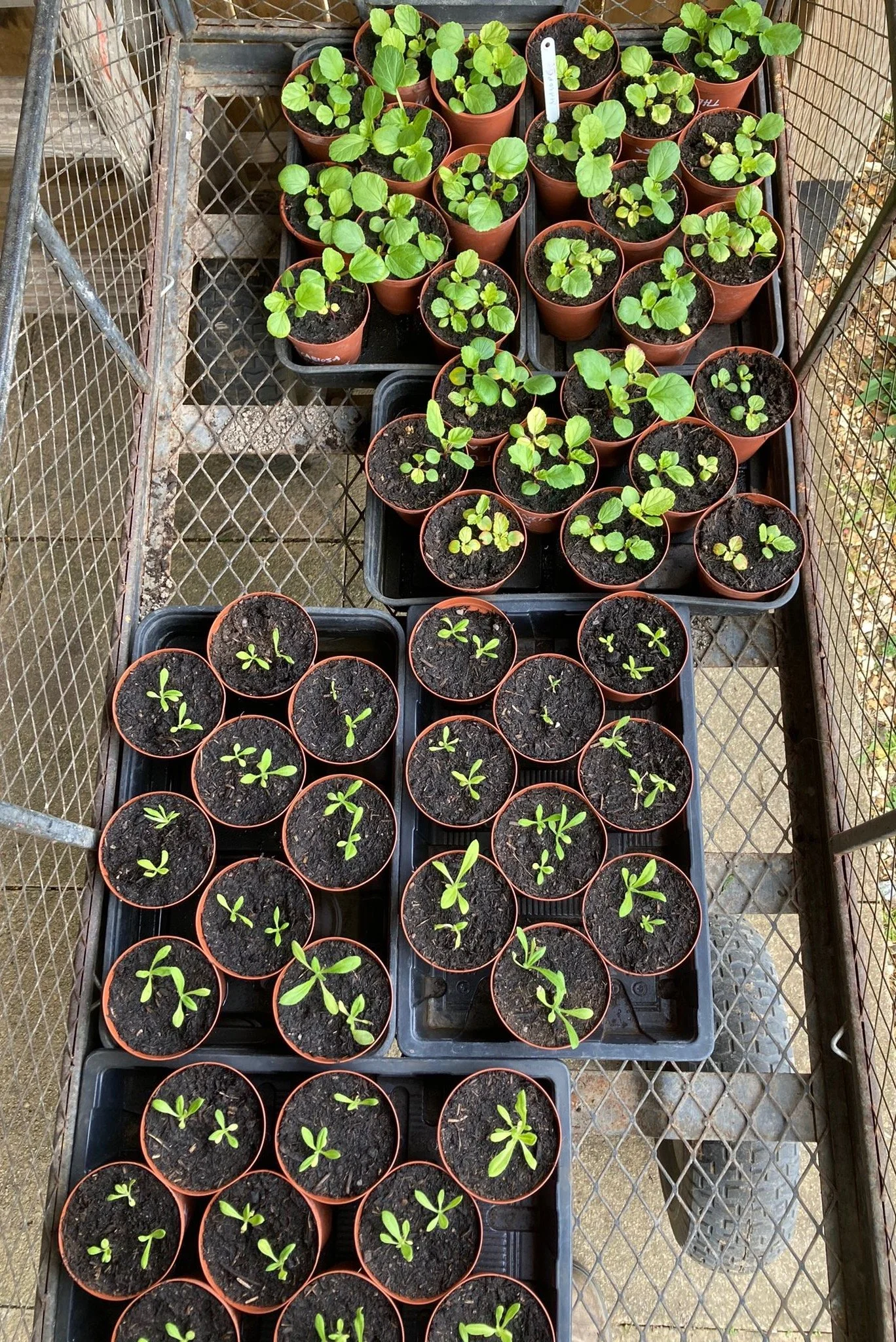
The interesting thing about May is that the beginning and the end of the month are so very different in terms of character, it really is spring reaching the ‘cusp’ of summer and just tipping over into it.
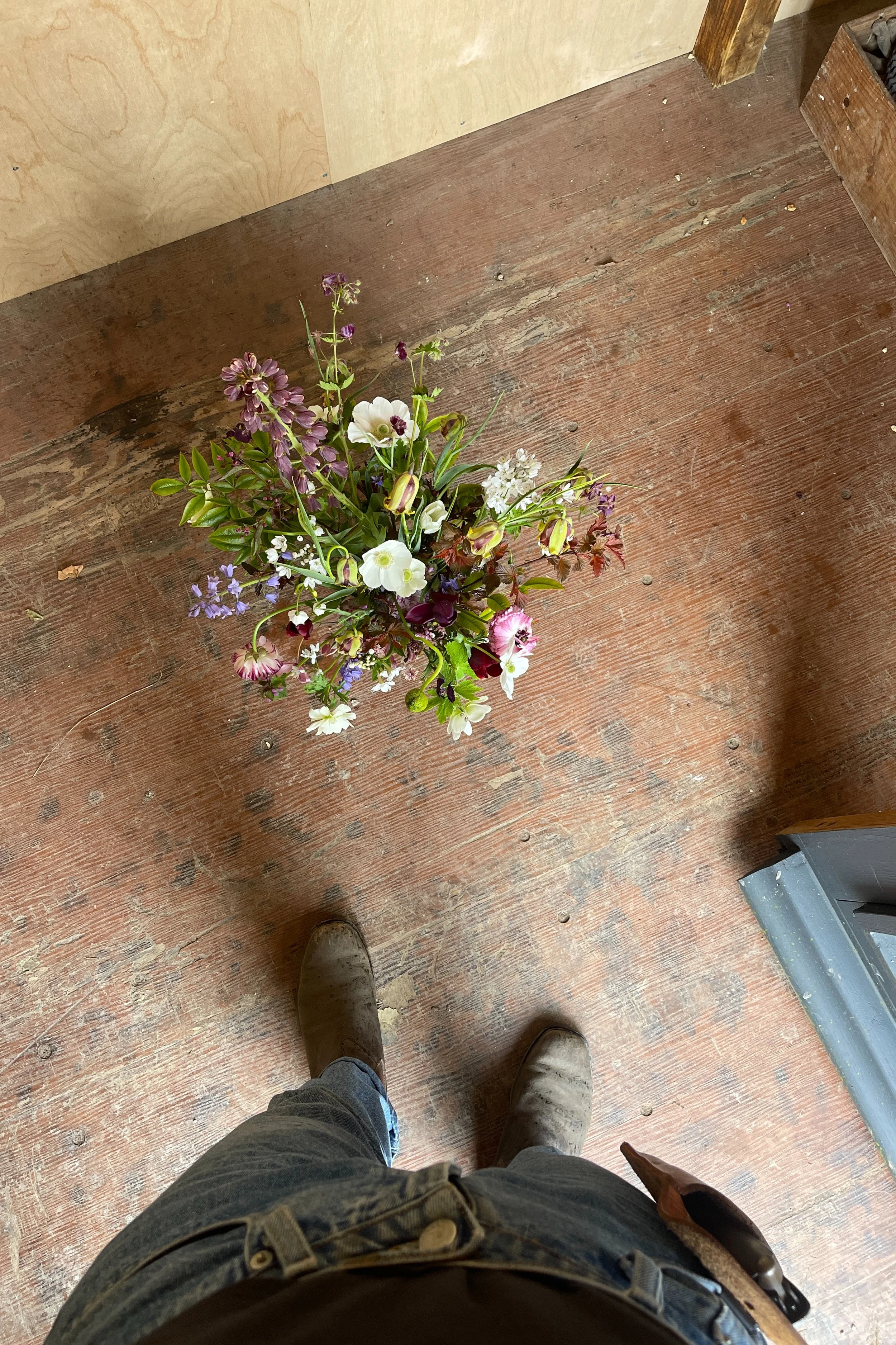
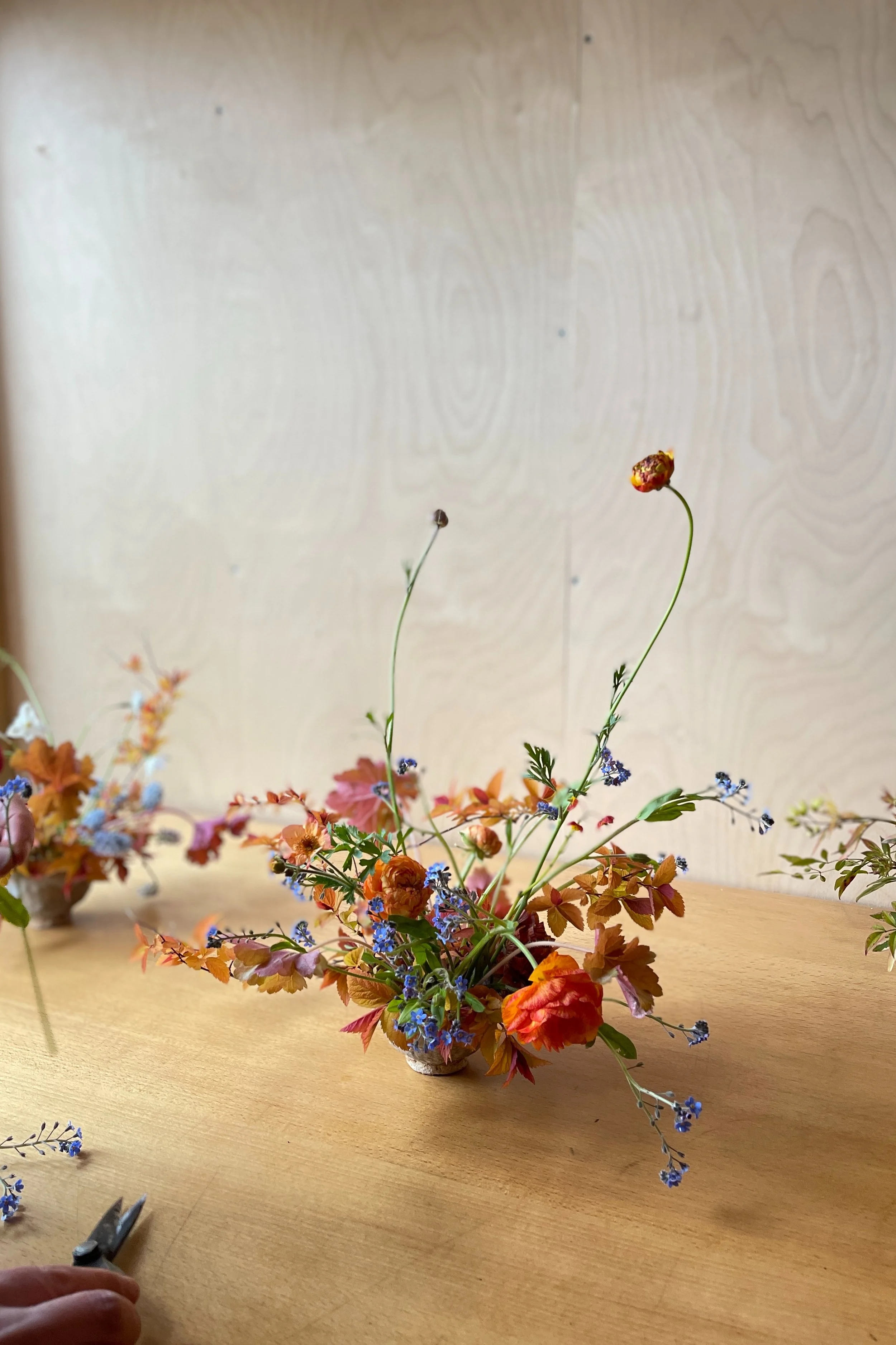
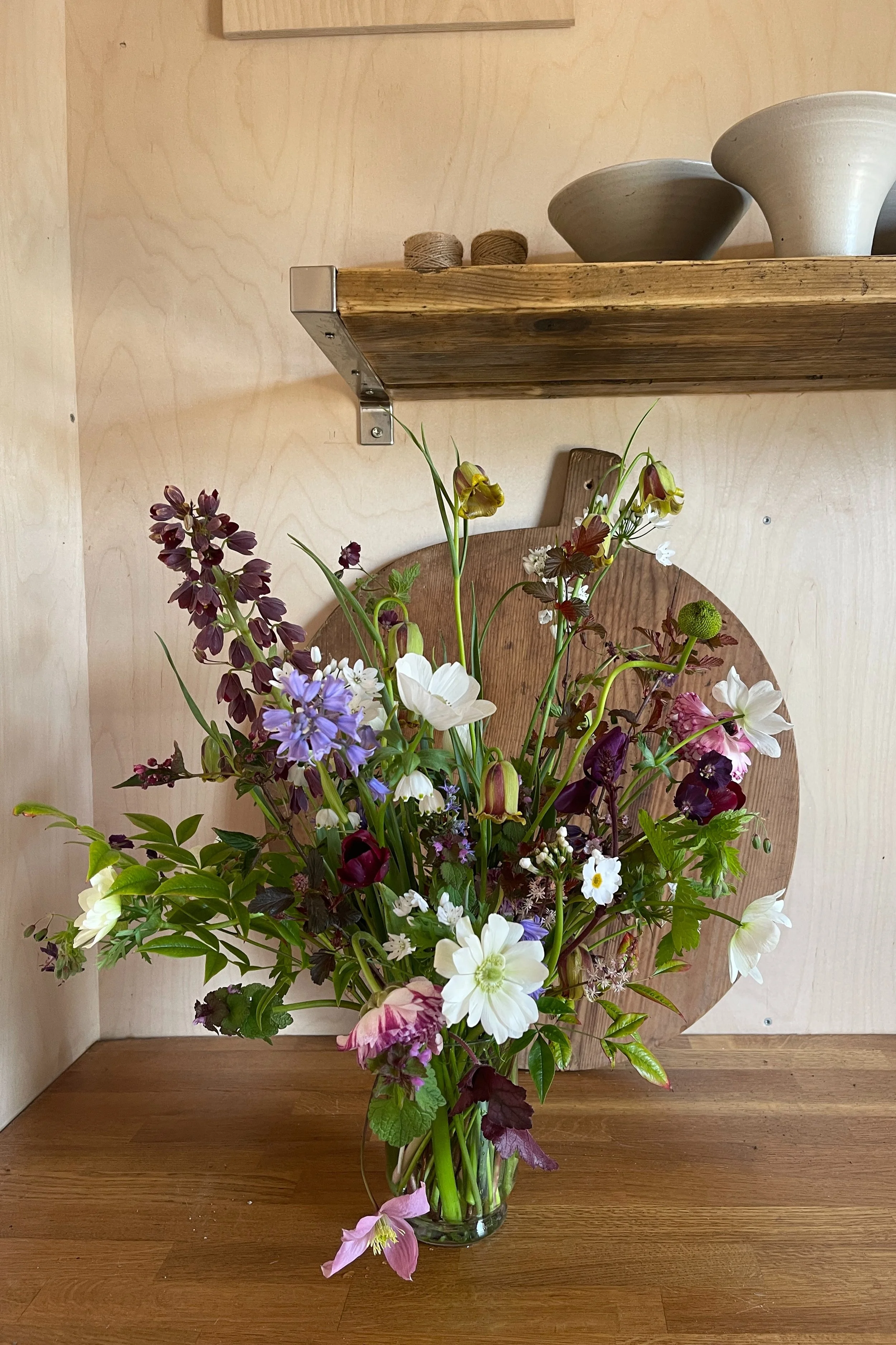
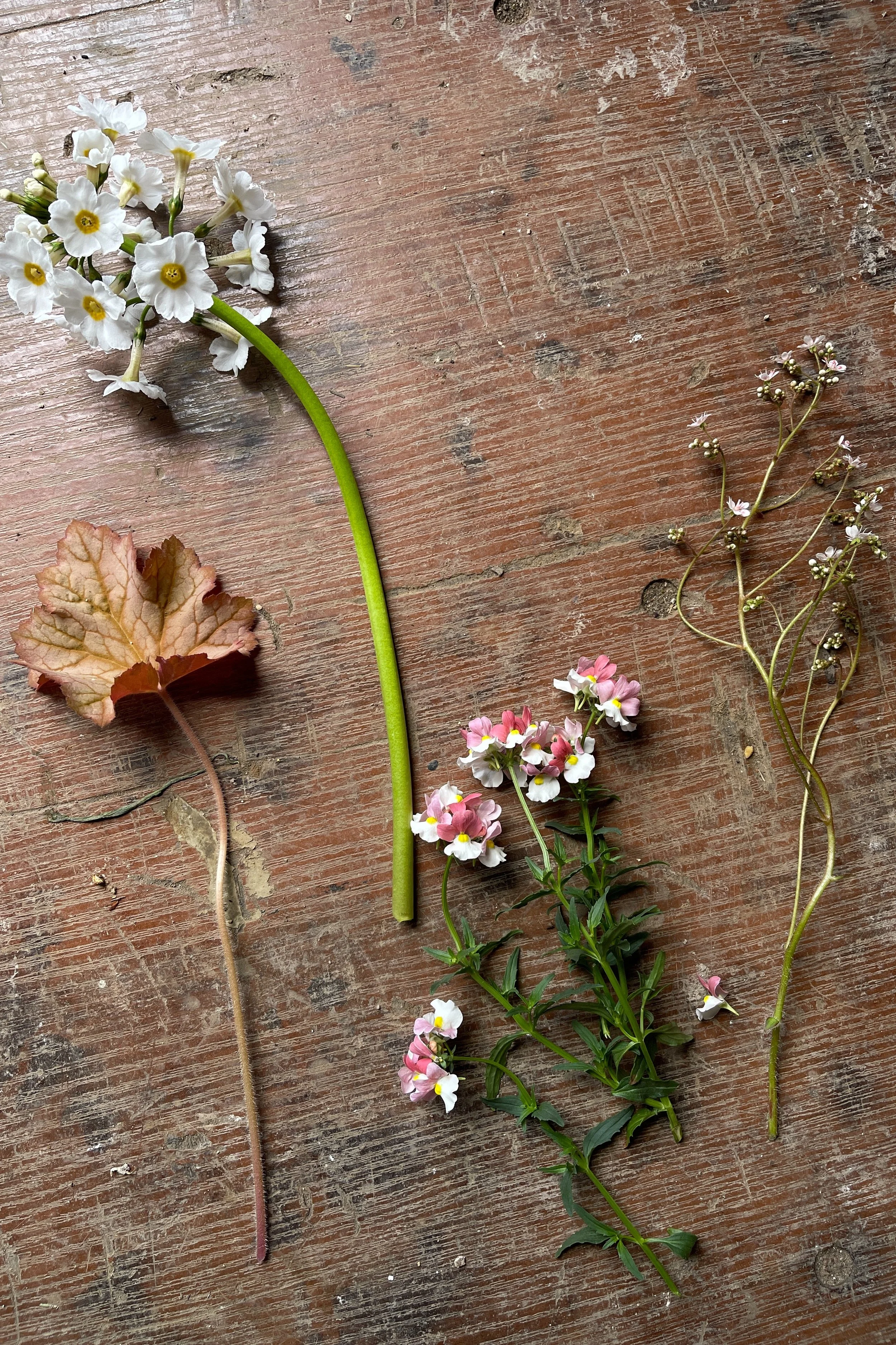
Early May there are all the Fritillaria, Scilla, Primula, the last of the Narcissi and Anemone. Now we have the first roses, peonies, lilac, alliums both little and large, Iris, Camassia, Clematis, Tellima, Geum, Valerian, Polemonium, all the different varieties of Geranium. In the tunnels, the first sweet peas, Orlaya, Nigella and Agrostemma. The hedgerows around the field are white and frothy with hawthorn, apple blossom and cow parsley.
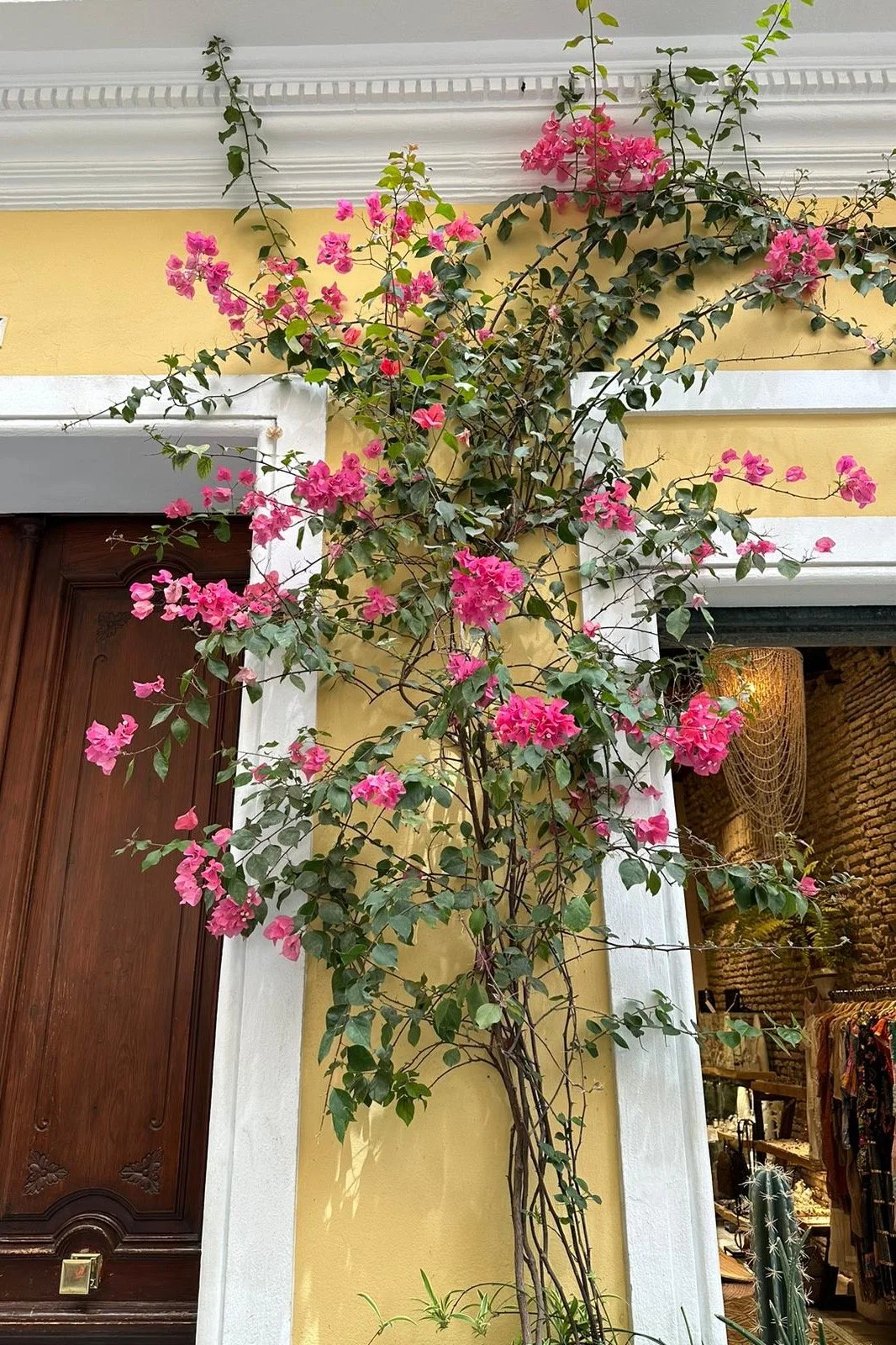
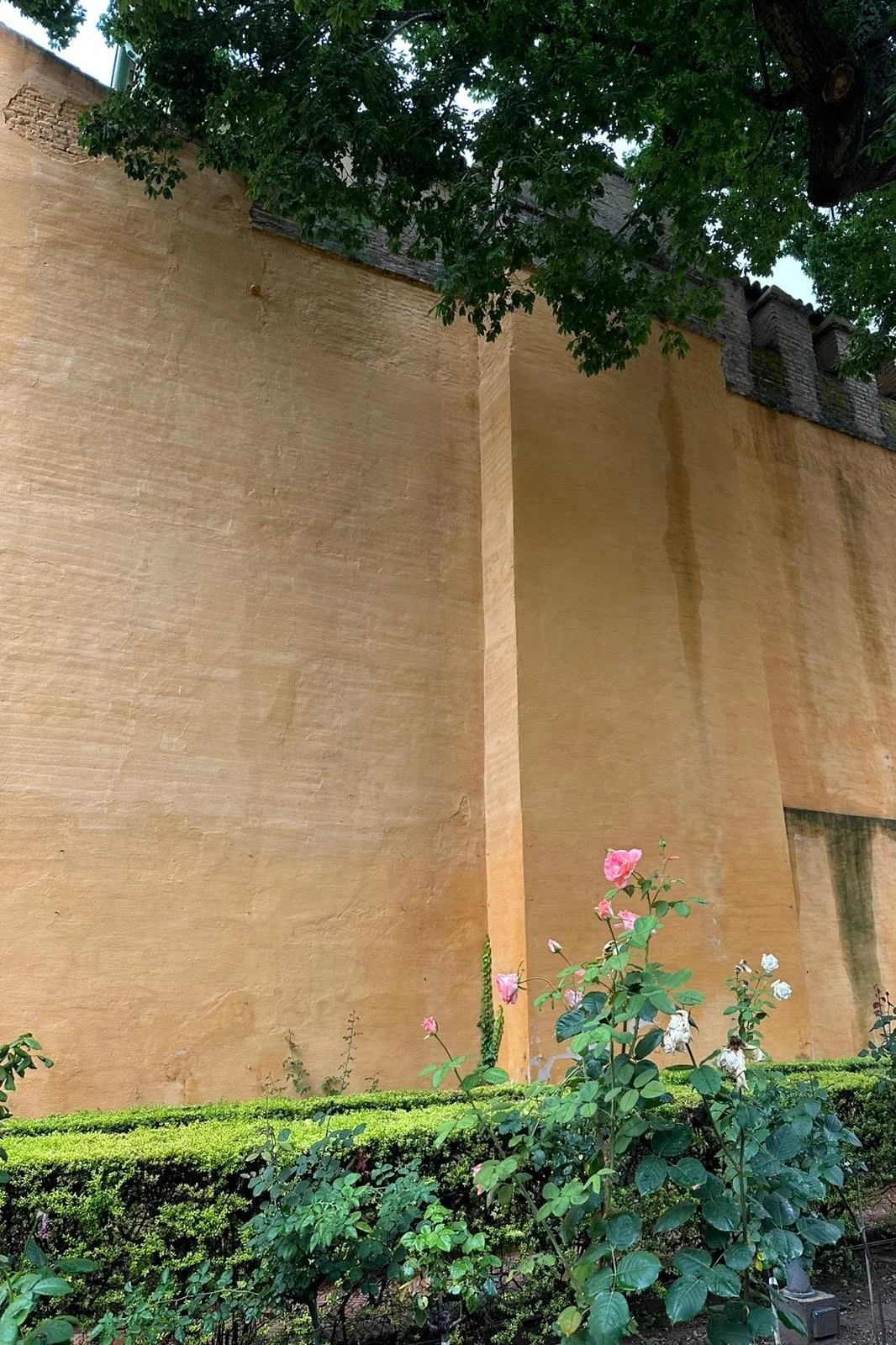
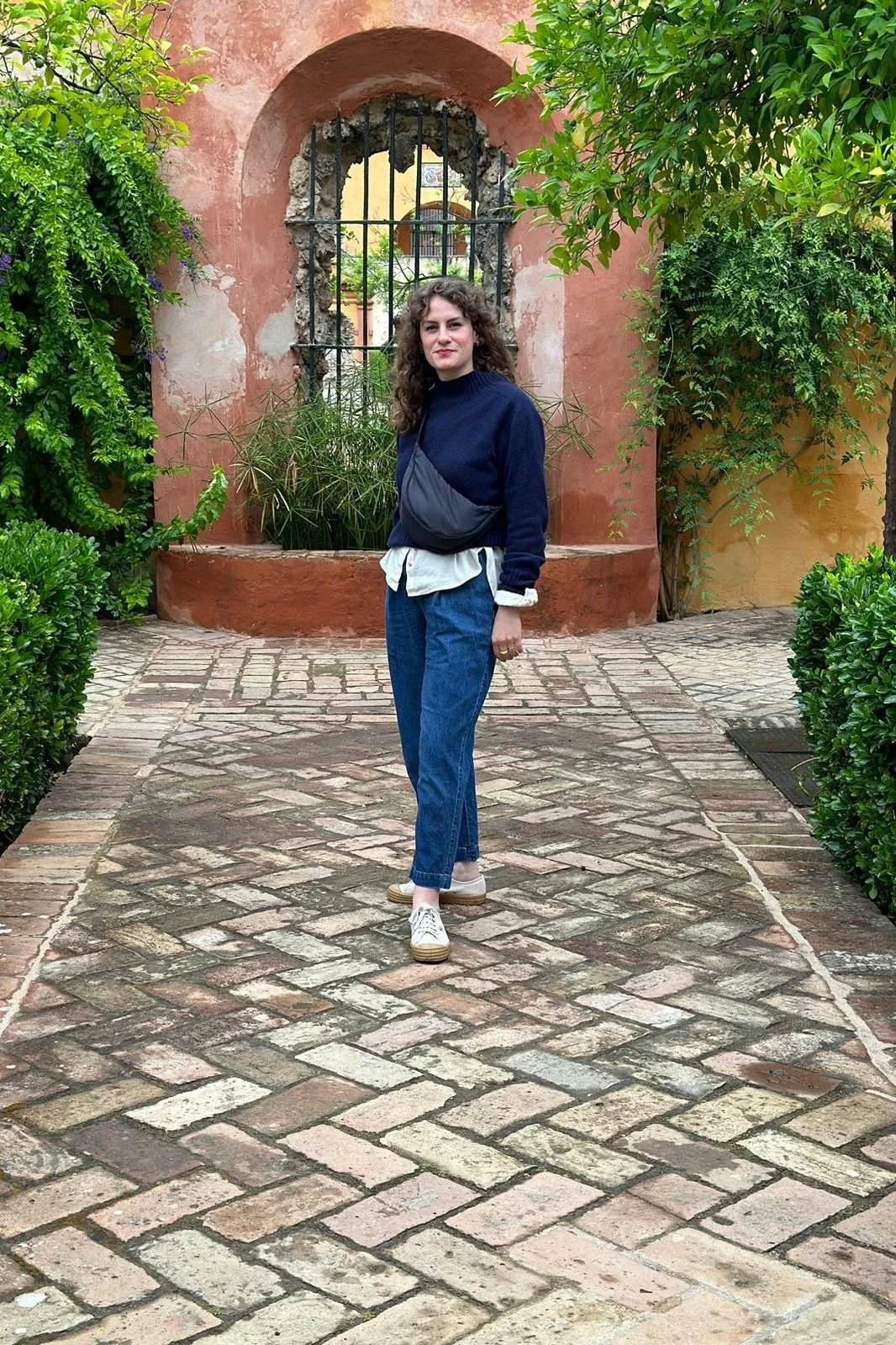
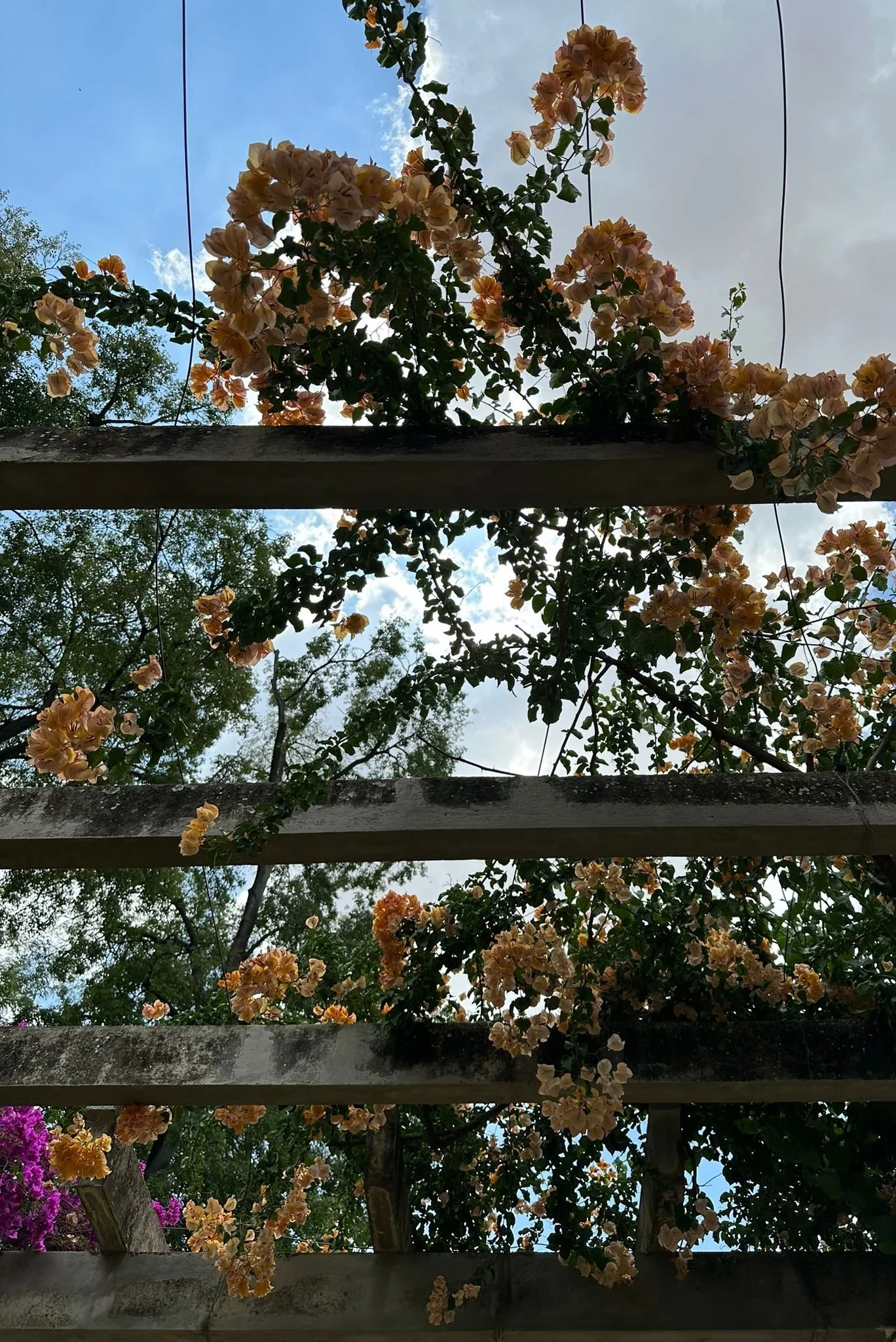
Jess spent last week in Seville, exploring the narrow, orange-tree lined streets, eating tapas, drinking wine and visiting the gardens of the Real Alcázar de Sevilla and the Parque de Maria Luisa which were, by all accounts, drenched in roses and Bougainvillea and very inspiring.
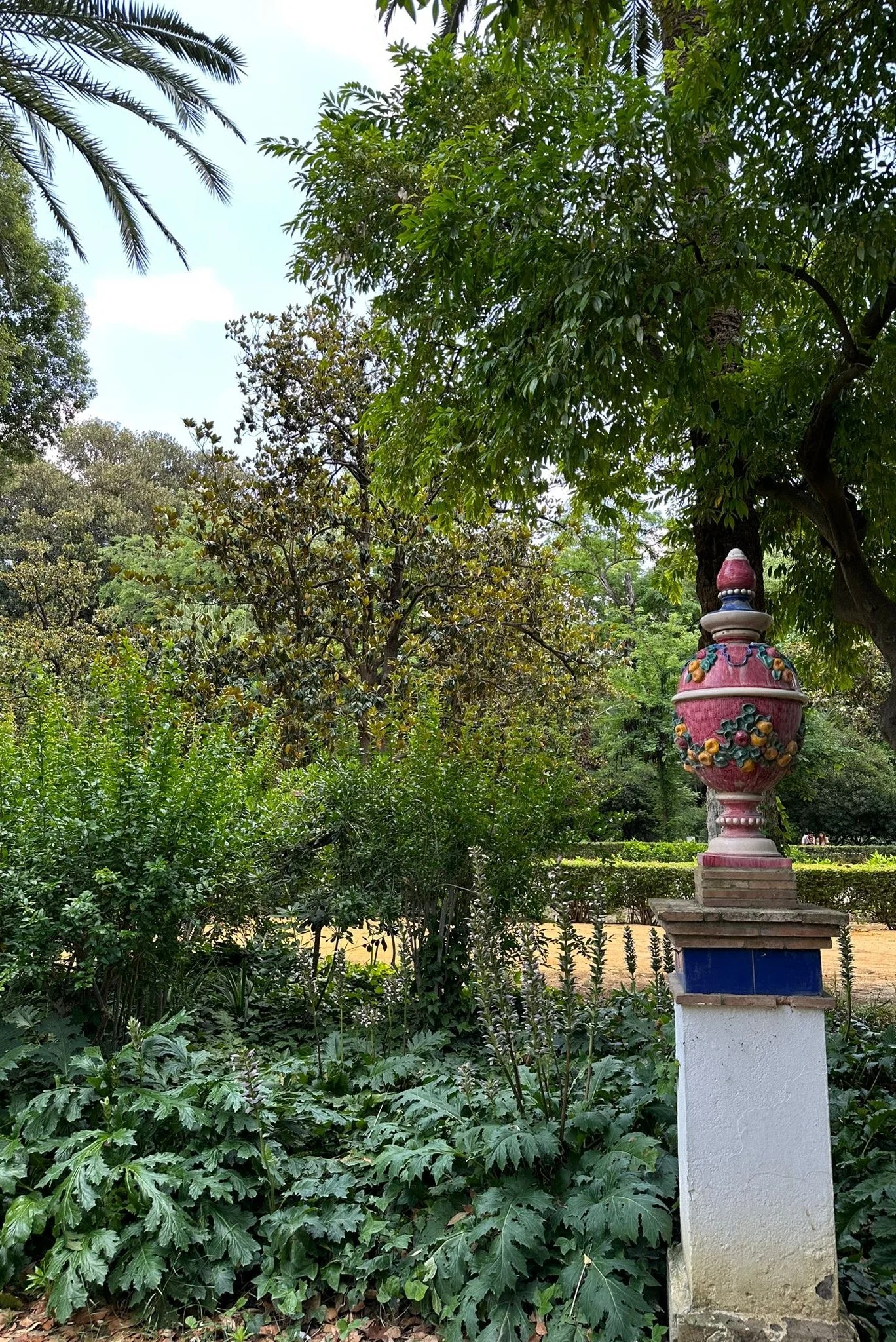
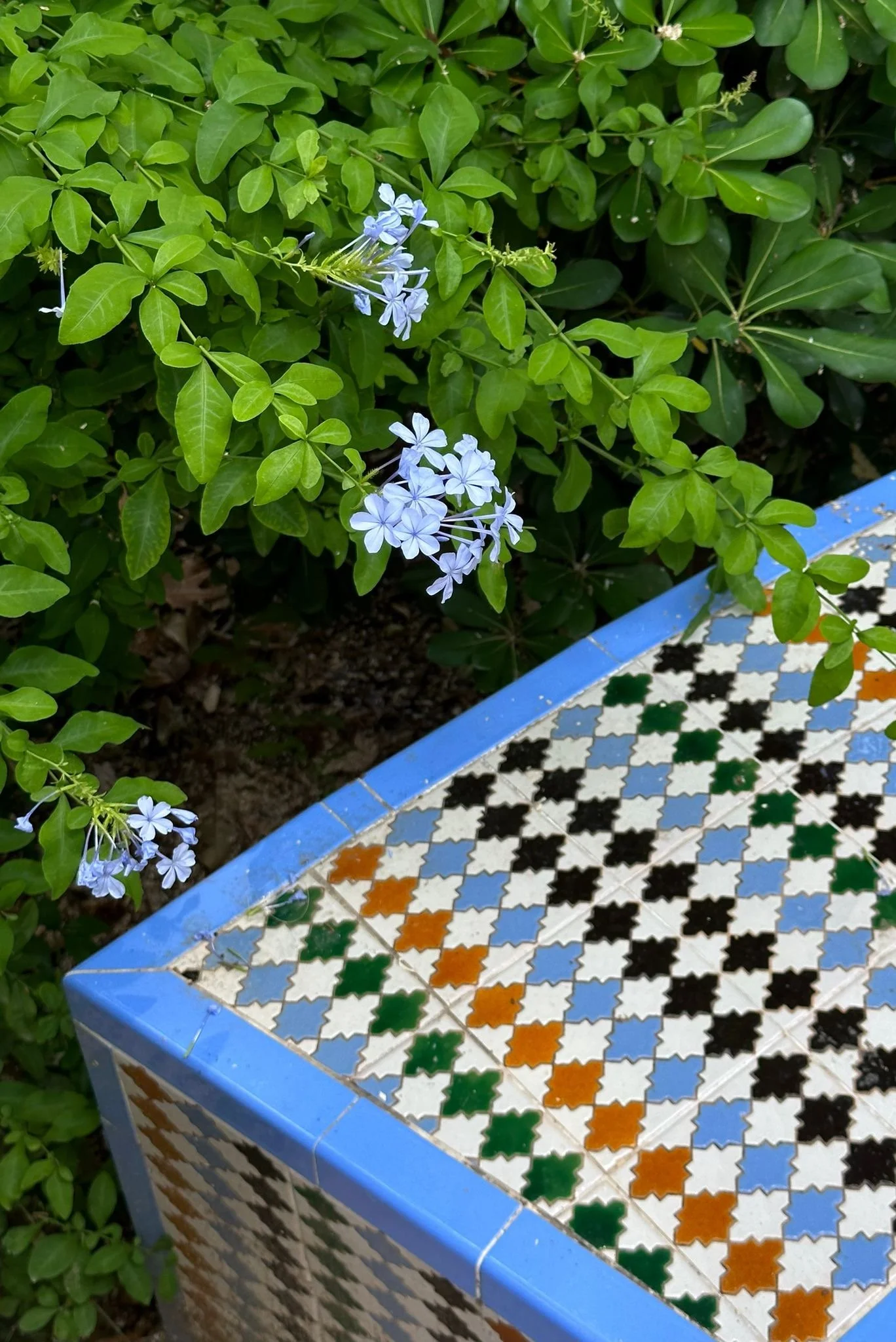
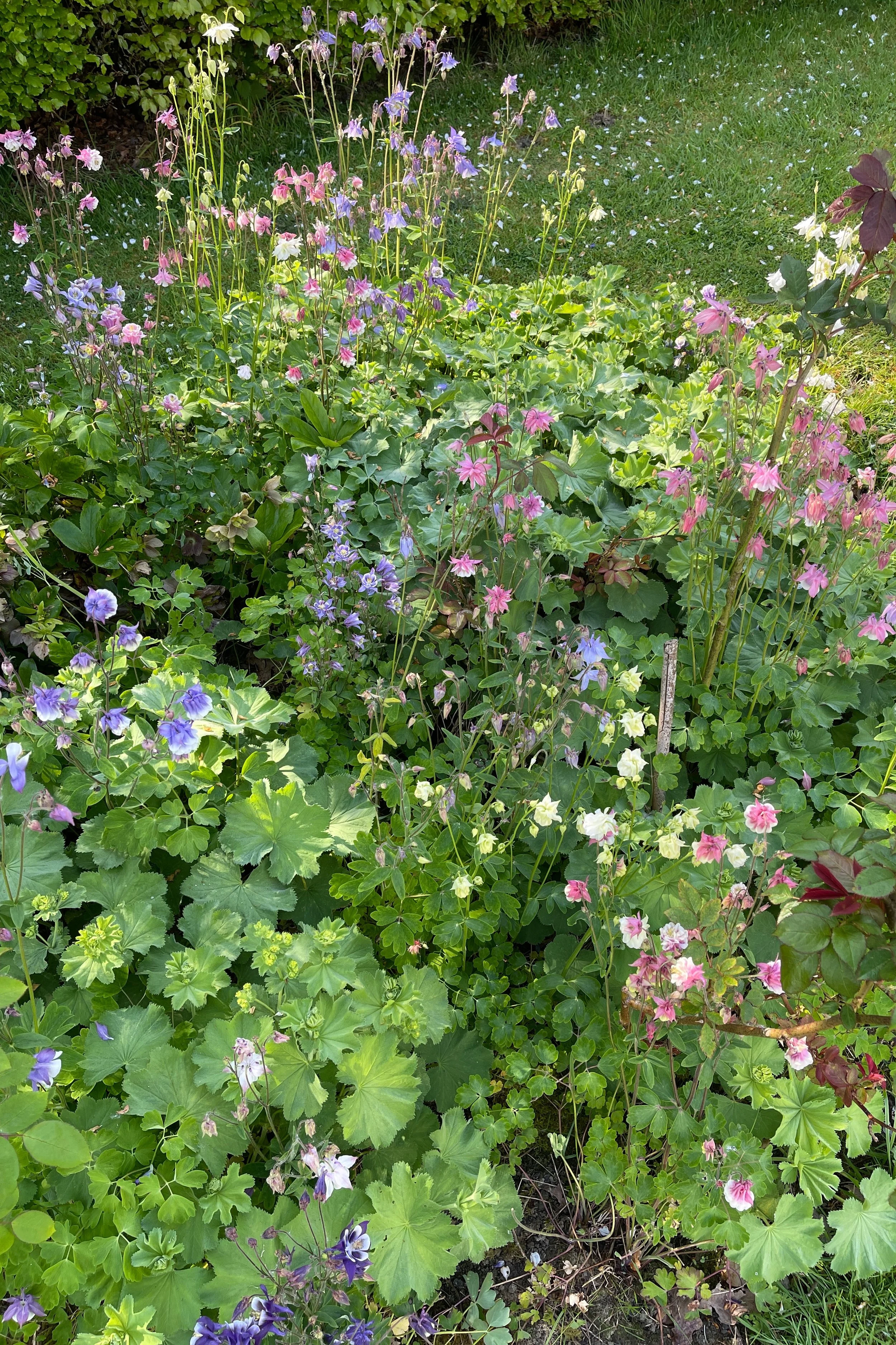
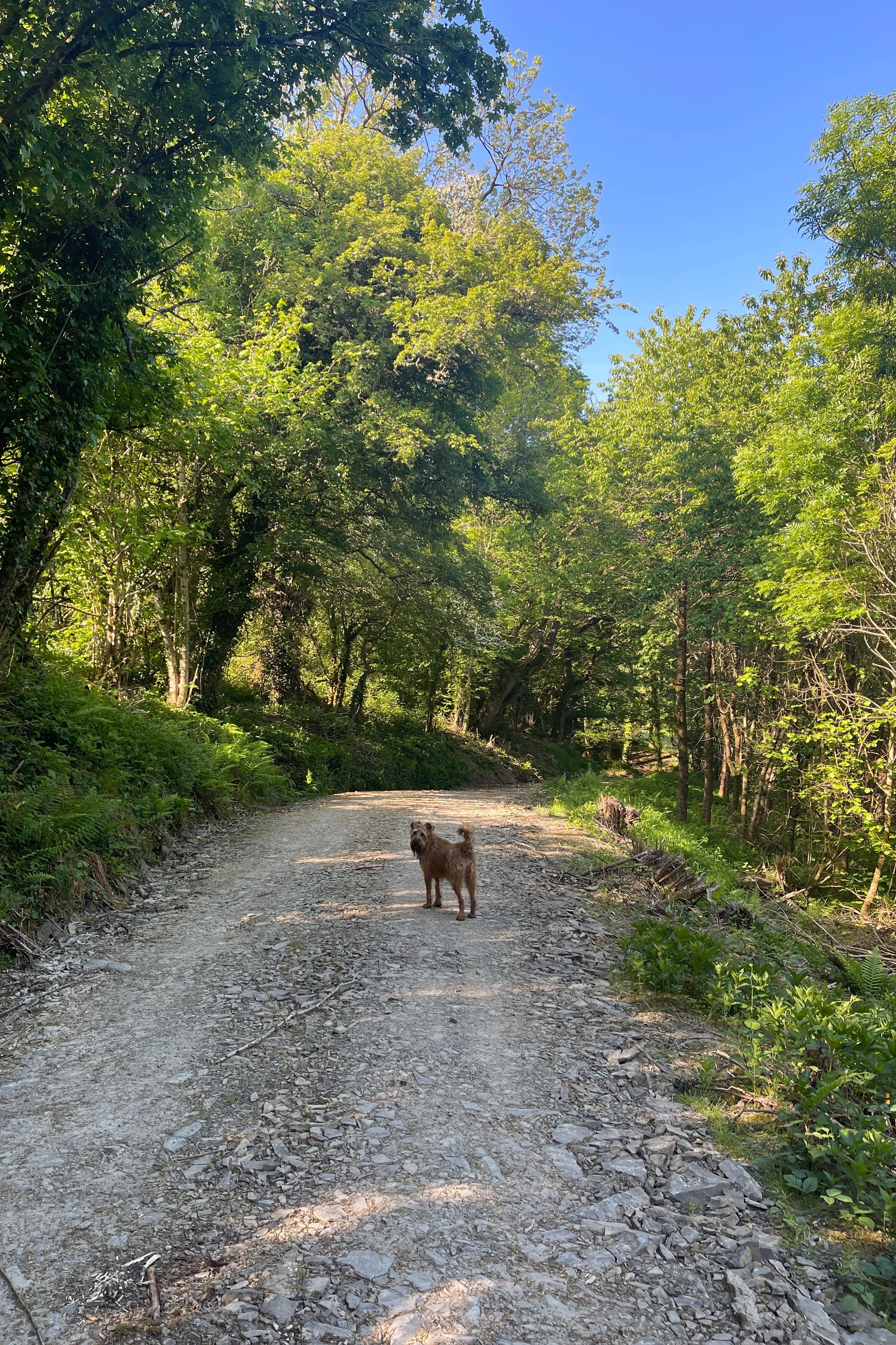
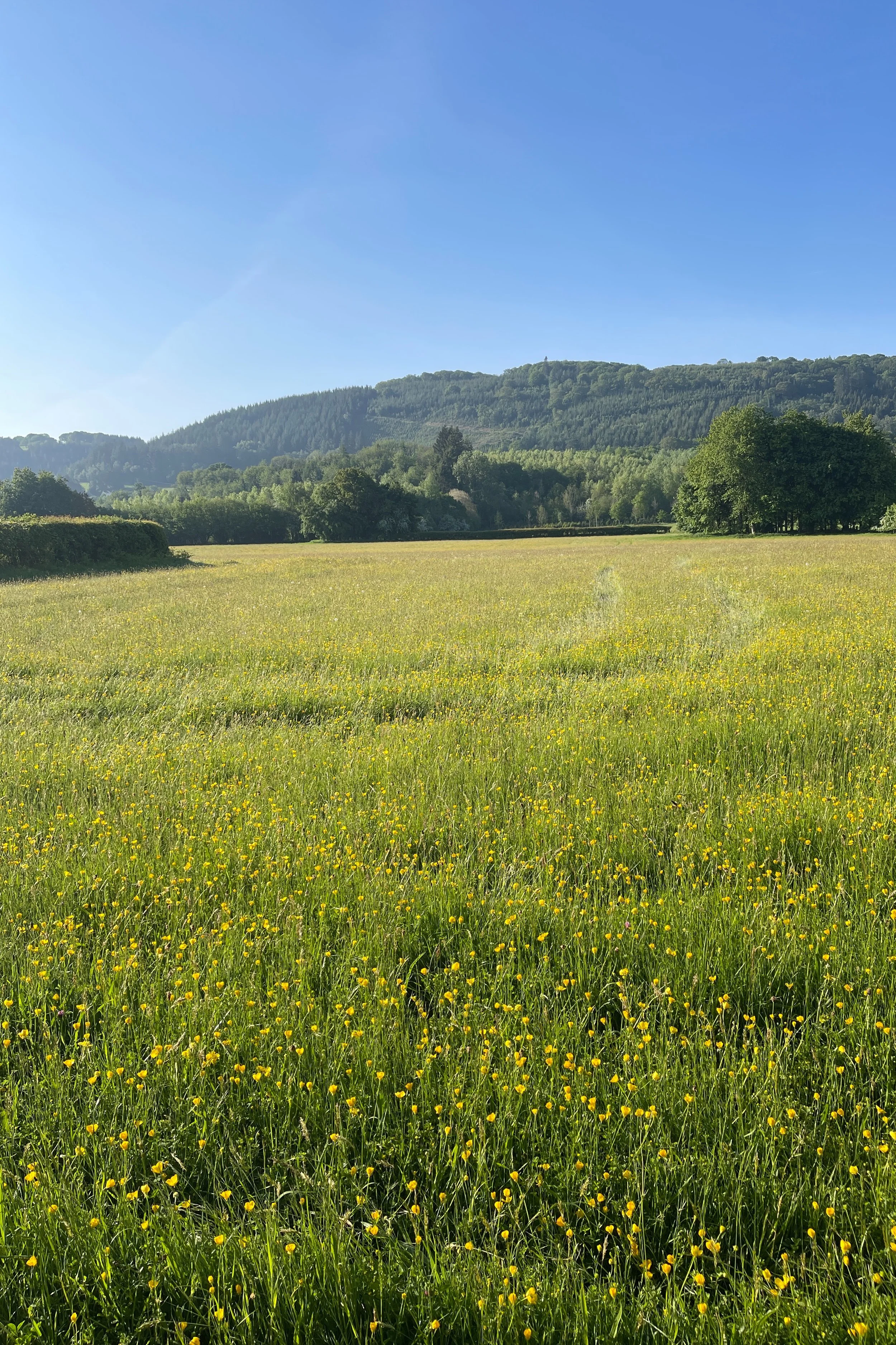
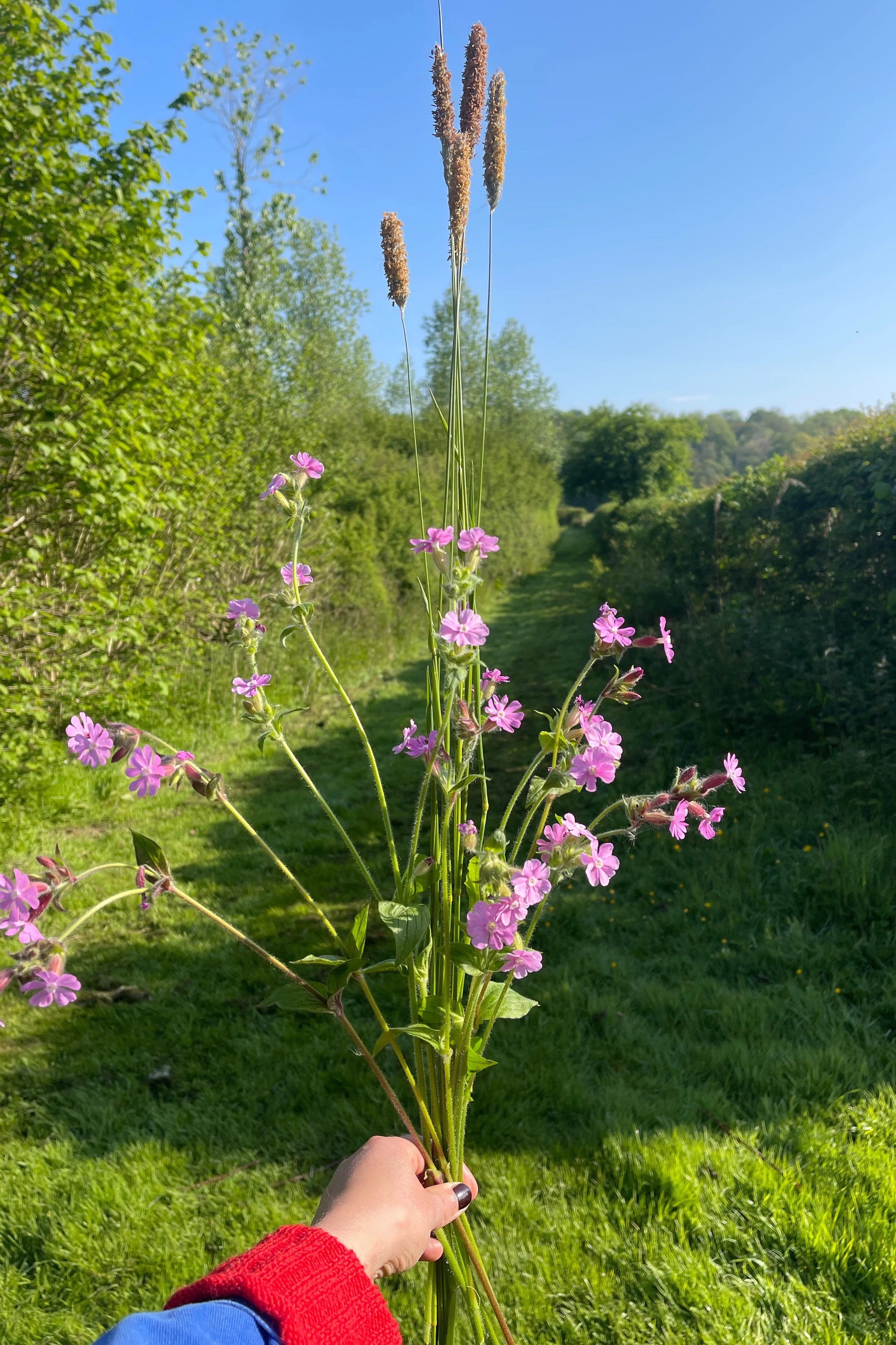
I spent the week in Wales where the weather was magical, the birdsong exuberant and the meadows awash with wild flowers. There was a lot of rambling through the woods and fields, eating outdoors, sun dappled naps and generally chasing after my son who has recently learned to walk and spent the whole week dashing alarmingly from hazard to hazard. I could do with a holiday actually, to recover.
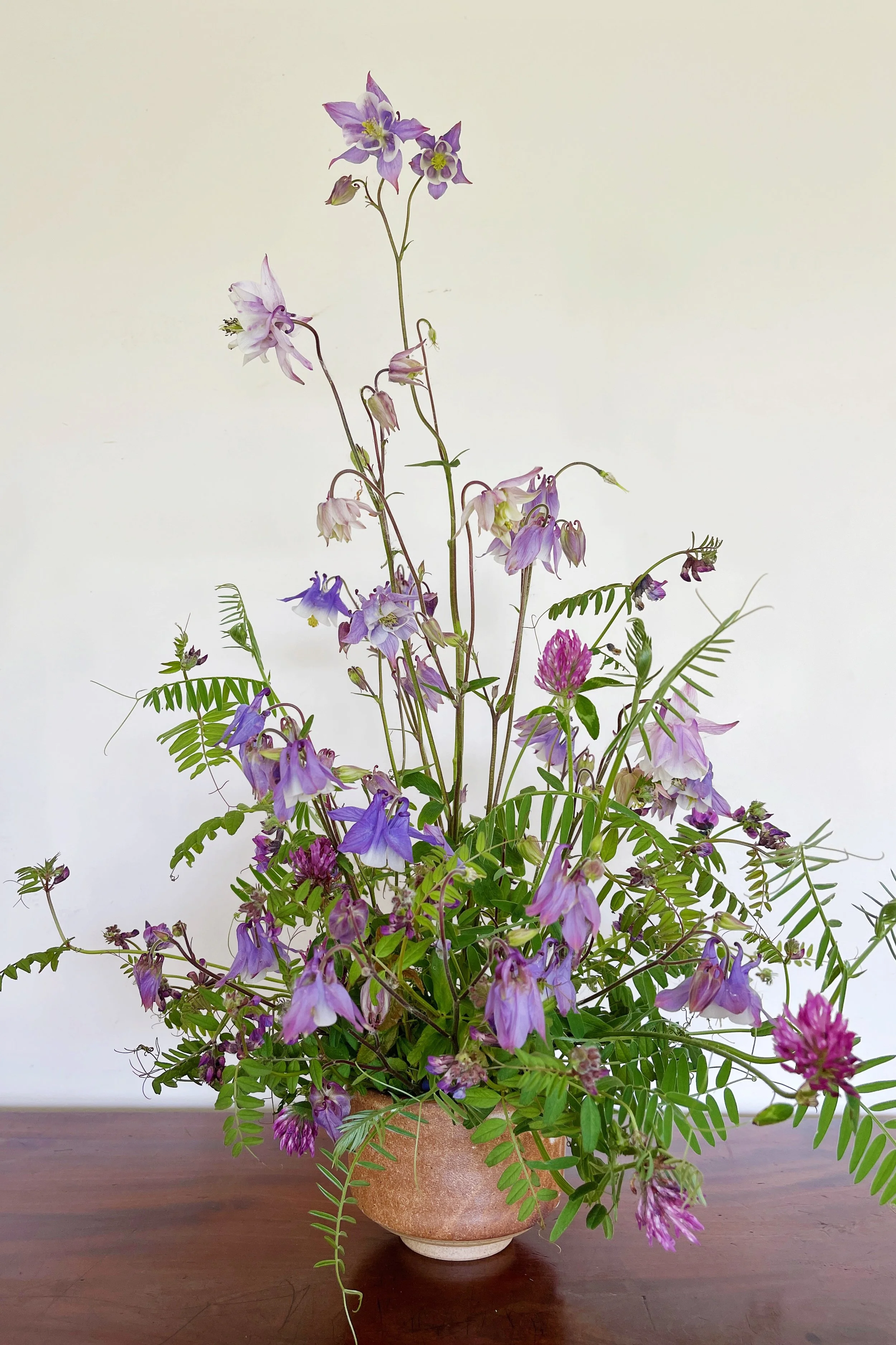
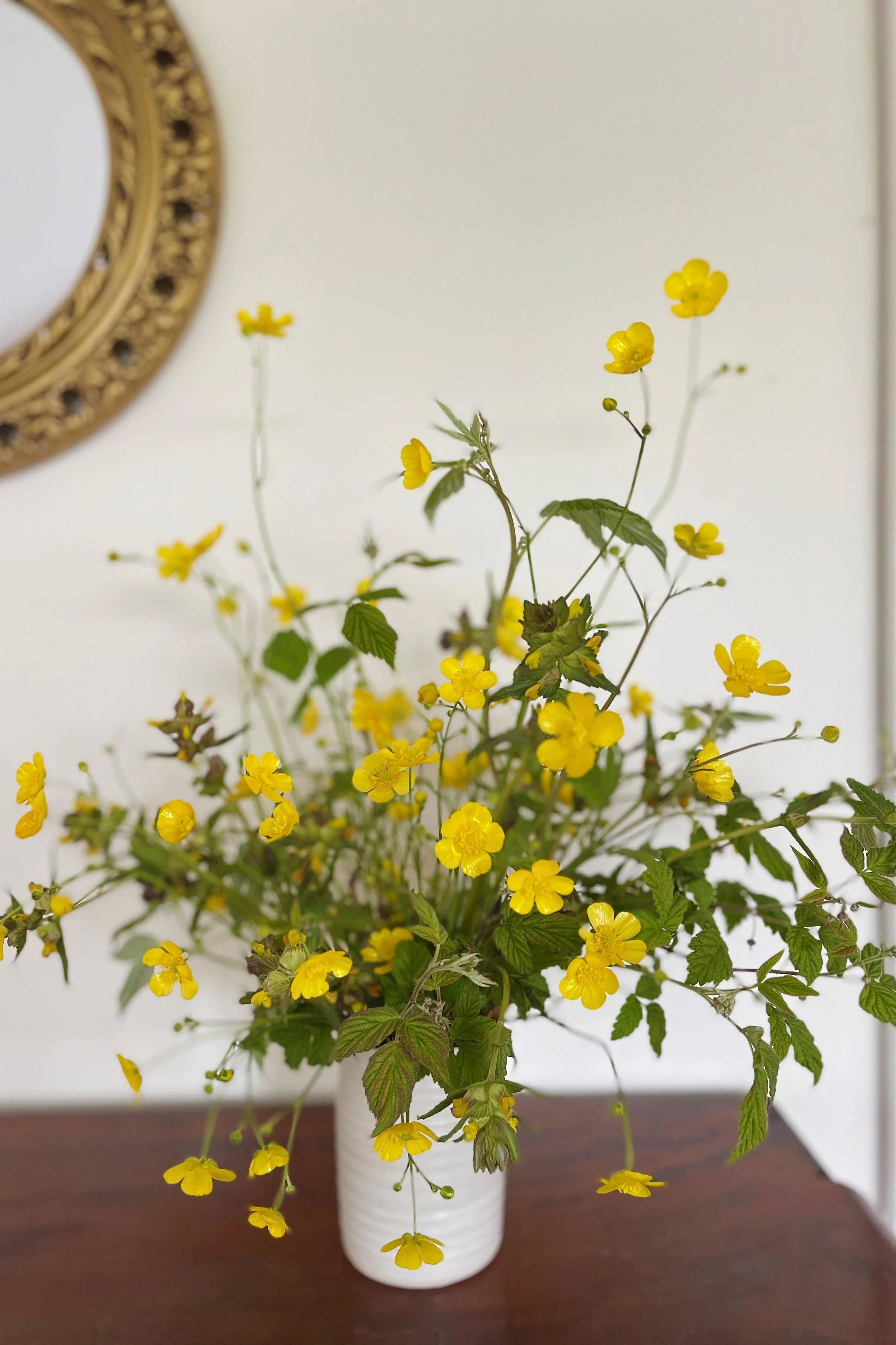
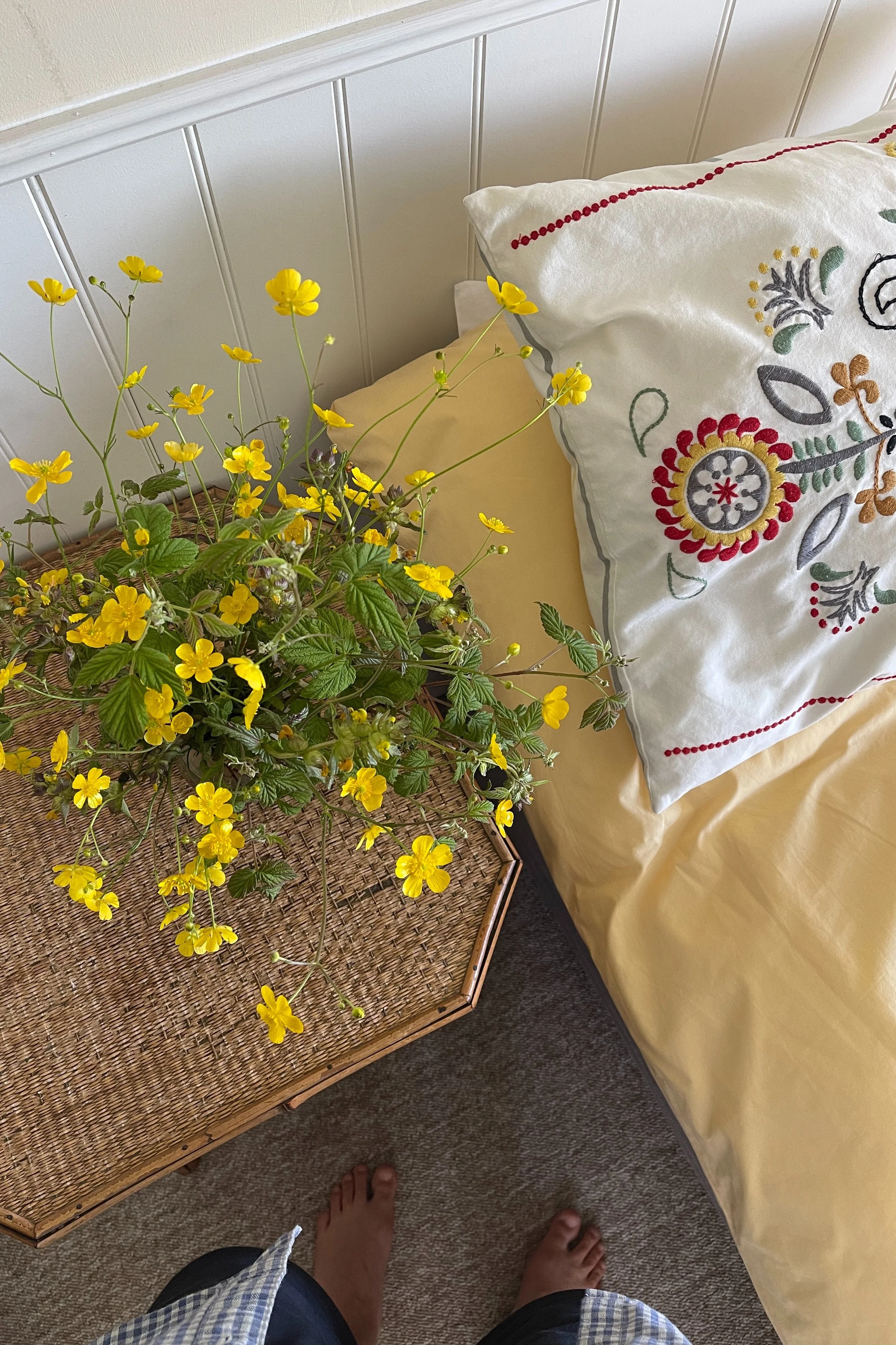
During his naps I arranged flowers. It was lovely to pick and arrange slowly without any particular purpose, just for the sheer enjoyment of the process.
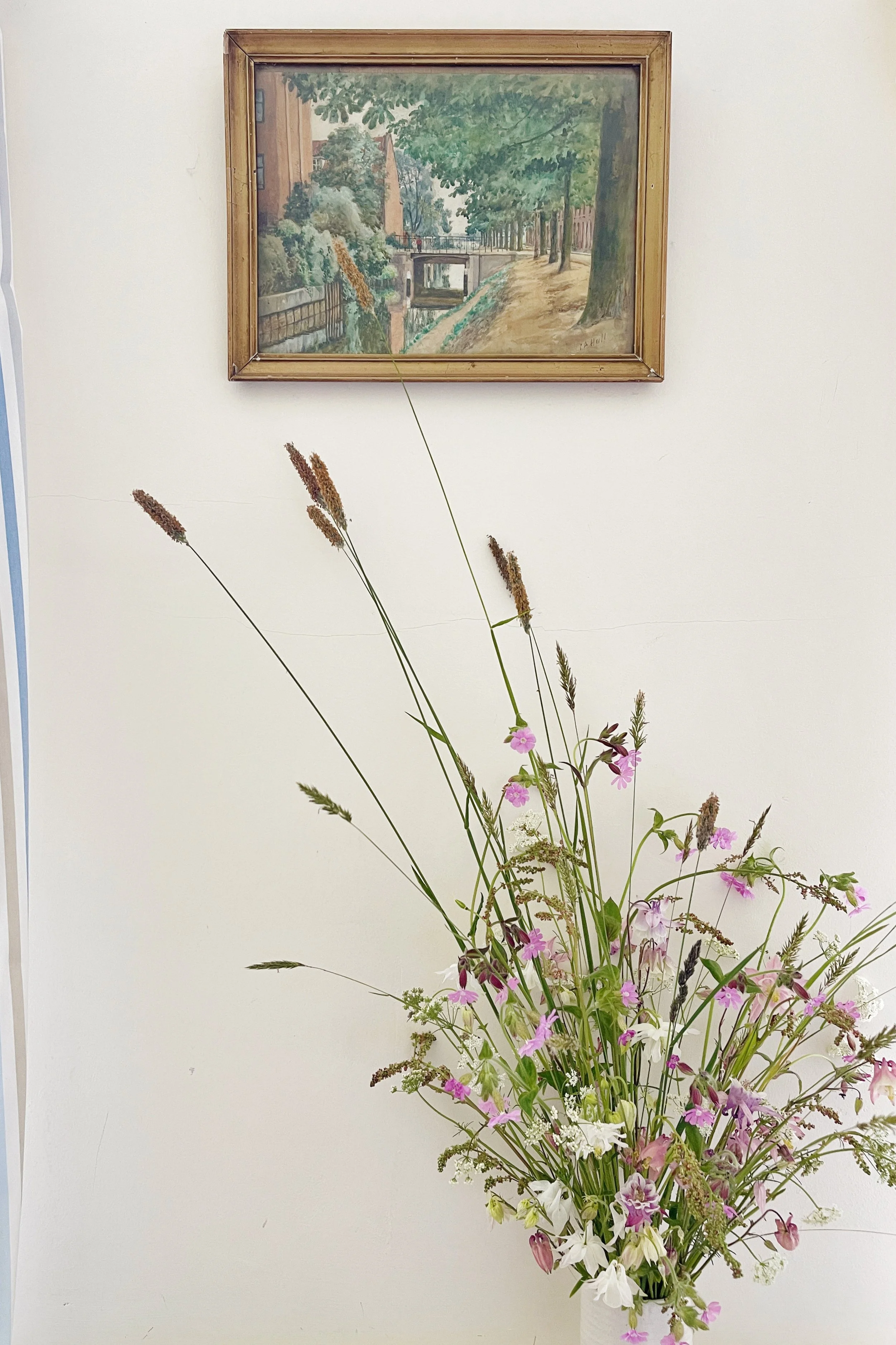
Thank you for reading and wishing you all a wonderful month ahead.
Till next time.
X

THE APRIL DANCE
At the cutting garden we take delivery of a whole host of new plants and give them a home in the moist, cool soil. Some to replace winter losses, others that are entirely new to us and we’ll have to wait a few weeks yet to see in flower. There are a lot of damp, drizzly days planting, weeding…


The growing season starts like a slow dance. A glide. The seasonal equivalent of a waltz, or perhaps a foxtrot.


At the cutting garden we take delivery of a whole host of new plants and give them a home in the moist, cool soil. Some to replace winter losses, others that are entirely new to us and we’ll have to wait a few weeks yet to see in flower.


In April there are a lot of damp, drizzly days planting, weeding and mulching.
The garden has never looked better. It is starting to feel well established now and the shrubs are filling out beautifully.


From tunnel 2 we cut Narcissi and Anemone. The Ranunculus and Allium are just beginning; we’ll begin harvesting them next week.
In the outdoor dahlia beds the tulips are flowering alongside more Narcissi, primroses and pansies, Epimedium, Ipheion, Muscari, hellebores and some incredible Fritillaria - persica, meleagris, acmopetala, imperialis, elwesii and michaeilovskii.


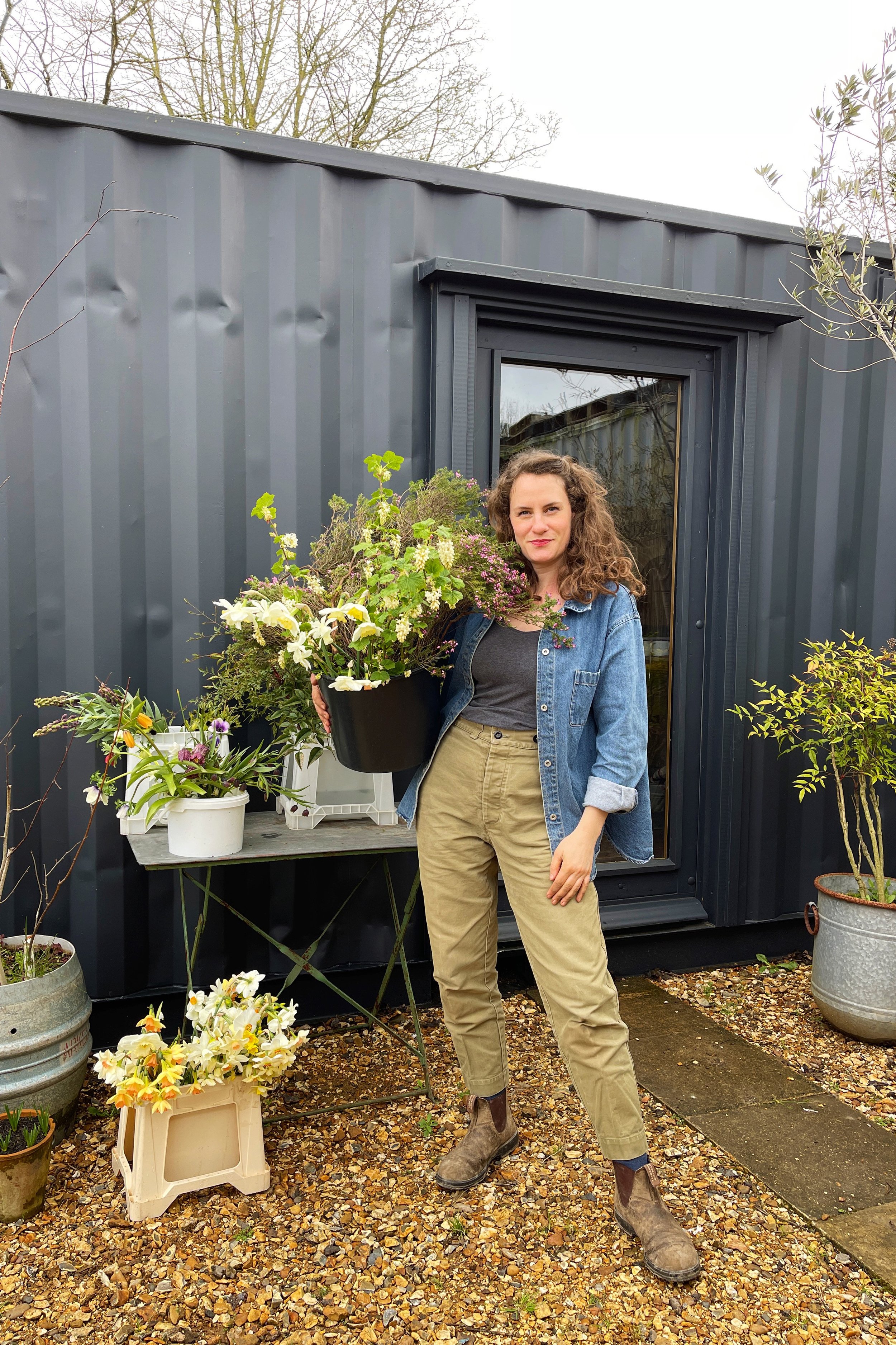

It's the best feeling after the long winter to work with the sun on your back and to be able to generously fill buckets with colourful flowers to send to London.
In the studio we get back in the saddle and flex our design muscles ahead of the season, experimenting with form, colour and texture for various projects ahead. One of our key preoccupations this year is really reflecting how the garden looks and feels, trying to capture its energy and the way it changes - day by day, week by week, month by month. It is much more subtle than the four-season model would suggest and the spaces between the seasons seem to have a character of their own.


Using the abundance of flowers suddenly available for cutting we start working on an exciting new series of online classes. It feels great to dive in at the deep end on a new project; we love this work and the particular process of researching and planning, shooting, recipe testing, writing and editing.
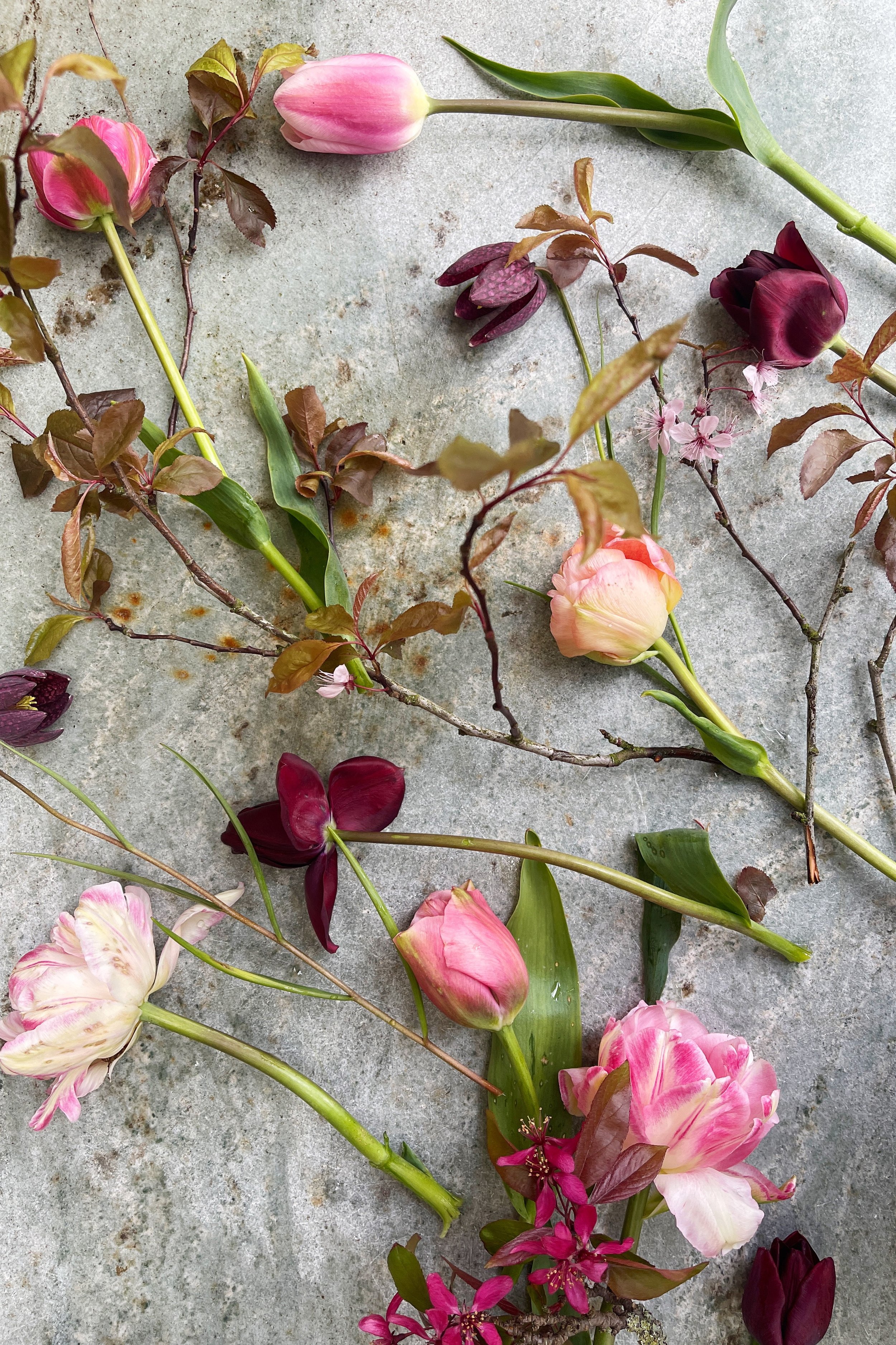

Above is a favourite spring colour palette. Mixing bronze with varying shades of pink and plum.
The Malus ‘Prairie Fire’ explodes into a riot of blossom outside my bedroom window; the leaves are a beautiful rich, reddy-brown and the flowers lightly scented.


Forsythia with Tulipa sylvestris, the wild tulip.
Accompanied by Fritillaria elwesii, Fritillaria michailovskyi, Narcissus ‘Blushing Lady’, Oxalis (creeping woodsorrel) and fans of dried grasses.

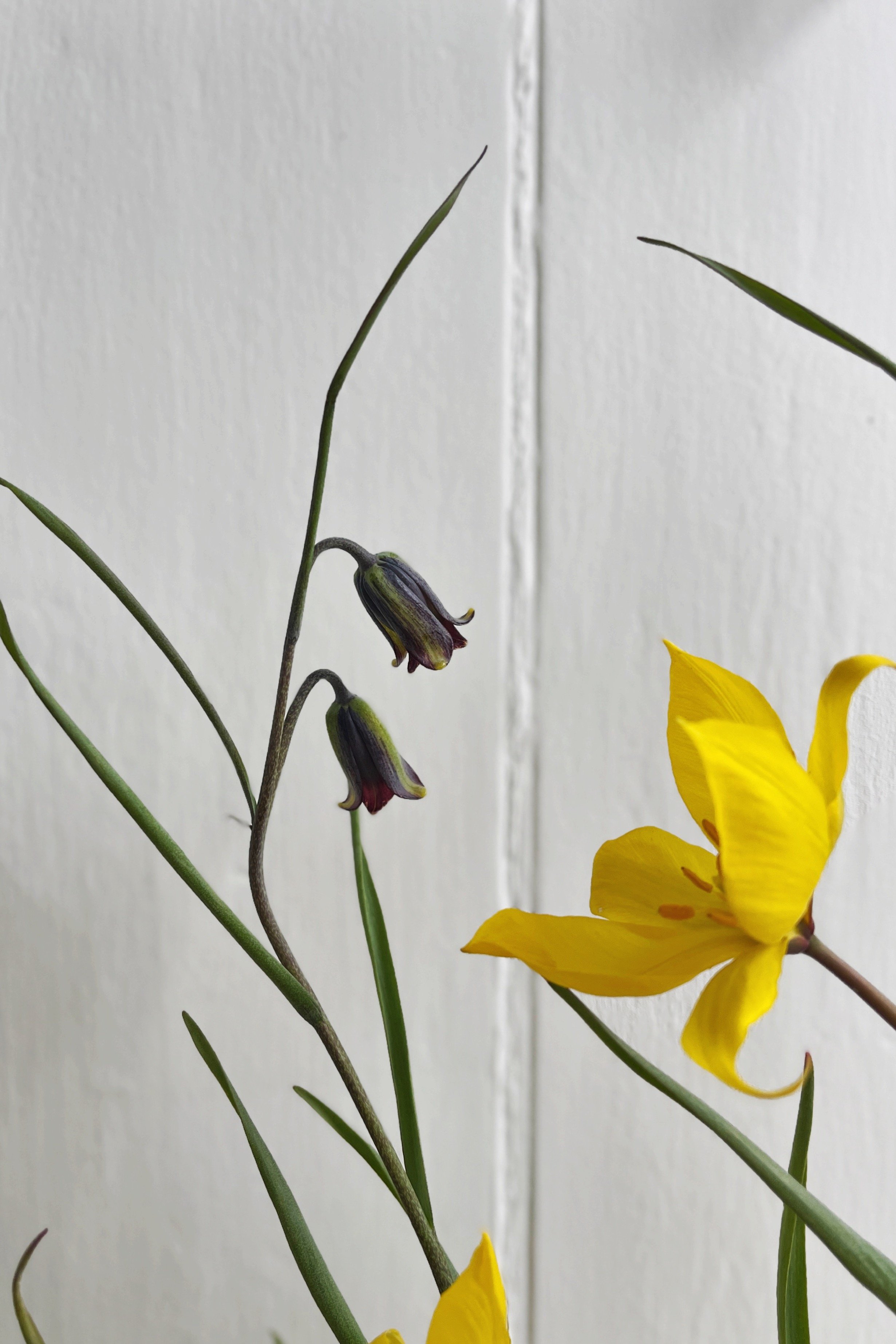


I love the soft, icy blues in the garden at this time of the year - the Muscari (grape hyacinth) and Ipheion (spring starflower). And all the graceful stems of Anemone and Fritillaria. The tiny Epimedium flowers.
It’s a magical, subtle time as things just start to get going.


A study in white.
Exochorda x macrantha ‘The Bride’ (pearl bush), Anemone coronaria ‘The Bride’, Fritillaria meleagris ‘Alba’, Leucojum aestivum ‘Gravetye Giant’ (snowflake) and Thlaspi arvense (pennycress).


An Easter tablescape with a mix of vessels and materials:
Narcissi, Fritillaria, Spiraea, Anemone and Prunus.


Easter was spent in Wales among the daffodils and dripping branches.
So many extraordinary wild flowers in the woods and meadows - coralroot bittercress, aconites, wild strawberries, forget-me-nots and primroses.


Whilst in Wales I took the opportunity to visit one of my favourite local gardens one afternoon between April showers. Aberglasney is in the Tywi Valley in Carmarthenshire and well worth a visit if you are ever in the area. It’s an exquisite garden - or series of gardens - in the grounds of a vanilla-coloured mansion.
There is a lot to see, I had to do three ‘laps’ just to take it all in.


The gardens have distinctly different sections that lead into one another down the hill, starting from an Asiatic area at the top with paths through Magnolia, Rhododendron, Camellia and Azalea shrubs native to Japan, Nepal, Tibet and China. The ‘Alpinum’ is home to low-level dwarf varieties and at this time of the year is like a soft, pastel watercolour of Primula, Muscari, Pulsatilla and Saxifraga.


There are several walled gardens including the productive kitchen garden, which is beautiful later in the summer with step-over fruit trees, vegetables, herbs and cutting flowers, then an enchanting sea of Fritillaria meleagris in the lawned slope leading down towards the woodland and stream gardens. The ‘Ninfarium’, which houses a lush, sub-tropical garden in among the ruins of the original medieval building is named after the gardens of Ninfa outside Rome, created by the Caetani family, who once gave financial support to Wales’ most celebrated poet, Dylan Thomas.


The days continue to lengthen.
A few more and we're into May. One of the best months for flowers, arguably the best of them all…
If you haven’t already please do check out our YouTube channel where we are now posting regularly.
In addition to our monthly vlog from the studio and garden we are very much enjoying capturing and curating short, thoughtful films to share with you all and we’re so grateful for all the kind comments we’ve received recently. Topics include flower arranging, cut flower growing, seasonal studio tours and visits to our favourite gardens in search of inspiration. We hope you enjoy them.
Till next time. A.

MARCHING ON
Spring. The verb ‘to spring’ from the Middle English sprygen - ‘to burst or flow forth, to sprout, to emerge, to happen, to become known’. As a noun, from Middle English spryng (“a wellspring, tide, branch, sunrise, kind of dance or blow, ulcer, snare, flock”), from Old English spring (“wellspring, ulcer”)
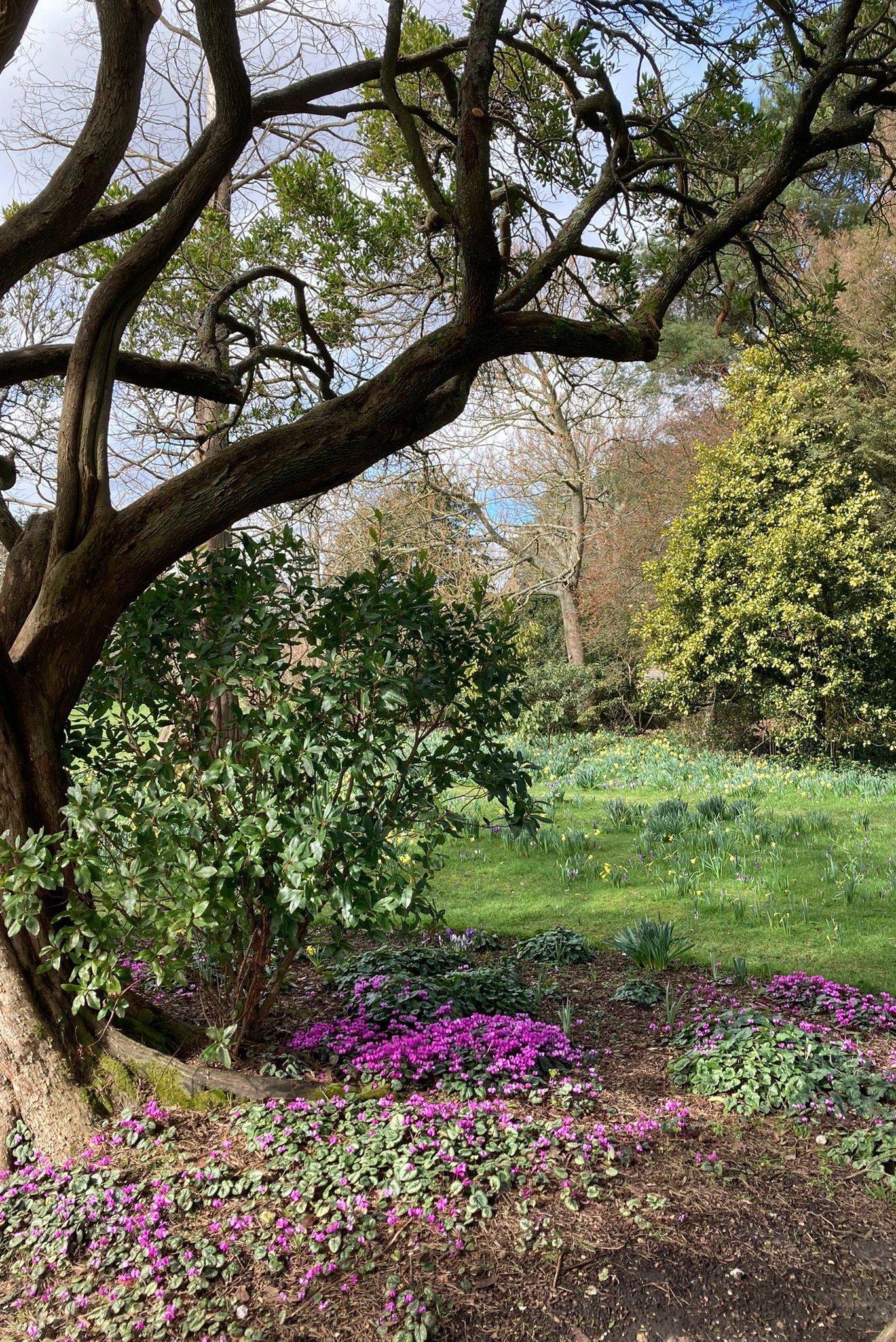

Spring.
The verb ‘to spring’ from the Middle English sprygen - ‘to burst or flow forth, to sprout, to emerge, to happen, to become known’.
As a noun, from Middle English spryng (“a wellspring, tide, branch, sunrise, kind of dance or blow, ulcer, snare, flock”), from Old English spring (“wellspring, ulcer”) and Old English spryng (“a jump”), from ablaut forms of the Proto-Germanic verb. Further senses derived from the verb and from clippings of day-spring, springtime, spring tide, etc. Its sense as the season, first attested in a work predating 1325, gradually replaced Old English lencten (“spring, Lent”) as that word became more specifically liturgical. Compare fall.
I’m into dictionary definitions the way some people are the shipping forecast. “Viking, North Utsire; southwesterly five to seven; occasionally gale eight; rain or showers; moderate or good, occasionally poor.” Something comforting and peaceful about them.


Spring the season, on the other hand, drags her feet. While winter finally dawdles off, spring makes us wait for her like an impatient lover. Predictably wistful, too eager, looking for signs. The usual thing - watching the clock, worrying if we dressed right. She comes closer inch by inch, painfully slowly, giving in by tiny increments.
When the camellias begin to flower you know you’re in with a chance.
March is first base. The beginning of something.


In any case, it’s a busy month. A month of preparation, planning ahead.
In the garden ‘the big chop’ ensues - cutting back the perennials and giving everything a good old haircut to allow the fresh green shoots to emerge.
It’s cathartic, and extremely satisfying, to strip away all the dead growth and take everything back to ground level.
The beds are given a lovely thick blanket of mulch to enrich the soil around the plants, suppress the weeds (to a certain extent) and to keep the soil damp and cool as the earth begins to warm up.


One Saturday a friend comes over to help for a few hours of (what he thinks will be) ‘therapeutic gardening’.
He brings sweet pastries and we drink coffee in the sun and it feels like spring.
Later, in torrential rain, we tackle the compost bays. Knee-deep, spades in hand, we apologise for the turn of events.
“Never happier than when shovelling shit”- his cheerful reply.
Me neither.


We compost all the perennial offcuts under last year’s food and flower waste. Excitingly we finally have our first big batch of lovely rich, crumbly compost.
It’s very satisfying to have finally cracked this and to be able to properly make use of our household and business green waste.
Certainly not glamorous but it might be one of our proudest moments so far.
I should have taken a photo to mark the occasion. Then again, perhaps not. We got home looking a tad feral.


The annual seeds are sown.
In trays there are Malope, Nicotiana, Helichrysum, Limonium, Tagetes, snapdragons and various perennial seeds.
Direct sown in our tunnels are scabious, cornflower, nigella, California poppies, Nasturtium, Omphalodes, Agrostemma, Phlox, Callistephus, Flax and Gypsophila.


The flowers are coming through now. Slowly. Another couple of varieties every week.
We’ve had a long spell of cold, dry weather and the season is slow to get going this year.
Narcissi, scilla, muscari, anemones. Some incredible hellebores.


We cut a little bunch of narcissi from the polytunnel and put them in a jam jar.
They drive around with us in the van back in London, through rainstorms and dazzling sun, the typical kaledioscope of weather on any given spring day.
They smell like vanilla.


In London the magnolia is in bloom.
After weeks of grey the streets are suddenly awash with these extraordinary blossoming trees.
It’s enough to make you fall in love with the city all over again.


At the studio we have a huge overhaul and spring clean in preparation for the new season.
All the doors are flung open, the windows polished, every cupboard and box is emptied, sorted, dusted and refilled.
An exciting delivery of beautifully aged reclaimed oak arrives all the way from Austria which we are using for cladding - a project we have wanted to do for a long time - and we spend an enjoyable couple of hours admiring each piece and deciding the order in which they’ll be fixed.


Arranging from the garden at this time of the year is very much an exercise in restraint. In making a little go a long way. Right at the beginning of the season still, you may only have one or two stems of each variety. It’s a bit like having nothing in the fridge and having to be inventive to make supper. Actually I love suppers like that. And flowers too.

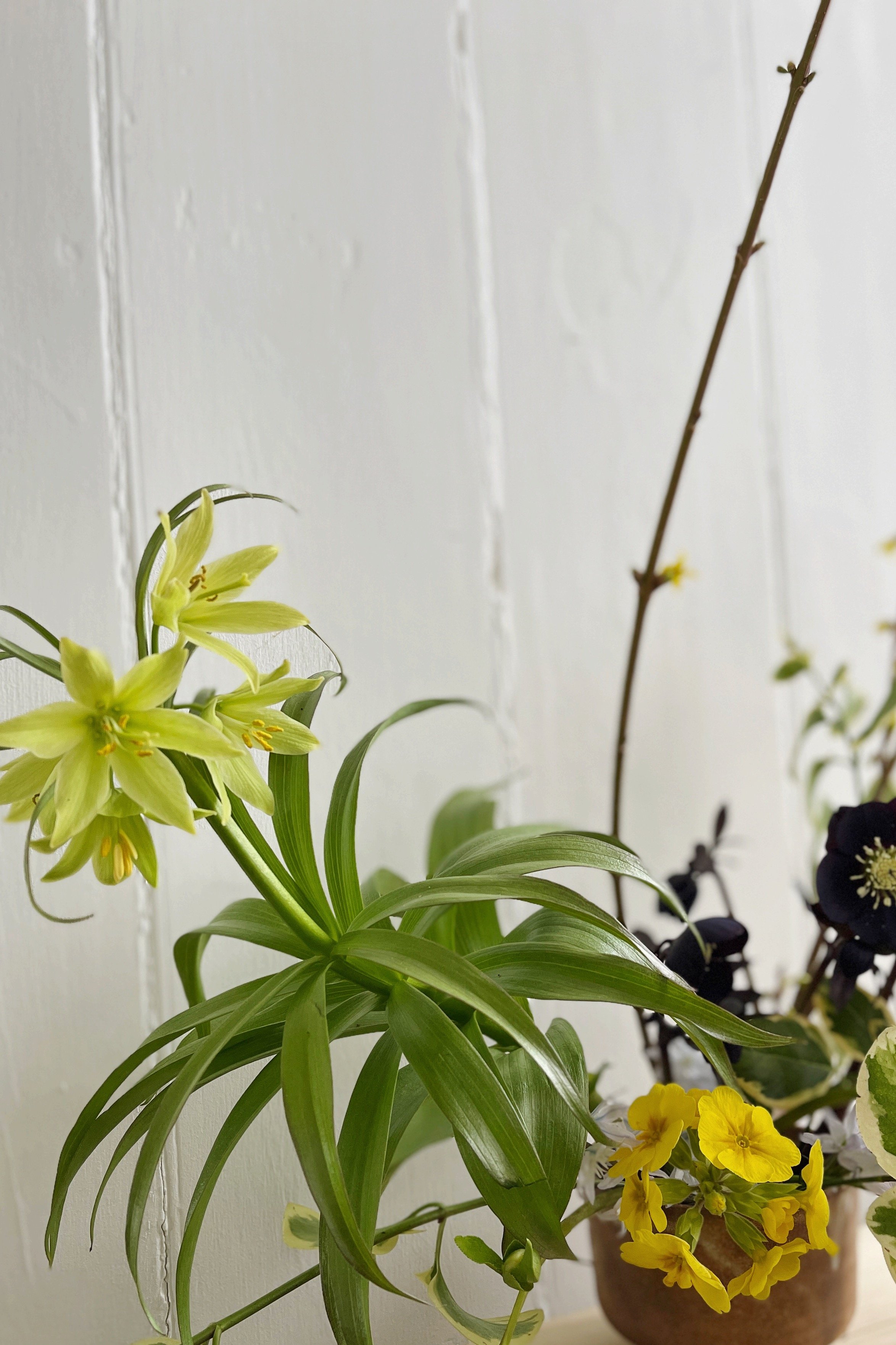
x2 Forsythia branches
x5 hellebores (four different varieties)
x1 primula
x5 Vinca minor
x1 Fritillaria ‘Ivory Bells’
x 8-10 Scilla mischtschenkoana
The latter is white squill. A exquisite pale blue flower. We planted the bulbs beneath some rambling roses and they are naturalising beautifully, more and more every year.


Also at the studio, planning for our 2023 flower school begins in earnest. We like to start with a big brainstorm of ideas and then streamline from there.
‘Workshop flow’, Jess calls it.
We want each one to be different, to celebrate the materials of that particular moment in the year. We love working out how we can give our guests the best experience - what we’ll talk about, what we’ll make, where we’ll gather and sit and photograph, what we’ll eat, drink, listen to.
We have some great playlists this year. Classical. Jazz. Folk. Country.


See you next month! Excited for Easter and all the flowers to come.
Thank you for reading. A.
Jeju Island, South Korea
What a way to start the season, hosting a destination workshop on a little volcanic island off the coast of South Korea covered in pine trees and mandarin groves! Starting in Japan (we’ll be sharing a couple of the gardens we visited in Tokyo & Kyoto here soon) we flew to Seoul to spend a few days getting adjusted and preparing for the workshop before heading south to Jeju Island. The workshop was held at a wonderful cafe with views out over the blue waters of the Korea Strait. It was the perfect spot - modern, tastefully designed and with atmospheric music, delicious lunches and some of the best coffee we found on our trip.
All the flowers, foliage and plants were part-shipped, part-flown from Seoul where we had chosen them at the flower market early the preceding mornings. The choice of materials (from Korea, Japan and Holland) was exceptional - I’ve never seen so many flowers and branches in one place, the Seoul market is labyrinthine and just goes on and on… Our palette for the workshop was soft and feminine, with pops of yellow to reference the canola flowers that can be seen everywhere around the island, and mandarins, since Jeju is a tapestry of unending groves of these sweet, fragrant fruits. While travelling I was deep into reading all about citrus via Jess’ recommendation in our last post - it was surreal to be preoccupied with lemons in Italy while speeding through an Eastern landscape dominated by orange fruits.
For three days the sun shone and the sea sparkled and lapped against the dark, craggy rocks. We foraged dried grasses and silverberry from the coast-path and strange pitted black rock formations (they say there are three-hundred and sixty-five volcanoes on the island; one for every day of the year) for a setting-specific installation on the final afternoon. It was such a privilege to be working somewhere entirely new and unfamiliar and yet be made to feel so at home.
JEJU ISLAND | SOUTH KOREA

What a way to start the season, hosting a destination workshop on a little volcanic island off the coast of South Korea covered in pine trees and mandarin groves! Starting in Japan (we’ll be sharing a couple of the gardens we visited in Tokyo & Kyoto here soon) we flew to Seoul to spend a few days getting adjusted and preparing for the workshop before heading south to Jeju Island. The workshop was held at a wonderful cafe with views out over the blue waters of the Korea Strait. It was the perfect spot - modern, tastefully designed and with atmospheric music, delicious lunches and some of the best coffee we found on our trip.
All the flowers, foliage and plants were part-shipped, part-flown from Seoul where we had chosen them at the flower market early the preceding mornings. The choice of materials (from Korea, Japan and Holland) was exceptional - I’ve never seen so many flowers and branches in one place, the Seoul market is labyrinthine and just goes on and on… Our palette for the workshop was soft and feminine, with pops of yellow to reference the canola flowers that can be seen everywhere around the island, and mandarins, since Jeju is a tapestry of unending groves of these sweet, fragrant fruits. While travelling I was deep into reading all about citrus via Jess’ recommendation in our last post - it was surreal to be preoccupied with lemons in Italy while speeding through an Eastern landscape dominated by orange fruits.
For three days the sun shone and the sea sparkled and lapped against the dark, craggy rocks. We foraged dried grasses and silverberry from the coast-path and strange pitted black rock formations (they say there are three-hundred and sixty-five volcanoes on the island; one for every day of the year) for a setting-specific installation on the final afternoon. It was such a privilege to be working somewhere entirely new and unfamiliar and yet be made to feel so at home.


Flower School | A selection of materials lined up for our bouquet class including ranunculus, sweet peas, flannel flower and mandarin branches


Left: a spring centrepiece of ranunculus, tulips & fritillaria
Above: Urn of willow, ranunculus, tulips and mandarin branches

Flower School | our wonderful group of students with their ruffly garden-inspired bouquets

Flower School | table styling & props: beach pebbles, shells, intricate vines and ochre linen

Flower School | spring wreaths of moss and alpine plants


Left: a bouquet of spring flowers and locally foraged silverberry foliage
Above: a student’s sketches of the bouquet demonstration


Above: pale pink urchins and creamy shells to reference the coastal setting
Left:: Jess’ demo bouquet with spiraea and ranunculus


Flower School | Installations: a site-specific design using the local dark rocks with willow, spiraea, tulips, dried orchid leaves and rockery plants


Flower School | Colour: our palette for the workshop was soft pink with accents of orange and yellow, as a nod to the cherry blossom, mandarin groves and canola flowering all over the island in spring

Flower School | a friendly mandarin farmer who gave us permission to roam his greenhouses and gorge on the sweet ripe fruit as we picked


Thank you to Flower Workshop Korea for inviting us, arranging everything so beautifully and being the most generous and welcoming hosts, and to all the suppliers and assistants who helped make this workshop the magical few days it was. And to our students, for travelling the distance and being the most enthusiastic, giggly and talented band of flower-lovers we could ever hope to meet.
In the STUDIO

Back in the studio we unpacked our cases laden with Japanese kenzans, bamboo sticks, scissors and secateurs, as well as a new collection of beautiful Japanese and Korean tea bowls and ceramics in beautiful uneven, earthy glazes.
The rest of the April has been spent gearing up for the start of wedding season and holding the first of our spring classes. The evenings are lighter and longer now, the temperature rising almost imperceptibly but enough for the doors and windows to be open in the afternoons. The workbenches have been strewn with narcissus and tulips up from the garden - primrose yellow and rust and milky-white.


Flower Studio | Table styling 1:1 class: clustered small bowls with garden-grown flowers & beeswax candles

Flower Studio | Left: Narcissus ‘Moonlight Sensation’ & ‘Segovia’

Flower Studio | ‘Belle Epoque’ tulips, at their most beautiful as they fade and crumple


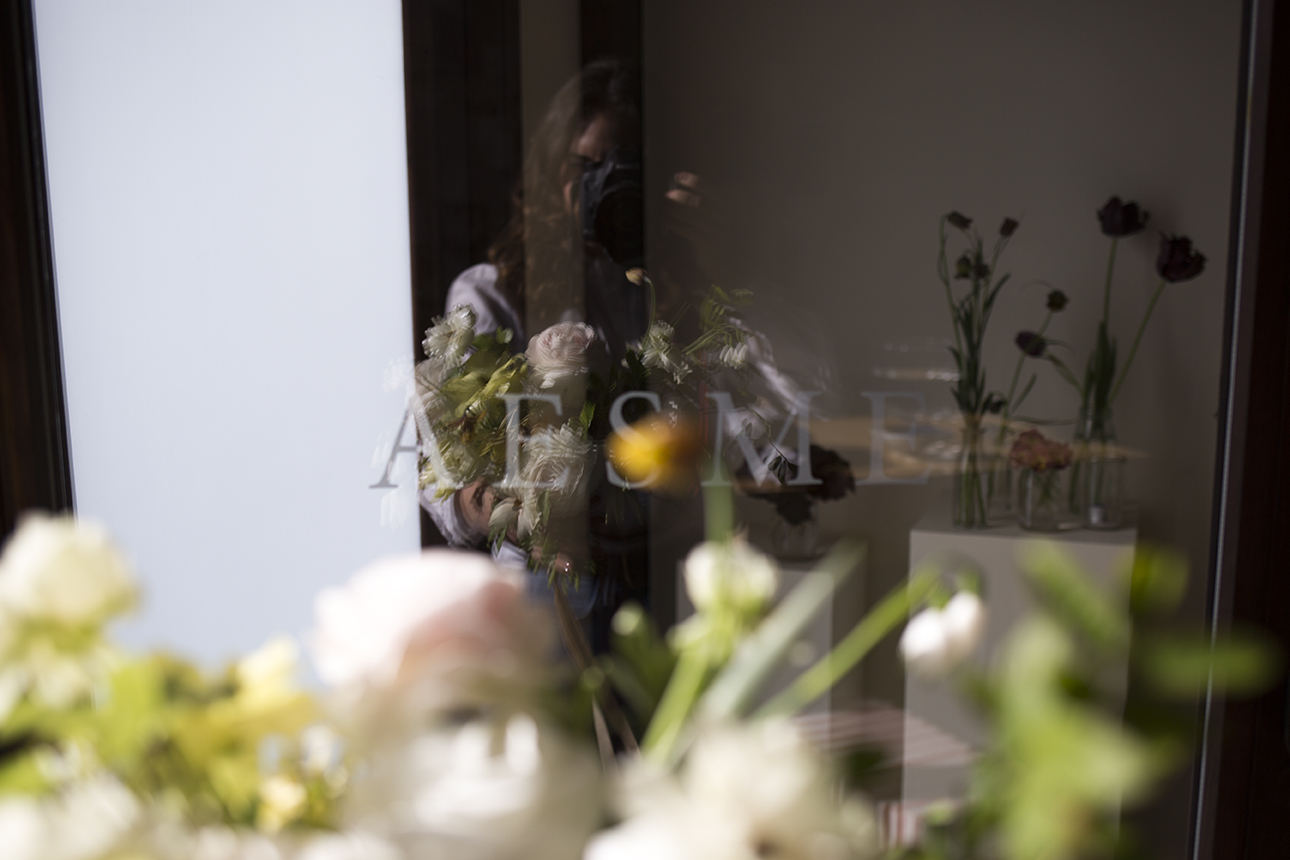

Flower School | Table styling group workshop: antique Indian brass vessels and florals in a palette of red, gold and lime


Flower School | Left: a section of the inspiration board for our Spring Masterclass, referenced during a discussion on colour theory
Last week we held our Spring Masterclass - a three day intensive course in flower arranging with a focus on seasonal, naturalistic and sustainable botanical design for weddings and events (with a difference - i.e. no flower foam, no traditional wiring, rule breaking encouraged etc). In these seasonal courses we focus on using the finest ‘produce’ or ingredients we can grow, source and forage, designing in a nature-led, garden-inspired style and taking inspiration from place, art, fashion and garden design.


Flower School | 1:1 class hanging installation: a suspended trough layered with tulips, geranium, narcissus and fritillaria

The intention on our Flower School courses is to create at atmosphere of open-mindedness, collaboration and creativity; we are always inspired by our students’ enthusiasm and curiosity, and their willingness to think outside the box. Last week the group was made up of students from the UK, Hong Kong and Portugal; everyone was fairly new to flowers, one ran a dried flower business, one wanted to enjoy flower-arranging as a pastime, others were considering career changes. By Friday afternoon we were having such a lovely time we didn’t want it to end - we’d shared a wonderful few days of creation and brainstorming, made lots of beautiful arrangements together, discussed business and social media and colour theory, shared some lovely food and listened to a lot of French jazz. There is an alchemy to what happens in the studio on weeks like this and that evening as we were blowing out the last of the candles, I think we all felt very grateful that we are able to live and work in this way, and to meet other like-minded people who share in the things we love.

Flower School | Table styling 1:1 class: bronze, blue, plum and accents of peach in ceramic vessels


Above: Akebia quinata (chocolate vine) with runner and French climbing beans for planting


Flower School | Spring Masterclass table styling: linear trough vases in a brown, mauve and pale yellow palette


Flower School | Urn design 1:1 class: an ornate French urn with fresh spring greens, leggy tulips and butterfly ranunculus

Flower School | Spring Masterclass demo: Jess’ loosely layered and romantic demo bouquet


Flower Studio | Actinidia kolomikta (variegated-leaf hardy kiwi) with tulip Clusiana ‘peppermint stick’
With a new workbench installed to give us a little more space in the studio, we have decided to open up two additional places on our Summer Masterclass | 5th - 7th June. These spots are first come first served and full details can be found on the website.
In the GARDEN

Cutting Garden | Scabiosa potted on and waiting to be planted in the outside beds
‘Naught you can do about the weather’ one of the landscapers said as we surveyed the rows of ageing tulips in one of the tunnels after our trip overseas. An unseasonably warm spell late March (while we wrapped up and drank hot chocolate in chilly Tokyo) saw many of our tunnel-grown bulbs flowering a few weeks earlier than expected this year. You win some, you lose some. The outdoor planted beds made up for it however, where we were trialling small quantities of a number of different varieties of tulips and narcissus. The ranunculus are flowering prolifically; hundreds of white, pink, plum and bronze, with excellent stem length and ruffly petals opening to those seductive opaque centres. Fritillaria - persica, uva vulpis and imperialis, have been filling the studio with their ‘cannabis’ scent, along with peonies, aquilegia and the last of the anemones, which are very leggy now, with tiny little faces.
So begins the summer - or what I think of as the summer, anyway - the half segment of the year that is measured by bi-weekly deliveries from the garden to the studio and the constantly evolving stock of new, delicious colours and textures that we take from their unprepossessing buckets and that result in branchy urns and beautiful spilly bowls.


Cutting Garden | Tulips in the early evening sun in one of the outdoor beds

Cutting Garden | Ranunculus ‘Aviv white’


In the Ether
A few things we’re loving at the moment…
R E A D I N G - Food for Free (the complete guide to help you safely identify edible species that grow around us, together with detailed artwork, photographs, field identification notes and recipes) by Richard Mabey
L I S T E N I N G T O - Piano & A Microphone, 1983 by Prince. The Table Manners podcast with Jessie Ware
F O L L O W I N G - Samuji, Somewhere Magazine, Arne Maynard Garden Design
C O O K I N G - Steamed kale with capers, thyme, chilli flakes, garlic and creme fraiche and toasted breadcrumbs (inspired by Gill Meller). Melon, buffalo mozzarella and Parma ham salad (via The Kitchen Diaries by Nigel Slater)
V I S I T I N G - Anthracite Coffee Roasters (a beautiful disused warehouse / overgrown ruin / coffee shop in Jeju Island). Chenies Manor in Buckinghamshire (for the displays of tulips and gorgeous walled vegetable and herb gardens)
