

Sowing for spring
We start preparations for our flowers the following year from the September equinox onwards - sowing seeds of hardy annuals such as cornflowers and nigella, planting rows of ranunculus corms, tucking allium and Fritillaria bulbs into the perennial beds, and finally planting trenches of tulips in November. It’s exciting to imagine how all the hard work will pay off come spring, when reward comes in the form of soft unfurling petals and sweet scents.
These are a few of our favourite things to sow and plant this side of Christmas!
We start preparations for our flowers the following year from the September equinox onwards - sowing seeds of hardy annuals such as cornflowers and nigella, planting rows of ranunculus corms, tucking allium and Fritillaria bulbs into the perennial beds, and finally planting trenches of tulips in November. It’s exciting to imagine how all the hard work will pay off come spring, when reward comes in the form of soft unfurling petals and sweet scents.
These are a few of our favourite things to sow and plant this side of Christmas!

We sow sweet peas in September and tuck them into the ground under cover from November. Growing in the tunnel protects their delicate petals from any rain damage and we can look forward to clouds of scented flowers come May. Sweet pea ‘Red Ace’ adds a punch of lipstick red to bouquets.

Planted in long rows in the polytunnels, ranunculus and anemones provide a sweet shop display of colour from April onwards - from deep chocolate and aniseed red to sugary pink and fizzy yellow. We use these abundantly in our seasonal flower subscriptions.
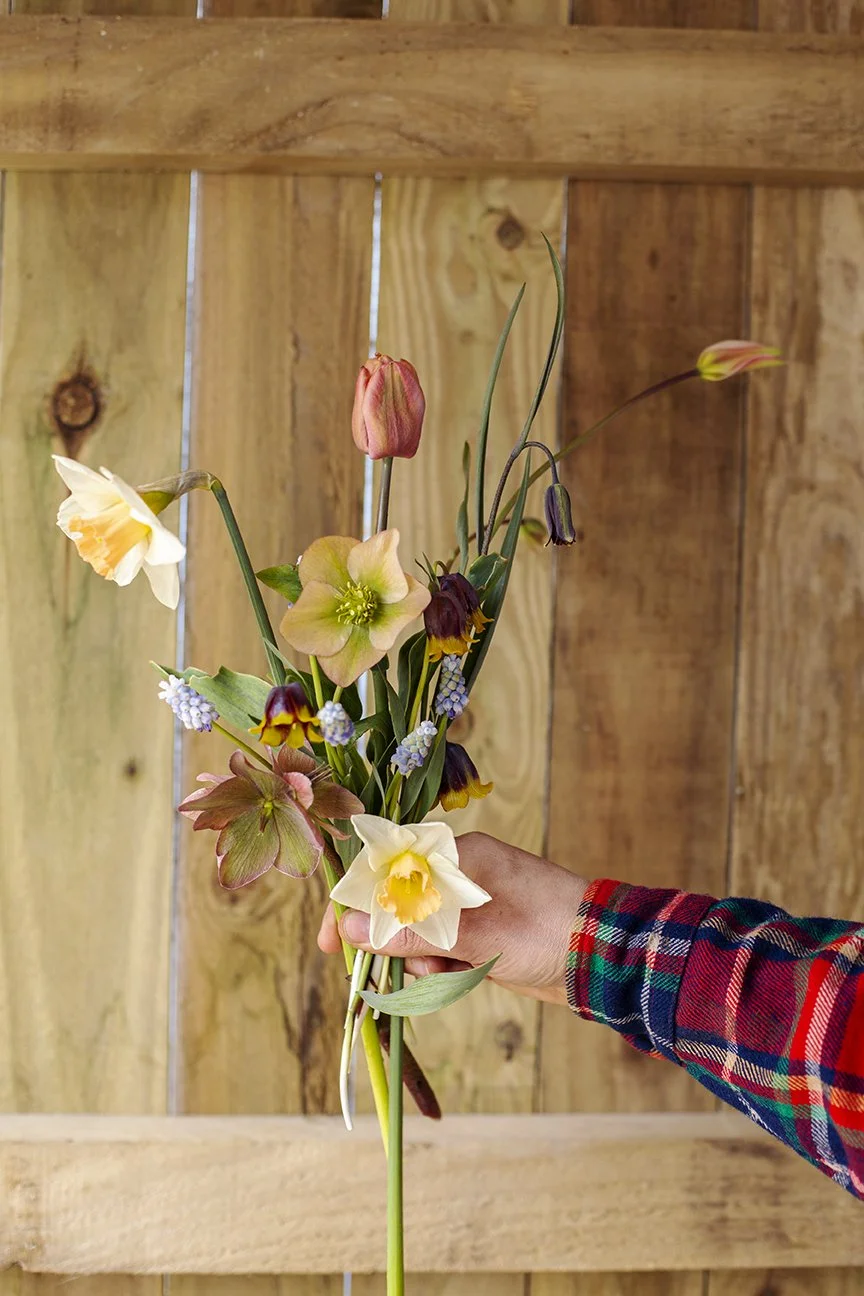
Dainty Fritillaria bells, honey-scented cupped narcissus, ice blue muscari, multi headed tulip ‘Turkestanica’ and acrid yellow wild tulip ‘Sylvestris’ … the perennial bulbs cause the most excitement when they emerge, bringing that extra sense of delicacy to spring arrangements.

Sowing hardy annual seed the previous autumn gives us a jump start on the season. While the small seedlings appear unimpressive over the winter, by mid May the beds are bursting with bushy floriferous plants and towering spires, including this Delphinium consolida ‘Misty Lavender’ variety.

August in the garden
Two years ago we set about expanding the cutting garden by adding a large section of perennial plants. Our selection was strongly influenced by the natural-style ‘prairie’ landscapes created by garden designer Piet Oudolf (and countless others). The reasoning behind this was two-fold - both for the incredible movement and texture created through the use of ornamental grasses and herbaceous perennials (which give endless, interesting combinations of flowers and foliage for our designs), and by the robust hardiness and drought-tolerant tendencies of the plants (which saves on unnecessary irrigation on our dry, chalky soil in the hotter months). Now in its second summer, and with only a small handful of losses over the winter, our choices are bedding in well and we’re enjoying their incredible floriferous display, grasses swaying and rustling, humming with insect life. Here are some of our favourites this month…
Two years ago we set about expanding the cutting garden by adding a large section of perennial plants. Our selection was strongly influenced by the natural-style ‘prairie’ landscapes created by garden designer Piet Oudolf (and countless others). The reasoning behind this was two-fold - both for the incredible movement and texture created through the use of ornamental grasses and herbaceous perennials (which give endless, interesting combinations of flowers and foliage for our designs), and by the robust hardiness and drought-tolerant tendencies of the plants (which saves on unnecessary irrigation on our dry, chalky soil in the hotter months). Now in its second summer, and with only a small handful of losses over the winter, our choices are bedding in well and we’re enjoying their incredible floriferous display, grasses swaying and rustling, humming with insect life. Here are some of our favourites this month…

Macleaya cordata, the ‘five-seeded plume poppy’ muscles its way across the perennial paths, towering above its neighbours. The flower spires are incredibly useful for their height (we love to use them in large-scale arrangements). The plant also has large sculptural leaves in a grey-green hue.

There is something about the pop-art pink of Echinacea purpurea that just speaks of late summer sunshine on sultry August afternoons. Peacock butterflies flit between their fiery orange ‘cone’ centres, Pennisetum grasses whispering in the wind alongside.

The garden is where it all begins! Ally carries a bucket of perennial potential to be prepped and conditioned ahead of arranging. A good mix of textures and shapes provides the starting point for that weekend’s wedding urn designs.

Over the past few years we’ve planted a few different varieties of perennial scabious. Our favourite has to be Scabiosa columbaria, the ‘small scabious’. Having flowered profusely since June, the plants are now a textural tangle of pale mauve-blue flowers and seedheads, humming with bees.

From the garden in February
A clutch of rain-splattered Helleborus feels like the sweetest gift on dark days

A clutch of rain-splattered Helleborus feels like the sweetest gift on dark days

An injection of brights from Rainbow Chard - citrine leaves, fuchsia and red stalks

Galanthus Nivalis - their delicately nodding heads are sweetly scented

Creative play - a small arrangement made with snippets from the snowy garden, in anticipation of spring

2020 in 20
Arranging flowers gave us calmness and hope in a difficult year - proof if it was needed of just how powerful nature can be
Like most, we breathed a loud sigh of relief as the end of 2020 came into sight. We ended last year more despondent than usual, quietly grateful for our health and the survival of our small events business. However… it is our strong belief there are always good things to be found amongst bad, and this is never more true than when immersed in the natural world. Shining bright amongst the awfulness of 2020, there were some truly beautiful moments to remember.

All dressed up and no weddings to go - the tulip beds flowered in the spring without hope of harvesting

We fell firmly in love with orange - a bright and happy, often overlooked colour
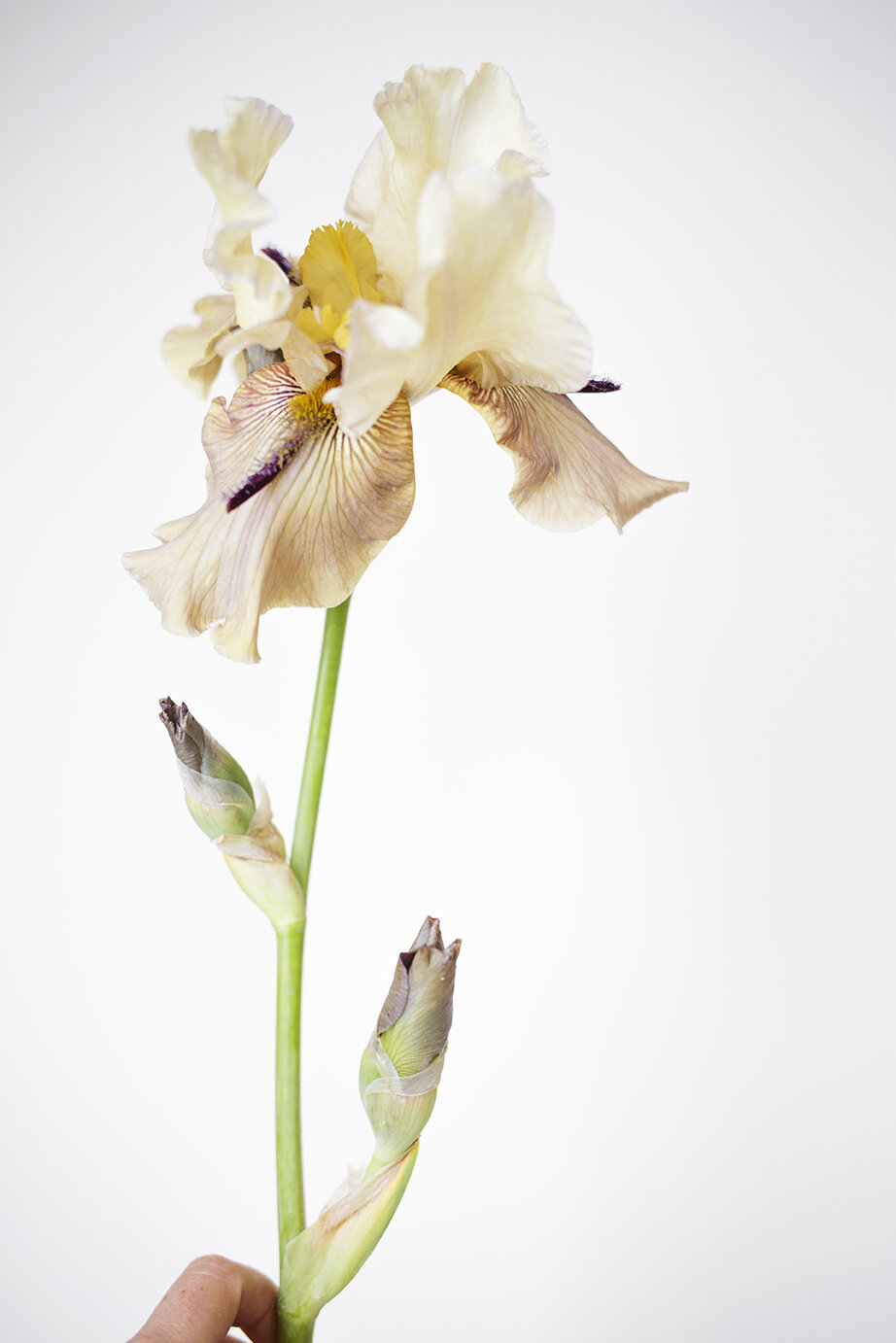
Regal, strange, beautiful - the bearded iris flowered wonderfully in the May sunshine

Beating the blues with armfuls of iris and warm sunny days in the garden

We fell in love with delphiniums, our tunnel crop growing over our heads in spires of blue and mauve

We experimented with COLOUR! Reds, oranges, pinks, yellows, purples, blues…

In the August heat the garden was a riot of colour, bolstering our spirits on low days

We grew our most successful zinnia crop and are looking forward to putting new gardening lessons into practise this year

Our baby shrub roses, planted at the end of 2019, settled in well and flowered profusely

Who ever gets to enjoy this many beautiful Belle Epoque tulips for themselves?!

Mavis missed welcoming students to the studio for their classes and wondered where everyone had gone

But she did get lots of kisses and attention from the two of us, which made her very happy

We grew plump China Asters - destined for special weddings - we’ll grow them again in 2021!

We discovered the magical beauty of Valerian - and its hellish self-seeding tenancies if left for pretty pictures!

We celebrated and cherished each flower variety more than ever this year

The new perennial section at the garden was grateful for the quiet year and settled in well without too much snipping!

We loved these ‘Blue Bayou’ tomatoes - on the plate and in the vase

We missed making bridal and bridesmaids bouquets, buttonholes, table flowers, urns, installations…

Free time meant more creative time for experimenting with different shapes and techniques

Arranging flowers gave us calmness and hope in a difficult year - proof if it was needed of just how powerful nature can be

New perennial beds
Our new perennial garden at the farm, with shrub beds in the foreground. This patch is still in its infancy but settling in as the weeks pass. We’re excited to witness these plants develop over time - many of them will be waist or shoulder height once established and will provide beauty and interest throughout the whole year, not just in summer; the spires and globes of flowers becoming seed heads, the grasses producing fluffy tails and then drying, the umbels evolving to architectural skeletons in winter.

An arrangement of hosta leaf and Dutch iris ‘Silvery Beauty’, with wild meadow-grasses ‘Yorkshire Fog’, ‘Downy Brome’ and ‘Pendulous Sedge’.
May. The third month of our ‘season’. These are some of the most beautiful weeks of the year. Early mornings cutting at the farm, afternoons in the cool of the studio with the novelty of all the doors thrown open and the breeze fluttering through, the lengthening shadows in the evenings, the first days of restless heat and the promise they bring for the months to come. Every day we remind ourselves to live it to the full, that this is a fleeting moment in time and that these calm, quiet days should be cherished - for the unfurling iris, for the scent of coffee brewing on our camping stove at the garden, for the sleepy lizards sunbathing on the tunnel roofs and for the slower pace of life that is allowing us the freedom, for a time, to reflect and breathe.
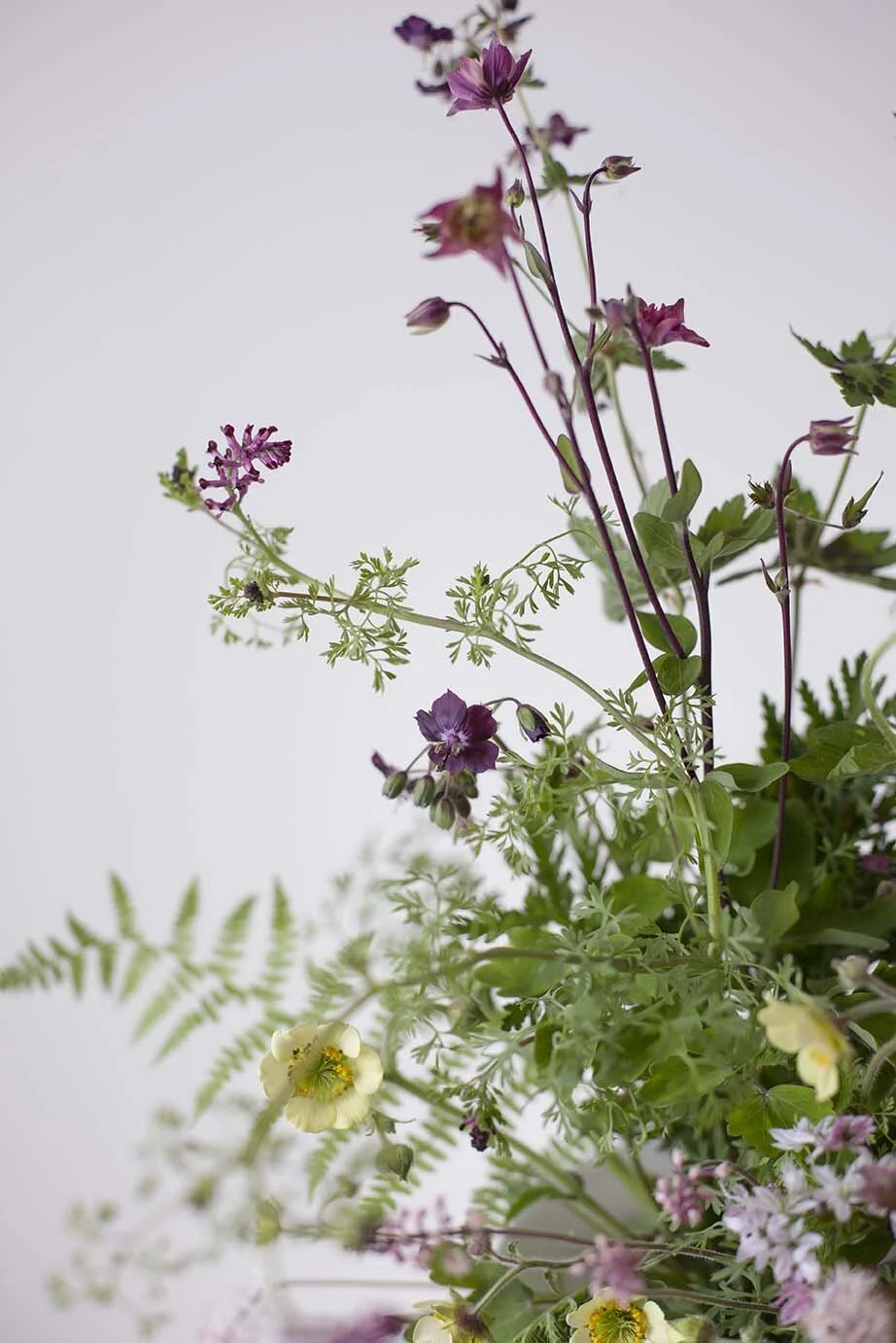


Our new perennial garden at the farm, with shrub beds in the foreground. This patch is still in its infancy but settling in as the weeks pass. We’re excited to witness these plants develop over time - many of them will be waist or shoulder height once established and will provide beauty and interest throughout the whole year, not just in summer; the spires and globes of flowers becoming seed heads, the grasses producing fluffy tails and then drying, the umbels evolving to architectural skeletons in winter.
The garden continues to feed our work at the studio. Both literally and metaphorically, a flow of materials, gaining in quantity and variety by the week, and the propulsion of its natural energy carrying us along with it further into the year. Without the flurry and hustle of our usual schedule, this month has allowed us a unique and deep immersion in using our plants to fuel our design work and enabled us to dig deeper into the overlap of horticulture and flower arrangement. The collaborative relationship between our studio and the garden, and the tension and beauty this can create has become a total obsession and it has been a luxury to spend several weeks focussing on this alone.


Working on an arrangement of rowan, hawthorn, cow parsley, Camassia, Agrostemma and buttercups - a true reflection of our garden and the surrounding hedgerows, mid May.


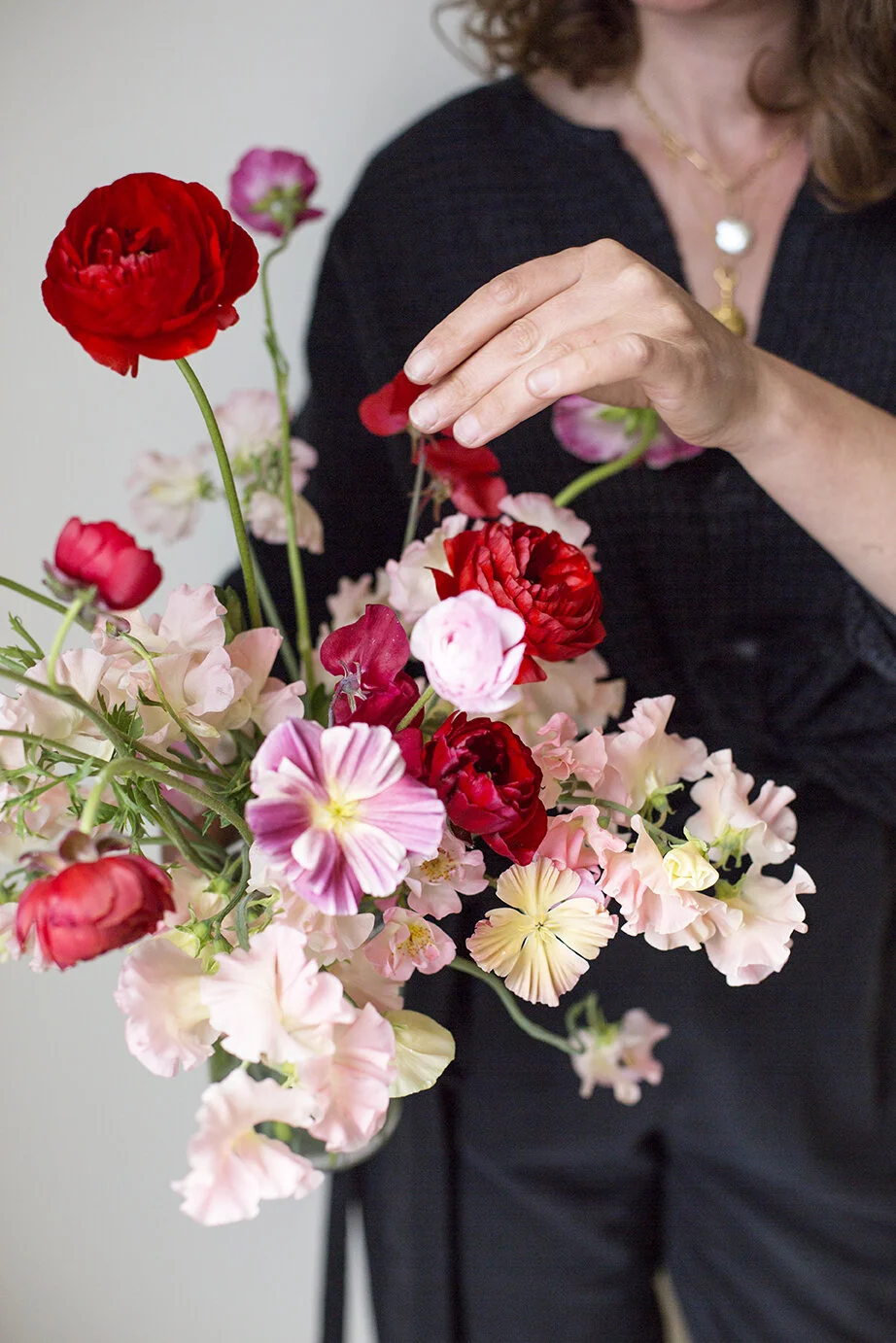


Ranunculus, Dutch and bearded iris, sweet peas and Allium siculum.
The more we delve into these concepts, the more we are slowly deepening and developing our nature-inspired design philosophy and in the process the more layers there are to uncover, and the more there is to learn and think about and research. What flowers and gardens mean to us, why we grow plants for decoration and bring them into our homes. Why and how they have the power to move us, to bring us joy, to change the energy in a room. How to create arrangements with natural materials that are truly evocative of season and place. How to combine them in a way that is reflective of how and where they were grown. How to balance colour and texture. How to edit, to strip out the unnecessary and allow the materials to reveal their true characters and complexities, to distill and elevate the essence of each ingredient. On the surface, growing and arranging flowers seems whimsical - the ultimate frivolity. But there is so much more to explore, technically, intellectually than meets the eye at first glance. You can just graze the surface, dip your toe in, you can go deep as you like. These questions have preoccupied us for years but we’ve had time to really dive down this year - every time we come up for air we find we want to go further in.


The large bed in the main garden being prepared for the changeover from spring bulbs to dahlias.


A handful of vines of ‘Heavenscent’, a beautiful sweet pea with frilly, creamy flowers flushed with pale pink and a rich, heady perfume. We cut it long on the vine to enjoy its leaves, whiskery tendrils and contorted stems.
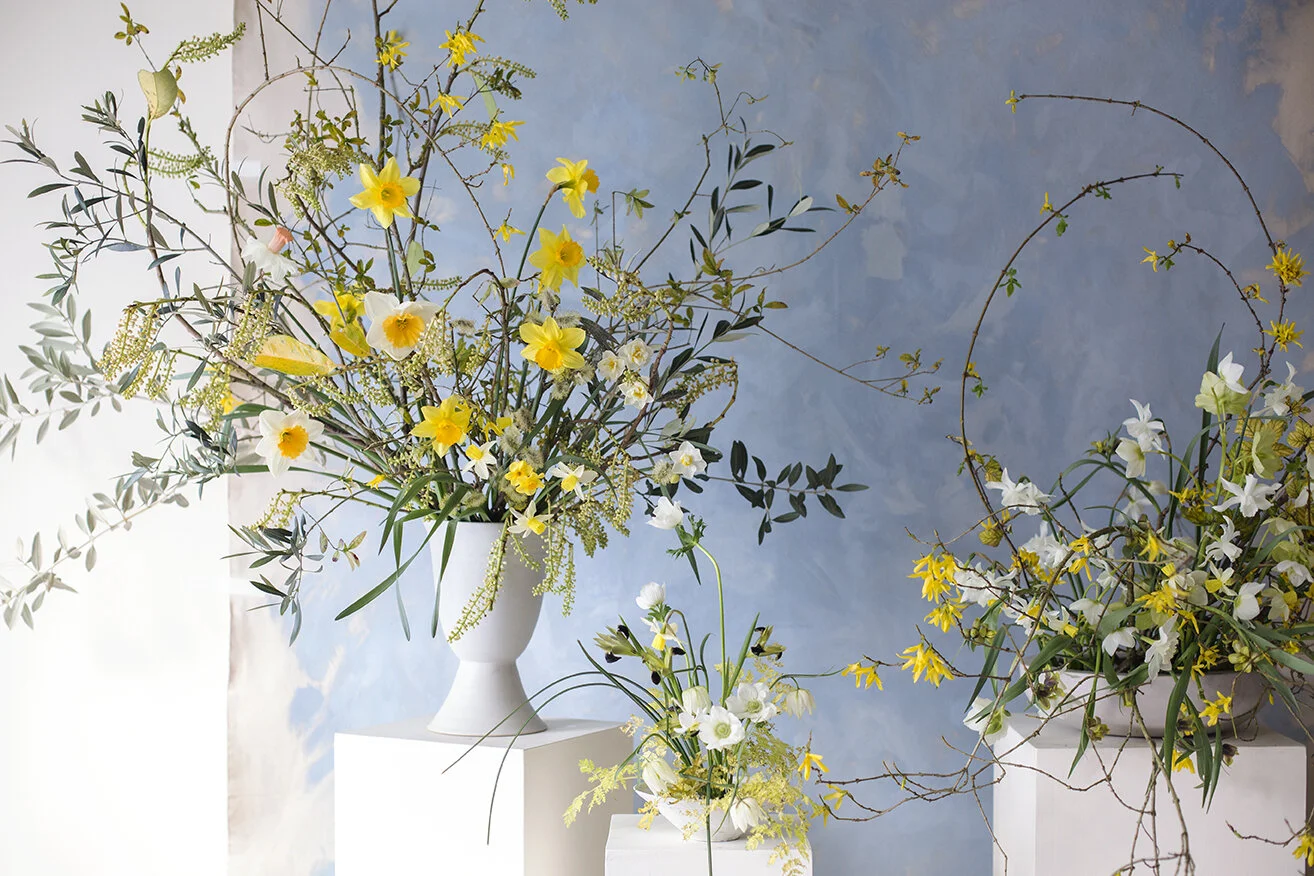
Flowers in the time of Covid
The next few months we plan to go back to basics. Growing flowers, learning how to arrange them, studying plants, photographing them, writing about them. It’s safe to say that until much later this year there will be no weddings, no parties, no workshops - this is going to be one long research trip! But while we have our health, we will be in the garden, slowly building on what we’ve started there for the future. We hope to share more with you here as we go.

This is the time to be slow,
Lie low to the wall
Until the bitter weather passes.
Try, as best you can, not to let
The wire brush of doubt
Scrape from your heart
All sense of yourself
And your hesitant light.
If you remain generous,
Time will come good;
And you will find your feet
Again on fresh pastures of promise,
Where the air will be kind
And blushed with beginning.
- John O’Donohue

Everything is different now. So very different, for all of us. This pandemic has robbed us of many things. In a business sense - cash flow, our work for the season ahead, our wonderful team, our certainty for the immediate future and weekly routines. It has robbed us of brushing past people in crowded rooms, of shaking hands, of coffee shops and wine bars and kissing our friends and parents, our freedom to go out and be in the world. For the time being, at least, we are restricted, isolated, distanced. But I don’t want to write about that. What I want to write about is hope, and change for the better. Because, while none of us expected THIS, there are, perhaps, silver linings to be found. For the moment time - to realign, to refocus - being one of them.
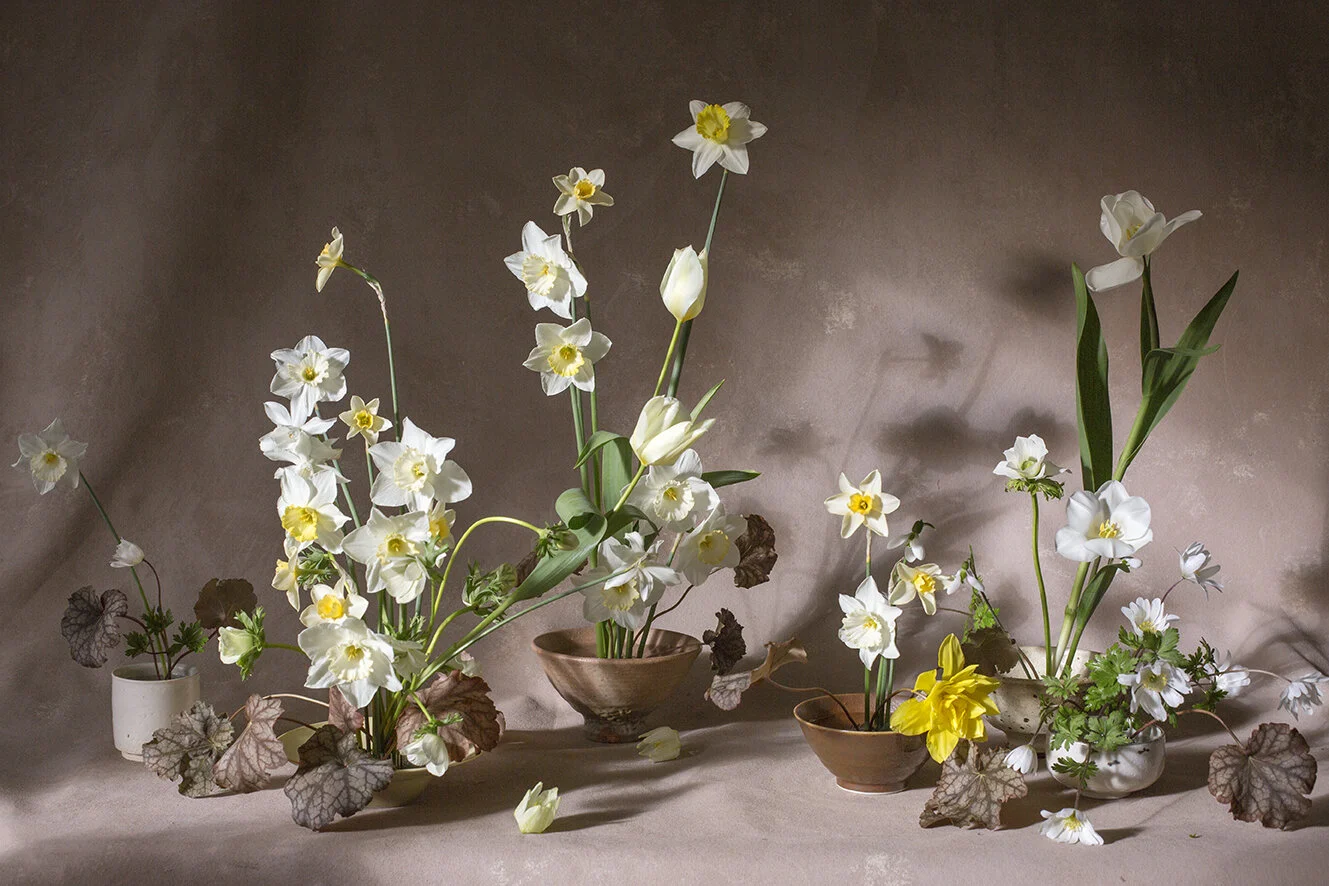
This week we were due to re-open the studio and flower school for the new season, preparing to welcome brides and mothers-of-brides and planners through our doors to discuss colour schemes and hash out itineraries and students coming to study floral design with us for a day, or a week - it’s one of the most exciting stages of the year, the cusp, when everything is just about to get going. For us there’s nothing we love more than a full diary of dates stretching ahead, that blissful workaholic haze of early mornings and challenge and adrenaline, one project after the other until the winter when we exhaustedly crawl back into hibernation again until spring. For the last five years this has been the annual dance, a rhythm we are familiar with and thrive on. We’d lined up the perfect team to work alongside us - all similarly champing at the bit to get off the starting blocks and into the field to join the flowery fray. And then out of nowhere - Covid-19. BOOM!


A week into the UK lockdown and we are only just beginning to come to terms with what this means. Everything looks different. London is deserted; our beautiful city boarded up and unrecognisable. On one of those grim mornings last week I made my usual pot of strong coffee and took a mug out into the garden. My husband was listening to the news, the air was tense with anxiety and everything was eerily still - no children playing in the school playground, no cars on the road, no planes. I stood amongst the potted pelargoniums and drank my coffee. I had a childish and self-indulgent urge to cry but couldn’t. Crying seems to get harder as you get older, perhaps that’s as it should be. Instead I concentrated on the silence in an effort to compose my thoughts and get on with the day. And then I realised something. The world around me was far from silent - to the contrary, the whole morning was full of birdsong. Every day since I’ve tuned into the blackbirds and starlings whistling and chirruping to each other, and the swaying canopy of holm oaks in the wind at the end of the garden sighing like the ocean. In these moments I find I can cling onto a sense of peace, that at some point all will again be right with the world.


In the meantime nature carries on, regardless of us and our viruses. It has its own schedule to keep to. The earth warms, birds chirrup, stag beetles have sex in the sun, the honeysuckle scrambles up over the fence and unfurls its grey leaves. In the garden time slows - yet at this time of the year every day is like watching the plants fast-forward to fuller, more vigorous versions of themselves. This is where we’ve been the past week, in among the leaves and new fronds, keeping close to the earth. Raking soil, planting, watering, making good. These simple acts, the rhythmic, methodical processes of keeping a garden, are utterly life affirming.


The flowers are blooming, more and more every week. We have time to really think about them and give them the attention they deserve. Each harvest we are collecting all the treasures that might be taken for granted in the rapid pace of usual life - tiny narcissus and fritillaria, the first of the tulips, ranunculus unfurling their petticoat skirts.


Against all odds the past few weeks have been a strangely fertile time of creativity and ideas. Even though its just us the two of us now, and far from the jazzy, busy season of hustle we were expecting. Perhaps, without the racing and dashing of everyday life as we know it, there is now the space to reconsider whether all the usual freneticism is worth it, whether there are other ways of operating, as a business, as a family. For us, a chink of light has illuminated what’s important and what’s superfluous. What we thought achievement meant and what it should. And what we want to focus on for the future of Aesme - what it is, really and truly - that we’re trying to do here. Refocus, reposition, make the most of the time available.


The next few months we plan to go back to basics. Growing flowers, learning how to arrange them, studying plants, photographing them, writing about them. It’s safe to say that until much later this year there will be no weddings, no parties, no workshops - this is going to be one long research trip! But while we have our health, we will be in the garden, slowly building on what we’ve started there for the future. We hope to share more with you here as we go.


Late August
Late August, and the seasonal barometer prevaricates daily between high summer and early-onset autumn. It has been a month of workshops at Aesme, with three wonderful groups of florists visiting from Seoul, each for a three-day intensive class on garden-inspired floral design
IN THE STUDIO


Late August, and the seasonal barometer prevaricates daily between high summer and early-onset autumn. It has been a month of workshops at Aesme, with three wonderful groups of florists visiting from Seoul with Flower Workshop Korea, each for a three-day intensive class on garden-inspired floral design for weddings. These workshops are a luxurious and immersive deep-dive into arranging flowers in the most naturalistic and seasonal way possible - lots of dahlias, rudbeckia, scabiosa, tobacco flower, garden roses and phlox this month - with textural shrub-foliage, foraged clematis vines and grasses, and plenty of scented herbs, fruits and vegetables - apples, tomatoes on the vine, artichokes and beans. It is such a treat to really revel in these materials and experiment with them, coming up with a different colour palette for each class, pushing the boundaries of what we feel is familiar or safe. It’s a fantastic time of the year for this - the leaves beginning to turn and some of the rusty tones appearing - mouthwatering mingled in with the softer shades of summer - bronze with lime and peach, caramel with lilac, blush with gold.


Sharing our flowers, watching other people discovering and enjoying them, has to be the most enjoyable aspect of the job, particularly when we have grown the majority of them from seed, bulb or tuber, and nurtured the plants towards a fruitful harvest. Especially when many of the students are working with particular varieties for the first time. There’s a palpable sense of anticipation in the studio, which we love and find infectious, and it makes us want to push the boundaries with what we grow the following year.


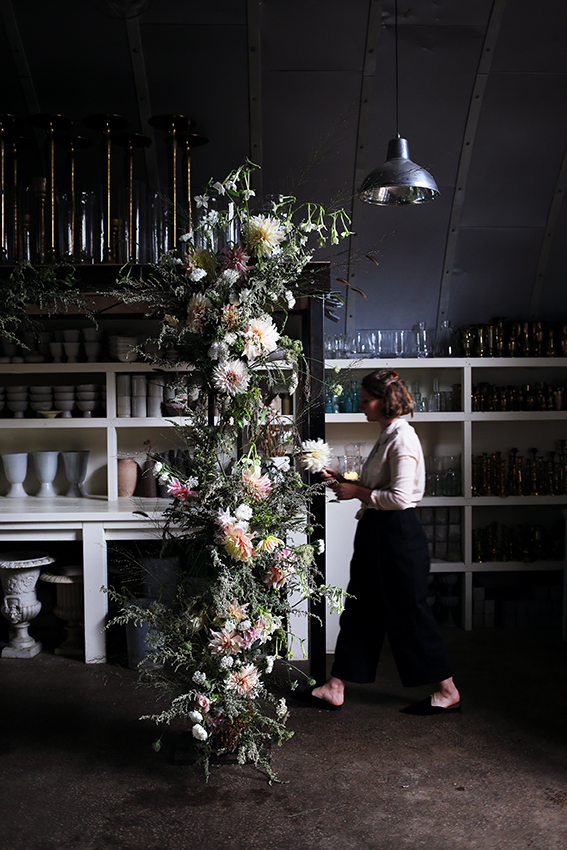

I’m always struck by how much people love using weeds, vines, grasses, vegetables and fruit just as much as they enjoy the flowers themselves - its those textural elements that bring an arrangement alive and fill the studio with fluffy, frothy works of art - each one an architectural sculpture, and so detailed, so colourful. It definitely isn’t the easy option, growing and gleaning your own materials, especially alongside design work for events and running regular classes. I’d go so far as to say that it may be the hardest form of product sourcing. But that direct connection with the source itself - the soil, the plants that give us these treasures every week, the weather, is integral to what we do here at Aesme, and the special experiences we want to provide for our students and clients.


IN THE GARDEN


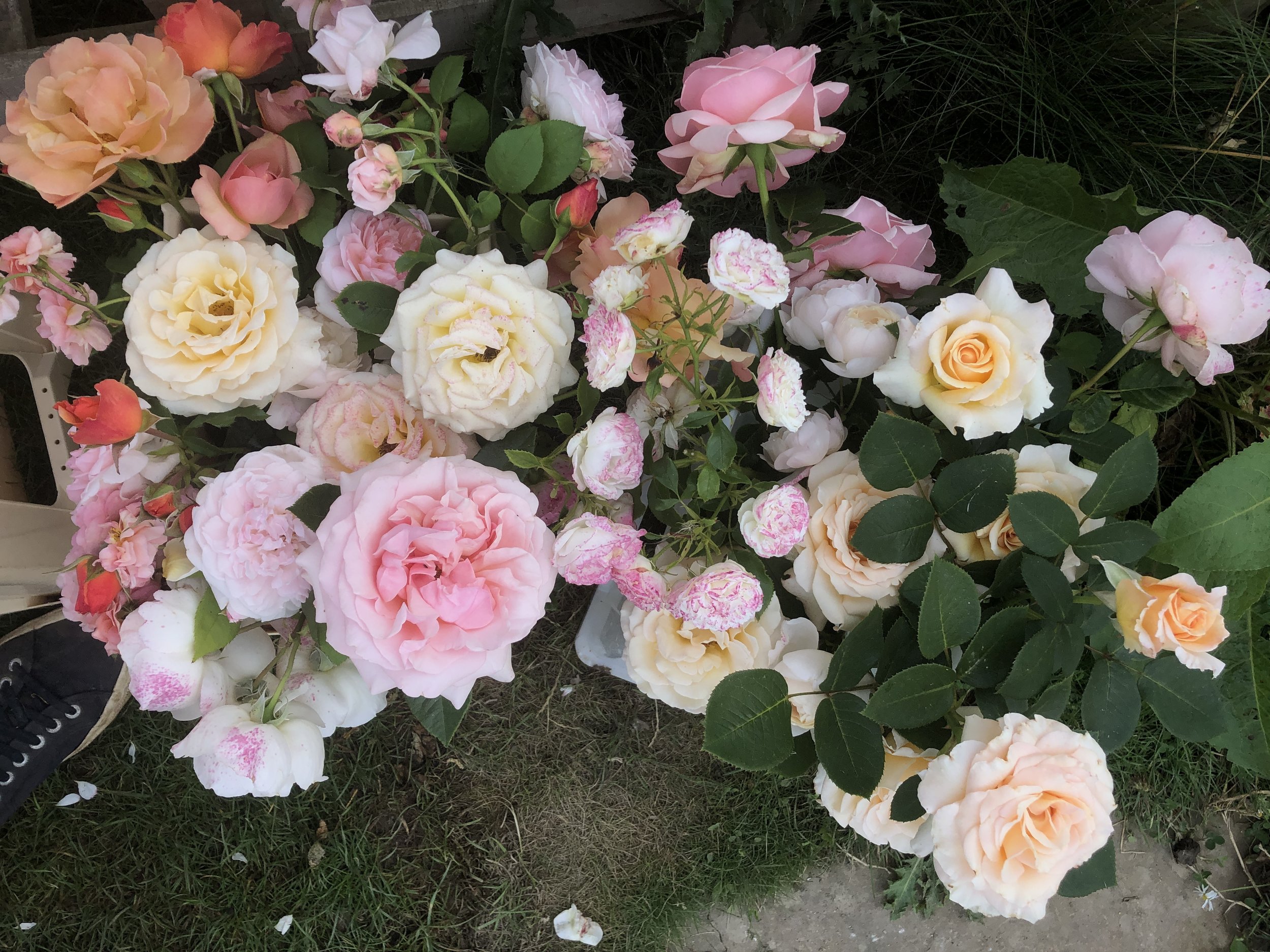

At the farm our cutting garden is in peak production mode. This is the time of plenty, of harvests and corn dolls and receiving, after all the months of tending and nurturing and encouragement. The time of the year when people are gifting and trading the fruits of their labours - tomatoes for courgettes and rosemary, a bowlful of butterhead lettuce, just cut. A friend gives me a precious bagful of macadamia nuts picked from the tree on the ranch where she grew up in California. This is the most pleasurable way of living and eating - practical, frugal and generous at the same time.
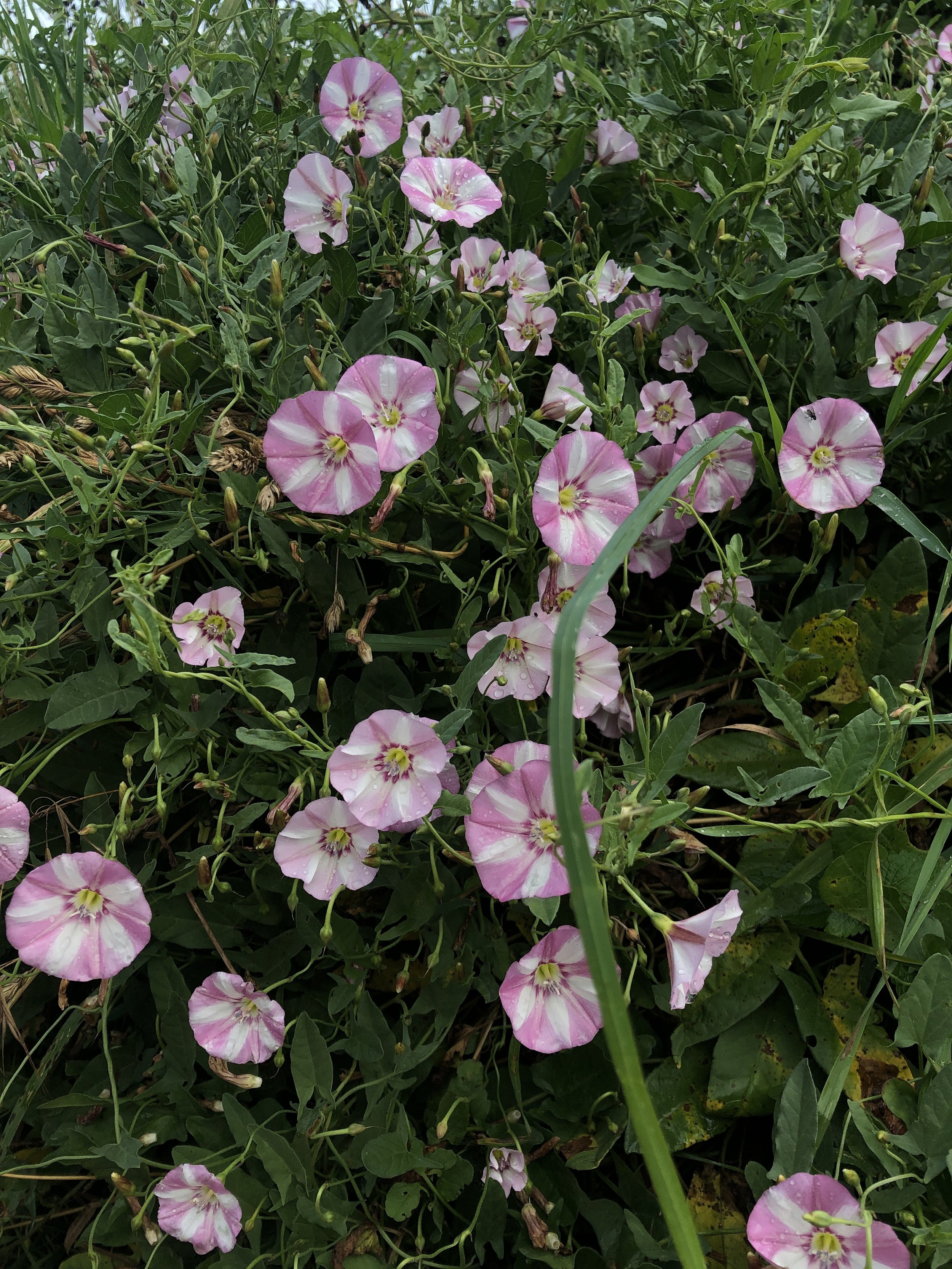
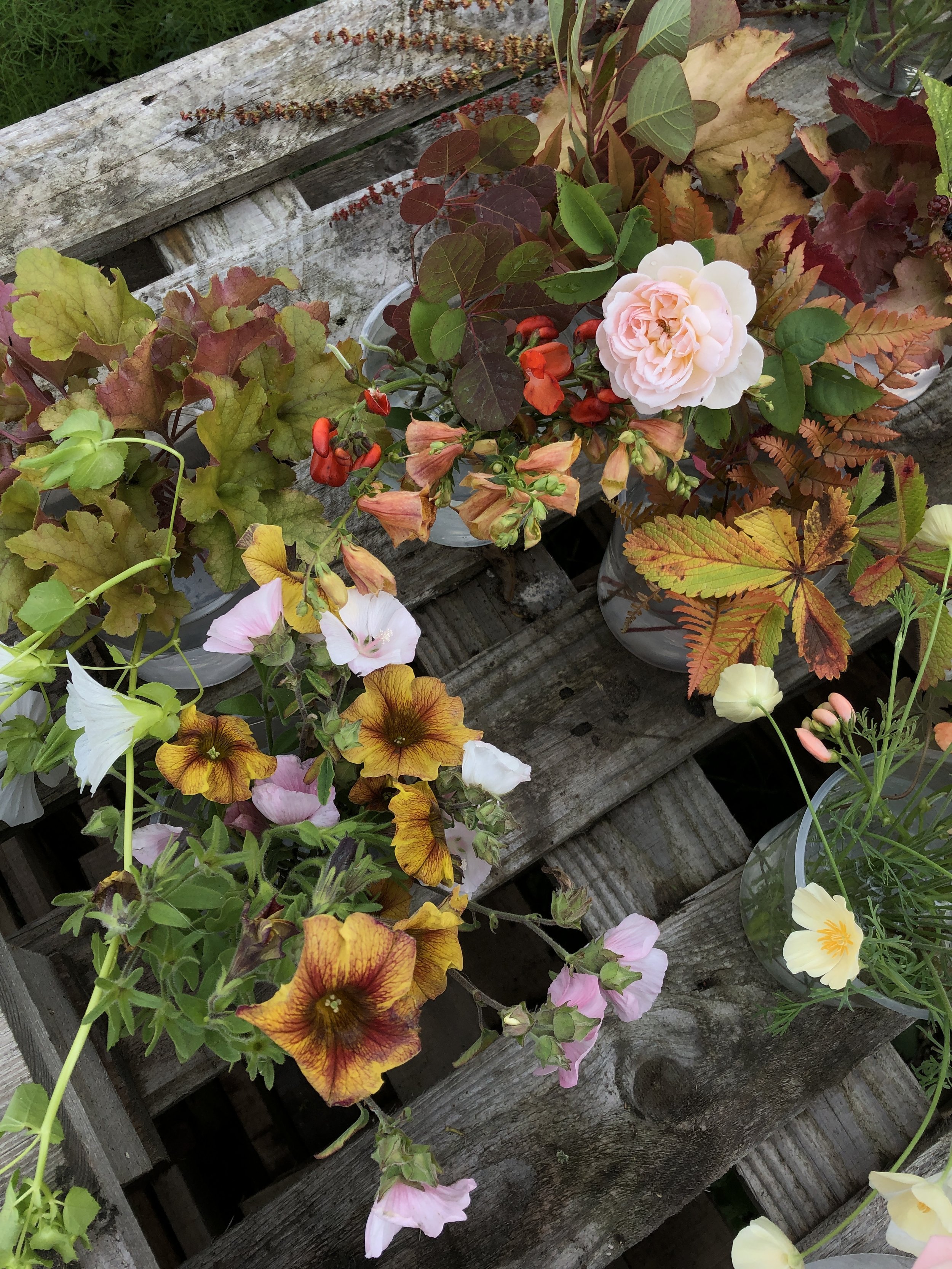
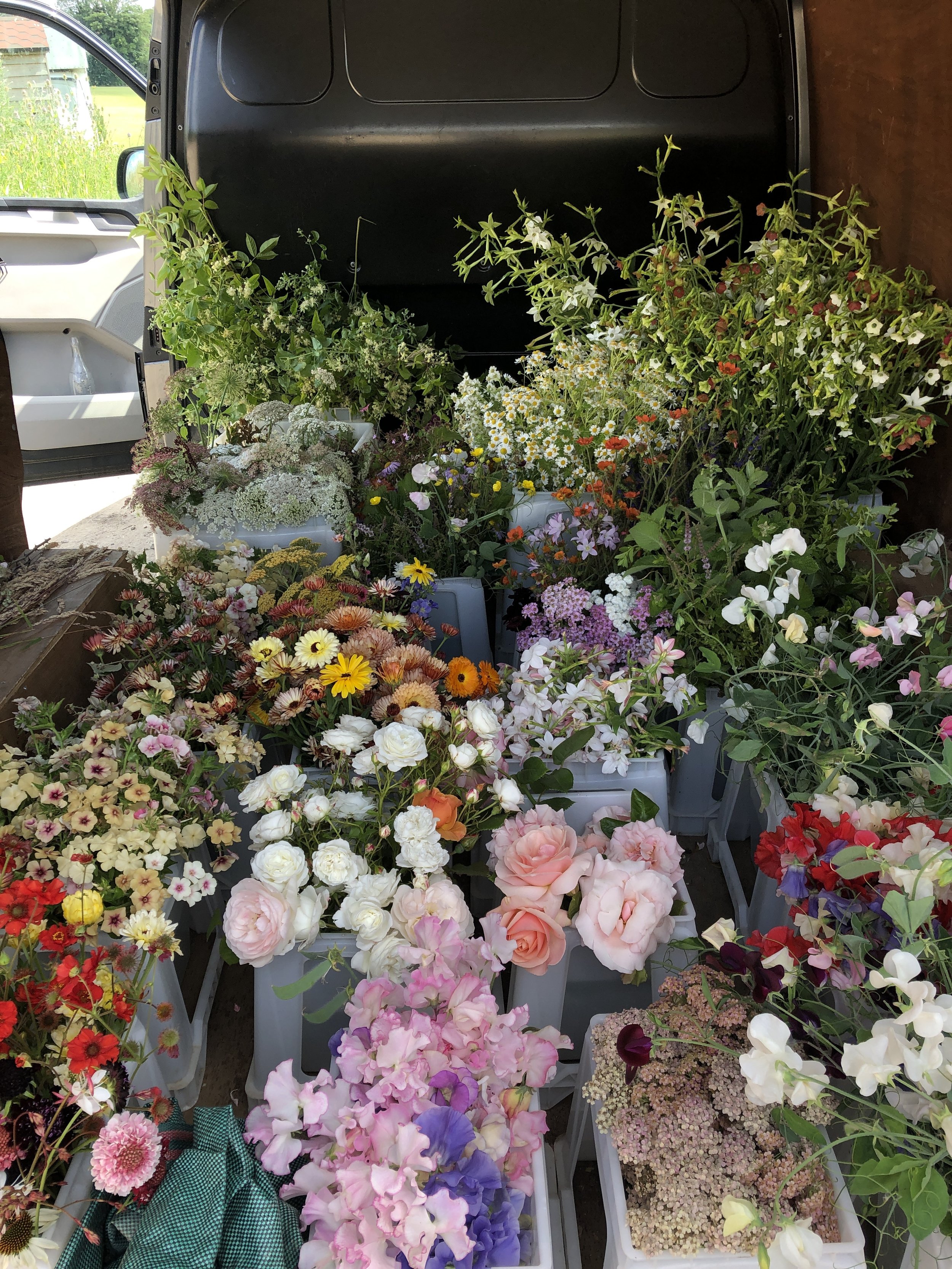
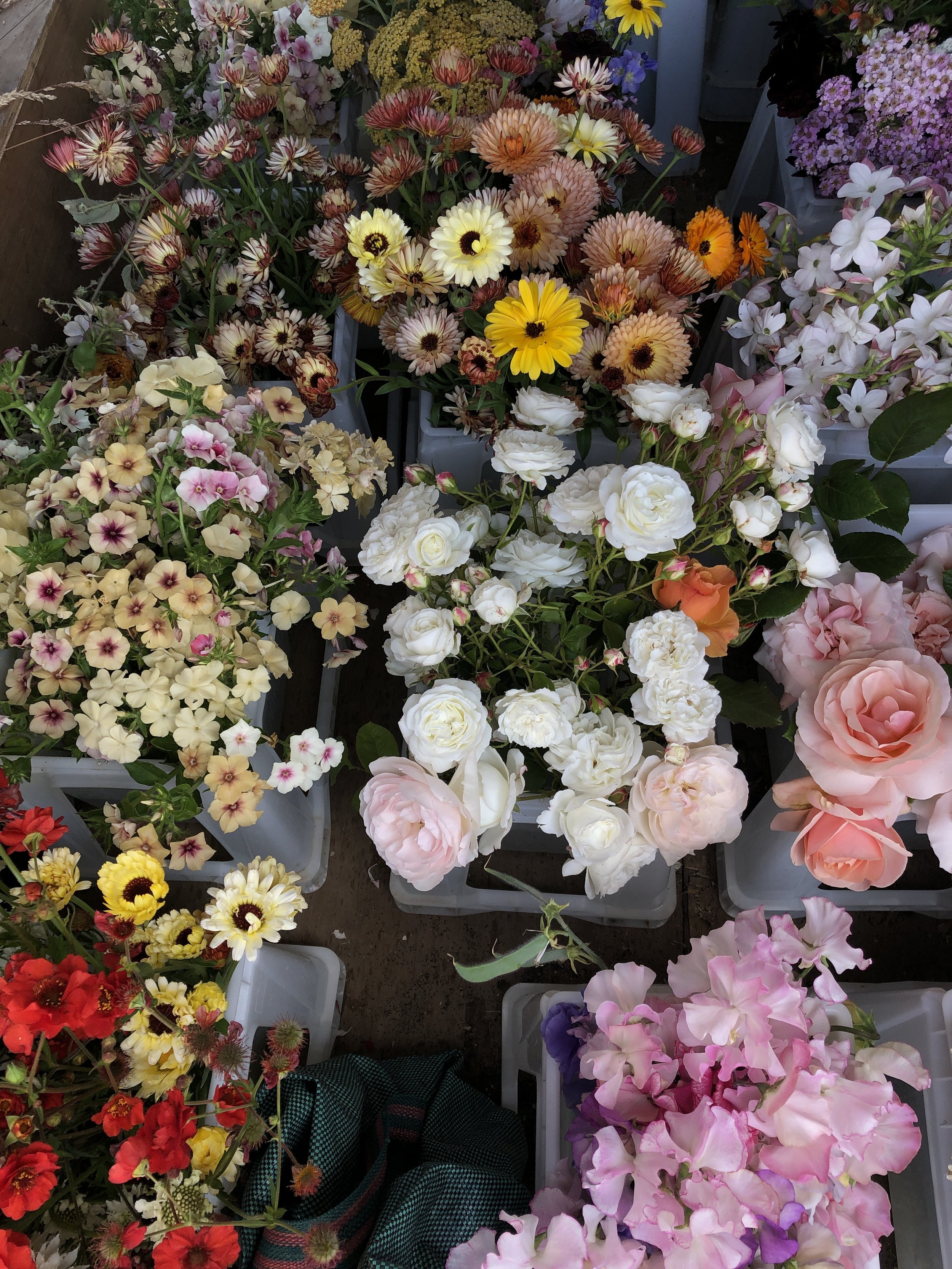
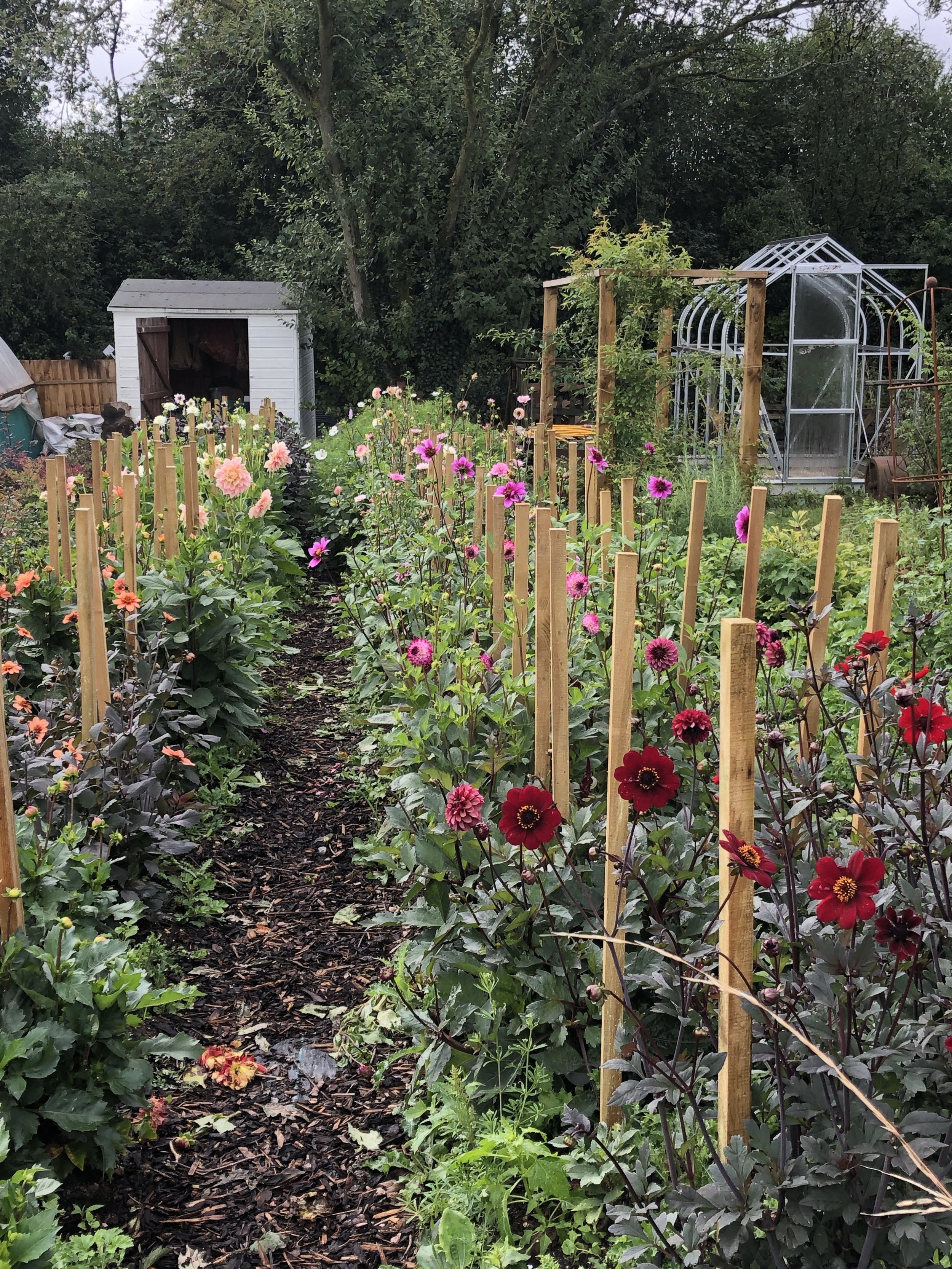
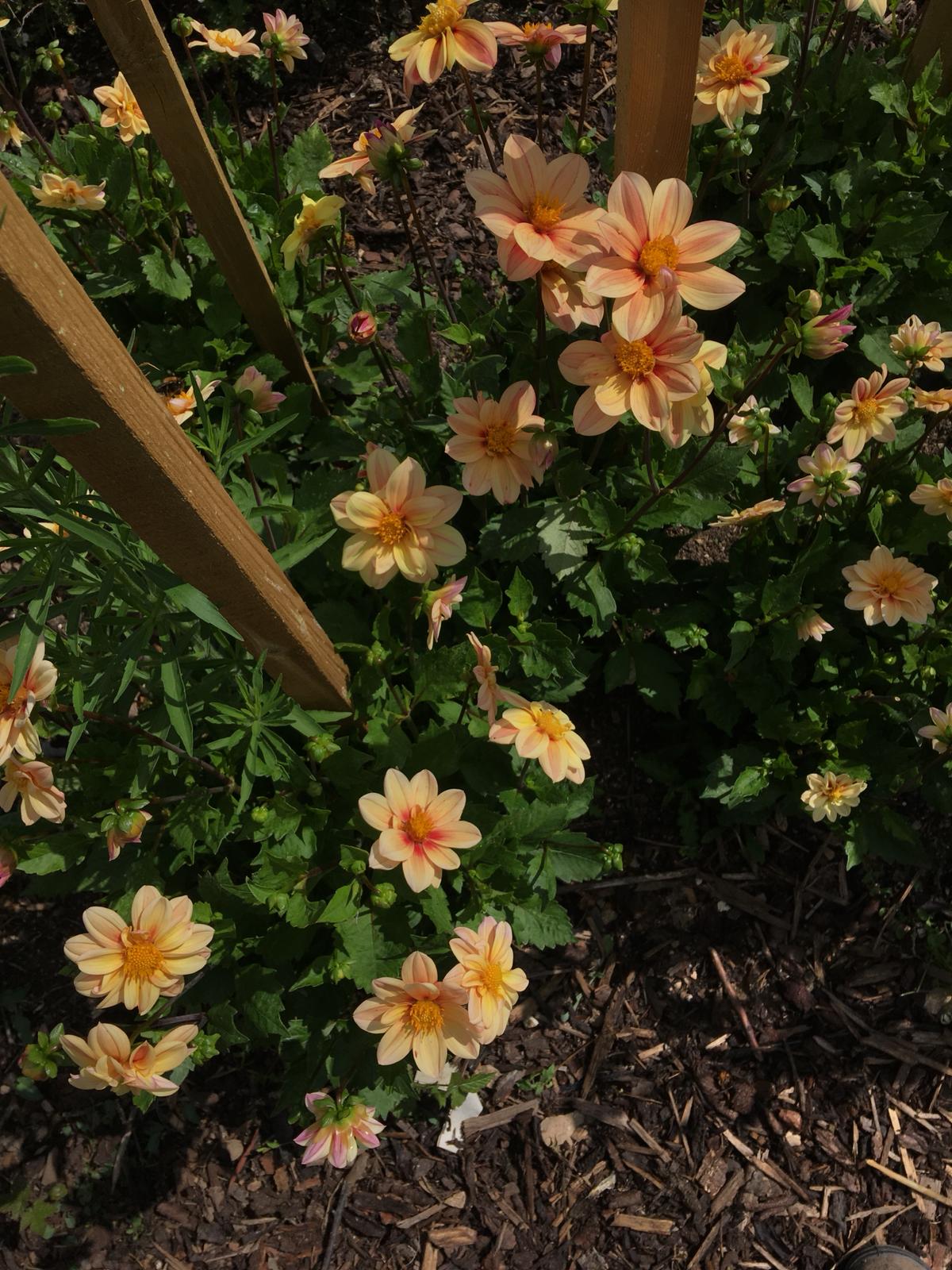
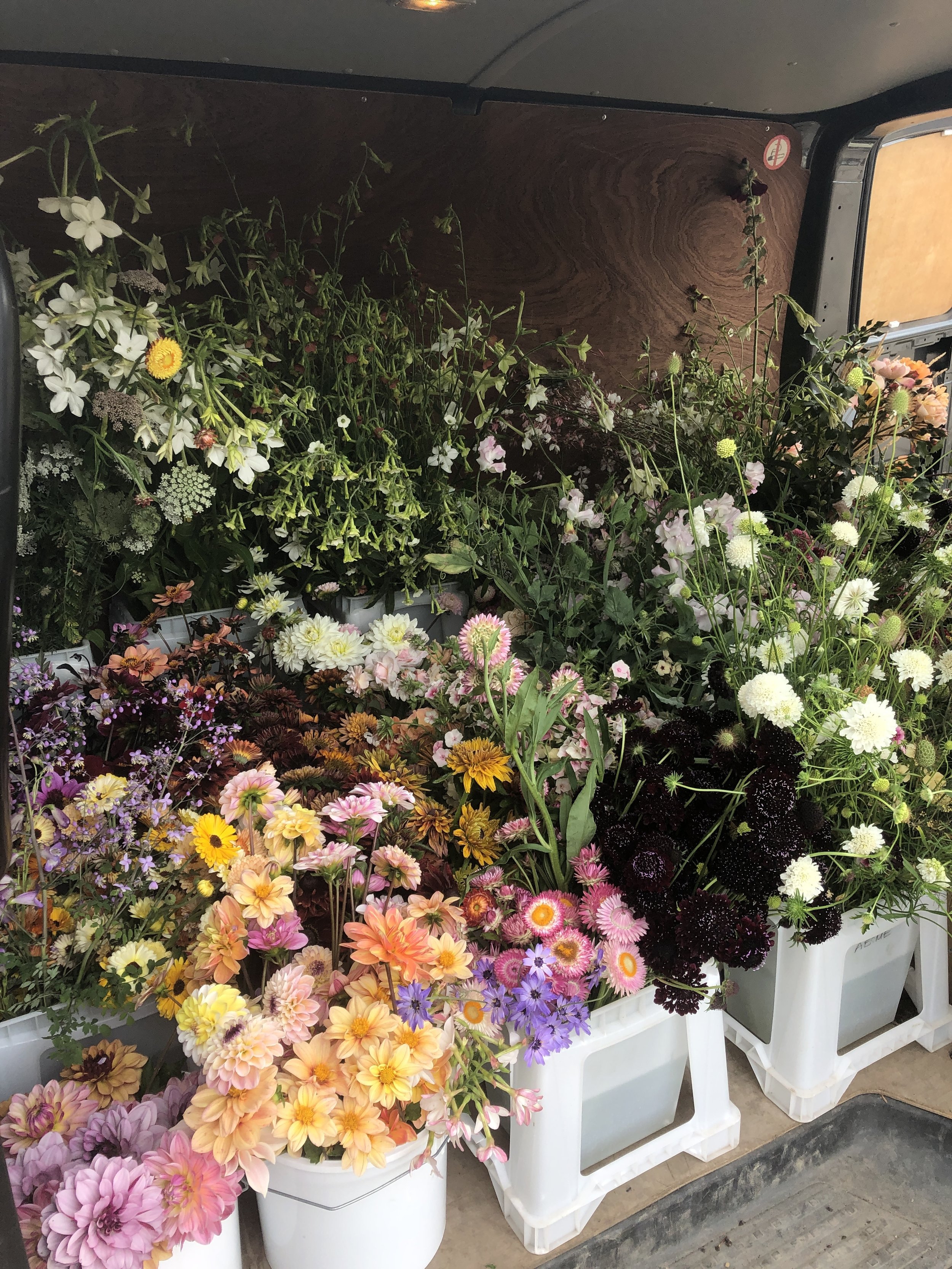
The roses have eased a little now between flushes but our main ‘cut and come again’ crops, which include dahlias, phlox, scabious, rudbeckia, cosmos, nicotiana, daucus carota, calendula, borage, amaranthus, zinnia, Californian poppies and everlastings, are flowering prolifically along with successional plantings of hardy annuals like agrostemma and sweet peas. The herb beds have been full and luscious, the perennial beds yielding achillea, echinacea, chocolate cosmos, gaura, fennel, verbascum, campanula and spires of dainty thalictrum flowers.

Around the garden the hedgerows are beginning to glimmer with blackberries, hawthorn and rosehips and the scratchy outlines of drying umbels. We pick raspberries and whitecurrants from their canes to eat while we are cutting and fill little pots with ripe tomatoes, their sharp scent filling the tunnel. The garden is full of butterflies and drunken bees and the occasional sound of seeds showering from brittle pods, a sure sign that summer will soon be drawing to a close. Waiting just around the corner are days of morning fog and mellow afternoons filled with drifting bonfire smoke, when the leaves spin from chartreuse to titian red as if licked by flames, and finally to a dry cinnamon brown, crisp underfoot. For now we hover on the bittersweet bridge between two seasons, looking ahead, and looking back.
IN THE ETHER
A few things we’ve been loving this month…
R E A D I N G - Wilding: The Return of Nature to a British Farm by Isabella Tree | Modern Nature: Journals, 1989 – 1990 by Derek Jarman
L I S T E N I N G T O - Miles Davis : Kind of Blue | Madeleine Peyroux : Dreamland
F O L L O W I N G - @coyotewillow | @lagrottaices | @hortusvarius
C O O K I N G - Pear salad with gorgonzola & walnuts by Deliciously Ella | Roast tomatoes on toast with tarragon & thyme by Gill Meller | Cromer crab in Norfolk
V I S I T I N G - Wiveton Hall Garden, Norfolk & Colby Woodland Garden, Pembrokeshire

A London heatwave
It is currently 37 degrees in London, stifling and still, pollen drifting slowly in mid air. Landing back at Heathrow last night, it was barely cooler than Italy, the same humid blanket of heat and haze spreading across Western Europe.
IN THE STUDIO
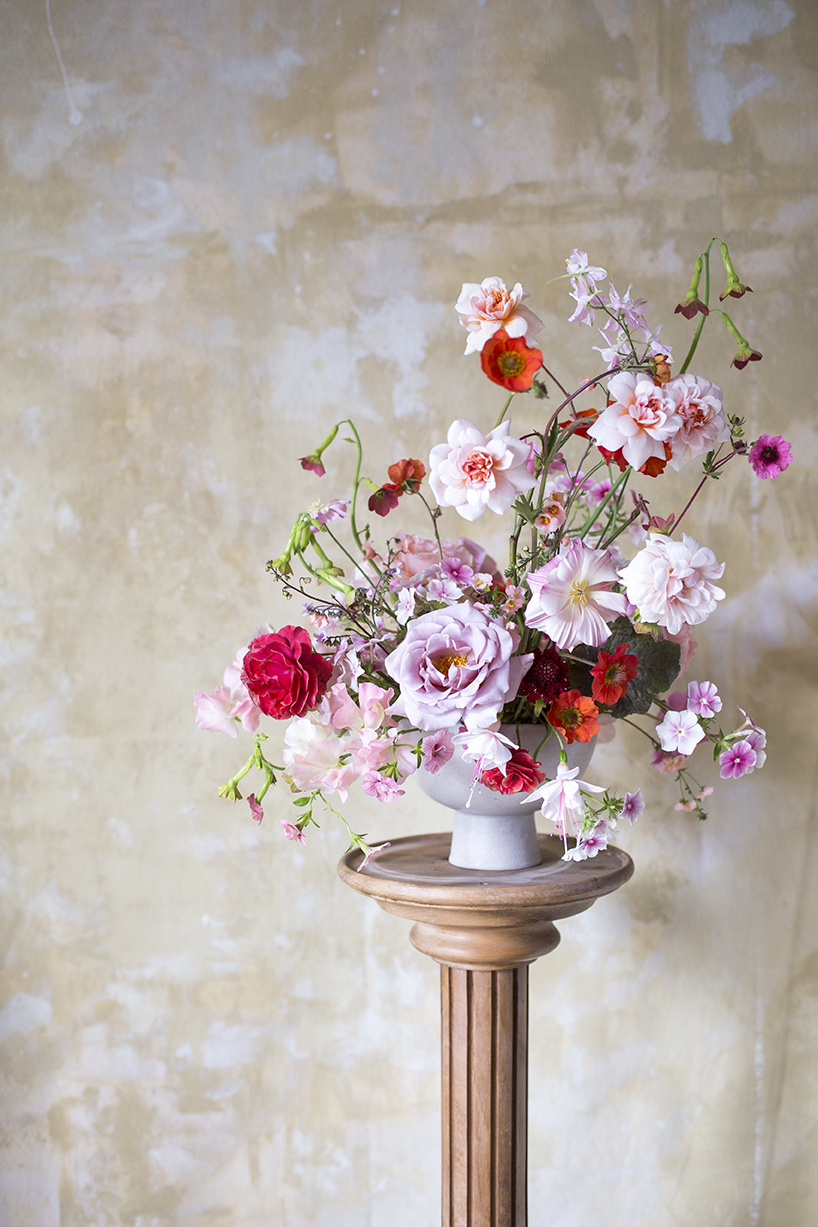


It is currently 37 degrees in London, stifling and still, pollen drifting slowly in mid air. Landing back at Heathrow last night, it was barely cooler than Italy, the same humid blanket of heat and haze spreading across Western Europe. Too hot to work - almost too hot to write - it has taken most of my energy today just to unpack, water the garden and occasionally pad barefoot to the kitchen for more elderflower.


July has been another wonderfully full and floral month in the studio with private and group classes and as always we have loved welcoming guests to our leafy haven in the city, sharing ideas, great flowers and cafetieres of strong coffee in between lulls of companionable non-conversation and concentration. Flower arranging never ceases to be meditative, even when there is a lot of it to be done in a little time (as is often the case for us in the run-up to weddings or events); it quietens and calms and focuses in a way that I think is quite addictive to those who really embrace and enjoy it.


Recently I’ve tried to build in time for more creative experimentation whenever I get the chance; working with flowers and plants there is always so much more to learn and to try, different combinations of materials, different techniques. It is easy to fall into the trap of replicating, particularly when it is your job, and sometimes it is nice to make something that isn’t for sale, isn’t ‘appropriate’ or proportionate or even finished. In our classes we always say that the goal is to experiment, to try something new, not to worry about getting it exactly ‘right’, to take it apart if you’re not happy with it, to start over, mostly just to enjoy it; flowers are, after-all, the greatest luxury. When you are arranging for a client the over-riding priority is the End Result. When you’re arranging for yourself it is the process that takes precedence, that peculiarly ecstatic state of mind when you are coasting, not thinking about anything, finally. And then, after some time, and all of a sudden, you are flooded with new ideas.


To quote from the book I recommended in the last post (still so much at the the forefront of my mind that I am re-reading earlier chunks of it) To The River by Olivia Laing -
‘I was getting anyway into one of those trances that come from walking far, when the feet and the blood seem to collide and harmonise. Funnily enough, Kenneth Grahame and Virginia Woolf both wrote in praise of these uncanny states, which they thought closely allied to the inspiration writing requires. ‘Nature’s particular gift to the walker,’ Grahame explained in a late essay, ‘through the semi-mechanical act of walking - a gift no other form of exercise seems to transmit in the same degree - is to set the mind jogging, to make it garrulous, exalted, a little mad maybe - certainly creative and supra-sensitive, until at last it really seems to be outside of you and as if it were talking to you, while you are talking back to it.’ As for Woolf, she wrote dreamily of chattering her books on the crest of the Downs, the words pouring from her as she strode, half-delirious, in the noon-day sun. She compared it to swimming, or ‘flying through the air, the current of sensations & ideas; & the slow, but fresh change of down, of road, of colour: all this is churned up into a fine thin sheet of perfect calm happiness. It is true I often painted the brightest pictures on this sheet: & often talked out loud’.
I feel like this when I am arranging flowers.


Next week the studio will be closed. We are all taking a break after the summer rush to go offline, stretch our horizons and re-energise with some coastal walks, fresh fish and early nights ahead of a busy August. More from the studio then!
IN THE GARDEN

It is that point in the season when there begin to be momentary glimpses of the next; the sorrel in the hedgerows turning rusty pink and burnt amber, the summer-weary earth is parched, little cracks appearing in the dust like miniature fault-lines. At the farm we’ve been making steady progress; it’s been a month of maintenance and weed control - so difficult to keep on top of in the height of the summer but made far easier with extra help. With the first flush over there is a brief lull before the next crops really get going - perhaps a little later this year because of the long, cold spring - the flowers of high to late summer - dahlias, zinnias, rudbeckia, scabiosa, daucus carota and everlastings. And vegetables too - lettuce and cabbages, french beans, radish and tomatoes. We harvest buckets of poppy seed-heads, so useful for the autumn, and already turning from that misty blue-green to tobacco brown and gold.


IN ITALY | GIARDINO ESTIVO WORKSHOP

Late last week Jess and I flew to Milan and drove north, spending the weekend on Lake Como. It was beautiful: terracotta, primrose and ochre villas with tiered gardens and shutters painted dusky blue, turquoise and emerald, hills brushed with mist, frangipani blossoming and trailing in the lake water that turned gold at dusk. Striped awnings, stone terraces of vines, water slapping the underbellies of boats and above the hills - pine, ferns, wild strawberries and hydrangea - the peaks not jagged but soft and undulating, blanketed with forests.

Not missing the chance to visit an Italian garden while we had a few hours spare we visited Villa Balbianello at Lenno. Built in the late 1780s by a wealthy cardinal, and most recently owned by handsome explorer Count Guido Monzino before passing to the Fondo per l'Ambiente Italiano (the National Trust of Italy) upon his death in 1988, the villa and its gardens are deceptively small and rather formal. But worth travelling a way to see was the snake-shaped Ficus which entwines the loggia, and the evergreen oak pruned into the shape of an umbrella, with a view across the Lake to Bellagio. We’ll share photographs in a later post, because there are many. I’d like to go back there, probably in autumn when the camphor laurels turn red; it must be a breathtaking sight.


On Sunday we moved east into the mountains to a little village near Erba, halfway between the two ‘legs’ of Lake Como and Lecco to host a two-day workshop at Olga’s Flower Farm. On the site of a nursery run by her mother Cecilia, Olga grows beautiful annuals - rudbeckia, cosmos, zinnia, dahlias, phlox, celosia and many more which she sells to florists in Como and Milan. We were spoilt for choice, and for foliage too - most exquisite varieties of ninebark, abelia, porcelain vine and viburnum as well as apples and pomegranates. It was a treat to be thrown into what I think of as the next season almost - late summer/pre autumn, the ‘serotinal’ period according to the ecologists calendar - a couple of weeks before we begin harvesting our own. The colour palette for the workshop was dominated by these dusty reds, corals, gold, rust and toffee.


It was extremely hot, as can be expected of Italy in July, and I think heat renders a lovely, if slightly sleepy atmosphere because those two days seemed to slip by in a slow, hazy, drifting sort of way. Everything just took the time it took - cutting, arranging, tweaking, drinking espresso, moving around from shadow to shadow, from the shade of one tree to another. And all day long, the unceasing soundtrack of cicadas.


We had the most wonderful group of students - a gaggle of kind, talented, imaginative and intelligent women, many from Italy but also from Barcelona, Vienna, New York, London and Scotland. It is the greatest privilege, not only to teach and to share our passion for plants and flowers with other like-minded enthusiasts, but to travel and see other gardens, other farms, in landscapes and climates different to our own. There is as much of a thrill recognising a shared love of the same flower as there is to discovering new ones.


We stayed in an old stone farmhouse at the foot of a small, bone-shaped lake and at the overlap of two mountains rising steeply towards the cloudless sky. At night a gossamer veil of heat slithered across the forest, causing the visual illusion that distinctly individual pine trees were now merging into one another, a soft black ashy slope so close you could almost reach out from across the valley and brush it with your fingertips. The owners, an attractive and glamorous proprietress named Roberta and her husband (whose name we never caught but we instead privately named ‘Mr Fawlty’) spent the hottest part of the afternoons in their cavernous cool room off the terrace watching the flat-screen television, oddly surrounded by the family silver which was laid out on every available surface as though it had been got down for a spring clean, many springs ago, and inexplicably abandoned. After the extreme heat of the day we would tiptoe past and slip into the shockingly cold (for a minute at least) pool, which was a green as old glass, and look out at the Lombardy hills, the rows of lavender fizzing with bees, the tier of terraces bordered by rough stone walls stepping down towards the shore of the lake where a wooden cabin was stacked neatly with logs. Occasionally the resident Great Dane - a great black shire-horse of a dog, would sidle over and lean her weight against you, bizarrely accompanied by a tiny black rabbit that had an unnerving habit of popping up next to you just when you least expected it after dusk. It was a strange and beautiful place and in many ways, despite it being really only a half-day of travel away, we couldn’t have felt further from home.
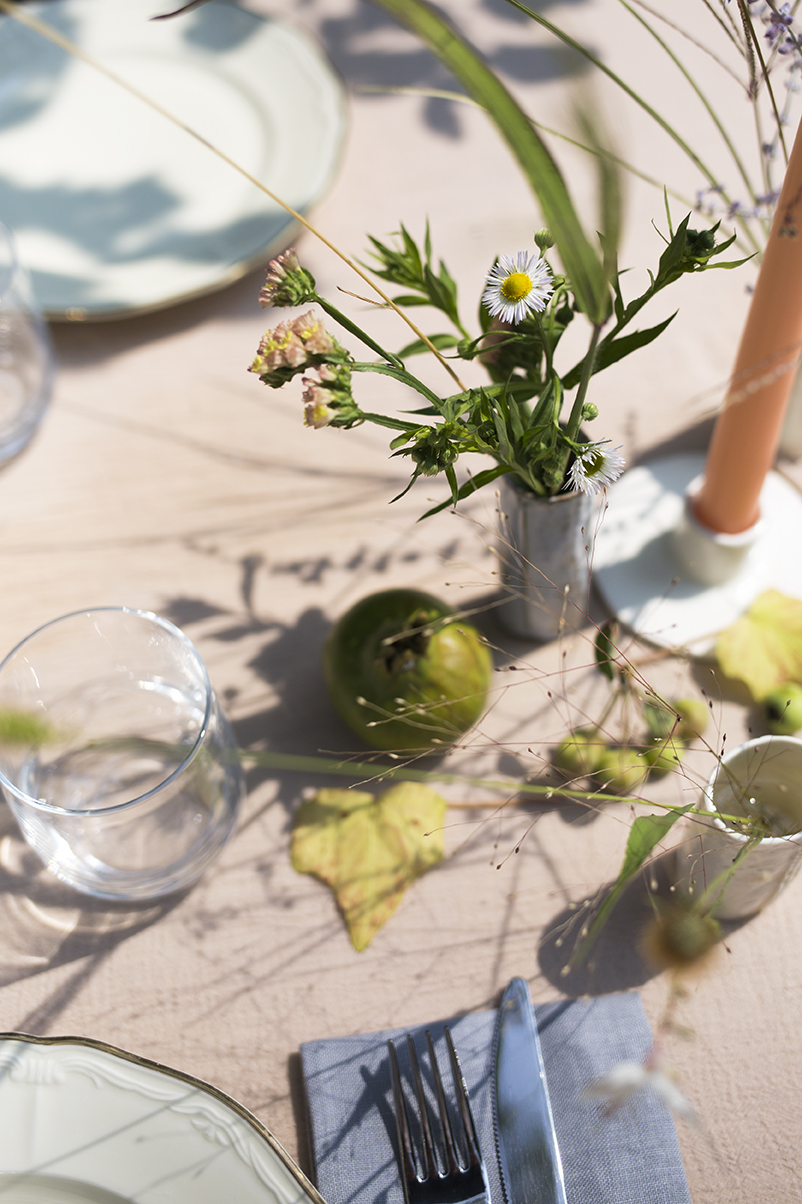


Of course being Italy we had delicious food, and it would be remiss of me not to share a few tasters… a risotto with melon. Ravioli with ricotta and orange zest in Como, a divine saffron risotto in Canzo, and on the farm coffee-soaked pastries and tiny espressos to make the heart flutter, orecchiette with shrimp, iced berries and elderflower shortbread.


We would like to thank… First and foremost, our students, for being such a joy and for making it all possible. Olga, for inviting us, sharing your beautiful flowers, allowing us to snip from your shrubs and exquisite pomegranate tree! Giulia for helping us with all the hard graft, you were a wonderwoman, and also for the beautiful blackberries, flowers and grasses from your farm. Cristina and Chiara for the food, coffee and general assistance. Fati Amor for the linen and silk ribbons; Agnes Duerrschnabel Atelier for the bowls and vases and Madlen Ceramics for the candle-holders.