
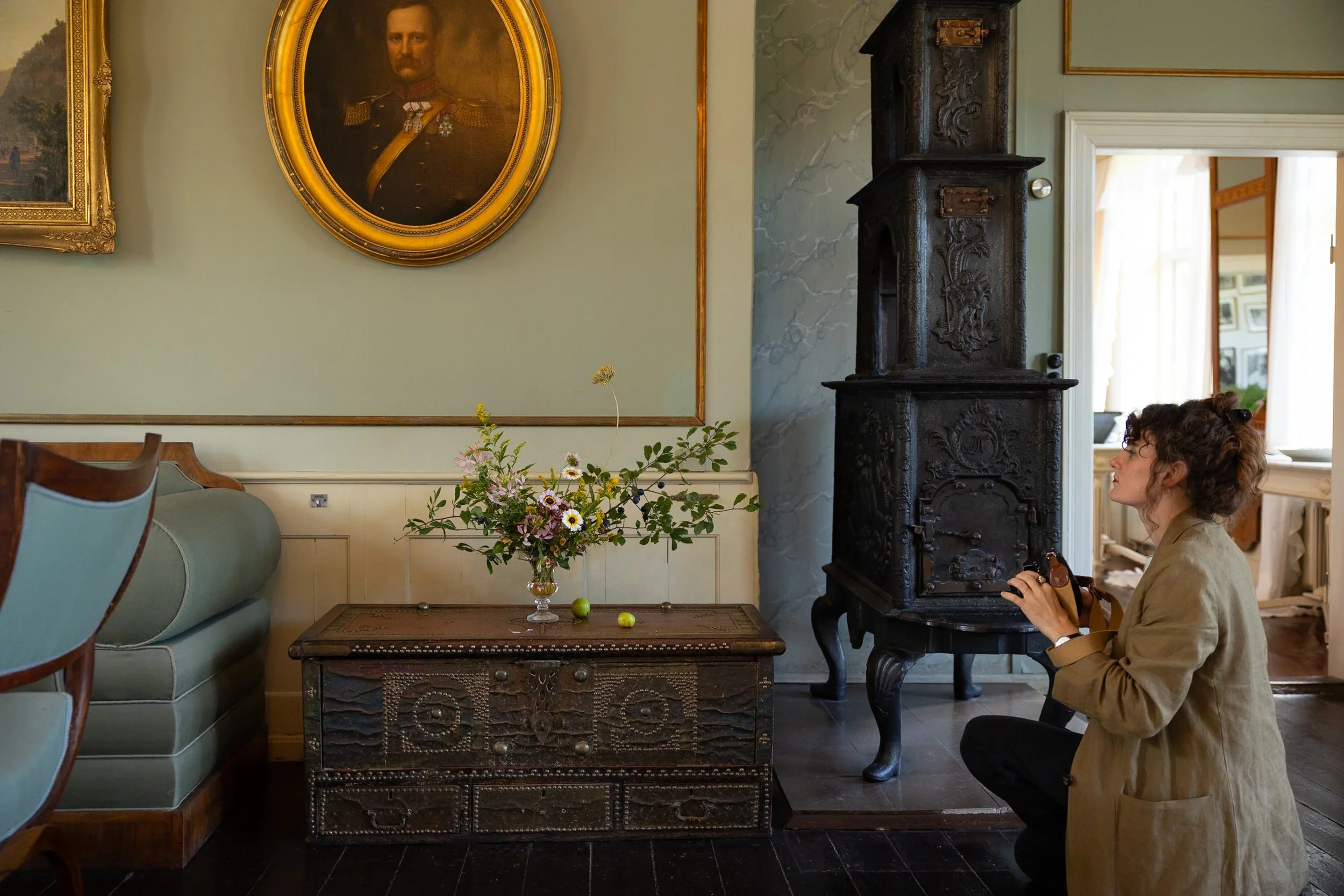
RUNGSTEDLUND, DENMARK
“I have a feeling that wherever I may be in the future, I will be wondering whether there is rain at Ngong” wrote the Danish novelist Baroness Karen von Blixen on returning to her childhood home at Rungstedlund after eighteen years living in Kenya.
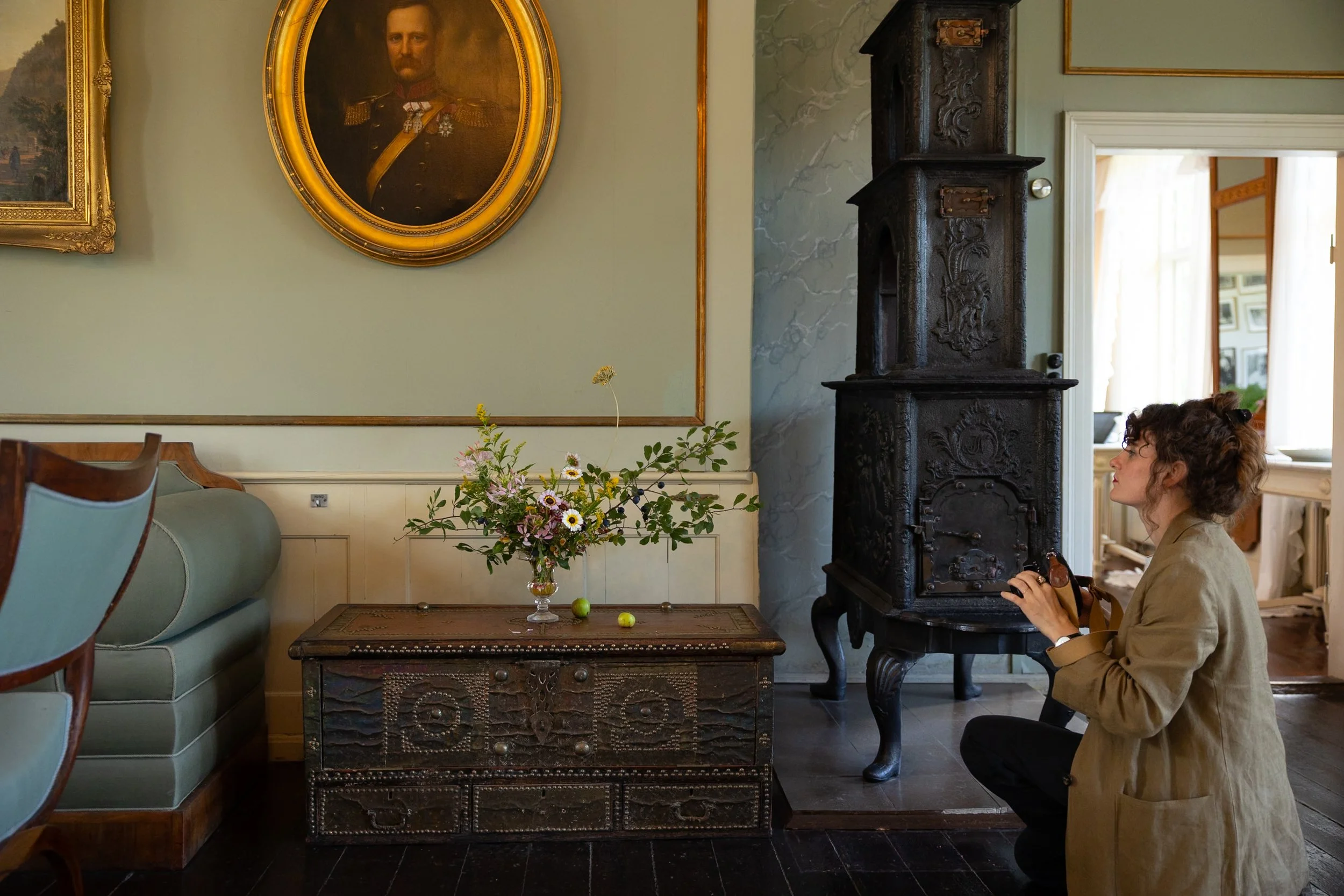
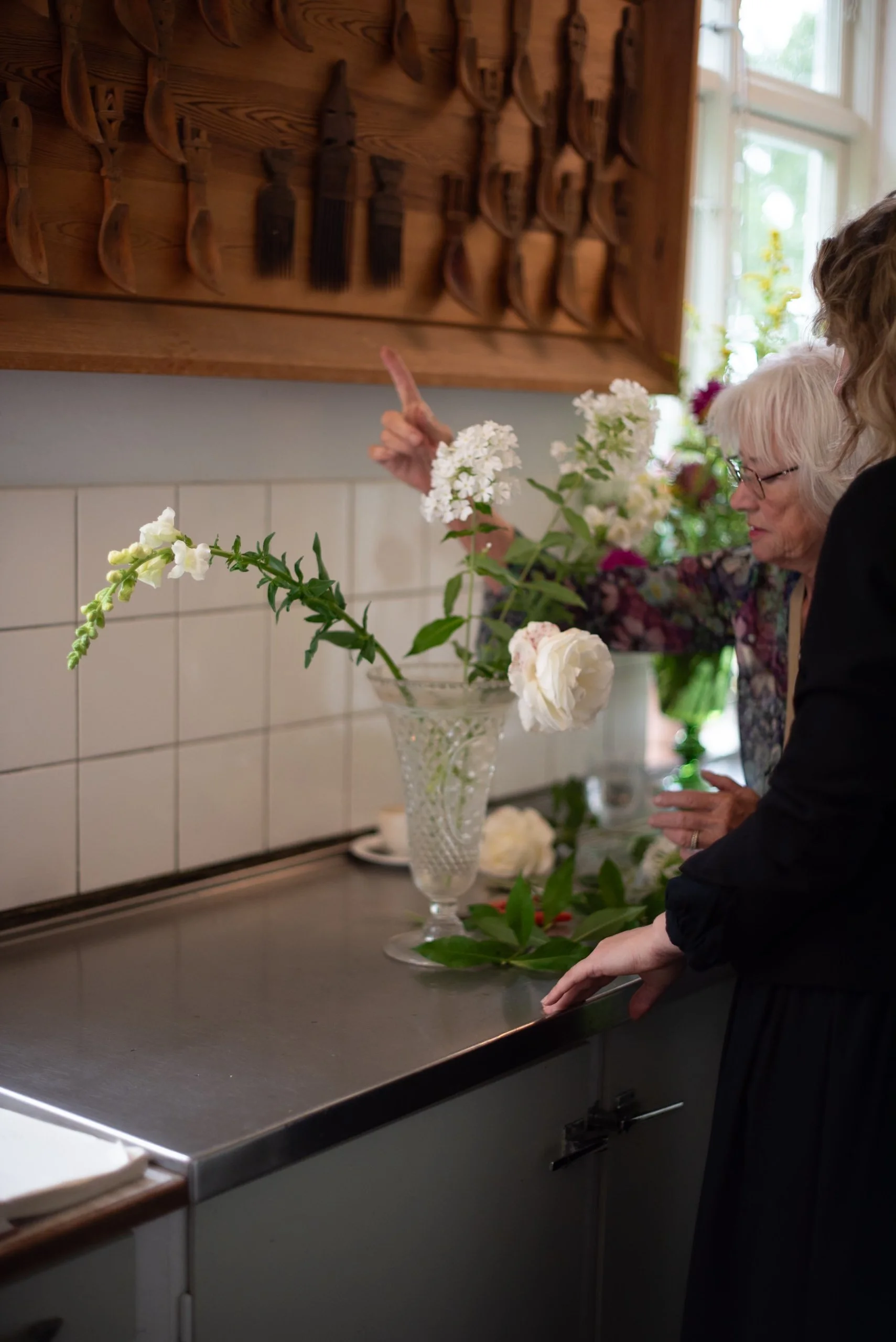
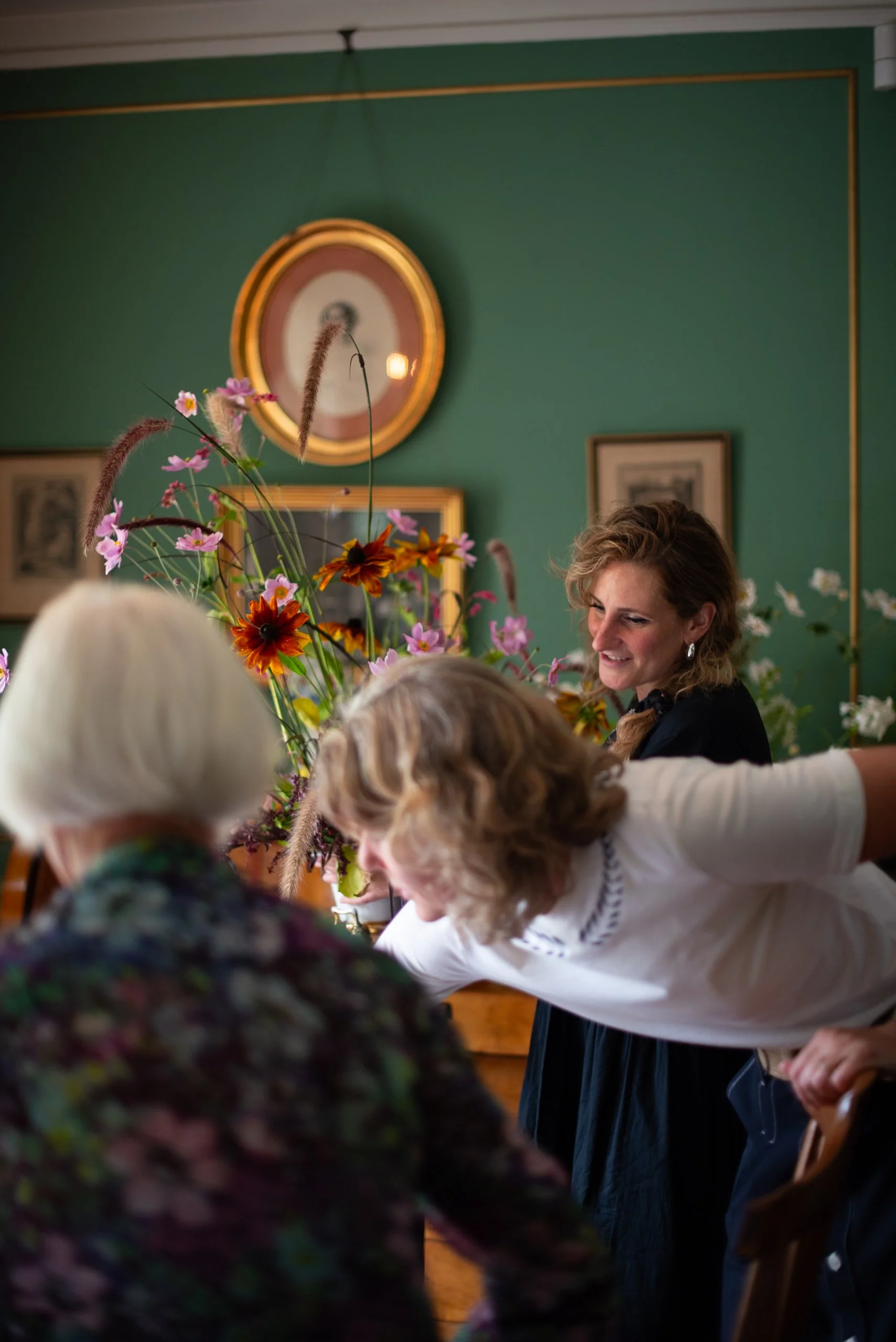
Arranging flowers on Farah's chest, a brass-studded travel trunk gifted to Karen Blixen by her loyal Somali companion, Farah Aden.
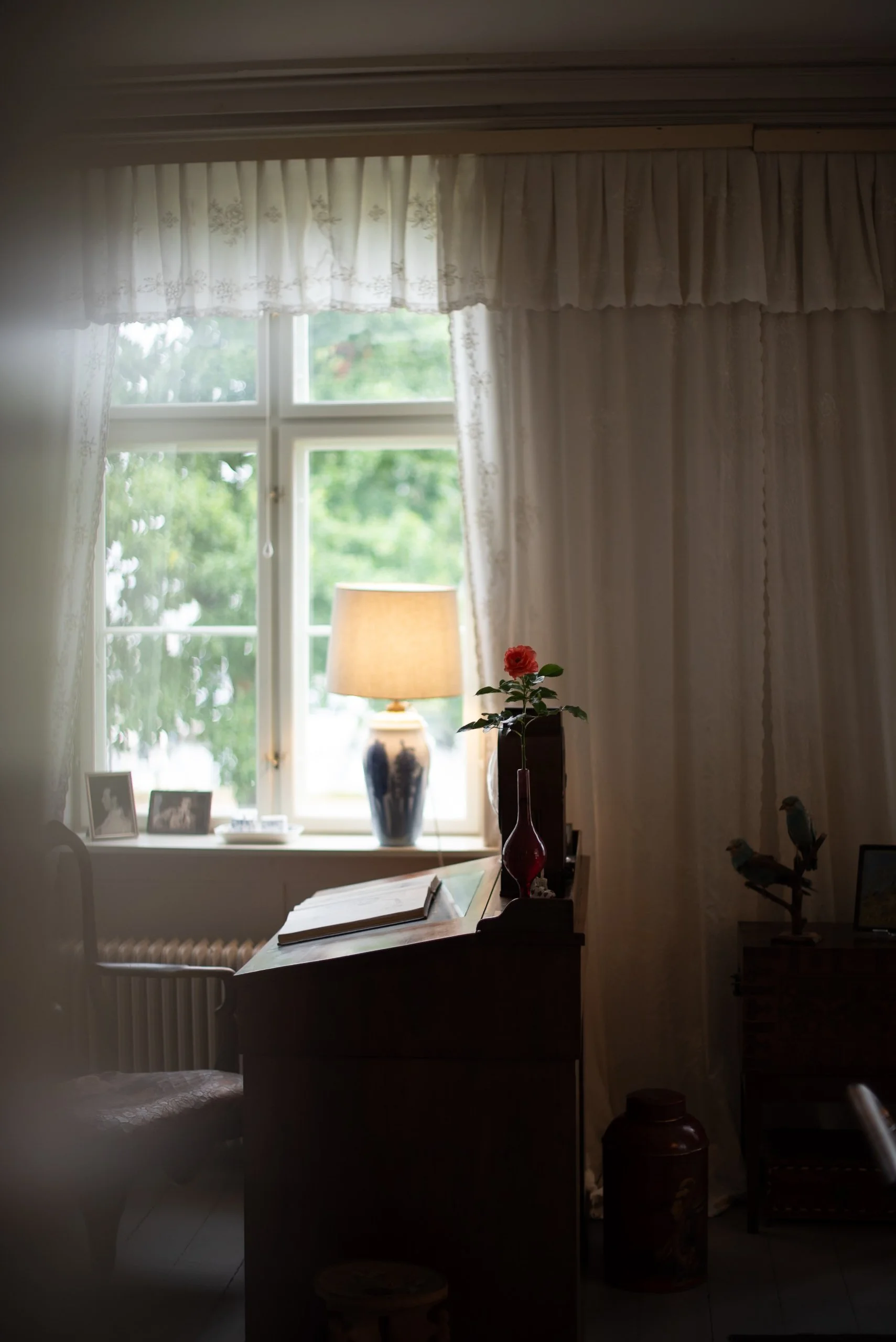
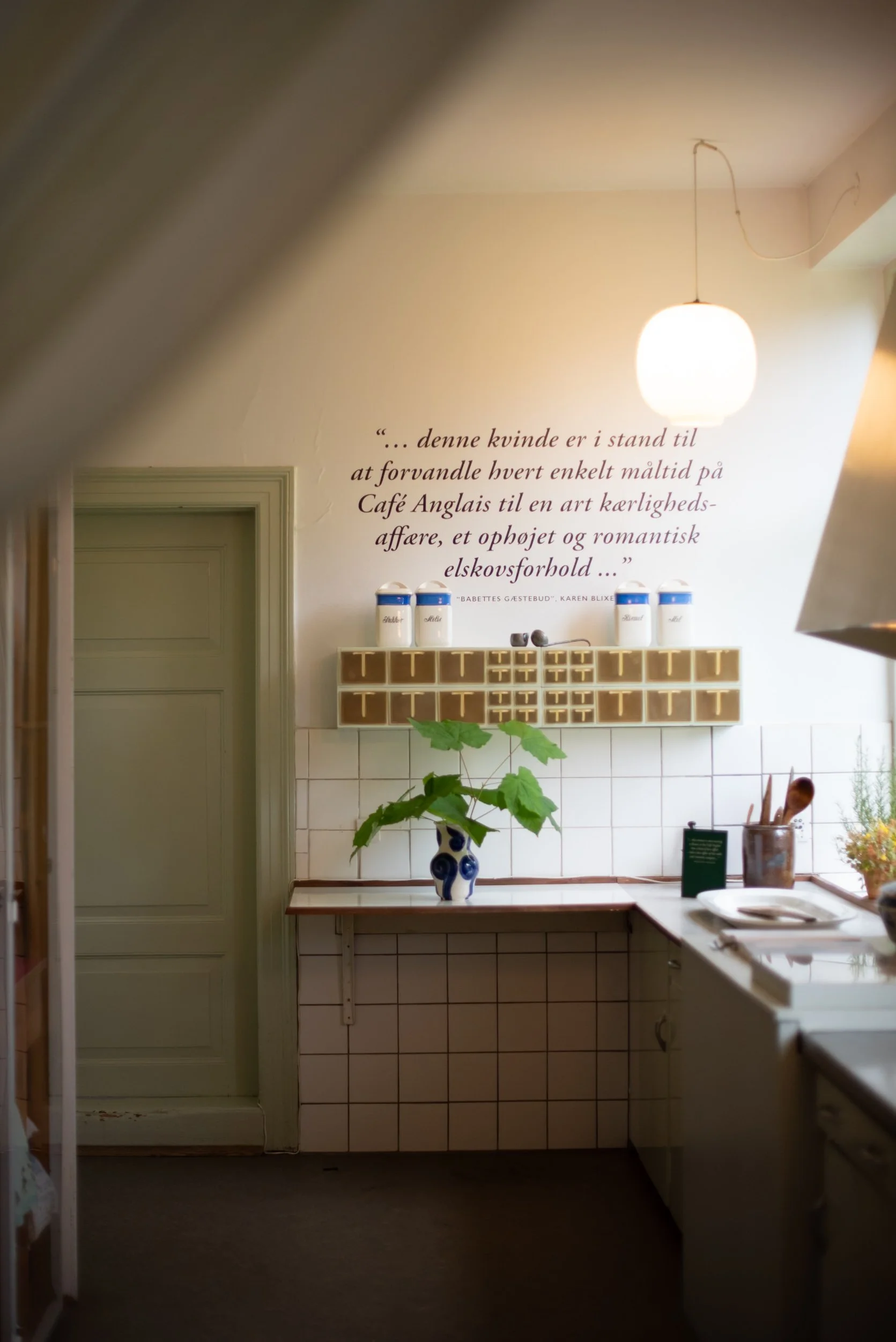
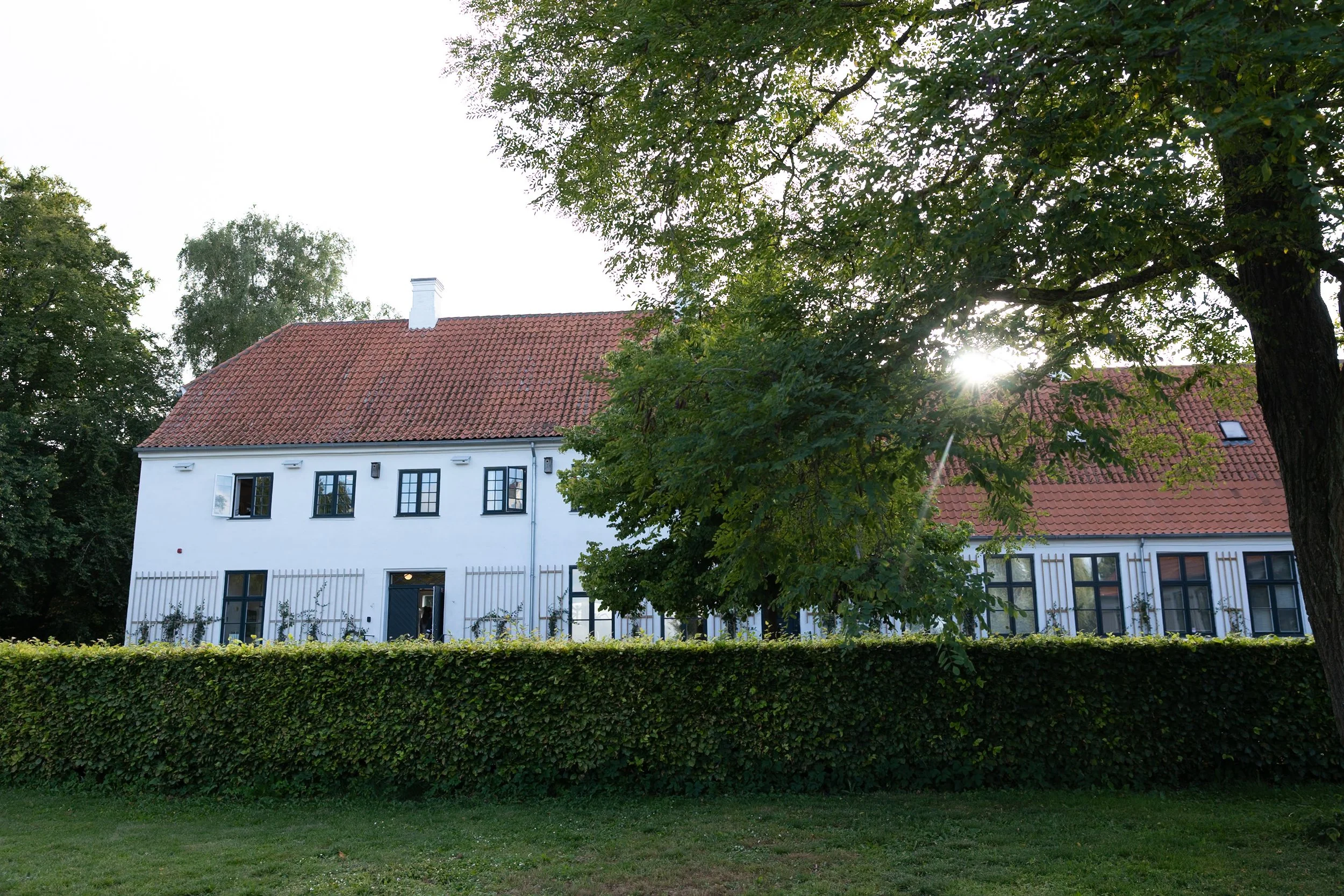
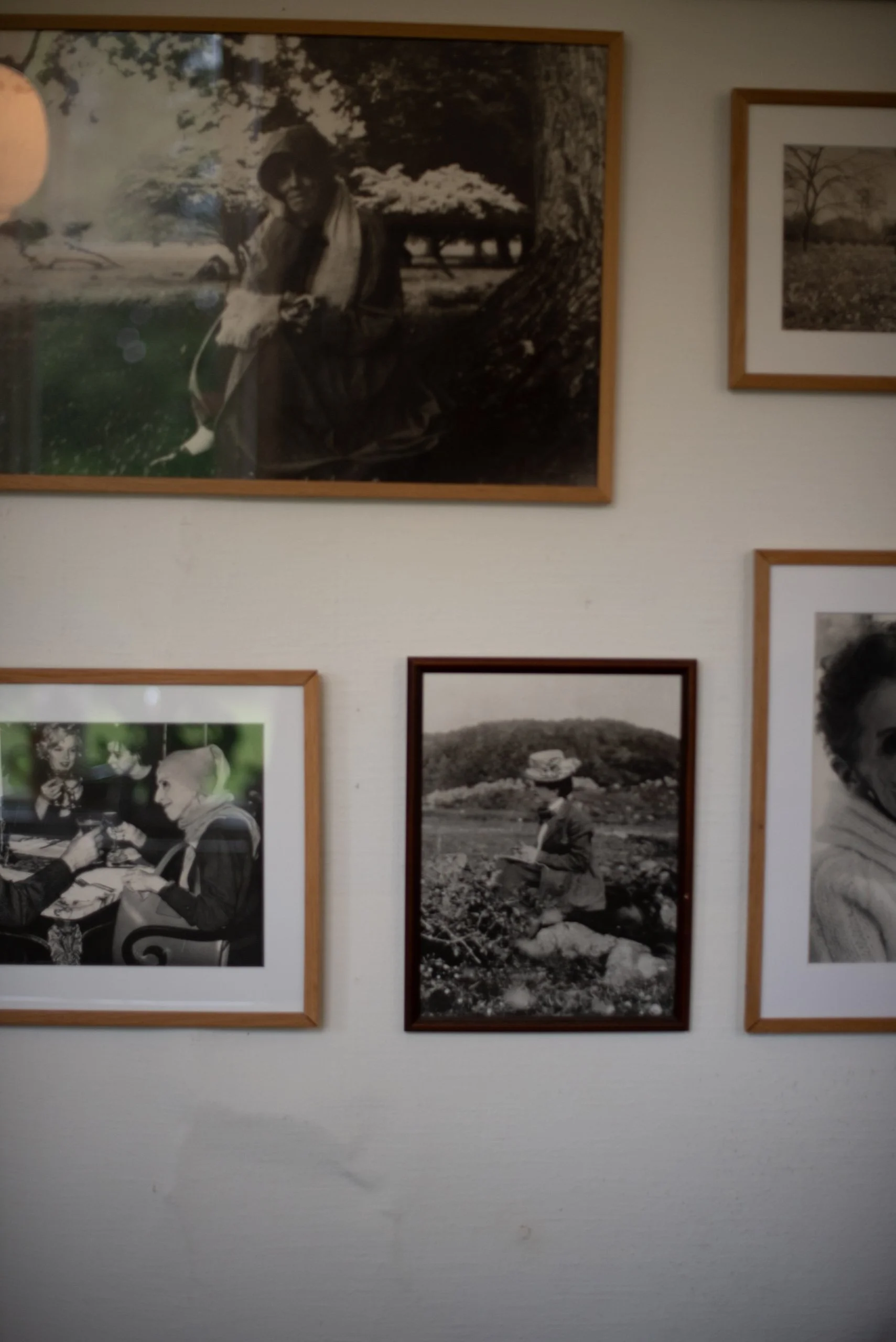
“I have a feeling that wherever I may be in the future, I will be wondering whether there is rain at Ngong” wrote the Danish novelist Baroness Karen von Blixen on returning to her childhood home at Rungstedlund after eighteen years living in Kenya. She left Africa in 1931 after her coffee farm went bankrupt and her lover and friend Denys Finch-Hatton died in a plane crash at Voi; he was buried in the Ngong Hills, overlooking Nairobi. Six years later, her beautiful memoir ‘Out of Africa’ was published to immediate critical acclaim worldwide. Blixen lived out the rest of her days at Rungstedlund, writing and gardening. She died there in 1962, and is buried under a beech tree close to the cutting garden she created to grow the flowers for her vases around the house and regular weekend parties. A prolific arranger, Blixen liked her flowers naturalistic, seasonal and freshly gathered from the immediate surroundings, picking from the woods and fields around her home on the Øresund coast, just north of Copenhagen. Now a museum, Rungstedlund still retains the lived-in feeling of a home rich in artistic endeavour and intellectual debate, scented with woodsmoke and alive with the sounds of jazz playing somewhere across the house, creaking floorboards, clinking glass.
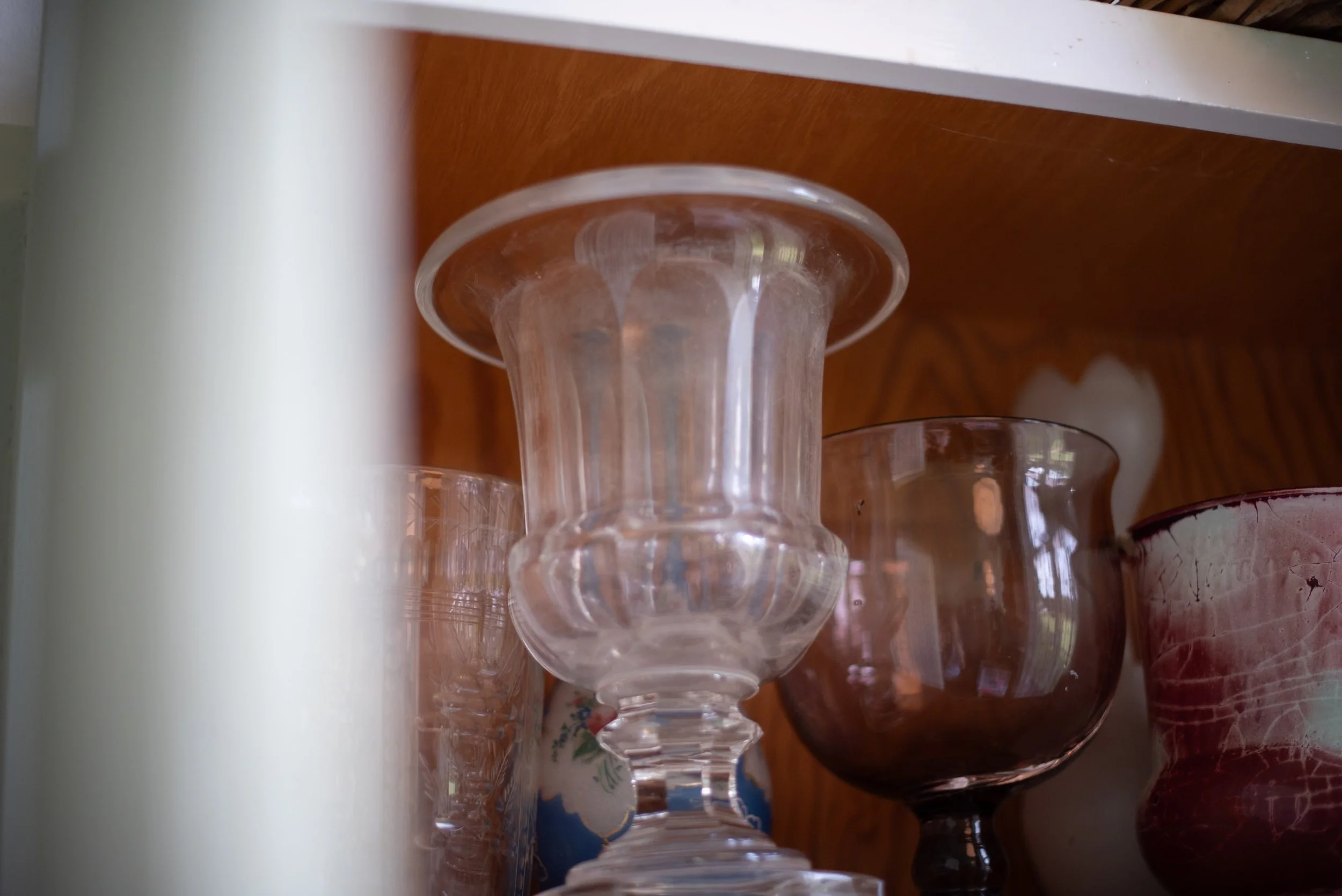
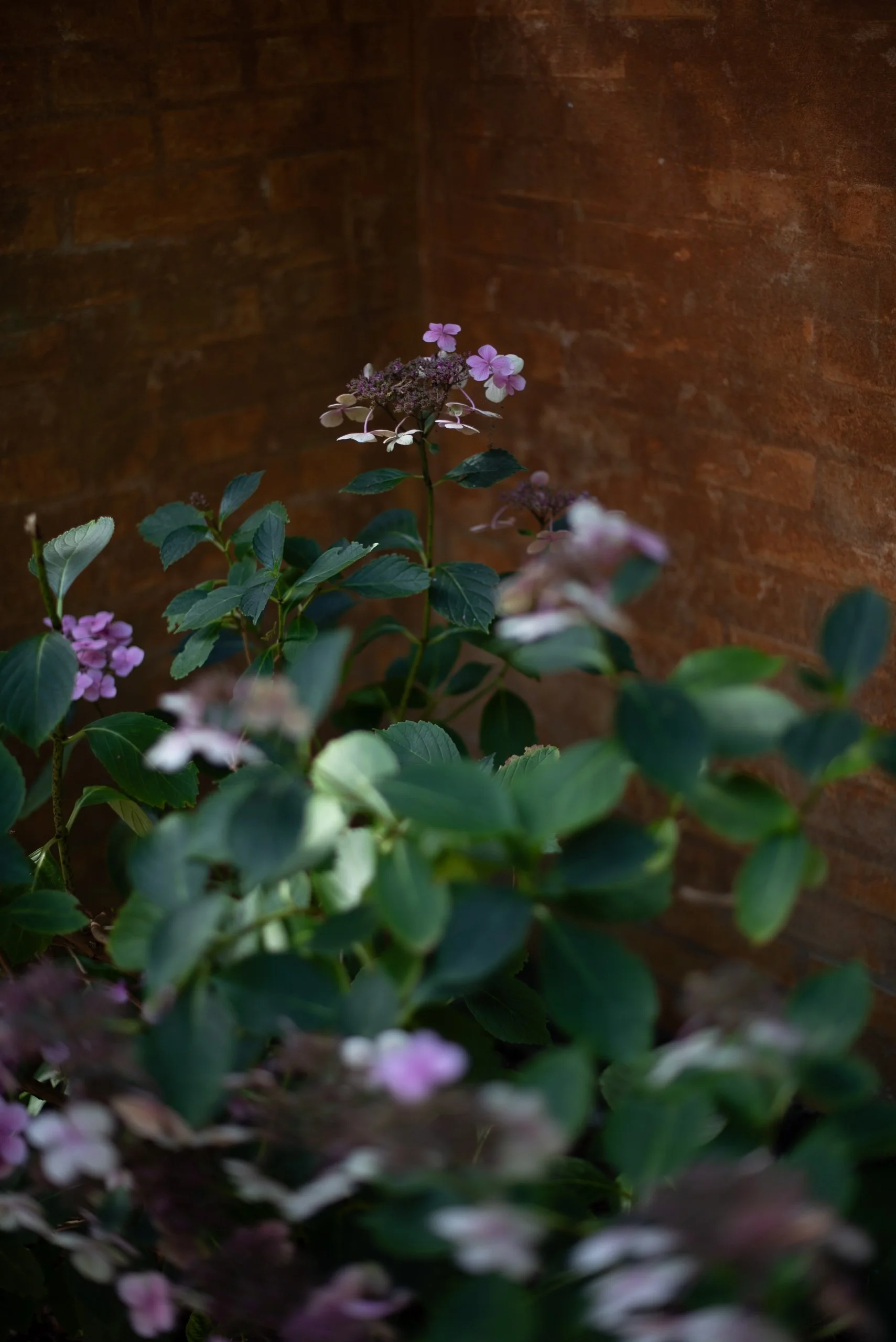
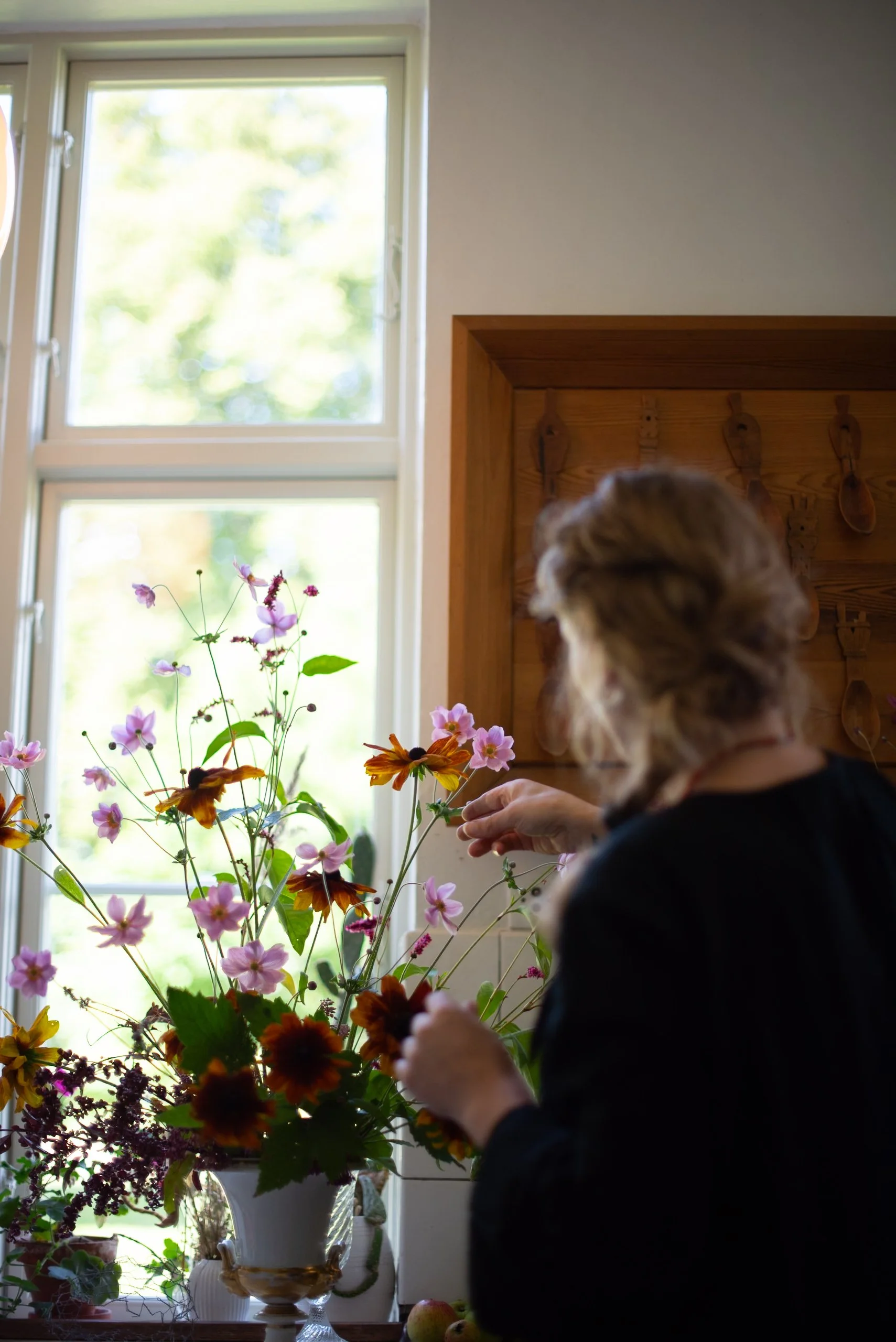
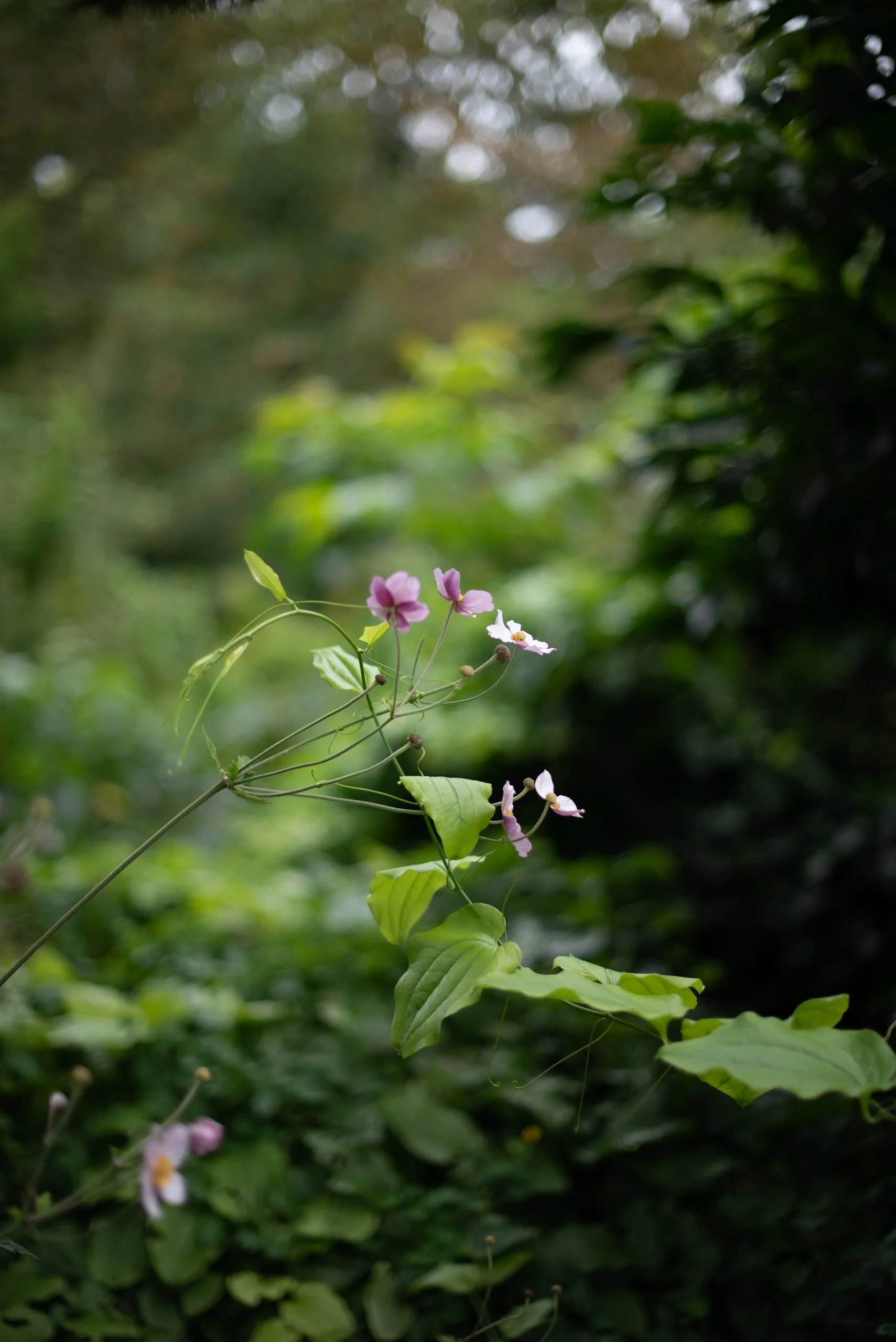
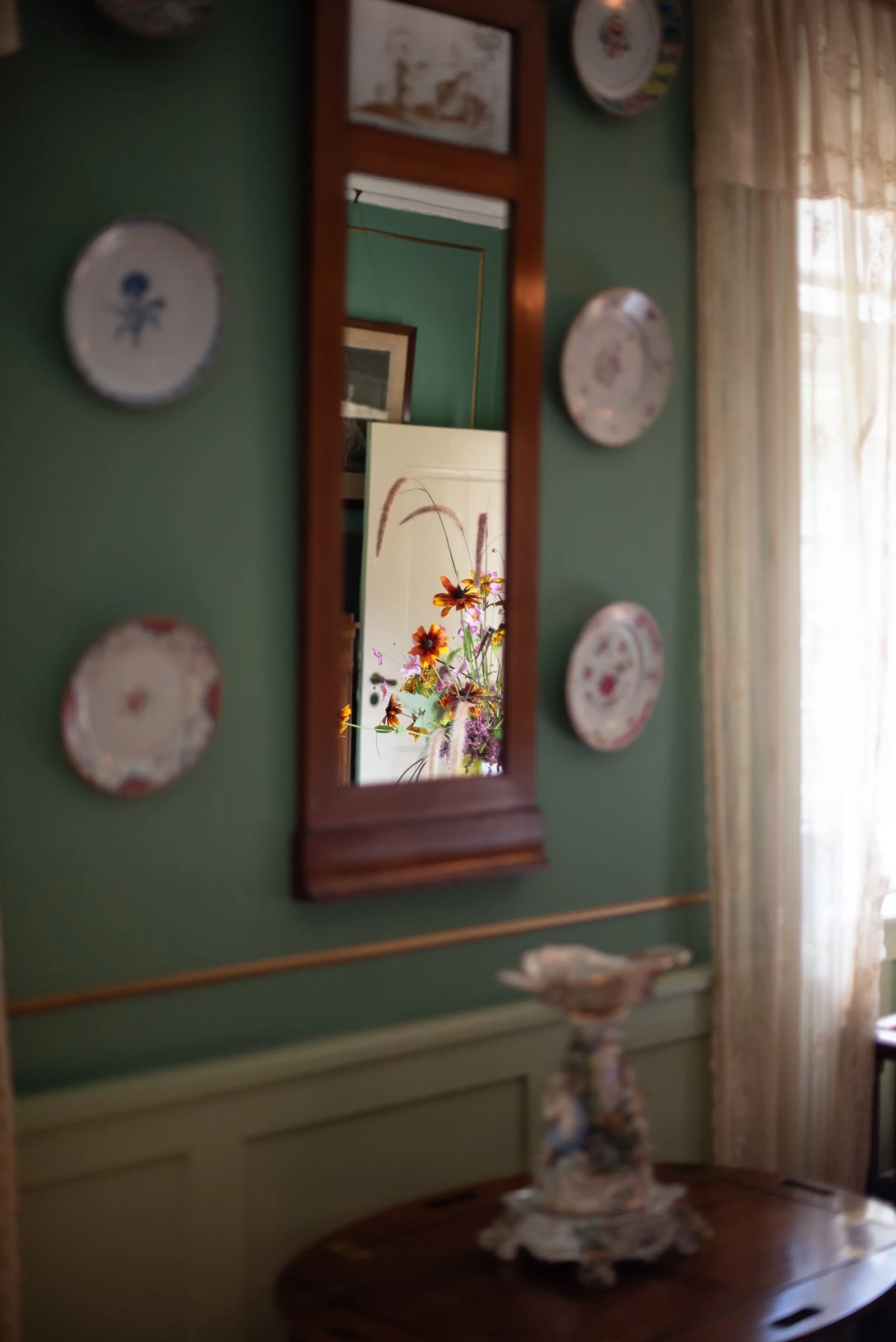
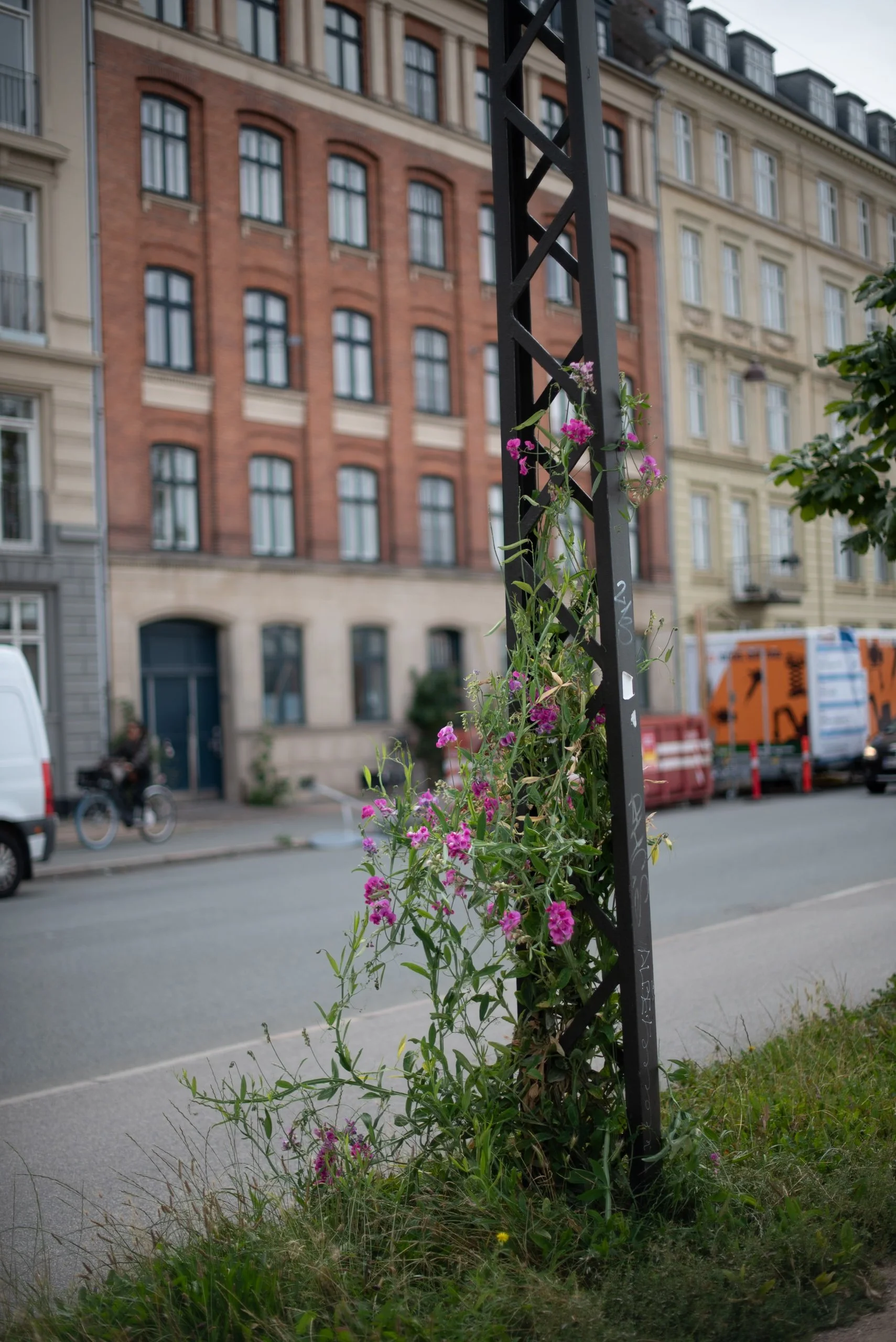
I’m sharing here a few outtakes from the Rungstedlund chapter of ‘Naturalistic Flowers: A Year of Plants, Places and People’ that didn’t make the cut and so don’t appear in the published book. Arriving at Rungstedlund and spending time picking flowers from Blixen’s garden, arranging in her favourite vases, among her furniture and possessions was a surreal turn of events and a memory I will treasure. Blixen’s writing lead me to East Africa, a place that has called me back repeatedly over the years and is close to my heart (and featured in an earlier chapter of the book). I spent a fascinating few hours with Helen Olsen, the floral decorator in residence at the museum, learning to make arrangements ‘i-Blixen-stilen’ (in the Blixen style) - asymmetric and textural with a painterly focus on colour and form. For the book I made a fruity, fan-shaped arrangement of apples, Japanese anemones and grasses in the shadowy green room. Hope you enjoy the pictures.

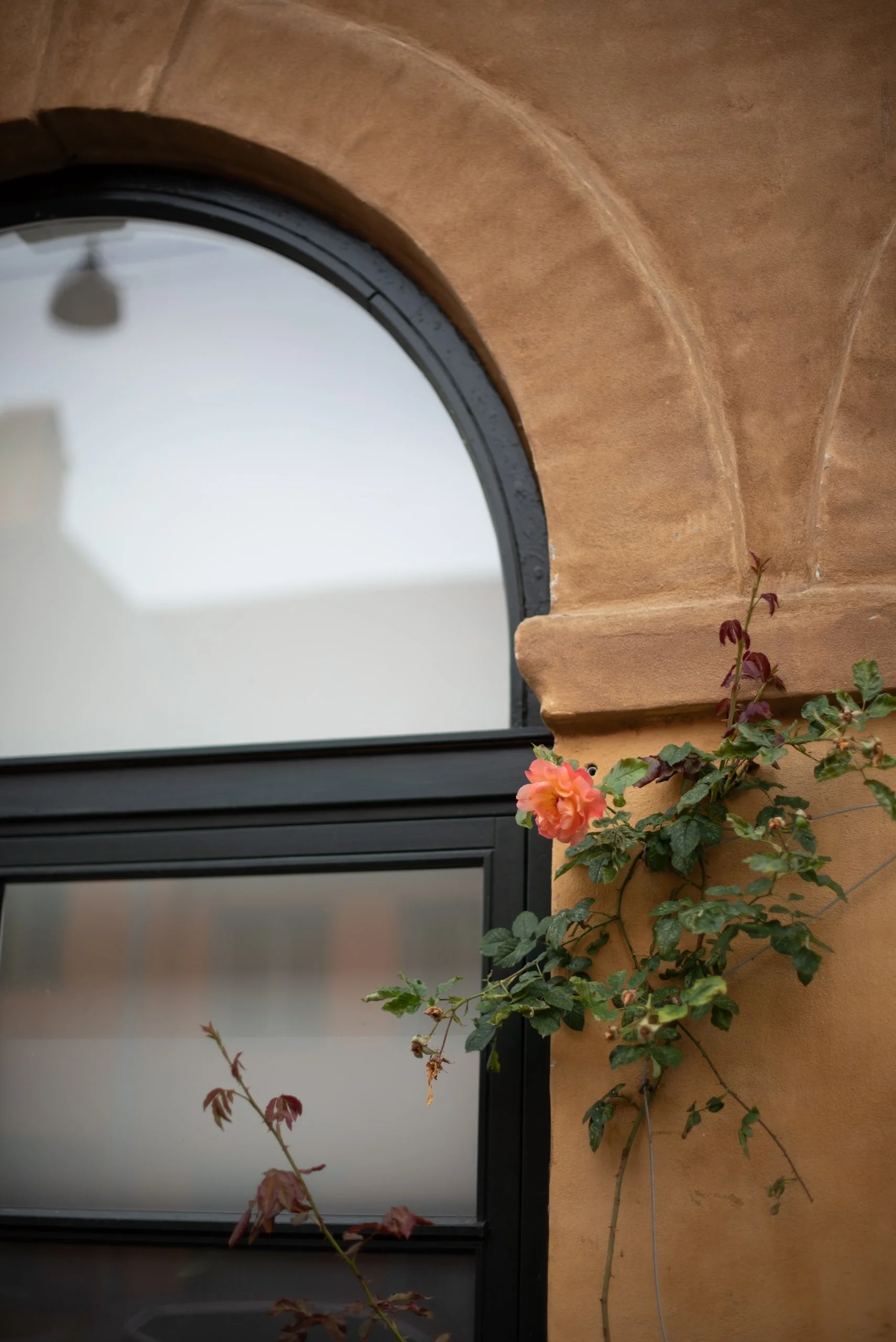
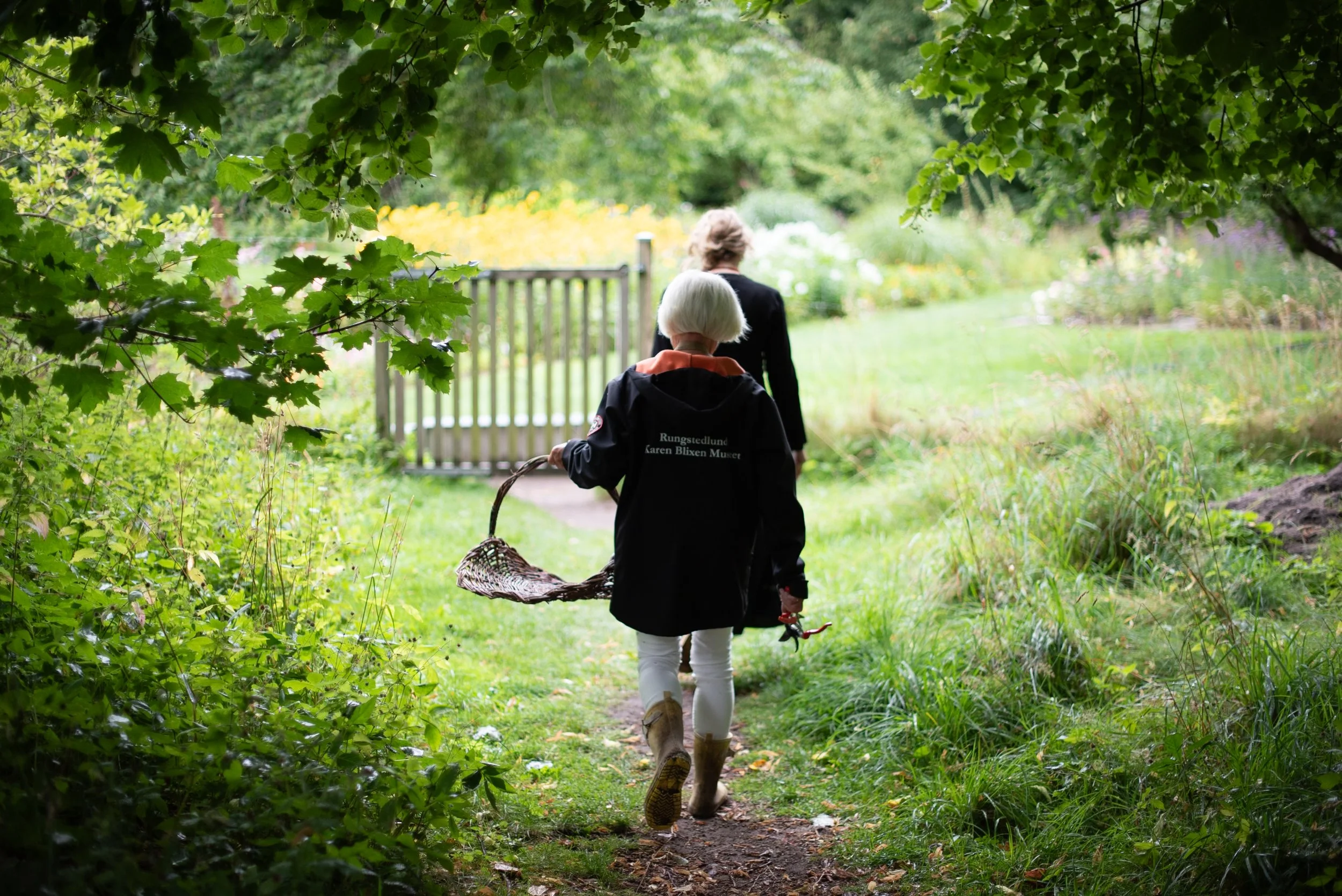
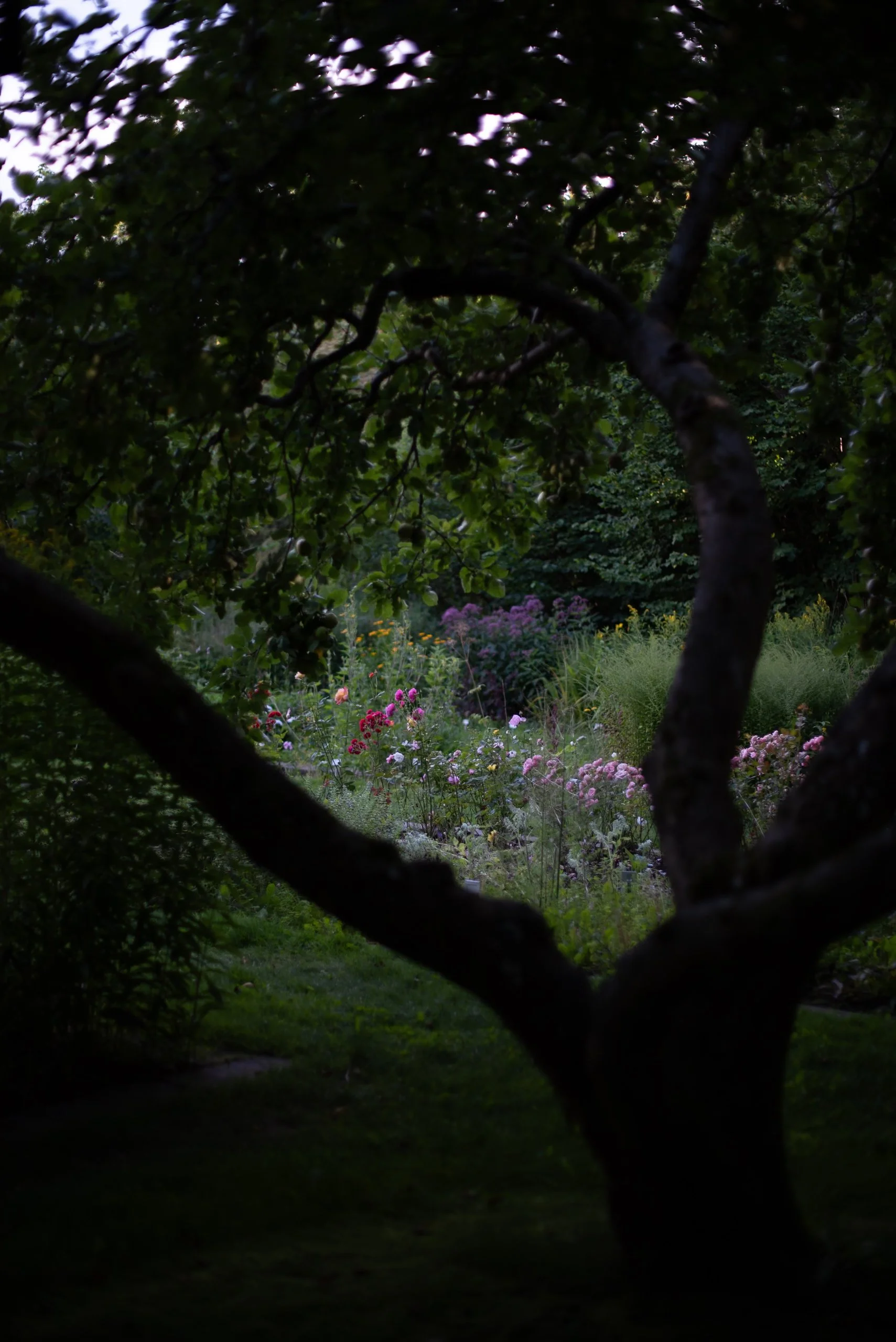
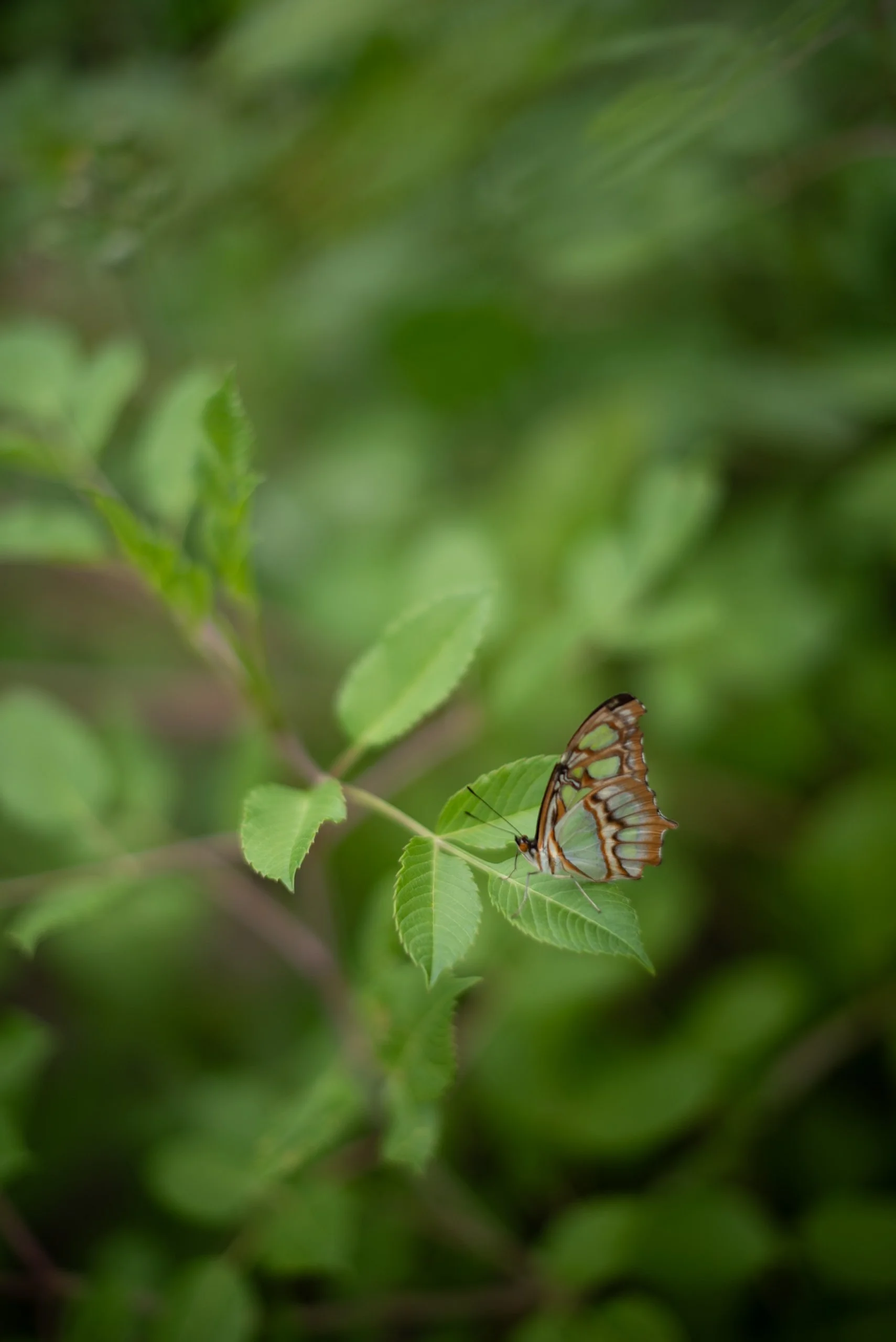

EDINBURGH
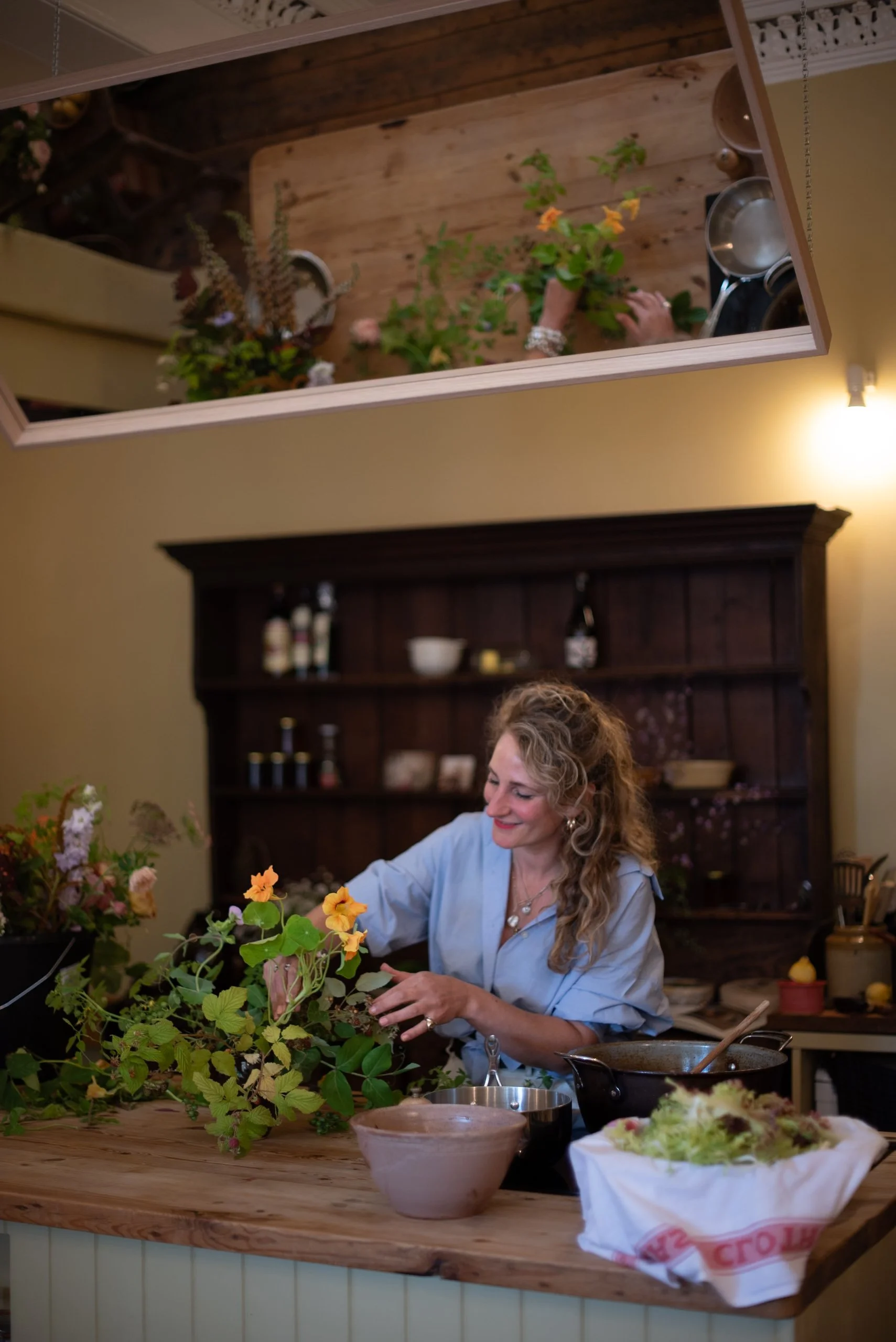
Picking beans, tomatoes and nasturtium will always take me back to Scotland, to Pyrus and Elliott’s where we shot one of my favourite book chapters titled ‘Food & Flowers’.
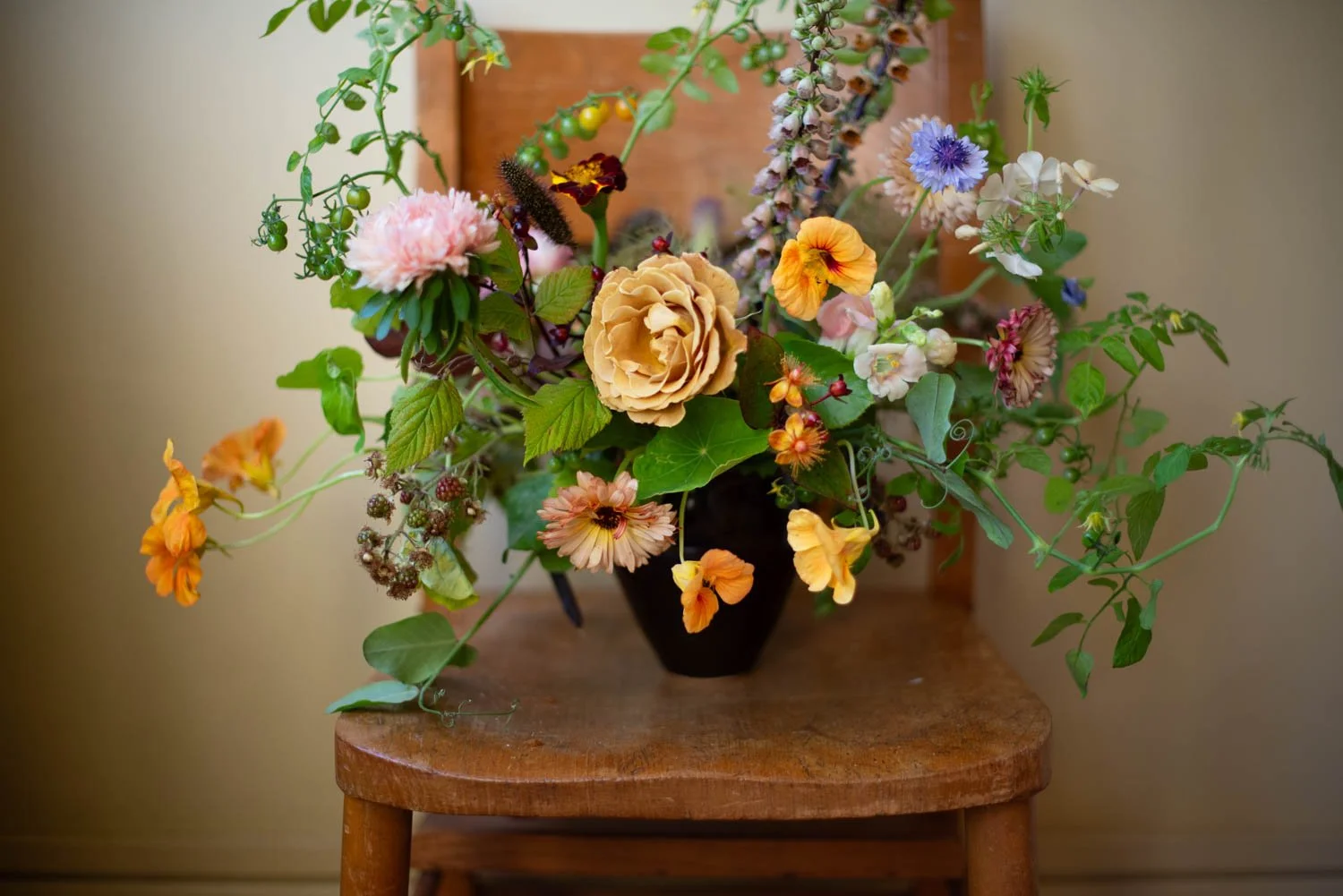
Juicy, fruity, abundant and highly textural, the tipping point of late summer into early autumn is one of the best times of the year for flower harvesting and arranging. Picking beans, tomatoes and nasturtium will always take me back to Scotland, to Pyrus and Elliott’s where we shot ‘Food & Flowers’ - one of my favourite chapters of our book, Naturalistic Flowers: A Year of Plants, Places and People. Today I’m continuing the outtake sharing because I love so many of the photographs Jess captured for this story that didn’t ultimately make it into the book but are too delicious not to consume, somehow. This shoot was all about combining edibles with ornamentals - raspberry briars with amaranth, apples with roses, peas and Borlotti beans with towering fennel, marigolds and cheeky, diminutive Viola. Bon appétit!
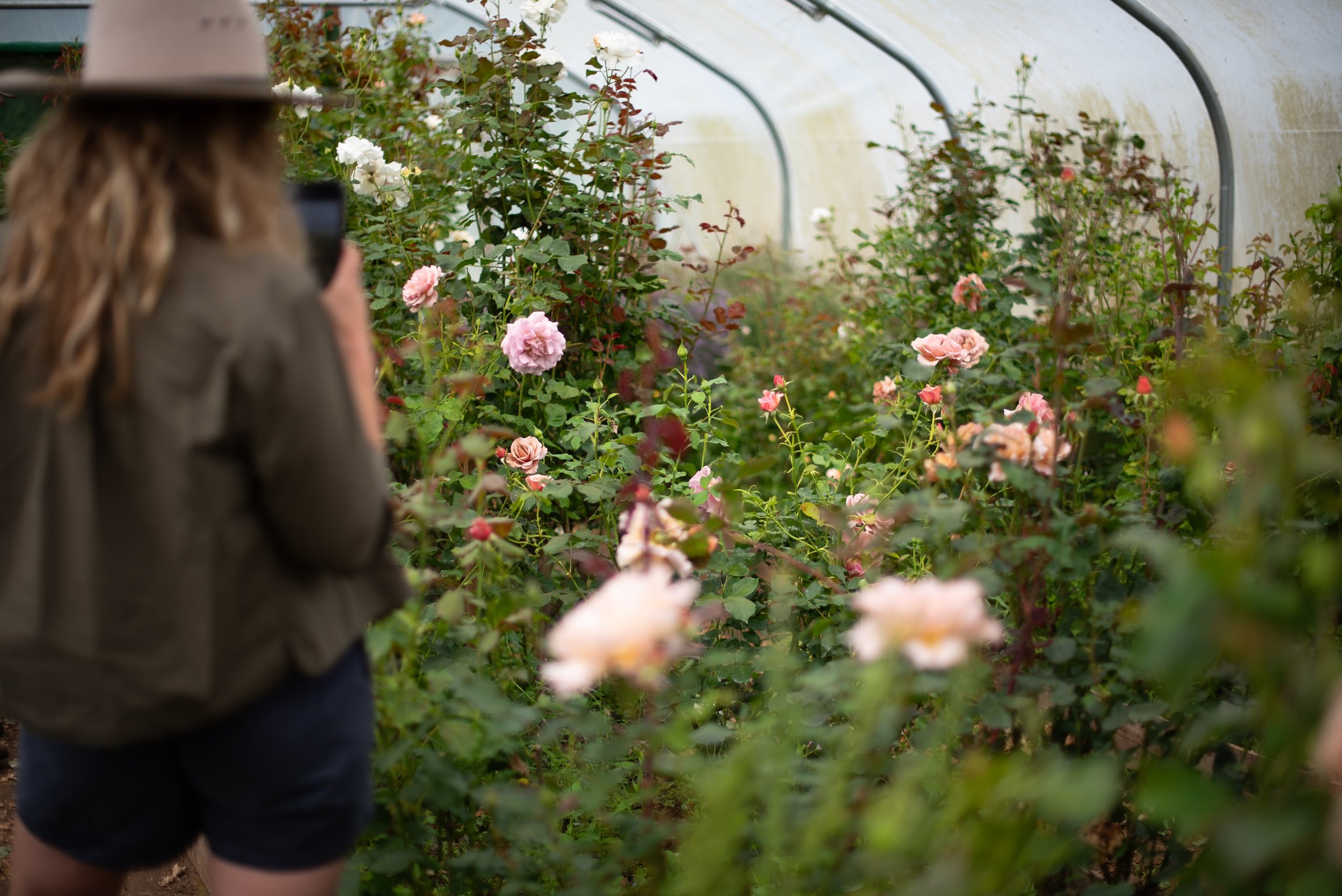
The rose tunnel at Pyrus Botanicals
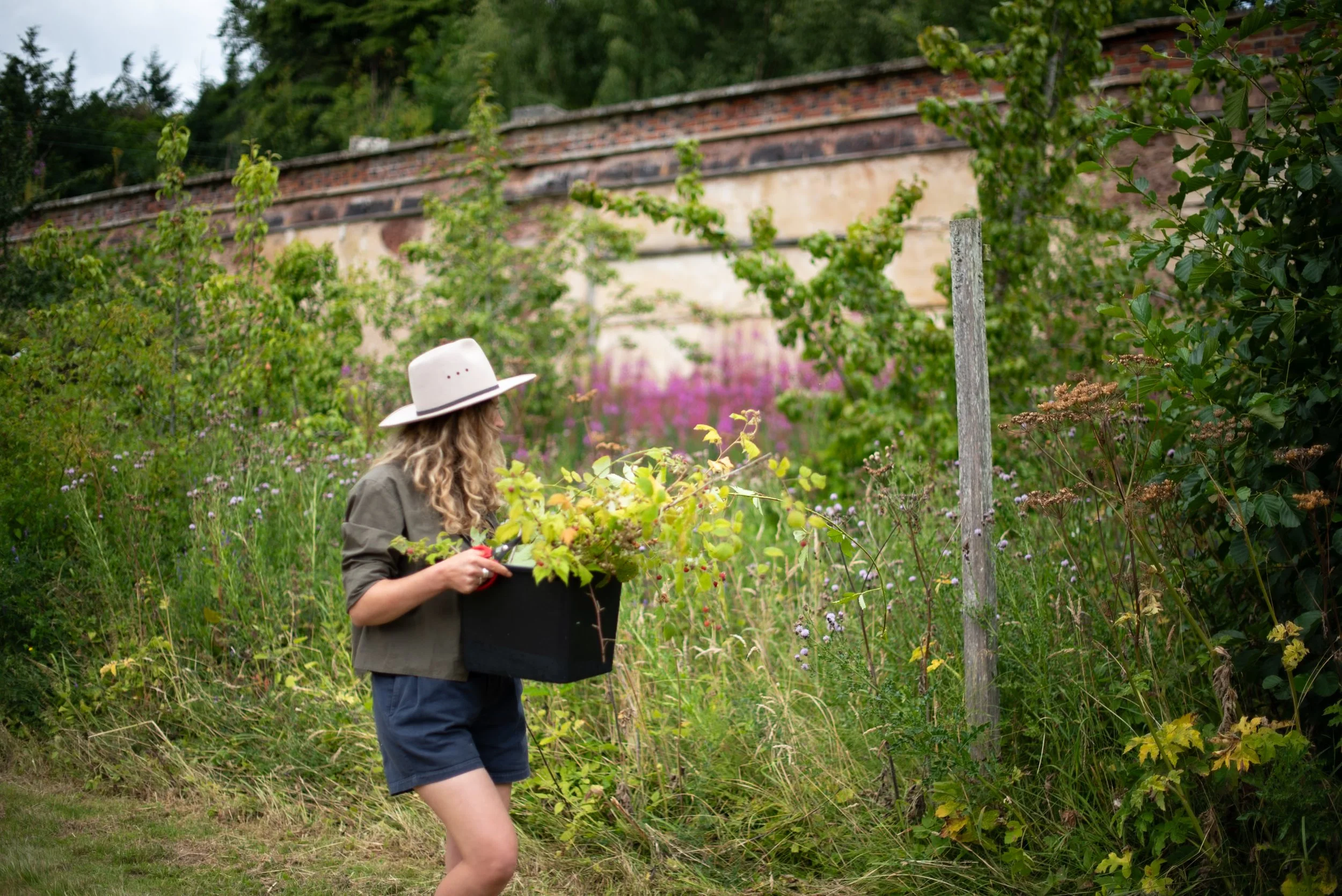
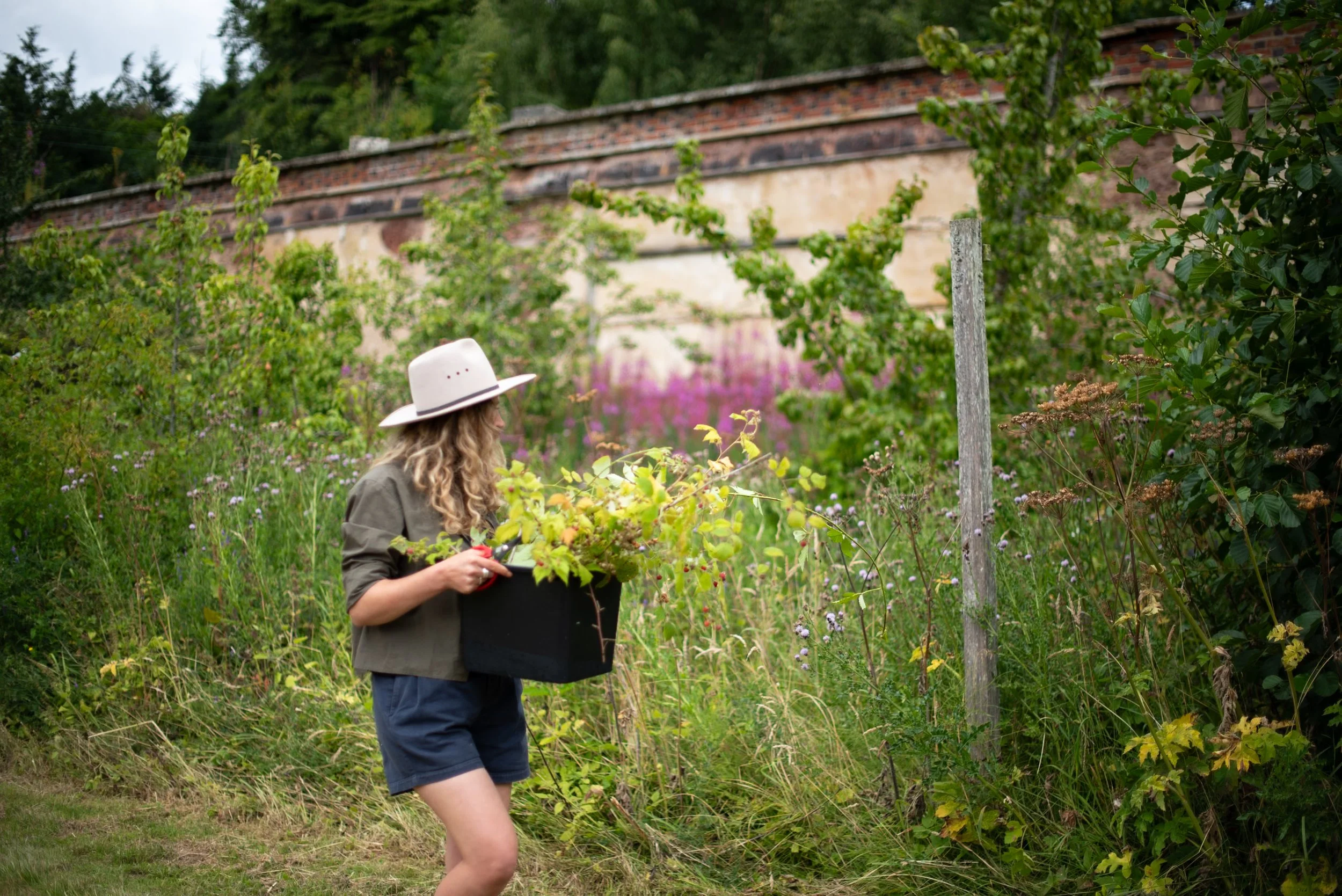
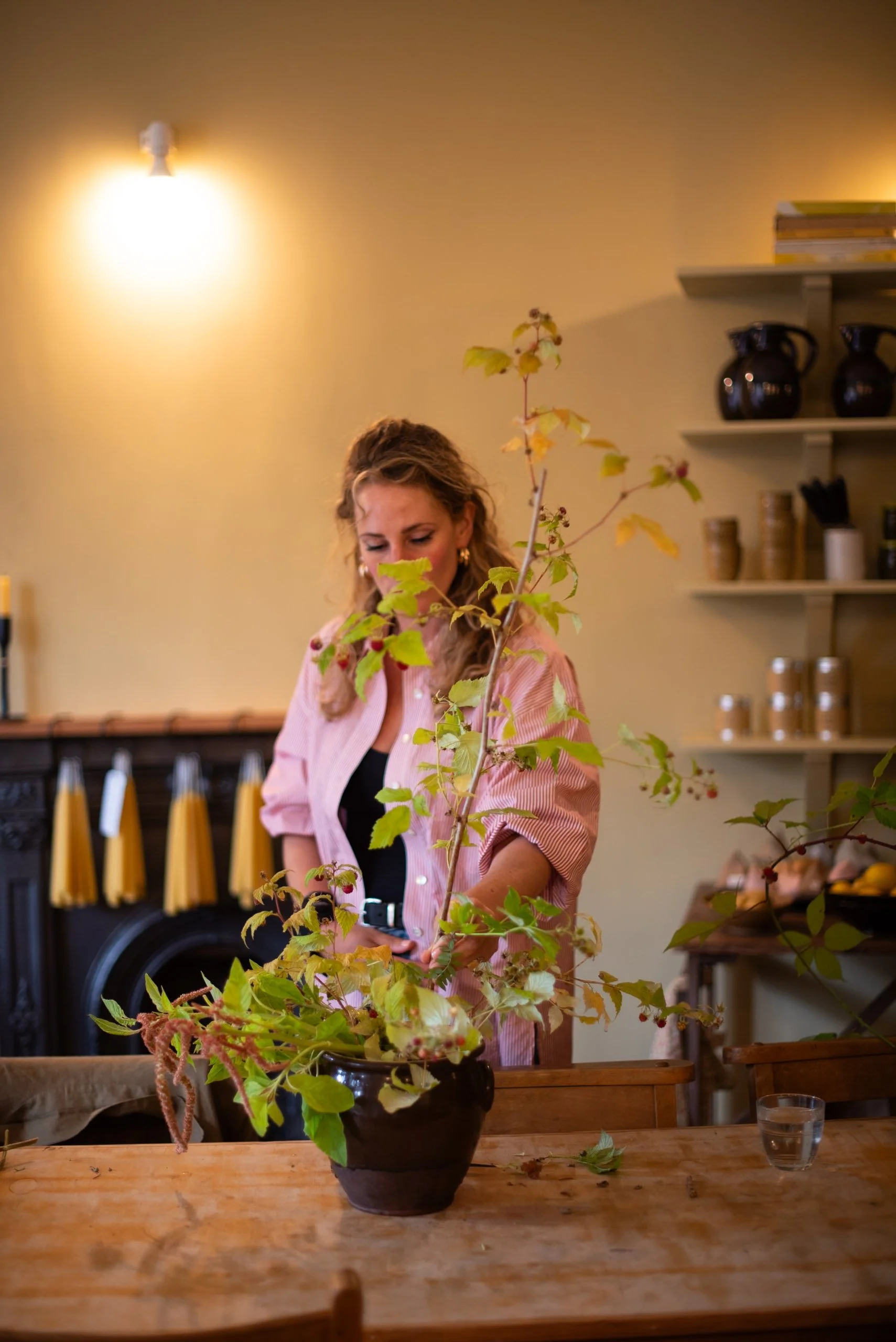
Harvesting branches of raspberry
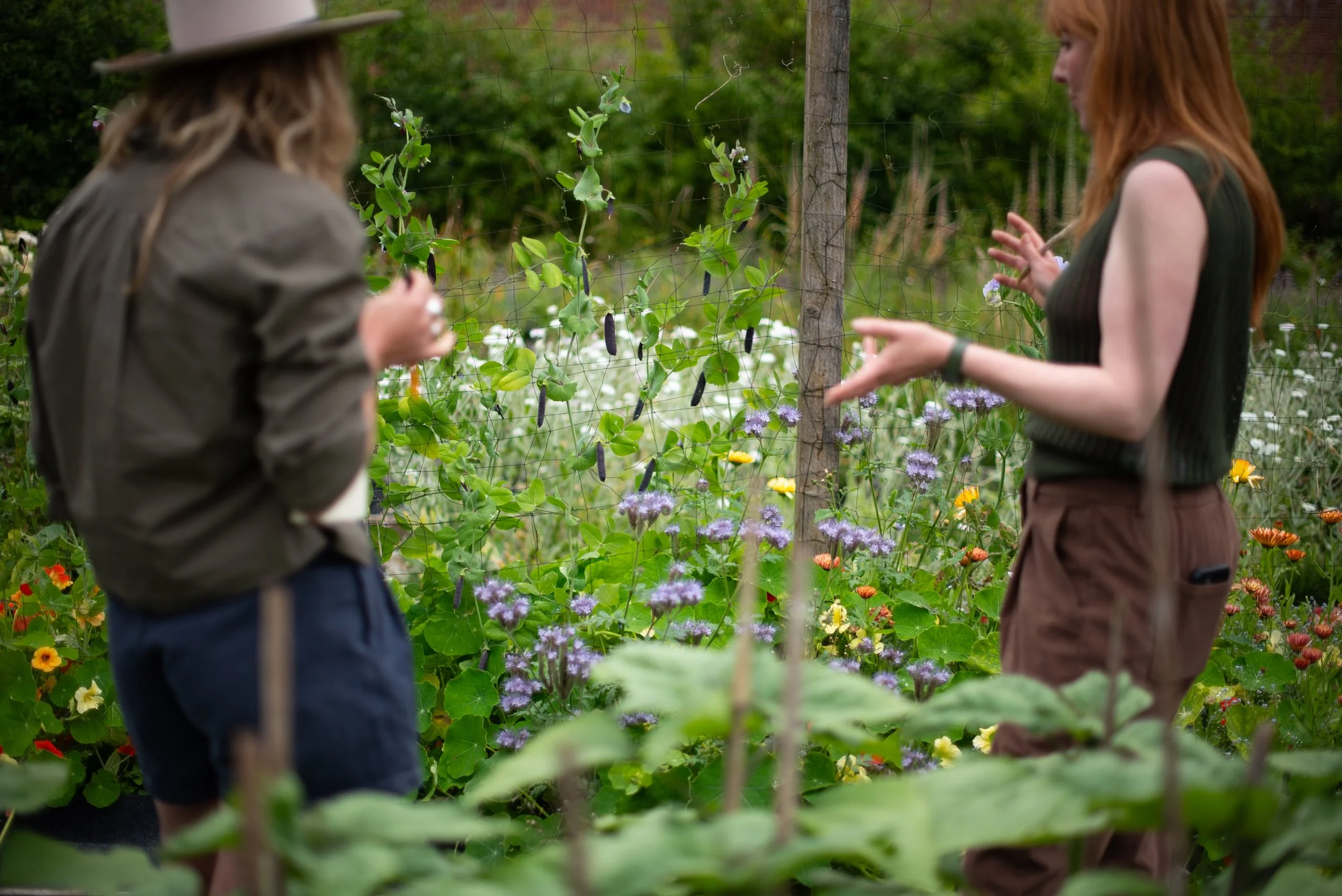
Pondering peas with Fiona Inglis at Pyrus Botanicals
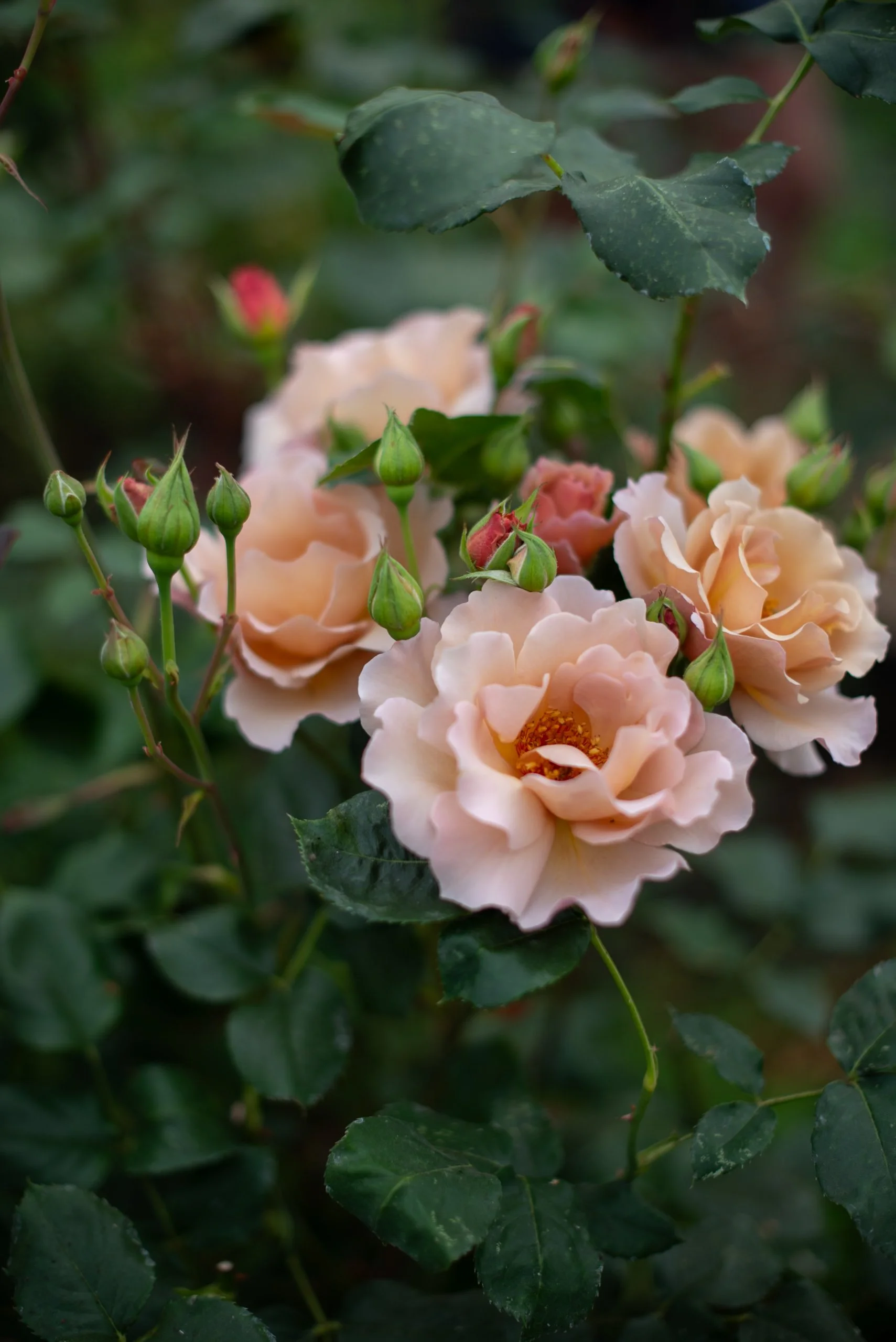
Julia’s rose
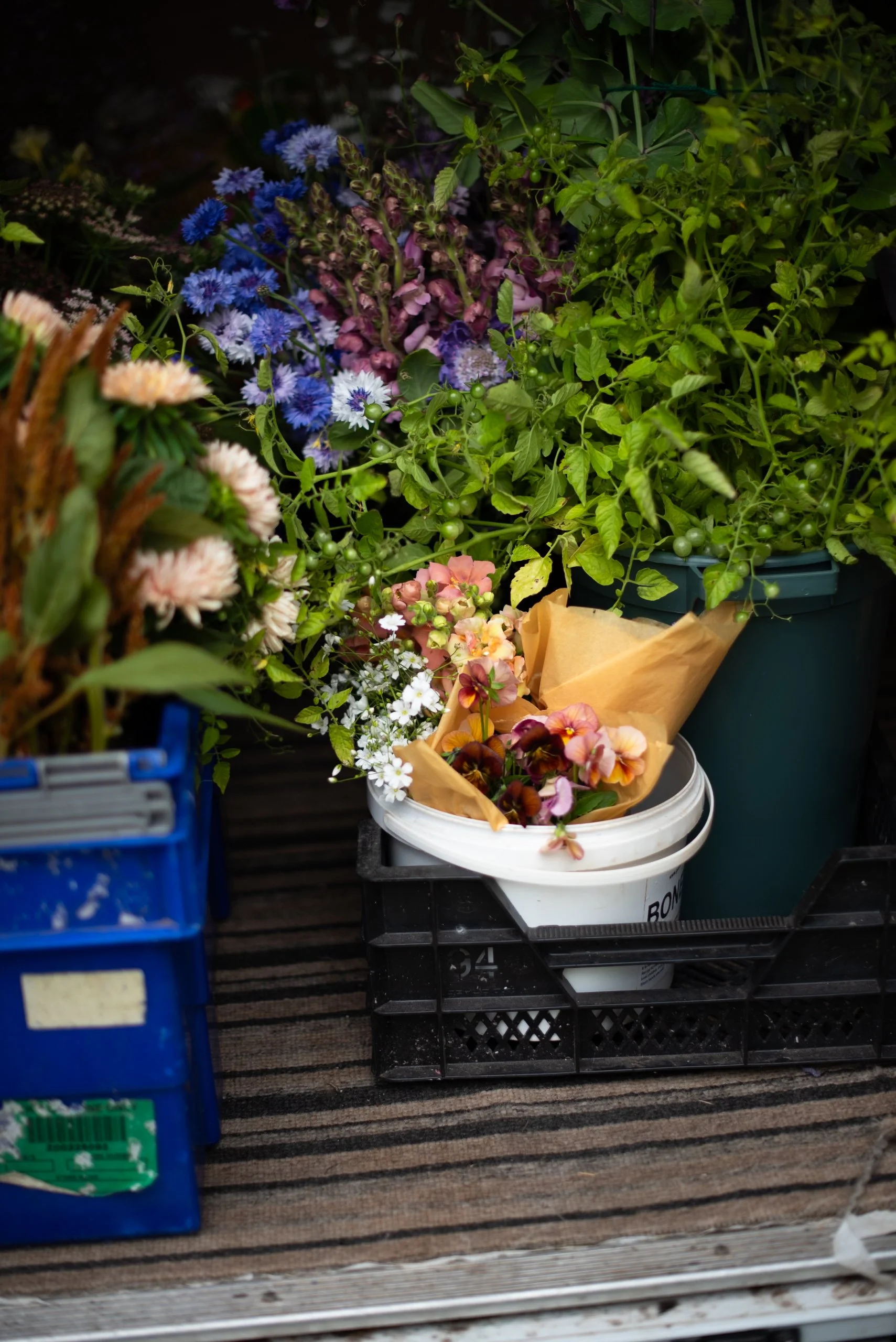
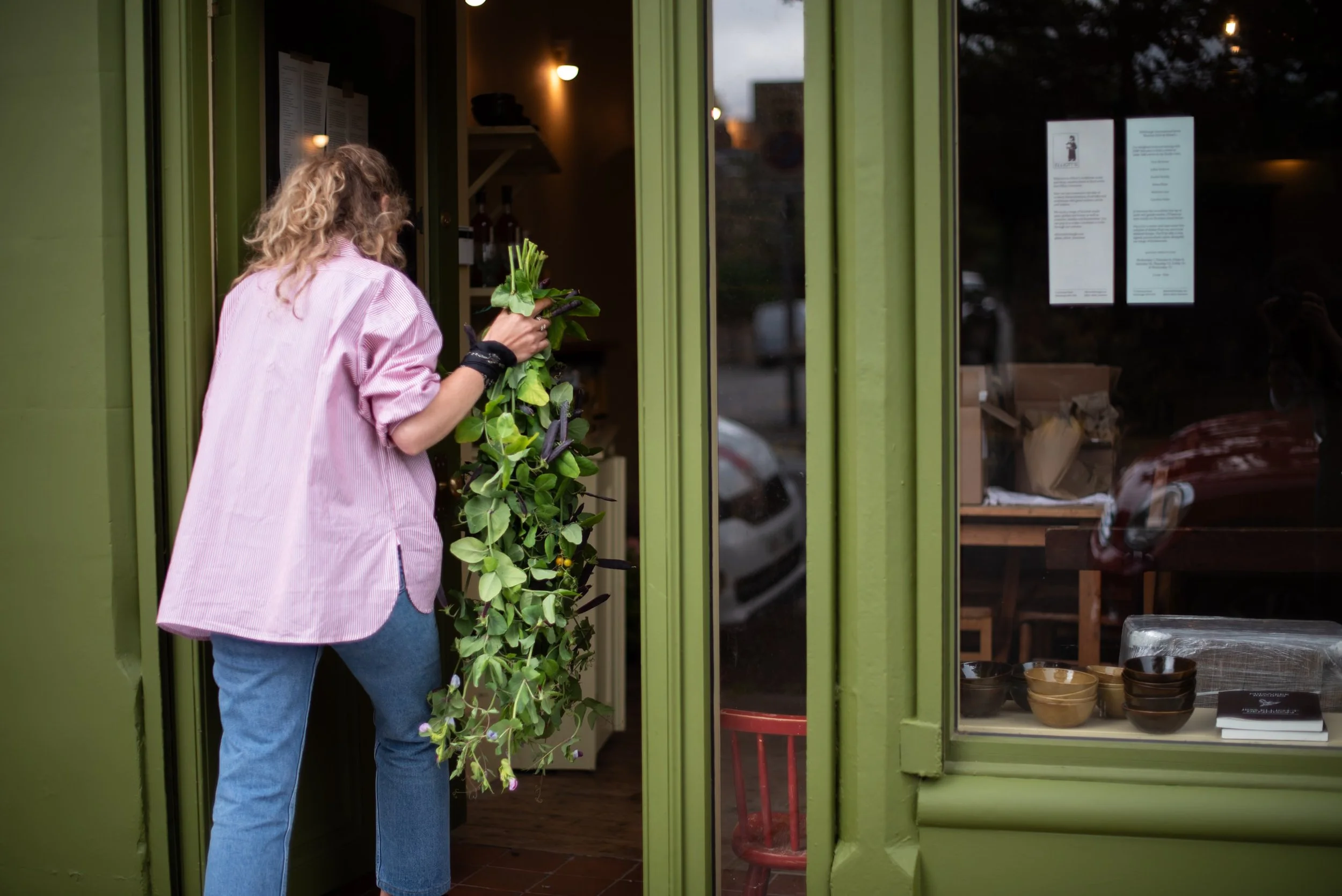
Loading in at Elliott’s on Sciennes Road
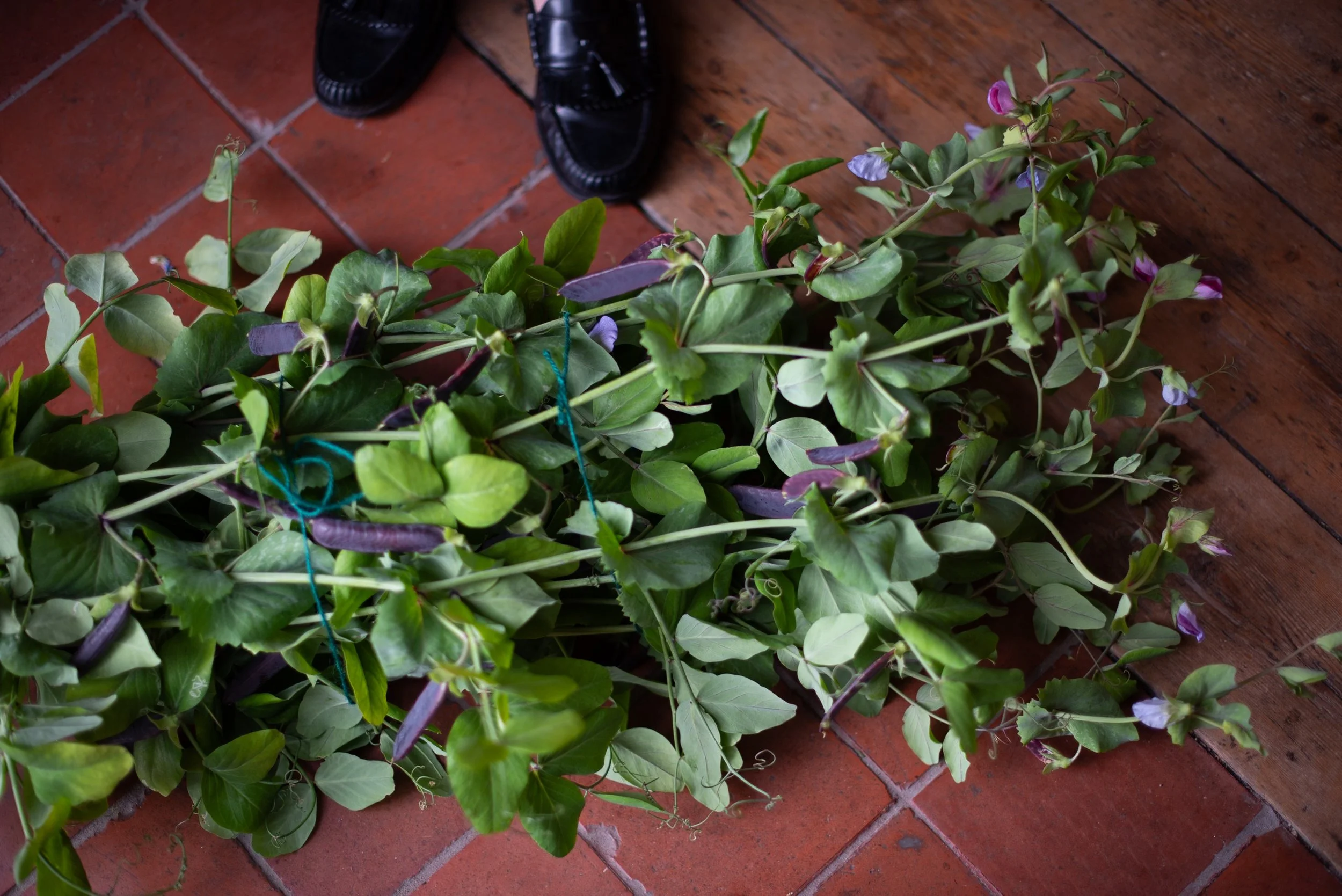
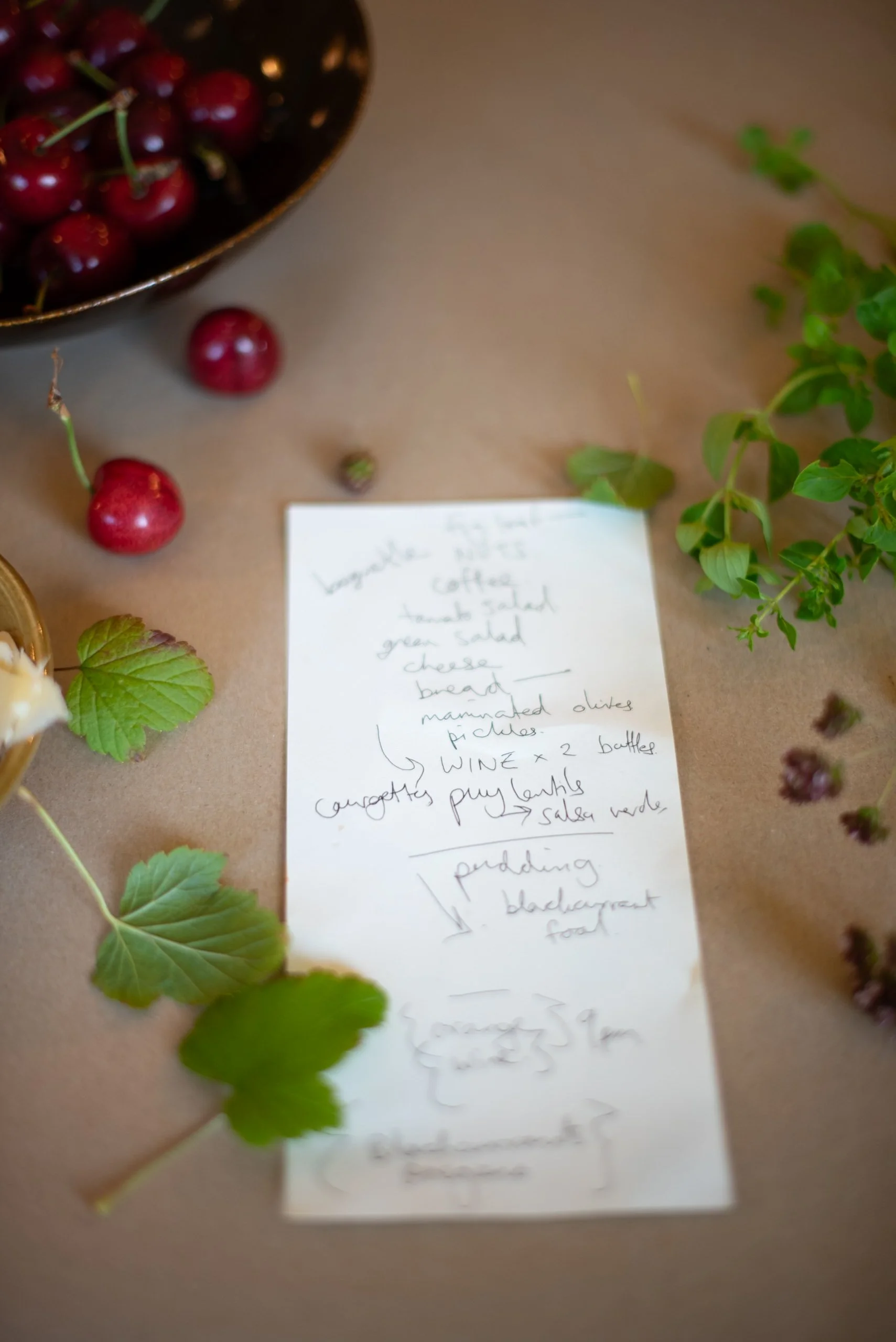
Notes on lunch
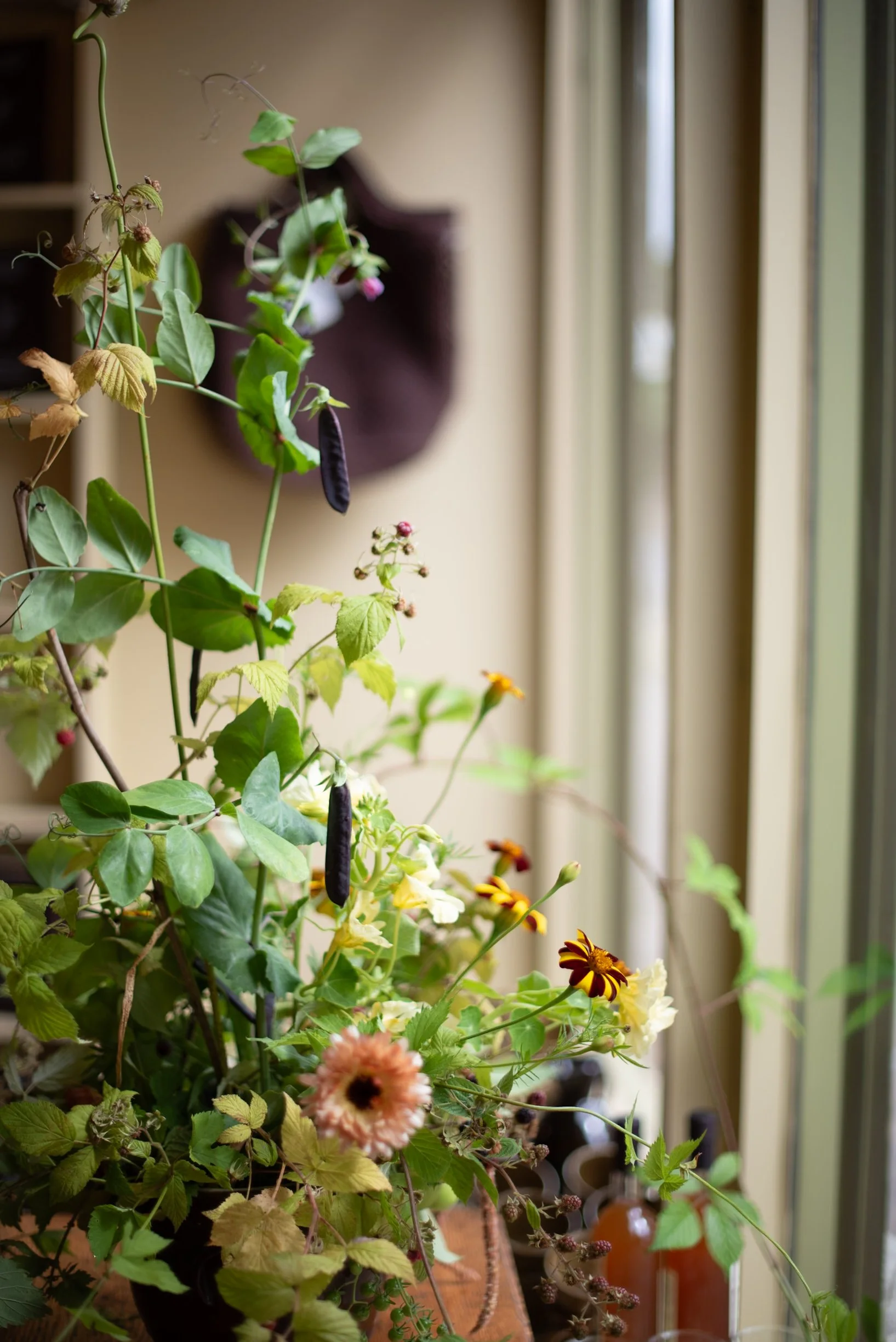
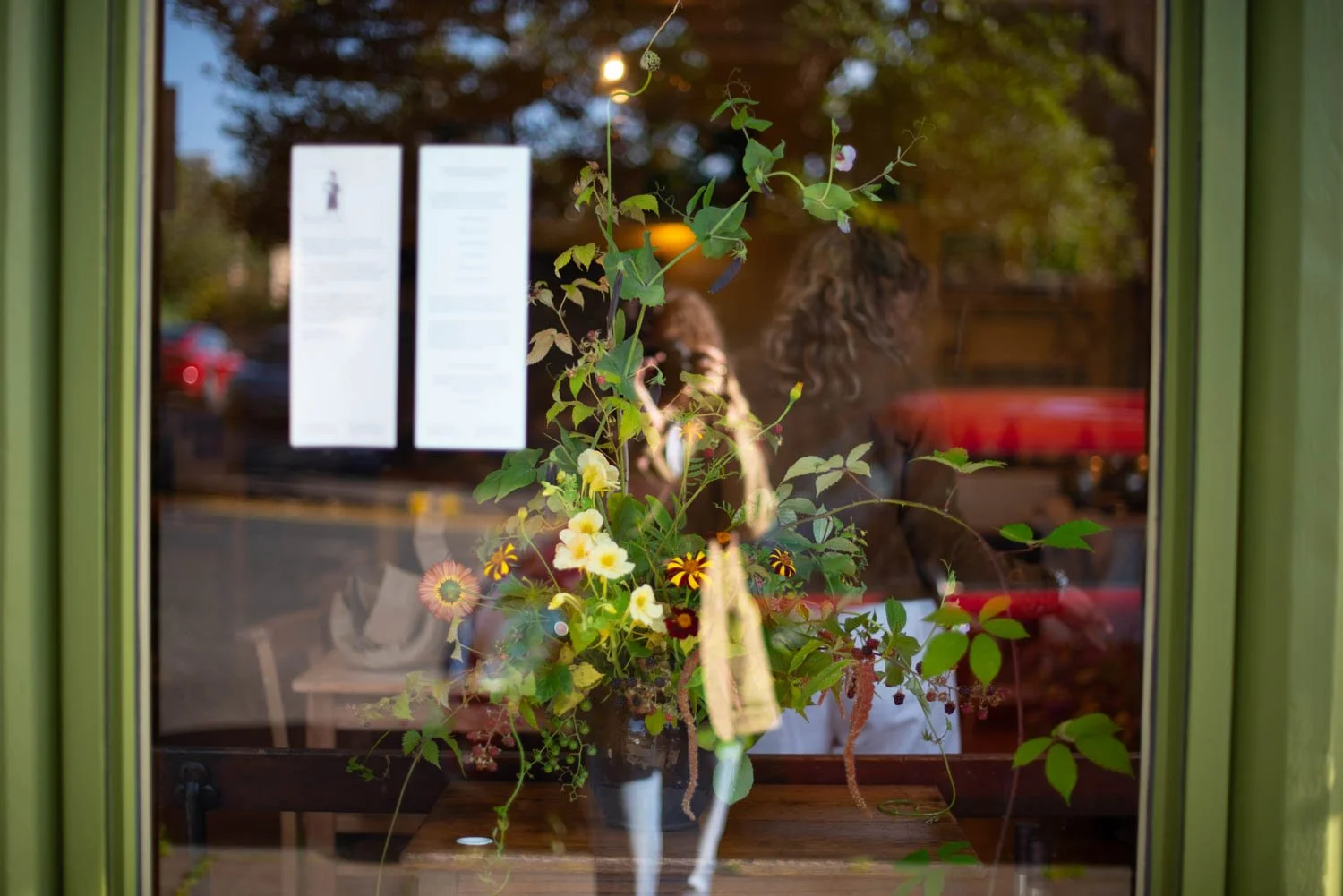
My welcome arrangement for the studio window
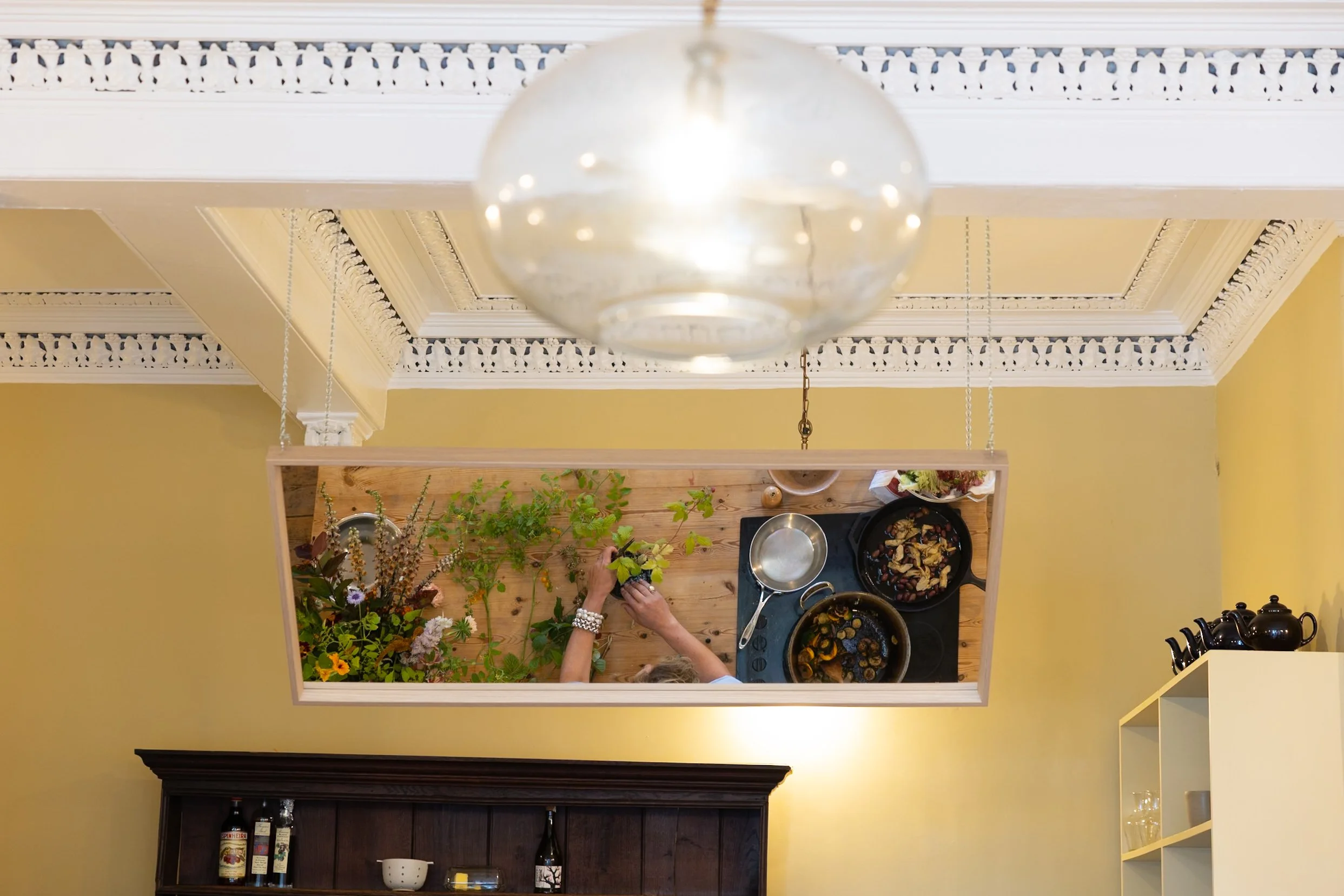
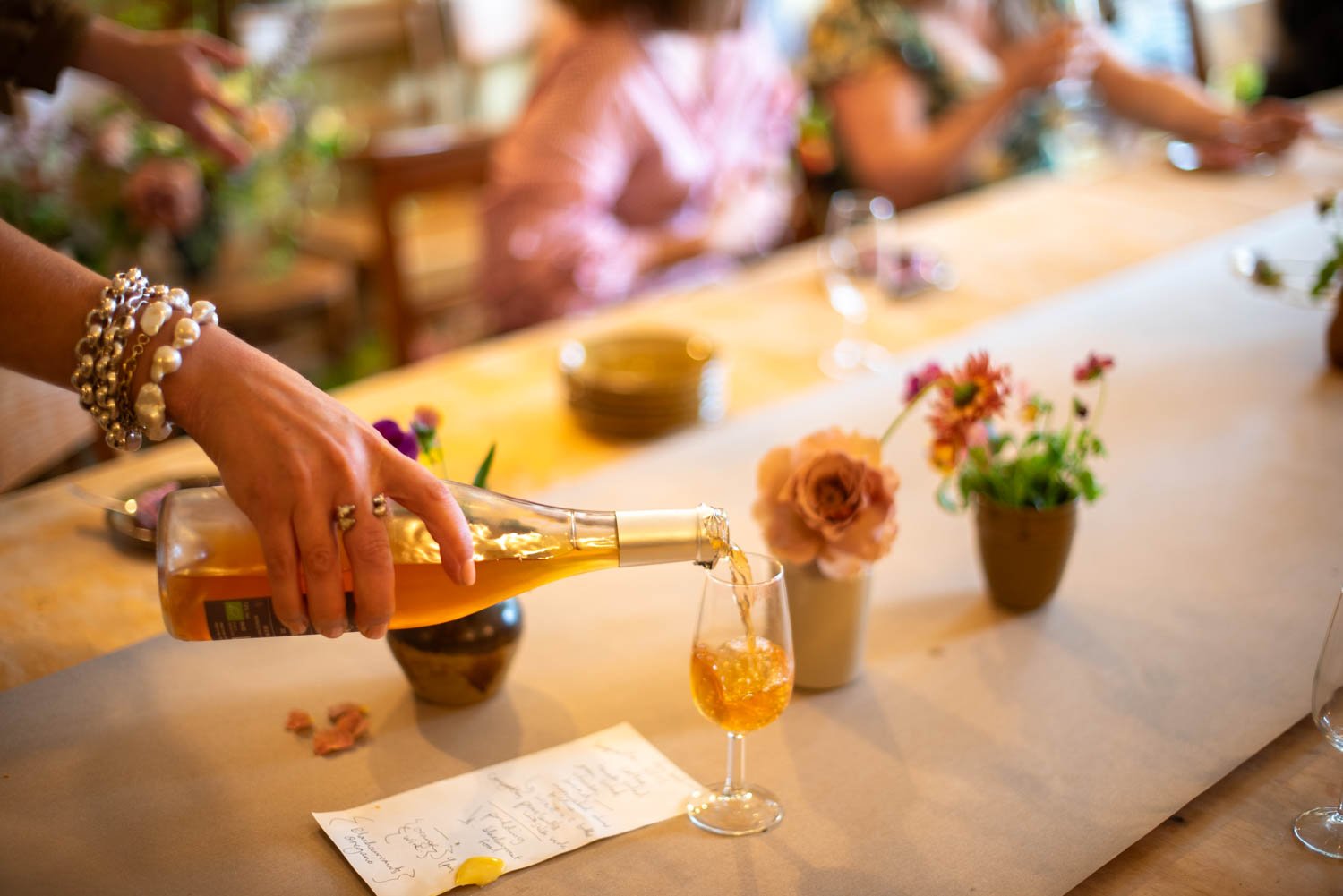
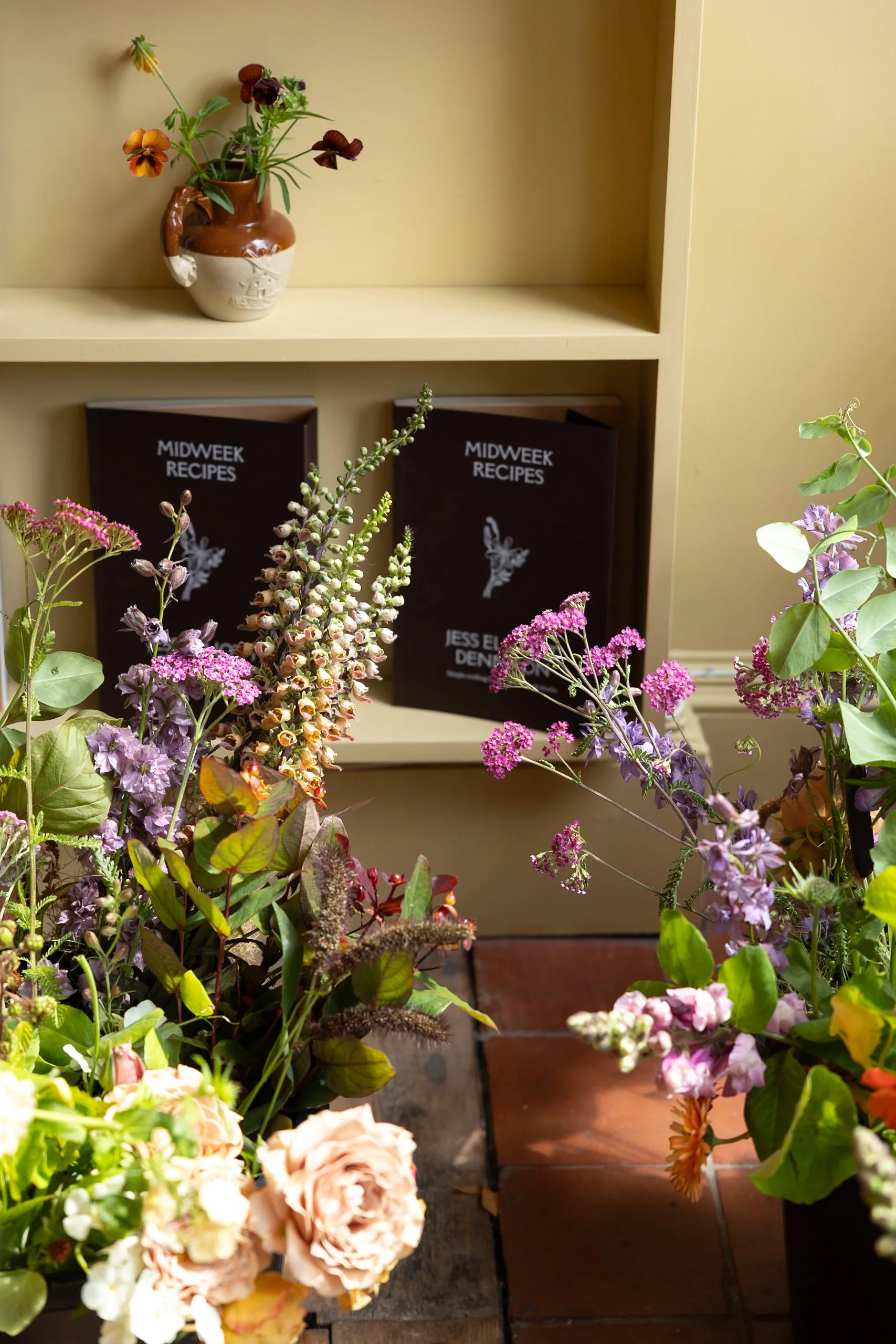
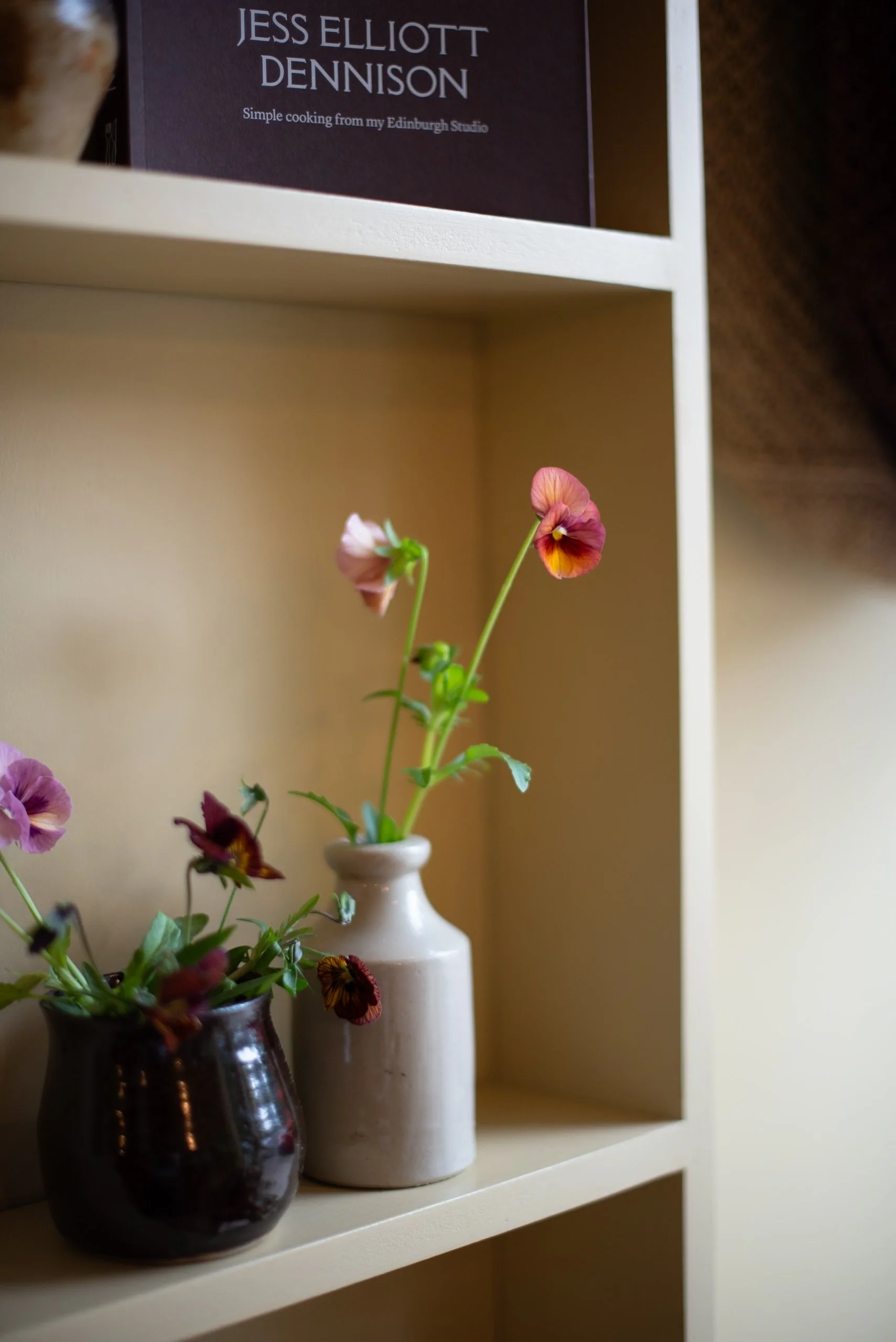
Jess has a range of brilliant cookbooks
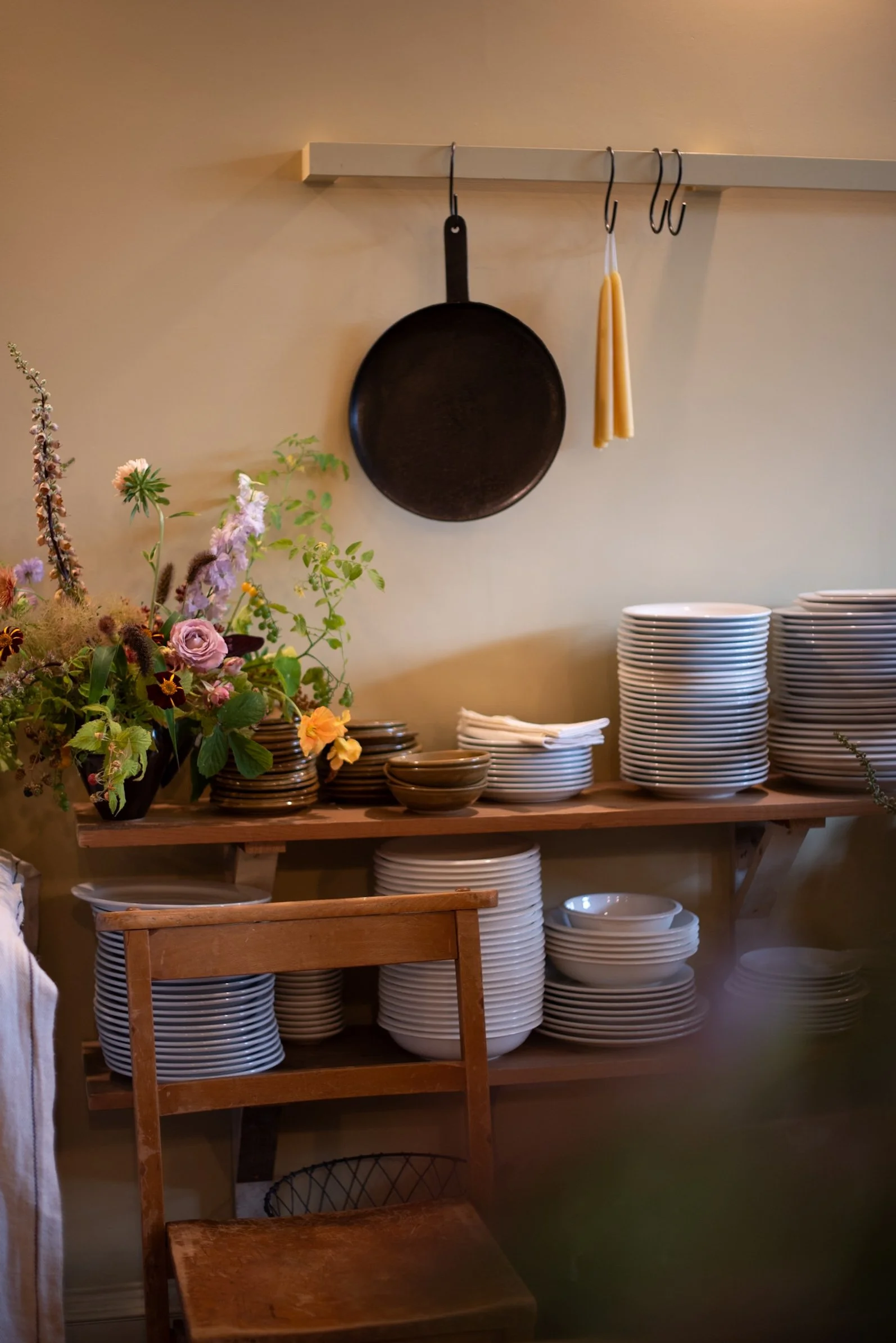
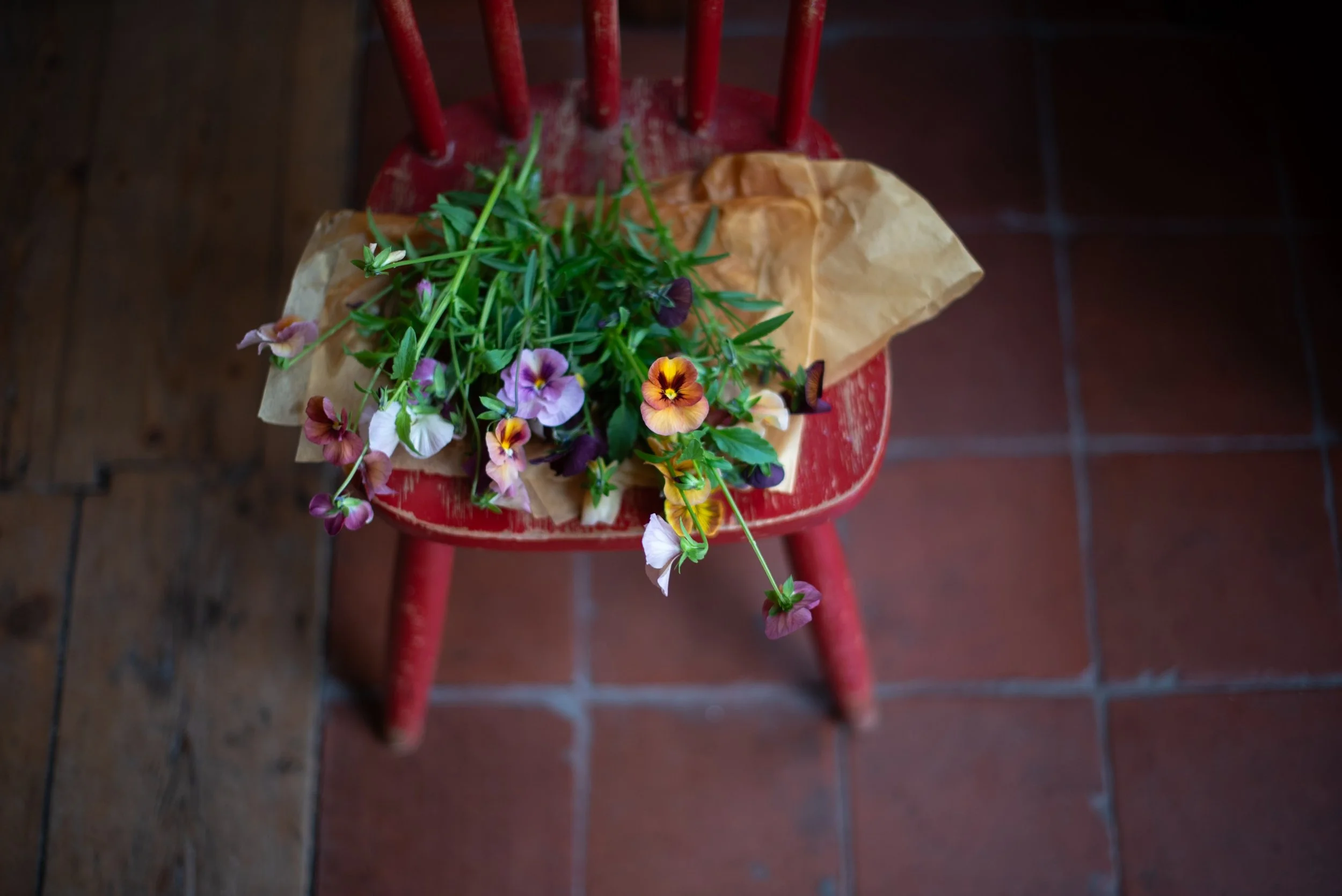
Exquisite Viola from the Pyrus walled garden
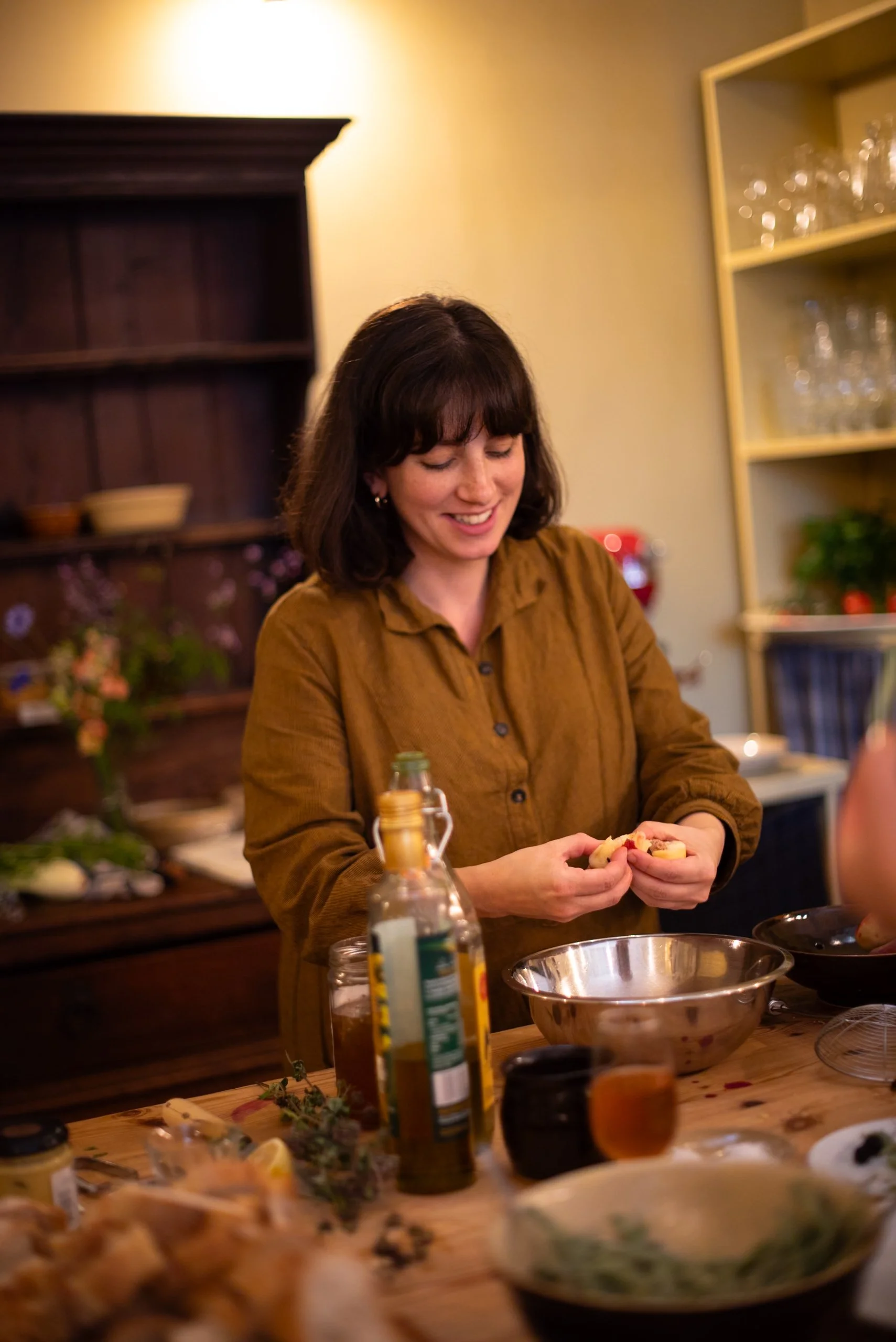
Jess Elliott Dennison tearing fruit for a doughnut peach and basil salad
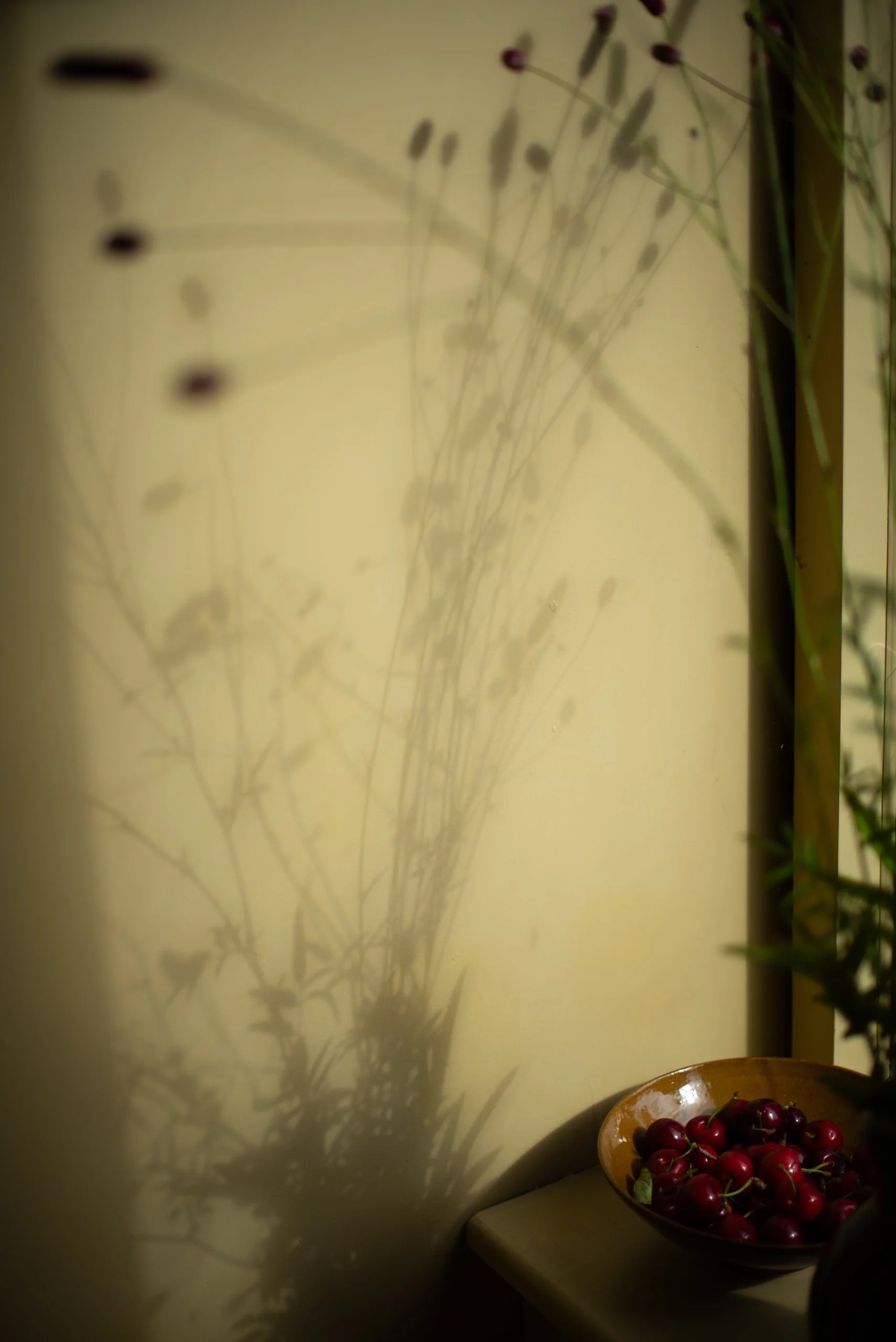
Sanguisorba shadows
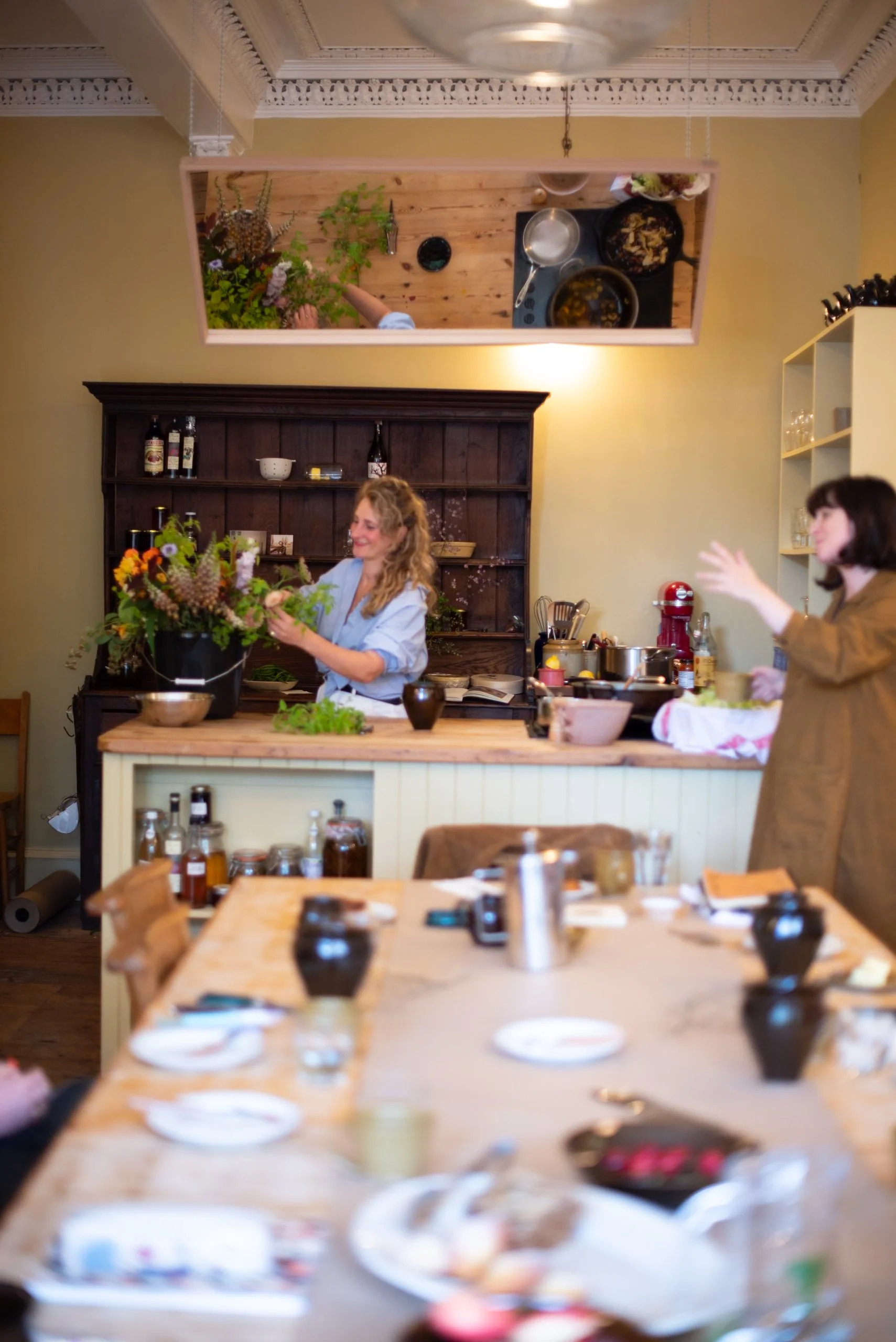
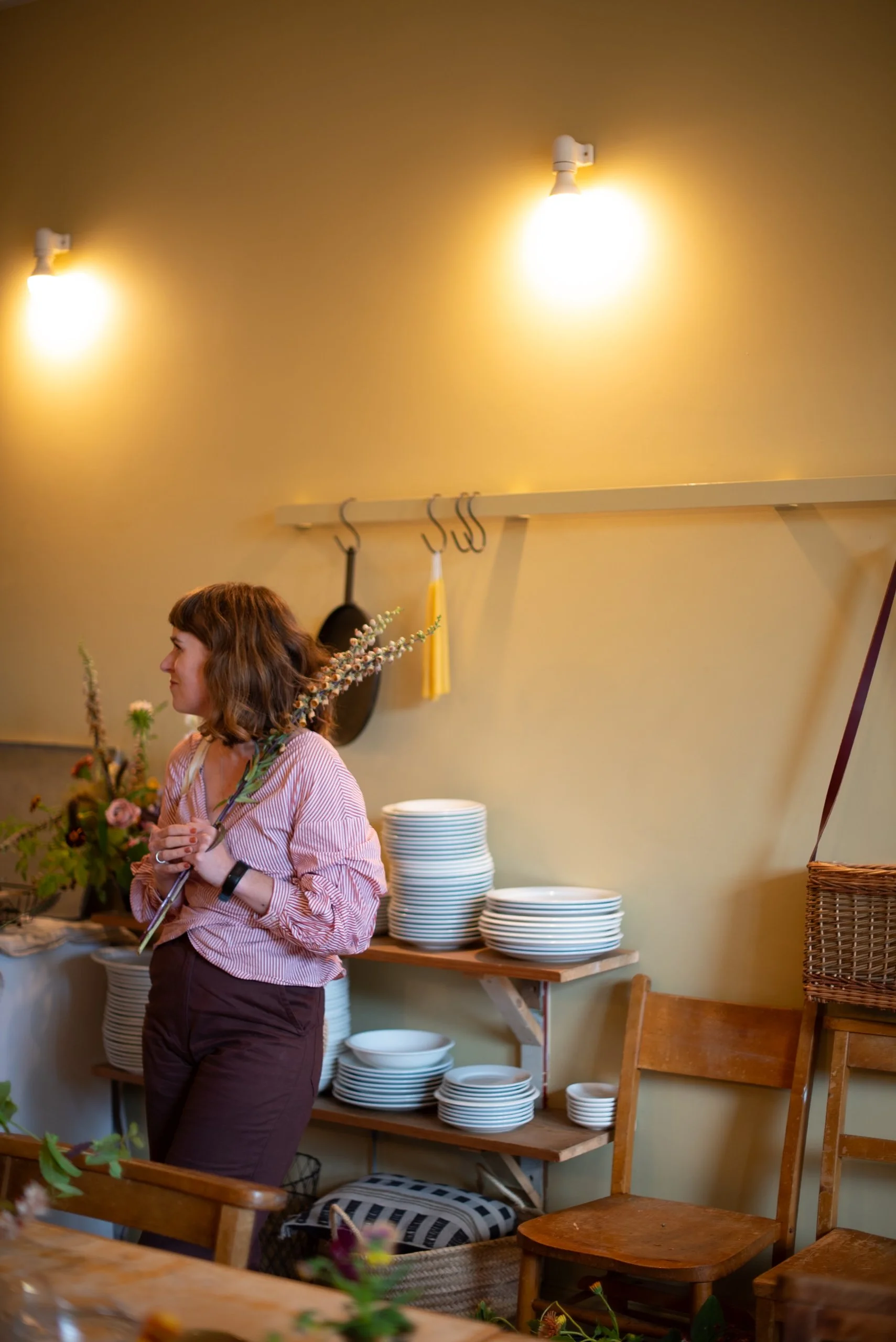
Florist and grower Marion Blythe Sandwith with Digitalis parviflora ‘Milk Chocolate’
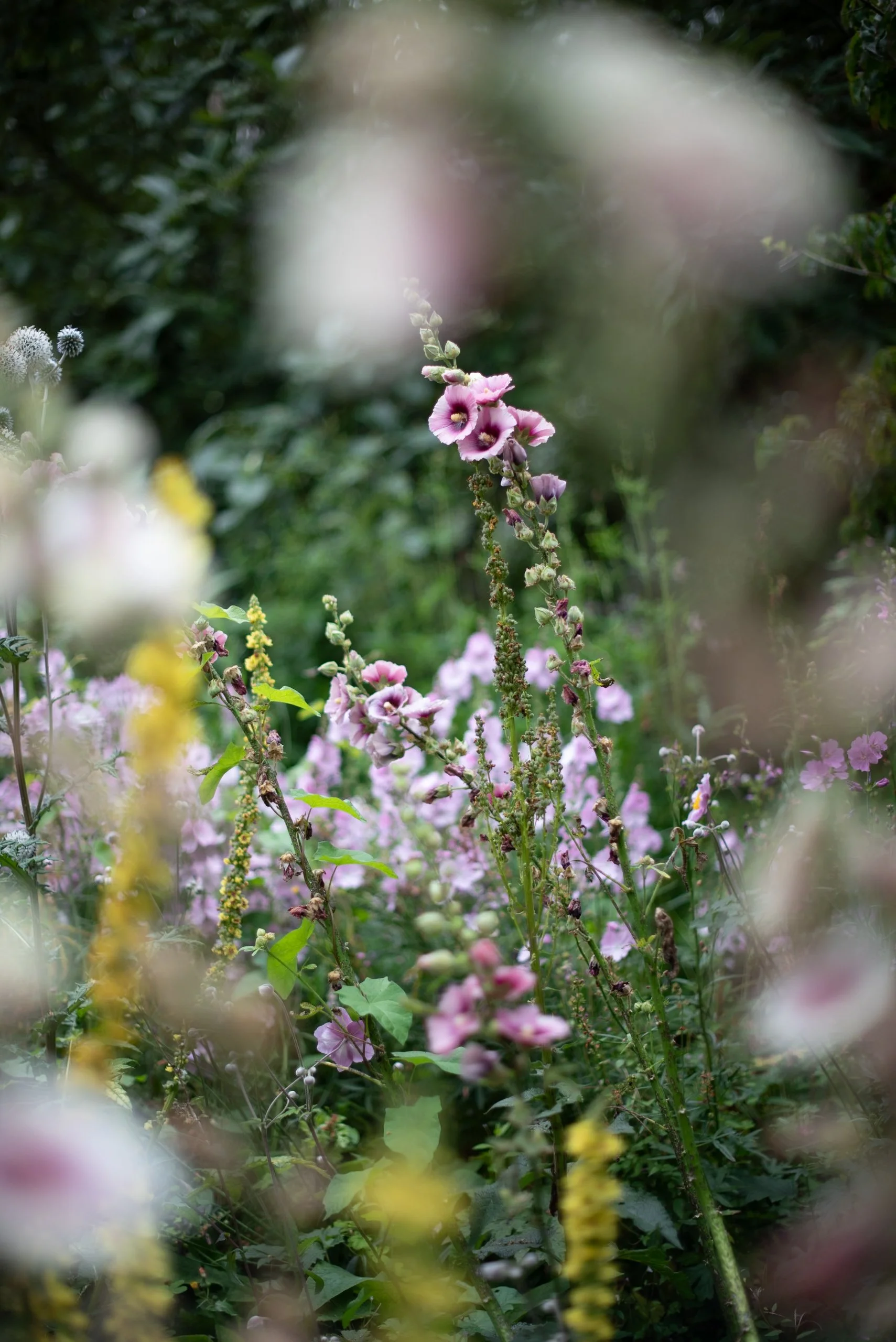
Dishevelled late summer beauty - a tangle of mullein and hollyhocks at Royal Botanic Garden Edinburgh
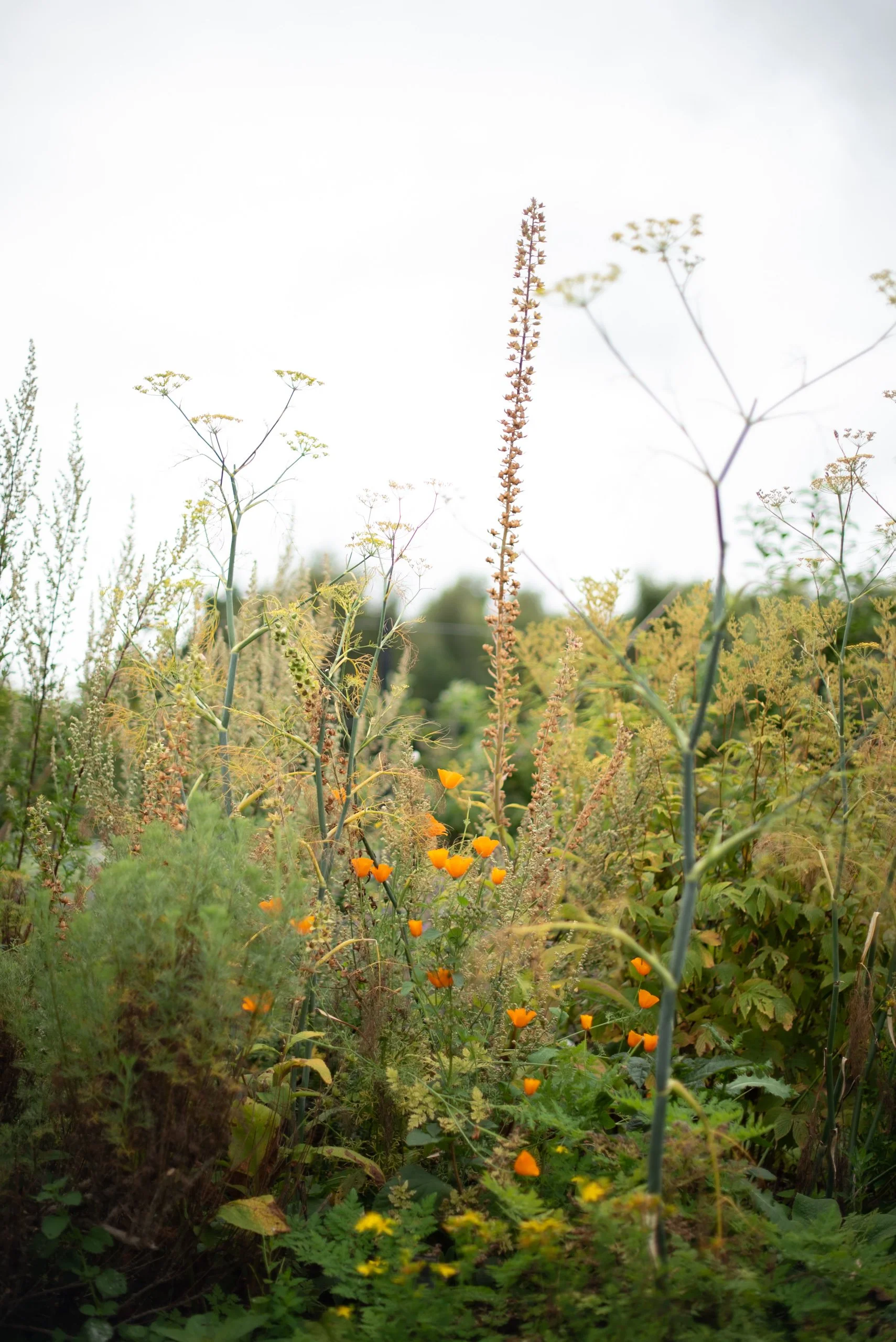
Mugwort, fennel, California poppies and fading spires
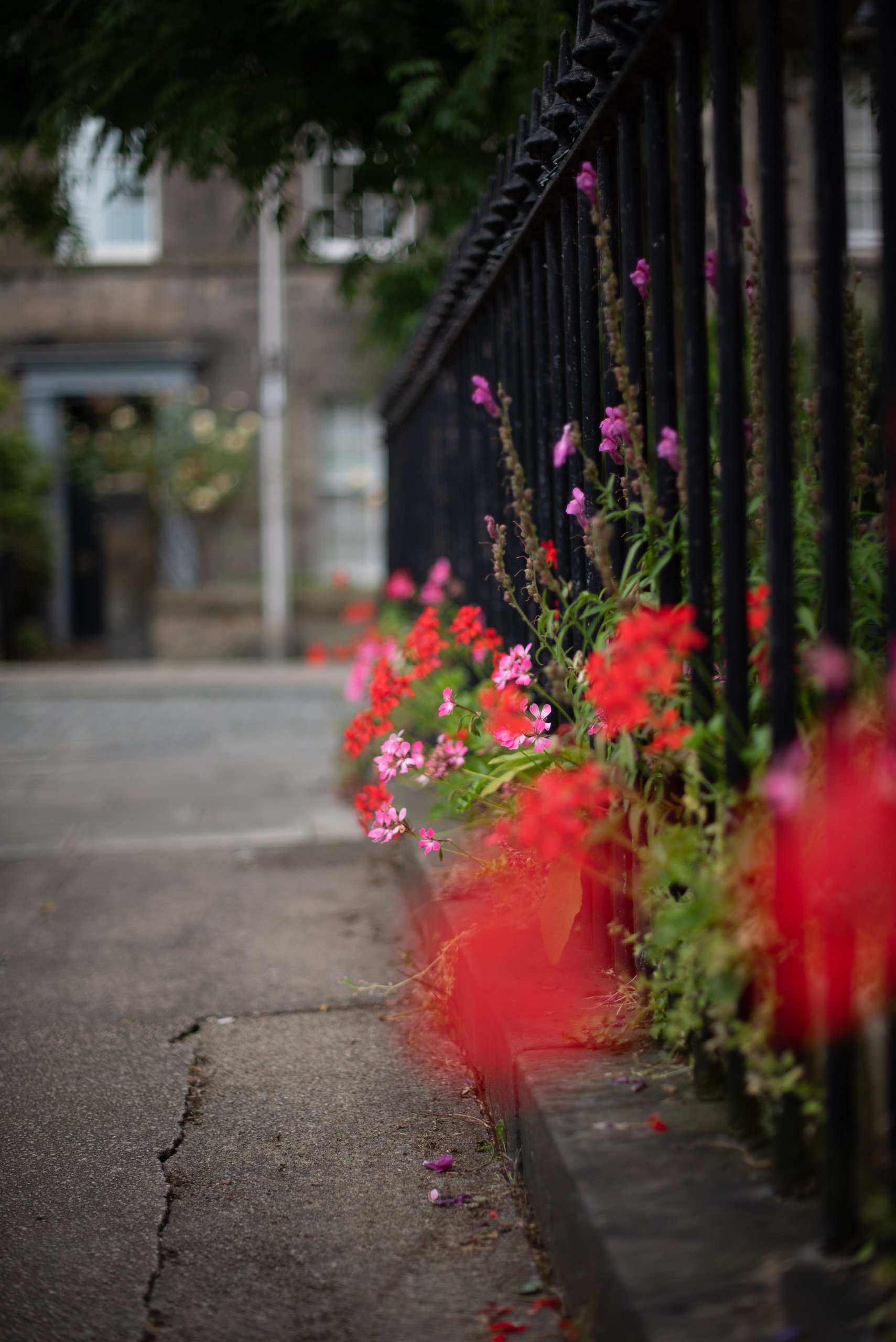
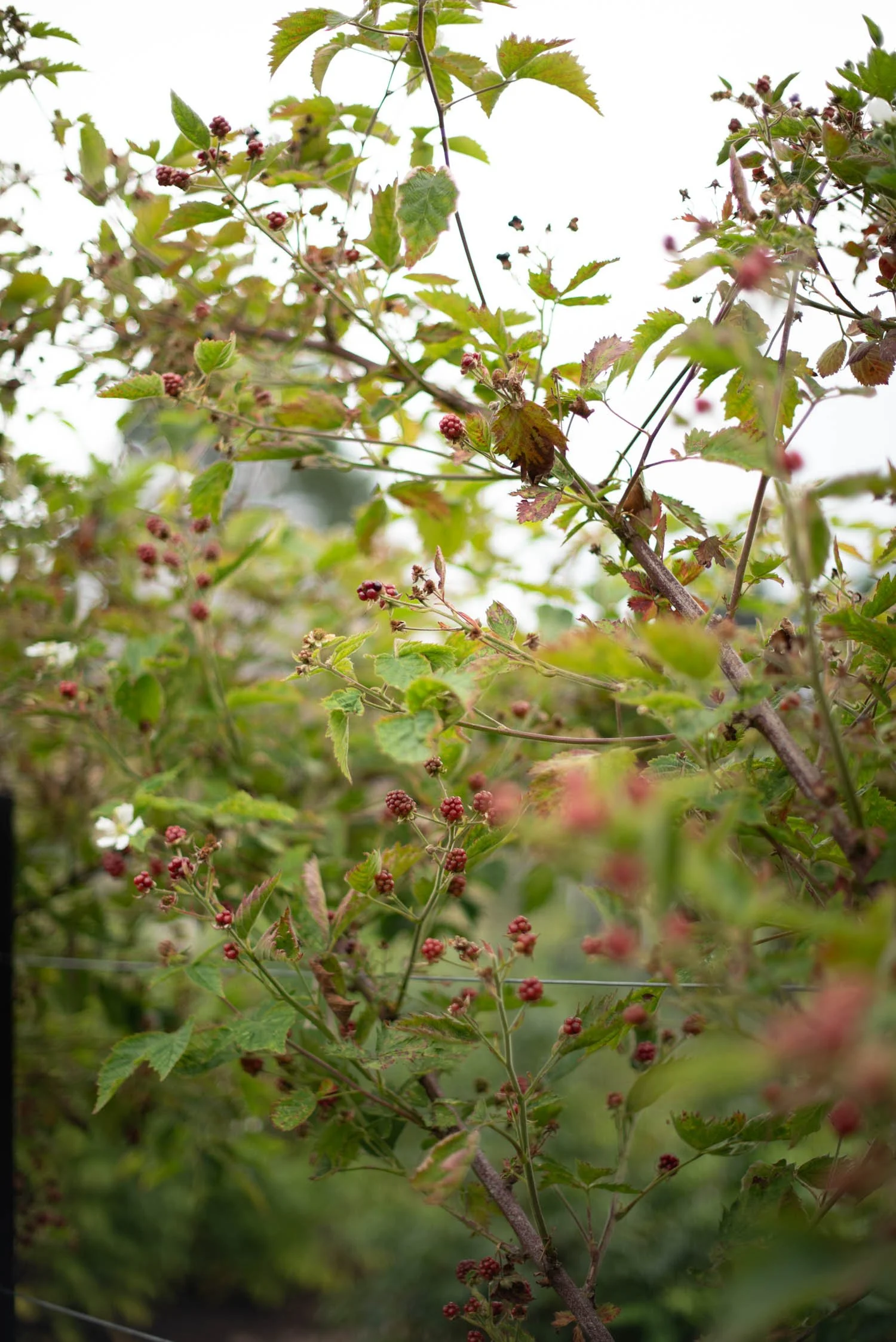
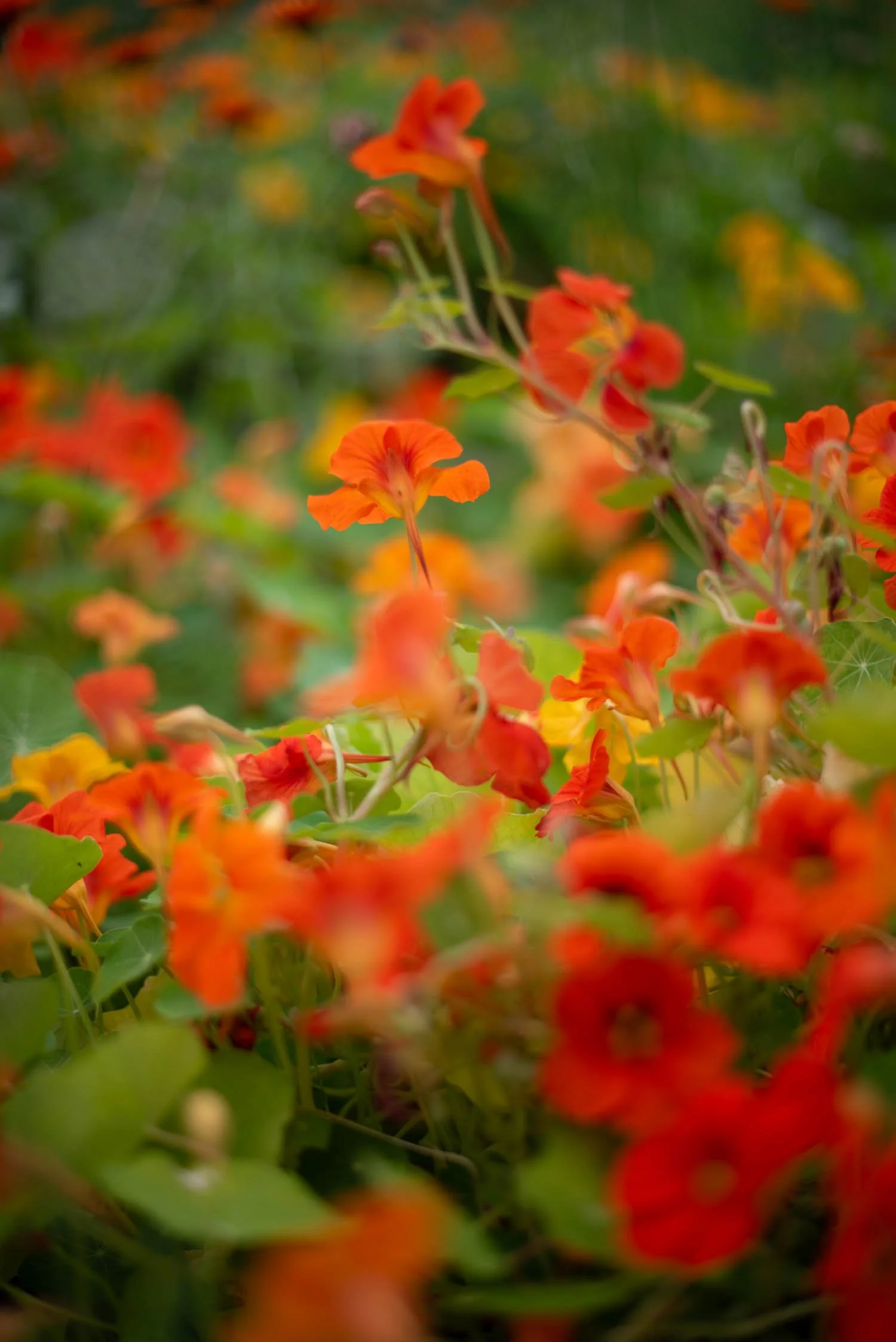
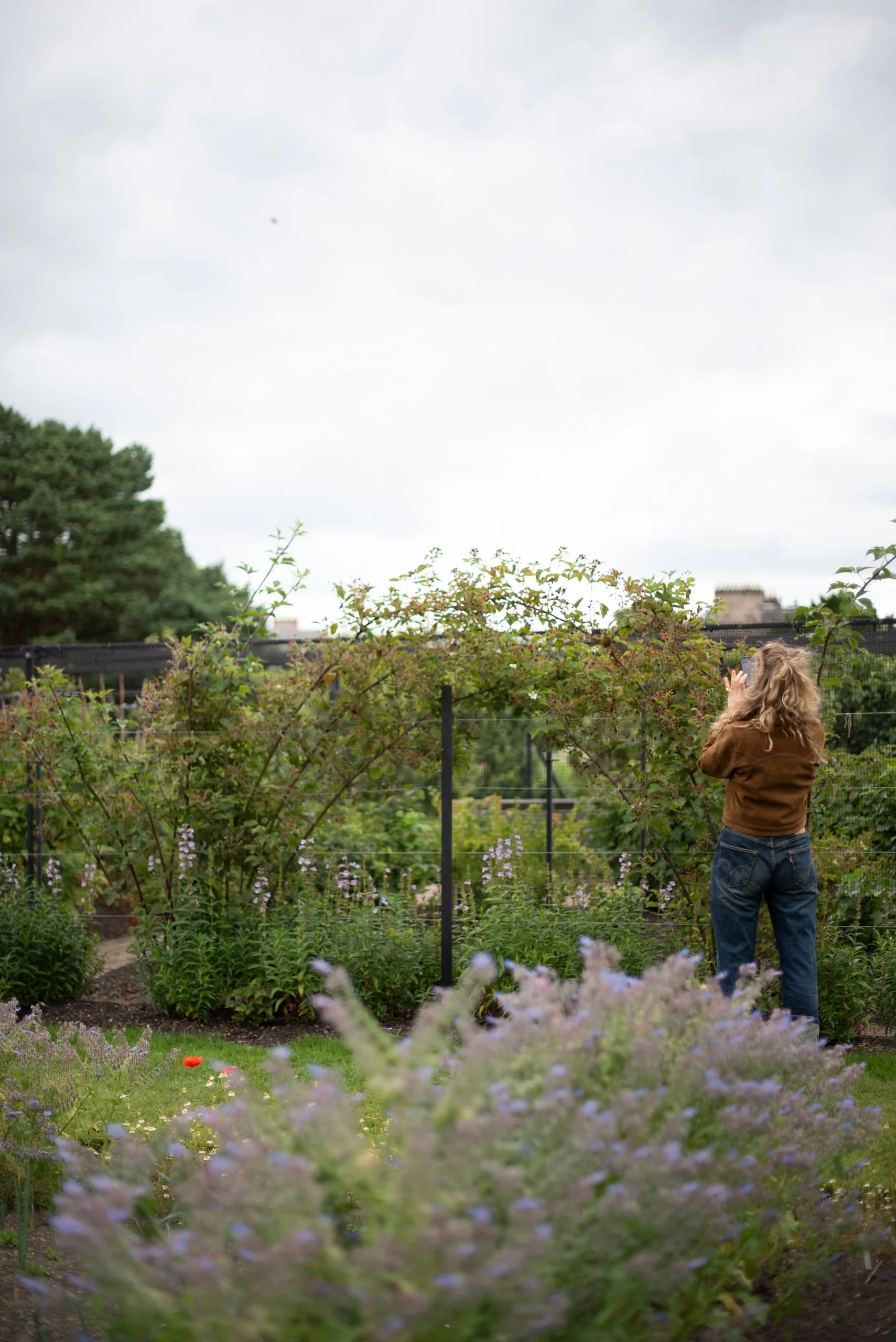
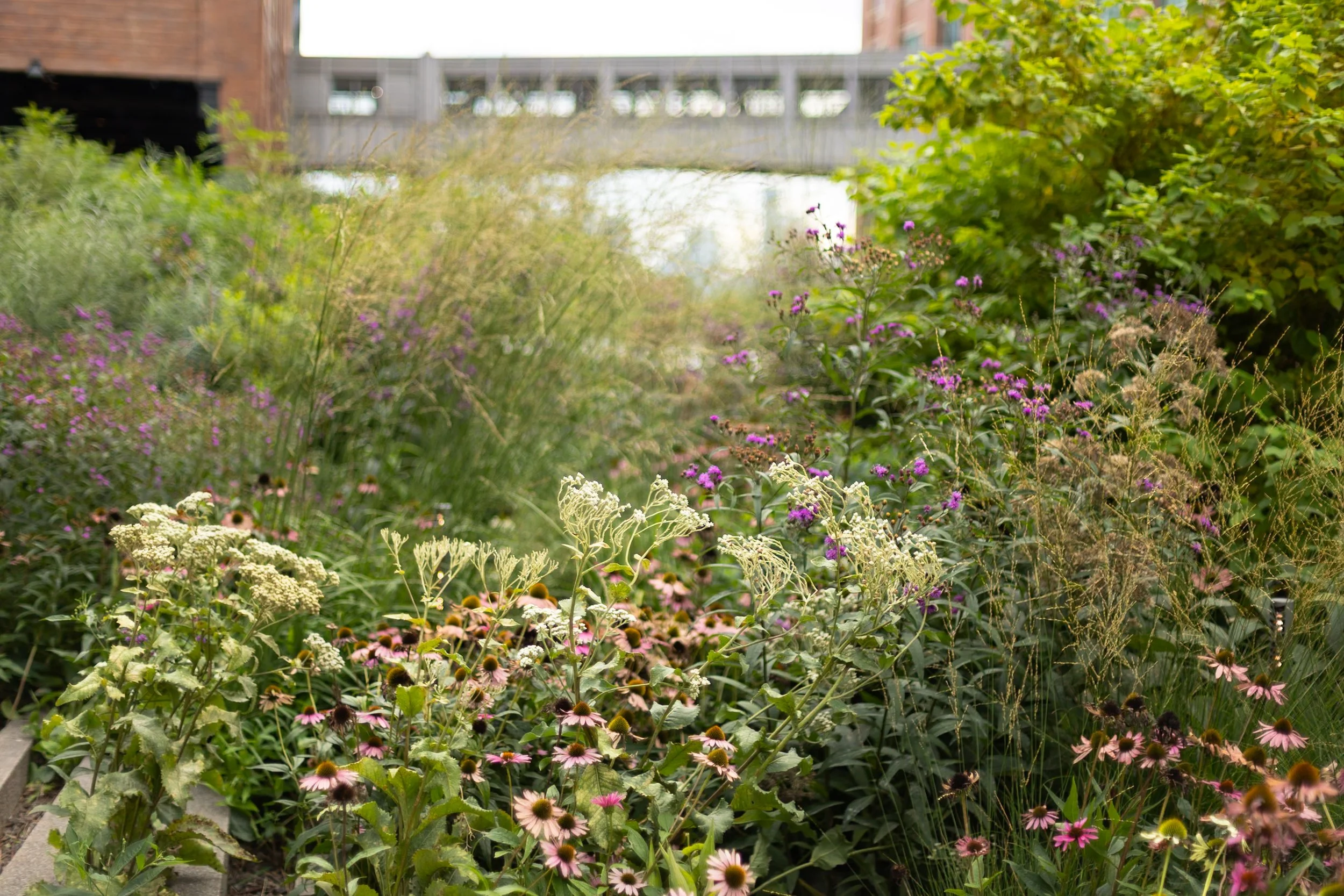
THE HIGHLINE, NYC
Constructed during late 1920s and first opening in 1933 as the ‘West Side Elevated Line’ for transporting produce, the original railroad was gradually abandoned in favour of trucking and by the 1980s sections were being demolished.
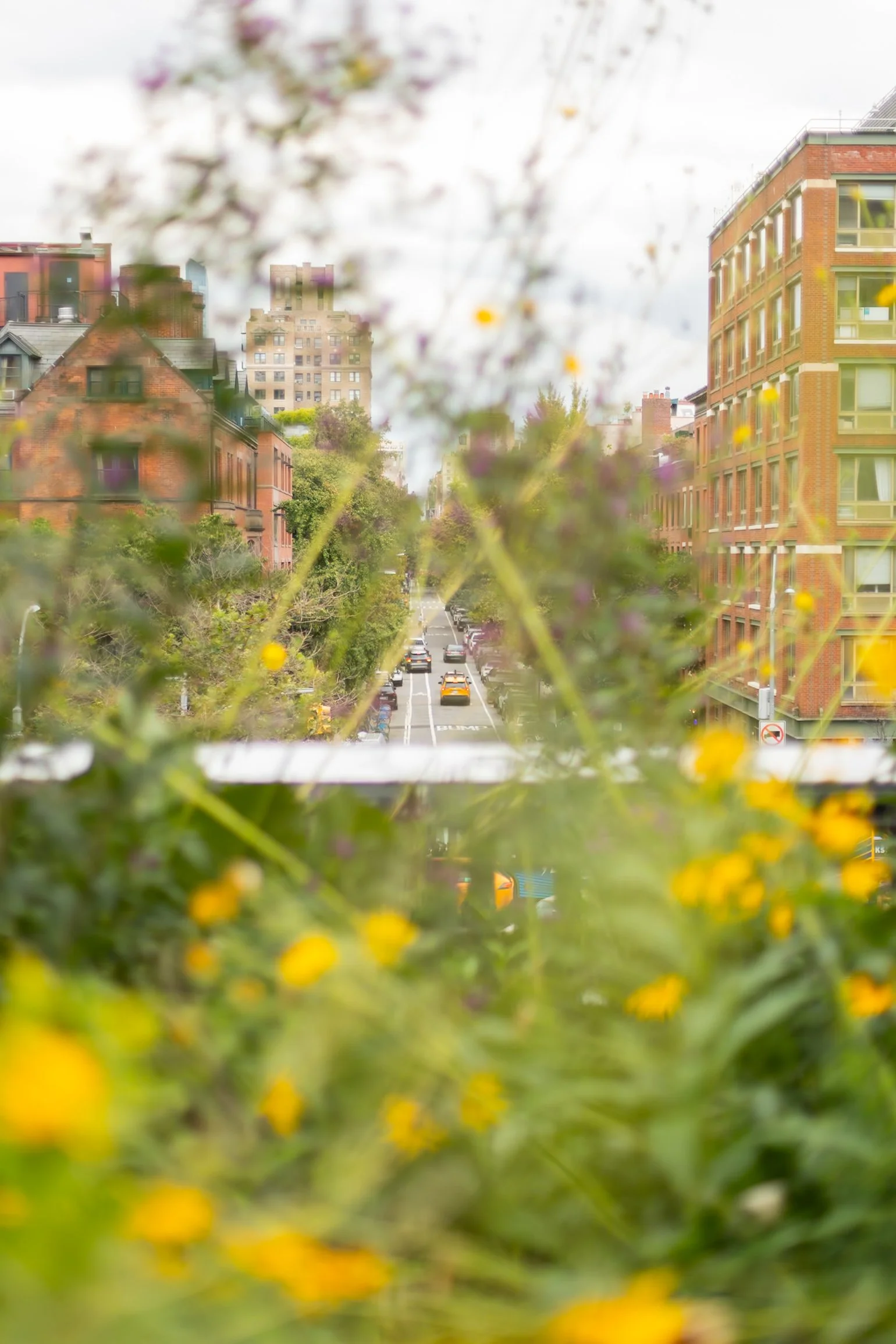

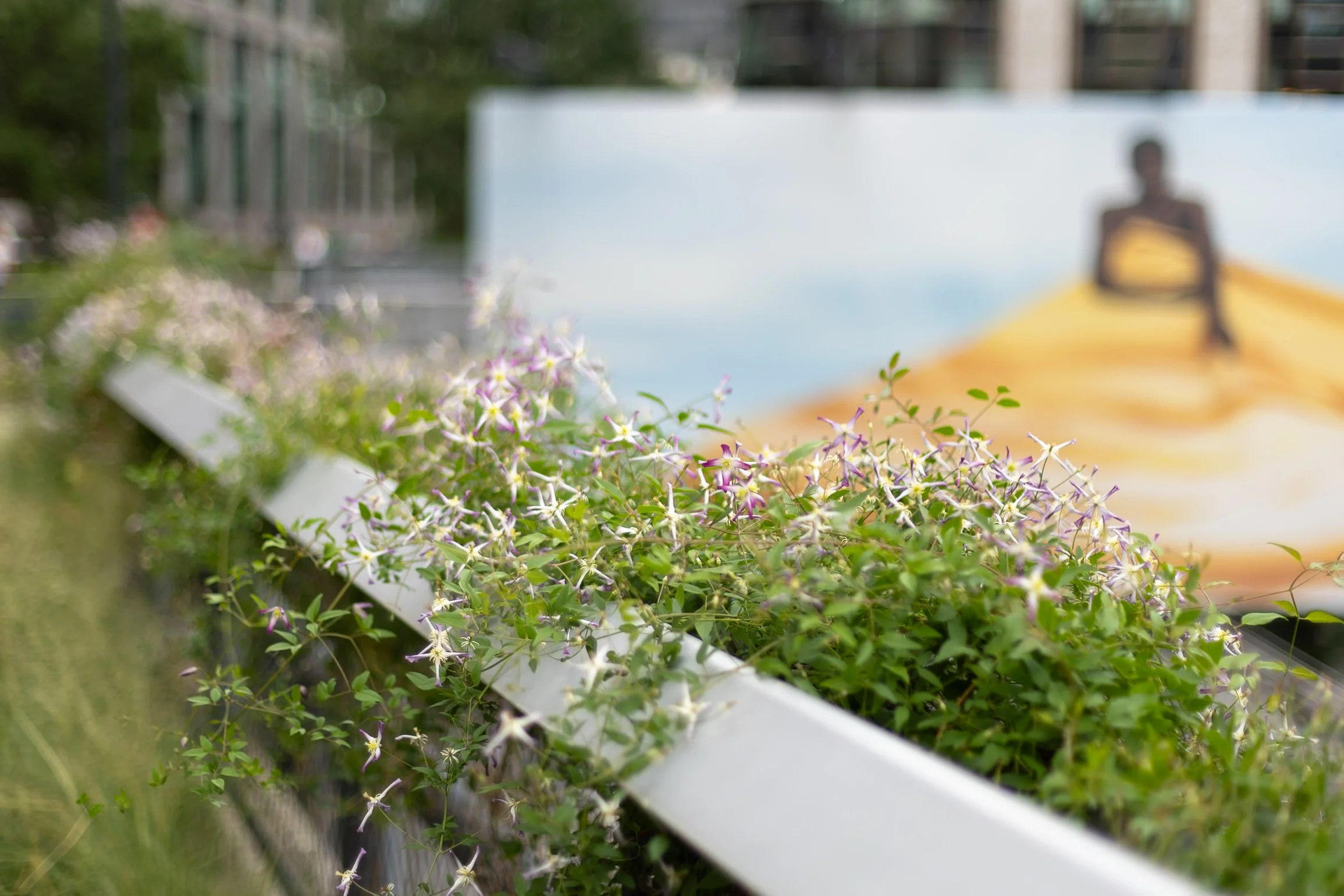
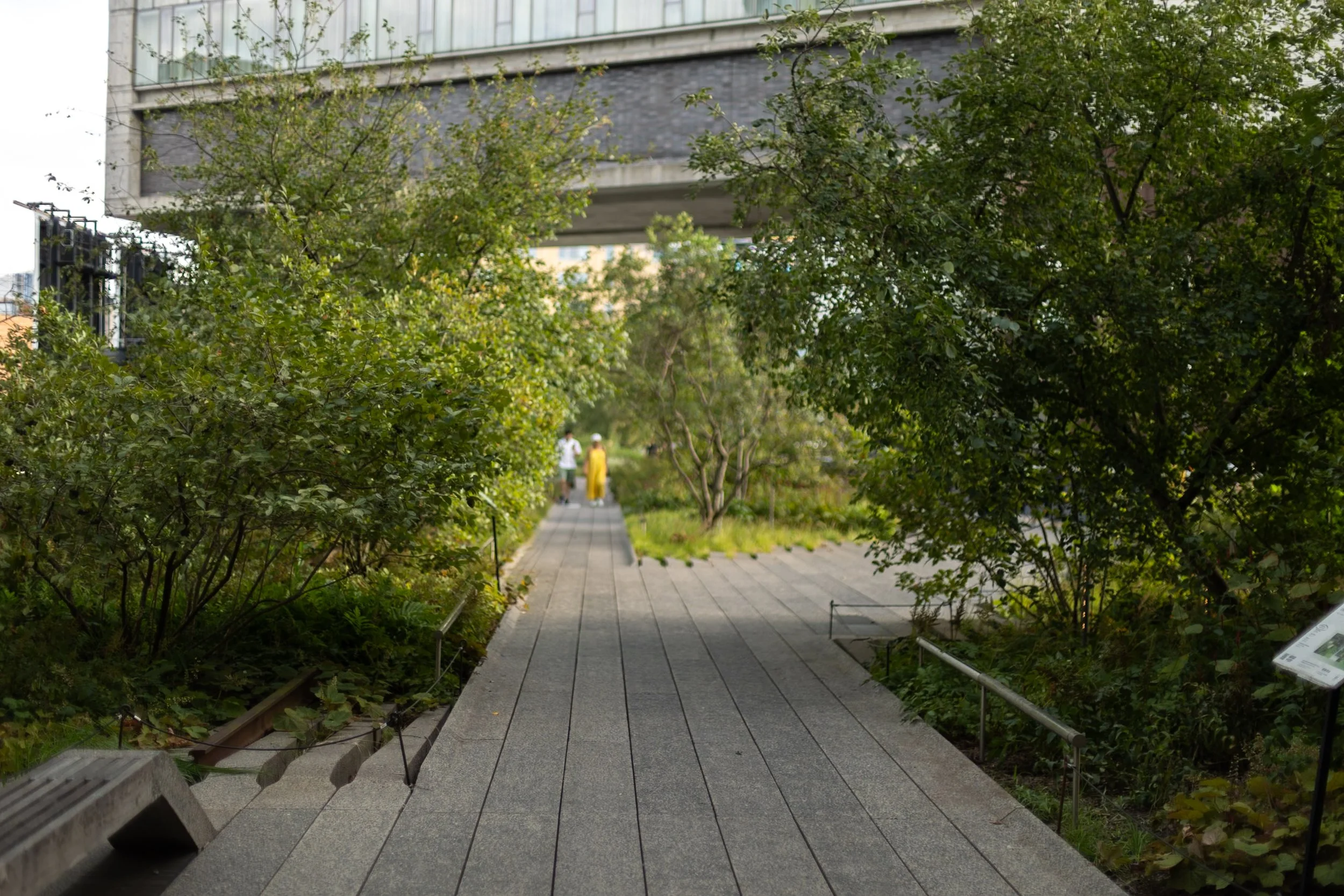
One sultry afternoon in New York, Jess and I walked most of the length of The Highline.
Constructed during late 1920s and first opening in 1933 as the ‘West Side Elevated Line’ for transporting produce, the original railroad was gradually abandoned in favour of trucking and by the 1980s sections were being demolished. Over the following decades the disused space became home to a self perpetuating garden of wild plants and in 1999 Joshua David and Robert Hammond founded Friends of the High Line, a non-profit conservancy, to advocate for its preservation and reuse as a public space. An international ideas competition elicited hundreds of ideas for what to do with the space and between 2004-2006 Landscape architecture firm James Corner Field Operations; design studio Diller Scofidio + Renfro; and planting designer Piet Oudolf were selected as the team to transform the High Line with sections opening every few years since. It is now one long continuous 1.45 mile-long green belt with over 500 species of plants and trees.
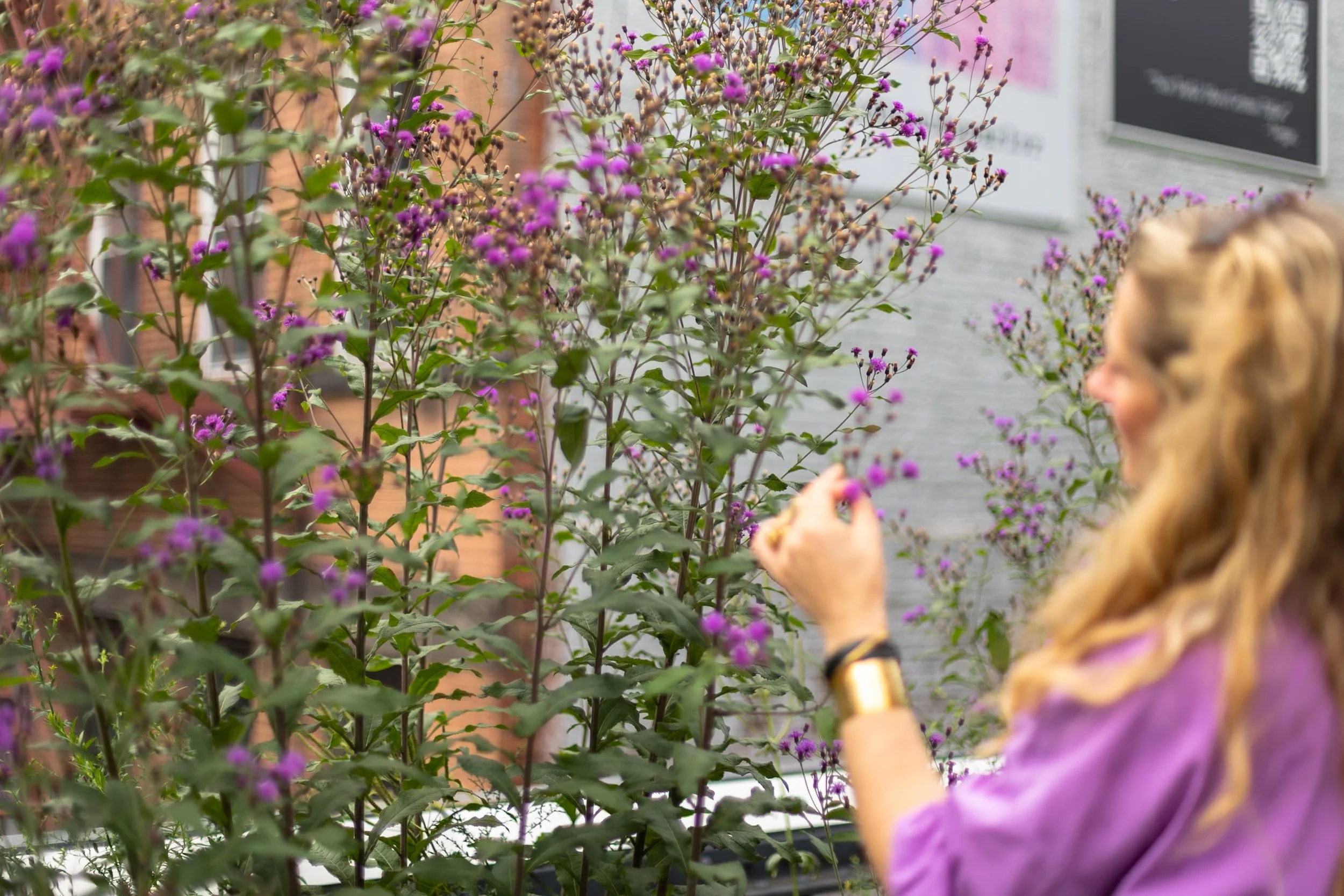
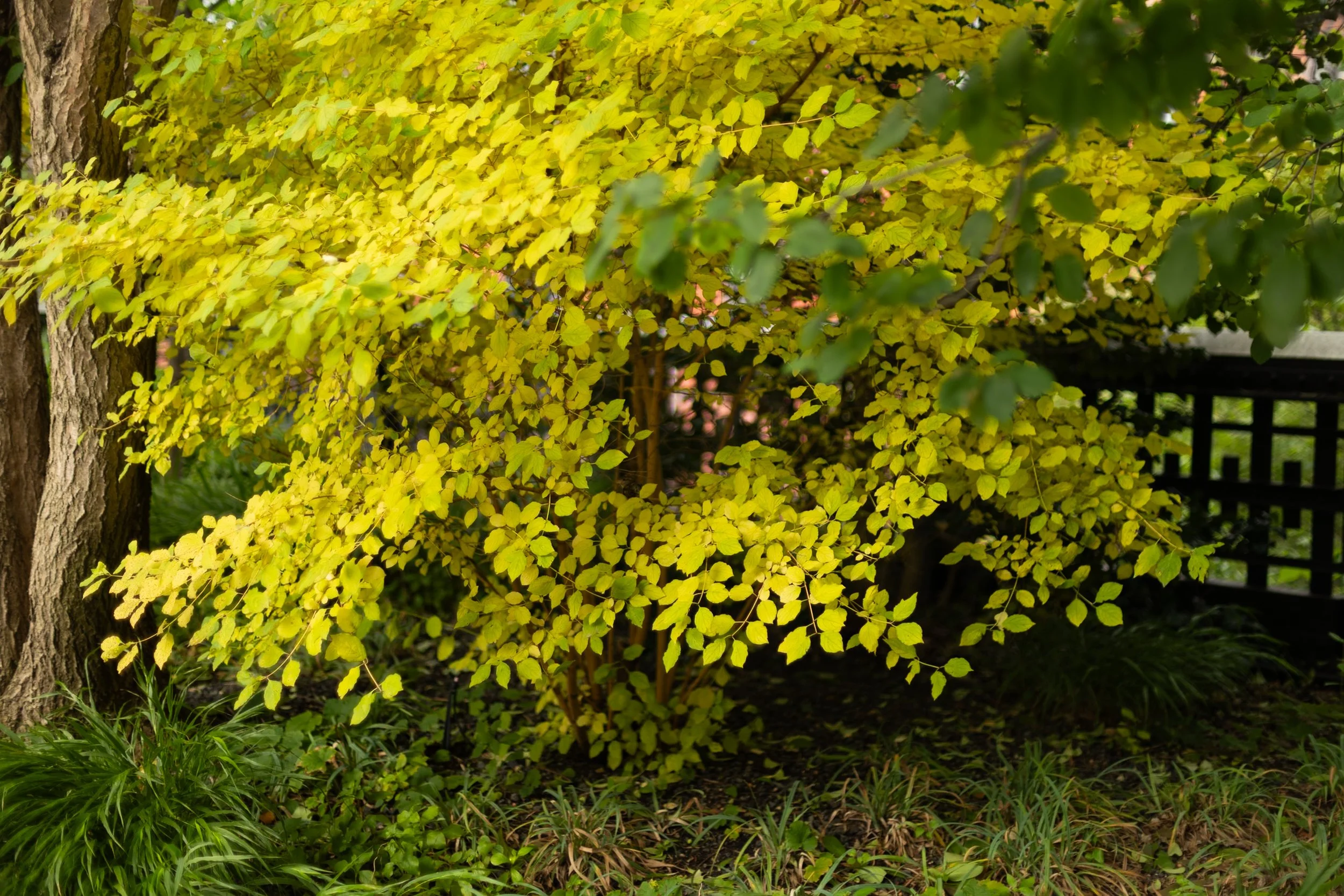
Garden designer Piet Oudolf was inspired for the planting by the self-seeded landscape that had already taken root and thrived along the disused railroad for the twenty-five years since its gradual abandonment. The result is a naturalistic, resilient and utterly unique, weaving through the city above the avenues and traffic below.

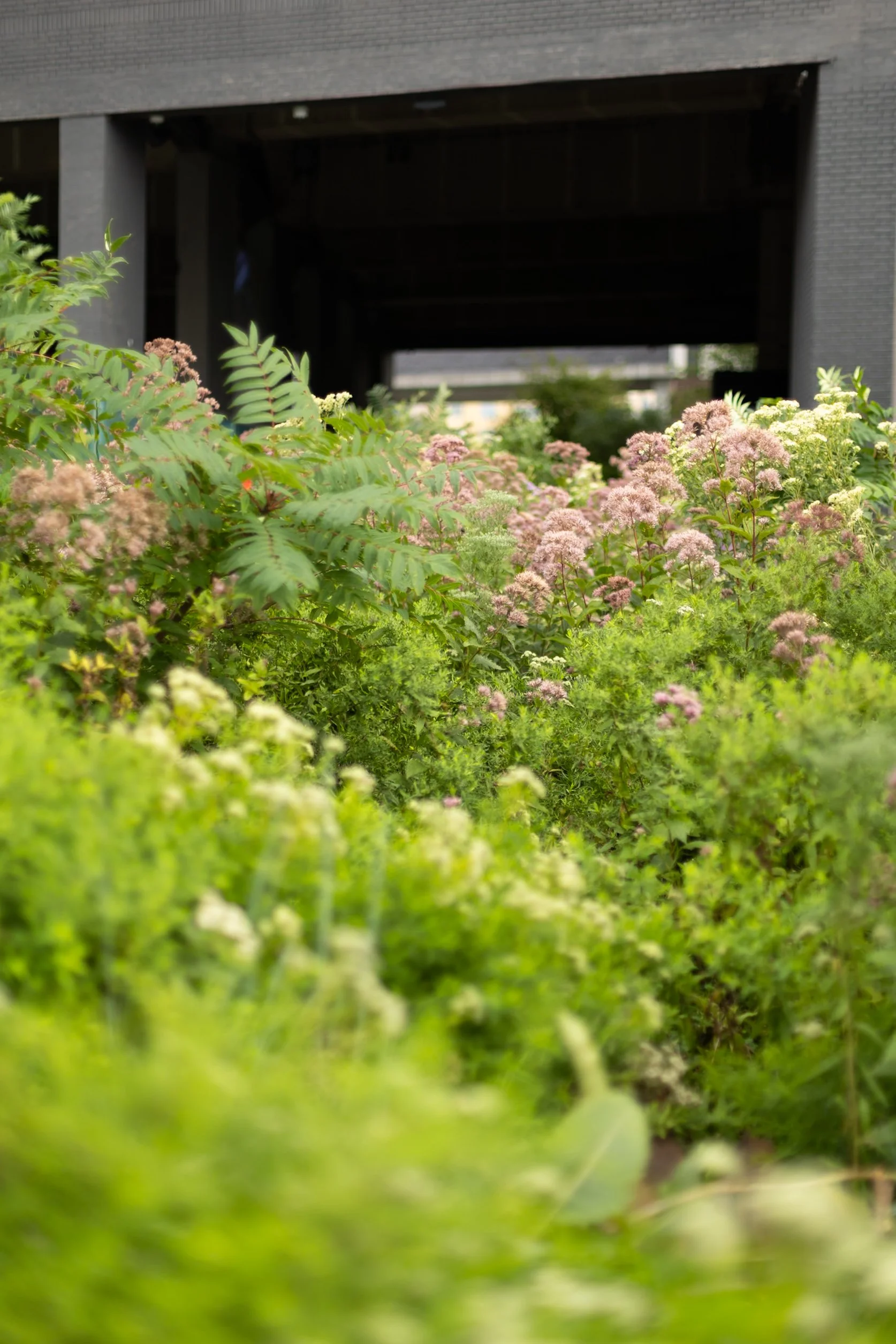

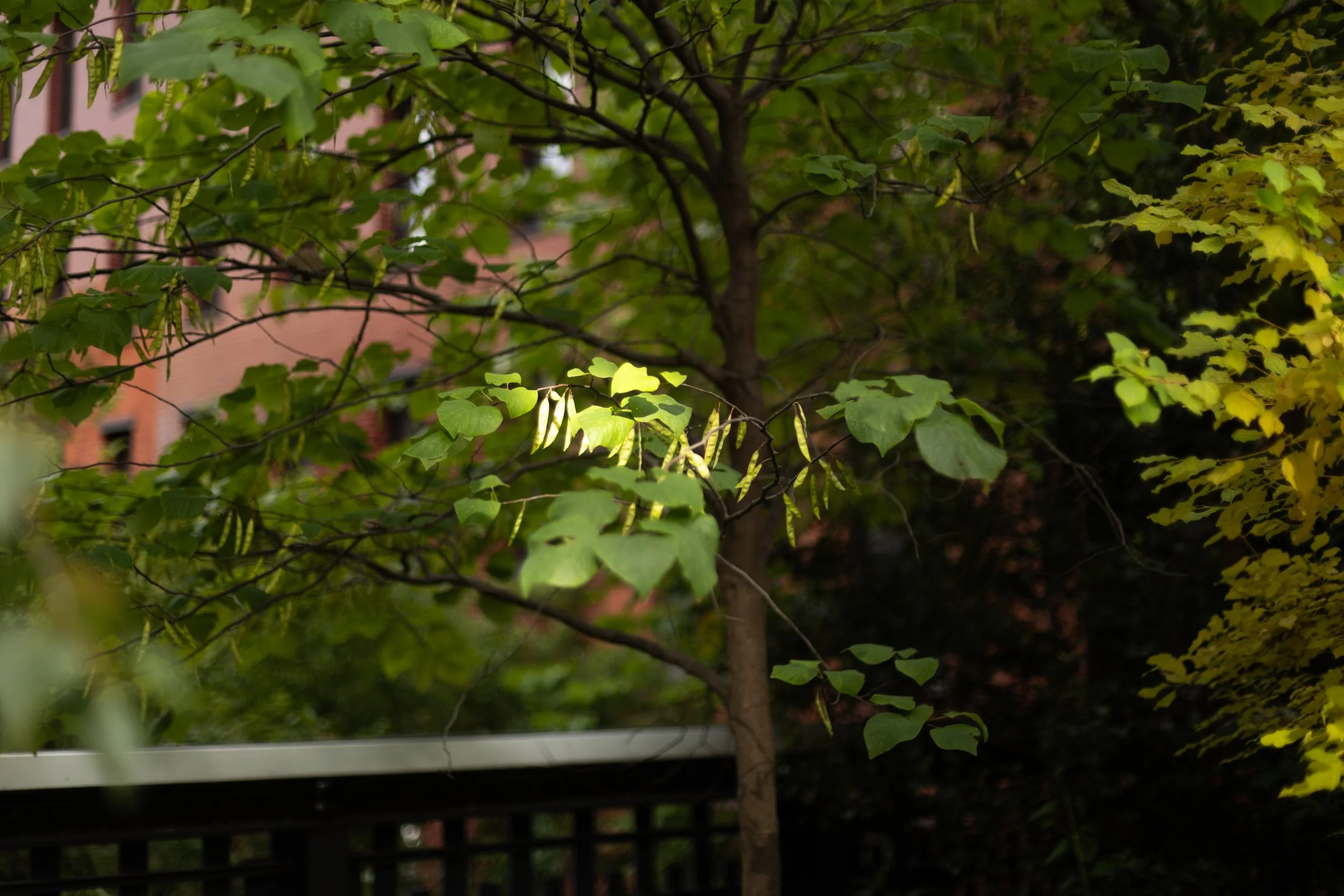
Intensively managed and carefully planned, the park provides nourishing habitats for birds and pollinating wildlife, and visual beauty to New Yorkers and visitors throughout each of the four seasons. This was my first visit and while I had been looking forward to it, I really had no comprehension of moving the experience would be; it’s just unlike any other public space I have ever encountered. The choice and variety of the plants is masterful. The layout, although essentially linear, is undulating, and constantly surprising. And the kaleidoscopic slideshow of views - flashes of the river, slivers of skyline, billboards, rooftops, office blocks, glass and asphalt, tree-lined avenues - ensure that every few minutes you have a new outlook and surface beneath your feet shifts from one material to another so that you feel you are constantly in a state of wonder and novelty.

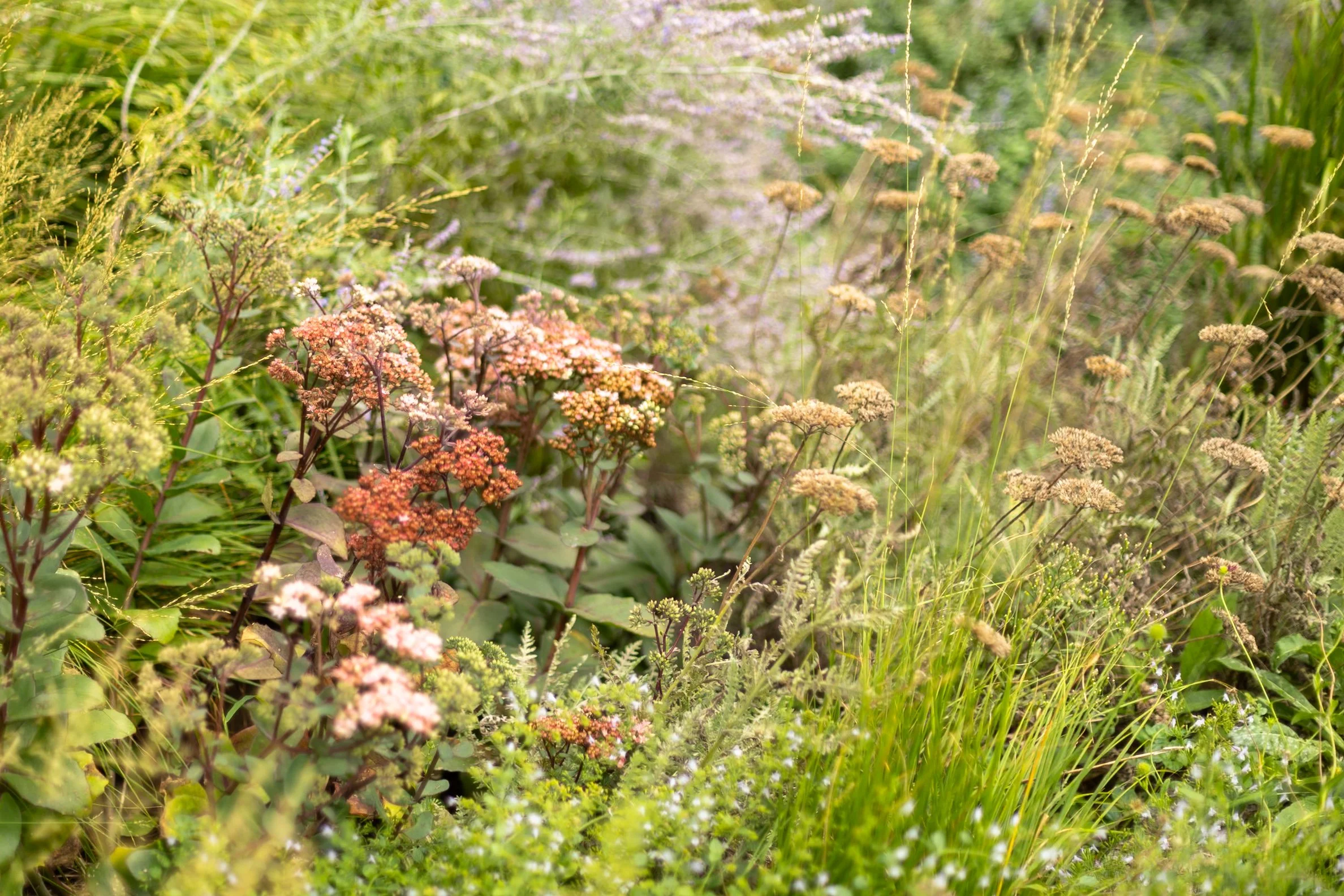
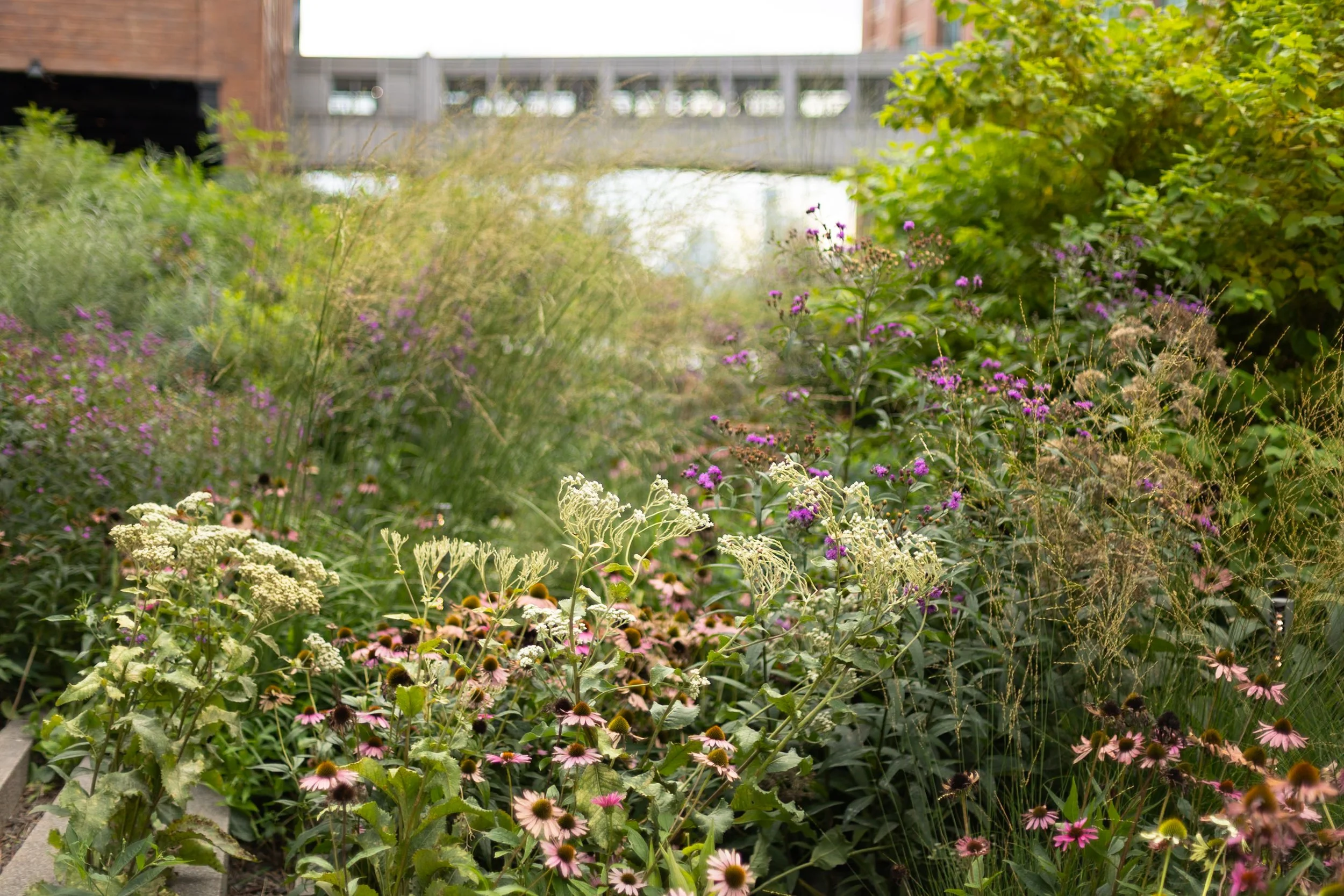
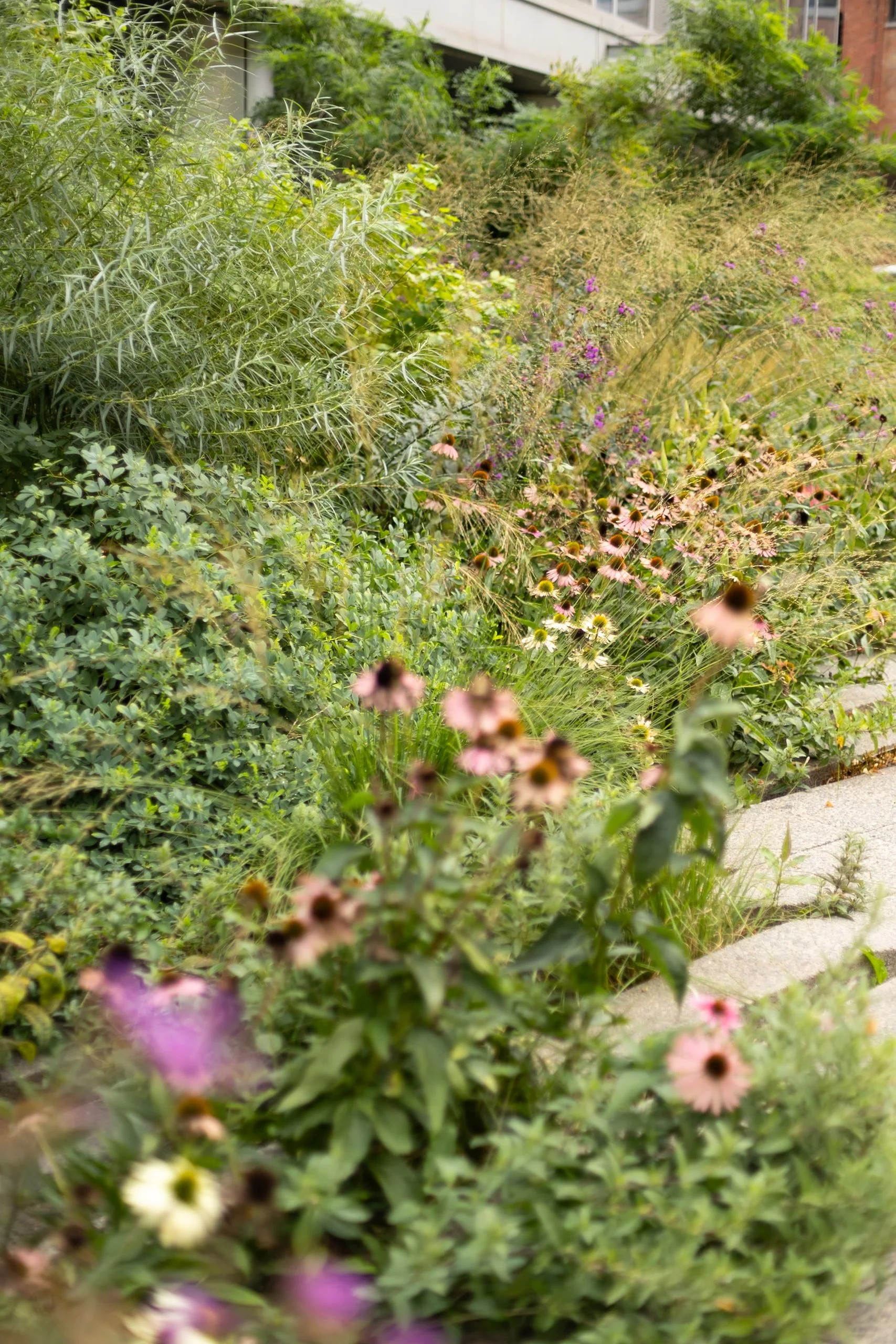
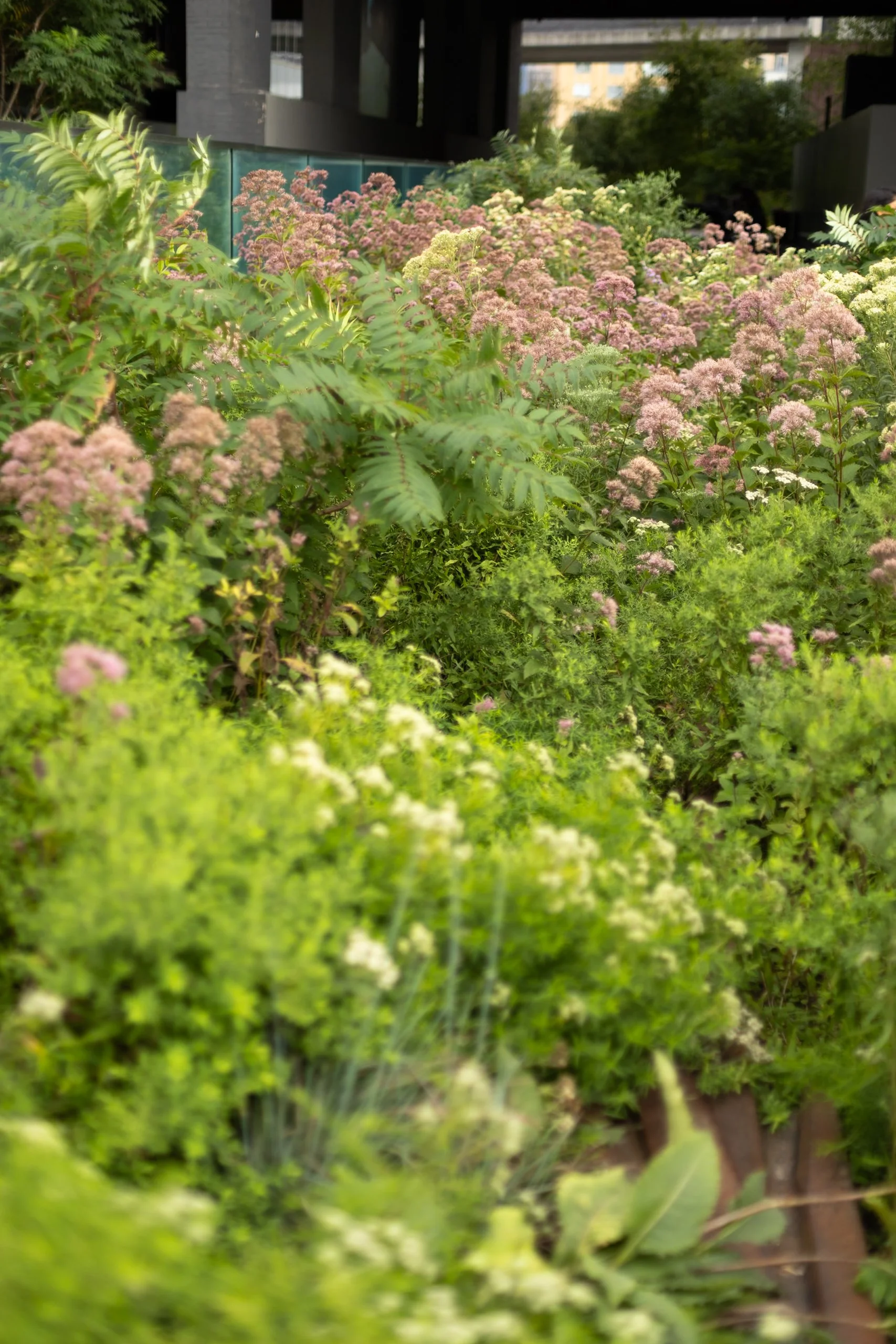
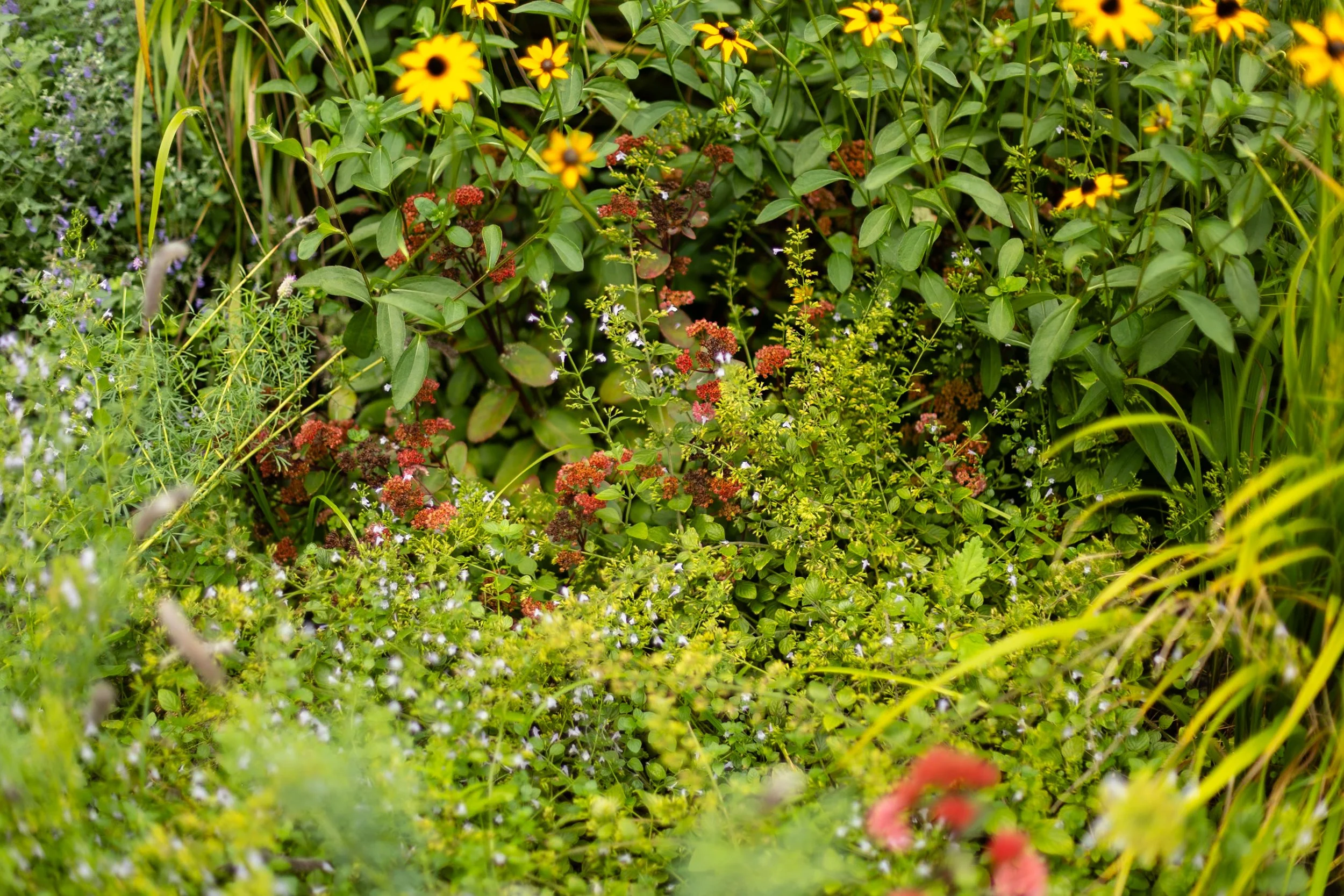
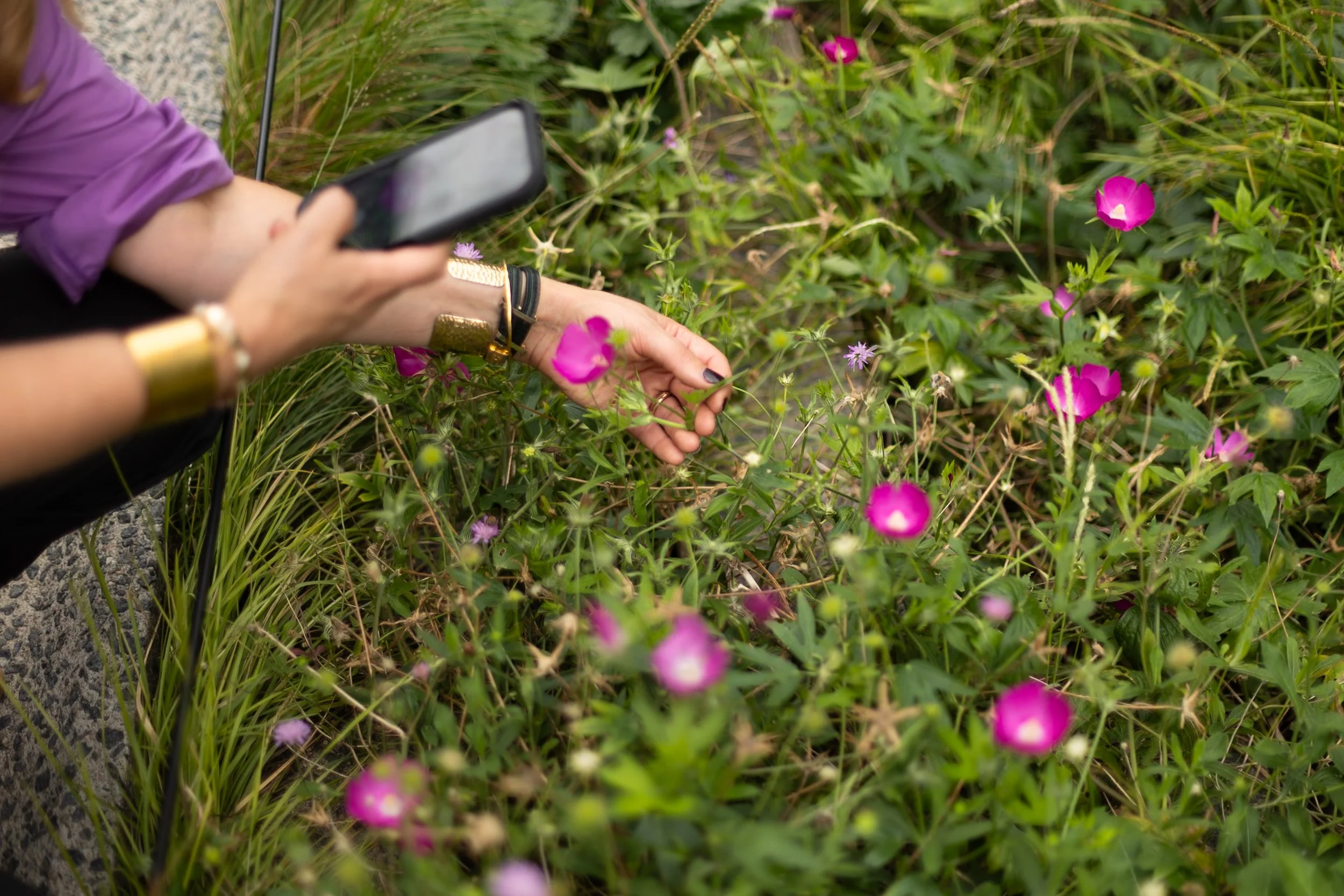
The walk was regularly interrupted by needing to crouch down, stroke, coo over and attempt to identify the plants by name. There were those we recognised and already a lot at this time of the year at the studio and school; but a great many we didn’t. Among those added to the ever-growing plant-list to investigate for the cutting garden were: New York ironweed (Veronica noveboracensis), short-toothed mountain mint (Pycanthemum muticum), narrow-leaved mountain mint (Pycanthemum tenuifolium), flowering spurge (Euphorbia corollata), purple poppy mallow (Callirhoe involucrata), butterfly weed (Asclepias tuberosa) and swamp rose mallow (Hibiscus moscheutos).
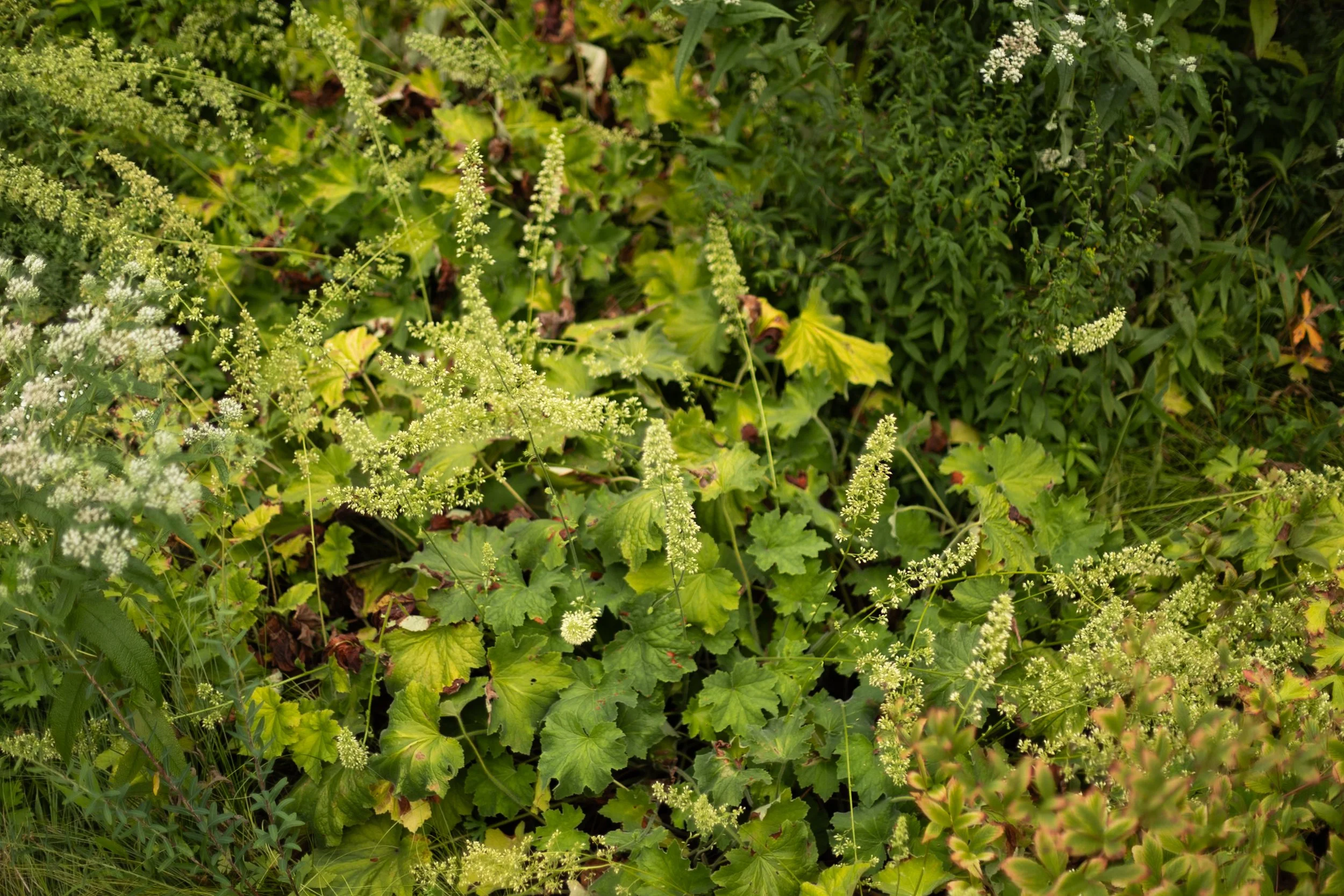
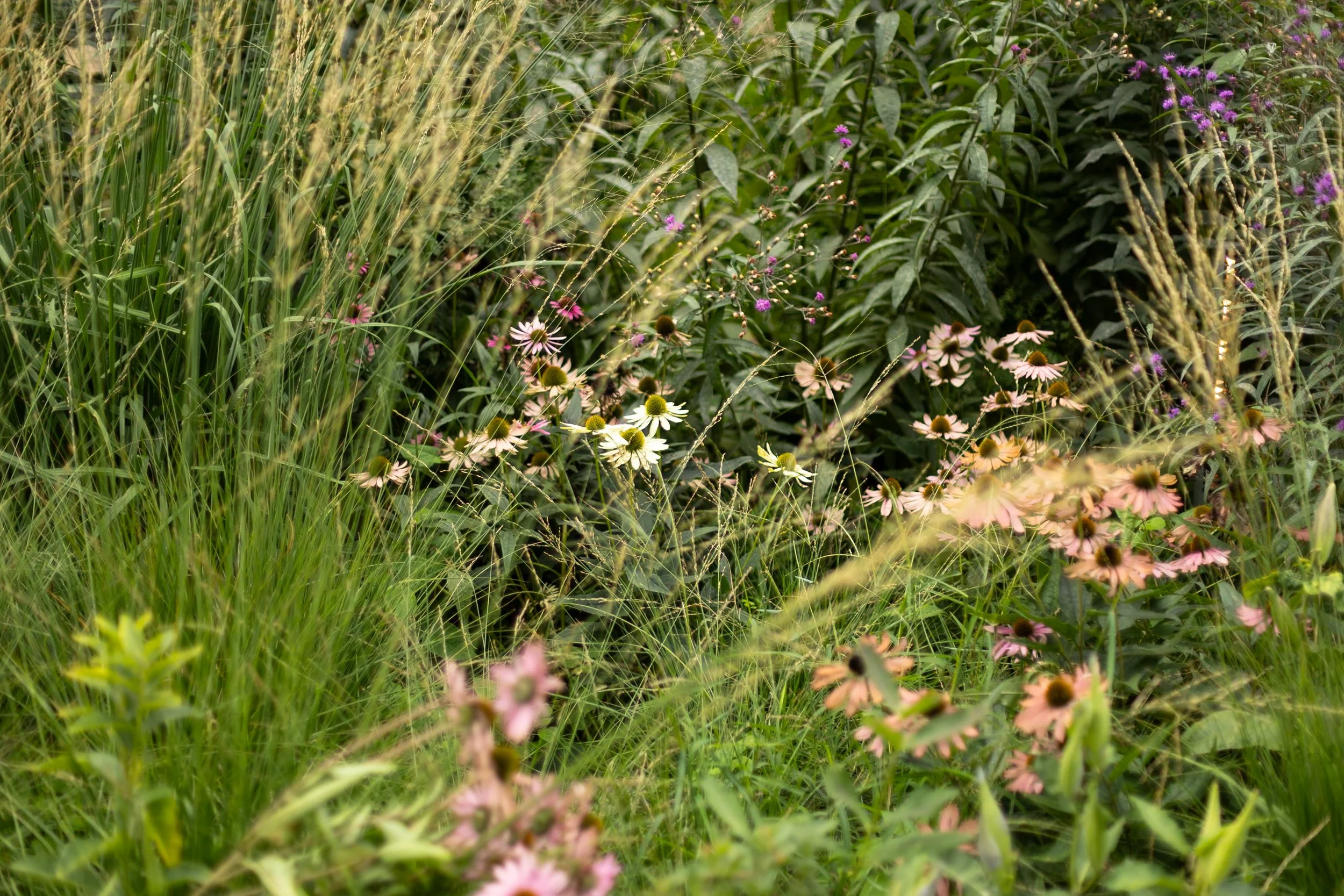
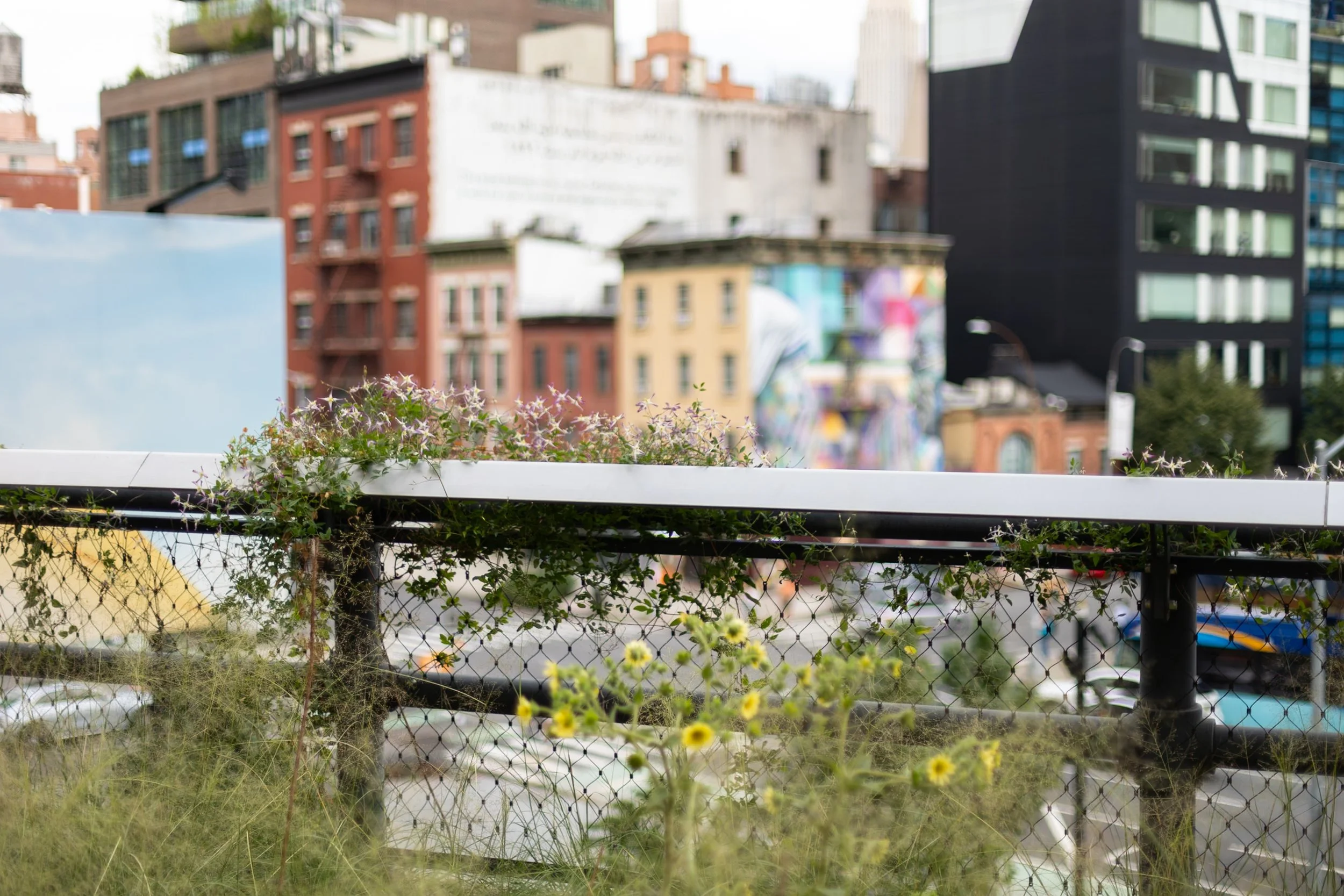
As we reluctantly reached the southern terminus of the Highline in the meatpacking district a saxophonist was playing jazz in the underpass, the warm reedy sound melting into the afternoon. Couldn’t be anywhere but New York.
NORTH NORFOLK
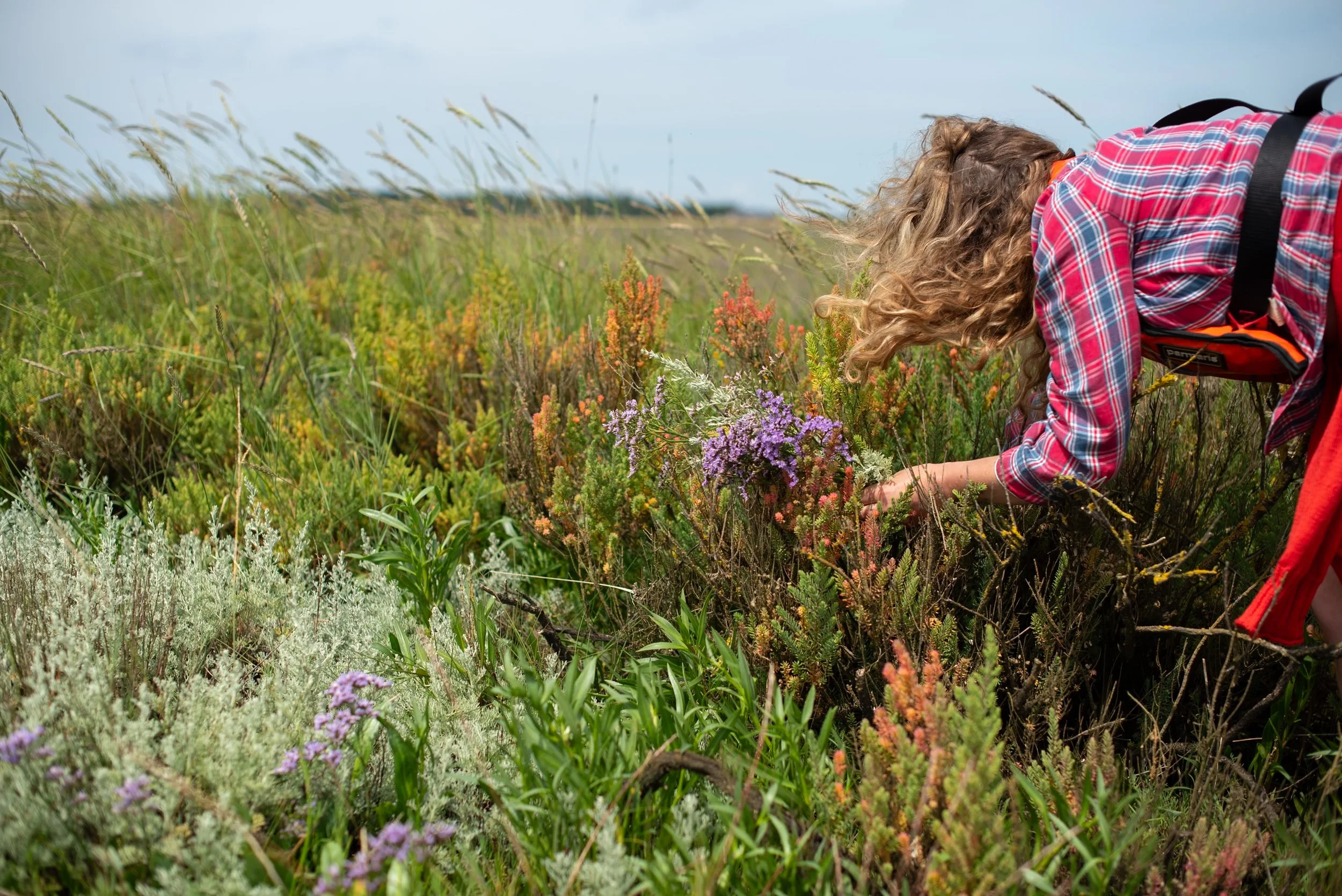
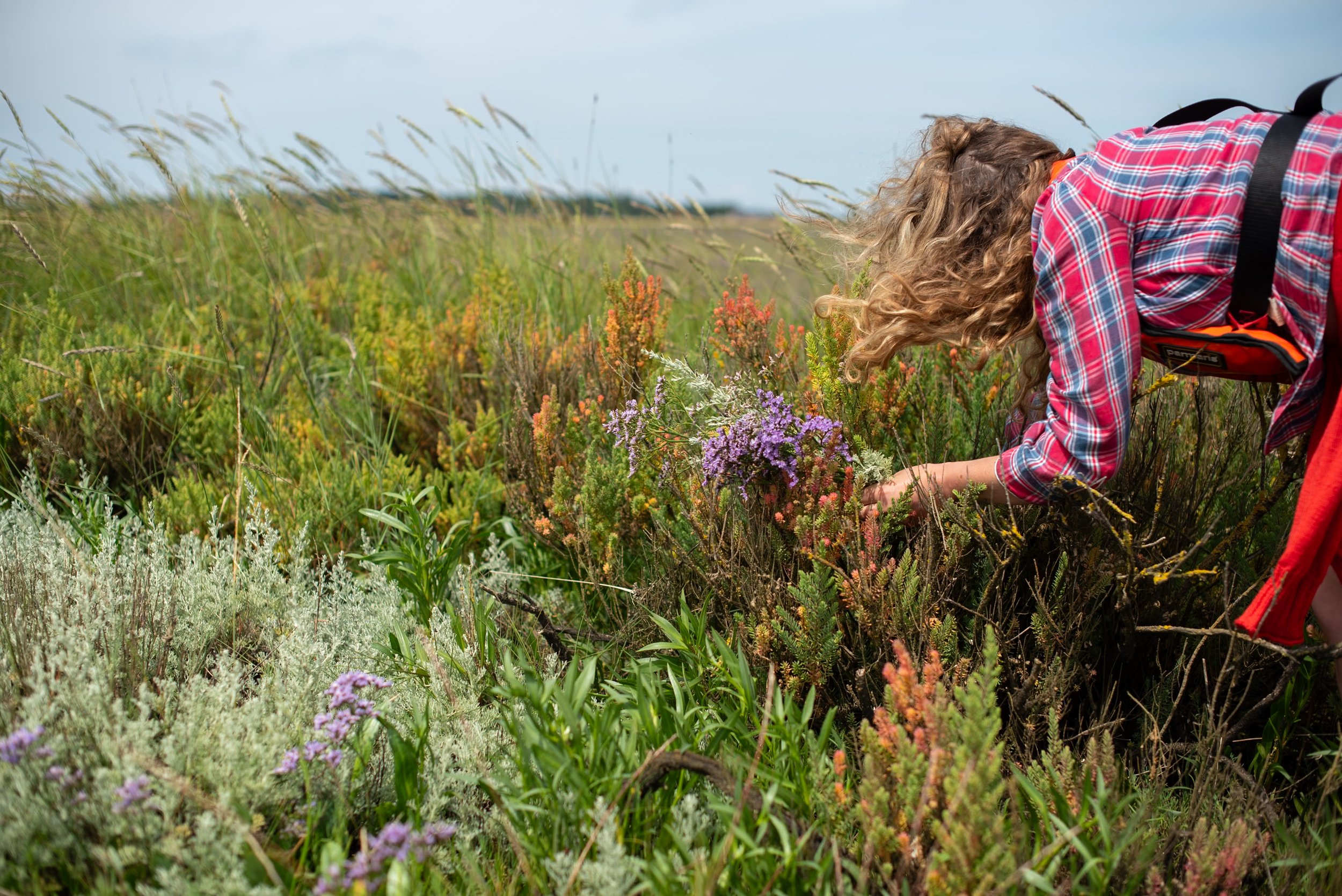
‘Hinterland’ - the Norfolk chapter of our book - was shot across three locations - Wiveton Hall, sailing through the salt marshes with the Coastal Exploration Company and the Shell Museum, Glandford.

‘Hinterland’ - the Norfolk chapter of our book Naturalistic Flowers: A Year of Plants, Places and People was shot across three locations - Wiveton Hall, sailing through the salt marshes with the Coastal Exploration Company and The Shell Museum, Glandford.
During the editing phase Jess had the unenviable task of whittling down the thousands of images taken on each shoot to a select few that best accompanied each story. There were some that we really felt it was a shame not to use, and some we absolutely agonised over. Rather than leaving them lonely on the cutting room floor we thought they deserved to see the light of day in some form, so we’re sharing a few pictorial outtakes here (for the full written story you’ll have to buy the book 😉).
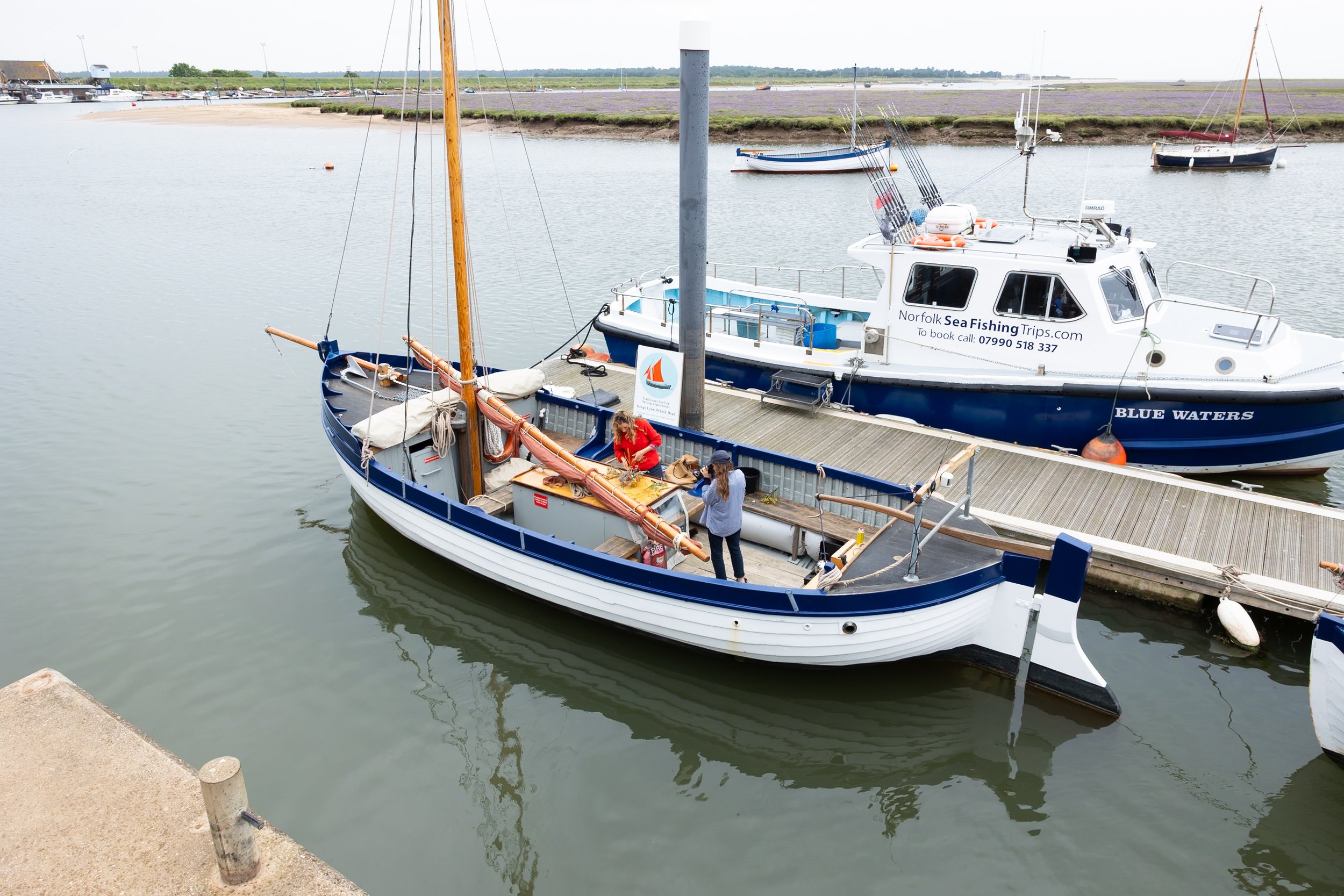
Arranging wild maritime plants on board with the Coastal Exploration Company


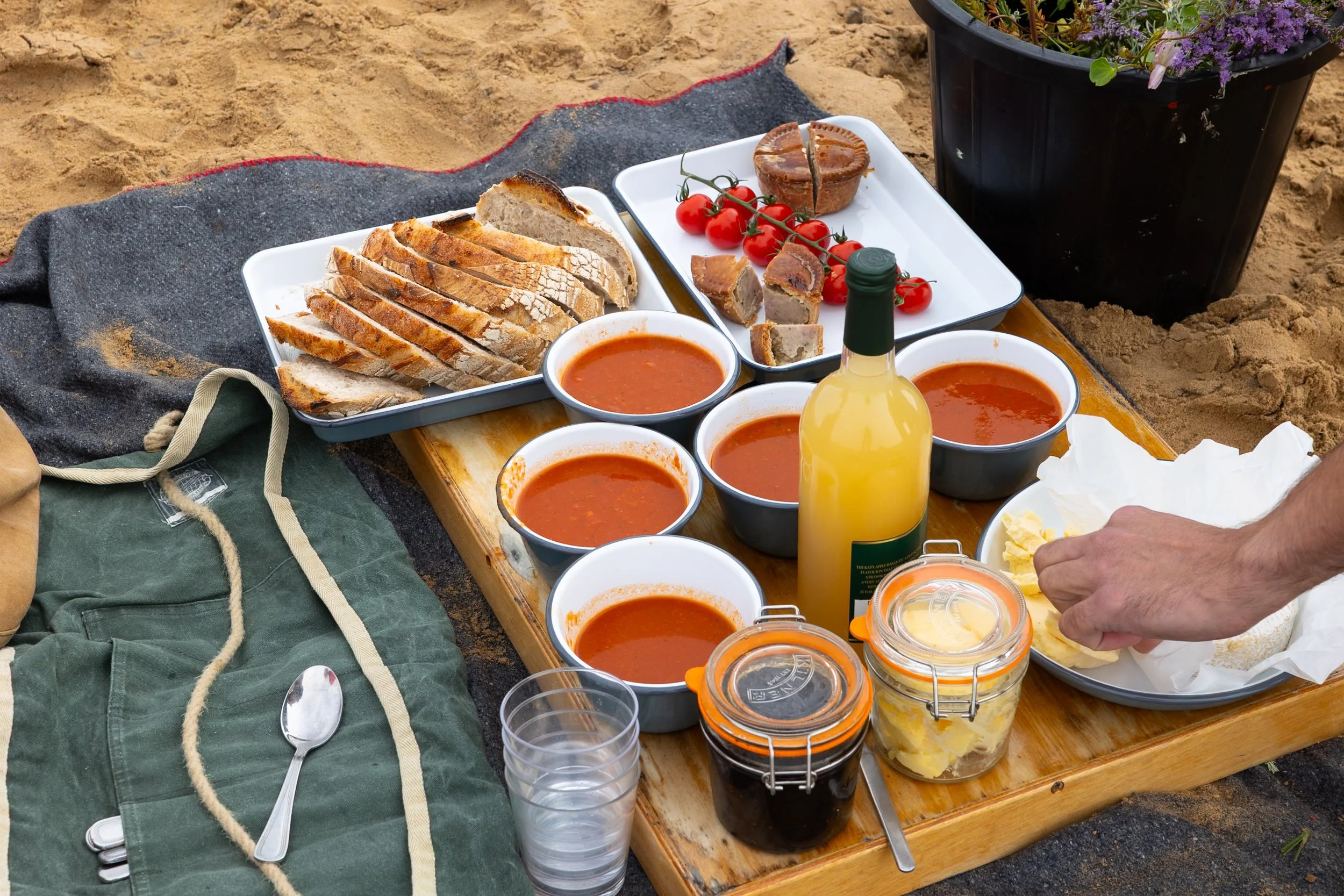
@coastalexplorationco does an excellent picnic - tomato soup and pork pies on the beach during our sail
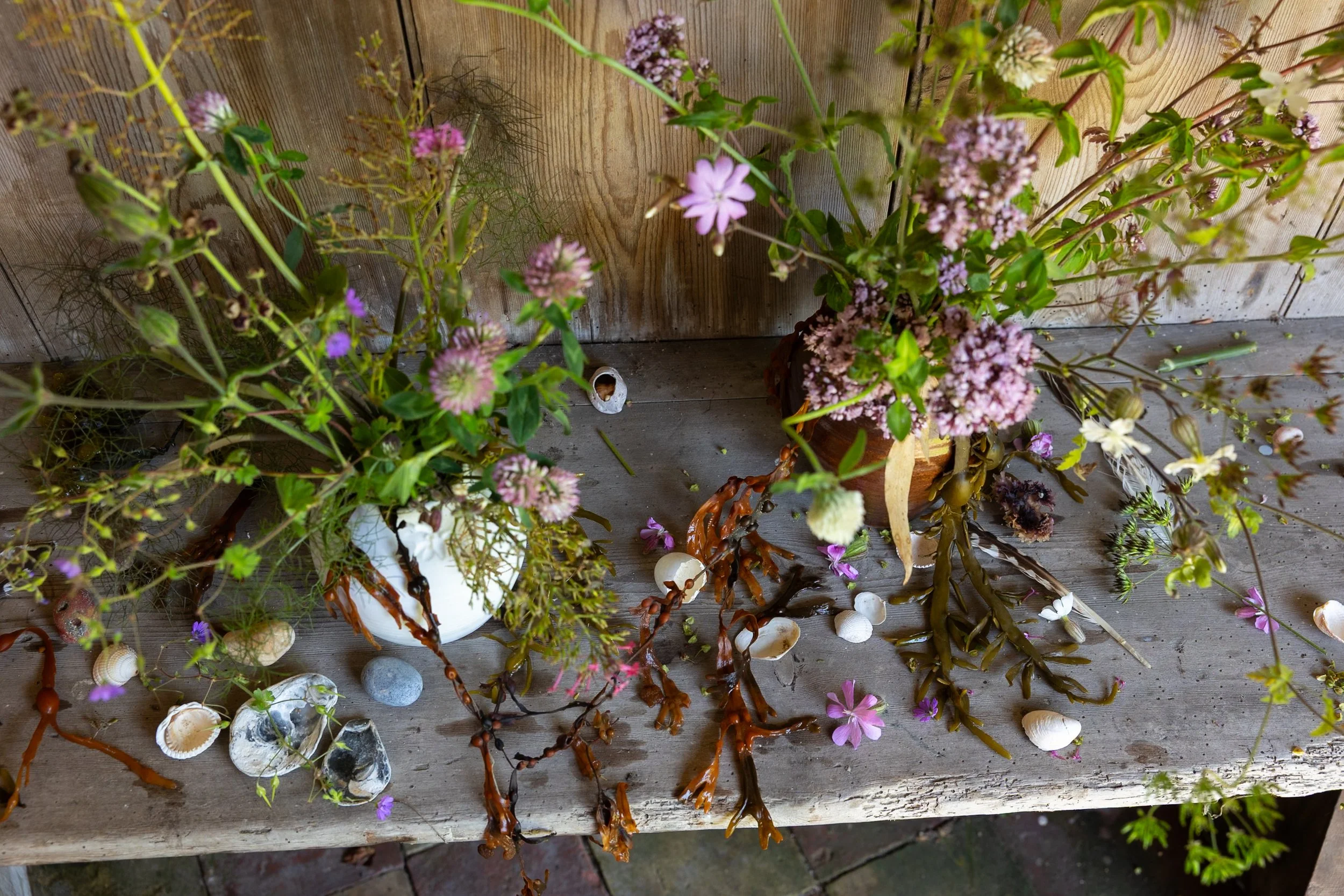
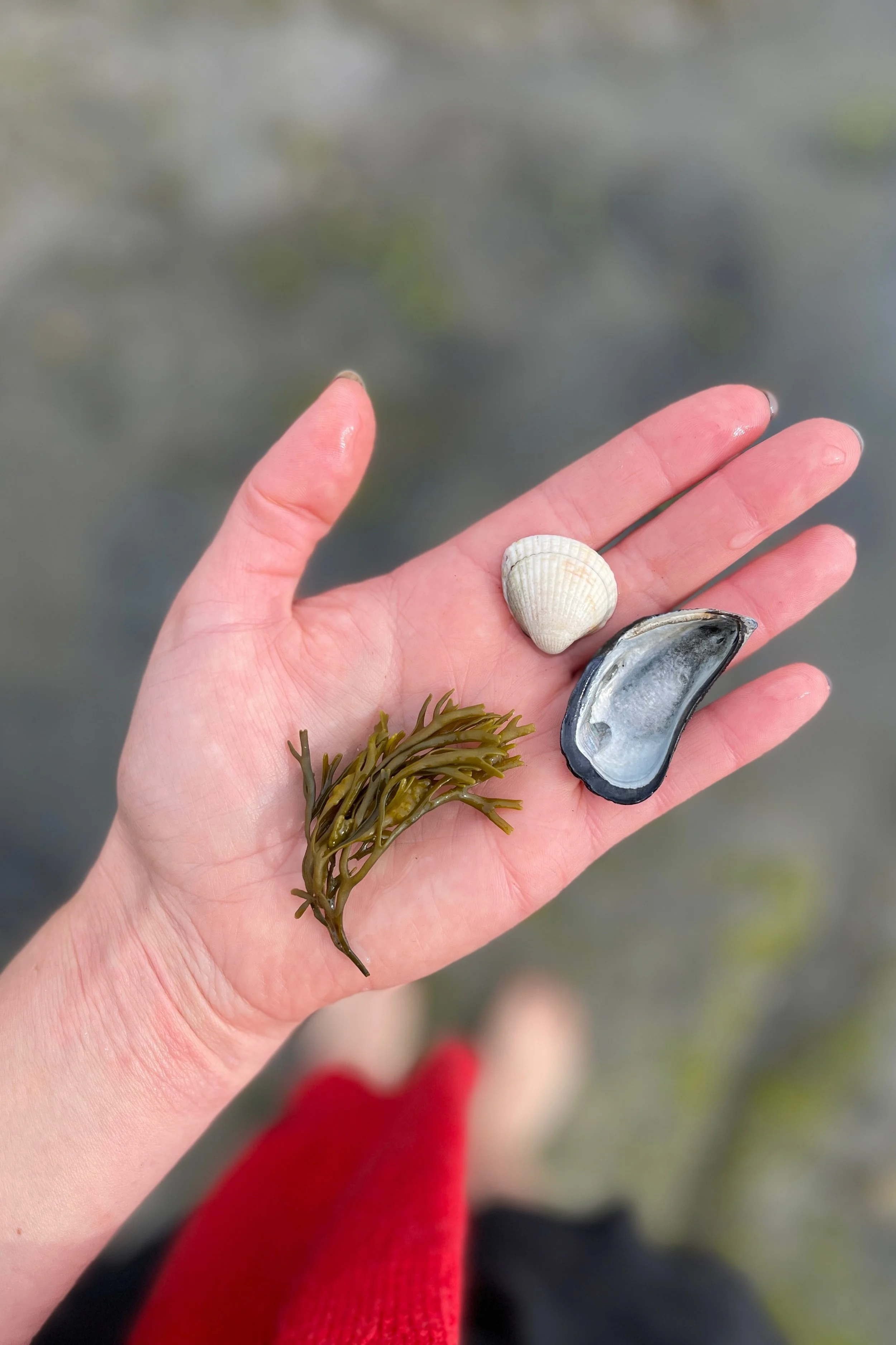
Seaweed in an arrangement? I’ll try anything once!
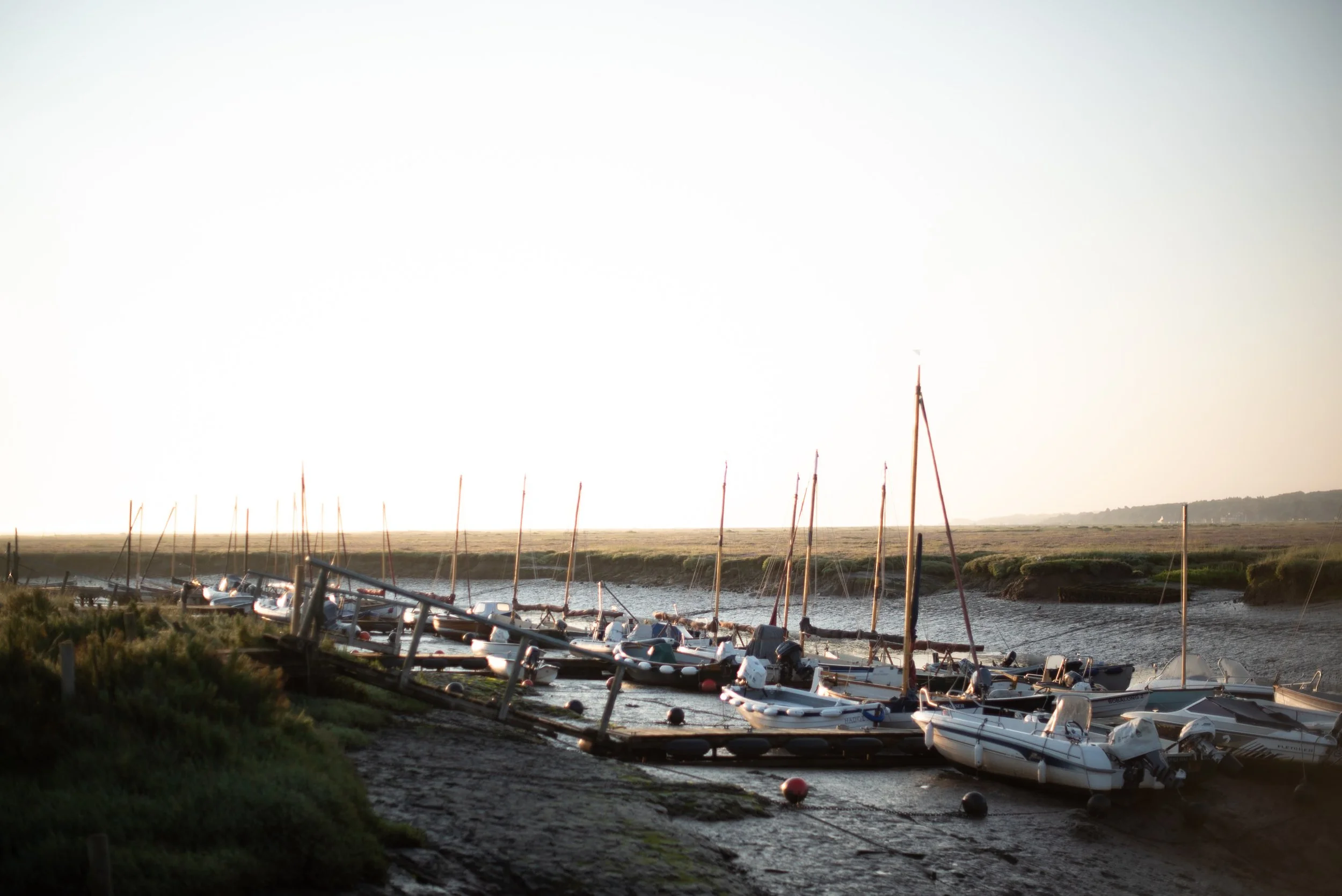
Tide’s out; Moreston
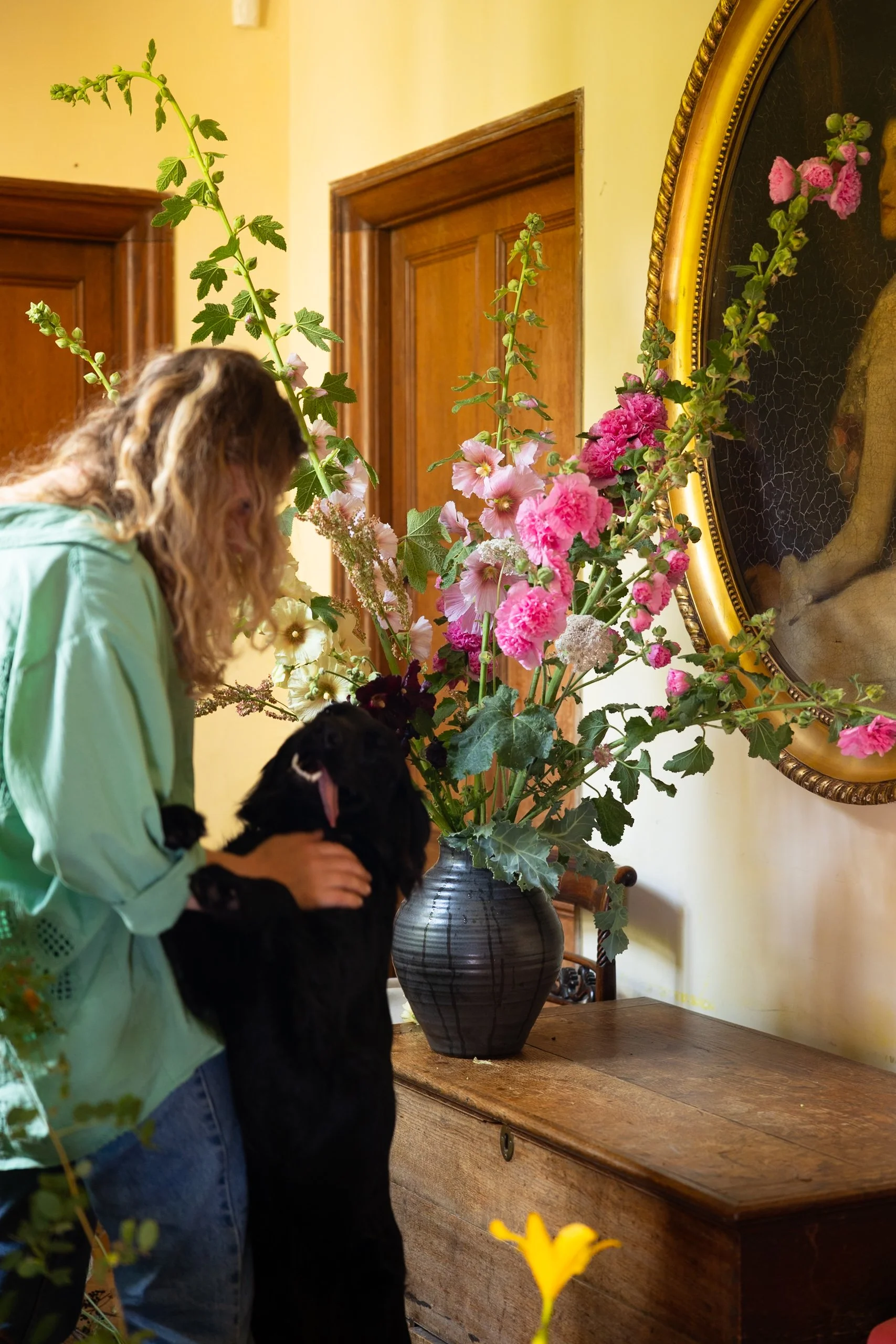
Cuddles with Willow of Wiveton Hall
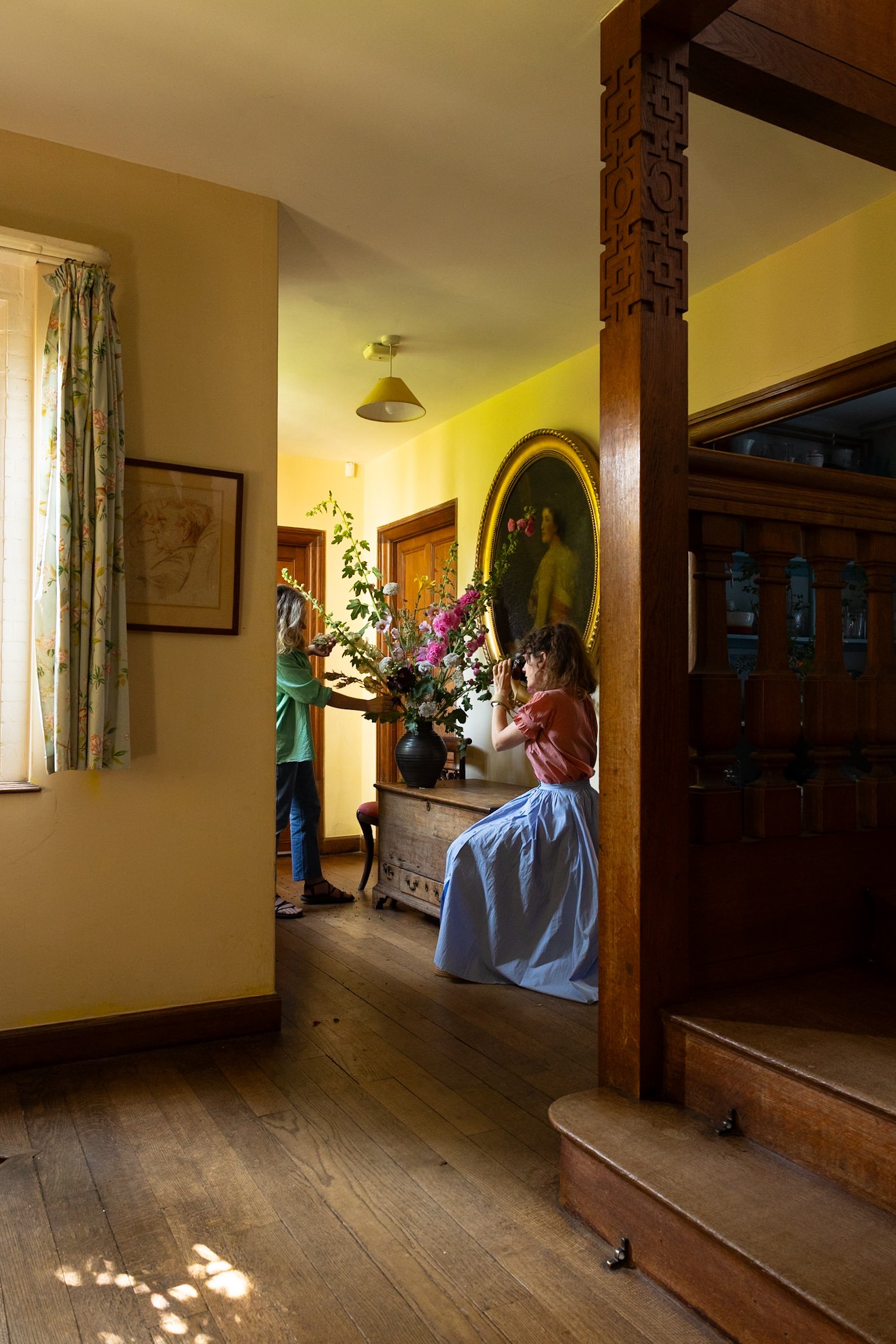
Getting that hallway Vermeer light; on location at Wiveton Hall
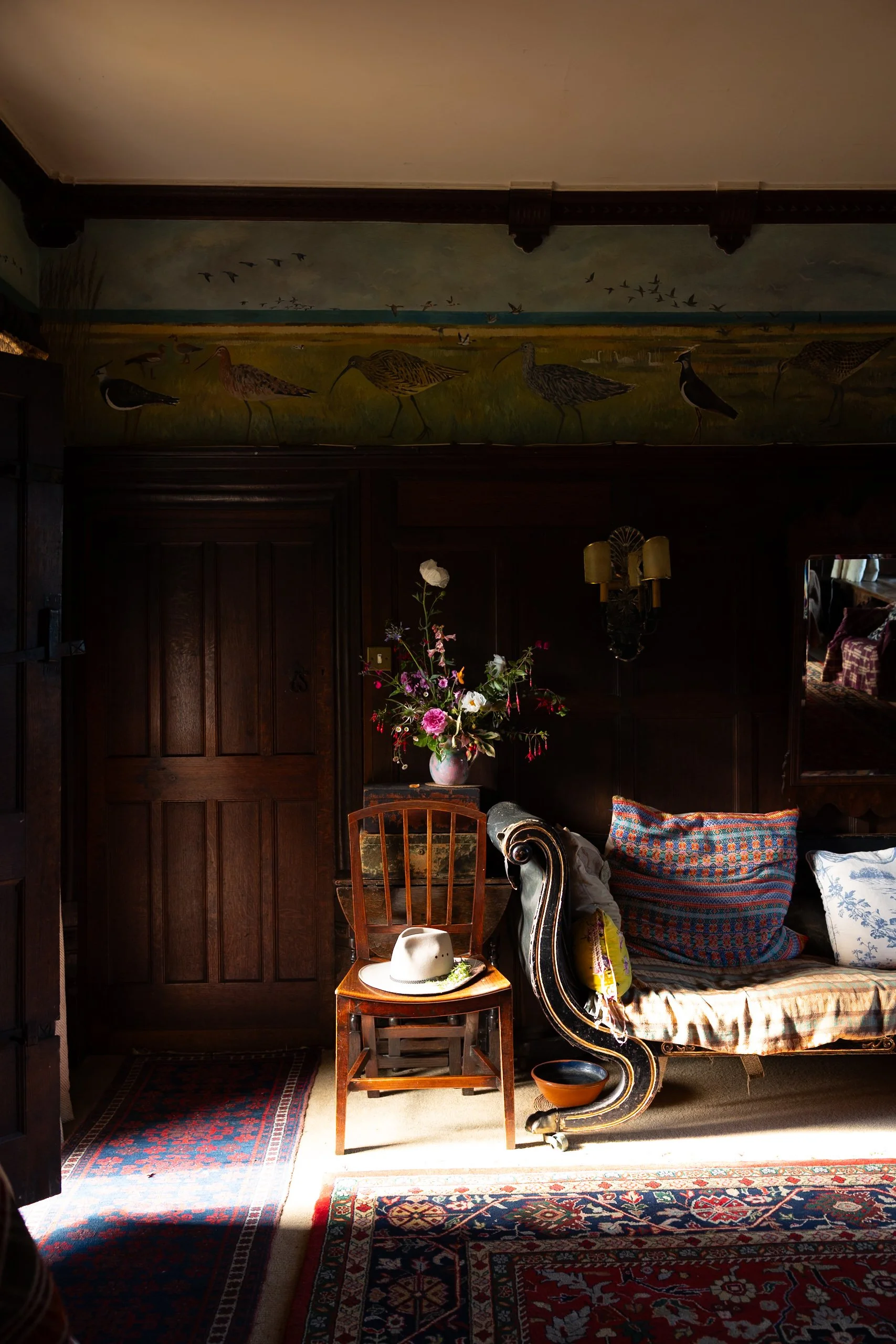
The epitome of ‘garden to vase’: a favourite arrangement from the book
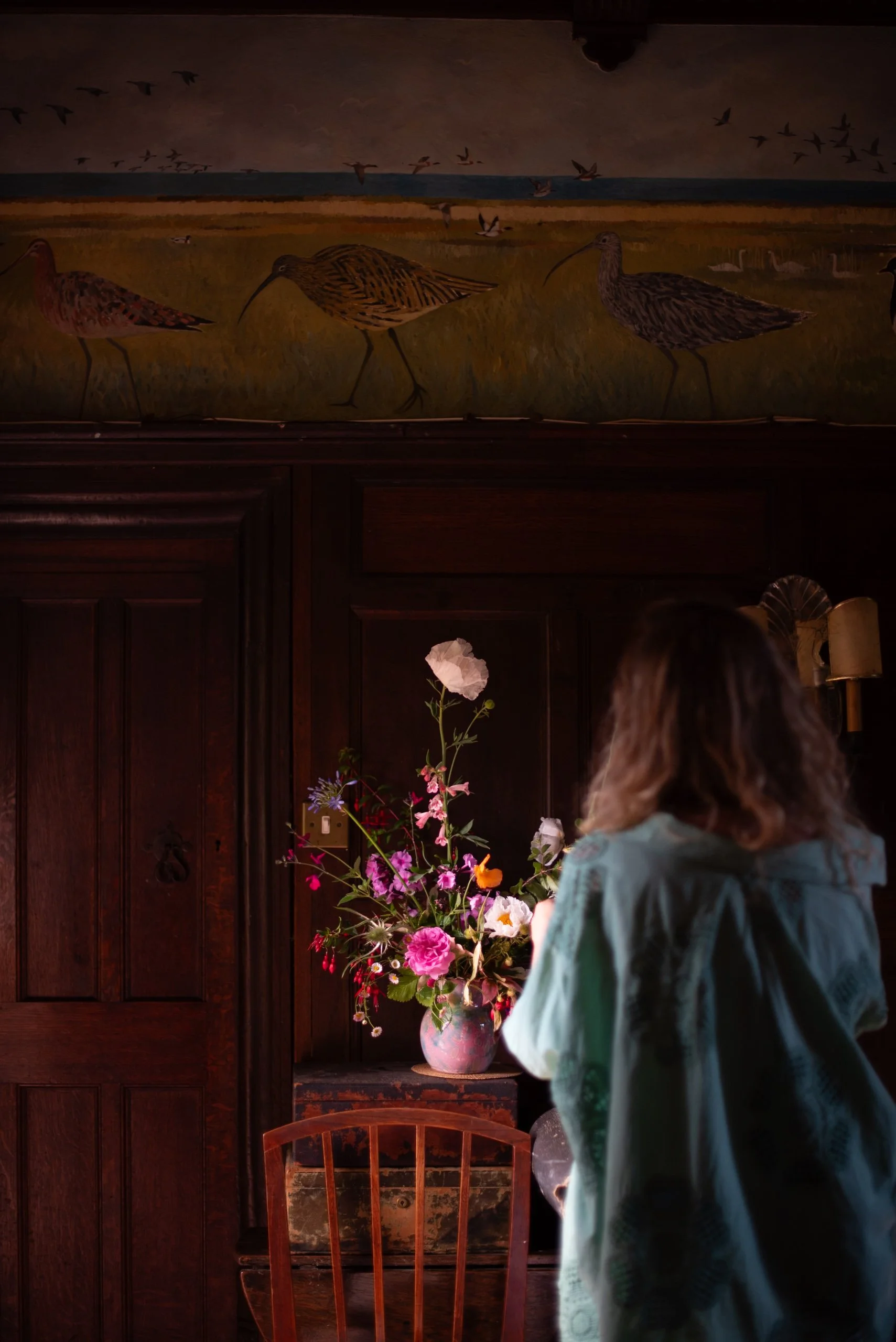
Odds and sods from the borders at Wiveton

Taking in the washed-out colours of the saltmarsh

‘My Girls’, the Coastal Exploration Co.’s lug-rigged crab boat
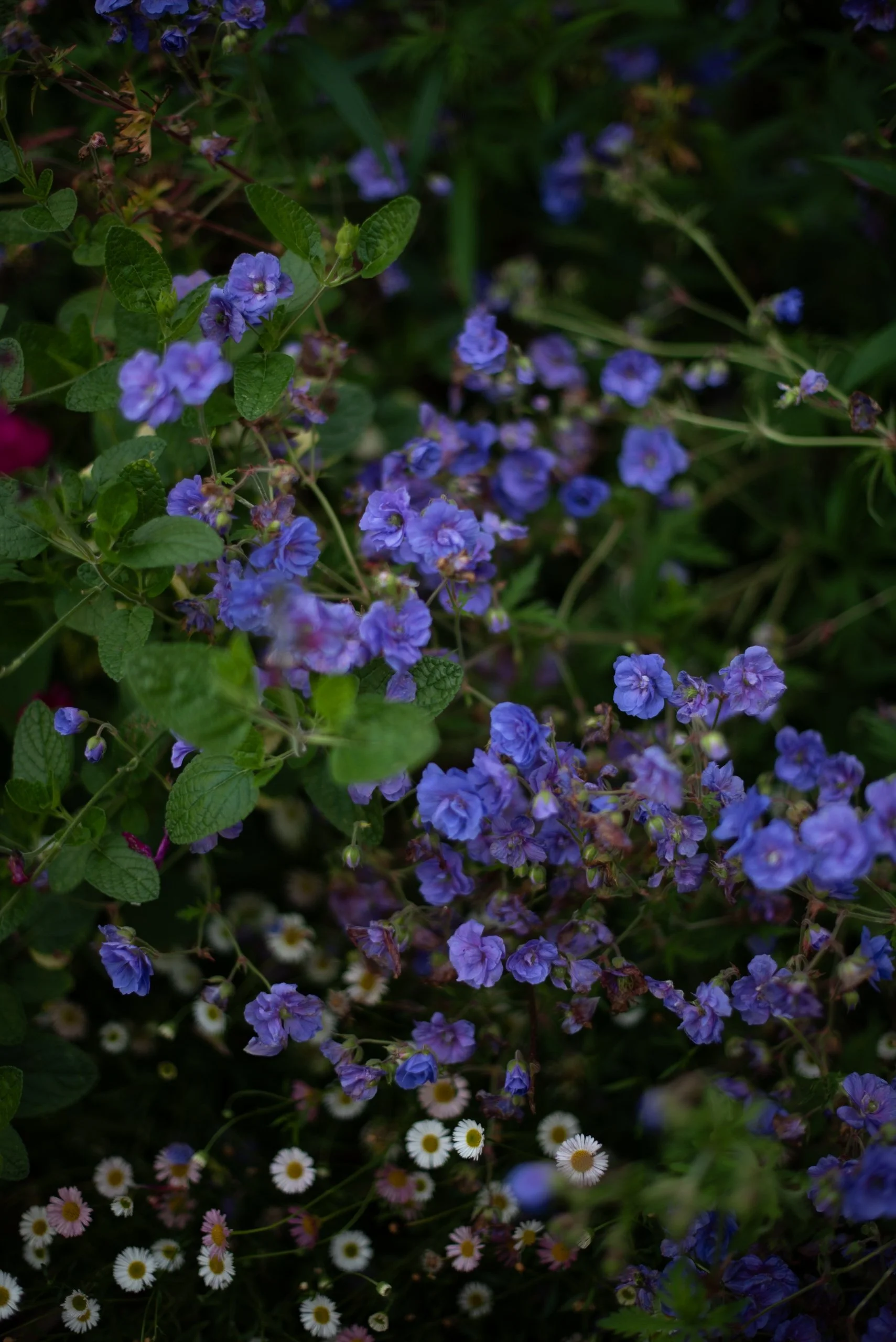
Geranium Pratense ‘Azure Skies’
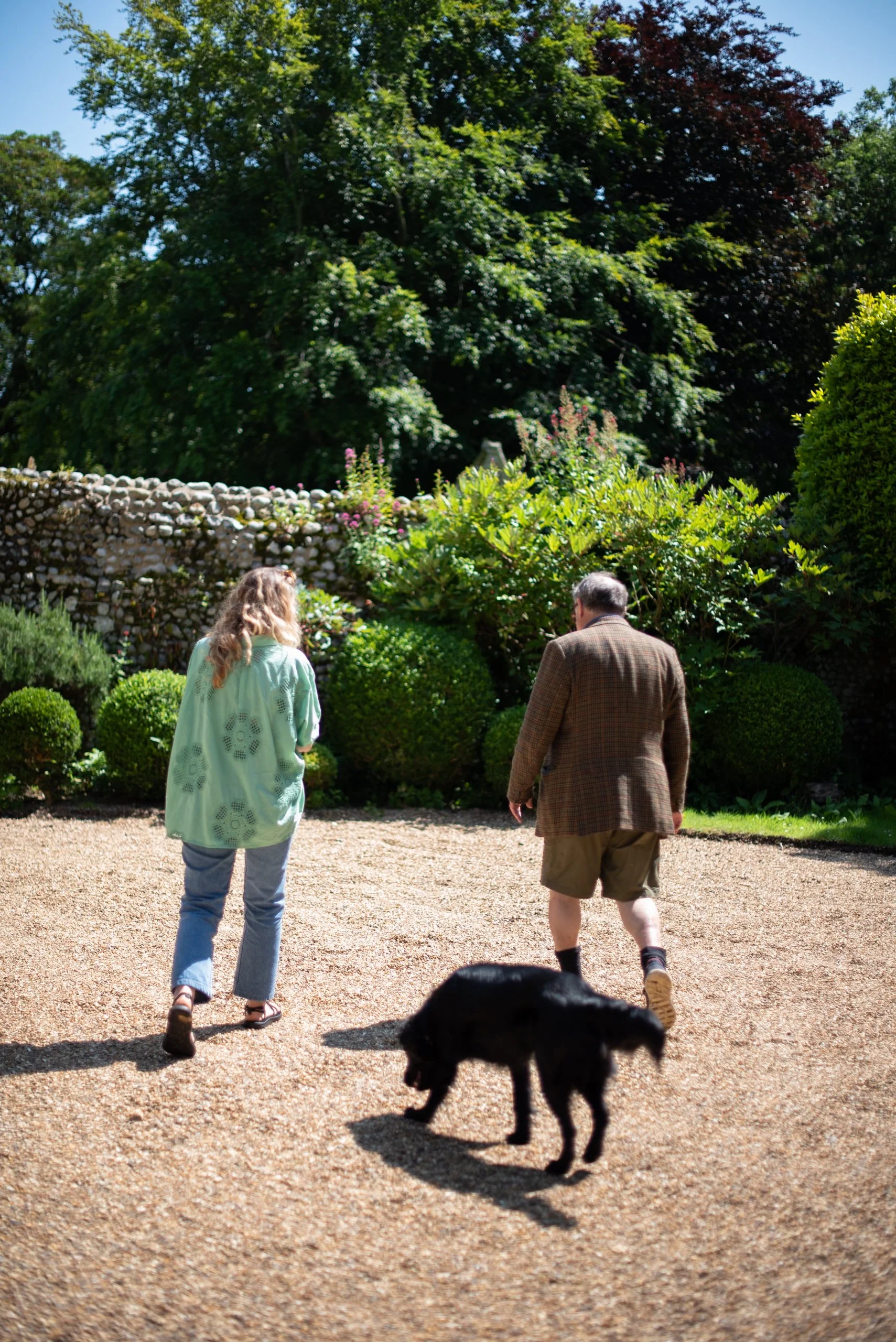
Chats with Desmond McCarthy @ Wiveton
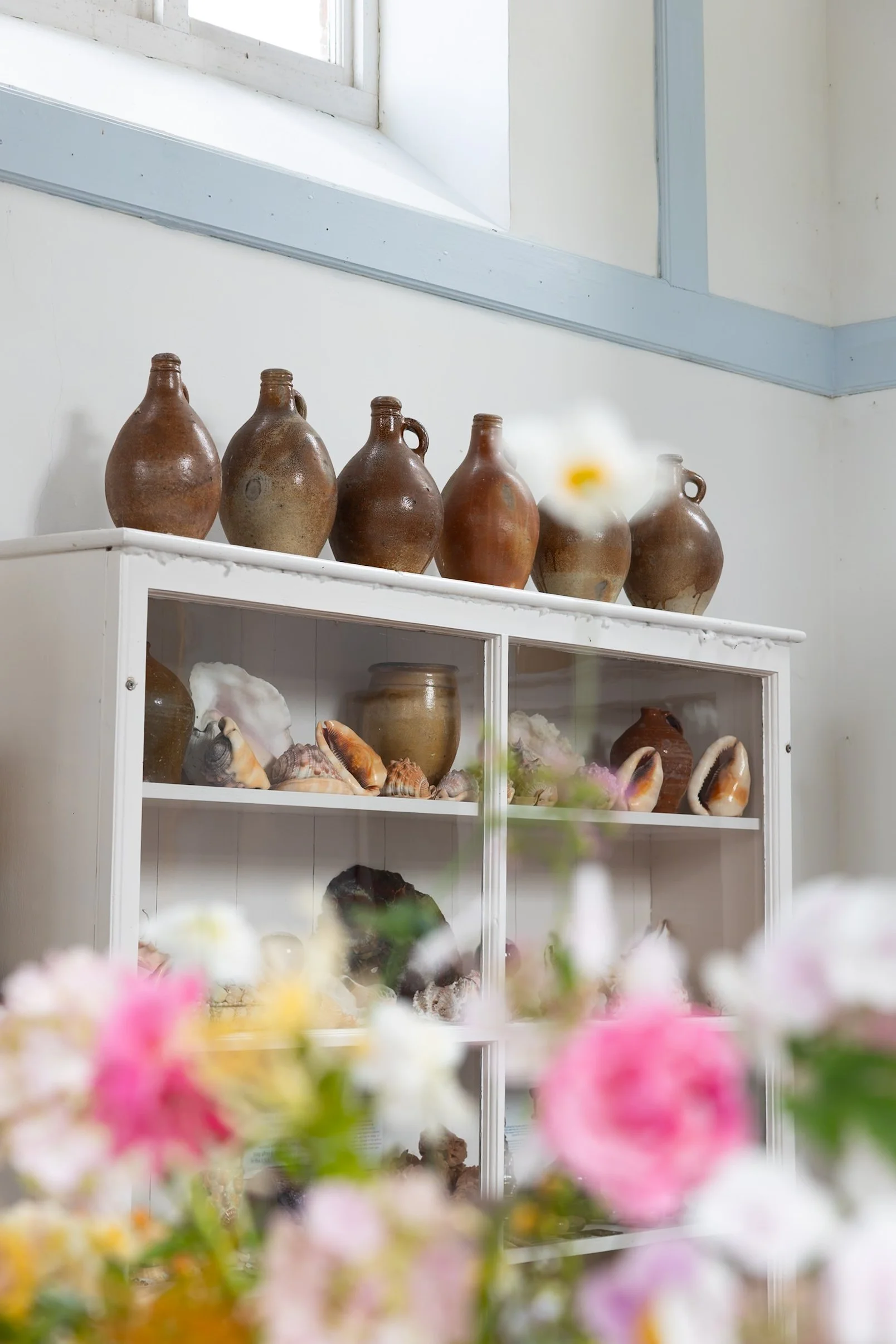
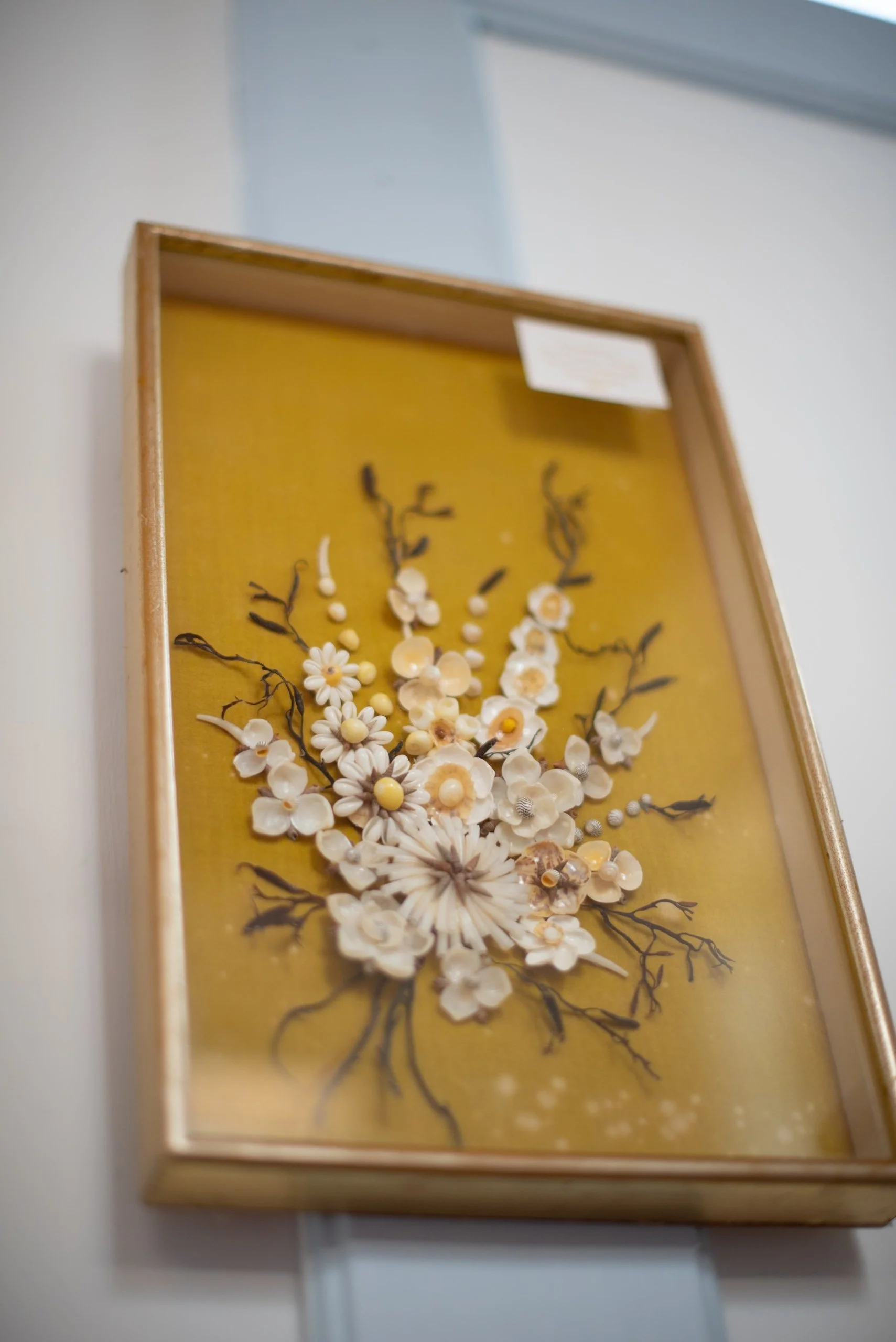
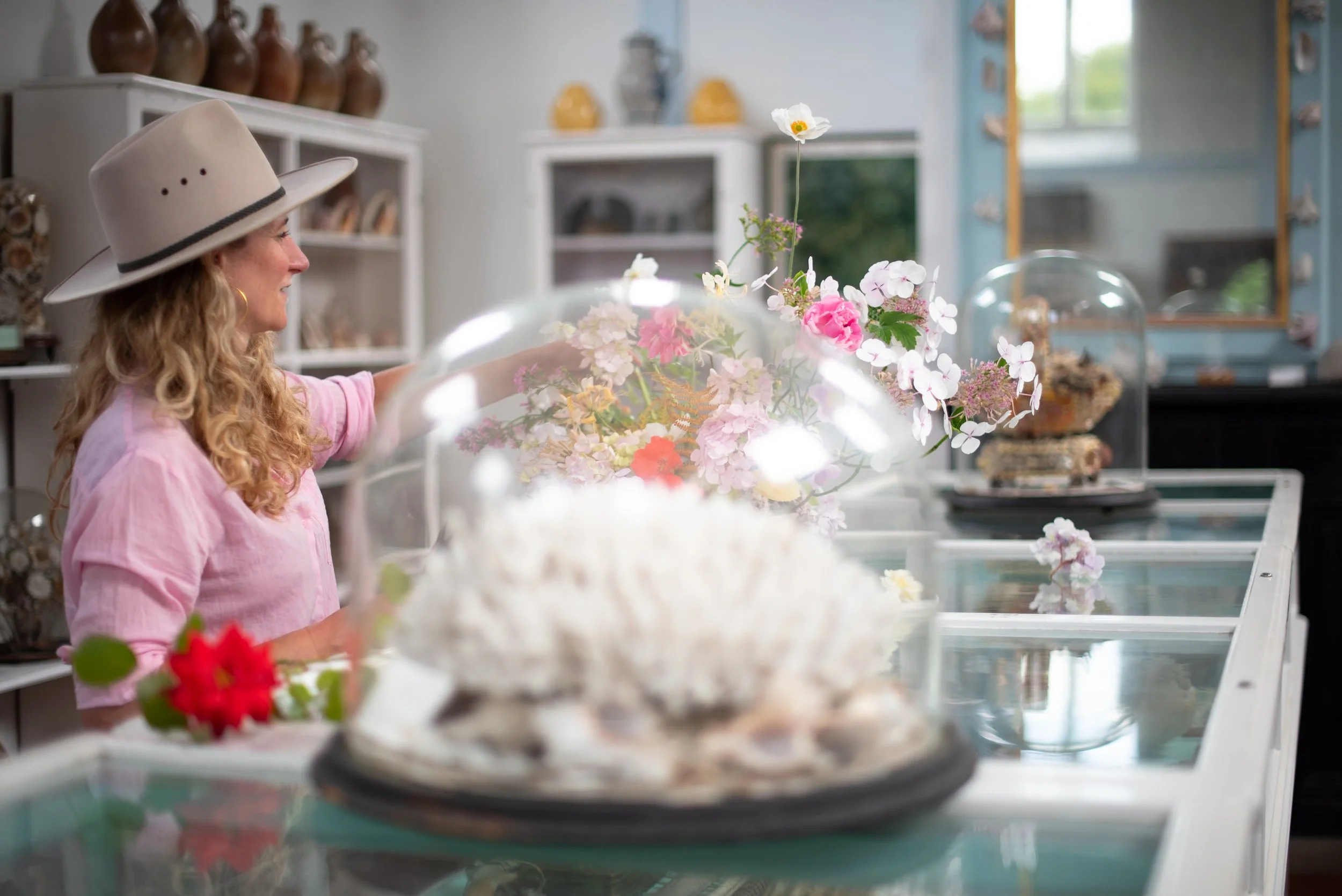
Treasures abound in the cabinets of The Shell Museum, Glandford
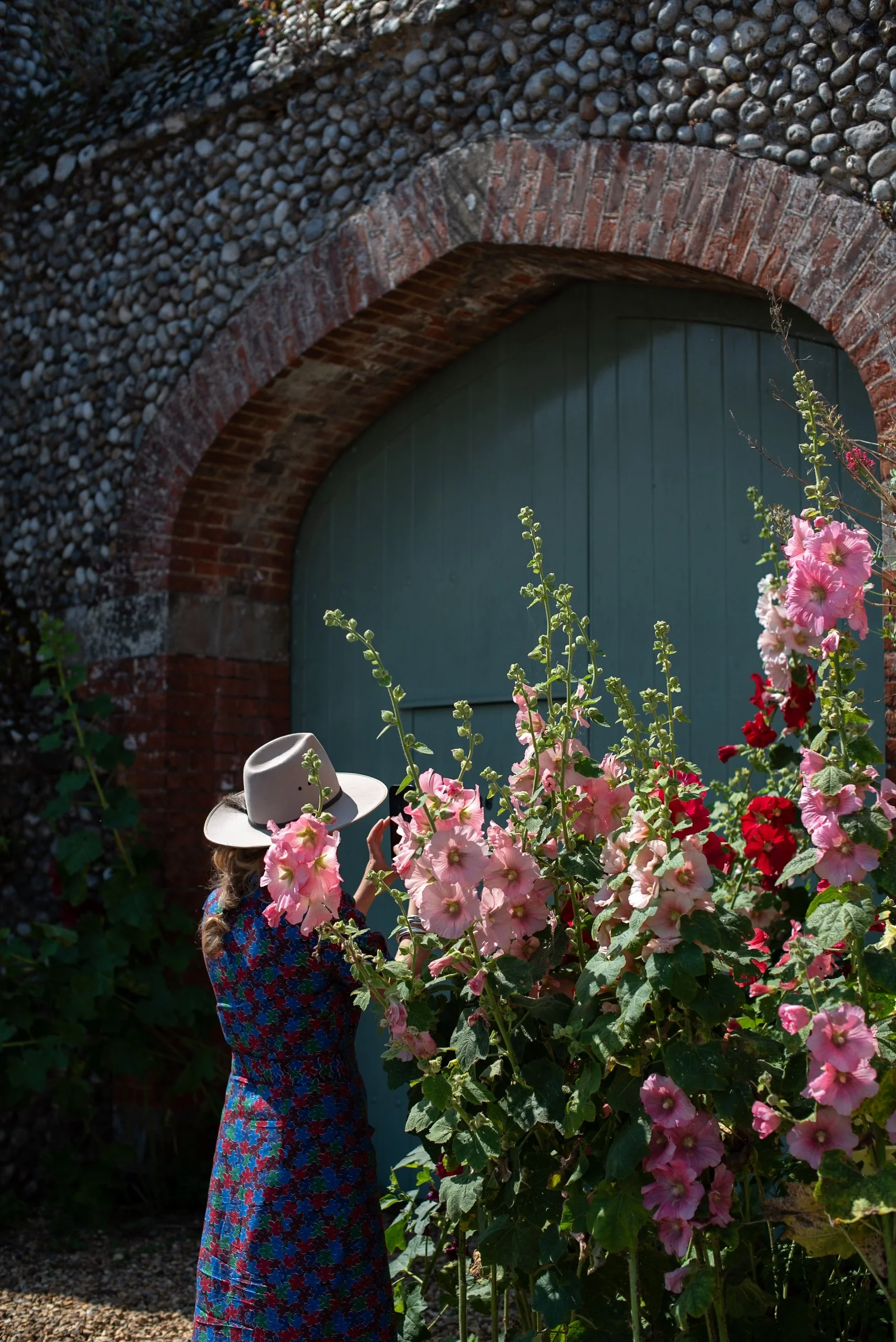
Walking the lanes of nearby Blakeney in search of the best hollyhocks
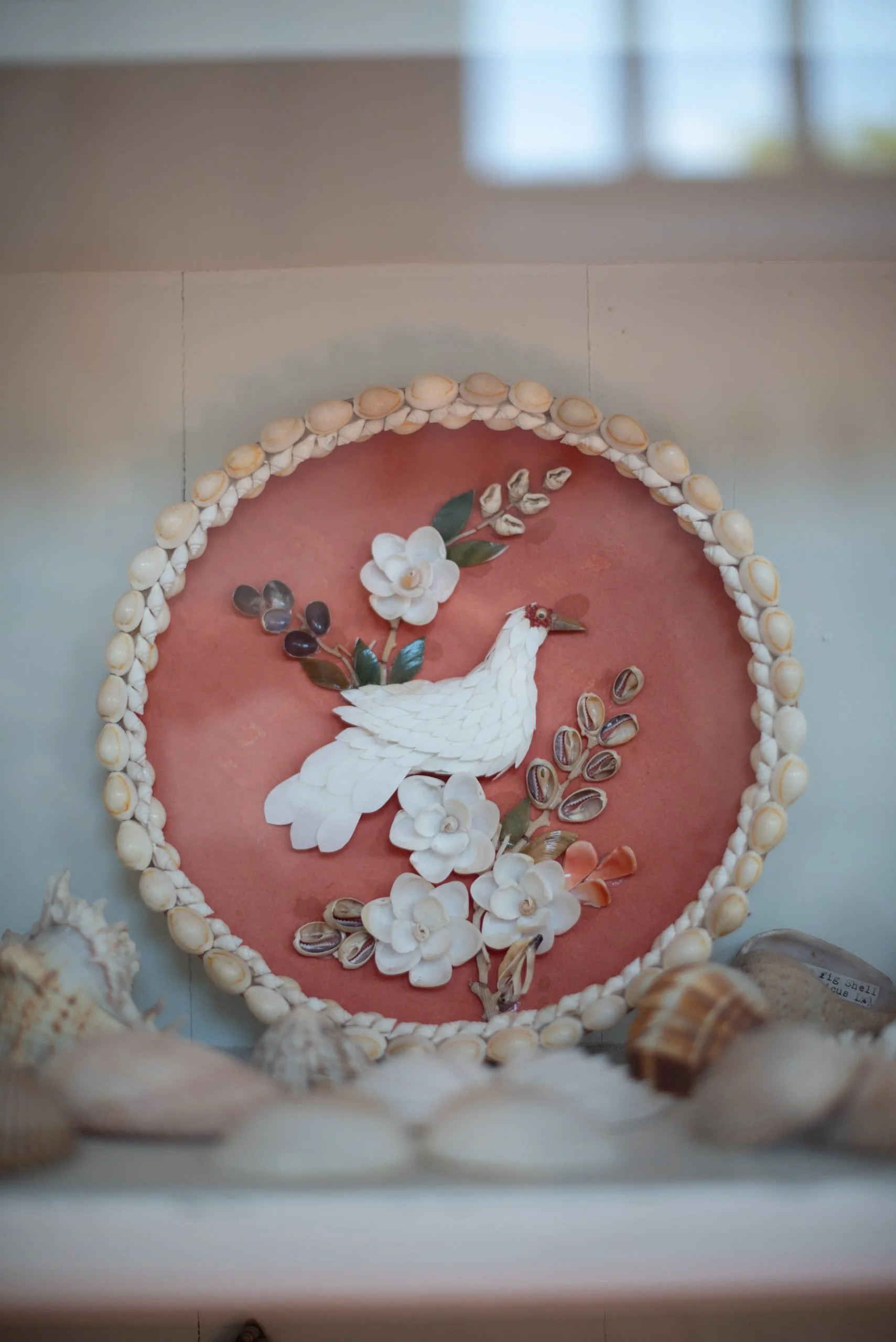
Victorian shell art at Glandford
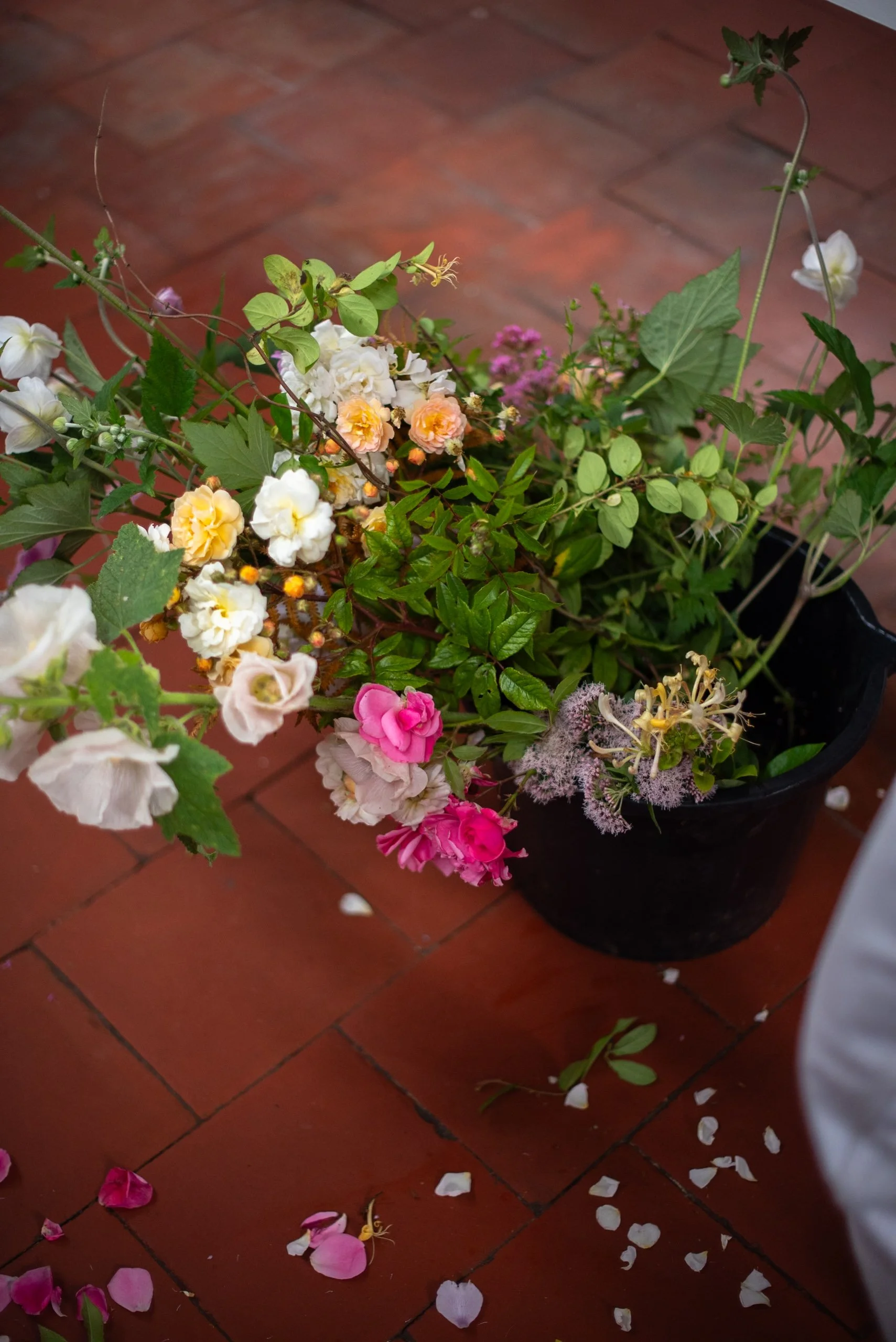
This was such a good bucket
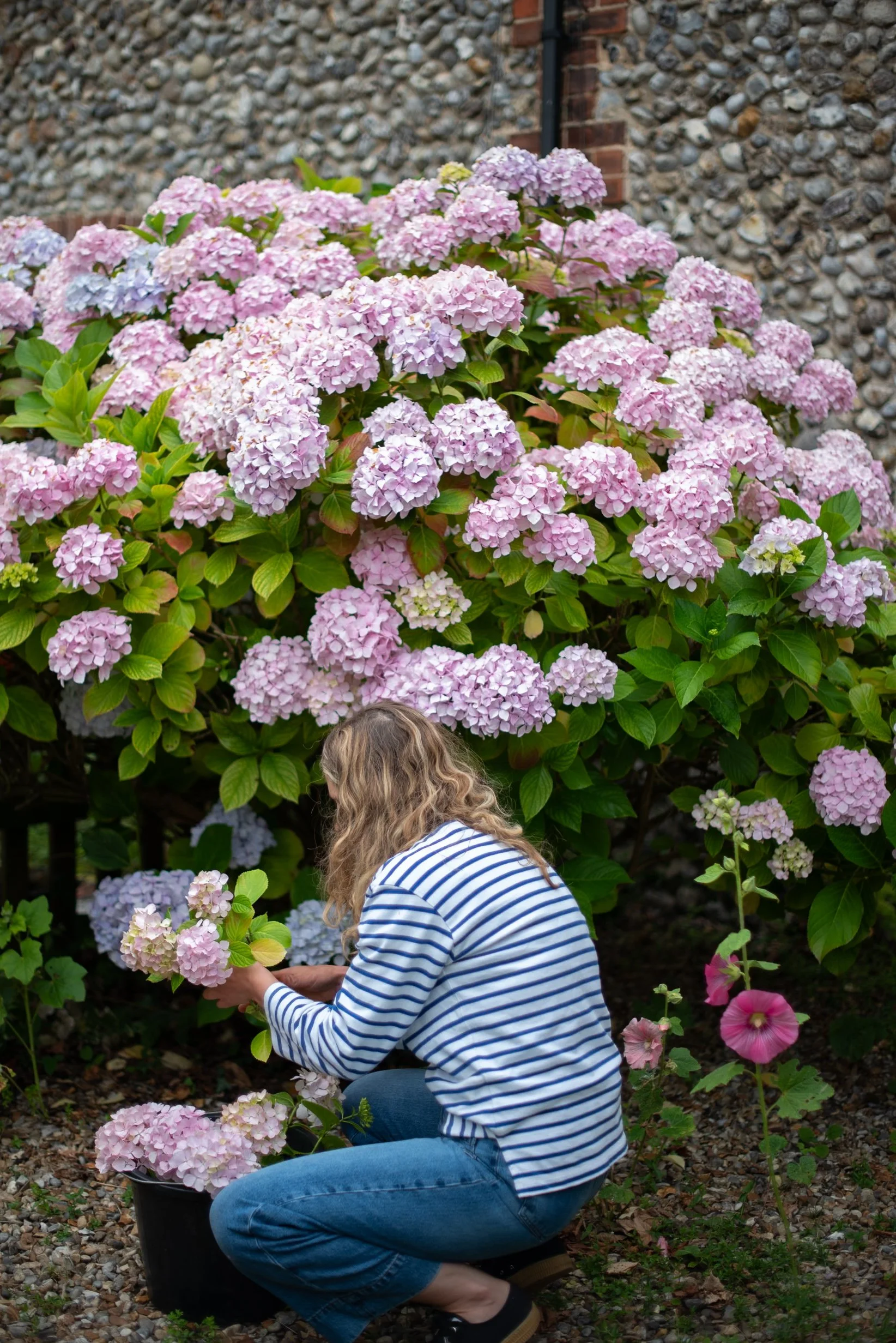
Our neighbour’s amazing hydrangea in full bloom - thank you Susie!
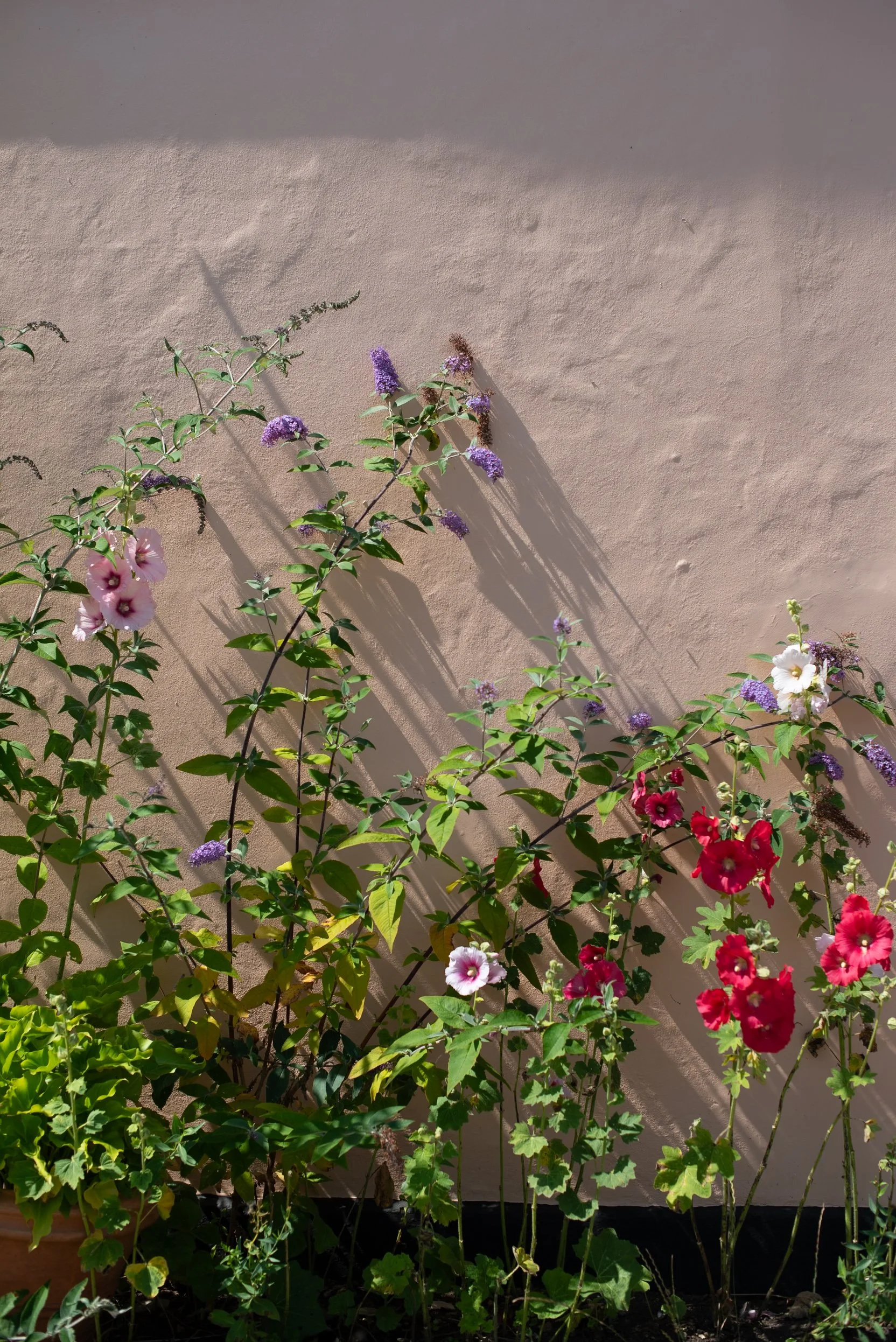
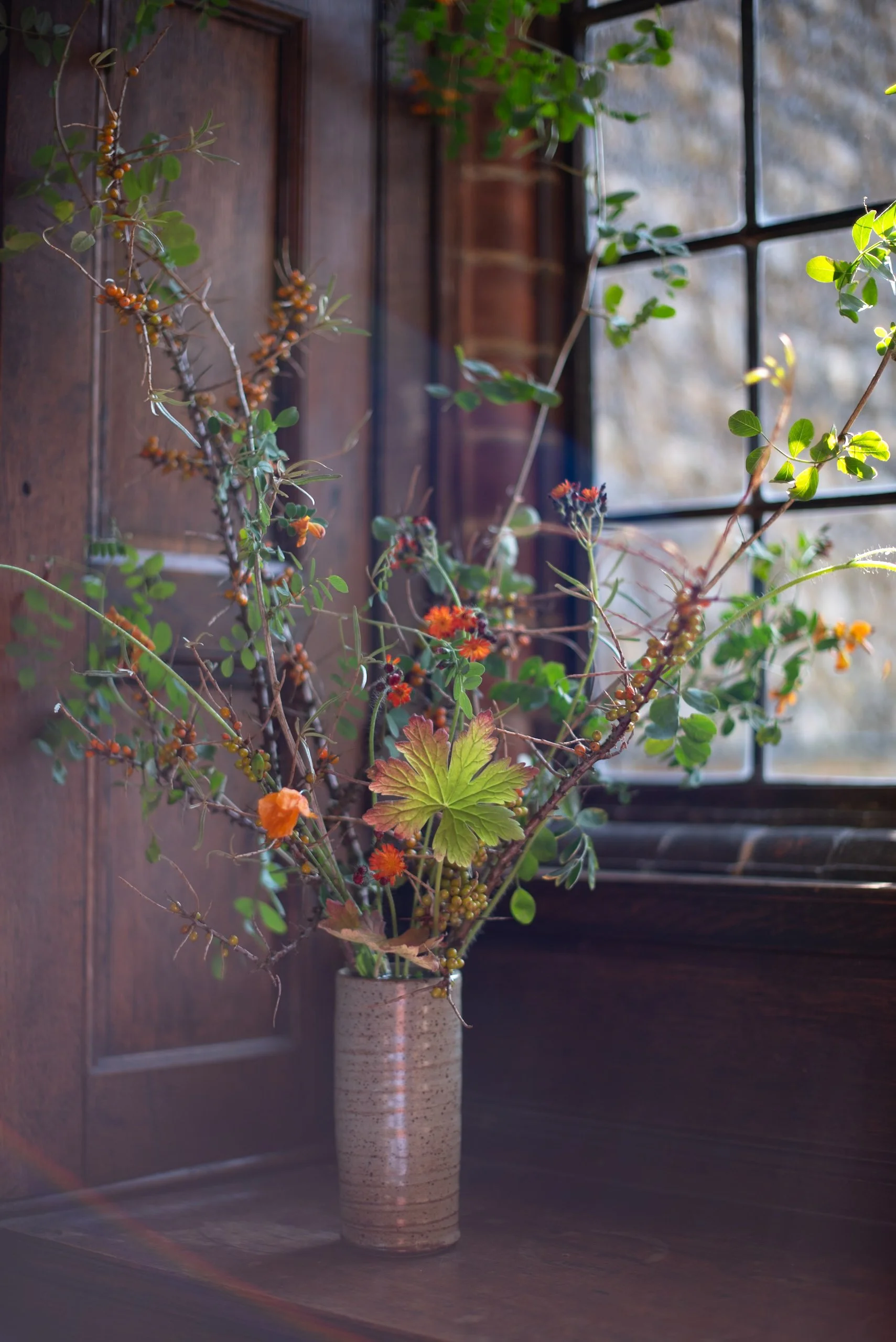
Fox-and-cubs with witchy branches
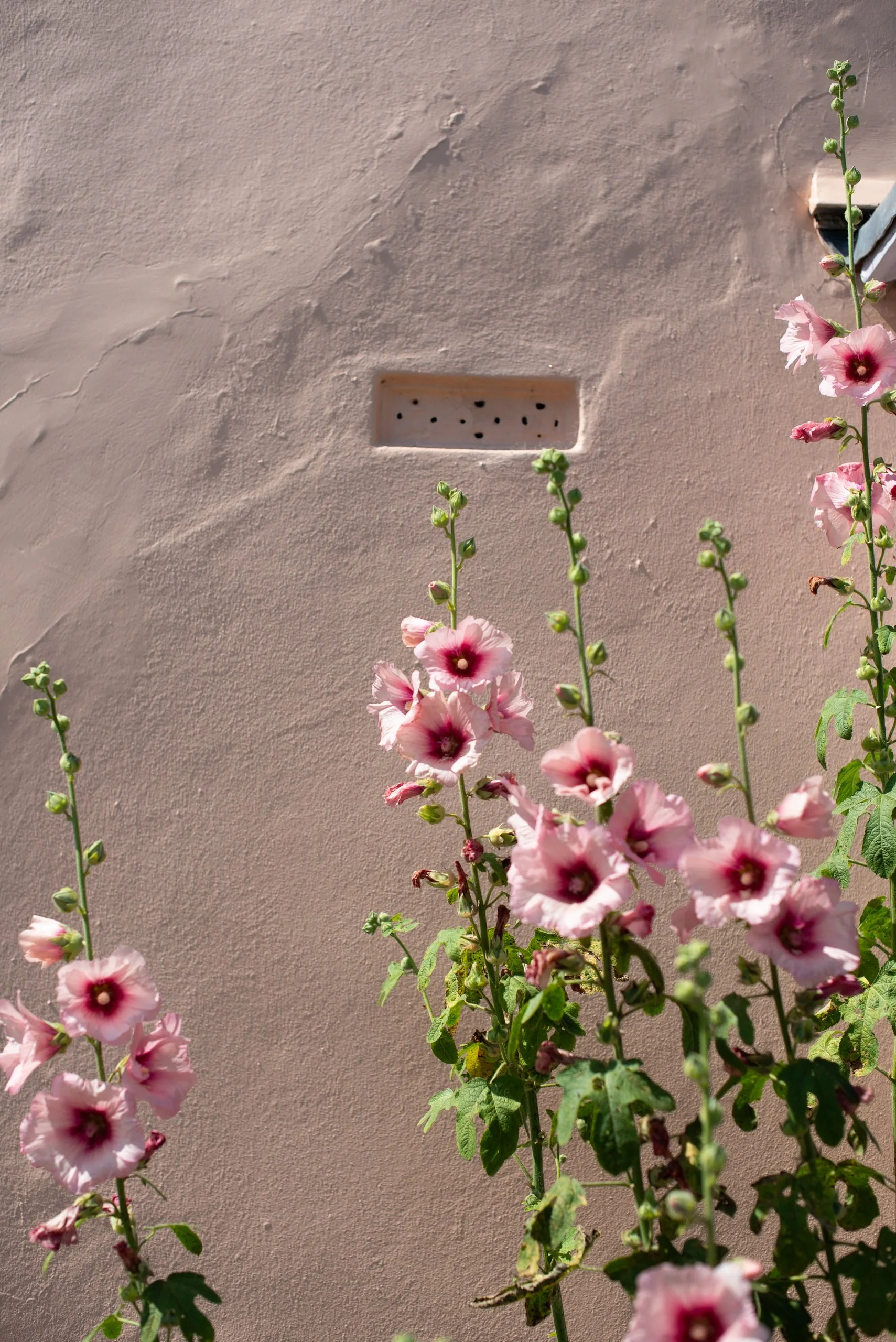
An avenue of stately hollyhocks (Alcea rosea) in Cley

MIC: Always a good stop for vases (and jugs, and bowls, and lamp bases)
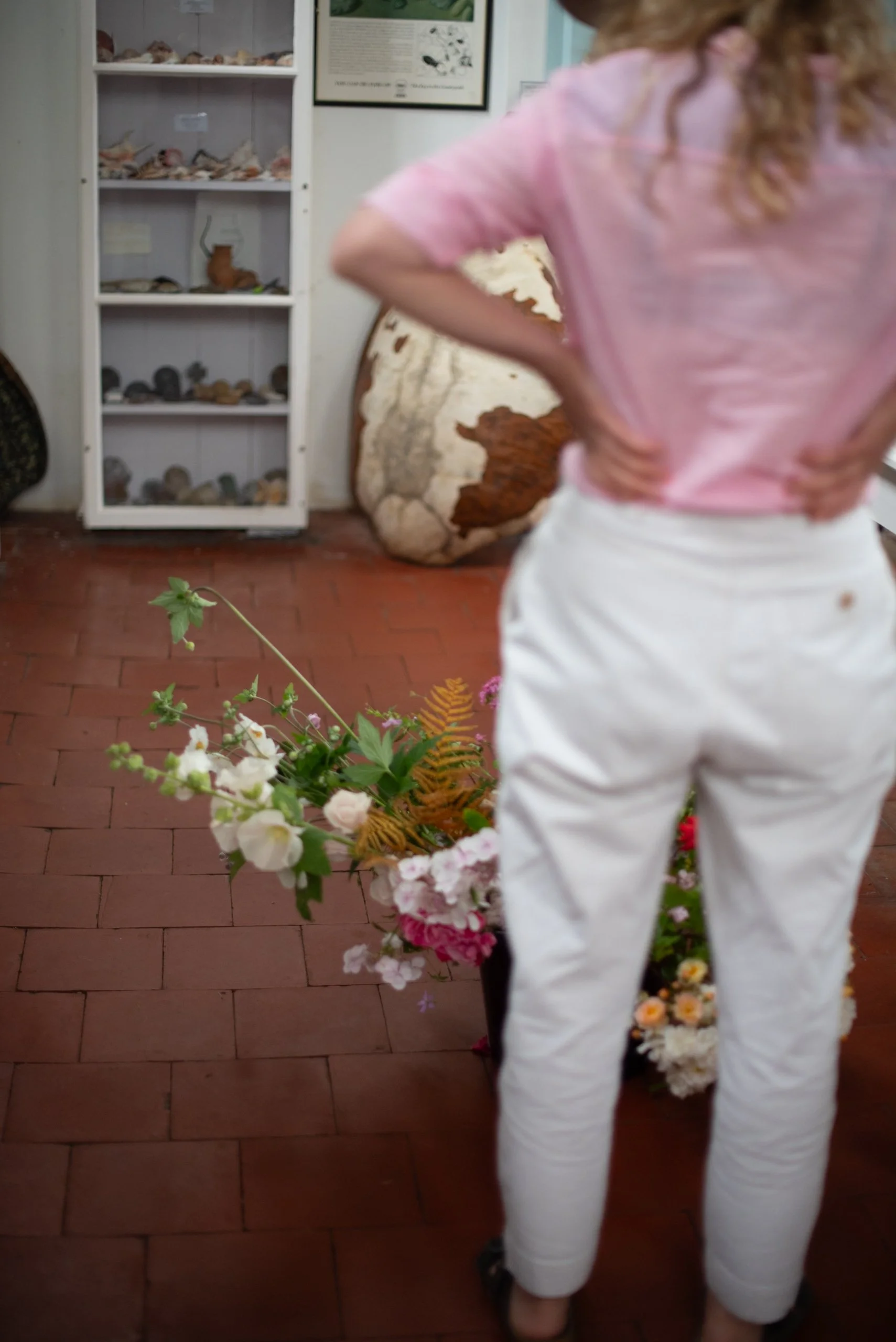
Decisions, decisions…
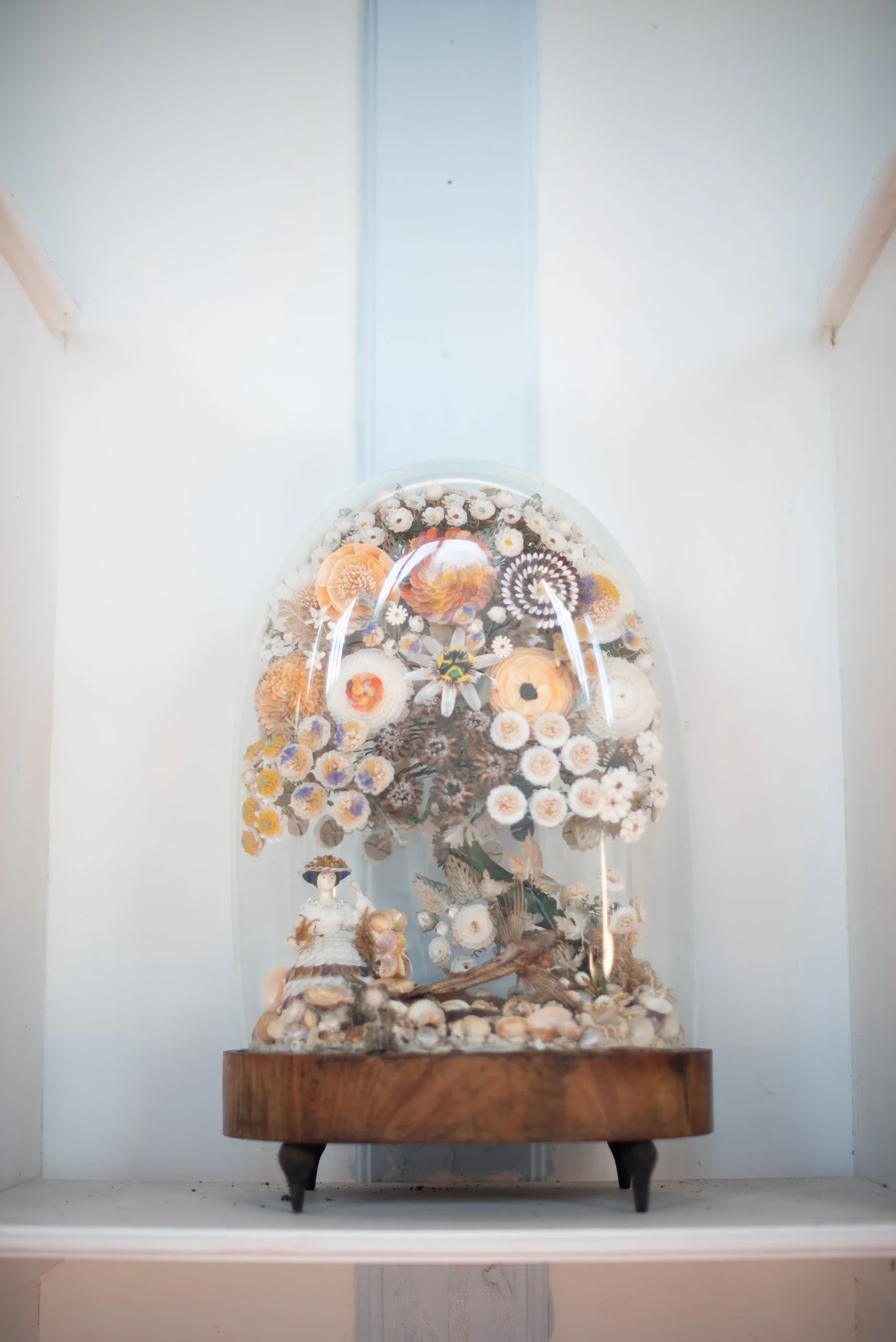
Victorian shell art in a bell jar, a curated arrangement of seashells under glass
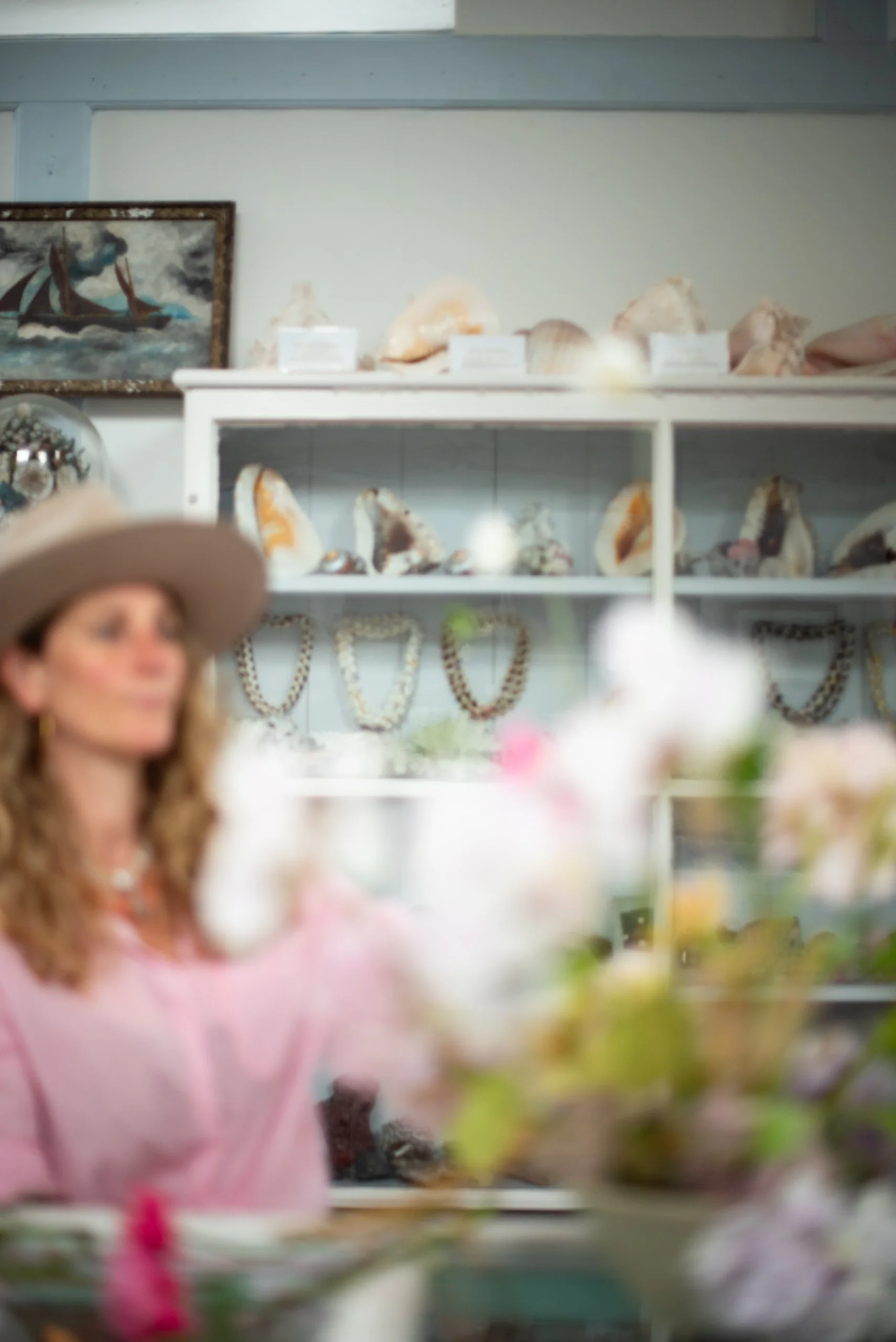
Still thinking of that seaweed necklace…
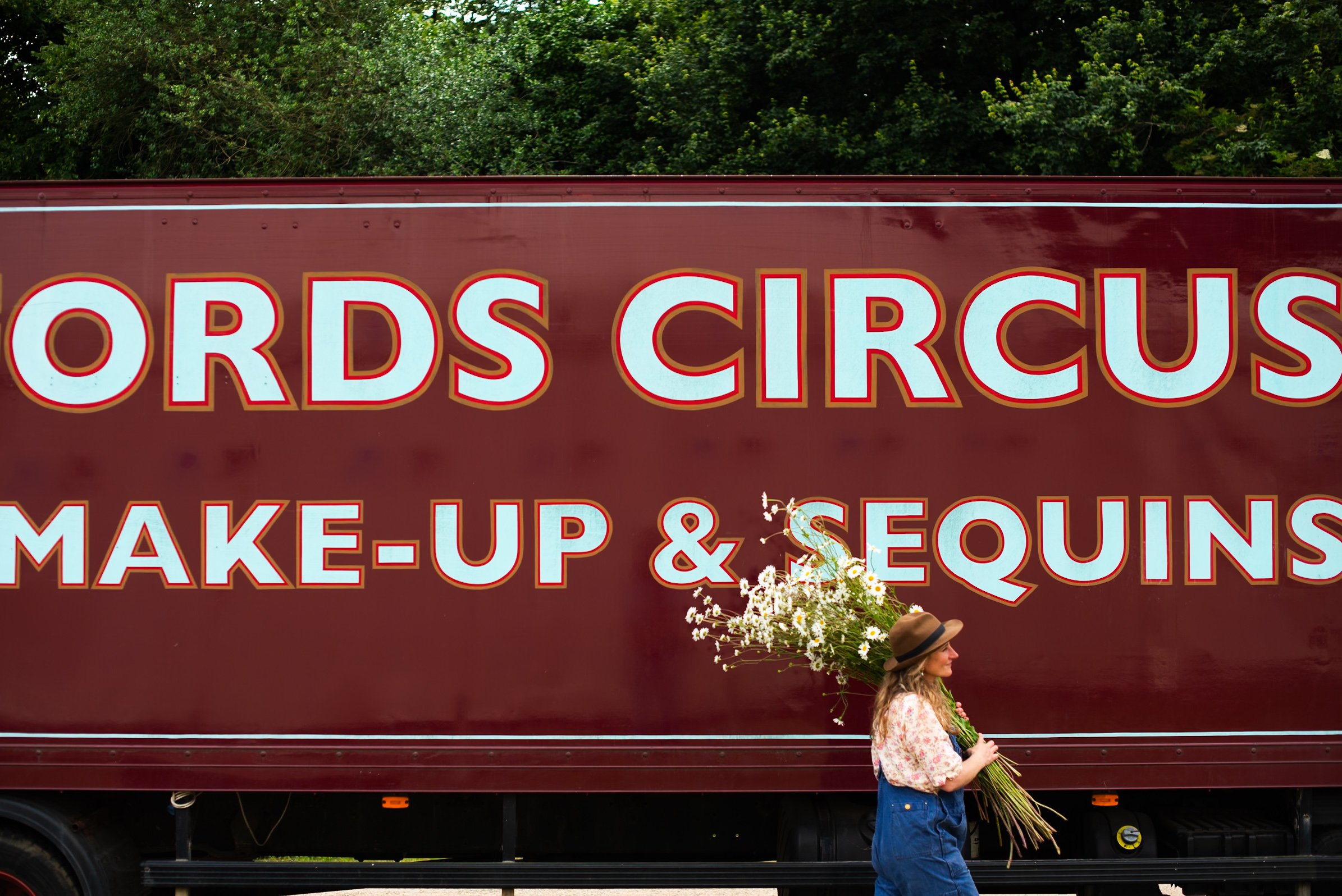
GIFFORDS CIRCUS
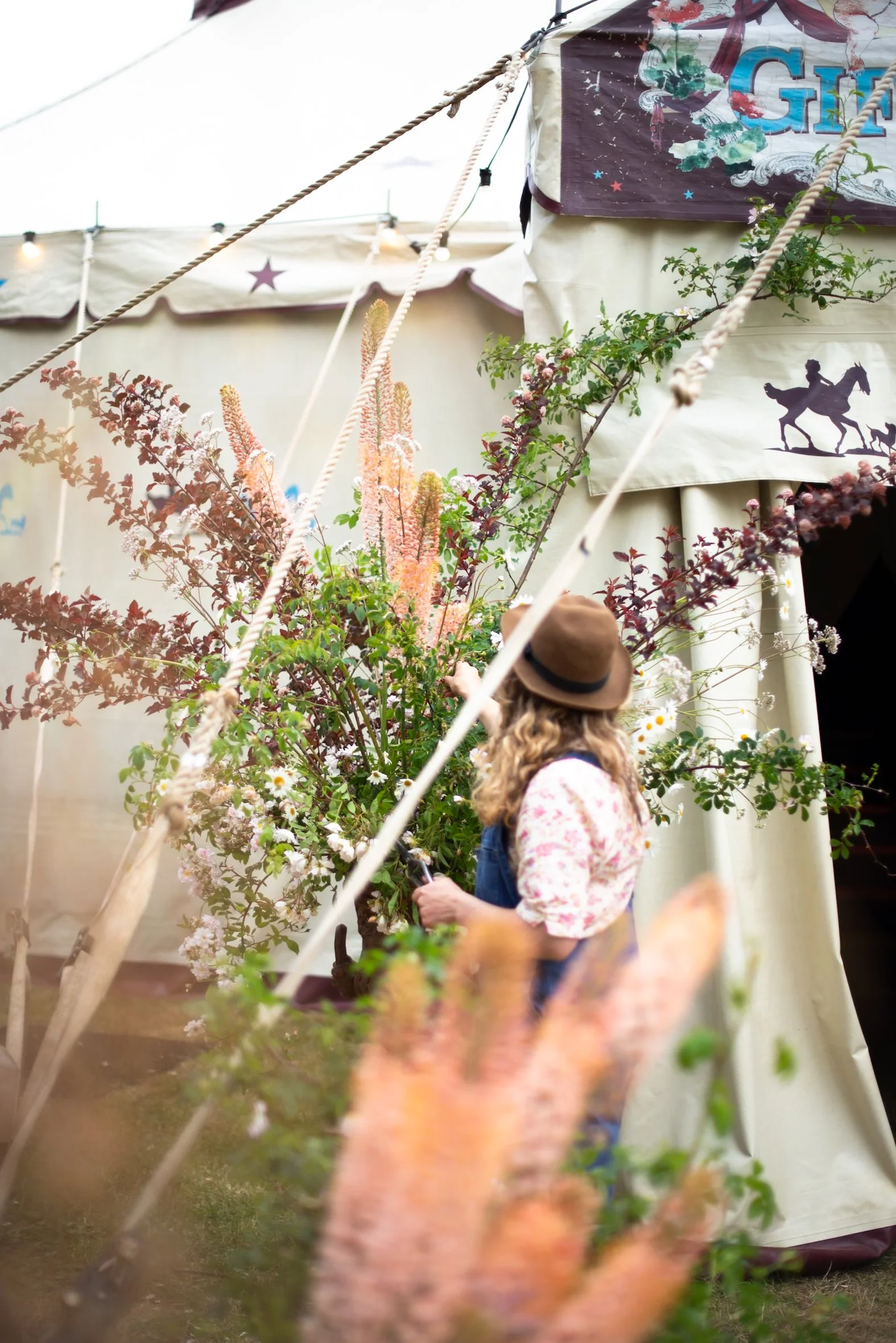
It’s Gala Night at Giffords Circus and we’re here to do the flowers. Tucked into the orchards of Chiswick House in west London is a collection of wagons and tents strung together with bunting and festoon lights.
“When I see a show I don’t want to just be amused or moved - I want to cry. I think that a good circus should make you cry. Furthermore, a good circus, a circus that is doing its job, should somehow feel like a moment of crisis, like it is on the very brink of extinction, as if a moment of excess and brilliance has been reached and over reached. A good circus is a sublimely existential thing, living acutely and only for the golden present moment. This is what I have discovered.” ~ Nell Gifford
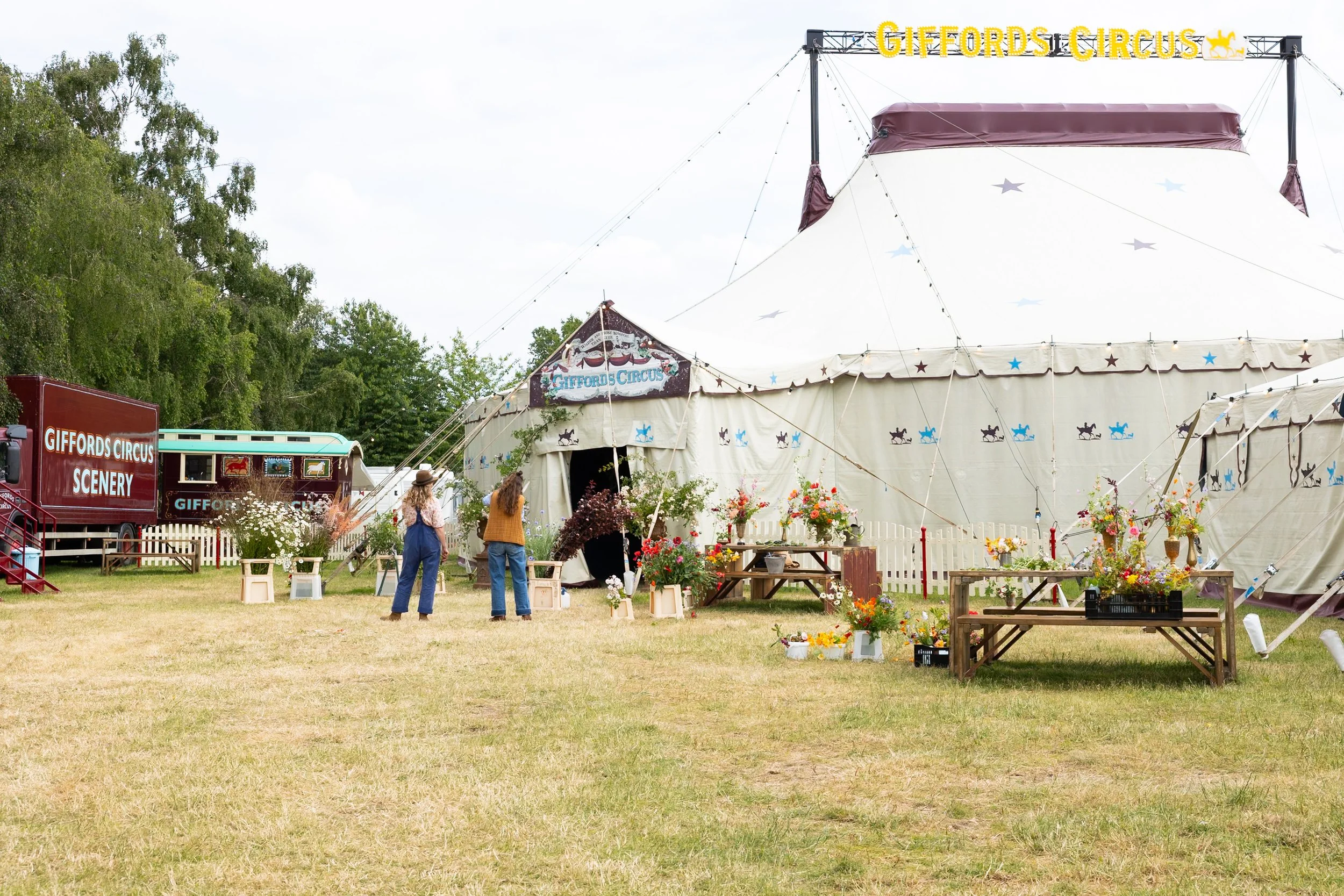
In the process of editing our book Naturalistic Flowers: A Year of Plants, Places and People inevitably there were some stories and photographs that didn’t make the cut. One of these was an extraordinary day flowering up Giffords Circus during its summer tour of ‘Avalon’, a medieval-themed production inspired by Arthurian legend. It seemed too sad to let this chapter remain on the cutting room floor so we’re sharing it here and we hope it brings you joy!


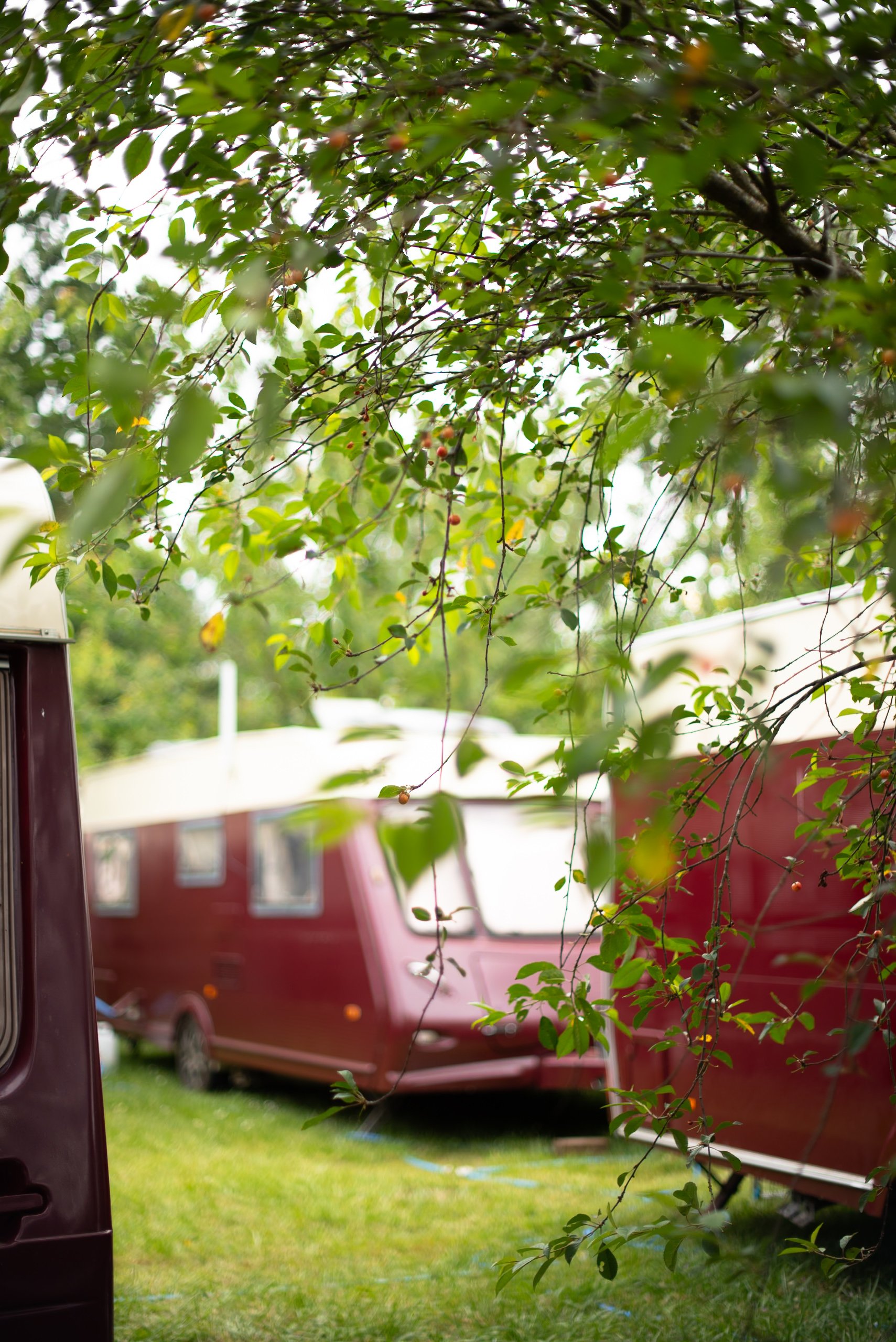
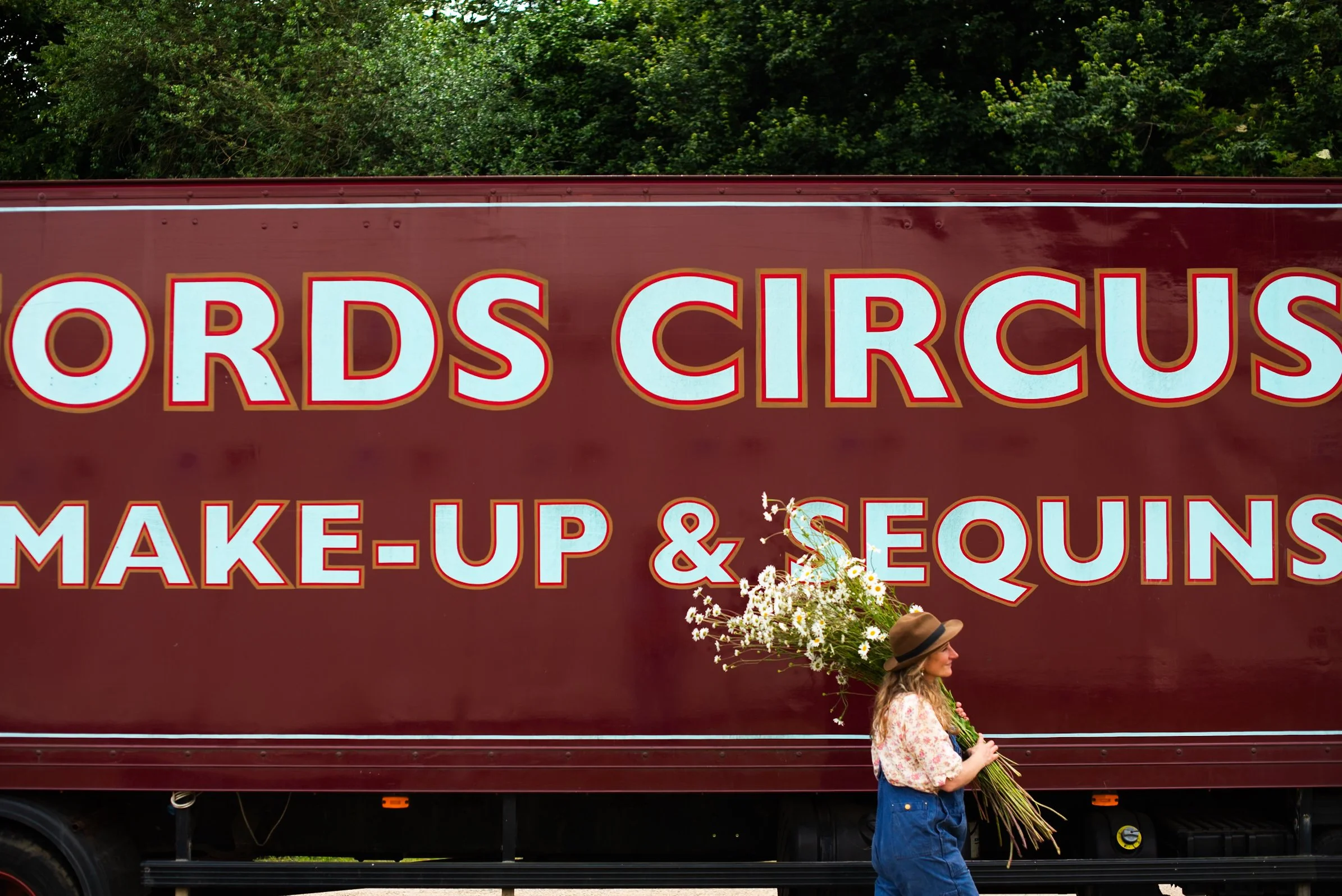
It’s Gala Night at Giffords Circus and we’re here to do the flowers. Tucked into the orchards of Chiswick House in west London is a collection of wagons and tents strung together with bunting and festoon lights. You’d think they have always been here from the way the camp seems comfortably sunken into the grounds, but in fact they will move on in a few week’s time, hitting the road in a convoy-by-night string of vintage wagons and lorries in burgundy, cream and pale blue gloss, as they travel onto to Evenley Green to continue their summer tour from Stroud to London and back again.
Giffords smells like spun sugar and hay. Step past the box office and disbelief is suspended. It’s the 1930s, it’s bohemian, flame-swallowing, gravity defying, candy-striped, comedic, outrageous and burlesque. Hedonistic, but with the nostalgic charm of the English village green. A tiny Vaudeville world of pure escapism, joy, colour, humour, naughtiness, childlike wonder. Spinning hoops and stars and spangles, gypsy, folky, provocative, romantic. Everything is charmingly hand-made, from the costumes to the set design. The embossed wagons are constantly and meticulously retouched. The clothes are dripping in diamante and glittering rhinestones. The animals, including a Shetland pony and a troupe of rescue dogs from Romania, are obviously well loved and well fed.
Nell Gifford and Toti Gifford built this grassroots circus from the Stroud Valleys from nothing but a dream. Nell, in particular, longed to revive the rich circus culture of Europe in England at a time when it was nonexistent, when there was no demand or appetite for it. To some extent this is still true today - say “circus” you’ll often be met with the involuntary wince, raising of eyebrows or nose wrinkle that accompany the uncomfortable connotations of creepy clowns, animal cruelty, chains and freak shows. It took many penniless years of discomfort and hardship but this thirty-strong, family-focussed, theatrical and madly creative company raises circus performance to an art-form and has achieved a cult status by evolving the old-fashioned traveling circus tradition - common in the English countryside before the advent of television, cinema and radio - into a modern form of entertainment that is relevant to everyone from the age of two to a hundred. Many families make an annual pilgrimage.
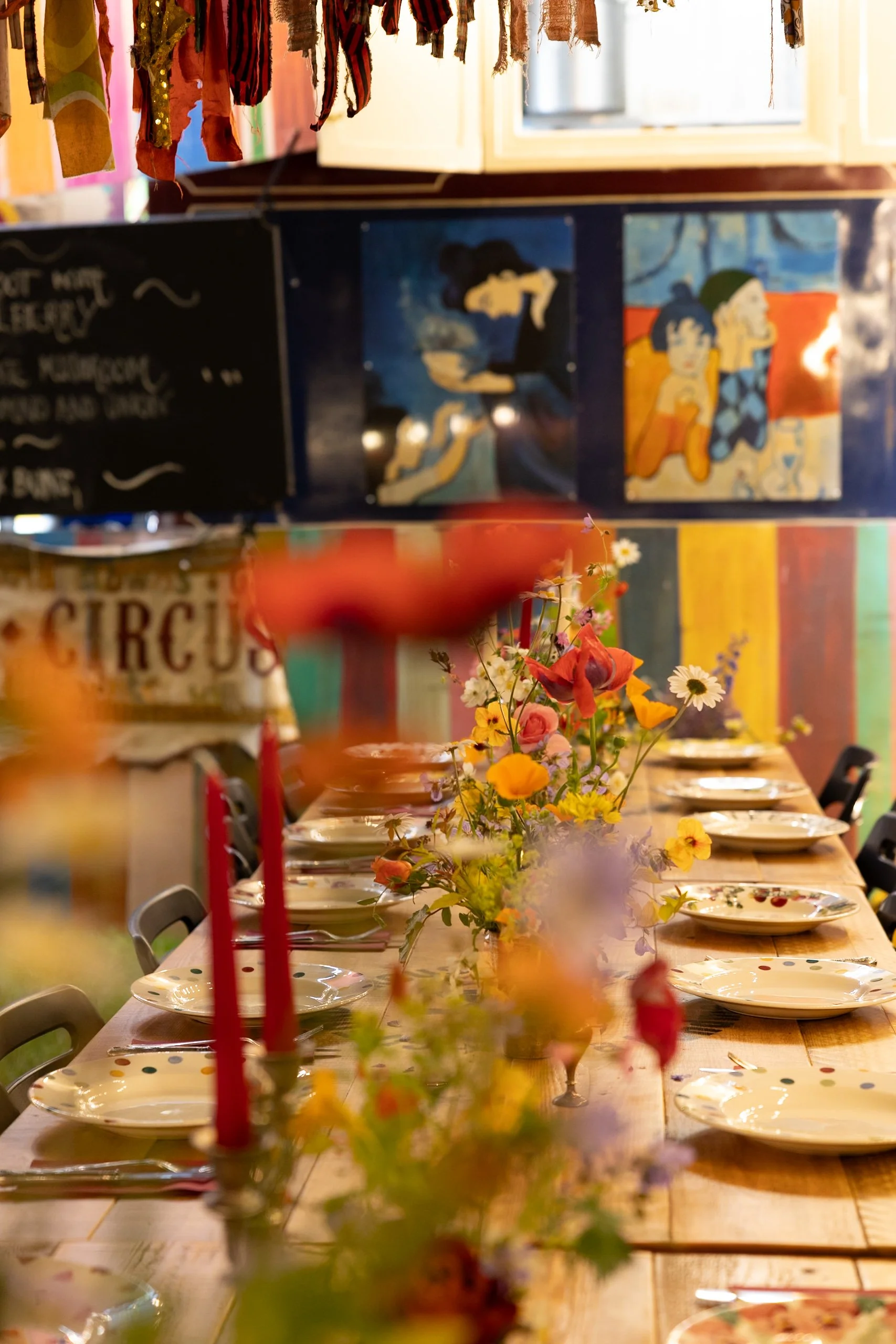
For Gala Night we want to encapsulate the spirit of the circus, bringing the garden to the party, so to speak, with bundles of flowers freshly cut in bright, joyful colours.
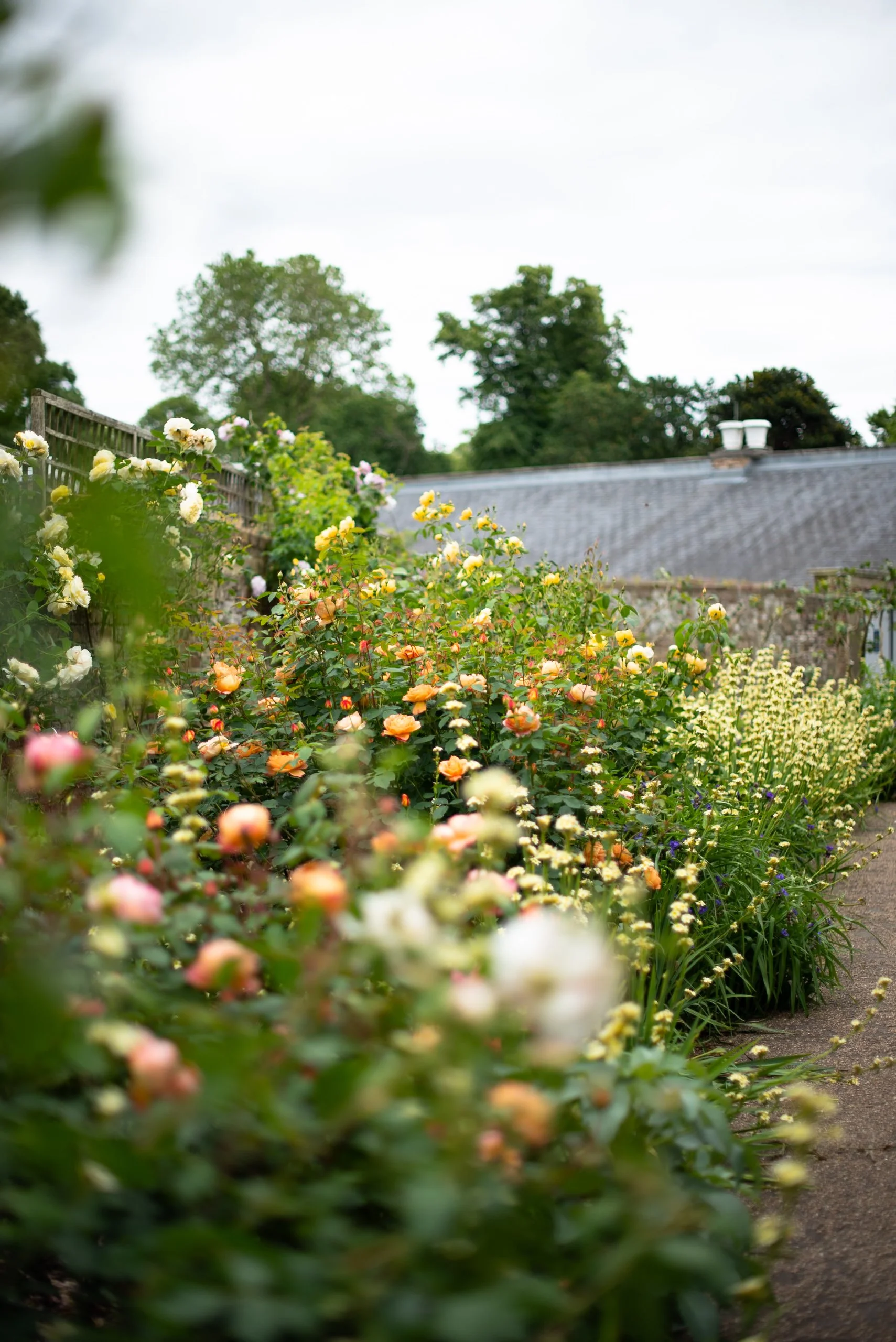
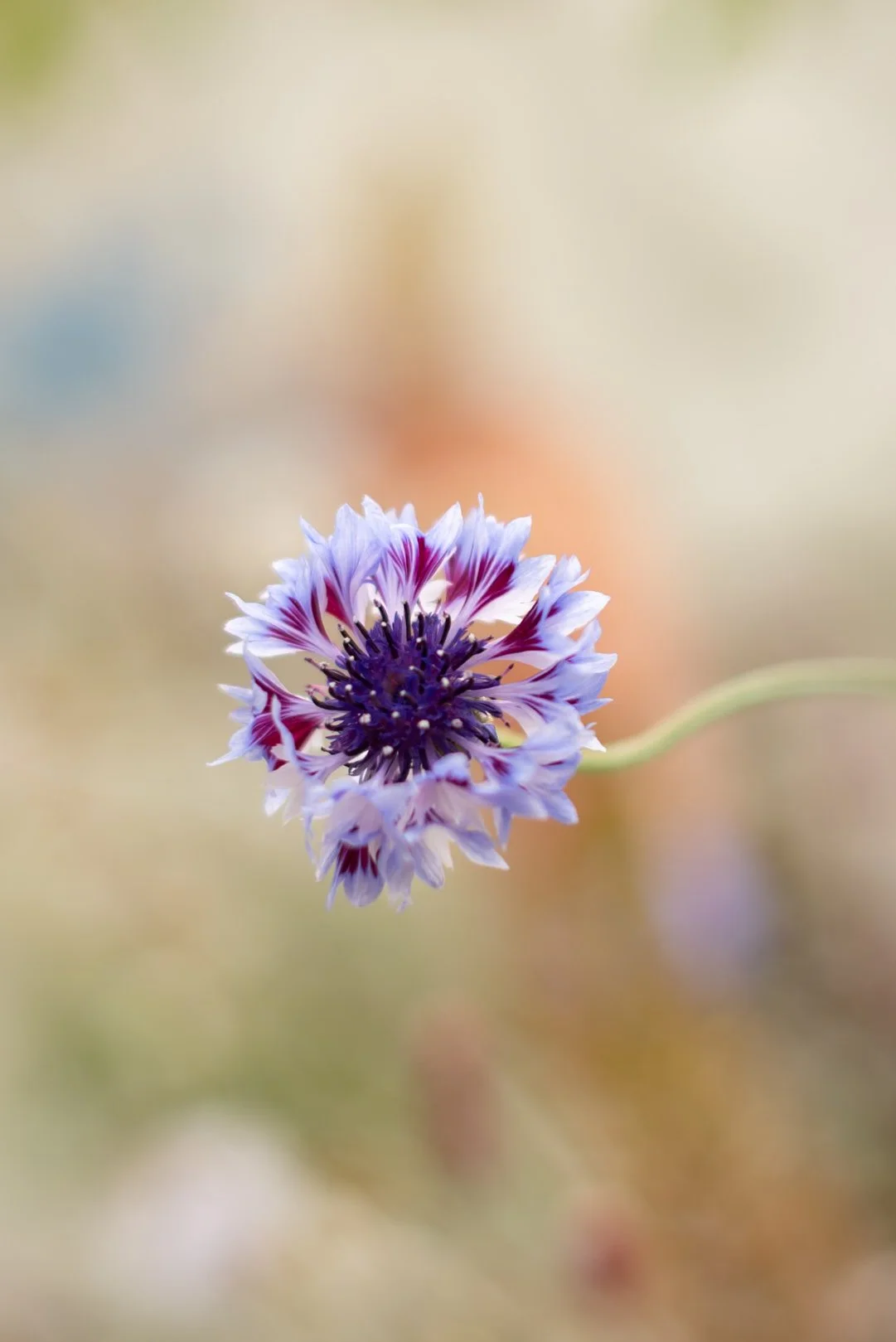
Giffords distinctive vintage wagons are hand-painted in burgundy gloss with pale blue, cream and gold lettering so we seek out these colours in the garden - it is June and awash with roses, sweet peas, peonies, cornflowers and poppies. The red geraniums are a nod to Nell, who loved them and, we’re told, would take them around with her on tour and display them proudly at the entrance to her wagon.
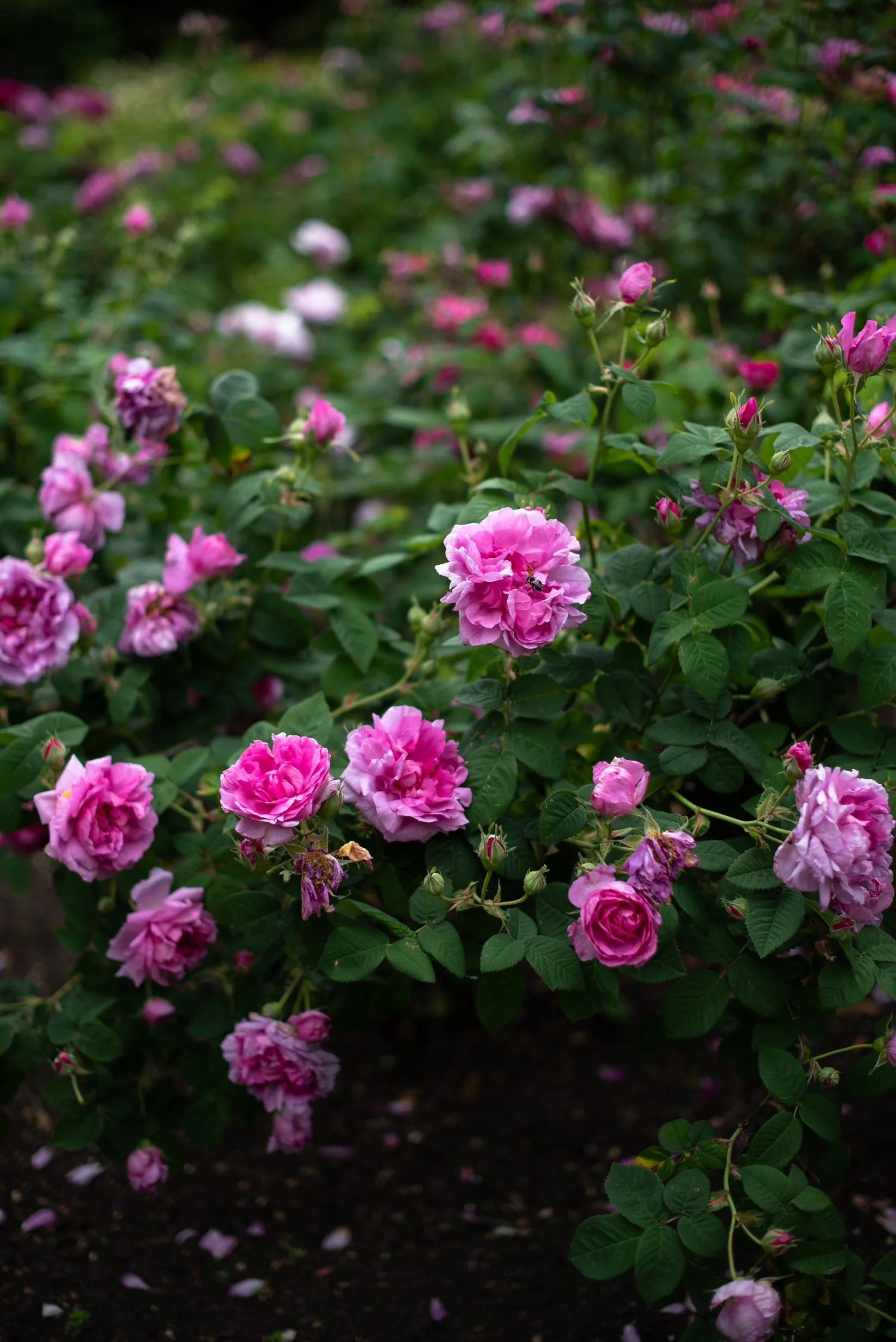
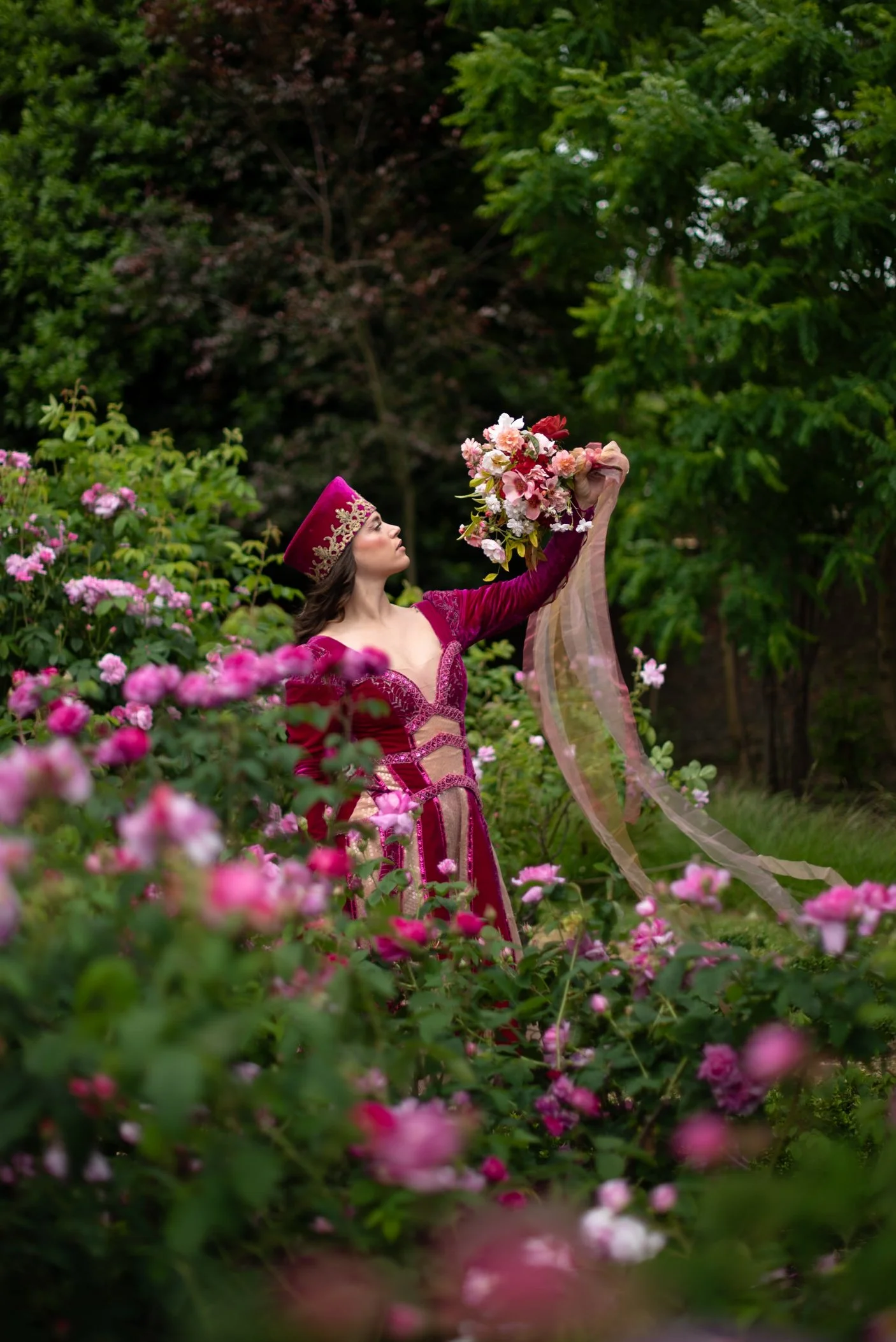
We look at the gardens of Chiswick House to see what’s flowering in the immediate surroundings of the circus camp - yes, oodles of garden roses and foxgloves.
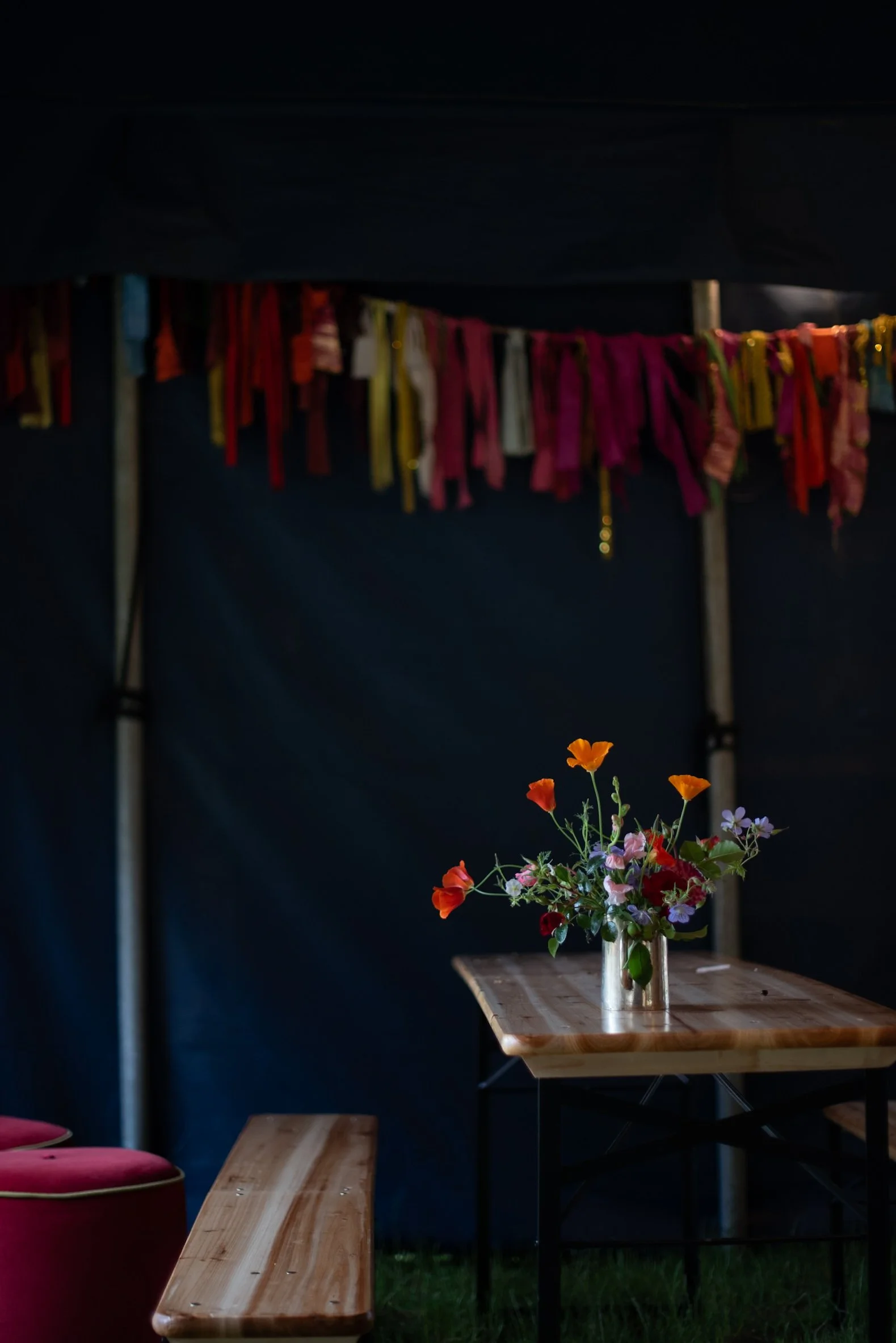
The restaurant tent Circus Sauce has a ‘den of iniquity’ atmosphere and must have hosted some wild parties in its time. It’s dark, clad in heraldric banners stitched with sequins and pearls, ragged strips of fabric strung on heavy garlands. The food is seasonal and homecooked British fare. There are seventy guests in for supper. To enhance the medieval banquet effect we make strings of garden-y posies in pewter tankards for the tables in a rainbow of colours, with flecks of vermilion and orange to be picked up by the flicker of candlelight for those burning the midnight oil.
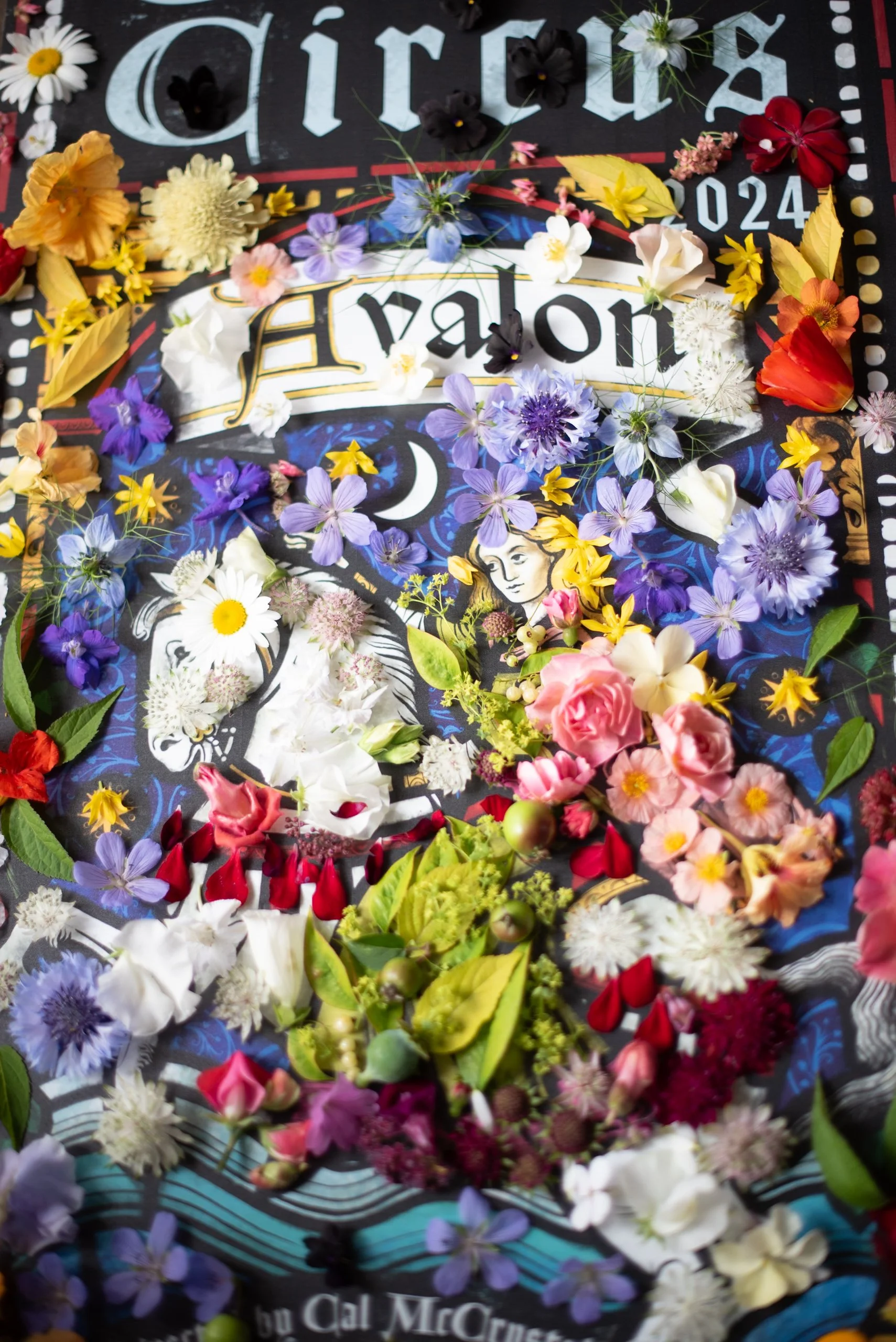
Nell died in 2019 aged 46. Her presence is everywhere at Giffords: the show must go on. Every summer a new production. This time (summer 2024) it’s the Arthurian legend ‘Avalon’, a medieval world of pageantry, crumbling castles, arching rose briars, knights in armour and troubadours. The performers - musicians, dancers, acrobats, aerial artists, magicians and clowns - are highly trained and internationally renowned artistes including Maximiliano Stia as Merlin, a Ukrainian acrobatic quartet, brother and sister act Dylan and Asia Medini as Sir Lancelot and Lady Morgan Le Fay who are fifth-generation circus performers and come from one of Italy’s oldest circus families. Not forgetting Latoya Donnert as the Lady of Shalott who is descended from a long line of circus performers - a Hungarian circus dynasty on her father’s side and a famous English circus family on her mother’s.
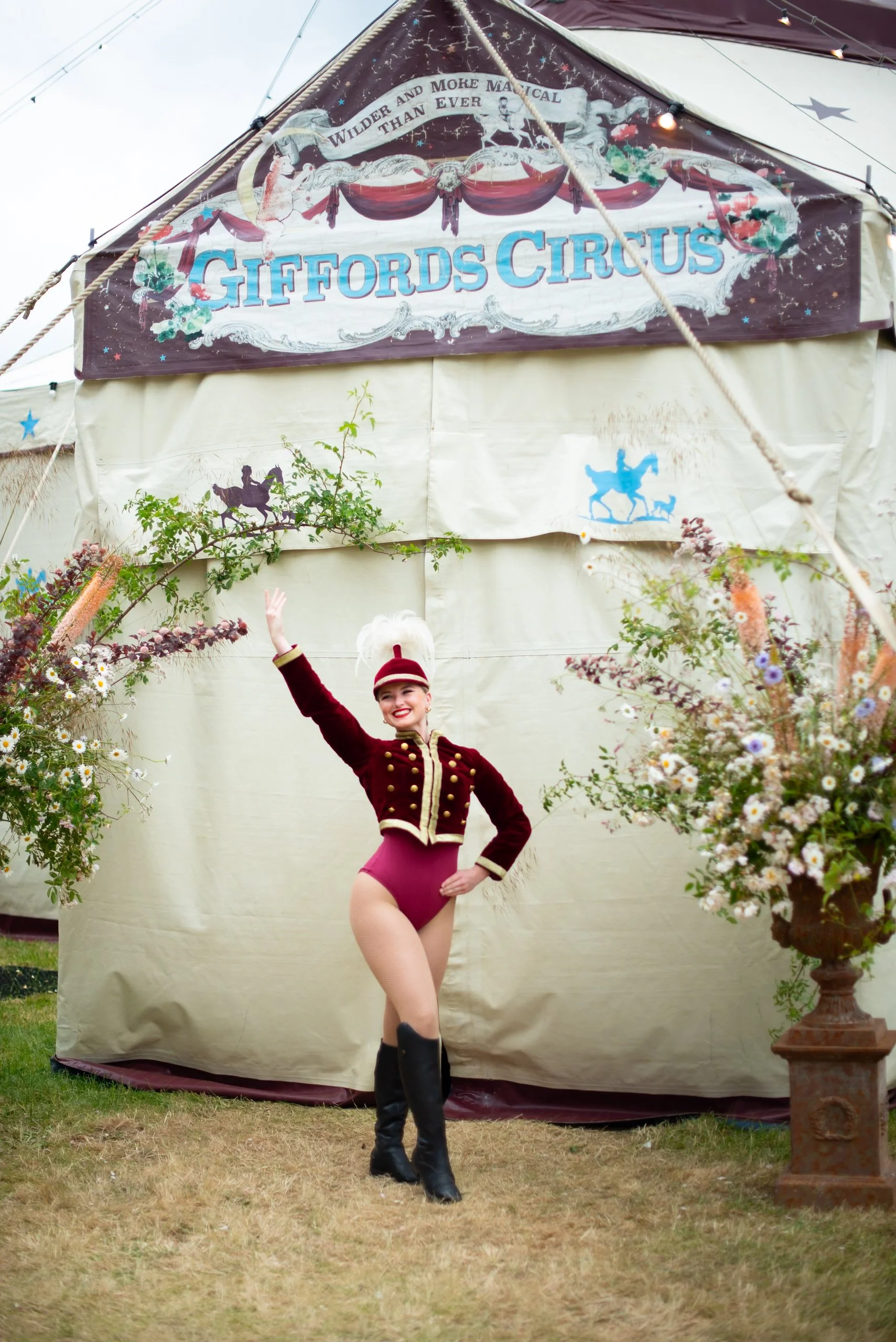
The show is bawdy, beautiful, hire-wire excitement. It’s dark and sweaty in the tent as rain falls heavily on the canvas. You can smell candy floss and sawdust and the fog of the smoke machine. The Damsels of the Ring twirl from their aerial hoops to Scarborough Fair.
Remember me to a lass who lives there,
For once she was a true love of mine.
There is a glittering of tears around the stand. This is Giffords: wilder and more magical than ever.

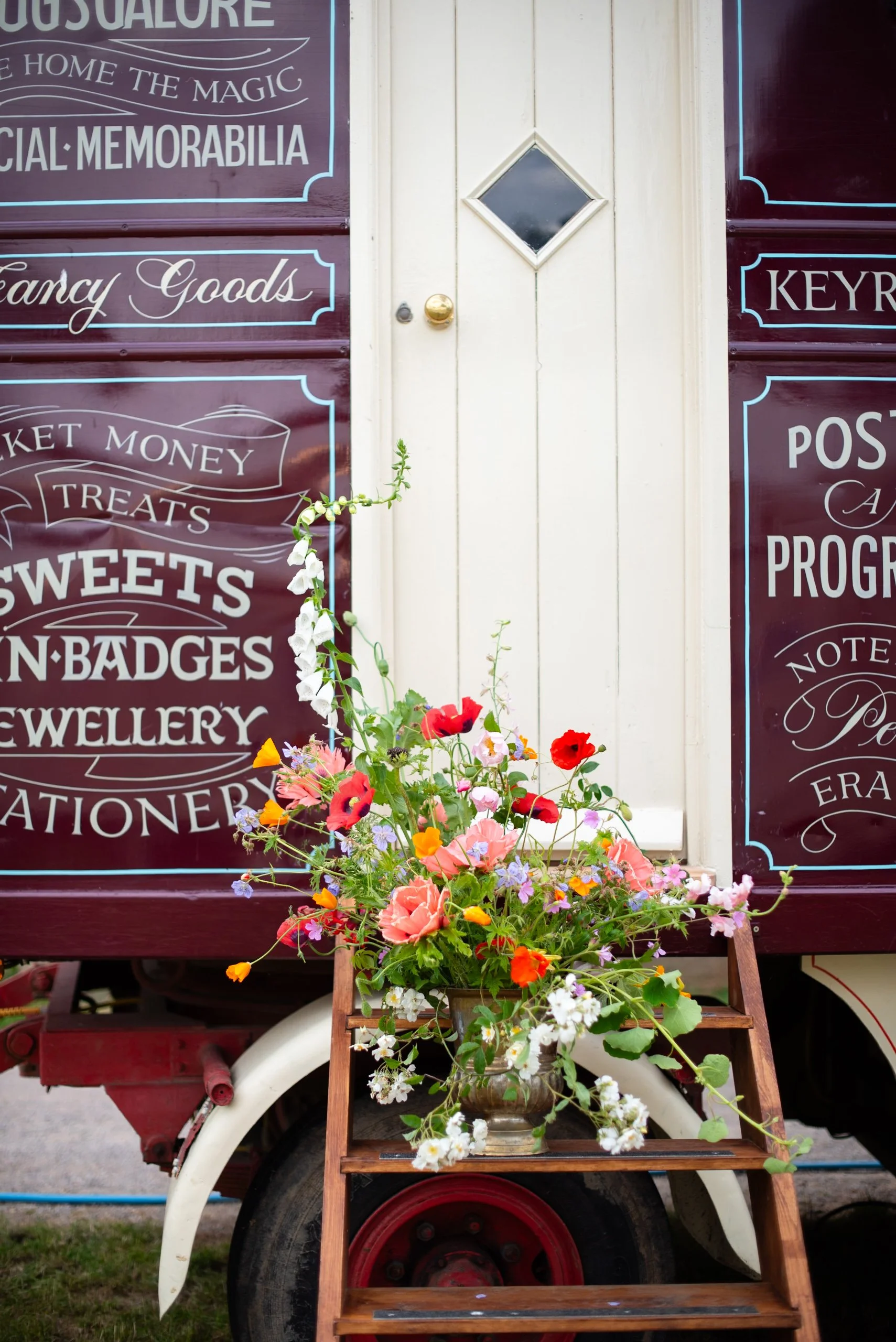
Thank you @officialgiffordscircus for welcoming us to your magical, mystical universe and to @nell.f.ohara for being such an obliging bouquet model as Lady Guinevere. It was a blast. Giffords Circus is currently performing their 2026 show ‘Waterfield’ - go check them out!
Naturalistic Flowers is published by @thamesandhudson and available at all good bookshops!
DYFFRYN FERNANT
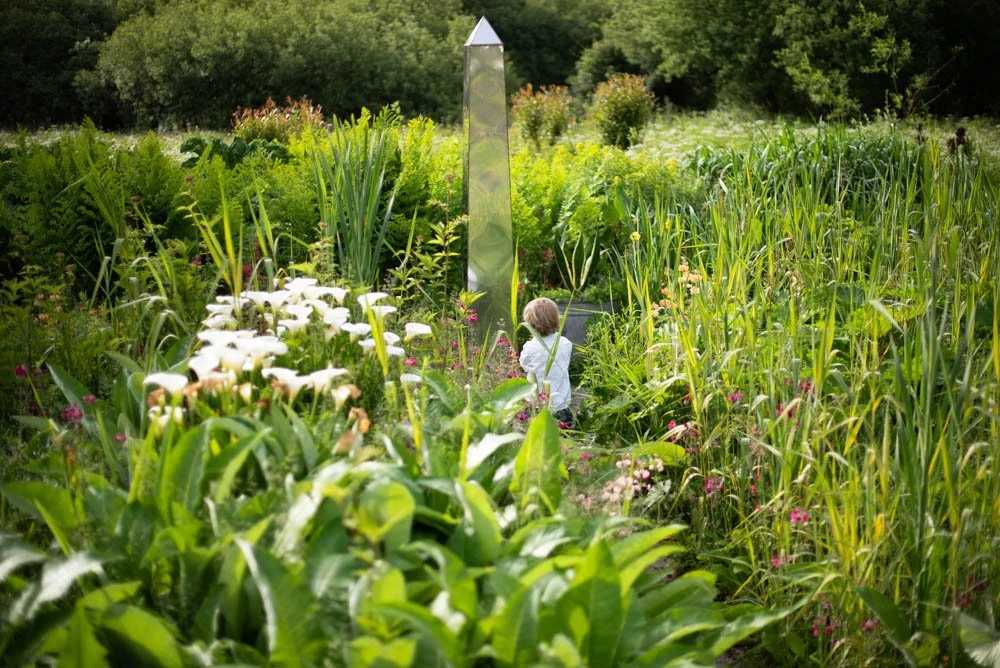
Dyffryn Fernant was the location for the closing chapter of our first book ‘Naturalistic Flowers’. I’m glad we ended there because, in a way, it was the crowning experience of a year-long adventure.
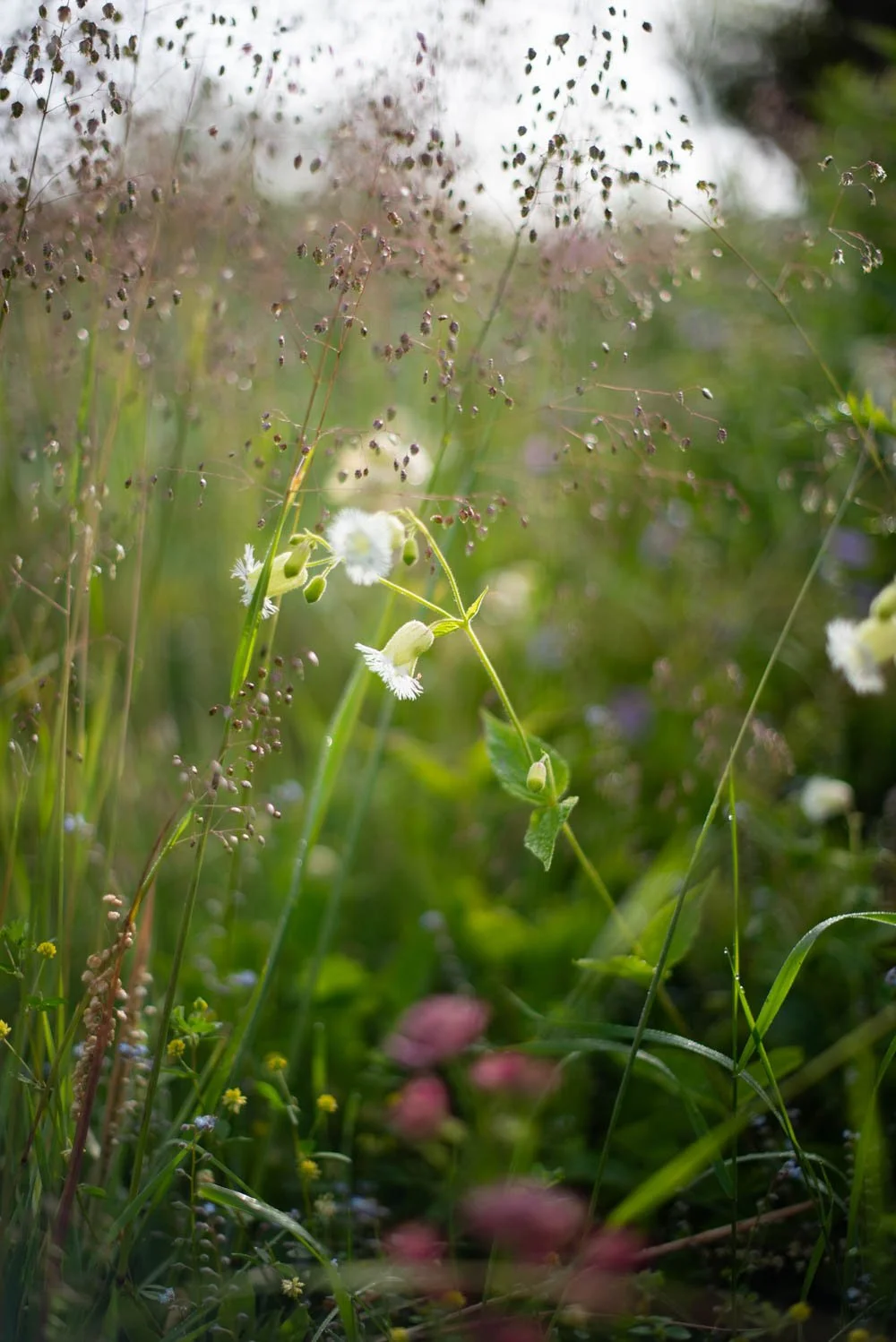
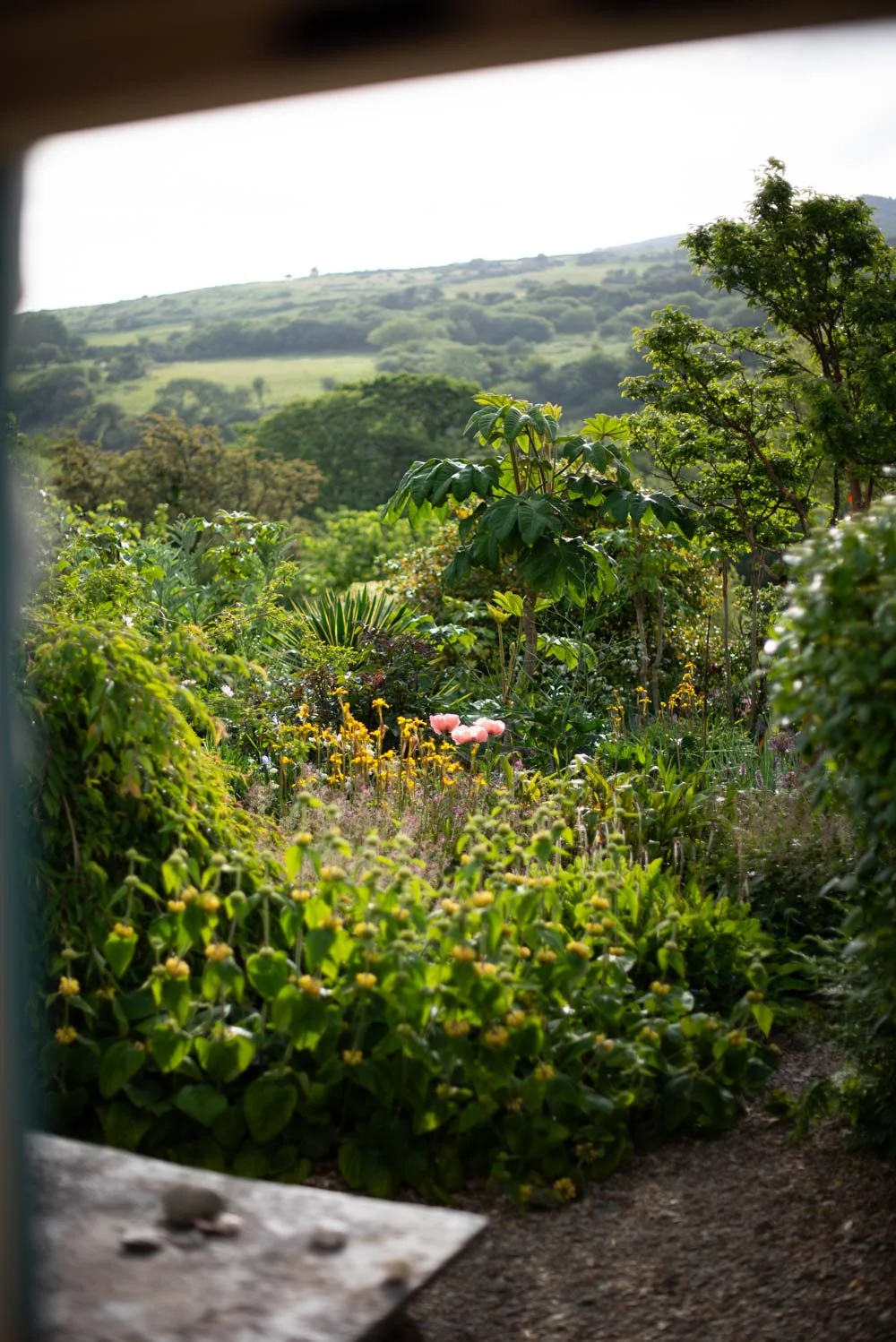
Dyffryn Fernant was the location for the closing chapter ‘The Wild West’, in our first book Naturalistic Flowers: A Year of Plants, Places & People.
I’m glad we ended there because, in a way, it was the crowning experience of our year-long adventure, being a garden that we had long admired from afar but were even more astonished by when we finally washed up, after dark, and after a long sleep got to discover in the rising mist of an enchanting autumn morning. What an extraordinary feat of a garden this is - half rock, half bog, slipping into wild marsh with the Fernant stream wriggling its way through ferns and willows at the foot of the steep slope beneath the Preseli Hills.
Mid October the Guernsey lilies (Nerine bowdenii) were in full swing, ornamental grasses glittering, the Katsura tree (Cercidiphyllum japonicum) scenting the air with the delicious aroma of burnt sugar.
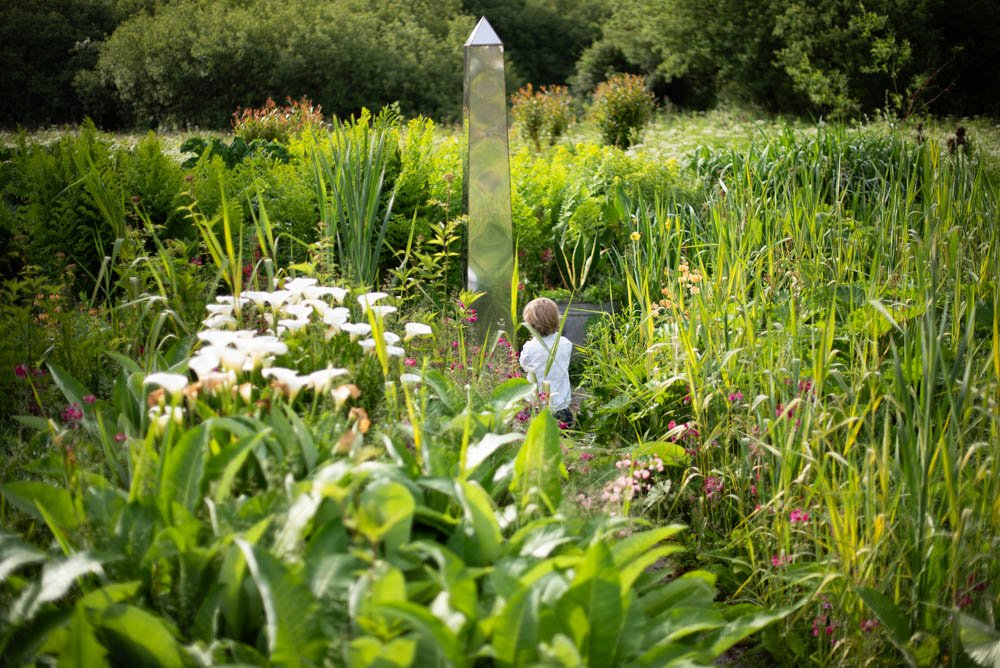
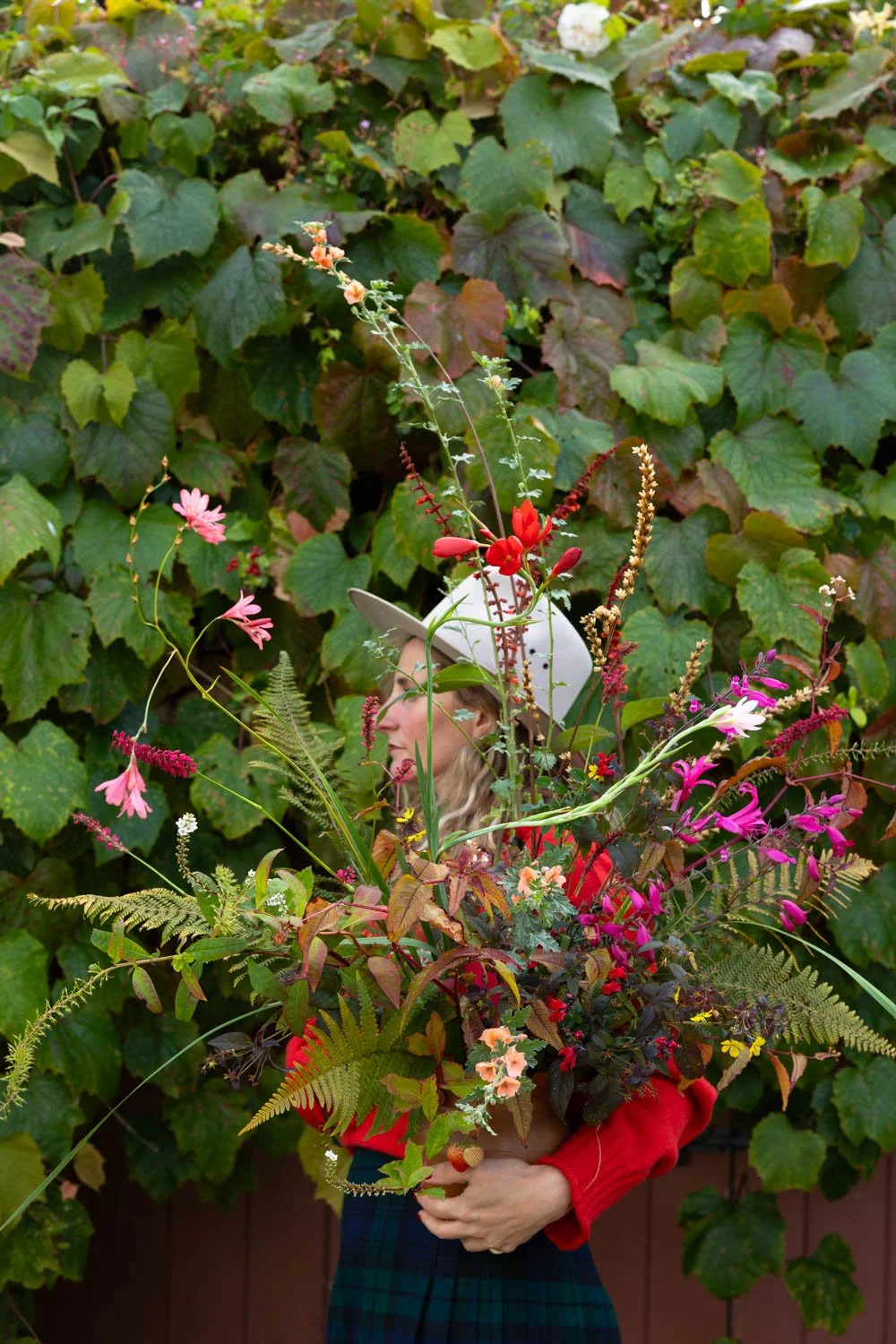
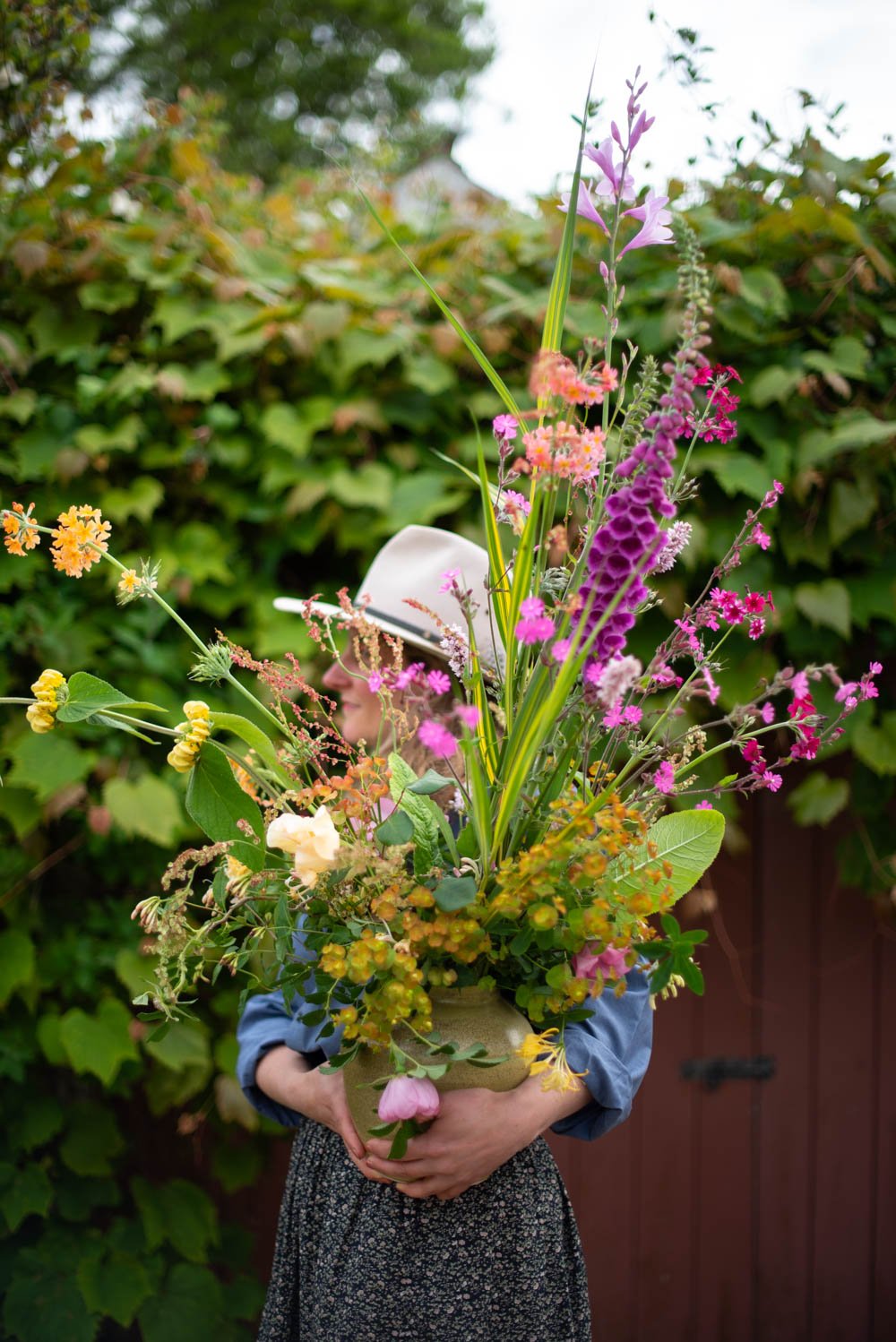
In early summer it’s a different proposition entirely and somehow more defined before the sheer, jungly volume of summer blurs the boundaries between one area and another.
The abundance of plants means that you could return a hundred times over and discover something new each time but as spring recedes there’s a freshness, a delicacy and frothiness to the garden that is distinct to this season - dribbling wisteria, roses like scrunched pink silk - and intensely pleasing ‘moments’ at every turn - creamy white white Indian hyacinth (Camassia leichtlinii) tower over early purple orchids (Orchis mascula), the mauve flags of (Iris sibirica) waving among meadow grasses and smoky red sorrel (Rumex acetosa), fading wood spurge (Euphorbia amydagloides) under the almost-black lace of elderberry leaves (Sambucus nigra f. porphyrophylla 'Eva').
The fragrance now is of that subtly distinctive scent of wild meadow flowers - almonds and honey and the sweet, powdery perfume of yellow rattle (Rhinanthus minor).
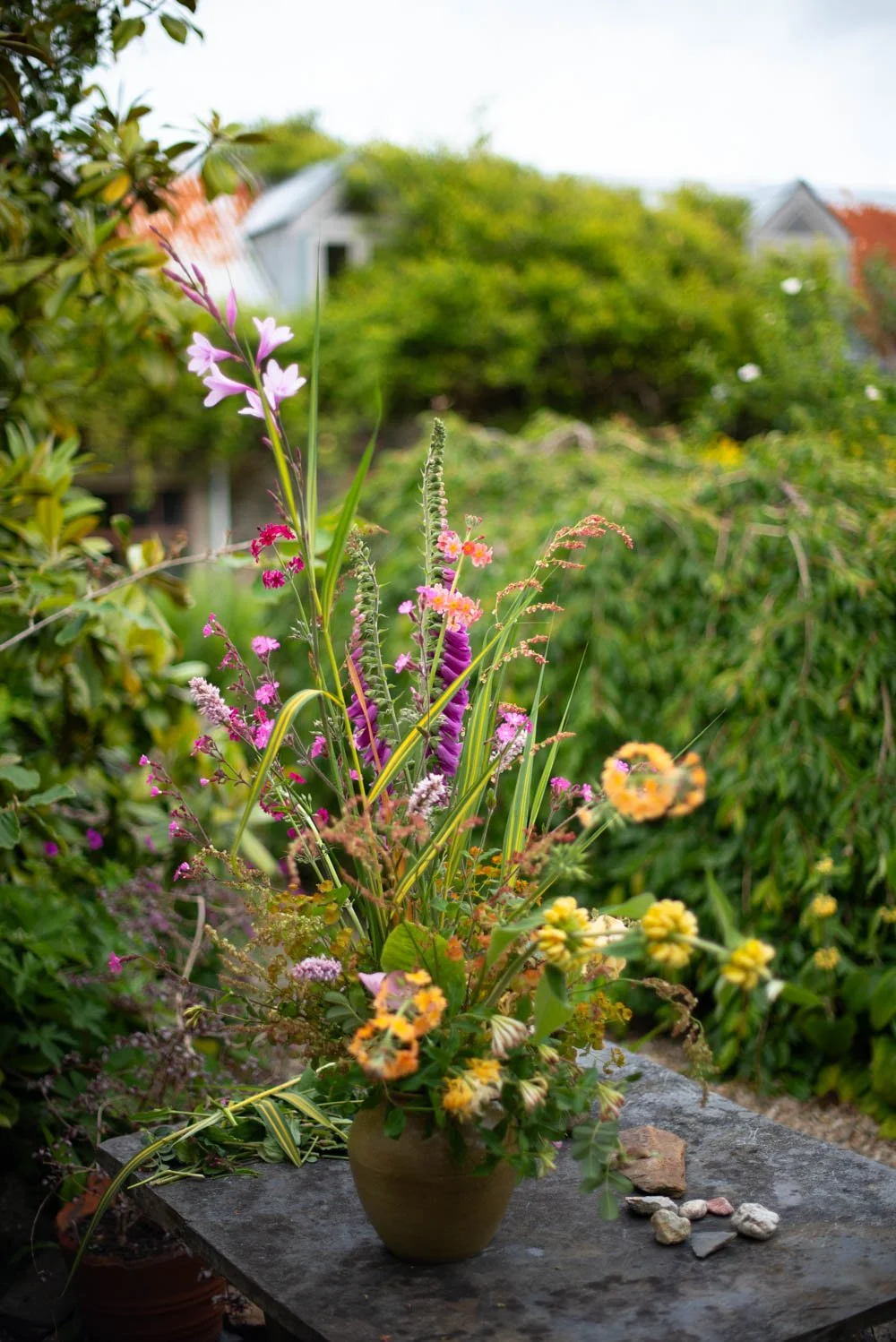
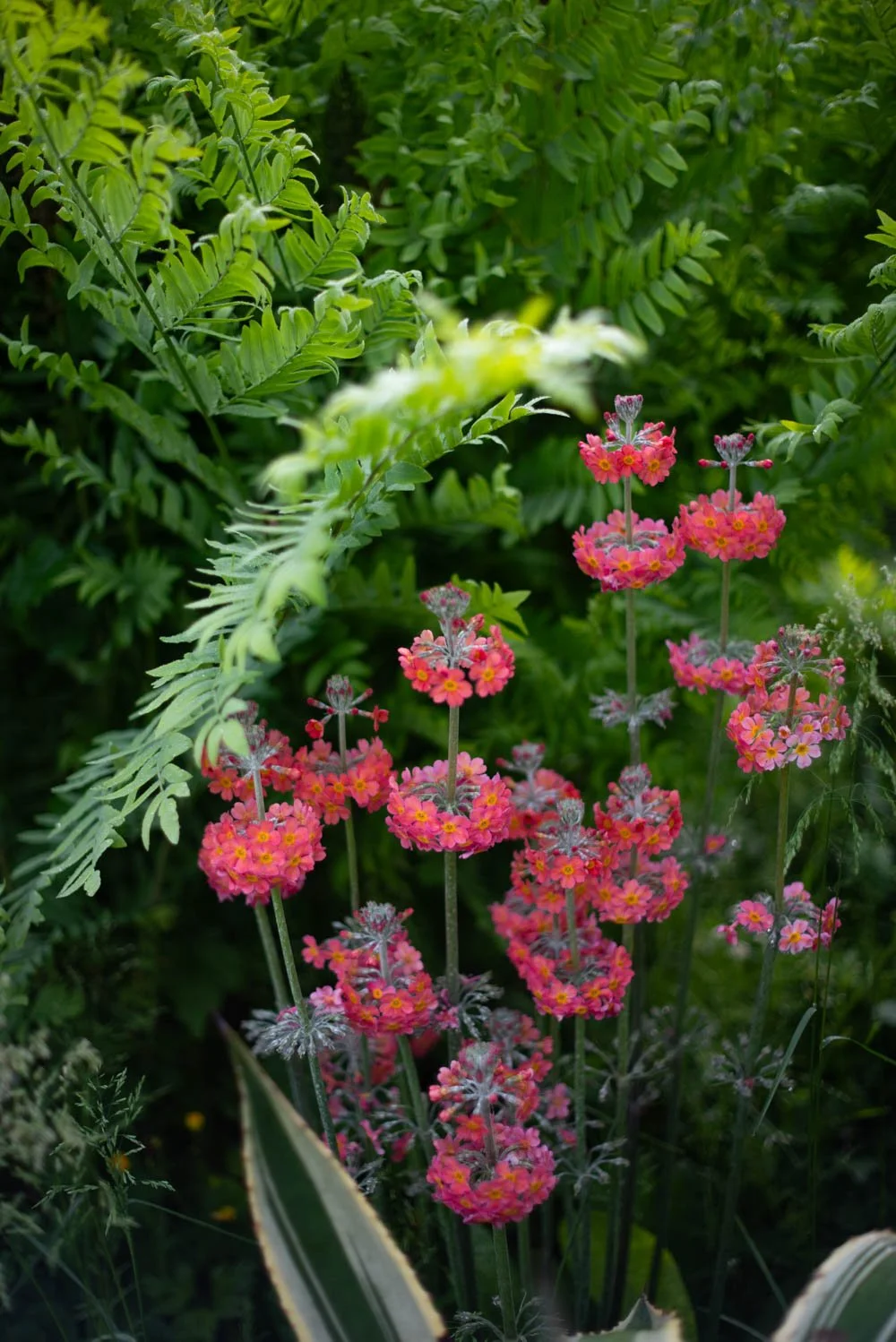
This time we’re here to make an ‘Arranging the Garden’ episode for the Flowers on Film Club and to escape London for a long weekend with the children, staying again in the tiny cottage Y Bwythyn Bach, all piled in together under the eaves between forays along the Pembrokeshire coast path, to and from the beach with sand in our shoes and wind in our hair.
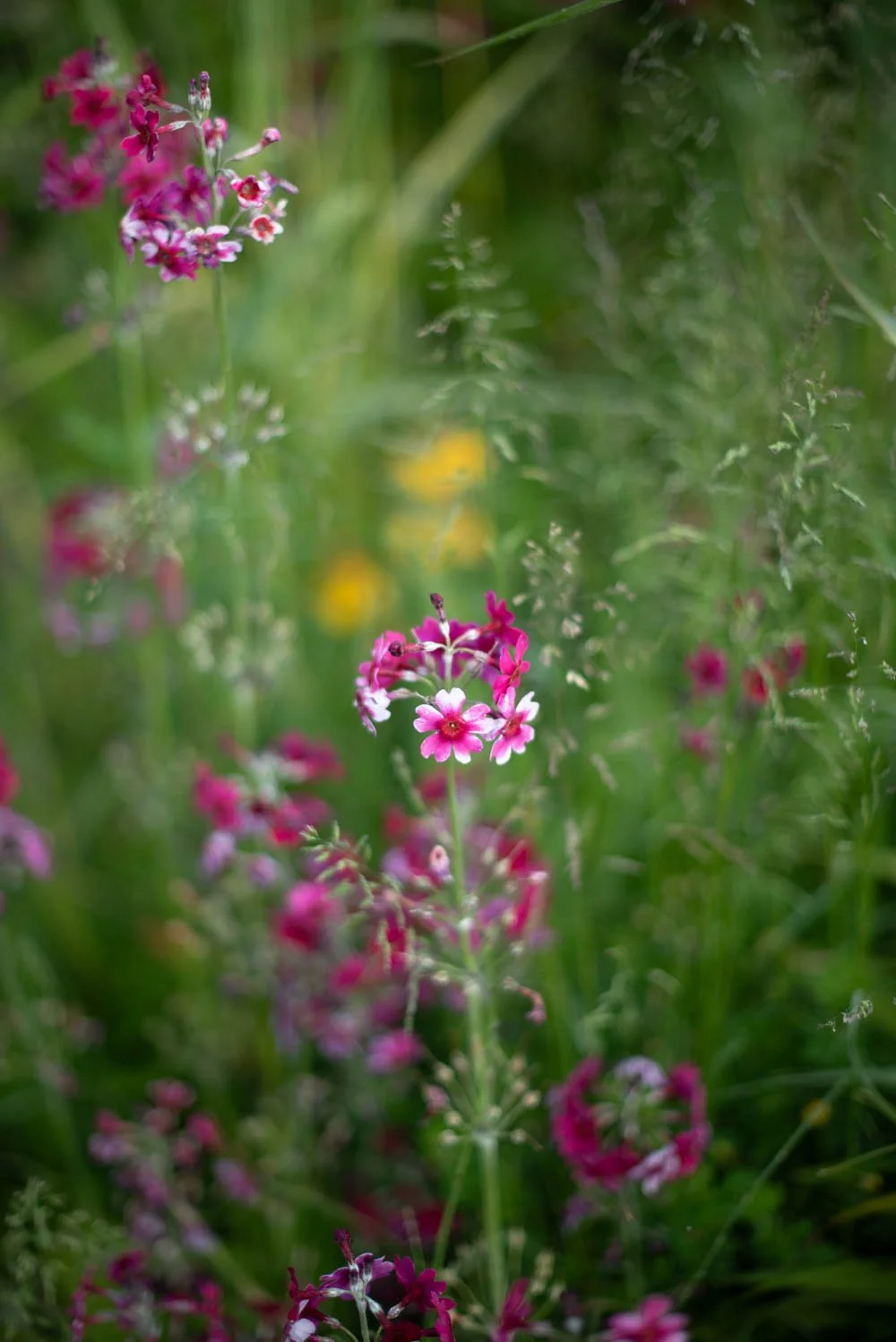
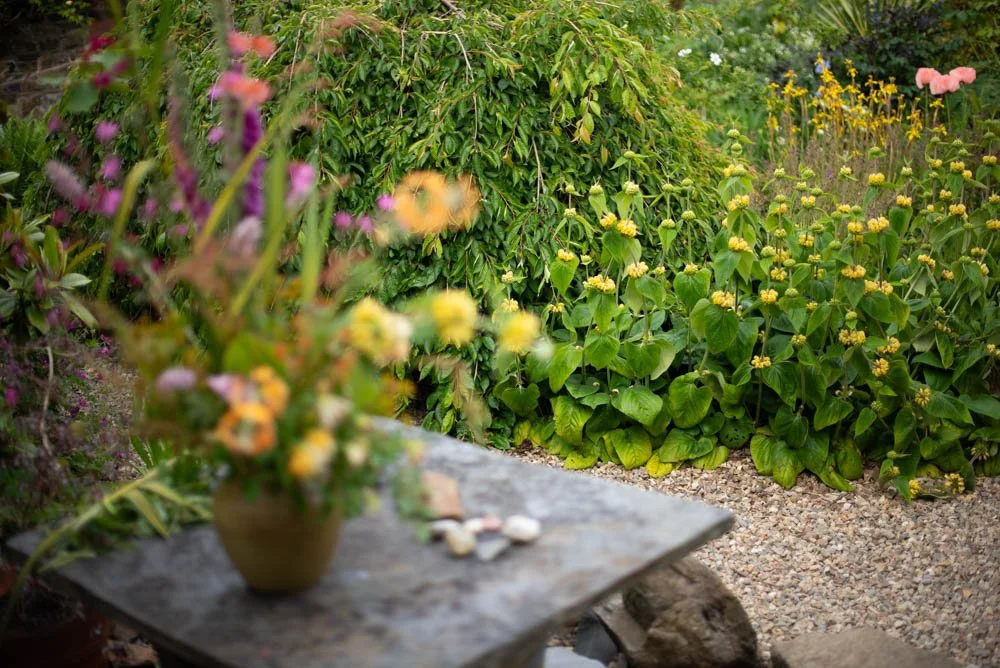
It was a joy to see Christina Shand again, the garden’s creator and an insatiable plantswoman, and to be permitted to selectively cut from her beautiful and unusual collection to make an arrangement evocative of the garden in June. We hope you enjoy this episode as Jess explores the garden with her camera, I pick and arrange a vase of the choicest, ‘treatiest’ stems and catch up with Christina on the evolution of this special place and her favourite moments at this precise moment in the year as spring turns to summer.
RESTRAINT
“Variegation has been popularised by the flower arranging movement which has been a notable social and (perhaps we might claim with such modesty we can muster) artistic feature of post-war Britain. Variegated leaves have contributed importantly to the range of material available to the flower arranger, who saw more to them than had been apparent to the gardener, but who has induced the gardener to take another look at them and their role in the garden. Cross-fertilisation between the arts has always been productive.” Christopher Lloyd, Foliage Plants
In 2025 we started a creative project called Arranging the Garden, an exclusive series for the Flowers on Film Club. The purpose is to explore the creative and deeply personal practice of naturalistic arrangement in an open, experimental format. The premise is simple: we visit and film a garden, paying attention to the unique sense of place of that particular setting, the conditions and plants that are growing there. During this visit we speak to the owner or gardener and at some point we’ll alight upon a question, theme or topic that we’d like to explore and investigate through the arrangement of flowers.

Using carefully chosen plant material either from the garden we are visiting, or from our own plant collection in Hampshire, we continue to discuss these themes together while I make an arrangement evocative of the setting at that very specific moment in the year. We have always valued learning through doing and experimenting outside of a set brief, allowing conversations to develop, allowing for spontaneity. That’s what the Flowers on Film Club is all about: an extra-curricular love of plants, places and people!
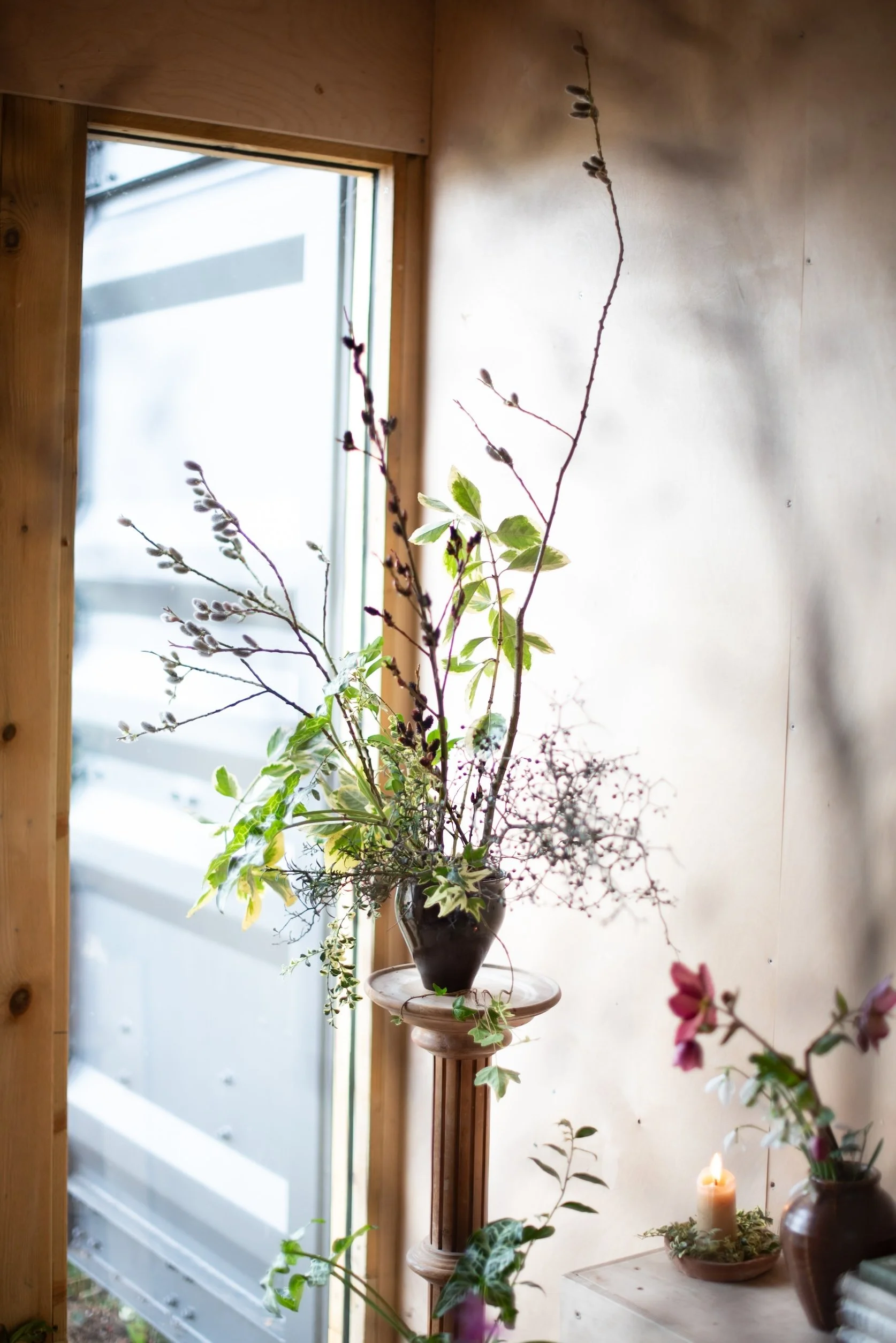
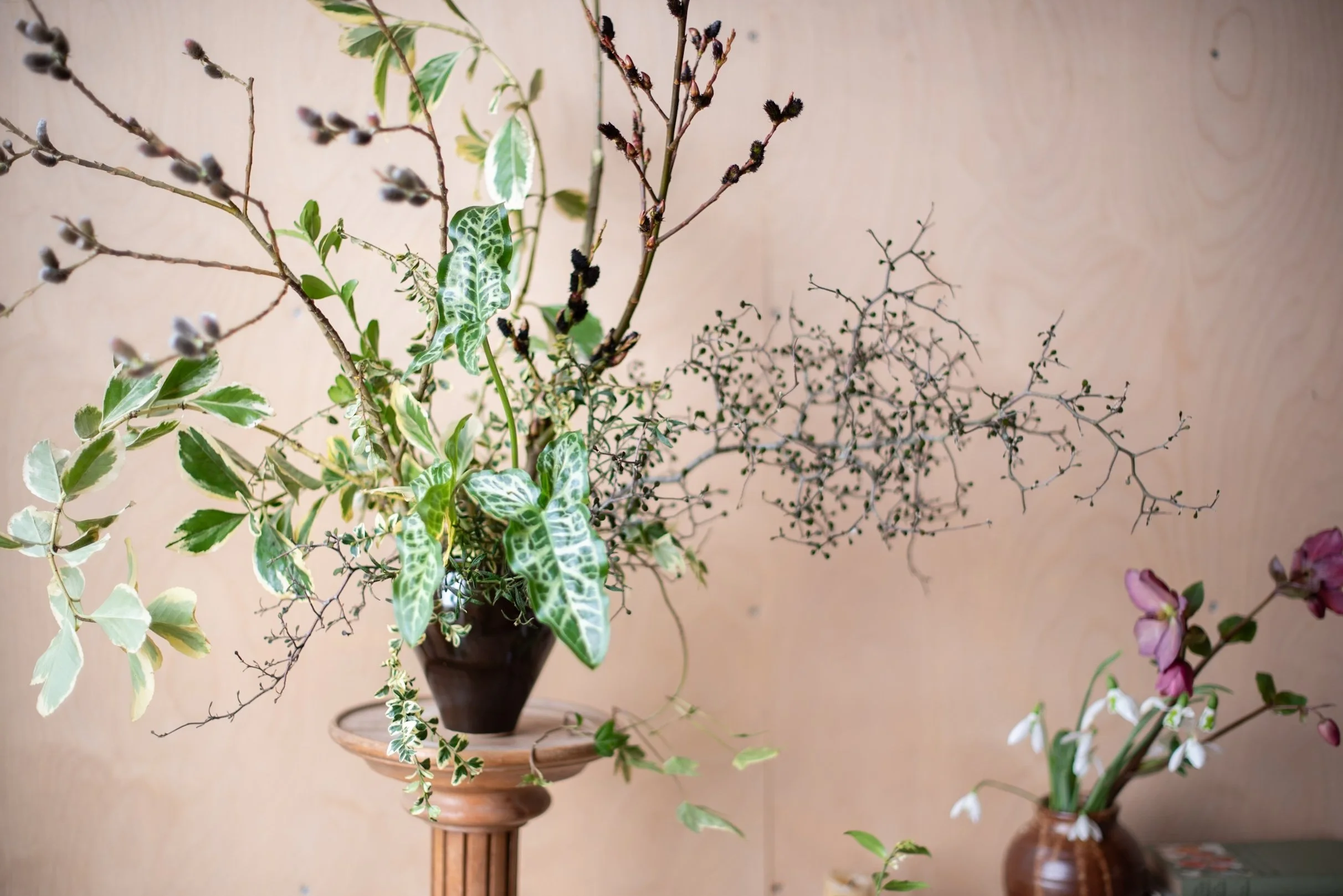
This arrangement inspired by Balmoral Cottage was an exercise in restraint, in using materials cut only from this particular place and creating a composition made up entirely of branches and leaves. The variegated foliage provided some interest and contrast, but without colour as the overriding focus the sculptural forms and texture of the ingredients came to the fore.
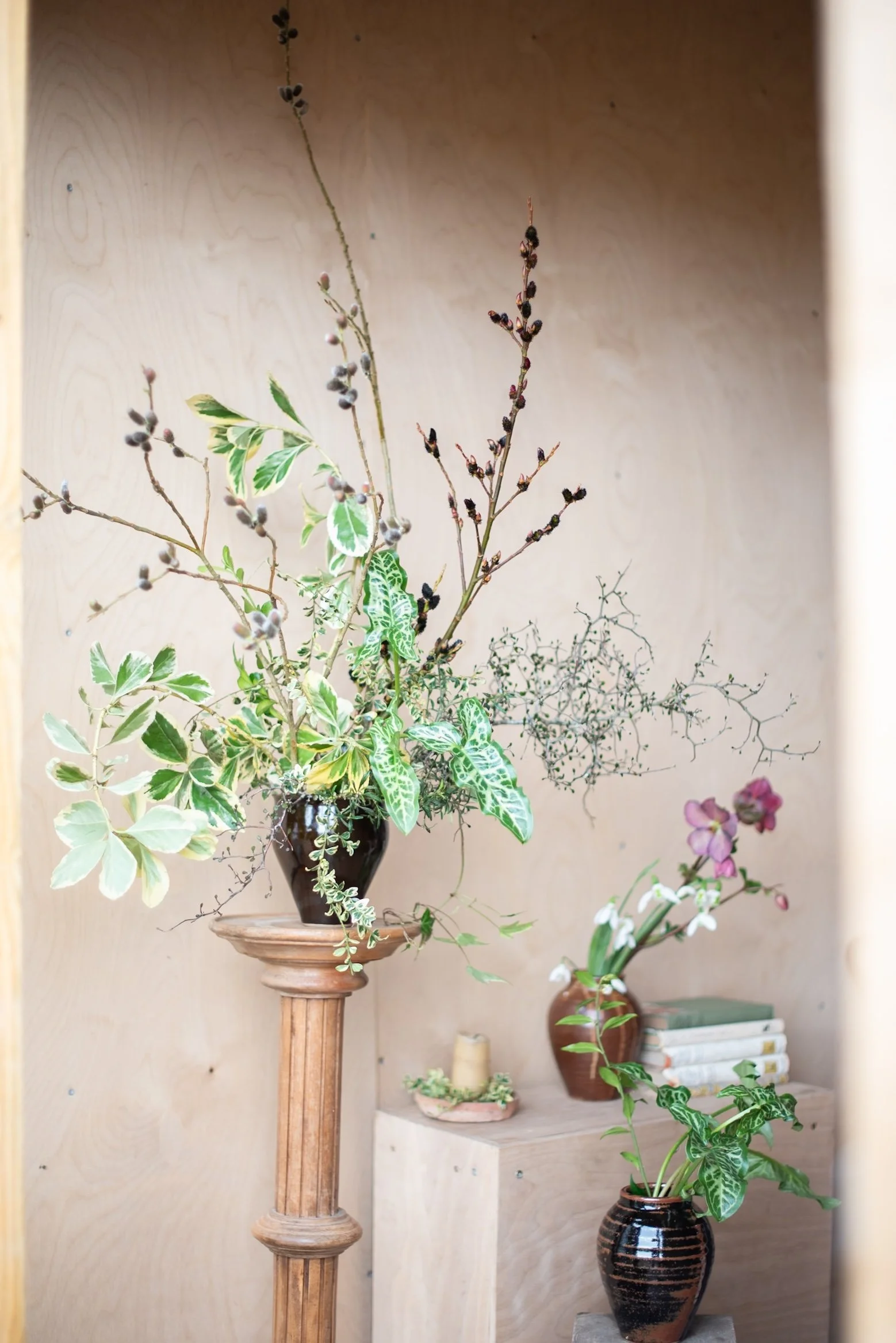
Find the full recipe for this arrangement here
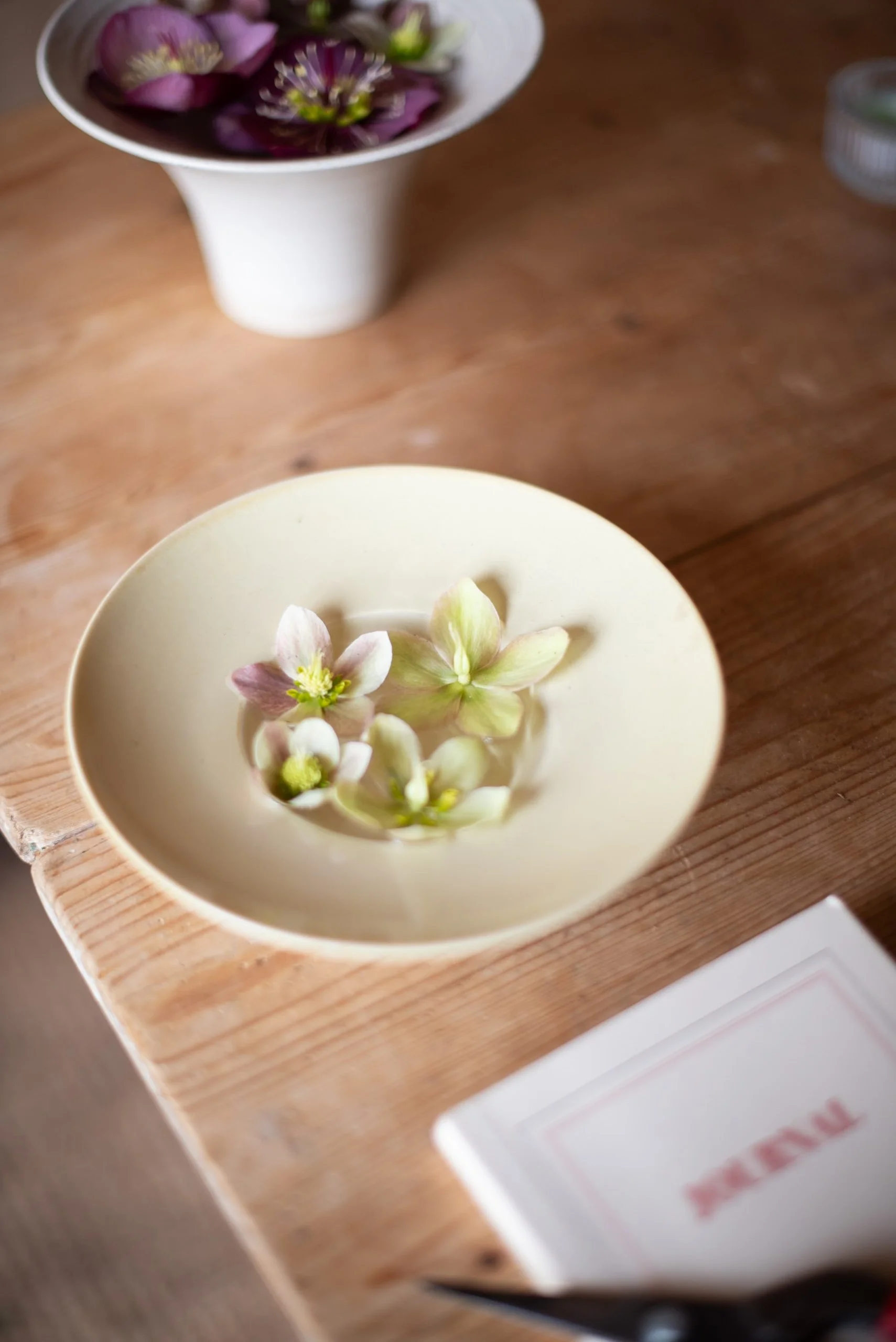
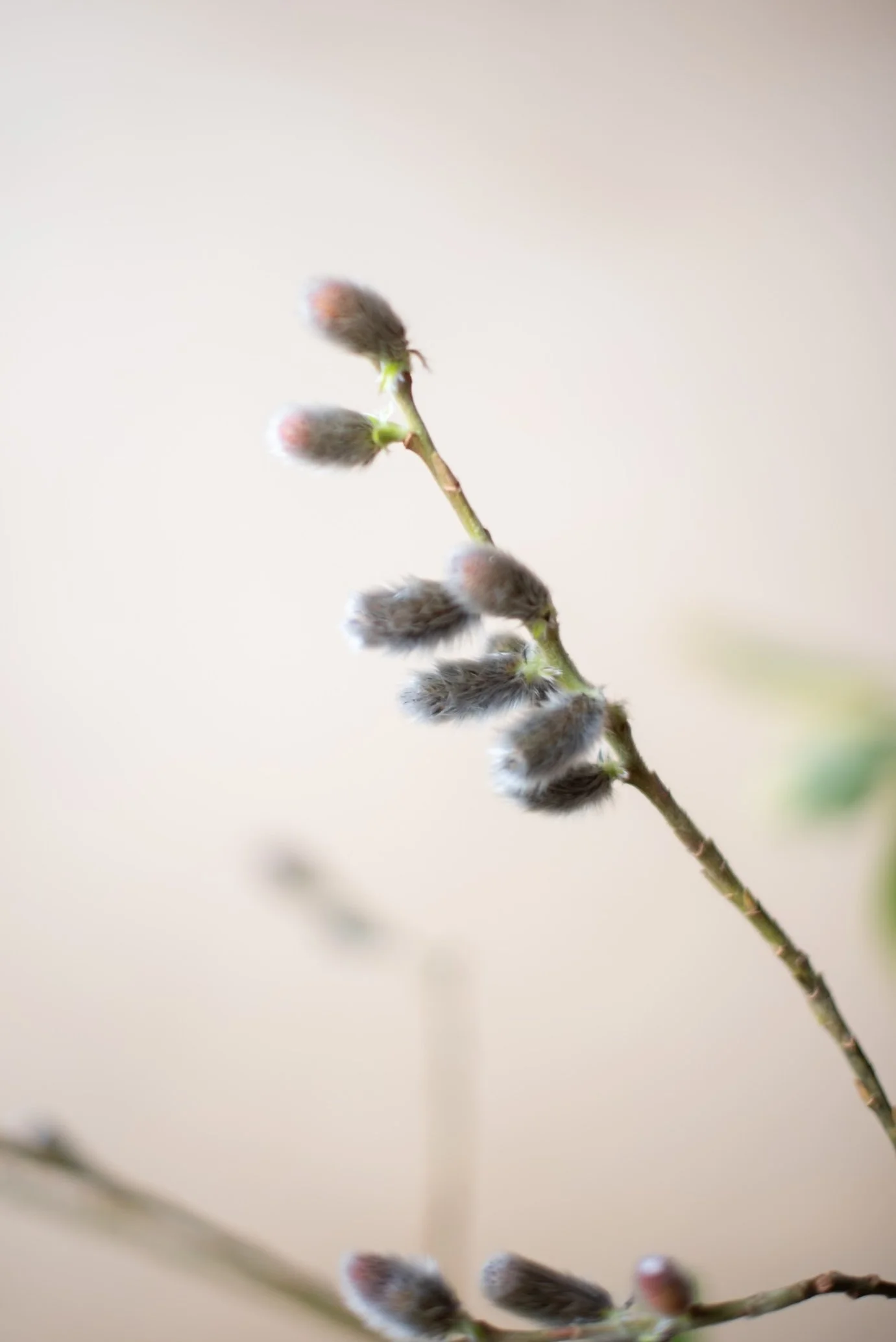
I used two varieties of willow as the foundational branches, one with soft grey catkins suffused with pink and the other black tipped with raspberry. I was really excited to get my hands on the wire-netting bush (Corokia) which is native to new Zealand and has these extraordinary interlacing wiry stems. The large Japanese spindle grows at the centre of the garden and I found the stems satisfied the urge to soften and provide gentle curves to the parameters of the arrangement. Then I couldn’t not incorporate the boxwood - Charlotte’s favourite, the variegated ‘Elegantissima’ as well as ‘Balearica’ and ‘Rosmarinifolius’. I was surprised by how lovely these were to arrange with and likewise the Italian arum, with its arrow-shaped leaves traced with pale veins, which Charlotte swears by and says is very long-lasting in arrangements.
Jess has been recently been reading Christopher Lloyd’s Foliage Plants and gave me this quote about variegated leaves from Chapter 1, with a brilliant connection drawn between the garden and the vase:
“Variegation has been popularised by the flower arranging movement which has been a notable social and (perhaps we might claim with such modesty we can muster) artistic feature of post-war Britain. Variegated leaves have contributed importantly to the range of material available to the flower arranger, who saw more to them than had been apparent to the gardener, but who has induced the gardener to take another look at them and their role in the garden. Cross-fertilisation between the arts has always been productive.”
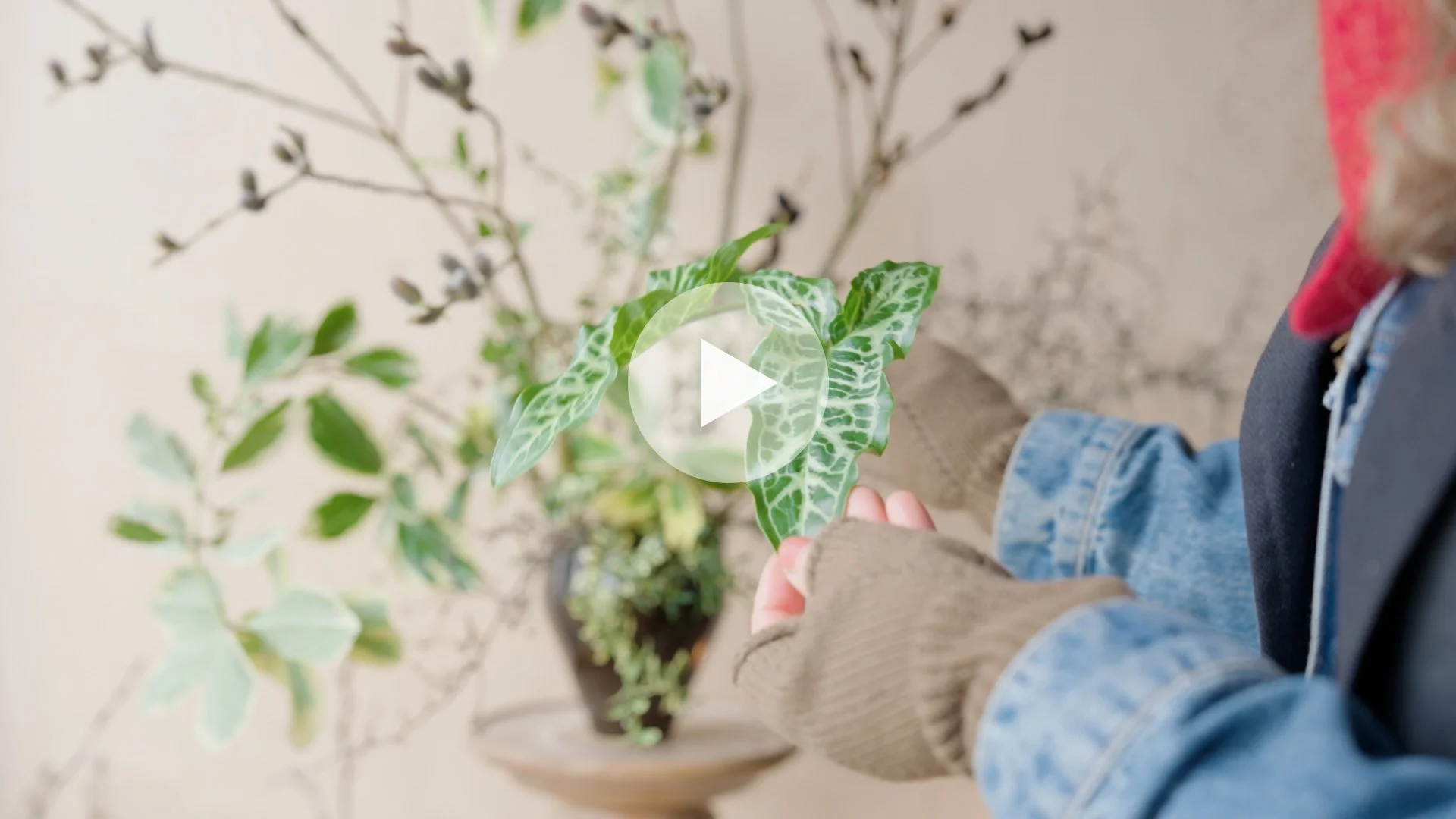
Watch the film: Join the Flowers on Film Club to watch the making of this arrangement!
BALMORAL COTTAGE
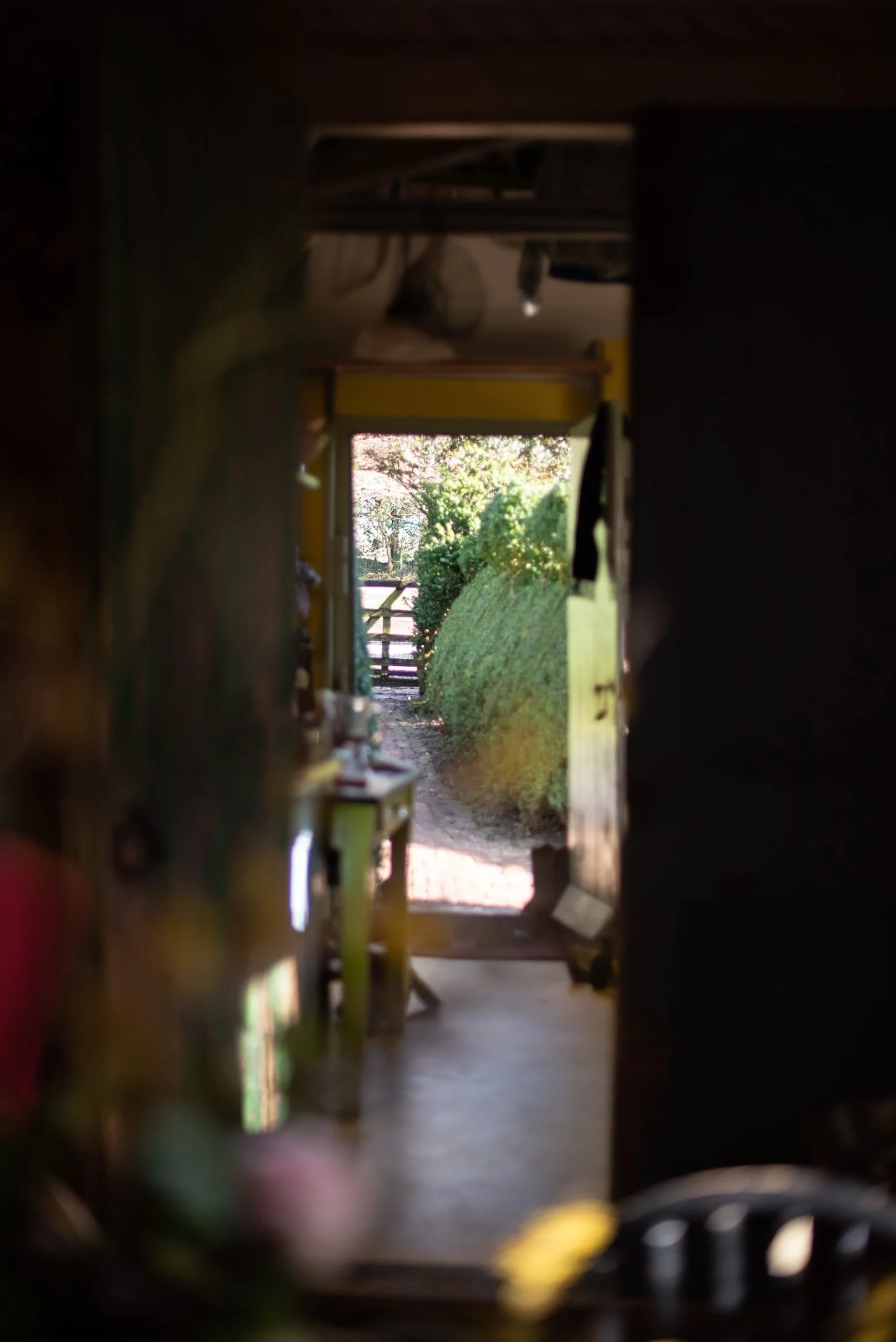
There is an almost child-like, Alice-in-Wonderland sense of enchantment about both house and garden - bohemian, artistic, romantic and deeply atmospheric. Once inside the property encloses and wraps you in a suspended wonder-state that feels very nostalgic
On Valentine’s Day we visited the garden of Charlotte and Donald Molesworth in Benenden, Kent.
We met Charlotte - artist and topiarist - last year at Sissinghurst and have often found she has come up in conversation with Johnny (who has recently joined us from Sissinghurst as our cutting garden manager) and the wonderful artist Rosie MacCurrach who also helps us out in the garden on occasion and is a great friend of Charlotte’s. It seemed that the universe was telling us to meet and when I emailed Charlotte late last year she sent a characteristically enthusiastic reply - “you must come!”
It has been wet for weeks and the ground is sodden but the day of our visit we have a rare break in the weather and blue skies, though the sun has little warmth in it and a freezing wind blows from the east.
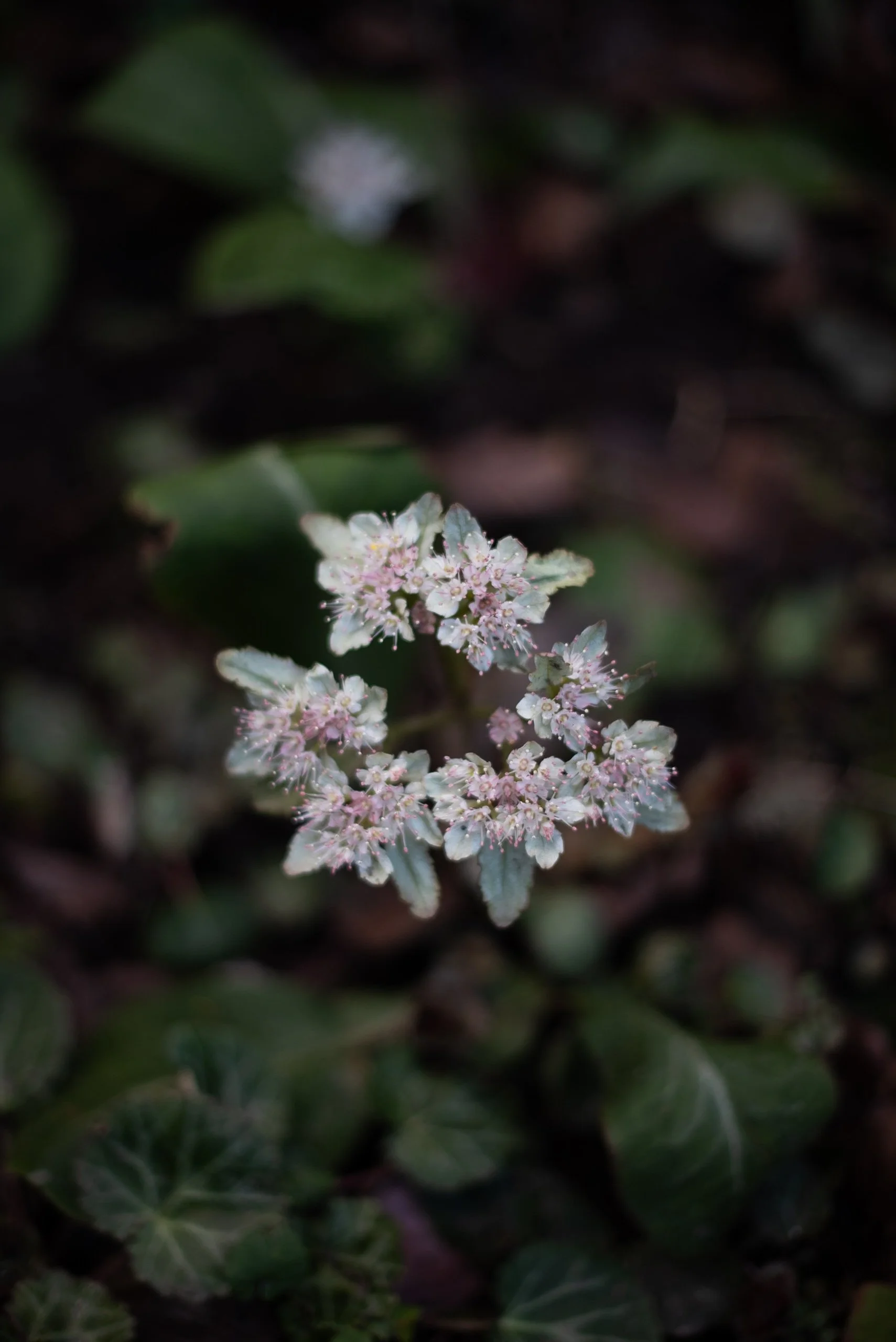
Giant golden saxifrage (Chrysosplenium macrophyllum)
The garden at Balmoral Cottage was once an orchard and part of the estate of Collingwood “Cherry” Ingram, the plant collector, gardener and authority on Japanese flowering cherry who lived in the neighbouring house, The Grange. (If you’re interested in adding to your reading list, Jess highly recommends Naoko Abe’s 2019 book ‘Cherry Ingram’: The Man Who Saved Japan's Blossoms). Charlotte and Donald bought the dilapidated cottage in 1983 and have spent the last forty years living, creating and loving in this place.
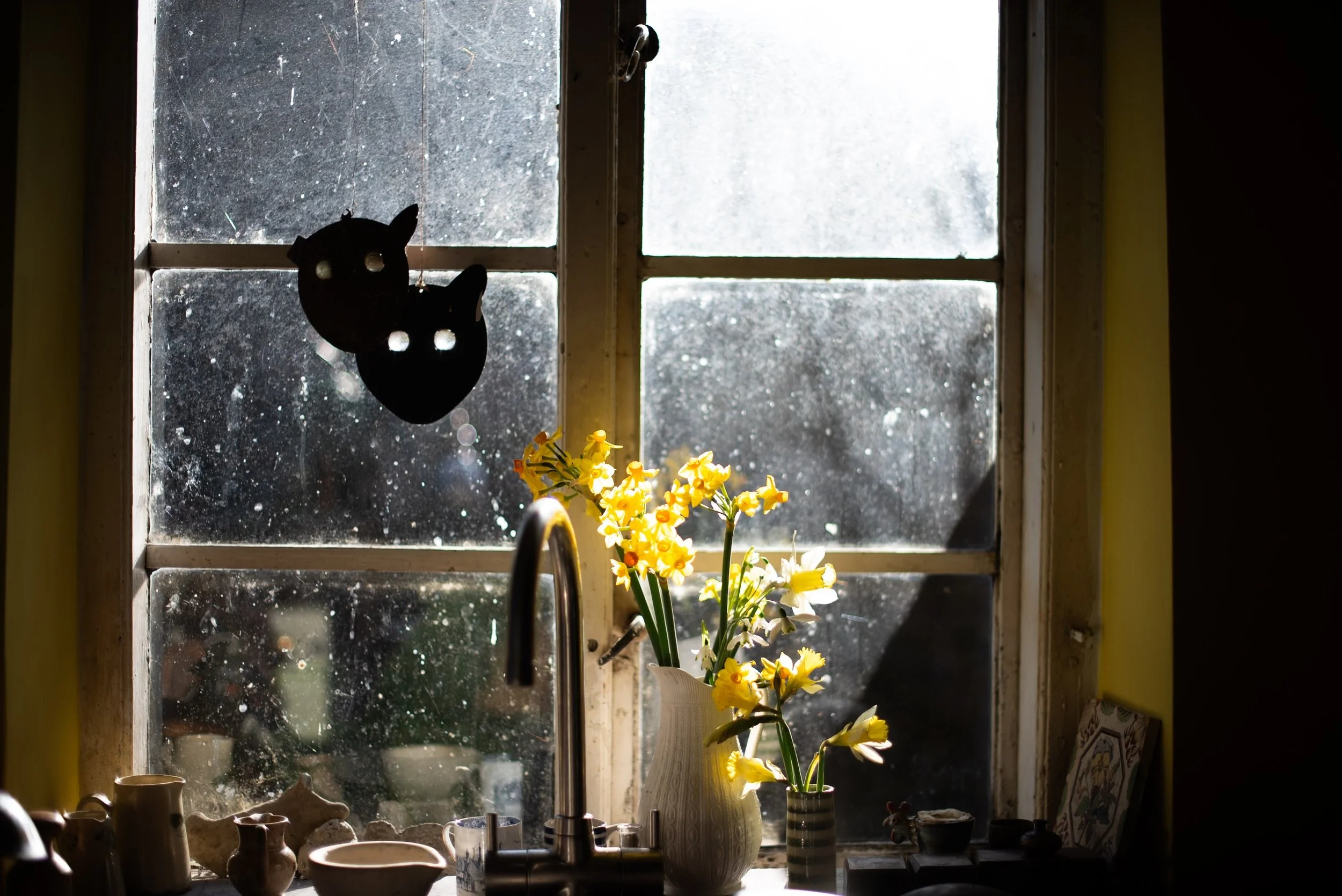
There is an almost child-like, Alice-in-Wonderland sense of enchantment about both house and garden - bohemian, artistic, romantic and deeply atmospheric. Once inside the property encloses and wraps you in a suspended wonder-state that feels very nostalgic, bringing up those feelings of being a child beginning to venture into the natural world. Jess and I had a mostly rural and outdoorsy childhood in the beautiful Woodford Valley in Wiltshire - forever making dens, wading up chalk streams and trapping poor unsuspecting wild animals including rabbits and pheasants, trying to make them our pets (in addition to many domesticated dogs, cats, chickens, rabbits and guinea pigs), usually unsuccessfully. This felt like a home from home.
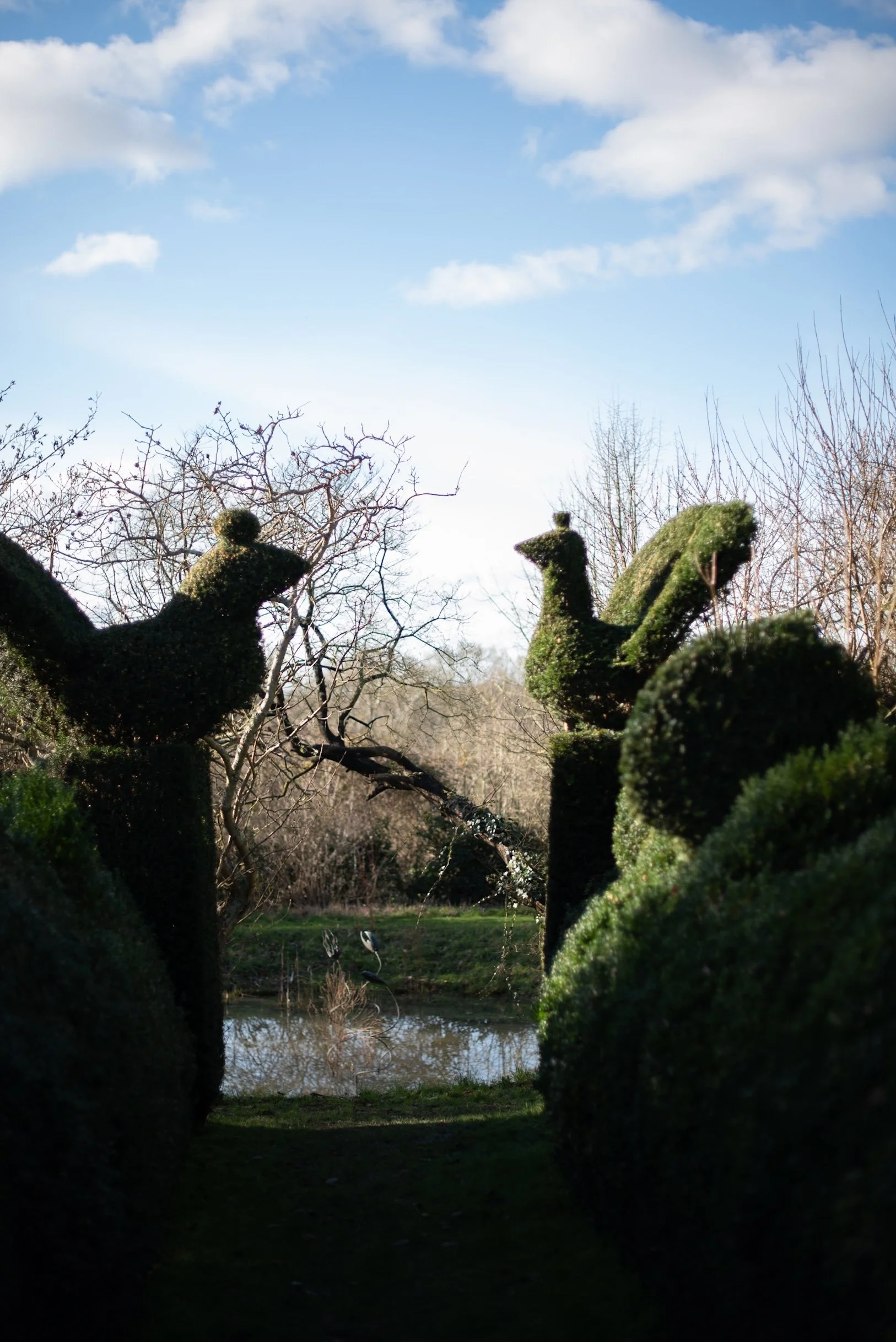
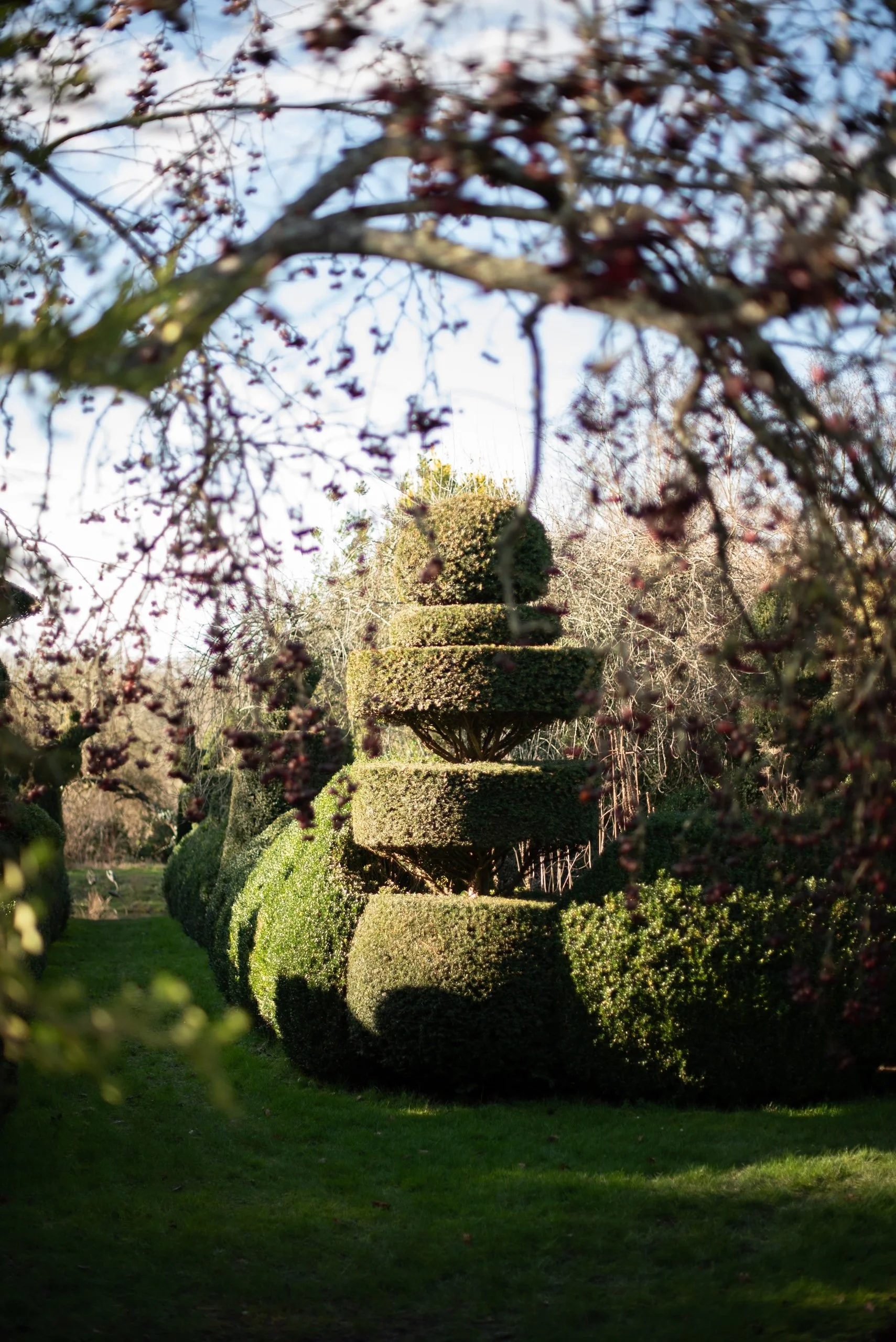
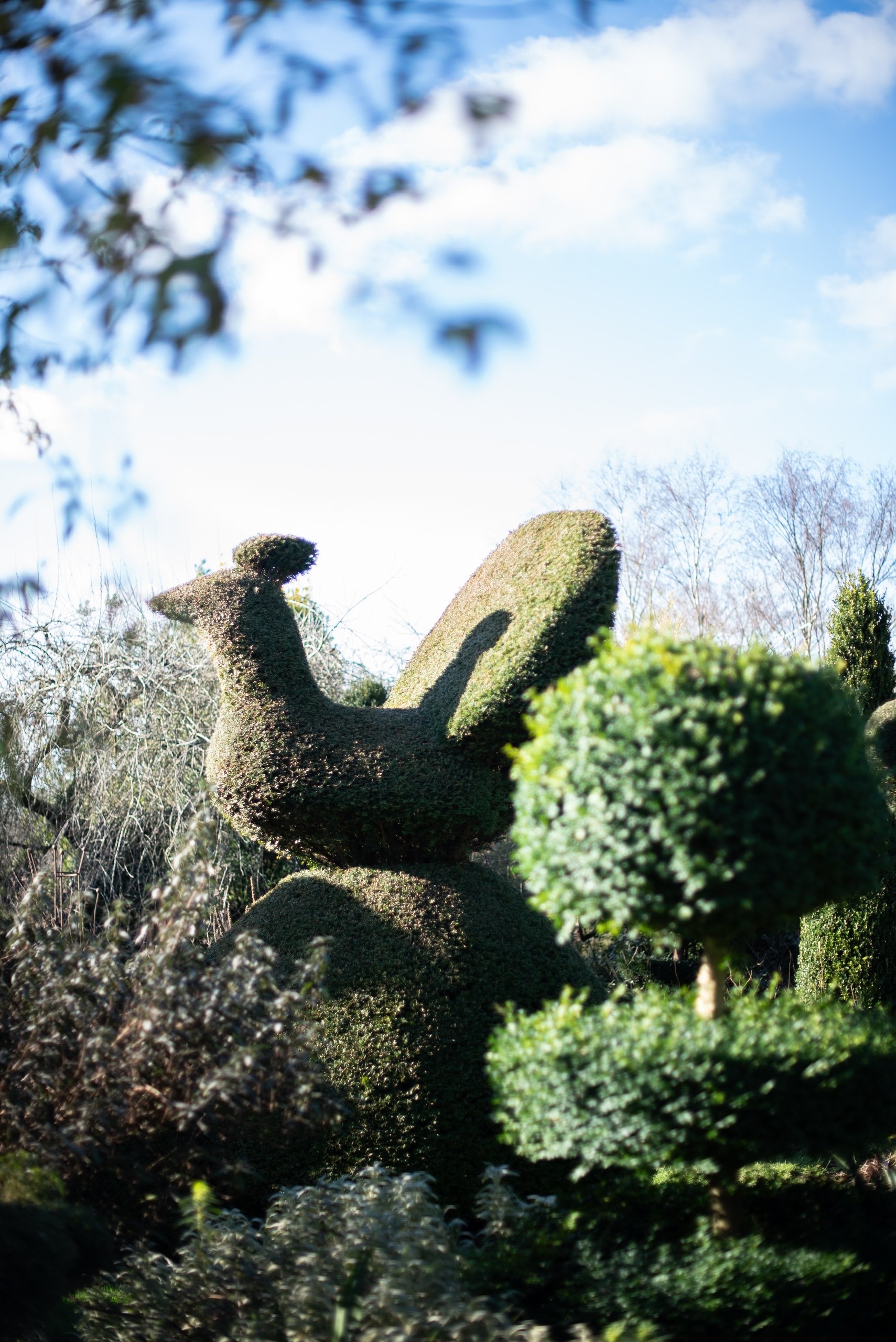
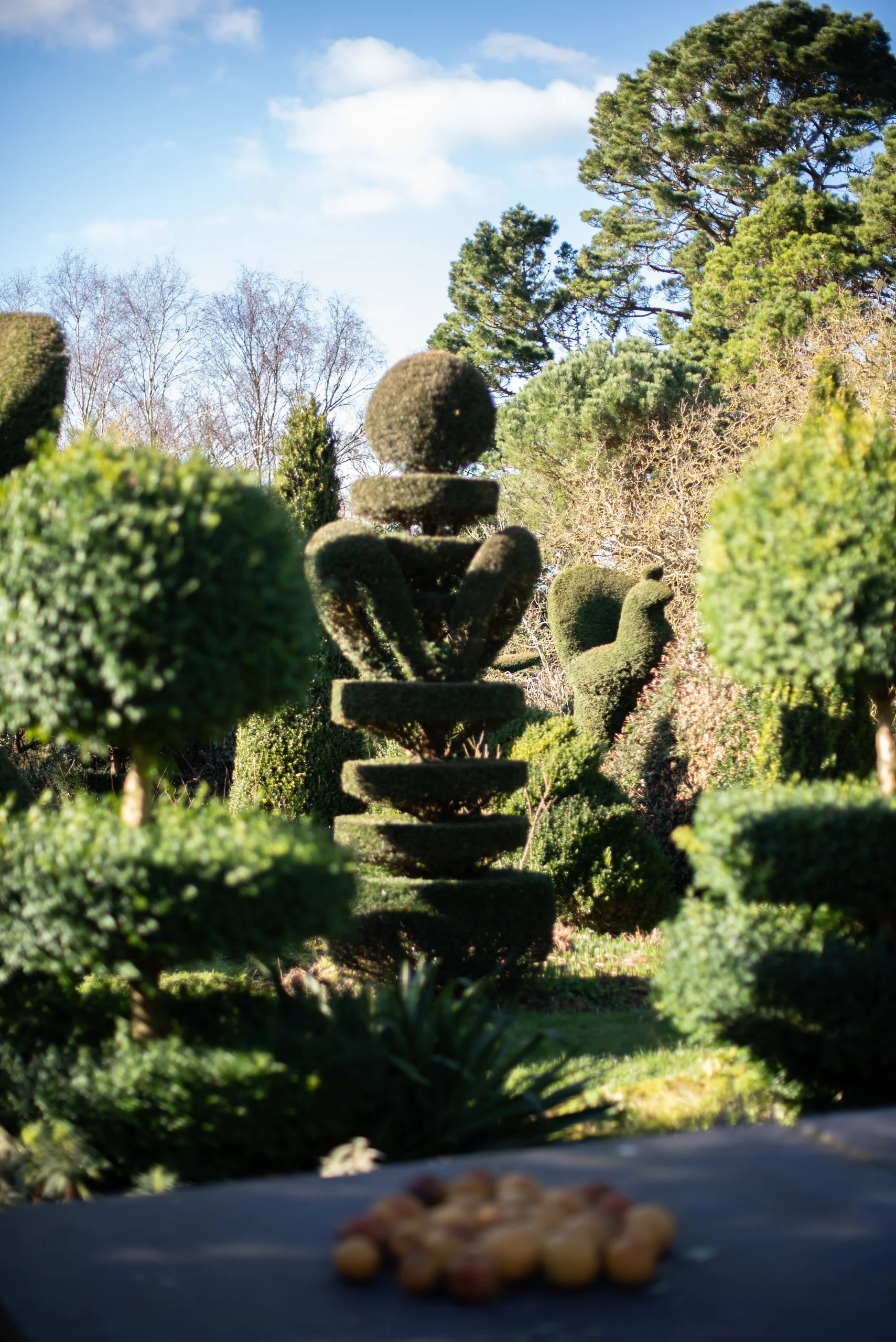
The garden of Balmoral Cottage was built from nothing, but on good soil, predominantly planted from cuttings Charlotte and Donald propagated and nurtured by hand. The yew hedges were saplings given to the couple as wedding presents and as we walk around they point out many different varieties that were traded or given to them by friends. Charlotte is passionate about box topiary and gives us a tour of her collection - Buxus ‘Elegantissima’, Bowles’s Blue’, 'Latifolia Maculata'. There are columns, birds, chess pieces, coiling tiers and wavy, undulating hedges, all carved from her beloved Japanese ladders using sticks and strong twine (no metal wire).
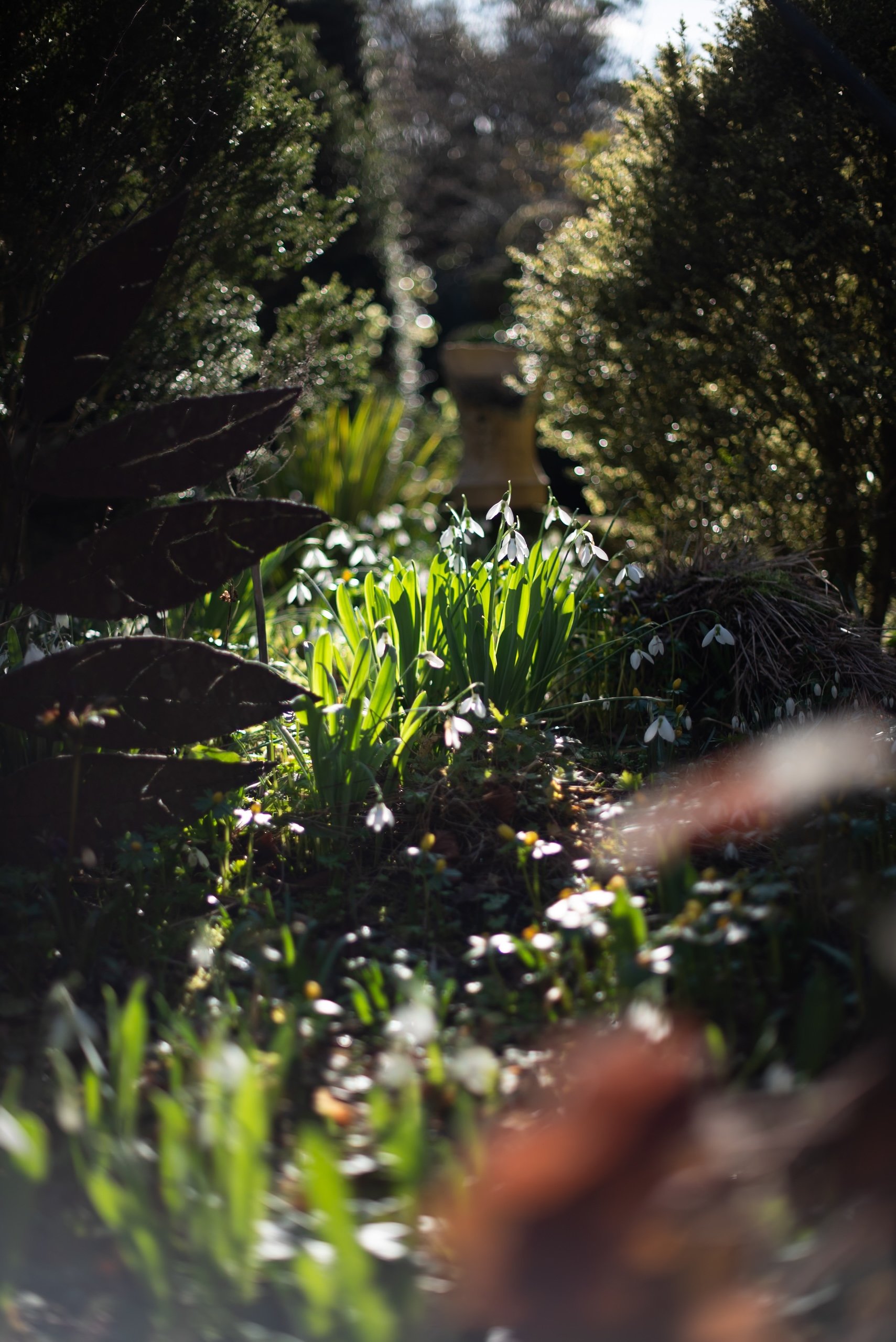
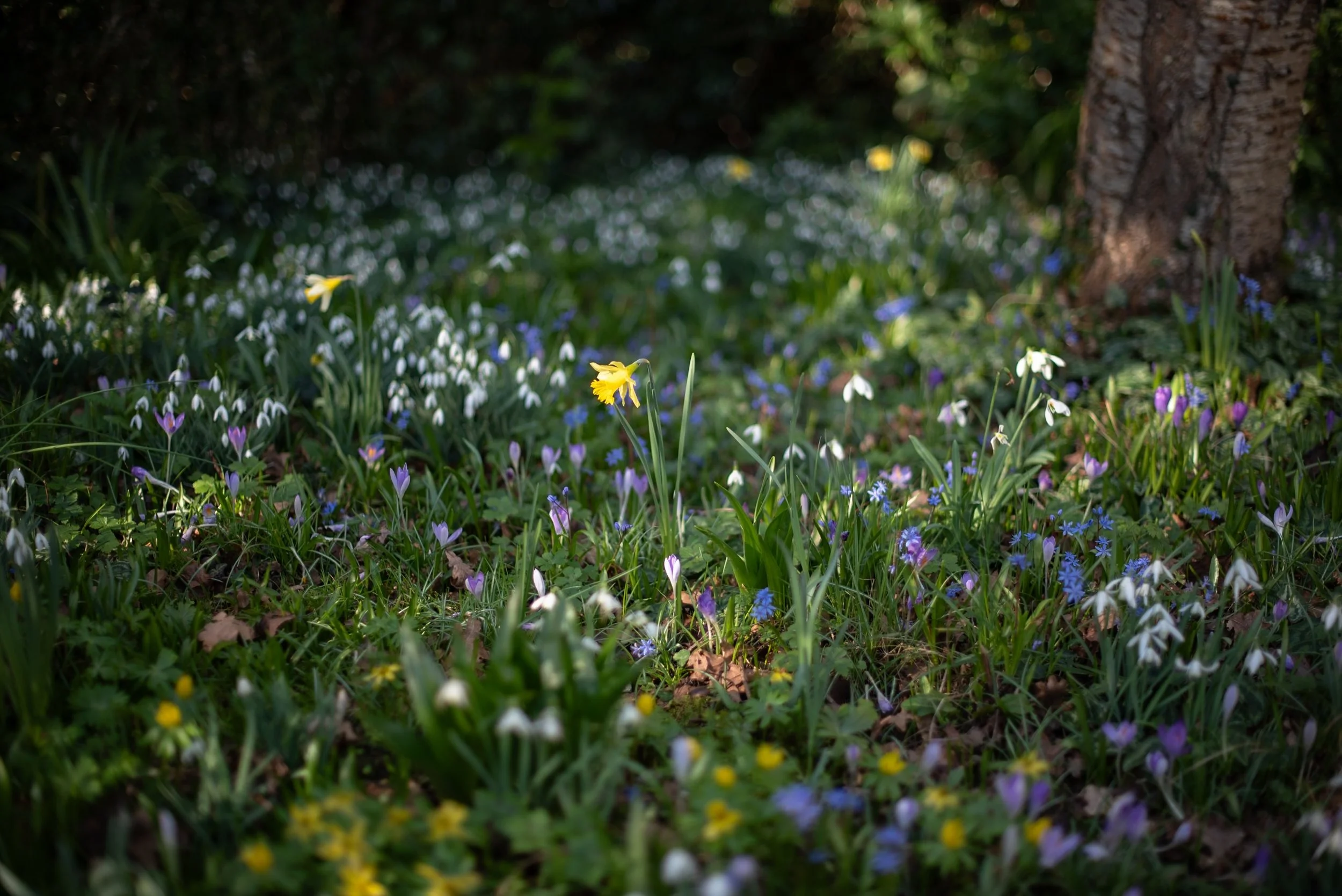
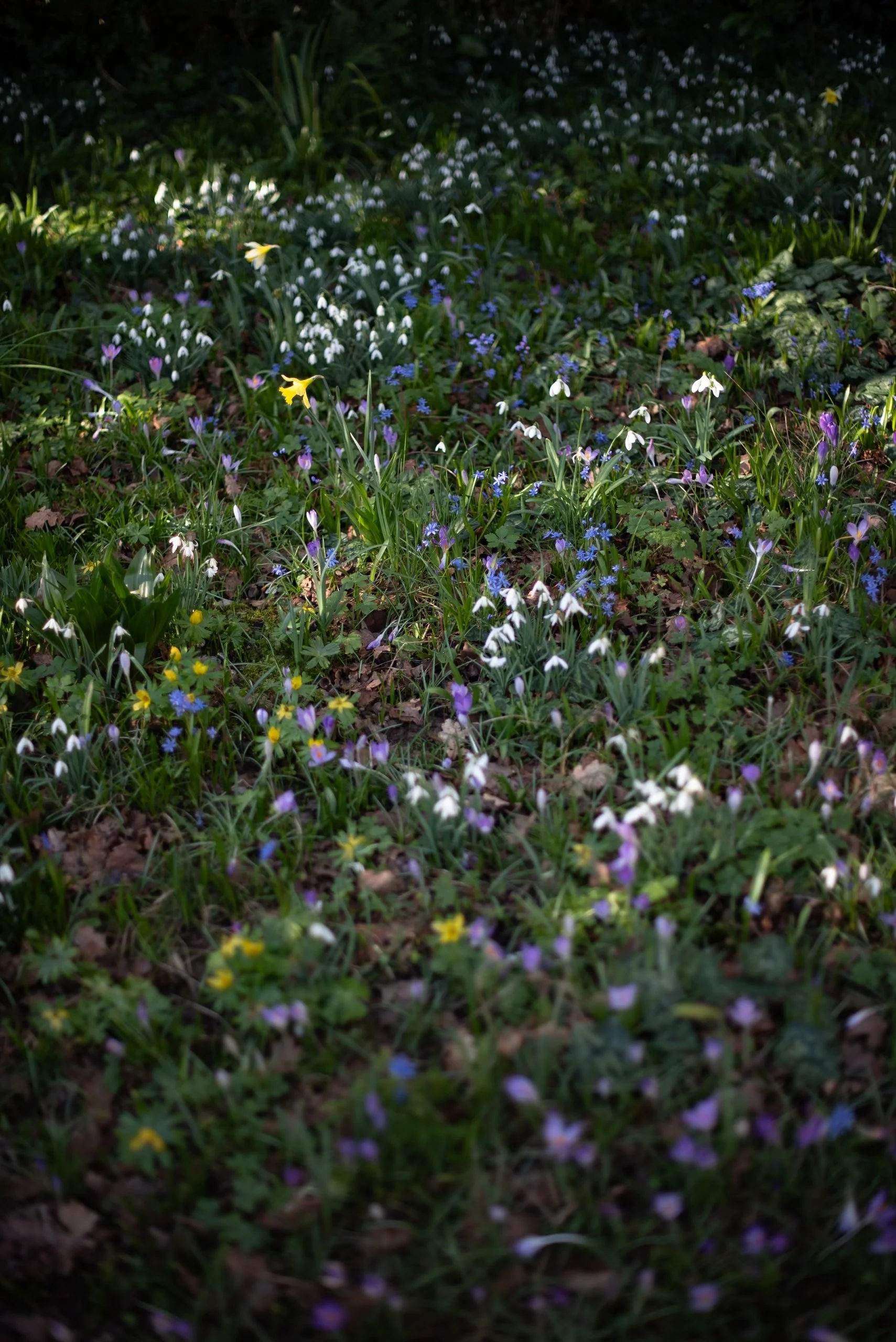
In late winter the garden has a monochrome effect, but there are little specks of colour, daubs of violet (Cyclamen repandum), lilac (Crocus tomassinianus), blue Spanish squill (Hyacinthoides hispanica) yellow aconites (Eranthis Hyemalis), the palest pink giant saxiframe (Chrysoplenium macrophyllum) from nearby Great Dixter, and, being enthusiastic galanthophiles, many exquisite and rare varieties of snowdrop. Spherical red fruits hang from drooping branches of Malus ‘Red Sentinel’; in spring the blossom of the giant Chinese crabapple (Malus hupehensis) must be a sight to see above waving drifts of jonquil Narcissi. Along the boundary of Ingram’s gardens Monterey pine trees act as a wind break and there are many other beautiful trees - fig, contorted nut, Japanese willow (Salix hukaoana), the slender purple willow (Salix purpurea ‘Nancy Saunders’,) the black willow (Salix nigra).
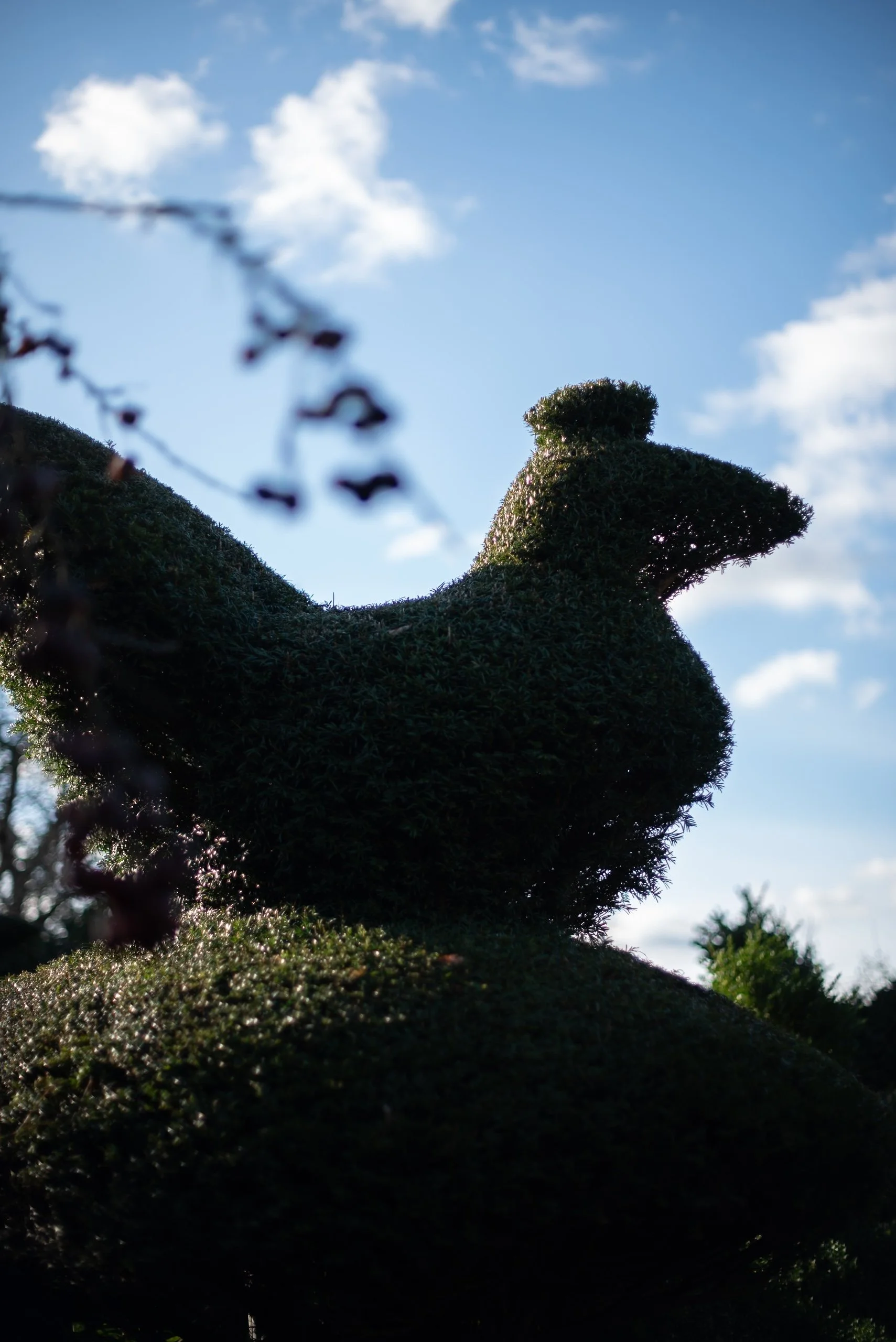
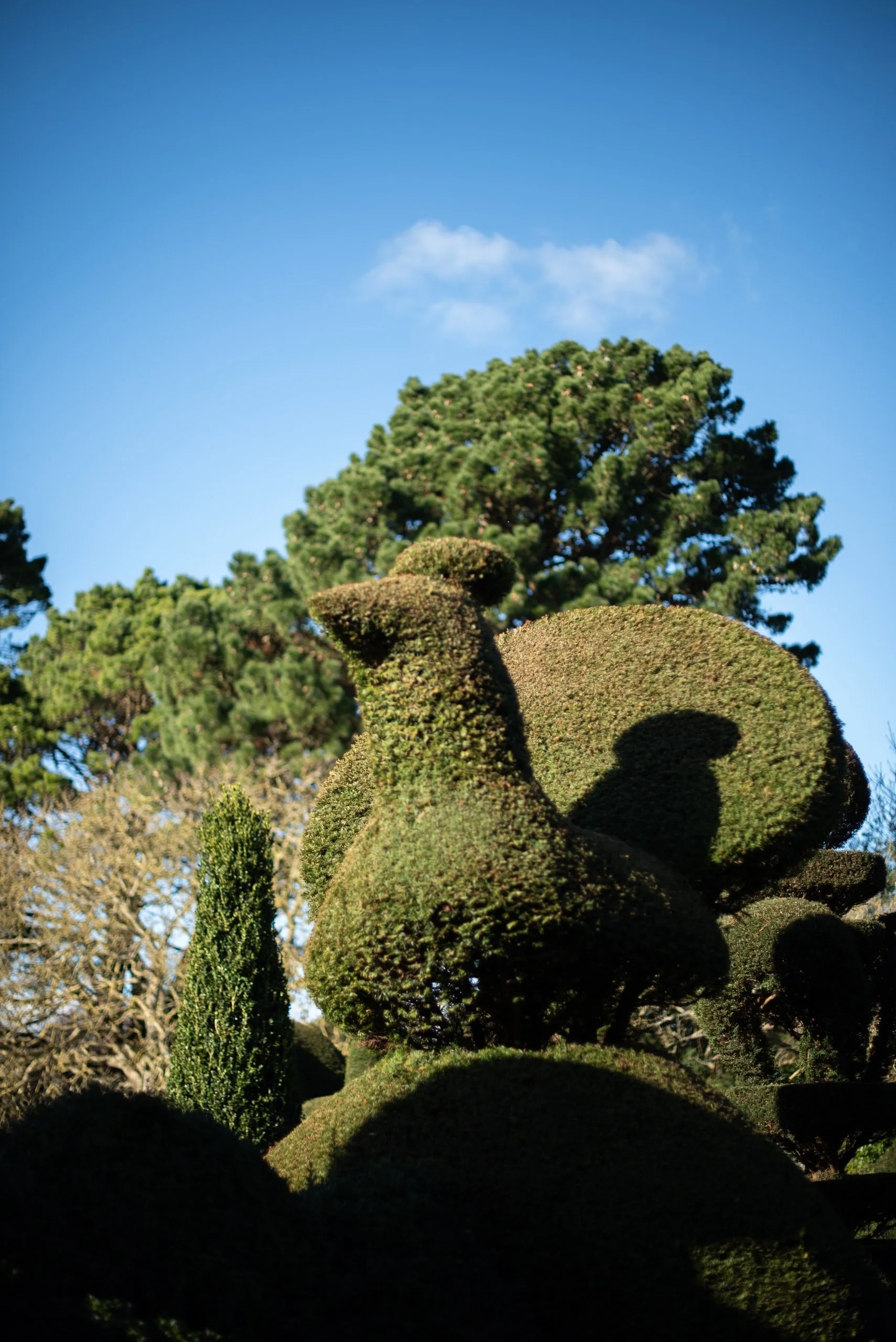
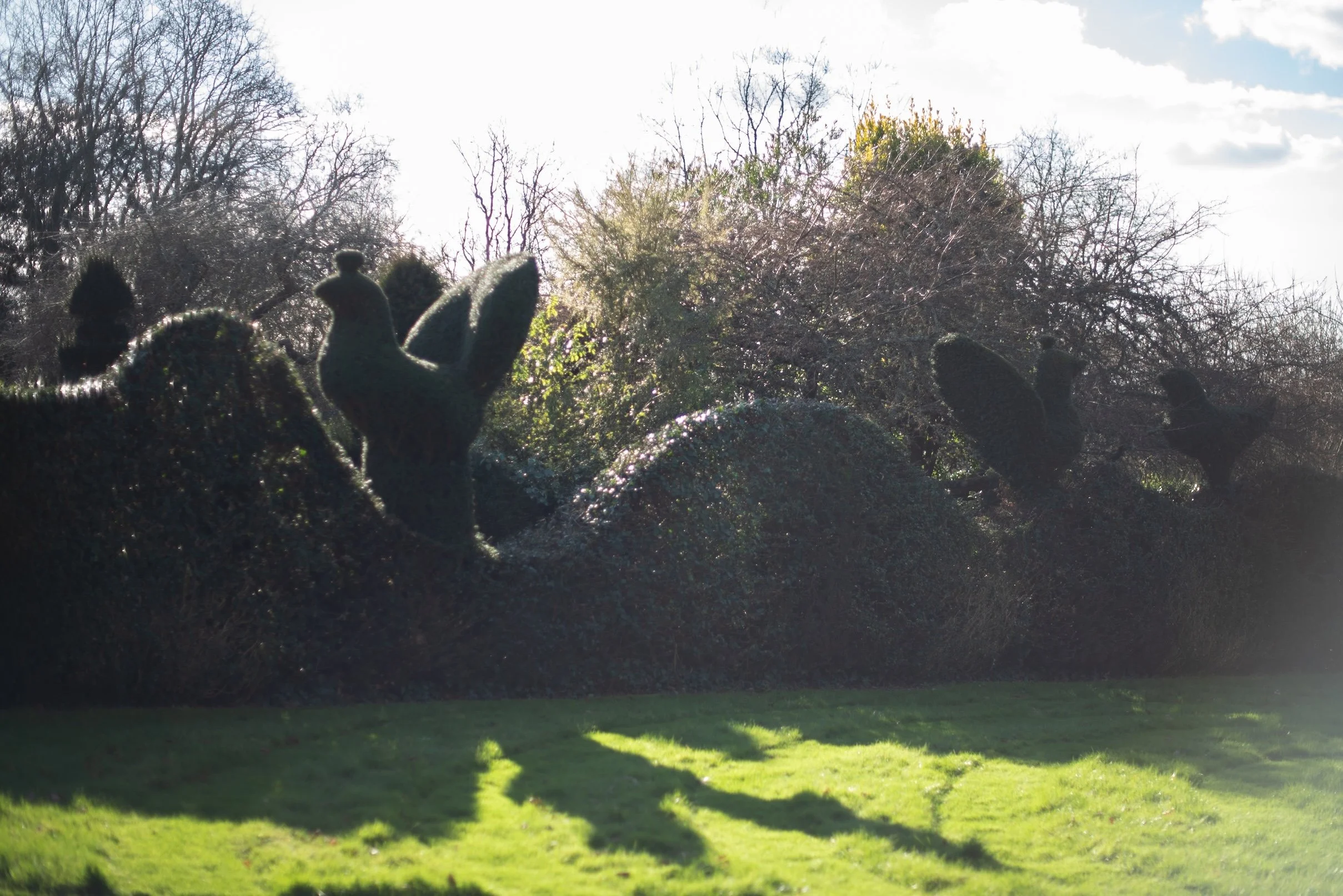
As we walk and talk (Charlotte energetically diving in and out of the beds to dig up and divide plants for us to take home) I am reminded, as is so often the case when in conversation with plantspeople, how much depth and history and life there is creating and caring for a garden. There are layers and layers of stories - the pond that was dug by friends, also as a wedding present, the spitfire that went down across the road in World War Two, the saga of the lacebark elm (Almus parvifolia). When Charlotte’s spade narrowly misses a mandrake Donald tells us there is a legend in folklore that says that when a mandrake root is pulled from the ground it will emit a scream so terrible it was thought to cause death or madness to anyone who heard it.
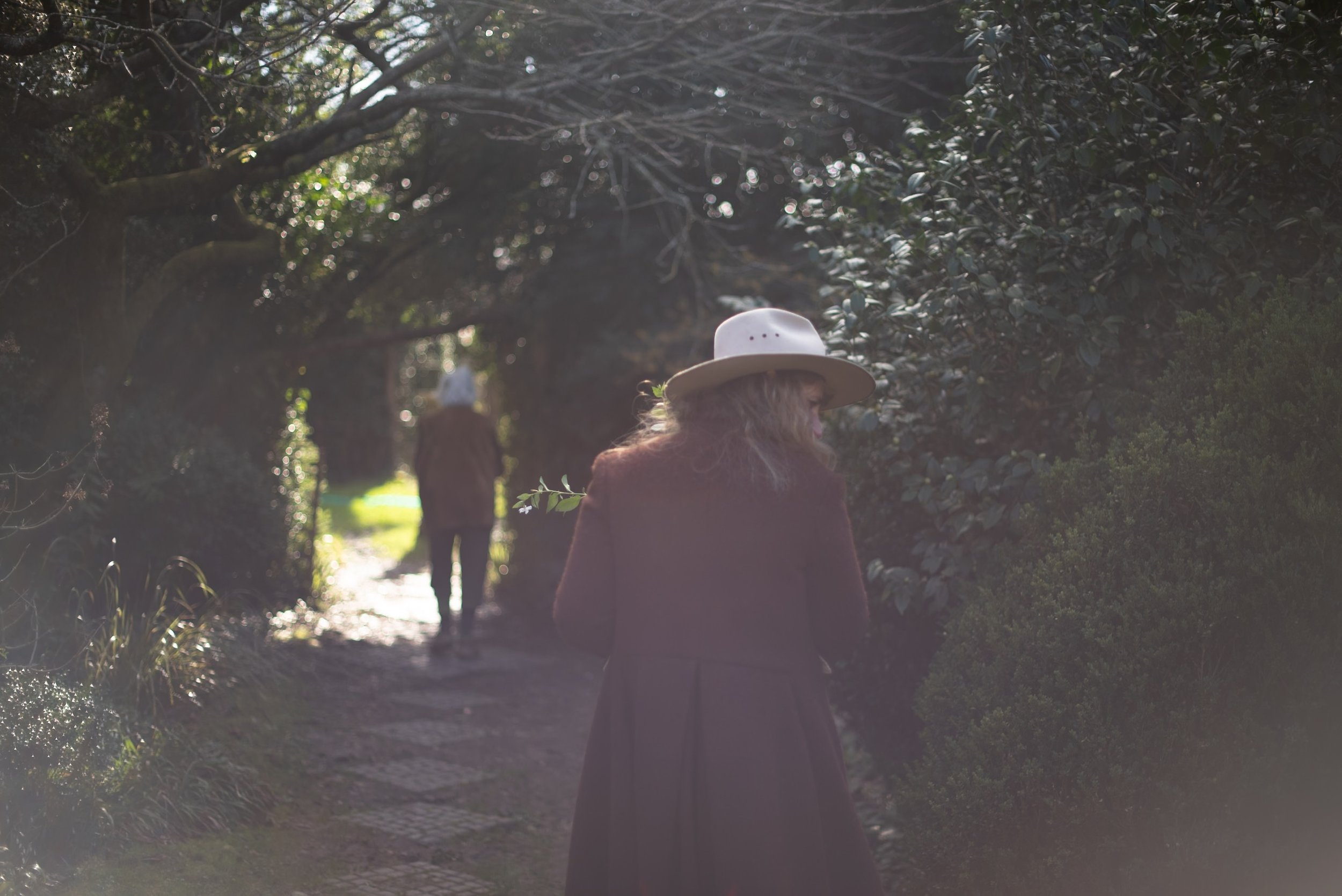
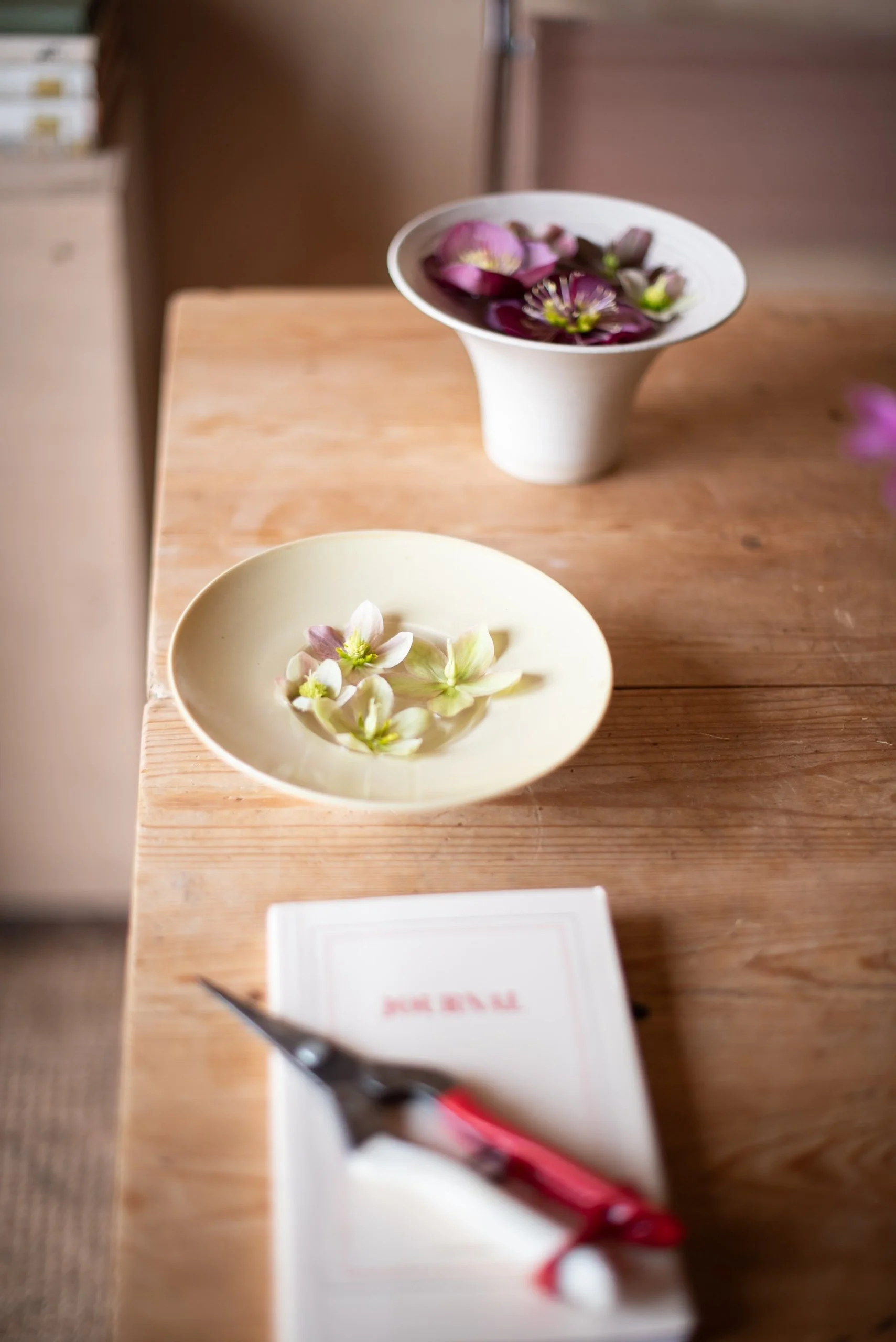
Next week we’ll be sharing the arrangement I made with Charlotte’s cuttings, a composition entirely made up of foliage, leaves and branches and one I found so satisfying and refreshing to make.
In the meantime Johnny is rehoming some of the plants the Molesworths generously gifted us in the damp soil of Hampshire this week. I’m looking forward to seeing them there in the months and years to come. No doubt they will remind us of that day in Kent, of feeding sorrel leaves to the sheep (Grace and Ted) and drinking coffee in slanting sunlight that held the promise of spring.
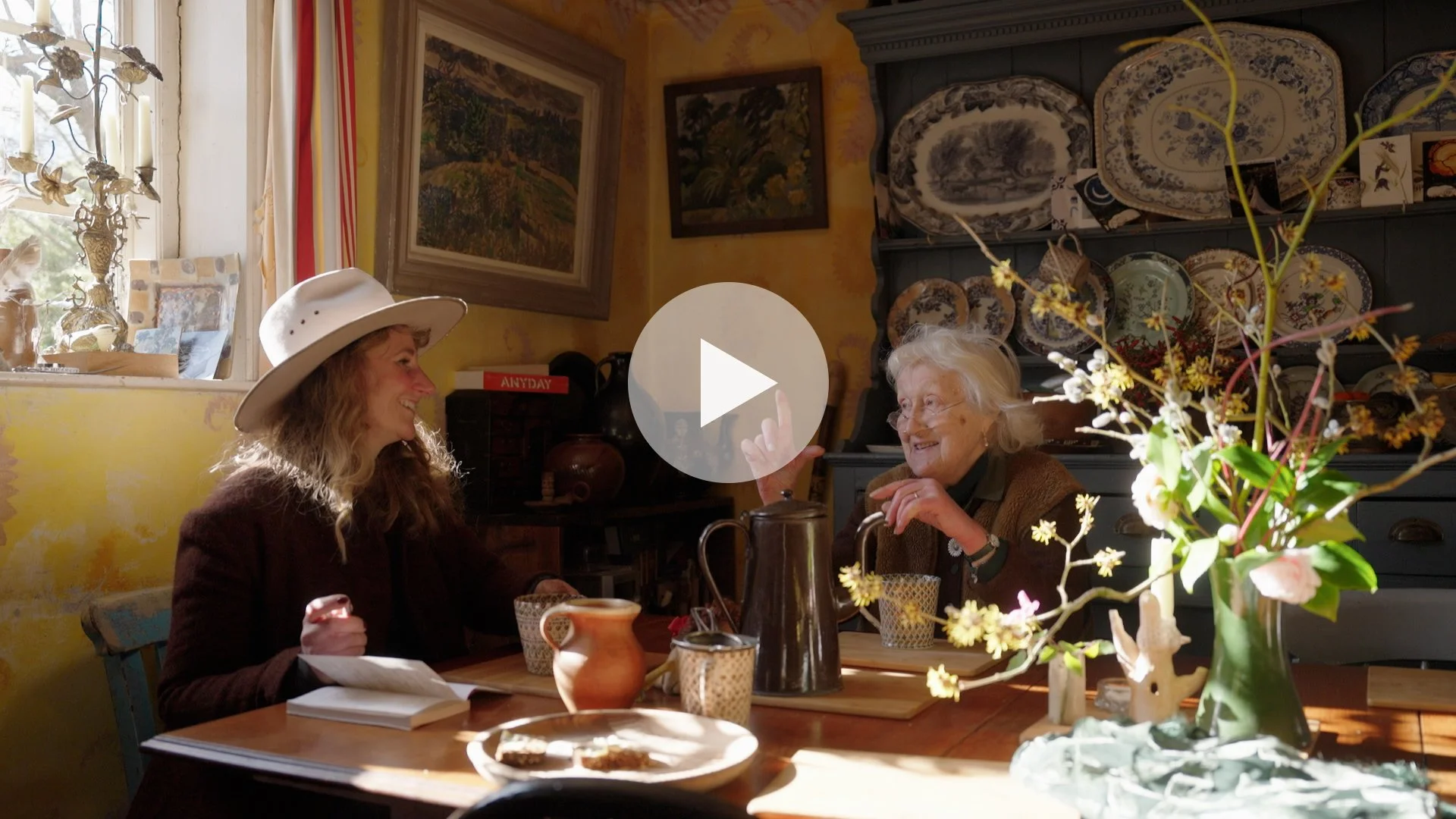
Flowers on Film Club: This week’s film features a tour of Charlotte and Donald’s magical garden.
A POTTED HISTORY
In 2025 AESME STUDIO turned ten. Over the years we have been devoting ourselves more and more to our roles as educators, hosting workshops at our London studio as well as retreats around the UK and abroad. In 2026 a new chapter begins with the AESME SCHOOL OF FLOWERS.
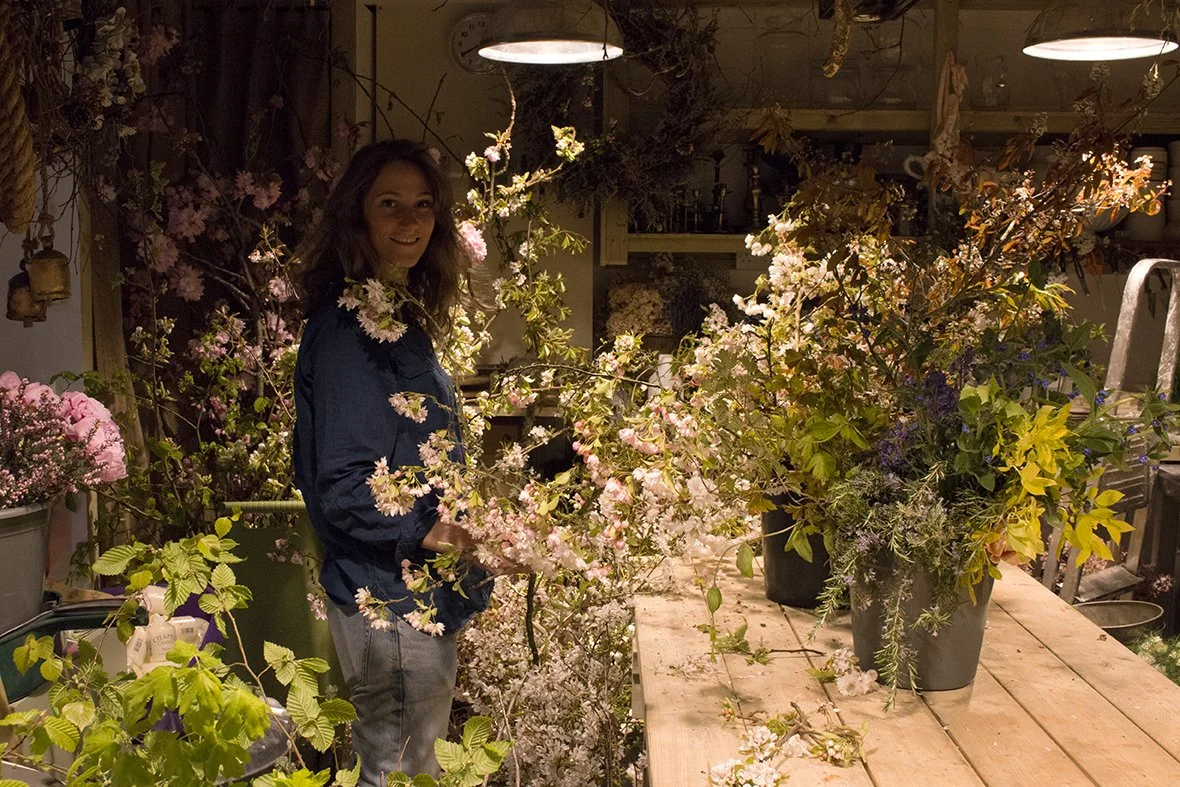
My sister and I started AESME STUDIO in 2015. Like many small flower businesses we felt our way into the industry by doing a little of everything - delivering bouquets, decorating shop windows, making arrangements for photoshoots, creating designs for weddings and parties. We cut our teeth, learning to do everything from driving vans to designing a website, managing a team to planning a cutting garden layout and growing and conditioning flowers. We practised rigorously and read every book about flowers we could get our hands on. After years of working in offices we relished the freedom and excitement of creating our own little world. Going above and beyond became the modus operandi in order to carve out a name and reputation for our fledgling business. At some point during the first couple of years we were asked whether we offered classes. And we said “yes, yes we do!”
Then quite literally operating as a kitchen table business, we will be forever grateful to those first intrepid souls who turned up at our London flats - convinced enough by our early blog and Instagram posts - and enthusiastically made arrangements with us as we tentatively explored new and rather unexpected roles as teachers.

2016. Image by Katy Lawrence

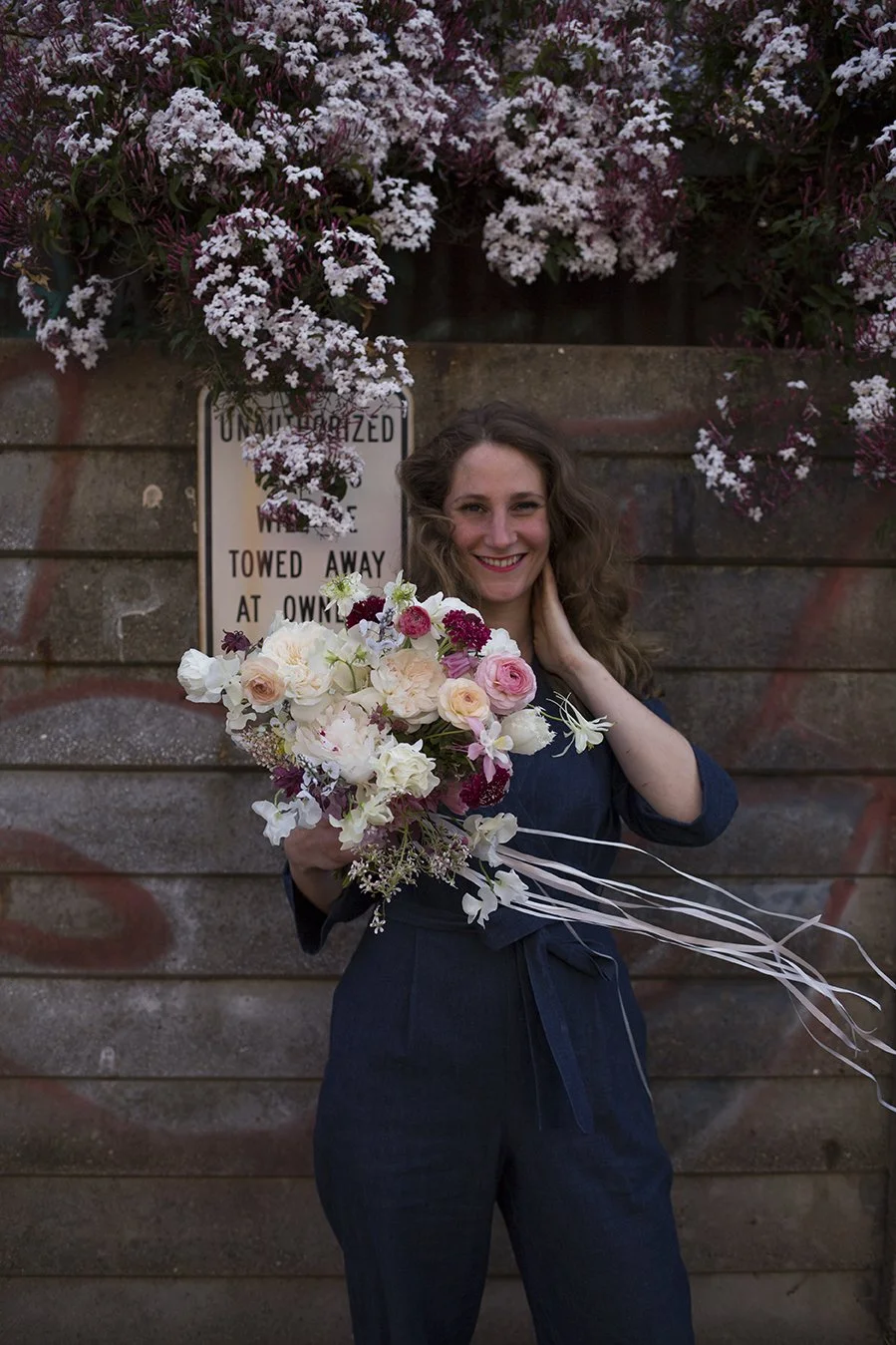
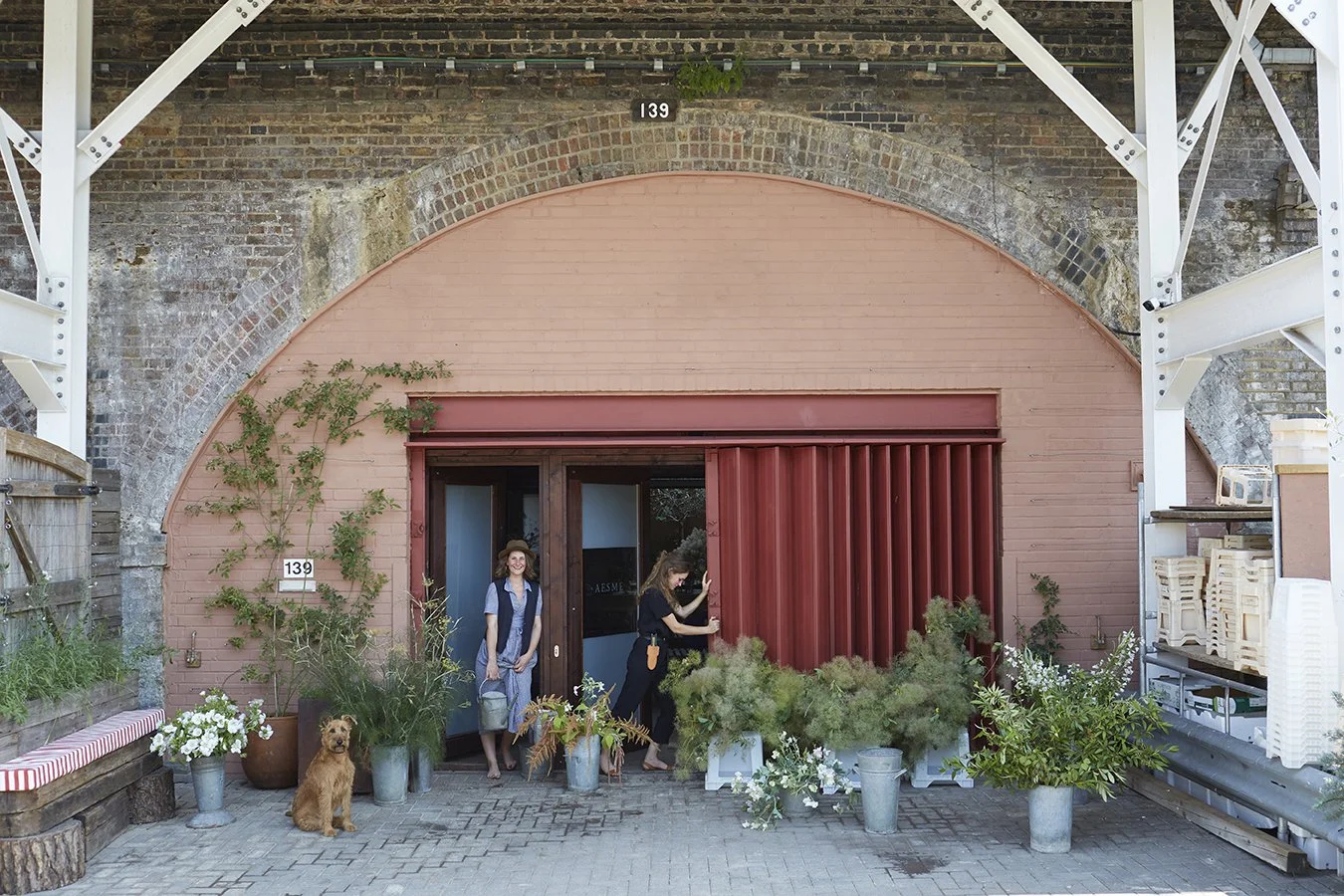
In 2017 we took over the lease on a dilapidated Victorian railway arch just north of Shepherd’s Bush Market in west London. Straight away we revelled in creating an environment and full ‘experience’ for students, especially somewhere as surprising as it was, with all the noise and concrete and the aromas of Ethiopian stew or cardamom coffee from the stalls drifting across the road. We had visitors from day one - before we were ready, before the paint was dry and there was still scaffolding up. I don’t think we even had any chairs at that point. It felt incredibly rewarding and validating: the slightly apprehensive faces tentatively coming down the little alleyway from the station, how people’s eyes would light up as they came through the door and saw the flowers, the way they’d deeply inhale the smoky smell of incense mingling with garden roses.
2018. Pushing back the concertina doors of the studio on a summer morning in Shepherd’s Bush. Image by Kristin Perers
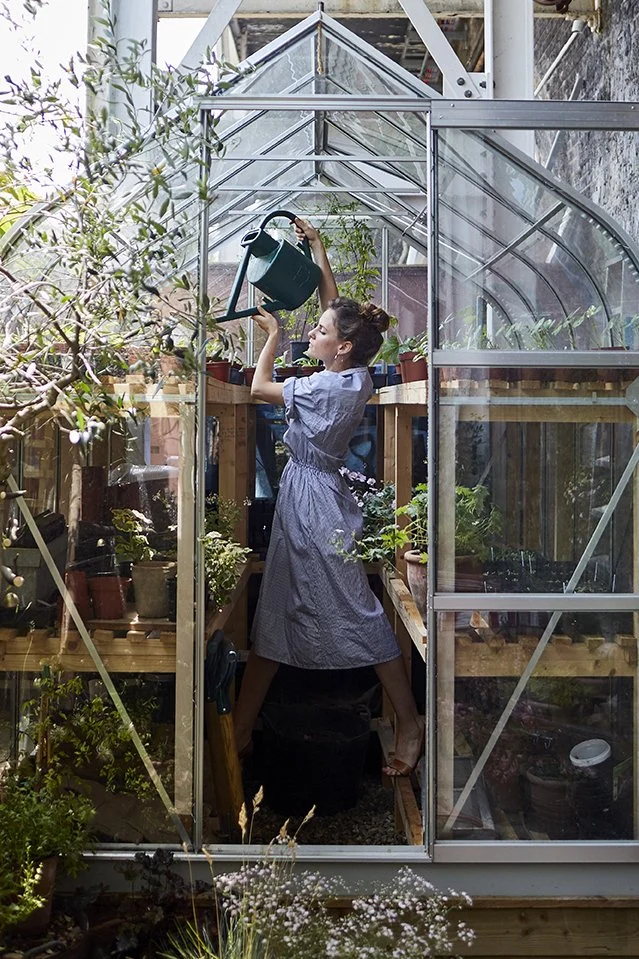
The first seedlings were grown in a greenhouse in the small back garden under the station platform above. Image by Kristin Perers
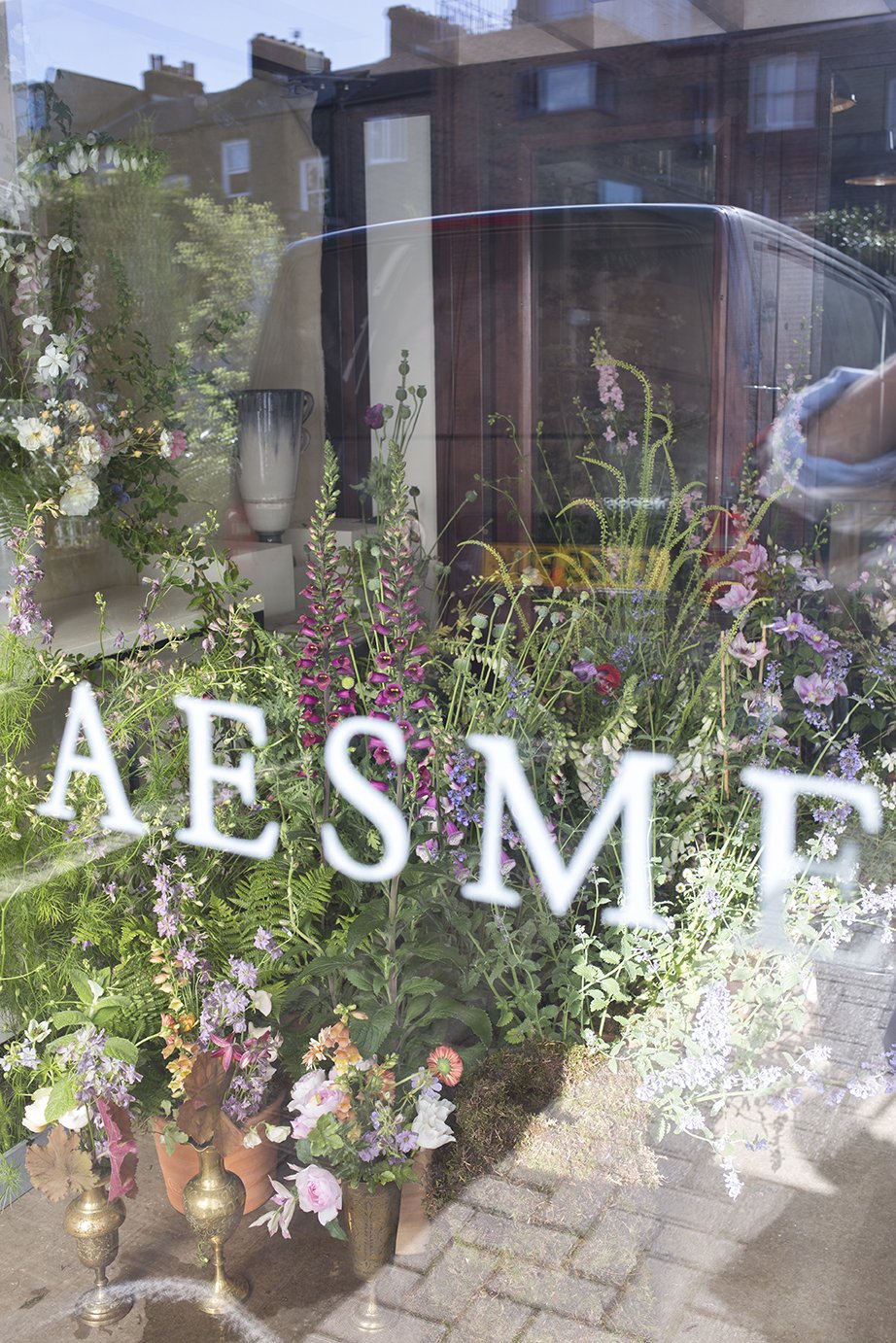
A summer spread from the garden with towering Digitalis x valinii ‘Foxlight Plum Gold’
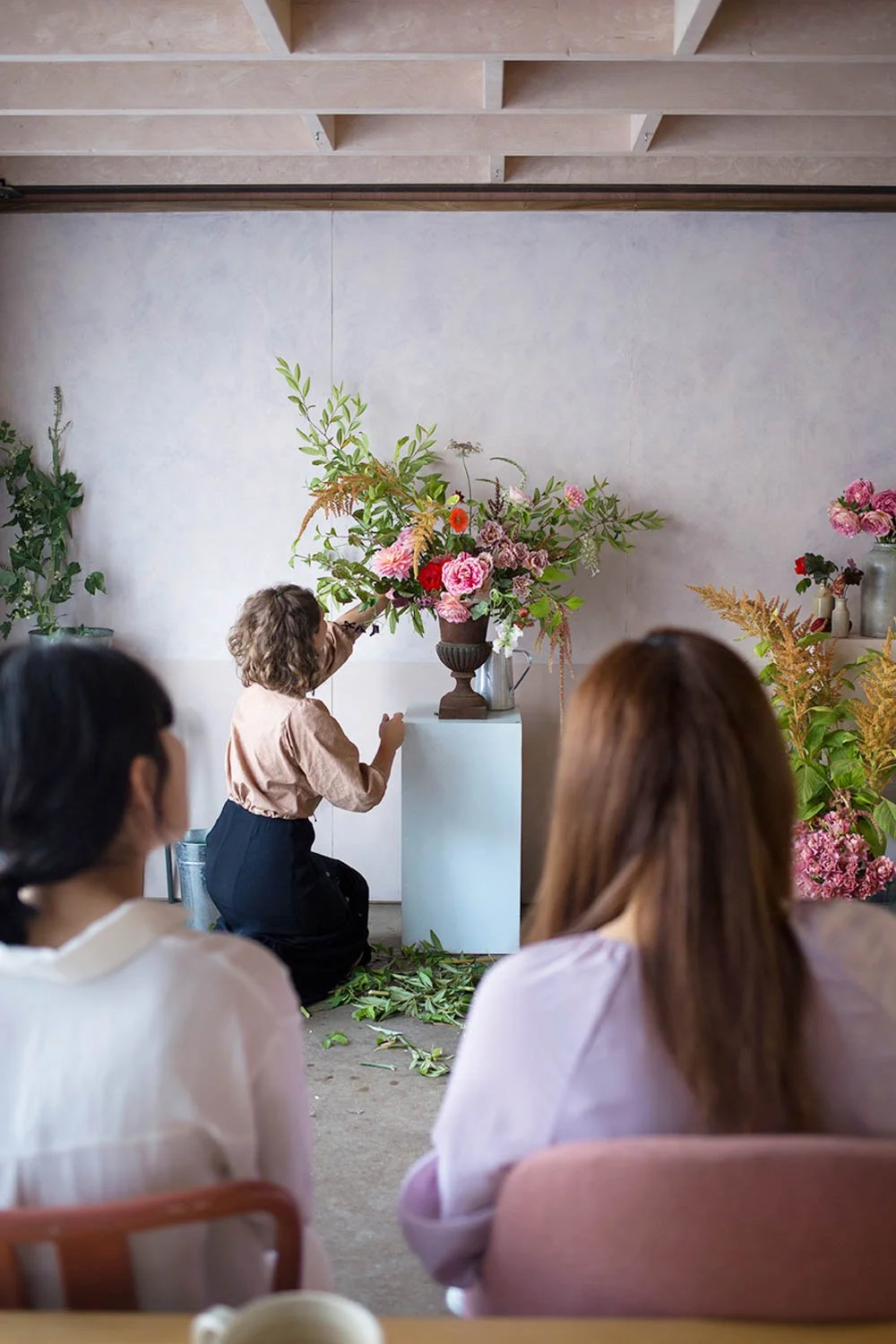
I distinctly remember the initially daunting experiences of teaching larger groups - twenty eyes expectantly watching the demonstration from across the room! It mattered a great deal to us from the start that every visitor left feeling full to the brim with ideas and information. We were by that point three years into developing a cutting garden a few hours west in the Hampshire countryside, now in a position to share with our students modest harvests of own-grown produce. As ever it was the materials that made everything make sense. THIS was what it was all about! Making a connection between plants and people, sharing our new found knowledge with those hungry for it - the names of each plant, how we had grown them, how it was possible to arrange them at different times of the year…
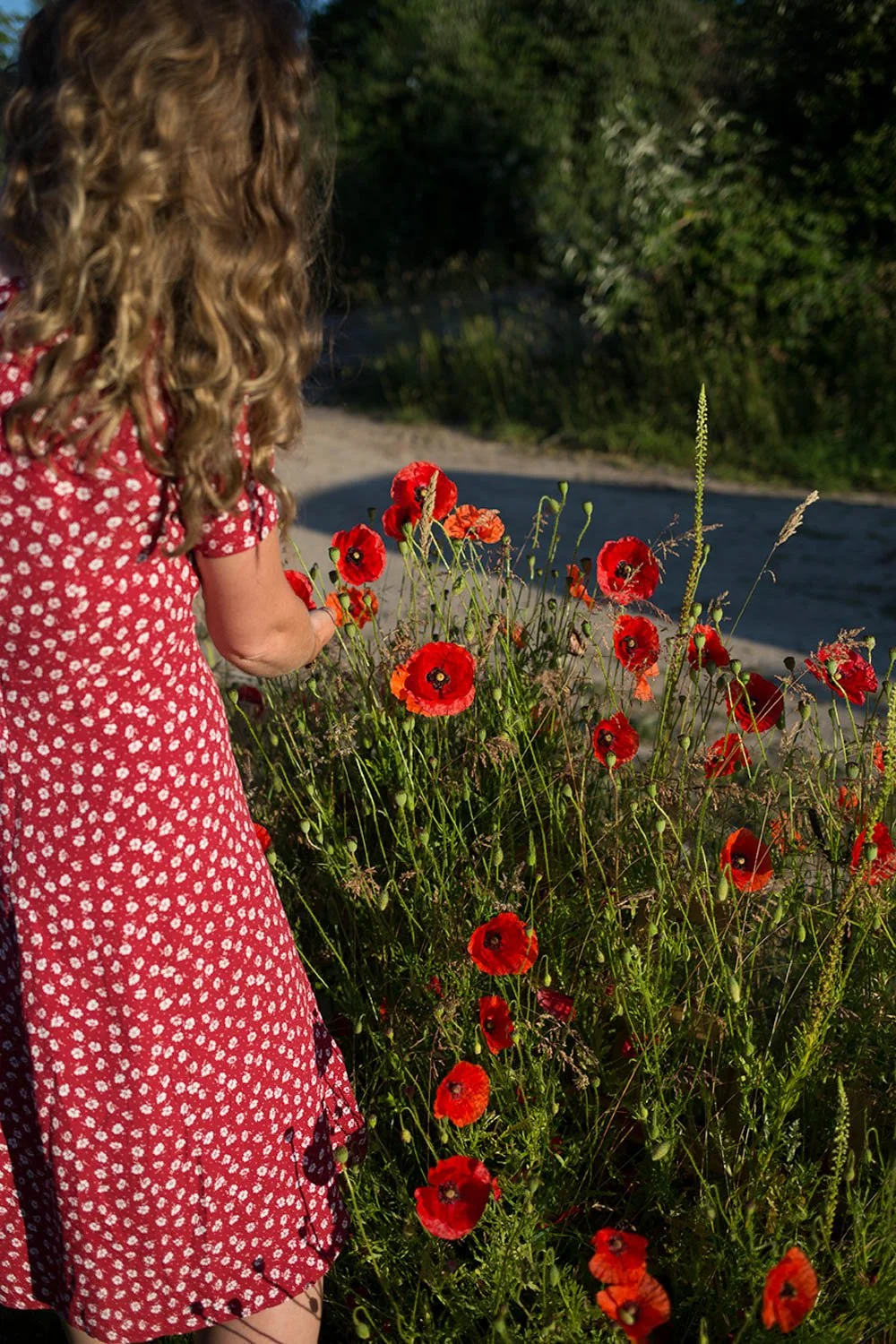
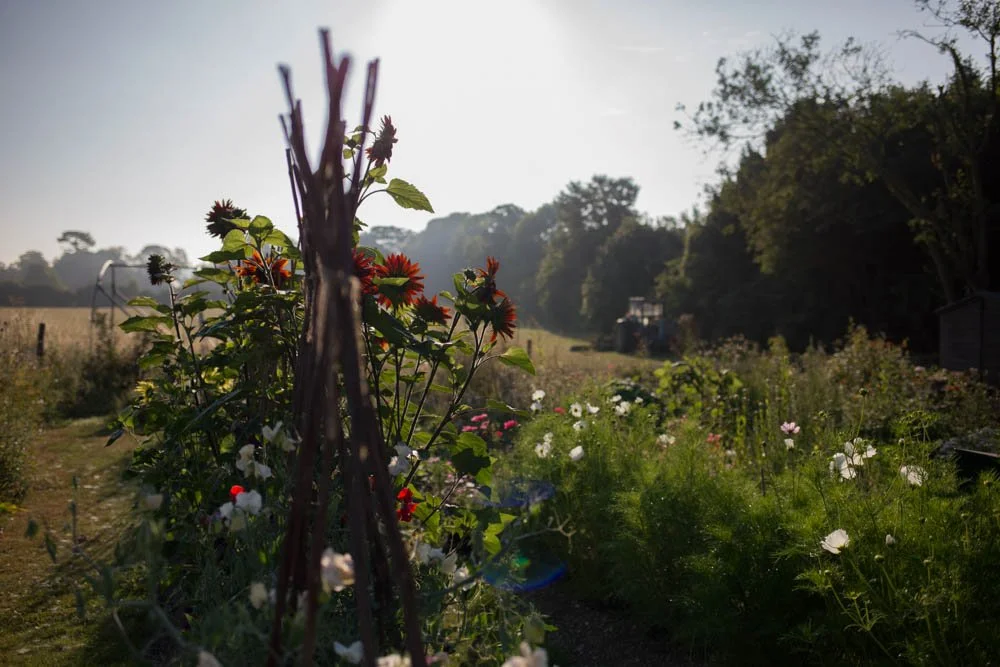
The cutting garden in its first incarnation with simple rectangular beds for cut-and-come-again annuals including sweet peas, sunflowers and cosmos and the skeleton of our first polytunnel behind.
It was entirely unanticipated that even early on, many of our students had travelled from overseas, not only from Europe but also the United States, Asia and Australia. As our knowledge of growing, arranging and teaching grew so we began to appreciate of the interconnectivity of humans and the natural world, the shared universal language of plants. In any workshop the multi national diversity of attendees could be reflected in the selection of flowers and foliage from the garden: sacred bamboo (Nandina domestica) from eastern Asia, the California poppy (Eschscholzia), Korean chrysanthemum, Siberian iris (Iris siberica), Persian lily (Fritillaria persica) native to the rocky outcrops of the Middle East.
After a while we were fortunate and delighted to be invited to travel and teach abroad - South Korea, Italy, France, Kenya - and to host retreats and workshops in venues around the UK. During the 2020/21 pandemic and the time this unexpectedly afforded us, we took the opportunity to explore and develop a garden-to-vase philosophy, studying and researching to deepen our understanding of design theory and garden inspired arranging. We spent a lot of time working in the garden, experimenting with new materials. Our desire to continue learning fuelled our desire to continue teaching, and while restrictions prohibited us from meeting face-to-face we took our lessons online, developing the first of our online courses.
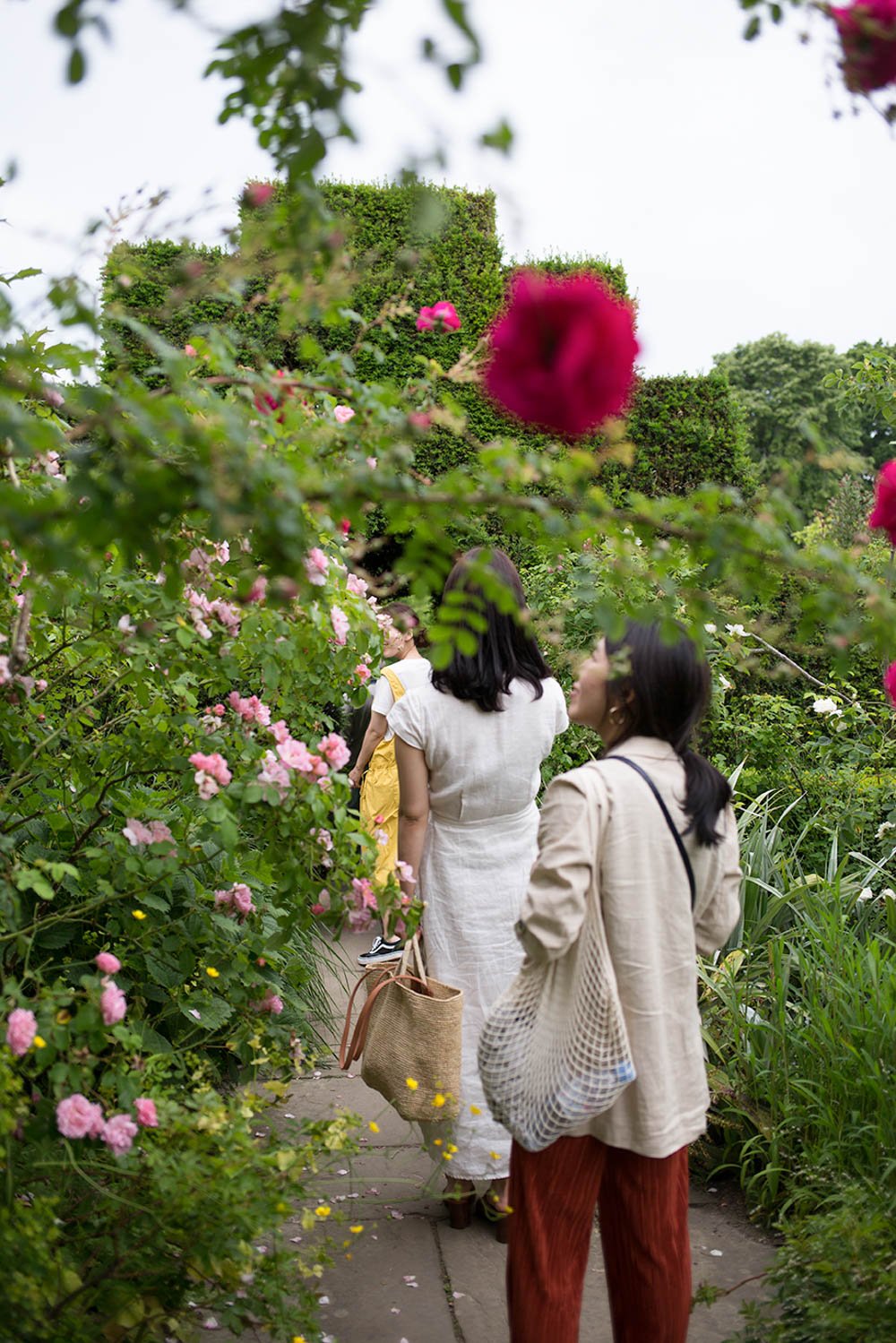
Introducing guests from South Korea to the magical gardens at Great Dixter
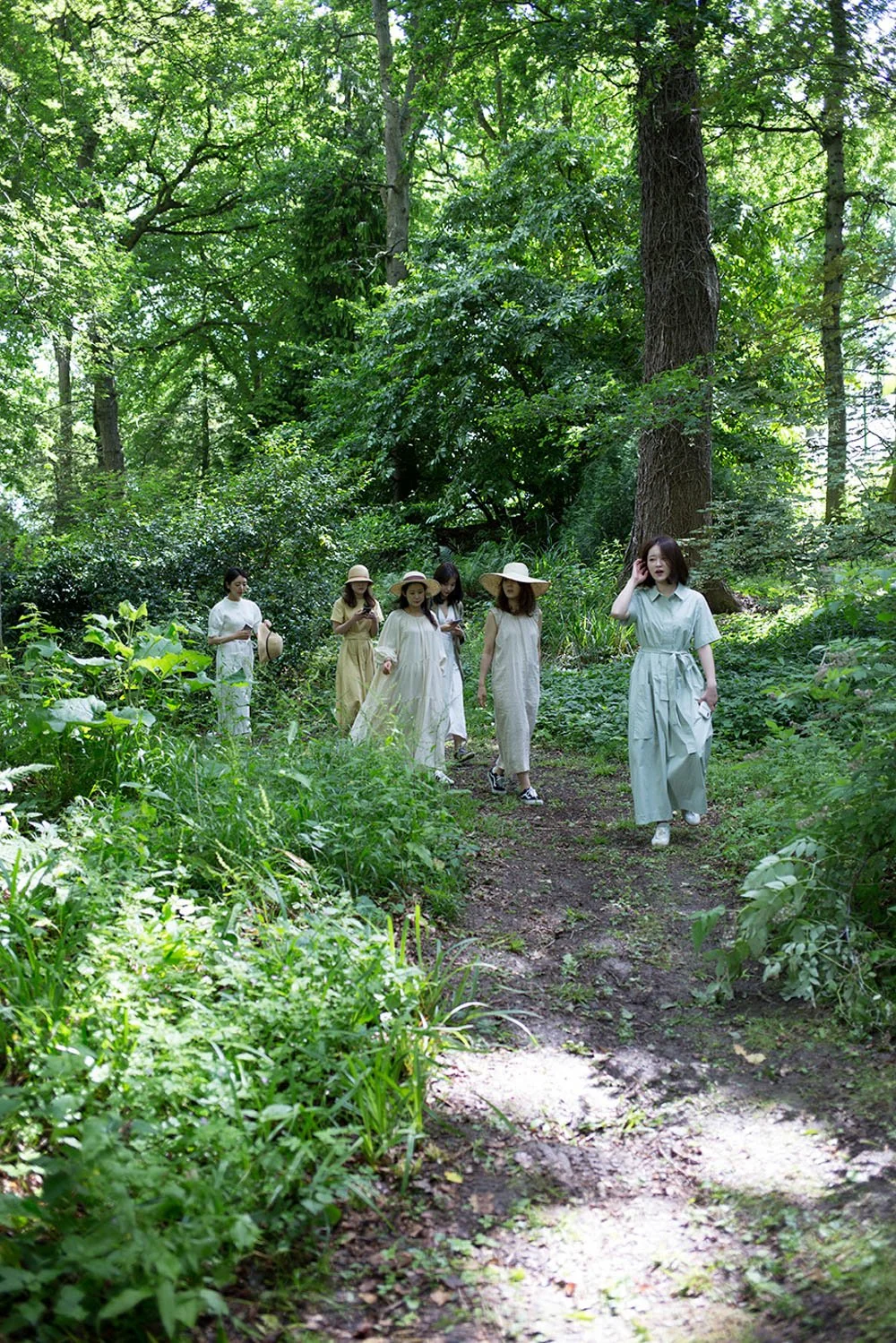
Down into the dingly dell - exploring the magical Secret Garden at the Woodshed in East Sussex
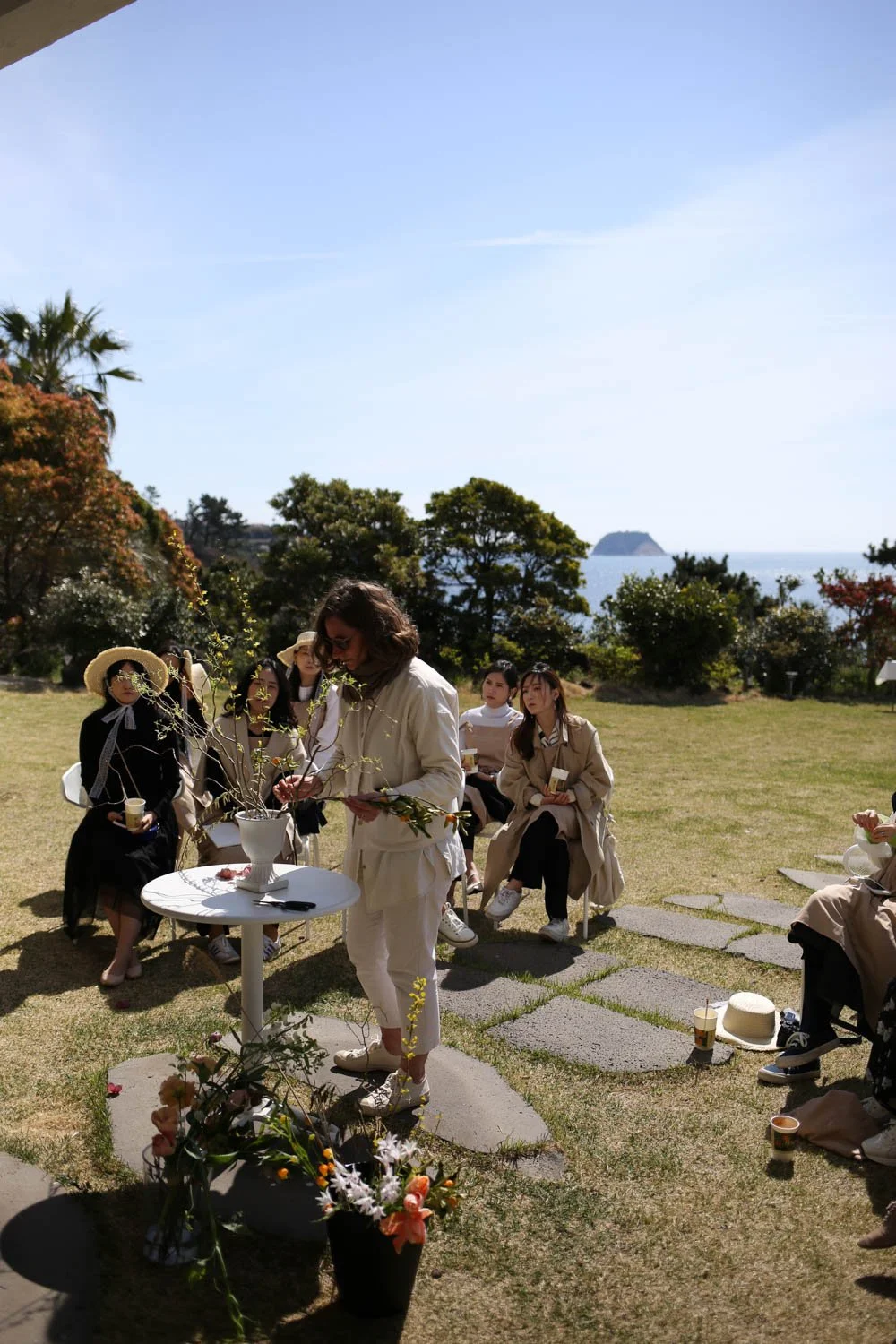
Arranging with a sea view on Jeju Island off the coast of South Korea
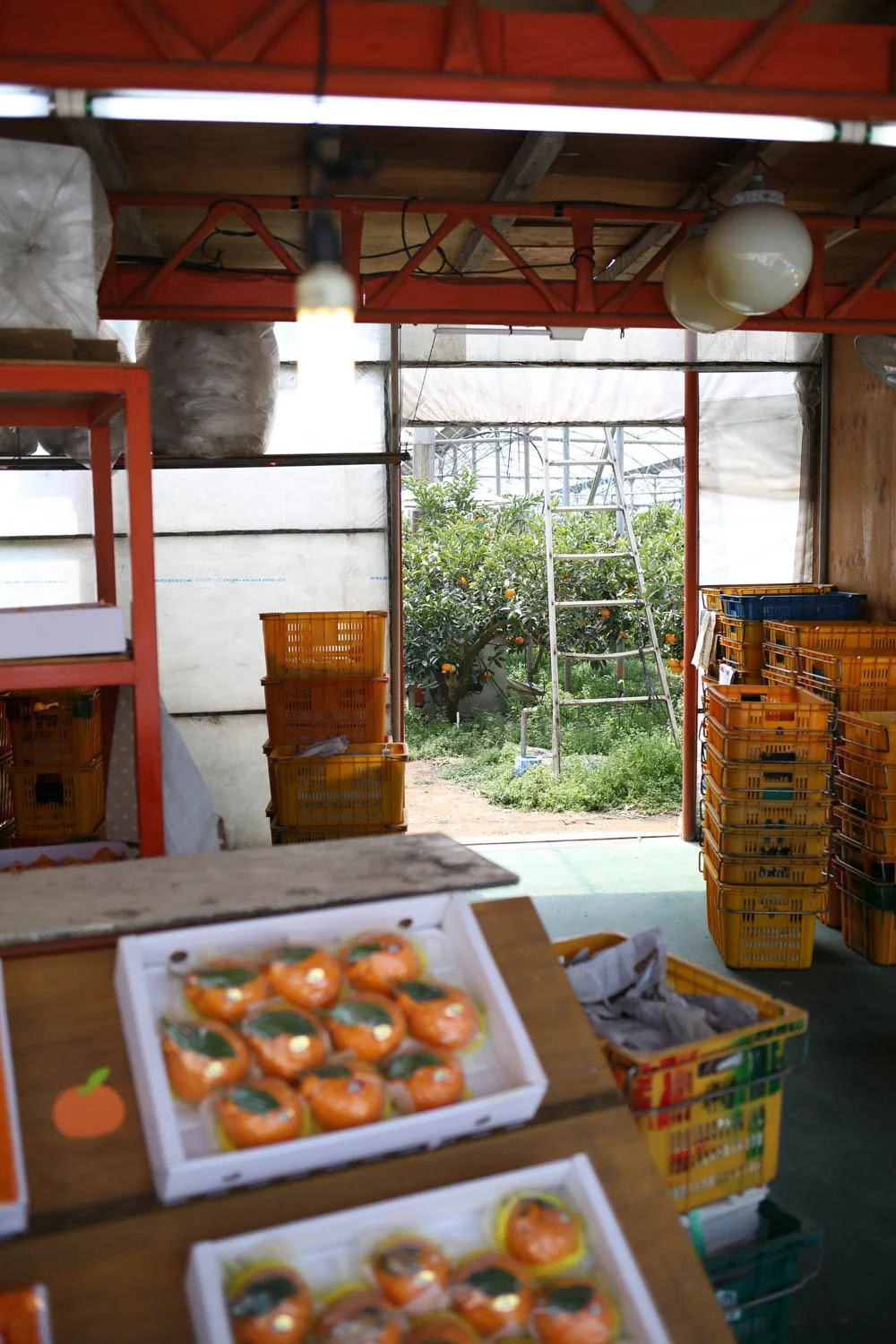
Volcanic landscape and citrus orchards - visiting a mandarin farm
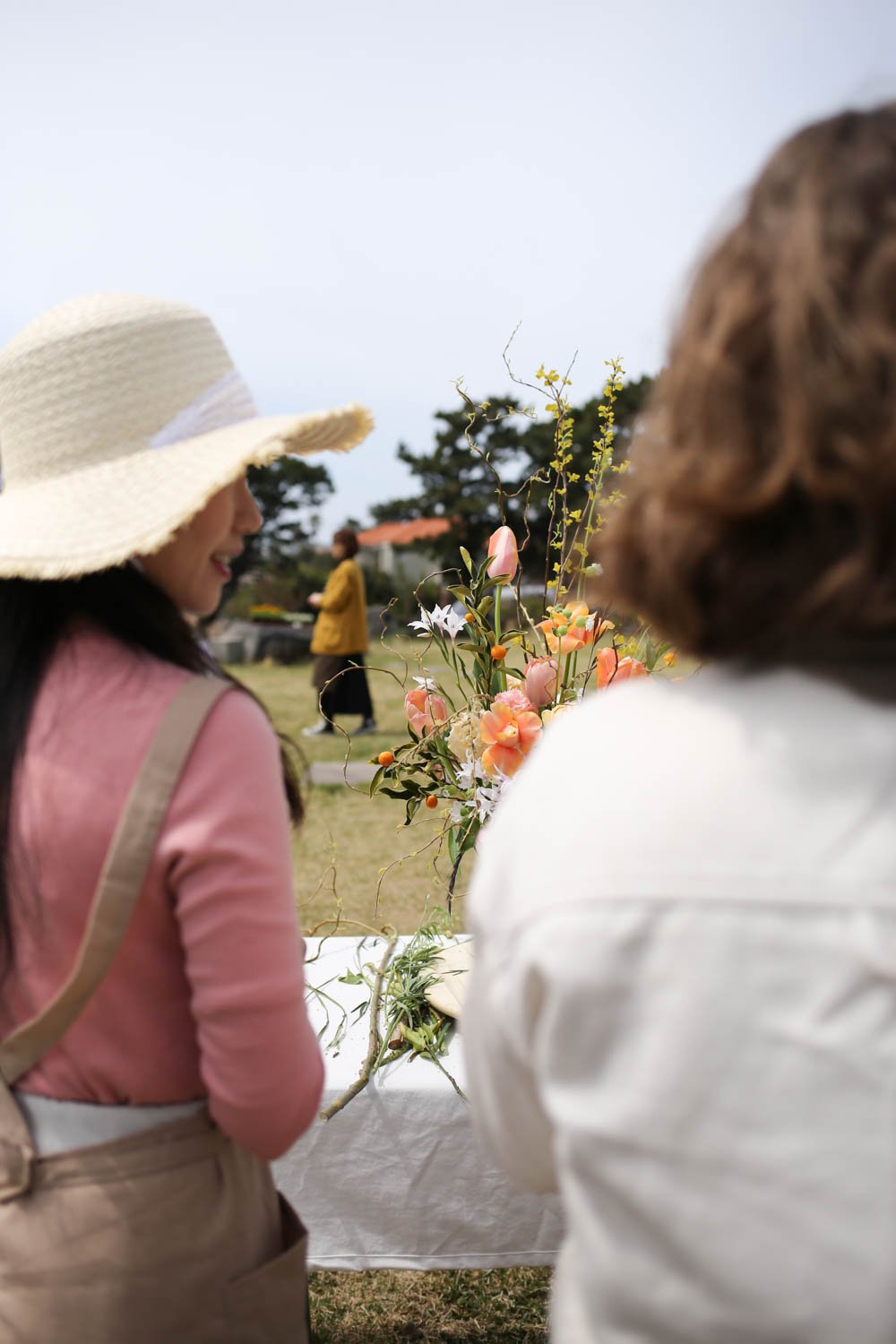
Talking with Korean florist Maya, who went on to start her own cutting garden
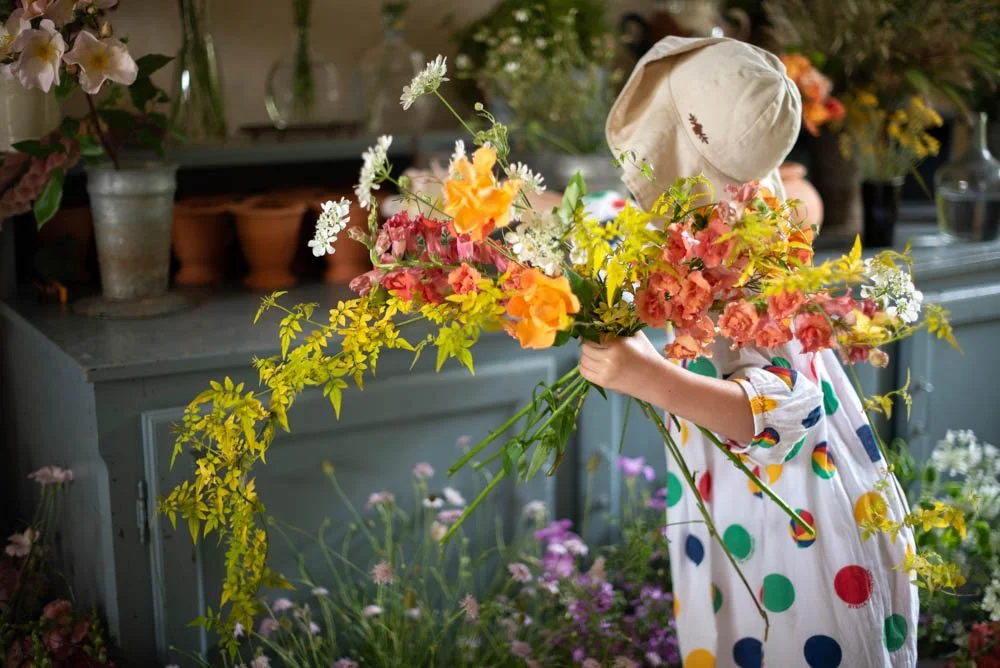
Our workshop guests have ranged from eight to eighty plus and are always an interesting mix of people from a diverse range of ethnic and professional backgrounds. This little girl accompanied her mother, a cutting garden designer, to a workshop in Provence where she made an amazingly accomplished and exuberant bouquet in shades of lime and coral.
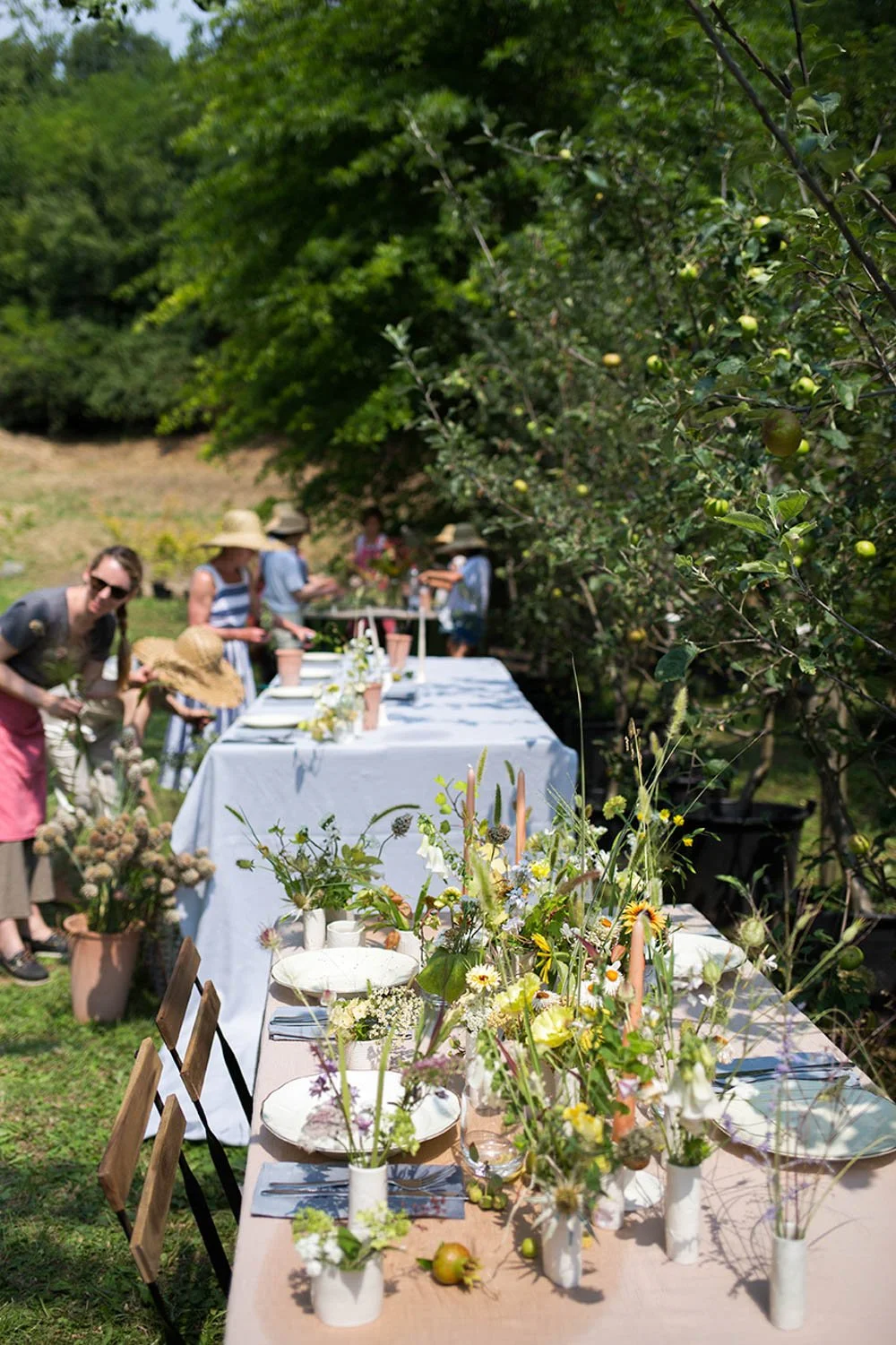
Dressing tables in the countryside near Lake Como
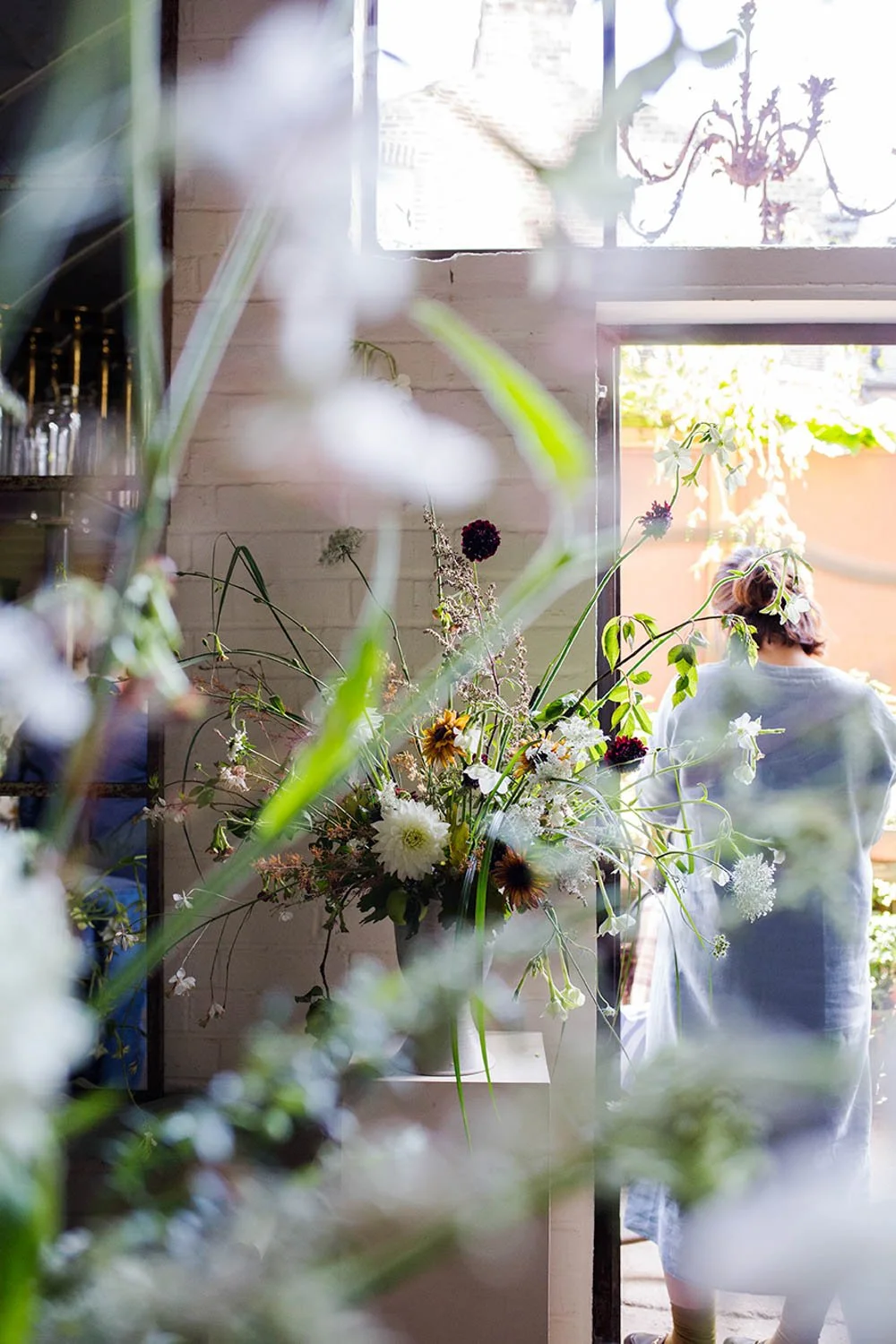
Early autumn at the studio in London
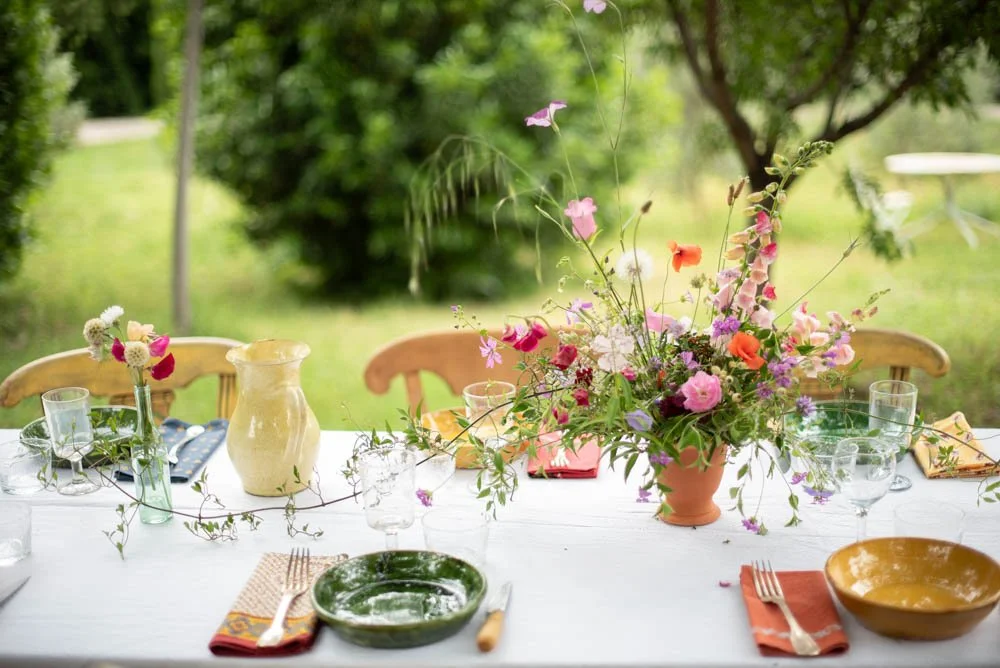
Lunch alfresco at Les Terres de Pierre with flowers grown by local farmers and trailing Clematis flammula
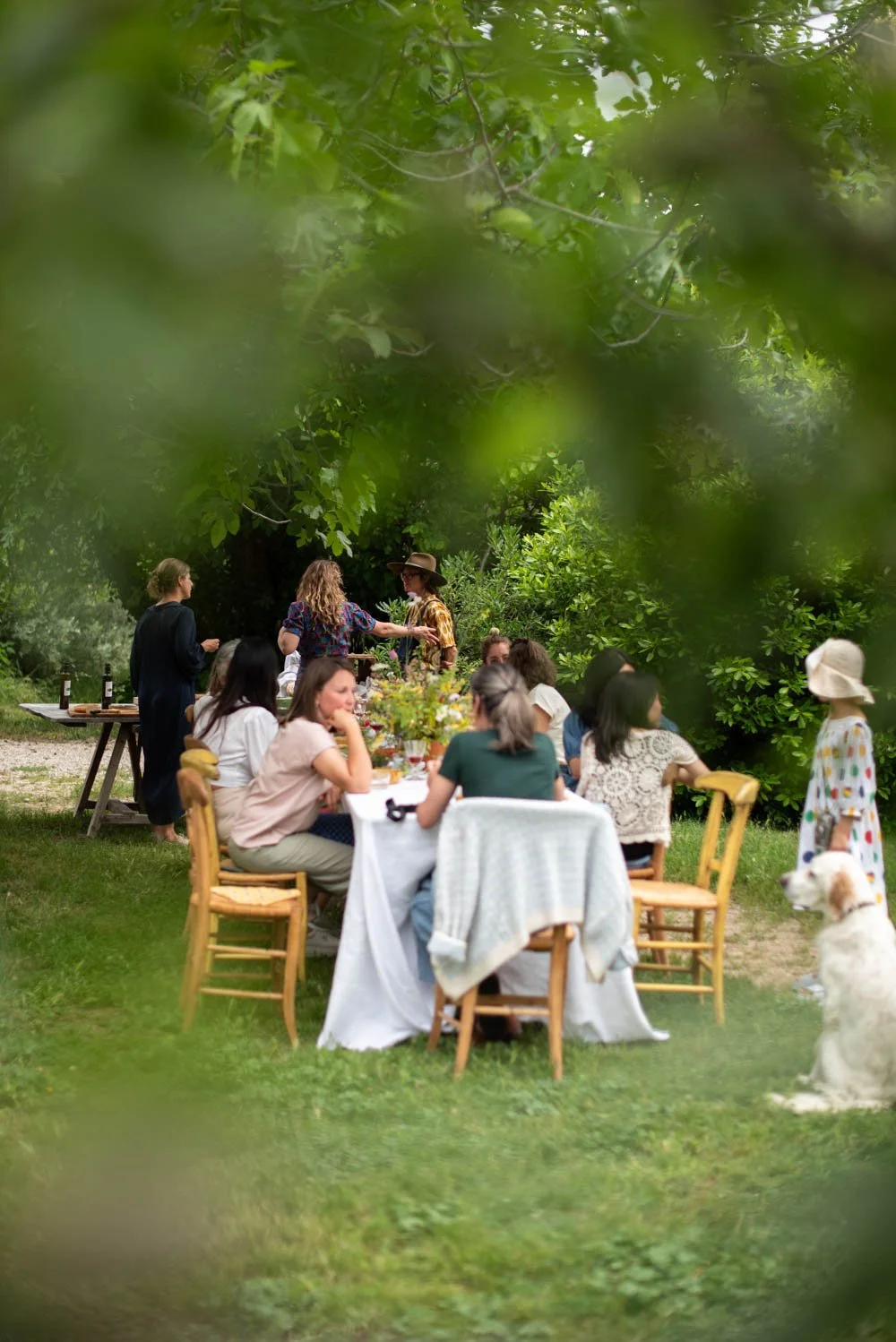
Enjoying conversation and the excellent cuisine of William and Prune Revoil with olive oil from the surrounding orchards
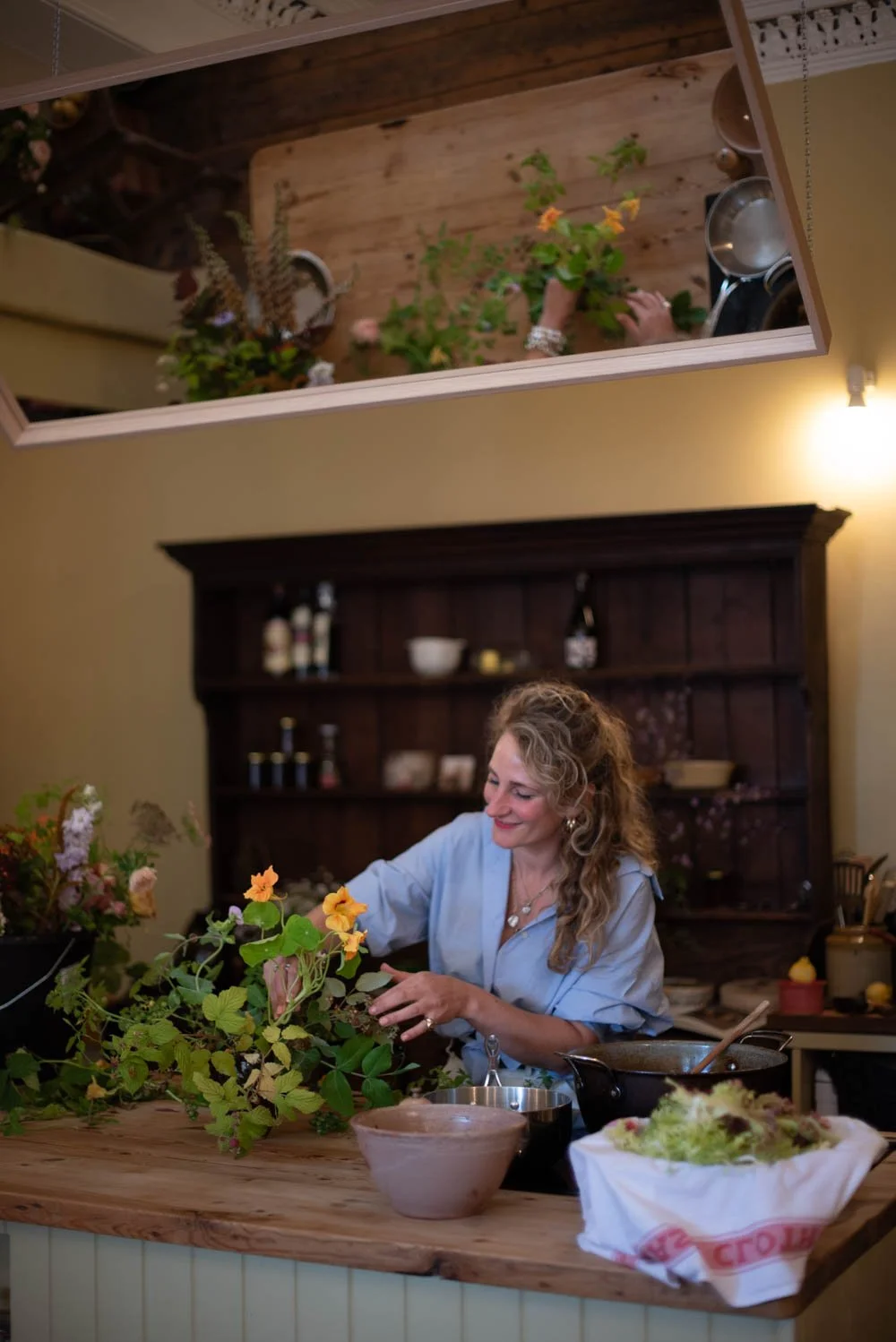
Late summer in Scotland: teaching a Food & Flowers workshop at Elliott’s, Edinburgh with flowers from the walled garden of Fiona Inglis at Pyrus
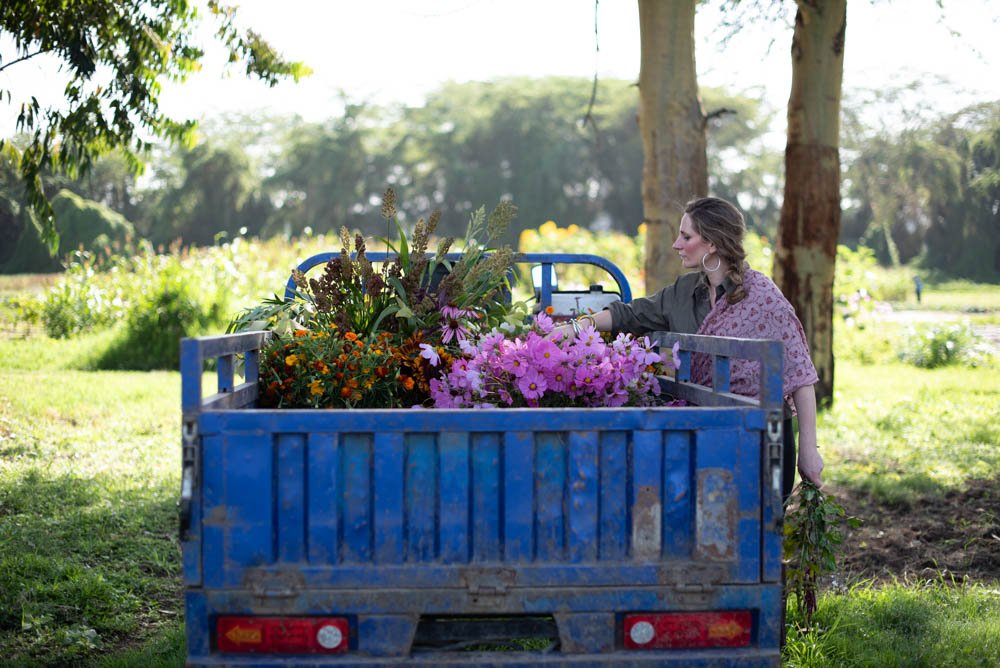
Early morning harvest in East Africa in preparation for a workshop at Ecoscapes for the Kenya Horticultural Society
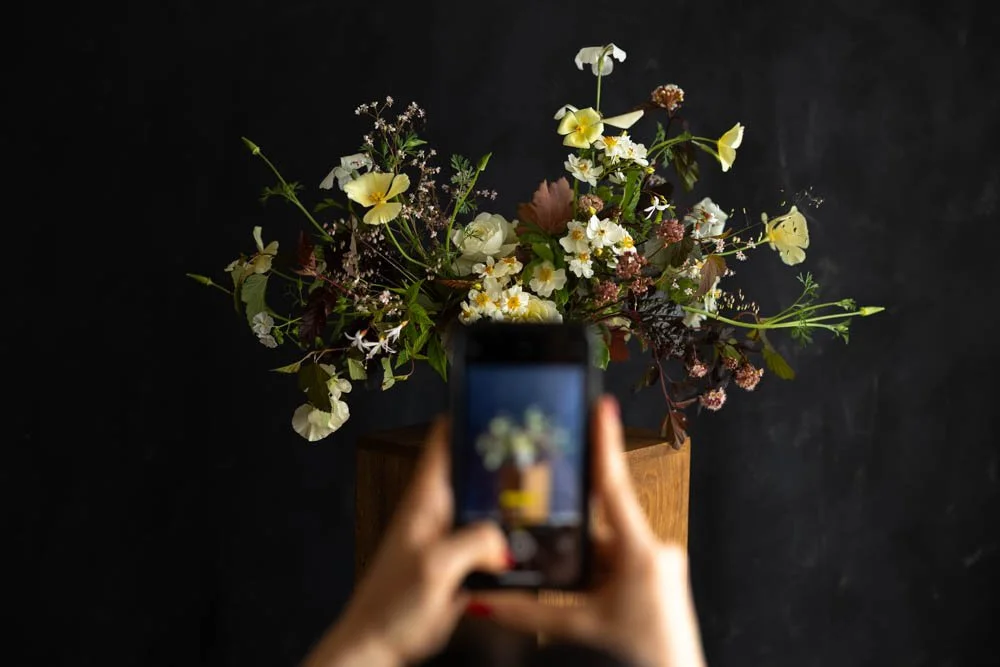
Lemon, plum and cream - the results of a creative session at the studio in London
When we look back we realise that every year we have been devoting ourselves more and more to our roles as educators. In 2025 AESME STUDIO turned ten. We took this as a cue to clarify the future vision for the business. In 2026 a new chapter begins with the AESME SCHOOL OF FLOWERS. In many ways things are much the same, the incense still swirls in the entrance of the arch, sunlight pools in the back window and spills onto the workbenches. But this also feels like the beginning of a paradigm shift - a wholehearted dedication to a version of floristry that is deeply rooted in positive change.
In the process of writing the 2026 class programme, we’ve distilled our ethos into a manifesto, laying down the guiding principles of AESME: Artistry, Ecology, Seasonality, Materials and Expression.
READ THE MANIFESTO
SISSINGHURST
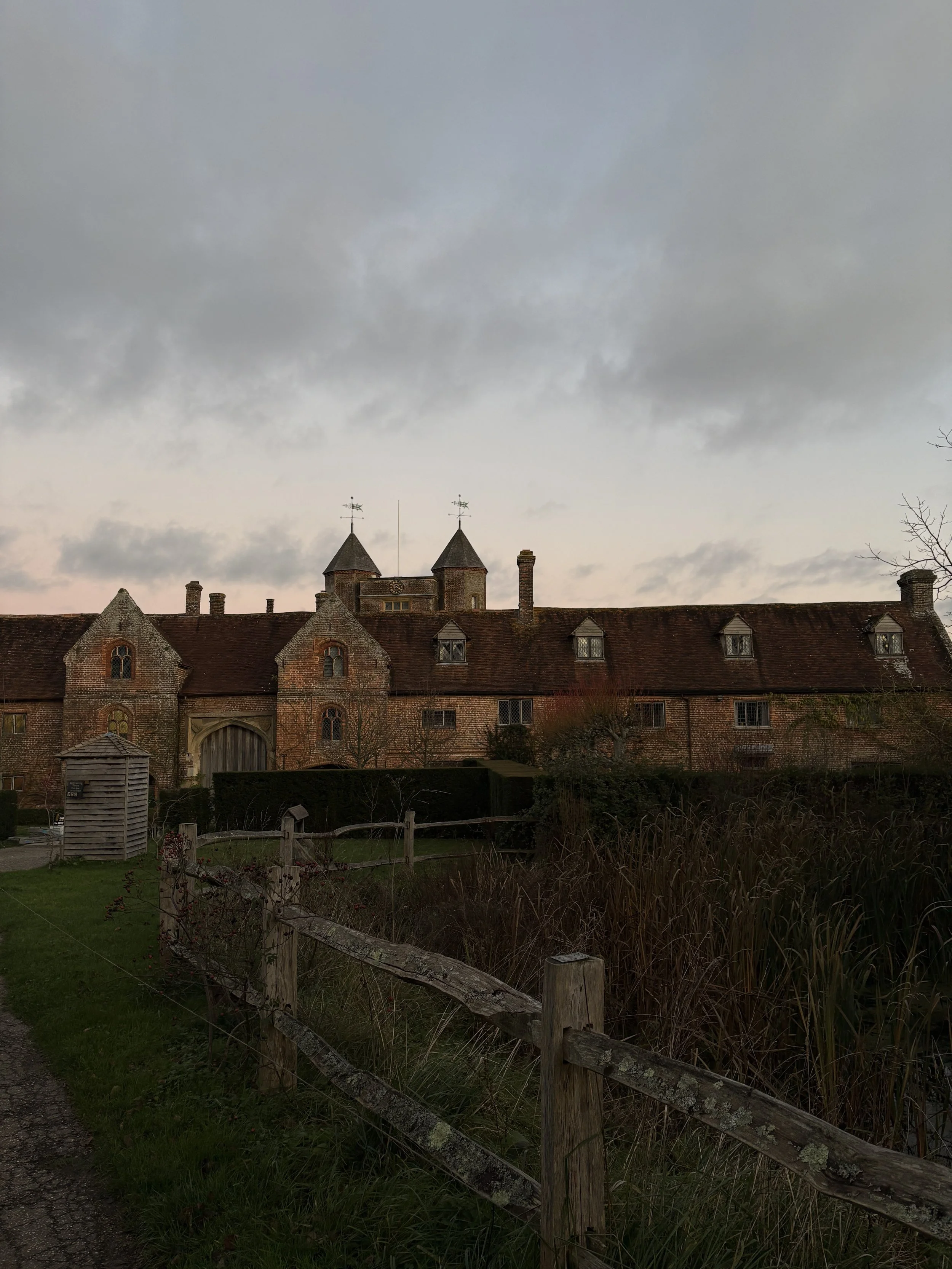
We were very happy to be invited back to Sissinghurst Castle this winter; this time to dress Vita’s tower for the festive season. My default in decorating during the winter is to go super seasonal, my philosophy being that simplest is best
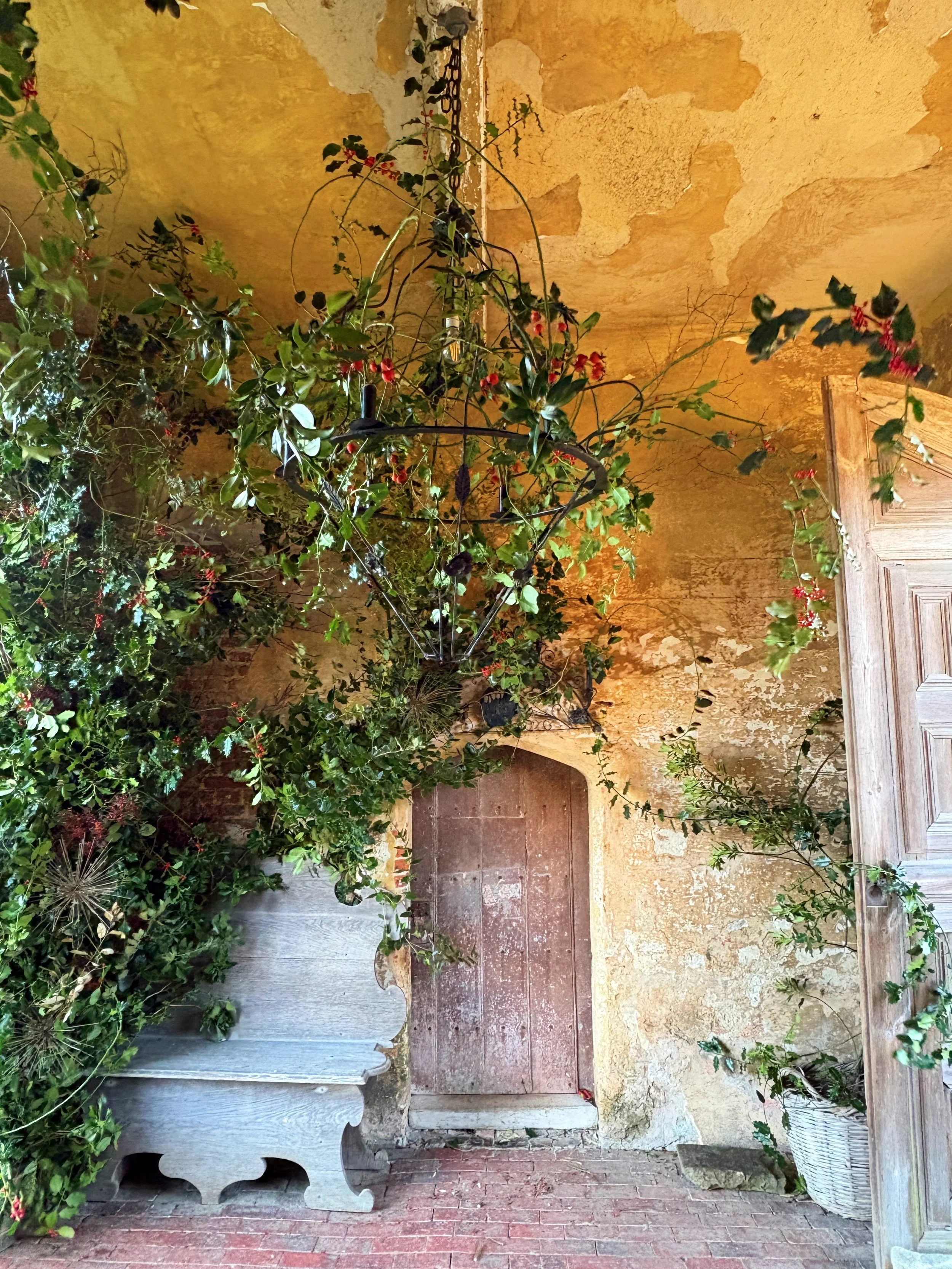
We were very happy to be invited back to Sissinghurst Castle in Kent this winter; this time to dress Vita’s tower for the festive season. My default in decorating during the winter is to go super seasonal, my philosophy being that simplest is best and that if you great ingredients all you need to do is honour them and you’ll have a beautiful display.
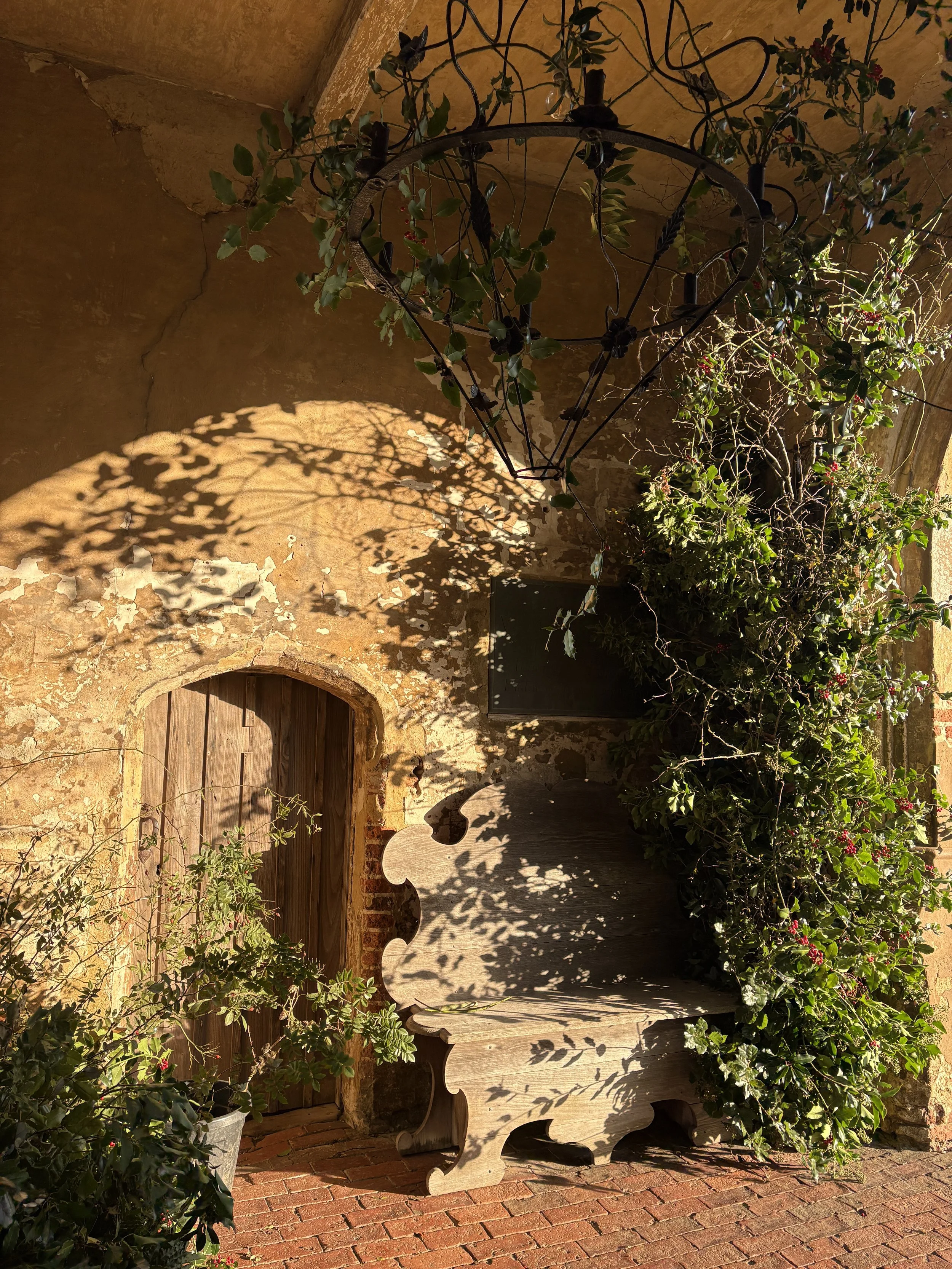
Last year at Sissinghurst we installed an evolving series of four designs November to February and in collaboration with the gardening team our priority was to create designs inspired by the surrounding gardens and landscape with as much of the produce used supplied by them also - rose prunings, a cherry tree due for felling provided multiple huge branches that to our delight slowly unfurled their blossom over the months of the exhibit and were still on display when we dismantled at the end of the winter.
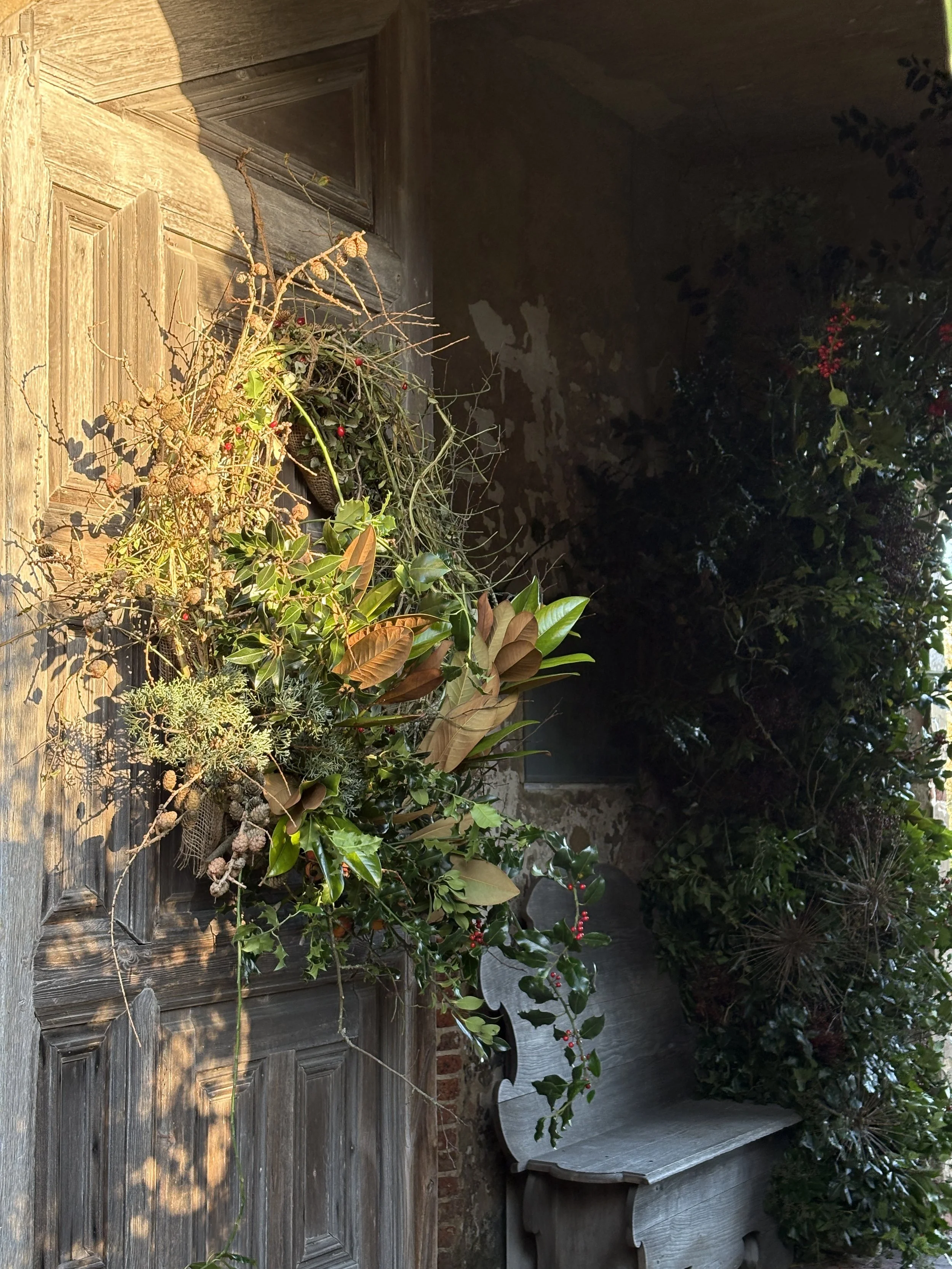
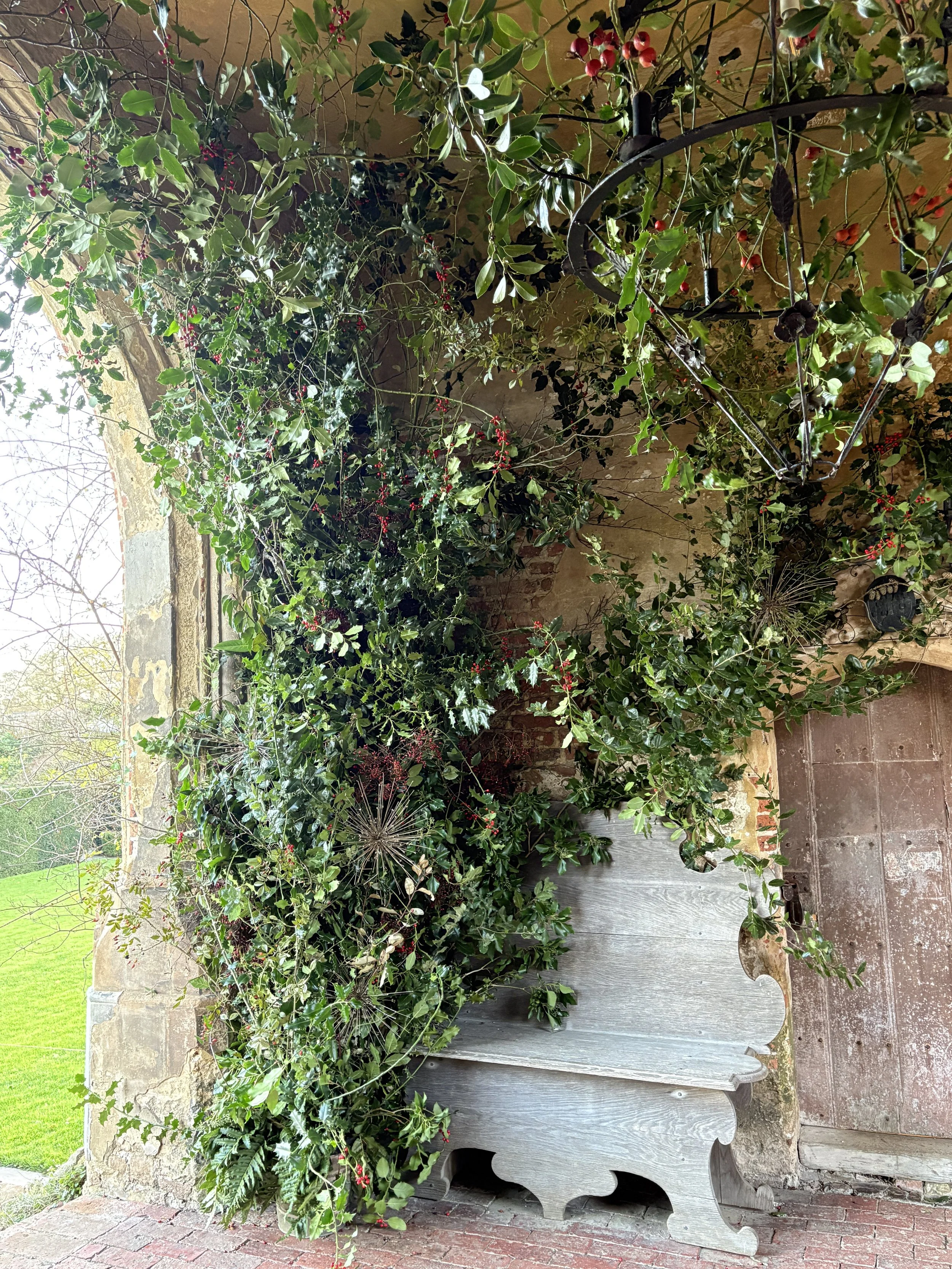
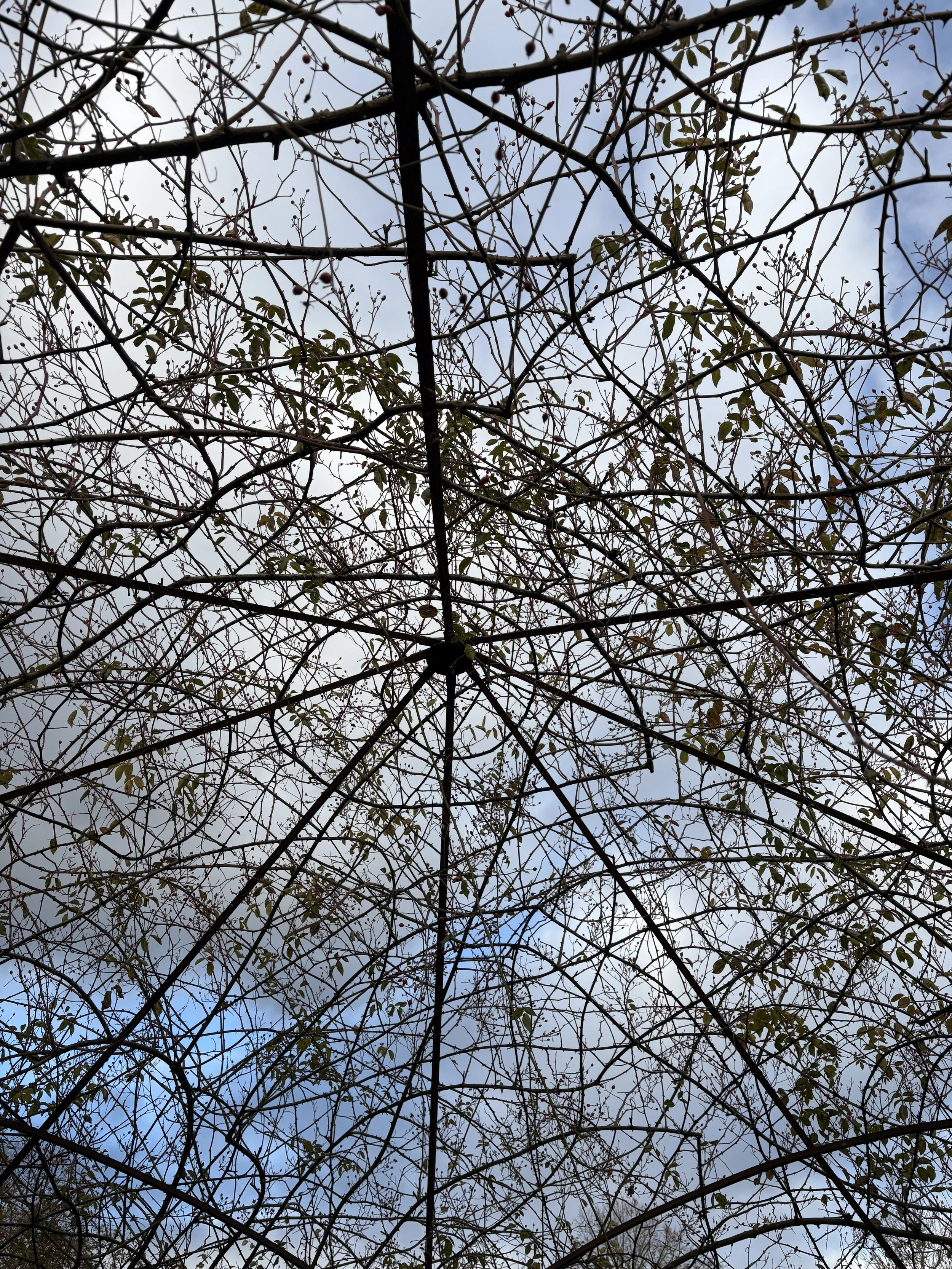
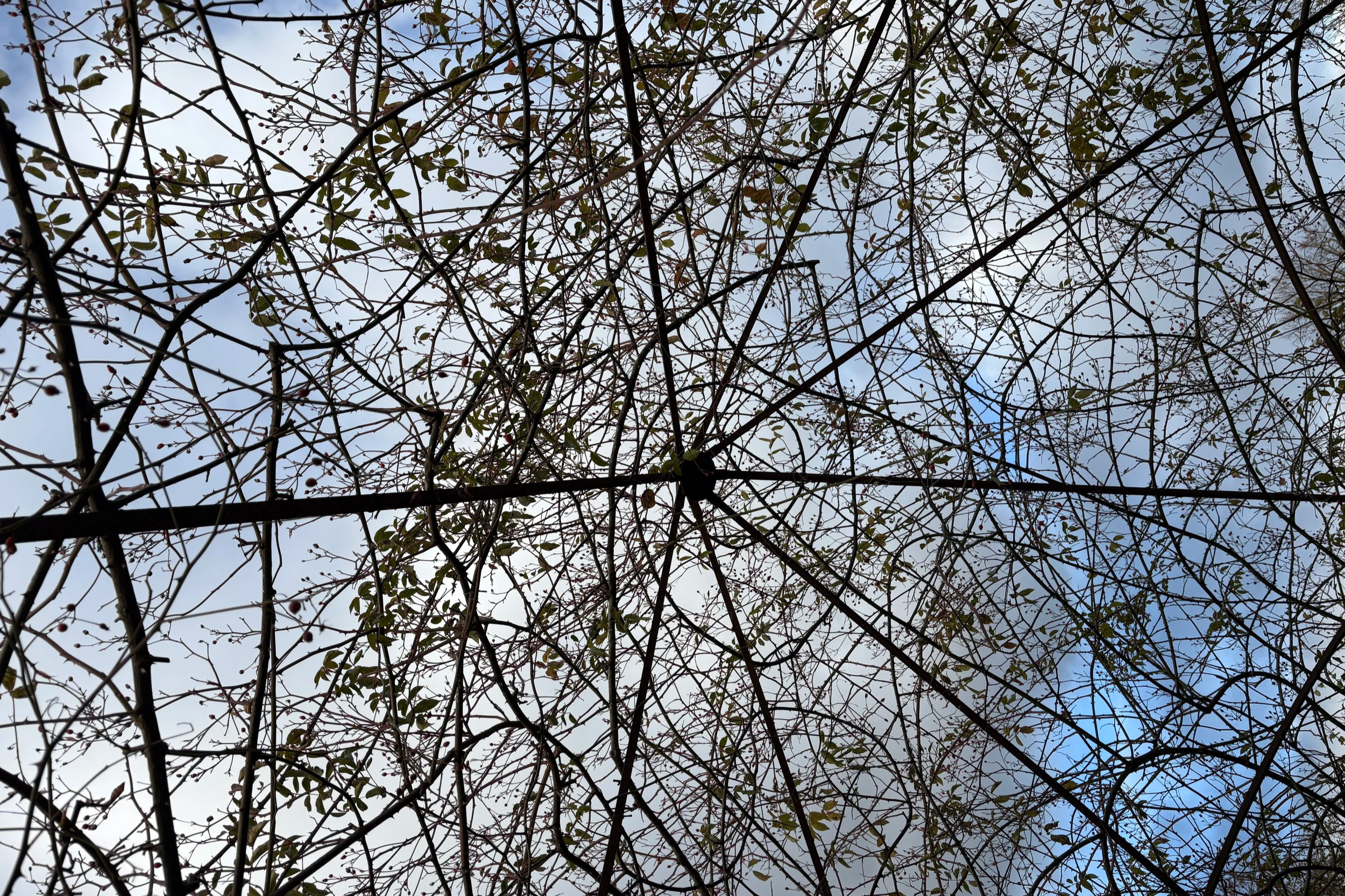
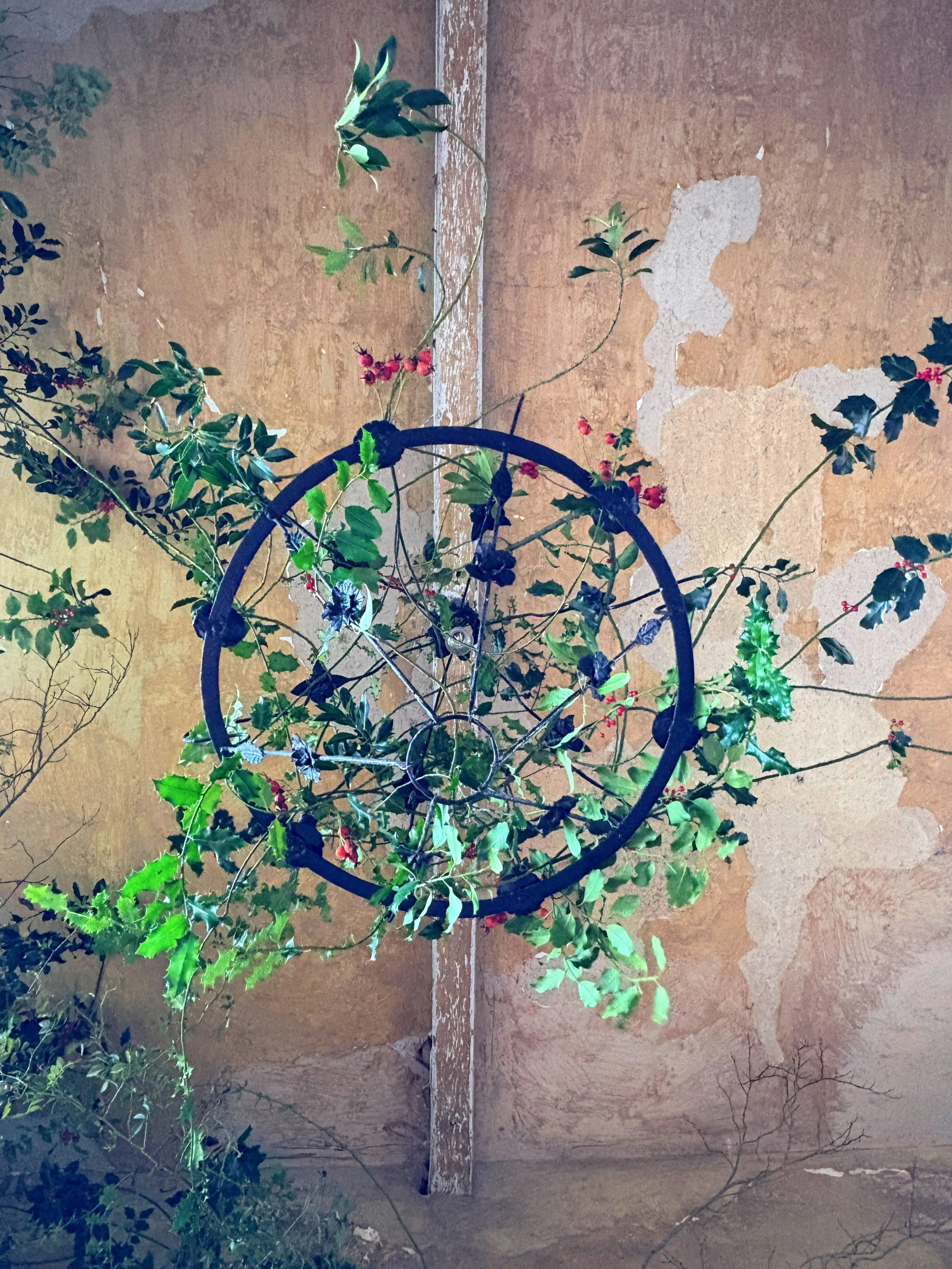
This year I wanted to frame the view from Vita’s tower over the orchard beyond with a wild, scribbled sketch of beckoning branches and briars. The concept was magical but simple, very green, very fragrant. If you know the tower you’ll know how huge the archway is - it doesn’t always translate in photographs - it takes a lot of material to make an impact. I don’t always know exactly what the ingredients will be in advance so some decisions are made in-situ and on the spot. First thing Monday morning we did a recce, noting down particular shrubs and trees to cut from, riffling through piles of rose clippings, recently pruned and glowing with red and orange hips. The rangers brought us a huge bundle of birch headed for the shredder. John and I went in search of curving, looping stems of berried holly and found ivy, tassel bush and Portuguese laurel along the way. Ingredients assembled we started with a base of gnarled apple branches and then layered with evergreens, ensuring we were mindful of the natural shapes of the materials and building a frothy sense of volume in some places, with sparser areas that trailed off into negative space.
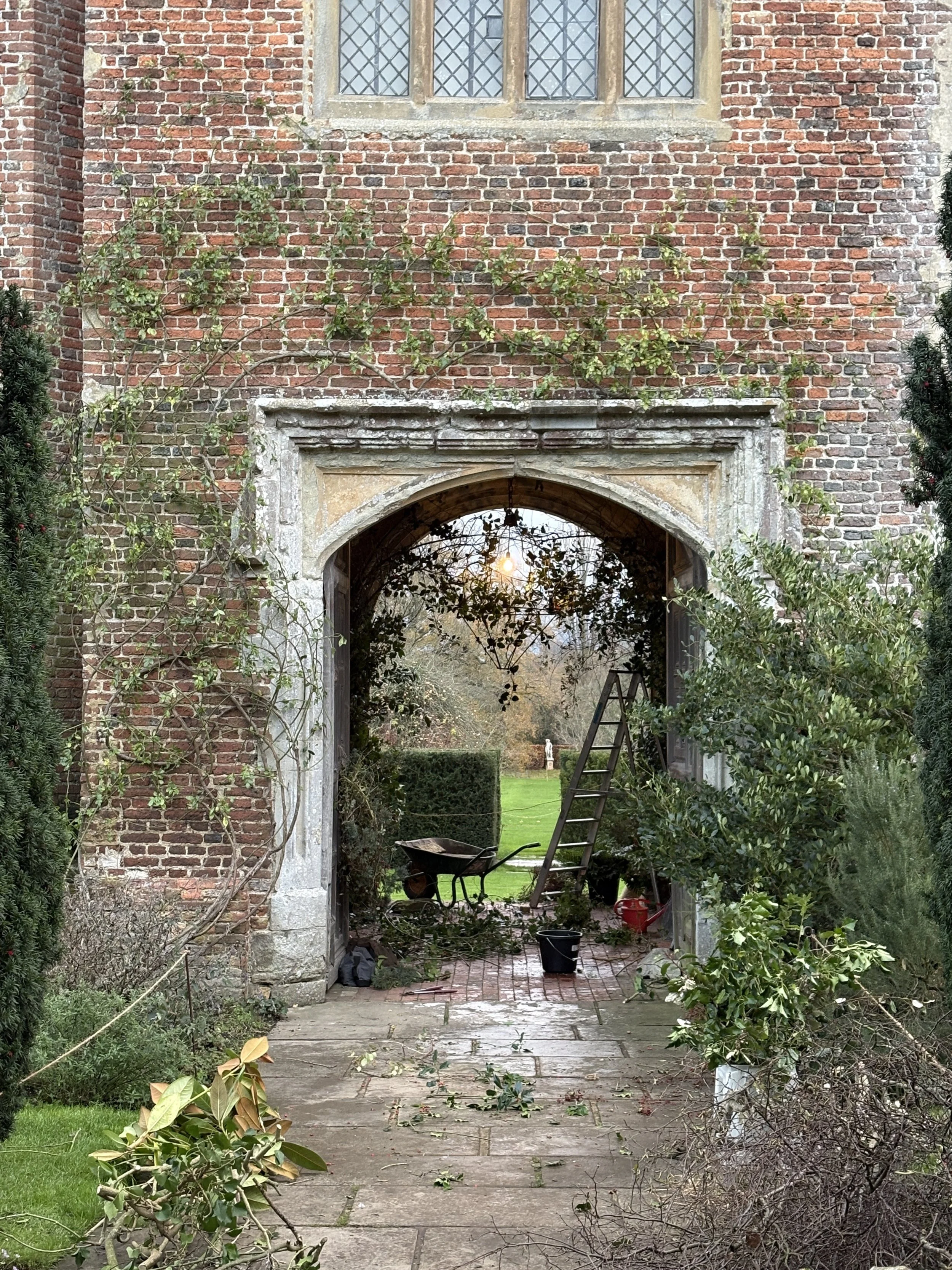
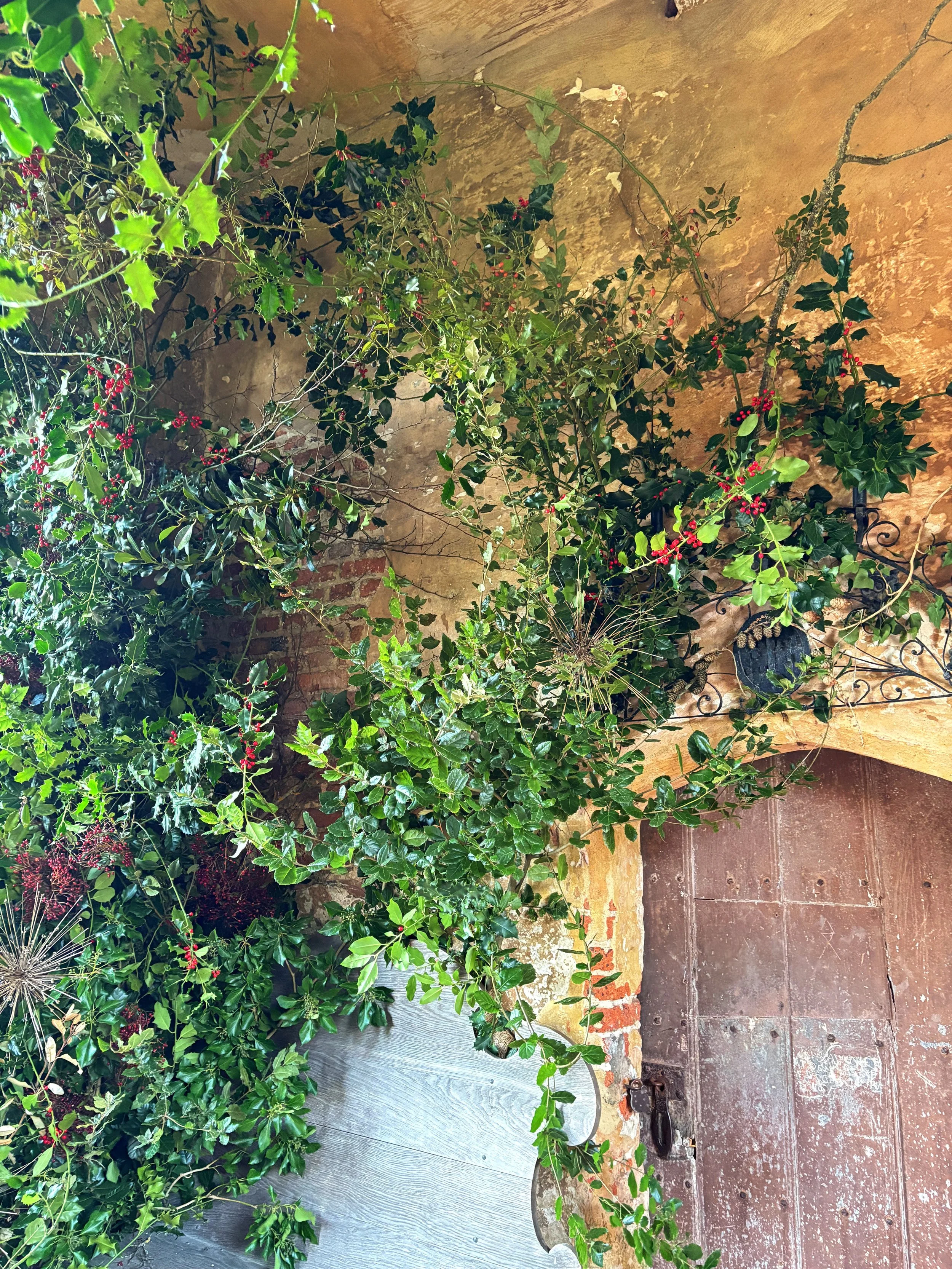
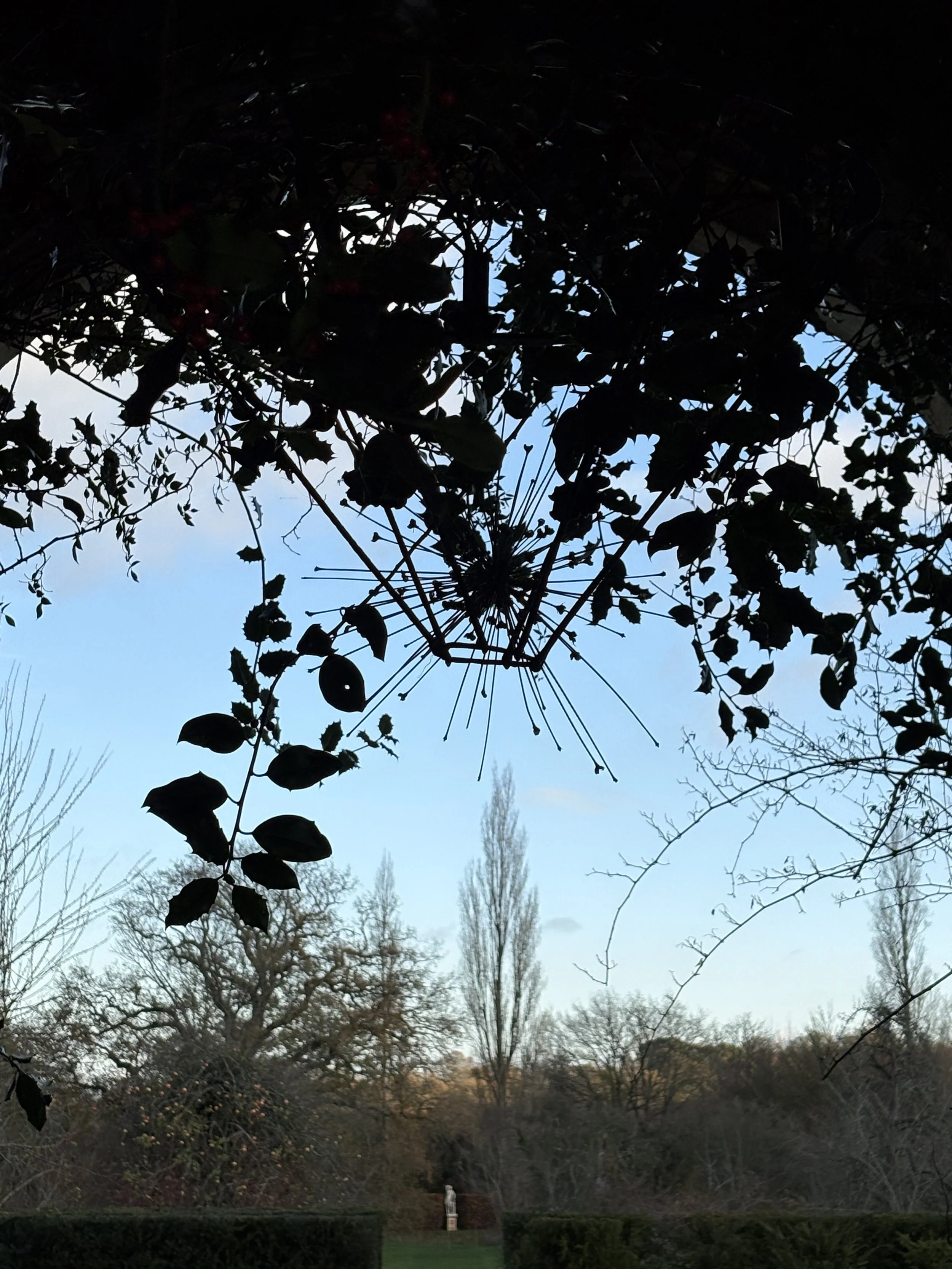
Here and there you might spot the golden, spherical forms of Allium schubertii and Allium cristophii - additions from our own garden, harvested just prior to the autumn storms. Allium heads make impactful natural ornaments with a metallic, textural, almost bauble-like effect. Each stem and seedhead was carefully wired and attached to the branches beneath. The archway under the tower is an absolute wind tunnel so firm fixings are essential or there’ll be nothing left come January!
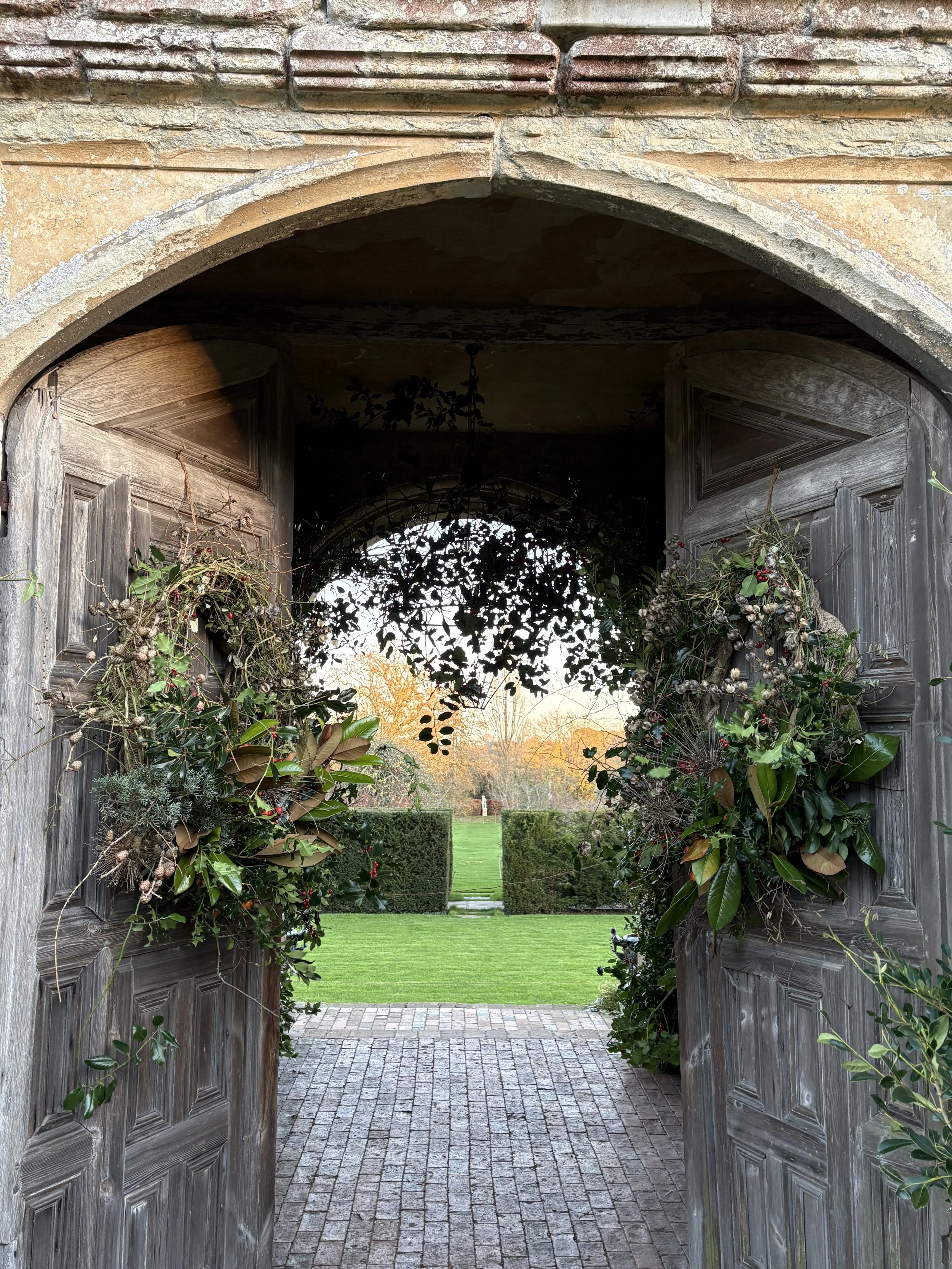
We hung a pair of wreaths to the beautiful wooden doors that flank the entrance. I made the bases a week ago using wild rose, bramble and sweet pea and these were decorated on-site with sculptural branches, foliage, berries and seedheads.
The installation will be on display until early January; we hope you can visit!
Thank you to Johnny @jsutherland84 and Jo @_gardening_adventures_ for helping me bring this design to life.
The ingredient list can be found below.
WREATHS
Rosa canina (dog rose)
Rubus fruticosus (bramble)
Malus - assorted (apple)
Larix decidua (larch)
Lathyrus latifolius (everlasting pea)
Ilex aquifolium 'Pendula' (English holly)
Nicandra physalodes (Apple-of-Peru)
FOLIAGE ARCHWAY
Malus - assorted (apple)
Hedera helix (European ivy)
Ilex aquifolium 'Pendula' (English holly)
Prunus lusitanica (Portuguese laurel cherry)
Garrya elliptica (silk tassel bush)
Magnolia grandiflora (bull bay)
Rosa ‘Wickwar’ (rose)
Rosa ‘Cupid’ (rose)
Allium cristophii (star of persia)
Allium schubertii (Schubert’s allium)

KNEPP
Knepp is the home of Isabella Tree, a journalist and the author of Wilding: the return of nature to a British farm and the conservationist Charlie Burrell. Since 2000 they have ‘pioneered the ‘rewilding’ of their estate constituting 3,500 acres of rural west Sussex including areas of lowland…
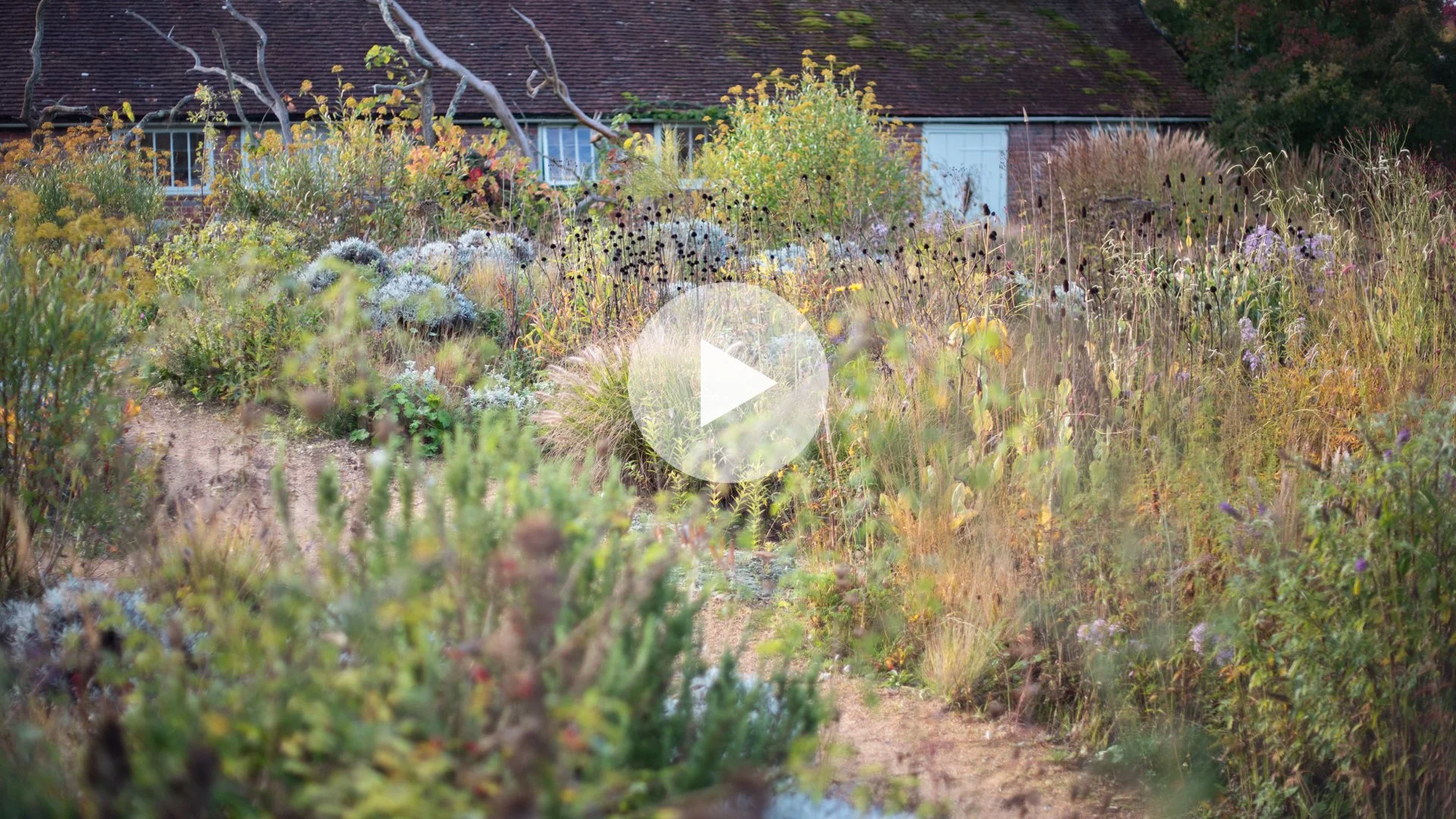
Watch the trailer for Arranging the Garden: Knepp on Flowers on Film
Knepp is the home of Isabella Tree, a journalist and the author of Wilding: the return of nature to a British farm and the conservationist Charlie Burrell. Since 2000 they have ‘pioneered the ‘rewilding’ of their estate constituting 3,500 acres of rural west Sussex including areas of lowland, scrub, grassland, water and woodland. After seventeen years of trying to compete with bigger industrialised farms and failing to turn a profit due to the unsuitability of the soil for modern intensive farming methods (“concrete in summer and unfathomable porridge in winter”) the decision was taken to sell the sheep, dairy herds and machinery, halt the production of all the arable land and roll out an experimental, long-term conservation project across the entire estate. It took a decade of highs and lows for the project to achieve the support of the government but in 2010 the project was awarded higher level stewardship funding and Knepp is now recognised as one of the most exciting, hopeful conservation projects in Europe.
Free-roaming herds of semi-wild Exmoor ponies, English longhorn cattle, Tamworth pigs and red and fallow deer have been introduced to drive natural regeneration through grazing, browsing and rootling creating a complex mosaic of habitats and restoring dynamic natural processes, resulting in extraordinary increases in wildlife. The estate supports many rare species including turtle doves, nightingales, black and white storks, falcons, beavers, bats and the largest breeding colony of purple emporer butterflies in the country. There’s a brilliant film available to buy or rent on Apple TV - Wilding - released in 2023 which I highly recommend if you’re interested in learning more.
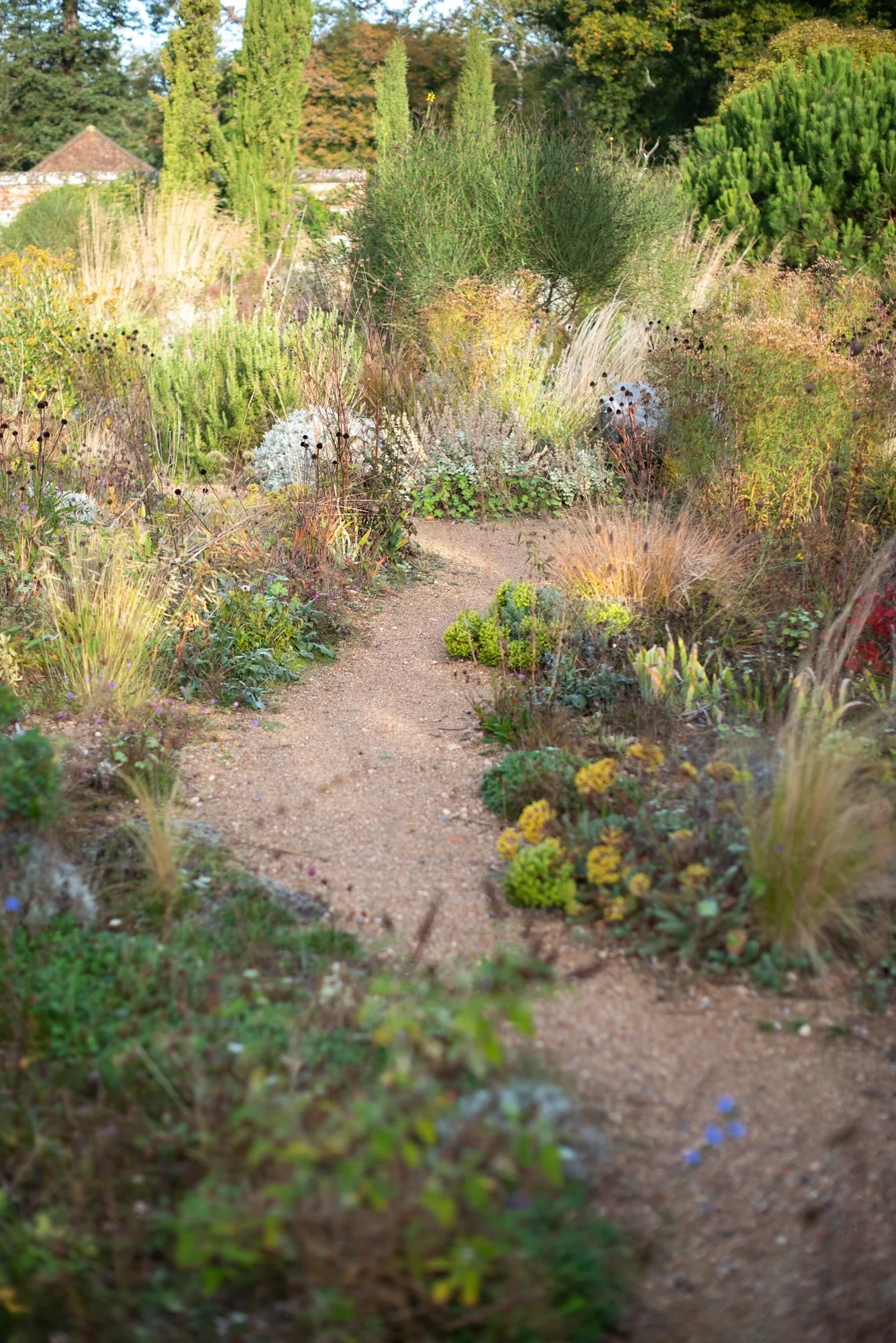
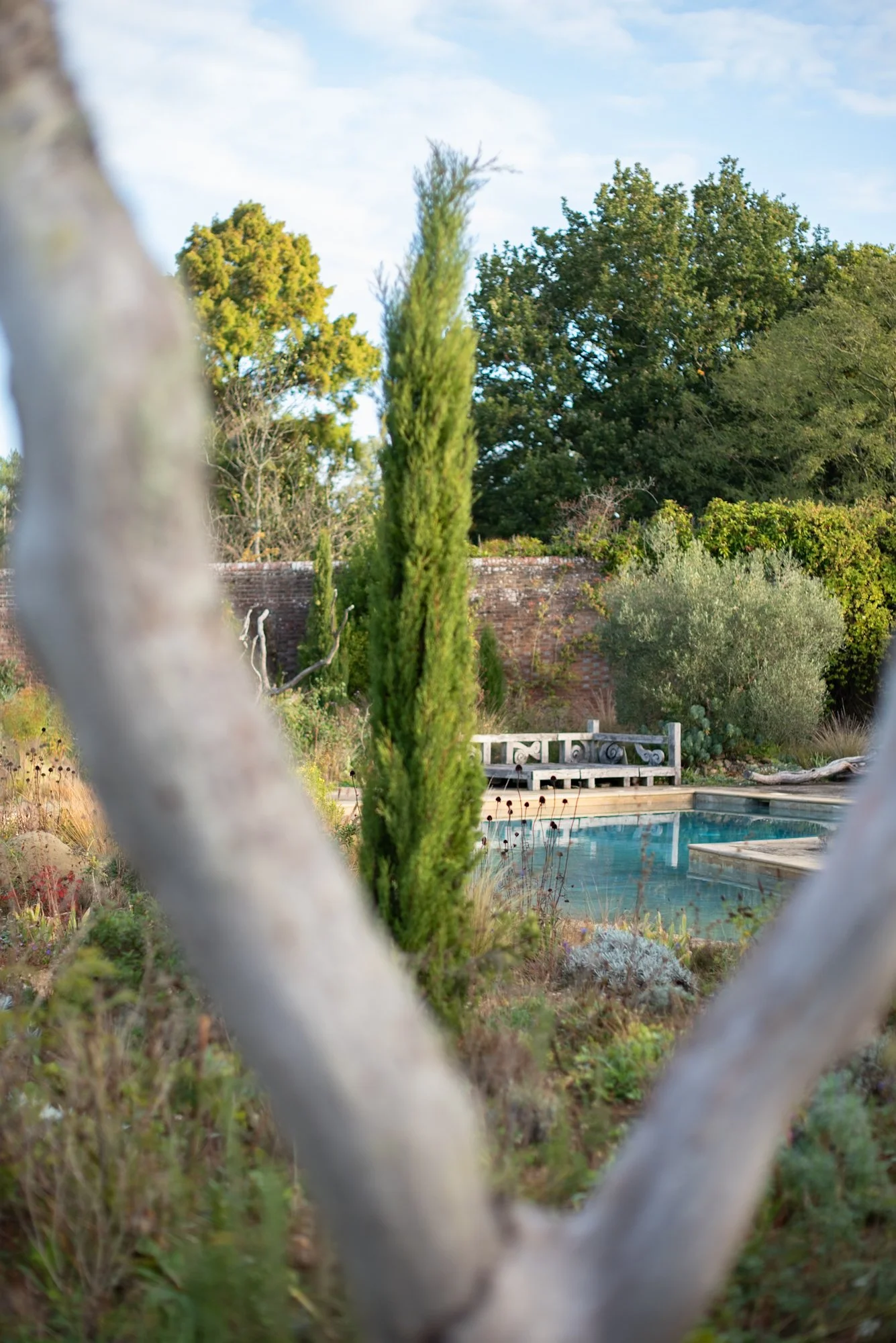
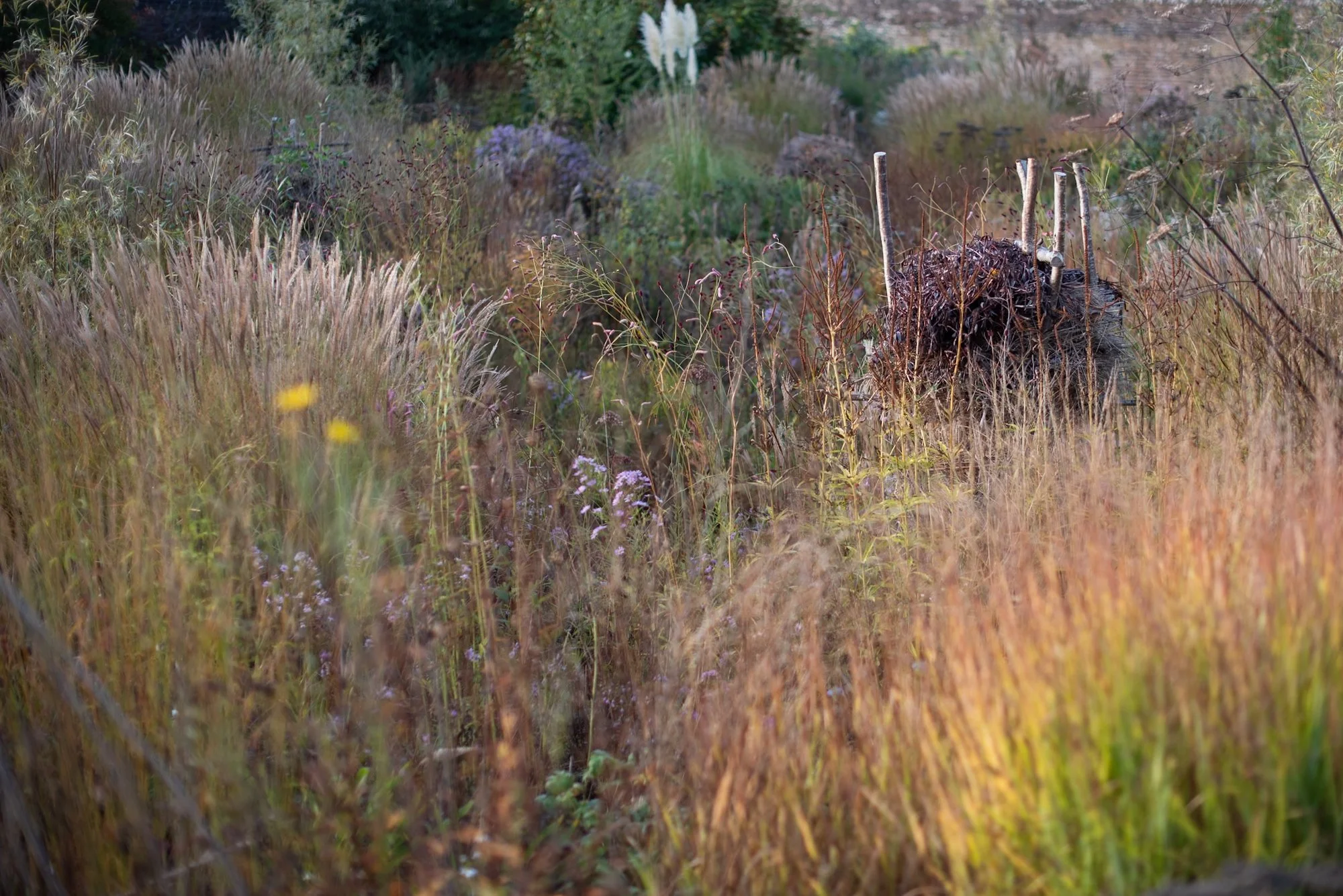
Until 2021 the walled garden beside Knepp castle was a perfectly flat croquet lawn. The creation of the garden was - and still is - an experiment in how to apply what has been learned through the wider rewilding project and attempting to initiate new ideas in how we think gardens can function as dynamic ecosystems. The garden was designed by Tom Stuart-Smith in collaboration with James Hitchmough (professor of horticultural ecology at the University of Sheffield), Mick Crawley (emeritus professor of plant ecology at Imperial College, London) and Jekka McVicar (an organic gardening expert). To create a garden of varying aspects and soil conditions, crushed building waste was dumped on the site to establish an undulating surface of humps and hollows, planted with drought resistant varieties that can thrive with limited fertility and water.
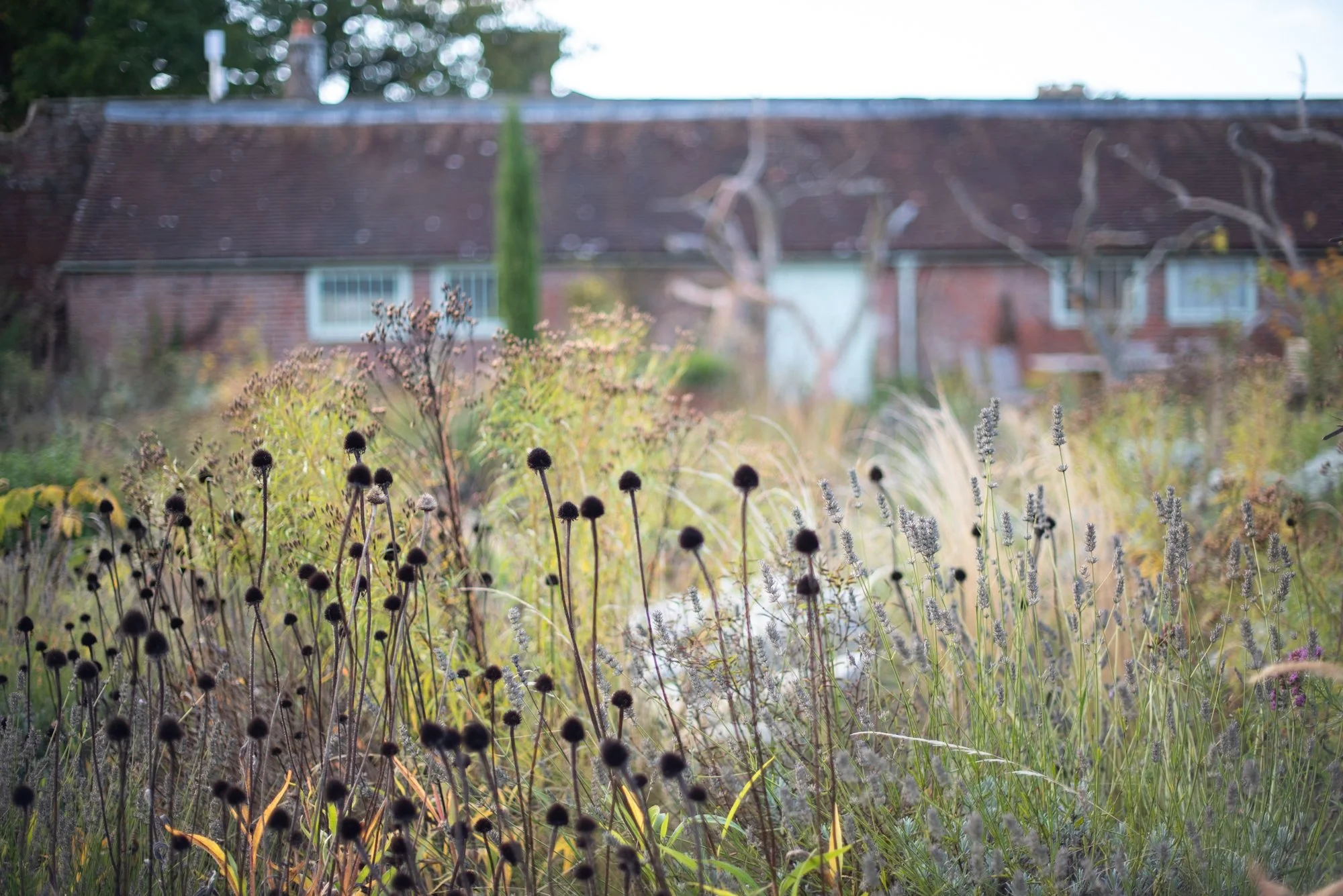
The Walled Garden at Knepp is beautiful - it’s a luxurious planty pleasure to behold and to experience - to sit in, to walk through. But it is also somewhere that gets your mind racing. It raises really important questions about how to grow and harvest flowers in a garden setting more sustainably and with the promotion of biodiversity always in mind. Thinking of ourselves - the gardeners - as a ‘keystone species’ sounds bizarre at first, but if we think of our movements and activities in the garden as mirroring those of larger herbivores, creating disturbances that allow opportunities for other species to thrive, it really makes sense.
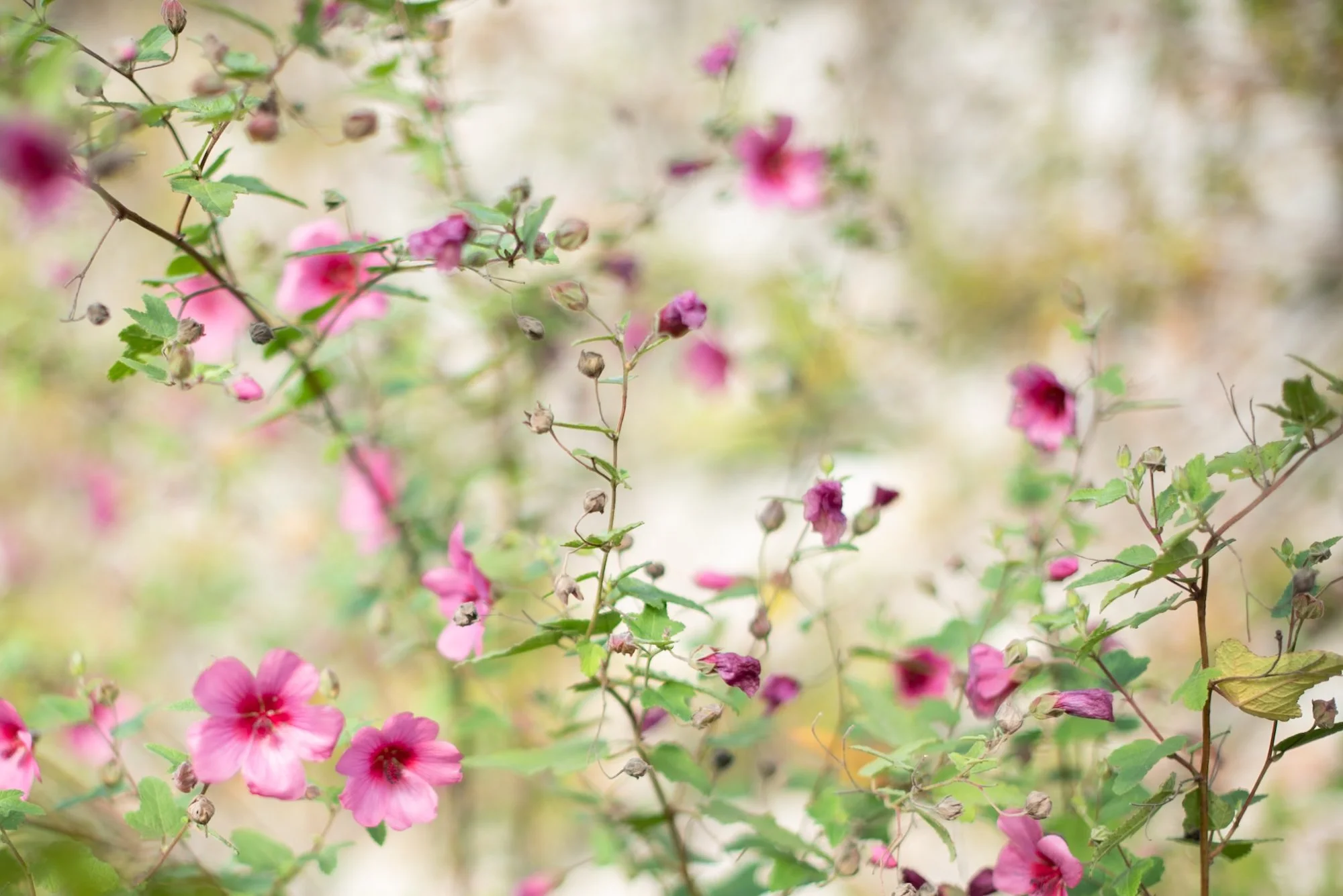
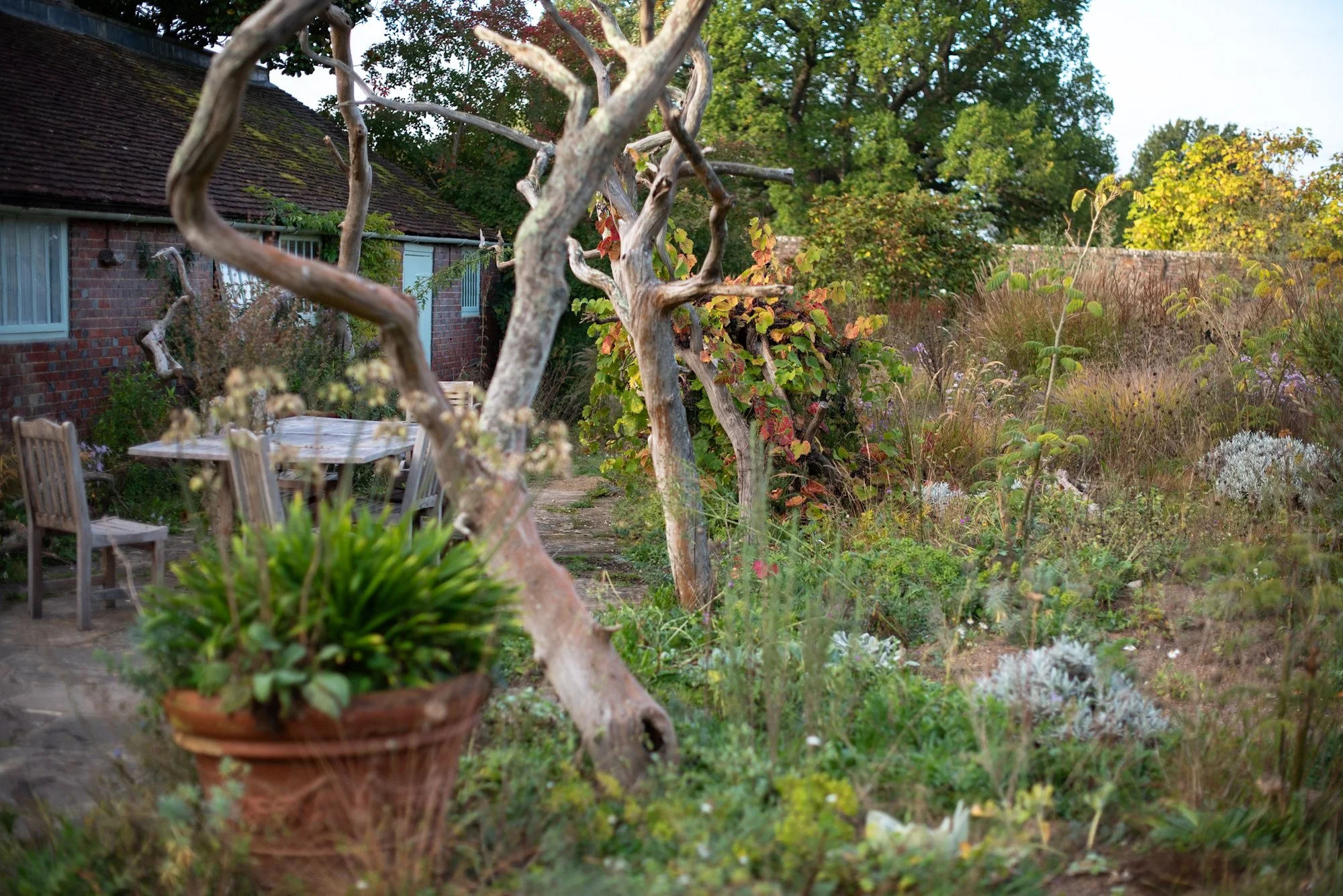
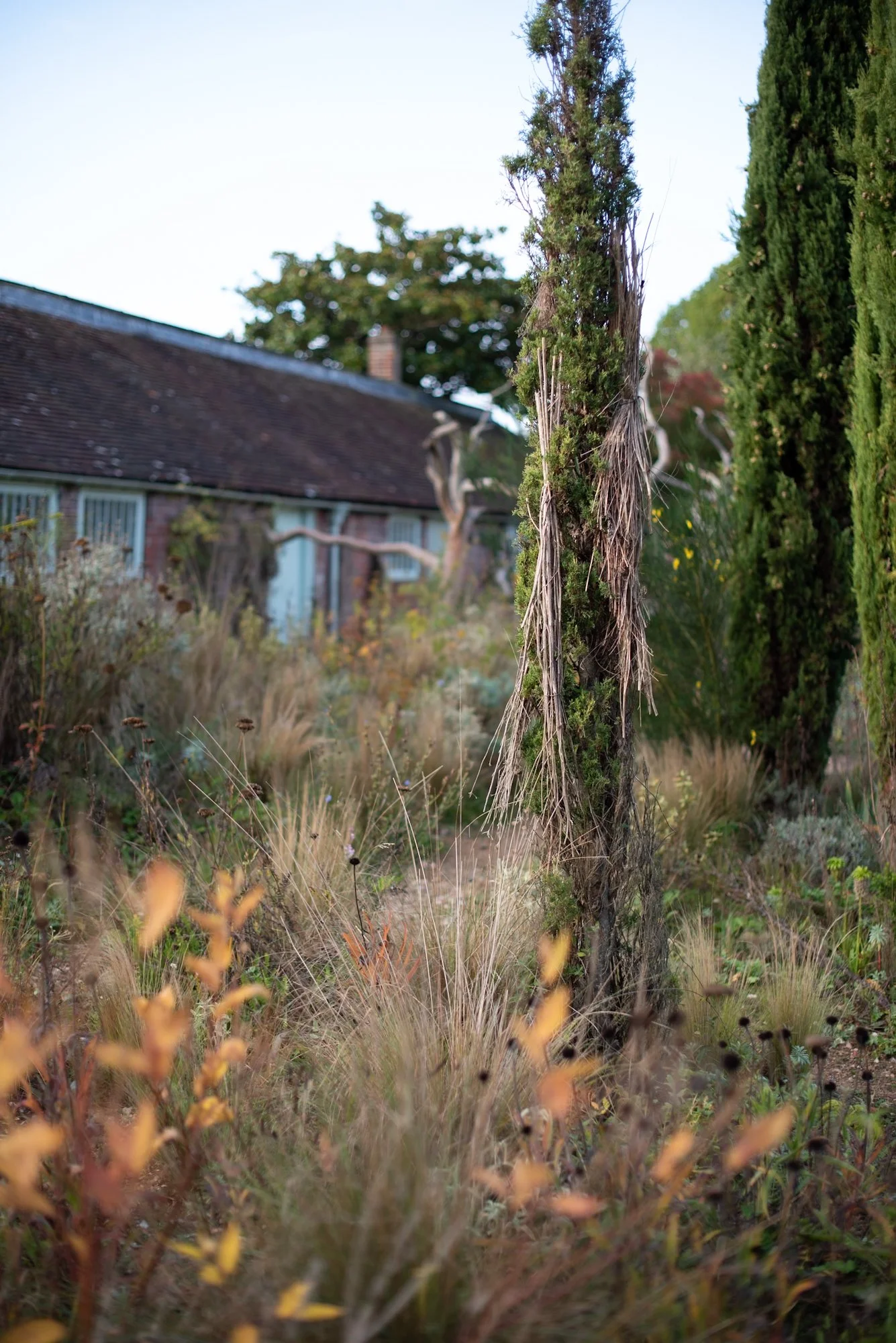
I love the Knepp expression ‘judicious intervention’ applied to a garden context. This isn’t letting go; it isn’t an excuse for laziness or neglect - far from it. In fact it means looking closer, really looking. Keeping an eye on the plants that dominate and thinning them out, or ‘grazing;’ only when and where it’s necessary. Noticing the opportunities our plants provide for insects, birds and other wildlife. Working with nature rather than battling against it.

Jess has been following the project with a great deal of interest - she was first in line for Isabella’s book Wilding, which was published in 2023 and visited Knepp last summer on one of their (she says excellent) garden tours. I’ve often noticed that the way Jess gardens is relatively gentle. She’s an active gardener (certainly not hands-off) but there’s a thoughtfulness to her approach that leaves space for things to develop - she doesn’t rush in, she watches and waits and then acts very decisively once the way ahead becomes clear to her. In the latest post of her excellent blog, Knepp’s deputy head gardener Moy Fierheller writes “observe, reflect, adapt”. I think this is the most valuable lesson we can learn as gardeners and as caretakers of our own natural spaces. Watch and wait, exercise patience, practice restraint.
As a cut flower business to also be our own producer is still relatively uncommon. Not without its challenges or frustrations - and not for the faint hearted - I would nevertheless say that it is intrinsic to how we work. Not only does it inform and inspire the naturalistic style of the designs we create for events and teach, it also gives us both control and freedom in terms of the supply of our materials - we can grow unusual varieties that aren’t available wholesale, we can change the varieties, quantities and colours of what we grow on a seasonal basis, we can cut the stems in a way that suits our designs which is very different to how stems are presented when commercially grown and harvested and (most of the time) we’re self sufficient and therefore not subject to the fluctuations of price or supply of the wholesale markets. On the other hand we are very beholden to the vagaries of Mother Nature.
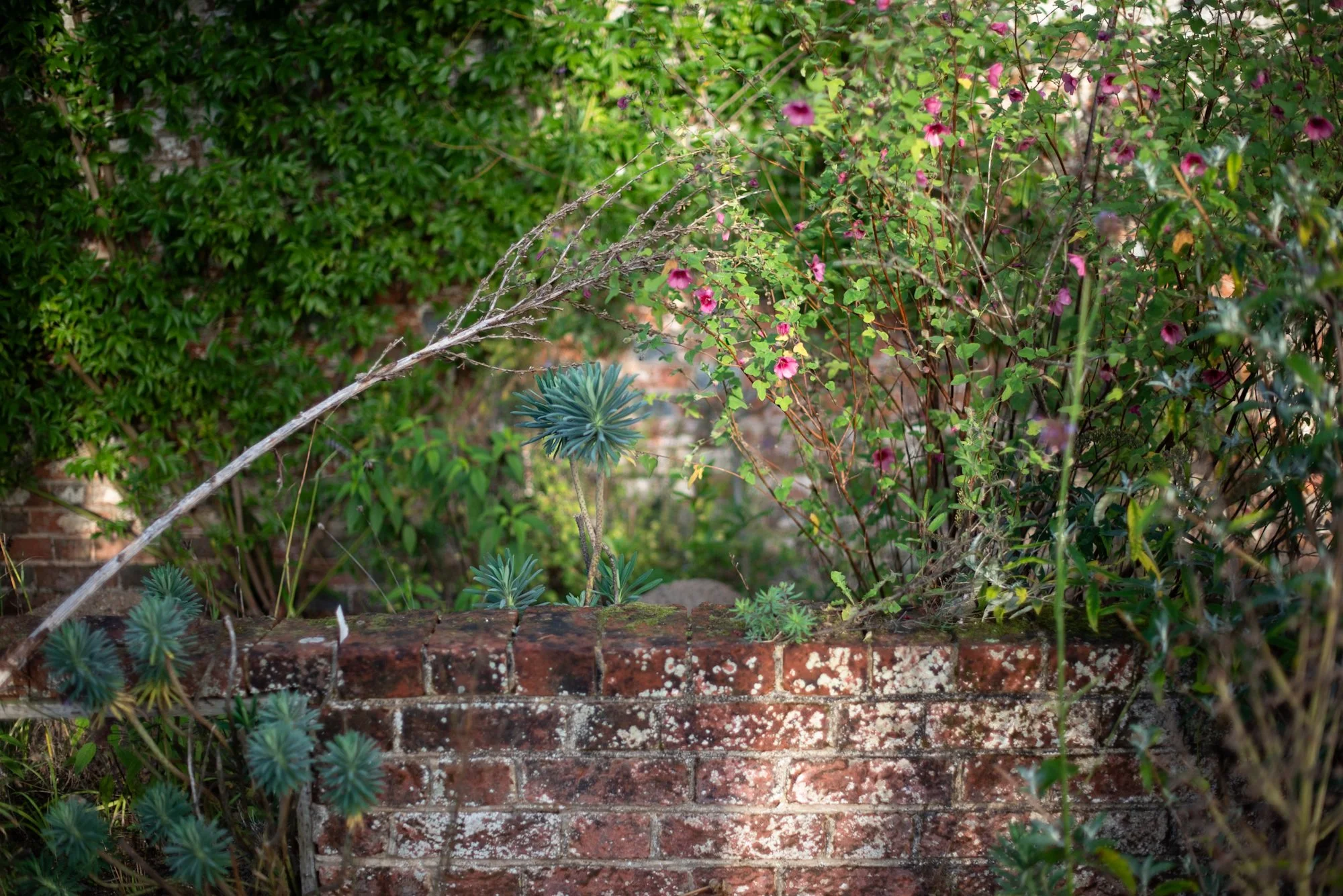
Our growing site has evolved significantly every year since we first started the cutting garden in 2016. From a tiny allotment it quickly developed along the recognisable lines of the small-scale flower farm set-up. We were greedy for plants and experience rather than with a wholesale business plan in mind. We did a lot of events in those years but even so were vastly over-producing in terms of the quantity of cut flower stems needed to supply the studio, especially because we were mainly concentrating on cut-and-come-again annuals (on the plus side the insects were having a field day). In 2020 Jess decided to develop the garden, adding a larger area of mainly drought-tolerant perennials that could withstand our increasingly hot summers and in the five years since has continued to evolve the space, gradually reducing the very labour intensive production of flowering annuals and allowing some areas to return to a wilder state. It has been an interesting experiment, particularly in the top garden which was once regimented rows of tulips in spring, dahlias in summer - and is now a miniature orchard of crab apple trees, wild flowers and grasses. We still cut from this area all the time - we use the grasses, we use the buttercups, the wild carrot, the yarrow, the teasels and buddleia and honeysuckle. It’s a ‘managed wilderness’ but still incredibly productive and supportive of insects, birds, field mice, toads and slow worms too.
I’ve always rather bristled at the traditional hierarchy imposed upon the materials that we use in floral design. The idea that cow parsley has no value because it grows wild on roadside verges is absolute madness to me. It is extremely beautiful and in profuse supply in May when it is useful as a frothy ingredient in designs that aim to evoke the natural abundance of early summer. It is also an early source of nectar for hoverflies, bees and orange-tip butterflies.
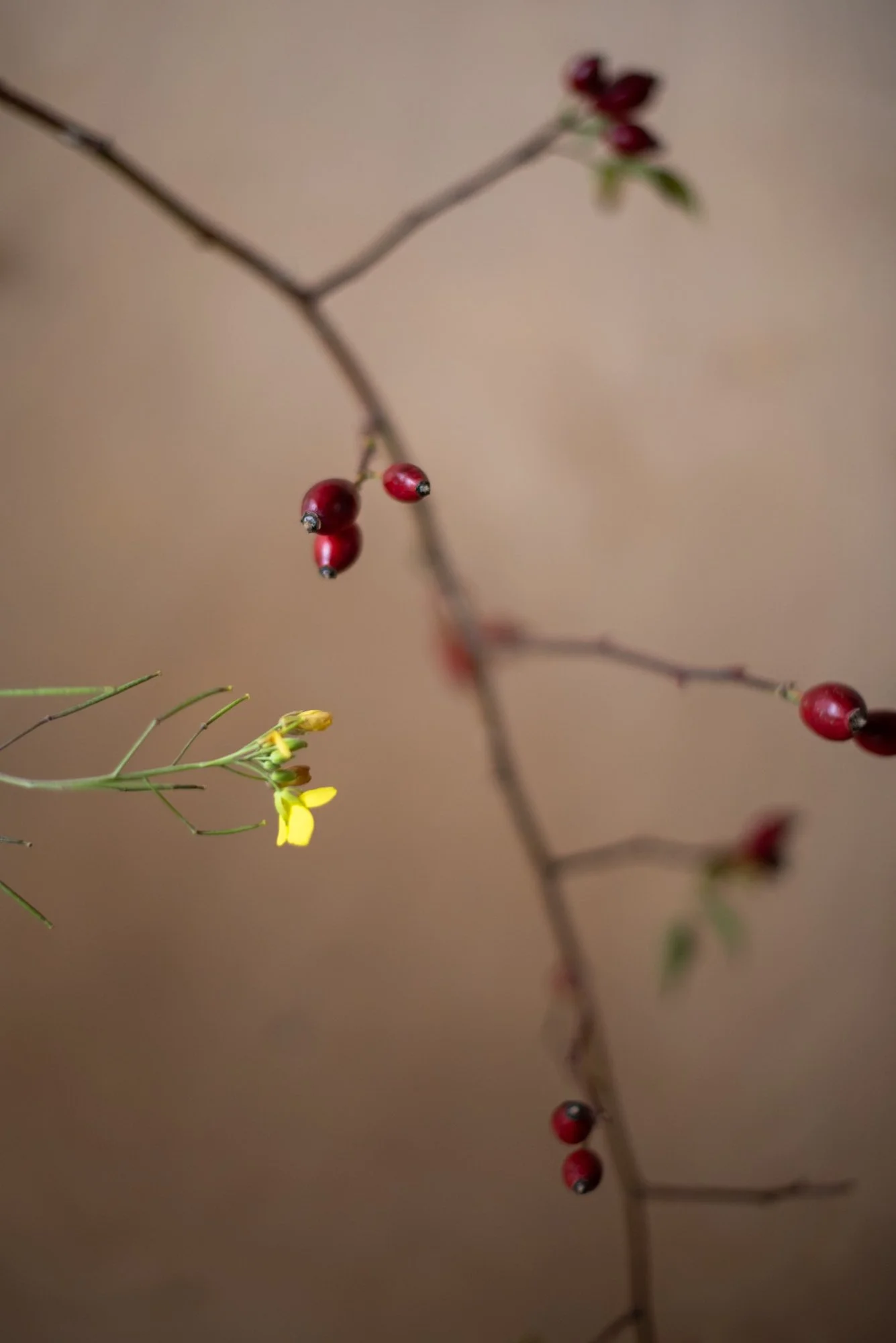
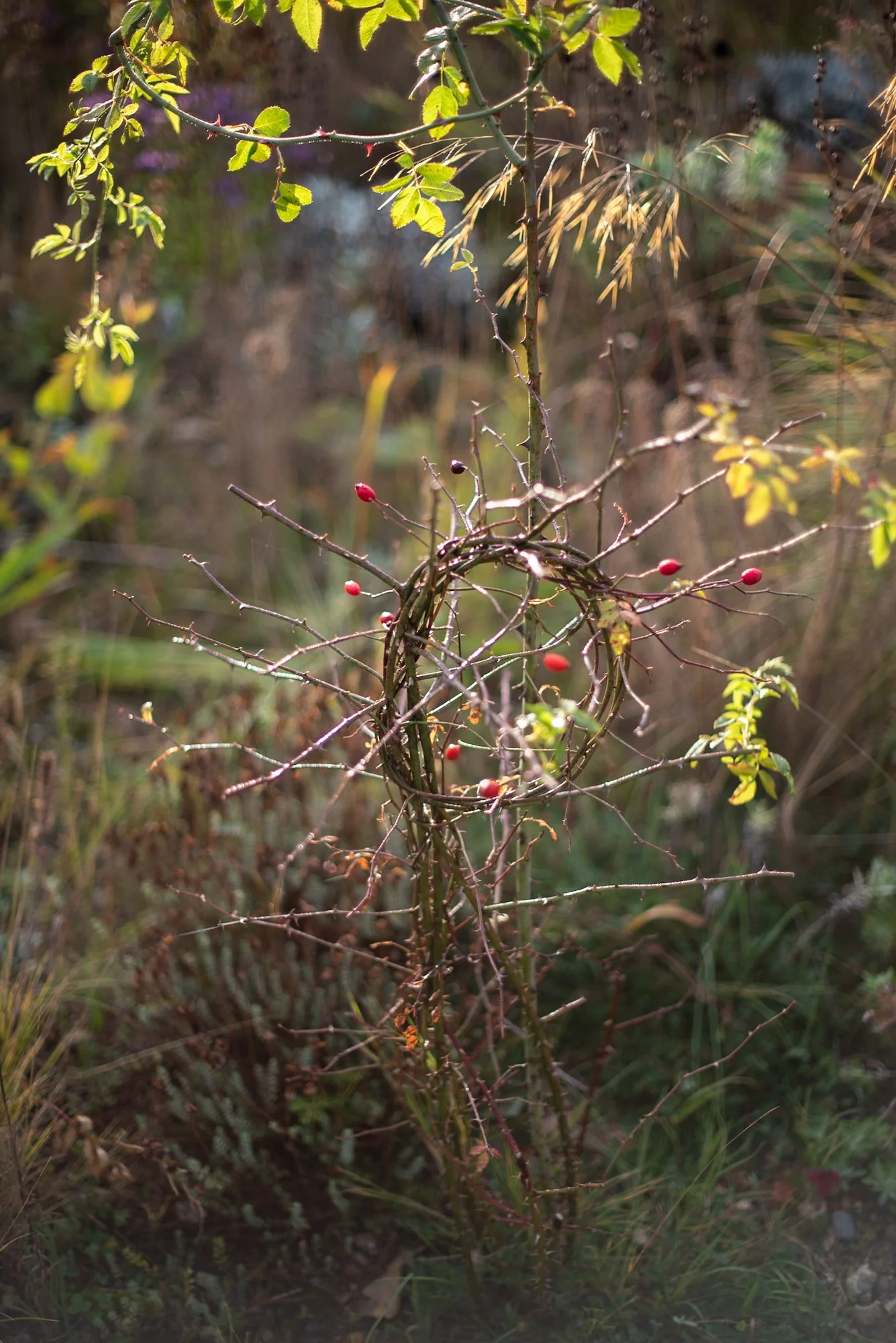
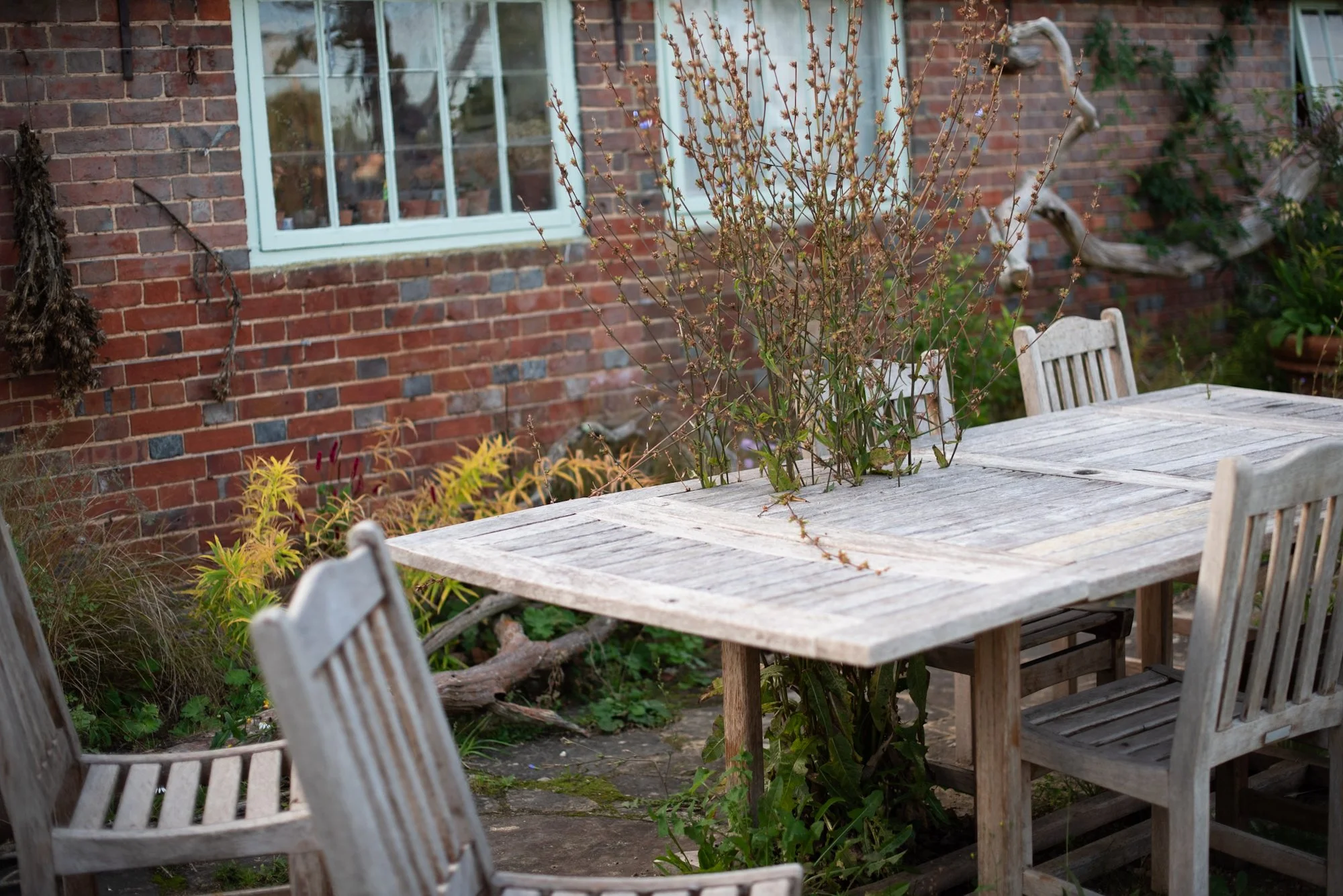
We’re advocates of accepting and utilising, within reason, the wild plants that crop up in the garden of their own accord. Thistles we mostly pull out. Nuisances like dandelions that can quickly get too big for their boots. We’ll always be battling the creeping buttercup, brambles and bindweed. Things that will hinder the growth of the cultivated plants that we need to harvest, yes, we ‘weed’ those out.
But the definition of a weed is highly subjective, and there are numerous examples of plants that are commonly thought of as weeds that we find either attractive or useful, or both and so, rather than constantly battling against them we simply use them, and welcome their additional complexity they provide in the natural habitat of the space. I mentioned the wild carrot and the yarrow but there are so many others - field poppies, greater celandine, wild clematis, mugwort, fleabane, ox-eye daisy, cow parsley, fireweed, bramble, dog rose, herb Robert, field scabious, forget-me-nots, St John’s wort, hemp agrimony, self heal, feverfew, hedge and Lady’s bedstraw, evening primrose, campion, common mallow, dead nettle, field pennycress, teasels. Reevaluating what to take out means we’re leaving plants that have a high ecological value because they provide food for pollinators and birds. But they also have uses for shape, colour, form, filler and texture in floral designs and are often in such abundant supply in the surrounding countryside that the small amount we take barely makes a dent.
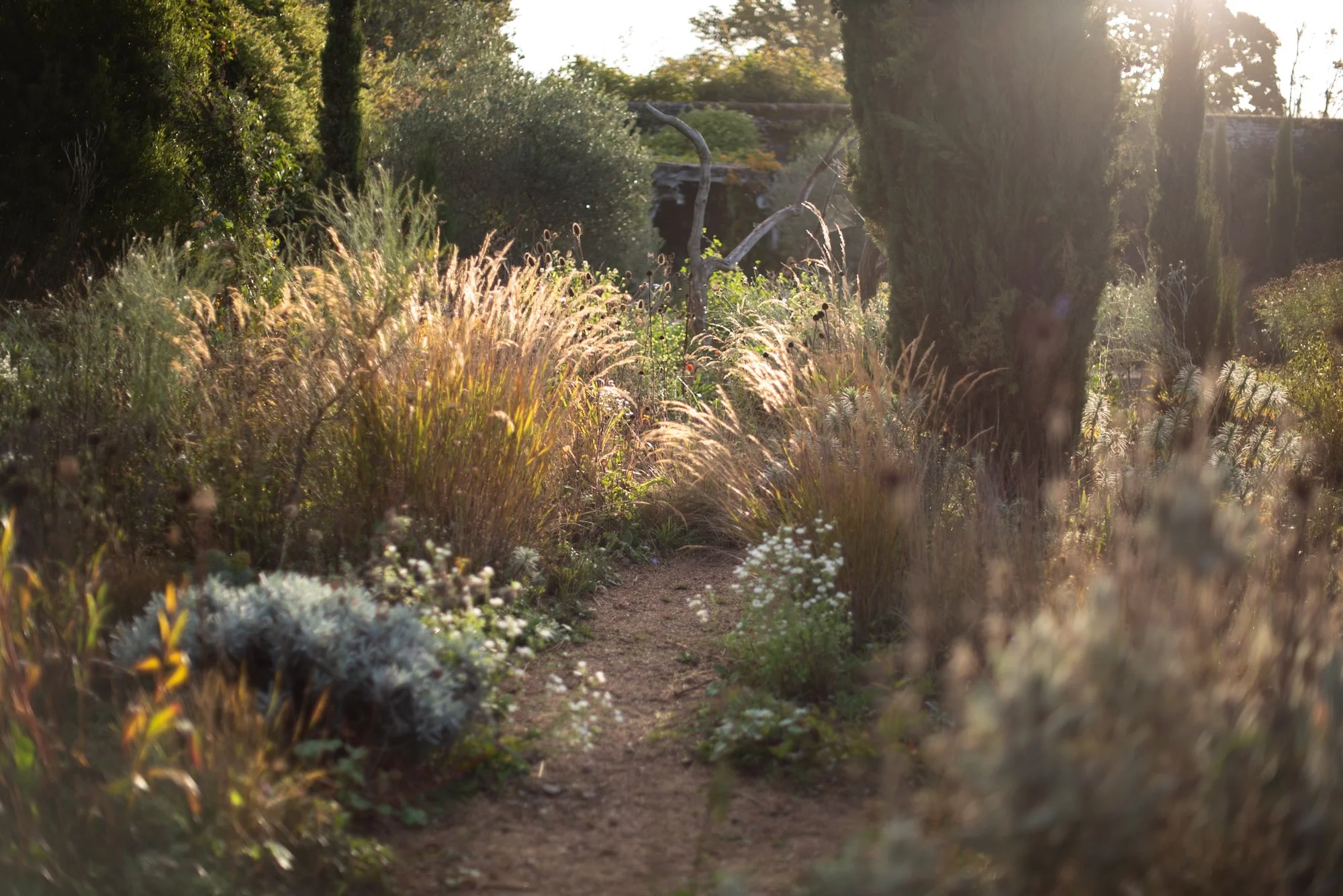
When I raise my head above the parapet of our little, very particular bubble I am often disheartened by what I see in the floriculture industry. Wastage, wire, chemicals, plastic, air miles, excess, thoughtlessness, flagrant mis-use of words like ‘natural’ and ‘seasonal’ when the products are anything but. BUT I really do believe there are positive steps being taken too - and there are people working incredibly hard to make that happen. Education around reducing the use of floral foam, being the main example I can think of in terms of sustainability. In this country there has been a resurgence of small-scale flower farms growing organically and presumably (though we’re not flower farmers) there is corresponding demand from the florists they provide. I often wonder whether so much of what we do as gardeners and as flower arrangers, too, is because we’re on auto-pilot, and because we’ve inherited ways of doing things that its time to move beyond, or at least to think through, to question. Do these methods serve us - as producers, as consumers, as designers, as caretakers. Do they improve our world?
Something to think about. Thank you to Knepp for raising the questions.
In our latest Flowers on Film episode we visit the Knepp Walled Garden on a glitteringly beautiful autumn day and dive into a conversation with Head Gardener, Charlie Harpur. The next day we continued mulling the links and overlaps and I made an arrangement inspired by the garden there, trying to incorporate as many of these threads as possible. In the spirit of Knepp it’s an experiment - a fun one. We hope you enjoy it.
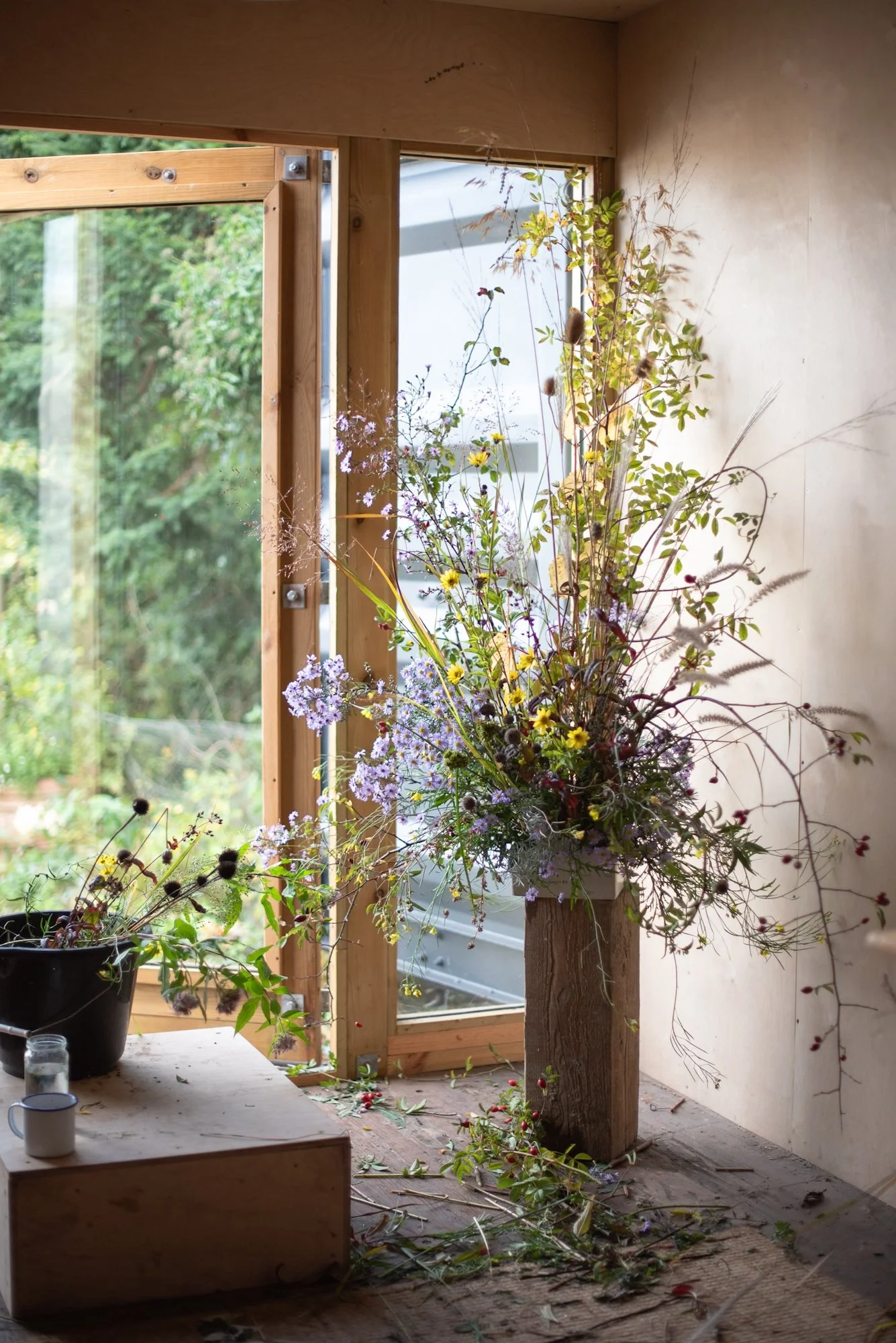
If you’re able to get to Knepp to experience the garden - and the wider estate - first hand I’d highly recommend it. If not, or not for a while, there are plenty of ways you can learn more in the meantime.
Knepp Website

NERINE ADORNMENT
The Nerines are coming through now from the garden. This week I had the charming company of a grower and arranger from Switzerland for a private class. I was praying Anouchka and the Nerines would coincide because they feel like the ultimate autumnal treat to pass on.
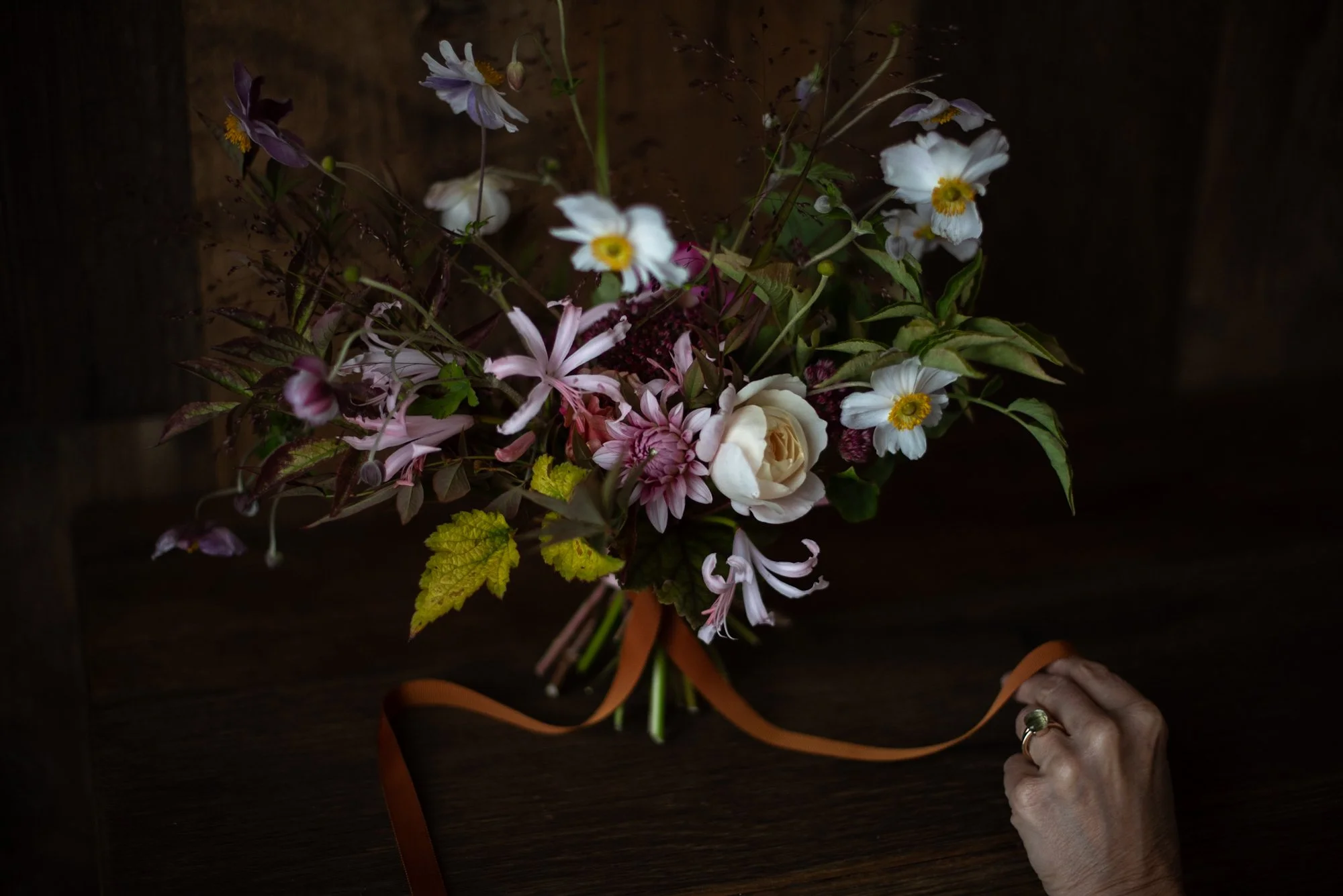
The Nerines are coming through now from the garden. This week I had the charming company of a grower and arranger from Switzerland for a private class. I was praying Anouchka and the Nerines would coincide because they feel like the ultimate autumnal treat to pass on. Fortuitously the garden gods obliged and we had a few precious stems to play with along with Japanese anemones, nasturtium, garden roses, asters and lots of glittering grasses which are fun to sprinkle and seem to add a bit of glamour at this time of the year.
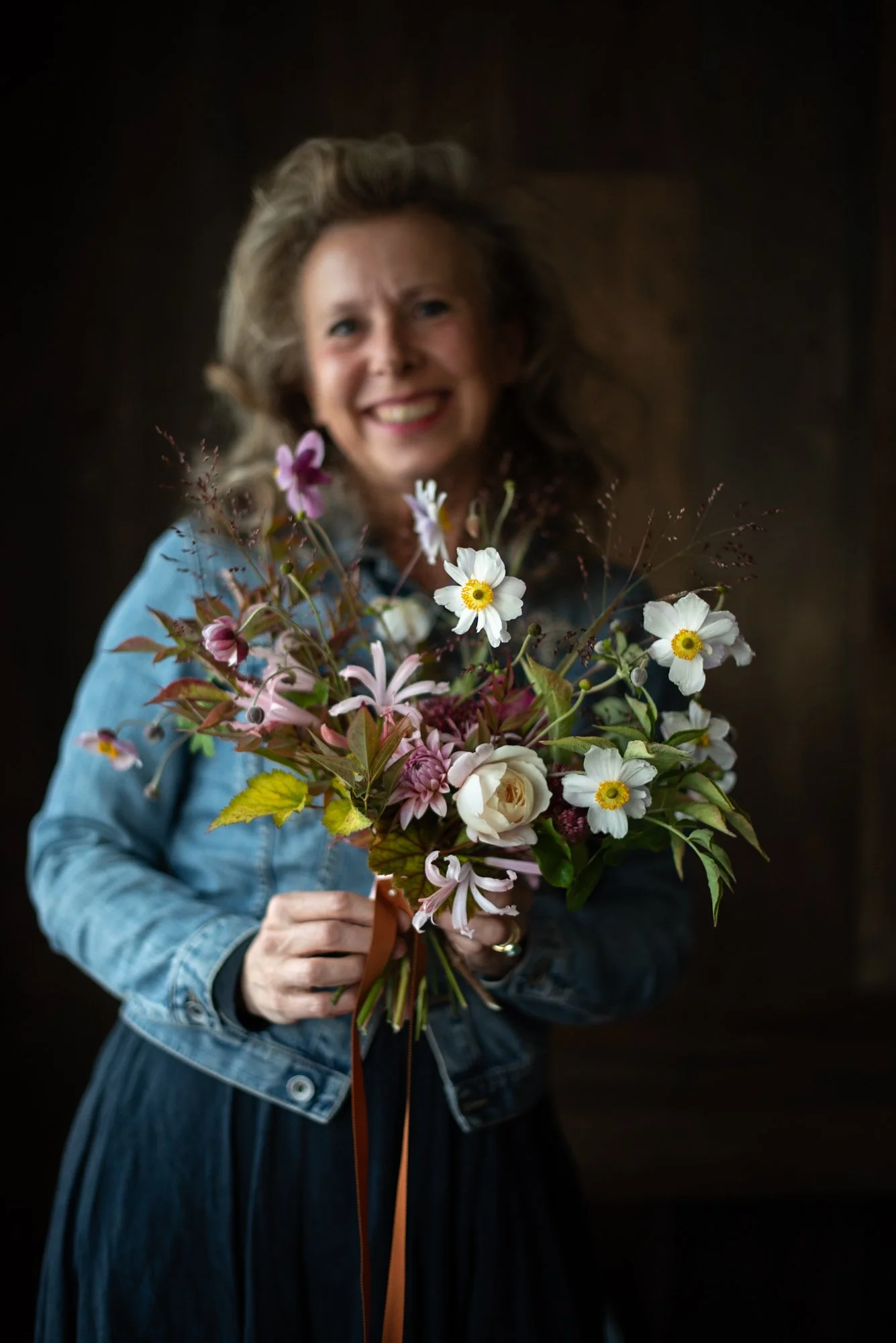
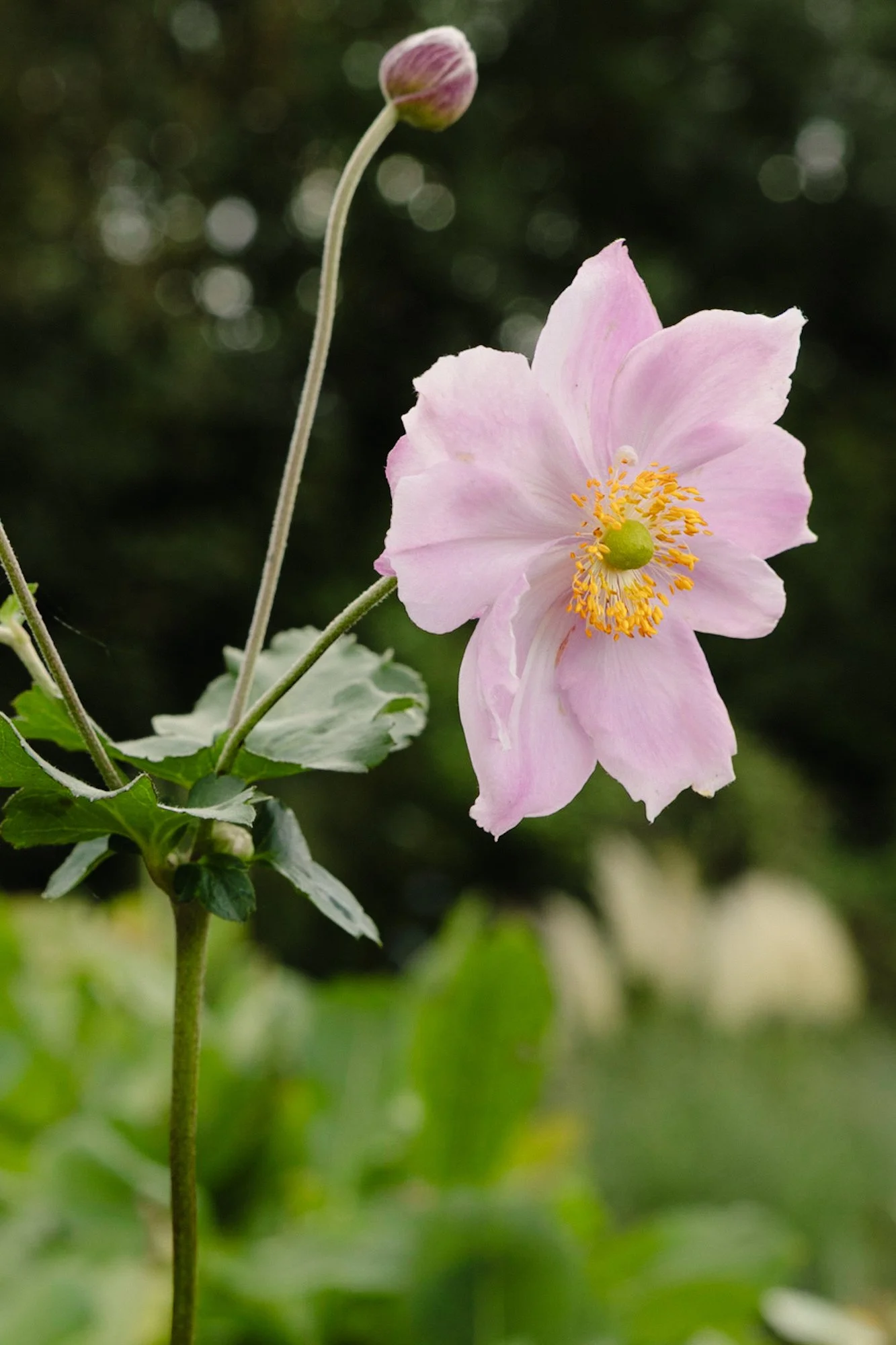
I always feel autumn is the most glamorous time of the year - perhaps its the novelty of the darkness narrowing in around the edges of the day, the glow of lamplight, the slight chill in the air; it always makes me want to get my act together, sartorially, to dress up a little more, and I find that that also extends to my arrangements, this feeling of adornment, of leaning into the sensual, velvety textures, the smoky gemstone colours. It’s a yearning for cosiness, I suppose (as opposed to the crispness, the lightness of earlier in the summer). And there’s also that sense of urgency that we’re on limited time; there’ll soon be frosts and the days of cutting flowers in the same abundance we’ve grown used to are numbered. The addition of a metallic grass to an arrangement has the same effect of adding jewellery to an outfit - a little sparkle, the dangle of an earring to catch the light…
Nerines are a guernsey lily. We grow a few varieties - this one is Nerine bowdenii ‘Vesta’. You plant them as a bulb and they naturalise, returning every year just when what you’re craving is a frilly, powder pink flower that smells of milk chocolate.
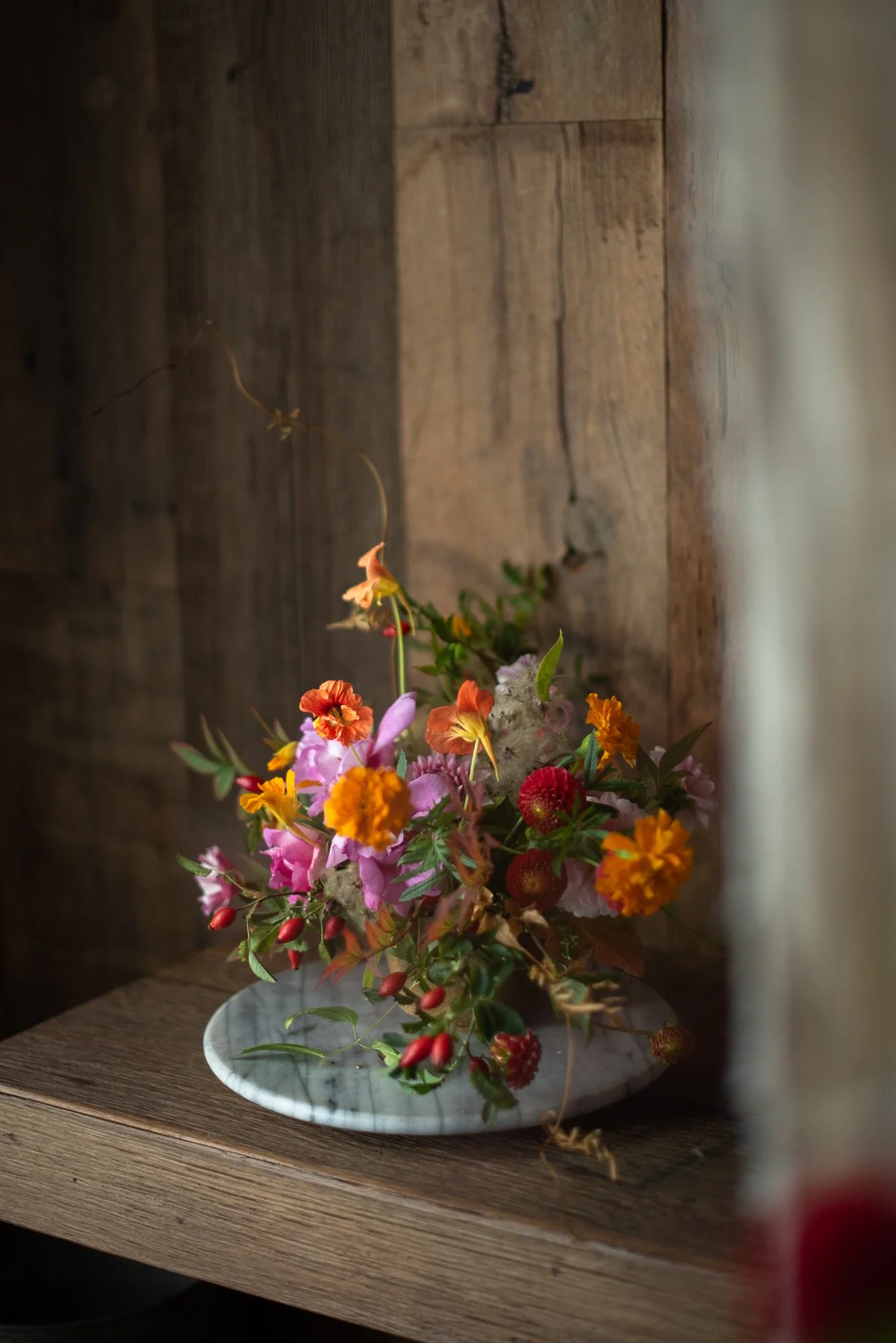

Speaking of gifts, I have a funny story to tell you that I think if you’ve found your way here you’ll probably appreciate. We had a guest on our last workshop of the season named Nancy, and Nancy is into ‘dead stuff’. Botanical dead stuff, I hasten to add! During those two days we noticed that she would nip outside every now and then. At first I thought it was to field calls from Delta Air Lines to arrange her travel back to Colorado following a cancelled flight but then it became clear that, while this may have contributed to her frequent in-and-outs, there was also a spot of urban foraging going on.
Not content that there was quite enough deceased material in the studio to sate Nancy’s appetite, she took it upon herself to scour our backyard and planters for the missing pieces, returning with stems of sunbleached hollyhock (dried to the colour of parchment by the raging temperatures of our long, dry summer) and crispy wisps of wisteria and jasmine vine that tumble over our neighbour’s wall. After the workshop I saved the wisps and put them in a little bottle on the side and this week they were passed onto Anouchka who needed little persuasion that they were a great textural addition to the arrangement she was making (look closely and you’ll spot the bronze tendrils above). But the journey of the crispy wisps didn’t end there, oh no! Because Anouchka’s next stop was the studio of Sarah Statham at Simply by Arrangement in Yorkshire, and so off they went… Perhaps their final resting place will be Sarah’s compost pile but I feel like they’re something she will appreciate beforehand. Who knows, perhaps this could be the beginnings of a secret society for those who appreciate the beauty of the otherwise overlooked - our signal a wisp of dried jasmine vine passed surreptiously along, or tucked into the brim of a very good autumn hat. If you know, you know…

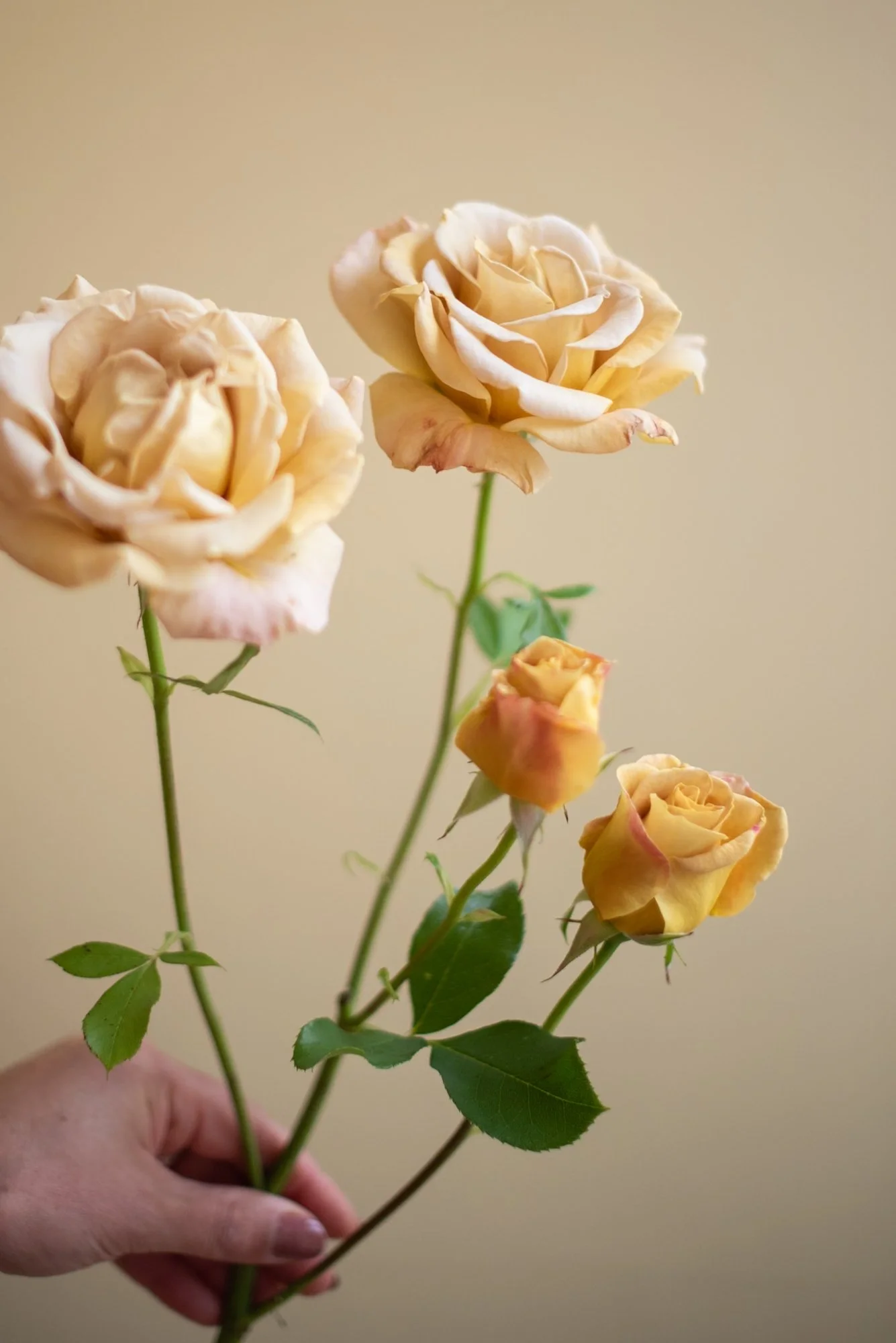
Anyway, I digress once again. Autumn is here and so it’s yes to the metallic grasses, to the guernsey lilies. Yes to the crispy wisps. Yes to all of it. And onwards into October!

JESS ELLIOTT DENNISON
A few years ago I listened to this podcast and later bought Tin Can Magic, Jess’s first cookbook, then her second, then her third. I followed her on Instagram and always found the dispatches from her cafe and later studio in Edinburgh inspiring because they struck me as so personal

A few years ago I listened to this podcast and later bought Tin Can Magic, Jess’s first cookbook, then her second, then her third. I followed her on Instagram and always found the dispatches from her cafe and later studio in Edinburgh inspiring because they struck me as so personal and it was evident that she was going about things very much her own way. I was also a fan of her flower arrangements straight from her cottage garden in the Borders and I just had an inkling that if we met we would become friends - we have a similar work ethic and approach and like us, Jess has a tight-knit family helping and supporting her. Running a small business is hard and its all-consuming so really the only way to make it work is to make it your whole life - or rather to create a life within it.
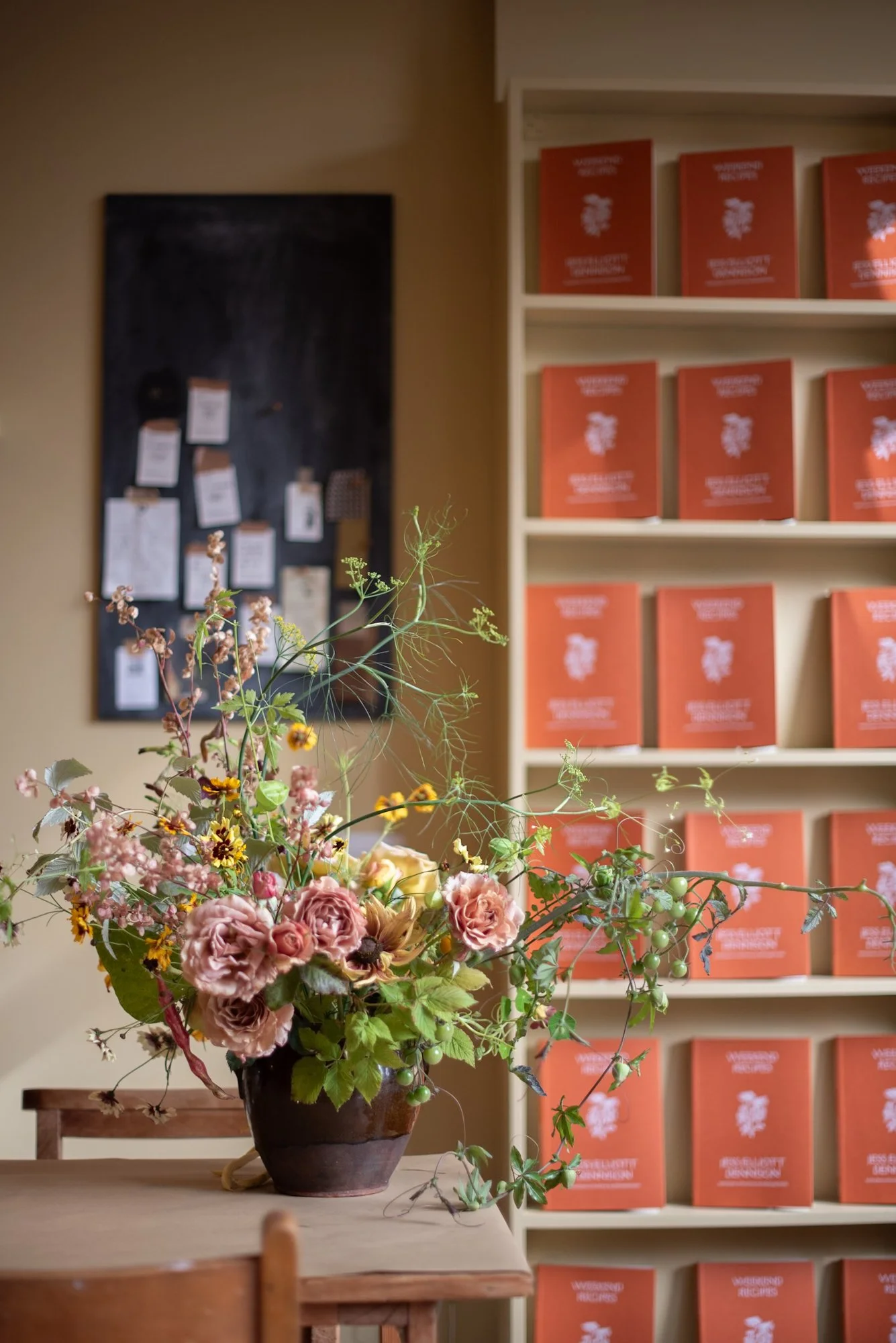
Finally the opportunity came about for us to meet. In 2023 we signed a book deal with Thames & Hudson (coming spring 2026) and the concept of that book was to spend each chapter in a different place that we find inspiring or have a personal connection to. When it came to focussing on the relationships and parallels between food and flowers I knew it had to be Elliott’s and from the first phone call Jess and I didn’t stop talking.
What I adore about Jess, and know you will too, is how true she is to herself. She loves to work and she approaches everything she does with a seemingly inexhaustible cheerfulness and positivity that’s both addictive and infectious.
In 2024 Jess took a huge leap of faith in deciding to self-publish a new series of cookbooks. The first was Midweek Recipes which I’ve cooked from all year; the recipes are tasty and most importantly no-fuss. Her latest is Weekend Recipes which I’m excited to delve into, especially during the festive season. The plan is to focus on vegetables next and then puddings. The books are beautiful and were written and shot in the studio on Sciennes Road and designed by Maeve Redmond. You can order them online or find a copy in lots of good independent shops including Topping & Company, Plumo Studio, The Hambledon, General Store, Objects of Use and Artwords Bookshop (all the best places).
They make great birthday gifts or Christmas presents and the spines look very enticing next to one another… Chocolate brown and ginger - what’s next?! We’ll have to wait and see. But go fast - they’re selling like hotcakes!
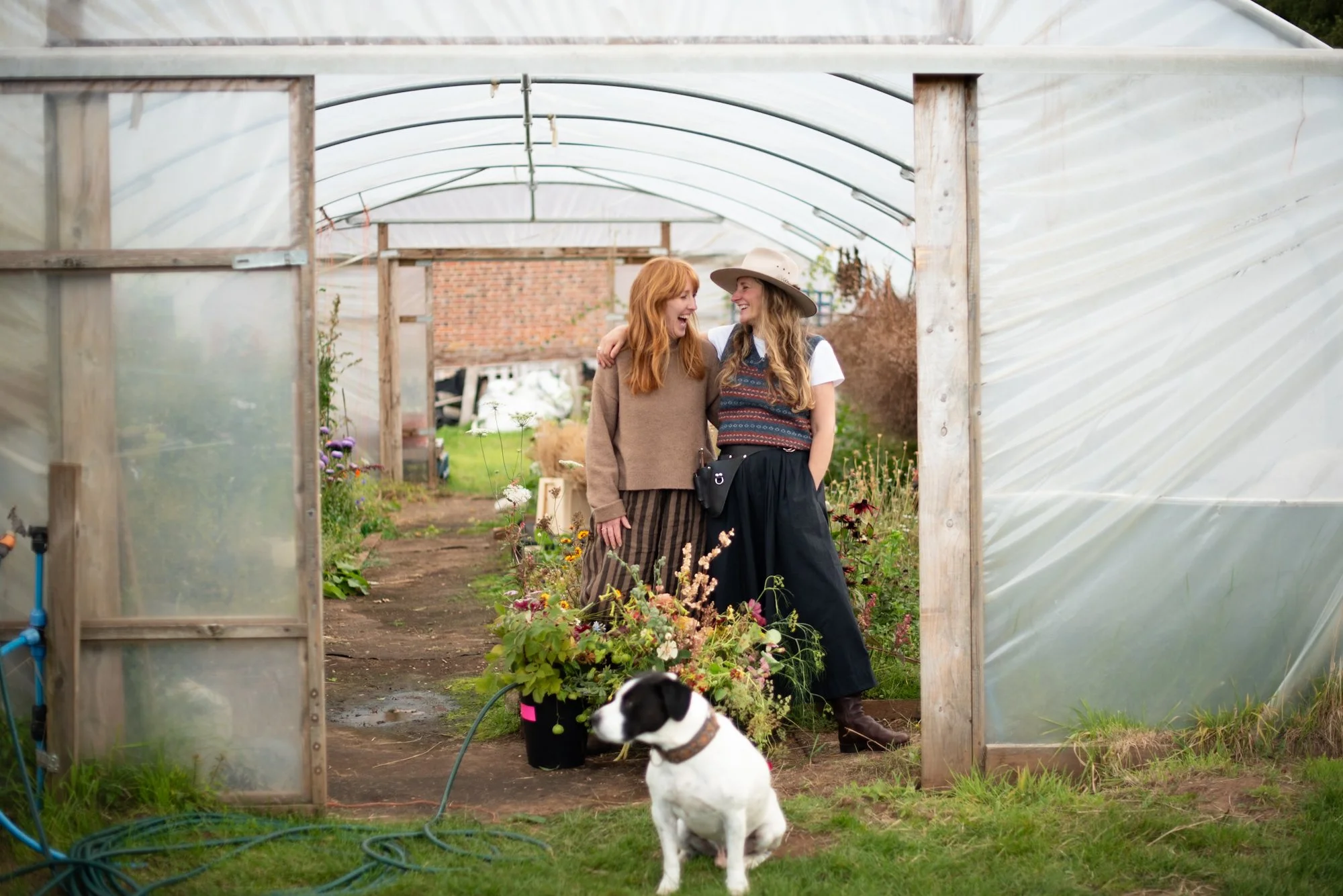
Food & Flowers | The Edinburgh Episodes is a five-part film series available to watch on our digital platform Flowers on Film.
Join our Mailing List to save 10% off a year of Flowers on Film
PYRUS BOTANICALS
Enclosed by high walls, Fiona Inglis of PYRUS has curated a growing space where every variety is chosen and cherished. At this time of the year the apple trees are smothered with fruit and the roses draped with necklaces of nasturtium, their vibrant petals streaked with…
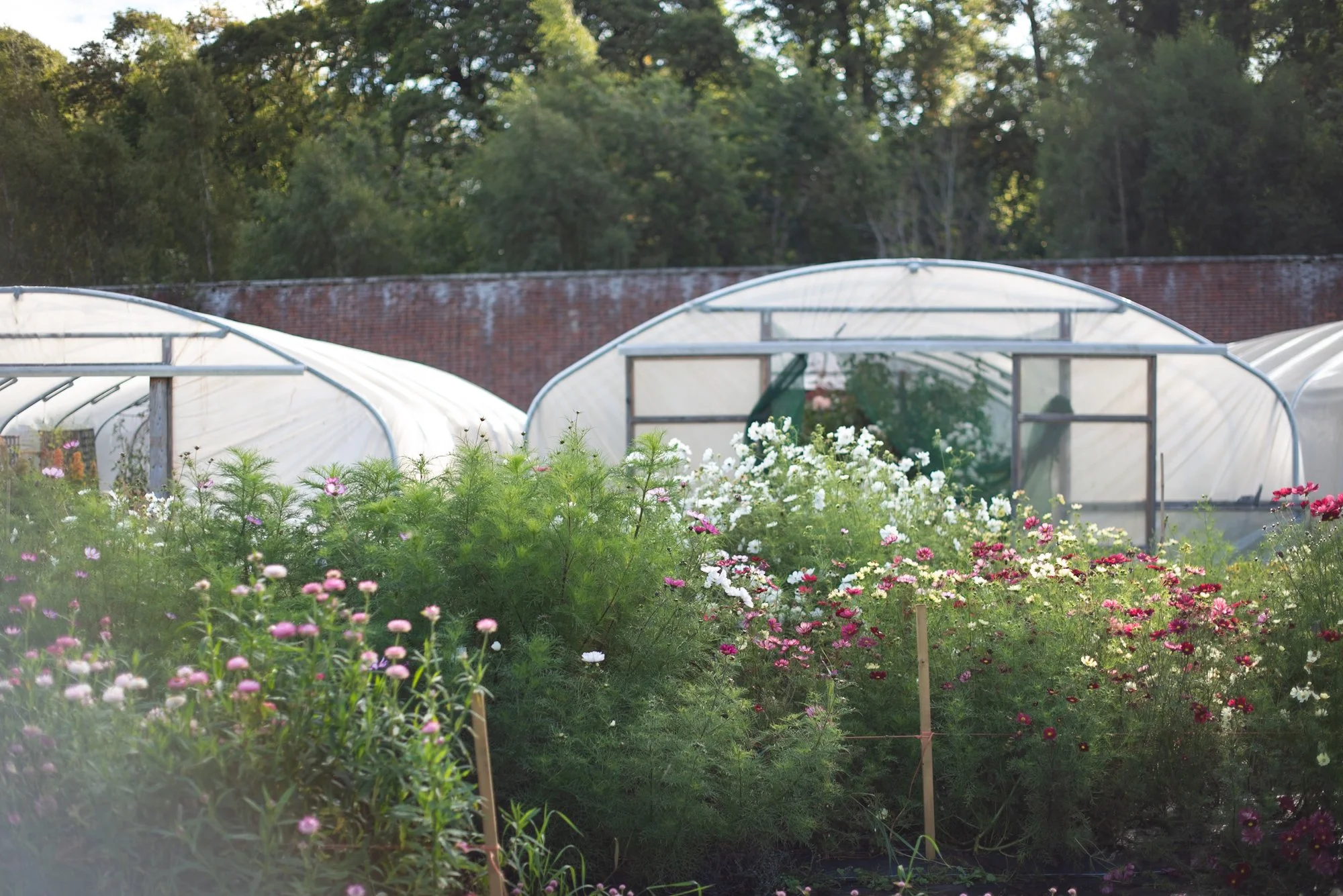
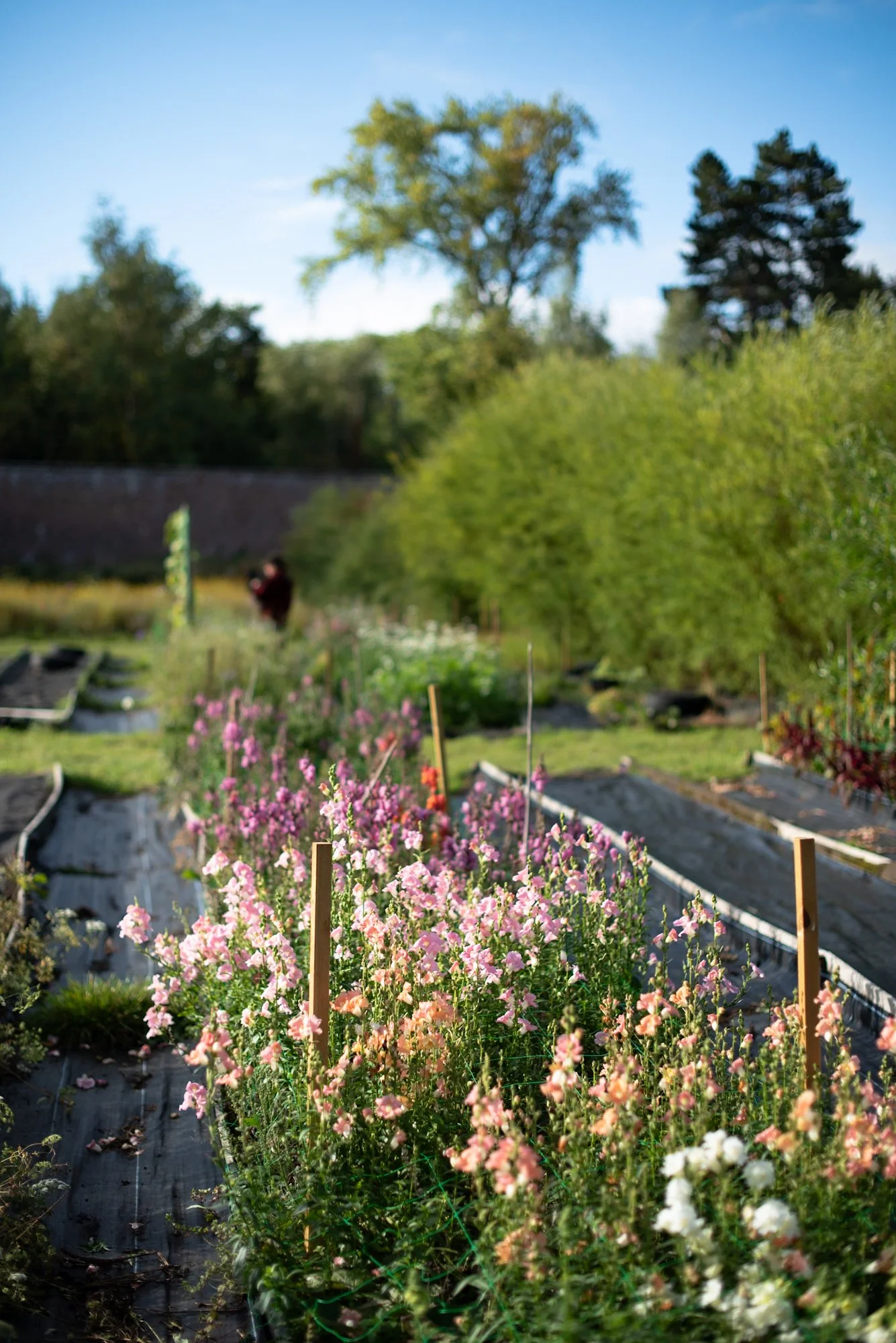
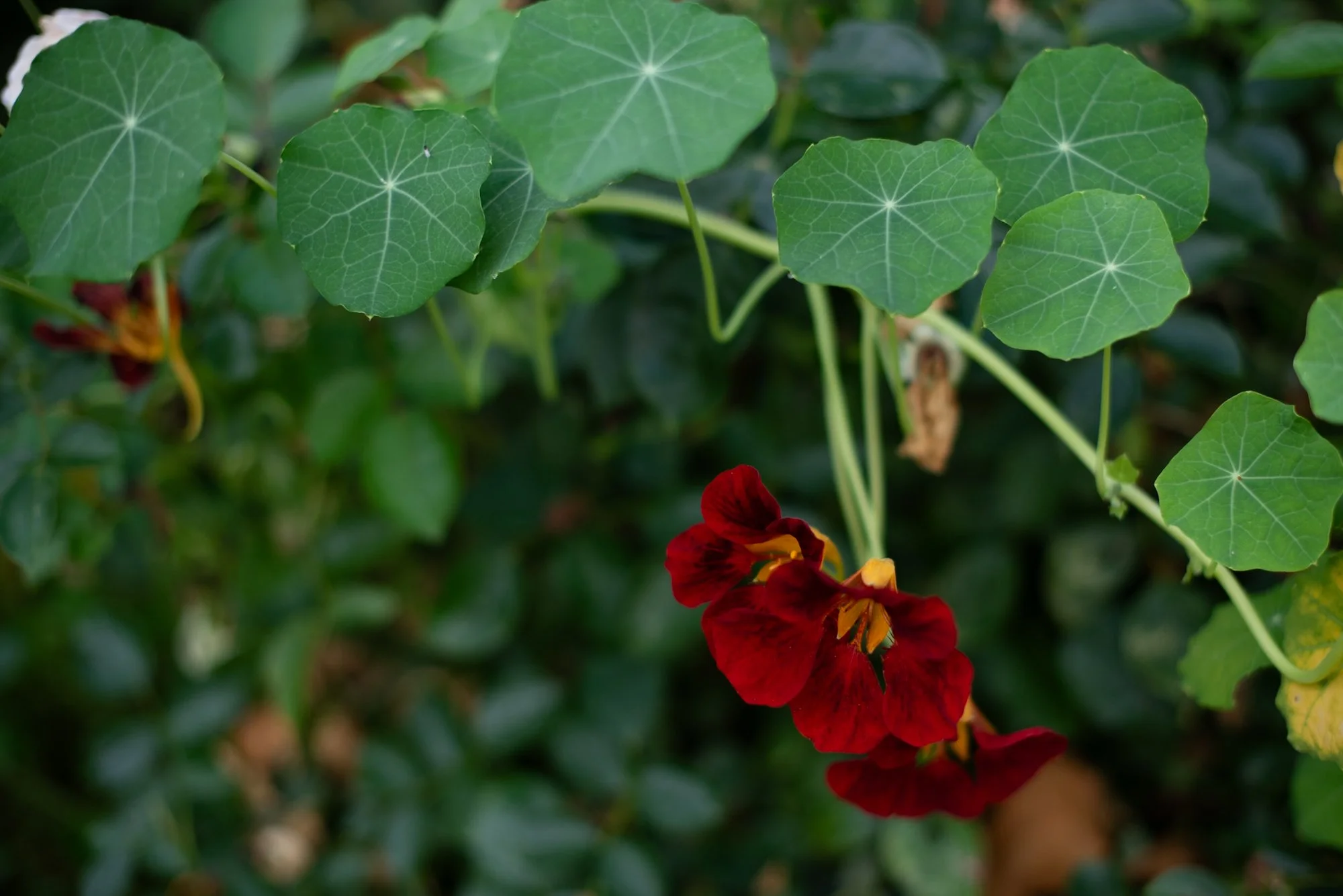
Enclosed by high walls, Fiona Inglis has curated a growing space where every variety is chosen and cherished. At this time of the year the apple trees are smothered with fruit and the roses draped with necklaces of nasturtium, their vibrant petals streaked with intricate lines as if some had dipped a brush in maroon ink and finely marked each petal by hand.
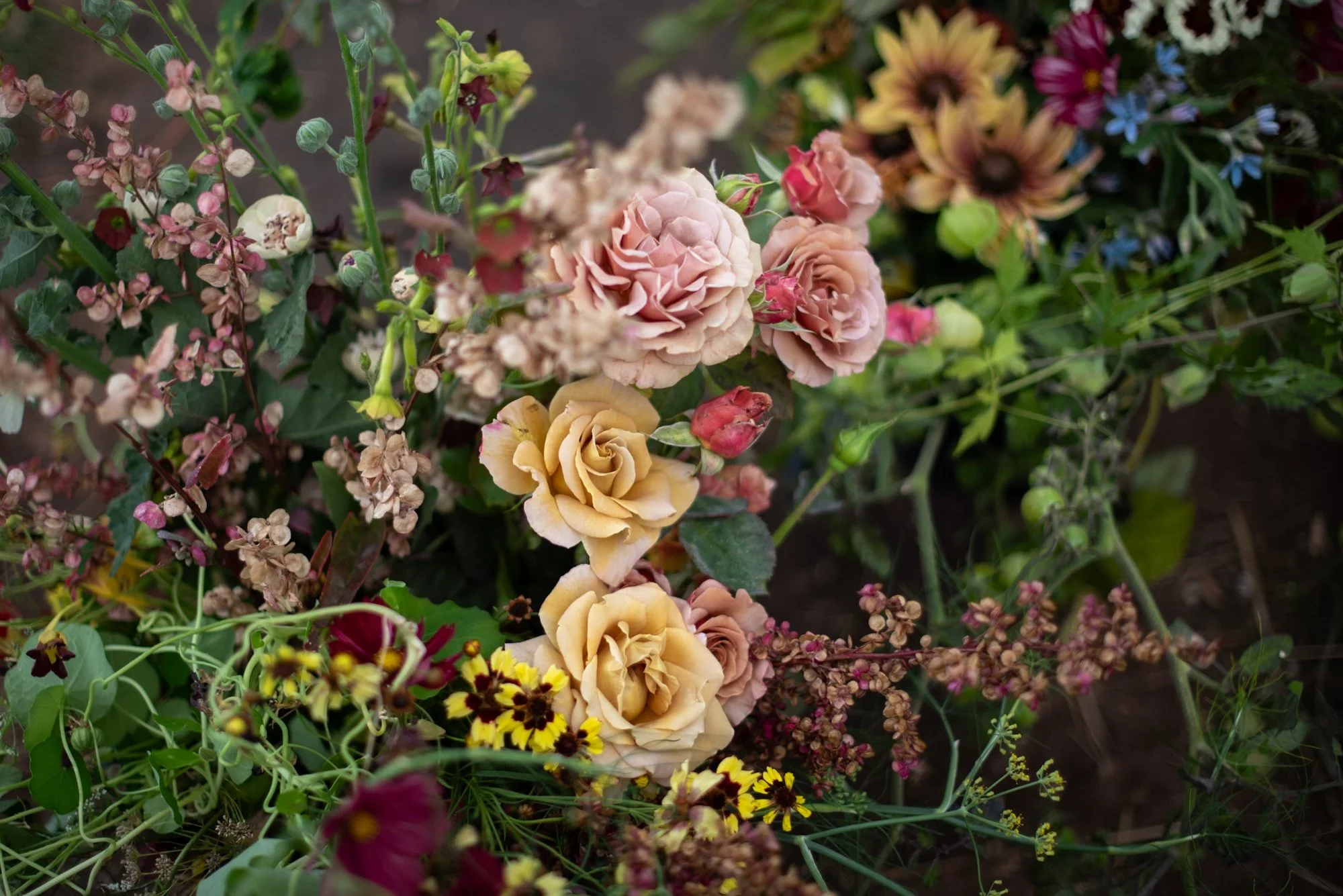
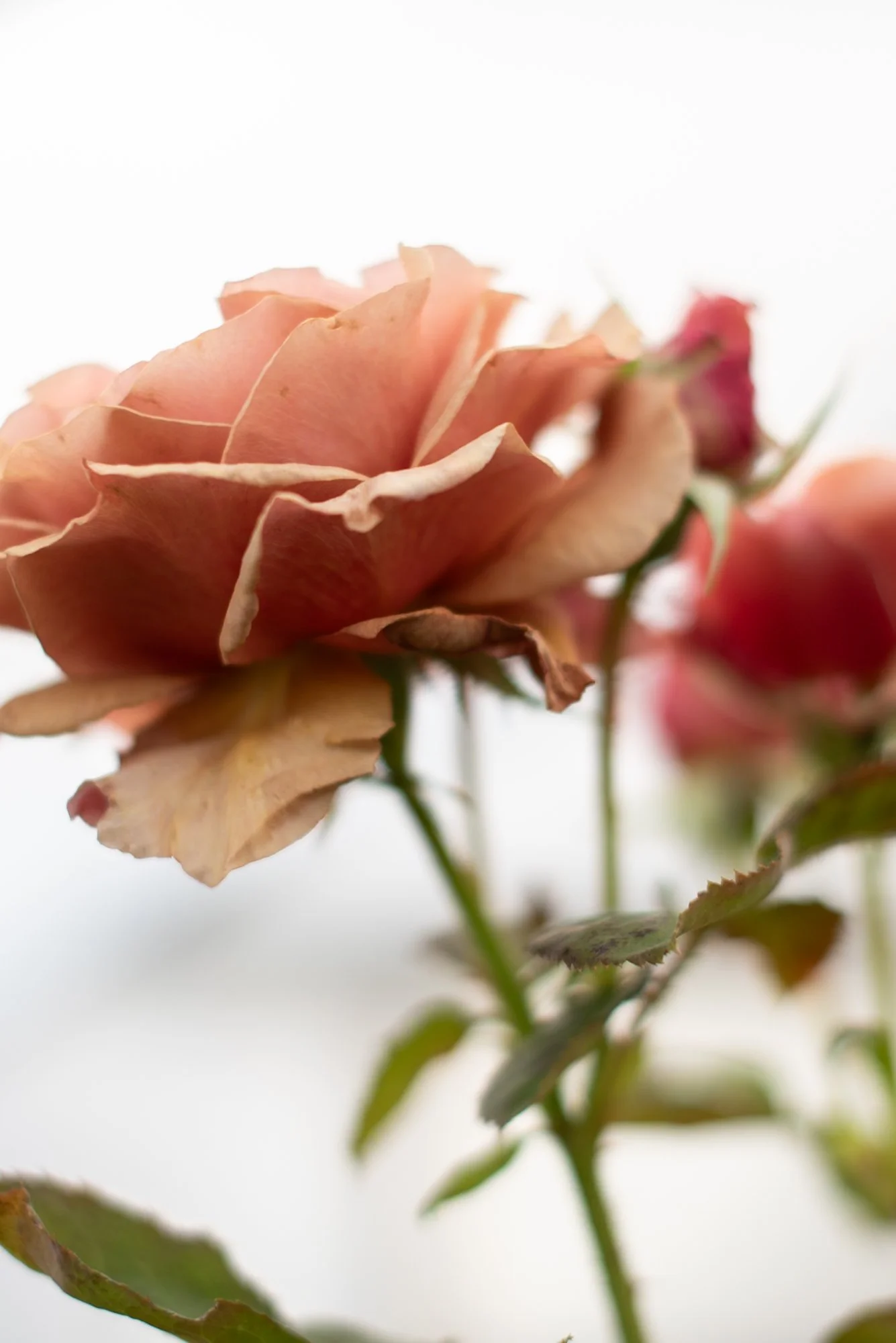
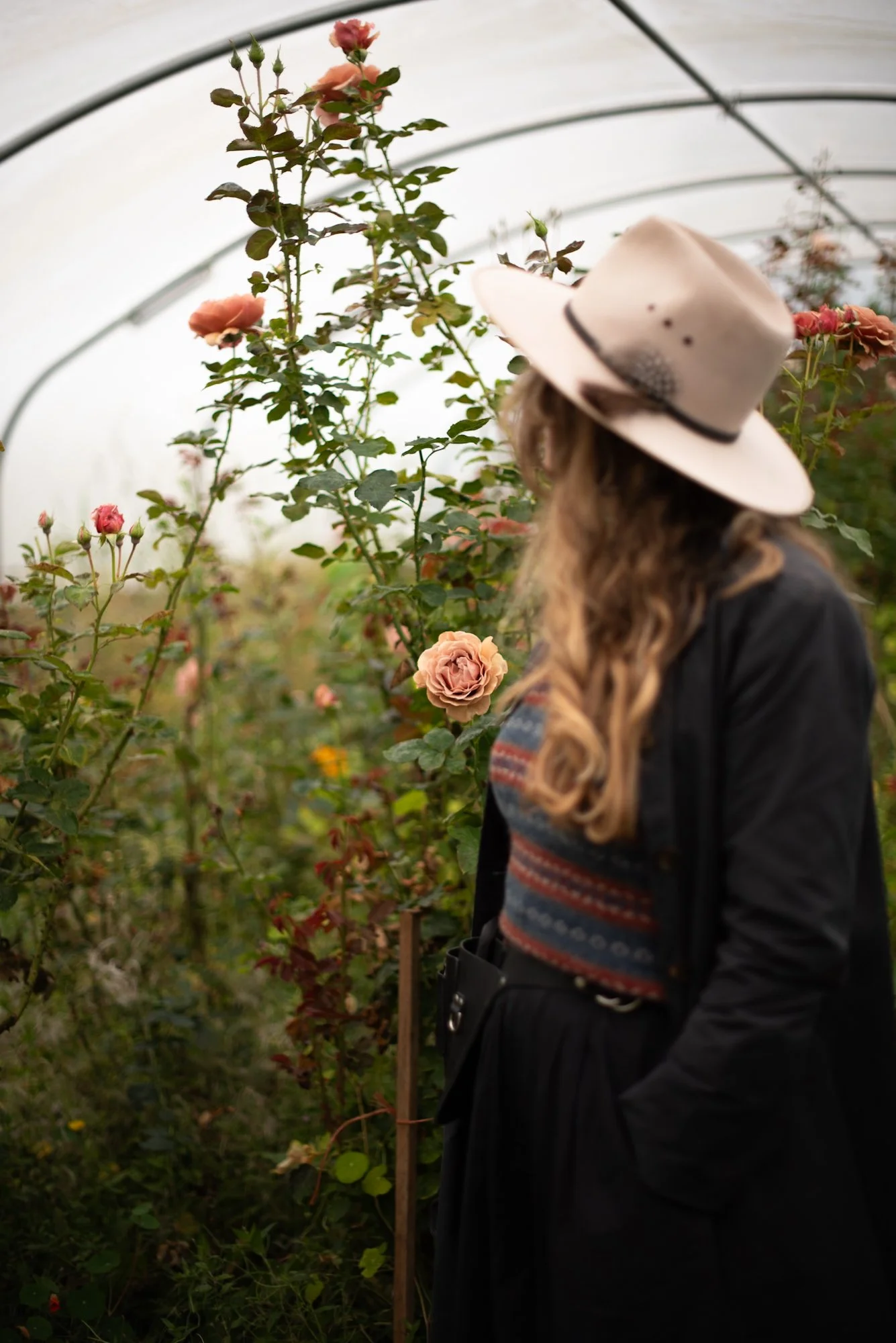
Distracted by so many delicious corners and moments, grappling a notebook and camera, I found it quite the challenge to focus on the task at hand - choosing the materials for my demonstration the following day at Elliott’s. I wanted to include as many edibles as possible, to tie in with the season and lunch menu and Fiona didn’t hold back - cutting me the cream of the crop of her beans and tomatoes as well as dusky coffee and mustard roses. Once I could envisage the colour palette - a blend of raspberry, soft browns and yellow - I was off to the races and quickly filled a bucket with tickseed and cosmos for colour, garden orache and fennel for shape and texture.
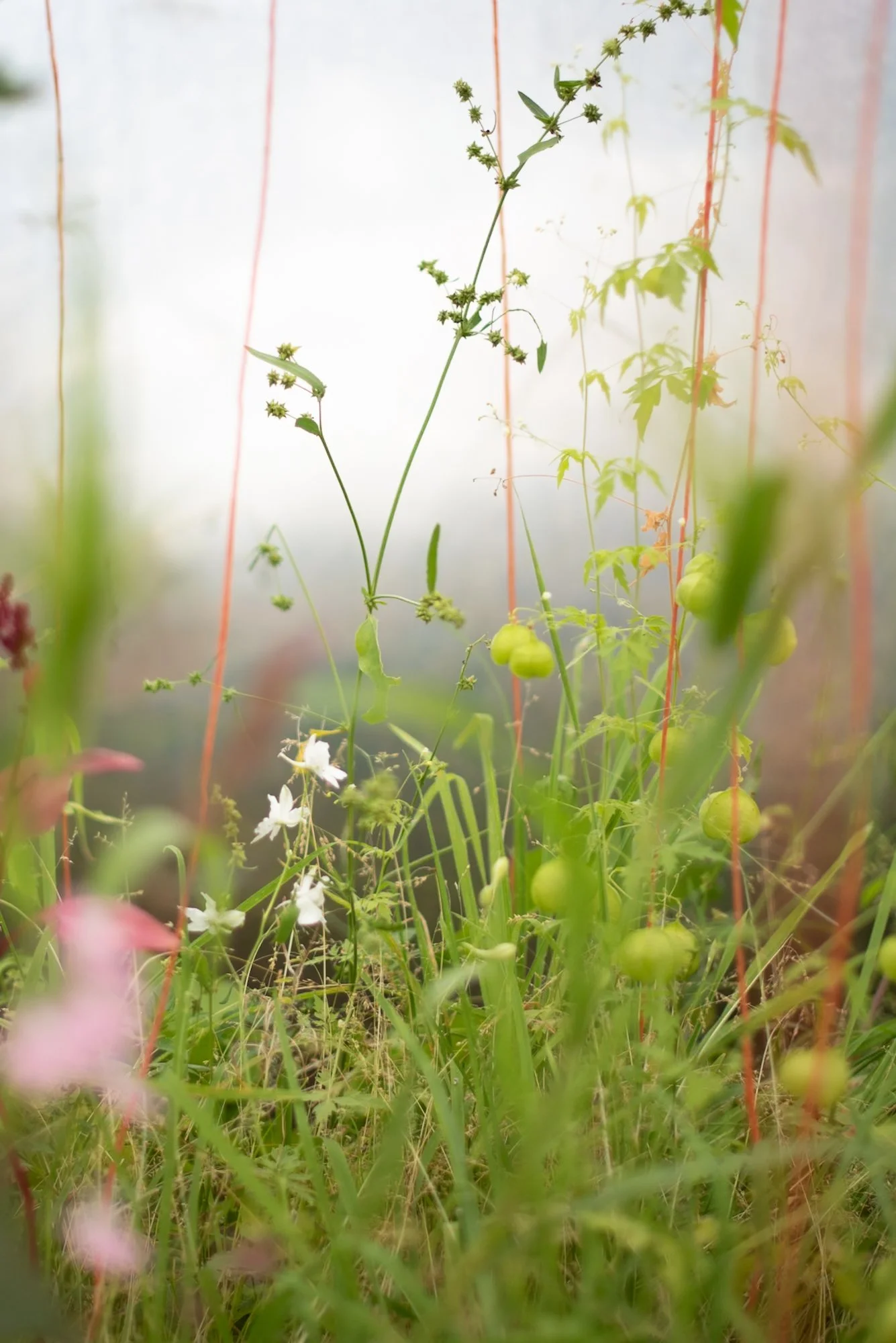
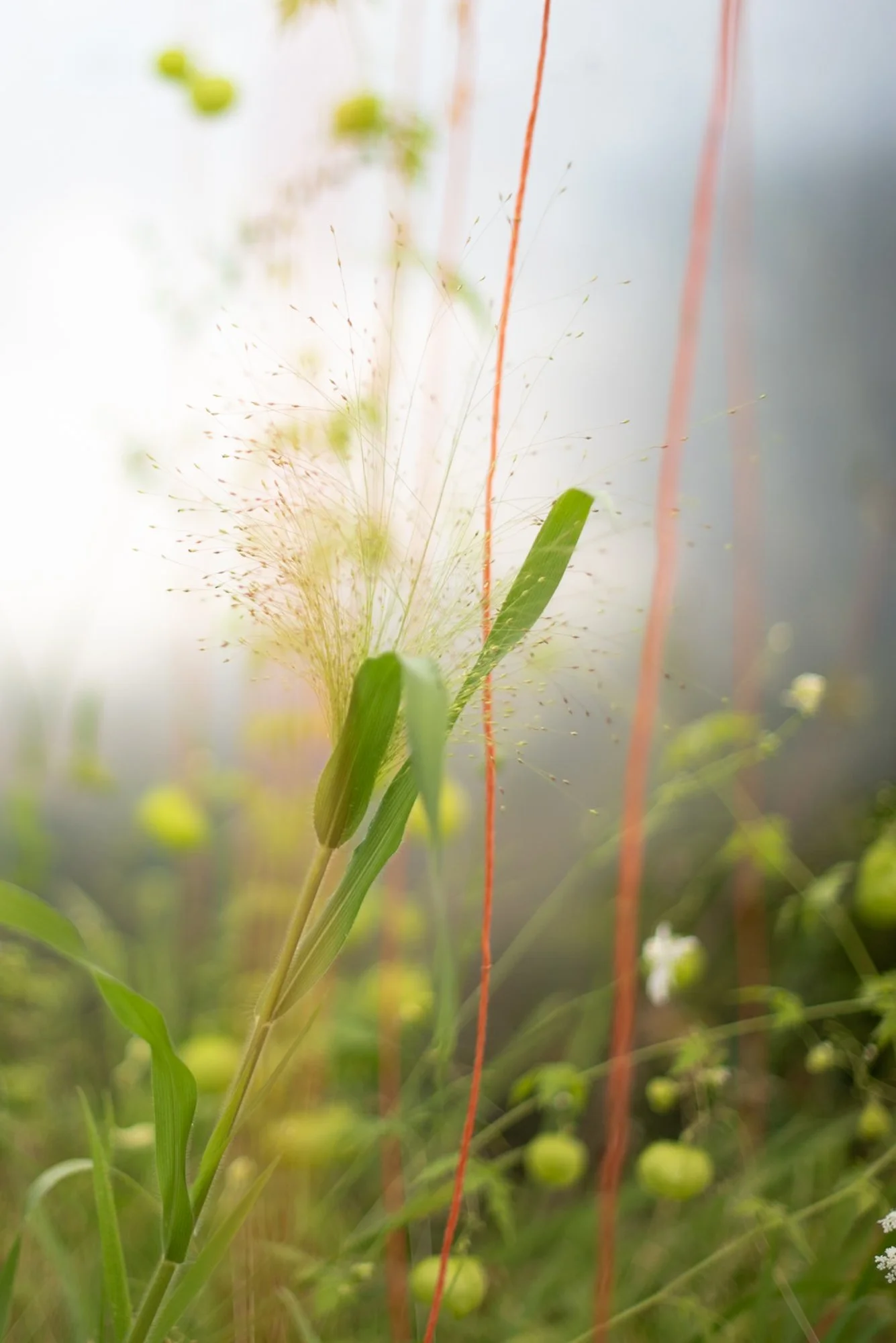
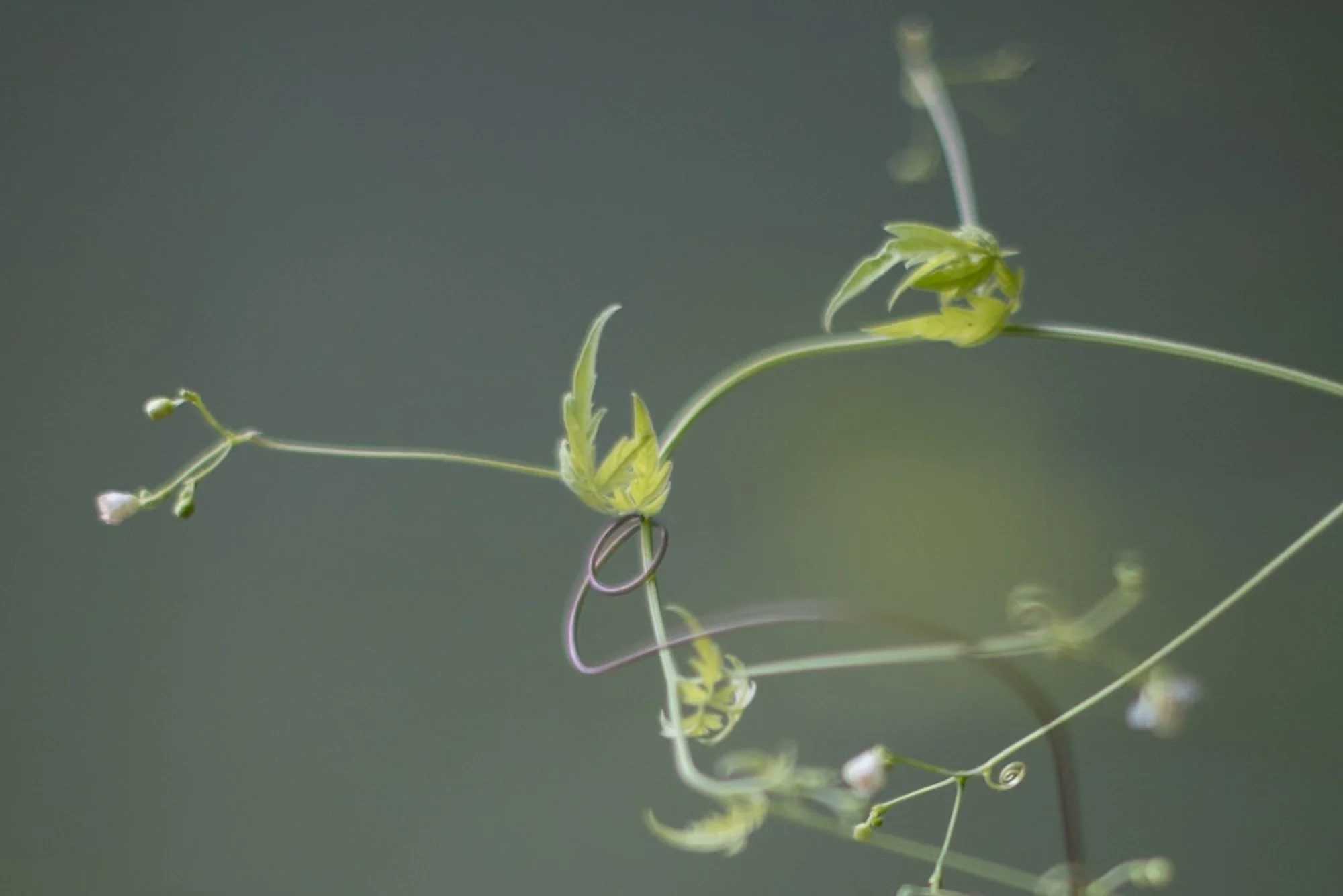
I also couldn’t resist the love-in-a-puff vine (Cardiospermum halicacabum). We haven’t grown this in a couple of years - I think I OD’d on it and fancied a change but it was great to be reunited with those delicate little tendrils and balloon-like seedpods.


A recent addition to the garden is a beautifully designed pavilion and Fiona and I settled down with coffee and pastel de nata to a long discussion that can soon be watched in full over at Flowers on Film. During our conversation we meandered from the joys (and challenges!) of a garden-led approach to floral design, to small-scale growing, to personal reflections on balancing work and motherhood, knuckling down through the hard times, to what’s next for PYRUS and Fiona’s goals for the future.
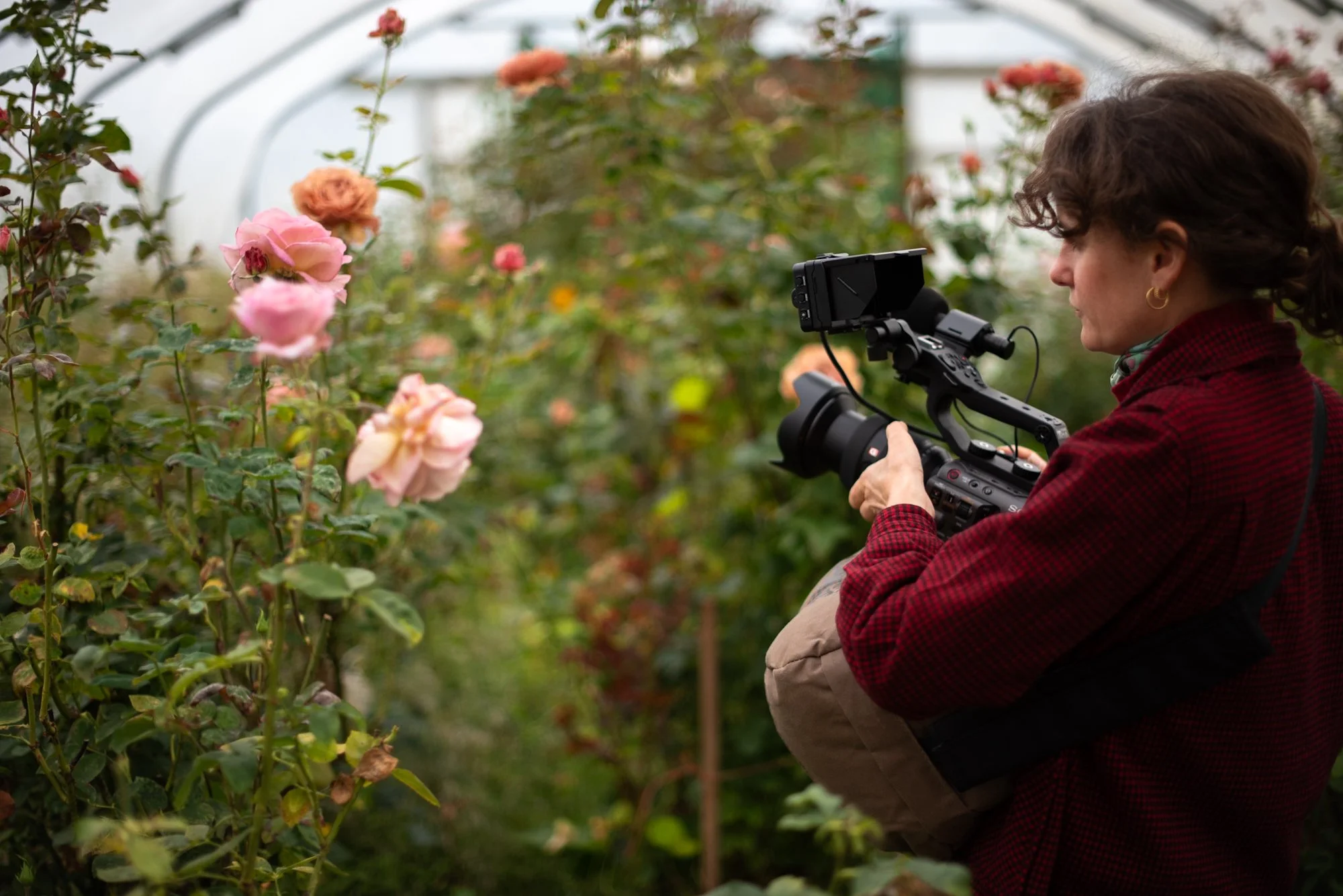
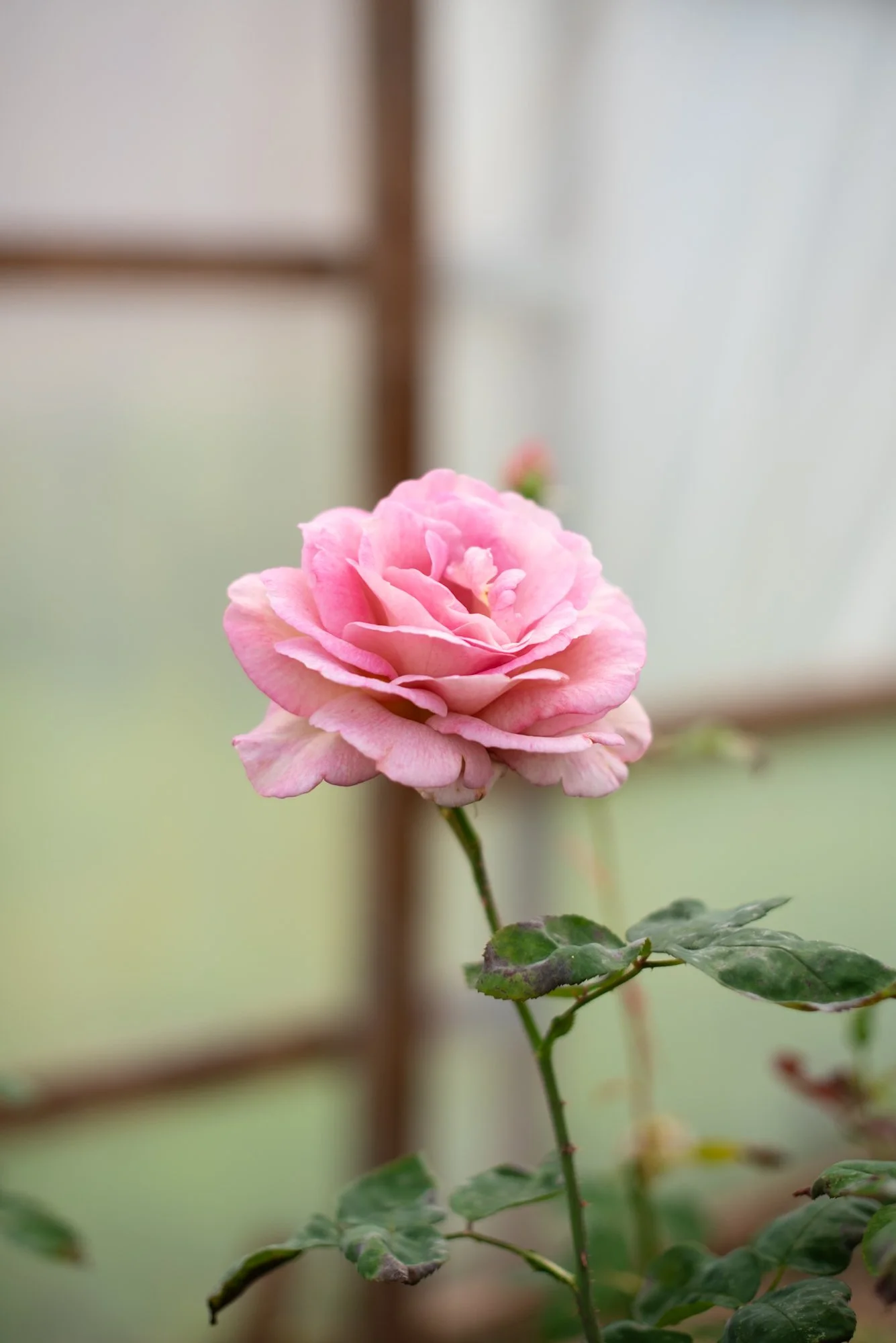
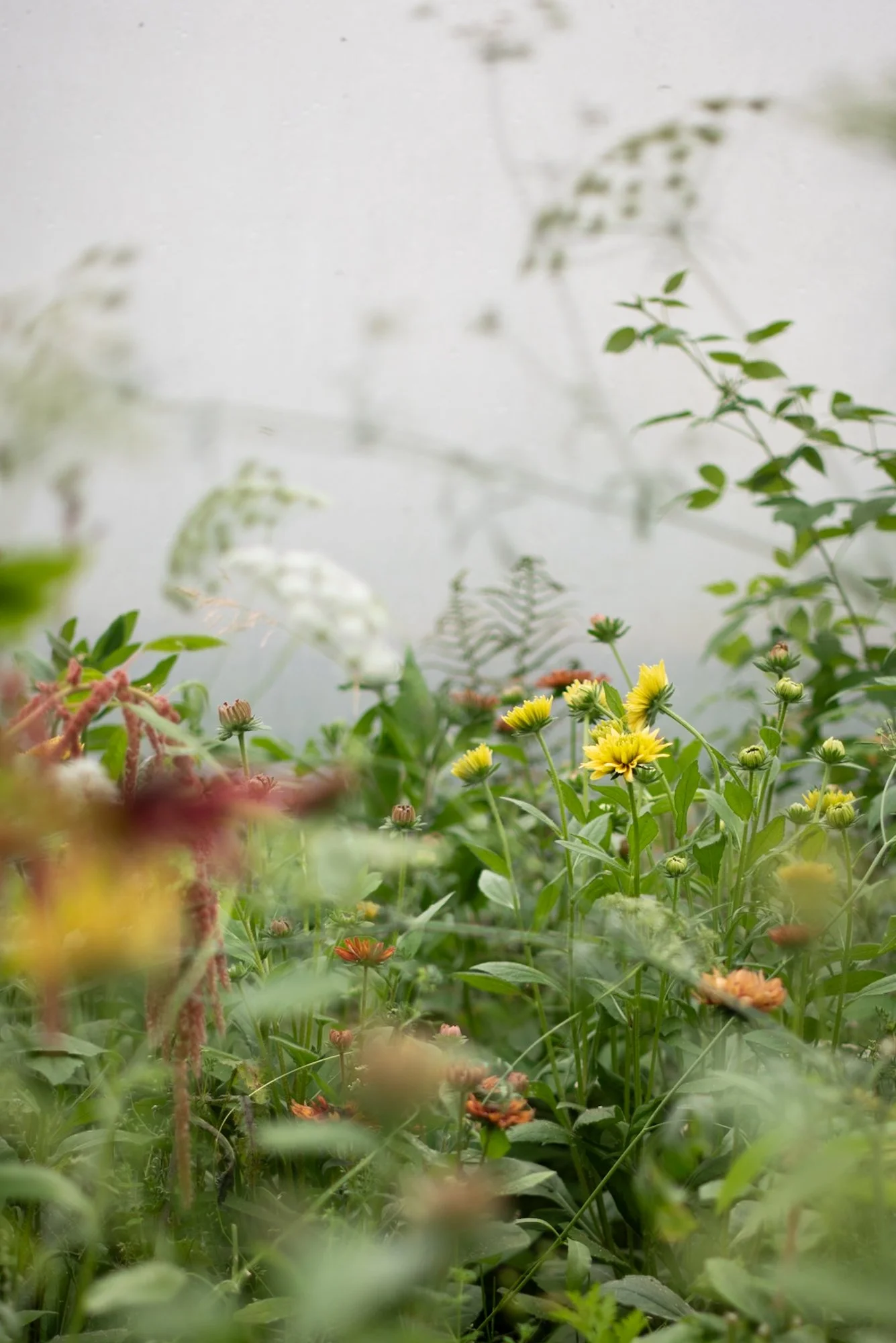
Fiona is an incredibly humble person and an absolute artist; she rarely does interviews so we’re honoured that she agreed to share her time and thoughts so candidly and generously on the channel. After our conversation she was off to don a tiara for a jewellery shoot that was taking place in the garden, while in the studio arrangements were being lined up for an event - all in a day’s work!
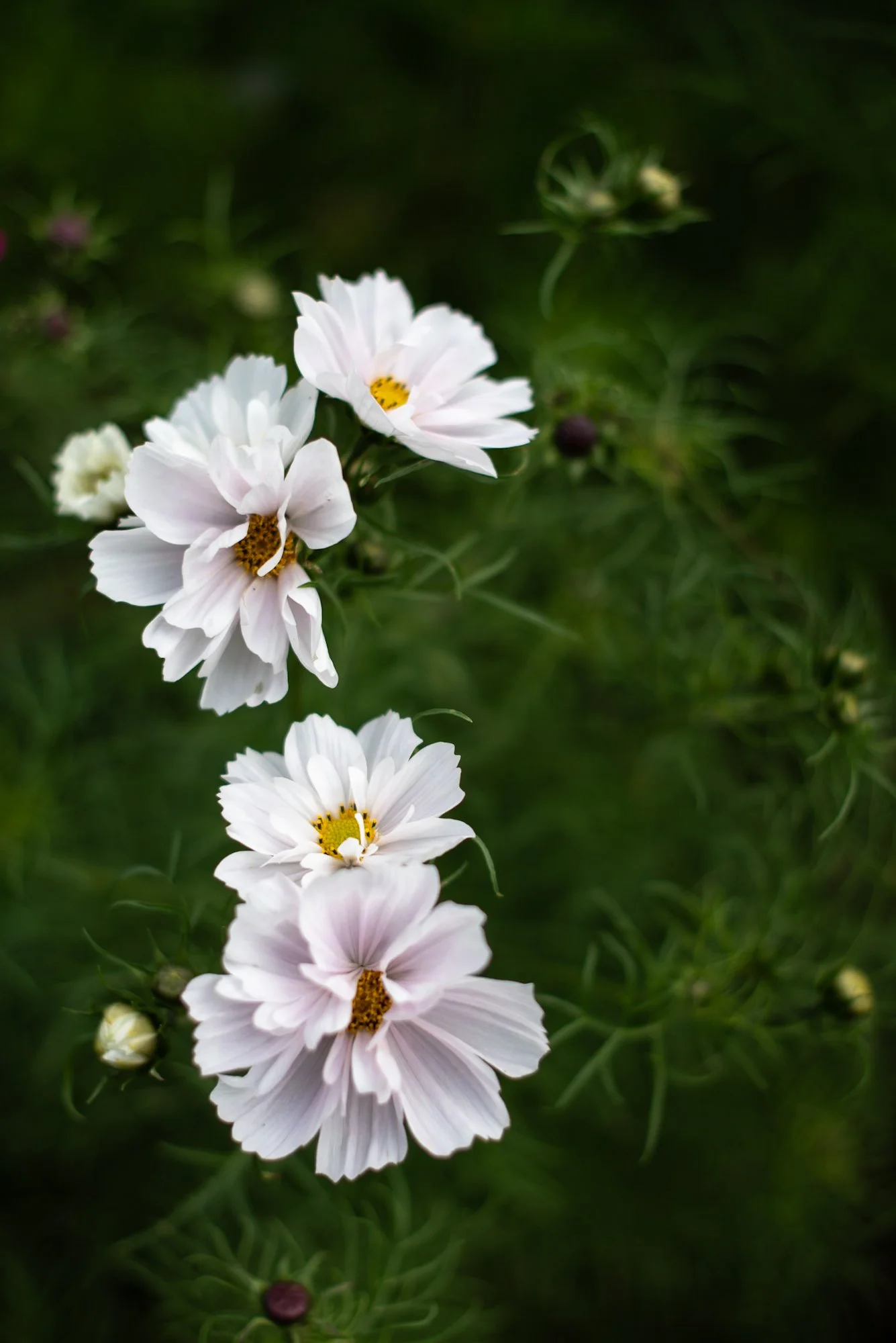
My main takeaway from our day at PYRUS was a reminder of how richly varied this world is that we are lucky enough to call our work, from turning compost and tending to plants to gently placing flowers in the most luxurious of settings. Every day is different and though flowers are the very epitome of ephemerality, capturing them on film means that we can enjoy their exquisite forms and colours for a little longer; a way to preserve their beauty.
Food & Flowers | The Edinburgh Episodes is a five-part film series available to watch on our digital platform Flowers on Film.
Join our Mailing List to save 10% off a year of Flowers on Film

GIARDINO DI NINFA
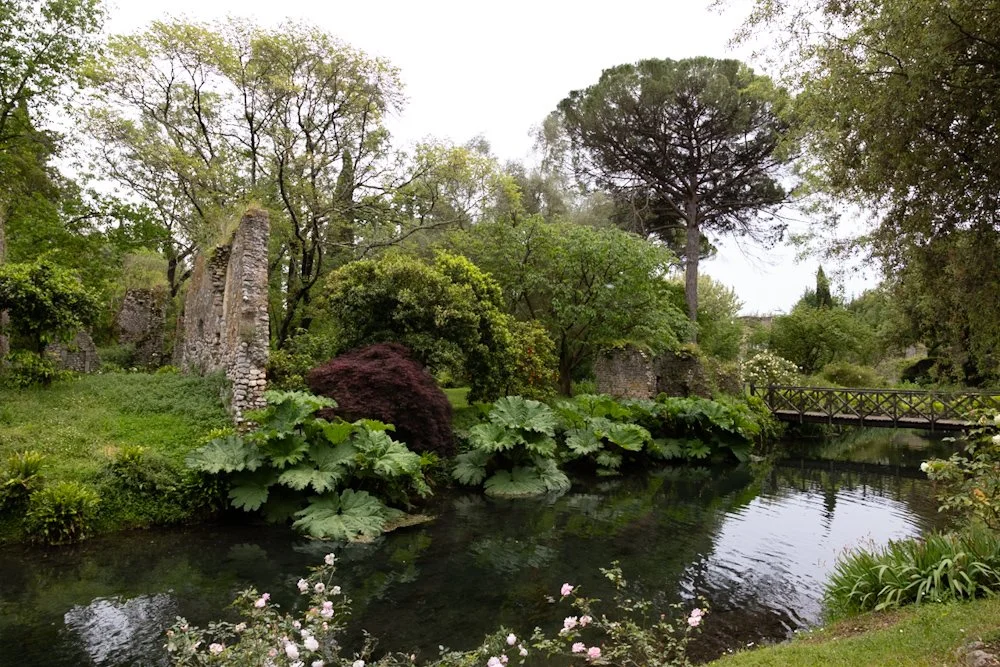
Forty-five miles south-east of Rome in the province of Lazio, there is a garden called Ninfa. Iconic among gardeners and horticulturalists the world over, it is widely known to be one of the most romantic, atmospheric places in the world.
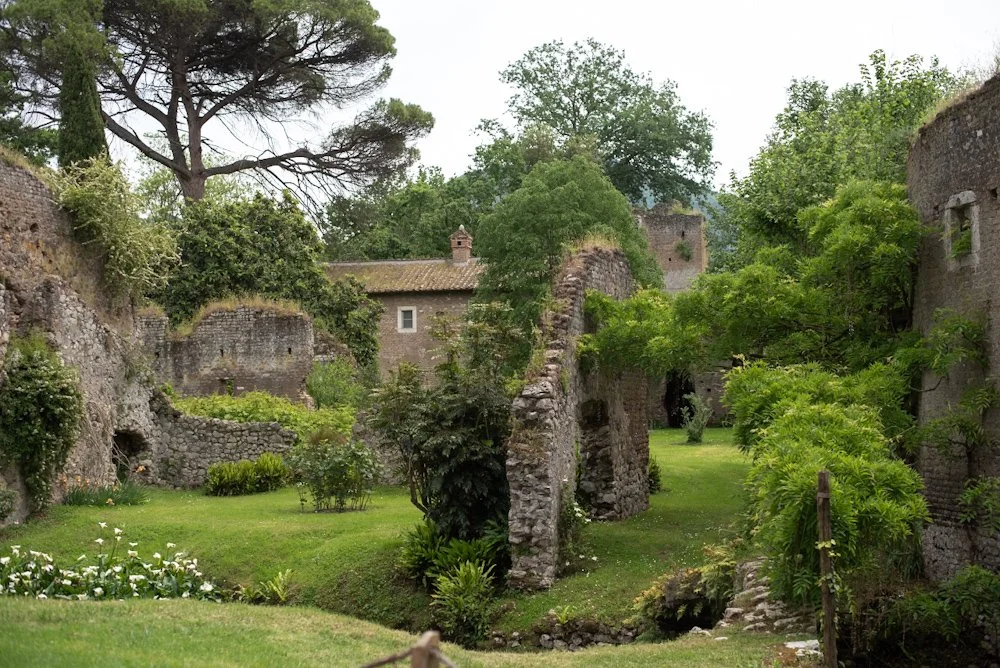
Forty-five miles south-east of Rome in the province of Lazio, there is a garden called Ninfa. Iconic among gardeners and horticulturalists the world over, it is widely known to be one of the most romantic, atmospheric places in the world.
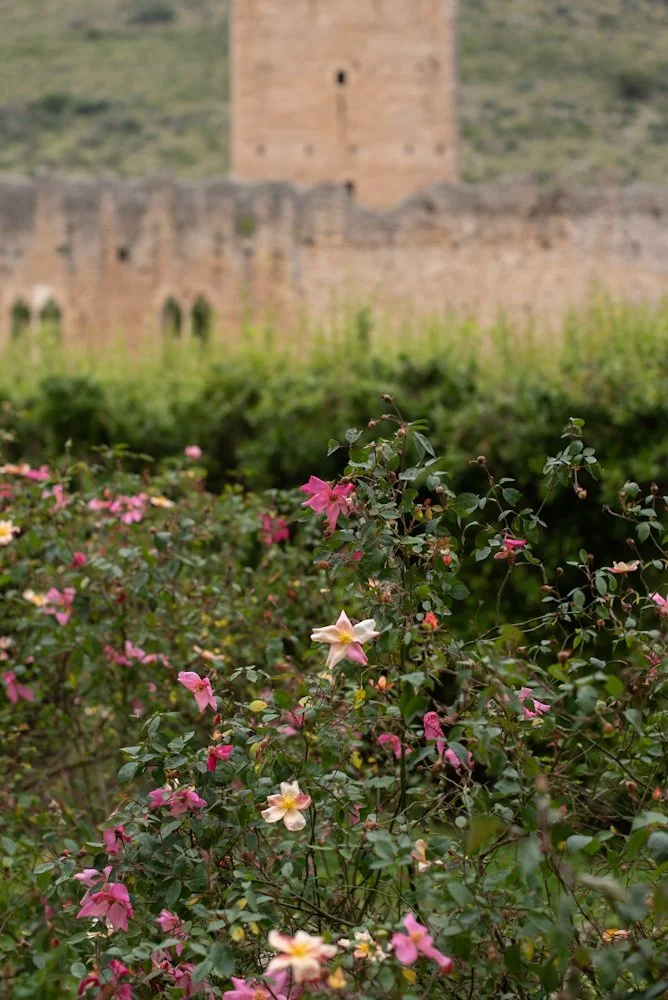
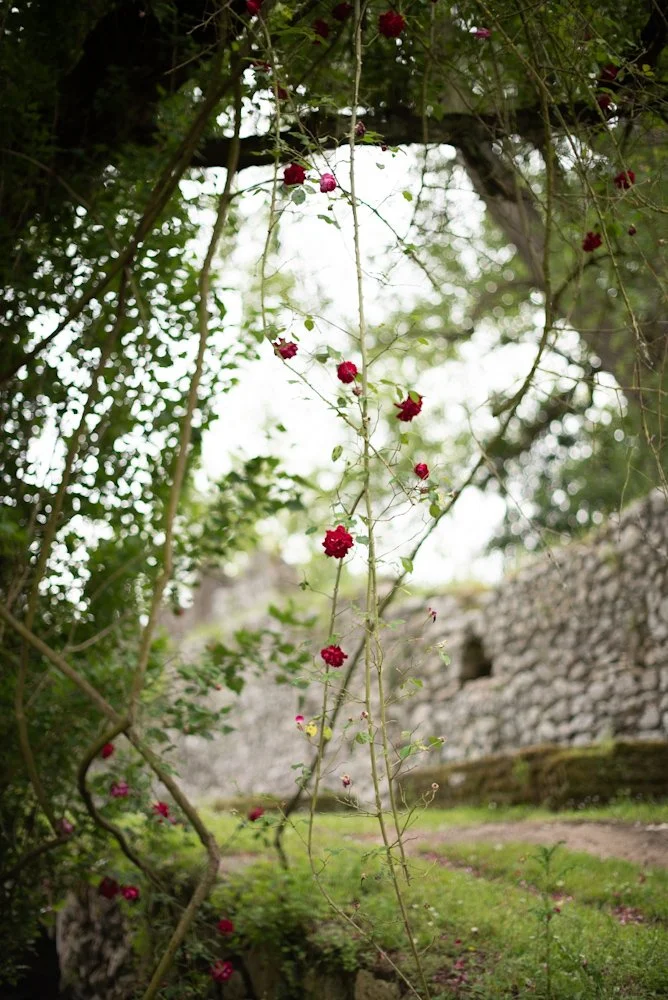
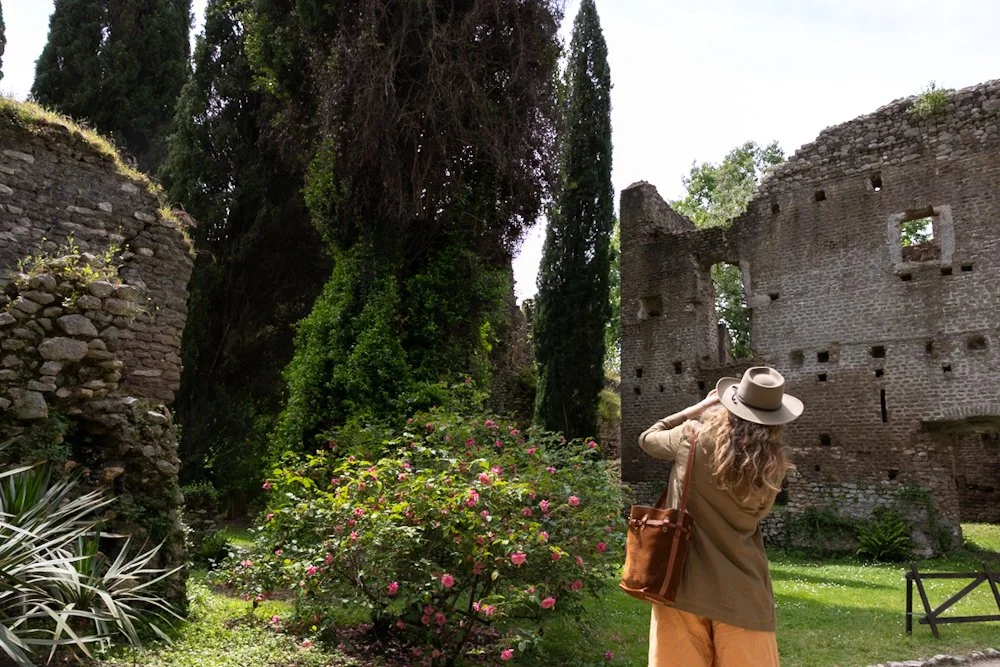
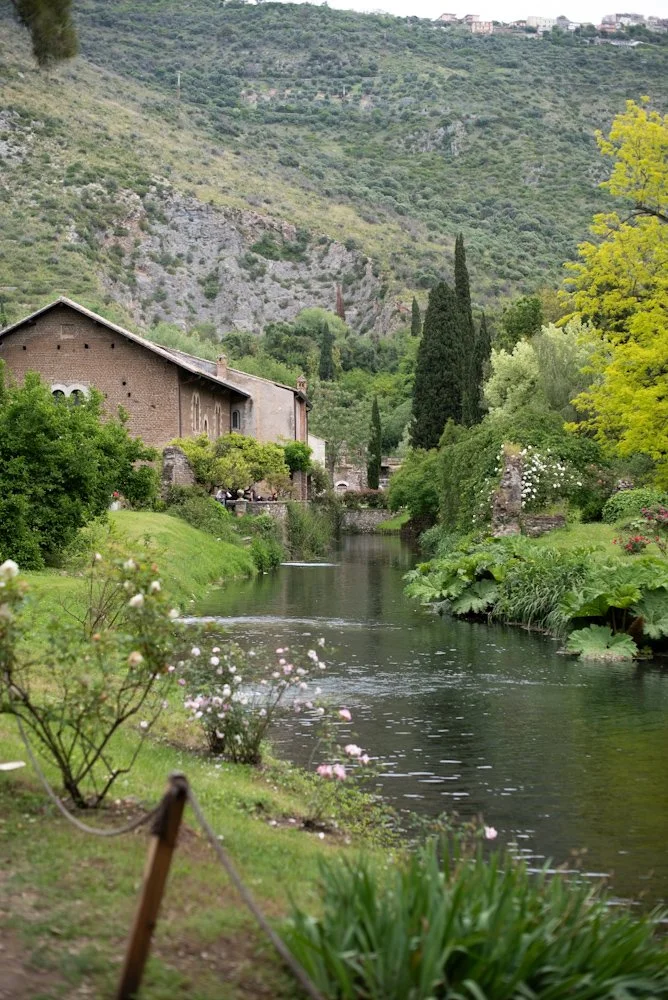
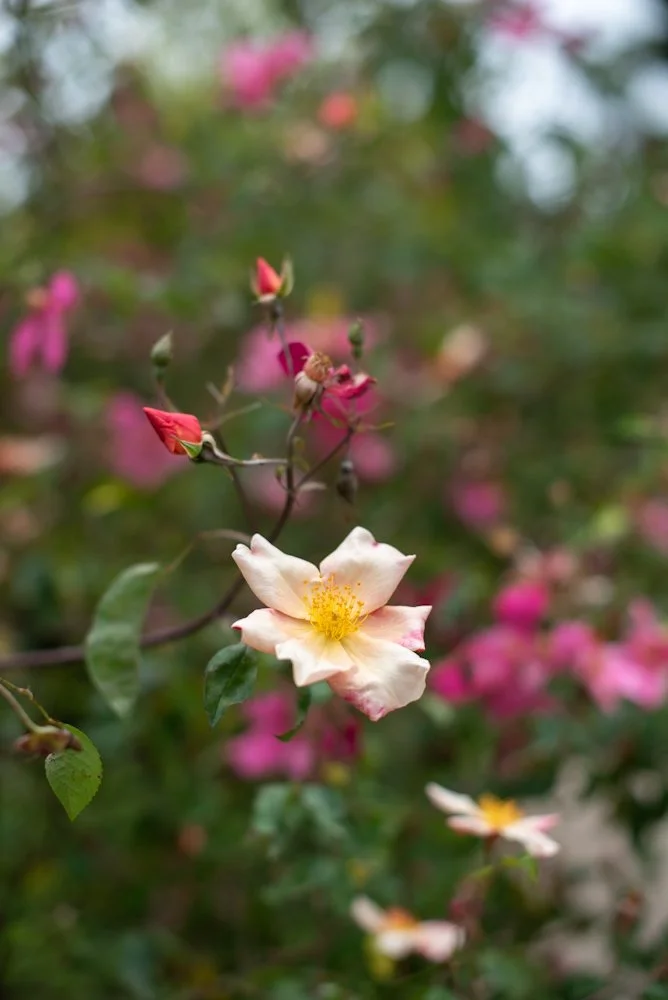
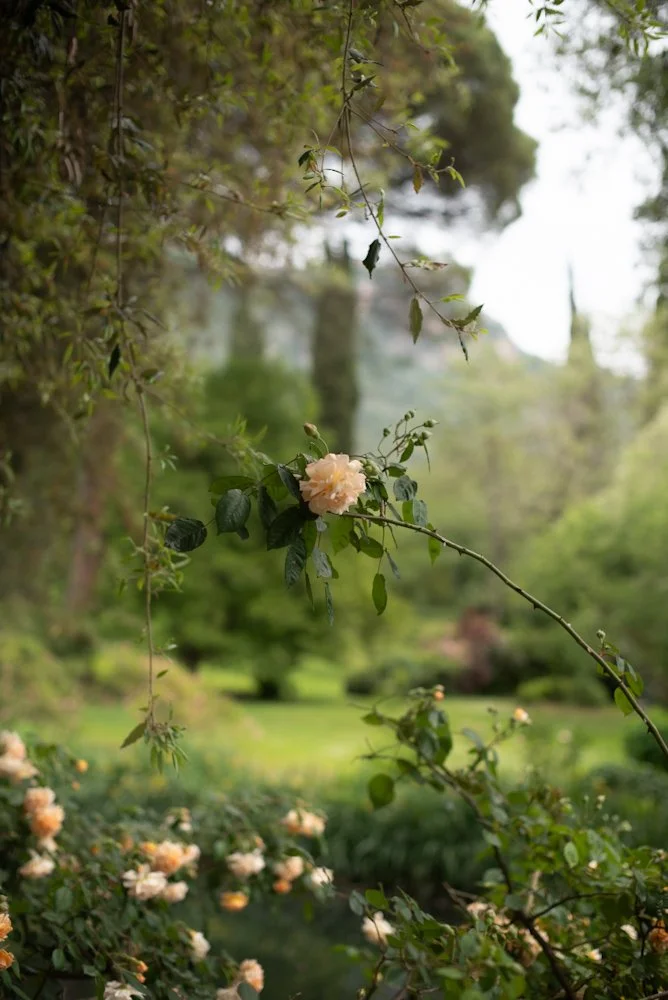
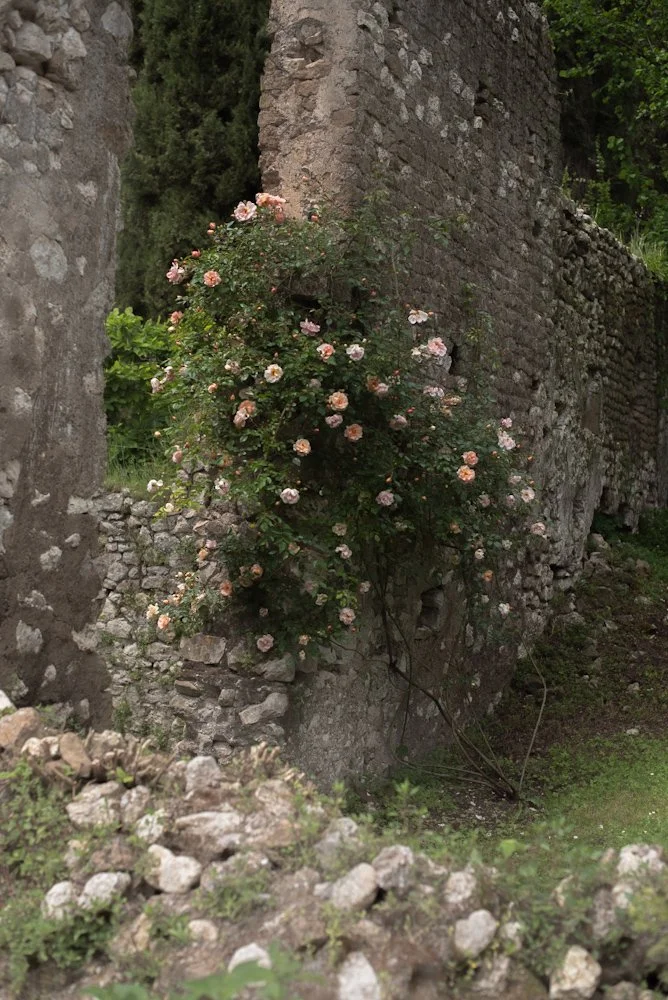
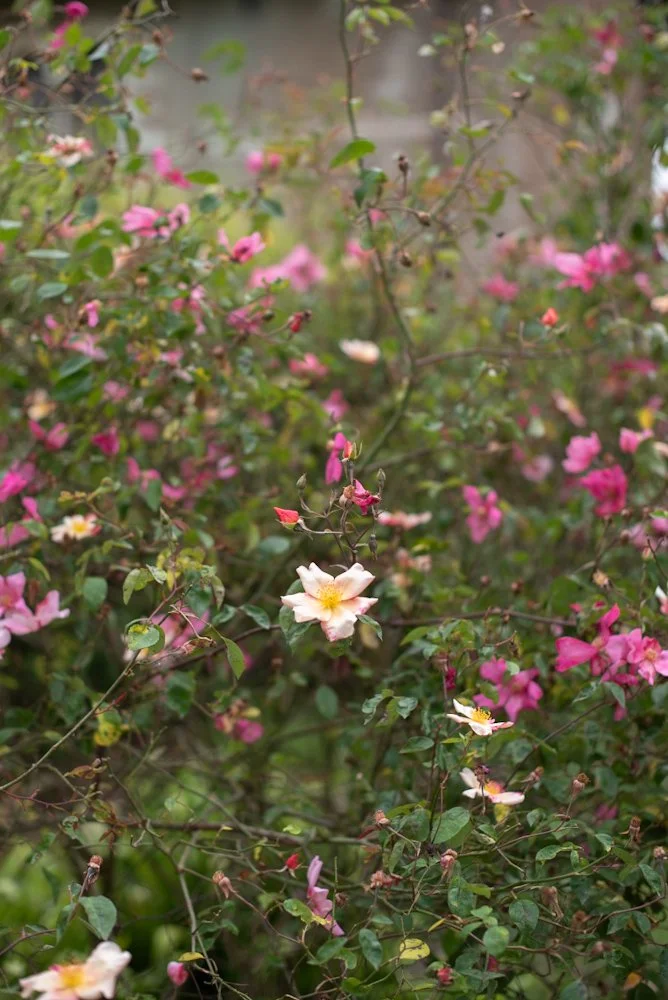
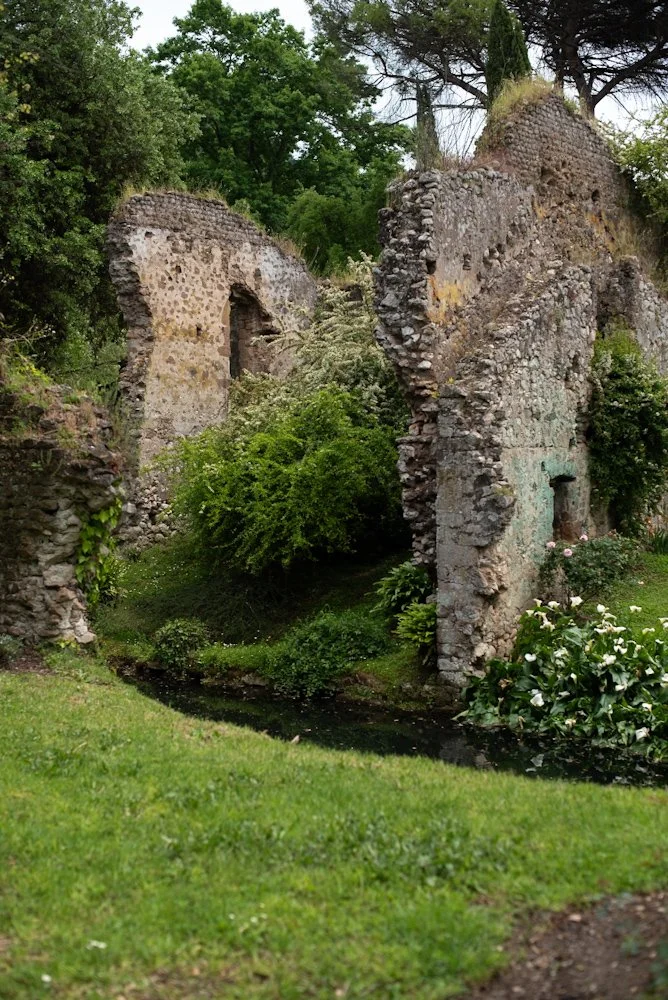
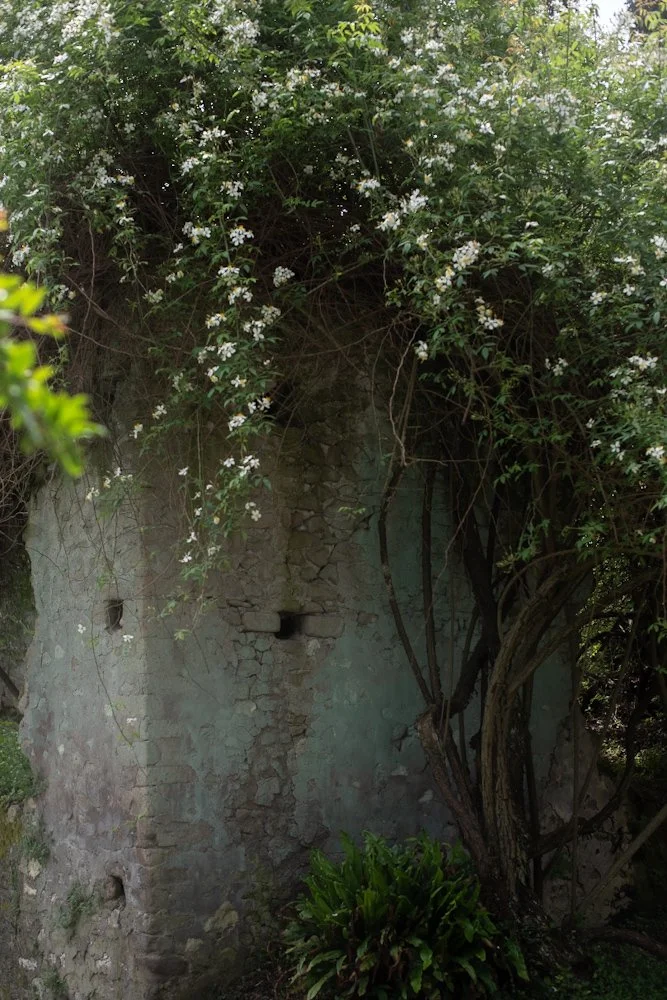
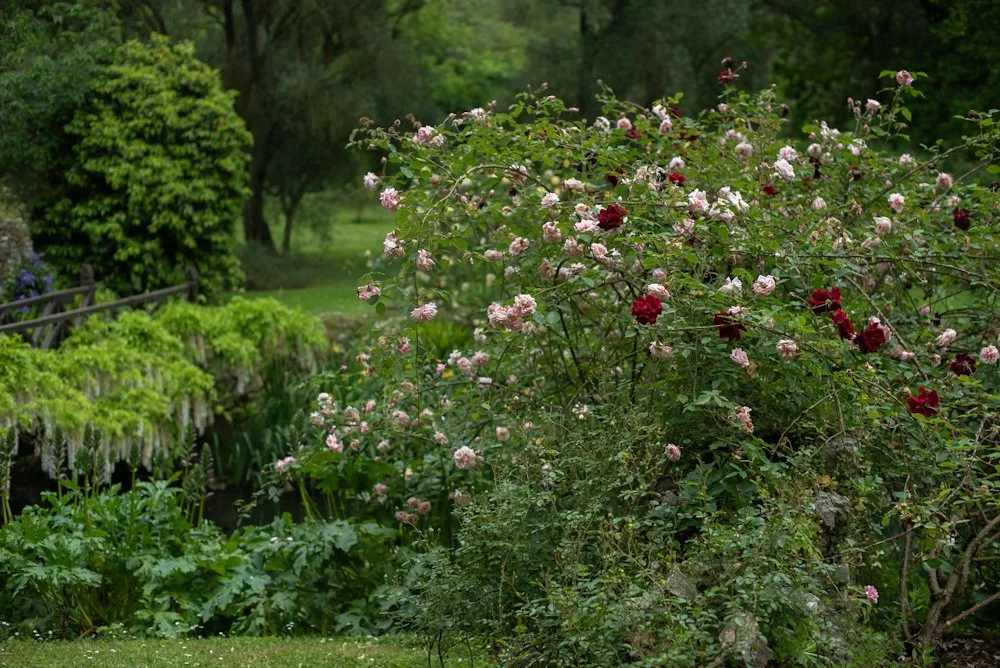
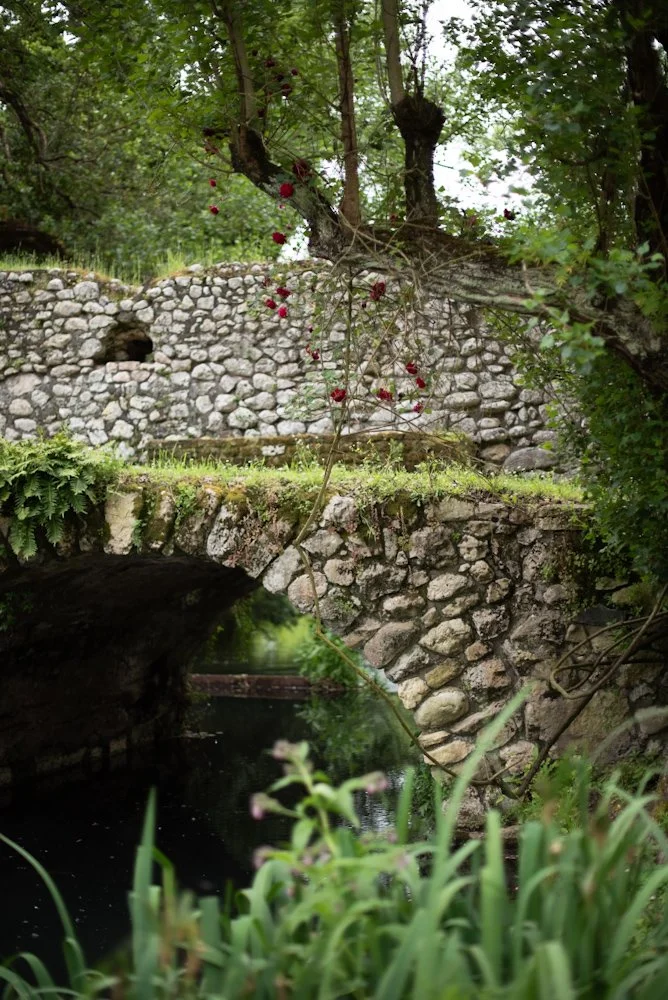
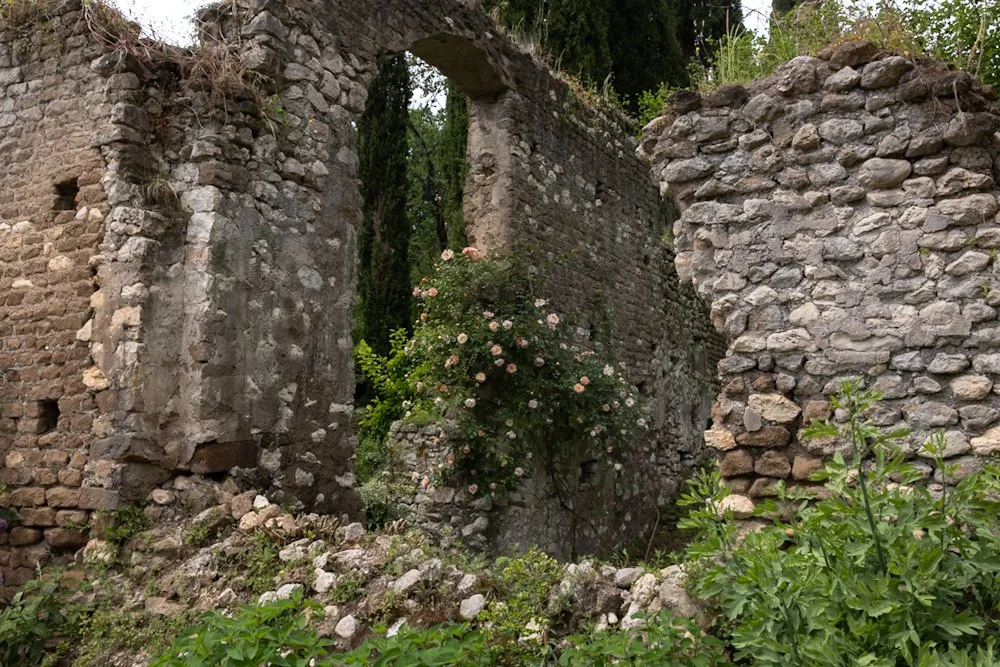
I first heard of Ninfa over a decade ago when I visited the gardens of Aberglasney in Carmarthenshire; it was the inspiration behind the ‘Ninfarium’ created in the ruins of the original mansion. I looked it up. Ever since it has been flitting in and out of my consciousness, a place among many, in a list among many. So many places to try to get to in this life. When I heard the name it would conjure certain images. A medieval bridge festooned with wisteria trailing over a clear river thick with aquatic plant-life. Crumbling stone ruins, pink and dusty, interwoven with climbing roses. Arcadian views. Faded frescoes in the shadows of the mountains. Water - both falling and slow moving - he mirrored surface of it creating a heightened sense of the unreal as if the rippling reflection could be passed through, might lead to another realm. Jess and I have often said to eachother over the years – someday we’ll get to Ninfa. Well, we finally did!

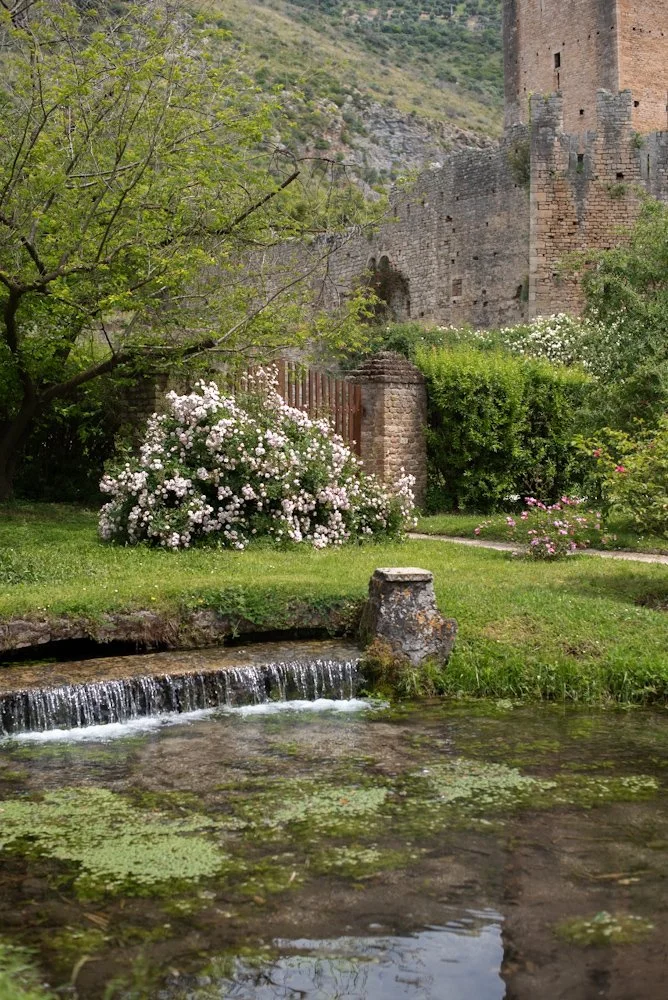
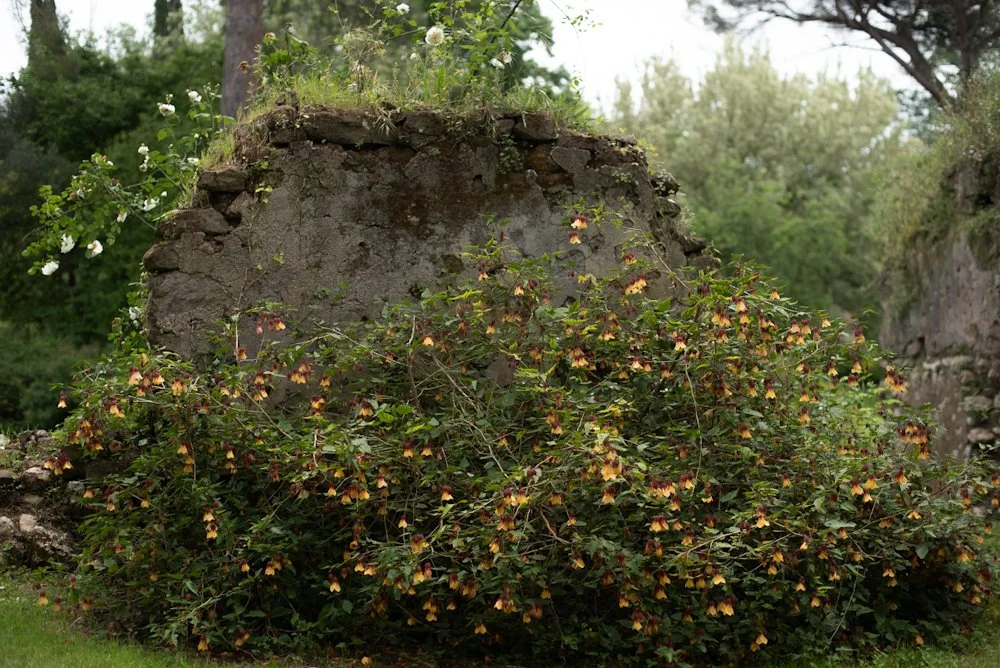
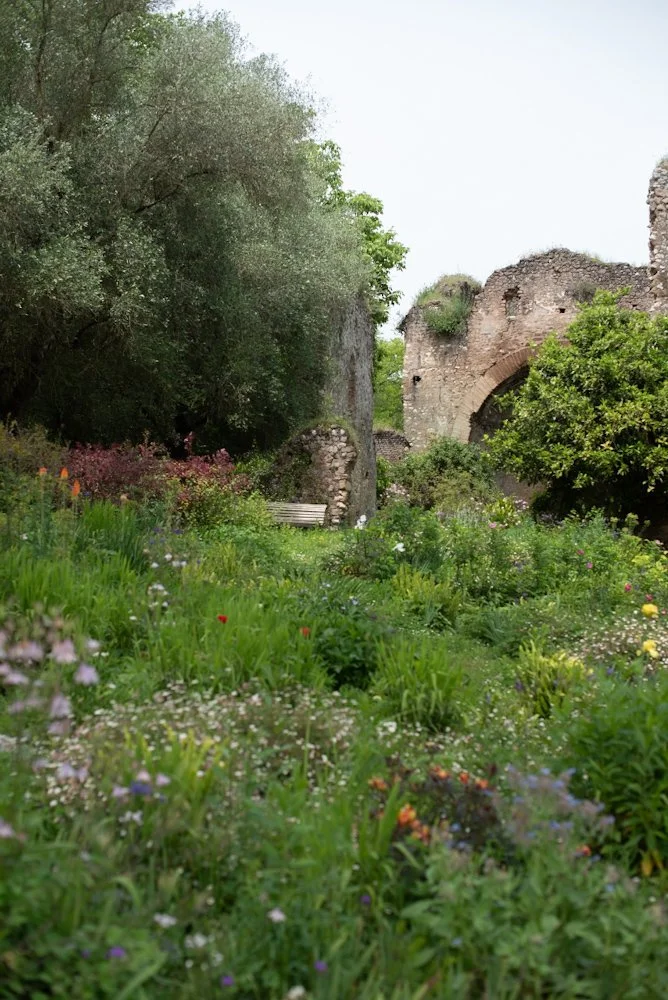
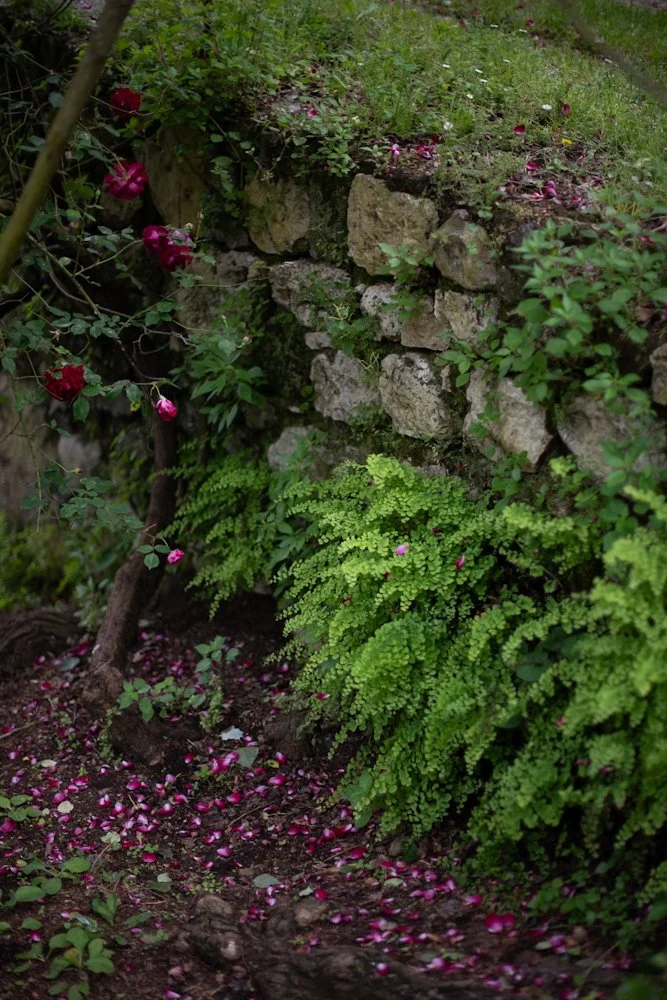
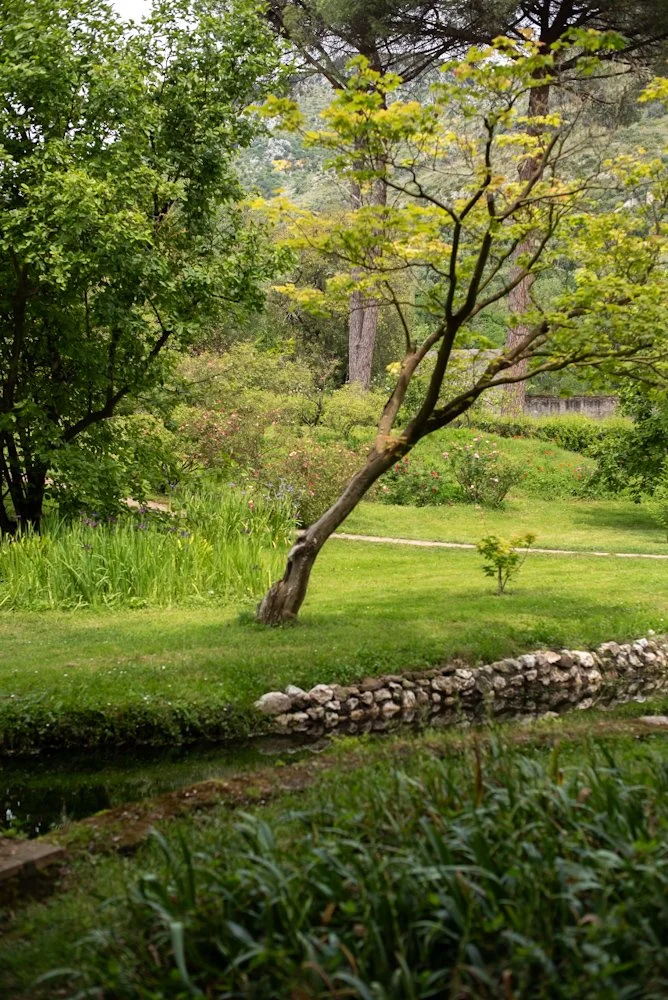
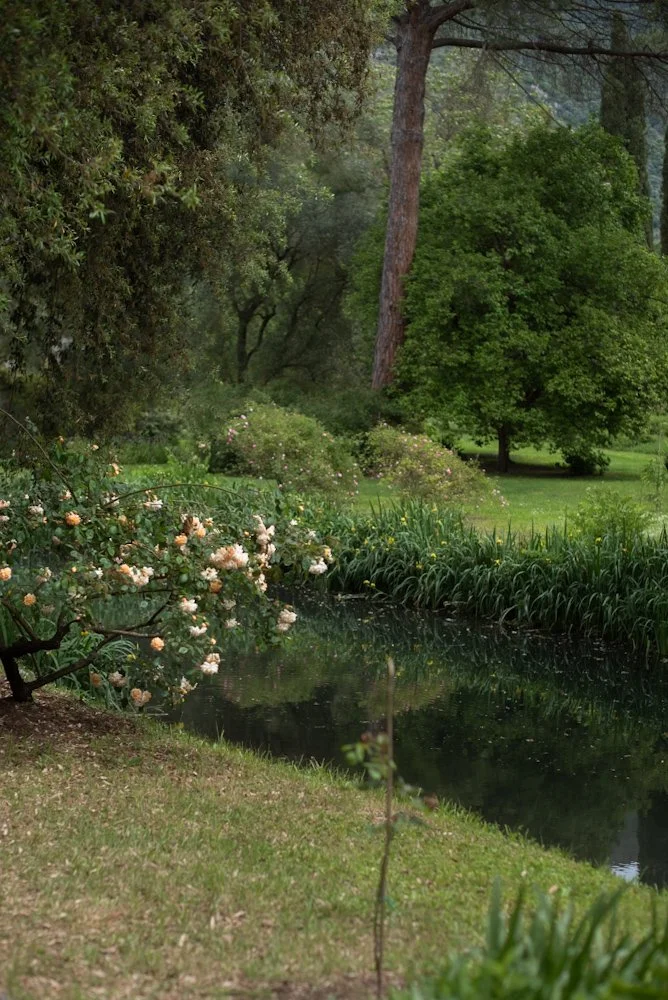
What makes this garden so unique is the fascinating history of the site, the passion and skill of successive generations of the same family, and its geographical position, where it sits beside a small lake fed by natural springs at the foot of the Lepini Mountains. The water here is clean, pure and abundant, making it possible for this small pocket of land to become a lush oasis, a microclimate of thriving temperate plants that wouldn’t otherwise withstand the dry heat of an Italian summer. The mountain range protects the garden from cold northerly winds -look up and you can see the village of Norma peering down over the cliff above - but to the south it is open to the warmth of the Mediterranean - the sea being just fifteen miles west. This combination of warmth and moisture and rich, well-drained soil makes for an incredibly verdant, biologically diverse garden.
NINFA: A POTTED HISTORY
The twenty-acre landscaped garden as it is seen today was originally laid out in the 1920s among the ruins of the medieval town but the site’s known history dates back to the eighth century. It’s a deliciously intriguing tale of twists and turns, dynastic feuds and violence, wealth and power. Should you be interested, I have included a few books below, so you can immerse yourself in the full chronology, if that’s your thing. Here I shall give you the drastically précised version of events, focussing on the juicy / planty bits.
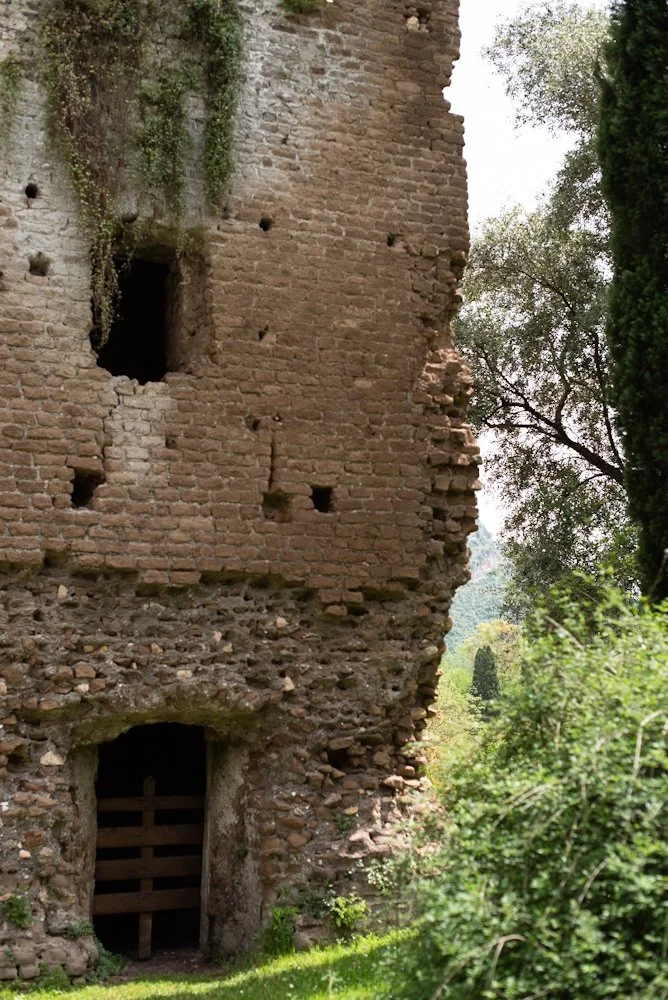
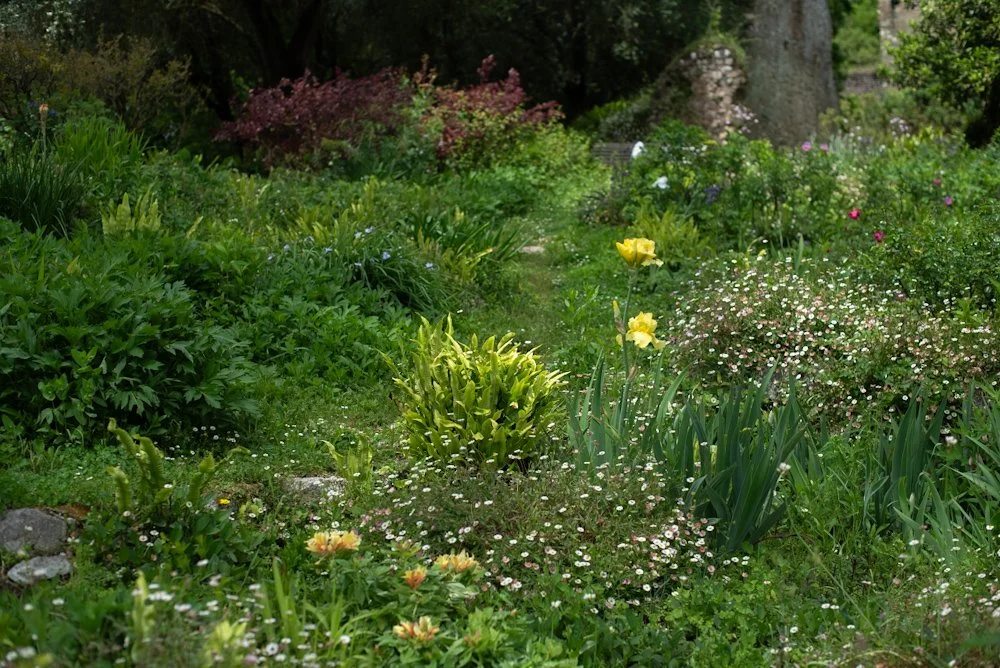
The name Ninfa derives from the island temple on the neighbouring lake, dedicated to nymphs, water deities believed by the Romans to dwell in cool springs, rivers and forests. The first documentation of the site refers to Ninfa as a resting place for travellers where they would water their horses and pay a toll. It occupied a strategic position; when the Pontine marshes flooded the Appian Way, travellers would use the foothill route, or Via Pedemontana, connecting Rome and Naples. Subsequently Ninfa formed part of a vast and richly agricultural estate owned by the church; the fortified town was built in the eleventh century and by the end of the twelfth it was a thriving community governed by various noble families. In 1297 Ninfa was given to Pietro Caetani by his uncle, Benedetto Caetani, Pope Bonifacio VIII, who, through farming, fishing and successful administration including the establishment of various mills and tanneries, further enriched the fortunes of the town and its inhabitants. At this time the lake was dammed and the abundant flow of water through Ninfa allowed the townsfolk to establish many small gardens. Throughout the thirteenth and fourteenth centuries, under the Roman Caetani family, Ninfa continued to expand and flourish; the town boasted over two thousand inhabitants, a castle and town hall and seven churches.
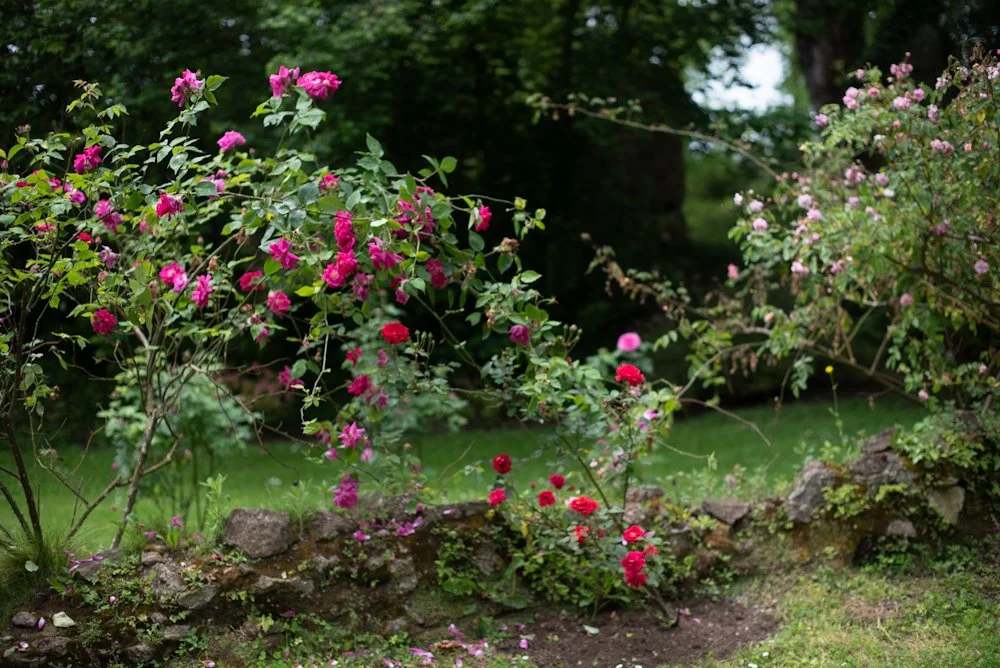
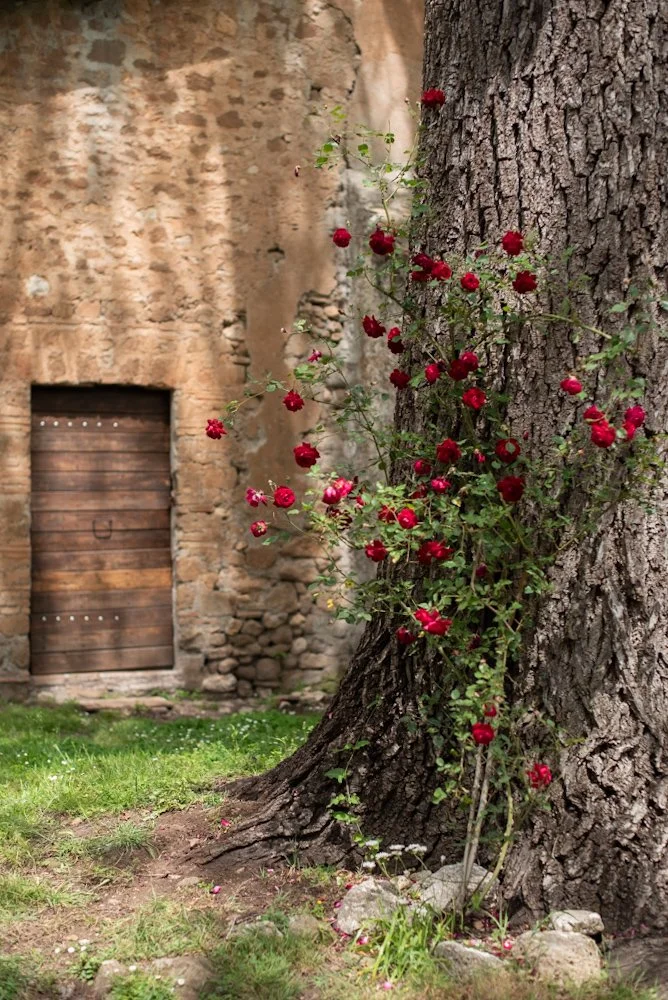
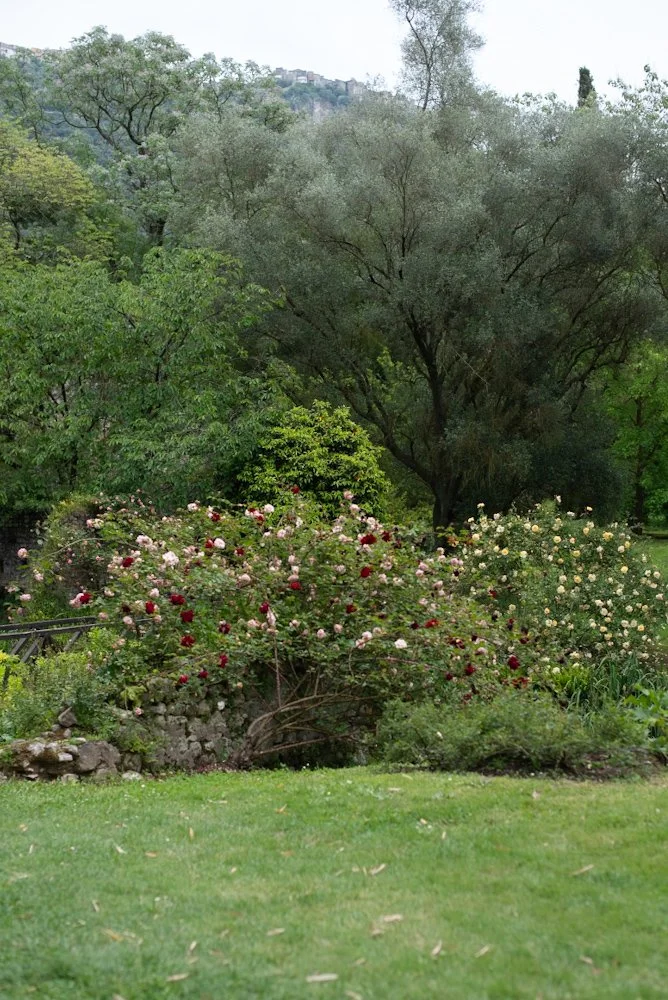
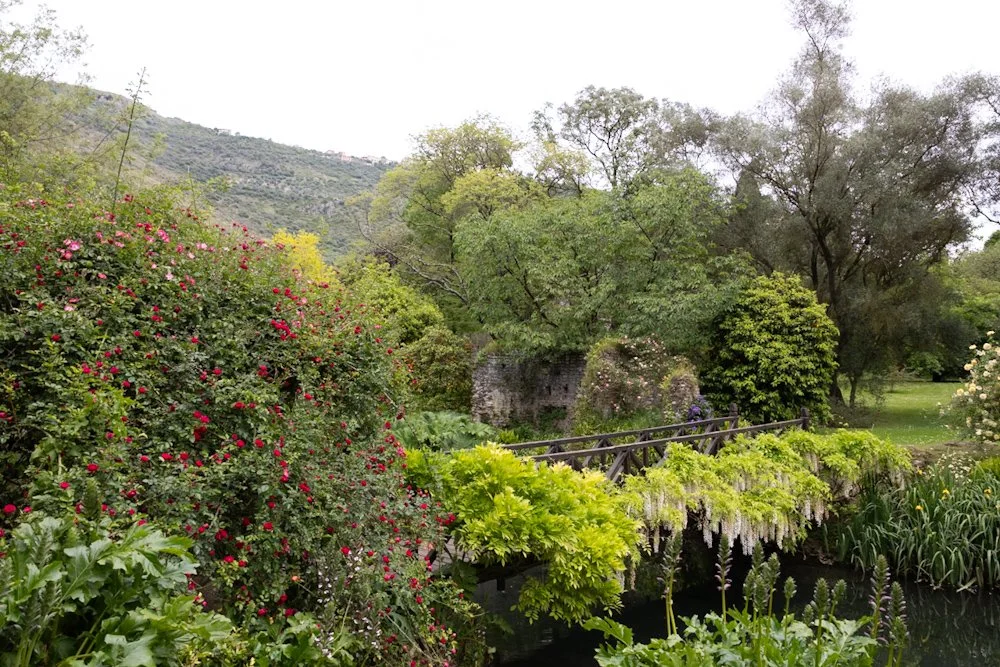
In 1381 during the civil war Ninfa was sacked by mercenary troops from Brittany and the Basque country supporting the anti-Pope in the Great Schism. The town was burned and its people scattered and for many decades it was considered a place of fear and desolation. Later generations who attempted to resettle were plagued by rampant outbreaks of malaria and for the next six hundred years Ninfa remained a fiefdom of the Caetani (who had removed to Rome) but in ruin, overgrown and silent.
In the 16th century, Cardinal Nicolò III Caetani, created a ‘garden of delights’ at Ninfa that included the ‘hortus conclusus’ (a walled garden) beside the medieval castle. Some of the ornamental fountains can still be seen today. In the 1600’s Duke Francesco Caetani IV (viceroy of the two Sicilies, governor of Milan and keen gardener) created a formal Italianate garden of geometric hedges, densely planted tulip bulbs and rare citrus varieties, including the Citrus ‘Cajetanus’, within the walls of the old town.
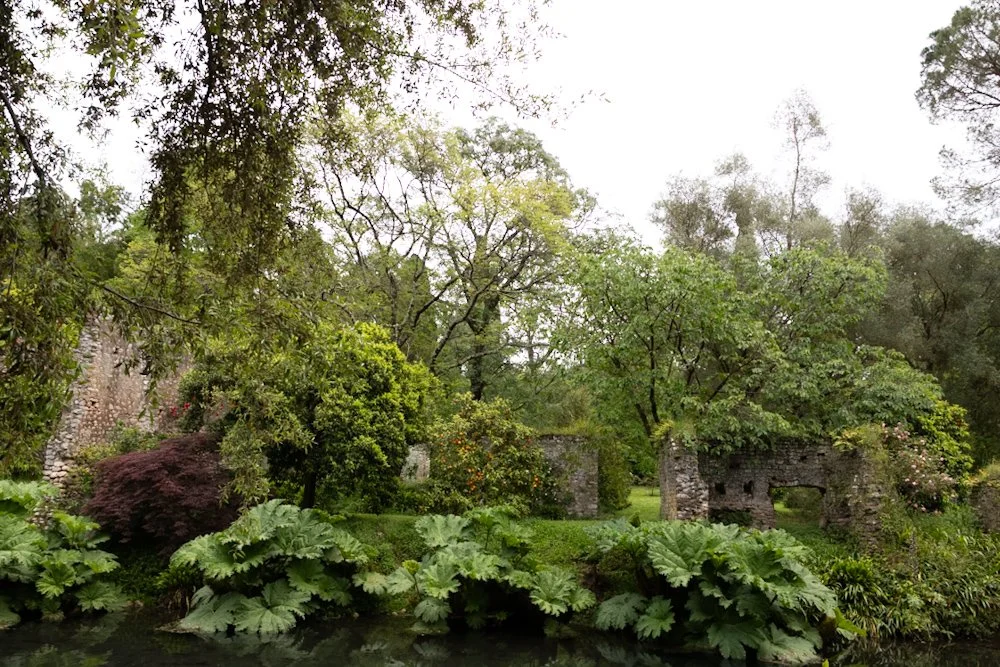

Ninfa’s current incarnation as a botanical garden is down to the work of the three latest generations of exceptionally passionate, and talented, Caetani owners. In 1921 Prince Gelasio Caetani inherited Ninfa and set about excavating and restoring the ruined buildings from its entombment in the thick vegetation. His mother, Ada Bootle-Wilbraham, the eccentric English-born Duchess of Sermoneta, was a capable garden designer, horticulturalist and horsewoman - the original conception of an informal, intensely romantic garden among the ruins – and part of them - was the result of this extraordinary mother-son collaboration. Much of the original Anglo-Saxon, Victorian layout of the garden was conjured from their imaginations including many of the tall trees, the holm oaks, copper beech and cypresses avenues that mark out the ancient streets, the bamboo grove and the climbing roses that Ada planted during her weekend visits.
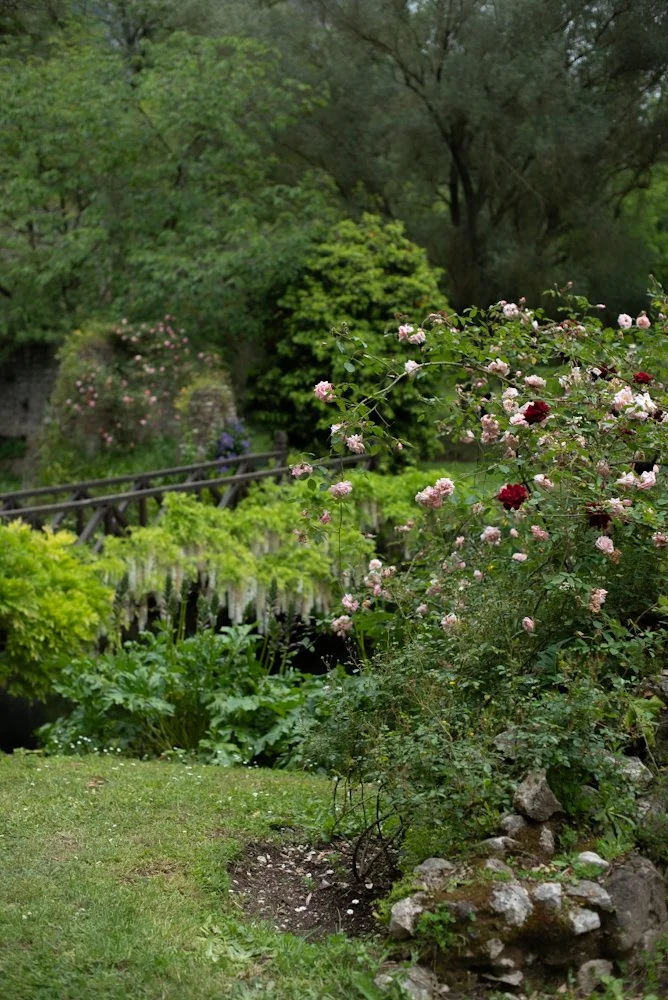

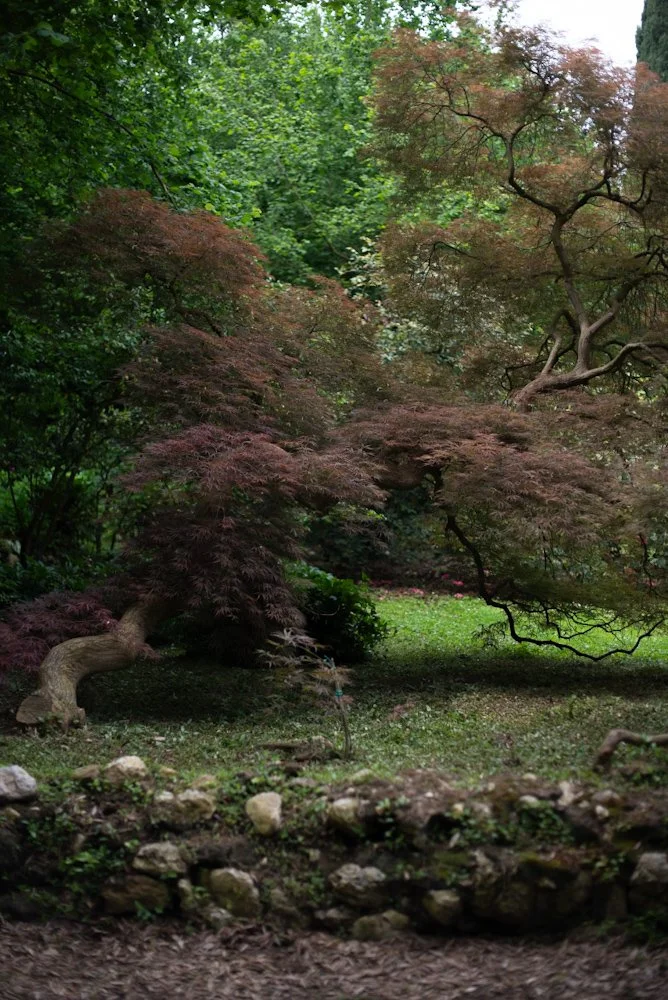
Following Gelasio’s death, his American sister-in-law, Marguerite, Duchess of Sermoneta oversaw the continued development of the garden. Moving from Paris to Rome she fell increasingly under Ninfa’s spell and, a plant addict, she added to the garden lavishly, including the large magnolias and over one hundred and twenty roses. She and her husband designed many of the watercourses and waterfalls and opened Ninfa to their wide circle of friends, including notable writers and artists. Their son Camillo was killed during World War Two and so the estate passed to their daughter, the Princess Lelia Caetani, who took over the project of Ninfa in the 1950s. An artist, Lelia had a painterly eye for colour and harmony which she used to great effect in the gardens, collecting over ten thousand plants including cherries, magnolia and climbing roses. Each year a lorry would arrive from Hillier & Sons in Hampshire laden with new trees and shrubs; the nursery supplied the garden with plants for over forty years. Ahead of her time in many ways, Lelia banned the use of chemical pesticides on-site, insisting that they be managed sensitively and thoughtfully with minimal intervention to preserve the spontaneity and spirit of the garden.
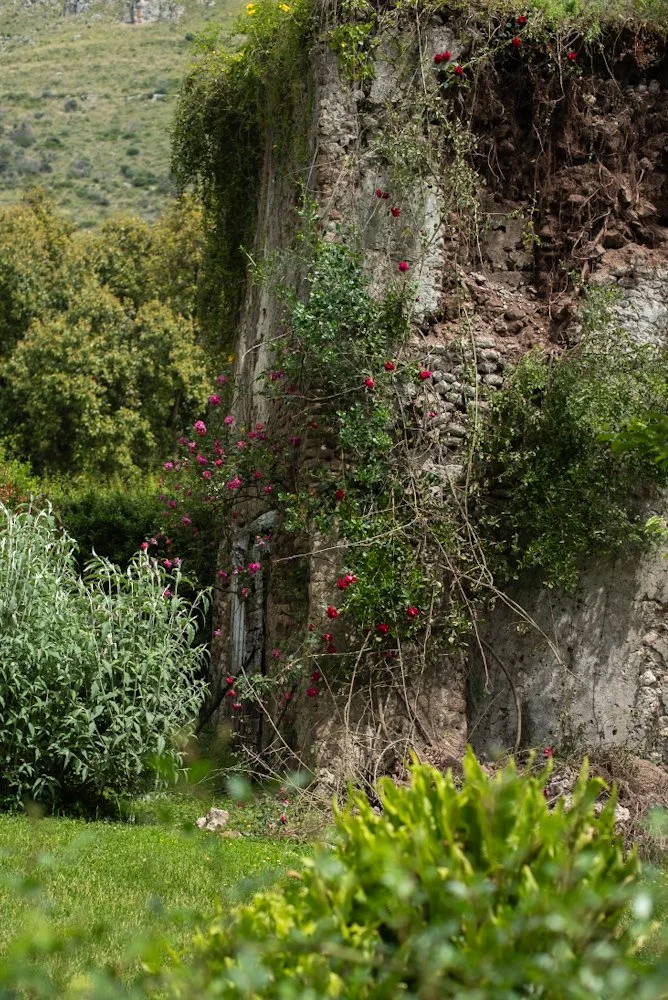
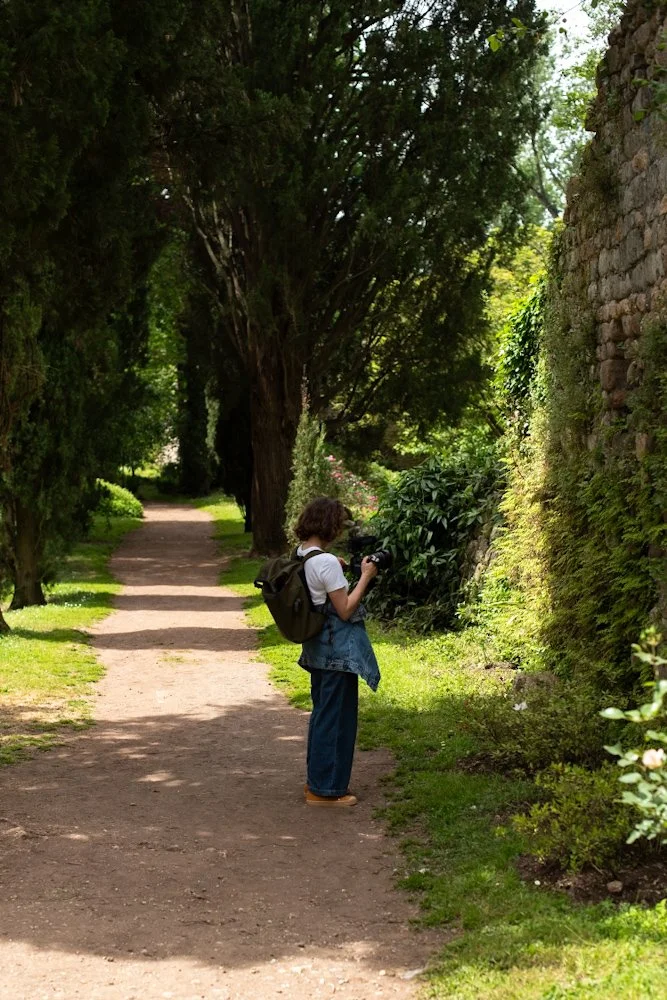
It was Lelia Caetani and her half-English husband, Hubert Howard who set up the Roffredo Caetani Foundation to preserve the memory of the Caetani family and conserve the garden of Ninfa and the nearby castle in Sermoneta. Lelia died in 1972 and Hubert in 1987 and, since they were childless, the Caetani line ended but the management of the garden was continued by Lauro Marchetti, the son of the estate manager, who had become Howard’s protégé. Of his management style Marchetti has said “Care and husbandry follow the principle of controlled disorder and yet every single plant growing in a ruined building or a hedge, or peeping from a medieval window, is known and cared for.”
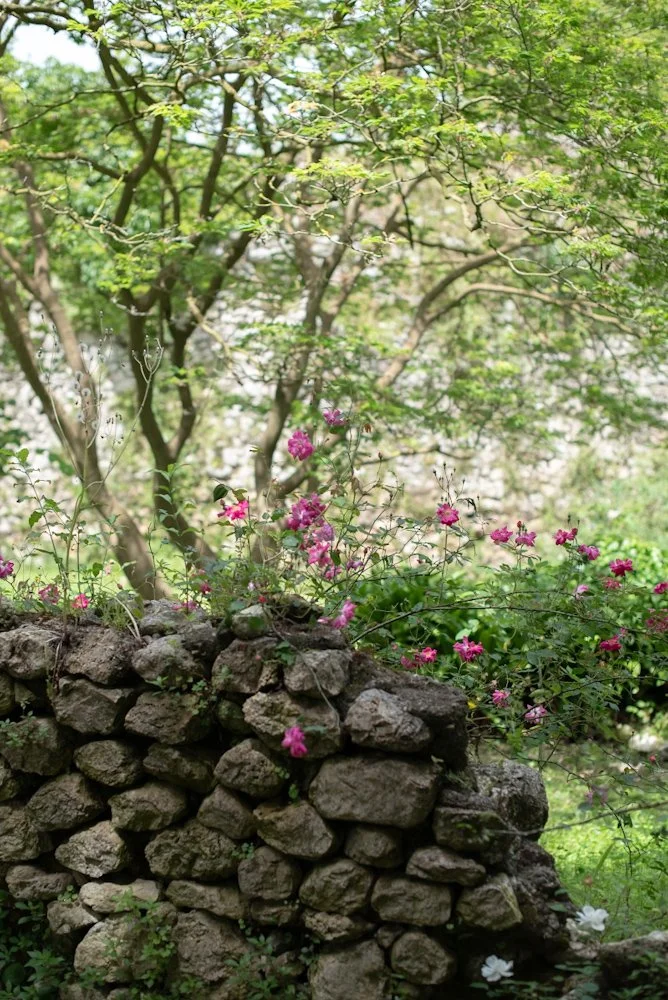
VISITING NINFA: OUR EXPERIENCE
If you’re planning a visit I would highly recommend getting in touch to see if you can pay to book a private tour, or at least an English speaking guide. The garden tour is exactly an hour long and follows a prescribed route – you are not permitted to leave the path or the group at any point. In this sense it is very different to, say, Sissinghurst where you can take the whole day, wander at will, brush against the plants, linger in corners to take notes and photographs. The tour is rushed and the guide stops at various points to explain the history (in Italian) – for us it was a frustrating and rather unsatisfying visit although we are still glad we were able to experience it in the flesh, however briefly, because if you like ruins and roses it’s unlike anywhere else.
TRAVELLING TO NINFA FROM ROME
Getting to Ninfa was relatively straightforward. We took a Trenitalia train from Roma Termini to Latina Scalo which takes around 35 minutes, stopping at Campoleone and Cisterna di Latina (make sure you get off at the next stop, Latina). At the station there are taxis, which are an absolute rip-off at 50 euros for a return trip (it’s a 10-12 minute drive) but there is no other way to reach the garden (it’s not a very nice walk) so you are a sitting duck. Make sure to ask the driver to collect you after the tour or to take a business card so you can call as there aren’t taxis at the garden itself. Once there it is very busy and the tours are all pre-booked as the garden is only open on specific dates. There is a café for water, snacks and sandwiches.
FURTHER READING
The first three books are out of print but can be found on Amazon, eBay or Abe Books online.
Ninfa: A Roman Enchantment by Lauro Marchetti and Esme Howard with photographs by Claire de Virieu
An American Princess: The Remarkable Life of Marguerite Chapin Caetani by Laurie Dennett
Ninfa: The Most Romantic Garden in the World by Charles Quest Ritson
Roses in the Garden by Ngoc Minh Ngo

WET & WILD JULY
I am writing this at the kitchen table on a wet and stormy afternoon - the last of July. The baby and dog are both asleep and all is quiet. As is now apparently customary (despite being July) the wind is blowing and rain drizzling and it’s chilly enough to light the fire.
I am writing this at the kitchen table on a wet and stormy afternoon - the last of July. The baby and dog are both asleep and all is quiet. As is now apparently customary (despite being July) the wind is blowing and rain drizzling and it’s chilly enough to light the fire.
Looking back through the (copious number of) photographs that I took this month, a recurring theme appears to develop. Grey skies, red flowers. Dusky red, brown red, tomato red, raspberry red, reddy pinks. Also a lot of pink, blue pinks, baby pink.
In the hedgerows the blackberries are beefing up and plumping out now. Somewhere between red and pink. A reddy pink, a pinky red. Does putting a ‘y’ on the end of a colour begin to explain its shifting ambiguity? I wonder.
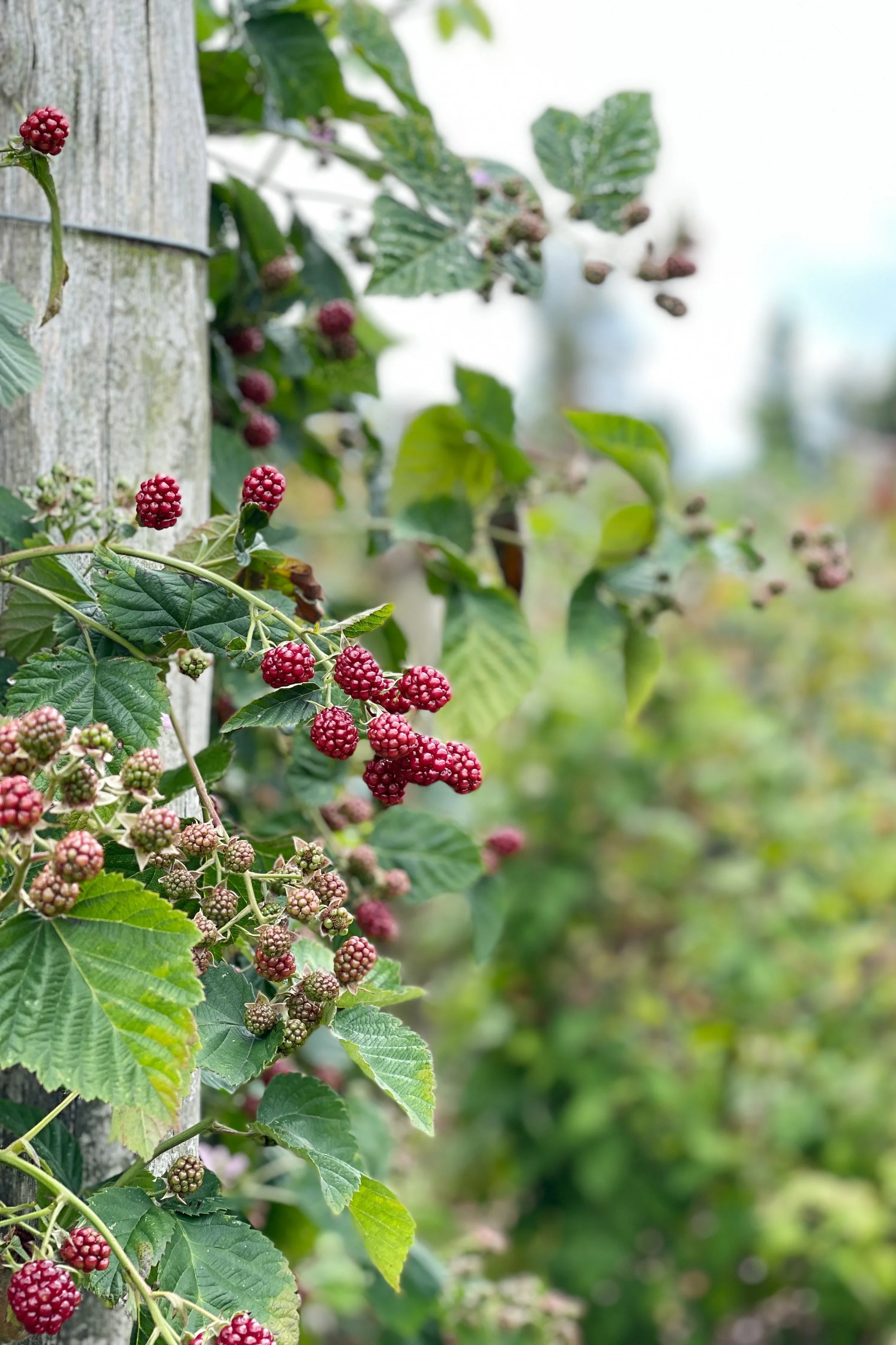
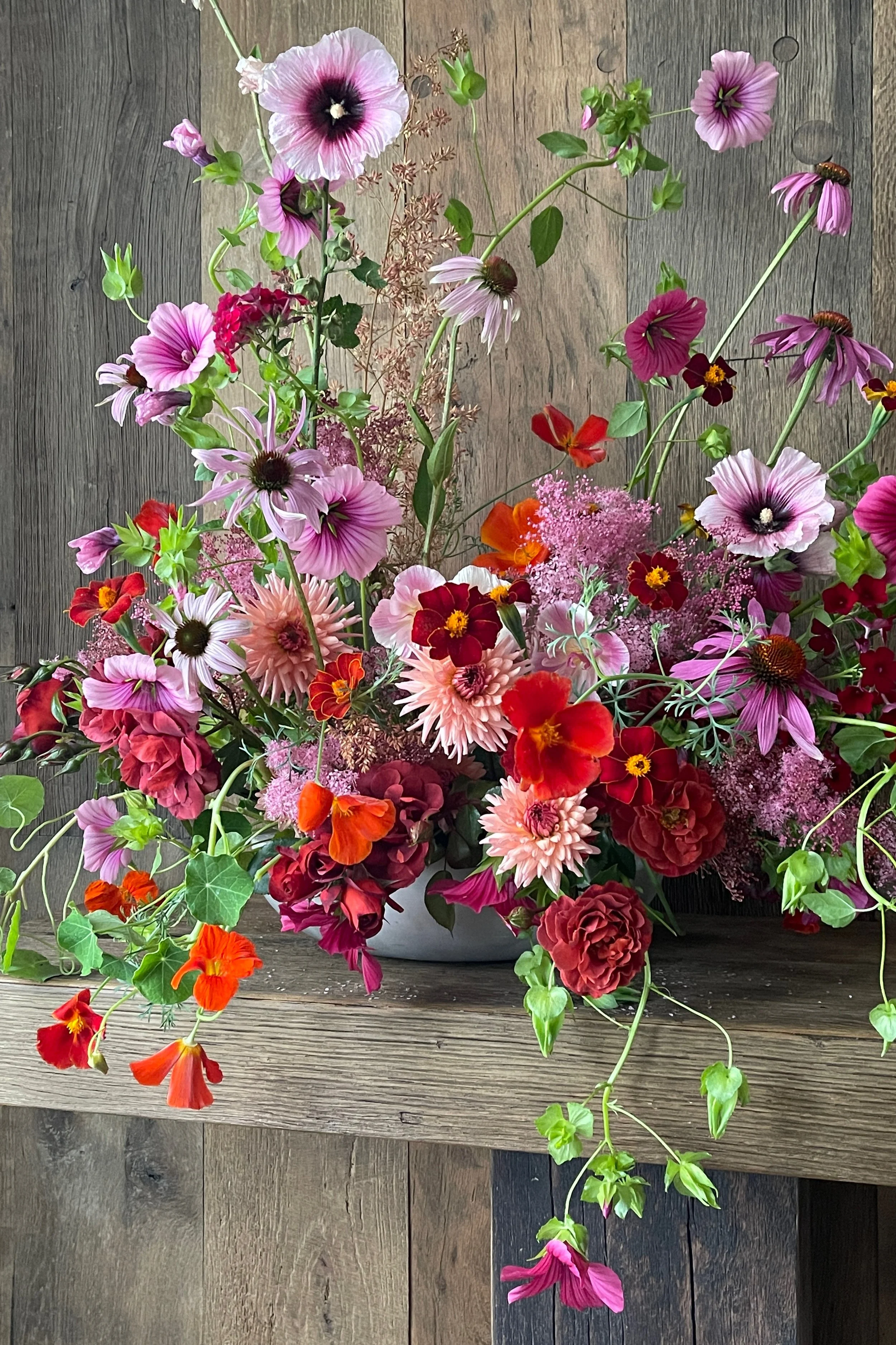
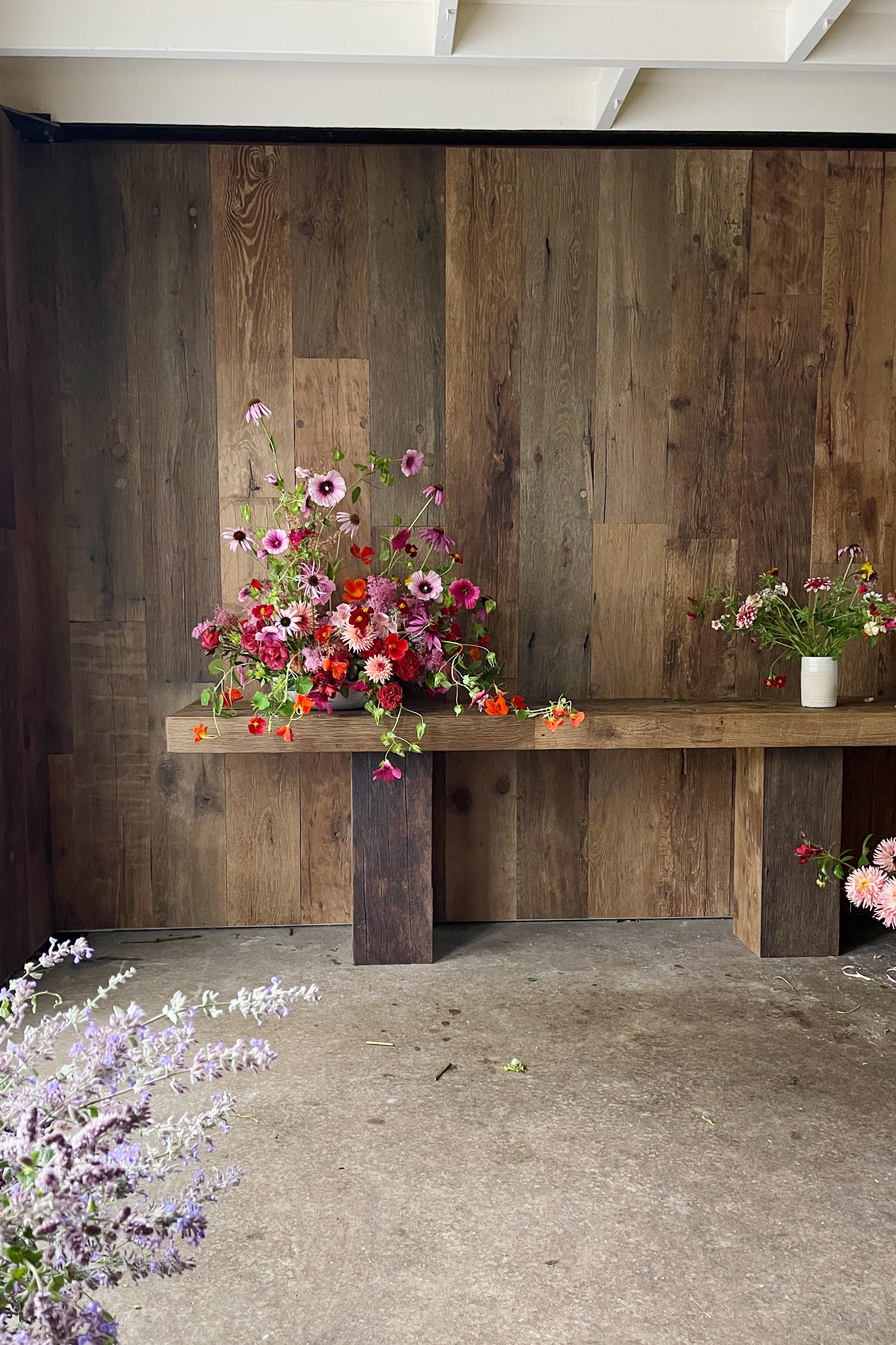
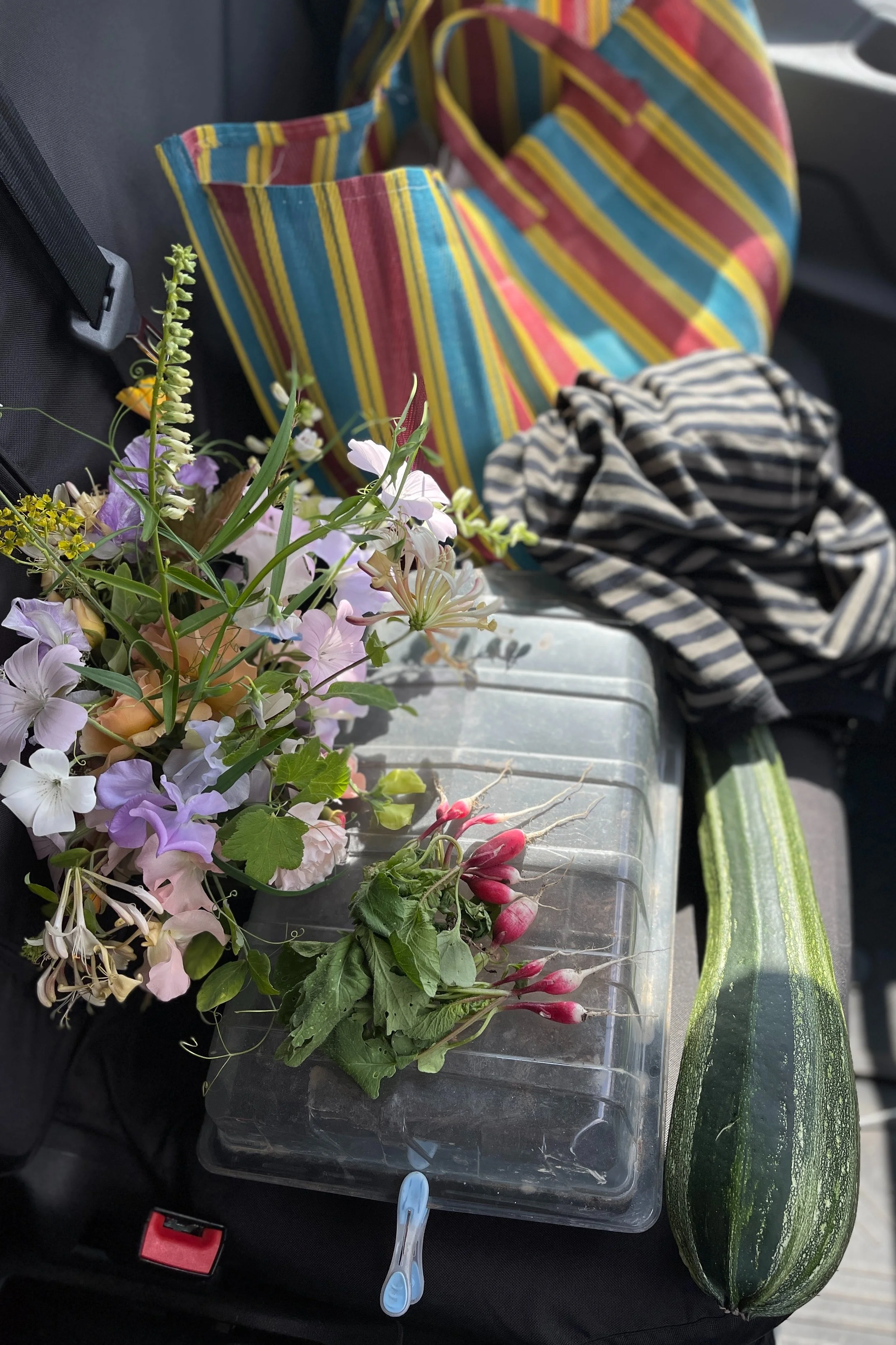
So yes, it’s been a ‘weathery’ month. A lot of rain, a lot of storms, hurrying clouds. Hurrying to hang the washing out when the sun appears, dashing out to bundle it all in when it starts raining again. Falling asleep to the applause-like sounds of the latest deluge, waking to gentle mizzle. The London suburbs are suddenly quieter, now that the schools have broken up, and a listless summer-holiday energy has settled over the city.
The garden, on the other hand, has never looked better at this time of the year. Lush and verdant, teeming with insects. The perennial beds are awash with shivering golden grasses and pale spires on tall stems.
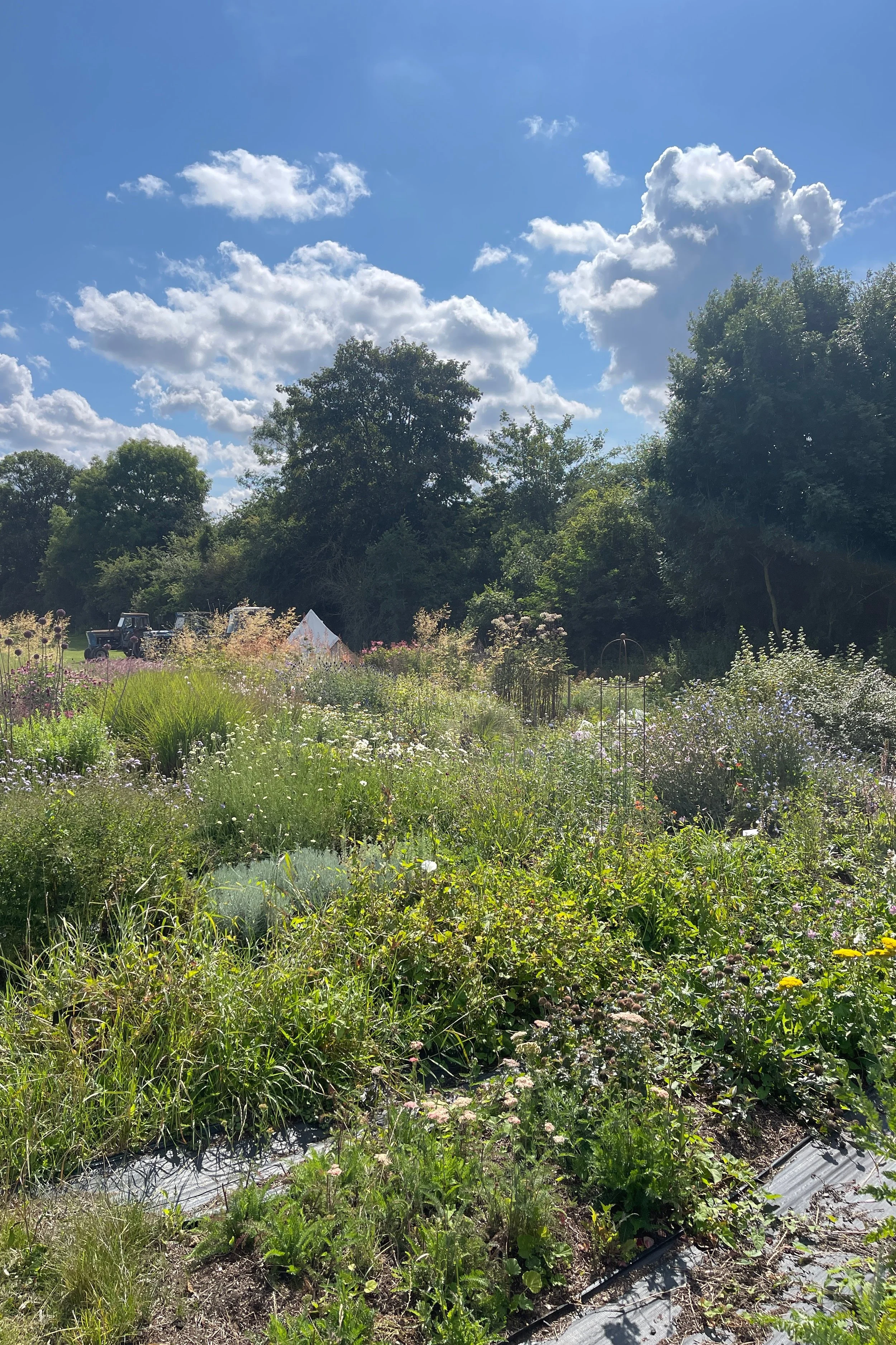
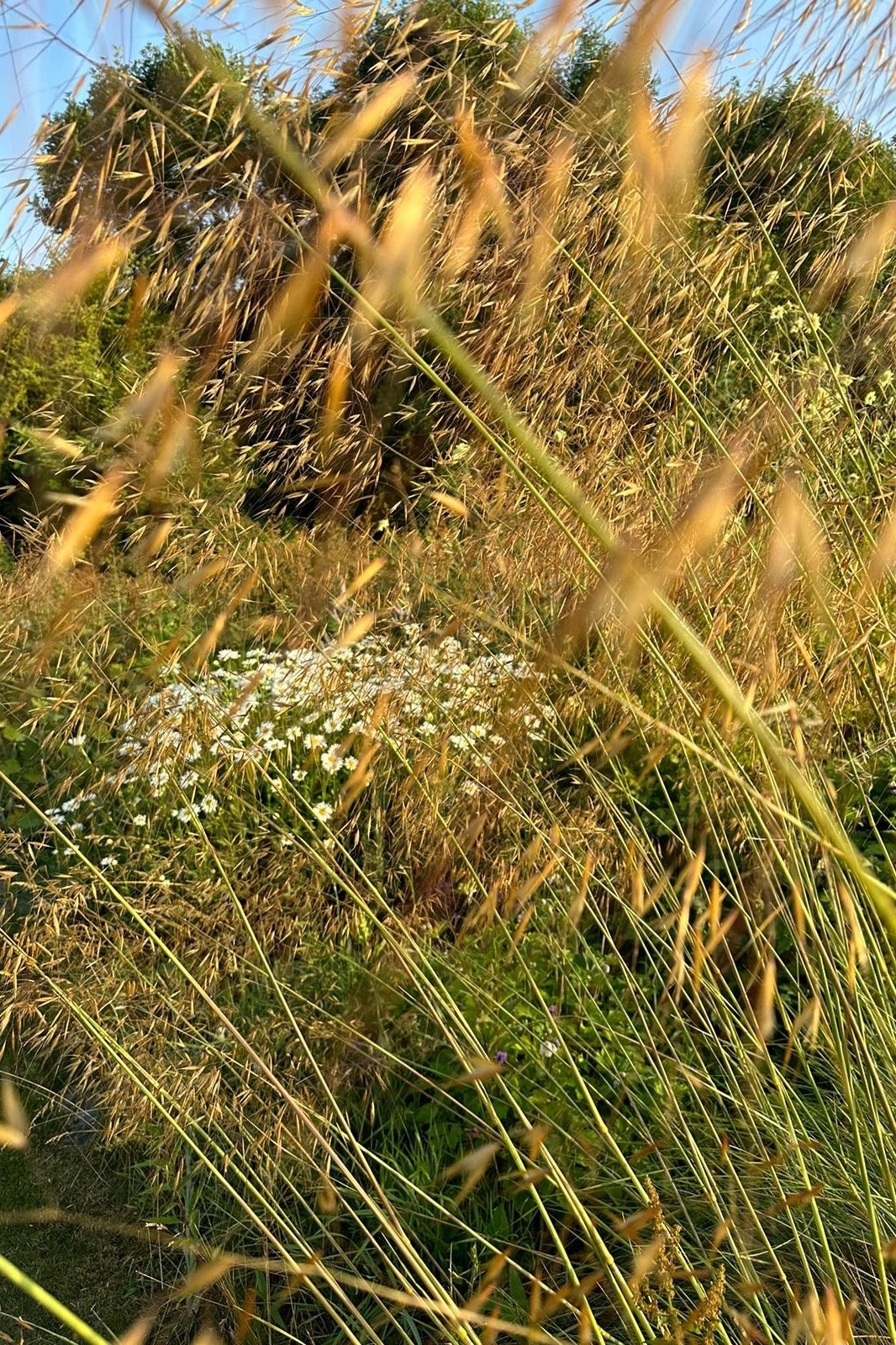
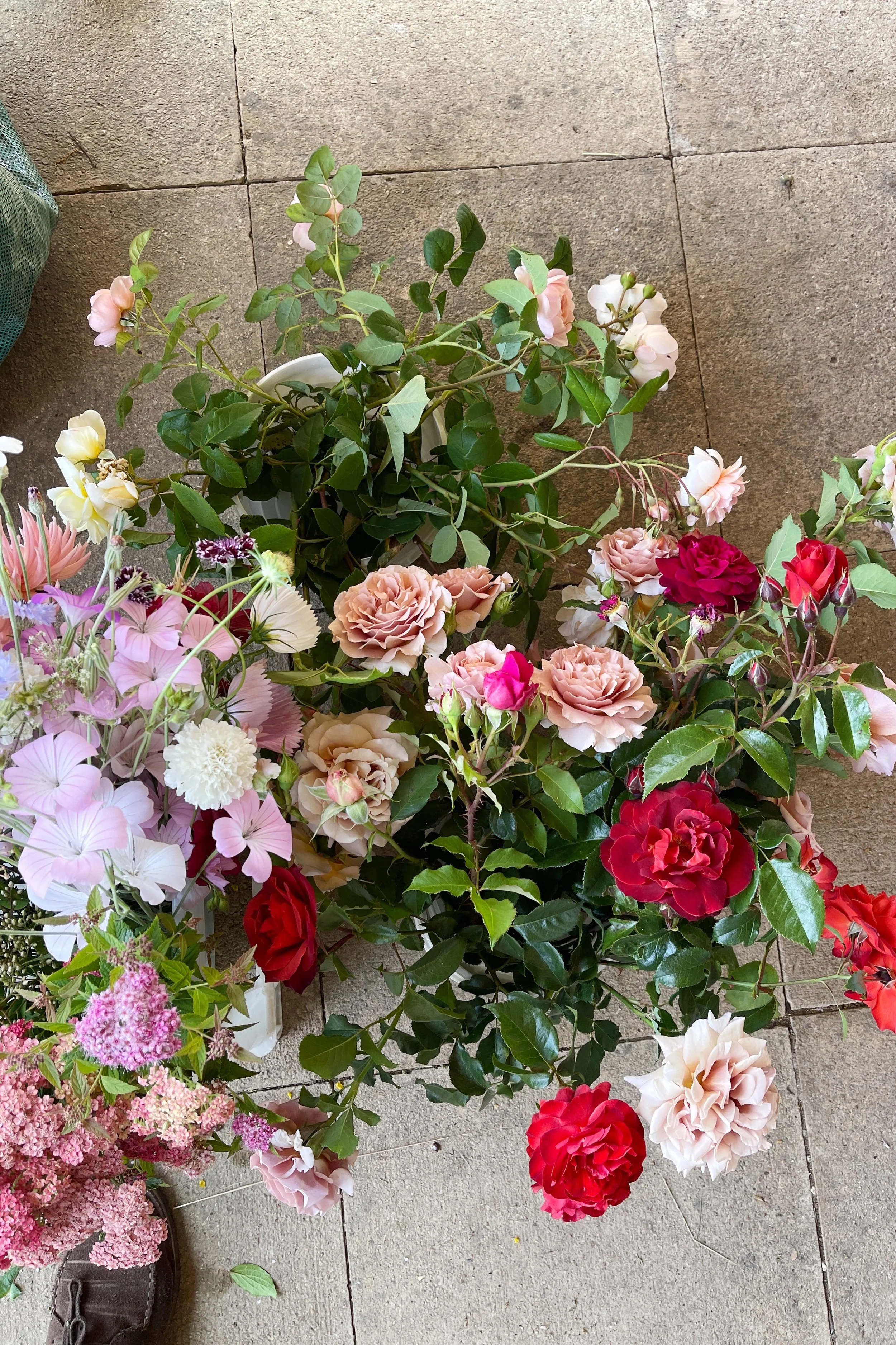
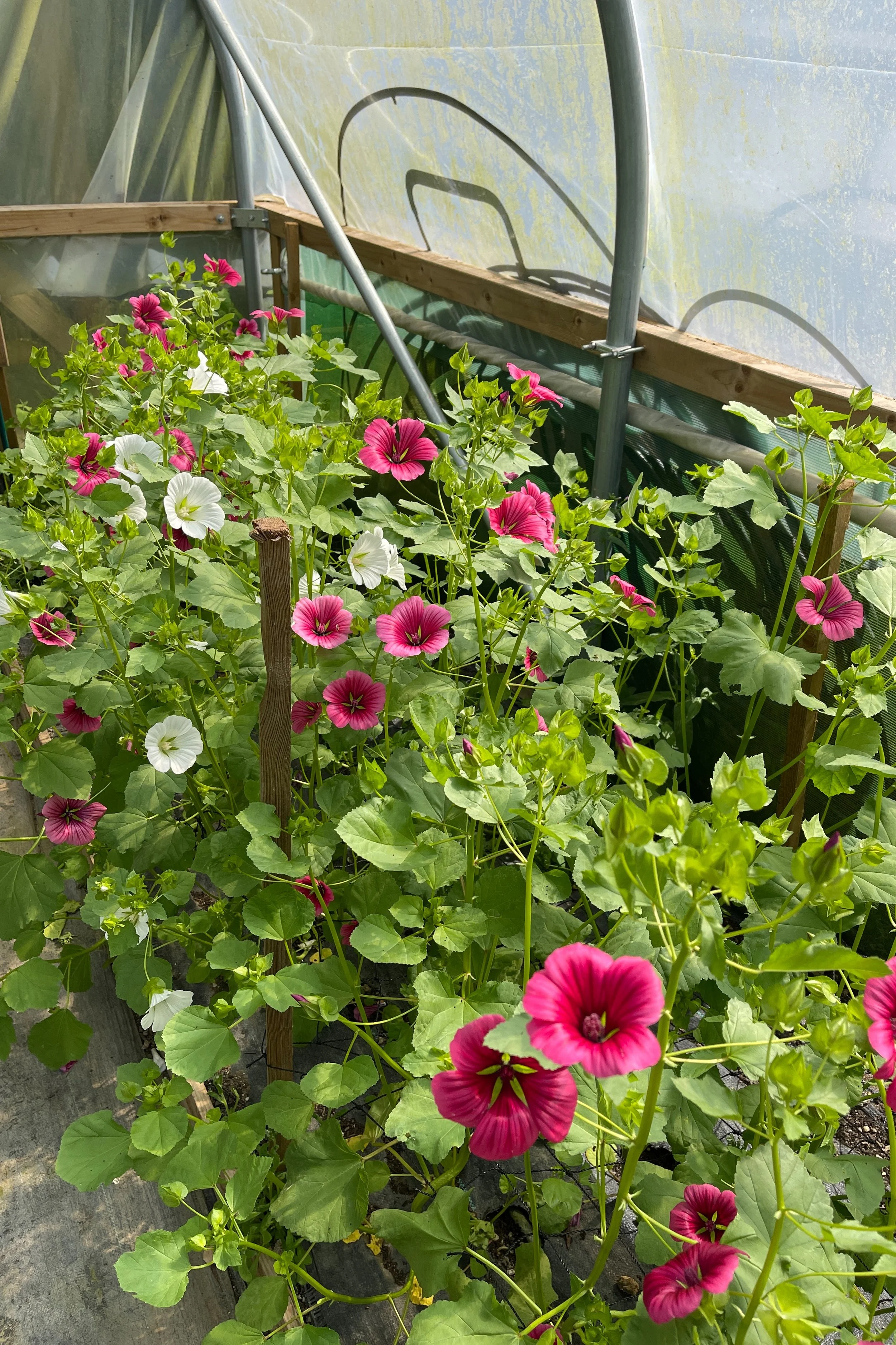
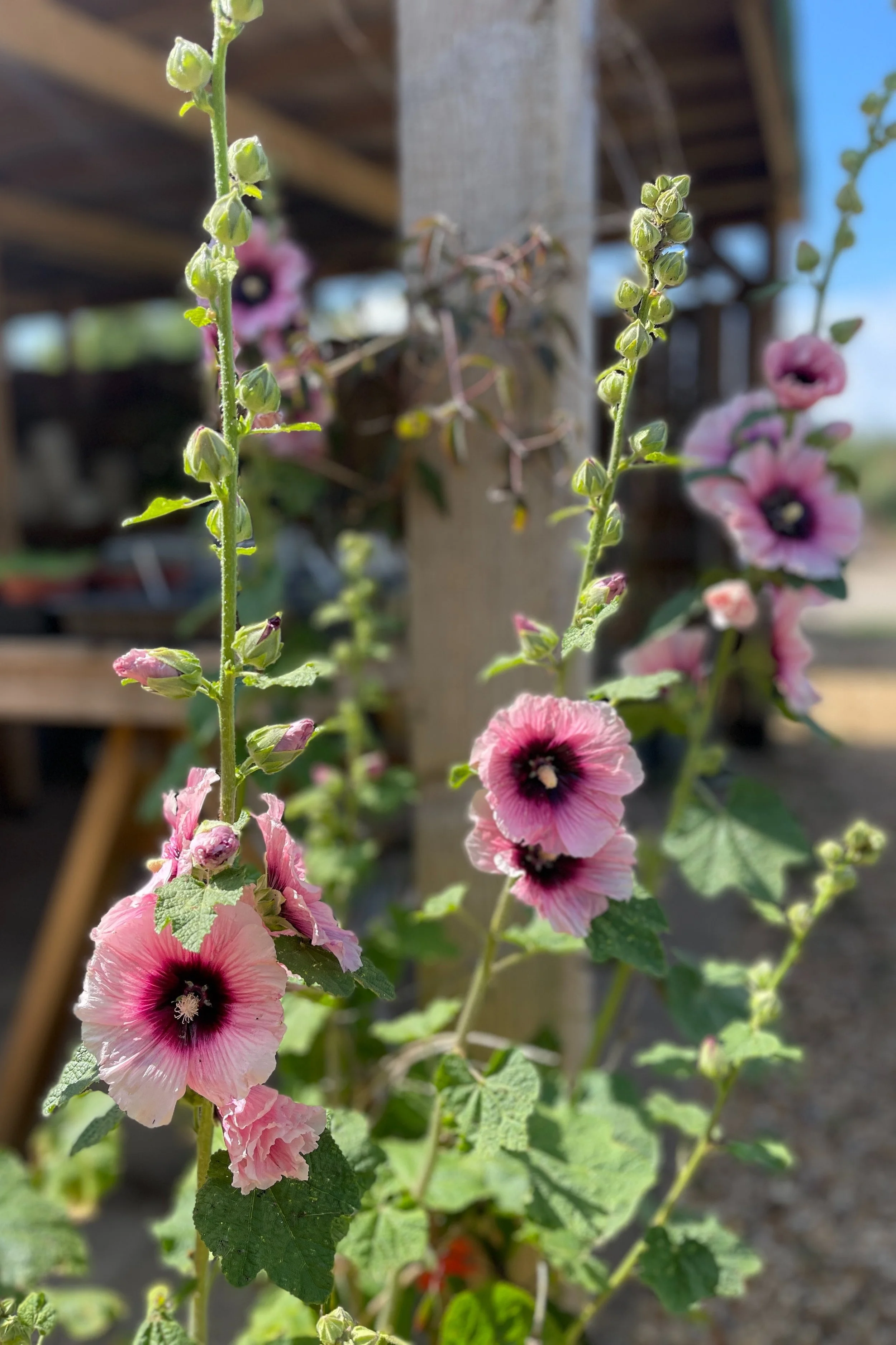
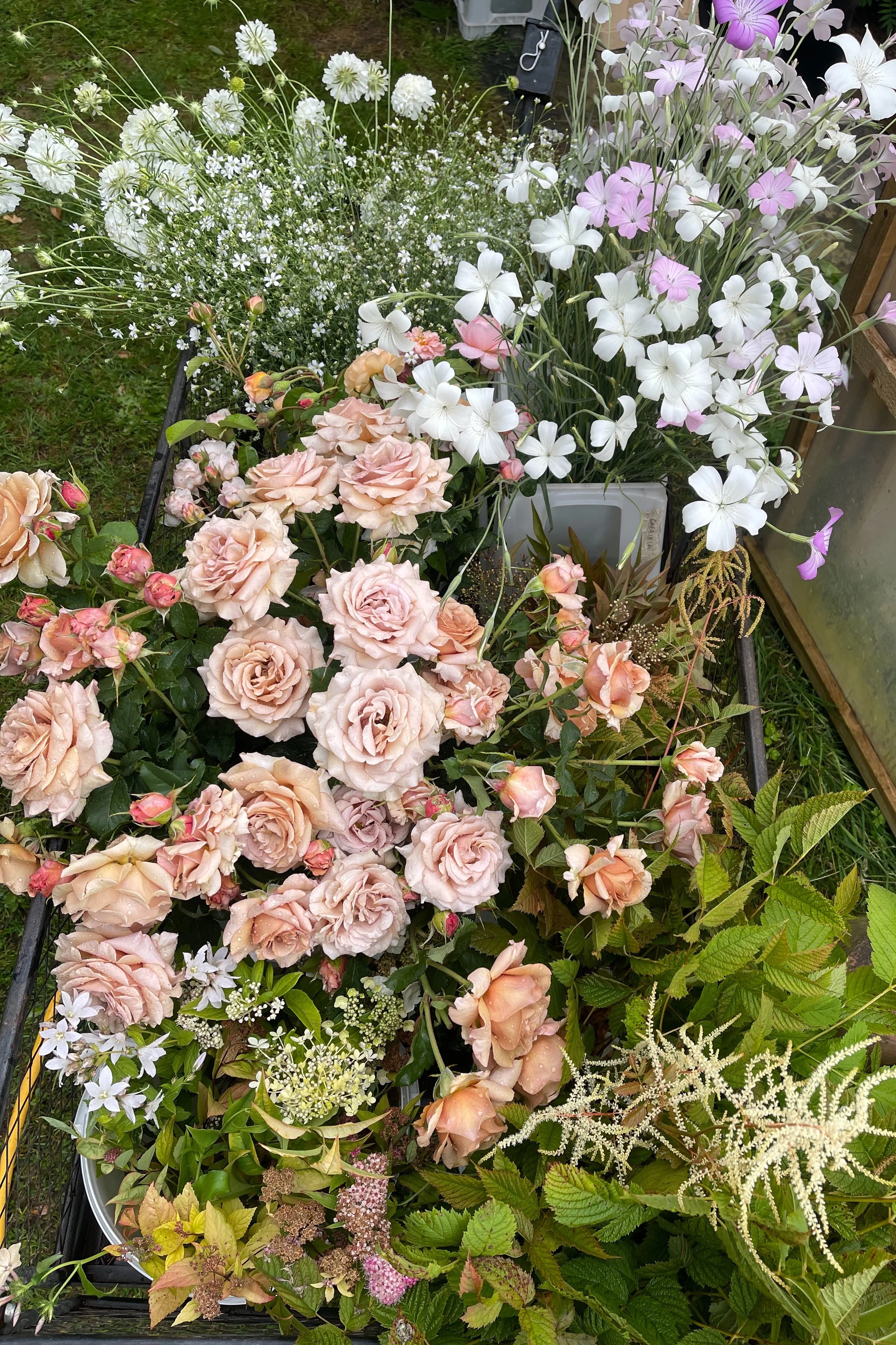
Mid July is the annual viewpoint with two seasonal vistas, one ahead and one just behind. Early summer is past and in shadow now. The next season - I hesitate to even say the word - comes into sight up ahead, still blurry and a way off but inching closer with its crisp mornings and langourous afternoons of mellow sunlight.
A reminder to breathe, taste, swim in these longer days for as long as possible, to squeeze every last drop of summer ‘til the pips squeak.
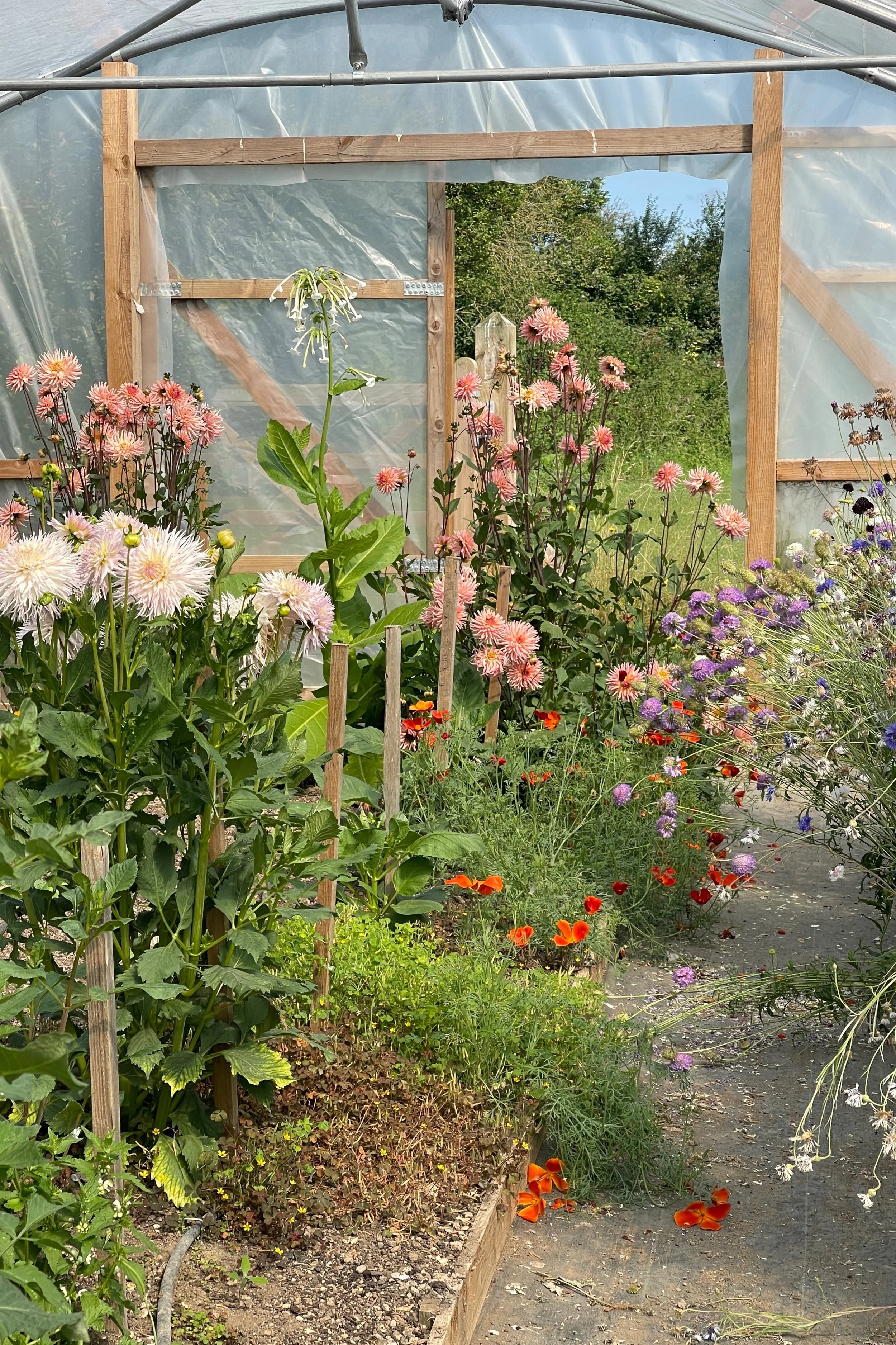
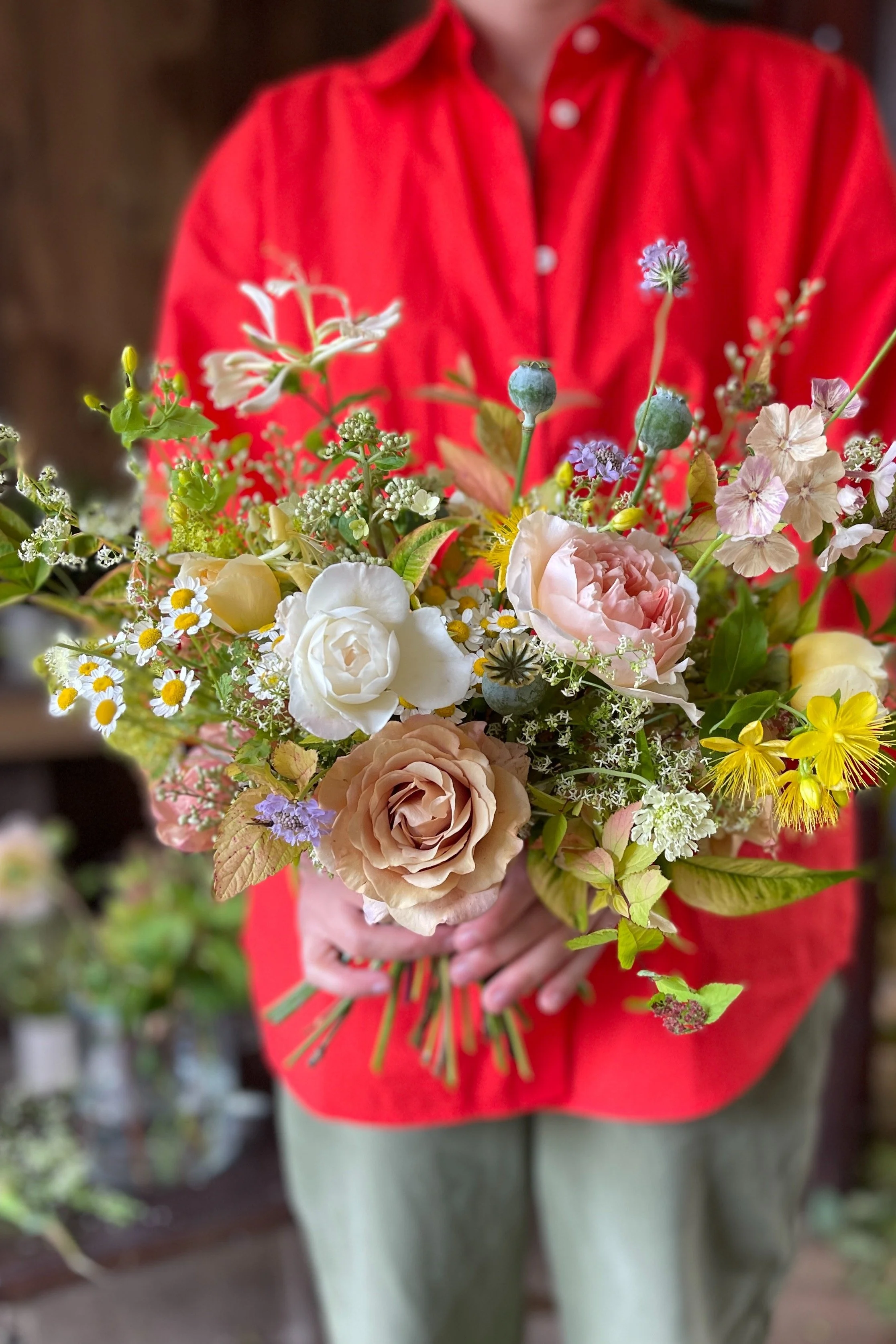
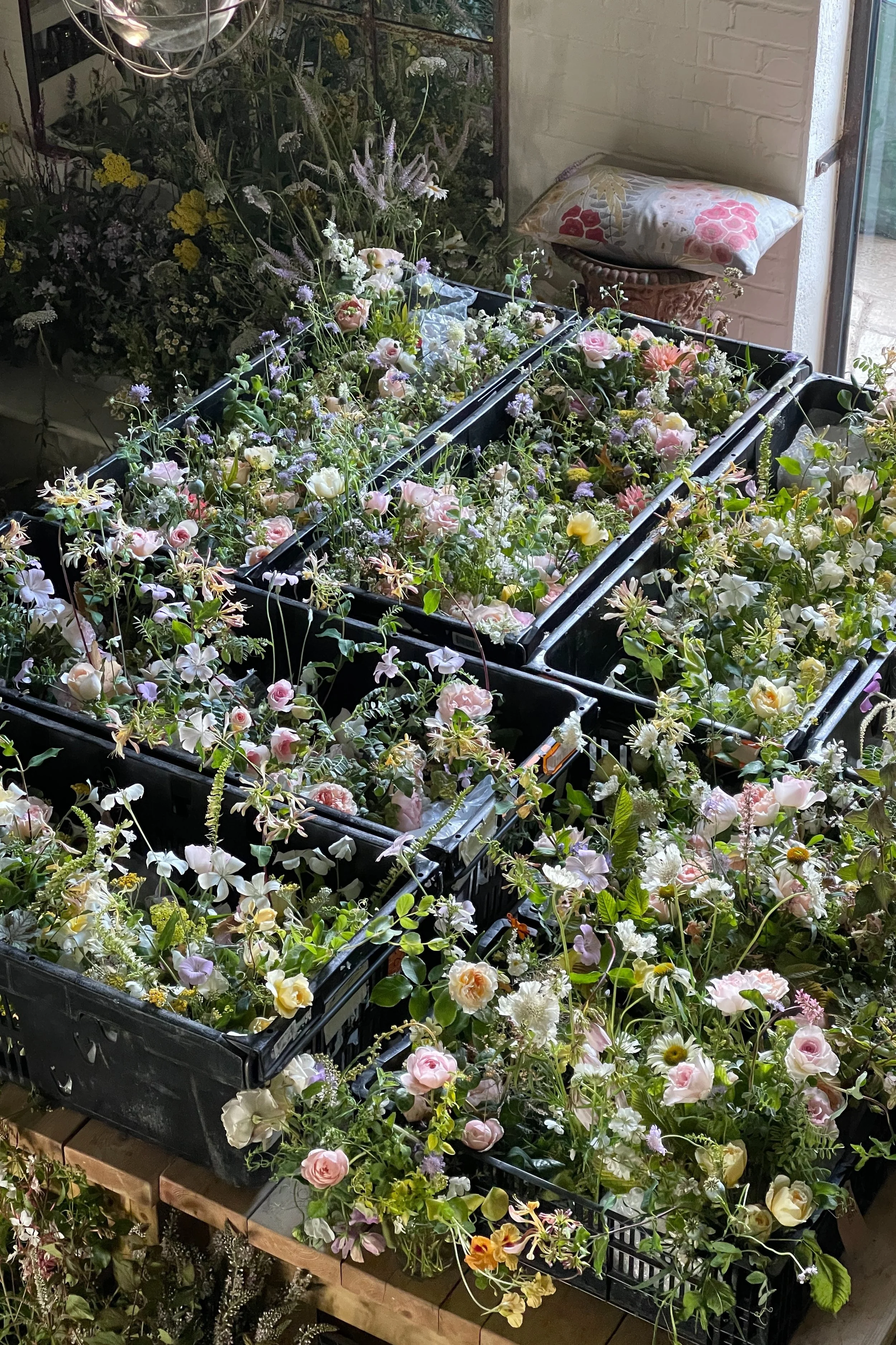
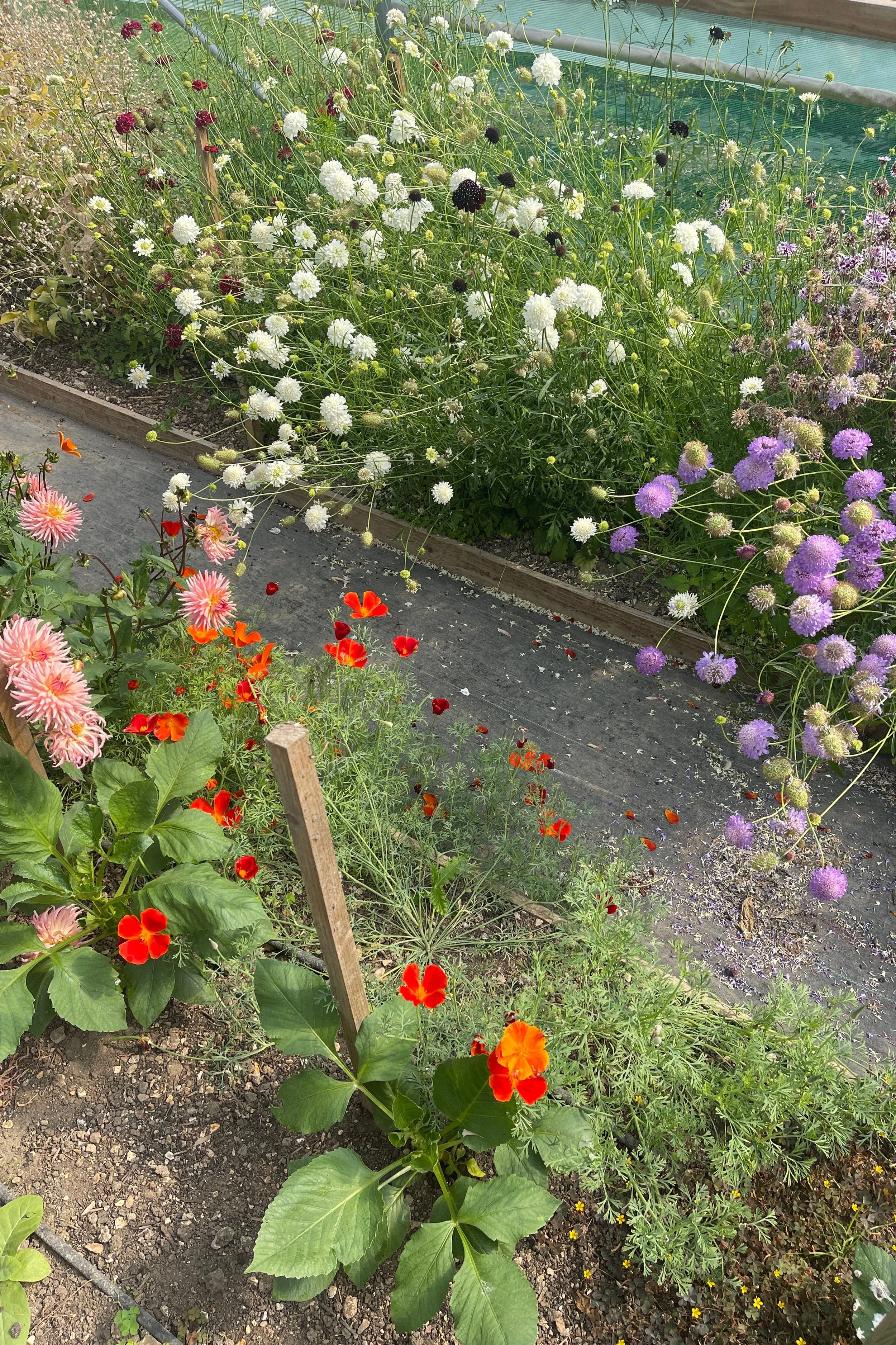
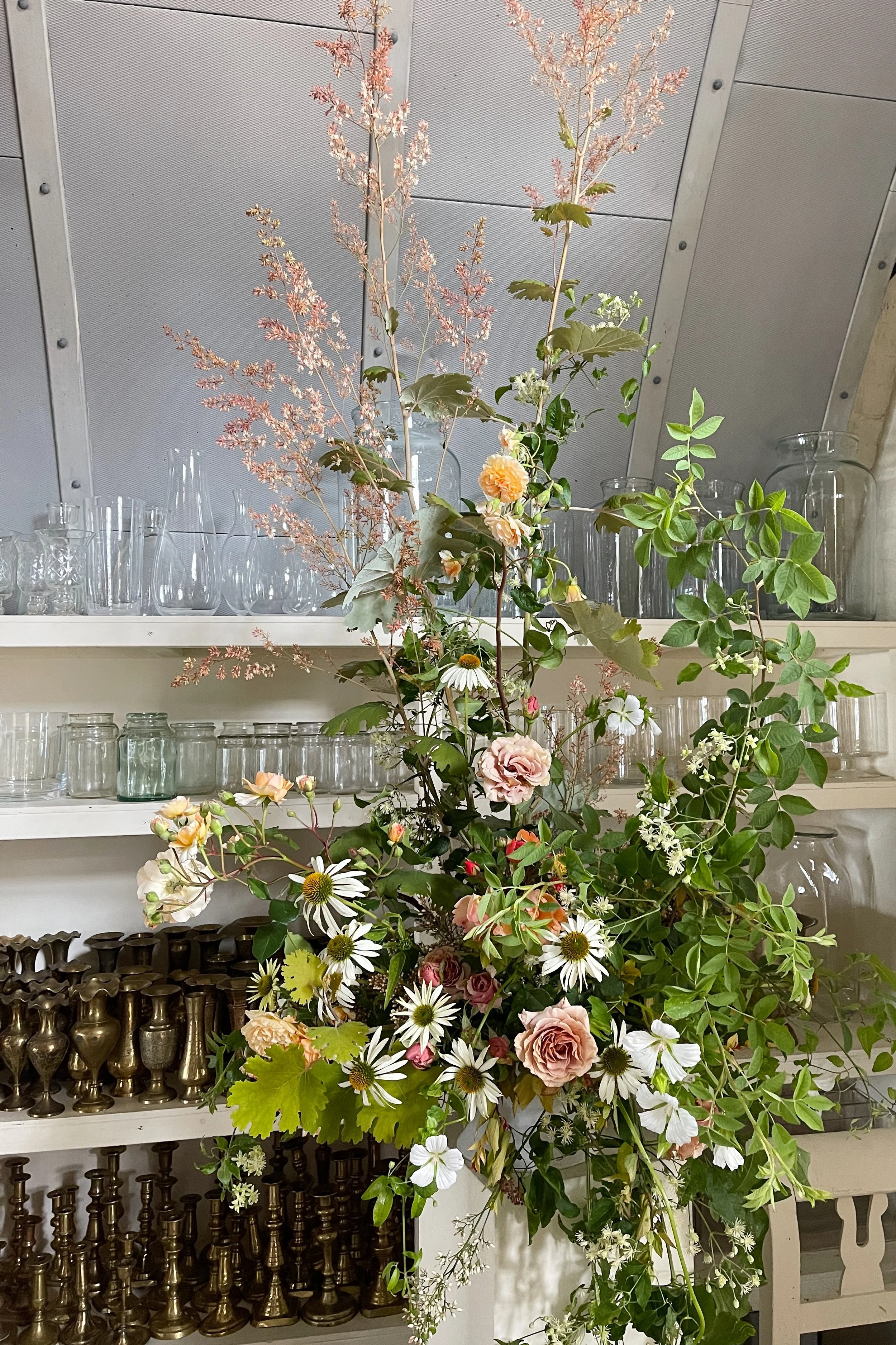
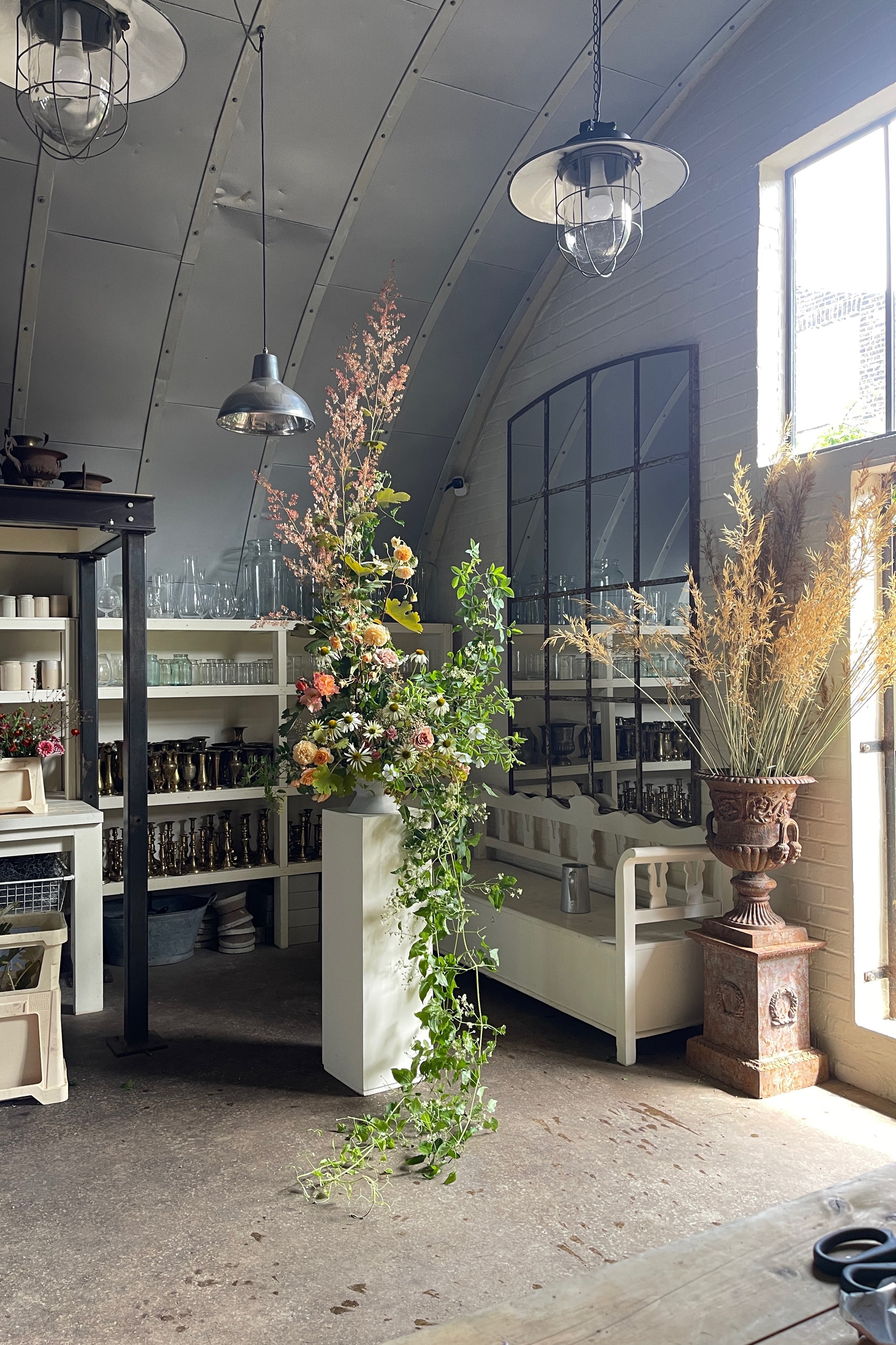
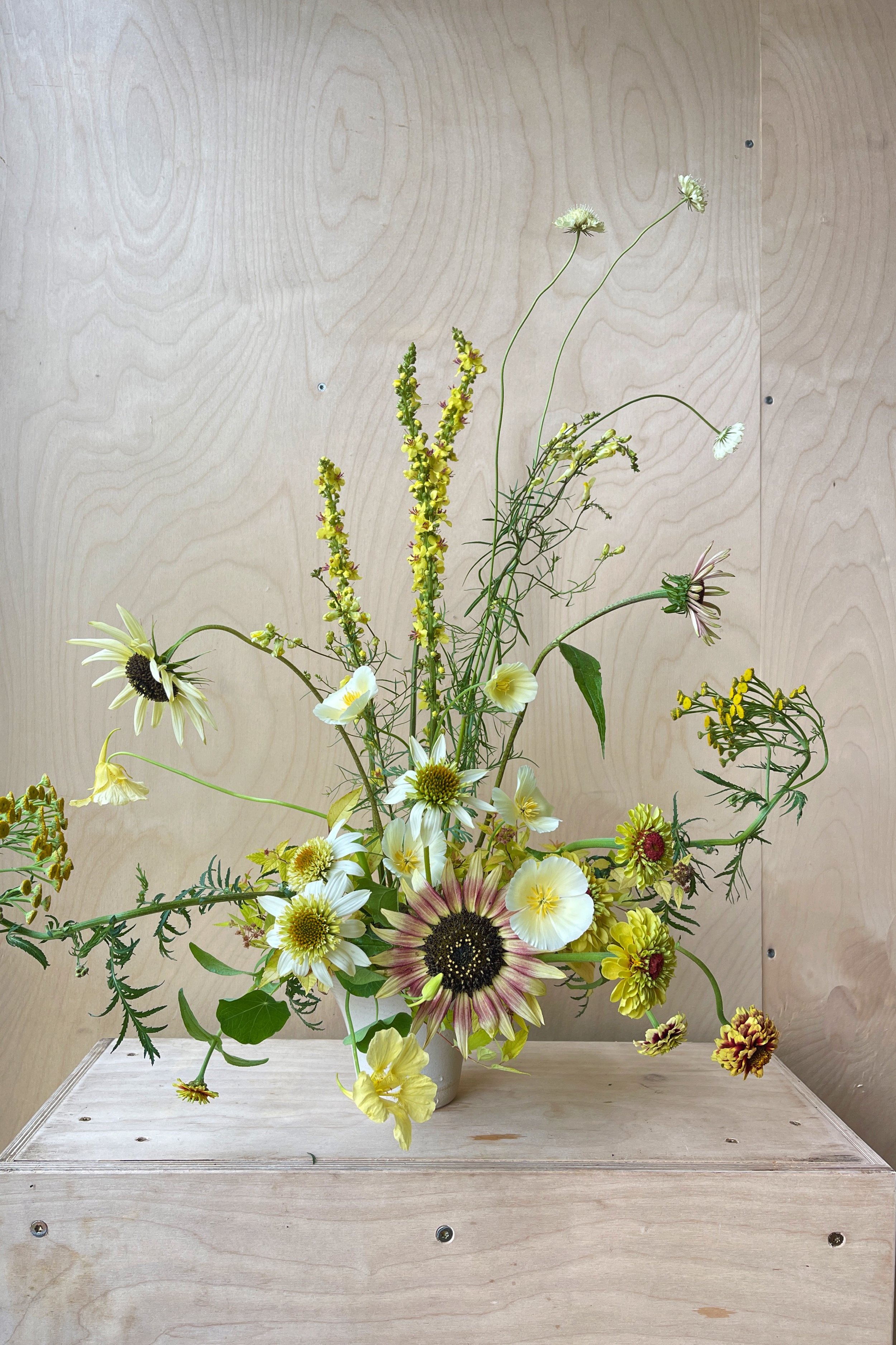
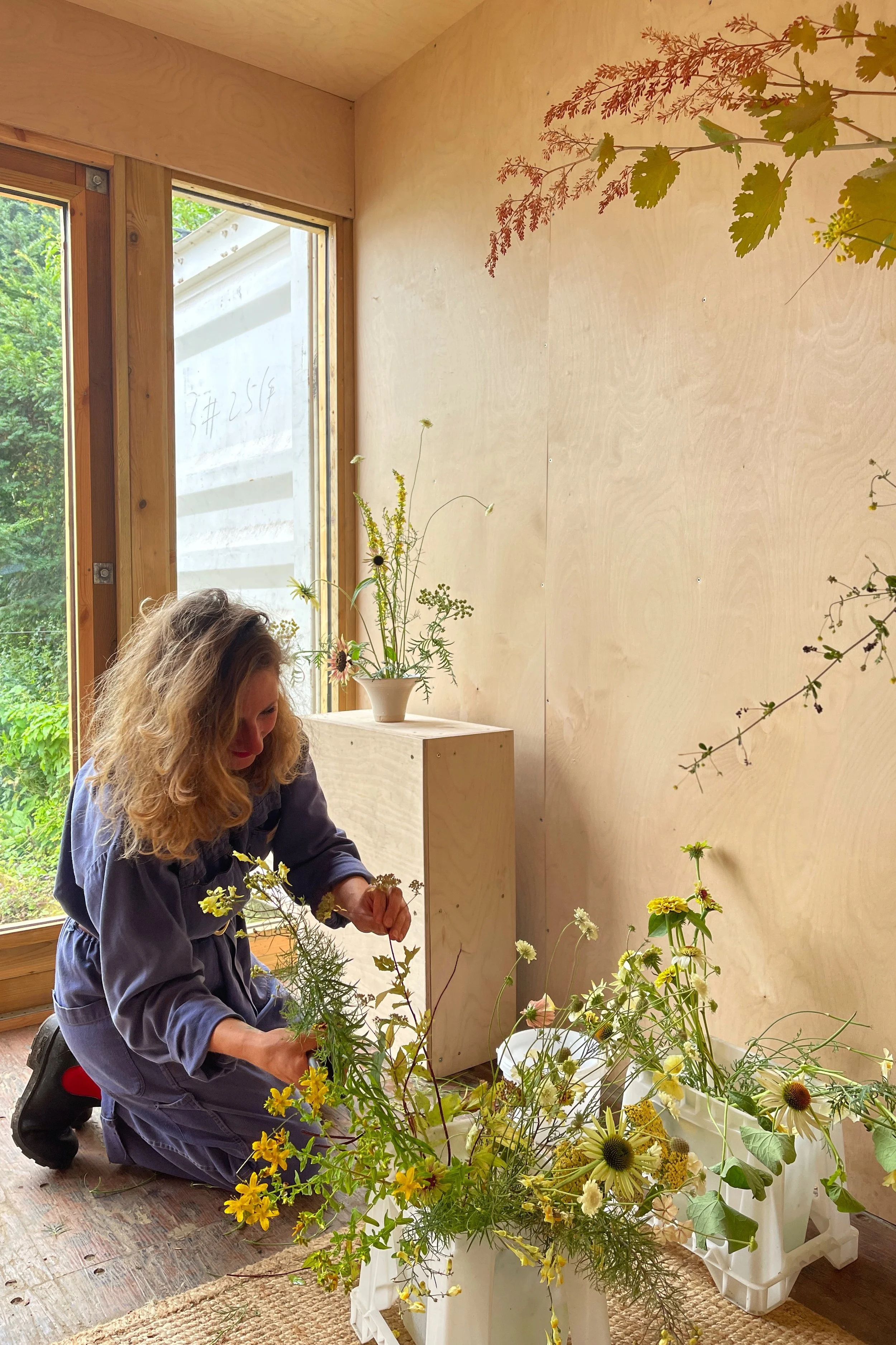
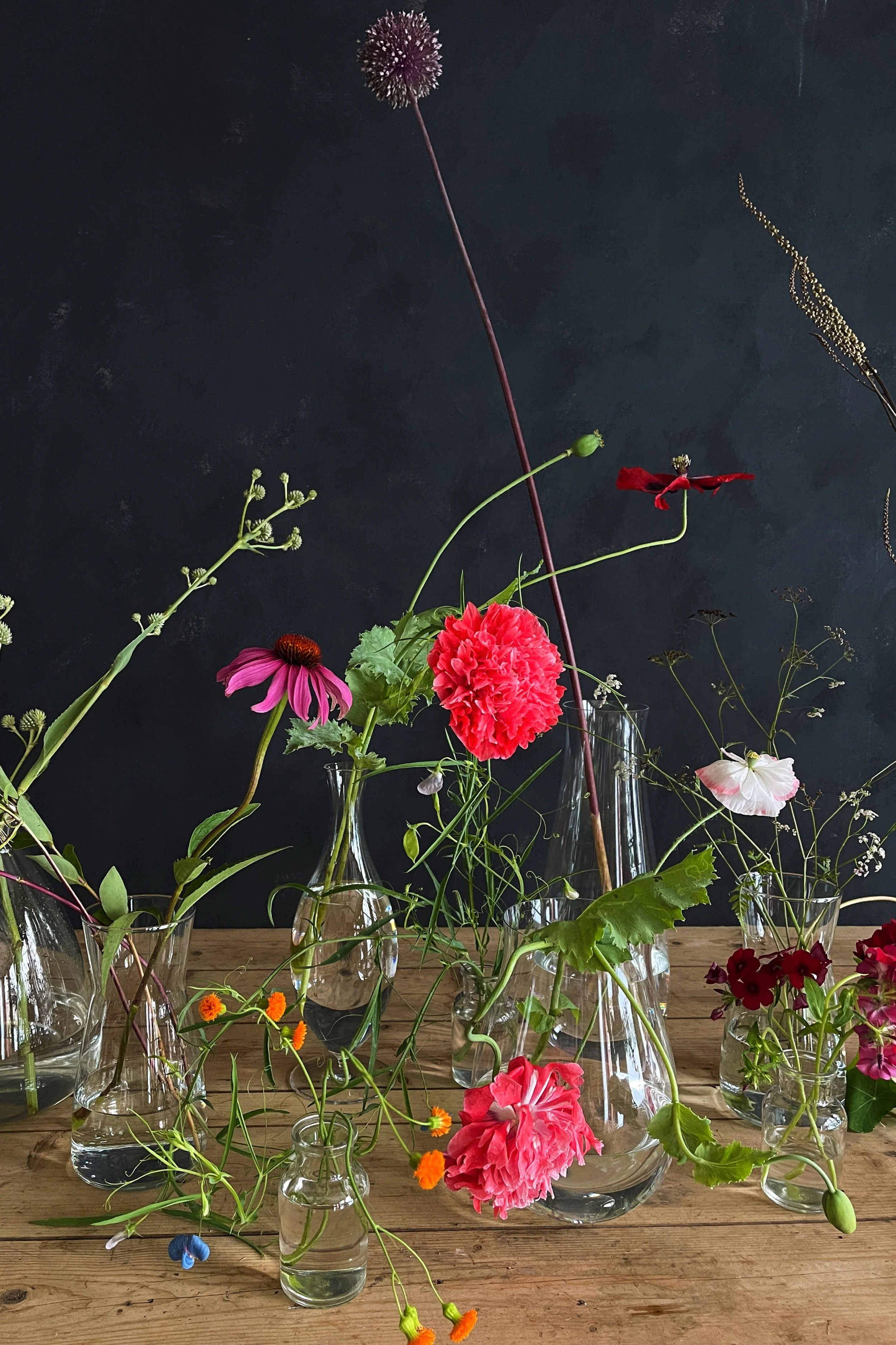
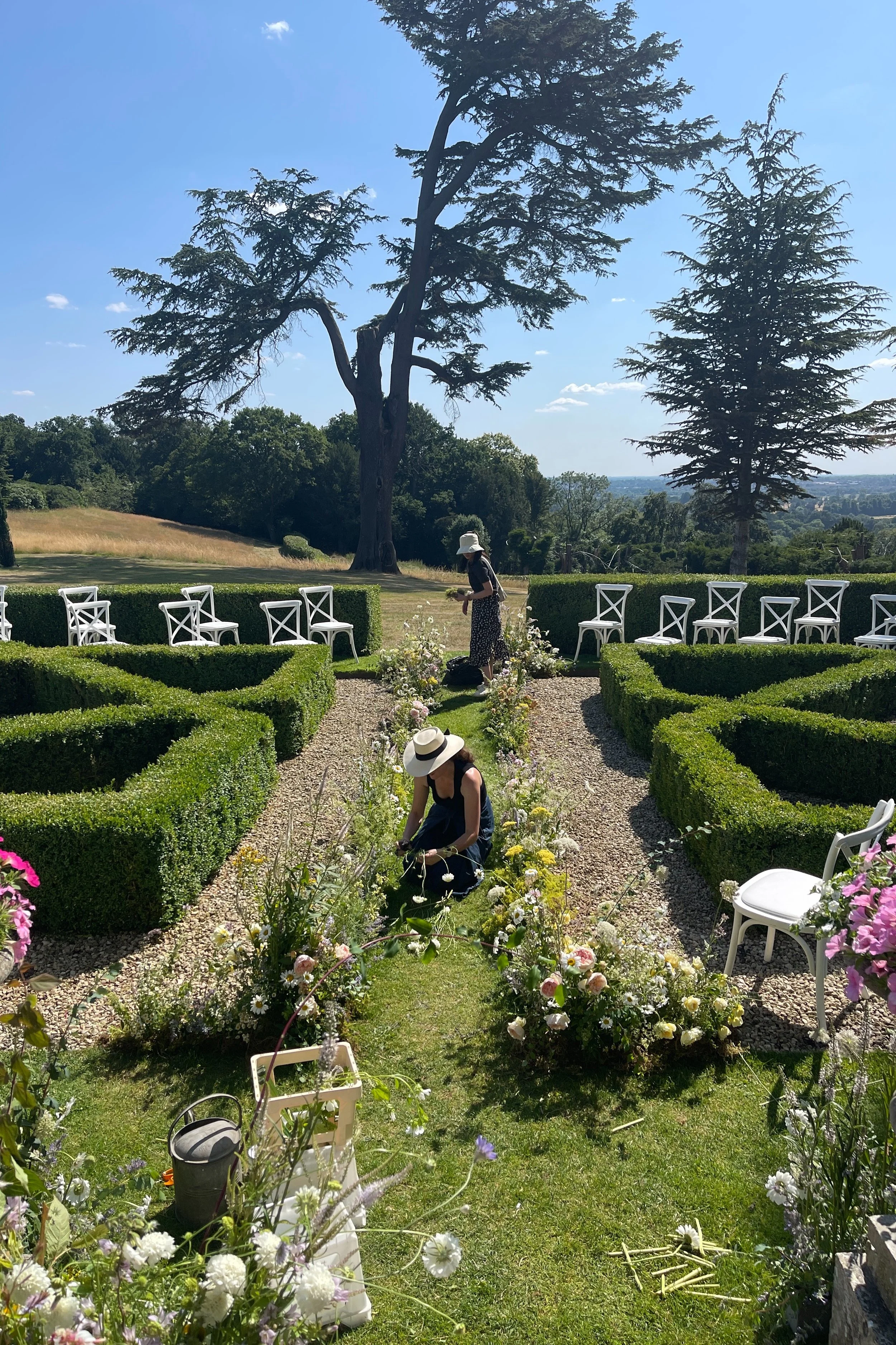
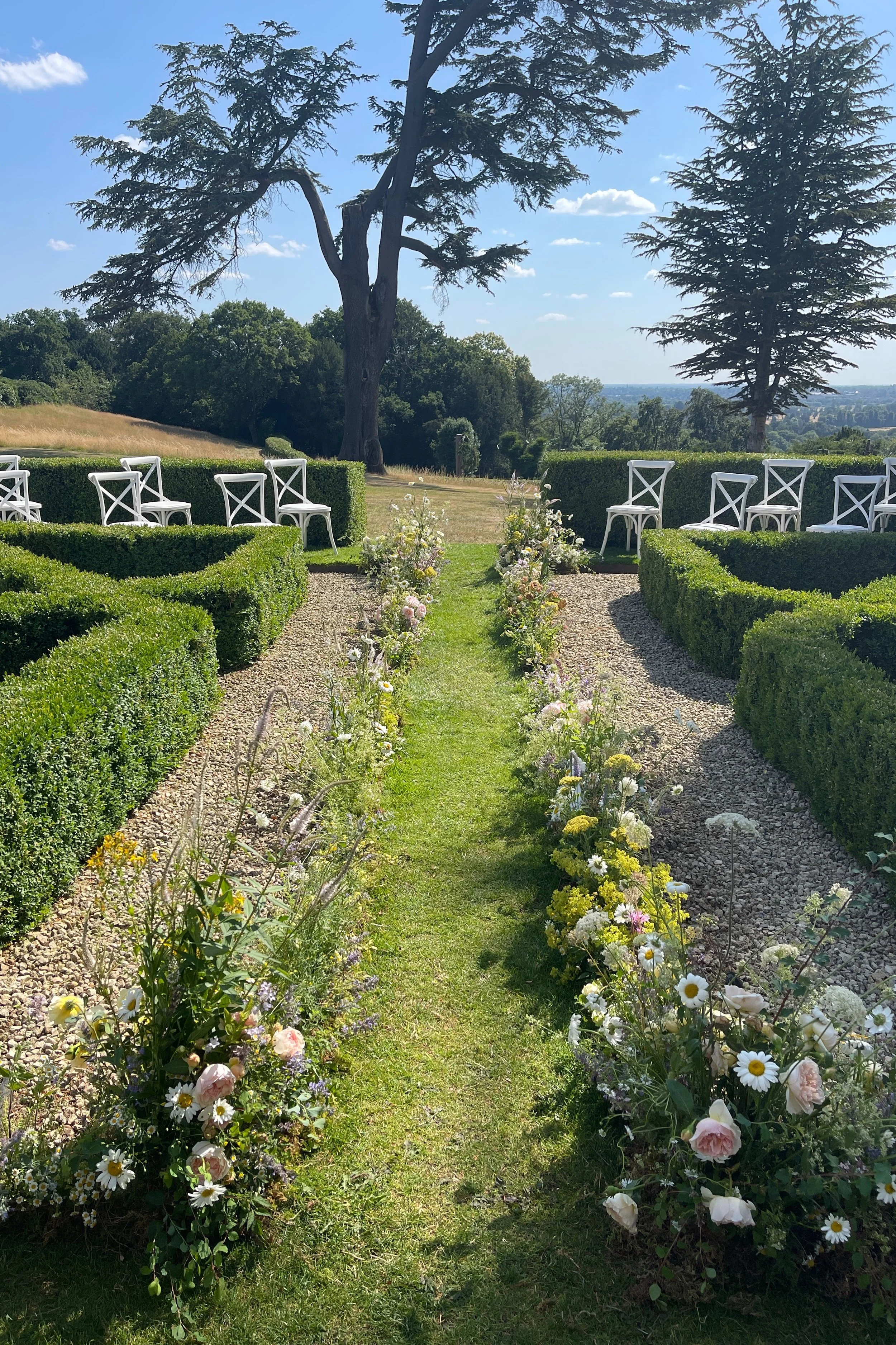
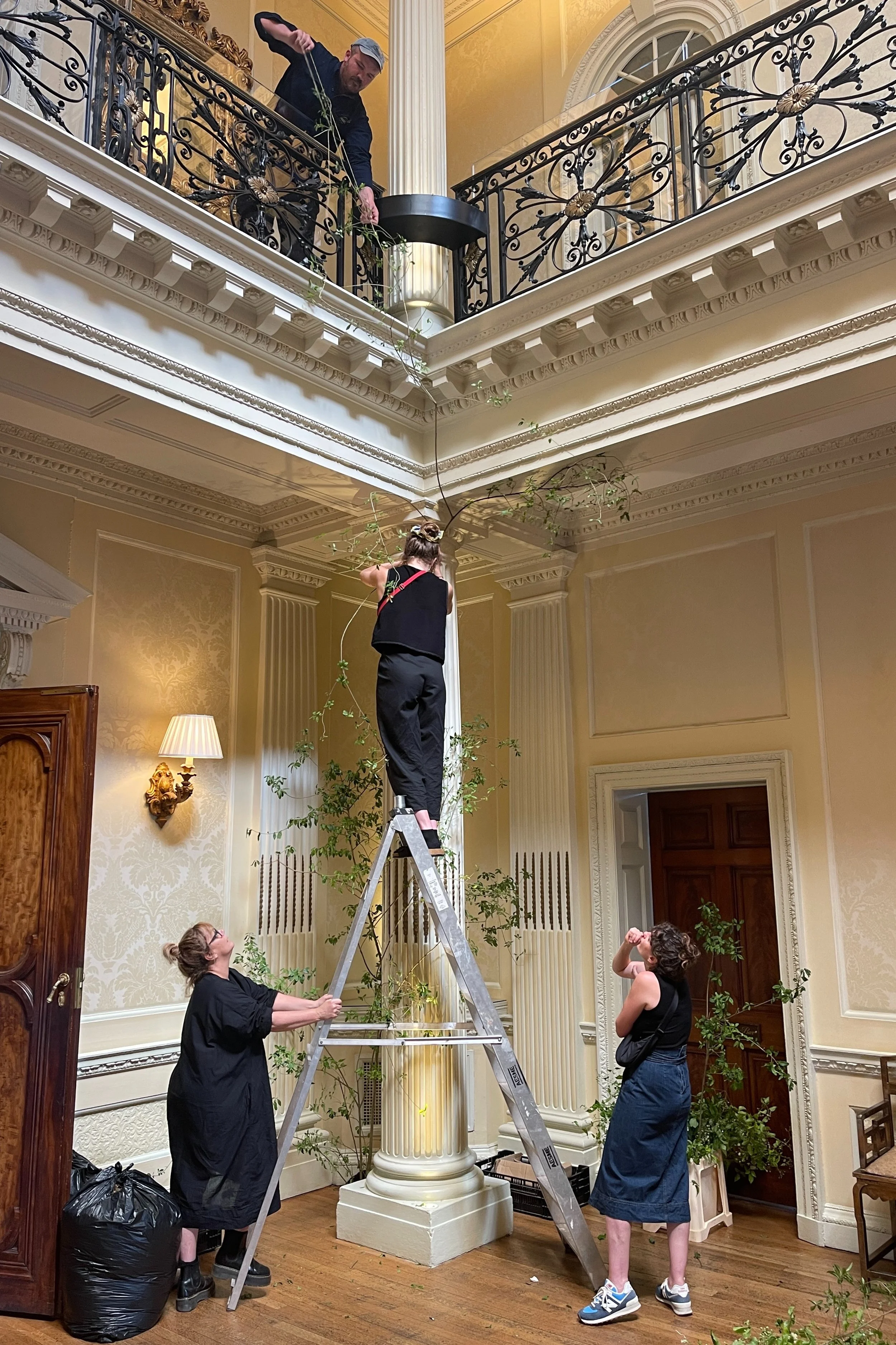
Early in the month we installed a wedding at Hedsor House for which - for once - it was a balmy 28 degrees and very windy. The ceremony was held outdoors in a small topiary garden for which we created an undulating floral border of perennials and garden roses. In the hall we wound spindly leafy branches up around the columns with honeysuckle and sweet pea vines entwined around them.
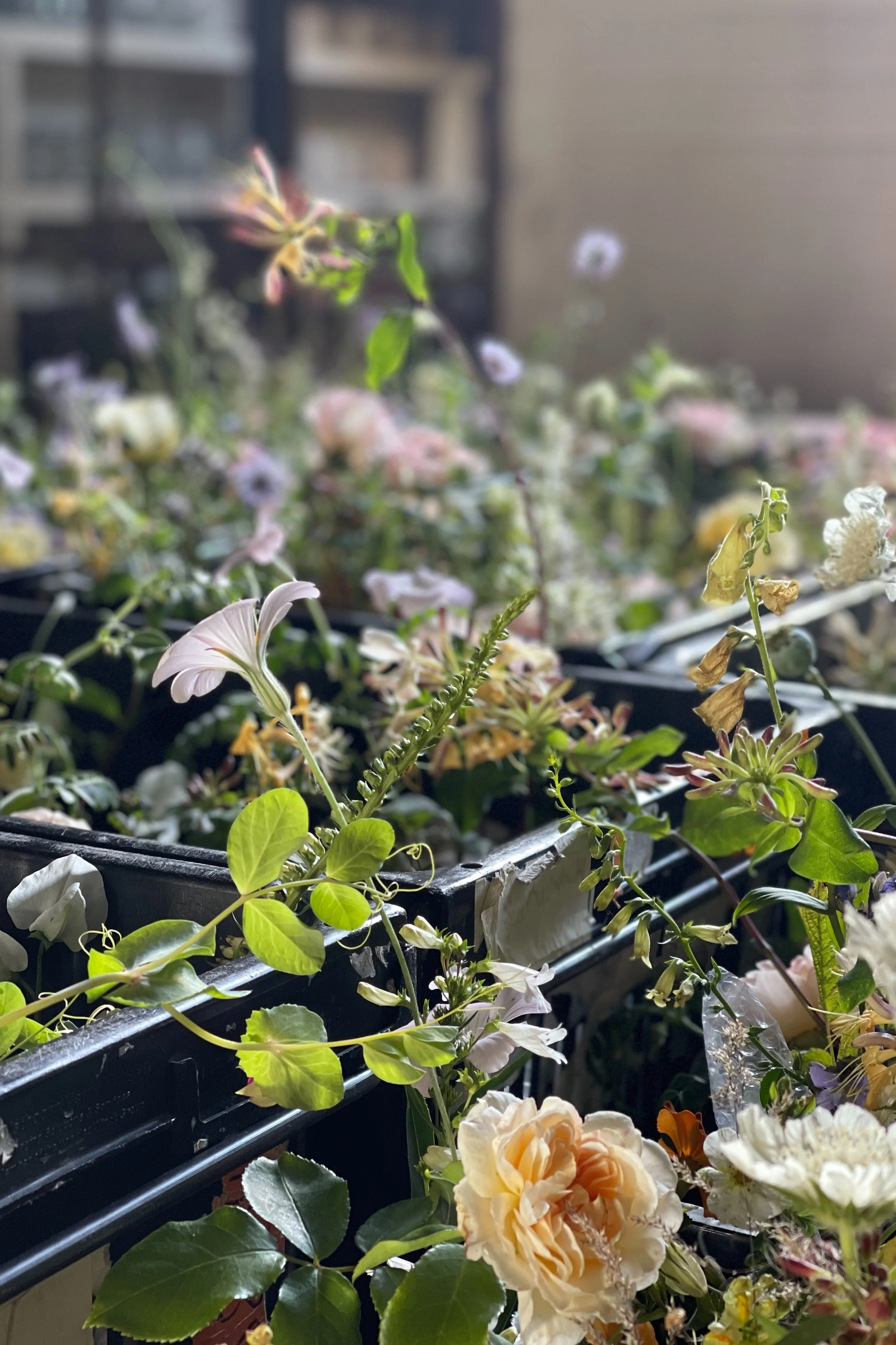
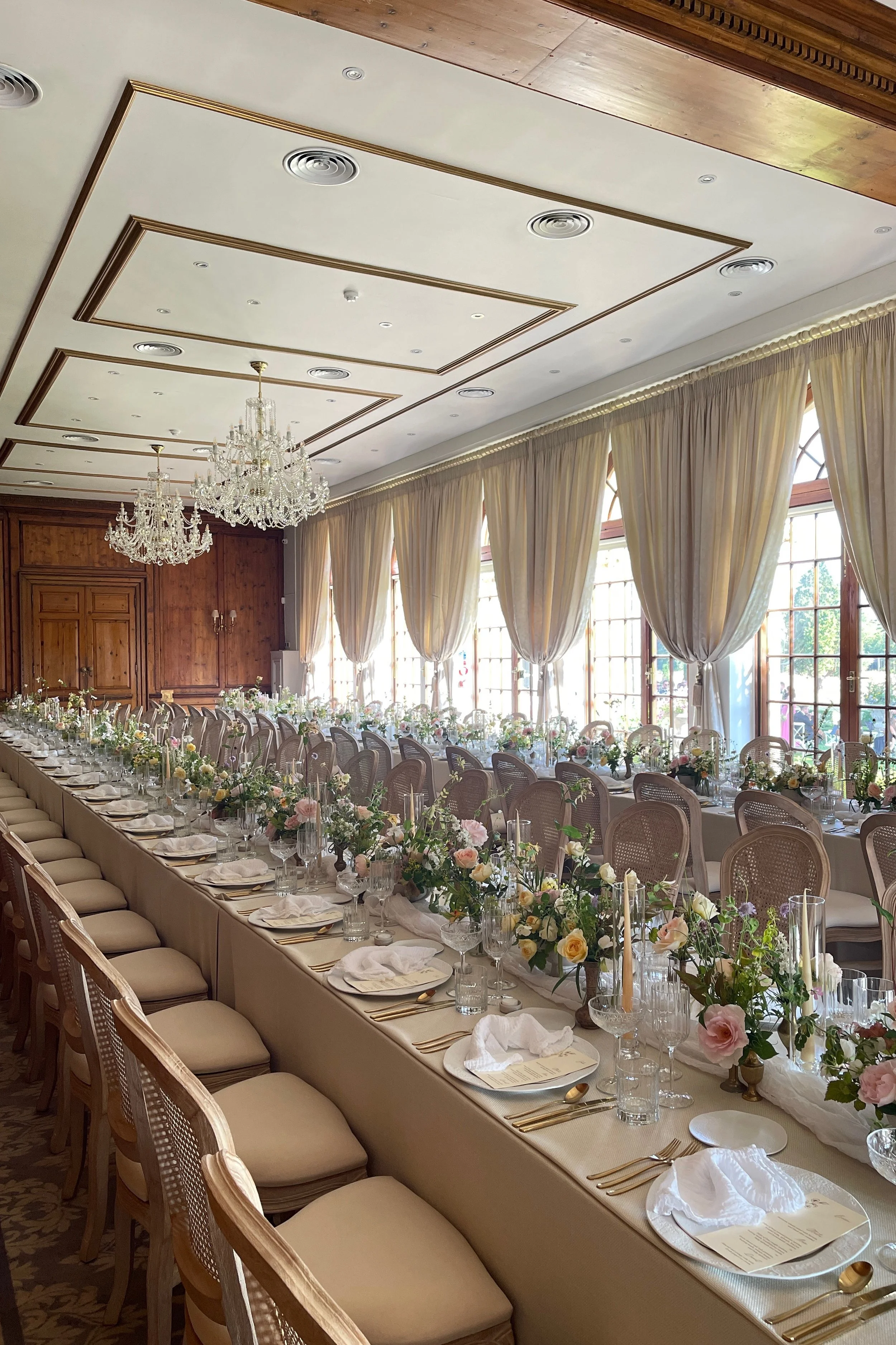
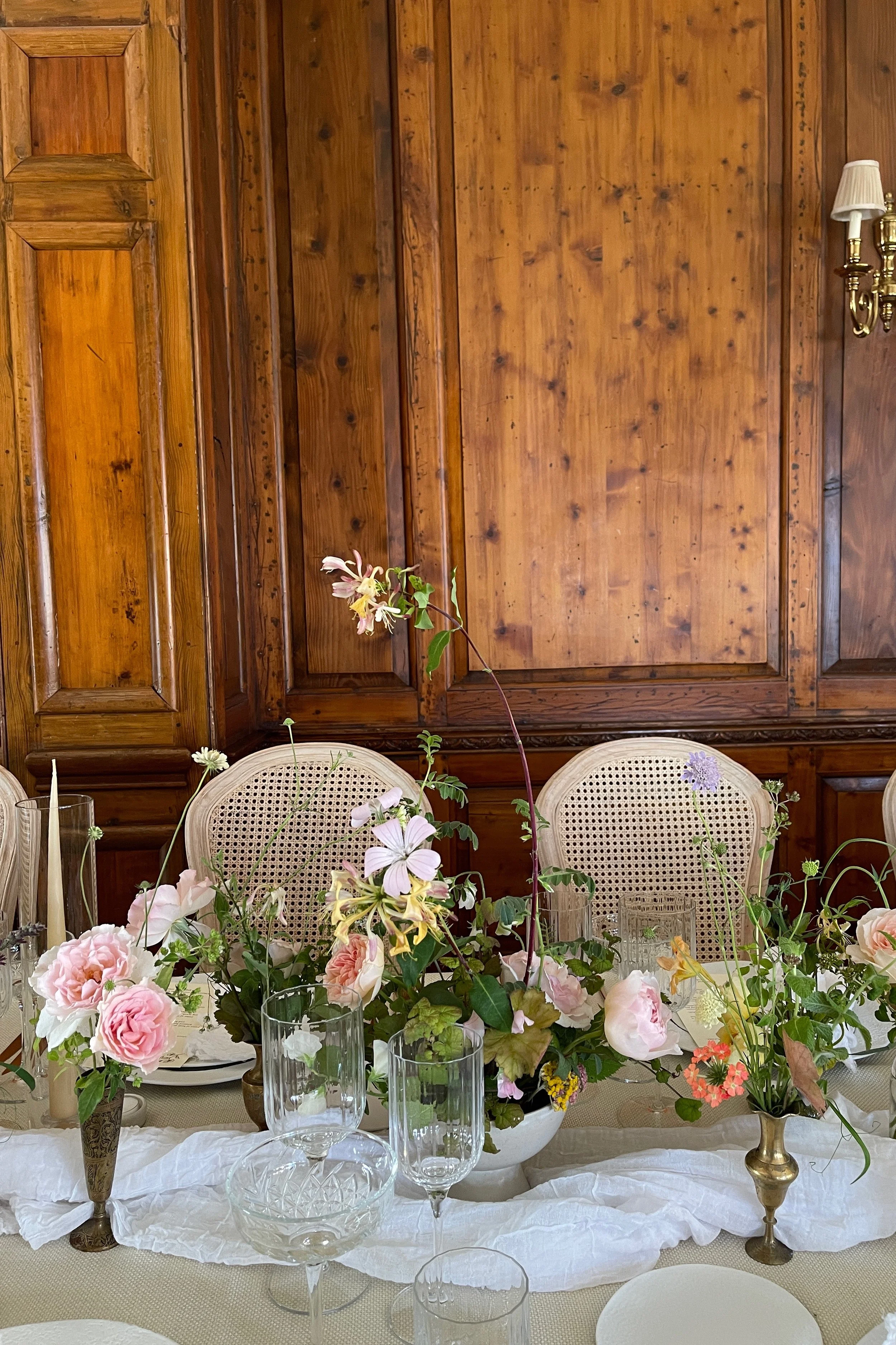
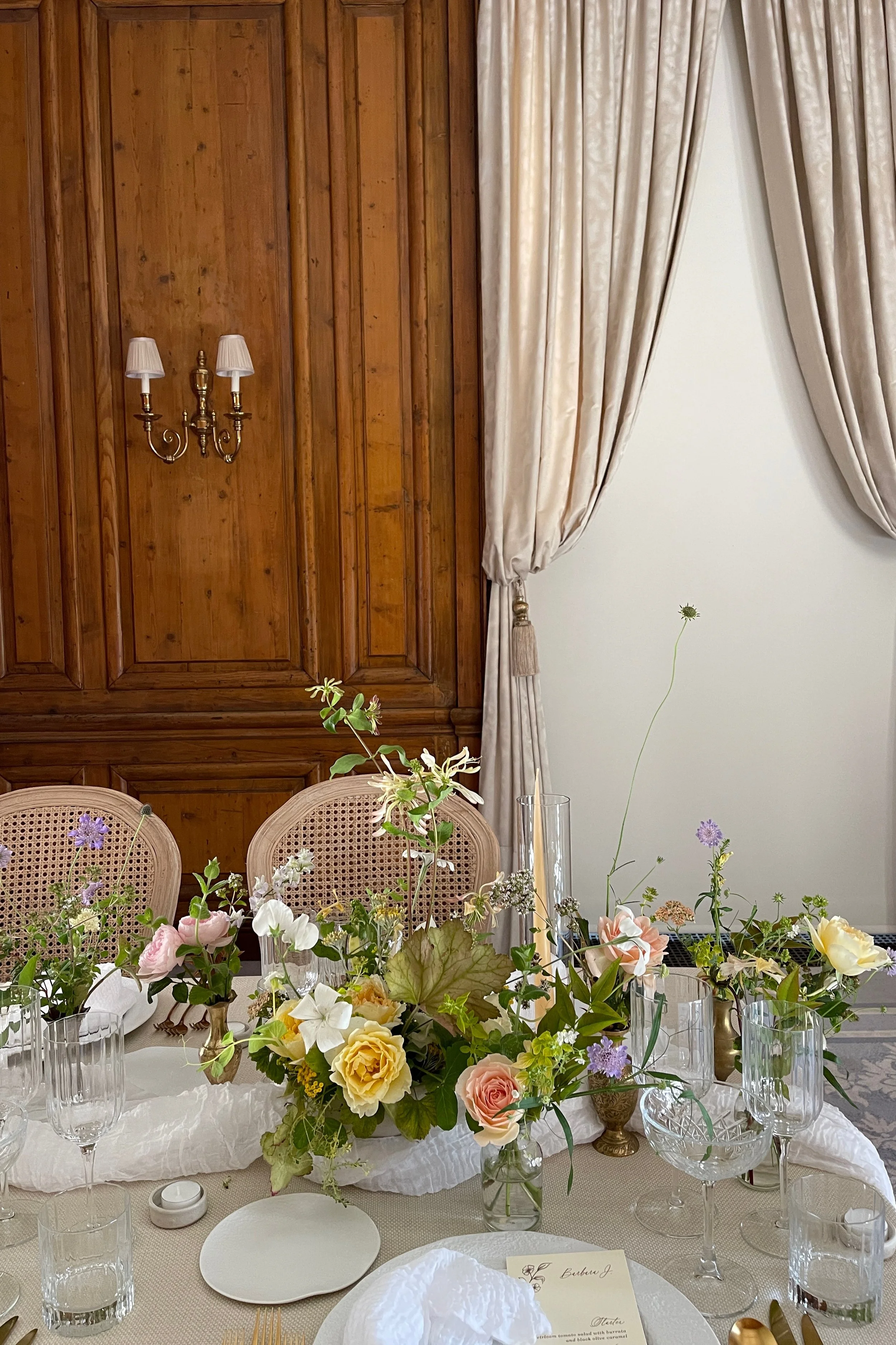
We made the tables luxuriously laden with a continuous stream of flowers the full length, arching vines of honeysuckle, tiny perennial foxgloves, blush, apricot and pale lemon roses among the candles and glassware. Just as the guests were coming in for dinner, it must have been about 8pm, I snuck a glimpse of the room with all the candles lit and the sunlight beginning to soften, the peach roses glowing. It was all very warm, very scented, very romantic!
Many congratulations to our clients, Alex and Peter.
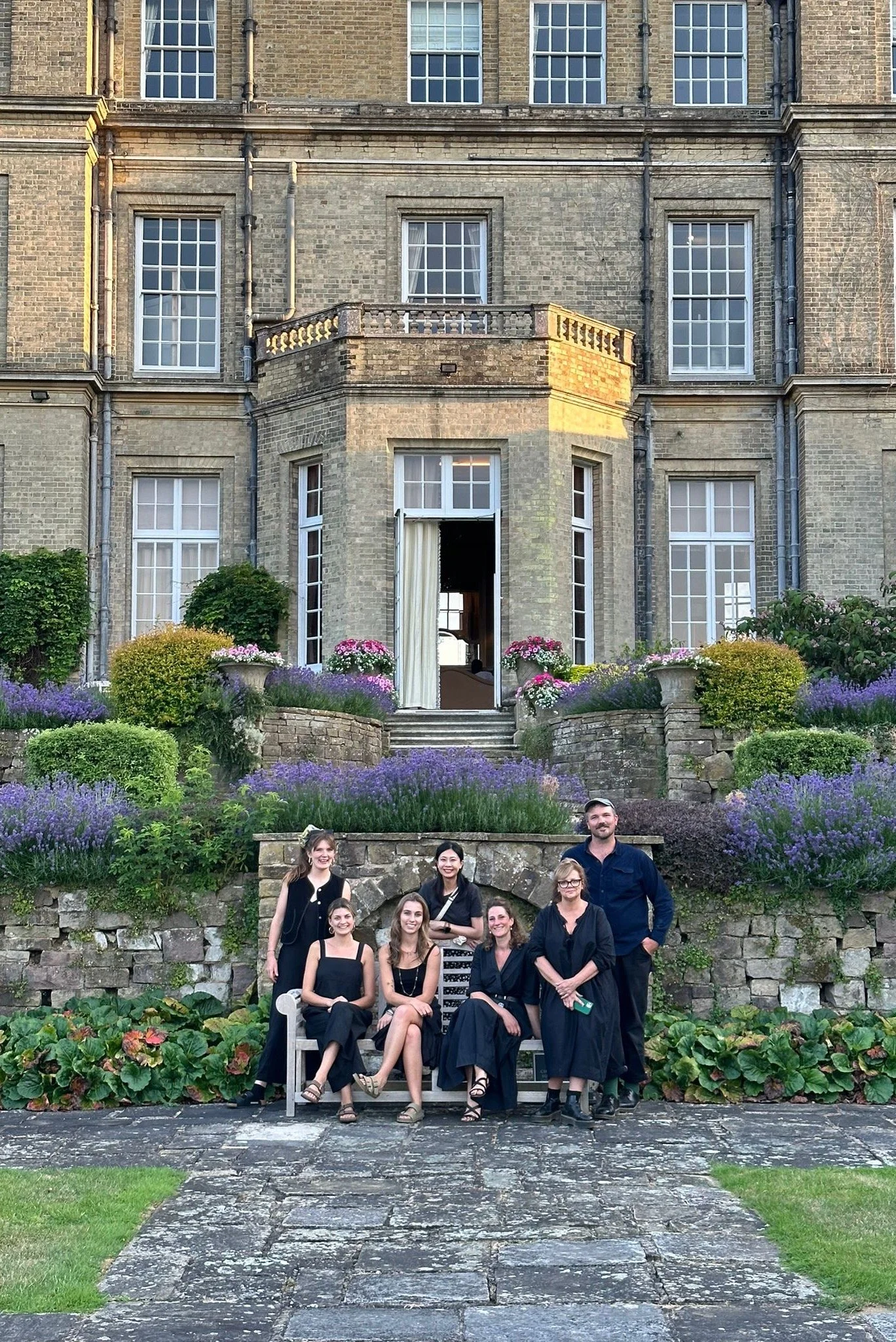
Thank you to our lovely team - Zeph, Charlotte, Aila, Fionne, Eliza, Emma, Felicity and Daniel - for bringing the imagined brief to life. And thank you to Alexis from Willow & Oak for an expertly crafted event; we loved working with you.


Mid July - a brief jaunt to Pembrokeshire.
Rockpools, drizzle, fish and chips, stretching the legs and eyes. Mavis is at her very happiest and most prance-y on this beach.

The annual pilgrimage to Sissinghurst Castle.
Always a lot to see and inspire…
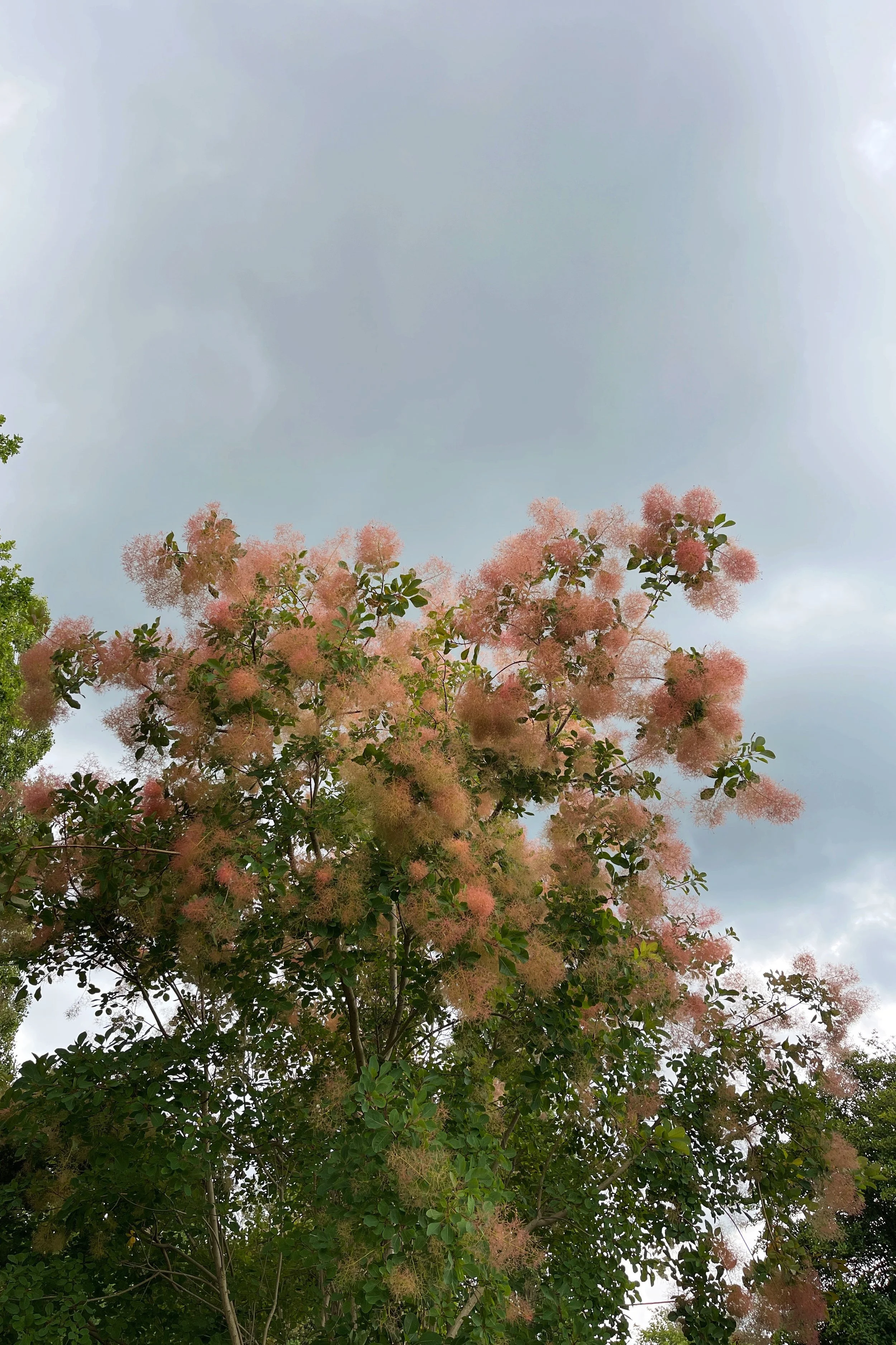
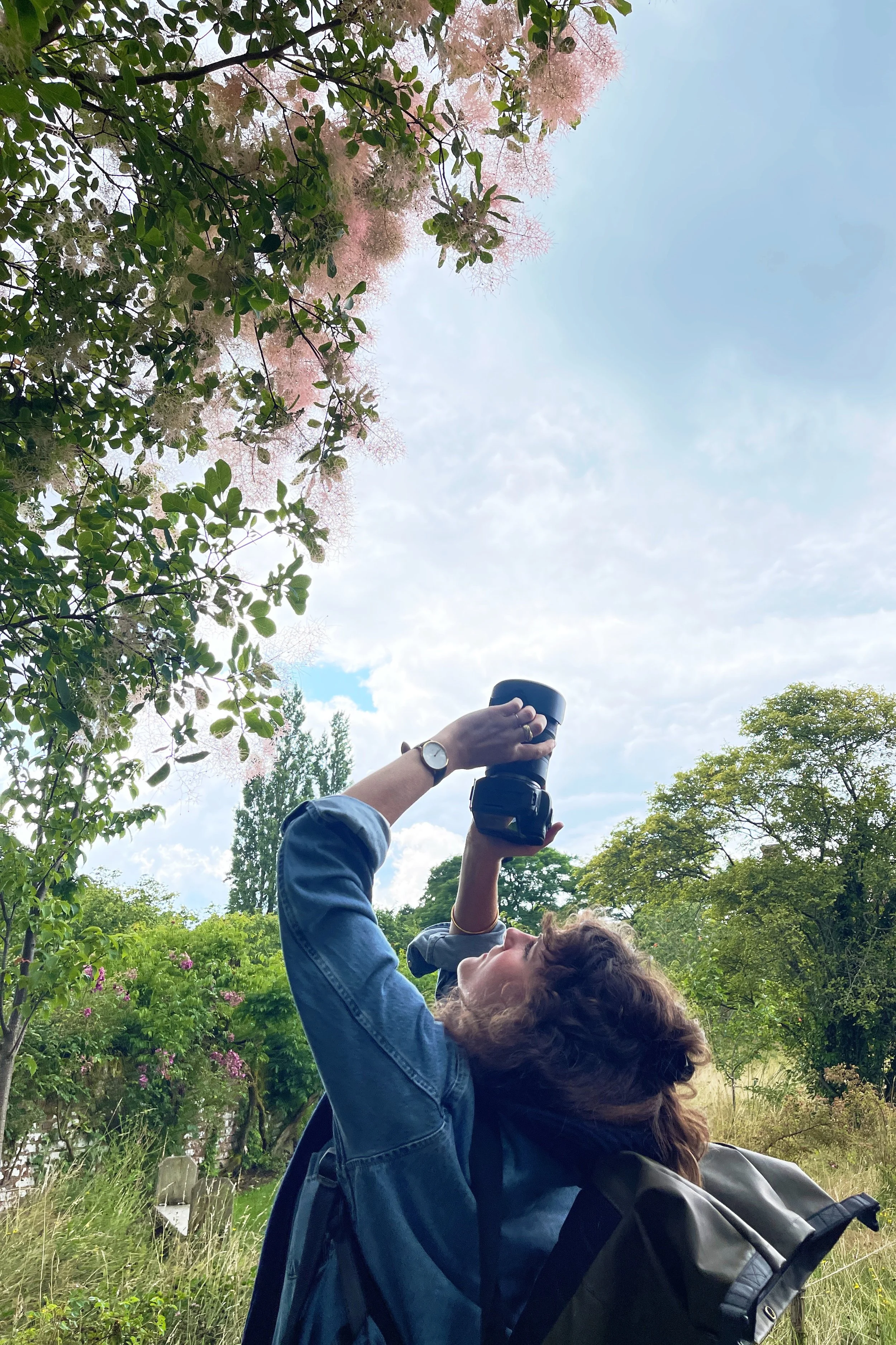
The white, silver and greens of Vita Sackville West’s ‘White Garden’, which is like diving into a refreshingly cool pool.
The Clematis was extraordinary this year, as were Dan Pearson’s beautiful reimagined ‘Delos’ under the bruised sky and the clouds of dusky red smokebush.
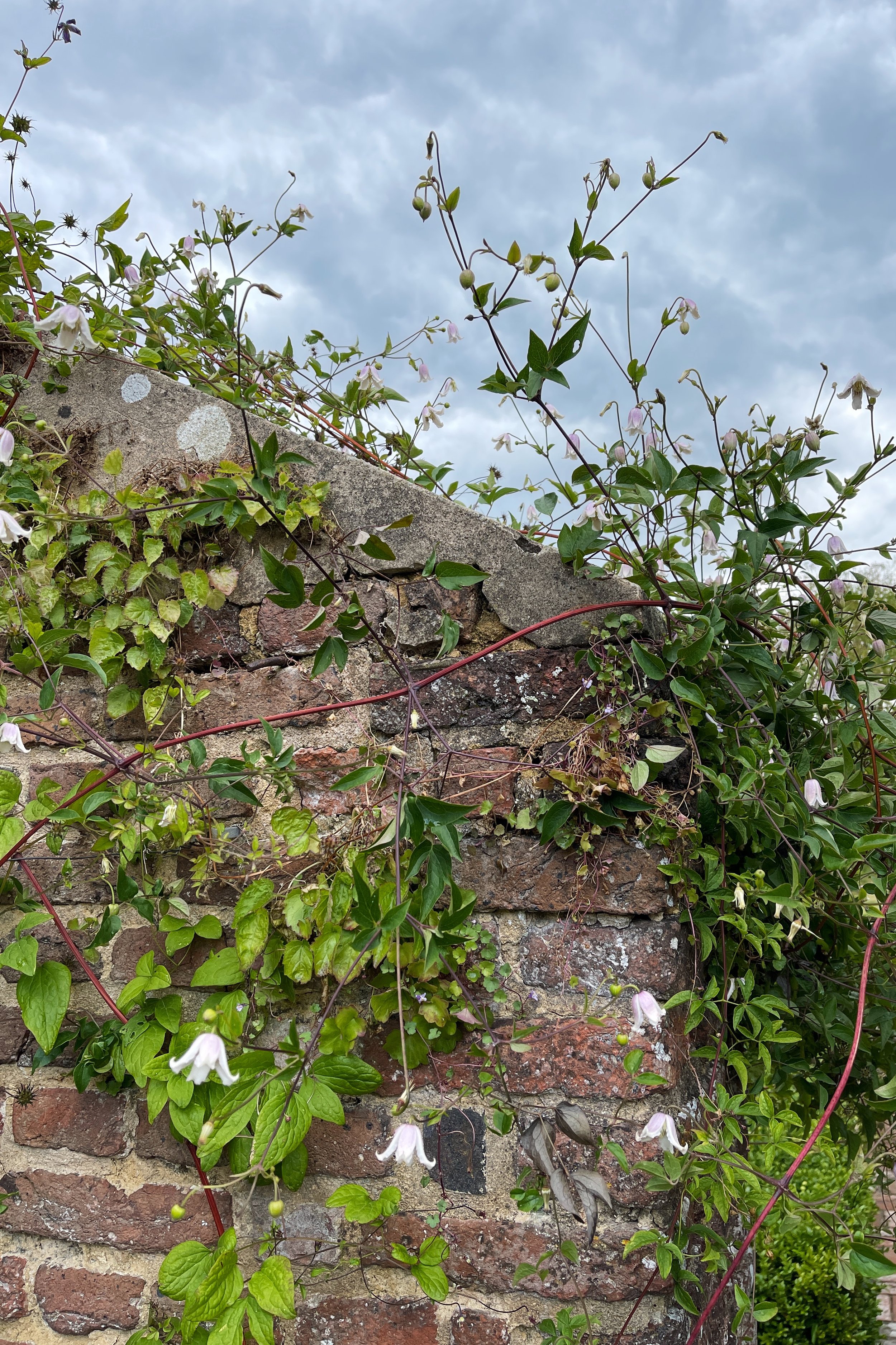
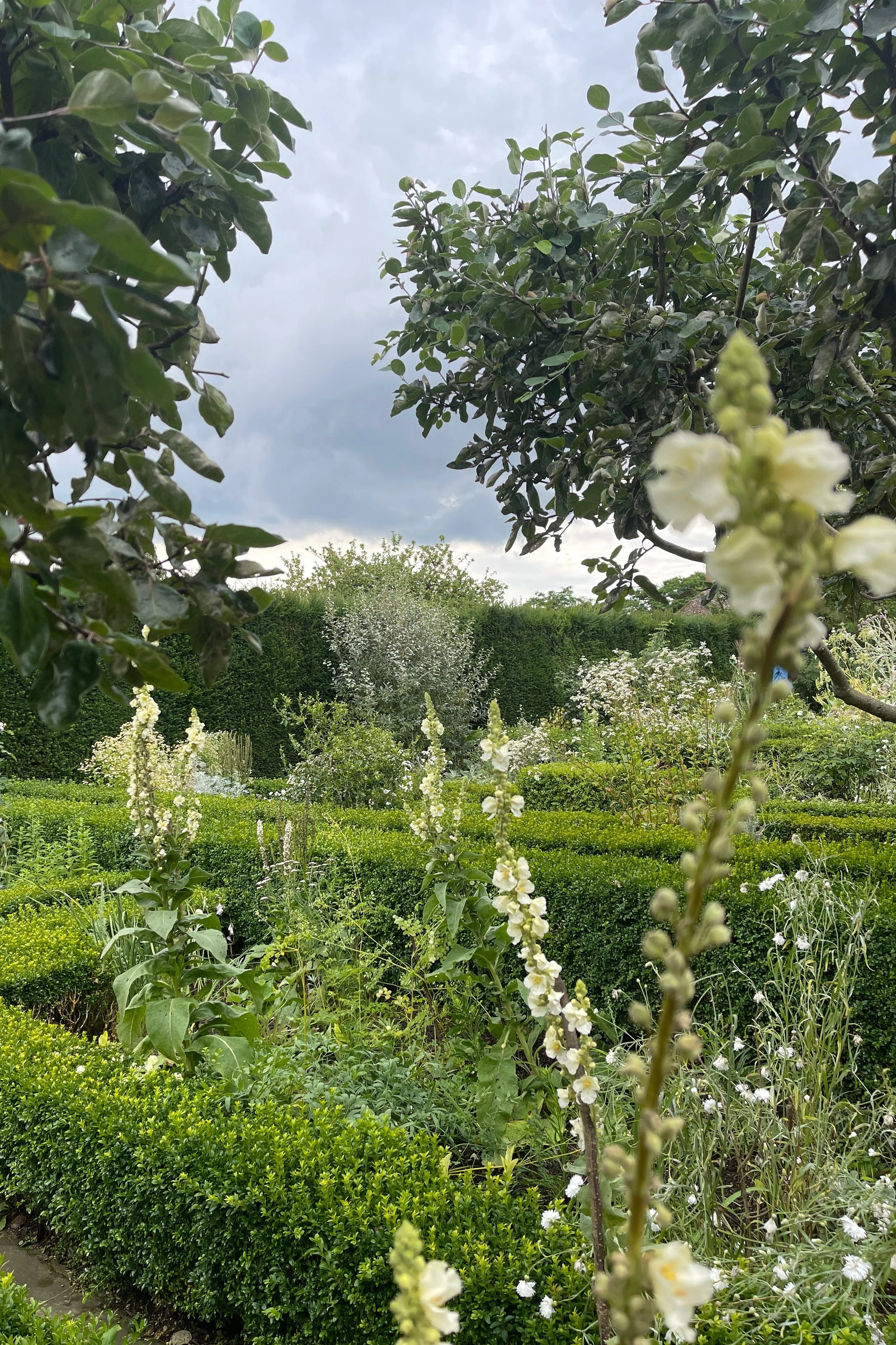
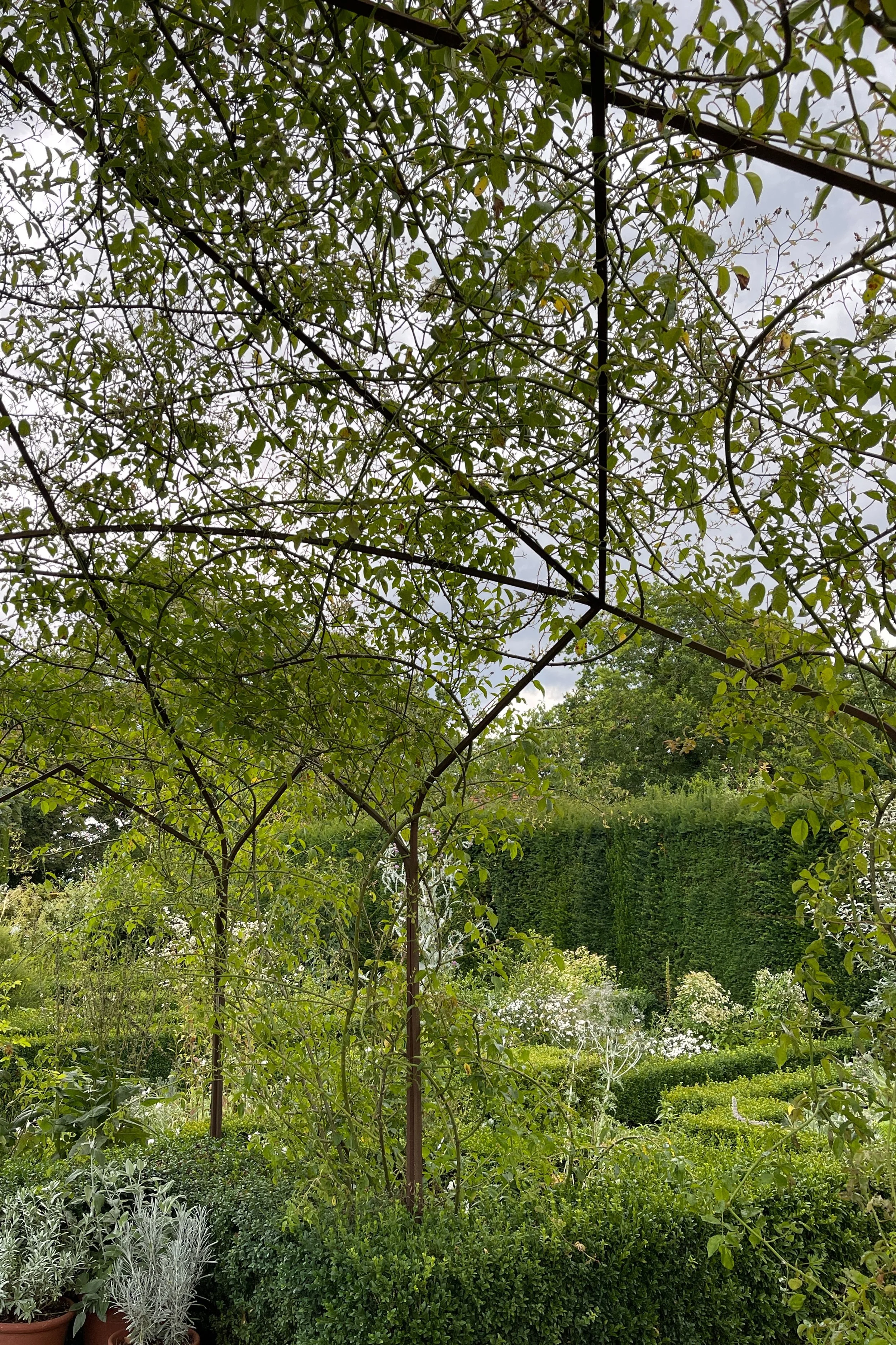

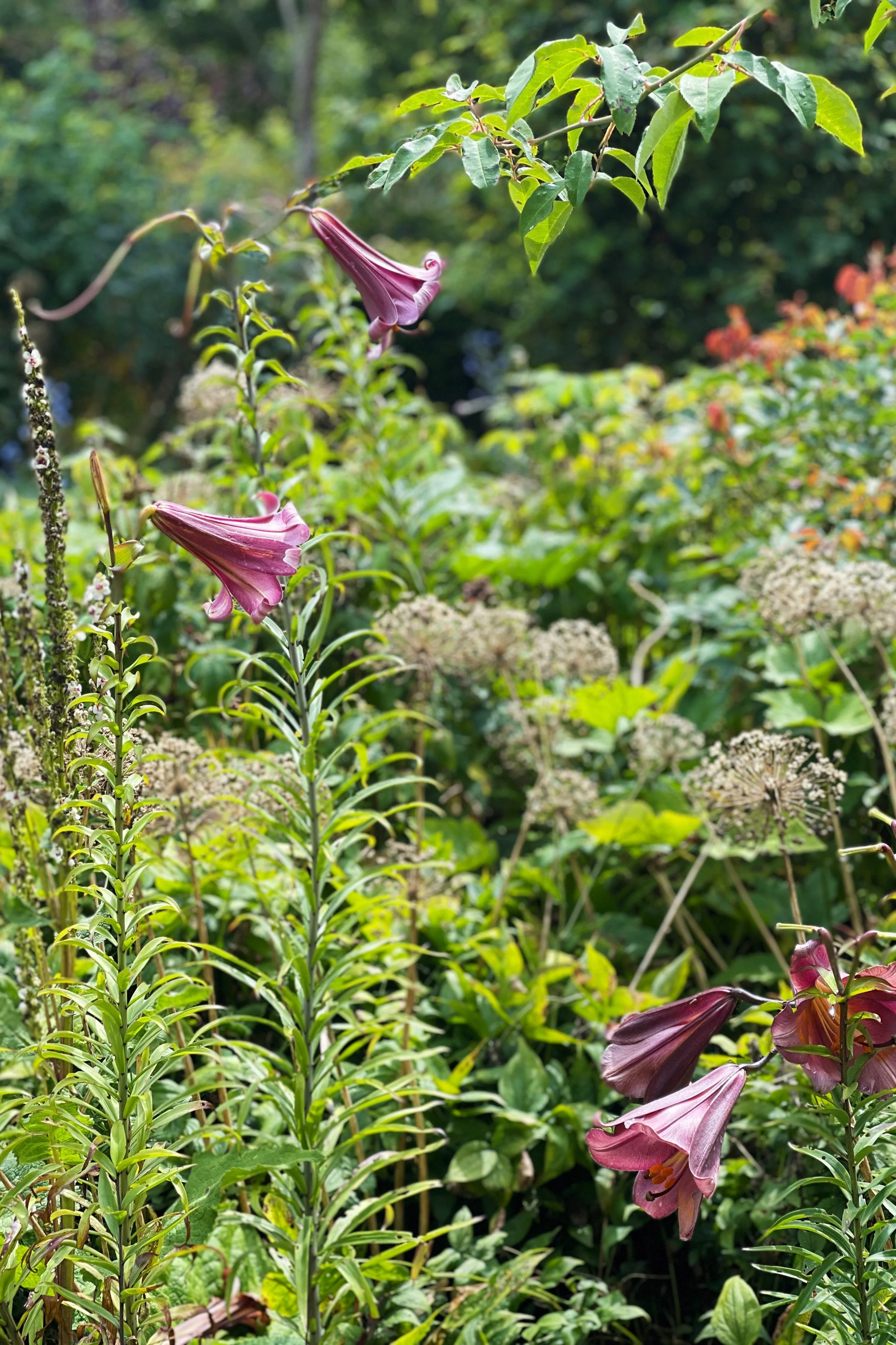
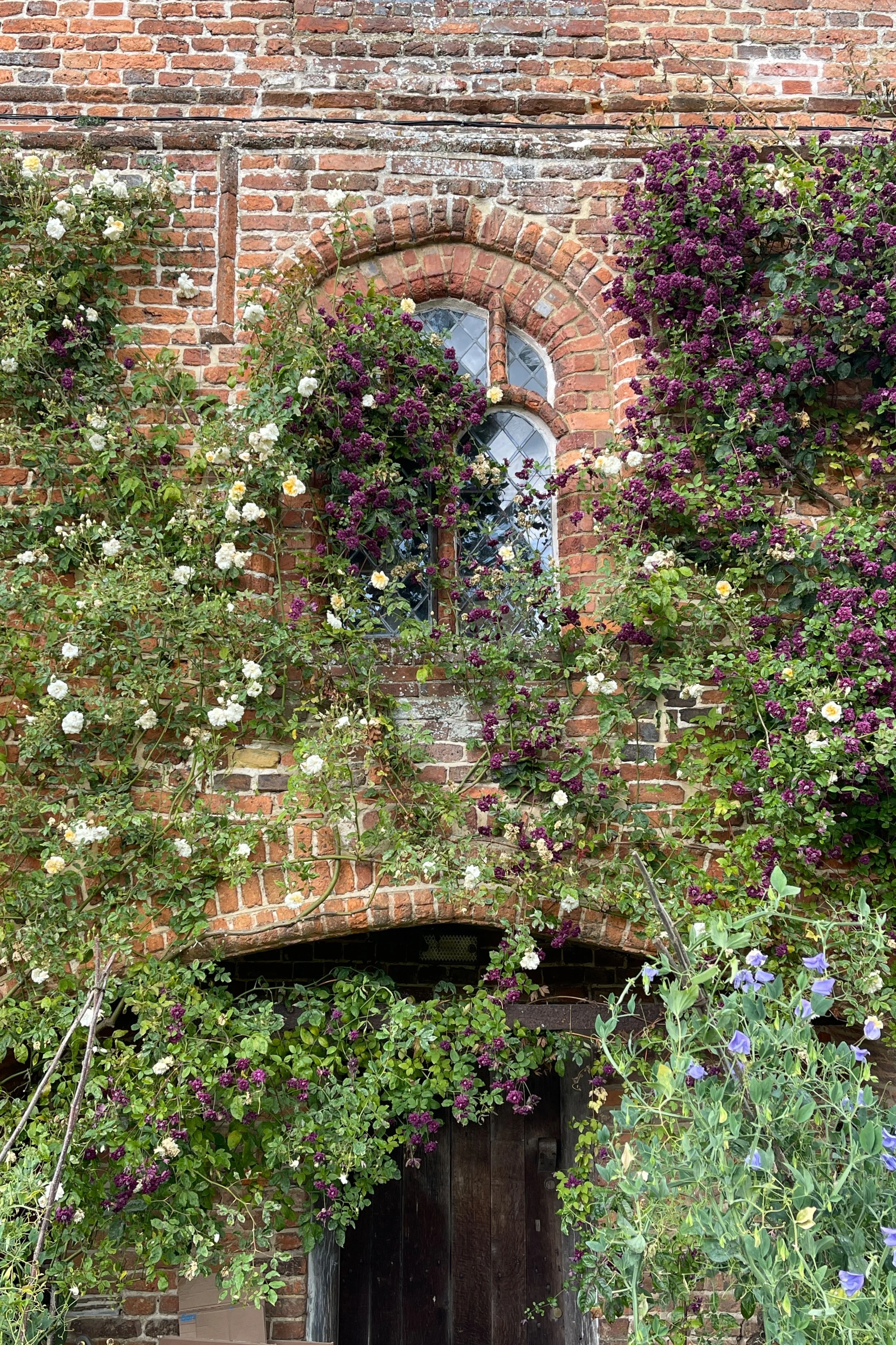
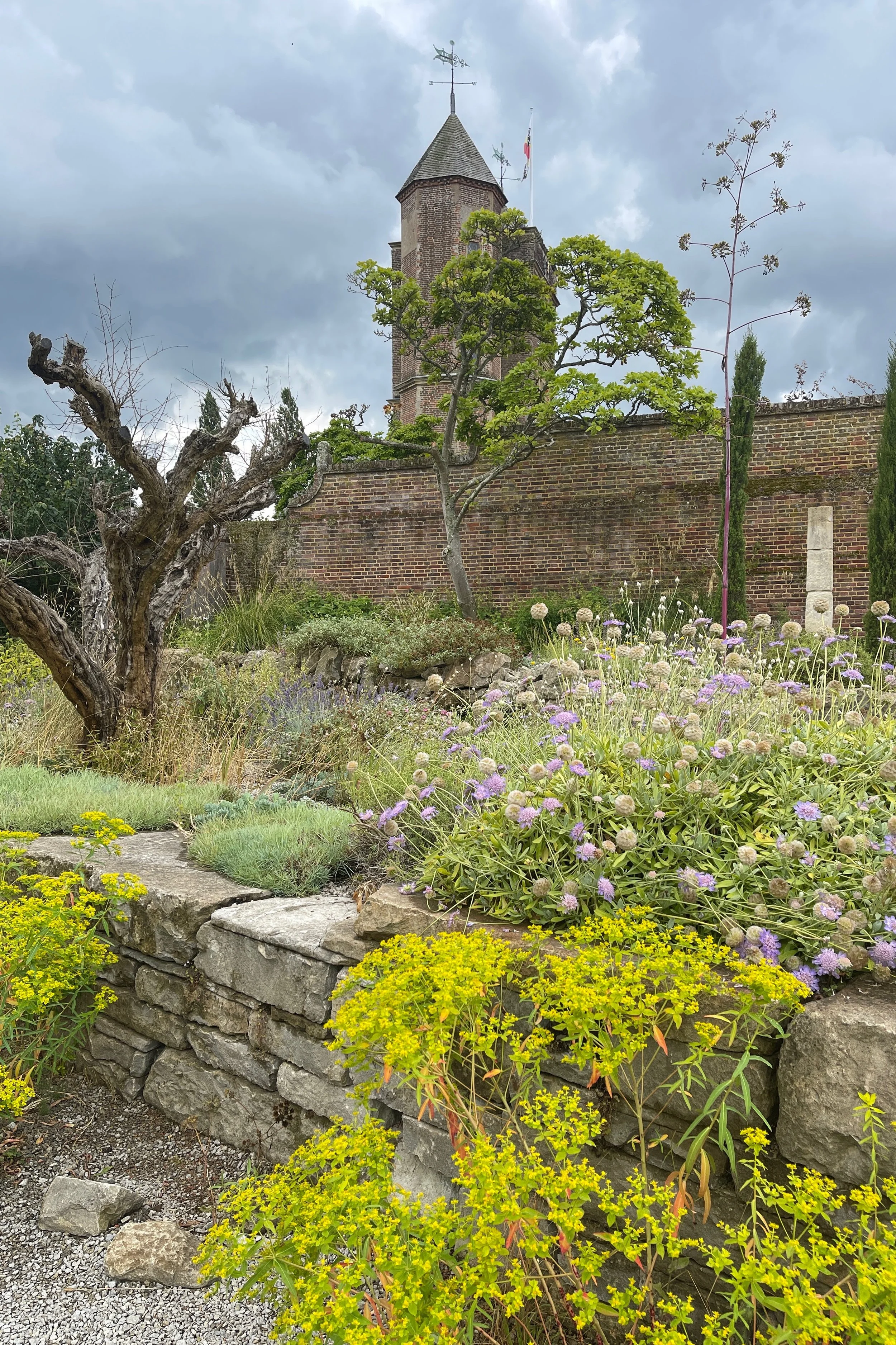
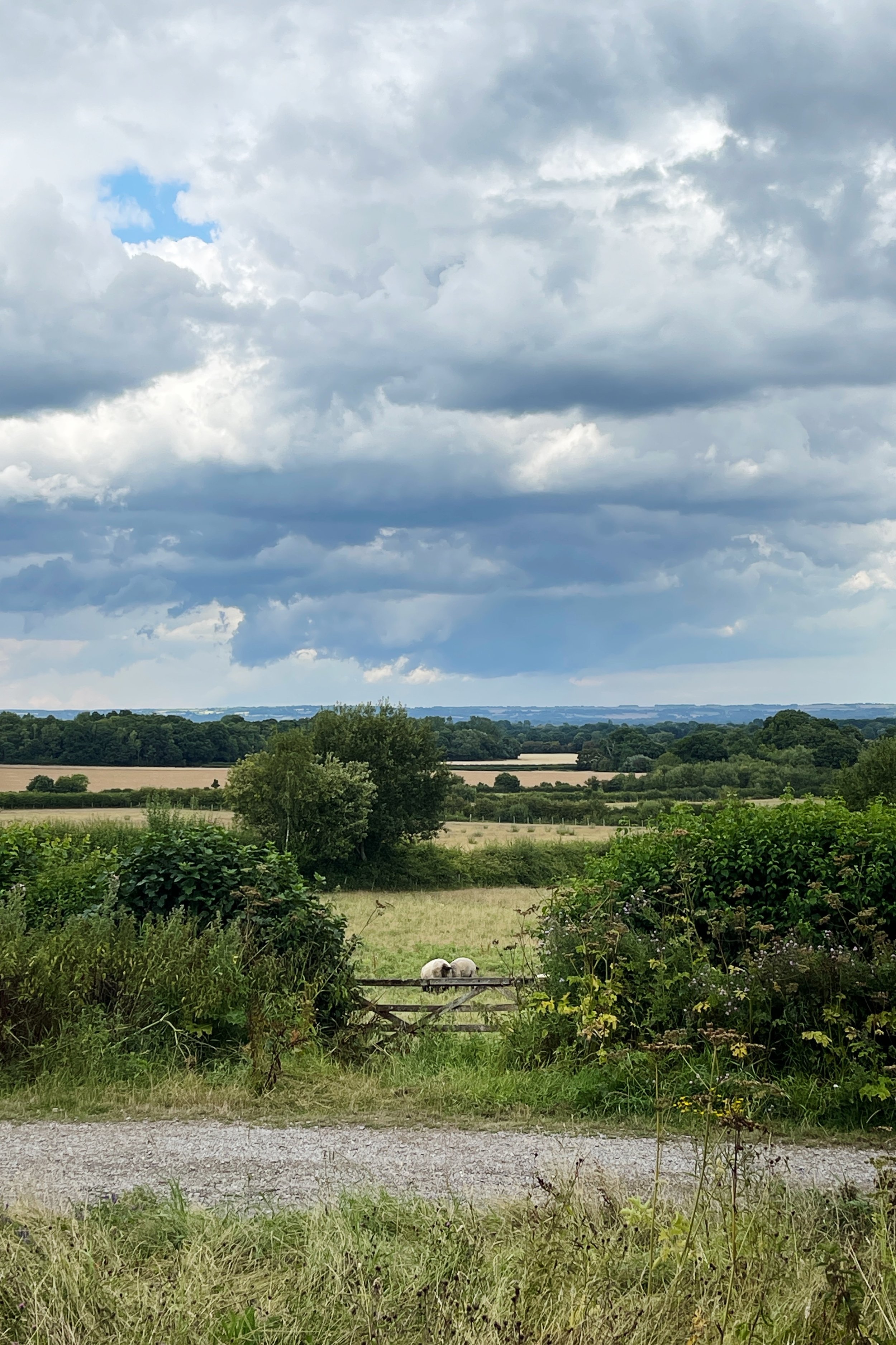
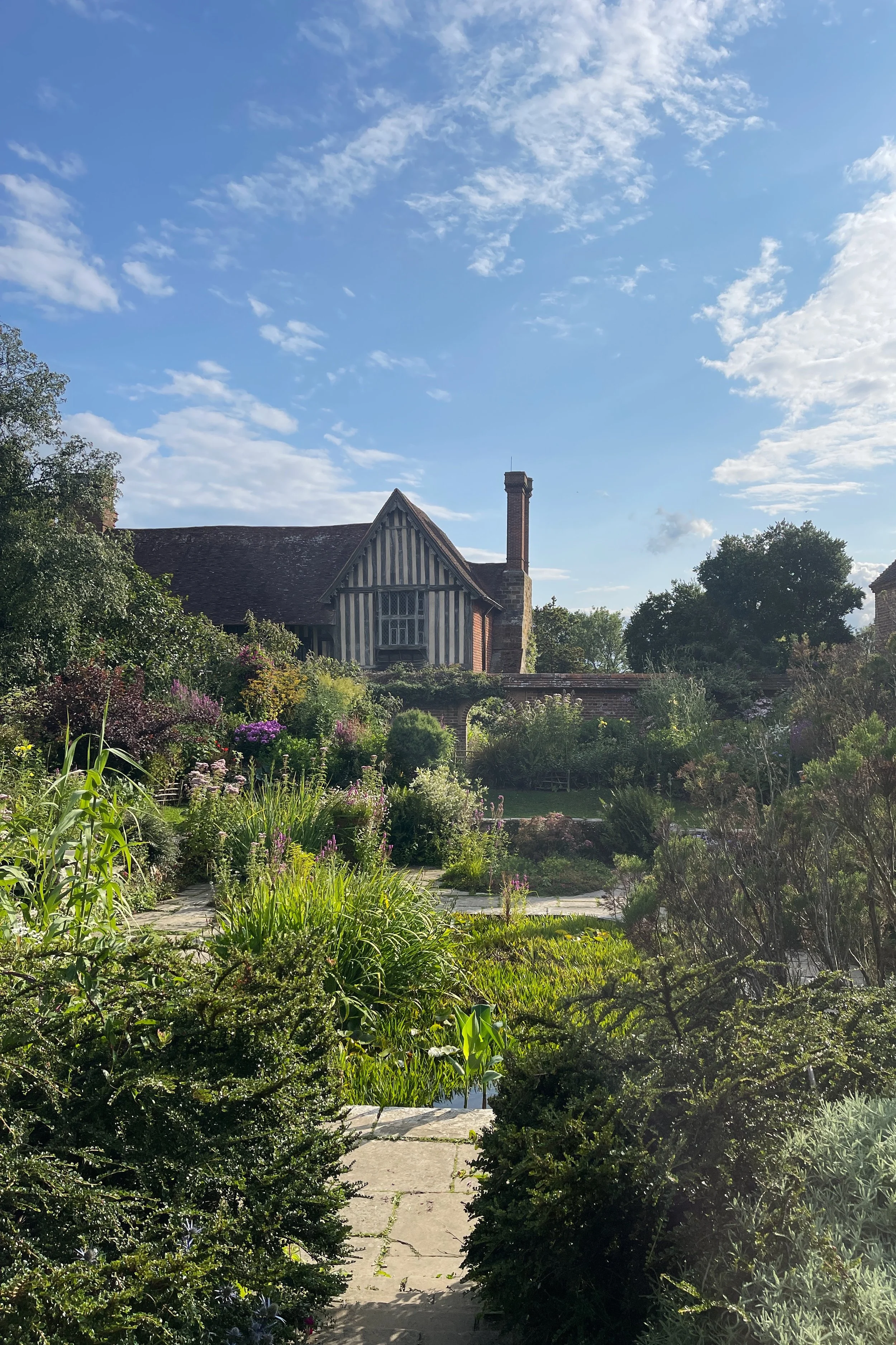
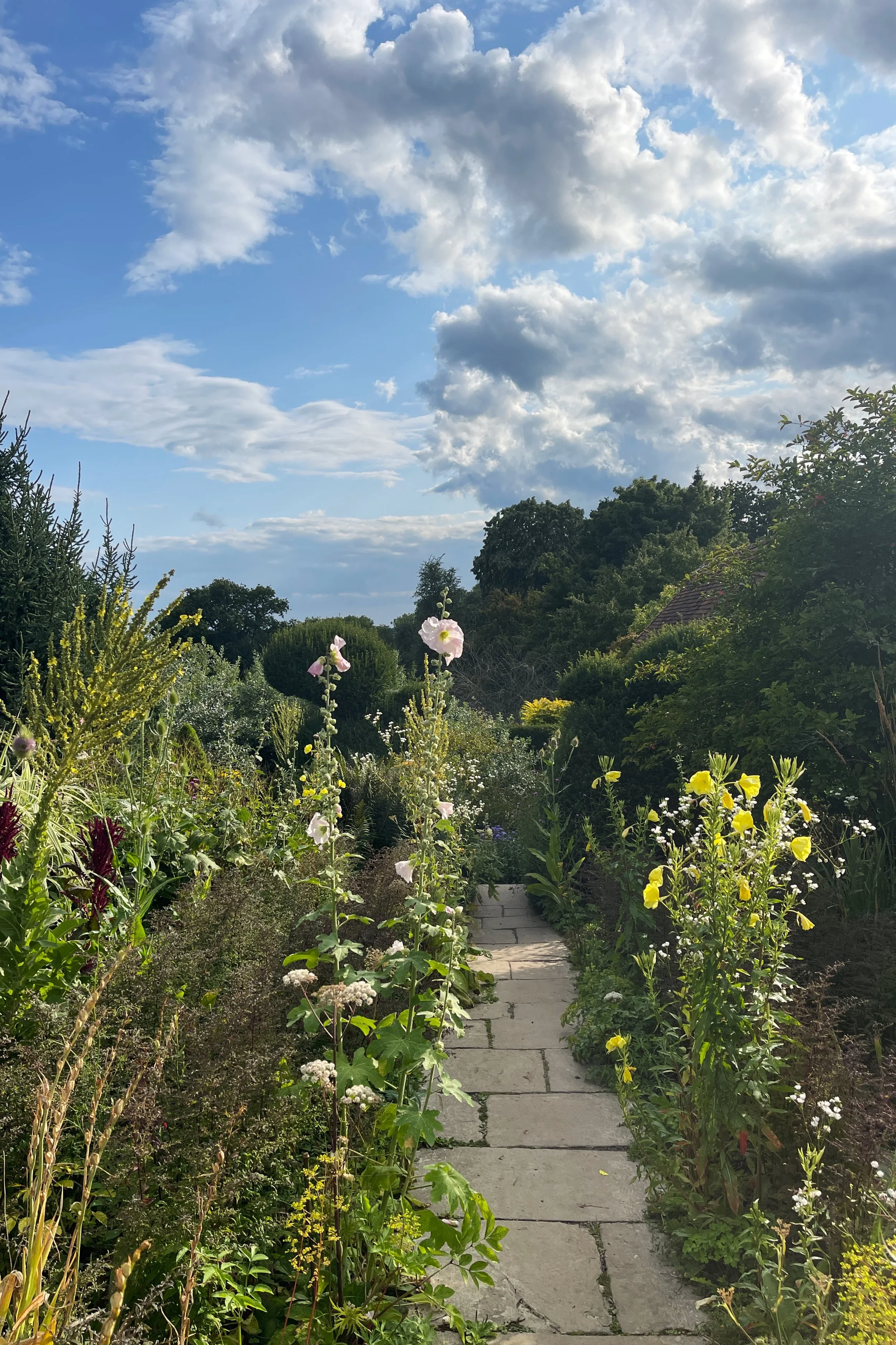
And then on to Sussex and Dixter.
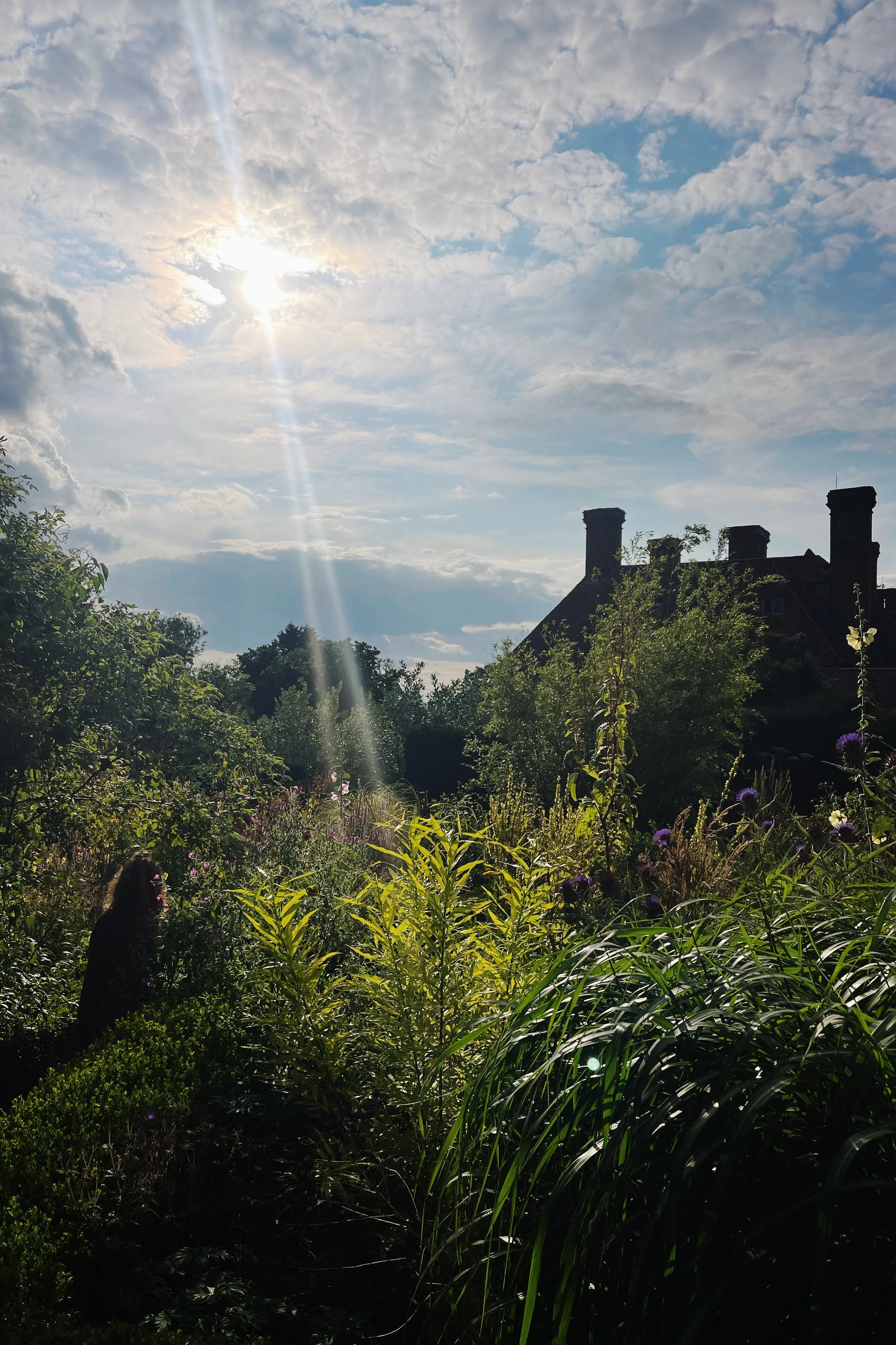
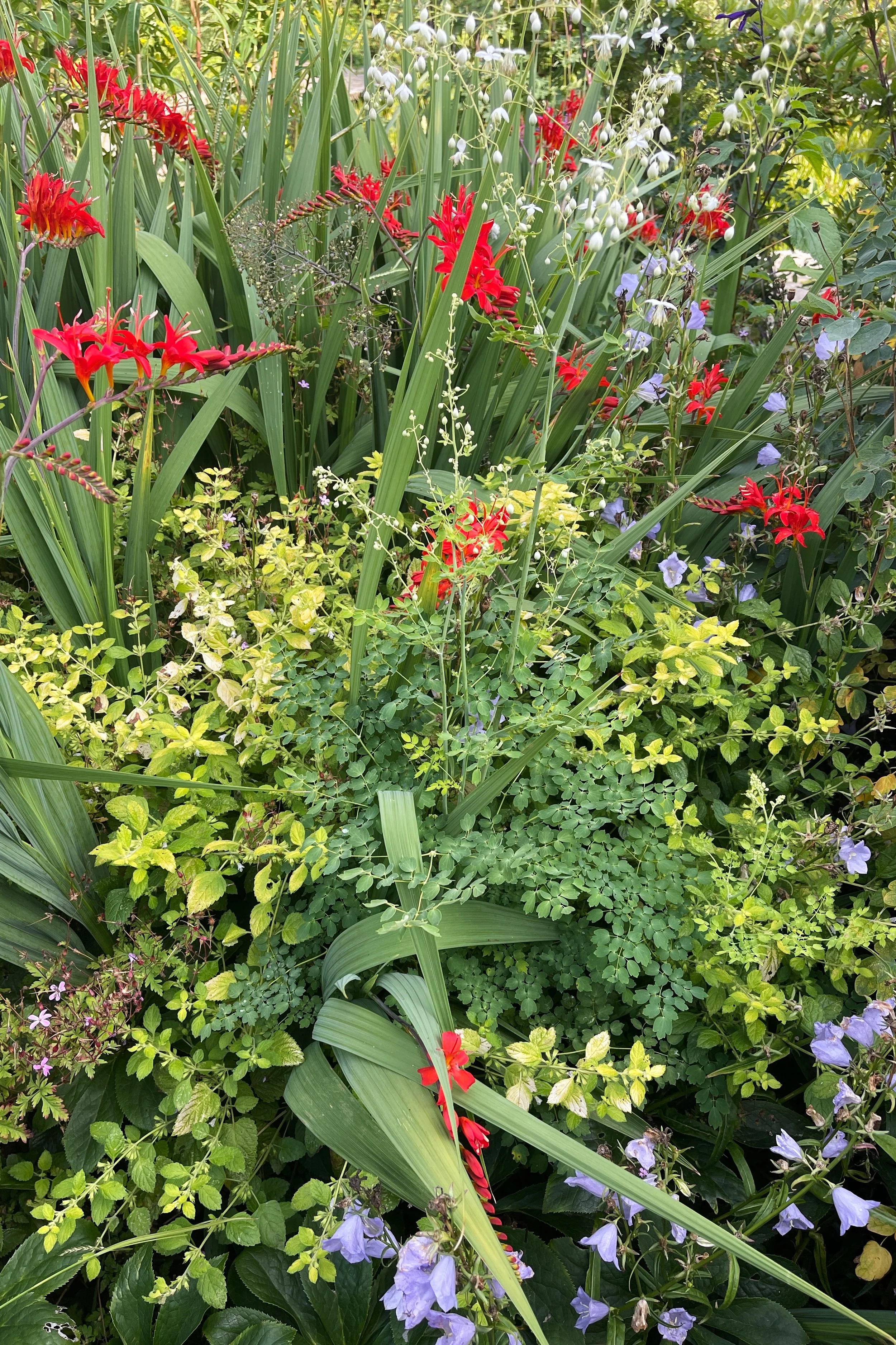
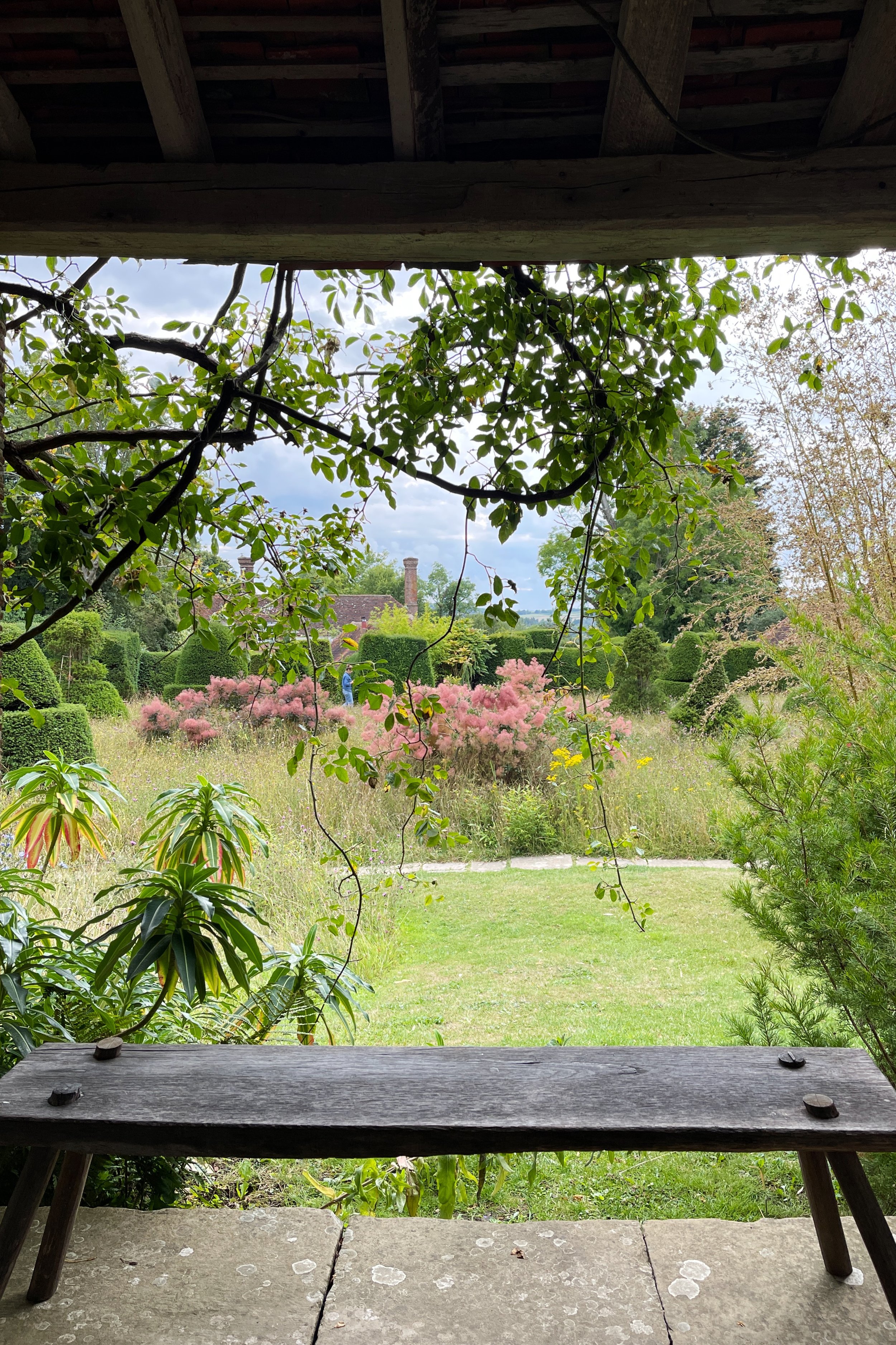

It was obviously meant to be our lucky day that day. We got the last two scones in the house, the sun came out for the evening, our friend Daniel who works in the nursery took us on a tour of the garden after closing time AND I got to eat my first mulberries straight from the tree. Delicious.
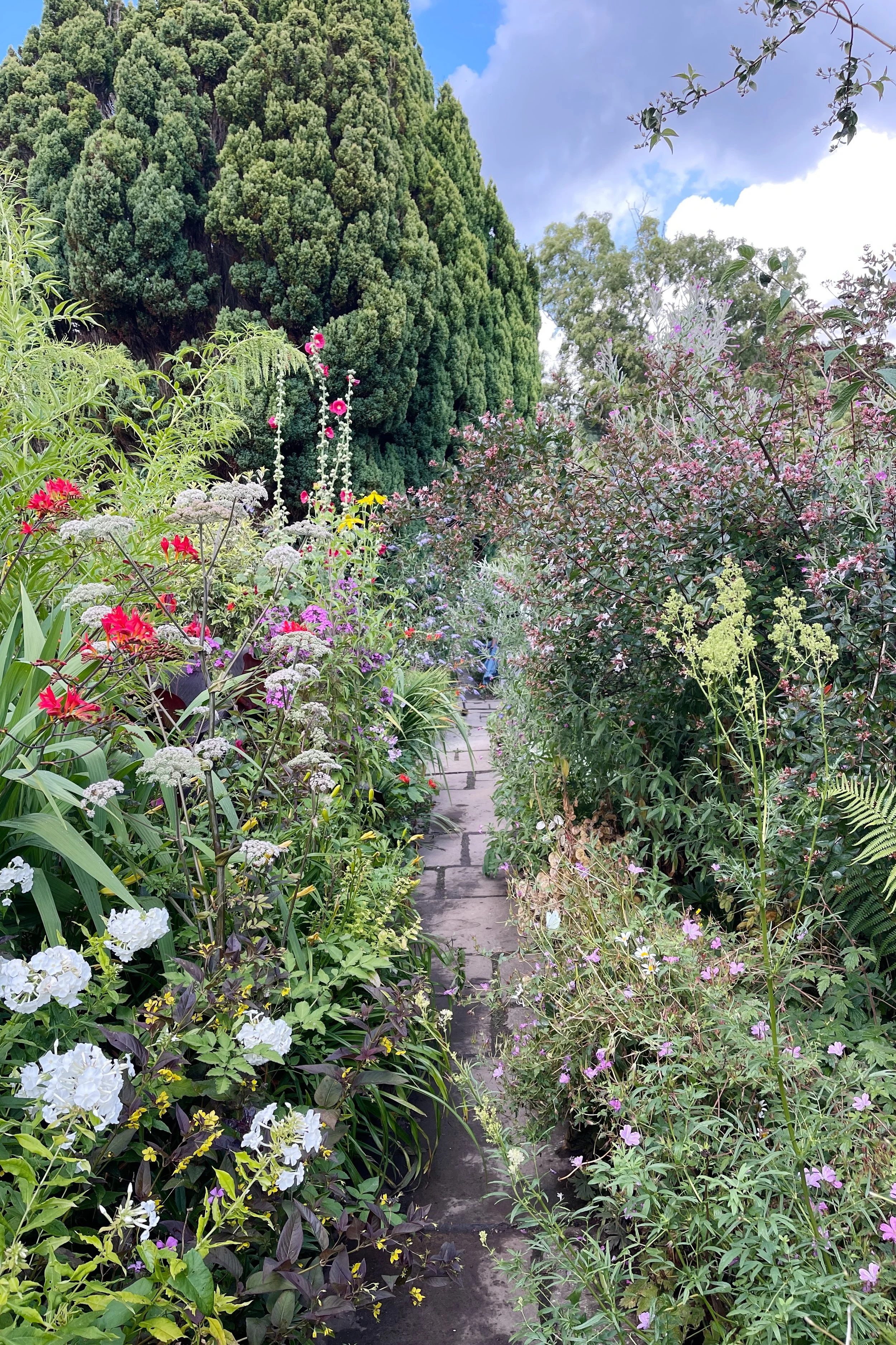
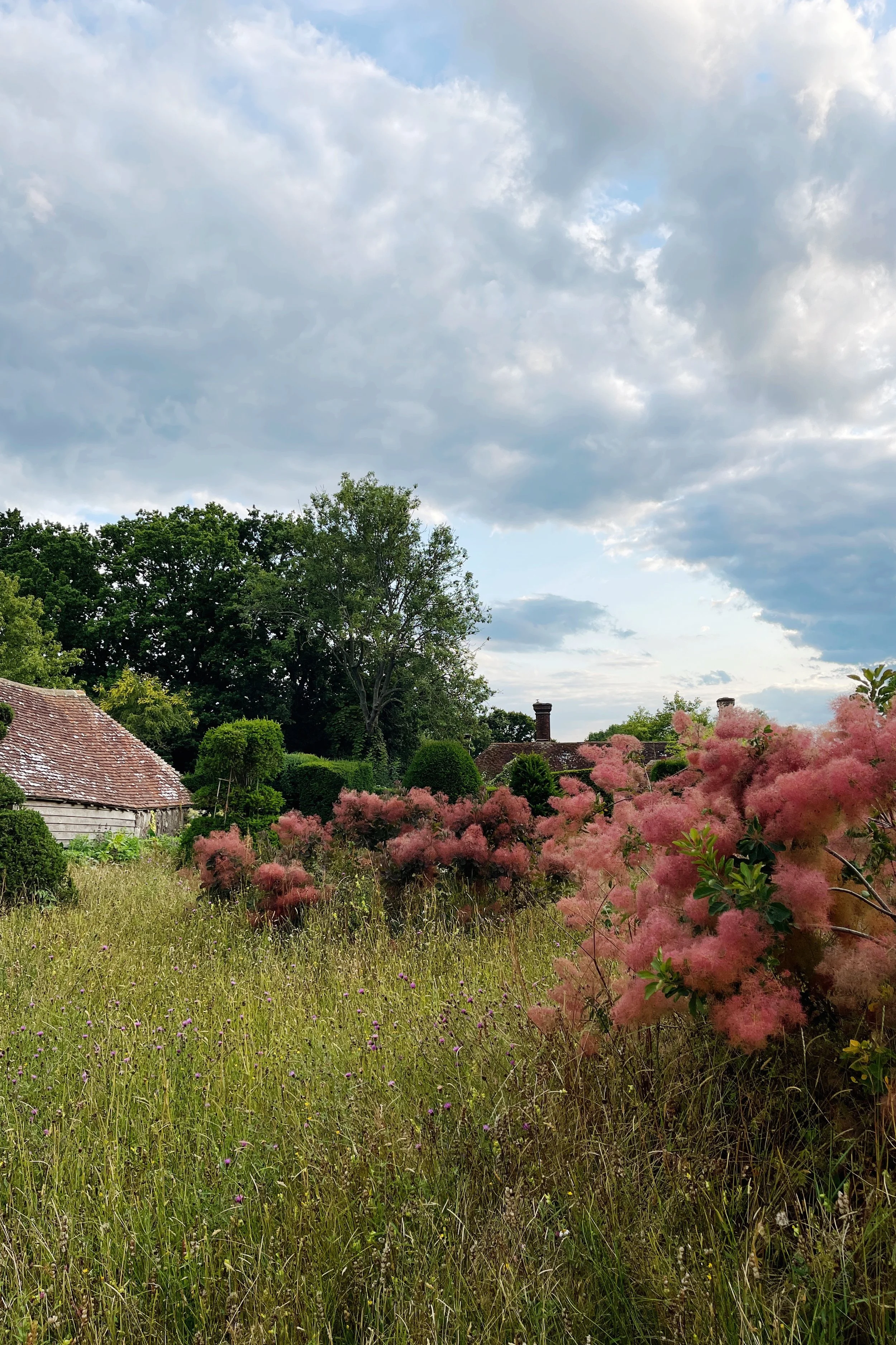
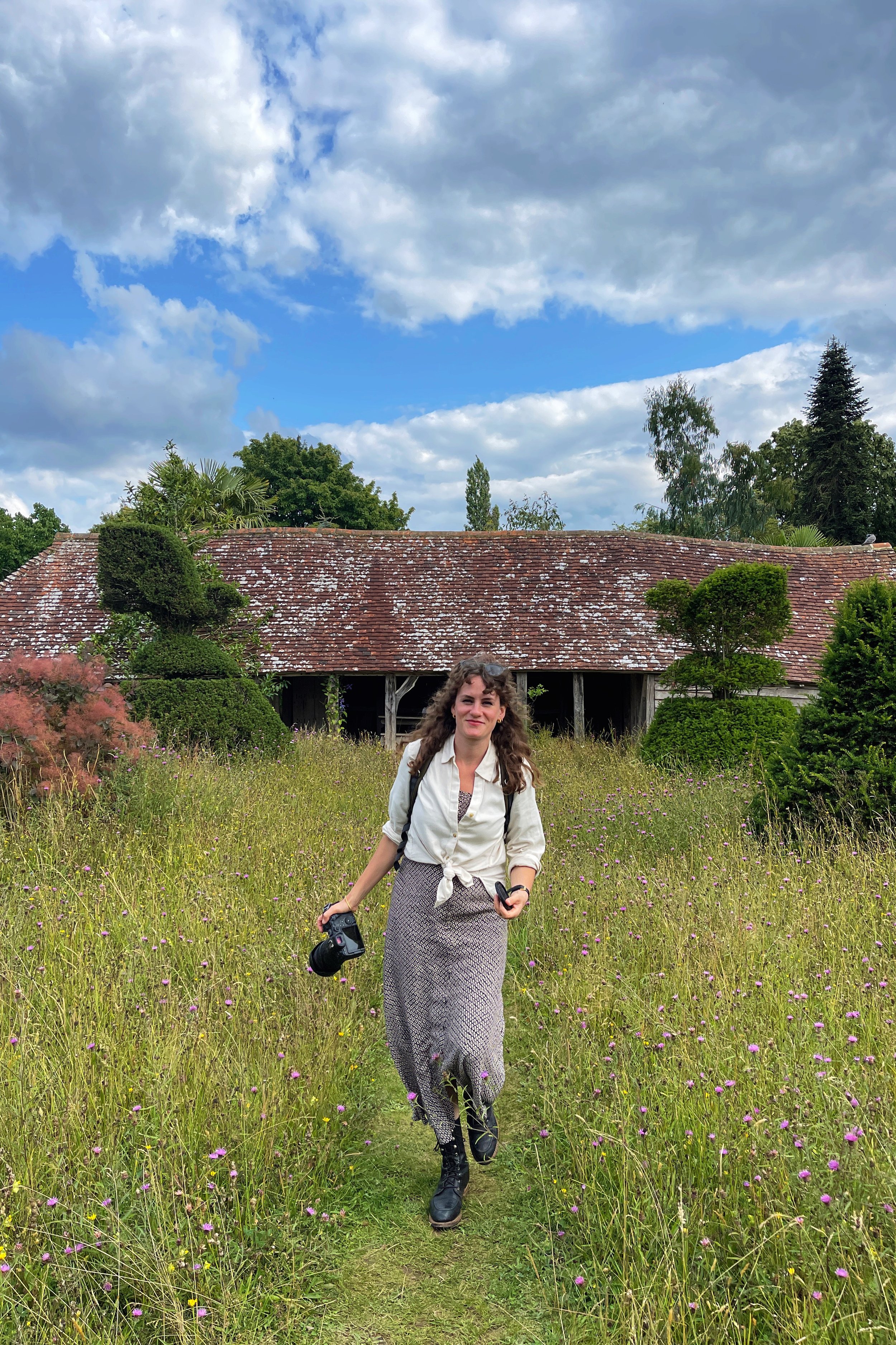
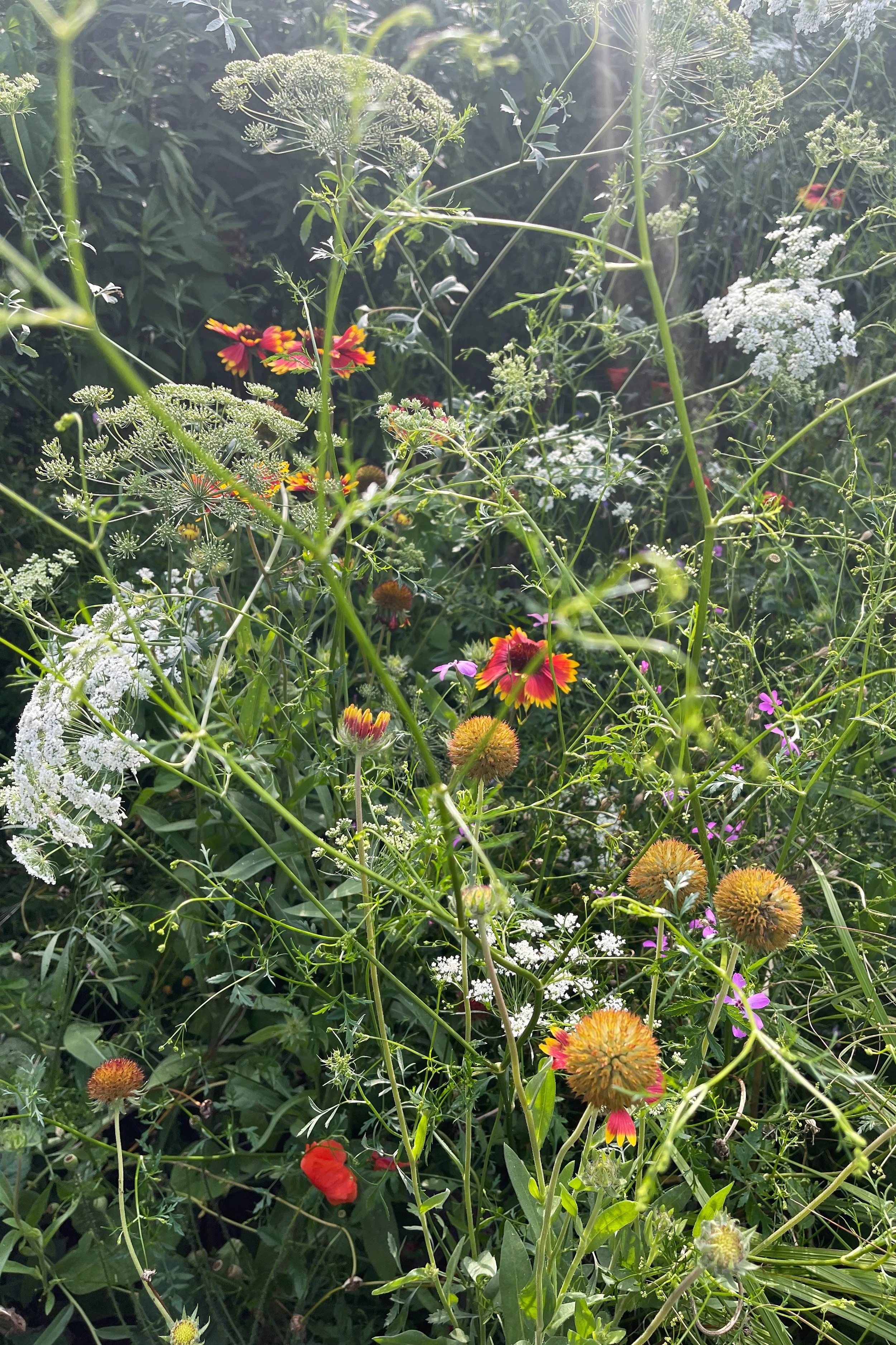
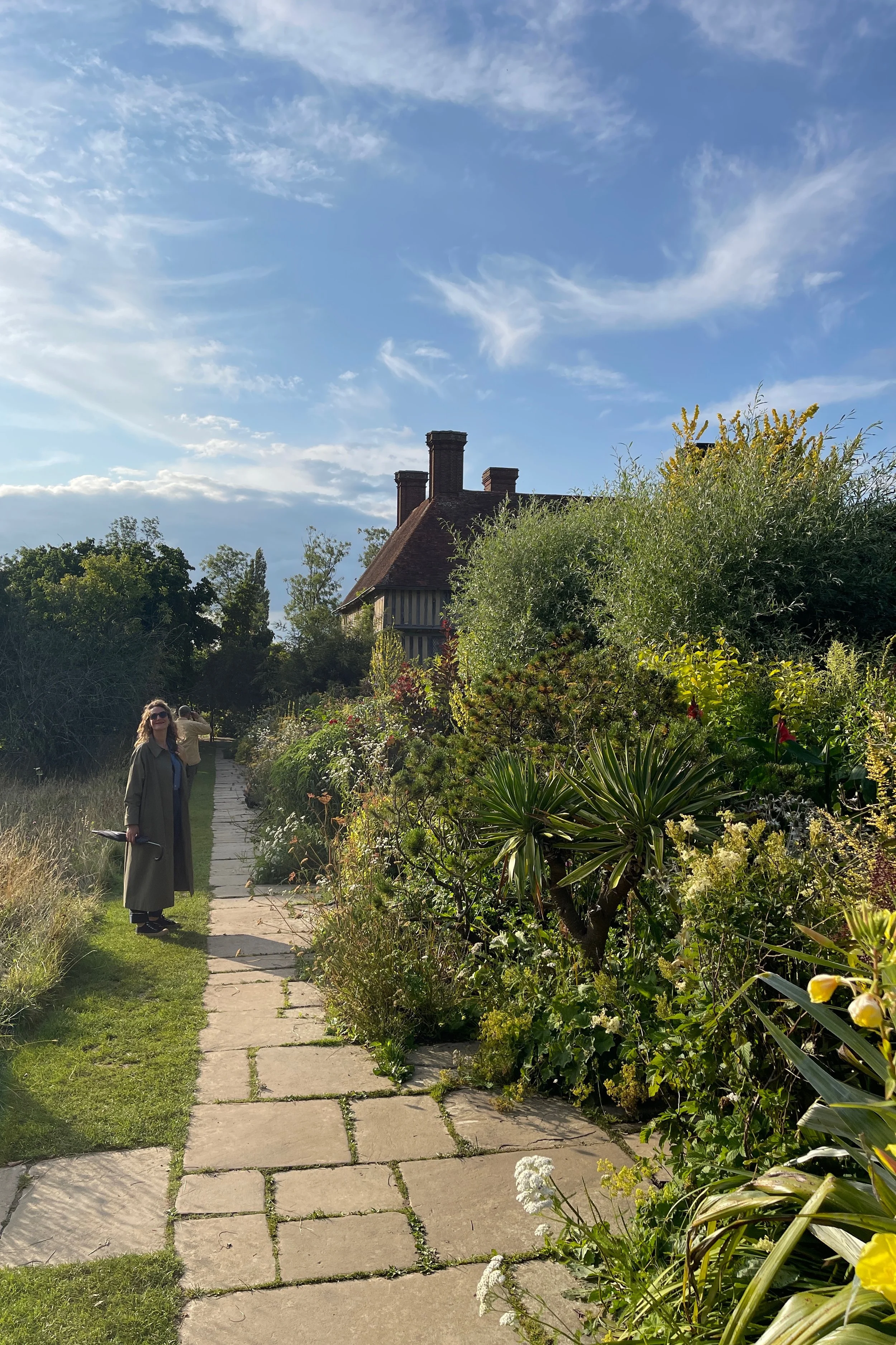
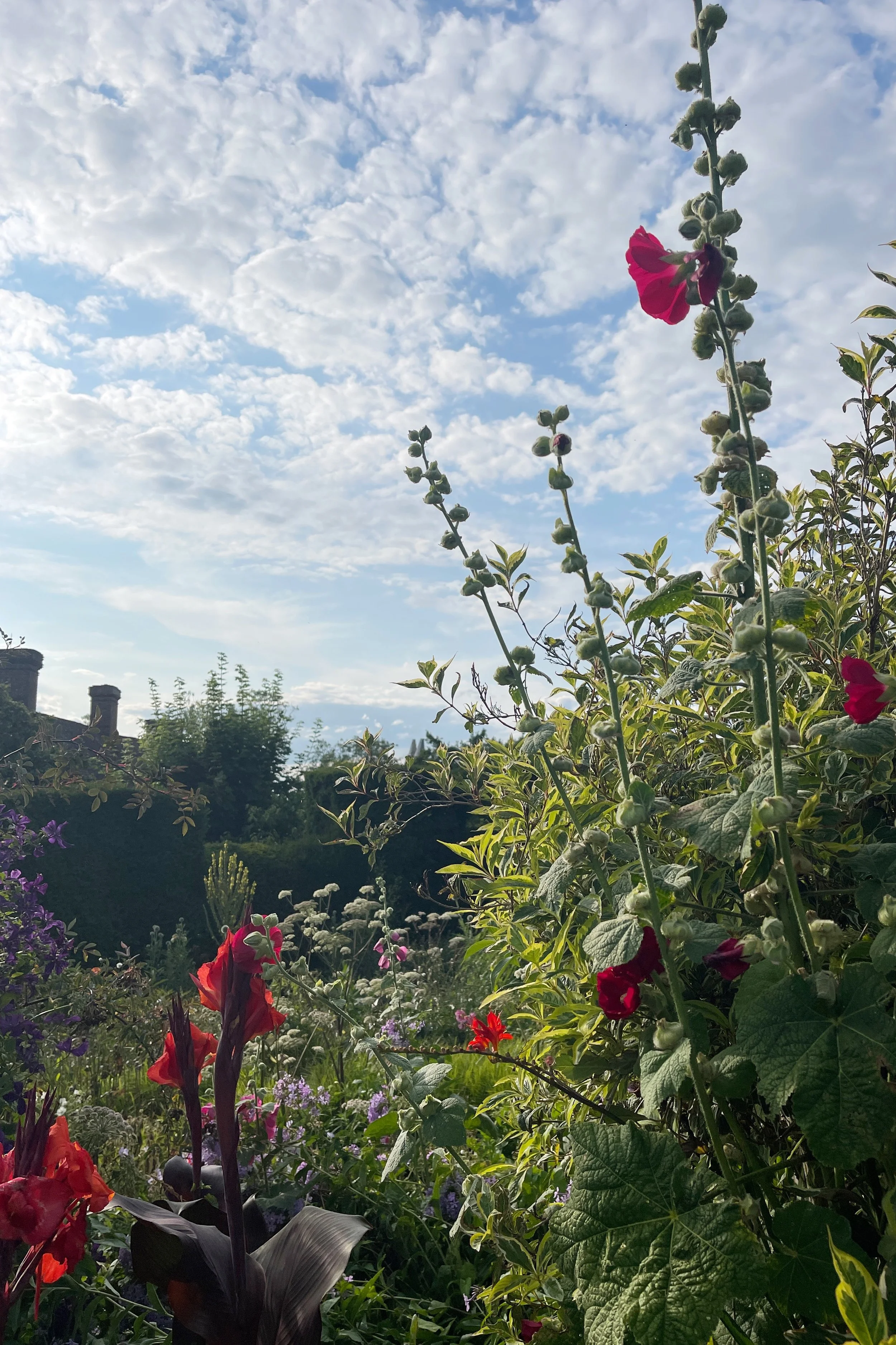
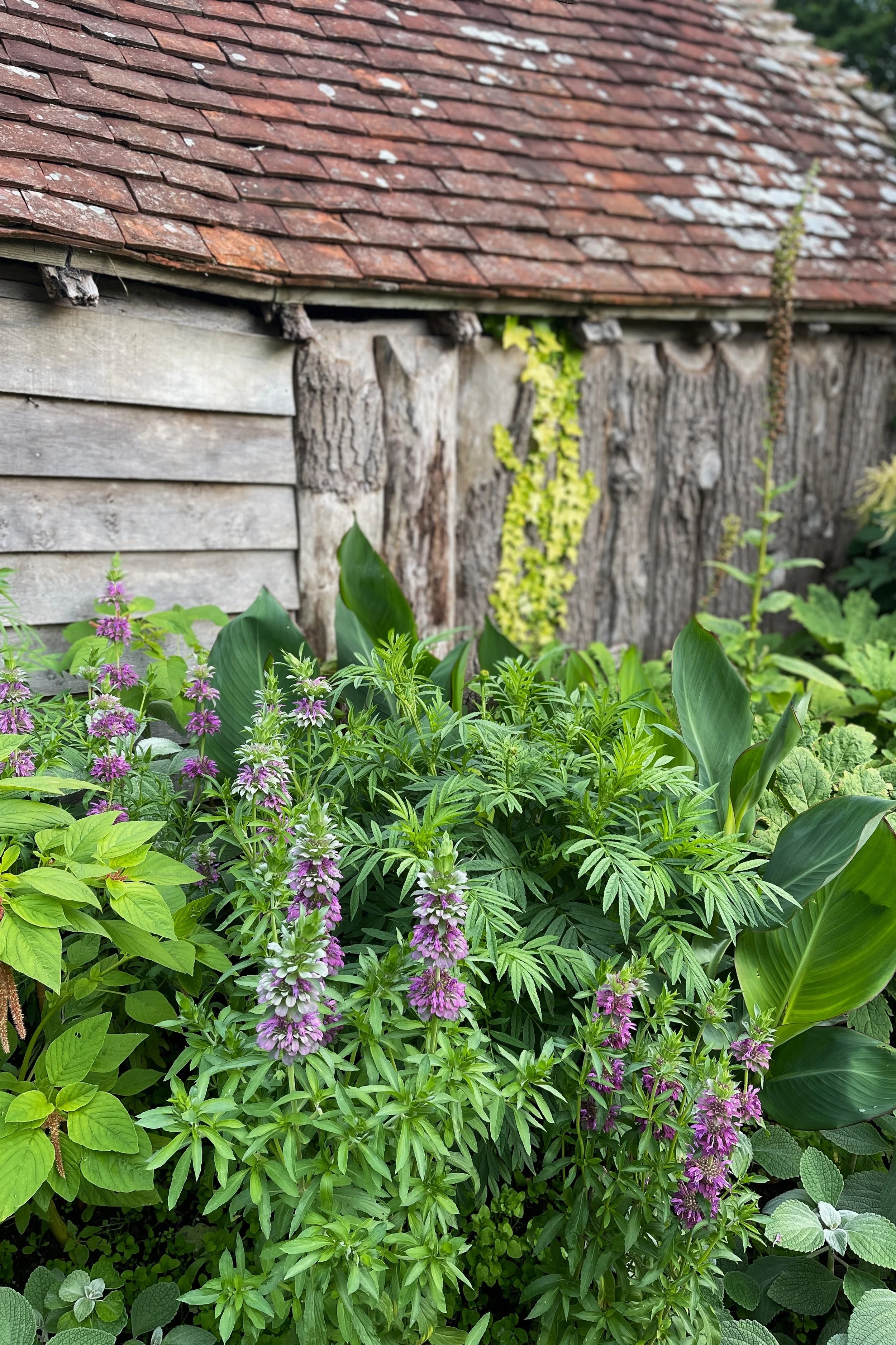
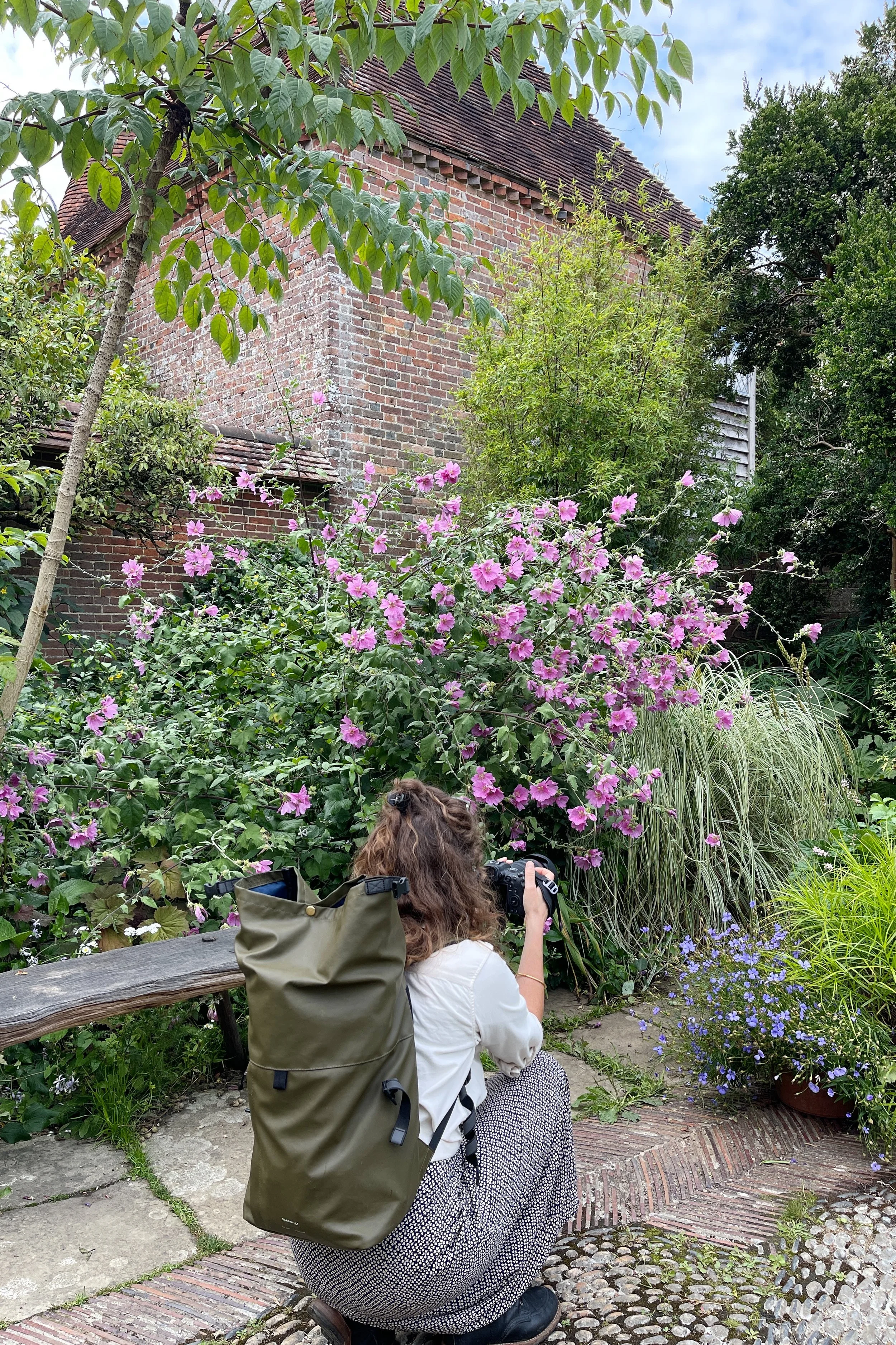
There is nowhere in the world like Dixter. To borrow an expression from the writer Diane Ackerman, it is just '“sense-luscious”. Fizzing with life and colour and creativity and ideas.
As usual we came away with some lovely plants, about a million photographs and many quick scribbles in our notebooks.
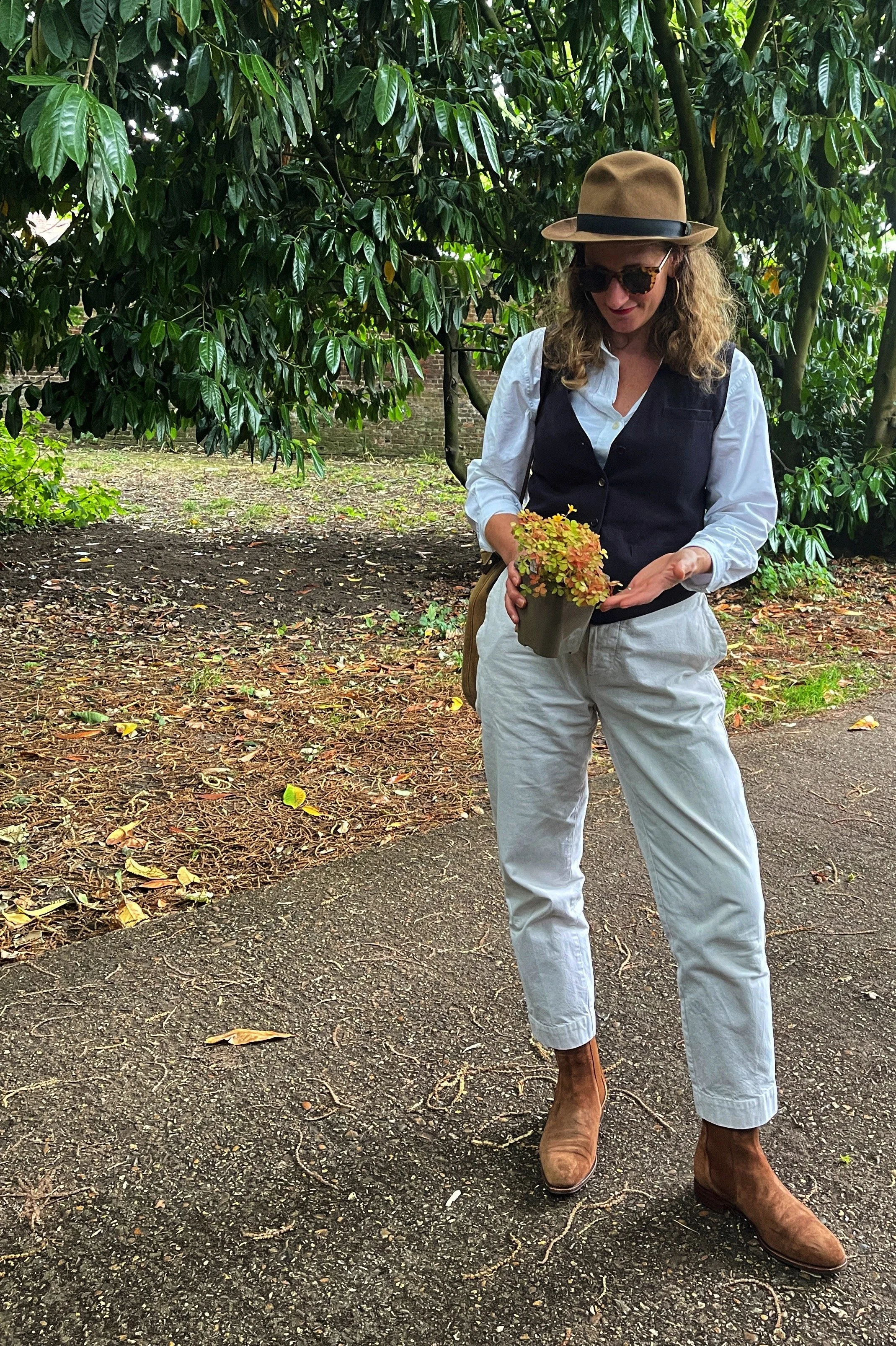
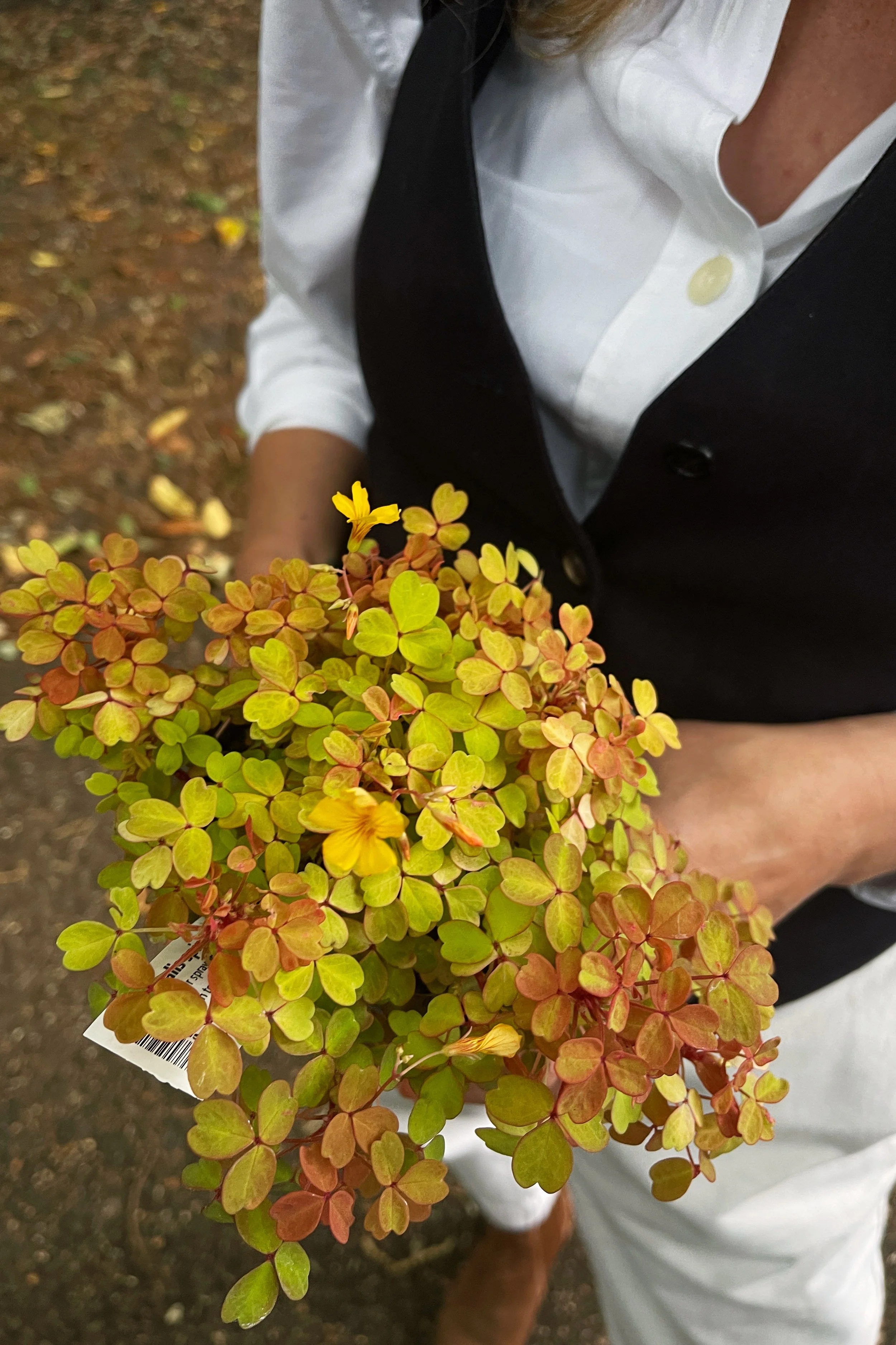

Thank you very much for reading.
We hope you’ve all had a wonderful month and managed to stay dry!
Until next time.
X
MIDSUMMER
It seems only a moment ago that it was spring, cold, damp, dark in the mornings. And yet we are already past midsummer, already a week beyond the solstice and accelerating fast into the second half of the summer. June, true to form, has been busy and beautiful.


It seems only a moment ago that it was spring, cold, damp, dark in the mornings. And yet we are already past midsummer, already a week beyond the solstice and accelerating fast into the second half of the summer.


June, true to form, has been busy and beautiful.
This is the month we revel in the sheer abundance and frothiness of the garden at its best, before it gets hotter and drier.
The first flush of the garden roses were wonderful this year. They benefitted from a long wet spring and have been laden with flowers for weeks, their perfume fragrant and heady.


The peonies were glorious too and are just coming to an end. The Claire de Lune were particularly floriferous this year - they have been in the ground three years now. Likewise the pansies which have been flowering their little stems off - we added some new plants this year and they are bedding in well.


Sunset and sunrise in the garden…


We enjoyed arranging with a lot of pale pink flowers this month. Corncockle, valerian and kolkwitzia, geraniums, aquilegia. So beautiful with silvery greens, lime greens, bronze and/or plum!


Our June workshop was awash with incredible varieties cut specially for our visitors who came from all over the world to immerse themselves in botanical beauty for two days at the studio. We love to create a very nurturing space for these workshops so that everyone, no matter their experience or background with flowers, can learn, discover and explore their own creativity with the most amazing ingredients to hand. Growing every flower ourselves it is very special for us to be able to share varieties that some of our guests have never encountered before and it’s always surprising and moving to see what is created with them. Flower arranging is such a personal practice, it’s visceral and intuitive and it’s hard to put into words how exciting the energy is in a room full of people who love handling flowers in an artistic way.


We are very excited to have just released our 2024 workshop dates on the website and tickets are available.
For those who are interested in attending our Flower School next year, all the information can be found here.


This month we’ve had Aila working with us. Aila runs a flower farm back home in New Zealand, Hands in the Dirt, and is visiting the UK during the NZ winter season. It has been wonderful having her positive work ethic and upbeat presence with us in the studio and garden and we know she is going to do great things with her beautiful flower business. She also wears great hats.


We’ve had some lovely weddings this month, filling bucketloads of mouthwatering colours and transporting them back to London to be carefully arranged into vases and bouquets back at the studio.


Last weekend at the Savile Club we created a naturalistic display to the central staircase. We’ve long dreamed of using a pale yellow palette at the club - the interiors are icy blues, silver and white, so it has a dreamy, fairytale-like quality to it. We kept the design loose and sporadic to reflect the way the plants look in the garden at this precise moment in the year - sprawling vines of Clematis and Nasturtium, towering spires of Campanula, Thalictrum, Veronica and Cephalaria gigantea (giant scabious), the fading seedheads of Allium globes and tiny flecks of white Gysophila and pale pink Nepeta. We always hope to achieve an effortless, just-gathered look for our clients’ wedding flowers, even though they are anything but! Just gathered, yes, but effortless, not so much… It’s a wonderful privilege to be entrusted to create installations for a couple’s wedding day and its always a joy to work at the Savile Club. We have dressed this staircase many times but we always try to do something new and find a fresh way to decorate it.


This week it’s British Flowers Week and to celebrate all the incredible locally grown flowers we are lucky enough to enjoy arranging with here in the UK we have a summer sale on our online courses until 2nd July.
Click here to browse the full range of classes.


We’re gearing up for another busy few weeks ahead and can’t wait to show you what we’re working on in July!
Thank you for reading.
Until next month. A.


THE MONTH OF MAY
May. This is the month when things have really got going for us, flower-wise. Later than usual after a cold and wet spring and, as opposed to previous years when we’ve been in the deep end from March onwards, it’s been a serene and gentle incline to the busy summer season.
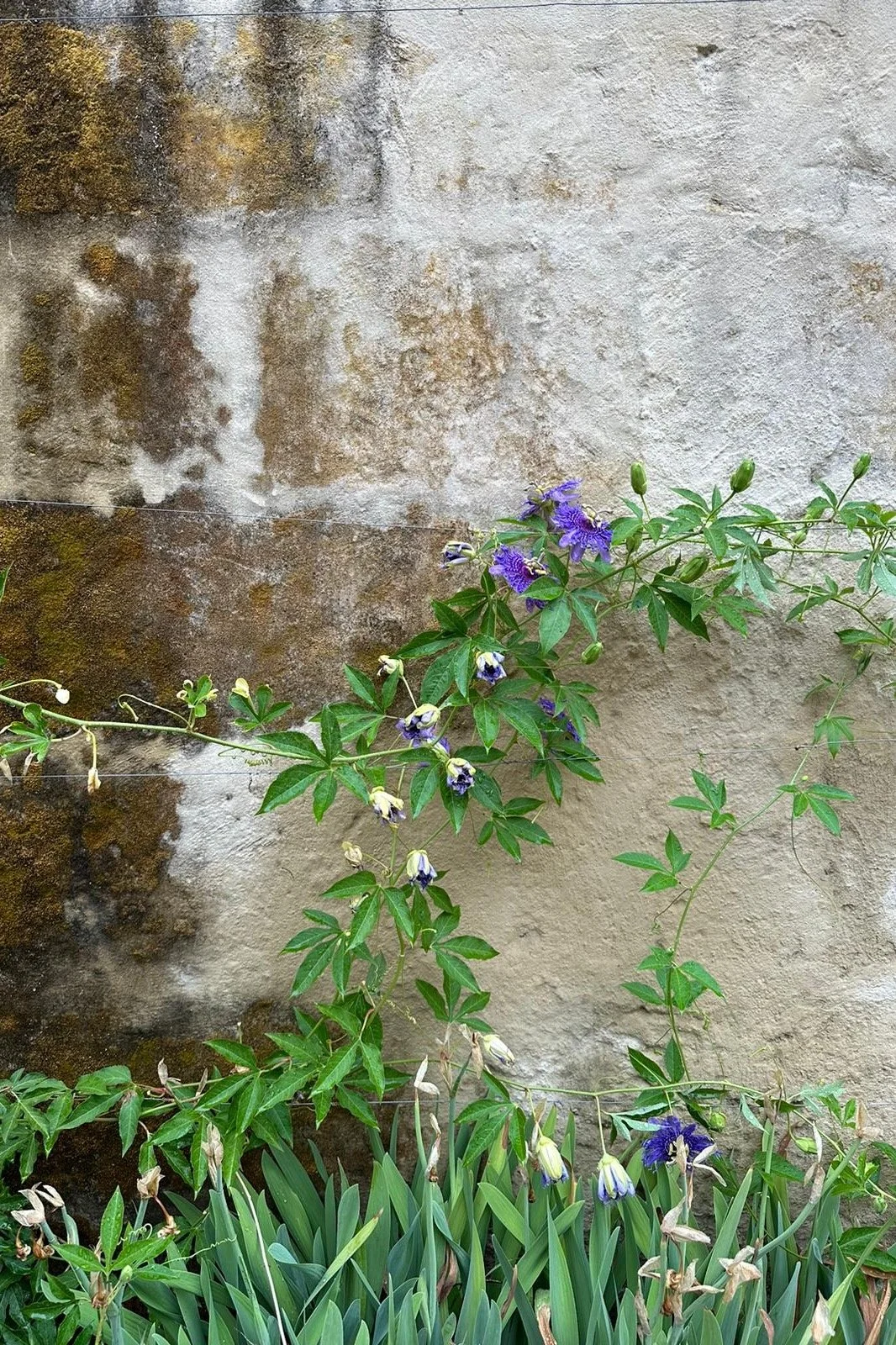

May. This is the month when things have really got going for us, flower-wise. Later than usual after a cold and wet spring and, as opposed to previous years when we’ve been in the deep end from March onwards, it’s been a serene and gentle incline to the busy summer season.

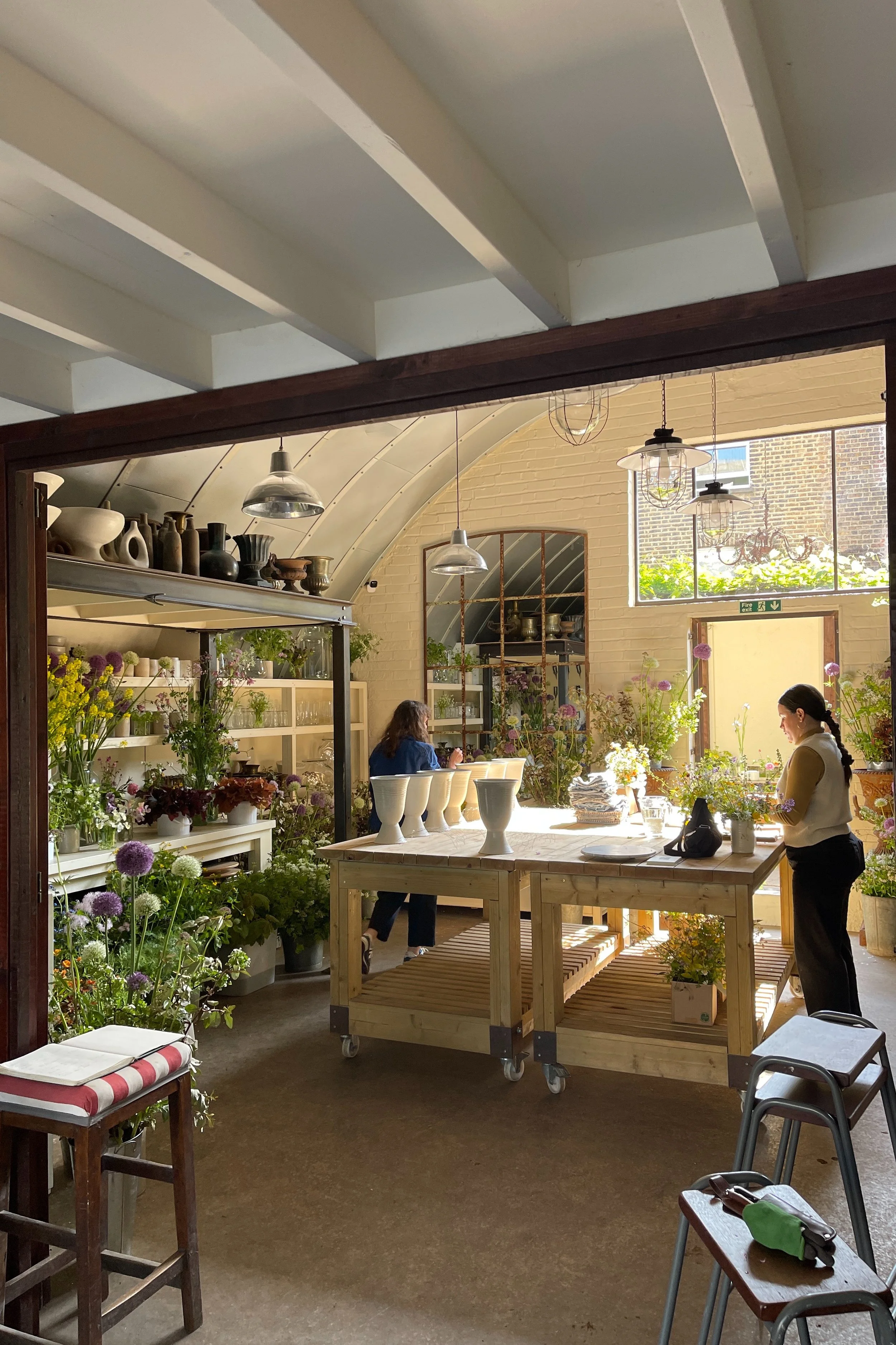
After weeks of brooding skies and drizzly mornings the sun finally deigned to make an appearance.
Londoners became markedly more cheerful overnight and there followed a grateful rush of alfresco socialising, ice-cream eating and premature states of undress.
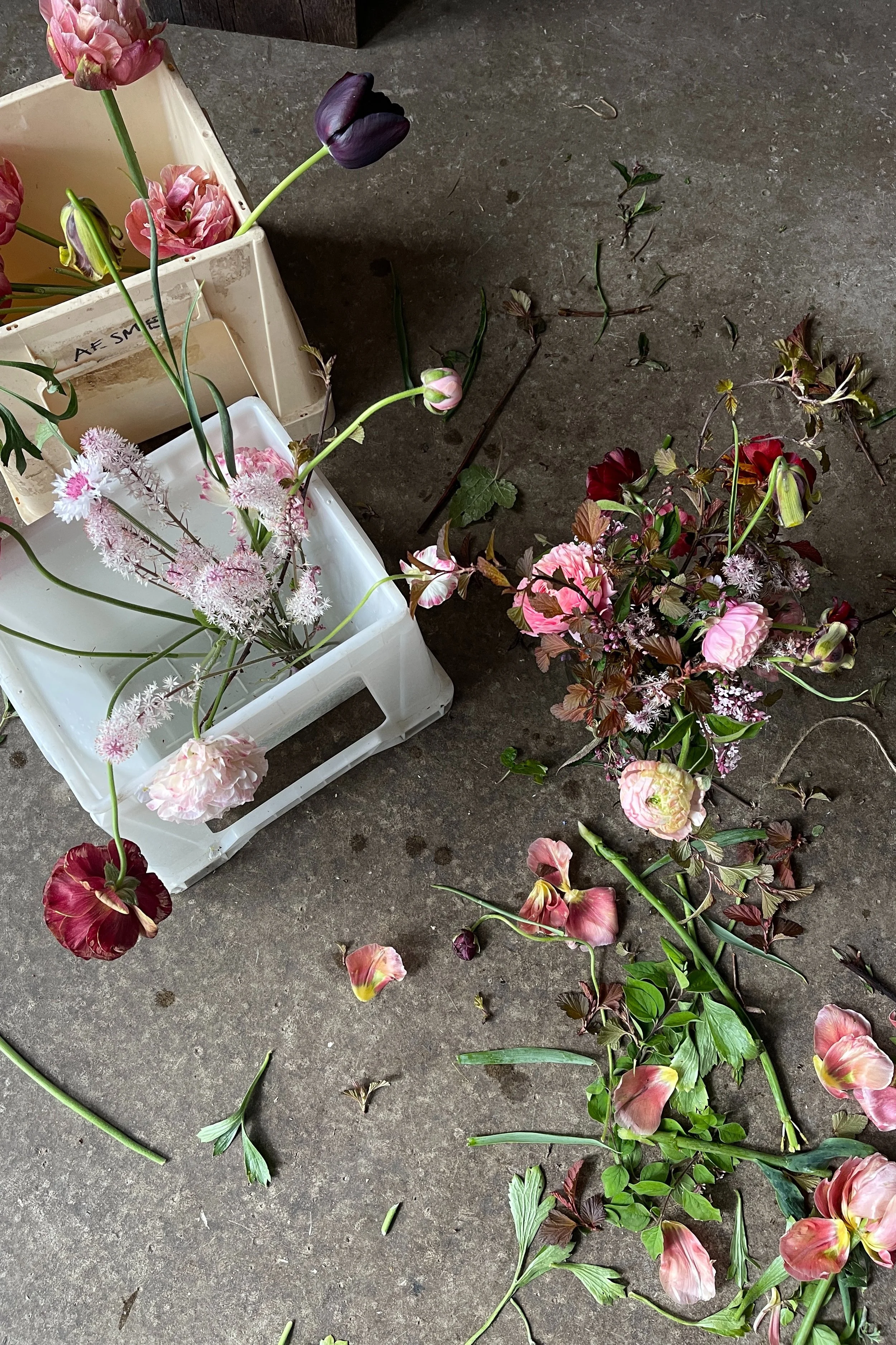
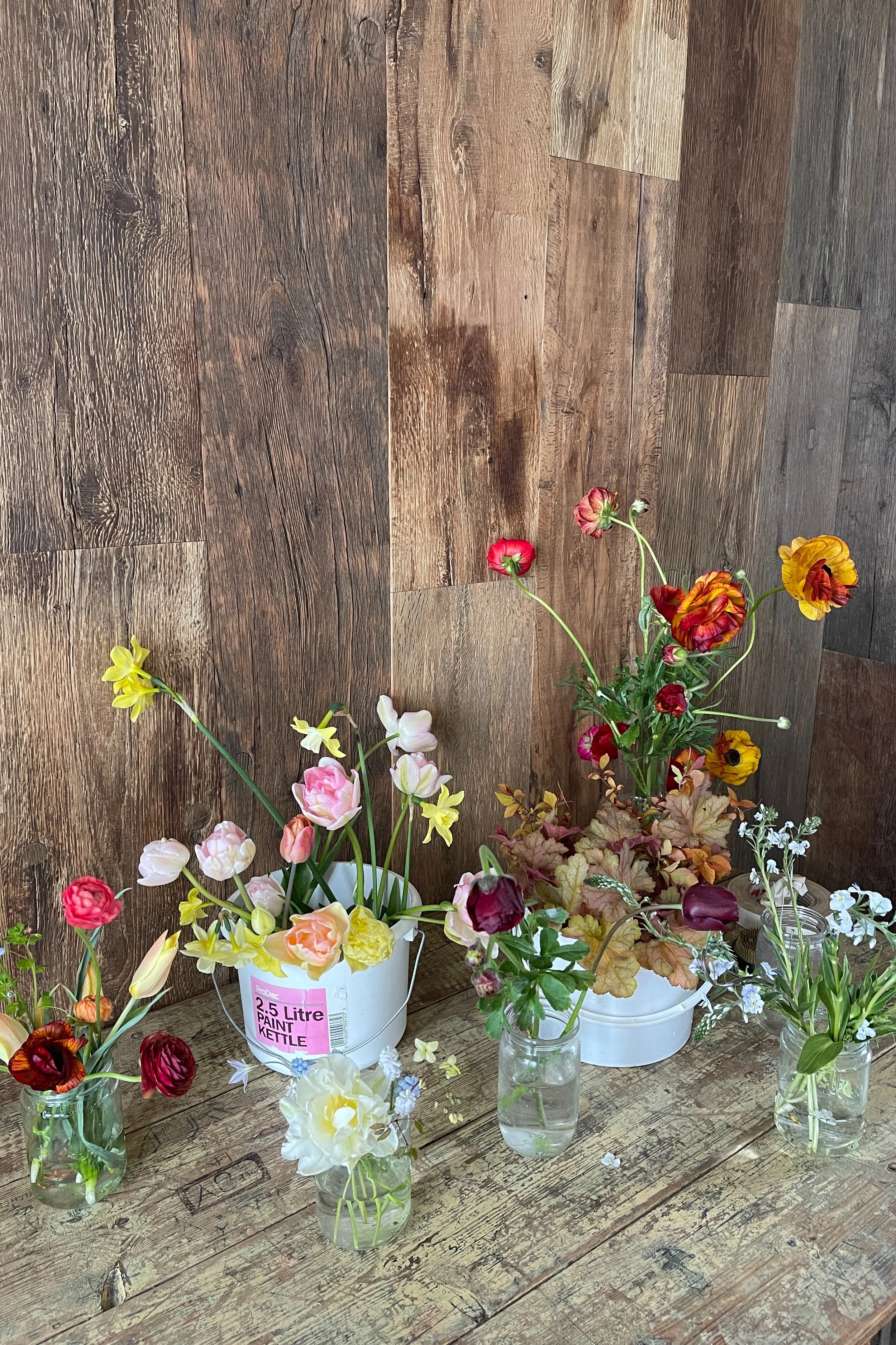
Earlier in the month we bade a fond farewell to the tulips, Narcissi, Muscari and Fritillaria. Our Ranunculus have not fared too well this year so they’re rather thin on the ground but glorious nonetheless - whirling, ruffled and burnished, petals streaked with fine, feathery brushstrokes.
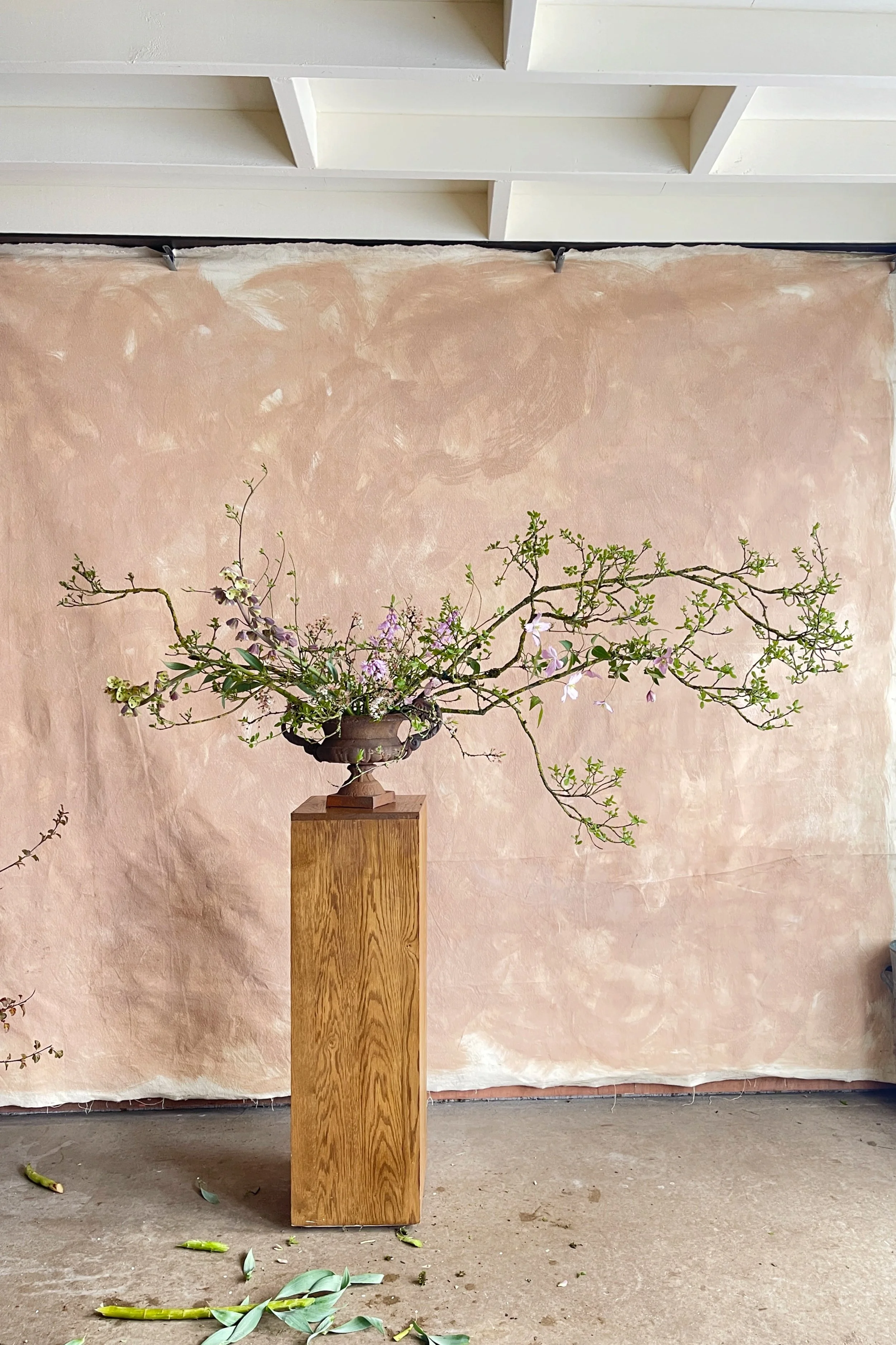
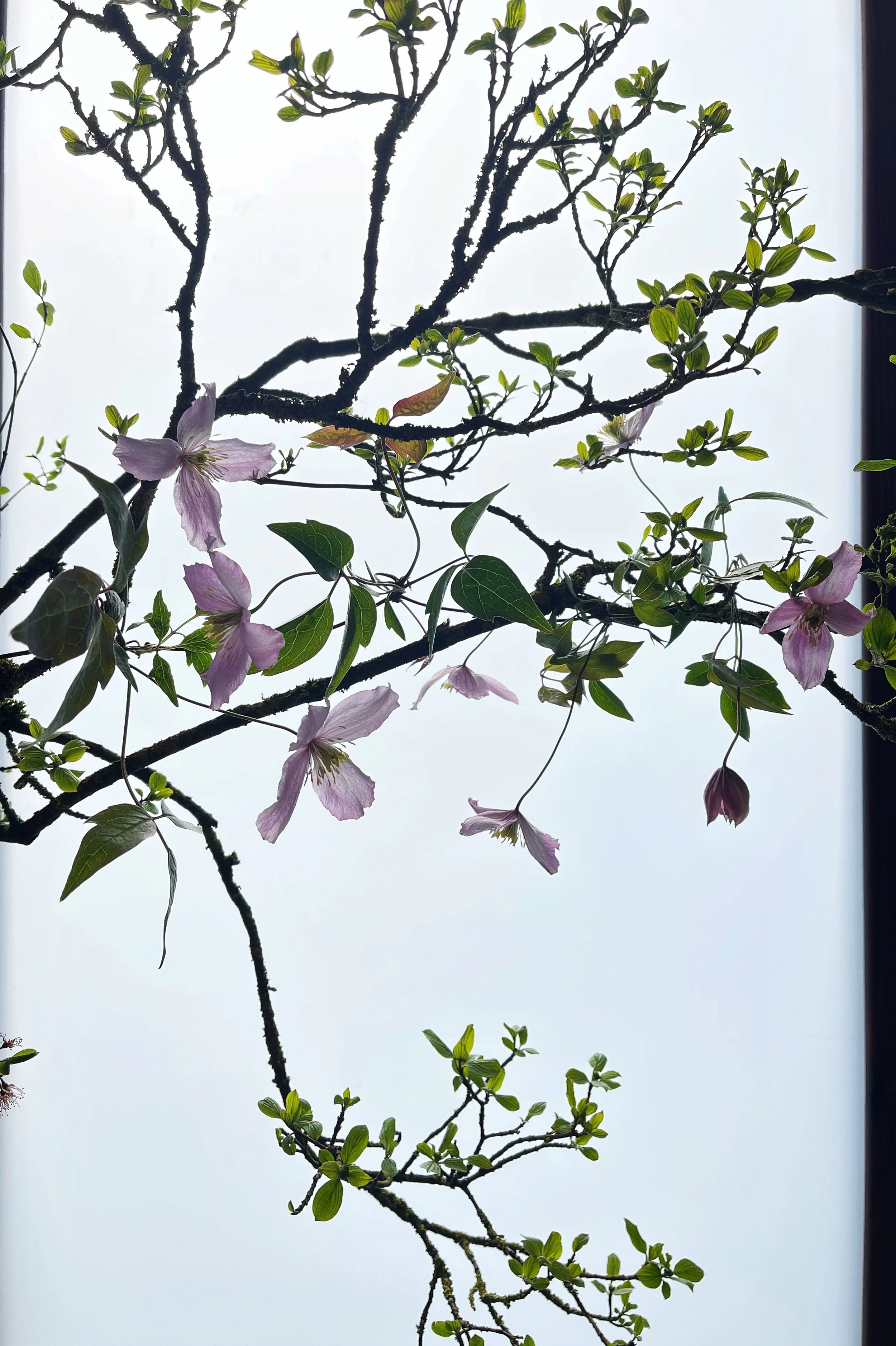
The above arrangement was inspired by one we saw in the window of an incense boutique in Kyoto in 2019. We have been meaning to try this asymmetric linear shape ever since and the small, low urn was the perfect container for these sculptural dogwood branches. We used the incredibly two-tone Fritillaria persica ‘Green Dreams’ and Scilla hispanica (pink bluebells) and threaded Clematis montana through the foliage.
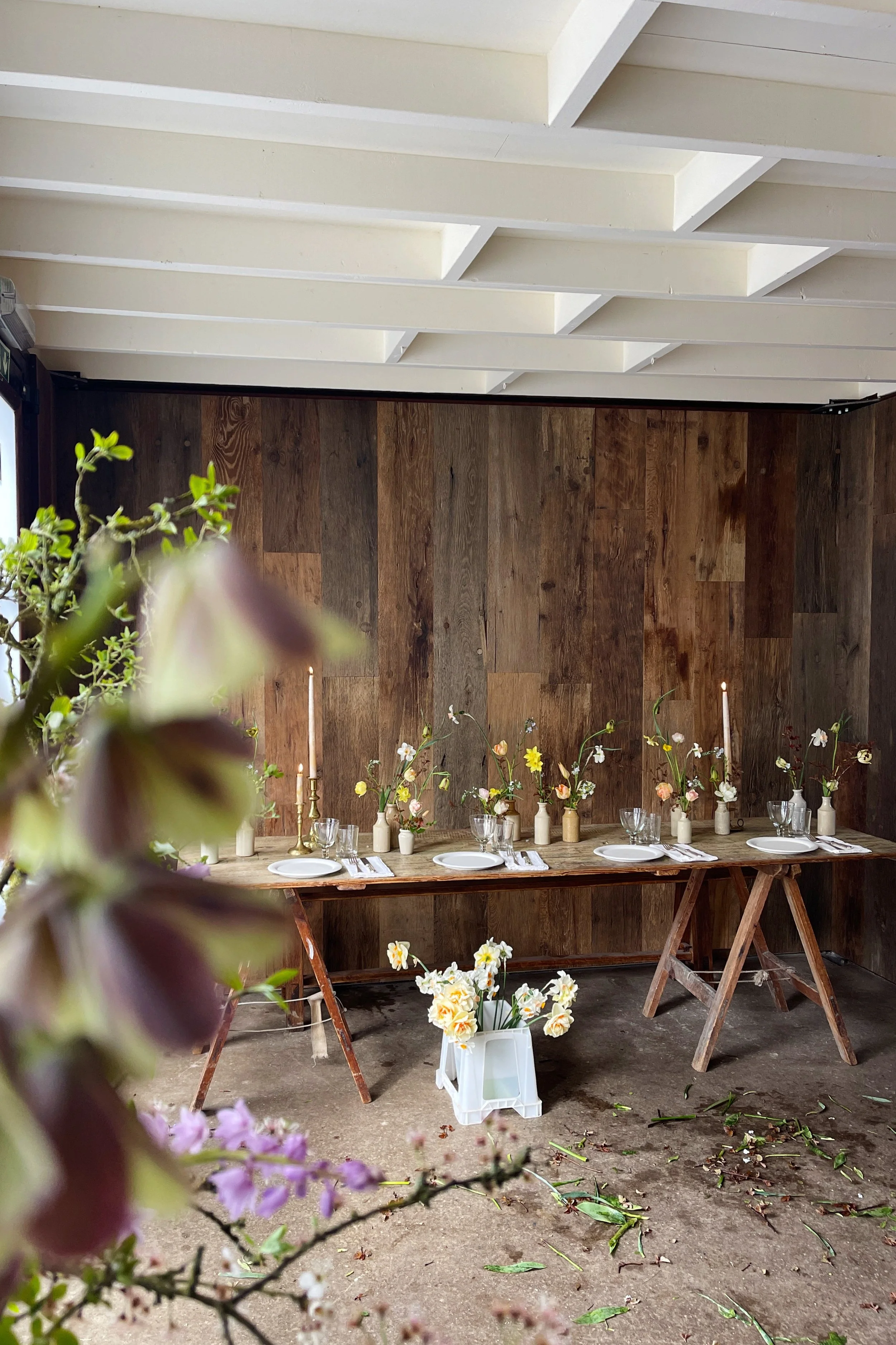
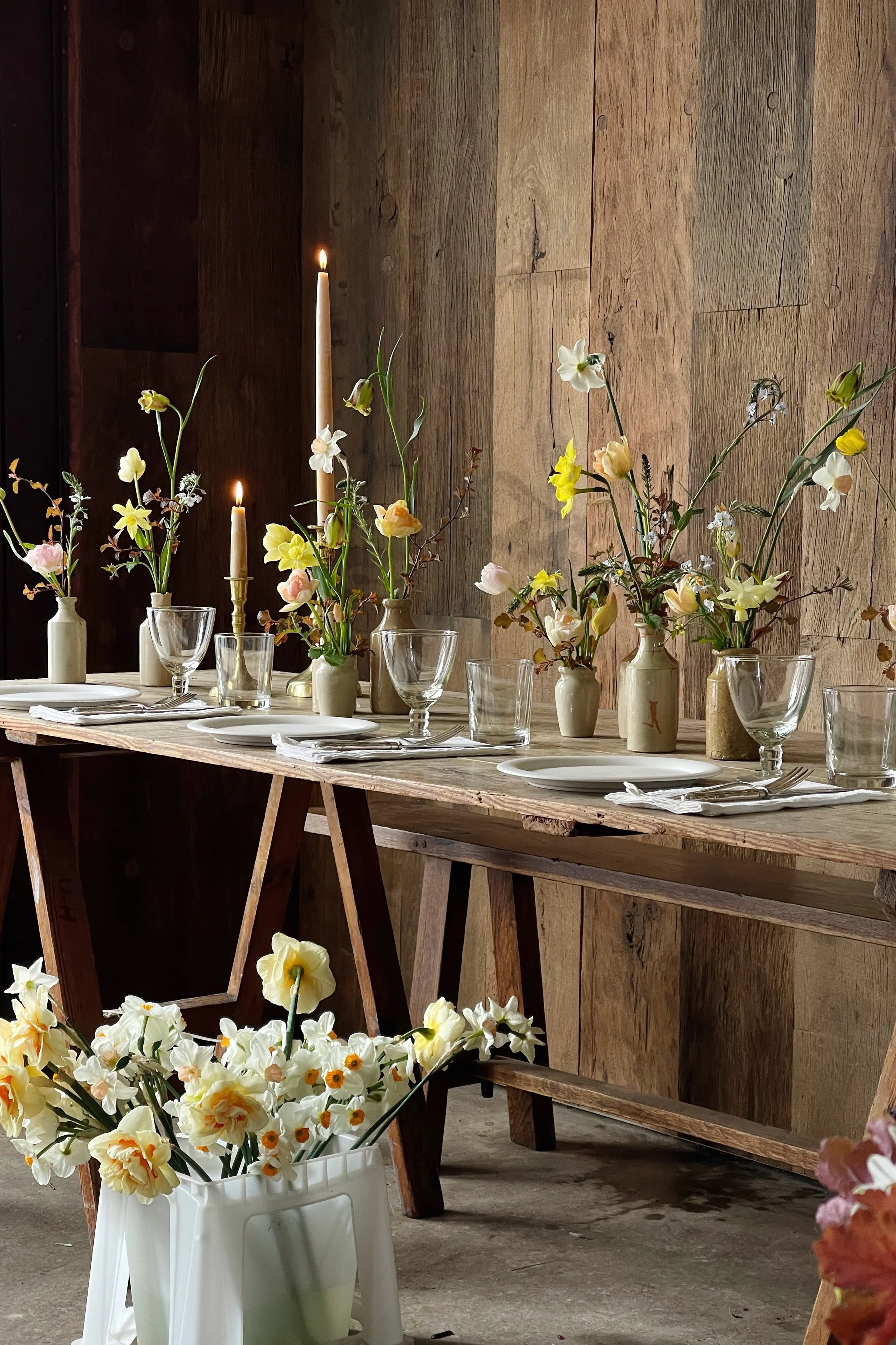
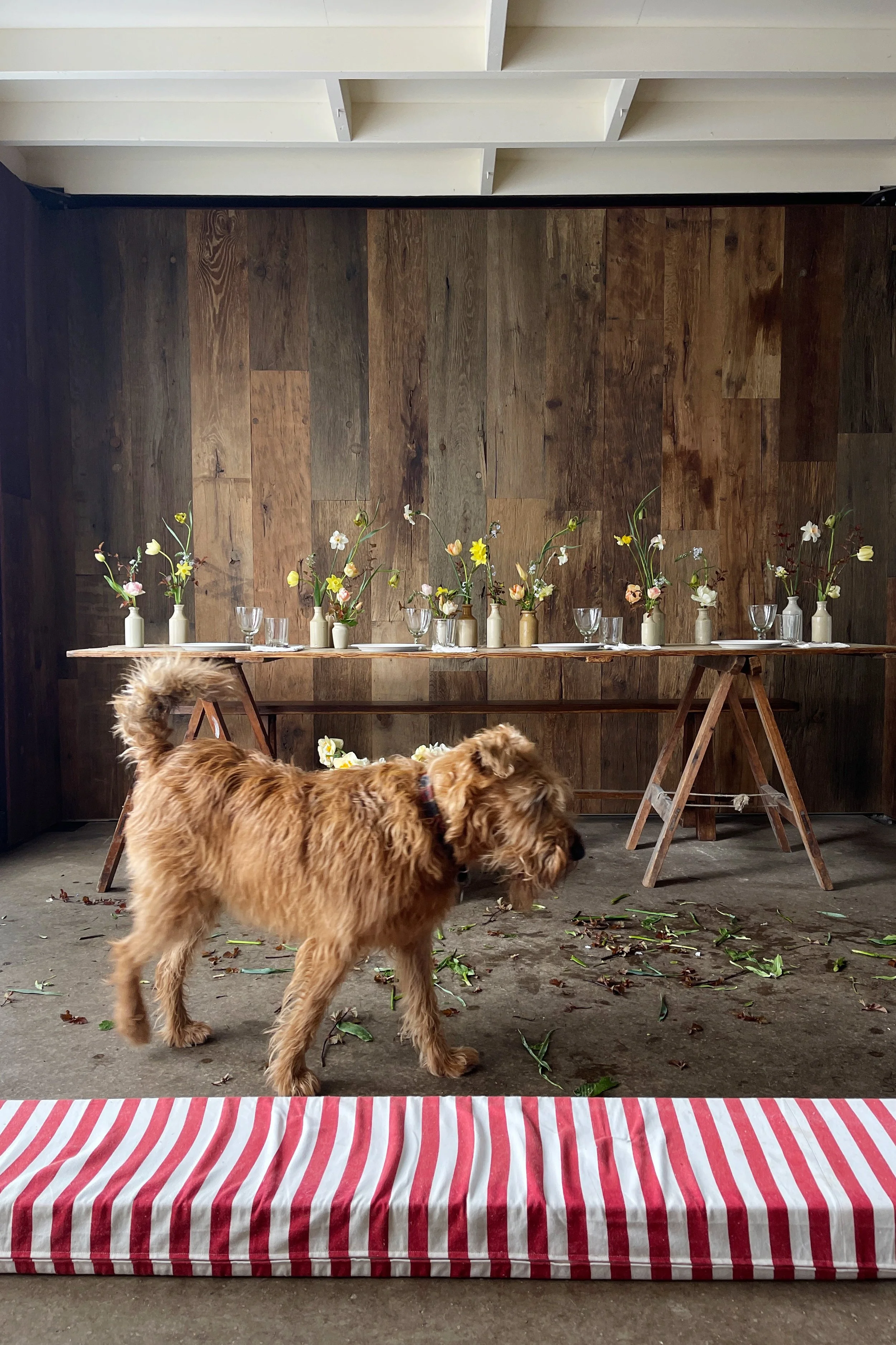
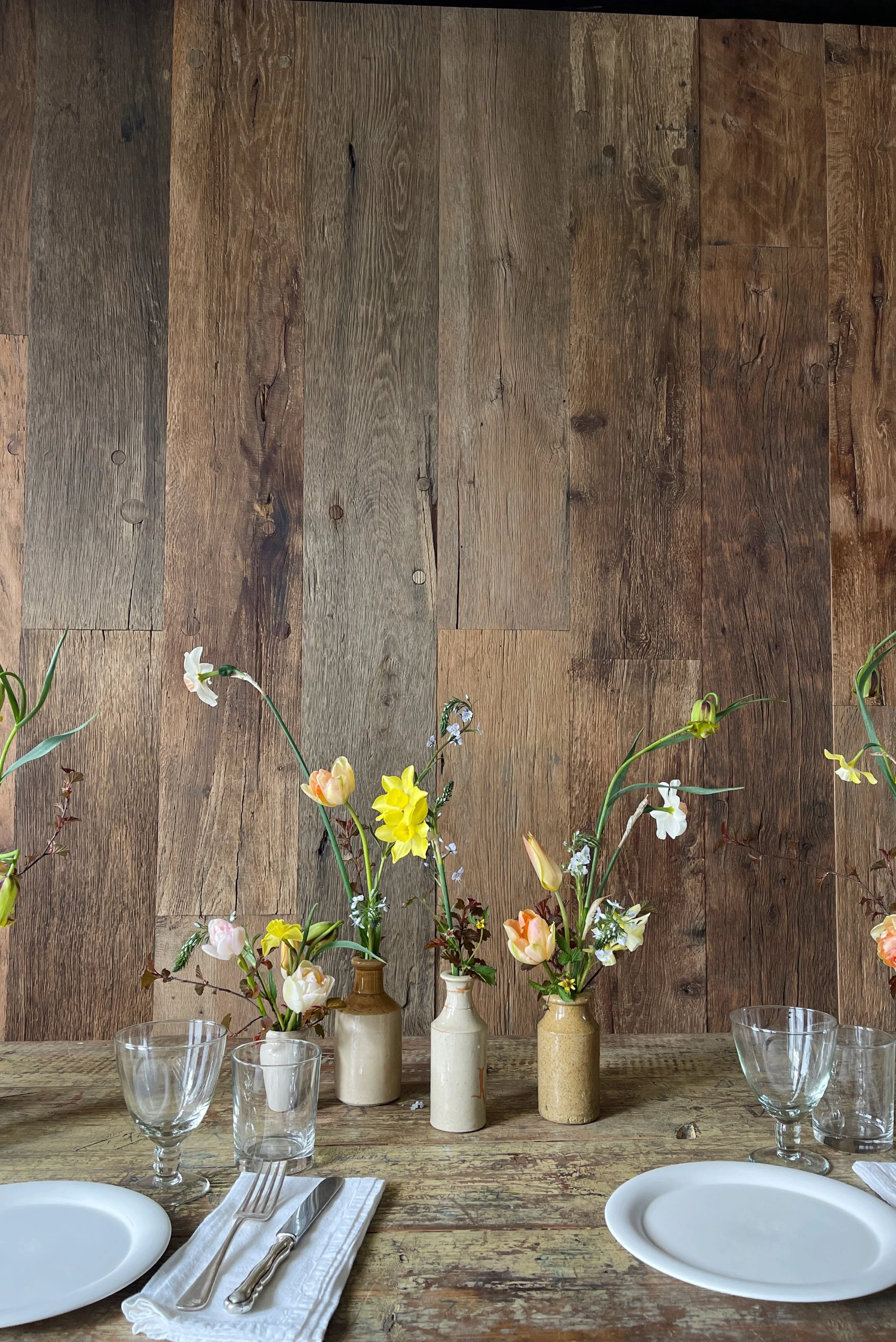
Above a tablescape of tulips, Narcissi, Veronica, Fritillaria and Physocarpus arranged simply in stoneware bottles. These ceramic vessels are commonplace Victorian containers and were ‘reclaimed’ from their burial place under a Welsh hillside where they had been disposed of in bulk. The beautiful thing about them is that every one is different, the heights, shapes and glazes vary from bottle to bottle. The earthy tones are nicely offset by a lively pop of lemon yellow - and a shaggy red dog (an Irish Terrier will do if you can manage to get hold of one).
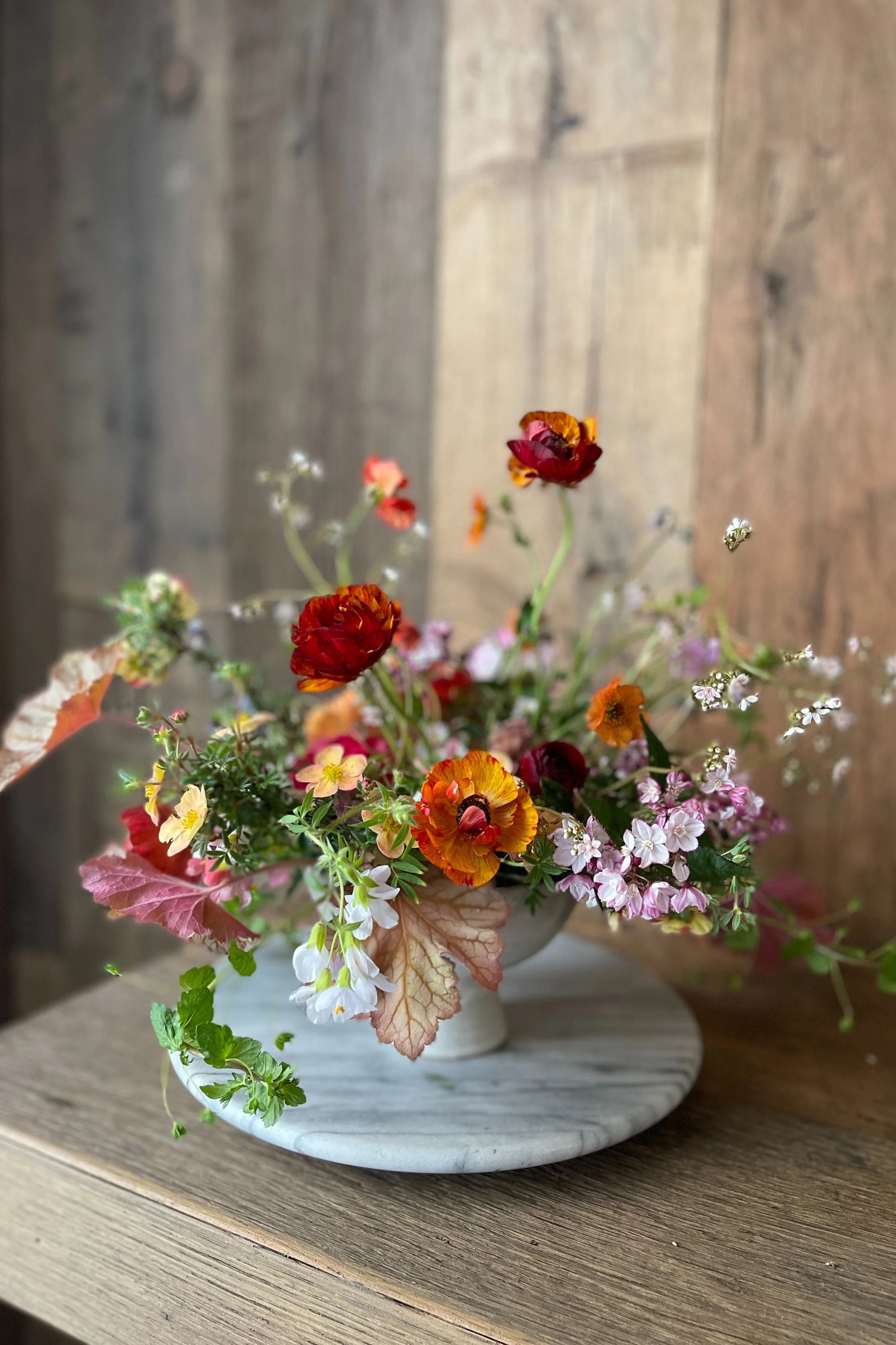
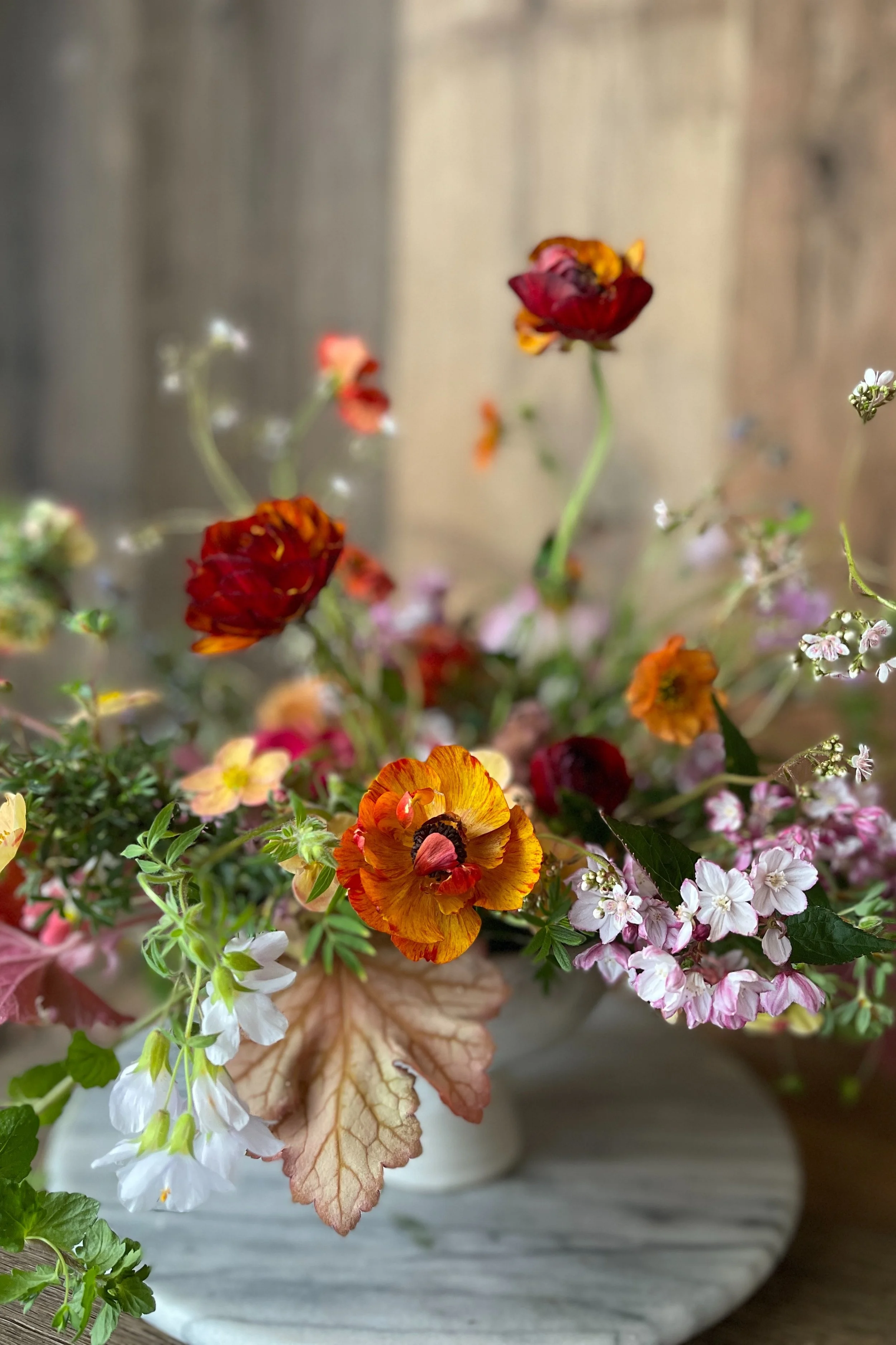
Speaking of red - a study of the spring garden with a sprinkling of our favourite ‘Cafe au Lait’ Ranunculus which is a glowing ember of a flower, amber on the upper petals with a dusky red underbelly. Arranged with veined peach Heuchera leaves, sprigs of Potentilla, Deutzia, and dusted with a few Geum, Polemonium and Saxifraga.
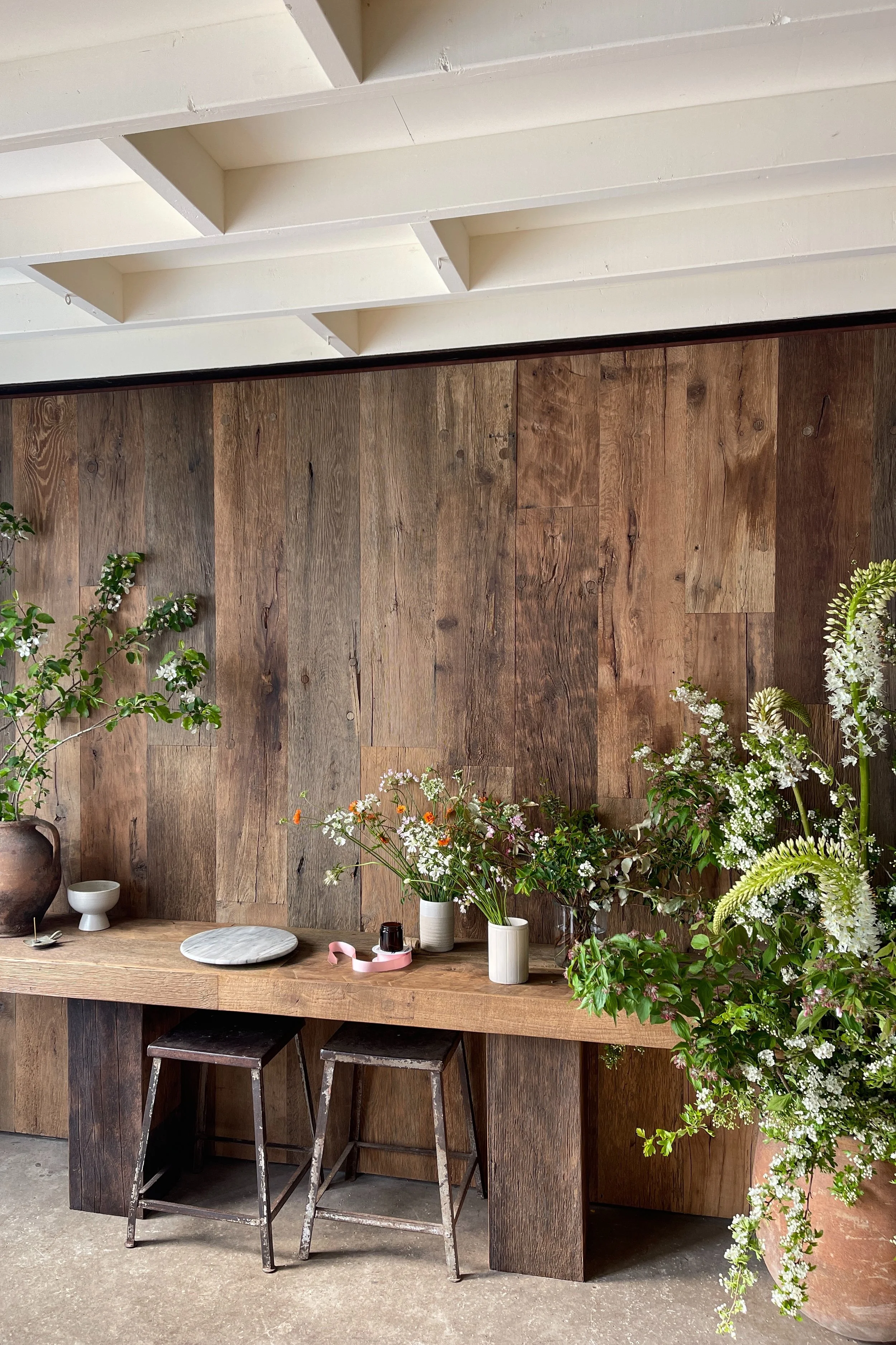
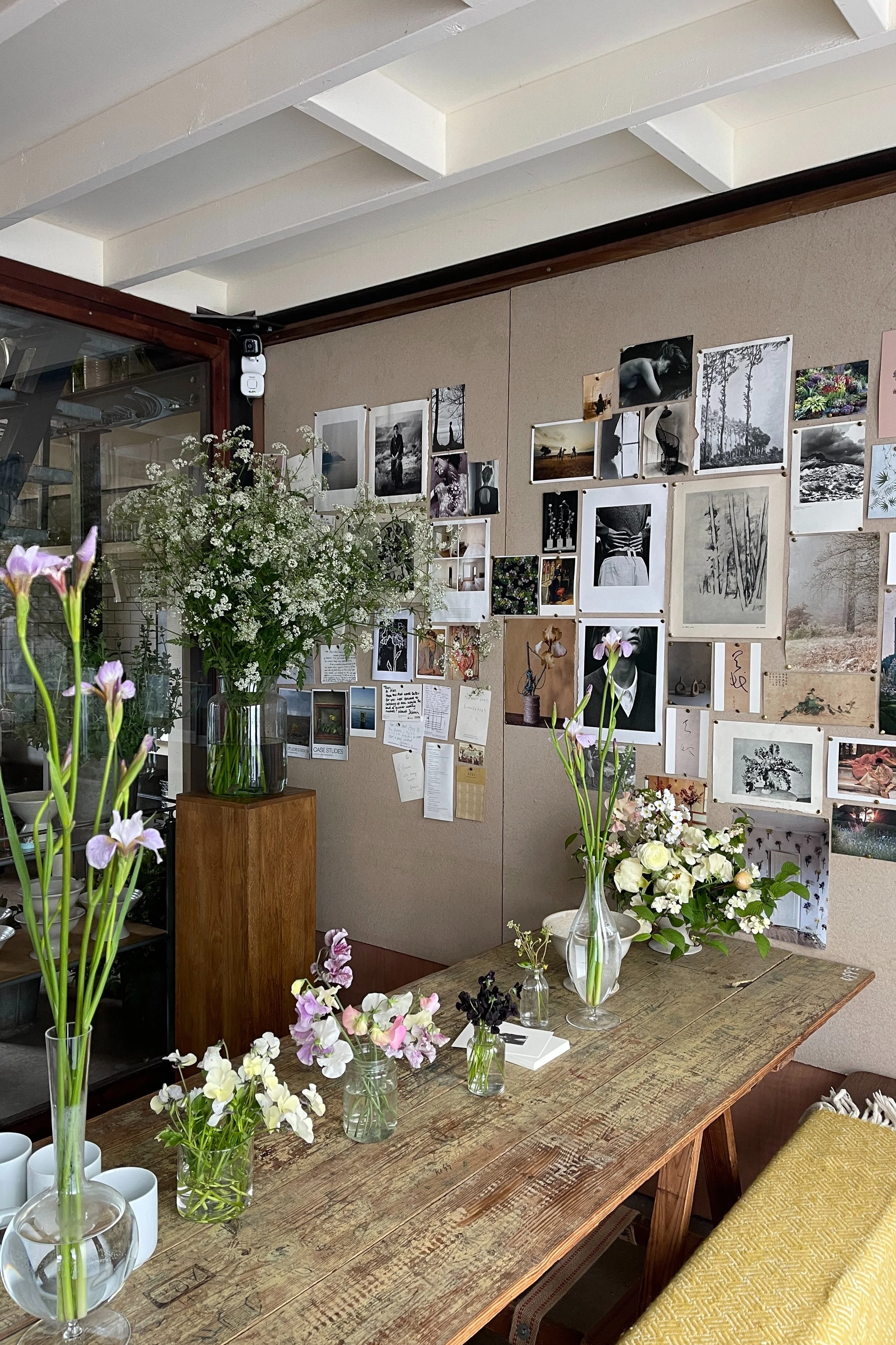
The studio has filled with flowers every week - special favourites being fussed and coo’ed over as new varieties begin to bloom - Iris siberica ‘Dance Ballerina Dance’, the Japanese peonies, the foxtail lilies, black pansies, branches of apple blossom with palest pink petals.
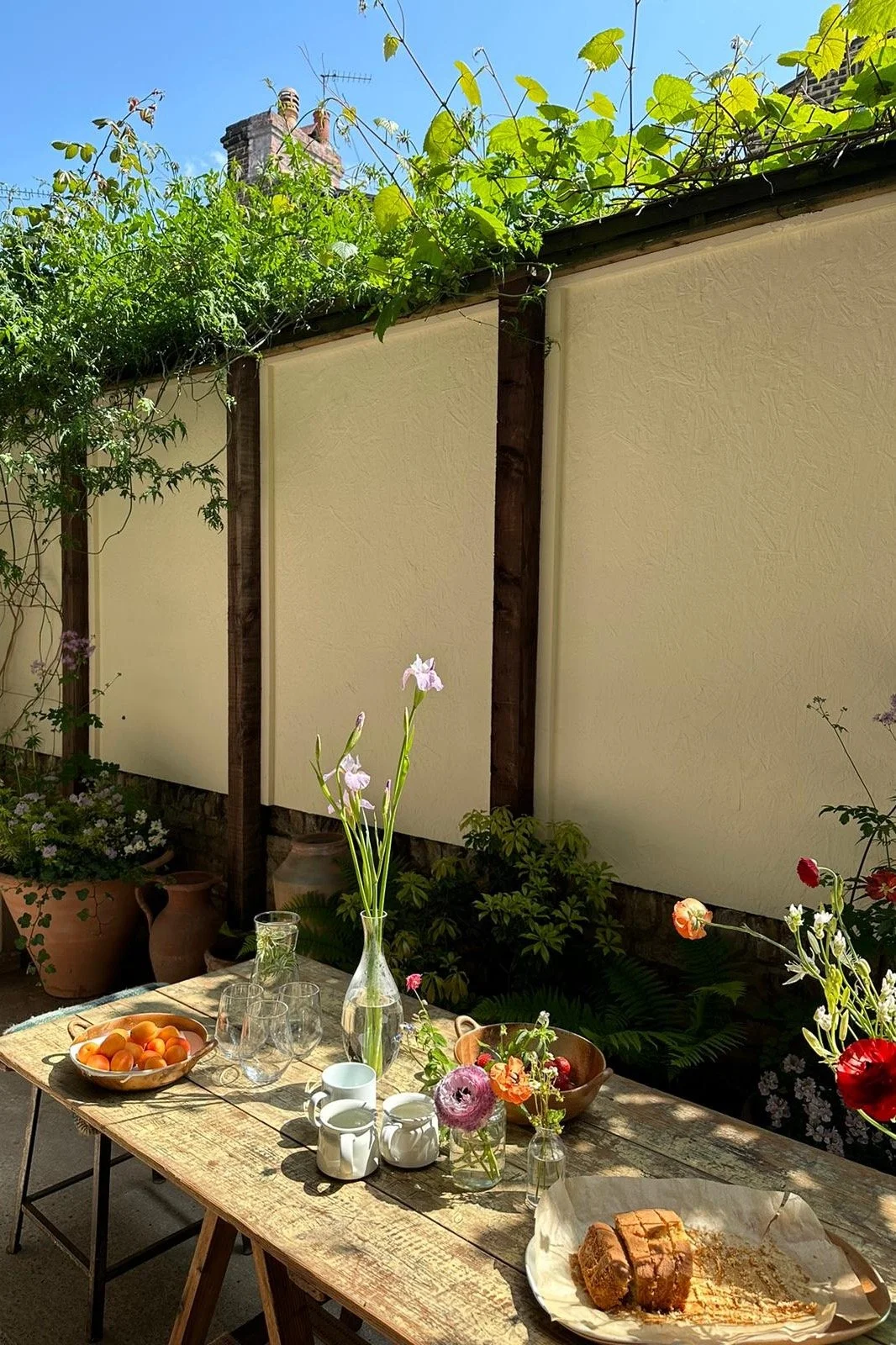
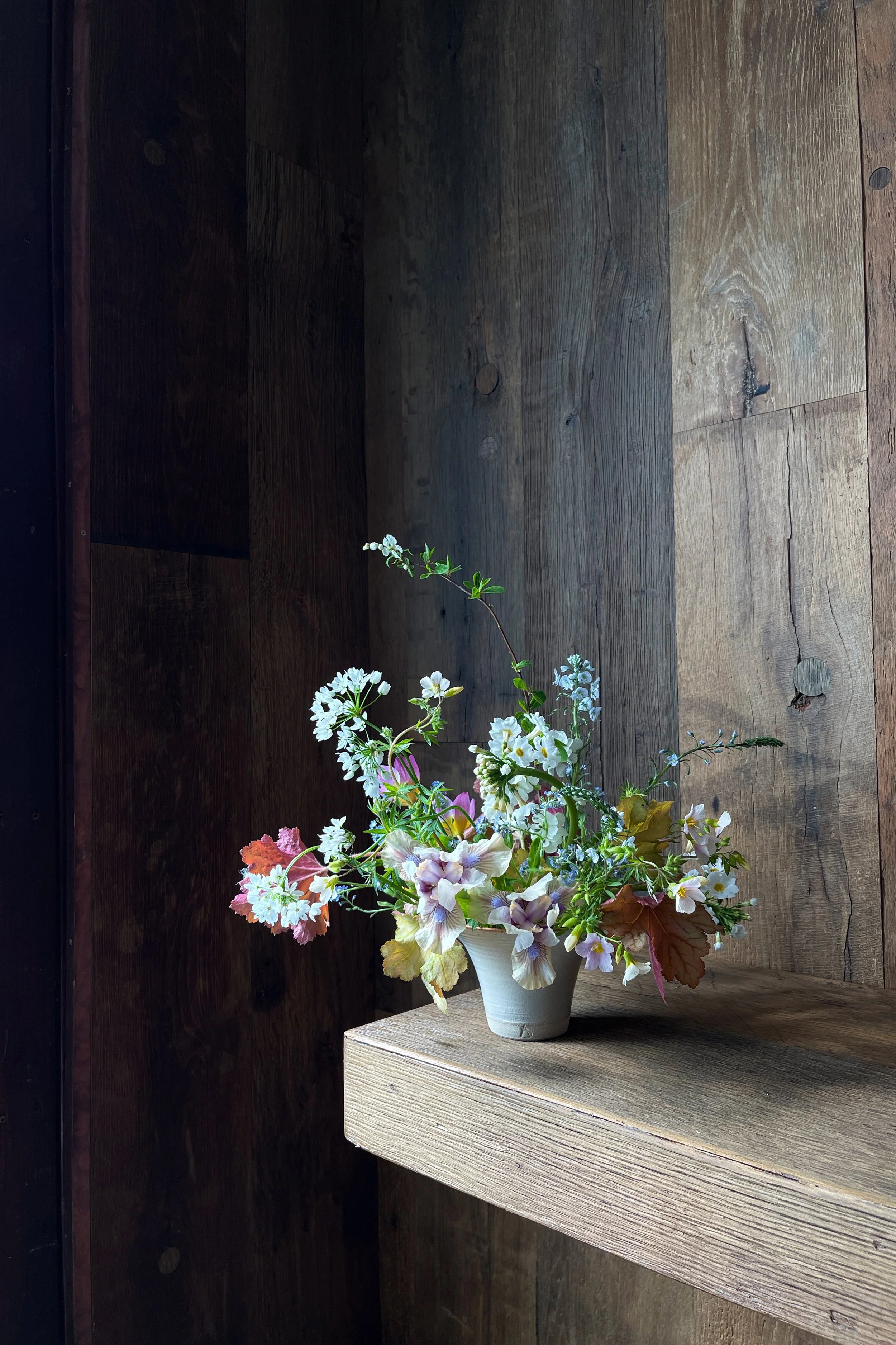
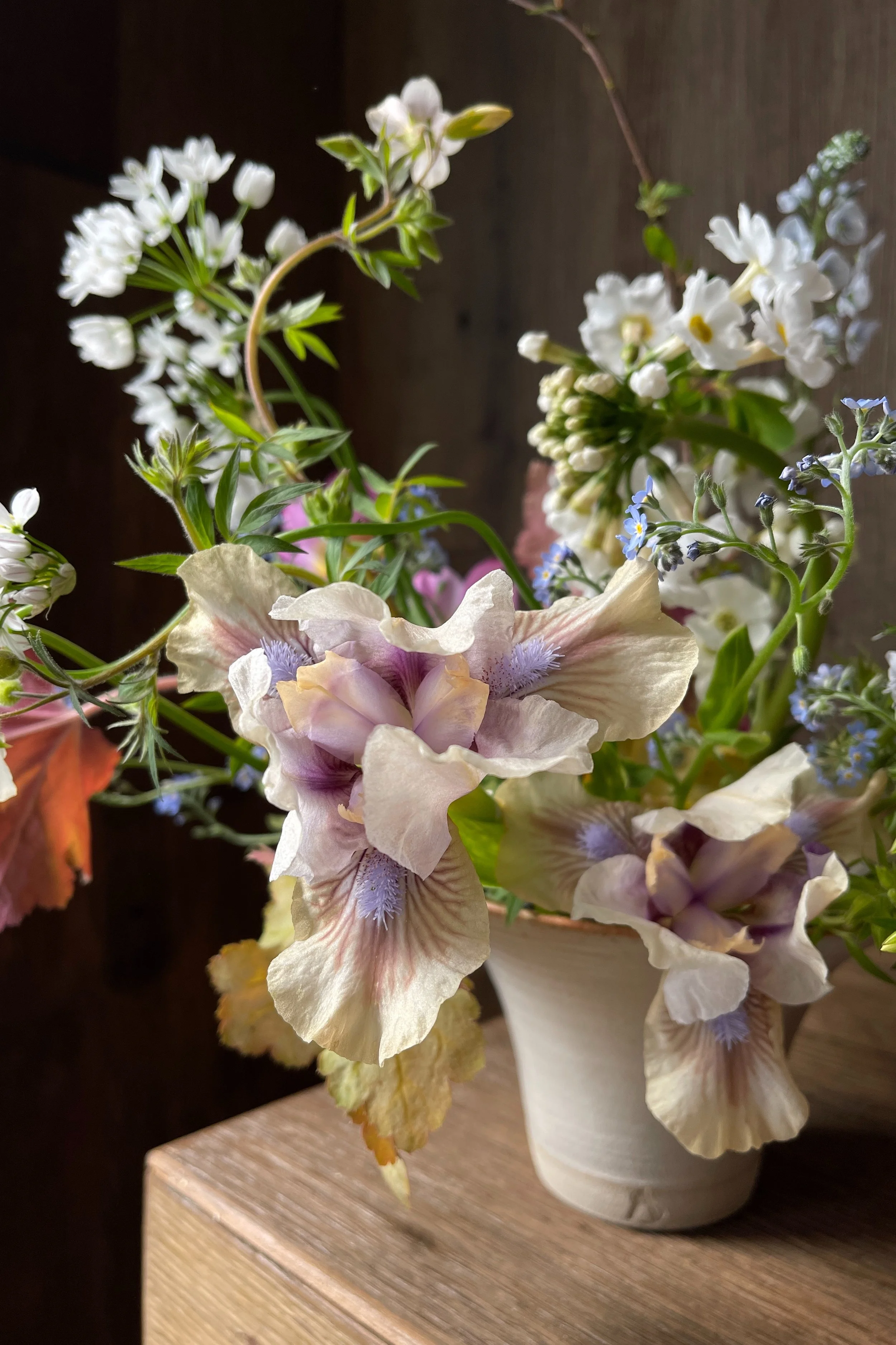
We hosted the first of our 2023 Flower School workshops this month, welcoming guests from the UK, Italy, France, Switzerland, South Korea, the US and Canada for two days of high octane flower appreciation. It was such a pleasure, especially after a four year hiatus from teaching, to host such an enthusiastic group of women - every one genuinely exploring their own creativity with flowers and plants in a different way.
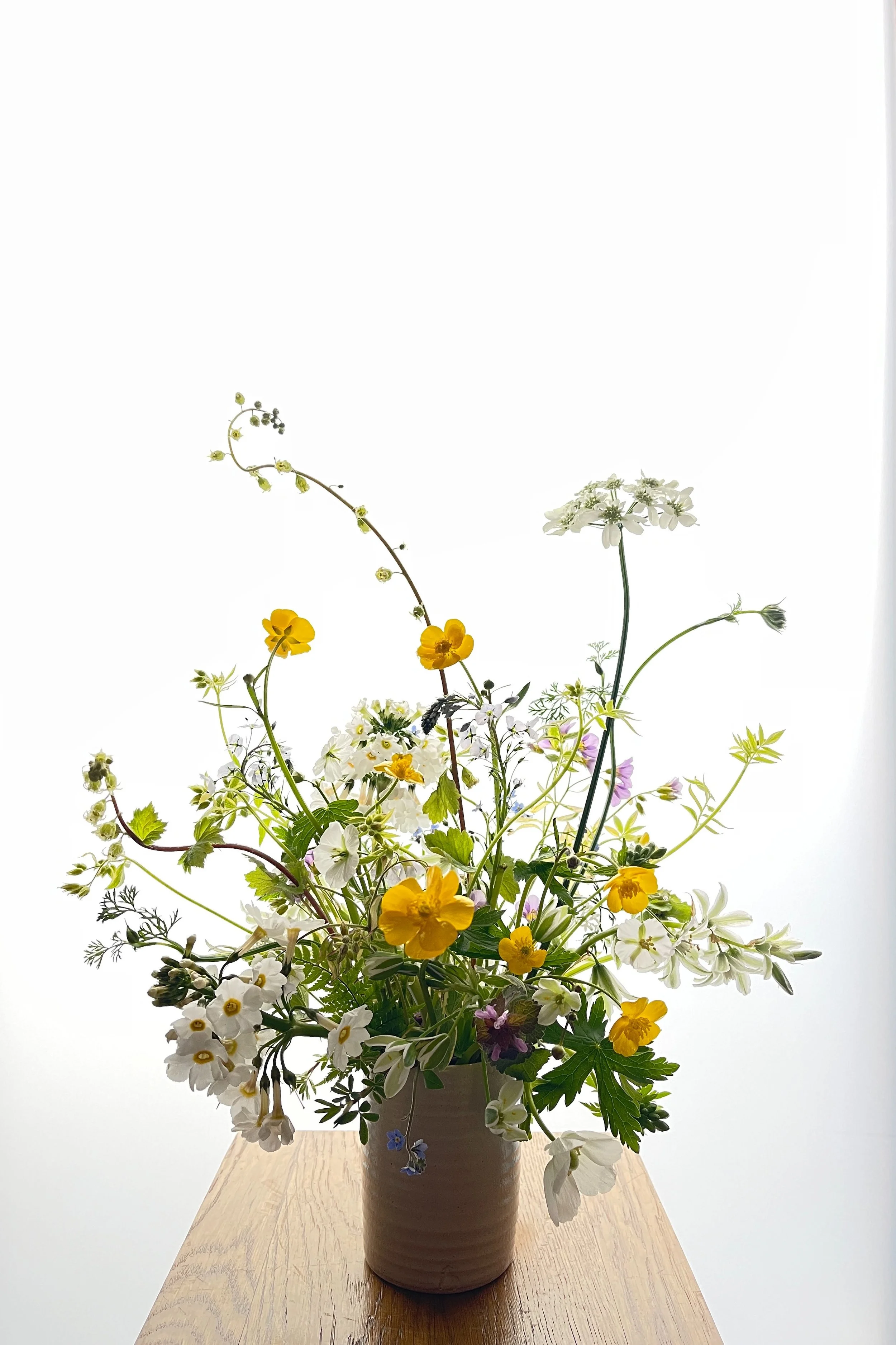
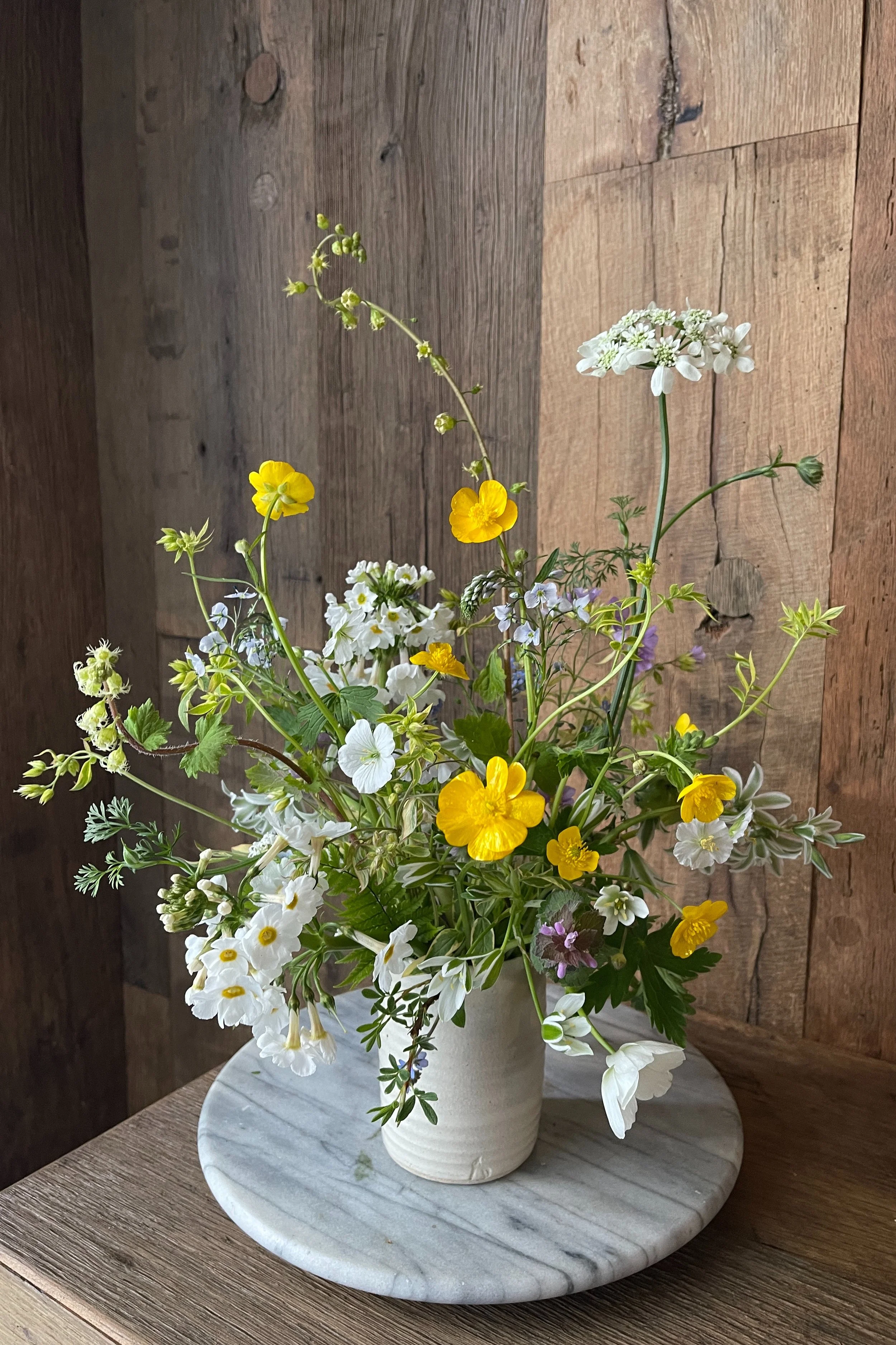
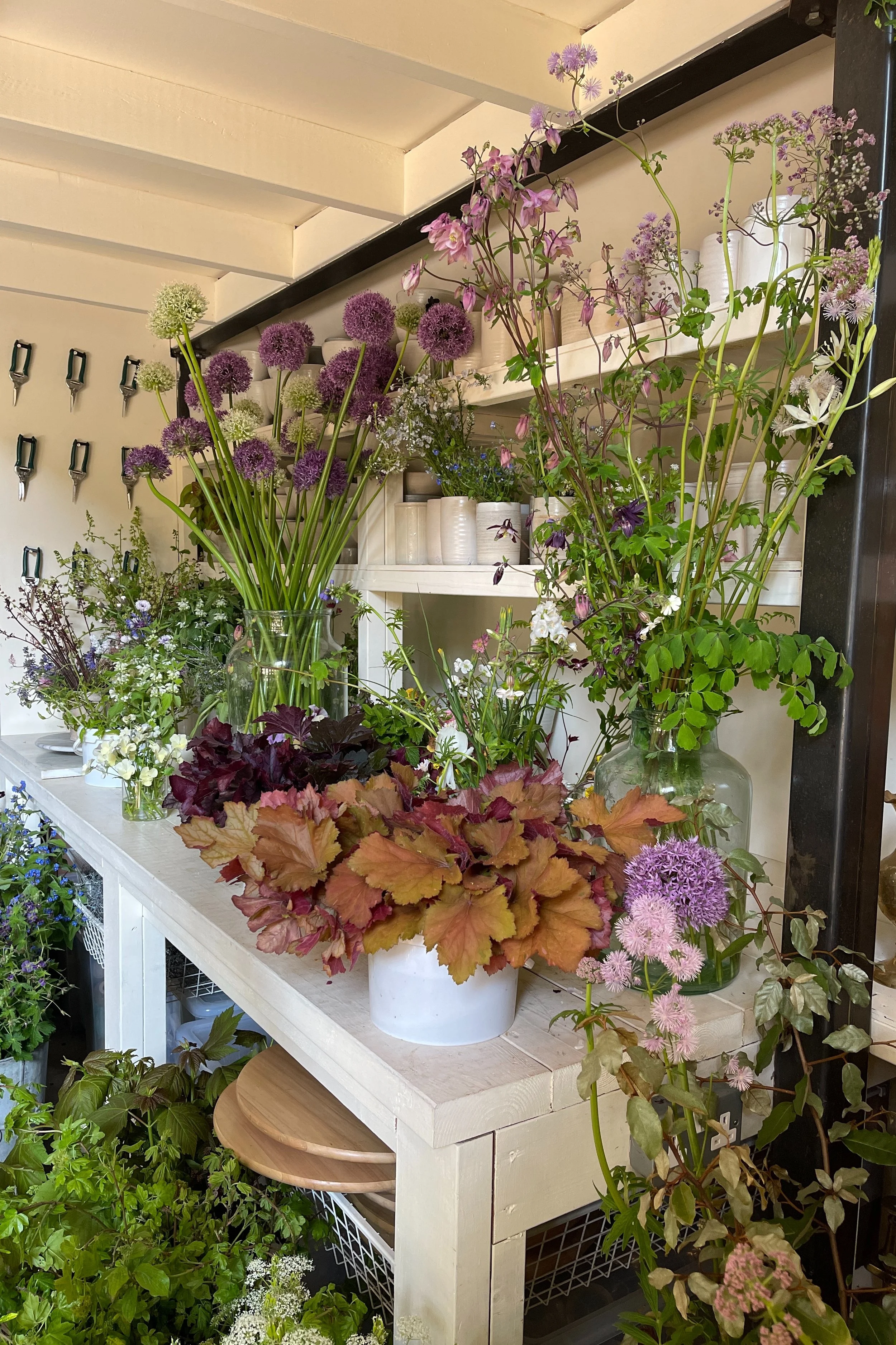
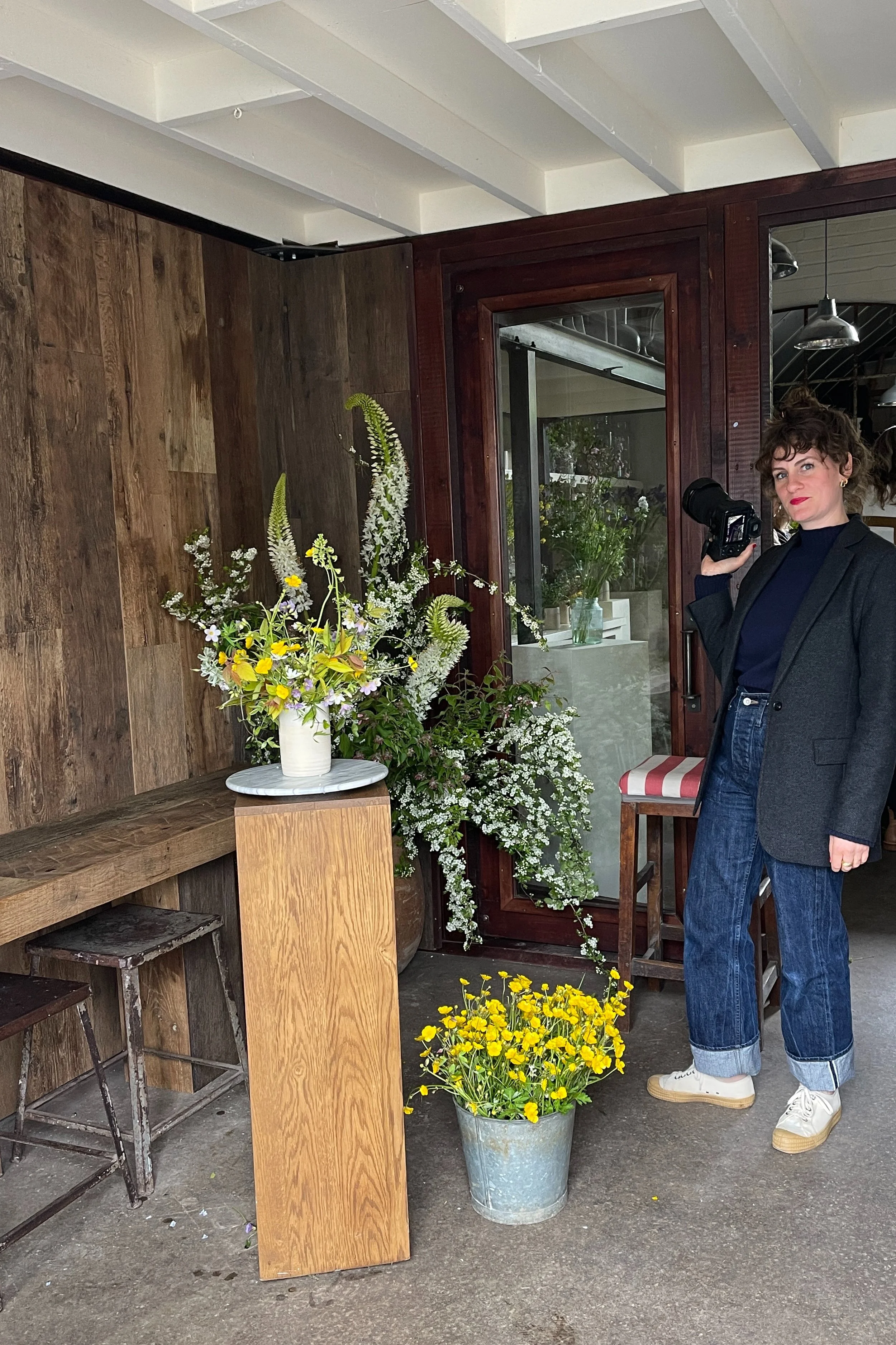
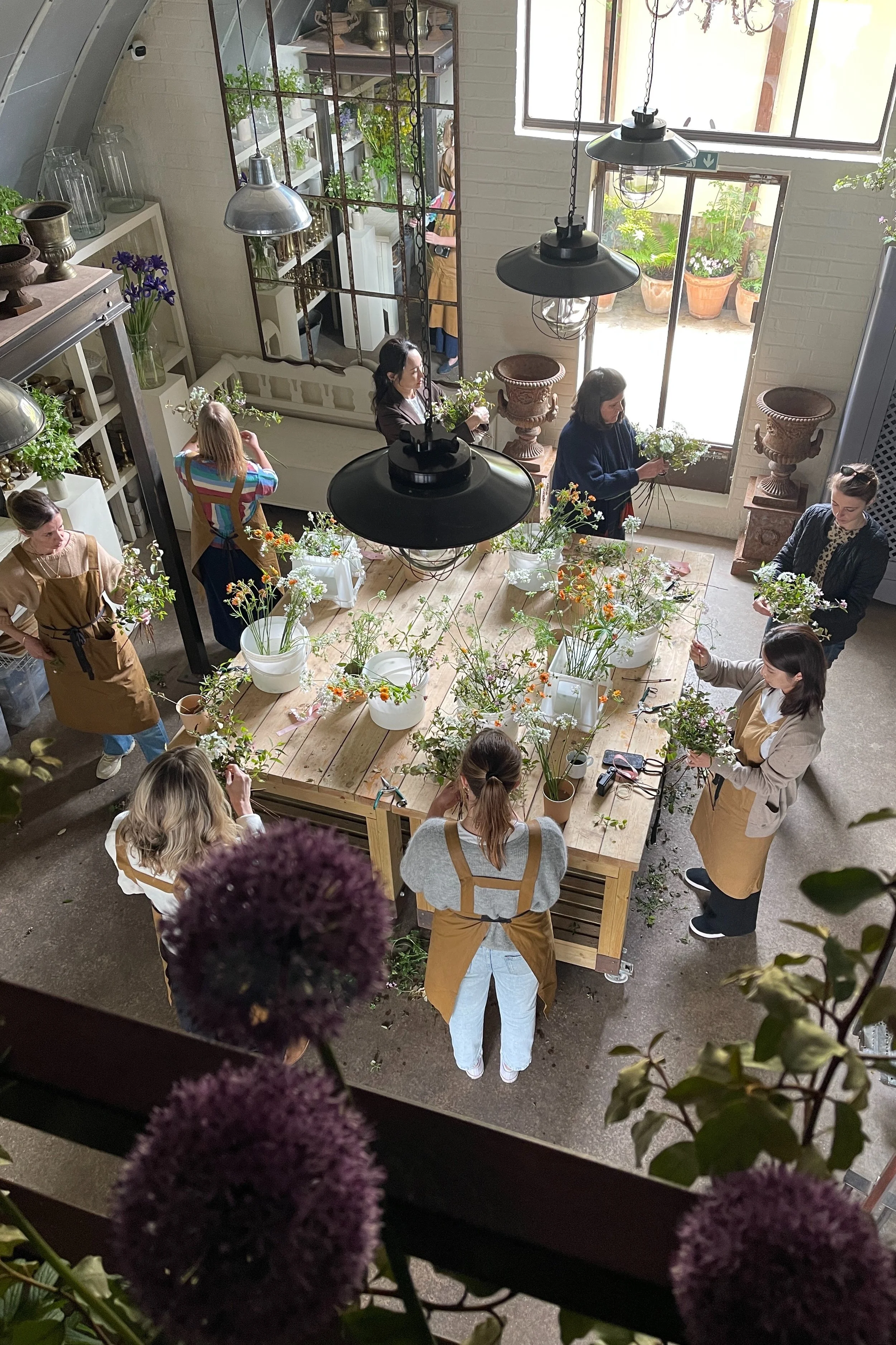
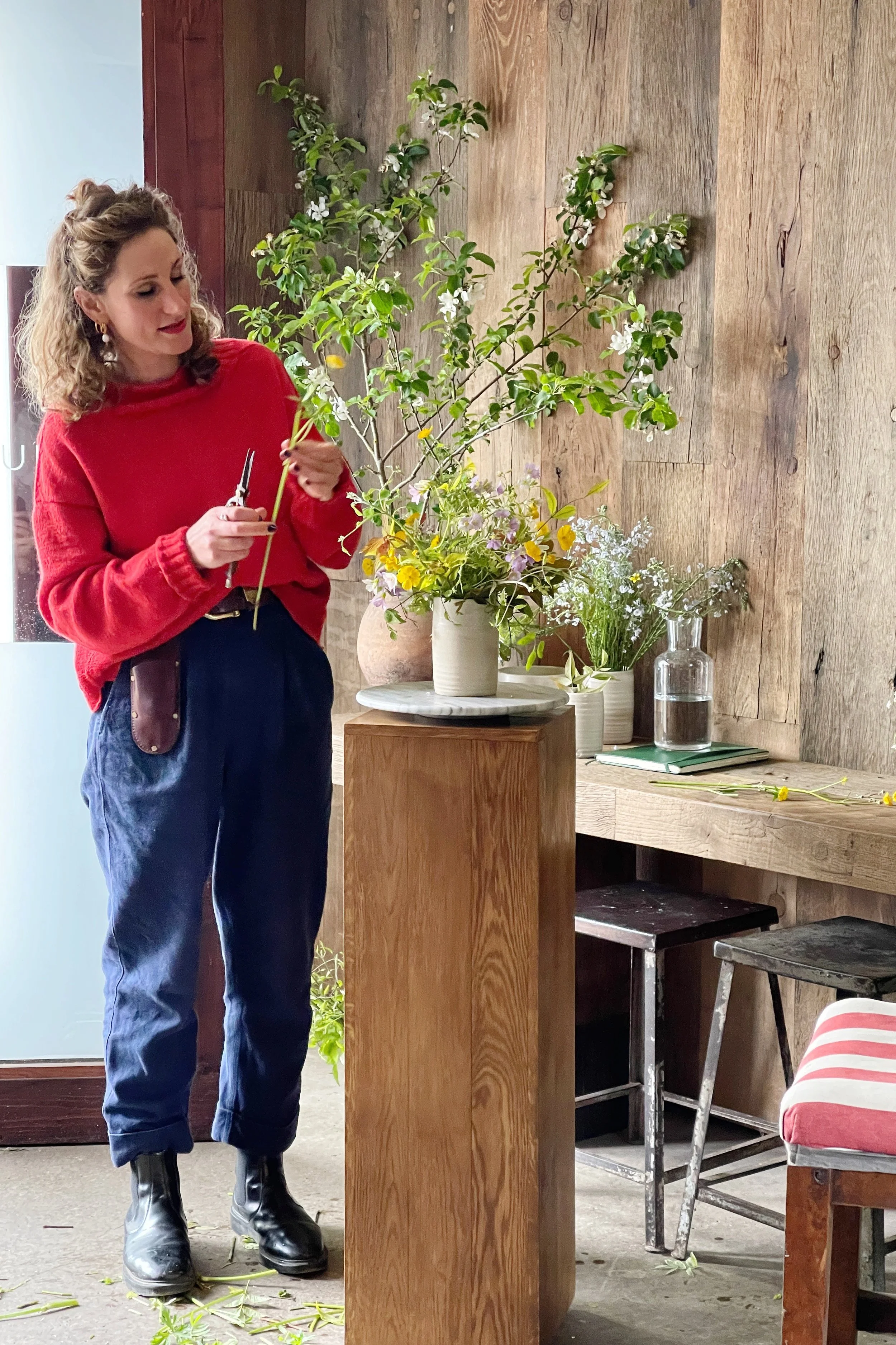
The month of May is all about the little speckly, freckly details and this workshop was a chance to really delve into that. It isn’t a month for large, showy flowers and instead the dainty and delicate come to the fore. In the garden we call this the ‘May Gap’, in between the tulips and just before the peonies, roses and iris. Every workshop we host is highly seasonal, using what is readily available naturally and locally - from our own garden and the immediate fields surrounding it. We don’t want to think of this in a ‘theme-y’ way but rather as a chance to focus upon that particular moment in that particular year. Every week is different, the weather, the ingredients.
Our May workshop was an opportunity to celebrate the exquisite details the garden and hedgerows were offering us and we had some incredible varieties to tuck into - Spiraea, Ornithagalum, Polemonium, Thalictrum, Clematis, Alliums, Geranium, Aquilegia, Tellima, Valerian, Heuchera… too many to mention.
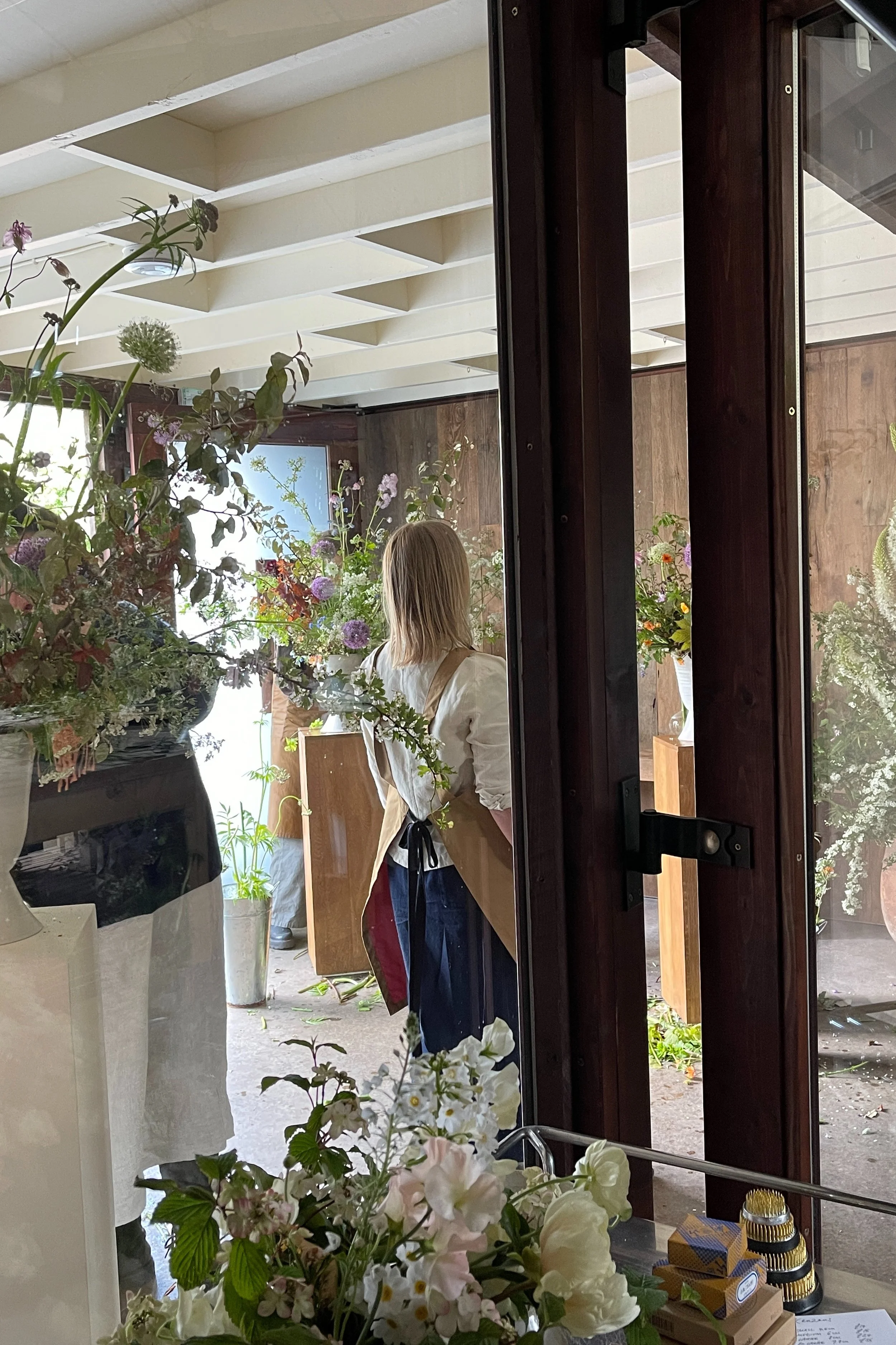

There were some notably show-stealing foraged ingredients among the arrangements too - glistening buttercups, herb Robert, hawthorn, green alkanet, comfrey, dead nettle, speedwell.
One of the best things about this time of the year, matched only by autumn in the colour stakes, is the spring foliage and that was something we had a lot of fun with in choosing the materials for the workshop. For the urn arrangements we mixed the metallic bronze leaves of Physocarpus and the matt silver of Eleagnus in among the greenery and blossom which gave a particularly ethereal, shimmery look to the designs.
Thank you so much to all our wonderful guests and helpers who made this workshop a very special one.
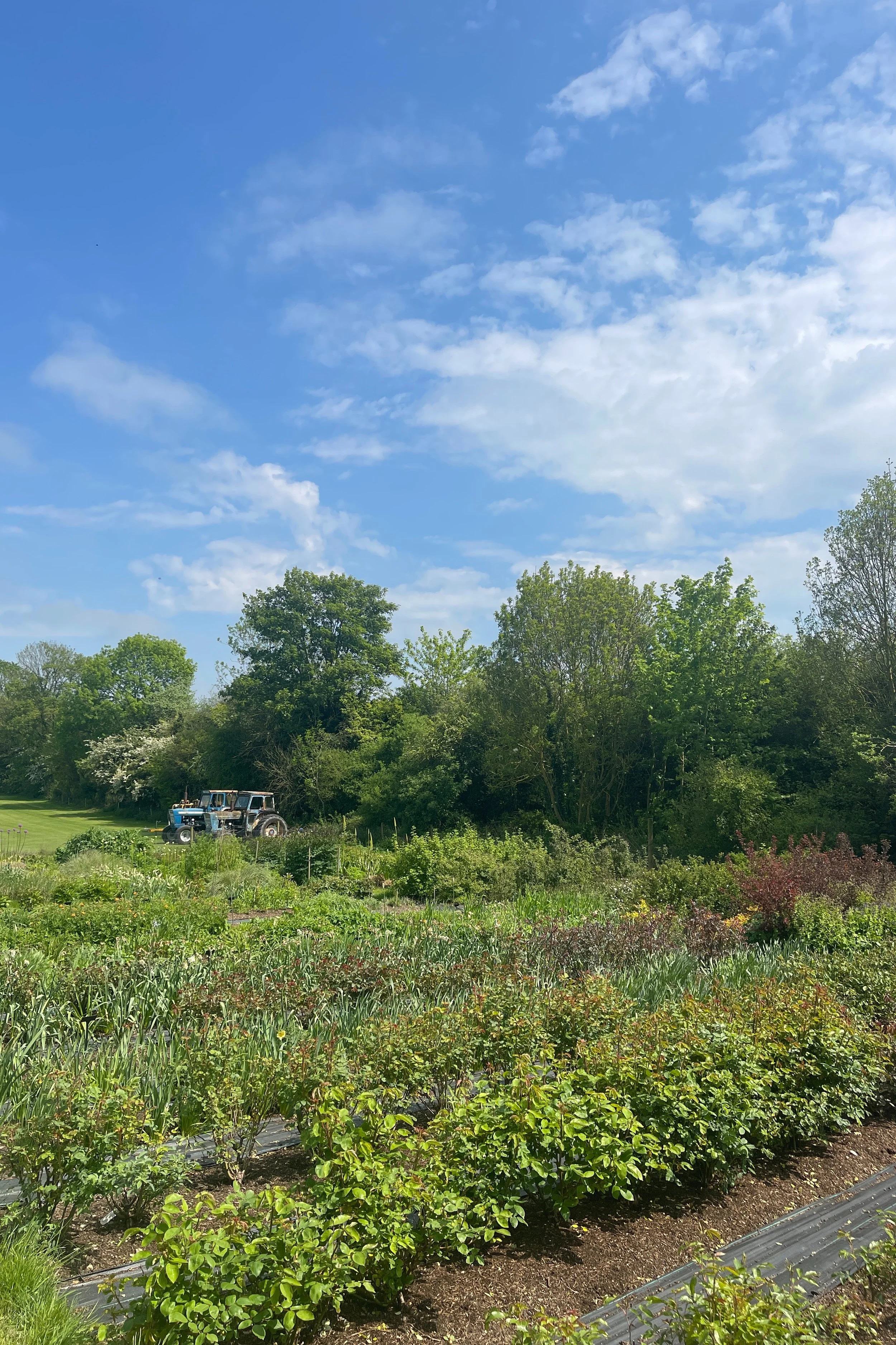
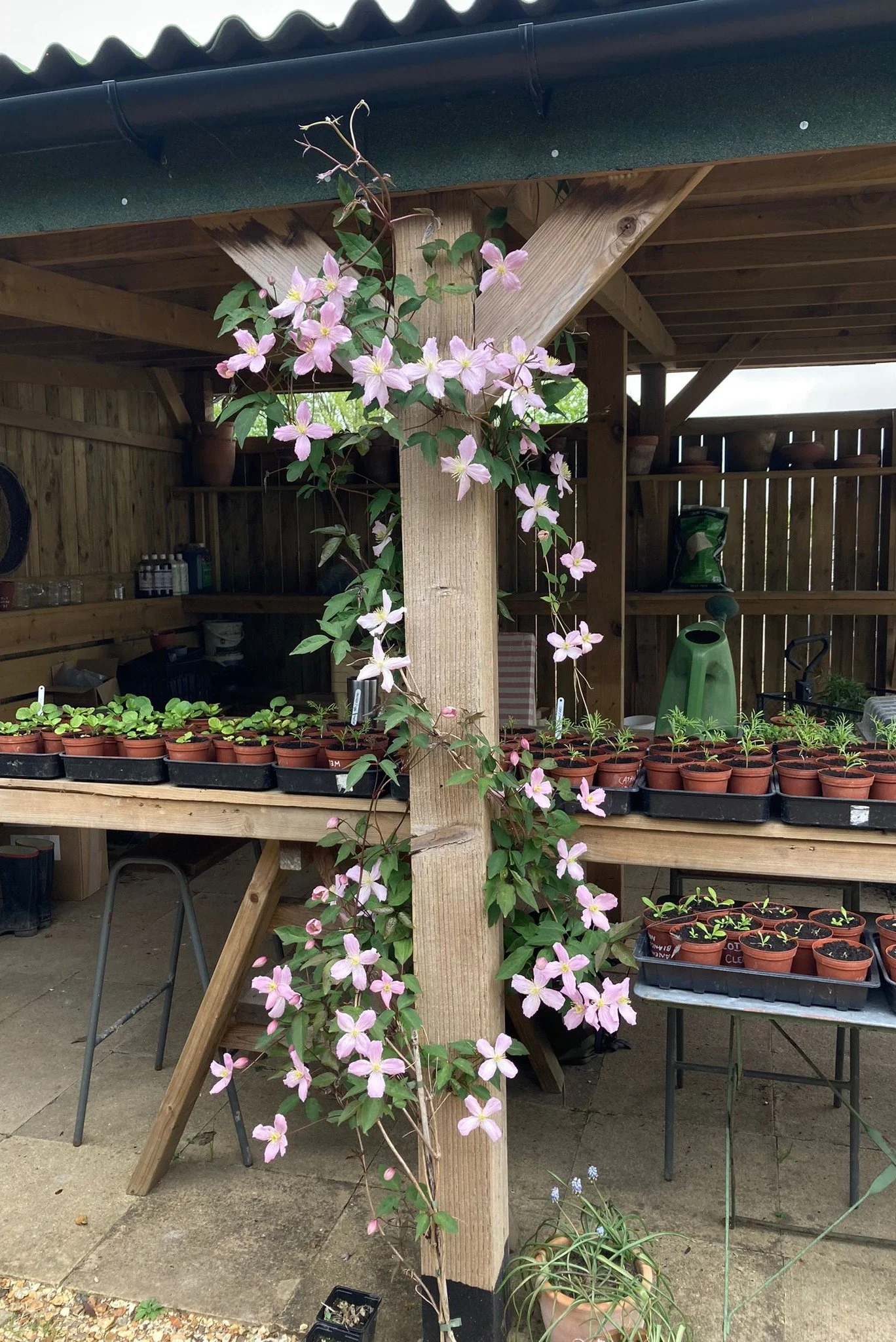
Well after all that rain the garden was just waiting for a little sun to explode into flower and colour! And it does feel explosive - so much growth in so little time.
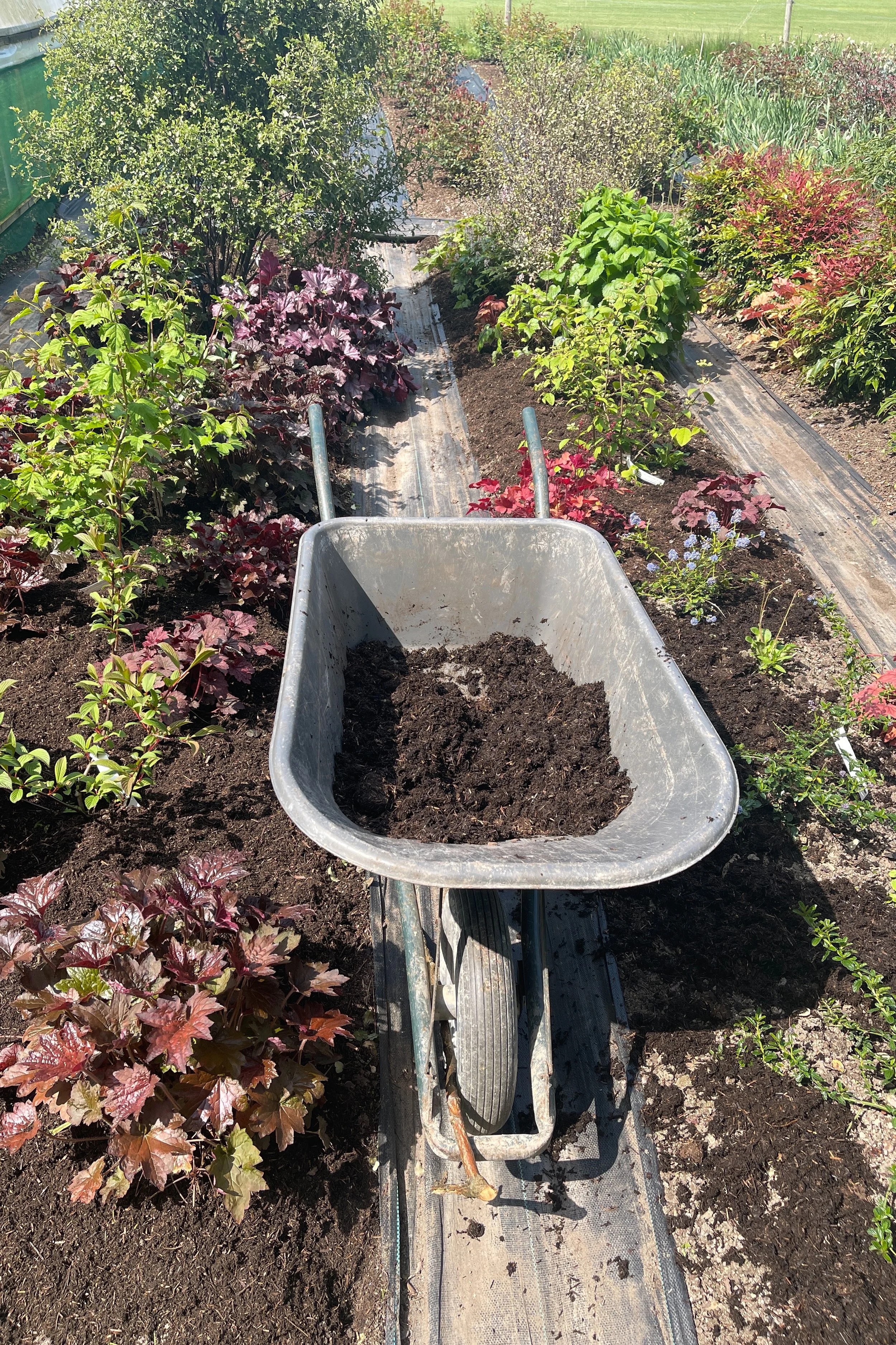
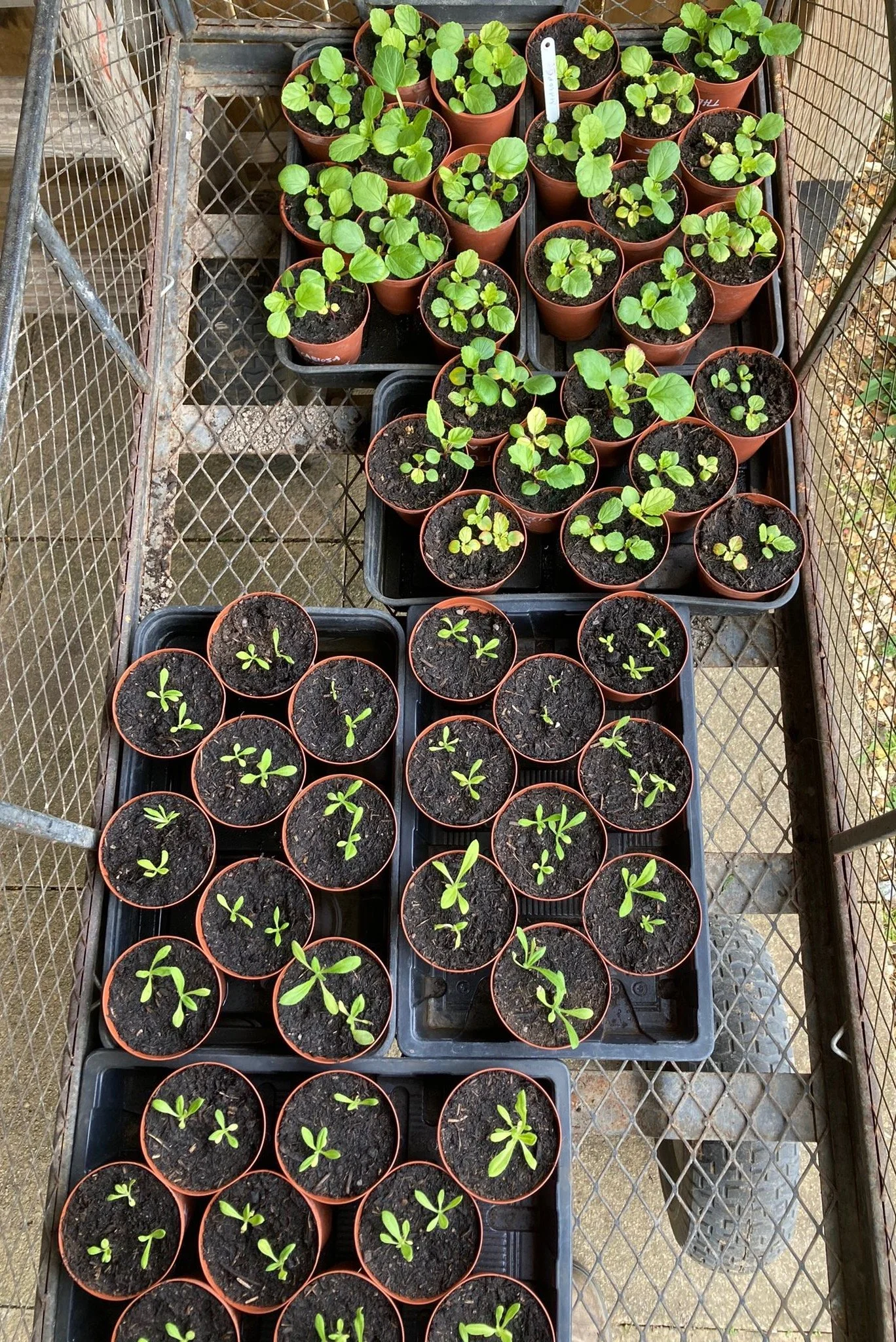
The interesting thing about May is that the beginning and the end of the month are so very different in terms of character, it really is spring reaching the ‘cusp’ of summer and just tipping over into it.
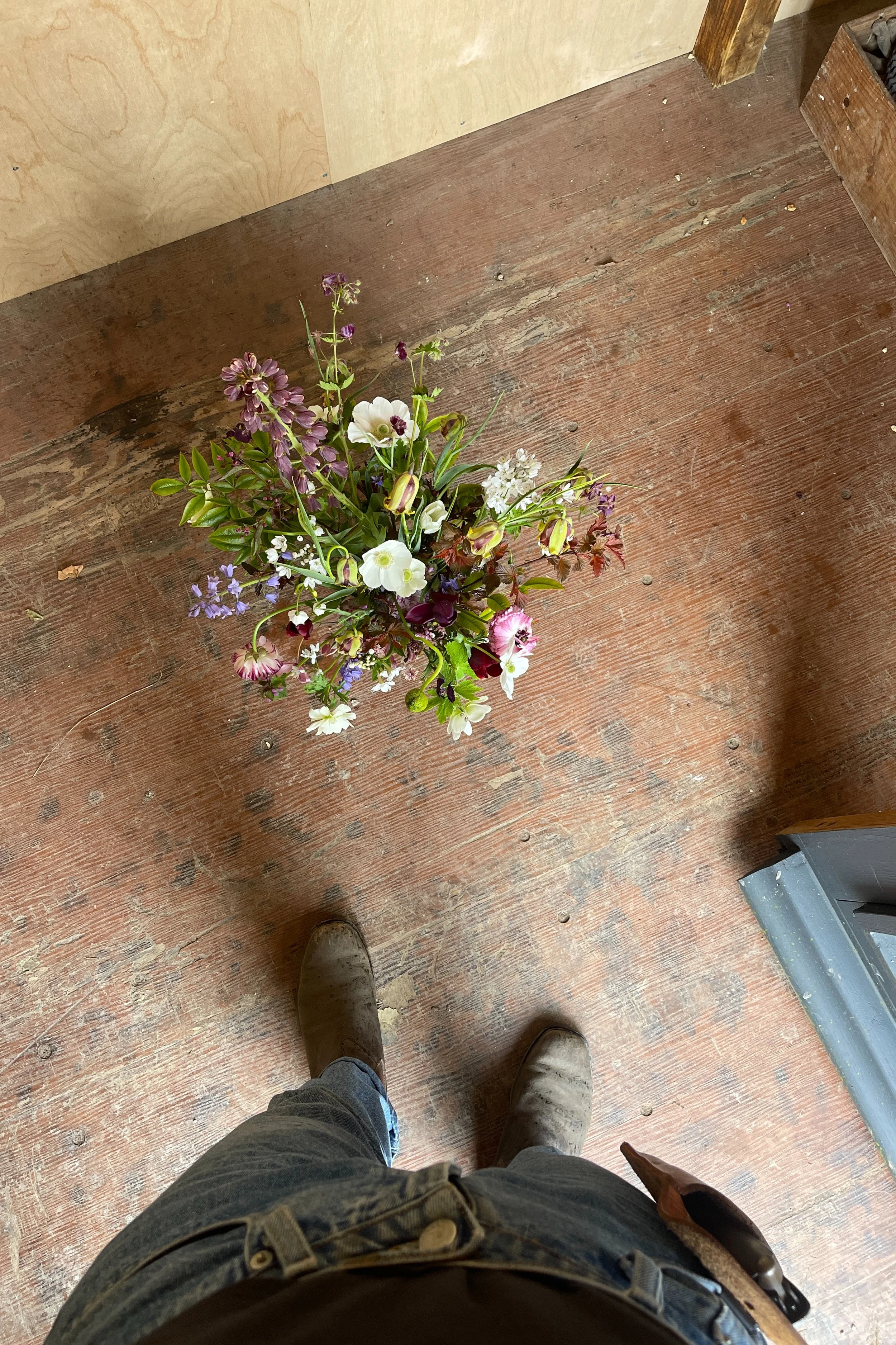
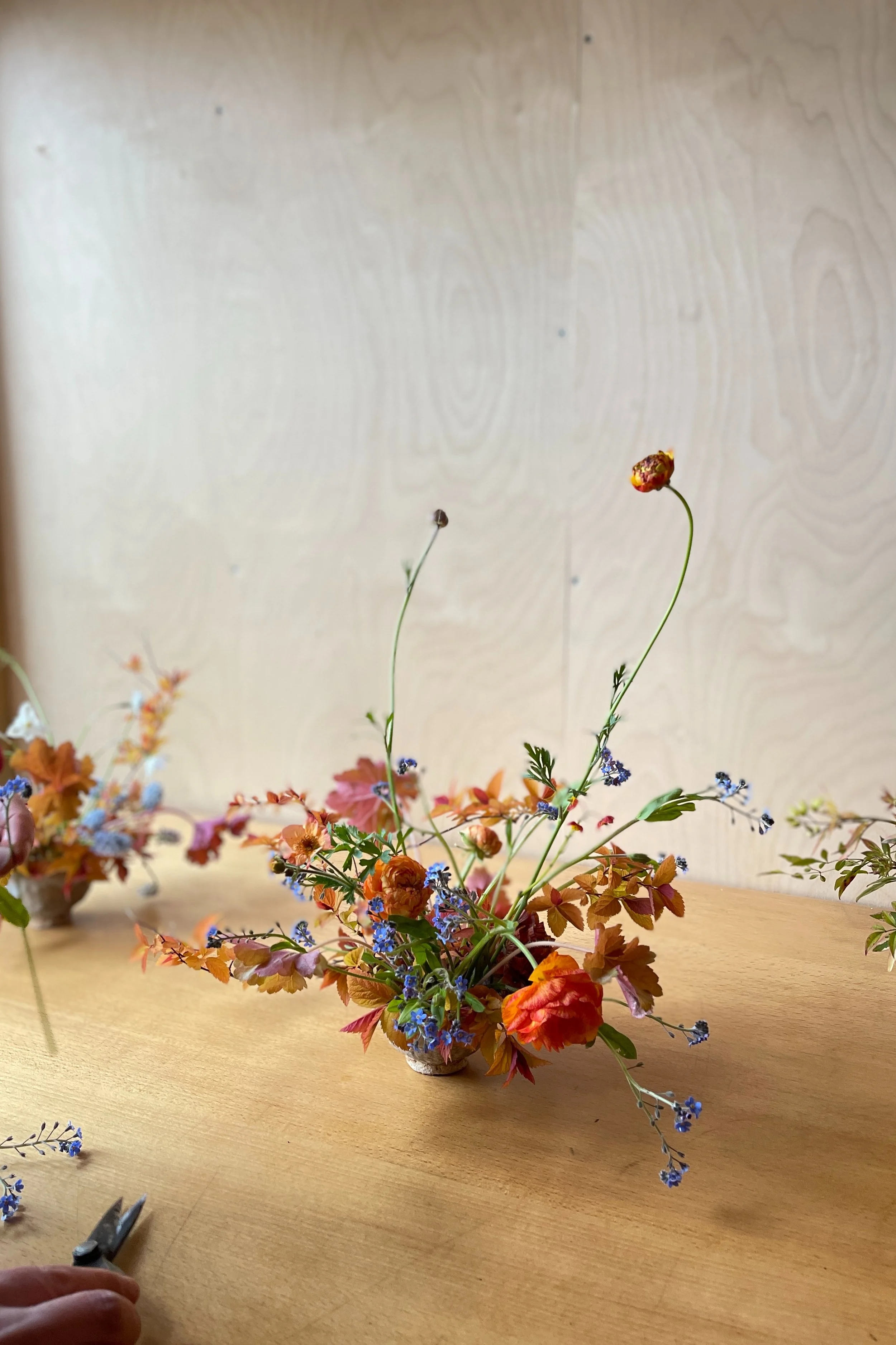
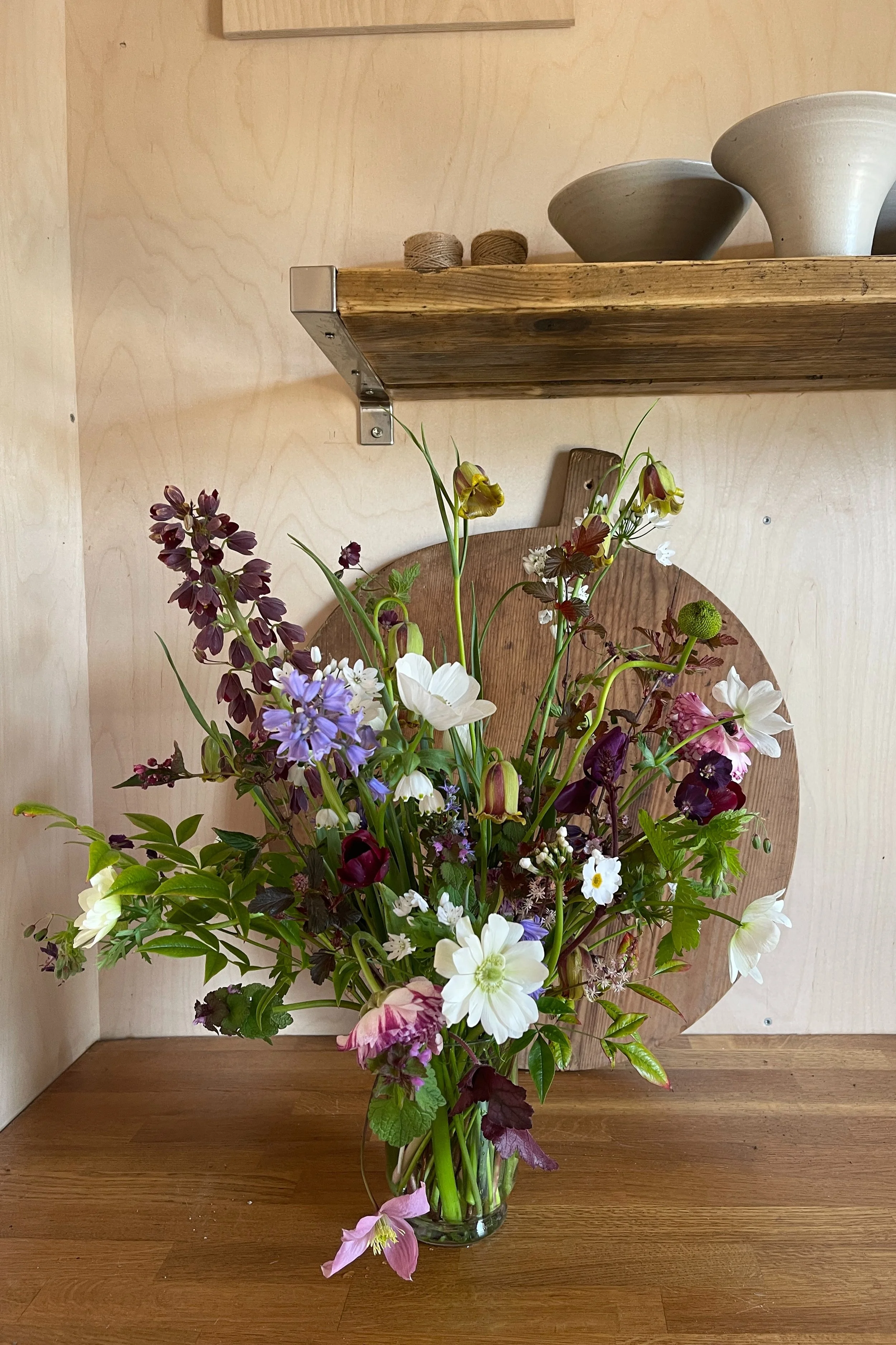
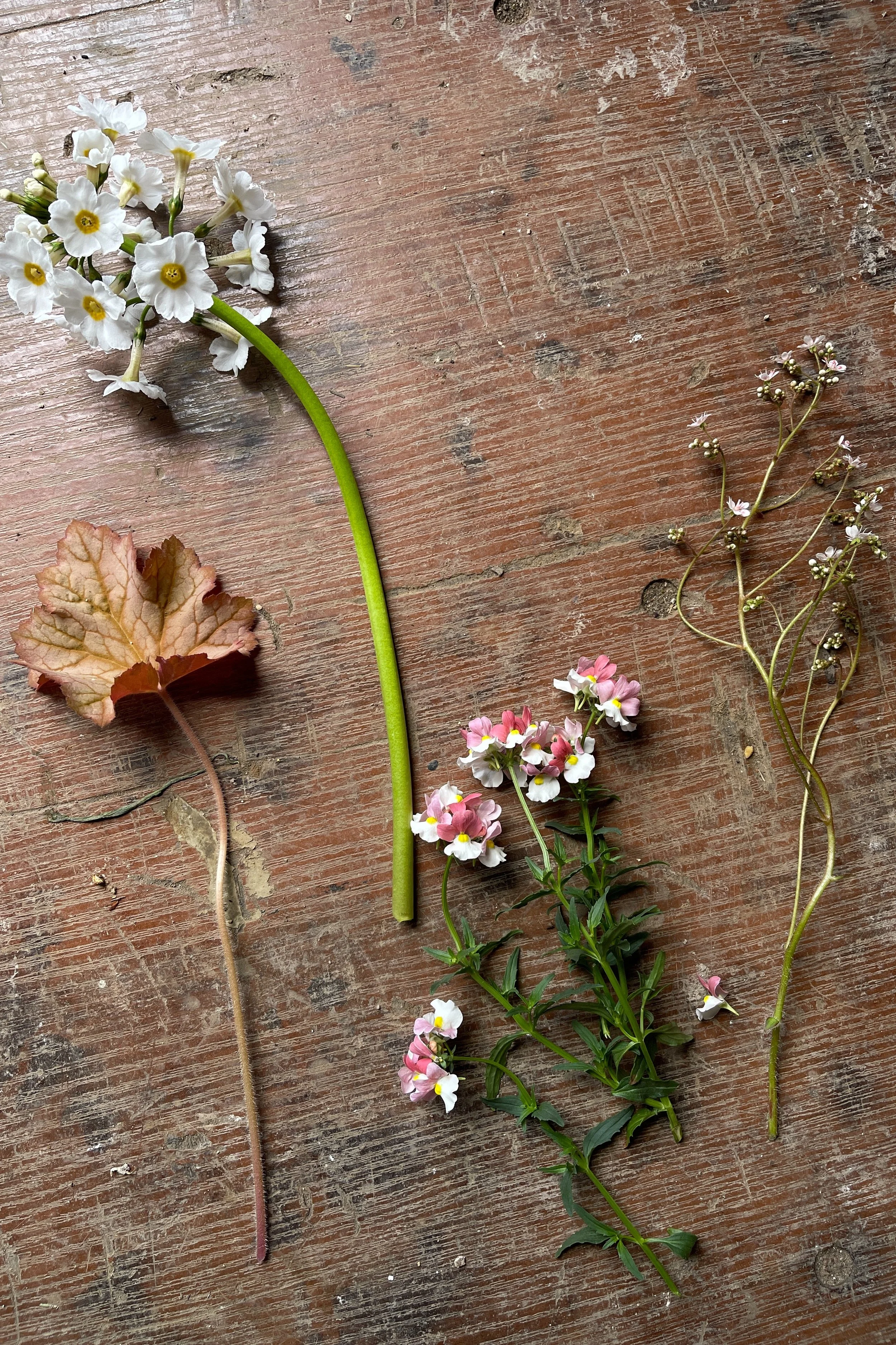
Early May there are all the Fritillaria, Scilla, Primula, the last of the Narcissi and Anemone. Now we have the first roses, peonies, lilac, alliums both little and large, Iris, Camassia, Clematis, Tellima, Geum, Valerian, Polemonium, all the different varieties of Geranium. In the tunnels, the first sweet peas, Orlaya, Nigella and Agrostemma. The hedgerows around the field are white and frothy with hawthorn, apple blossom and cow parsley.
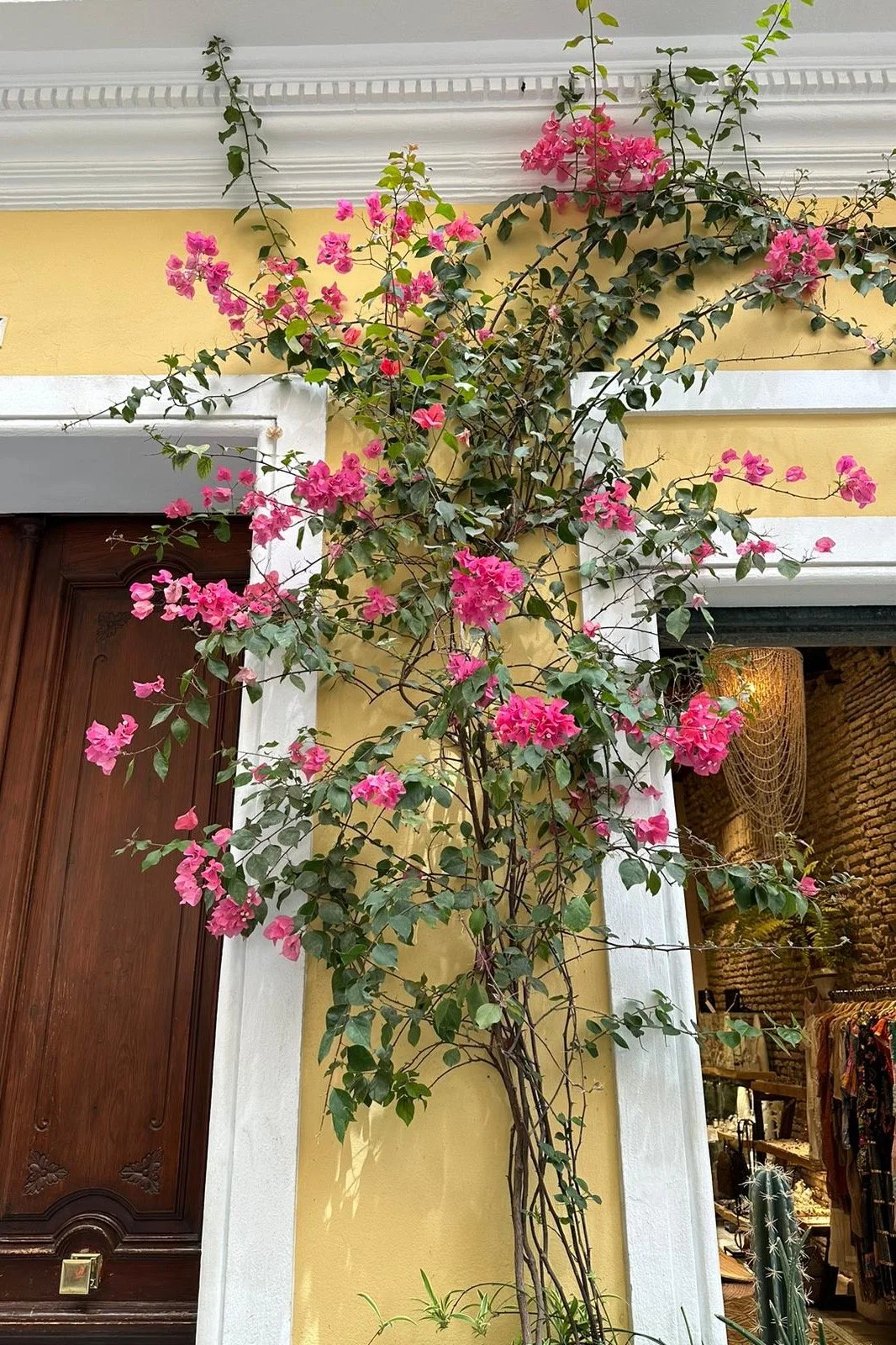
Jess spent last week in Seville, exploring the narrow, orange-tree lined streets, eating tapas, drinking wine and visiting the gardens of the Real Alcázar de Sevilla and the Parque de Maria Luisa which were, by all accounts, drenched in roses and Bougainvillea and very inspiring.
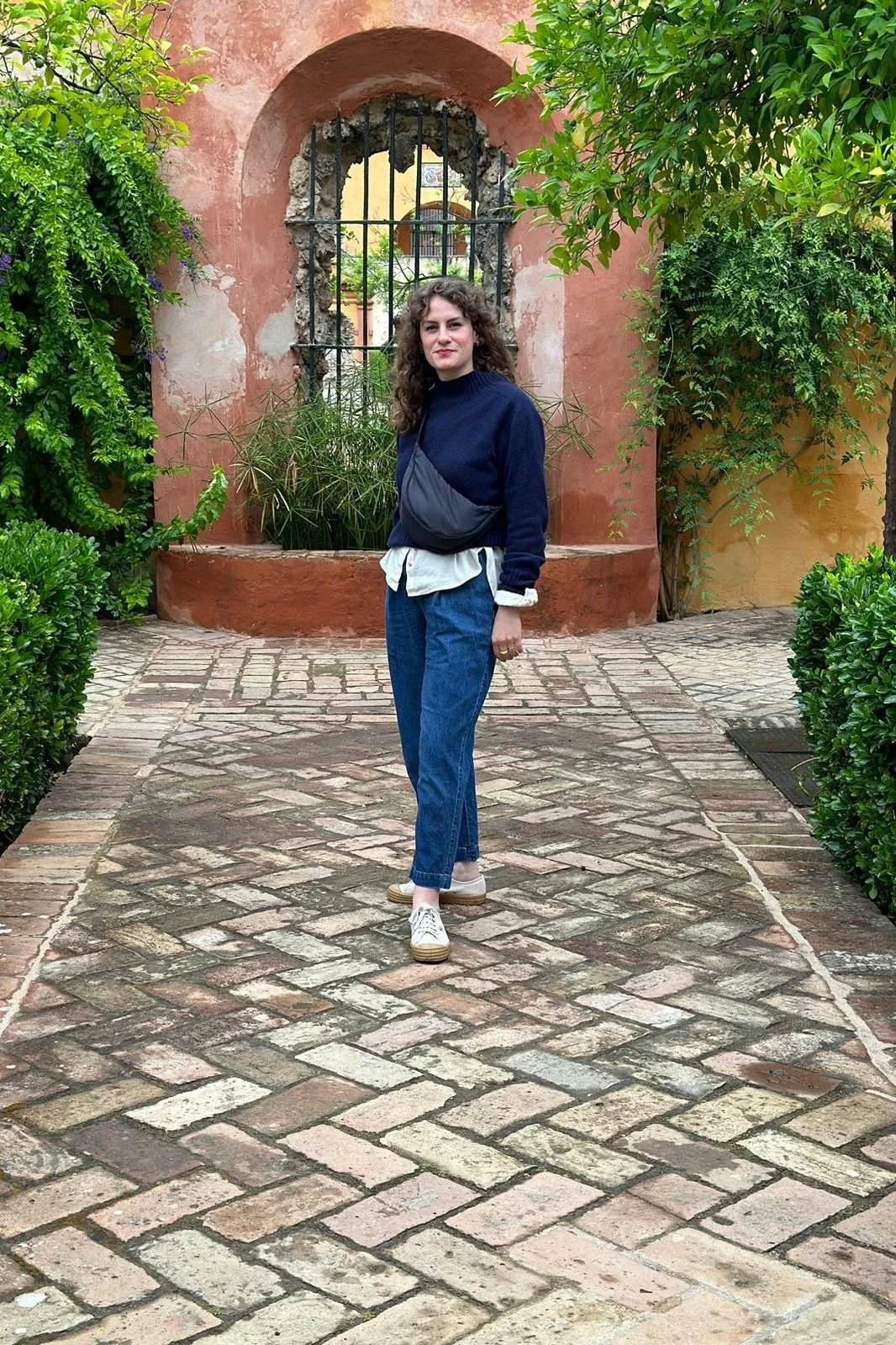
I spent the week in Wales where the weather was magical, the birdsong exuberant and the meadows awash with wild flowers. There was a lot of rambling through the woods and fields, eating outdoors, sun dappled naps and generally chasing after my son who has recently learned to walk and spent the whole week dashing alarmingly from hazard to hazard. I could do with a holiday actually, to recover.
During his naps I arranged flowers. It was lovely to pick and arrange slowly without any particular purpose, just for the sheer enjoyment of the process.
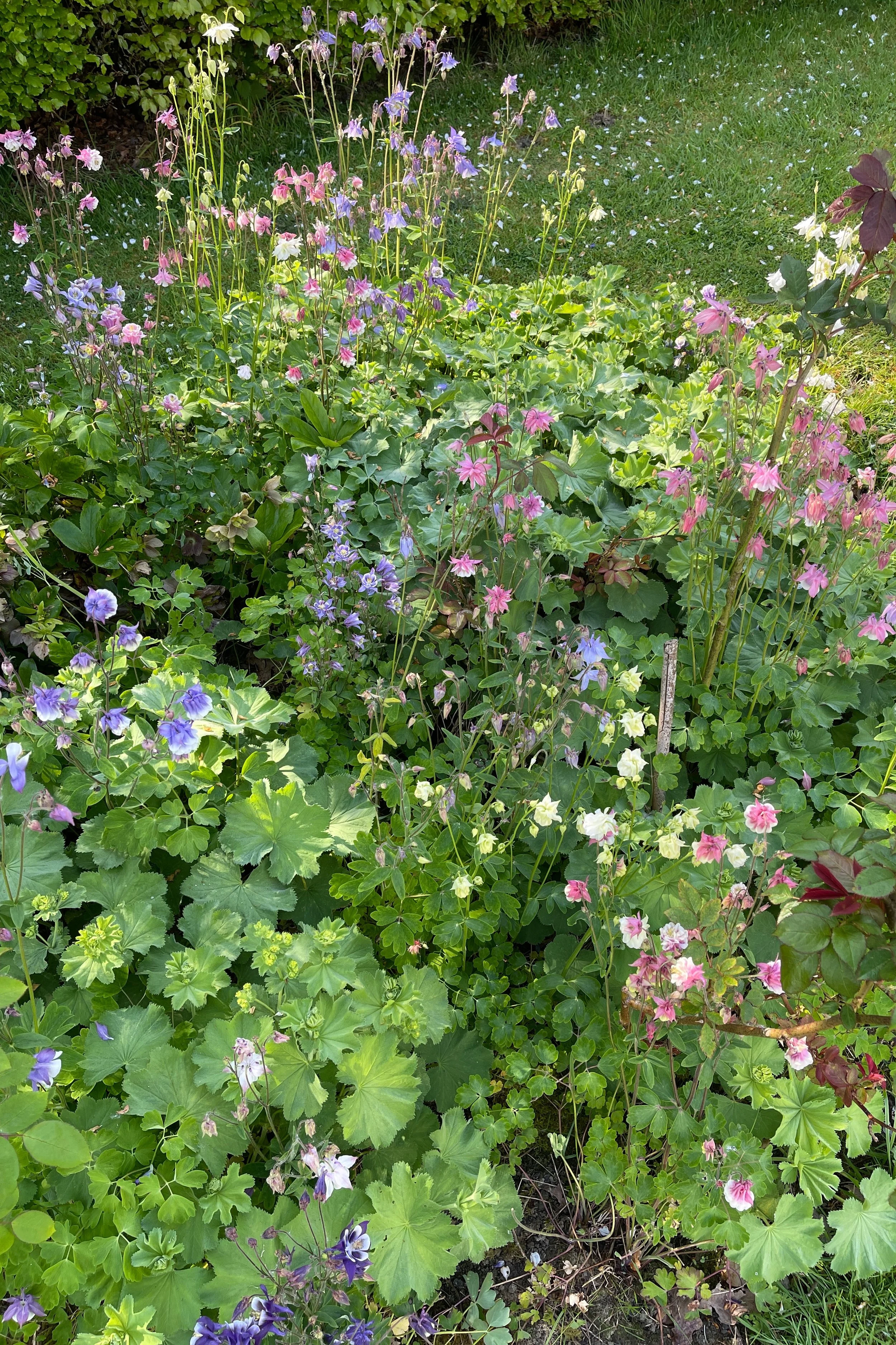
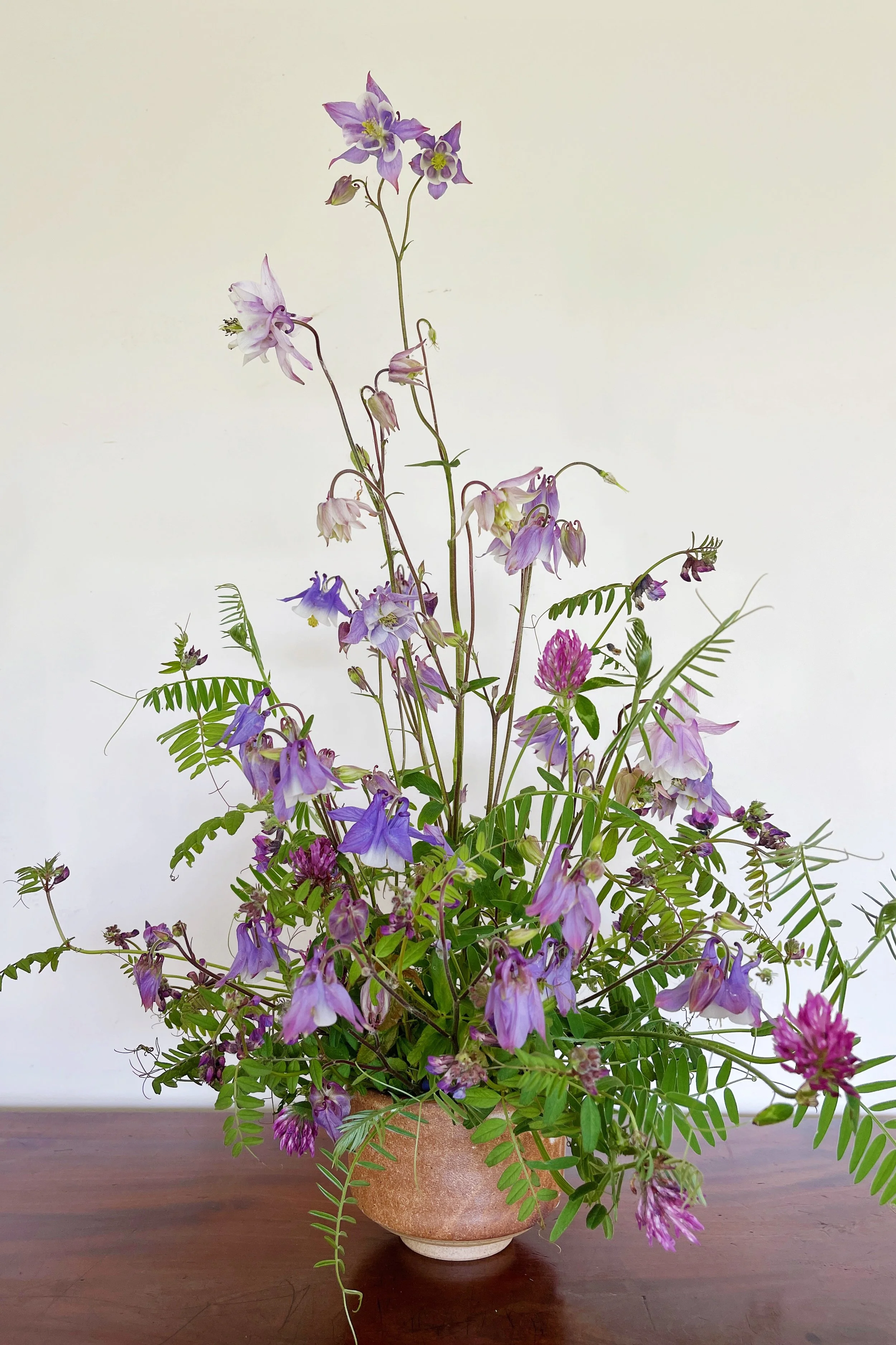
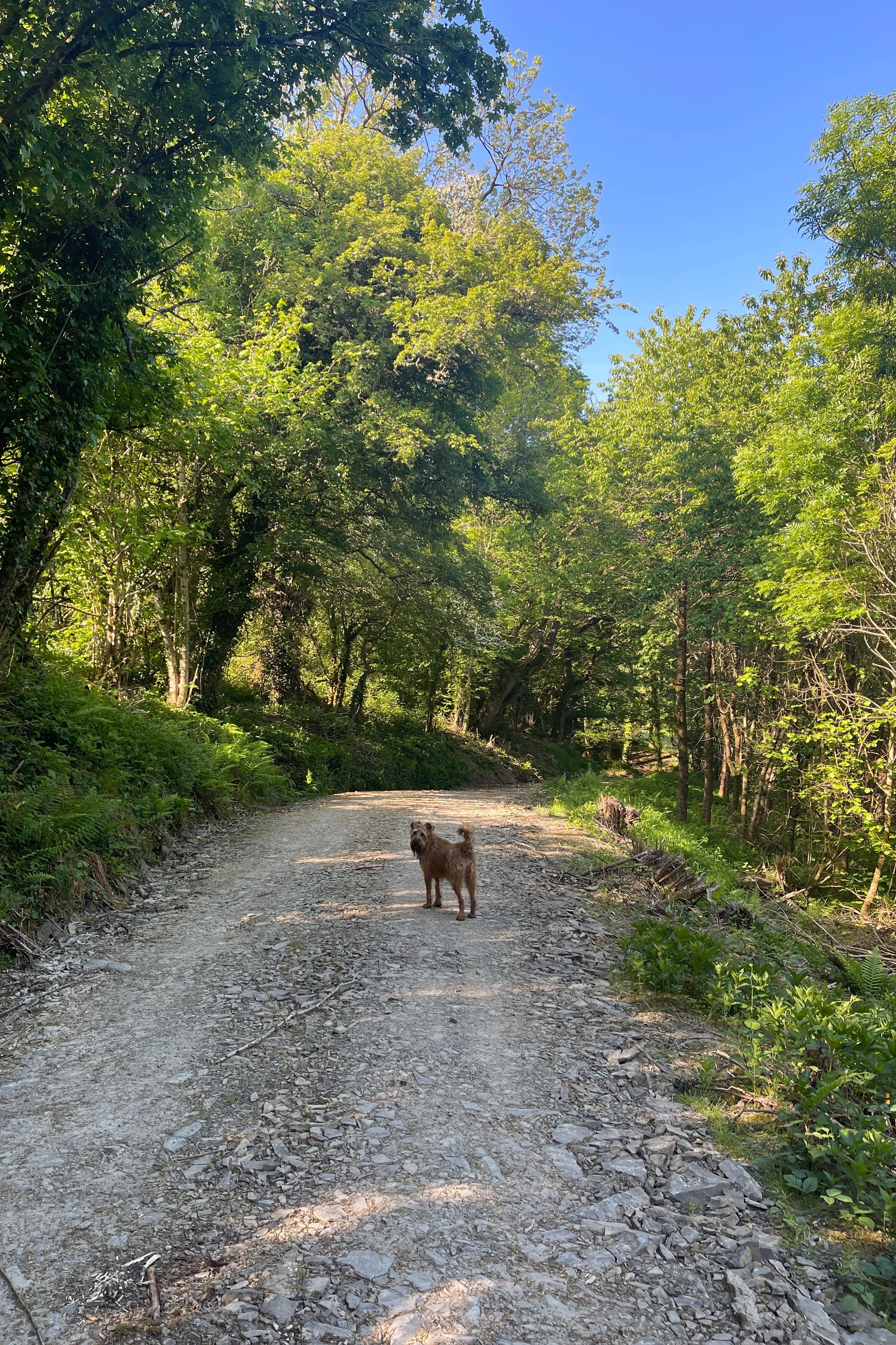
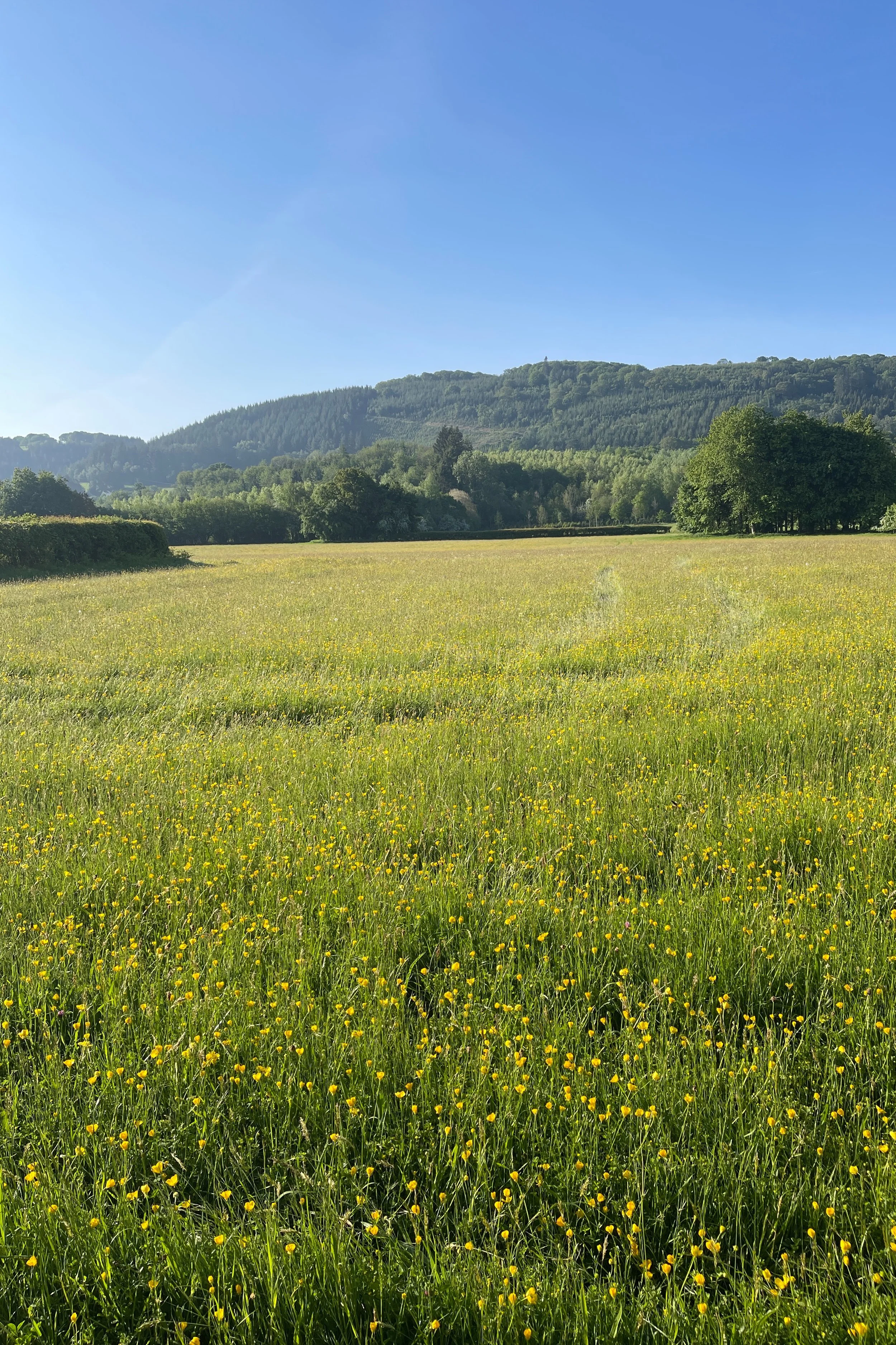
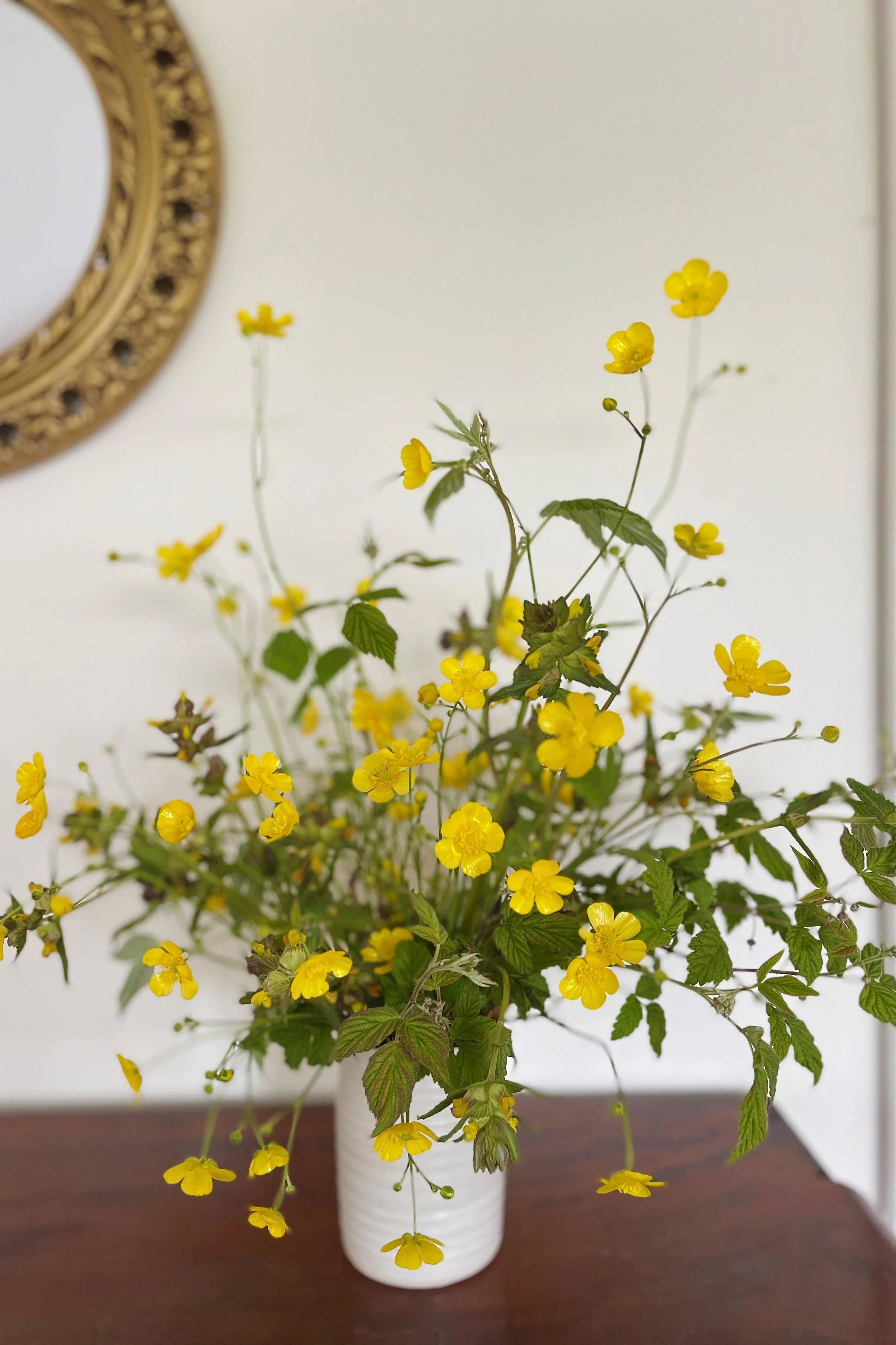
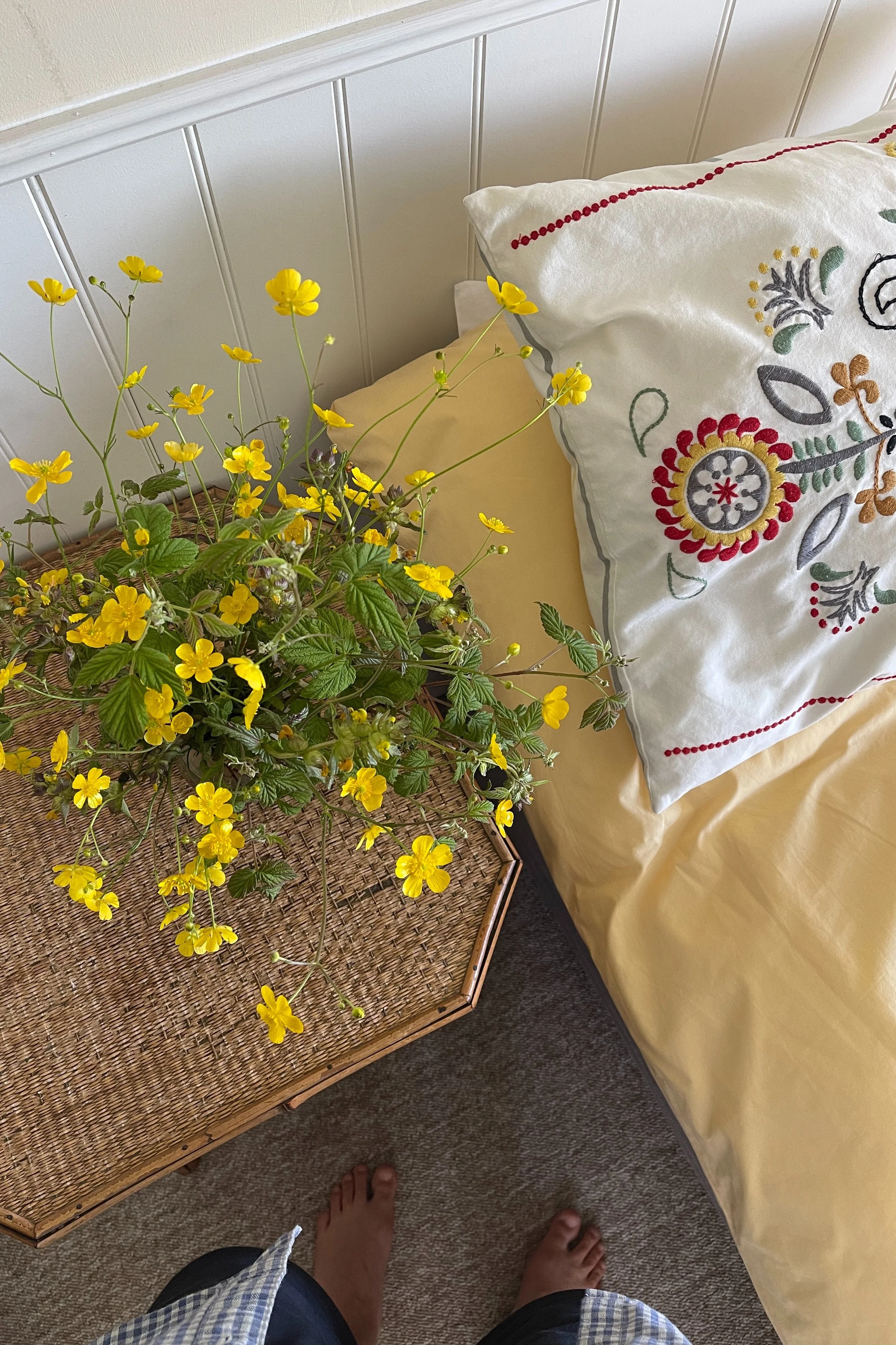
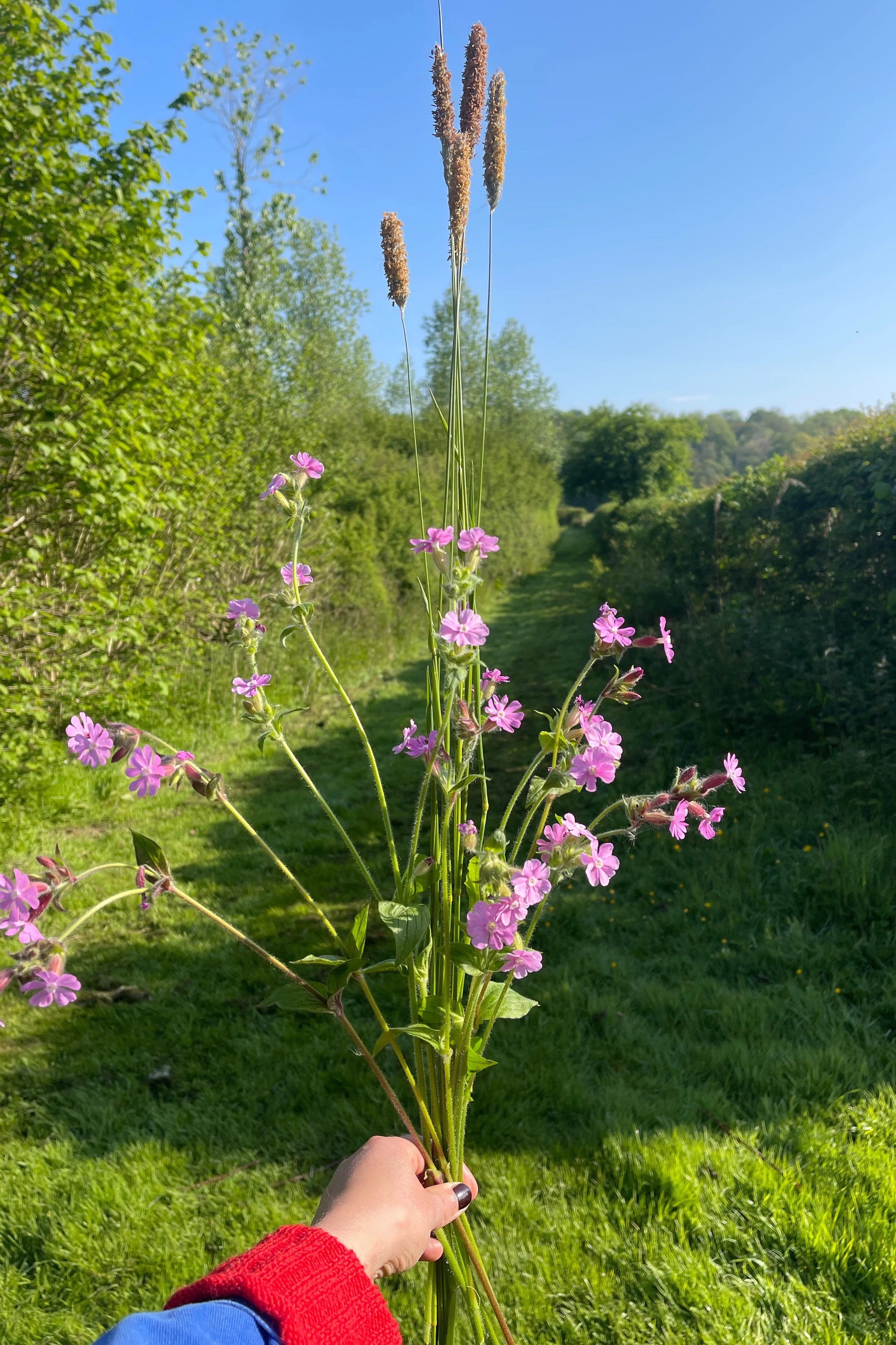
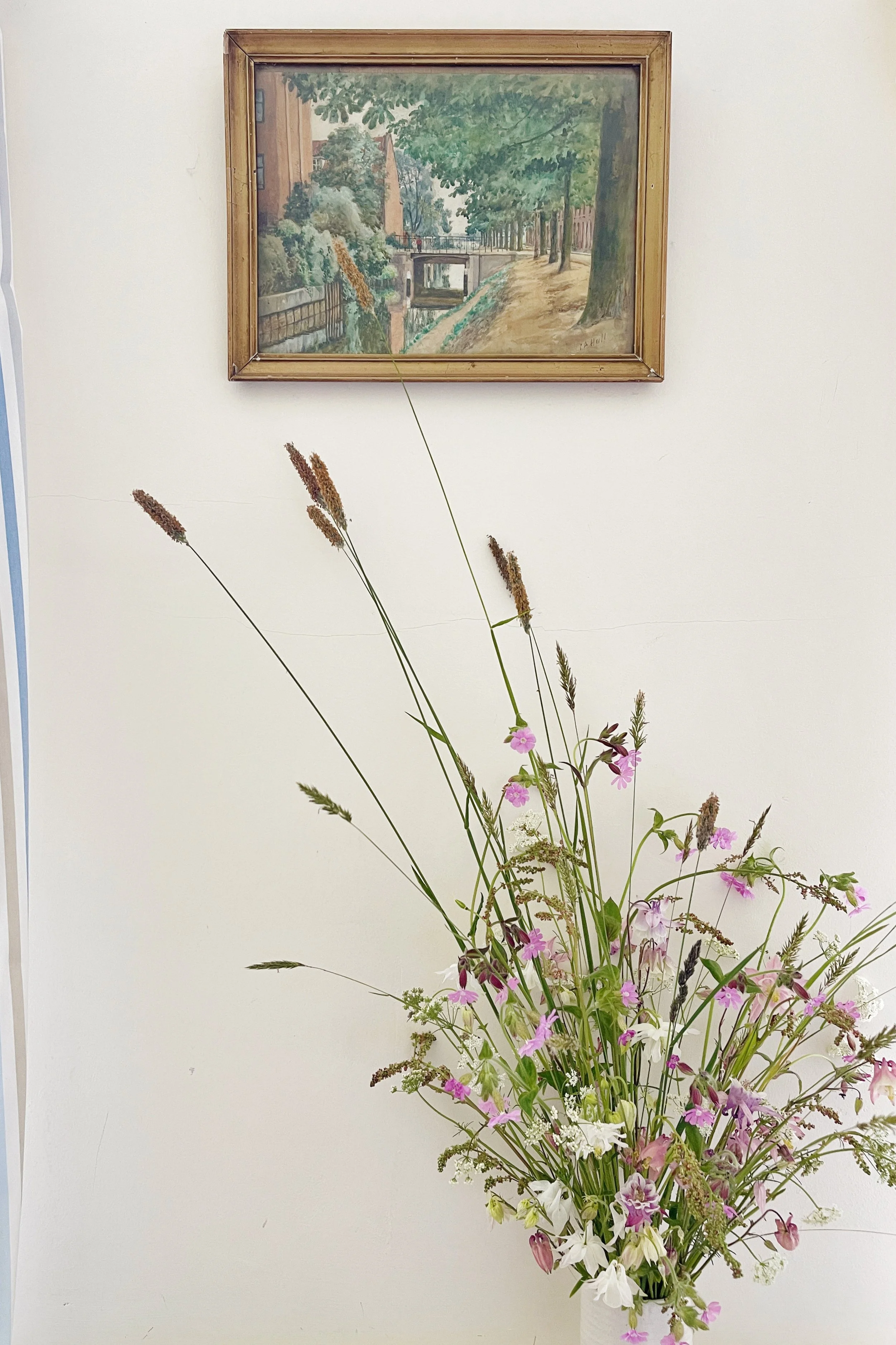
Thank you for reading and wishing you all a wonderful month ahead.
Till next time.
X

THE APRIL DANCE
At the cutting garden we take delivery of a whole host of new plants and give them a home in the moist, cool soil. Some to replace winter losses, others that are entirely new to us and we’ll have to wait a few weeks yet to see in flower. There are a lot of damp, drizzly days planting, weeding…


The growing season starts like a slow dance. A glide. The seasonal equivalent of a waltz, or perhaps a foxtrot.


At the cutting garden we take delivery of a whole host of new plants and give them a home in the moist, cool soil. Some to replace winter losses, others that are entirely new to us and we’ll have to wait a few weeks yet to see in flower.


In April there are a lot of damp, drizzly days planting, weeding and mulching.
The garden has never looked better. It is starting to feel well established now and the shrubs are filling out beautifully.


From tunnel 2 we cut Narcissi and Anemone. The Ranunculus and Allium are just beginning; we’ll begin harvesting them next week.
In the outdoor dahlia beds the tulips are flowering alongside more Narcissi, primroses and pansies, Epimedium, Ipheion, Muscari, hellebores and some incredible Fritillaria - persica, meleagris, acmopetala, imperialis, elwesii and michaeilovskii.


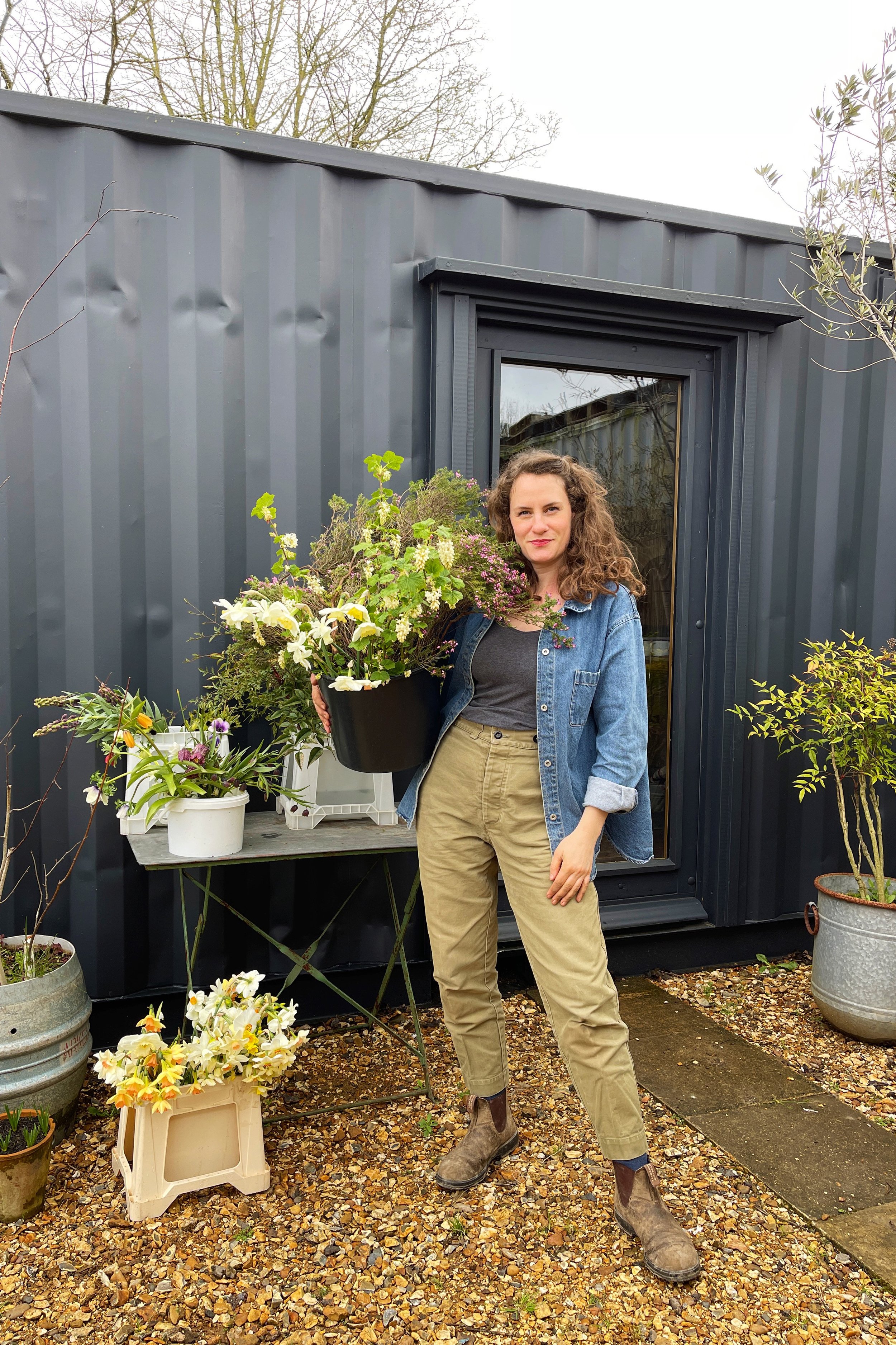

It's the best feeling after the long winter to work with the sun on your back and to be able to generously fill buckets with colourful flowers to send to London.
In the studio we get back in the saddle and flex our design muscles ahead of the season, experimenting with form, colour and texture for various projects ahead. One of our key preoccupations this year is really reflecting how the garden looks and feels, trying to capture its energy and the way it changes - day by day, week by week, month by month. It is much more subtle than the four-season model would suggest and the spaces between the seasons seem to have a character of their own.


Using the abundance of flowers suddenly available for cutting we start working on an exciting new series of online classes. It feels great to dive in at the deep end on a new project; we love this work and the particular process of researching and planning, shooting, recipe testing, writing and editing.
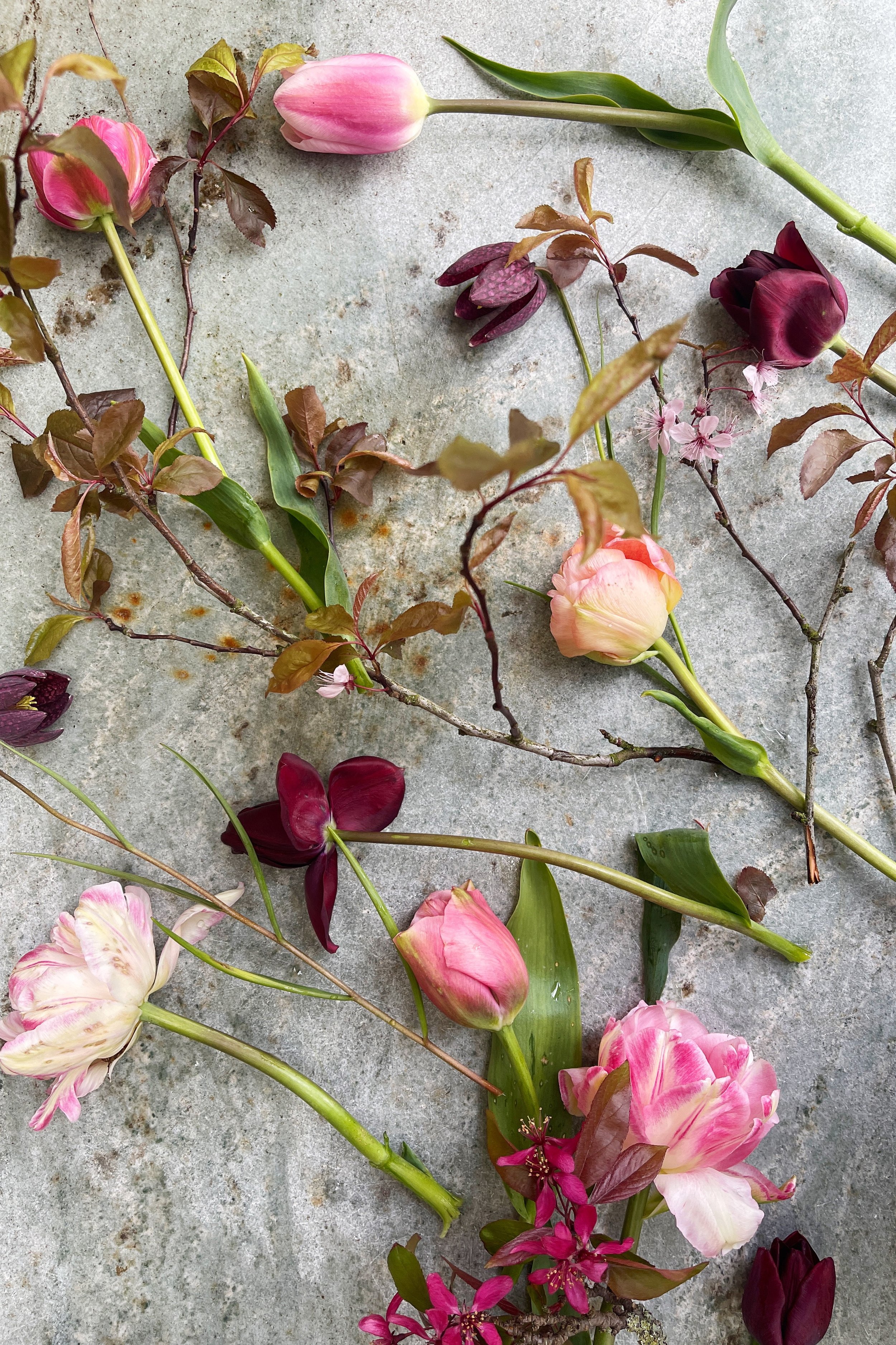

Above is a favourite spring colour palette. Mixing bronze with varying shades of pink and plum.
The Malus ‘Prairie Fire’ explodes into a riot of blossom outside my bedroom window; the leaves are a beautiful rich, reddy-brown and the flowers lightly scented.


Forsythia with Tulipa sylvestris, the wild tulip.
Accompanied by Fritillaria elwesii, Fritillaria michailovskyi, Narcissus ‘Blushing Lady’, Oxalis (creeping woodsorrel) and fans of dried grasses.

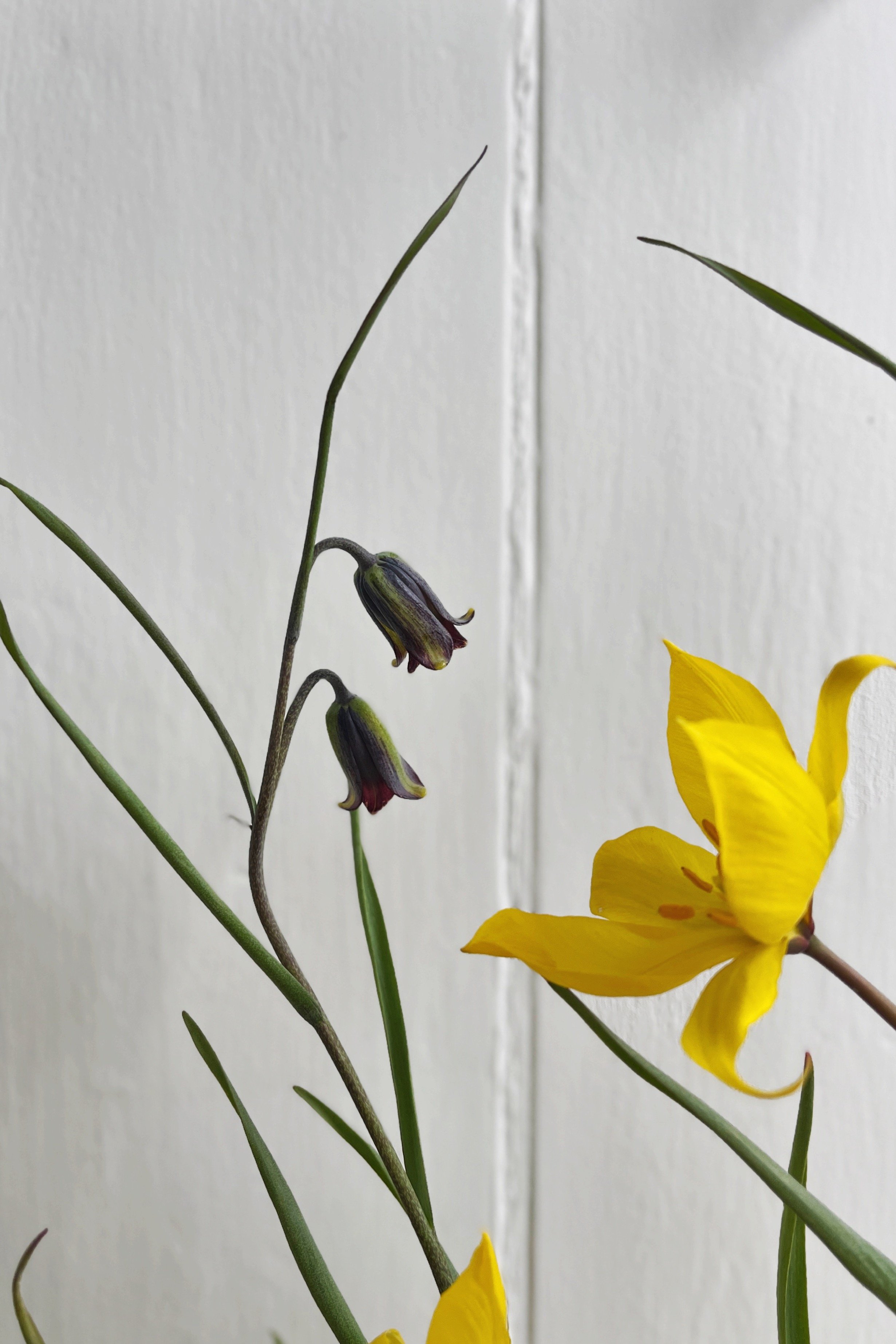


I love the soft, icy blues in the garden at this time of the year - the Muscari (grape hyacinth) and Ipheion (spring starflower). And all the graceful stems of Anemone and Fritillaria. The tiny Epimedium flowers.
It’s a magical, subtle time as things just start to get going.


A study in white.
Exochorda x macrantha ‘The Bride’ (pearl bush), Anemone coronaria ‘The Bride’, Fritillaria meleagris ‘Alba’, Leucojum aestivum ‘Gravetye Giant’ (snowflake) and Thlaspi arvense (pennycress).


An Easter tablescape with a mix of vessels and materials:
Narcissi, Fritillaria, Spiraea, Anemone and Prunus.


Easter was spent in Wales among the daffodils and dripping branches.
So many extraordinary wild flowers in the woods and meadows - coralroot bittercress, aconites, wild strawberries, forget-me-nots and primroses.


Whilst in Wales I took the opportunity to visit one of my favourite local gardens one afternoon between April showers. Aberglasney is in the Tywi Valley in Carmarthenshire and well worth a visit if you are ever in the area. It’s an exquisite garden - or series of gardens - in the grounds of a vanilla-coloured mansion.
There is a lot to see, I had to do three ‘laps’ just to take it all in.


The gardens have distinctly different sections that lead into one another down the hill, starting from an Asiatic area at the top with paths through Magnolia, Rhododendron, Camellia and Azalea shrubs native to Japan, Nepal, Tibet and China. The ‘Alpinum’ is home to low-level dwarf varieties and at this time of the year is like a soft, pastel watercolour of Primula, Muscari, Pulsatilla and Saxifraga.


There are several walled gardens including the productive kitchen garden, which is beautiful later in the summer with step-over fruit trees, vegetables, herbs and cutting flowers, then an enchanting sea of Fritillaria meleagris in the lawned slope leading down towards the woodland and stream gardens. The ‘Ninfarium’, which houses a lush, sub-tropical garden in among the ruins of the original medieval building is named after the gardens of Ninfa outside Rome, created by the Caetani family, who once gave financial support to Wales’ most celebrated poet, Dylan Thomas.


The days continue to lengthen.
A few more and we're into May. One of the best months for flowers, arguably the best of them all…
If you haven’t already please do check out our YouTube channel where we are now posting regularly.
In addition to our monthly vlog from the studio and garden we are very much enjoying capturing and curating short, thoughtful films to share with you all and we’re so grateful for all the kind comments we’ve received recently. Topics include flower arranging, cut flower growing, seasonal studio tours and visits to our favourite gardens in search of inspiration. We hope you enjoy them.
Till next time. A.

MARCHING ON
Spring. The verb ‘to spring’ from the Middle English sprygen - ‘to burst or flow forth, to sprout, to emerge, to happen, to become known’. As a noun, from Middle English spryng (“a wellspring, tide, branch, sunrise, kind of dance or blow, ulcer, snare, flock”), from Old English spring (“wellspring, ulcer”)
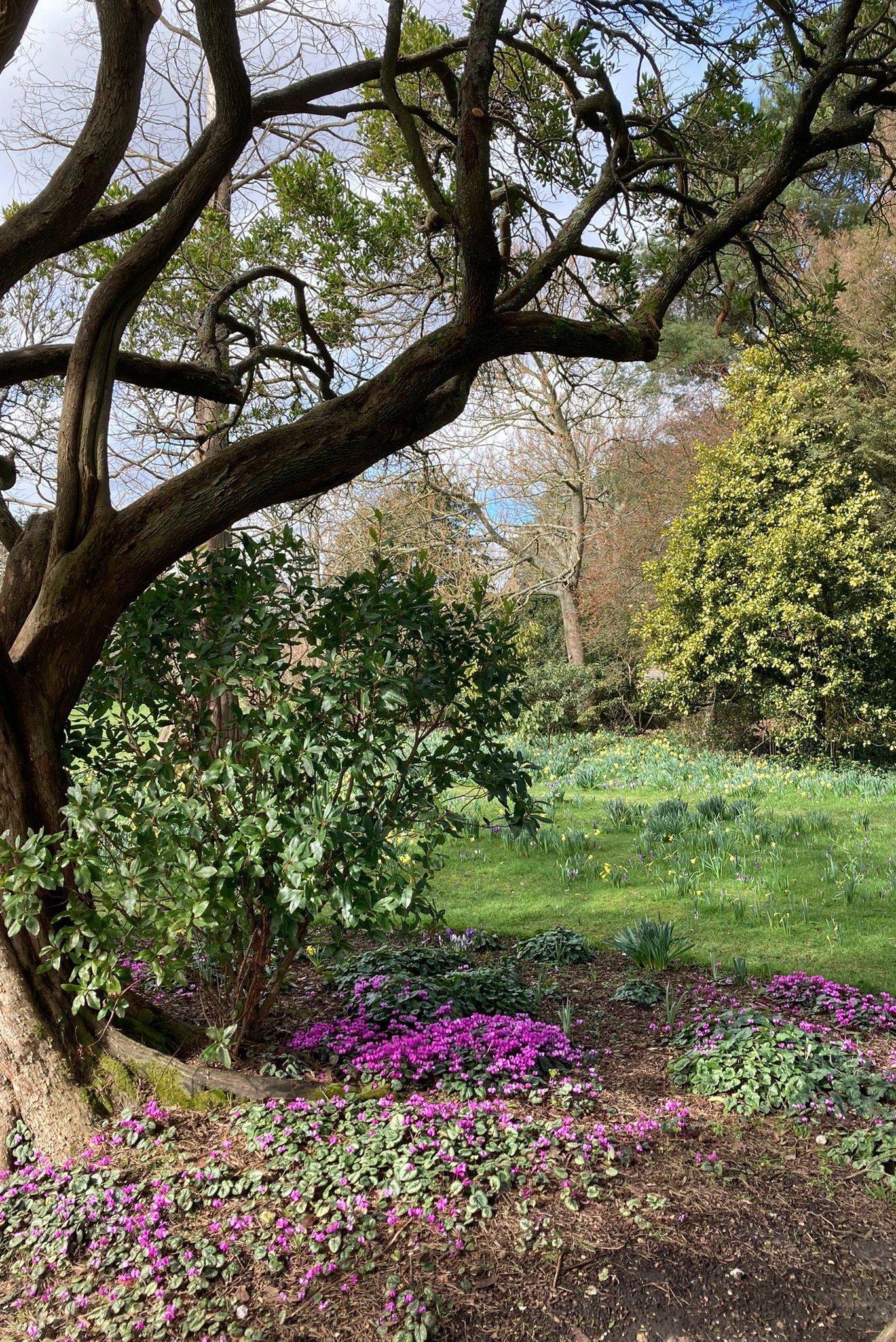

Spring.
The verb ‘to spring’ from the Middle English sprygen - ‘to burst or flow forth, to sprout, to emerge, to happen, to become known’.
As a noun, from Middle English spryng (“a wellspring, tide, branch, sunrise, kind of dance or blow, ulcer, snare, flock”), from Old English spring (“wellspring, ulcer”) and Old English spryng (“a jump”), from ablaut forms of the Proto-Germanic verb. Further senses derived from the verb and from clippings of day-spring, springtime, spring tide, etc. Its sense as the season, first attested in a work predating 1325, gradually replaced Old English lencten (“spring, Lent”) as that word became more specifically liturgical. Compare fall.
I’m into dictionary definitions the way some people are the shipping forecast. “Viking, North Utsire; southwesterly five to seven; occasionally gale eight; rain or showers; moderate or good, occasionally poor.” Something comforting and peaceful about them.


Spring the season, on the other hand, drags her feet. While winter finally dawdles off, spring makes us wait for her like an impatient lover. Predictably wistful, too eager, looking for signs. The usual thing - watching the clock, worrying if we dressed right. She comes closer inch by inch, painfully slowly, giving in by tiny increments.
When the camellias begin to flower you know you’re in with a chance.
March is first base. The beginning of something.


In any case, it’s a busy month. A month of preparation, planning ahead.
In the garden ‘the big chop’ ensues - cutting back the perennials and giving everything a good old haircut to allow the fresh green shoots to emerge.
It’s cathartic, and extremely satisfying, to strip away all the dead growth and take everything back to ground level.
The beds are given a lovely thick blanket of mulch to enrich the soil around the plants, suppress the weeds (to a certain extent) and to keep the soil damp and cool as the earth begins to warm up.


One Saturday a friend comes over to help for a few hours of (what he thinks will be) ‘therapeutic gardening’.
He brings sweet pastries and we drink coffee in the sun and it feels like spring.
Later, in torrential rain, we tackle the compost bays. Knee-deep, spades in hand, we apologise for the turn of events.
“Never happier than when shovelling shit”- his cheerful reply.
Me neither.


We compost all the perennial offcuts under last year’s food and flower waste. Excitingly we finally have our first big batch of lovely rich, crumbly compost.
It’s very satisfying to have finally cracked this and to be able to properly make use of our household and business green waste.
Certainly not glamorous but it might be one of our proudest moments so far.
I should have taken a photo to mark the occasion. Then again, perhaps not. We got home looking a tad feral.


The annual seeds are sown.
In trays there are Malope, Nicotiana, Helichrysum, Limonium, Tagetes, snapdragons and various perennial seeds.
Direct sown in our tunnels are scabious, cornflower, nigella, California poppies, Nasturtium, Omphalodes, Agrostemma, Phlox, Callistephus, Flax and Gypsophila.


The flowers are coming through now. Slowly. Another couple of varieties every week.
We’ve had a long spell of cold, dry weather and the season is slow to get going this year.
Narcissi, scilla, muscari, anemones. Some incredible hellebores.


We cut a little bunch of narcissi from the polytunnel and put them in a jam jar.
They drive around with us in the van back in London, through rainstorms and dazzling sun, the typical kaledioscope of weather on any given spring day.
They smell like vanilla.


In London the magnolia is in bloom.
After weeks of grey the streets are suddenly awash with these extraordinary blossoming trees.
It’s enough to make you fall in love with the city all over again.


At the studio we have a huge overhaul and spring clean in preparation for the new season.
All the doors are flung open, the windows polished, every cupboard and box is emptied, sorted, dusted and refilled.
An exciting delivery of beautifully aged reclaimed oak arrives all the way from Austria which we are using for cladding - a project we have wanted to do for a long time - and we spend an enjoyable couple of hours admiring each piece and deciding the order in which they’ll be fixed.


Arranging from the garden at this time of the year is very much an exercise in restraint. In making a little go a long way. Right at the beginning of the season still, you may only have one or two stems of each variety. It’s a bit like having nothing in the fridge and having to be inventive to make supper. Actually I love suppers like that. And flowers too.

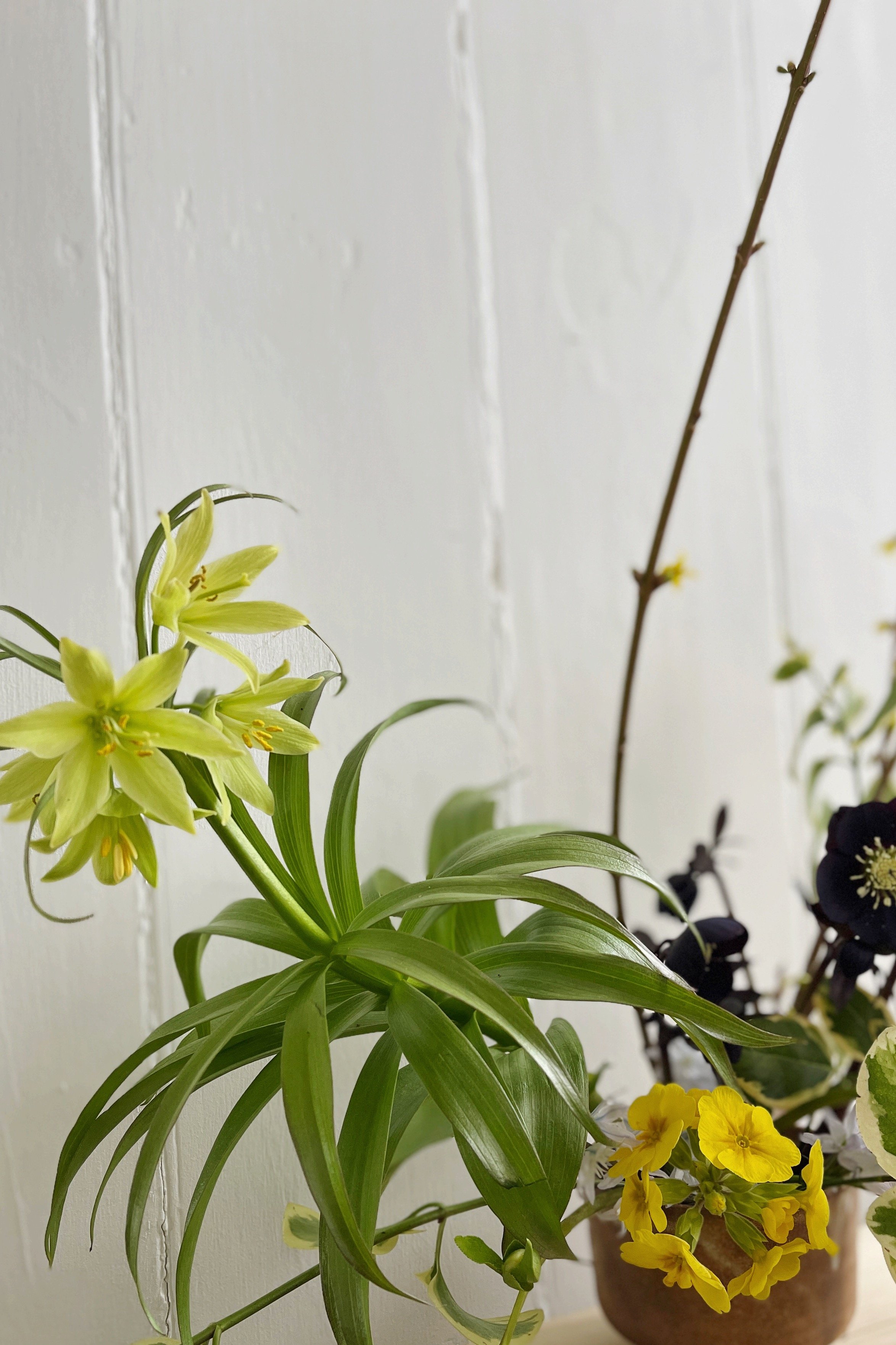
x2 Forsythia branches
x5 hellebores (four different varieties)
x1 primula
x5 Vinca minor
x1 Fritillaria ‘Ivory Bells’
x 8-10 Scilla mischtschenkoana
The latter is white squill. A exquisite pale blue flower. We planted the bulbs beneath some rambling roses and they are naturalising beautifully, more and more every year.


Also at the studio, planning for our 2023 flower school begins in earnest. We like to start with a big brainstorm of ideas and then streamline from there.
‘Workshop flow’, Jess calls it.
We want each one to be different, to celebrate the materials of that particular moment in the year. We love working out how we can give our guests the best experience - what we’ll talk about, what we’ll make, where we’ll gather and sit and photograph, what we’ll eat, drink, listen to.
We have some great playlists this year. Classical. Jazz. Folk. Country.


See you next month! Excited for Easter and all the flowers to come.
Thank you for reading. A.