The April dance
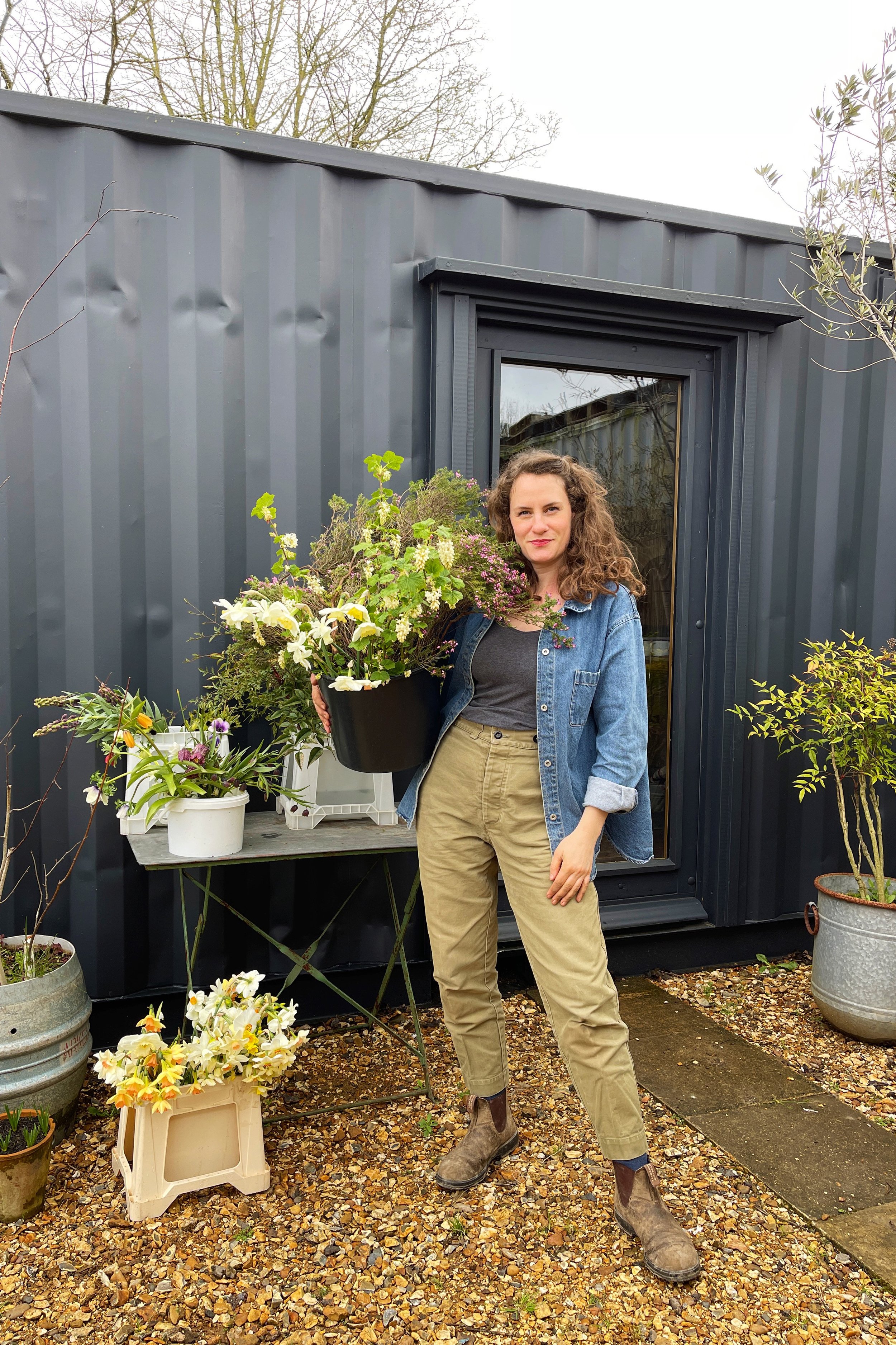
At the cutting garden we take delivery of a whole host of new plants and give them a home in the moist, cool soil. Some to replace winter losses, others that are entirely new to us and we’ll have to wait a few weeks yet to see in flower. There are a lot of damp, drizzly days planting, weeding…
The growing season starts like a slow dance. A glide. The seasonal equivalent of a waltz, or perhaps a foxtrot.
At the cutting garden we take delivery of a whole host of new plants and give them a home in the moist, cool soil. Some to replace winter losses, others that are entirely new to us and we’ll have to wait a few weeks yet to see in flower.
In April there are a lot of damp, drizzly days planting, weeding and mulching.
The garden has never looked better. It is starting to feel well established now and the shrubs are filling out beautifully.
From tunnel 2 we cut Narcissi and Anemone. The Ranunculus and Allium are just beginning; we’ll begin harvesting them next week.
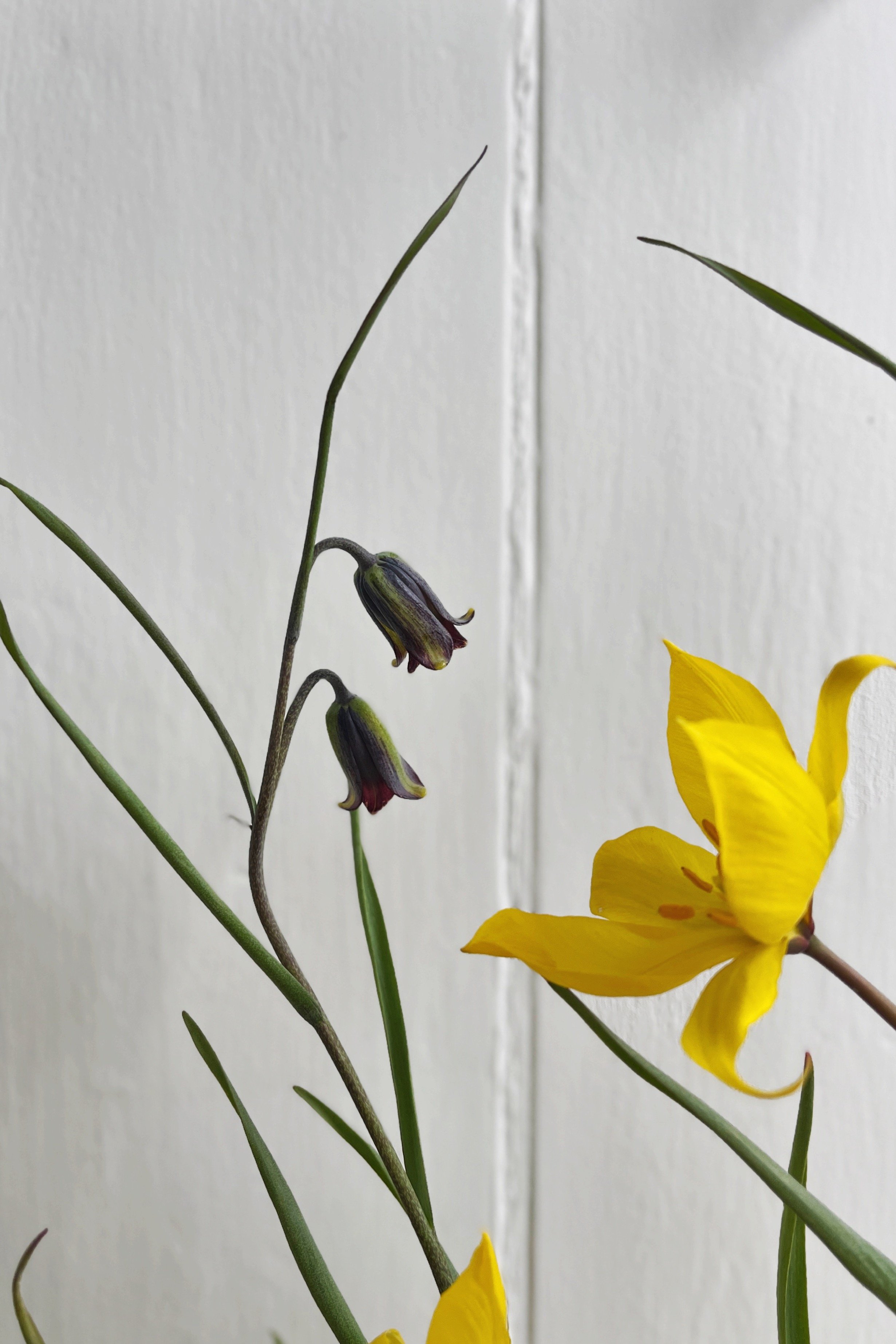
In the outdoor dahlia beds the tulips are flowering alongside more Narcissi, primroses and pansies, Epimedium, Ipheion, Muscari, hellebores and some incredible Fritillaria - persica, meleagris, acmopetala, imperialis, elwesii and michaeilovskii.
It's the best feeling after the long winter to work with the sun on your back and to be able to generously fill buckets with colourful flowers to send to London.
In the studio we get back in the saddle and flex our design muscles ahead of the season, experimenting with form, colour and texture for various projects ahead. One of our key preoccupations this year is really reflecting how the garden looks and feels, trying to capture its energy and the way it changes - day by day, week by week, month by month. It is much more subtle than the four-season model would suggest and the spaces between the seasons seem to have a character of their own.
Using the abundance of flowers suddenly available for cutting we start working on an exciting new series of online classes. It feels great to dive in at the deep end on a new project; we love this work and the particular process of researching and planning, shooting, recipe testing, writing and editing.
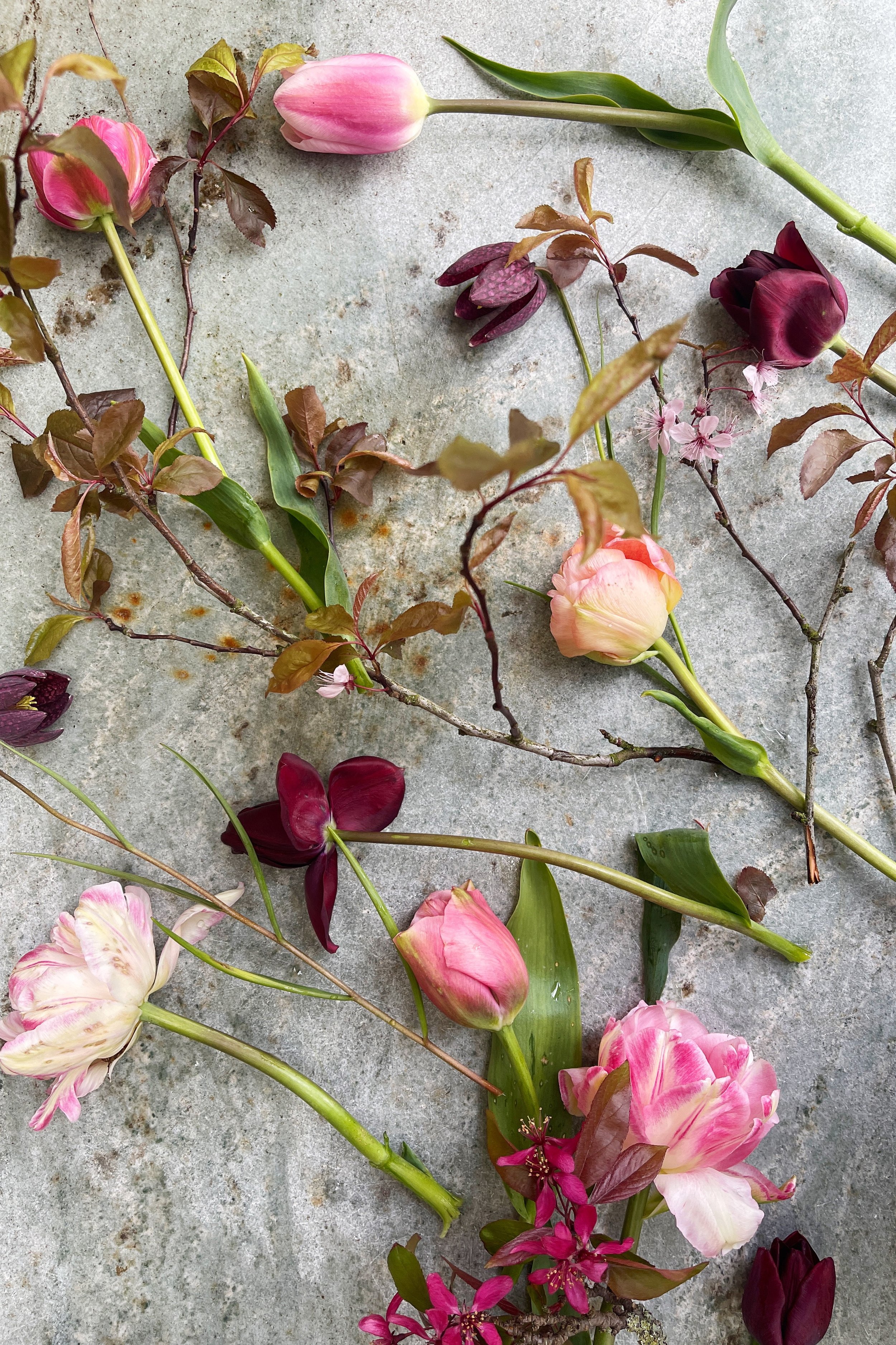
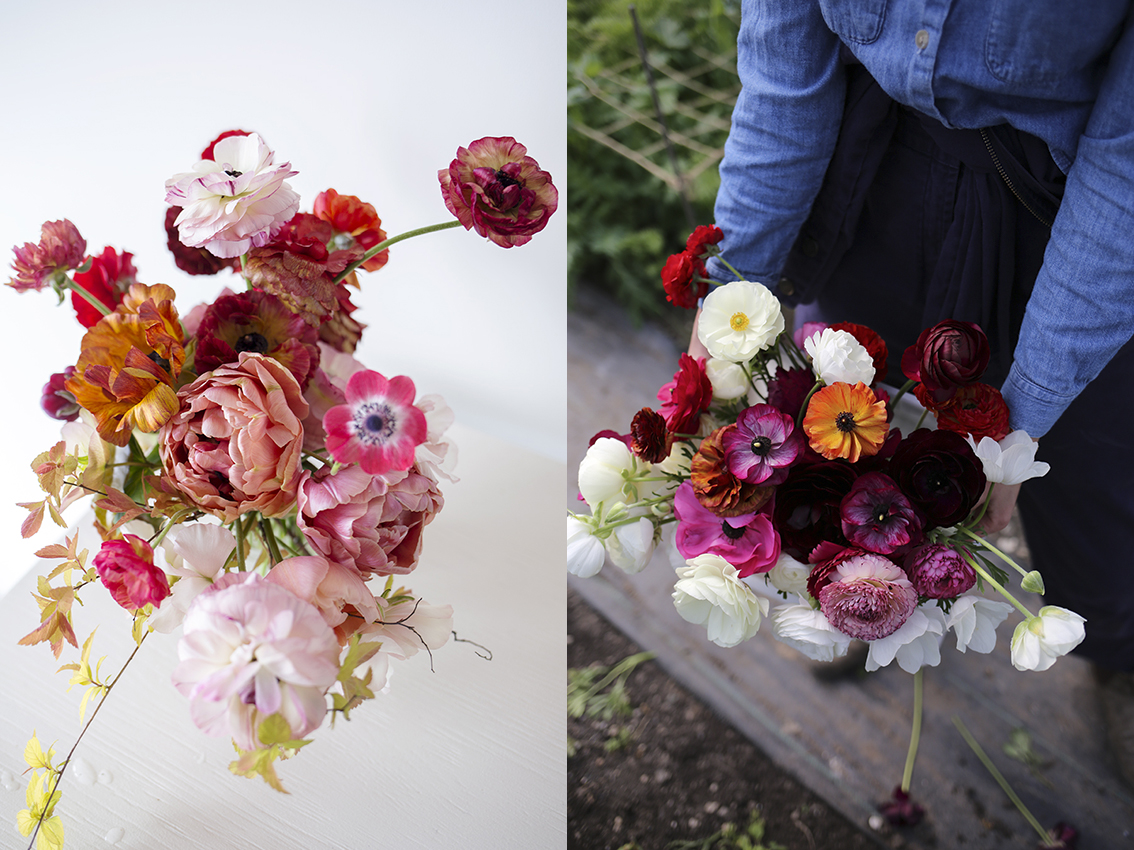
Above is a favourite spring colour palette. Mixing bronze with varying shades of pink and plum.
The Malus ‘Prairie Fire’ explodes into a riot of blossom outside my bedroom window; the leaves are a beautiful rich, reddy-brown and the flowers lightly scented.
Forsythia with Tulipa sylvestris, the wild tulip.
Accompanied by Fritillaria elwesii, Fritillaria michailovskyi, Narcissus ‘Blushing Lady’, Oxalis (creeping woodsorrel) and fans of dried grasses.
I love the soft, icy blues in the garden at this time of the year - the Muscari (grape hyacinth) and Ipheion (spring starflower). And all the graceful stems of Anemone and Fritillaria. The tiny Epimedium flowers.
It’s a magical, subtle time as things just start to get going.
A study in white.
Exochorda x macrantha ‘The Bride’ (pearl bush), Anemone coronaria ‘The Bride’, Fritillaria meleagris ‘Alba’, Leucojum aestivum ‘Gravetye Giant’ (snowflake) and Thlaspi arvense (pennycress).
An Easter tablescape with a mix of vessels and materials:
Narcissi, Fritillaria, Spiraea, Anemone and Prunus.
Easter was spent in Wales among the daffodils and dripping branches.
So many extraordinary wild flowers in the woods and meadows - coralroot bittercress, aconites, wild strawberries, forget-me-nots and primroses.
Whilst in Wales I took the opportunity to visit one of my favourite local gardens one afternoon between April showers. Aberglasney is in the Tywi Valley in Carmarthenshire and well worth a visit if you are ever in the area. It’s an exquisite garden - or series of gardens - in the grounds of a vanilla-coloured mansion.
There is a lot to see, I had to do three ‘laps’ just to take it all in.
The gardens have distinctly different sections that lead into one another down the hill, starting from an Asiatic area at the top with paths through Magnolia, Rhododendron, Camellia and Azalea shrubs native to Japan, Nepal, Tibet and China. The ‘Alpinum’ is home to low-level dwarf varieties and at this time of the year is like a soft, pastel watercolour of Primula, Muscari, Pulsatilla and Saxifraga.
There are several walled gardens including the productive kitchen garden, which is beautiful later in the summer with step-over fruit trees, vegetables, herbs and cutting flowers, then an enchanting sea of Fritillaria meleagris in the lawned slope leading down towards the woodland and stream gardens. The ‘Ninfarium’, which houses a lush, sub-tropical garden in among the ruins of the original medieval building is named after the gardens of Ninfa outside Rome, created by the Caetani family, who once gave financial support to Wales’ most celebrated poet, Dylan Thomas.
The days continue to lengthen.
A few more and we're into May. One of the best months for flowers, arguably the best of them all…
If you haven’t already please do check out our YouTube channel where we are now posting regularly.
In addition to our monthly vlog from the studio and garden we are very much enjoying capturing and curating short, thoughtful films to share with you all and we’re so grateful for all the kind comments we’ve received recently. Topics include flower arranging, cut flower growing, seasonal studio tours and visits to our favourite gardens in search of inspiration. We hope you enjoy them.
Till next time. A.
Autumn equinox
Autumn - nature’s sigh of relief. After the September equinox the summer race is abruptly over, change on the wind. As the season begins to darken, there is a lightness that comes with letting go; the final dance at the end of the night, the swan song. Energies swirl around through shapeshifting September days. There’s the ascendancy before the tipping point and then, when the crest of the wave breaks a sense of abatement, but also renewal.
IN THE STUDIO
From our foam-free installation workshop; beech, elder & viburnum foliage with dahlias, Japanese anemones, garden roses, grasses & hops on the vine
Autumn - nature’s sigh of relief. After the September equinox the summer race is abruptly over, change on the wind. As the season begins to darken, there is a lightness that comes with letting go; the final dance at the end of the night, the swan song. Energies swirl around through shapeshifting September days. There’s the ascendancy before the tipping point and then, when the crest of the wave breaks a sense of abatement, but also renewal.
In the early mornings before work I walk the dog across Bushy Park, between copses of ancient oak trees, sunbeams slanting through the mist, deer making their strange, prehistoric mating calls across the mown paths and windswept grasses. The landscape is shifting, prairie-coloured, the air smells of smoke and warm hay. As the month goes on, leaves begin to fall and the wind picks up, swirling them around the tussocks, peppering the river with ochre and copper. We stand on the bridge watching them float by. I feed Mavis blackberries from the brambles; she wrinkles her nose if they are too sour and spits them out into the grass. But she likes the sweet ones. Sometimes in the studio we find her salvaging blackberries from the green waste.
Snippets from the perennial beds for an autumn masterclass in London; ferns, pansies, chocolate cosmos, pennycress & gaura
Ceramic Urn | Borage, roses, zinnia, cosmos, dahlia, nicotiana & grasses
Urn of dahlias, miscanthus, lisianthus, centaurea & autumn leaves
Every year I think this moment is pure and utter magic, when the colours turn, even though I know that it is simply that the leaves, their veins closing up, are slowly starving of water and minerals, the chorophyll fading. I know this and yet every year I feel there is something so painfully romantic about it. Perhaps we just look for metaphors in the natural world to make sense of our own beginnings and endings.
It is my favourite time of the year to live in London; the city is so beautiful now. The street-lamps, red brick buildings, bridges. The melancholy parks, all skittering leaves and waning roses, tangles of dusty colours and fluff, acid hits of lime and dark berries. Mackerel skies reflected in the river.
In the studio we’re taking time to savour the last month of the growing season. Our rhythm is dictated by the garden, the business orbiting around it. We go up and down with the weather, harnessing and responding to the different energies each season brings, working hand in hand with them. Every project in these last few weeks is a product of this exquisite, stormy period between summer and winter, a cocktail of turning leaves and fruit, the feathers of grasses, the last flushes of flowers from plants that have given their all. For a wedding in Hampshire there are blackberries and sloes, elder and pale roses. For a class in London we harvest peony leaves that have turned a coveted nude-pink and pair them with limelight hydrangea and metallic fronds of Panicum squaw. One afternoon Yukiko shows us pictures of her favourite garden in Kyoto, thickly carpeted with red maple leaves. I come home to my flat and anxiously peer out of the hall window - my acer is still green, only the tips beginning to darken. When they finally fall it will be the beginning of winter.
Autumn wedding arrangements for Claire & Greg on their wedding day in Ovington, Hampshire
Armfuls of amazing Hydrangea Paniculata from The Real Flower Company
IN THE GARDEN
Becky, Jess & Yukiko tackling Tunnel Two!
Delphinium, cosmos & centaurea still going strong
In a gardener’s world it is the start of a new year.
This month we’ve all been hard at work turning the garden around for a fresh start, thinking ahead to spring. Taking out old crops, turning beds over, tilling the soil, planting seeds and hundreds of ranunculus and anemone corms for spring 2020 weddings and workshops. Early in the month we ordered large quantities of organic compost packed with sheep’s wool and bracken - a real treat for our hard-working beds.
Outside the perennial and annual beds are still going strong, giving us weekly bucket-loads of zinnias, dahlias, cosmos, borage, rudbeckia and centaurea and we’ve planted up several new varieties of frothy, feathery grasses. Exciting plans are being drawn up for a garden extension over the winter… more on this soon…
IN SUSSEX
A couple of weeks ago a creative autumn shoot took us happily back to the garden in East Sussex where we held our annual retreat in June. How much it has changed in three months! - the colours and textures so different to the lightness of early summer. We teamed up once more with friends and collaborators Heidi, Kristin, Sarah and Annie. It is always such a pleasure to create beauty with these girls! And not forgetting Josh who gamely assisted, carrying camera equipment and heroically wafting bonfire smoke…
Credit Kristin Perers
It was a perfect September day, smoky and mellow, the paths down to the dell carpeted with lilac cyclamen. It made me think of this poem, ‘Song of Autumn’, by Mary Oliver…
In the deep fall
don't you imagine the leaves think how
comfortable it will be to touch
the earth instead of the
nothingness of air and the endless
freshets of wind? And don't you think
the trees themselves, especially those with mossy,
warm caves, begin to think
of the birds that will come — six, a dozen — to sleep
inside their bodies? And don't you hear
the goldenrod whispering goodbye,
the everlasting being crowned with the first
tuffets of snow? The pond
vanishes, and the white field over which
the fox runs so quickly brings out
its blue shadows. And the wind pumps its
bellows. And at evening especially,
the piled firewood shifts a little,
longing to be on its way.
Head-piece of berries, seedheads & grasses. Credit Kristin Perers
Credit Kristin Perers
Heavenly snippets from Sarah’s garden.
Credit Kristin Perers
Lunch at the Woodshed.
Credit Kristin Perers
Autumn Shoot at the Woodshed - thanks and credits go to:
Photography: @kristinperers
Setting: @secret_garden_at_the_woodshed
Vessels: @_viv_lee
Fashion Styling: @flint_lewes
Floral Styling: @aesmeflowers
IN THE ETHER
A few things we’ve been loving this month…
R E A D I N G - ‘Cherry’ Ingram: The Englishman Who Saved Japan’s Blossoms by Naoko Abe
L I S T E N I N G T O - Counting Crows: This Desert Life
F O L L O W I N G - @anjadunk | @brunettewinebar | @james.mc.grath
E A T I N G - Tomatoes from the garden. Mum’s elderflower cake
V I S I T I N G - Polesden Lacey, Surrey
Late August
Late August, and the seasonal barometer prevaricates daily between high summer and early-onset autumn. It has been a month of workshops at Aesme, with three wonderful groups of florists visiting from Seoul, each for a three-day intensive class on garden-inspired floral design
IN THE STUDIO
Late August, and the seasonal barometer prevaricates daily between high summer and early-onset autumn. It has been a month of workshops at Aesme, with three wonderful groups of florists visiting from Seoul with Flower Workshop Korea, each for a three-day intensive class on garden-inspired floral design for weddings. These workshops are a luxurious and immersive deep-dive into arranging flowers in the most naturalistic and seasonal way possible - lots of dahlias, rudbeckia, scabiosa, tobacco flower, garden roses and phlox this month - with textural shrub-foliage, foraged clematis vines and grasses, and plenty of scented herbs, fruits and vegetables - apples, tomatoes on the vine, artichokes and beans. It is such a treat to really revel in these materials and experiment with them, coming up with a different colour palette for each class, pushing the boundaries of what we feel is familiar or safe. It’s a fantastic time of the year for this - the leaves beginning to turn and some of the rusty tones appearing - mouthwatering mingled in with the softer shades of summer - bronze with lime and peach, caramel with lilac, blush with gold.
Sharing our flowers, watching other people discovering and enjoying them, has to be the most enjoyable aspect of the job, particularly when we have grown the majority of them from seed, bulb or tuber, and nurtured the plants towards a fruitful harvest. Especially when many of the students are working with particular varieties for the first time. There’s a palpable sense of anticipation in the studio, which we love and find infectious, and it makes us want to push the boundaries with what we grow the following year.
I’m always struck by how much people love using weeds, vines, grasses, vegetables and fruit just as much as they enjoy the flowers themselves - its those textural elements that bring an arrangement alive and fill the studio with fluffy, frothy works of art - each one an architectural sculpture, and so detailed, so colourful. It definitely isn’t the easy option, growing and gleaning your own materials, especially alongside design work for events and running regular classes. I’d go so far as to say that it may be the hardest form of product sourcing. But that direct connection with the source itself - the soil, the plants that give us these treasures every week, the weather, is integral to what we do here at Aesme, and the special experiences we want to provide for our students and clients.
IN THE GARDEN
At the farm our cutting garden is in peak production mode. This is the time of plenty, of harvests and corn dolls and receiving, after all the months of tending and nurturing and encouragement. The time of the year when people are gifting and trading the fruits of their labours - tomatoes for courgettes and rosemary, a bowlful of butterhead lettuce, just cut. A friend gives me a precious bagful of macadamia nuts picked from the tree on the ranch where she grew up in California. This is the most pleasurable way of living and eating - practical, frugal and generous at the same time.
The roses have eased a little now between flushes but our main ‘cut and come again’ crops, which include dahlias, phlox, scabious, rudbeckia, cosmos, nicotiana, daucus carota, calendula, borage, amaranthus, zinnia, Californian poppies and everlastings, are flowering prolifically along with successional plantings of hardy annuals like agrostemma and sweet peas. The herb beds have been full and luscious, the perennial beds yielding achillea, echinacea, chocolate cosmos, gaura, fennel, verbascum, campanula and spires of dainty thalictrum flowers.
Around the garden the hedgerows are beginning to glimmer with blackberries, hawthorn and rosehips and the scratchy outlines of drying umbels. We pick raspberries and whitecurrants from their canes to eat while we are cutting and fill little pots with ripe tomatoes, their sharp scent filling the tunnel. The garden is full of butterflies and drunken bees and the occasional sound of seeds showering from brittle pods, a sure sign that summer will soon be drawing to a close. Waiting just around the corner are days of morning fog and mellow afternoons filled with drifting bonfire smoke, when the leaves spin from chartreuse to titian red as if licked by flames, and finally to a dry cinnamon brown, crisp underfoot. For now we hover on the bittersweet bridge between two seasons, looking ahead, and looking back.
IN THE ETHER
A few things we’ve been loving this month…
R E A D I N G - Wilding: The Return of Nature to a British Farm by Isabella Tree | Modern Nature: Journals, 1989 – 1990 by Derek Jarman
L I S T E N I N G T O - Miles Davis : Kind of Blue | Madeleine Peyroux : Dreamland
F O L L O W I N G - @coyotewillow | @lagrottaices | @hortusvarius
C O O K I N G - Pear salad with gorgonzola & walnuts by Deliciously Ella | Roast tomatoes on toast with tarragon & thyme by Gill Meller | Cromer crab in Norfolk
V I S I T I N G - Wiveton Hall Garden, Norfolk & Colby Woodland Garden, Pembrokeshire
A London heatwave
It is currently 37 degrees in London, stifling and still, pollen drifting slowly in mid air. Landing back at Heathrow last night, it was barely cooler than Italy, the same humid blanket of heat and haze spreading across Western Europe.
IN THE STUDIO
It is currently 37 degrees in London, stifling and still, pollen drifting slowly in mid air. Landing back at Heathrow last night, it was barely cooler than Italy, the same humid blanket of heat and haze spreading across Western Europe. Too hot to work - almost too hot to write - it has taken most of my energy today just to unpack, water the garden and occasionally pad barefoot to the kitchen for more elderflower.
July has been another wonderfully full and floral month in the studio with private and group classes and as always we have loved welcoming guests to our leafy haven in the city, sharing ideas, great flowers and cafetieres of strong coffee in between lulls of companionable non-conversation and concentration. Flower arranging never ceases to be meditative, even when there is a lot of it to be done in a little time (as is often the case for us in the run-up to weddings or events); it quietens and calms and focuses in a way that I think is quite addictive to those who really embrace and enjoy it.
Recently I’ve tried to build in time for more creative experimentation whenever I get the chance; working with flowers and plants there is always so much more to learn and to try, different combinations of materials, different techniques. It is easy to fall into the trap of replicating, particularly when it is your job, and sometimes it is nice to make something that isn’t for sale, isn’t ‘appropriate’ or proportionate or even finished. In our classes we always say that the goal is to experiment, to try something new, not to worry about getting it exactly ‘right’, to take it apart if you’re not happy with it, to start over, mostly just to enjoy it; flowers are, after-all, the greatest luxury. When you are arranging for a client the over-riding priority is the End Result. When you’re arranging for yourself it is the process that takes precedence, that peculiarly ecstatic state of mind when you are coasting, not thinking about anything, finally. And then, after some time, and all of a sudden, you are flooded with new ideas.
To quote from the book I recommended in the last post (still so much at the the forefront of my mind that I am re-reading earlier chunks of it) To The River by Olivia Laing -
‘I was getting anyway into one of those trances that come from walking far, when the feet and the blood seem to collide and harmonise. Funnily enough, Kenneth Grahame and Virginia Woolf both wrote in praise of these uncanny states, which they thought closely allied to the inspiration writing requires. ‘Nature’s particular gift to the walker,’ Grahame explained in a late essay, ‘through the semi-mechanical act of walking - a gift no other form of exercise seems to transmit in the same degree - is to set the mind jogging, to make it garrulous, exalted, a little mad maybe - certainly creative and supra-sensitive, until at last it really seems to be outside of you and as if it were talking to you, while you are talking back to it.’ As for Woolf, she wrote dreamily of chattering her books on the crest of the Downs, the words pouring from her as she strode, half-delirious, in the noon-day sun. She compared it to swimming, or ‘flying through the air, the current of sensations & ideas; & the slow, but fresh change of down, of road, of colour: all this is churned up into a fine thin sheet of perfect calm happiness. It is true I often painted the brightest pictures on this sheet: & often talked out loud’.
I feel like this when I am arranging flowers.
Next week the studio will be closed. We are all taking a break after the summer rush to go offline, stretch our horizons and re-energise with some coastal walks, fresh fish and early nights ahead of a busy August. More from the studio then!
IN THE GARDEN
It is that point in the season when there begin to be momentary glimpses of the next; the sorrel in the hedgerows turning rusty pink and burnt amber, the summer-weary earth is parched, little cracks appearing in the dust like miniature fault-lines. At the farm we’ve been making steady progress; it’s been a month of maintenance and weed control - so difficult to keep on top of in the height of the summer but made far easier with extra help. With the first flush over there is a brief lull before the next crops really get going - perhaps a little later this year because of the long, cold spring - the flowers of high to late summer - dahlias, zinnias, rudbeckia, scabiosa, daucus carota and everlastings. And vegetables too - lettuce and cabbages, french beans, radish and tomatoes. We harvest buckets of poppy seed-heads, so useful for the autumn, and already turning from that misty blue-green to tobacco brown and gold.
IN ITALY | GIARDINO ESTIVO WORKSHOP
Late last week Jess and I flew to Milan and drove north, spending the weekend on Lake Como. It was beautiful: terracotta, primrose and ochre villas with tiered gardens and shutters painted dusky blue, turquoise and emerald, hills brushed with mist, frangipani blossoming and trailing in the lake water that turned gold at dusk. Striped awnings, stone terraces of vines, water slapping the underbellies of boats and above the hills - pine, ferns, wild strawberries and hydrangea - the peaks not jagged but soft and undulating, blanketed with forests.
Not missing the chance to visit an Italian garden while we had a few hours spare we visited Villa Balbianello at Lenno. Built in the late 1780s by a wealthy cardinal, and most recently owned by handsome explorer Count Guido Monzino before passing to the Fondo per l'Ambiente Italiano (the National Trust of Italy) upon his death in 1988, the villa and its gardens are deceptively small and rather formal. But worth travelling a way to see was the snake-shaped Ficus which entwines the loggia, and the evergreen oak pruned into the shape of an umbrella, with a view across the Lake to Bellagio. We’ll share photographs in a later post, because there are many. I’d like to go back there, probably in autumn when the camphor laurels turn red; it must be a breathtaking sight.
On Sunday we moved east into the mountains to a little village near Erba, halfway between the two ‘legs’ of Lake Como and Lecco to host a two-day workshop at Olga’s Flower Farm. On the site of a nursery run by her mother Cecilia, Olga grows beautiful annuals - rudbeckia, cosmos, zinnia, dahlias, phlox, celosia and many more which she sells to florists in Como and Milan. We were spoilt for choice, and for foliage too - most exquisite varieties of ninebark, abelia, porcelain vine and viburnum as well as apples and pomegranates. It was a treat to be thrown into what I think of as the next season almost - late summer/pre autumn, the ‘serotinal’ period according to the ecologists calendar - a couple of weeks before we begin harvesting our own. The colour palette for the workshop was dominated by these dusty reds, corals, gold, rust and toffee.
It was extremely hot, as can be expected of Italy in July, and I think heat renders a lovely, if slightly sleepy atmosphere because those two days seemed to slip by in a slow, hazy, drifting sort of way. Everything just took the time it took - cutting, arranging, tweaking, drinking espresso, moving around from shadow to shadow, from the shade of one tree to another. And all day long, the unceasing soundtrack of cicadas.
We had the most wonderful group of students - a gaggle of kind, talented, imaginative and intelligent women, many from Italy but also from Barcelona, Vienna, New York, London and Scotland. It is the greatest privilege, not only to teach and to share our passion for plants and flowers with other like-minded enthusiasts, but to travel and see other gardens, other farms, in landscapes and climates different to our own. There is as much of a thrill recognising a shared love of the same flower as there is to discovering new ones.
We stayed in an old stone farmhouse at the foot of a small, bone-shaped lake and at the overlap of two mountains rising steeply towards the cloudless sky. At night a gossamer veil of heat slithered across the forest, causing the visual illusion that distinctly individual pine trees were now merging into one another, a soft black ashy slope so close you could almost reach out from across the valley and brush it with your fingertips. The owners, an attractive and glamorous proprietress named Roberta and her husband (whose name we never caught but we instead privately named ‘Mr Fawlty’) spent the hottest part of the afternoons in their cavernous cool room off the terrace watching the flat-screen television, oddly surrounded by the family silver which was laid out on every available surface as though it had been got down for a spring clean, many springs ago, and inexplicably abandoned. After the extreme heat of the day we would tiptoe past and slip into the shockingly cold (for a minute at least) pool, which was a green as old glass, and look out at the Lombardy hills, the rows of lavender fizzing with bees, the tier of terraces bordered by rough stone walls stepping down towards the shore of the lake where a wooden cabin was stacked neatly with logs. Occasionally the resident Great Dane - a great black shire-horse of a dog, would sidle over and lean her weight against you, bizarrely accompanied by a tiny black rabbit that had an unnerving habit of popping up next to you just when you least expected it after dusk. It was a strange and beautiful place and in many ways, despite it being really only a half-day of travel away, we couldn’t have felt further from home.
Of course being Italy we had delicious food, and it would be remiss of me not to share a few tasters… a risotto with melon. Ravioli with ricotta and orange zest in Como, a divine saffron risotto in Canzo, and on the farm coffee-soaked pastries and tiny espressos to make the heart flutter, orecchiette with shrimp, iced berries and elderflower shortbread.
We would like to thank… First and foremost, our students, for being such a joy and for making it all possible. Olga, for inviting us, sharing your beautiful flowers, allowing us to snip from your shrubs and exquisite pomegranate tree! Giulia for helping us with all the hard graft, you were a wonderwoman, and also for the beautiful blackberries, flowers and grasses from your farm. Cristina and Chiara for the food, coffee and general assistance. Fati Amor for the linen and silk ribbons; Agnes Duerrschnabel Atelier for the bowls and vases and Madlen Ceramics for the candle-holders.
A June masterclass
June flew by. We are at our most productive now, in these summer months, moving from one project to the next but poring our hearts and minds into each one, always searching out the most beautiful plants, the perfect shade of this to go with that, how to bring the freshest…
IN THE STUDIO
June flew by. We are at our most productive now, in these summer months, moving from one project to the next but poring our hearts and minds into each one, always searching out the most beautiful plants, the perfect shade of this to go with that, how to bring the freshest, most ethereal produce to the table. Bringing the garden to the party, which is pretty much our company motto these days.
The studio is very much the home of the business now, bedded in, comfortably accommodating our workload and somehow expanding and contracting with the size of each project and the team we have in working on it. Yukiko has taken responsibility for the daily running of the space and keeps it spotlessly clean and organised, efficiently turning it around between each event so we’re ready for the next. The place has an uncanny way of being just what you need at any given time; a workshop of whirling activity but also a leafy, cool and calm haven in the noise of the city. My favourite time there is in the early morning, drawing back the shutter door and the sun streaming through the back window, drinking a coffee and answering emails under the silver birch in the garden with a long day ahead. Or later, once the flower work is done and the shadows are lengthening across the floor, rows of arrangements lined up to go out the next day, and a couple of bees buzzing happily between them gorging on nectar.
Twice a week a full van of flowers brings the latest freshly cut produce up from the farm and we gather round the workshop tables, going through the buckets, passing around new varieties that have come into flower - this week stems of raspberries and whitecurrants, the first velvety chocolate cosmos, sprays of Violette roses and maroon Verbascum.
Our June Masterclass proved to be another magic three days of creativity and floral collaboration, with students from Australia, the US, Korea, Hong Kong and the UK. During these workshops we place great emphasis on seasonality and using locally-grown materials, thoughtful sourcing and foraging but also design, careful editing and pushing the boundaries of working with ‘colour palettes’. It is so interesting to discuss and compare the differences in the industry in different parts of the world and hear people’s experiences in starting their own small businesses. No matter the distance travelled everyone seems to come together with the same goal and the same questions; how to design and supply flowers for events in a sustainable, mindful way, how to break into and then make a living in an industry still largely dominated by wasteful methods, rigid expectations and unnatural or stiff design templates, how to grow or source flowers that are softer, more beautiful, unusual and difficult to find from large scale wholesalers. In group discussions each morning we cover everything from honing a philosophy to live and work by, colour pairings, pricing, green waste management and wedding logistics - it amazes me how much we can cover in three days with our heads together, and at each Masterclass someone always brings a new topic to the table to think about.
This month the studio was continuously heaving buckets from the farm – the first flush of garden roses, sweet peas cut long on the vine, bearded iris, alliums, foxgloves, calendula, nigella, delphiniums, Californian poppies to name a few – and treats including beautiful lime-leaved mock orange and pale peonies grown by Babylon Flowers and Bosley Patch in Oxfordshire.
We have just scheduled our autumn studio workshops where we hope there is something for everyone - a day’s flower arranging class, a 3-day Masterclass in September and again in October and a foam-free installation workshop. These are the last floral workshops we will be running in 2019 (aside from Christmas workshops and wreath-making). Further info here can be found here.
We worked on some lovely weddings at one of our favourite London restaurants this month, St John in Clerkenwell. Specialising in seasonal British produce and with a staunch ethos of no-waste cooking, it is such an appropriate setting for our farm-grown flowers, and its all-white-painted/stainless steel interior makes is a real pleasure to dress with kitchen-garden botanicals. To tie in with the culinary setting, we incorporate lots of fruits, vegetables and herbs into the designs - artichokes and their giant, leathery silver leaves, chocolate mint, lemon balm, edible flowers and summer fruits. It is a simple and yet highly effective celebratory offering for the guests; exceptional food and wine, flowers and potted plants, a little candlelight.
ON RETREAT
Images mostly Kristin Perers, a few by us!
The week that ended with midsummer we escaped the city and headed for East Sussex for our annual retreat, this year hosting Flower Workshop Korea for four days in an idyllic private garden in the Weald. Arriving from London by train, our guests were whisked off to tour Sissinghurst Castle and Great Dixter where we drew inspiration from the gardens for the designs we would make over the coming days.
The floral design workshops were held in the beautiful glass ‘Woodshed’ and throughout the grounds including an all white installation in an ancient wooded dell of gigantic oak trees and shadowy ferns, inspired by Vita Sackville-West’s White Garden at Sissinghurst, and a tablescape of grasses and sorrel referencing the meadow in the Orchard at Dixter, using incredible ‘rock’ vases made by Noe Kuremoto Ceramics.
The final afternoon was spent on a photoshoot with our friend and talented photographer Kristin Perers with styling by Heidi Francis and the balletic Annie modelling clothes by ethical labels Elena Dawson, Sula and Still and flower designs by all the guests.
My abiding memories of the week are of birdsong, laughter, delicious healthy food, woodsmoke and classical music floating through the garden at Great Dixter in the hazy late afternoon light, roses scrambling up through lichen-laden apple trees in our host’s orchard, a candle-lit lantern at the gate at night, lighting the way to the guests’ farm cottages across the field, the hooting of owls in the valley, thunderstorms, dewy, sun-dappled mornings. It was an incredibly special week, and a great privilege to share one of our favourite parts of the English countryside with our Korean guests.
IN THE GARDEN
Down at the farm we are at full tilt in June, the rose garden and sweet peas now in prolific flower. In the tunnels we’ve been cutting from a statuesque crop of candy pink and lavender delphinium, many varieties of calendula, Californian poppies in shades of buttercream, streaky pink, orange and red, nigella, clarkia, forget-me-nots and agrostemma. Outside the perennial beds have yielded geums, wallflowers, heuchera, geraniums, campanula, achillea and ferns. In the large raised bed, rows of phlox are flowering and behind them, zinnias, cosmos and rudbeckia are fast on their heels, with the dahlia beds getting bushier by the day.
We cut and harvest bi-weekly for our weddings, workshops and orders, and at this time of the year all our materials are cut from the farm with the occasional top-ups from local growers or plant nurseries. As amateur gardeners it has taken a few years to trial how and what we grow, the right quantities and varieties etc to fully supply the schedule of the studio during the busy summer period. We’re now really starting to see the fruits of our labours, and nothing makes us prouder than delivering an event where every vase, bowl or bottle contains the stems we have nurtured from seed, shrub, bare root, tuber or bulb.
Year by year we have maximised the productivity of our farm plot, growing it gradually and organically in line with the growing of the business. This has felt the sensible way to supply the requirements of our studio (we use everything we grow in-house and don’t sell wholesale) and in keeping with the demands of an increasingly busy workload in London, without it being too much to keep a grip on or incurring much wastage. Having a gardener and extra help this season has moved us on leaps and bounds.
We’ve had the immense joy this year of harvesting particular colours of varieties chosen for specific clients’ events – something we’re keen to do more of as we continue to expand the growing side. Because much of our work is so colour and design-focussed, and the lead-time for events (particularly weddings) often reasonably long, we can tailor the bed-space we have to accommodate special elements in particular tones and shades - it’s a holistic process that is beginning to come into its own, and is deeply rewarding. Just last week we cut dusty-mauve delphiniums and burgundy centred phlox to fulfil a rich colour pairing one of our brides had hoped for when we first starting discussing her wedding last September. Working in this way keeps the palette of the garden constantly shifting and interesting, rather than being dominated by any one preference, and for clients who love colour there are so many possibilities. We love taking a brief and incorporating it into the garden - it’s no coincidence that this is when our studio produces its best work.
IN THE ETHER
A few things we’re loving at the moment…
R E A D I N G - Wanderlust by Rebecca Solnit, Hard Water by Jean Sprackland
L I S T E N I N G T O - Beth Hart & Joe Bonamassa - Don’t Explain (very loud, on repeat)
F O L L O W I N G - @elenasplate | @ernst.berlin | @scribewinery | @lucianogiubbileigardens
C O O K I N G - New potatoes and garden-grown mint. Roasted Romaine lettuce with pancetta, toasted breadcrumbs and lemon. So good!
V I S I T I N G - Sissinghurst & Great Dixter, Sussex, Grey’s Court, Oxfordshire, the RHS Hampton Court Palace Garden Festival
Bearded iris, peonies and peas
It’s been a busy and productive month in the studio with weddings every weekend, a steady flow of beautiful flowers coming in and out and the constant to-ing and fro-ing of vessels and buckets and plants. May is perhaps our favourite month, fast-paced and flashing by so quickly, yet at the same time strangely long and drawn-out - the flowers of late spring - tulips, anemones, the last of the narcissus - giving way to peonies, clematis and bearded iris.
We’ve so enjoyed working from some very colourful and creative briefs this month. Autumnal rusts and berry tones for a wedding on the Kent/Surrey border with a beautiful blowsy blossom and hawthorn arch. A long aisle of Italian alpine meadow-inspired arrangements (to reference the groom’s heritage) in the Nash Conservatory at Kew Royal Botanic Gardens. A Chinese-Jewish wedding at the extraordinary Sezincote House (a two-hundred year old Mogul Indian palace on an idyllic country estate in Gloucestershire, built by an English aristocrat for his homesick Indian bride), with a rambling clematis and wild rose briar chuppah, oodles of lush table arrangements and hundreds of metres of twisting, curving leafy vines across the clear marquee ceiling. Last weekend, a church wedding and reception at Cowley Manor in the Cotswolds with abundant urns, table arrangements and a marble mantelpiece laden with peonies, bearded iris, spilling with tiny blue Lathyrus flowers on twirling vines.
In the STUDIO
Vessel | Korean ceramic tea bowl & kenzan Materials | Ranunculus, Saponaria, sweet peas & pennycress
It’s been a busy and productive month in the studio with weddings every weekend, a steady flow of beautiful flowers coming in and out and the constant to-ing and fro-ing of vessels and buckets and plants. May is perhaps our favourite month, fast-paced and flashing by so quickly, yet at the same time strangely long and drawn-out - the flowers of late spring - tulips, anemones, the last of the narcissus - giving way to peonies, clematis and bearded iris.
We’ve so enjoyed working from some very colourful and creative briefs this month. Autumnal rusts and berry tones for a wedding on the Kent/Surrey border with a beautiful blowsy blossom and hawthorn arch. A long aisle of Italian alpine meadow-inspired arrangements (to reference the groom’s heritage) in the Nash Conservatory at Kew Royal Botanic Gardens. A Chinese-Jewish wedding at the extraordinary Sezincote House (a two-hundred year old Mogul Indian palace on an idyllic country estate in Gloucestershire, built by an English aristocrat for his homesick Indian bride), with a rambling clematis and wild rose briar chuppah, oodles of lush table arrangements and hundreds of metres of twisting, curving leafy vines across the clear marquee ceiling. Last weekend, a church wedding and reception at Cowley Manor in the Cotswolds with abundant urns, table arrangements and a marble mantelpiece laden with peonies, bearded iris, spilling with tiny blue Lathyrus flowers on twirling vines.
Vessel | Low & wide Japanese ceramic bowl & kenzan
Materials | Grasses, nandina, ranunculus, ferns, the last of the tulips
Exquisite bearded iris cut from the garden
Vessel | Large & shallow resin bowl | Materials | Hawthorn, Fritillaria Imperialis, iris, tulips, corncockle & alliums
For the Baylight Foundation x Natoora supper club at Walmer Yard in Notting Hill during London Craft Week
Materials | Cabbage & variegated tulip leaves, clematis, Californian poppy, Ornithogalum nutans (milky bellflower)
Alpine-inspired aisle arrangements for Hannah & Gianluca in the Nash Conservatory at Kew Gardens
Antique cast iron urns full of spring flowers for Anna and Andras’ wedding at Cowley Manor in the Cotswolds
Clematis & strawberries in stoneware bottles for Natoora x Baylight Foundation supper with Chef Dan Cox of Crocadon Farm
Hannah’s bouquet contained corncockle, Marguerite daisies, Californian poppies, Aquilegia & sweet peas
Materials | Faded ‘Coral Charm’ peonies with Saponaria, iris, elderflower, clematis and dog rose briars
Installation | The chuppah, dressed with clematis vines, hawthorn, spring blossom, sweet pea and potato vines, and garden roses, for David and Tash’s wedding ceremony, in the ornate curved Orangery at Sezincote House
Laying up the tables for D&T’s evening reception dinner at Sezincote House. The floral colour palette was creams, blush, coffee, rusty orange and pops of bright red to reference the bride’s Chinese heritage
In the GARDEN
Preparing the largest annual bed for cutting from high summer
The garden has come on in leaps and bounds over the past few weeks with the help of Becky who is a recent addition to our growing team, assisting with cutting for weddings and events, maintenance and turnaround between crops. Once over the tulips were whipped out and replaced with annual seedlings - stocks, runner beans and Nicotiana (tobacco flower), and lots of seeds direct-sown to cut from later in the summer. Two new long beds have been planted up with dahlias. In the tunnels the sweet peas, calendula, Californian poppies and corncockle have been flowering like mad, the ranunculus waning and soon to be replaced with sea lavender and straw flowers. Every week there are new varieties showing - this week the bearded iris and first flush of roses have been gently brought back and coo’ed over at the studio. And the nigella are just starting now too - African Bride, Sativa (black cumin) and Hispanica, which are the colour of dark blue denim.
One of the most exciting things for us this year is growing crops of different varieties specifically for our clients within a particular colour palette. The red sweet peas (Air Warden, Winston Churchill and Red Ace) that we grew for David and Tash’s wedding at Sezincote - sown from seed on Christmas Eve - started flowering just in time and we were able to cut long, whole vines for them with these hits of beautiful scented red flowers. For Anna and Andras, who had a white/buttercream and peach palette with accents of blue, we cut Lathyrus sativus azureus and Californian poppies like wrinkled silk rosettes.
Our first roses are fairly short-stemmed at the beginning of the season but we cut them into crates filled with jars of fresh water and bring them back to the studio regardless - so useful for low bowl arrangements and small clustered vessels for table styling. We use many of the weeds that we pull up in our designs too - speedwell, hairy bittercress, shepherd’s purse, forget-me-nots, jack-in-the-hedge. At the moment we have a real problem with invasive creeping buttercup but the upside is a profusion of glistening, sunny flowers just when you are searching for that hit of yellow. Herb Robert is an old favourite – it grows everywhere around the garden, and at the moment is a nude pink turning to flaming red. We pull it up by the root, soak it, store it in buckets of water and use it for filling the base of arrangements; a touch of vermilion when you want to spice things up a bit. We don’t discard the stunted, strange (sometimes slightly freaky) plants in our garden; it’s a bit like nose-to-tail eating in a restaurant; there’s a use for everything, weeds and weirdos alike.
If you’d like to join us for a day in the studio we have a A Day’s Flower Arranging Workshop coming up next month on Wednesday 17th July, 10am to 4pm. We’ll have an abundance of freshly cut flowers, foliage, fruits, vegetables, herbs (and decorative / edible weeds!) from the garden in an array of delicious colours to arrange with and we’ll be covering garden-inspired bouquets and table centrepieces (using the chicken-wire technique). Further details and tickets are available here.
Jeju Island, South Korea
What a way to start the season, hosting a destination workshop on a little volcanic island off the coast of South Korea covered in pine trees and mandarin groves! Starting in Japan (we’ll be sharing a couple of the gardens we visited in Tokyo & Kyoto here soon) we flew to Seoul to spend a few days getting adjusted and preparing for the workshop before heading south to Jeju Island. The workshop was held at a wonderful cafe with views out over the blue waters of the Korea Strait. It was the perfect spot - modern, tastefully designed and with atmospheric music, delicious lunches and some of the best coffee we found on our trip.
All the flowers, foliage and plants were part-shipped, part-flown from Seoul where we had chosen them at the flower market early the preceding mornings. The choice of materials (from Korea, Japan and Holland) was exceptional - I’ve never seen so many flowers and branches in one place, the Seoul market is labyrinthine and just goes on and on… Our palette for the workshop was soft and feminine, with pops of yellow to reference the canola flowers that can be seen everywhere around the island, and mandarins, since Jeju is a tapestry of unending groves of these sweet, fragrant fruits. While travelling I was deep into reading all about citrus via Jess’ recommendation in our last post - it was surreal to be preoccupied with lemons in Italy while speeding through an Eastern landscape dominated by orange fruits.
For three days the sun shone and the sea sparkled and lapped against the dark, craggy rocks. We foraged dried grasses and silverberry from the coast-path and strange pitted black rock formations (they say there are three-hundred and sixty-five volcanoes on the island; one for every day of the year) for a setting-specific installation on the final afternoon. It was such a privilege to be working somewhere entirely new and unfamiliar and yet be made to feel so at home.
JEJU ISLAND | SOUTH KOREA
What a way to start the season, hosting a destination workshop on a little volcanic island off the coast of South Korea covered in pine trees and mandarin groves! Starting in Japan (we’ll be sharing a couple of the gardens we visited in Tokyo & Kyoto here soon) we flew to Seoul to spend a few days getting adjusted and preparing for the workshop before heading south to Jeju Island. The workshop was held at a wonderful cafe with views out over the blue waters of the Korea Strait. It was the perfect spot - modern, tastefully designed and with atmospheric music, delicious lunches and some of the best coffee we found on our trip.
All the flowers, foliage and plants were part-shipped, part-flown from Seoul where we had chosen them at the flower market early the preceding mornings. The choice of materials (from Korea, Japan and Holland) was exceptional - I’ve never seen so many flowers and branches in one place, the Seoul market is labyrinthine and just goes on and on… Our palette for the workshop was soft and feminine, with pops of yellow to reference the canola flowers that can be seen everywhere around the island, and mandarins, since Jeju is a tapestry of unending groves of these sweet, fragrant fruits. While travelling I was deep into reading all about citrus via Jess’ recommendation in our last post - it was surreal to be preoccupied with lemons in Italy while speeding through an Eastern landscape dominated by orange fruits.
For three days the sun shone and the sea sparkled and lapped against the dark, craggy rocks. We foraged dried grasses and silverberry from the coast-path and strange pitted black rock formations (they say there are three-hundred and sixty-five volcanoes on the island; one for every day of the year) for a setting-specific installation on the final afternoon. It was such a privilege to be working somewhere entirely new and unfamiliar and yet be made to feel so at home.
Flower School | A selection of materials lined up for our bouquet class including ranunculus, sweet peas, flannel flower and mandarin branches
Left: a spring centrepiece of ranunculus, tulips & fritillaria
Above: Urn of willow, ranunculus, tulips and mandarin branches
Flower School | our wonderful group of students with their ruffly garden-inspired bouquets
Flower School | table styling & props: beach pebbles, shells, intricate vines and ochre linen
Flower School | spring wreaths of moss and alpine plants
Left: a bouquet of spring flowers and locally foraged silverberry foliage
Above: a student’s sketches of the bouquet demonstration
Above: pale pink urchins and creamy shells to reference the coastal setting
Left:: Jess’ demo bouquet with spiraea and ranunculus
Flower School | Installations: a site-specific design using the local dark rocks with willow, spiraea, tulips, dried orchid leaves and rockery plants
Flower School | Colour: our palette for the workshop was soft pink with accents of orange and yellow, as a nod to the cherry blossom, mandarin groves and canola flowering all over the island in spring
Flower School | a friendly mandarin farmer who gave us permission to roam his greenhouses and gorge on the sweet ripe fruit as we picked
Thank you to Flower Workshop Korea for inviting us, arranging everything so beautifully and being the most generous and welcoming hosts, and to all the suppliers and assistants who helped make this workshop the magical few days it was. And to our students, for travelling the distance and being the most enthusiastic, giggly and talented band of flower-lovers we could ever hope to meet.
In the STUDIO
Back in the studio we unpacked our cases laden with Japanese kenzans, bamboo sticks, scissors and secateurs, as well as a new collection of beautiful Japanese and Korean tea bowls and ceramics in beautiful uneven, earthy glazes.
The rest of the April has been spent gearing up for the start of wedding season and holding the first of our spring classes. The evenings are lighter and longer now, the temperature rising almost imperceptibly but enough for the doors and windows to be open in the afternoons. The workbenches have been strewn with narcissus and tulips up from the garden - primrose yellow and rust and milky-white.
Flower Studio | Table styling 1:1 class: clustered small bowls with garden-grown flowers & beeswax candles
Flower Studio | Left: Narcissus ‘Moonlight Sensation’ & ‘Segovia’
Flower Studio | ‘Belle Epoque’ tulips, at their most beautiful as they fade and crumple
Flower School | Table styling group workshop: antique Indian brass vessels and florals in a palette of red, gold and lime
Flower School | Left: a section of the inspiration board for our Spring Masterclass, referenced during a discussion on colour theory
Last week we held our Spring Masterclass - a three day intensive course in flower arranging with a focus on seasonal, naturalistic and sustainable botanical design for weddings and events (with a difference - i.e. no flower foam, no traditional wiring, rule breaking encouraged etc). In these seasonal courses we focus on using the finest ‘produce’ or ingredients we can grow, source and forage, designing in a nature-led, garden-inspired style and taking inspiration from place, art, fashion and garden design.
Flower School | 1:1 class hanging installation: a suspended trough layered with tulips, geranium, narcissus and fritillaria
The intention on our Flower School courses is to create at atmosphere of open-mindedness, collaboration and creativity; we are always inspired by our students’ enthusiasm and curiosity, and their willingness to think outside the box. Last week the group was made up of students from the UK, Hong Kong and Portugal; everyone was fairly new to flowers, one ran a dried flower business, one wanted to enjoy flower-arranging as a pastime, others were considering career changes. By Friday afternoon we were having such a lovely time we didn’t want it to end - we’d shared a wonderful few days of creation and brainstorming, made lots of beautiful arrangements together, discussed business and social media and colour theory, shared some lovely food and listened to a lot of French jazz. There is an alchemy to what happens in the studio on weeks like this and that evening as we were blowing out the last of the candles, I think we all felt very grateful that we are able to live and work in this way, and to meet other like-minded people who share in the things we love.
Flower School | Table styling 1:1 class: bronze, blue, plum and accents of peach in ceramic vessels
Above: Akebia quinata (chocolate vine) with runner and French climbing beans for planting
Flower School | Spring Masterclass table styling: linear trough vases in a brown, mauve and pale yellow palette
Flower School | Urn design 1:1 class: an ornate French urn with fresh spring greens, leggy tulips and butterfly ranunculus
Flower School | Spring Masterclass demo: Jess’ loosely layered and romantic demo bouquet
Flower Studio | Actinidia kolomikta (variegated-leaf hardy kiwi) with tulip Clusiana ‘peppermint stick’
With a new workbench installed to give us a little more space in the studio, we have decided to open up two additional places on our Summer Masterclass | 5th - 7th June. These spots are first come first served and full details can be found on the website.
In the GARDEN
Cutting Garden | Scabiosa potted on and waiting to be planted in the outside beds
‘Naught you can do about the weather’ one of the landscapers said as we surveyed the rows of ageing tulips in one of the tunnels after our trip overseas. An unseasonably warm spell late March (while we wrapped up and drank hot chocolate in chilly Tokyo) saw many of our tunnel-grown bulbs flowering a few weeks earlier than expected this year. You win some, you lose some. The outdoor planted beds made up for it however, where we were trialling small quantities of a number of different varieties of tulips and narcissus. The ranunculus are flowering prolifically; hundreds of white, pink, plum and bronze, with excellent stem length and ruffly petals opening to those seductive opaque centres. Fritillaria - persica, uva vulpis and imperialis, have been filling the studio with their ‘cannabis’ scent, along with peonies, aquilegia and the last of the anemones, which are very leggy now, with tiny little faces.
So begins the summer - or what I think of as the summer, anyway - the half segment of the year that is measured by bi-weekly deliveries from the garden to the studio and the constantly evolving stock of new, delicious colours and textures that we take from their unprepossessing buckets and that result in branchy urns and beautiful spilly bowls.
Cutting Garden | Tulips in the early evening sun in one of the outdoor beds
Cutting Garden | Ranunculus ‘Aviv white’
In the Ether
A few things we’re loving at the moment…
R E A D I N G - Food for Free (the complete guide to help you safely identify edible species that grow around us, together with detailed artwork, photographs, field identification notes and recipes) by Richard Mabey
L I S T E N I N G T O - Piano & A Microphone, 1983 by Prince. The Table Manners podcast with Jessie Ware
F O L L O W I N G - Samuji, Somewhere Magazine, Arne Maynard Garden Design
C O O K I N G - Steamed kale with capers, thyme, chilli flakes, garlic and creme fraiche and toasted breadcrumbs (inspired by Gill Meller). Melon, buffalo mozzarella and Parma ham salad (via The Kitchen Diaries by Nigel Slater)
V I S I T I N G - Anthracite Coffee Roasters (a beautiful disused warehouse / overgrown ruin / coffee shop in Jeju Island). Chenies Manor in Buckinghamshire (for the displays of tulips and gorgeous walled vegetable and herb gardens)
Hyacinth, magnolia, hellebores
It’s been a month of strange timing and judgements calls. The balmy days of late February were followed by the tail end of a storm, whipping through the treetops and rippling the tunnel roofs. Capricious spring weather.
In the GARDEN
It’s been a month of strange timing and judgements calls. The balmy days of late February were followed by the tail end of a storm, whipping through the treetops and rippling the tunnel roofs. Capricious spring weather.
Tulip ‘Concerto’ flowering in one of the tunnels, and dahlia tubers going into their pots.
In the outside beds the hellebores are still flowering happily along with scilla, snowdrops and the beautiful wood anemone nemerosa, an incredibly delicate and soft variety. To hedge our bets (last year having had late snow) in the autumn we split our bulbs, planting half in the tunnels and half outside, including replanting many of last year’s tulips and narcissus bulbs (which we stored over winter in the shed) in the smaller tunnel for an early crop. As luck would have it, encouraged by the warmer weather many of these are already flowering and we will no doubt be missing a number of our early flowering varieties while we are overseas - such is the heartbreak of leaving a garden you so lovingly tend! So far we’ve cut ‘Concerto’ - a creamy yellow tulip with a black centre like a bumblebee’s bottom, narcissus ‘Actea’, ‘Elka’, ‘Cheerfulness’ and ‘Jenny’ and pleasingly long-stemmed anemones, along with masses of heavily scented apricot, pink and white hyacinths.
We trialled ‘Multiflora White Pearl’, ‘Gypsy Queen’, ‘Aiolos’, ‘Pink Festival’ and ‘White Festival’ hyacinths this year; after a disconcertingly quiet winter they suddenly popped up in the new year and grew very happily in the tunnel.
A final push last week saw the final (for now at least) section of the cutting garden transformed from an ill-planned and weedy area to four new long beds. Into one of these have already been planted new shrubs including Nandina, Pittosporum and Spiraea and the others will be filled with a mass of colourful dahlias come early summer.
Seeds sown this month - Nicotiana, including our favourite ‘Apple Blossom’ from last year and a new variety we’re excited about called ‘Tinker Bell’. Also tomatoes, stocks - lots of whites, apricots and pale pinks - and Malope.
We’re looking forward to welcoming Becky to the team in May who has spent the last few years as a chef on sailing yachts (so a seasoned early riser and used to being out in the weather!) She will be working on regular maintenance and helping to cut flowers ahead of our weddings and workshops. The garden, which has gradually grown from an allotment-sized plot (and before that a large bramble patch) to just over a quarter of an acre, is intensively planted and we are hoping it will be an extremely productive operation this season. While we’ll still be very involved we’re excited to see what a difference an extra pair of hands makes - to the garden and to us!
In the STUDIO
This month we’ve been preparing the studio ahead of another busy year. The ‘season’, by which I mean the hustle that begins in April and goes on until late October, kicks off again as soon as we get back from the Far East so we’ve been working day and night to make everything ready. Finishing the studio garden, painting and polishing, restocking sundries and props. It’s going to feel so good to open our doors again and we can’t wait to welcome all our visitors this year.
Pops of colour for a spring drinks party in Soho; one and a half metres of tulips, Cornish narcissi,and alliums, with butterfly ranunculus and Fritillaria Uva Vulpis & Meleagris dancing above.
We’re also soon to be joined by Yukiko, a florist from Japan, who is coming on board our team and will be working with us in the studio from next month as well as some talented new freelancers assisting on our events and a few lovely volunteers lending a hand in exchange for learning the ropes and having some creative time with the flowers. The studio will be a productive and industrious place this season! Looking forward to long, light days fuelled by iced coffee and good music and flowers everywhere you turn - the best kind of days.
Magnolia in bloom at Kew Gardens. On the right: Magnolia heptapeta ‘Yulan’.
It has been a knock-out year for the London magnolias. We were lucky enough to catch them fully blown at Kew Gardens recently, some blooms the size of large dinner plates and almost frighteningly perfect - like leaves of velvet, streaky pink or as white as snow. Many had been battered by the buffeting winds, the grass strewn with a carpet of jettisoned petals.
Light spring arrangements to dress an apartment in Kensington for an interiors shoot earlier in the month designed by Olivia Outred. Featuring tulip ‘Verona’, velvety brown Iris tuberosa (widow iris) from Cornwall and Primula ‘gold lace’.
With the warmer weather and weeds beginning to encroach again down at the garden we’ve been experimenting with using foraged stems in bouquets and arrangements. Rosettes of Cardamine hirsuta (hairy bittercress, which is edible as a bitter herb and apparently very good in small doses in salads) or Prunella vulgaris (self heal) look beautiful in low bowls as an alternative to moss and Sinapis arvensis (charlock) as fillers for hand-tieds. We’re so drawn to the ‘waste-not-want-not’ approach and ridding ourselves of a hierarchical attitude when it comes to the materials we use. At our core we are celebrating the fleeting beauty of nature and one of our founding principles at Aesme was (excuse the pun) ‘digging deeper’. This is why we established our cutting garden in the first place, because we want a direct relationship with our produce that goes beyond just buying and selling. The ingredients we use tells the story of the season, the weather, they are deeply evocative and we are nurturing them or finding them and using them carefully and with consideration for the other elements they are put with. Like a chef taste-testing recipes - it’s all about the combination of one ingredient with another, the preparation and then the execution. Sometimes it works, and sometimes it doesn’t. Adding in extra colour or texture is like adding seasoning - the bright, sour flowers of the charlock in the bouquet above and below are like a hit of citrus in a creamy dessert when added sparingly to the paler tulips, but they would be too much with other more dominating colours. Weeds are too often overlooked and an untapped resource for new and interesting ingredients. We’re going to be researching them, harvesting them and arranging with them a lot more this year.
Left: a small bowl arrangement of yellowing anemone leaves, rosettes of hairy bittercress and Narcissus ‘Elka’.
Right: a bouquet of tulips, Narcissus ‘Wedding Bell’, Anemone ‘Coronaria The Bride’ and charlock.
Some of you may have seen on ‘Instagram Stories’ that Jess and I are currently in Japan. I am writing this update from Kyoto where it is 6.00am. We have been longing to visit Japan for many, many years so it is a dream come true to finally be here, to see some of the most beautiful gardens in the world, and draw inspiration from Japanese design and aesthetics at the source - the attention paid to every minute detail here is astounding and touching in equal measure. We already feel an affinity to certain aspects of the Japanese art of flower arrangement, Ikebana - the emphasis on seasonality and the artful treasuring of a restrained selection of ingredients. It will be fascinating to take a class and begin to explore the history of this ancient art form and spiritual practice further.
We’re back to Tokyo at the end of the week and from there fly to Seoul to spend a couple of days visiting the flower market and then on to Jeju Island to teach a 3 day workshop. We knew that there would be so much to share from this trip that it would warrant its own blog post so stay tuned for this next month!
In the Ether
A few things we’re loving at the moment…
R E A D I N G - The Photographer in the Garden by Jamie M. Allen & Sarah Anne McNear, In Praise of Shadows by Junchiro Tanizaki and the Monocle travel guides on Tokyo, Kyoto and Seoul
L I S T E N I N G T O - Billie Eilish, Yo Yo Ma
E A T I N G - Delicious seasonal meals at Savory, Kyoto and Bistro Rojiura, Tokyo
V I S I T I N G - The Camellia Show at Chiswick House & Garden (on until 31st March 10am - 3pm), the Magnolia at Kew Gardens