WINTER
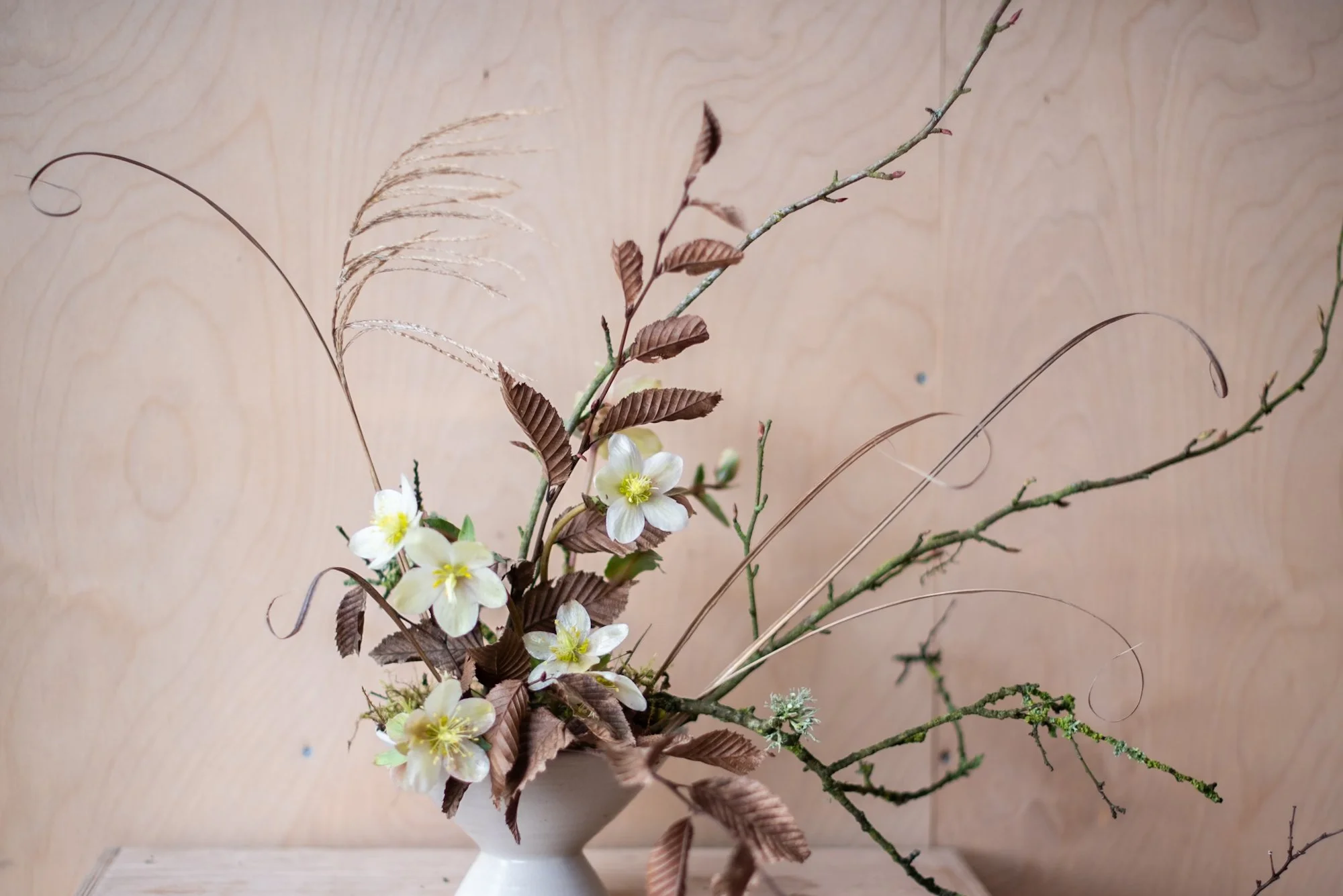
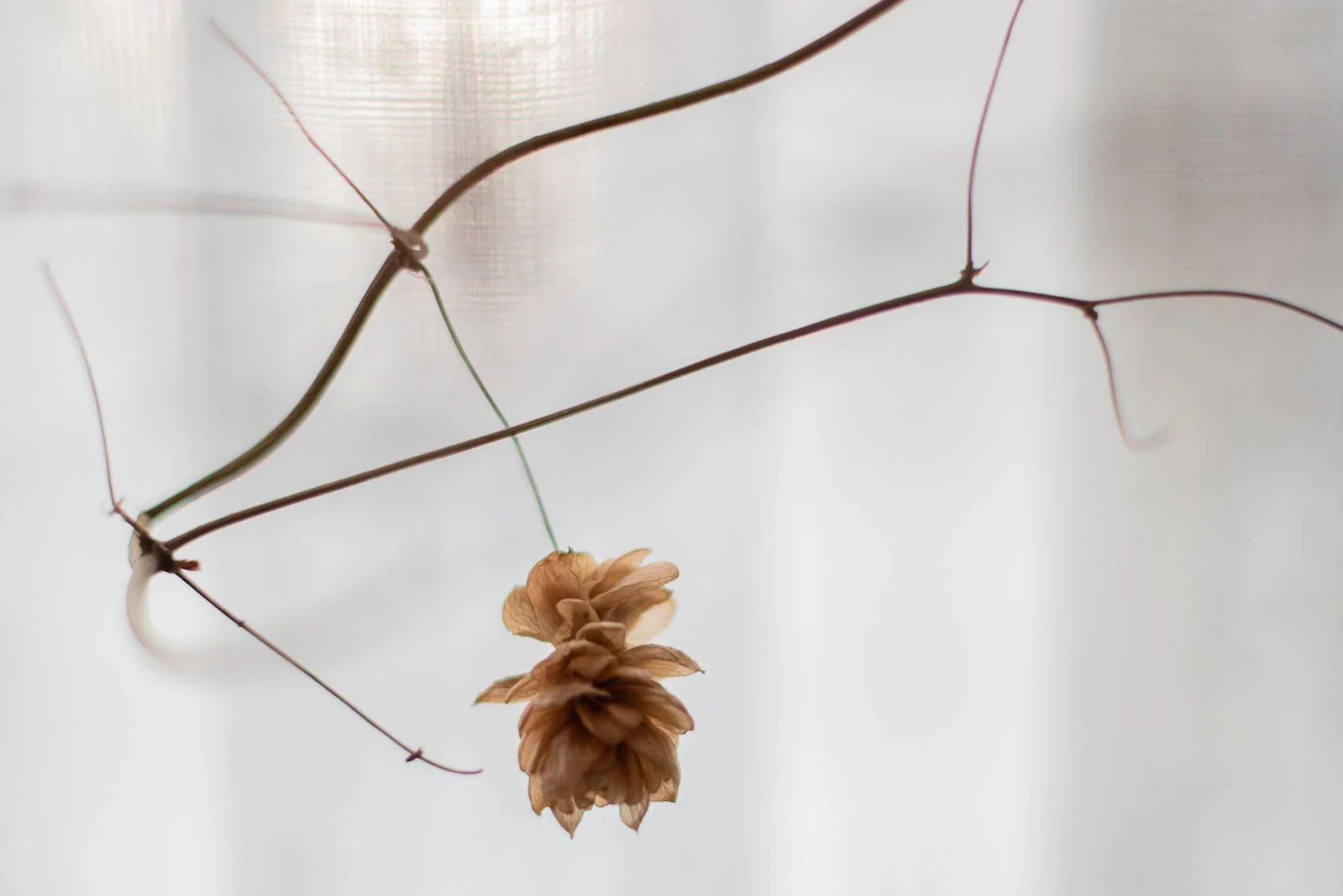
It’s the end of the season; a last flurry of colour and texture in late autumn gently fizzles to the ground with the arrival of the first frost. For the flower arranger, this is a chance to celebrate the fleeting beauty of turning leaves, the dried skeletons of flowers gone to seed and the fragrance of cedar and pine; a time to embrace the quieter rhythm and slower pace of the coldest months of the year. In January and February the emergence of the first spring bulbs spell the beginning of the end of winter; spring is just around the corner.
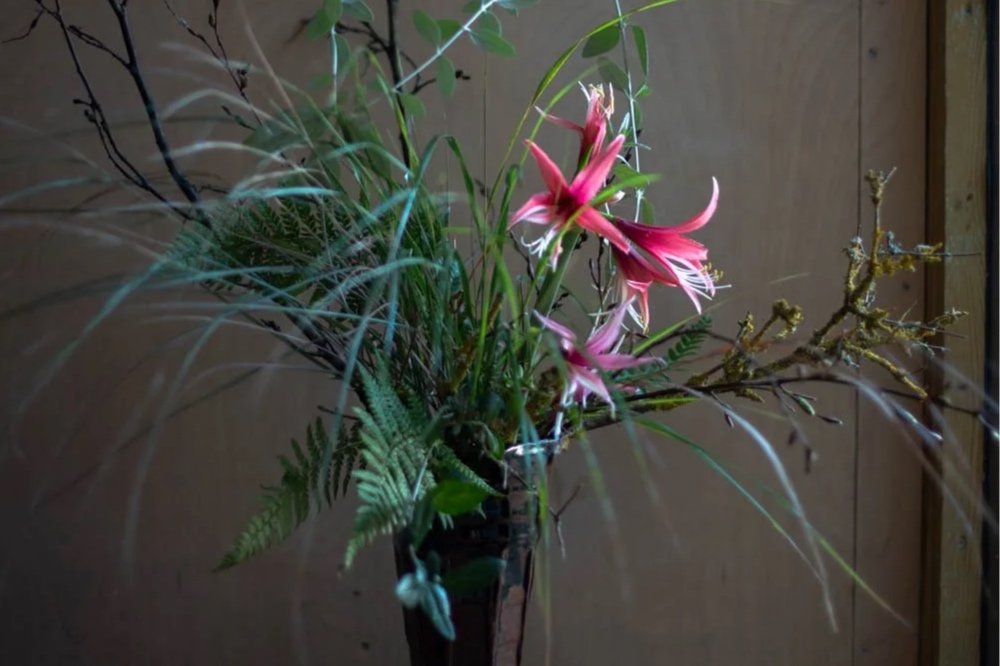
Amaryllis are difficult to arrange, with thick, hollow stems so they are best placed as they grow, upright or slightly leaning, with space around them so that any buds have room to open.
Tree germander is one of my favourite foliages, for the grey-green leaves that, used backwards, display a flash of white underbelly - the stems are slim and curve in all sorts of weird and wonderful ways so they are a great filler and useful for adding height and width too.
This arrangement inspired by Balmoral Cottage for Flowers on Film was an exercise in restraint, in using materials cut only from this particular place and creating a composition entirely made up of branches and leaves.
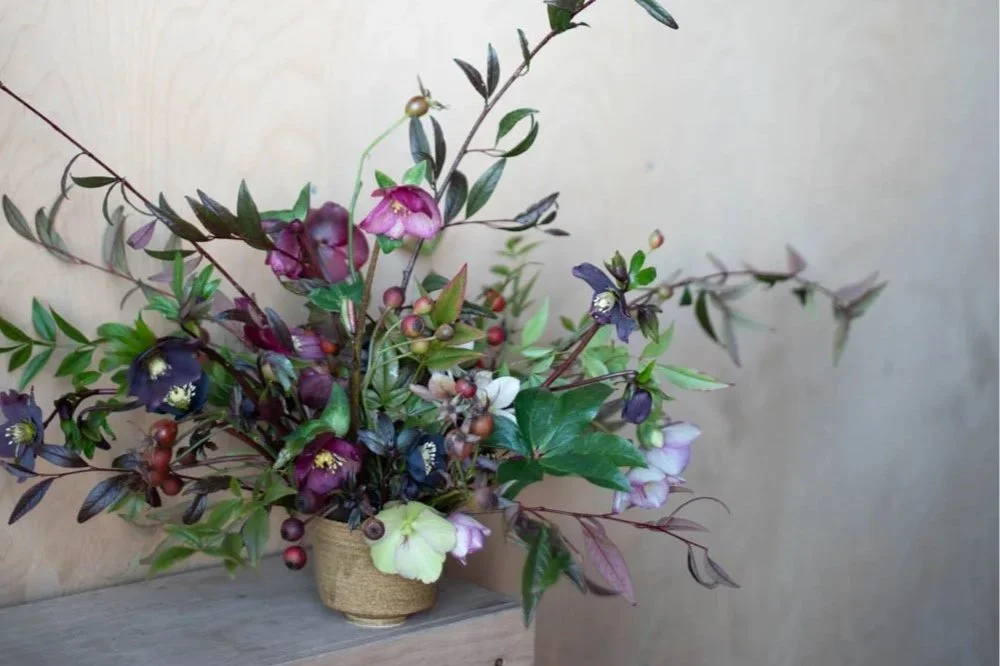
Johnny has been busy pruning roses this week and saved me a generous bucket of hips - those of Rosa ‘Desdemona’ are like plump, rosy little apples, again with that slight smokiness to the colour
In Saxon England, January was known as ‘wulfmonath’ (wolf month). At this coldest time of the year hungry packs of wolves would leave the forests in search of food.
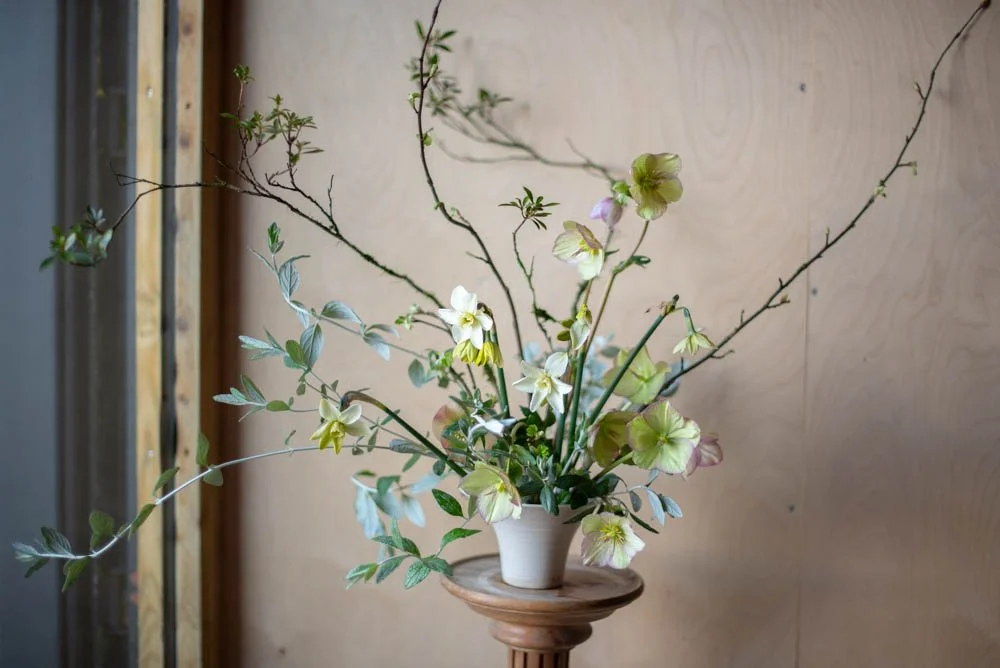
The first arrangement of the year - light and tentative with fine branches and vines and ice-white cyclamen.
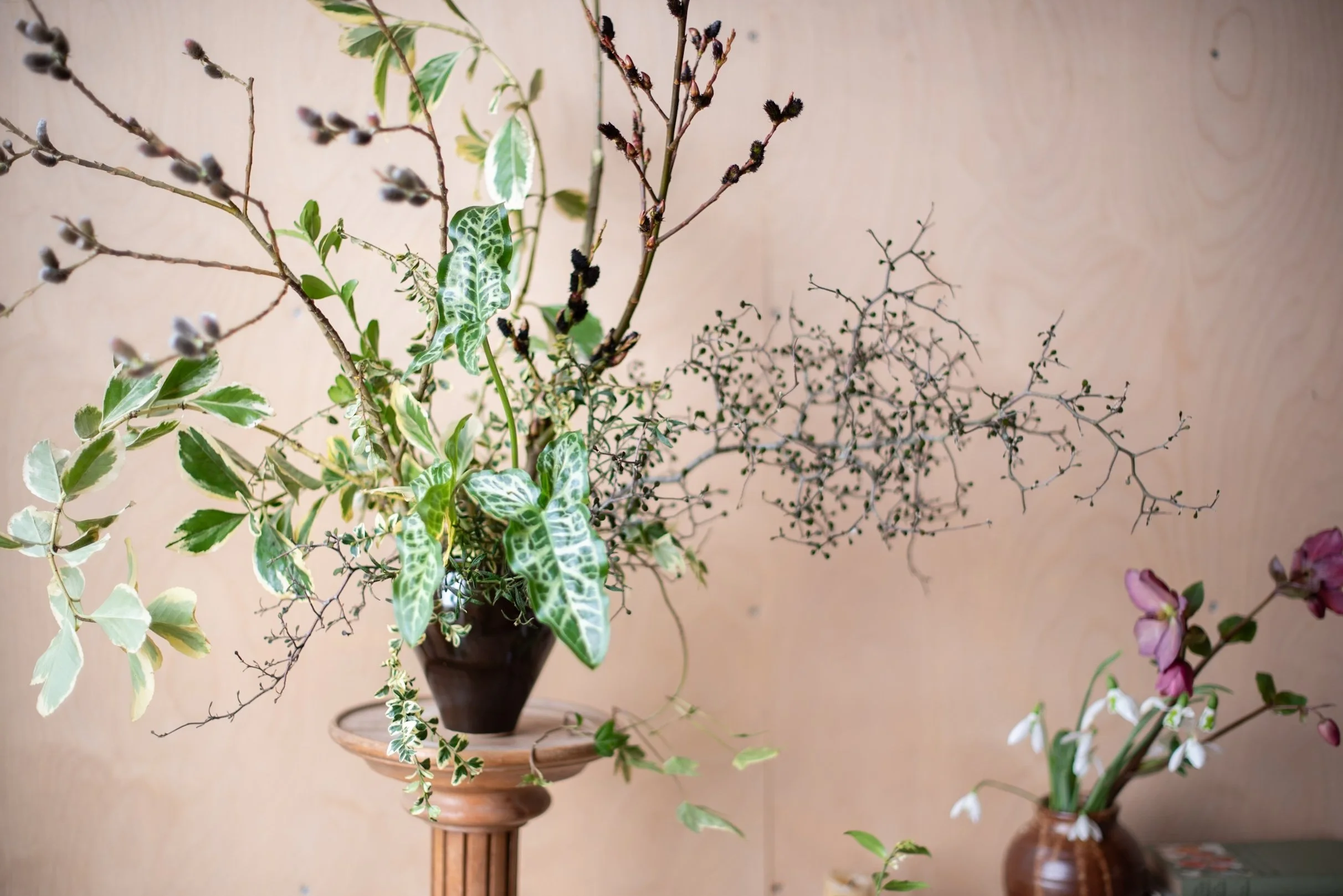
A silvery, seasonal arrangement inspired by a midwinter visit to Chelsea Physic Garden. Featuring muted foliage, sculptural winter skeletons, Majorcan hellebores and a sprinkling of snowdrops.
Foraged botanical treasure in a Japanese tea-bowl featuring intricate bramble stems with the desiccated, rusty berries still clinging to thorny branches.
Taking inspiration specifically from Monet’s garden at Giverny, I choose to use a palette of muted greens and drifting soft pastels interspersed by flaming pops of red from the ornamental quince.
A sprawling, textural hand-tied from the garden as winter turns to spring tied with embroidered silk ribbon.
A delicate bouquet for Valentine’s - a clutch of tiny stems with an oversized swathe of silk taffeta ribbon in palest blue.
Black (or almost-black) flowers can be challenging because they can look like dark holes in an arrangement, especially in dim light.
An arrangement of fresh leaves and flowers combined with dried umbels and skeletal stems from the midwinter garden in a speckle-glazed Korean bowl.
Arranging flowers is experimental and joyful, a chance to be in the moment. As such, these recipes are not intended to be replicated stem by stem. We hope to encourage you to embrace seasonality wherever you are in the world, using what is available from your garden, local florist, flower or farmers’ market, and to introduce you to some special plants along the way. For reference we grow flowers in Hampshire, UK (hardiness zone USDA 8/RHS H4) with a mixture of outdoor and tunnel planting.
