
ROSES OF WINTER
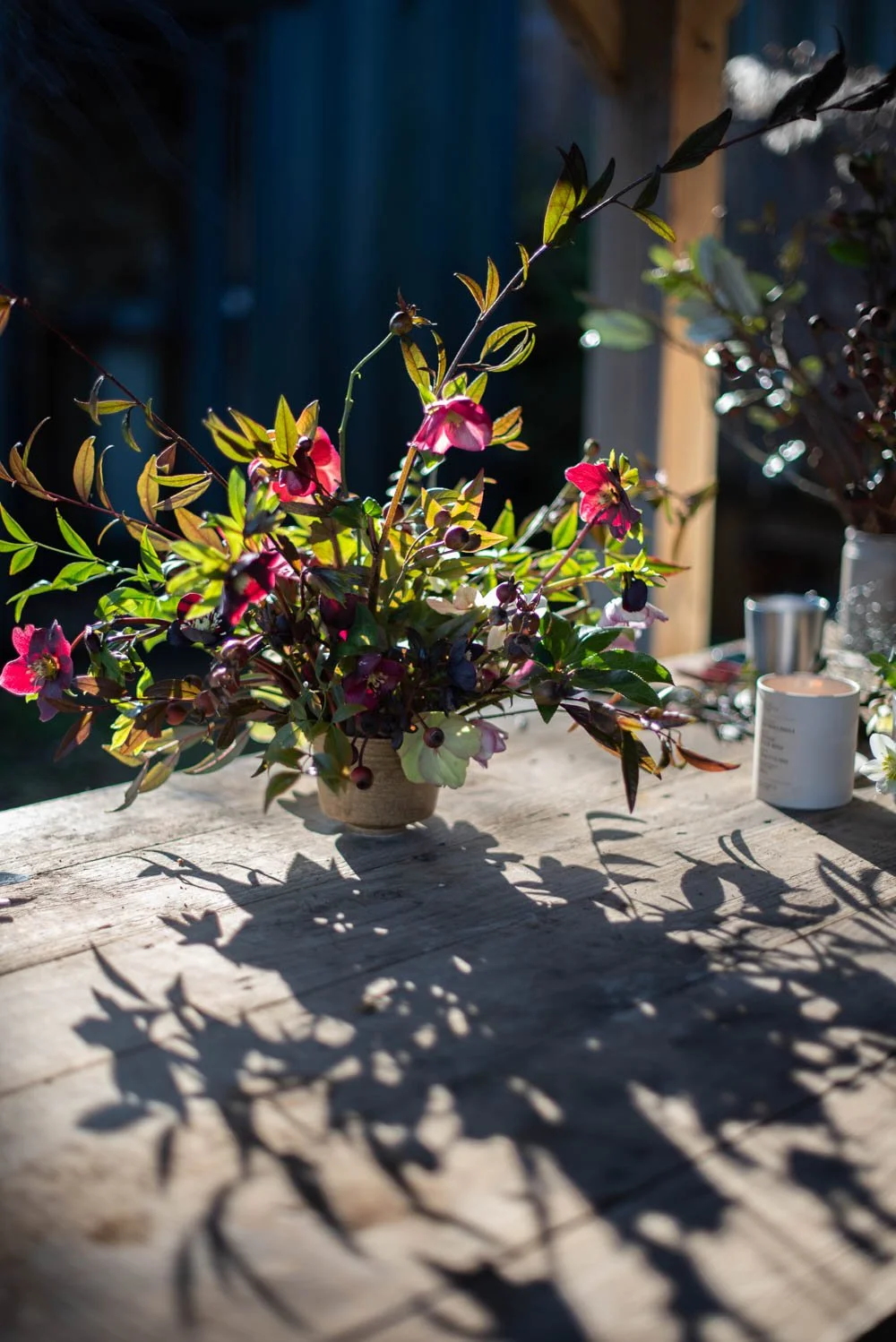
Cotoneaster (Cotoneaster frigidus 'Cornubia')
Christmas rose (Helleborus niger)
Lenten rose (Helleborus x ballardiae 'Maestro')
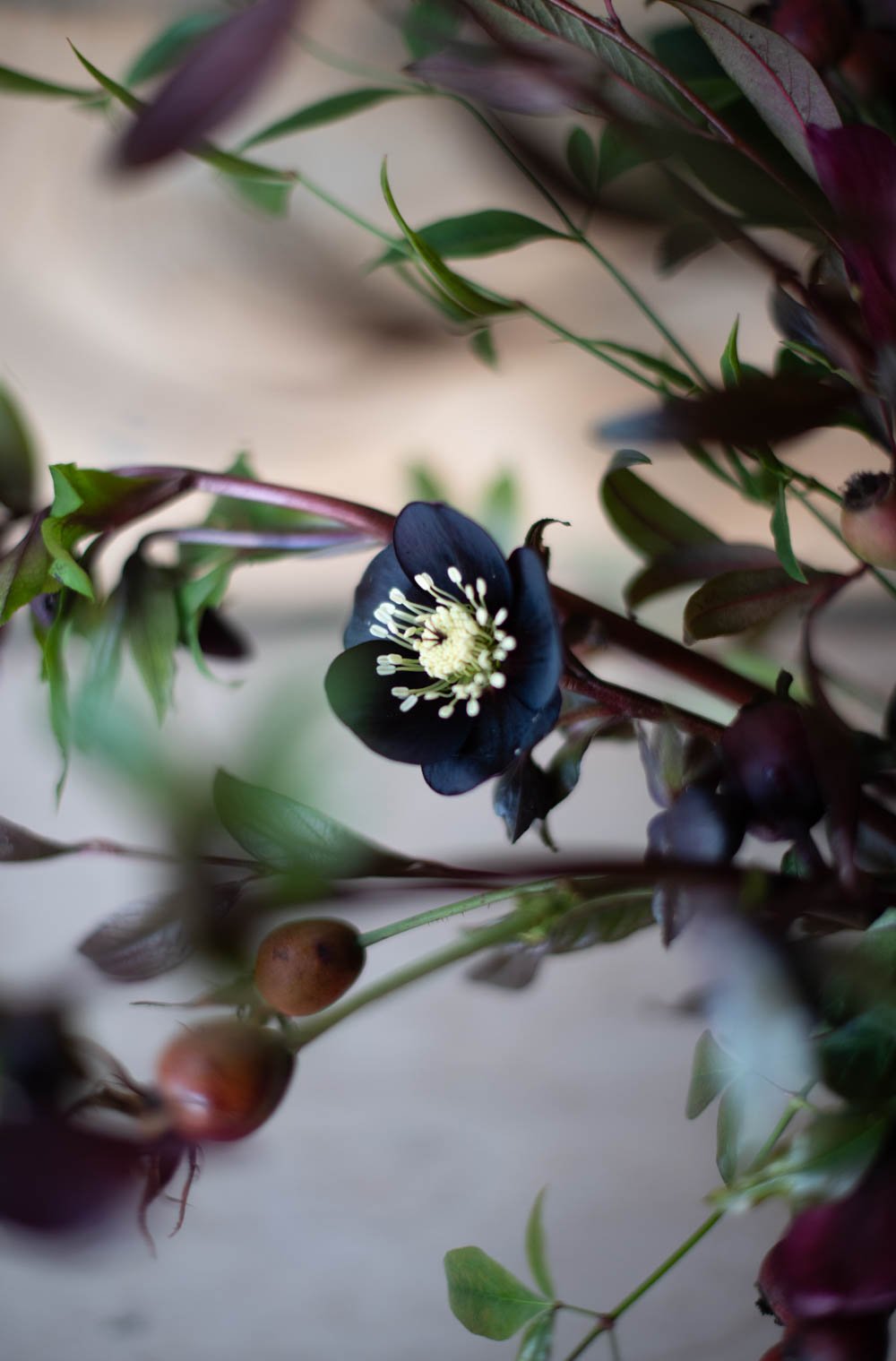
Lenten rose (Helleborus x hybridus 'Harvington Black')
Rose (Rosa 'Desdemona')
Sacred bamboo (Nandina domestica 'Obsessed')
Snow rose (Helleborus x glandorfensis 'Ice N' Roses Picotee')
Snow rose (Helleborus x glandorfensis 'Ice n' Roses Red')
Matcha bowl
Small kenzan
Small scrunch of chicken wire
FEBRUARY
The true winter rose is not one that is flown across continents, grown in equatorial sunshine. Here in the Northern Hemisphere we are still ever so slowly clutching towards lighter days and while the bulbs are inching week by week it will be another four months before the roses are in their first flush. And yet the flower industry is still flogging that dead horse in the lead-up to Valentine’s Day next weekend - from the single stem to the massed bouquet of roses imported from Kenya, Ecuador and Columbia, impossibly pert, rigid, uniform, chemically enhanced and wrapped in plastic. The antithesis of romance. Will we ever learn?
Hellebores, on the other hand, are right here under our noses and two of the primary species - Helleborus foetidus and Helleborus viridus - are native to the UK. They might not make the best cut flower in the world (much better once the papery seed capsules have developed at the centre of the sepals) but they do make an excellent gift as a living plant to be popped into the garden or potted up to soften a shady corner.
Hellebores are a miracle, really. They basically flower in the dark, in the shadows, and in the right conditions, with the right amount of love, they’ll do so cheerfully and quite prolifically from Christmas through to the spring. No matter how few hours of daylight they get or how cold they are they just “keep on buggering on”. I remember our Grandfather, who was stationed in Kenya during WWII, using this expression, one of Churchill’s, I believe, for rallying morale during that time of horror and uncertainty. Newly engaged our Grandmother waited for him for several years, not knowing whether he would come home. Now that’s romance. The hellebore is far more seasonally and symbolically appropriate, conjuring patience and hope and longing far better than any imported rose. She might not be fragrant but she doesn’t smell faintly of chemicals either. We can’t have it all and that’s what living seasonally teaches us - to wait, to be patient, to adapt and to hope for a brighter future.
In this simple arrangement I used several different varieties of hellebore in a gradation of colour from light to dark. To keep it uncomplicated in the foliage department I picked two different foliages - slim, arching branches of cotoneaster for shape and structure and sacred bamboo as a filler - specifically chosen for the elegance of the leaf shape, which are both oval with pointed tips and the colour, suffused with a dusty red darkening to maroon. The hellebores were seared in boiling water for 30 seconds to prevent them from wilting and arranged onto the kenzan by variety, starting with the palest: a picotee snow rose which is a bicolour white and pink, followed by the creamy Lenten rose ( x ballardiae named after the '“Queen of the Hellebores”, Helen Ballard who crossed Helleborus niger with Helleborus lividus to produce a number of our favourite varieties including this one (‘Maestro’) as well as ‘Merlin’ and ‘Camelot’, all of which we have around the garden and plan to consolidate together in our part-shade ‘Wabi-Sabi’ area. I like the look of ‘Pink Frost’ too - on the ever-lengthening plant wish-list!
I continue working through the red and plum flowers shade by shade until I reach ‘Harvington Black’ which has the dusty look of black grapes. The snow roses have a robustly thick stem and large flowers that I would usually cut short but it seems a shame to waste such great stem length at this time of the year. Johnny has been busy pruning roses this week and saved me a generous bucket of hips - those of Rosa ‘Desdemona’ are like plump, rosy little apples, again with that slight smokiness to the colour, and the spherical forms go some way to balancing the weight of the hellebores. I add them liberally, taking the chubbiest clusters off short and gently nestling them between the Nandina and the flower heads and saving the finer stems and the cuter, more petite fruits for elevated, more prominent positions.