
DAHLIA, PHLOX, OATS, APPLES
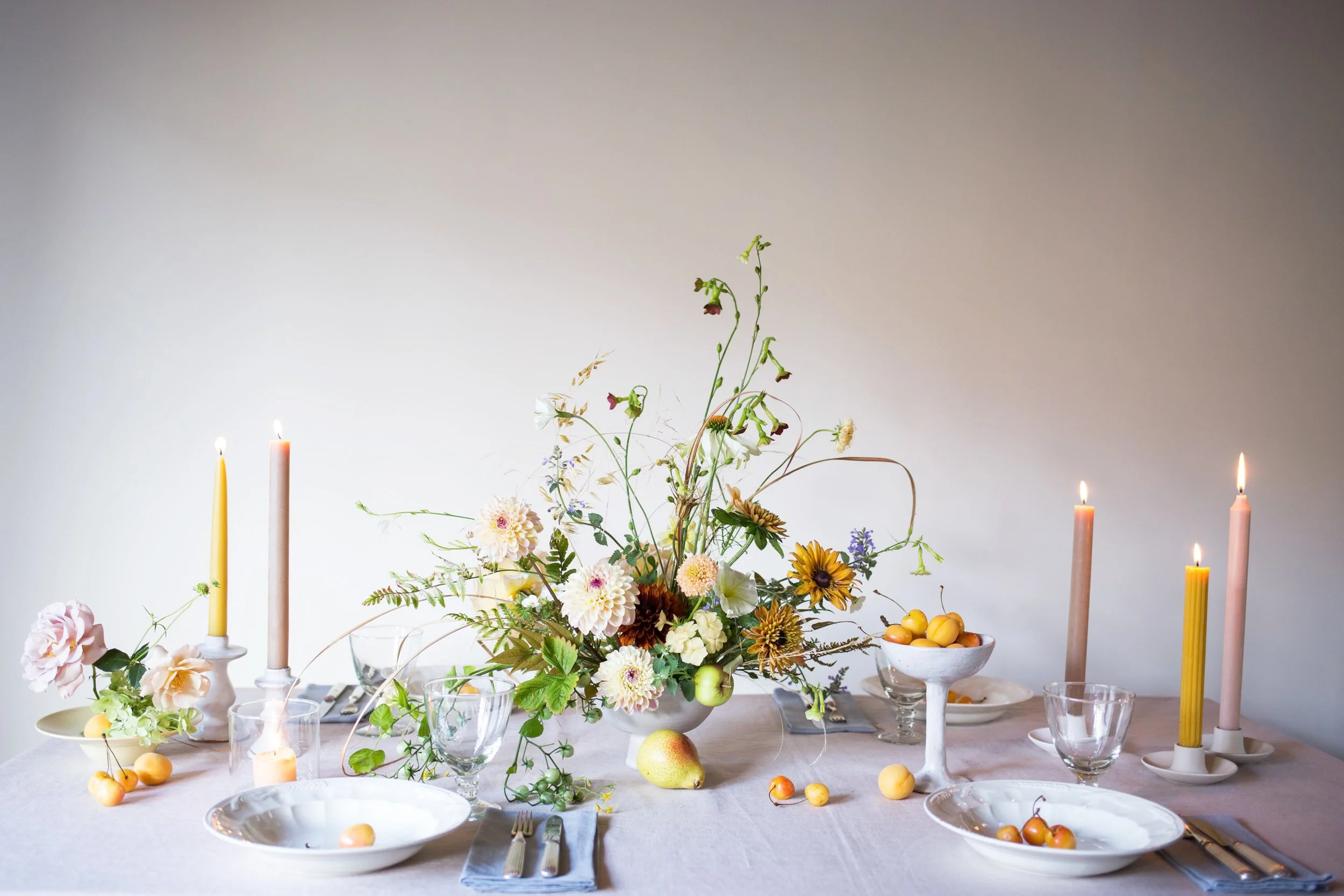
Apple (Malus)
Black-eyed Susan (Rudbeckia hirta ‘Indian Summer’)
Catmint (Nepeta faassenii 'Walker's Low')
Coneflower (Echinacea purpurea ‘White Swan’)
Dahlia (Dahlia ‘Wine-eyed Jill’)
Garden phlox (Phlox drummondii ‘Isabellina’)
Love-in-a-mist (Nigella damascena ‘Miss Jekyll’)
Oats (Avena sativa)
Petunia (Petunia ‘Easy Wave Yellow’)
Sacred bamboo (Nandina domestica)
Strawberry (Fragaria vesca)
Sweet scabious (Scabiosa atropurpurea ‘Fata Morgana’)
Tobacco plant (Nicotiana langsdorffii 'Bronze Queen’)
Tomato (Solanum ‘Sungold’)
Wood fern (Dryopteris)
Footed bowl designed by Aesme Studio
Small scrunch of chicken wire
AUGUST
Jess and I get a lot of our inspiration from restaurants, particularly those that put local, seasonal produce at the heart of their menus. St. JOHN, Sally Clarke’s, Chez Panisse of course. We have been ‘strictly seasonal’ now at Aesme for several years, but we weren’t in the beginning. I think having that connection with the seasons, with what is naturally growing, flowering, fruiting, is - and always was - our raison d’etre as a creative business. But at first seasonality felt like such a loaded issue (I’m talking real seasonality, not the way the word is bandied about as a marketing term with only the loosest attachment to the truth); for many years we shied away from using language that we felt would be off-putting to potential customers. We needed bread and butter jobs, and desperately needed experience. We didn’t have the confidence to say ‘no’ and perhaps that was because we hadn’t yet fully realised our ‘why’ (more on this another time!).
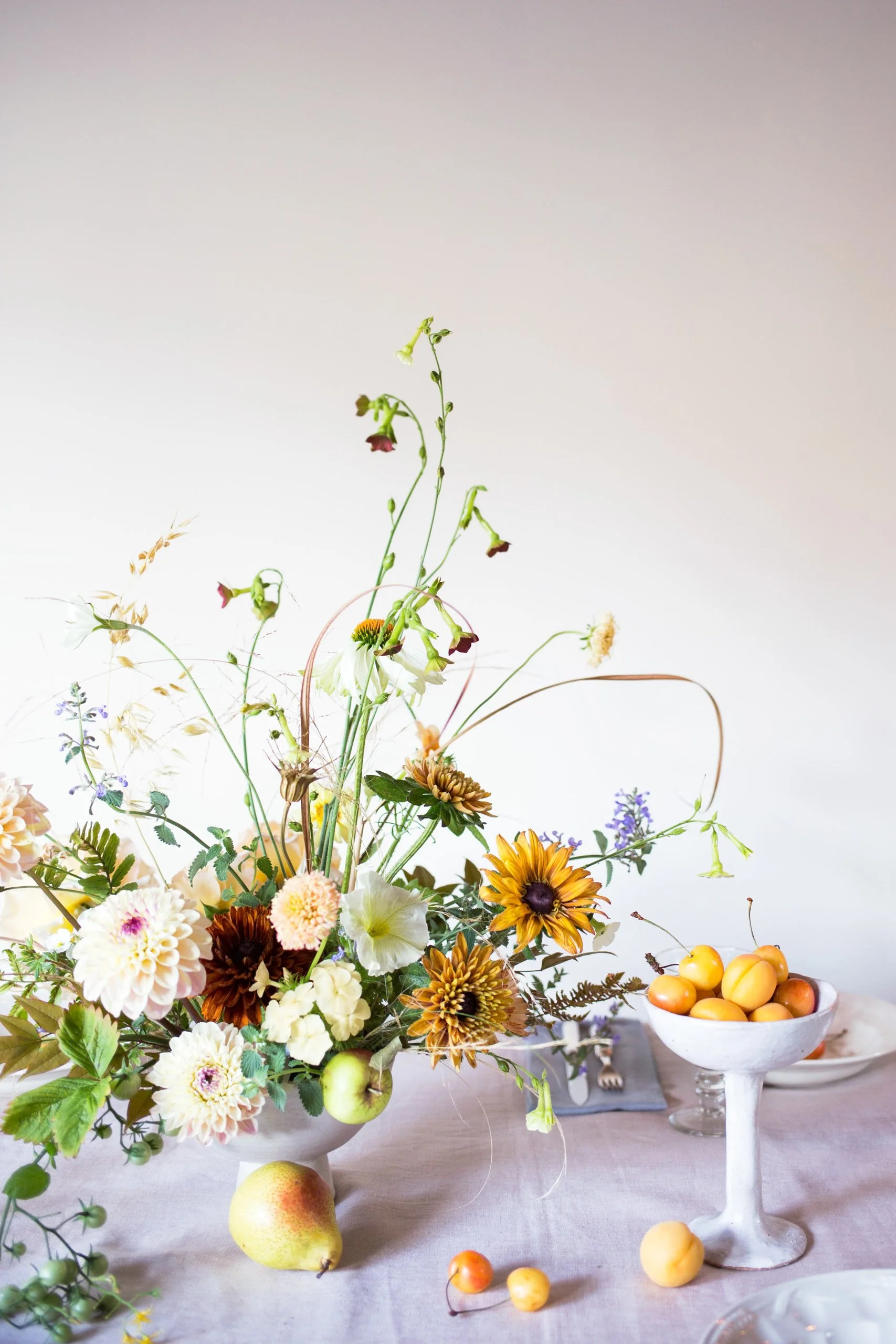
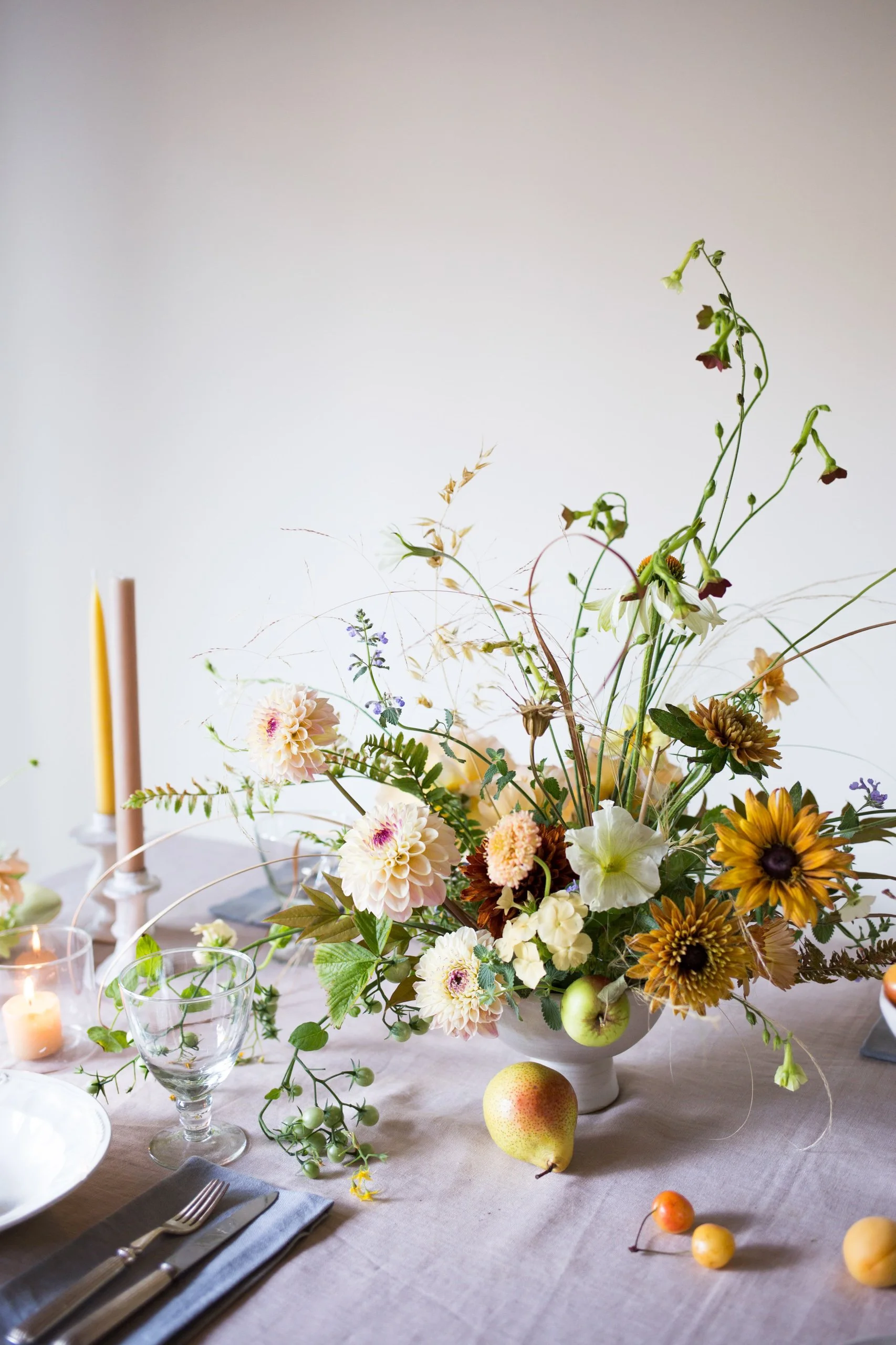
I could use ‘nose-to-tail’ eating as a metaphor to describe how we think about our own produce, and how we use our garden too, and perhaps that’s because it’s a concept people are familiar with from the food world. When it comes to the plants, we look at the whole, not just the flower. And we look at the whole season - from buds and shoots through blooms, fruits, pods, skeletons. We try to avoid wastage as much as possible. When I’m cutting stems I’ll always amass a pile of off-cuts - leafy snippets, side stems. Instead of sweeping them into the green waste, they get used as filler or for last-minute tweaks. We compost - a circular economy. And we use weeds, from the garden and locally foraged - brambles, wild roses, dead nettle, celandine, campion. Materials that are drying and going to seed - blades of grasses, drying ferns, nigella seedpods. Anything useful can be beautiful and anything beautiful can be useful.