
THERE IS MORE TO AN ARRANGEMENT OF FLOWERS THAN MEETS THE EYE
“from the moment i stepped in the aesme studio, I could tell that this was about much more than arranging flowers…”
alarie
The AESME SCHOOL OF FLOWERS specialises in NATURALISTIC design with a focus on SEASONALITY, exploring the CONNECTION between the GARDEN and the VASE
Born out of a desire to share an alternative way to arranging and working with flowers, the AESME SCHOOL OF FLOWERS is a flower school with a difference. Why? Because seasonal, special and unique materials are at the forefront of everything we do.
Our courses are for enthusiastic beginners, those trained in an alternative style or exploring a transition from another background entirely. We welcome flower arrangers from all over the world - professional, amateur and aspiring - owners and employees of flower shops and studios, wedding designers and flower farmers. You certainly don’t have to be a florist - previous students have included lawyers and doctors, cooks and artists, gardeners, photographers, scientists and psychologists. Some go on to study garden design, to incorporate naturalistic design in hotels and restaurants, to photograph or paint flowers. Many are home arrangers for whom time with flowers is a personal practice.
You will learn:
The unique qualities and characteristics of an extensive, varied range of plants from herbaceous perennials, shrubs and vines, to flowering bulbs, fruits, vegetables, wildflowers and weeds
The importance of careful cutting and conditioning
How to create ‘recipes’ for arrangements from organic, wild and garden-grown material
Sustainable floristry techniques including twine-tied bouquets, kenzans, chicken wire and structural natural materials in small and large scale designs
Where to find inspiration for naturalistic designs in gardens and the wider landscape
How to apply the fundamental elements of design to your work and to experiment playfully and effectively with colour, proportion, shape and symmetry
our school is first and foremost about connecting PLANTS and PEOPLE
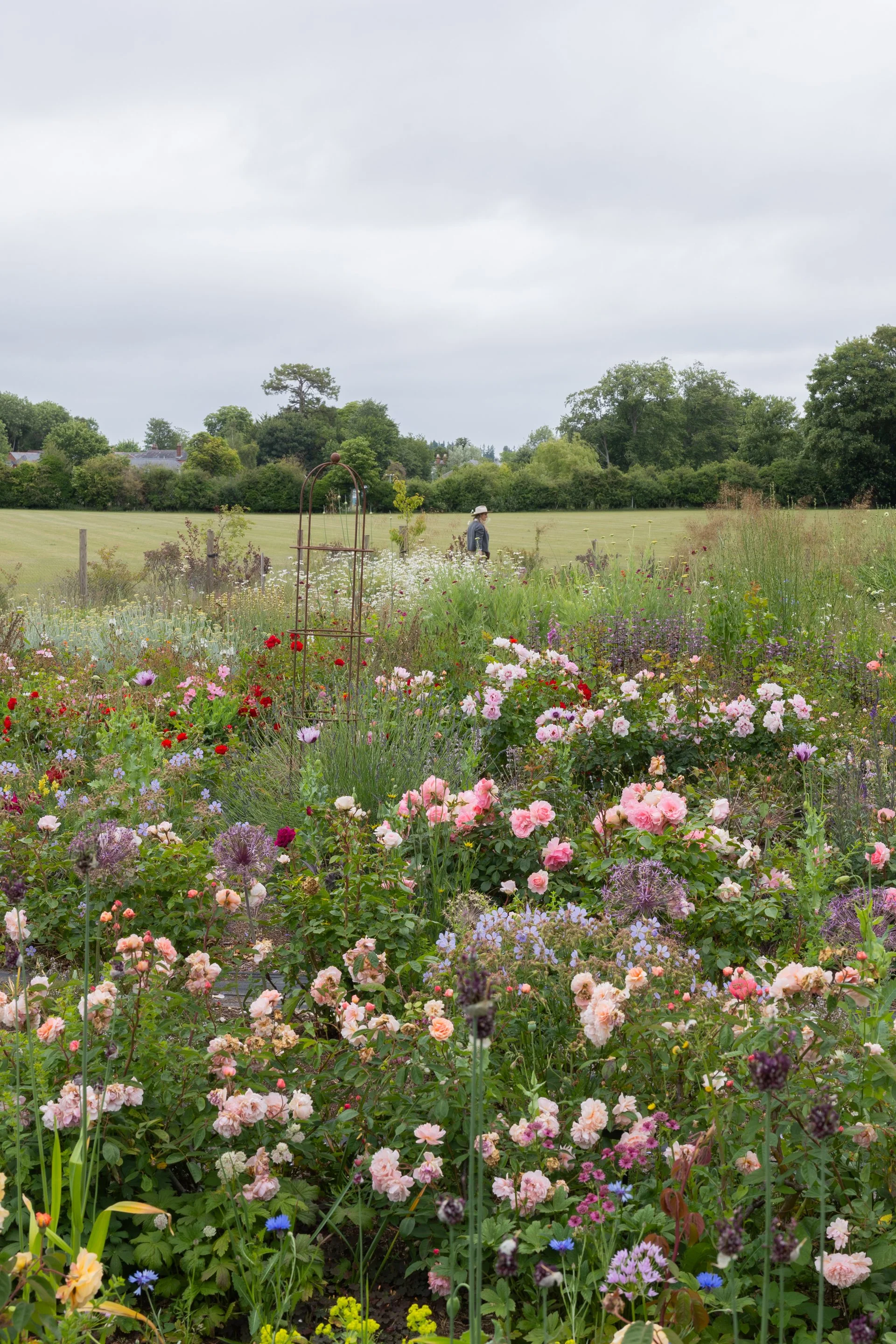
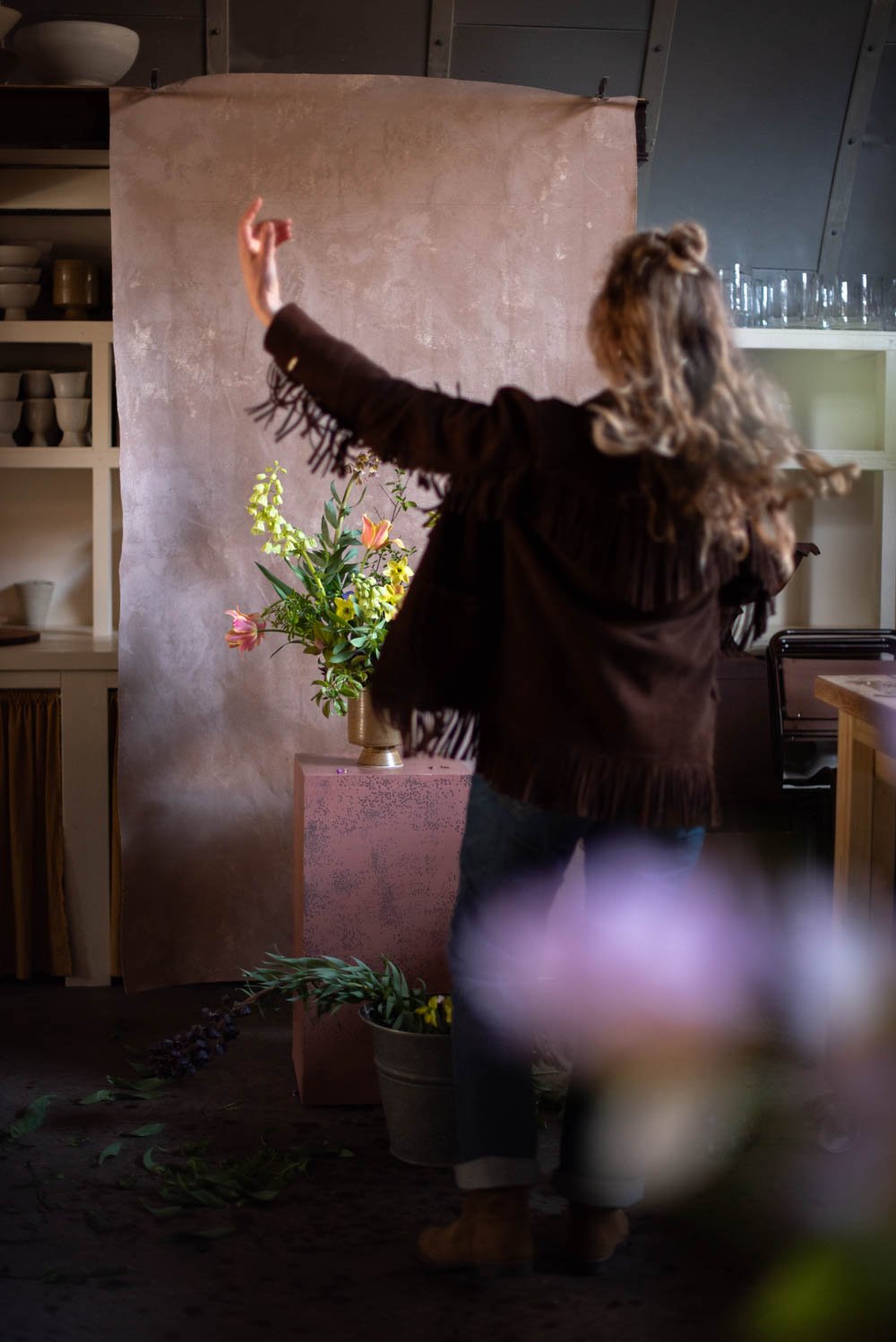
Classes are all taught in a converted railway arch just north of Shepherd’s Bush Market in West London. A tranquil oasis amongst the concrete and noise of the city, for each course students are surrounded by an extraordinary array of fresh flower produce, harvested weekly from our plant collection in the Hampshire countryside.
We apply a gardener's sensibility to flower arranging, working in rhythm with the seasons and respecting the natural life cycle of plants. Despite their cosmopolitan location, all our courses are therefore firmly rooted in the garden, connecting students directly to the weather, the season outside.
The garden
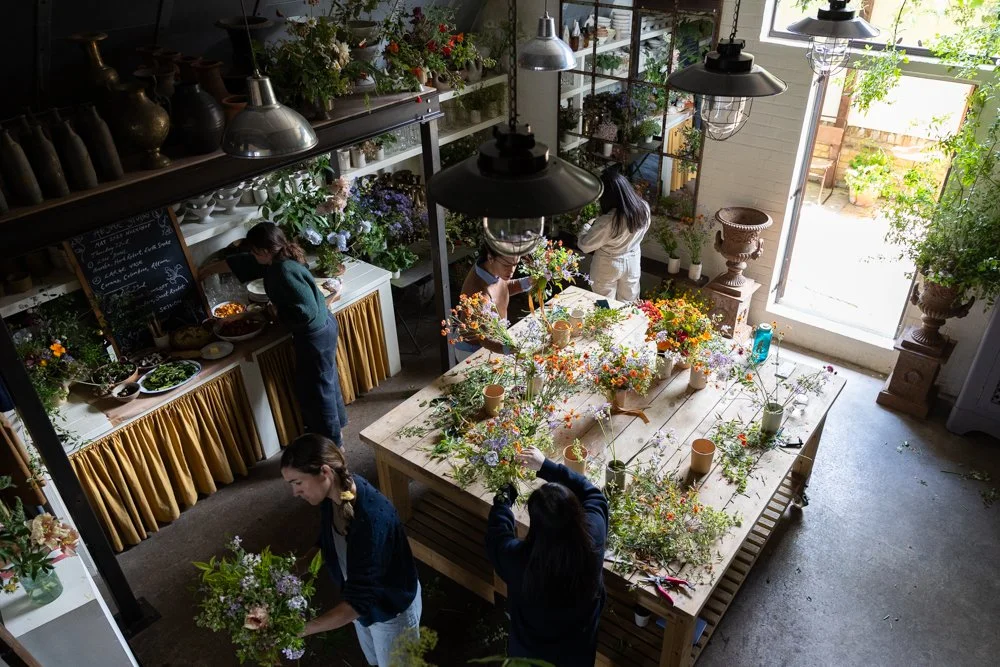
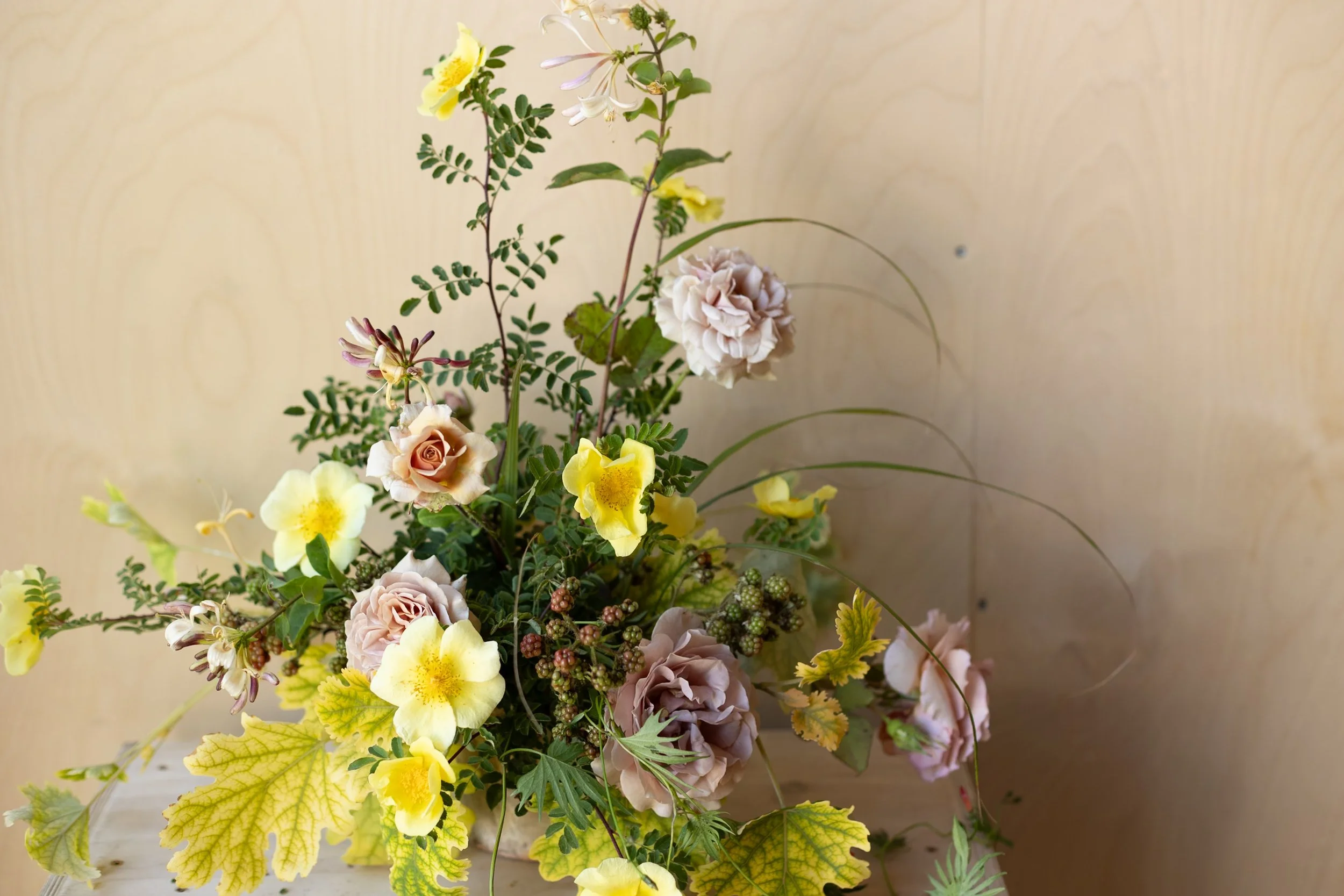
Our courses celebrate the artistry of arranging flowers. Every arrangement is an expression of its maker, a personal exploration and to this end, an exercise in individuality. But flower arranging is also the expression of shared values and the conduit to a wider conversation.
At the AESME SCHOOL OF FLOWERS every student has the opportunity to experience the beauty and variety of garden flowers through their organic forms, textures and colours, to learn about the plants our flowers come from and to reject hierarchy, making arrangements with everything from weeds and wildflowers to fruits and vegetables. Whenever you choose to join us, you will be surrounded by extraordinary natural materials - blossoming and decadent, wild and weedy, edible, medicinal and scented.
There is so much more to an arrangement of flowers than meets the eye. After gardening, making arrangements is perhaps the closest many of us will come to a tactile, intimate experience of the natural world. With nature quite literally at our fingertips, this is the ideal place for learning.
By studying at the AESME SCHOOL OF FLOWERS you will equip yourself with the tools to approach your design work and creative practice with integrity, depth and direction.
We encourage our students to be curious about their materials, to dig a little deeper. Where did this plant originate from? In what conditions does it grow? Which insects does it sustain? Is it edible? Medicinal? A beautiful botanical world is waiting to be discovered. Follow the threads and see where they lead you.
“What a joy it was to have been with you last week; you taught me more than you might know and showed me how to look at the world in a different way”
leith
☞ READ A POTTED HISTORY OF THE SCHOOL
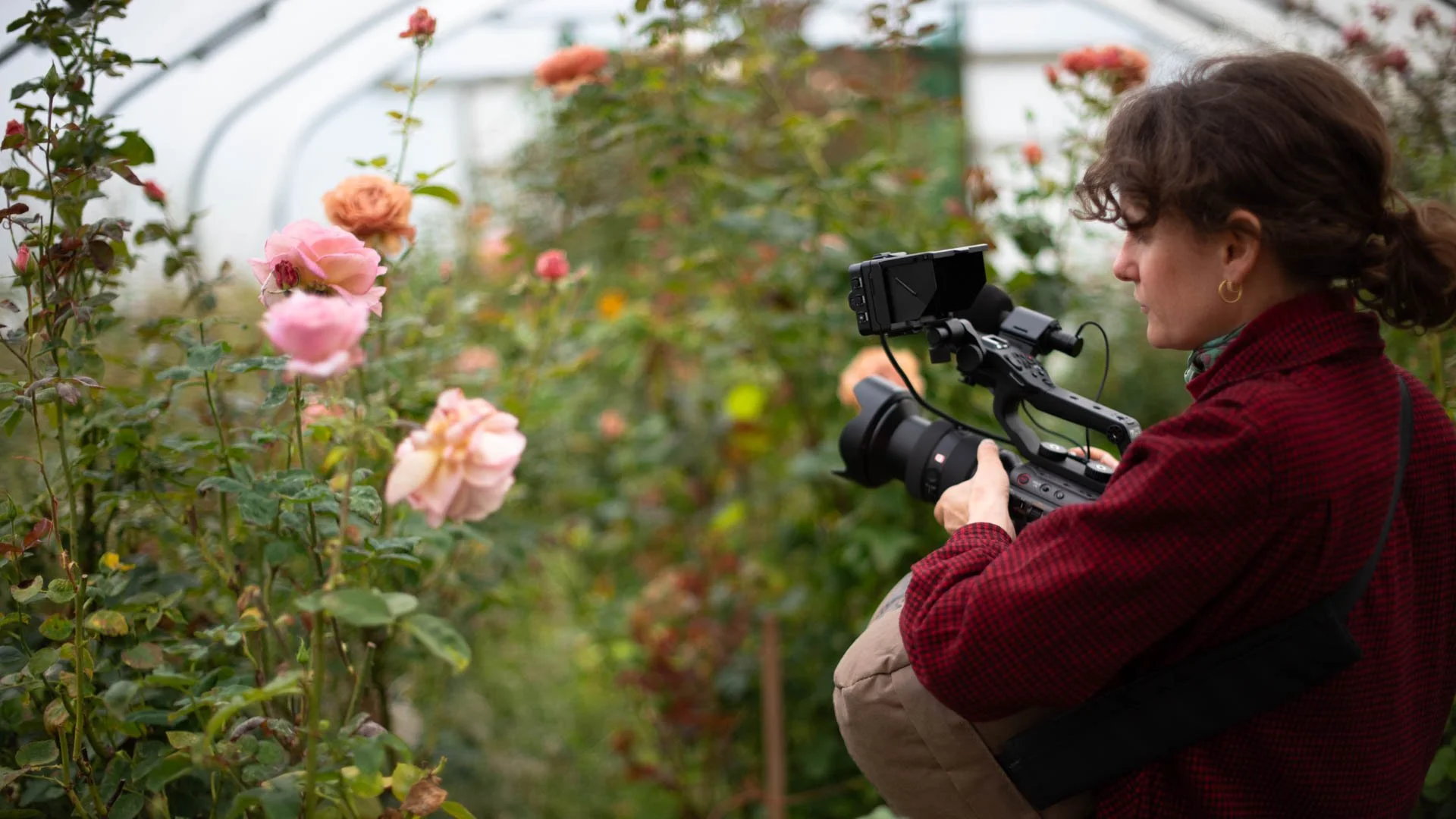

Techniques
We teach lots of different sustainable techniques including hanakubai, penholders and chicken wire
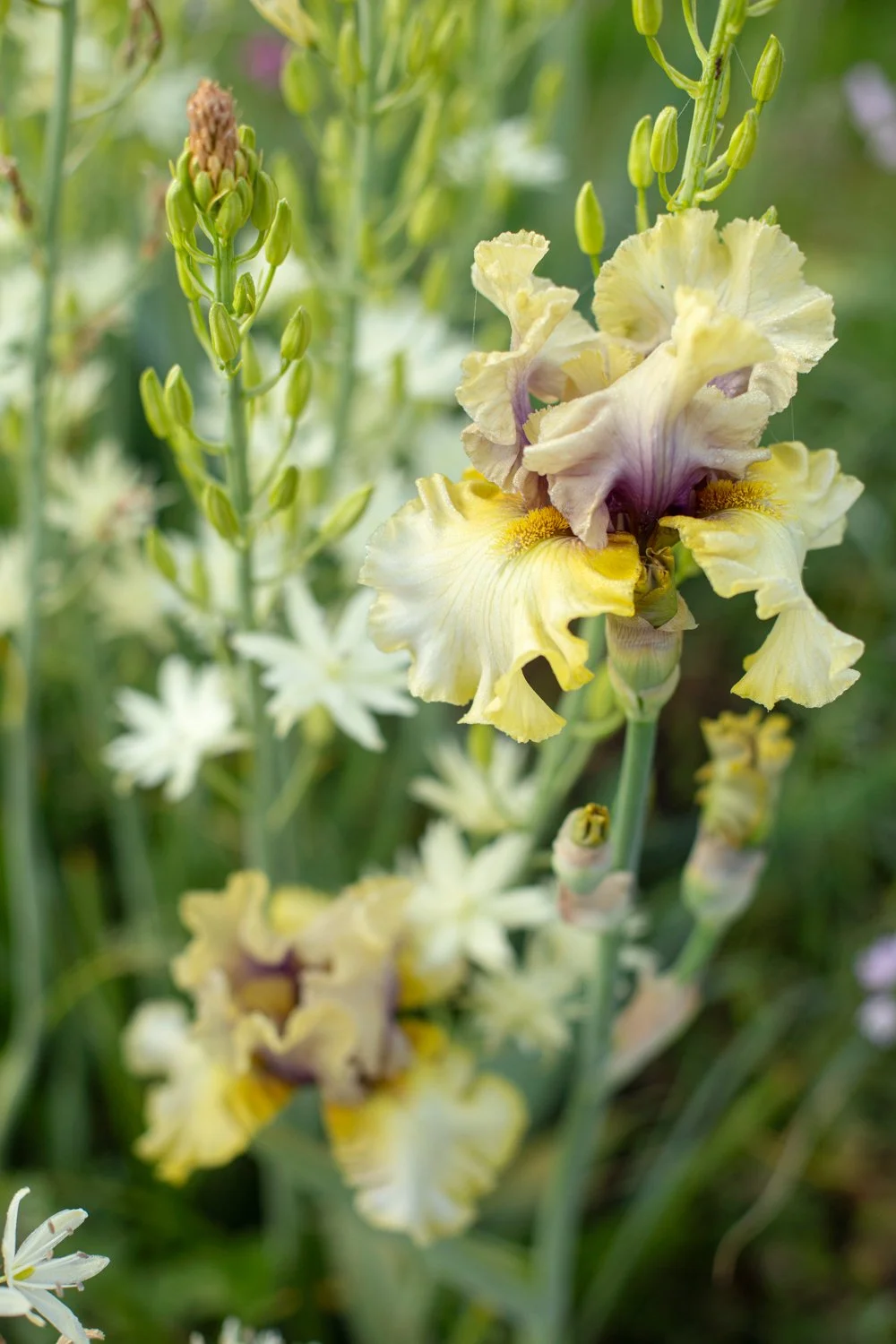
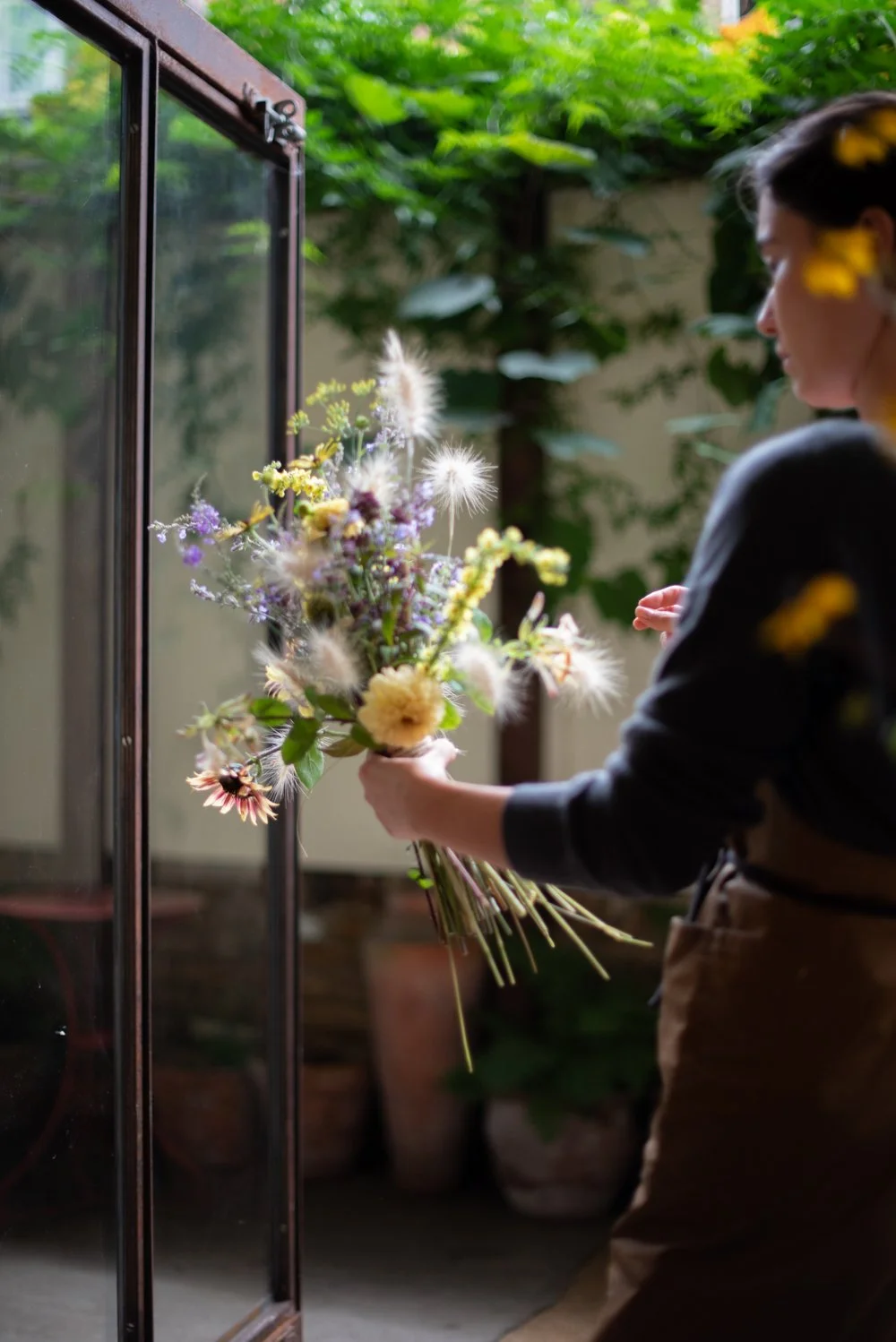
Each person who attends a workshop will have their own relationship with flowers, different levels of skill and experience and a personal goal in mind. We sensitively adapt our teaching styles for each guest, starting with the basics of practical techniques (hand-tieds, kenzans, chicken wire) and encouraging individual experimentation with colour, proportion, shape and symmetry.
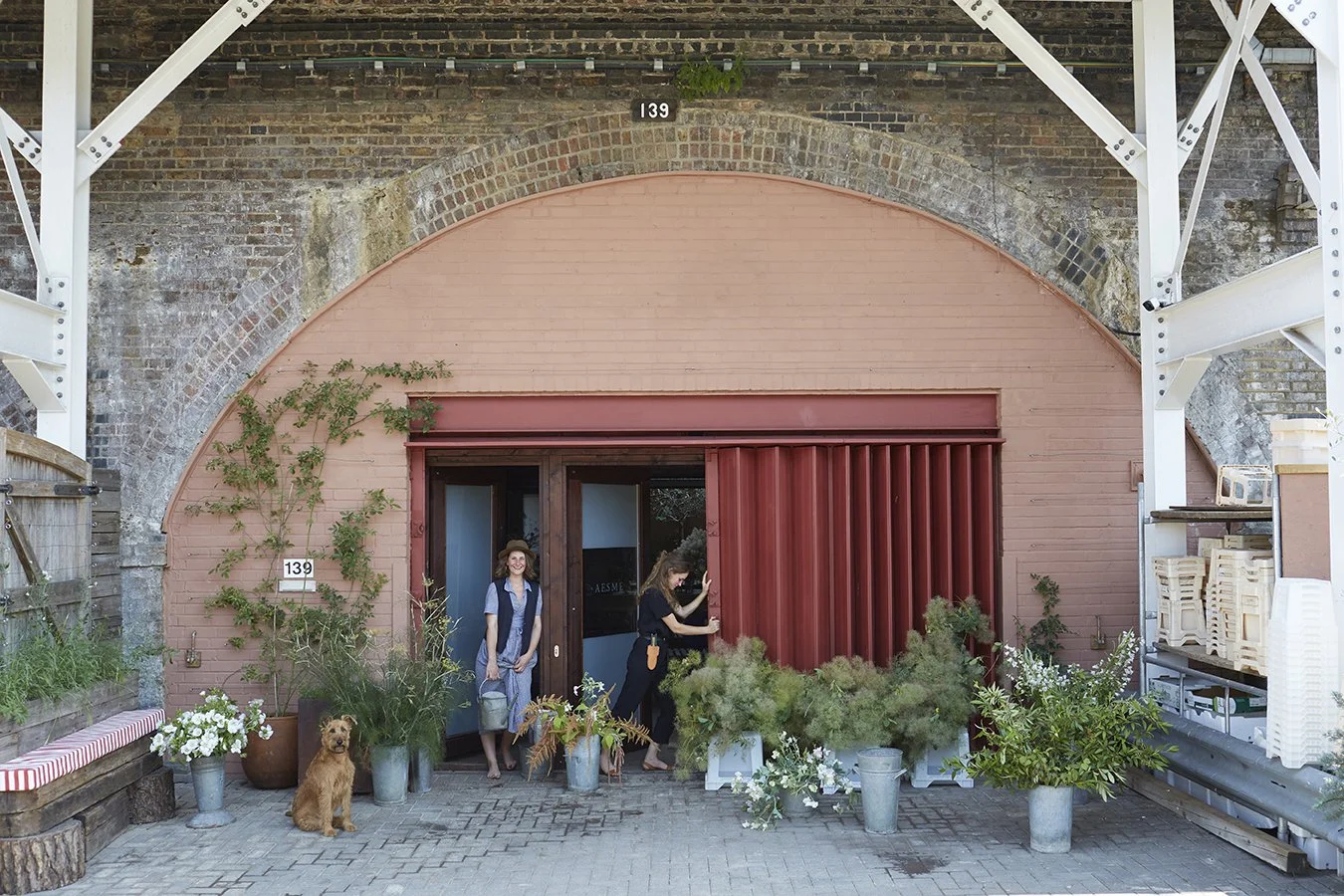
Aesme Studio was started by sisters Jess and Ally Lister in 2015 in a railway arch in Shepherd’s Bush, West London.
A
e
expression
We believe in prioritising a dynamic creative process over the end product. Spirit over style. It is the active creation of an arrangement that provides the opportunity for self expression, a way to evoke emotion and ideas, inner thoughts and beliefs. In the composition of a flower arrangement is the means for reflection, healing, meditation, self care and ritual.
s
seasonality
Sourcing locally and seasonally is nothing new. It’s the most ancient way of sourcing our food - and our flowers, too. In our work we acknowledge that natural materials are not ‘a given’ at any time of the year; they have their moment and then they are gone. In the UK we have distinctly different seasons, our ingredients changing daily, weekly, monthly, and our arrangements reflect this in the vase, celebrating the natural world that we’re privileged to be a part of.
M
e
teaching manifesto
Flower arrangement is an ancient art form, a human practice woven into our very existence on this earth. In a rapidly modernising world people have become disengaged with where flowers come from, how they are grown, harvested, which season they belong to. In many ways we have lost the very reason for arranging them - as a bridge to the natural world. This is prevalent in all aspects of floriculture in large scale production of flowers throughout the entire education system and across the events industry.
For the past decade our studio has striven to distance itself from a wider floral culture at odds with nature, seeking new ways of practising the arrangement of flowers. Our aim through the AESME SCHOOL OF FLOWERS is to offer an educational alternative for those looking to do the same. We have created a School that offers much more than simply an education in floristry. Infinite care is taken, from the selection of seasonal ingredients to the colour palettes and recipes, the music playing, the sequence, pace and flow of each session, right down to the ceramic vessels we’ve designed for every shape and size of arrangement.
We believe that learning about flowers and plants has the power to affect momentous change in our lives. How we think about the world around us, what we notice, the way we eat, how we shop and consume, how we garden and decorate, how we dispose of things, how we feel about ourselves and others and the world at large. How we deal with stress and even how we reconcile our own mortality.
The following five principles are what AESME stands for.
materials
The provenance and quality of our produce is of paramount importance. We foster a deep respect, a sense of reverence and responsibility, for the materials we are lucky enough to use in our work. Organically grown with skill and passion, untainted by chemicals, our flowers are hard-won, and we appreciate them all the more for it. They are the crux, the reason, the endgame. These ingredients are fragrant, surprising and nuanced, safe to handle and to sniff!
ecology
Working in a naturalistic way with an emphasis on sustainability means looking closely at the plants we take our materials from and all the elements that affect them – the season, the weather, the soil, the insect life and biodiversity. The arrangements that result from this care and knowledge have a meaningful and evocative quality that speaks of that particular time of the year, the land they come from and the wider environment.
artistry
The artistic composition of flowers is a highly skilled craft involving trained handwork and precision, study of the natural world and the constant handling and editing of plant material over many years to become fluent. This blend of technique, design theory, imagination and individual instinct through the medium of flower arrangement makes it a uniquely rewarding creative practice.
2026 COURSES
“…Naturalistic Flowers is not a manual for the budding florist, despite appearances. Sure, every chapter might come with a ‘recipe’, an ingredient-style list detailing the components of their arrangements. But there’s an acknowledgement between writer and reader that the recipes are there to spark interest, rather than provide instruction. We may never track down that spiny starwort picked up in Provence, nor spy a red-flowered bladder senna off the north coast of Norfolk. But that would be beside the point: we can look out for similar substitutes closer to home. Intuition and adaptation are the real lessons here.”
“…Naturalistic Flowers is not a manual for the budding florist, despite appearances. Sure, every chapter might come with a ‘recipe’, an ingredient-style list detailing the components of their arrangements. But there’s an acknowledgement between writer and reader that the recipes are there to spark interest, rather than provide instruction. We may never track down that spiny starwort picked up in Provence, nor spy a red-flowered bladder senna off the north coast of Norfolk. But that would be beside the point: we can look out for similar substitutes closer to home. Intuition and adaptation are the real lessons here.”
☞ FIND OUT MORE
“…Naturalistic Flowers is not a manual for the budding florist, despite appearances. Sure, every chapter might come with a ‘recipe’, an ingredient-style list detailing the components of their arrangements. But there’s an acknowledgement between writer and reader that the recipes are there to spark interest, rather than provide instruction. We may never track down that spiny starwort picked up in Provence, nor spy a red-flowered bladder senna off the north coast of Norfolk. But that would be beside the point: we can look out for similar substitutes closer to home. Intuition and adaptation are the real lessons here.”