
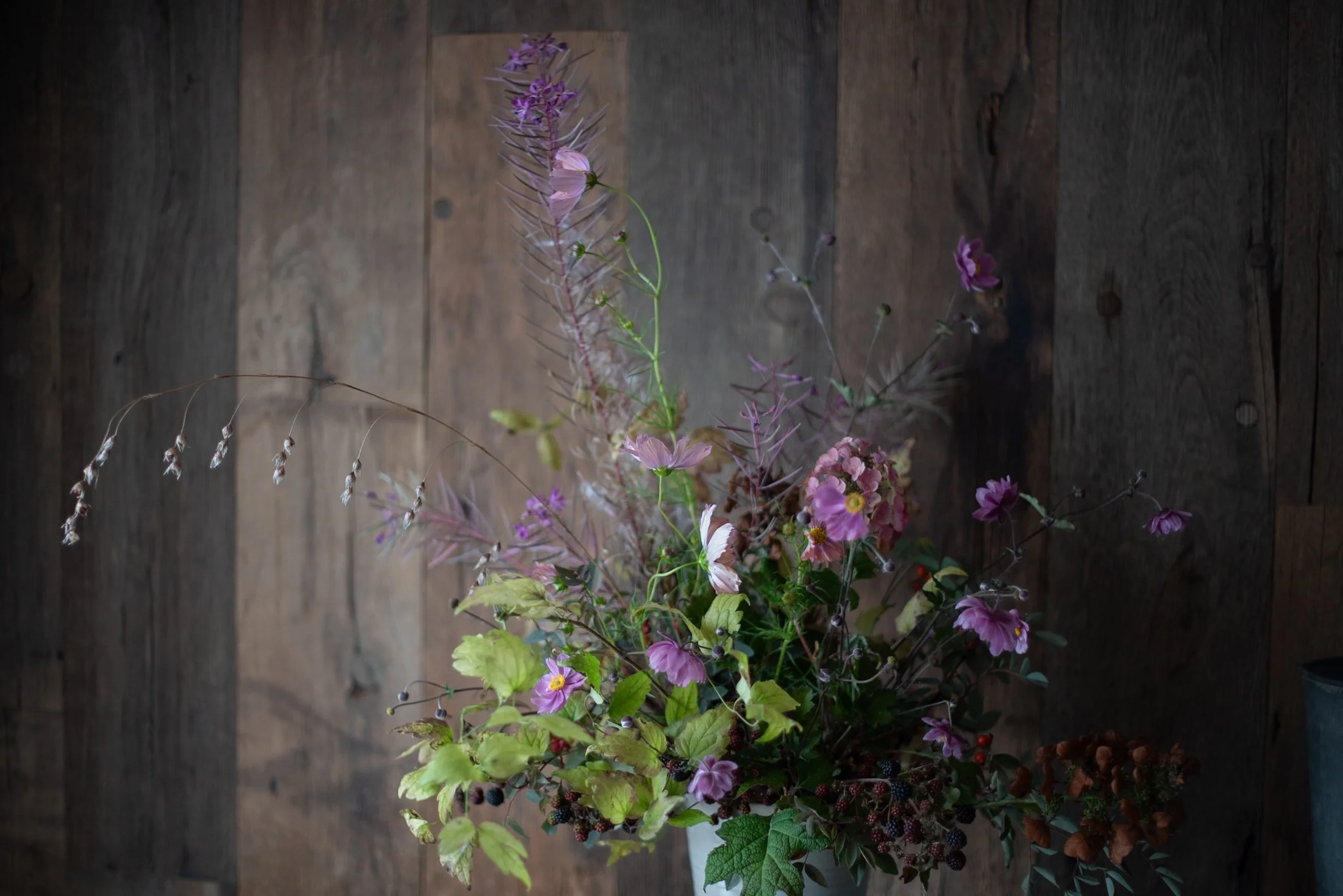
FIREWEED & RED LEAF ROSE
Hana kubari is a great technique to have up your sleeve for wide-necked vessels and there is something about using all natural materials that is satisfyingly self sufficient. The branches are carefully cut to the internal diameter of the vase and cross over one another to create an ‘X’ shape
Angel’s fishing rod (Dierama pulcherrimum)
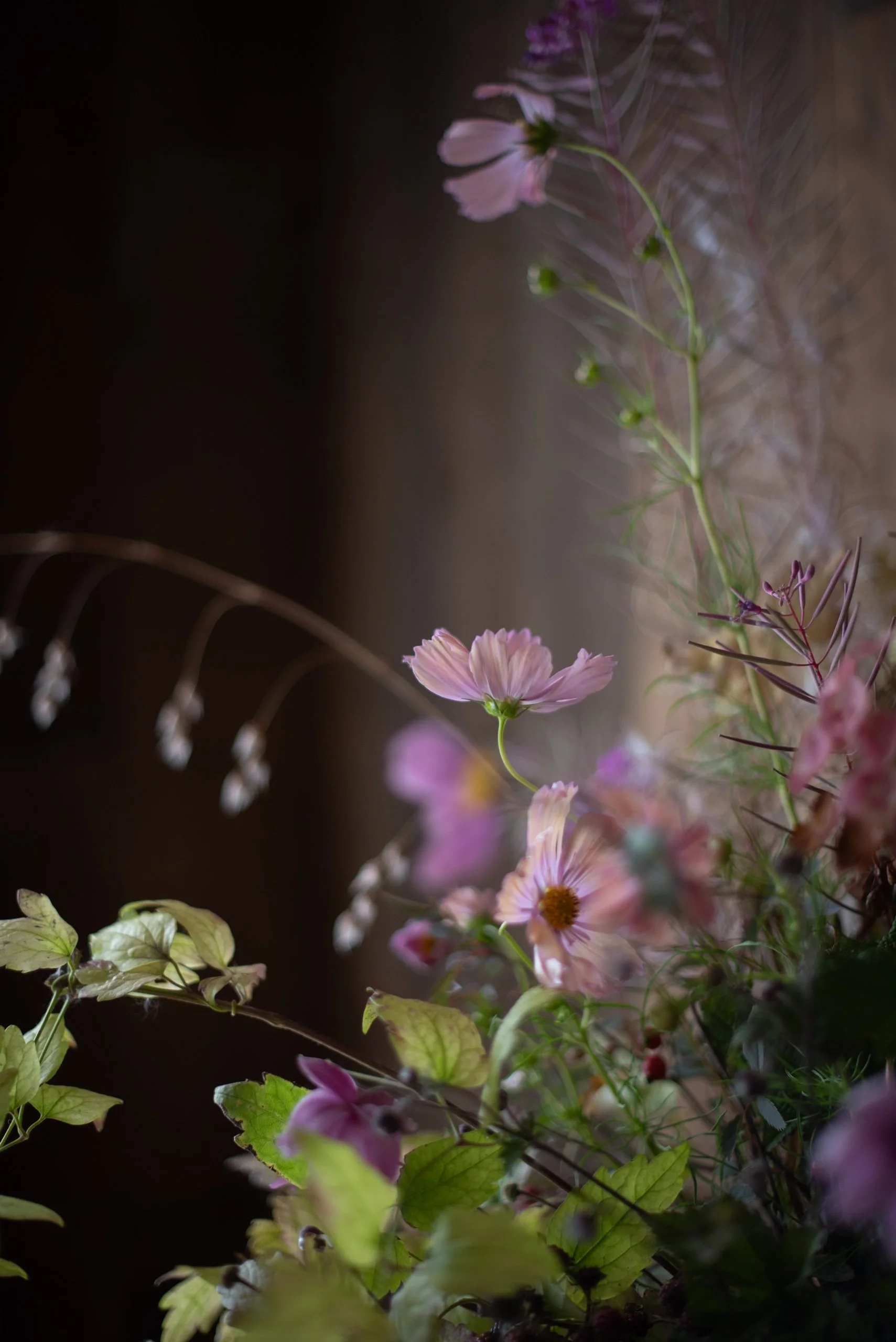
Cosmos (Cosmos ‘Apricotta’)
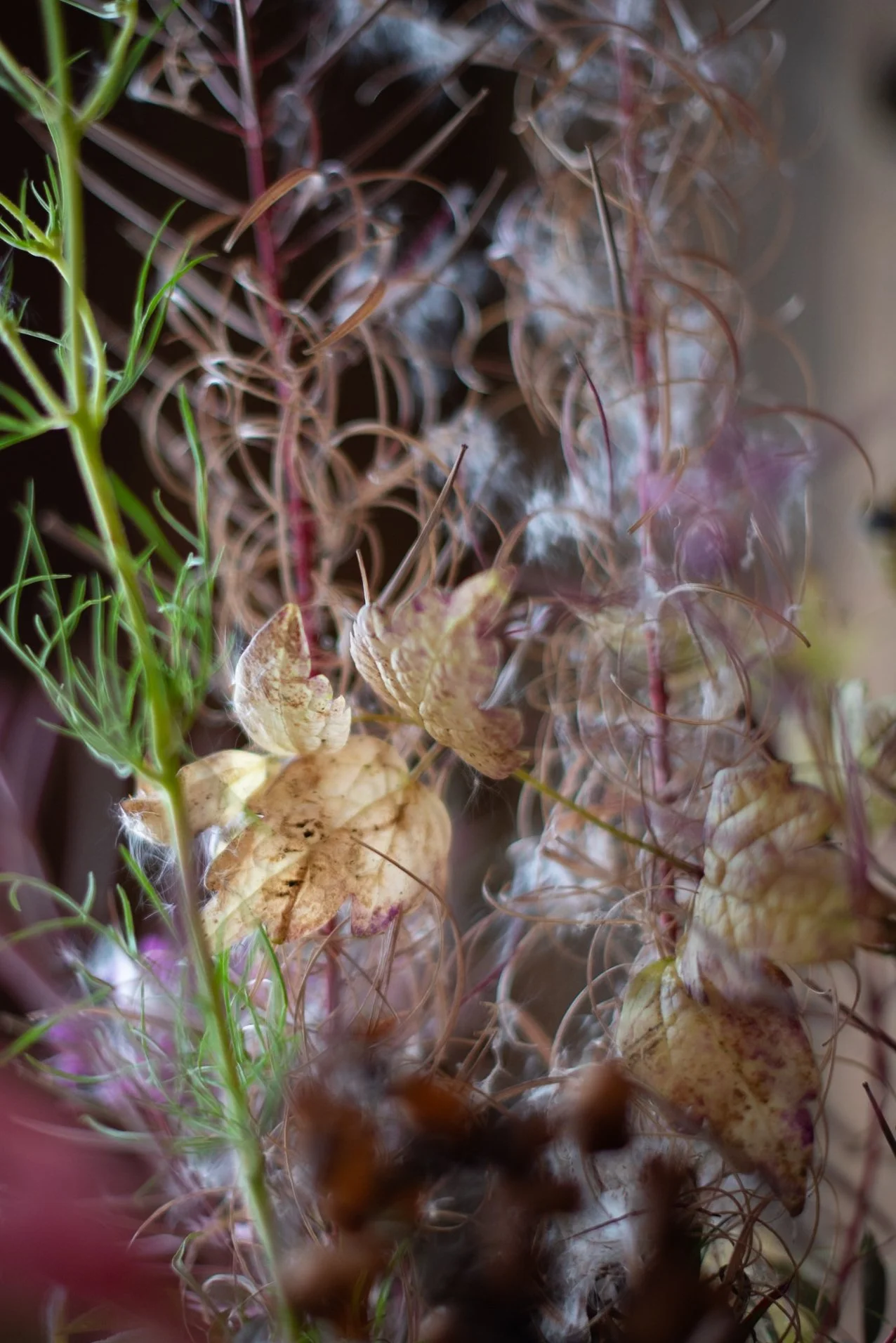
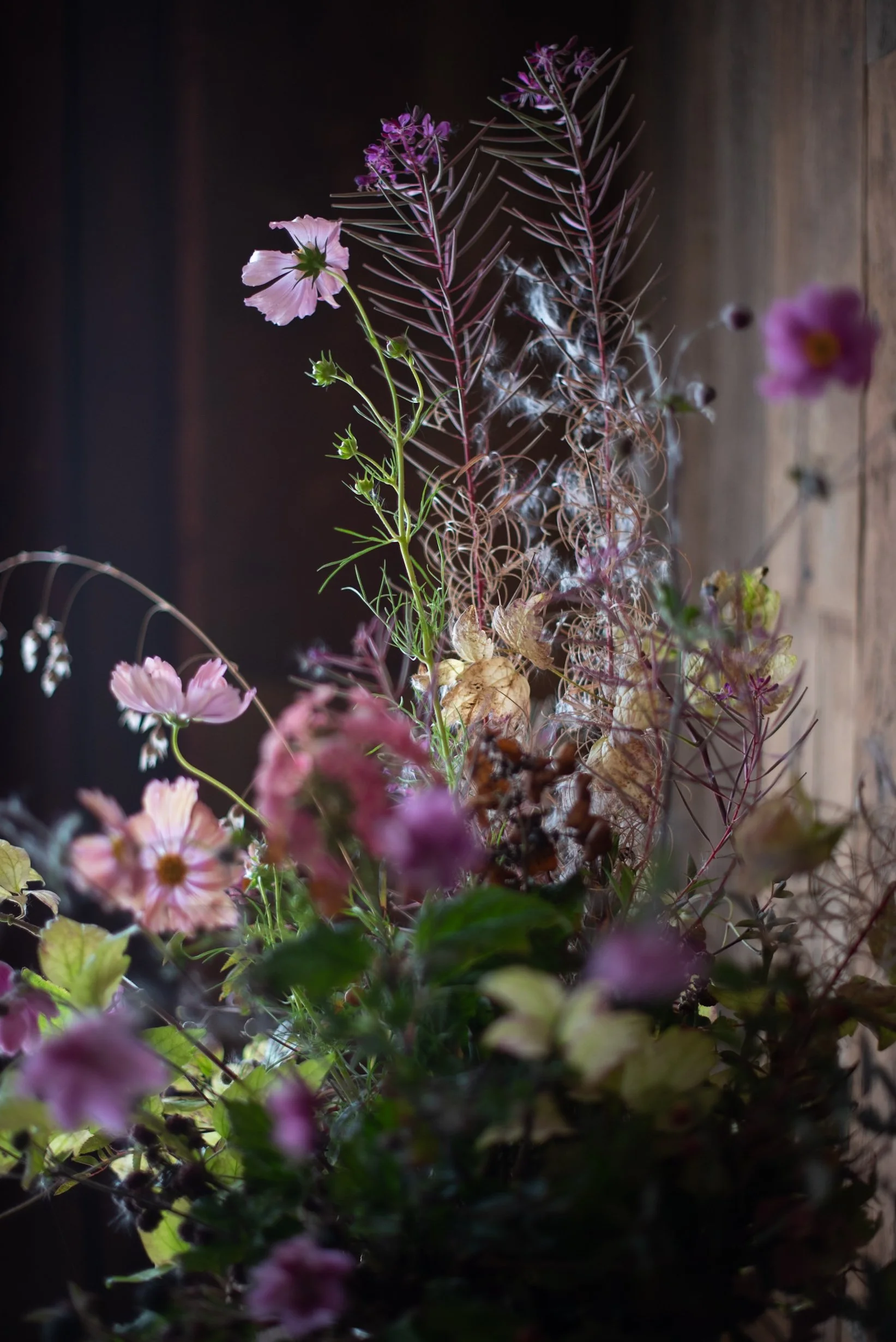
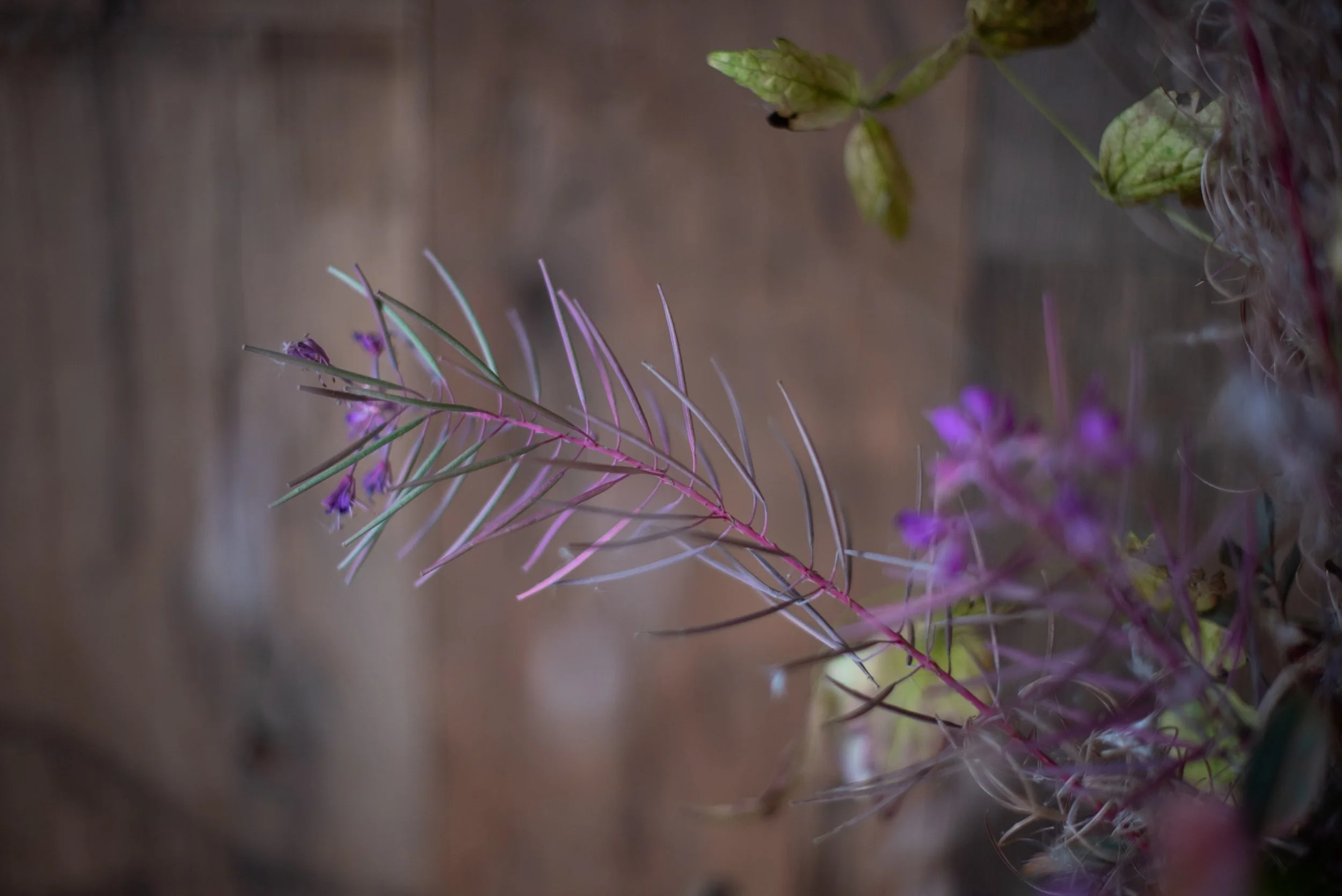
Fireweed (Chamaenerion angustifolium)
Japanese anemone (Anemone hupehensis 'September Charm')
Oakleaf hydrangea (Hydrangea quercifolia)
Red leaf rose (Rosa glauca)
Wild clematis (Clematis vitalba)
Ceramic footed vase
Hana kubari, using elder branch (Sambucus nigra)
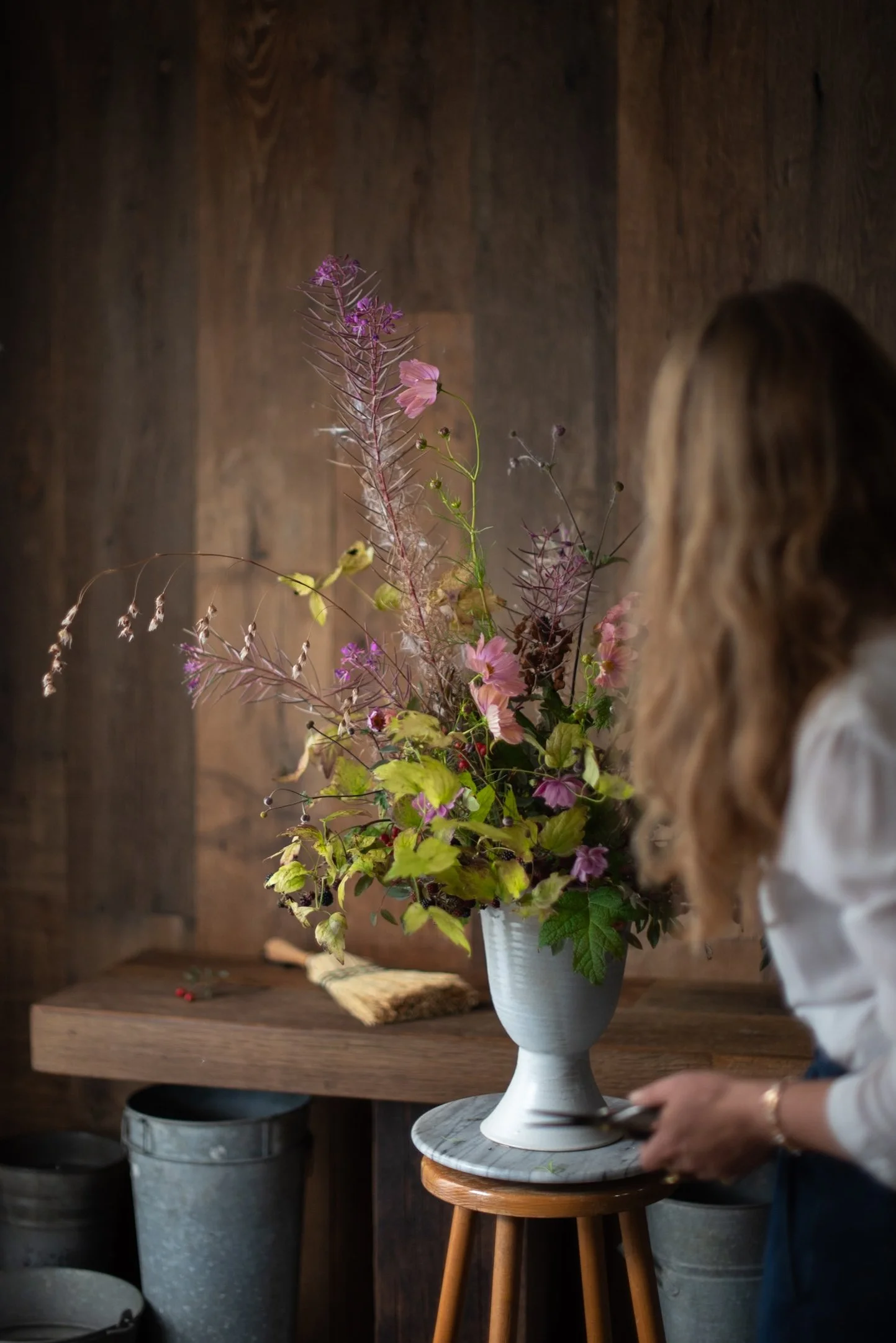
SEPTEMBER
Hana kubari is a great technique to have up your sleeve for wide-necked vessels and there is something about using all natural materials that is satisfyingly self sufficient. The branches are carefully cut to the internal diameter of the vase and cross over one another to create an ‘X’ shape, dividing the surface area of the vessel into quarters. The subsequent branches and stems can lean against this structure and it provides a supportive scaffolding for them.
Fireweed is a herbaceous perennial herb commonly seen around the British Isles colonising banks, roadside verges and riverbanks. Its tall spires are decorated with violet flowers summer to autumn and the silky plumes that conceal the seedpods catch lifts on the breeze. I use the redleaf rose and hydrangea low and shrubby - they both act as green coverage and filler with textural interest provided by the gleaming rosehips and clusters of papery flowers. Nothing says September like an armful of Japanese anemones; they gamely take on the principal flowery role in this arrangement but are dainty and light enough to do so without losing the overall lightness.
RETURN TO RECIPES

SILVERBERRY & GOLDEN OATS
November is a great time for finding metallic ingredients and hunting through the garden for materials with a bit of a sheen to the flowers or leaves. Seed pods are a satisfying textural element - we tend to harvest them around now before it gets too wet
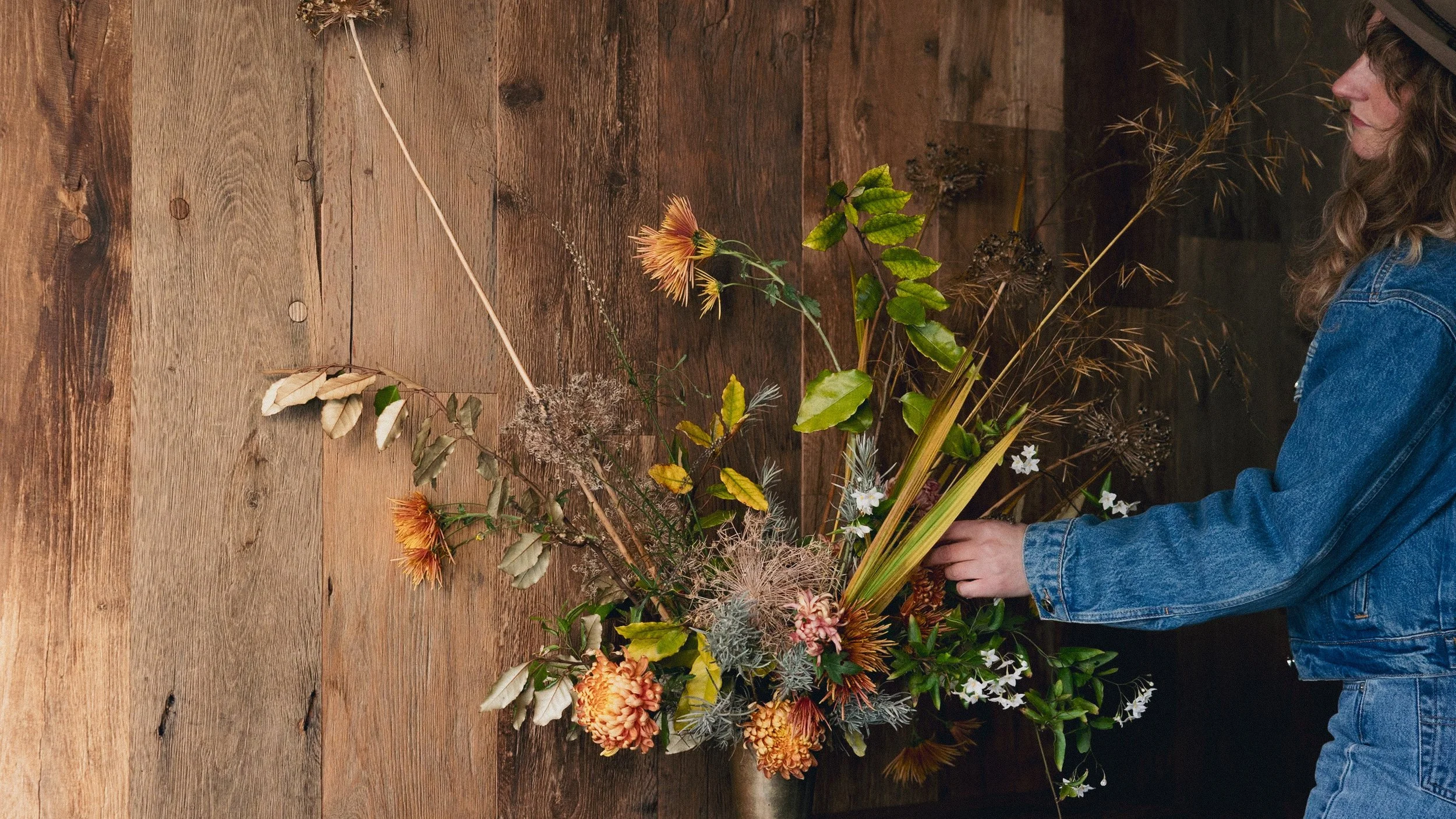
Chrysanthemum (Chrysanthemum ‘Spider Bronze’, ‘Allouise Salmon’ & ‘Allouise Orange’)
Curry plant (Helichrysum italicum)
Fire lily (Crocosmia ‘Hellfire’)
Golden oats (Stipa gigantea)
Ornamental onion (Allium ‘Gladiator’ & ‘Summer Drummer’)
Potato vine (Solanum laxum)
Silverberry (Eleagnus)
Switch grass (Panicum ‘Warrior’)
Toadflax (Linaria purpurea)
Vintage brass lassis cup


NOVEMBER
Something a little shimmery to kick off the festive season - Silverberry (Elaeagnus) with silver and yellow-gold leaves, feathery Golden Oats (Stipa gigantea) and Chrysanthemum 'Spider Bronze' for a pop of colour.
November is a great time for finding metallic ingredients and hunting through the garden for materials with a bit of a sheen to the flowers or leaves. Seed pods are a satisfying textural element - we tend to harvest them around now before it gets too wet and soggy in the garden. A surprisingly effective addition were the crispy crocosmia leaves - the blades turning gold and bronze.
RETURN TO RECIPES

VOLCANIC SORREL, CRABAPPLE
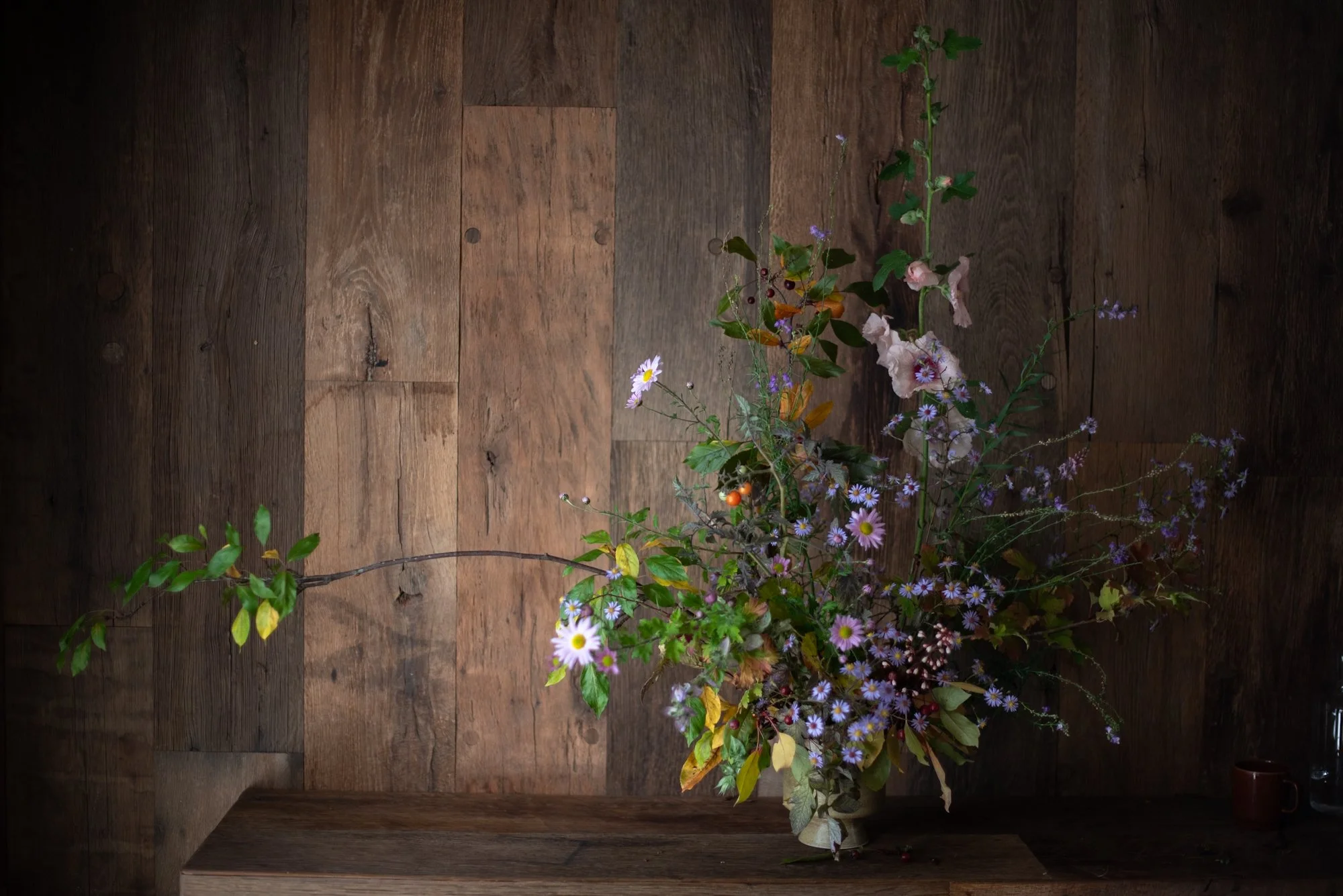
Late October. It’s a glorious time of year in the garden, as the season gently winds down it is positively smouldering and flickering with fiery leaves and fruits.
Footed vase
Kenzan
Dome of chicken wire
Aster (Symphyotrichum laeve ‘Calliope’)
Crab apple (Malus ‘Prairie Fire’)
Chrysanthemum (Chrysanthemum ‘Innocence’)
Clary sage (Salvia sclarea var. turkestanica)
Guelder rose (Viburnum opulus)
Hollyhock (Alcea ‘Halo Apricot’)
Japanese anemone (Anemone hupehensis)
Purple toadflax (Linaria purpurea)
Tomato (Solanum ‘Sungold’)
Volcanic sorrel (Oxalis vulcanicola ‘Sunset Velvet’)
OCTOBER
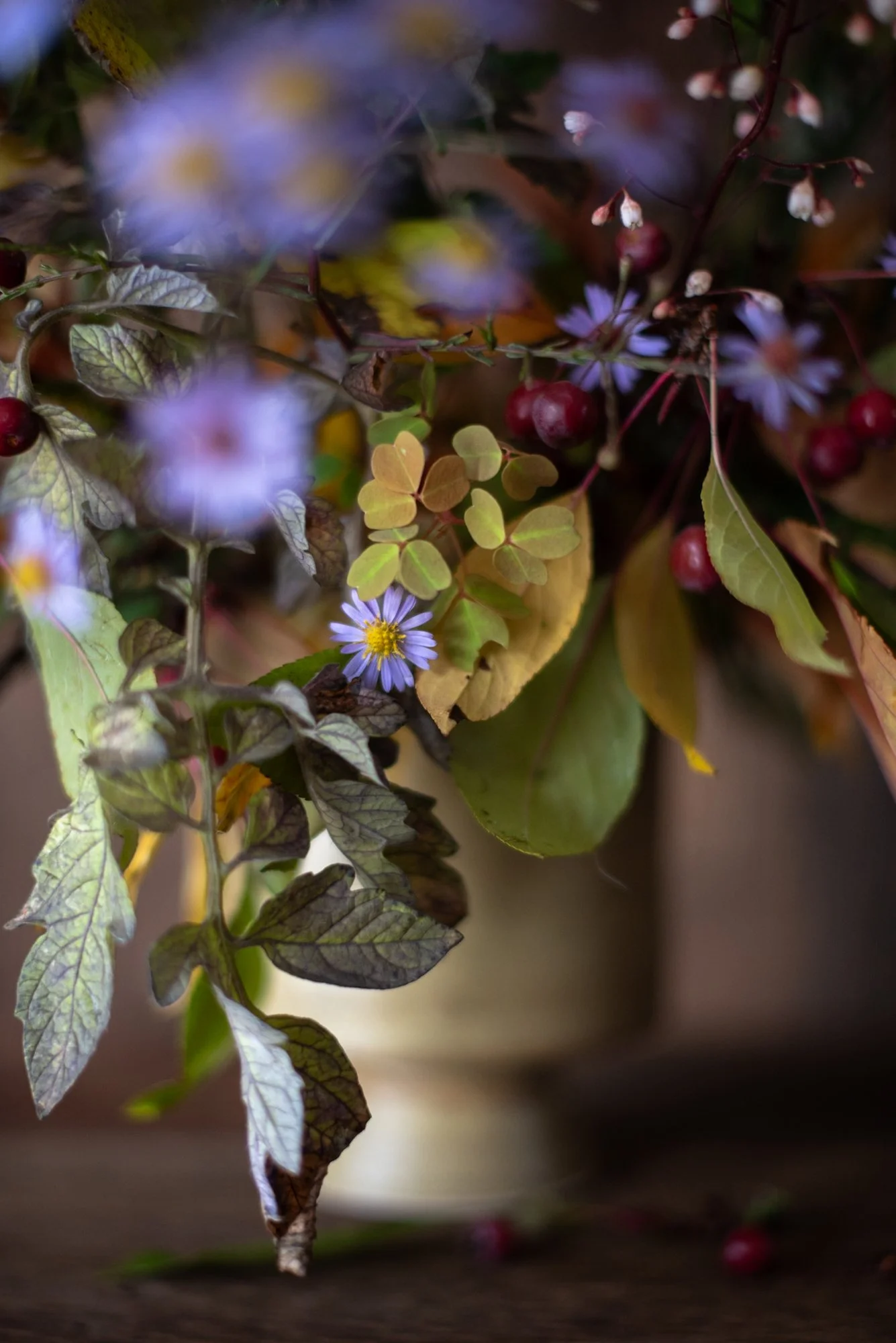
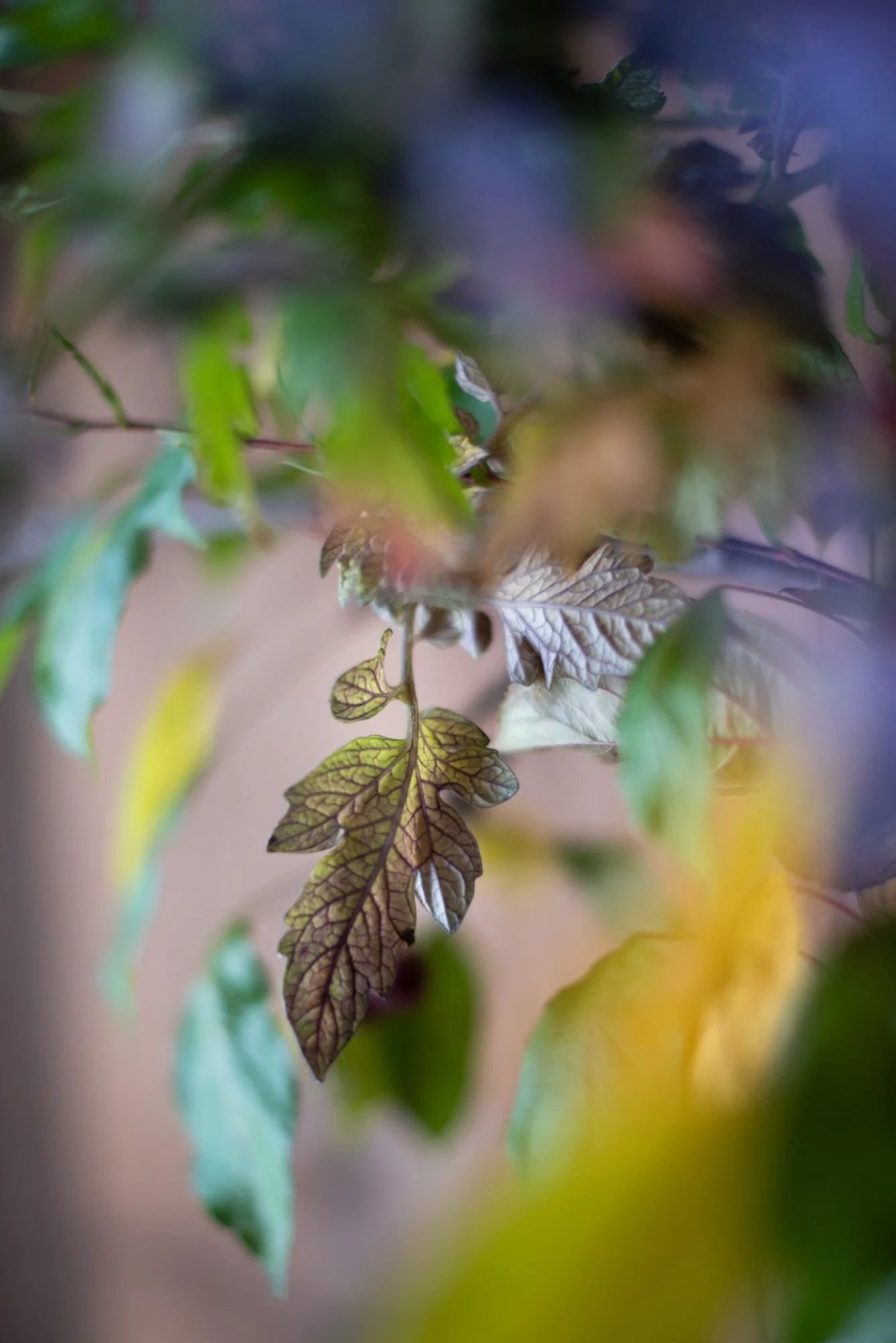
Late October. It’s a glorious time of year in the garden, as the season gently winds down it is positively smouldering and flickering with fiery leaves and fruits. The hardy chrysanthemum in the outdoor beds are a useful resource as our tunnel-grown varieties begin to dwindle. Asters are still performing - we love their little lilac daisy faces, so great for pepping through as both filler and texture. The volcanic sorrel was given to me as a gift; it’s an enchanting plant, the leaves follow the sun and quiver closed every evening. I grow it in my garden at home in London, bringing it indoors before the first frost… any day now!


ROSEHIP, CHRYSANTHEMUM, ASTER
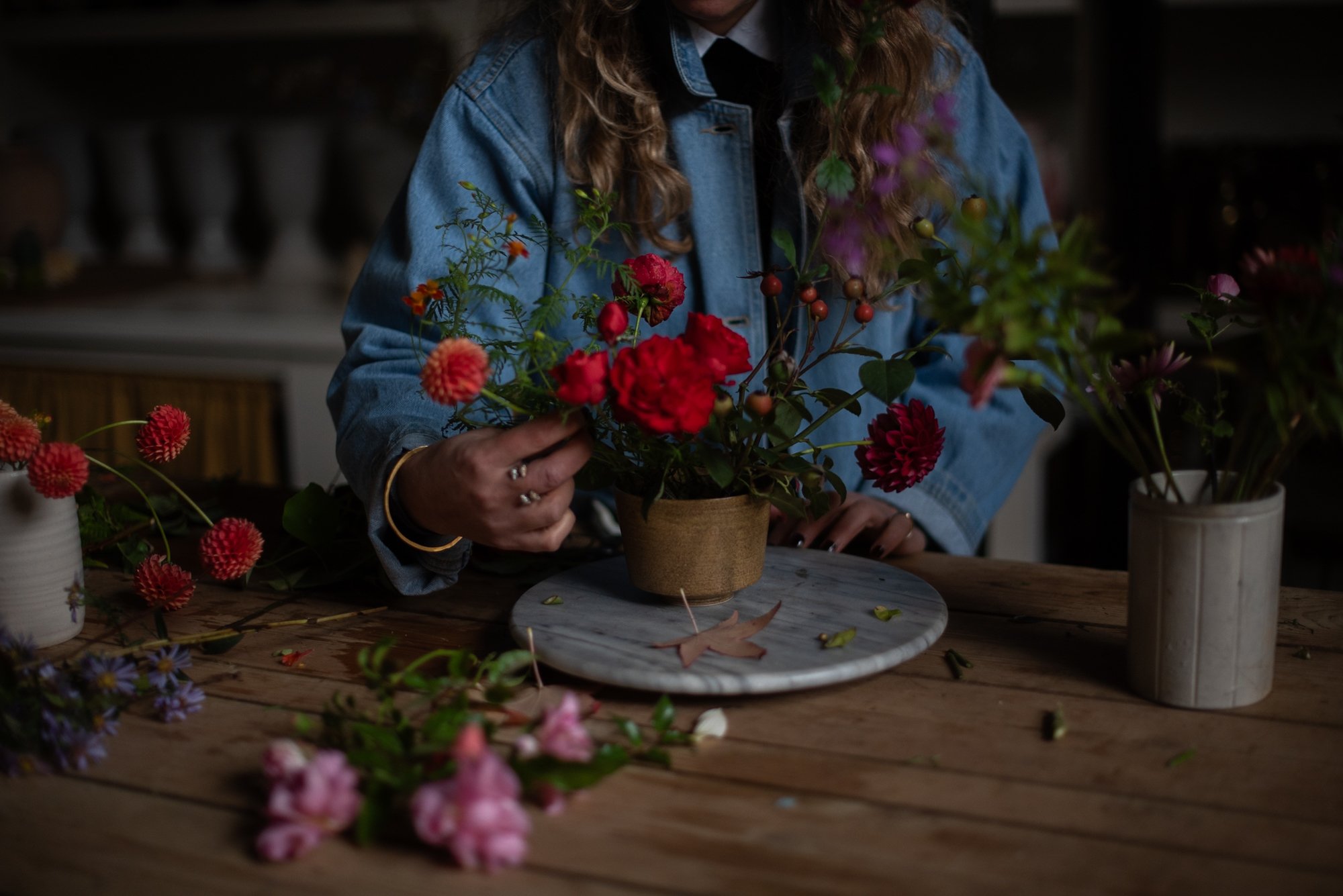
On a chilly autumn day, a warming bowl of sumptuous colour and texture. Dahlias can be challenging to use in small arrangements so I chose the tinest variety we grow (also my favourite) ‘Lismore Carol’.
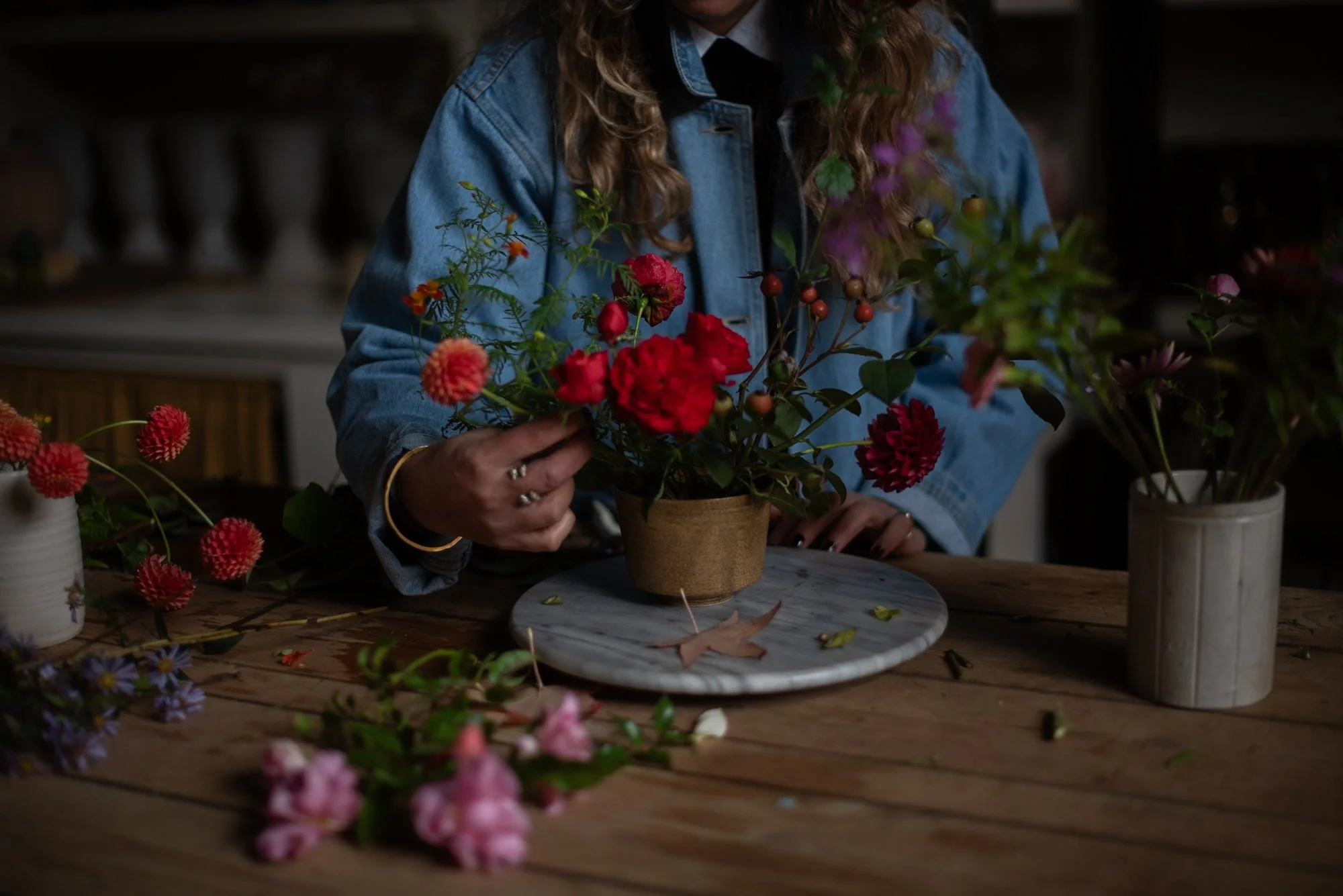
Tea bowl with oatmeal glaze, designed by Aesme Studio
Kenzan
Cap of chicken wire
Aster (Symphyotrichum novi belgii ‘Nurstead Charm’)
Chrysanthemum ‘Ruby Mound’ (chrysanthemum)
Chrysanthemum ‘Avignon Pink’ (chrysanthemum)
Cinquefoil (Potentilla thurberi ‘Monarch’s Velvet’)
Dahlia ‘Lismore Carol’
Marigold (Tagetes ‘Burning Embers’)
Nasturtium (Tropaeolum ‘Purple Emporer’)
Rose (Rosa ‘Hot Chocolate’, ‘Matador’, ‘Desdemona’, ‘Cornelia’)
Wandflower (Gaura ‘Siskiyou Pink’)
OCTOBER
On a chilly autumn day, a warming bowl of sumptuous colour and texture. Dahlias can be challenging to use in small arrangements so I chose the tinest variety we grow (also my favourite) ‘Lismore Carol’. As its the end of the season the flowers have been on the plants a while and so have faded to a beautiful glowing orange-red - much paler than when they’ve newly flowered. To break up the red I introduce a few blue pinks. For texture - a smattering of gold and blush rosehips - so good this year! Nasturtium to finish, which I carefully tuck over the lip of the bowl to allow them to spill toward the tabletop.
RETURN TO RECIPES

ELDER, CRABAPPLE, HYDRANGEA
Clematis vitalba is a wild clematis that grows like mad throughout the hedgerows and countryside surrounding our cutting garden in Hampshire. It is so vigorous that in some countries it is considered an invasive species.

Beauty bush (Kolkwitzia amabilis)
Crab apple (Malus)
Elder (Sambucus nigra)
Flowering currant (Ribes sanguineum)
Honeysuckle (Lonicera periclymenum)
Panicled hydrangea (Hydrangea)
Quince (Cydonia oblonga)
Rose (Rosa ‘For Your Eyes Only’ & ‘Orienta Magnolia’)
Traveller’s joy (Clematis vitalba)
Low stoneware dish
Kenzan
Cap of chicken wire
SEPTEMBER
Clematis vitalba is a wild clematis that grows like mad throughout the hedgerows and countryside surrounding our cutting garden in Hampshire. It is so vigorous that in some countries it is considered an invasive species. We find it an incredibly useful ingredient all year round - when it’s in bud and then smothered in faintly fragrant cream flowers from midsummer on. By September the flowers are going to seed with long, gold, silky seedheads. Later in the autumn these become fluffy and turn grey-white which is how it earned the nickname ‘old man’s beard’.
The beautiful quince fruit is from a small tree in my London garden that each year reliably yields a harvest of exactly three fruits.
RETURN TO RECIPES

GUERNSEY LILY, RIVER LILY
This is the time of year when we enjoy the autumn flowering bulbs and corms planted in the spring - nerines, flag lilies, anemones and gladioli.
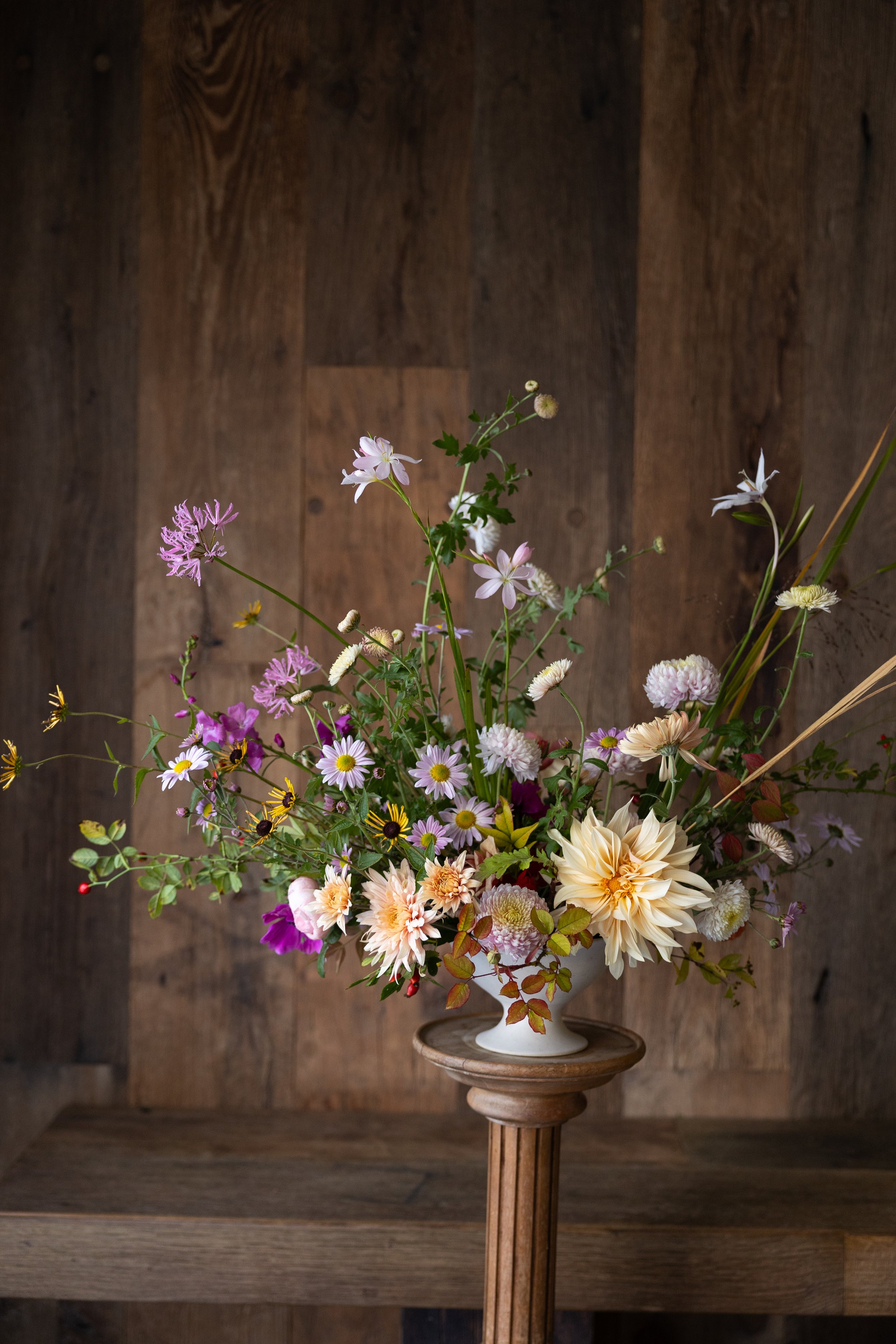
Abyssianian gladiolus (Gladiolus murielae)
Chrysanthemum ‘Avignon Pink’ & ‘Moonbeam’
Dahlia ‘Cafe au Lait’ & ‘Lismore Carol’
Flag lily (Hesperantha coccinea ‘Pink Princess’)
Fringed guernsey lily’ (Nerine undulata ‘Mega Crispa)
Korean chrysanthemum (Chrysanthemum ‘Aunt Millicent’)
Poppy anemone (Anemone coronaria ‘de Caen Sylphide’ )
Rosa ‘Sweet Jessica’ & ‘Hot Chocolate’
Sweet coneflower (Rudbeckia subtomentosa 'Henry Eilers')
Wild dog rose (Rosa canina)
Aesme Studio ceramic pedestal bowl
Kenzan
Chicken wire
SEPTEMBER
This is the time of year when we enjoy the autumn flowering bulbs and corms planted in the spring - nerines, flag lilies, anemones and gladioli.
We deliberately do not stake our chrysanthemum plants (grown indoors in a tunnel) so that their stems arch and curve as they grow. This makes them enormously useful for soft, romantic centrepiece designs. Often overlooked as a supermarket flower there are many wonderful varieties in nuanced colours. They last well into November for us and even longer in the vase - plus they smell divine.
RETURN TO RECIPES

WINDSWEPT WILD ROSE
Rosa canina (dog rose / briar rose / wild rose) is native to Europe and grows wild through many a hedgerow. It is the county flower of Hampshire, where our cutting garden is located.

Aster (Symphyotrichum turbinellum, 'Vasterival' & ‘Little Carlow’)
Dahlia (Dahlia ‘Strawberry Cream’)
Wild rose (Rosa canina)
Antique terracotta footed dish
Liner
Kenzan
Small scrunch of chicken wire
OCTOBER
Rosa canina (dog rose / briar rose / wild rose) is native to Europe and grows wild through many a hedgerow. It is the county flower of Hampshire, where our cutting garden is located. The flower was used as the basis for the rose used in medieval European heraldry and the name supposedly stems from the belief that the plant's root could cure the bite of a mad dog. It’s one of my absolute favourite materials but don’t forget your leather gauntlets - the thorns are vicious! From mid-late May every year I’ll be eagerly scanning the hedgerow for the single petalled flowers which range from white to a sugary pink. In the autumn these gorgeous oval fruits form, orange-red and glossy.
RETURN TO RECIPES

ACER, BAMBOO, NASTURTIUM
At this time of year the leaves on all the deciduous plants in the garden are displaying the most incredible colours. It's a beautiful sight for us to enjoy but of course there is a scientific reason.

Bamboo (Bambusa vulgaris)
Burnet (Sanguisorba tenuifolium)
Chinese abelia (Abelia chinensis)
Chrysanthemum (Chrysanthemum ‘Avignon Pink’)
Garden nasturtium (Tropaeolum majus ‘Ladybird’)
Japanese maple (Acer palmatum ‘Katsuro’)
Mexican orange blossom (Choisya)
Perennial peavine (Lathyrus latifolius)
Purple moor grass (Molinia)
Rosa ‘Cornelia’
Silverberry (Eleagnus)
St John’s wort (Hypericum)
Sweet coneflower (Rudbeckia subtomentosa)
Switch grass (Panicum ‘Warrior’)
Tomato (Solanum)
Concrete pestle bowl
Kenzan
Chicken wire
OCTOBER
This one’s all about the foliage: shrubs, vines, grasses with a few seedpods and the last flowers of the season. At this time of year the leaves on all the deciduous plants in the garden are displaying the most incredible colours. It's a beautiful sight for us to enjoy but of course there is a scientific reason - as the light levels start to drop during the winter months the plants are no longer photosynthesising (producing energy for growth) and chlorophyll, the component that makes the leaves appear green, is leaving, which is why we start to see those yellow and red pigments instead. Leaf senescence is a natural part of the life cycle of plants - if only we viewed the aging of ourselves with such admiration!