

Les Confines, Provence
Les Confines is a beautiful Provencal house with incredible gardens to get lost in. The temperature rocketed the week of the wedding and the surrounding landscape of orchards and olive groves was unusally dry for May, fields of pale swaying oats rimmed by swathes of bright field poppies.
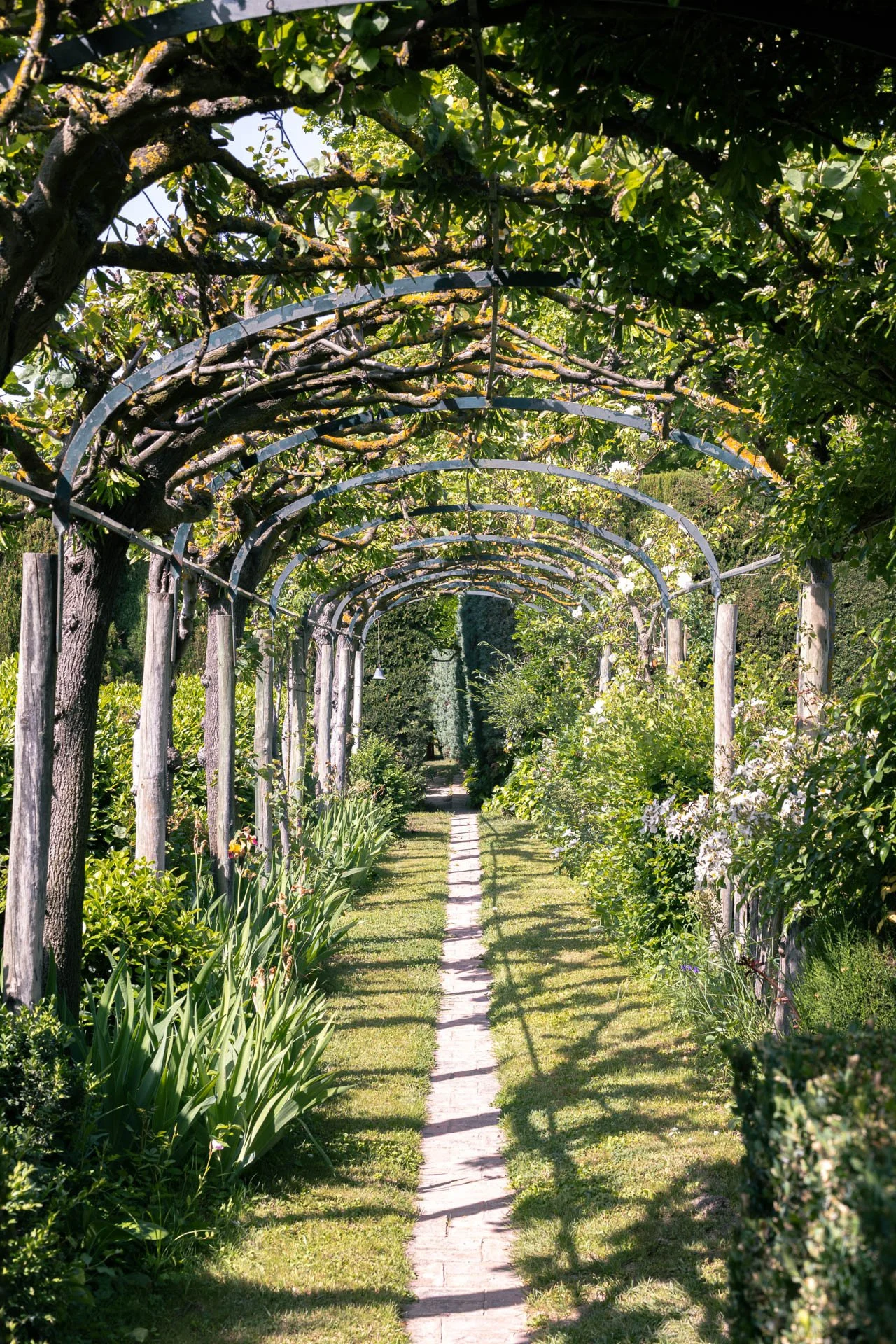
Les Confines is a beautiful Provencal house with incredible gardens to get lost in. The temperature rocketed the week of the wedding and the surrounding landscape of orchards and olive groves was unusally dry for May, fields of pale swaying oats rimmed by swathes of bright field poppies.
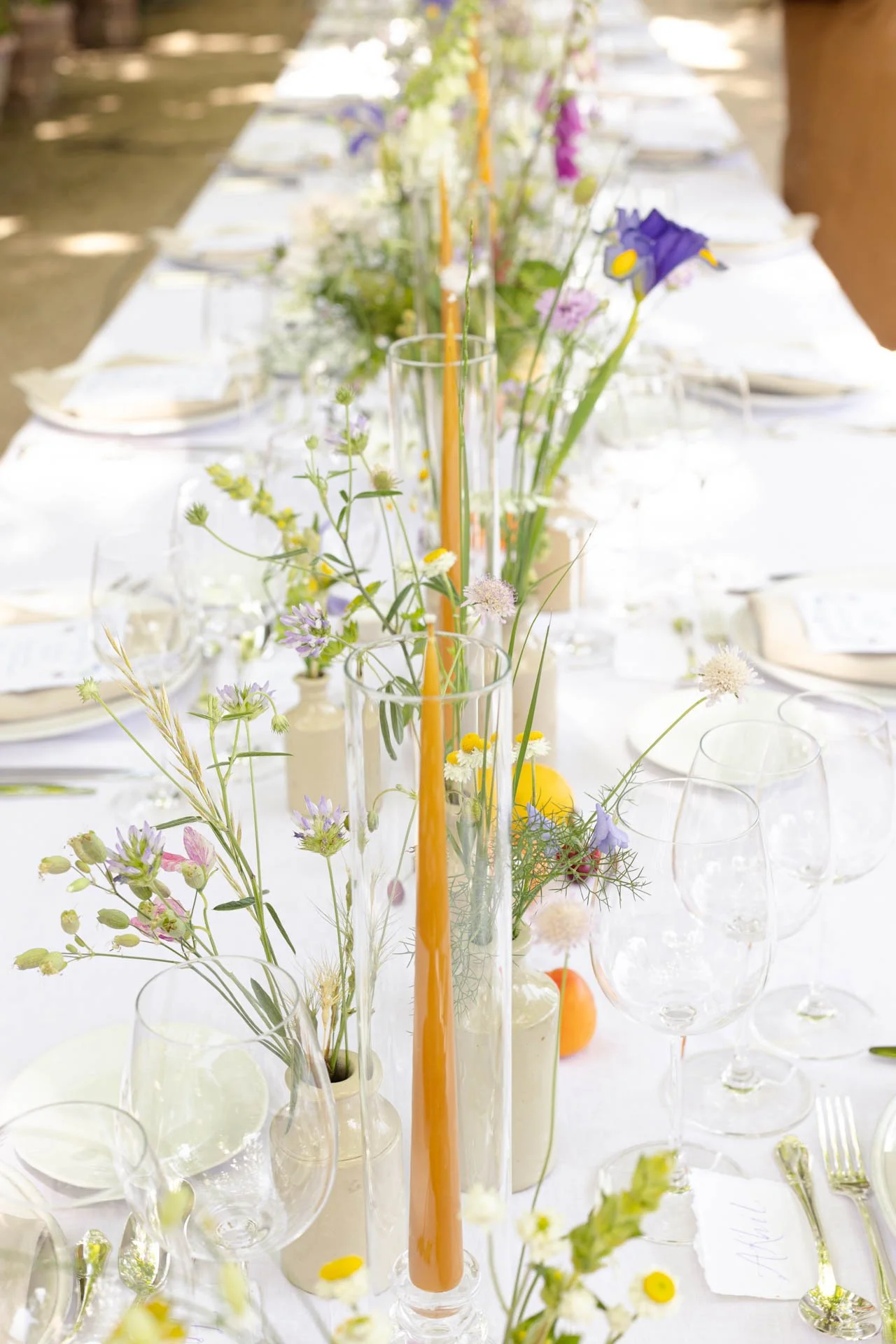
A long banqueting table was set up in front of the house and we decorated the full length with ceramic bottles, vases and fruit - the tiny strawberries and cherries were intricately depicted in the beautifully illustrated table stationery.

In amongst the meadow-soft palette of washed out pinks, mauves and creamy yellows we added pops of bright blue irises and scarlet red geraniums. We were fortunate to find incredible local growers and were able to source all the materials from France.
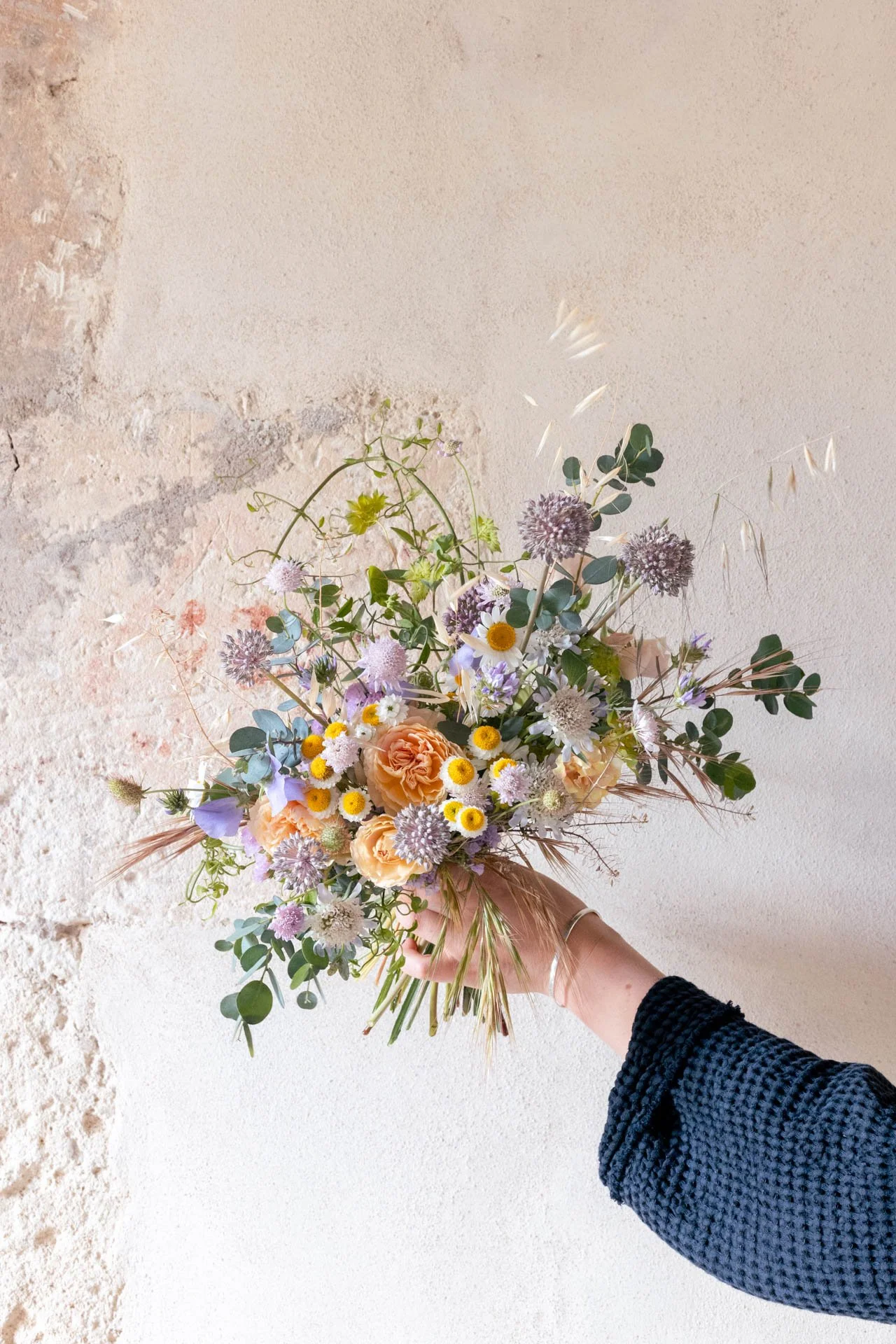
The bride’s bouquet reflected the dry, textural landscape and we use lots of foraged elements from the surrounding olive groves - grasses, pale blue field scabious, alliums and wild clematis - along with luscious garden roses and eucalyptus.

Tulips galore
For this spring wedding at the Savile Club in Mayfair we cut lots of double tulips - pale pink ‘Angelique’, creamy yellow ‘Avant Garde’ and honey-hued ‘Copper Image’. Our footed centrepieces are designed to be seen from all angles and take centre stage…

For this spring wedding at the Savile Club in Mayfair we cut lots of double tulips - pale pink ‘Angelique’, creamy yellow ‘Avant Garde’ and honey-hued ‘Copper Image’.

Our footed centrepieces are designed to be seen from all angles and take centre stage on wide, round tables. Each centrepiece is unique with shapes and colours varying depending on the individual materials.
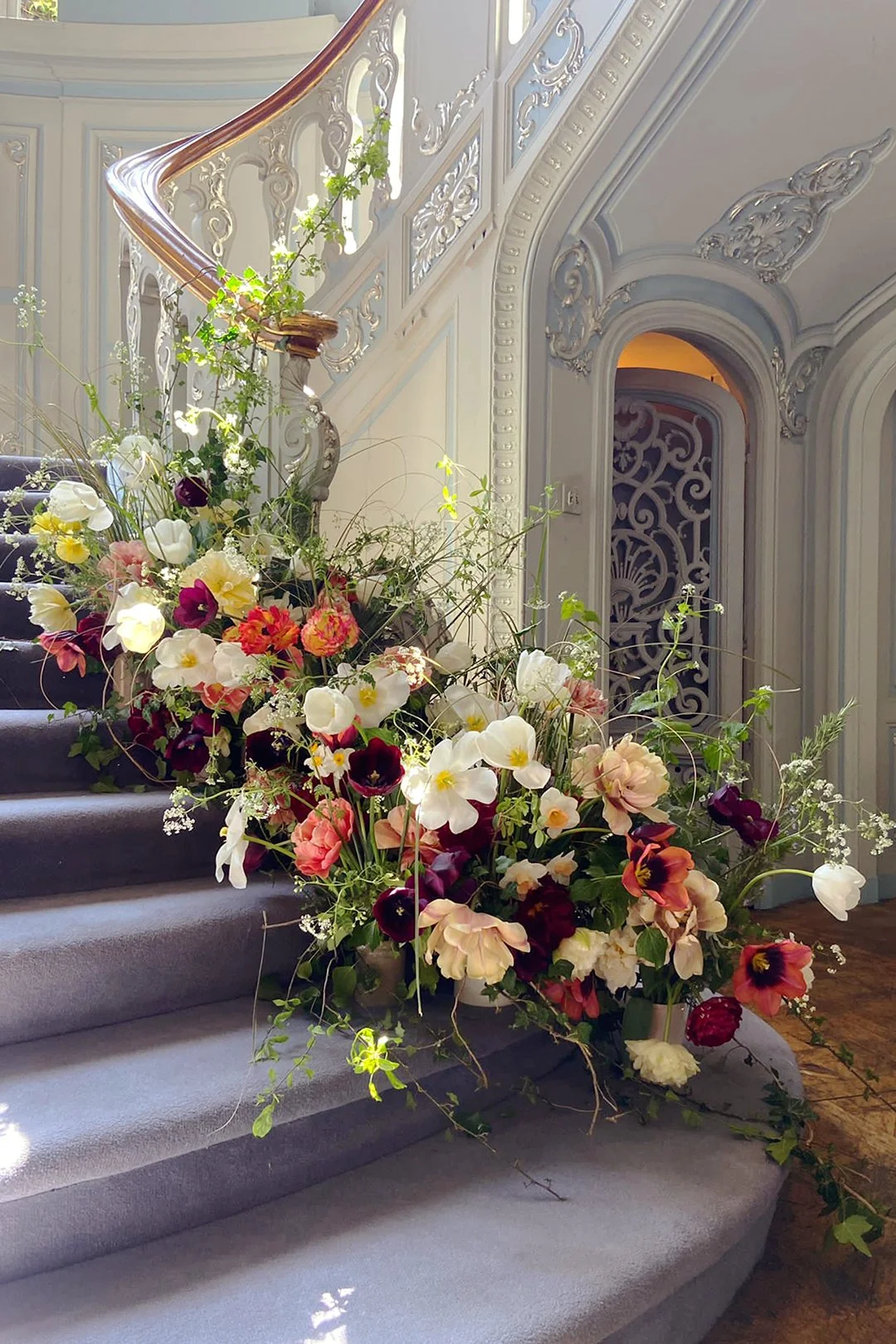
The pale blue staircase at the Club is always a dream to dress - this foam free design included trailing ivy, full blown silken tulips in shades from ivory to plum, scented narcissus and frothy cow parsley.
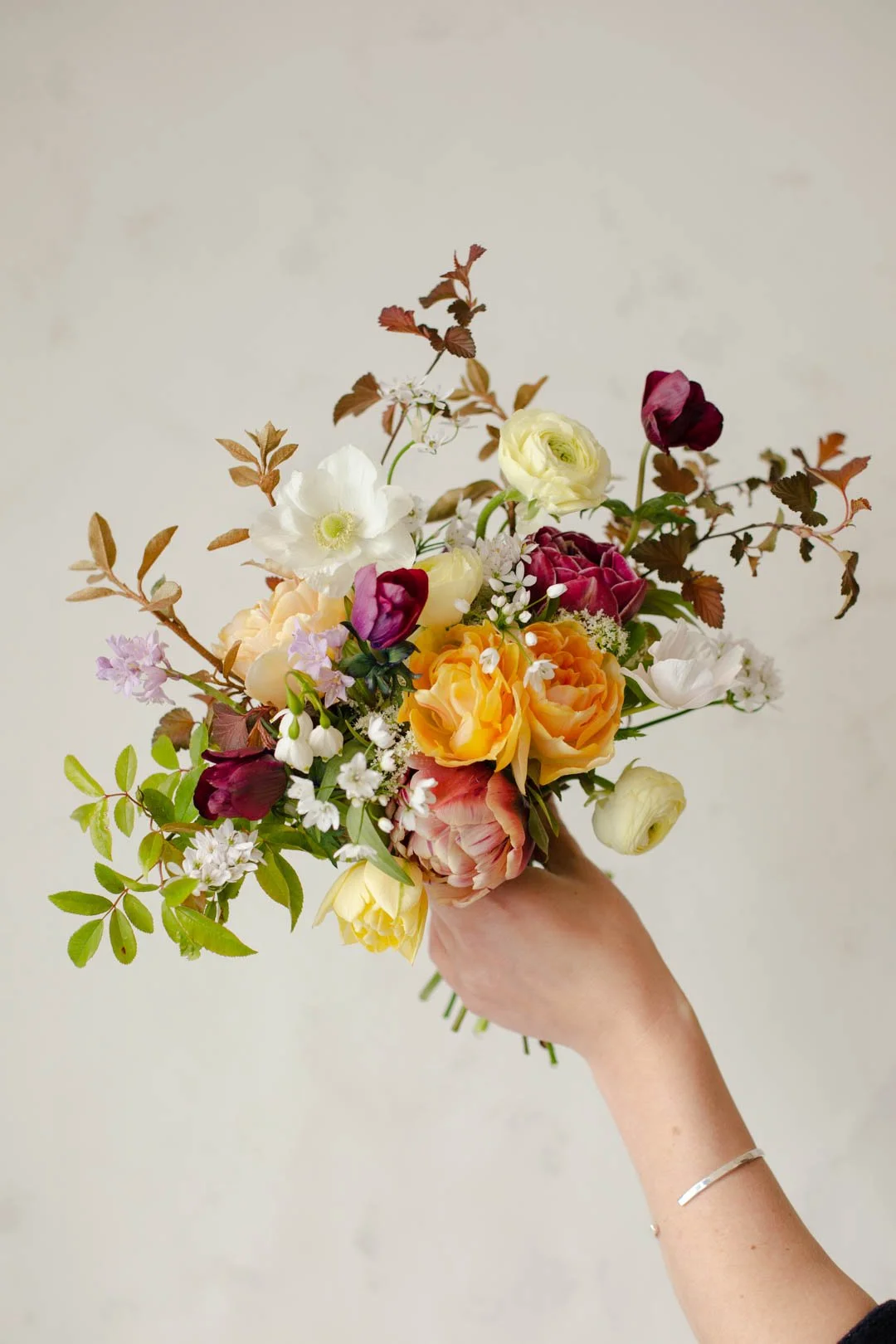
The bride’s bouquet included copper Physocarpus and metallic Silverberry foliage, white and burgundy anemones and peach peony-shaped tulip ‘Charming Lady’.

Kew Gardens
It was a gloriously sunny day at Kew Gardens as we assembled these urns of tumbling spring flowers for the wedding ceremony.

It was a gloriously sunny day at Kew Gardens as we assembled these urns of tumbling spring flowers for the wedding ceremony.
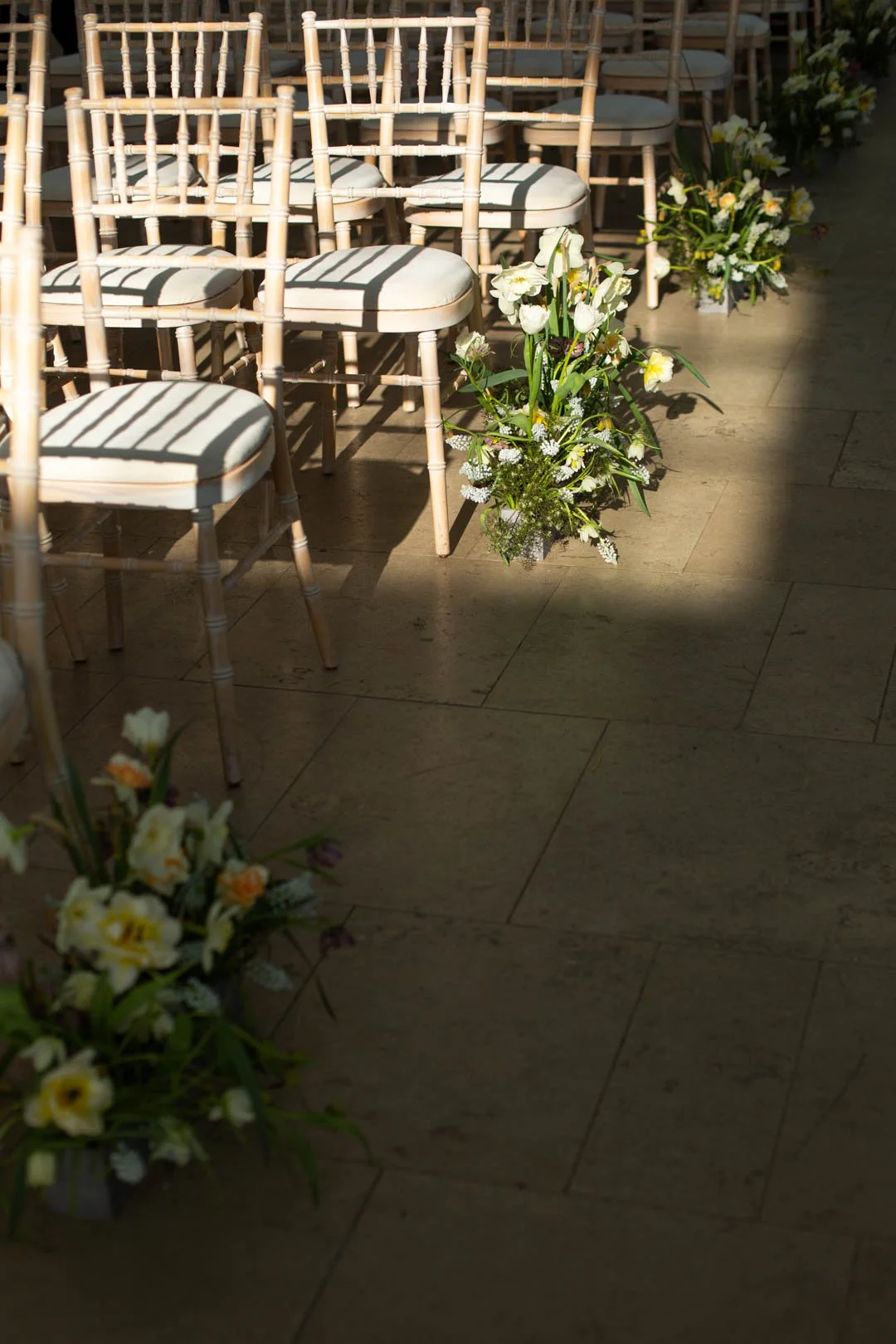
The aisle was flanked with small installations of Narcissi, Fritillaria and Muscari. We used a fresh palette of white and green with additional splashes of pale creamy yellow, barely-there pink and peach, icy blue and the occasional dash of deep maroon.

As the sun streamed through the windows of the Nash Conservatory the air was filled with the scent from hundreds of narcissi and trails of flowering jasmine.
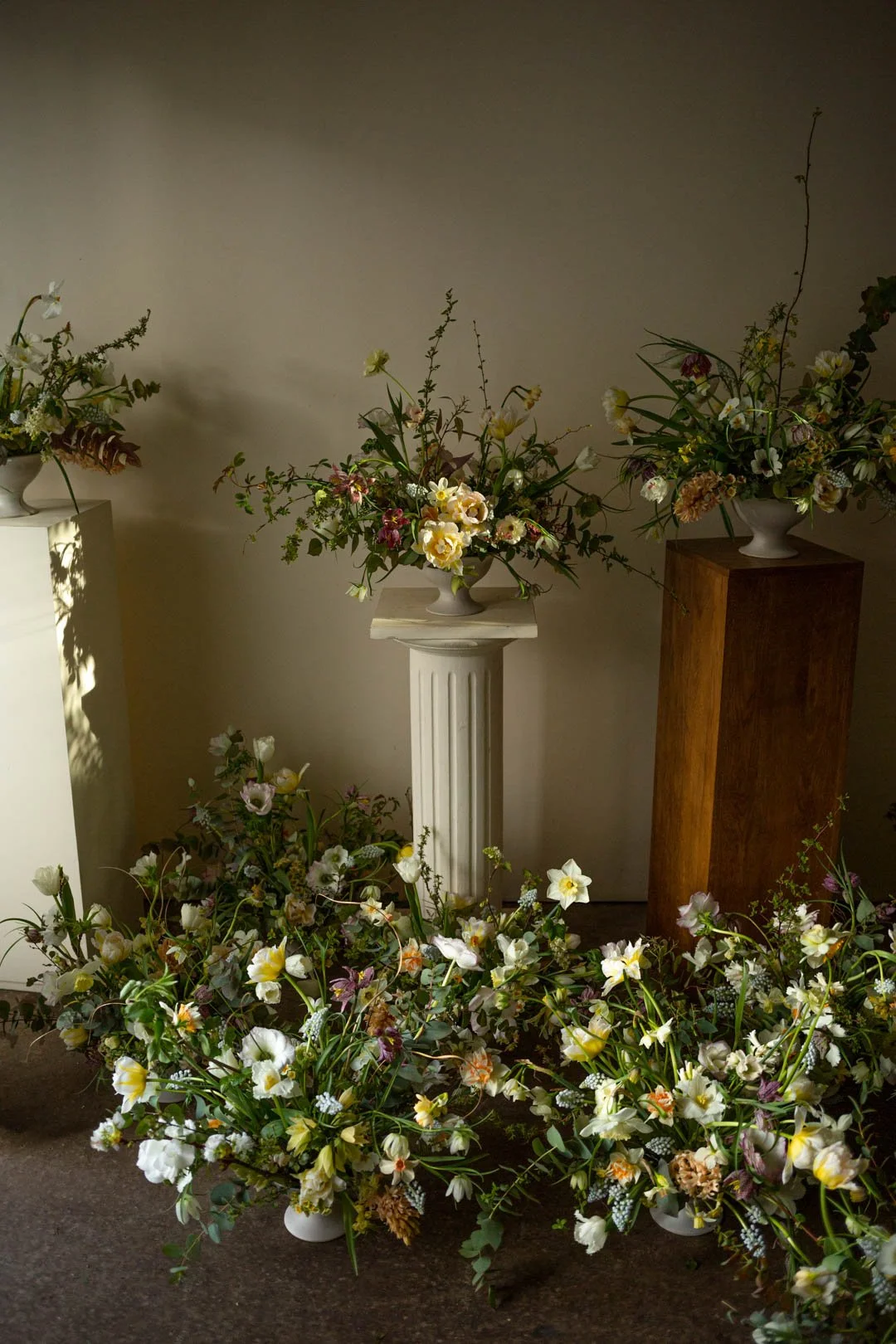
The table centrepieces for the Orangery dinner reception were created in the studio the day before - footed ceramic bowls bursting with scented blooms and tendrils of spring foliage.

Battersea Arts Centre
At this magical moment of the year as winter meets spring, we conjured the atmosphere of a rambling Italianate garden on an early spring day, using ceramic and terracotta props, fresh flowering bulbs, spindly branches of delicate blossom, dried grasses and seedpods from the winter garden.
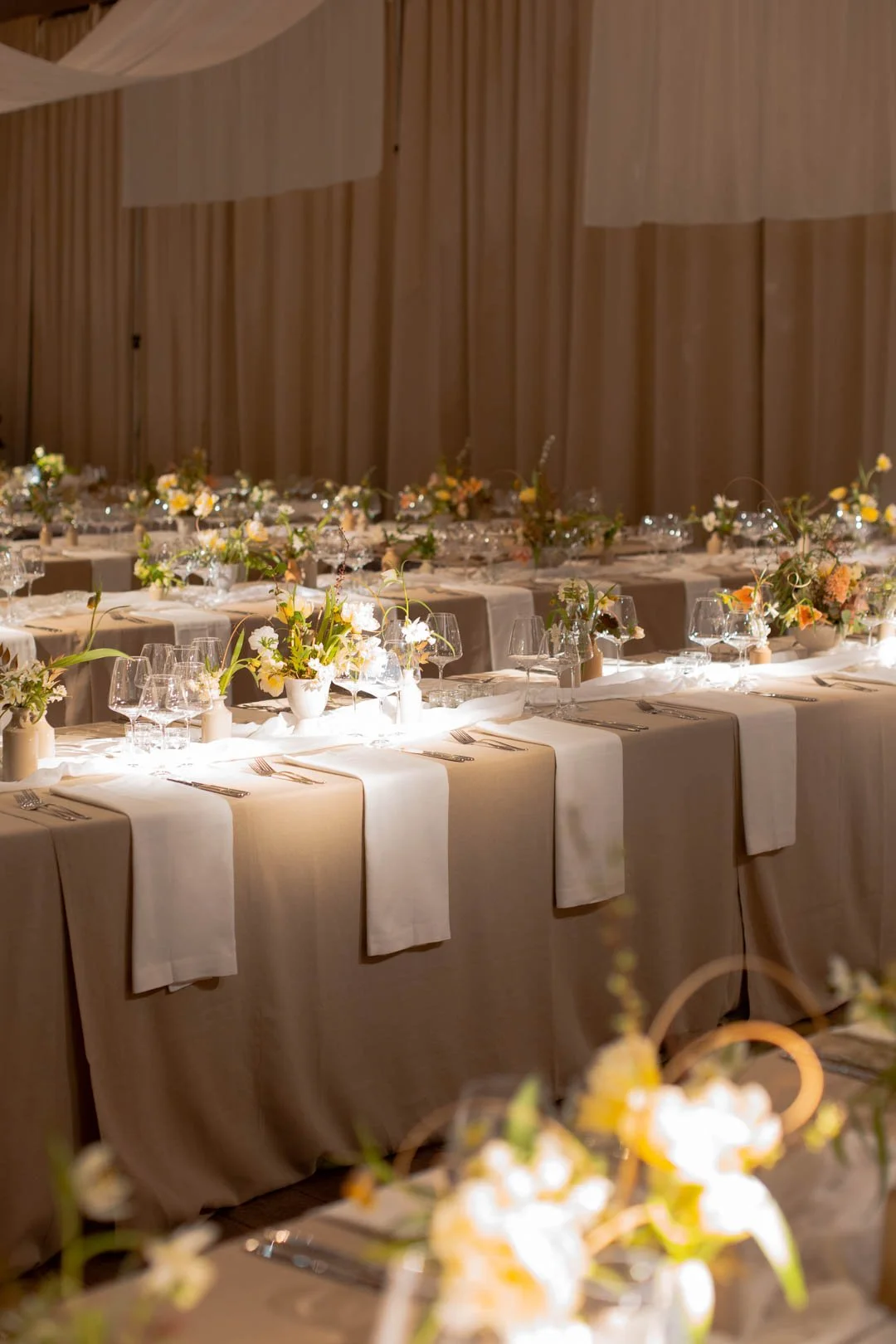
At this magical moment of the year as winter meets spring, we conjured the atmosphere of a rambling Italianate garden on an early spring day, using ceramic and terracotta props, fresh flowering bulbs, spindly branches of delicate blossom, dried grasses and seedpods from the winter garden.
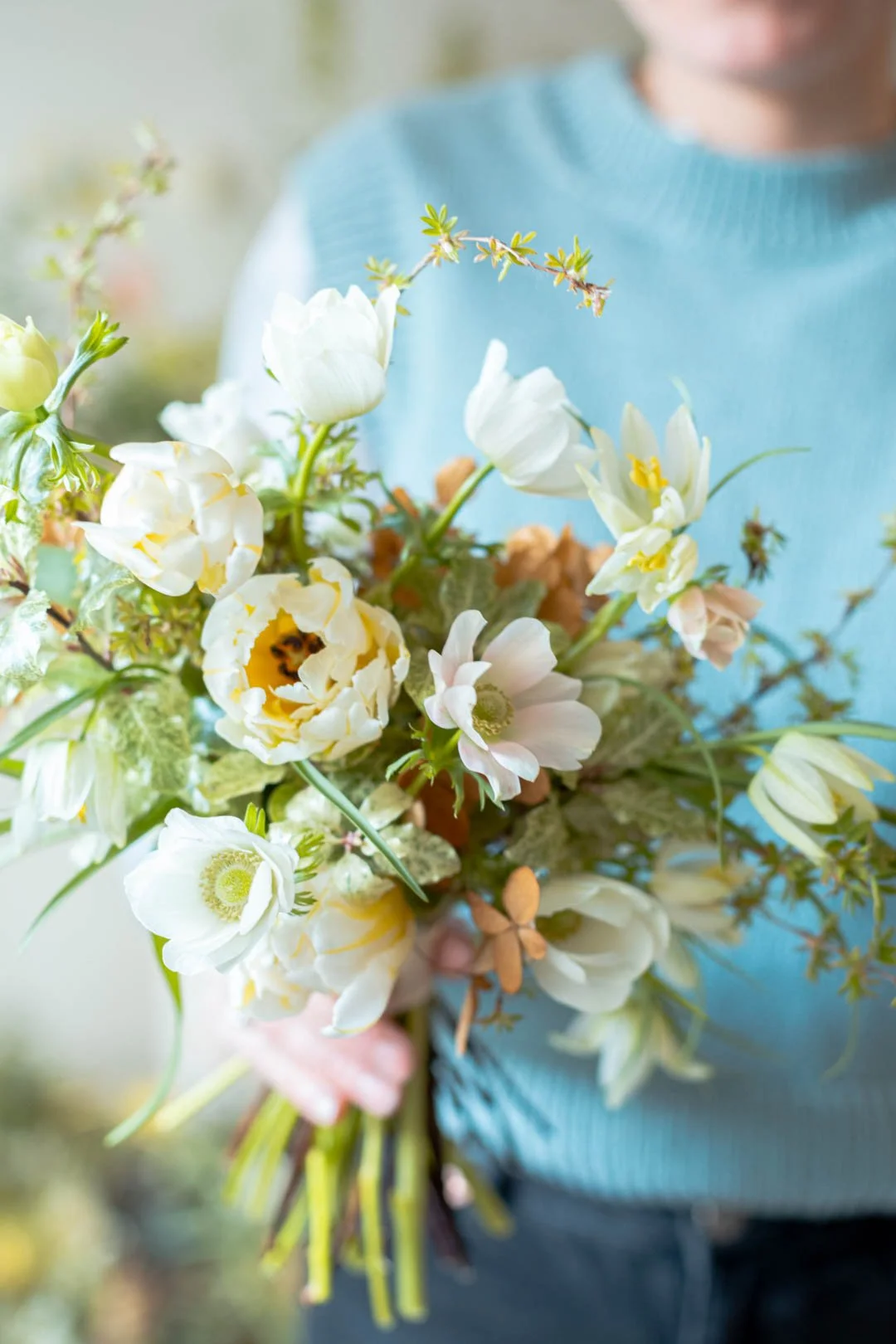
The bride’s bouquet included delicate white Anemone coronaria ‘The Bride’, tulips, Fritillaria meleagris ‘Alba’, golden dried hydrangea and delicate steams of Pittosporum and Potentilla foliage.
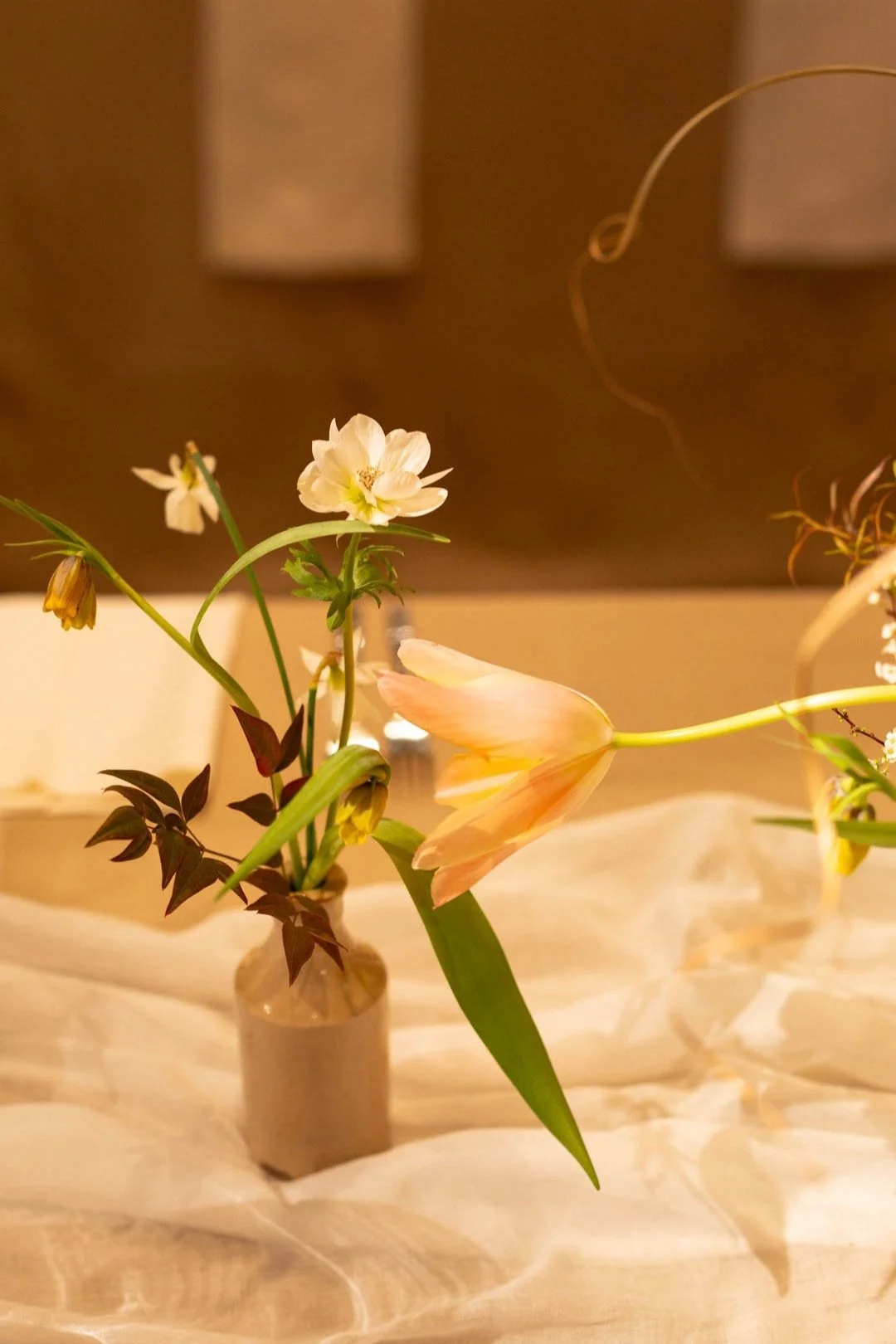
Vessels of mixed heights and shapes ran the length of the tables at Battersea Arts Centre with intricate, gestural designs of anemones, fritillaries and scented tulips in stoneware bottles and ceramic vases.
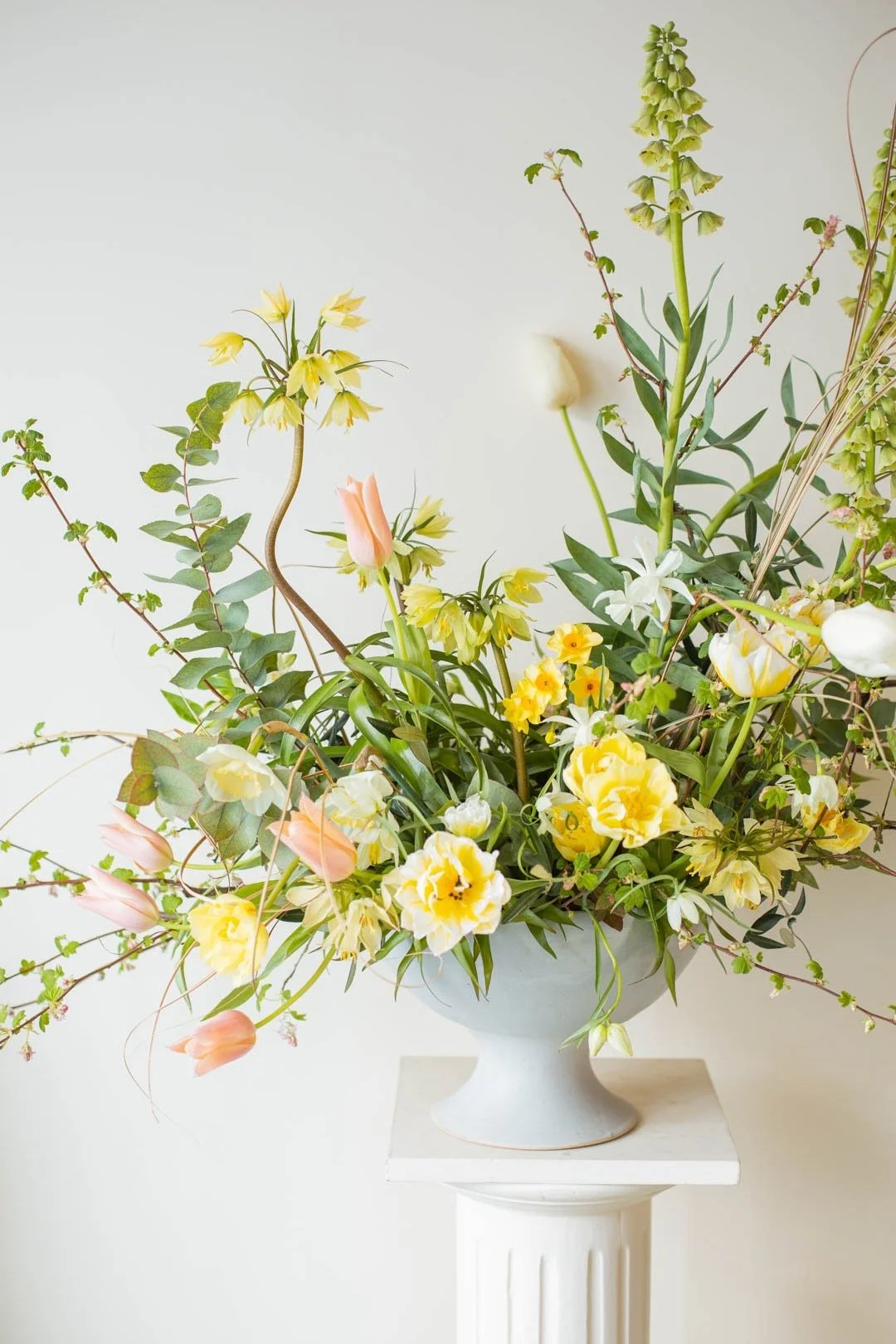
A large bowl of flowers and foliage for the escort card table - including the first Fritillaria raddeana from the garden. We used a colour palette of cool white, pops of golden yellow and green, with small touches of soft peach and honey hues for added warmth.

Savile Club, Mayfair
We used long tendrils of wild ivy to dress the staircase, with dried and fresh flowers in a palette of white, cream and mocha.

We used long tendrils of wild ivy to dress the staircase, with dried and fresh flowers in a palette of white, cream and mocha.

Pruning the rambling roses this week at the farm gave us some delicate little branches to use and helped to add extra movement to the luxurious table centrepieces.

The ceremony urns were filled with branches of lodgepole pine, rambling rose briars and ice white amaryllis.

We also dressed the window sills above the staircase. All our designs are foam-free - these were constructed in resin troughs with chicken wire.
North Norfolk Coast
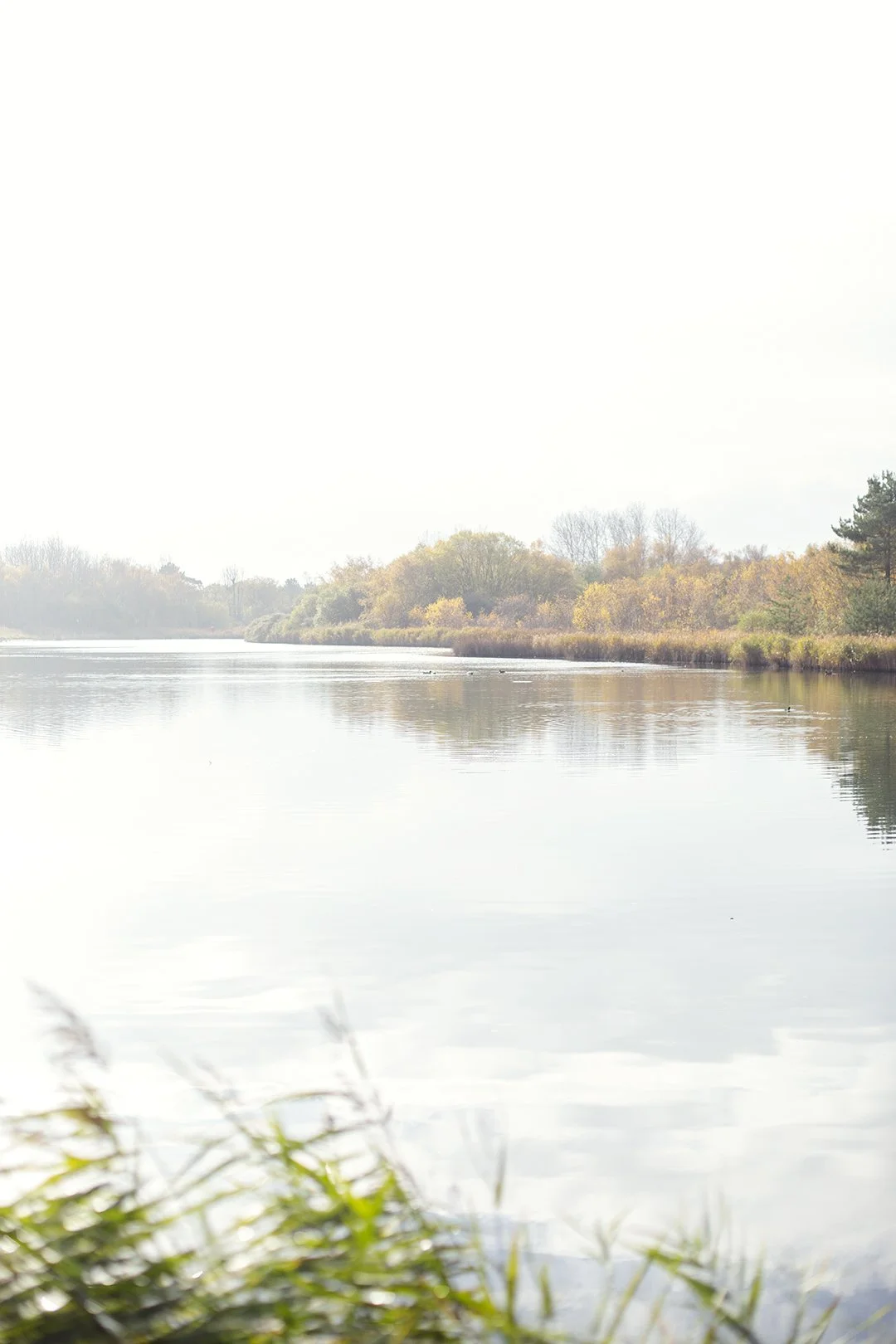
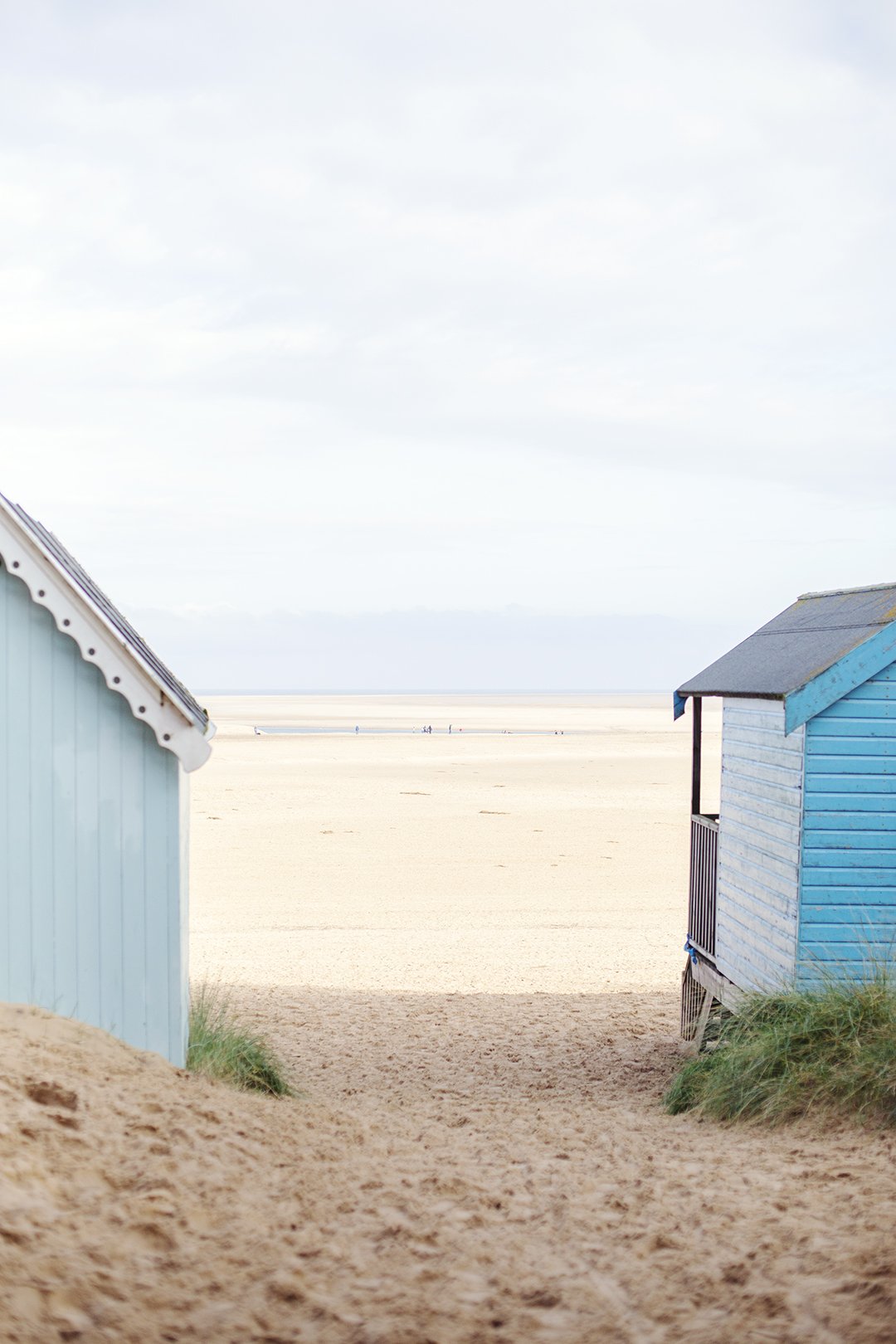
A few snapshots from a recent weekend spent on the Norfolk coastline, stretching the legs and widening the eyes - vast pebble-blue skies stretching above the scratchy dune grasses on Holkham beach, watery sunshine through yellowing leaves and forests of pine, terracotta tiles and rust-brown reed beds rustling in the wind beneath the windmill at Cley.
A few snapshots from a recent weekend spent on the Norfolk coastline, stretching the legs and widening the eyes - vast pebble-blue skies stretching above the scratchy dune grasses on Holkham beach, watery sunshine through yellowing leaves and forests of pine, terracotta tiles and rust-brown reed beds rustling in the wind beneath the windmill at Cley.




Gold, rust, peach
The bride’s bouquet was made up of the finest seasonal finds including peachy elder foliage, mottled hydrangea and glowing chrysanthemums the colour of rich egg yolks.

We were able to make the most of the changing autumnal colours at the farm for this October wedding.

The bride’s bouquet was made up of the finest seasonal finds including peachy elder foliage, mottled hydrangea and glowing chrysanthemums the colour of rich egg yolks.

The tables were decorated with little antique glass bottles and individual stems of dahlias, chrysanthemums, Japanese anemones and yellowing Macleaya leaves.

For the flower girls, ranging in age from 11 to a tiny 2.5 - sweet little posies of flowering abelia, daisy-faced chrysanthemums and wispy grasses.

Sowing for spring
We start preparations for our flowers the following year from the September equinox onwards - sowing seeds of hardy annuals such as cornflowers and nigella, planting rows of ranunculus corms, tucking allium and Fritillaria bulbs into the perennial beds, and finally planting trenches of tulips in November. It’s exciting to imagine how all the hard work will pay off come spring, when reward comes in the form of soft unfurling petals and sweet scents.
These are a few of our favourite things to sow and plant this side of Christmas!
We start preparations for our flowers the following year from the September equinox onwards - sowing seeds of hardy annuals such as cornflowers and nigella, planting rows of ranunculus corms, tucking allium and Fritillaria bulbs into the perennial beds, and finally planting trenches of tulips in November. It’s exciting to imagine how all the hard work will pay off come spring, when reward comes in the form of soft unfurling petals and sweet scents.
These are a few of our favourite things to sow and plant this side of Christmas!

We sow sweet peas in September and tuck them into the ground under cover from November. Growing in the tunnel protects their delicate petals from any rain damage and we can look forward to clouds of scented flowers come May. Sweet pea ‘Red Ace’ adds a punch of lipstick red to bouquets.

Planted in long rows in the polytunnels, ranunculus and anemones provide a sweet shop display of colour from April onwards - from deep chocolate and aniseed red to sugary pink and fizzy yellow. We use these abundantly in our seasonal flower subscriptions.
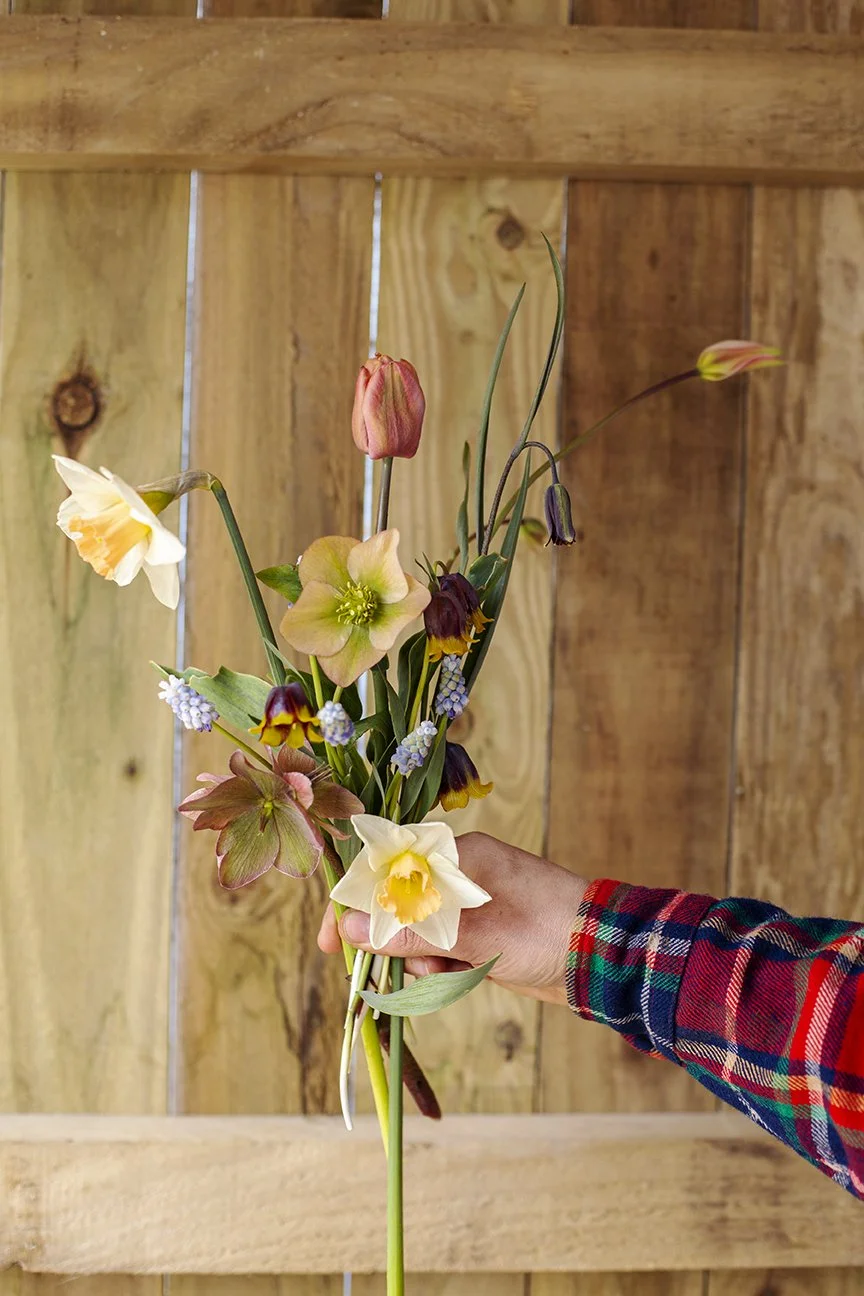
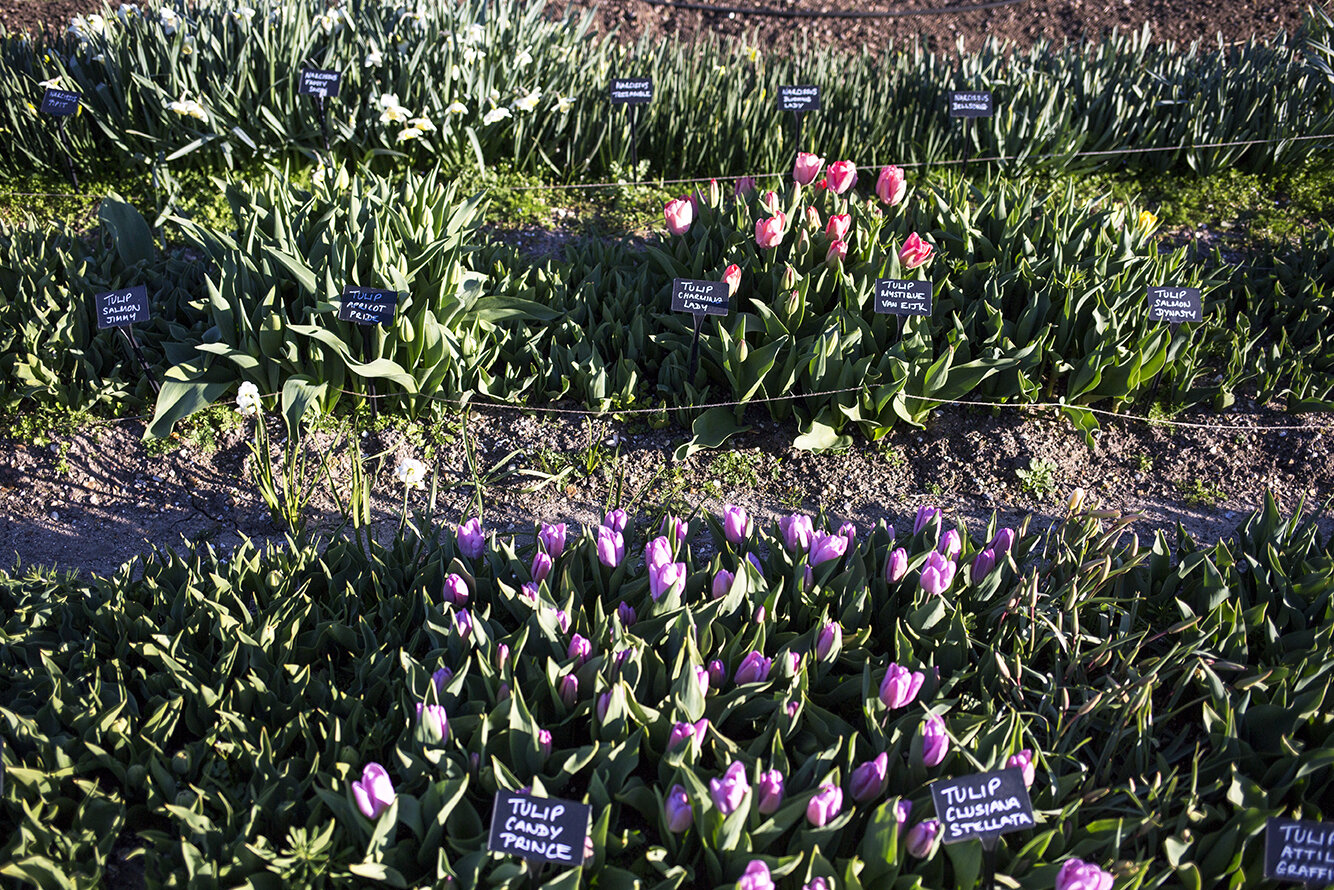
Dainty Fritillaria bells, honey-scented cupped narcissus, ice blue muscari, multi headed tulip ‘Turkestanica’ and acrid yellow wild tulip ‘Sylvestris’ … the perennial bulbs cause the most excitement when they emerge, bringing that extra sense of delicacy to spring arrangements.

Sowing hardy annual seed the previous autumn gives us a jump start on the season. While the small seedlings appear unimpressive over the winter, by mid May the beds are bursting with bushy floriferous plants and towering spires, including this Delphinium consolida ‘Misty Lavender’ variety.

Farnham Castle
The brief for this wedding at Farnham Castle was ‘whimsical garden style’ with lots of autumnal foliage.

The brief for this wedding at Farnham Castle was ‘whimsical garden style’ with lots of autumnal foliage.

For the ceremony, two large urns with tall leafy branches and creamy dahlias were arranged at the end of an aisle of asters and perennial grasses.

At the centre of the reception tables stood a footed centrepiece with garden flowers and foliage in caramel, rusty orange and white.

The bride’s bouquet included rudbeckia, zinnias, dahlias and garden roses with tiny aster and hydrangea flowers for added texture.

Sri Lankan heritage
The bride’s bouquet was made up of softer tones in cream, peach and coffee with tiny pops of pale blue and mustard.

The brief for this wedding was ‘fun and colourful’, to reflect the bride and groom’s Sri Lankan heritage.

The bride’s bouquet was made up of softer tones in cream, peach and coffee with tiny pops of pale blue and mustard.
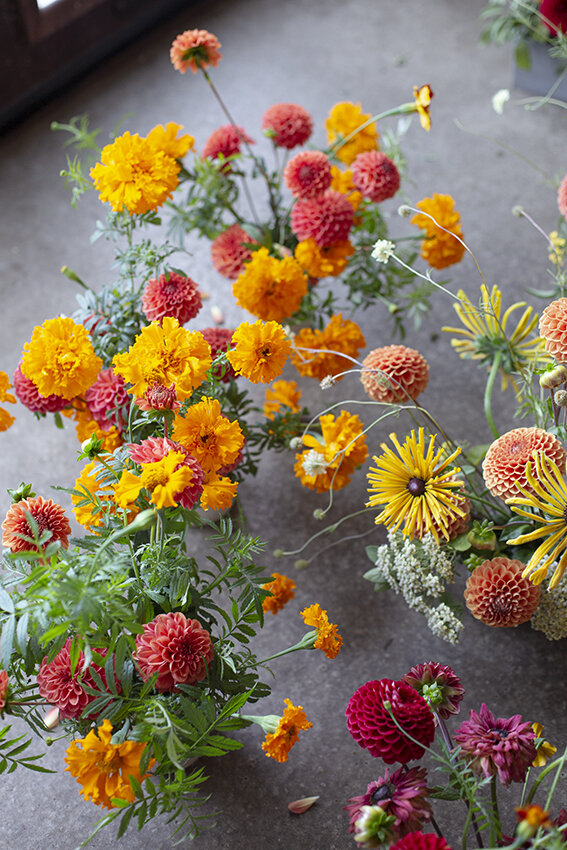

We used lots of peppery scented marigolds, dahlias in shades of deep orange and spicy red and hot pink chrysanthemums.
The aisle was lined with grouped vessels in varying sizes and colour blocks for a bright, modern look.

August in the garden
Two years ago we set about expanding the cutting garden by adding a large section of perennial plants. Our selection was strongly influenced by the natural-style ‘prairie’ landscapes created by garden designer Piet Oudolf (and countless others). The reasoning behind this was two-fold - both for the incredible movement and texture created through the use of ornamental grasses and herbaceous perennials (which give endless, interesting combinations of flowers and foliage for our designs), and by the robust hardiness and drought-tolerant tendencies of the plants (which saves on unnecessary irrigation on our dry, chalky soil in the hotter months). Now in its second summer, and with only a small handful of losses over the winter, our choices are bedding in well and we’re enjoying their incredible floriferous display, grasses swaying and rustling, humming with insect life. Here are some of our favourites this month…
Two years ago we set about expanding the cutting garden by adding a large section of perennial plants. Our selection was strongly influenced by the natural-style ‘prairie’ landscapes created by garden designer Piet Oudolf (and countless others). The reasoning behind this was two-fold - both for the incredible movement and texture created through the use of ornamental grasses and herbaceous perennials (which give endless, interesting combinations of flowers and foliage for our designs), and by the robust hardiness and drought-tolerant tendencies of the plants (which saves on unnecessary irrigation on our dry, chalky soil in the hotter months). Now in its second summer, and with only a small handful of losses over the winter, our choices are bedding in well and we’re enjoying their incredible floriferous display, grasses swaying and rustling, humming with insect life. Here are some of our favourites this month…

Macleaya cordata, the ‘five-seeded plume poppy’ muscles its way across the perennial paths, towering above its neighbours. The flower spires are incredibly useful for their height (we love to use them in large-scale arrangements). The plant also has large sculptural leaves in a grey-green hue.

There is something about the pop-art pink of Echinacea purpurea that just speaks of late summer sunshine on sultry August afternoons. Peacock butterflies flit between their fiery orange ‘cone’ centres, Pennisetum grasses whispering in the wind alongside.

The garden is where it all begins! Ally carries a bucket of perennial potential to be prepped and conditioned ahead of arranging. A good mix of textures and shapes provides the starting point for that weekend’s wedding urn designs.

Over the past few years we’ve planted a few different varieties of perennial scabious. Our favourite has to be Scabiosa columbaria, the ‘small scabious’. Having flowered profusely since June, the plants are now a textural tangle of pale mauve-blue flowers and seedheads, humming with bees.
June's finest
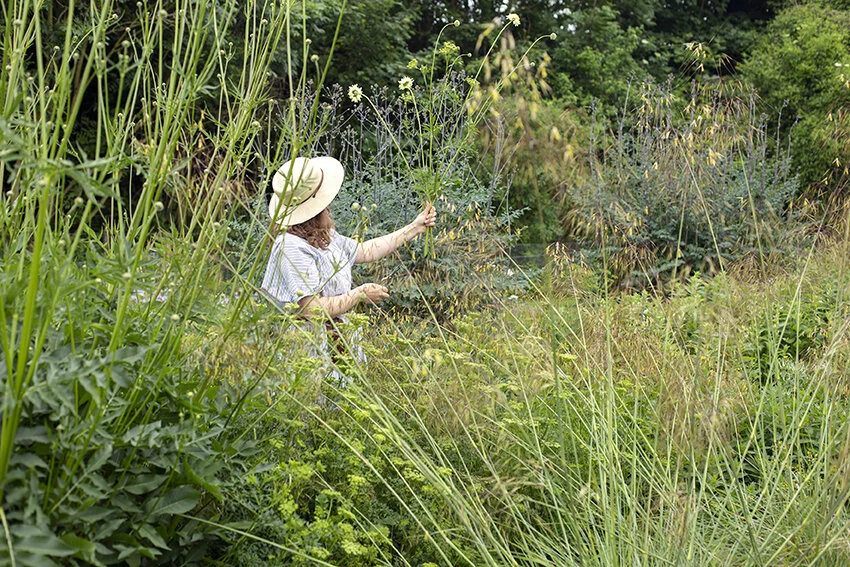
Stipa gigantea or ‘golden oats’ has been flowering now for a fortnight or so. The seedheads rise above the other plants, shimmering and swaying. Despite their great height they are still overshadowed by patches of towering Thalictrum ‘Elin’ and Cephalaria gigantea nearby.
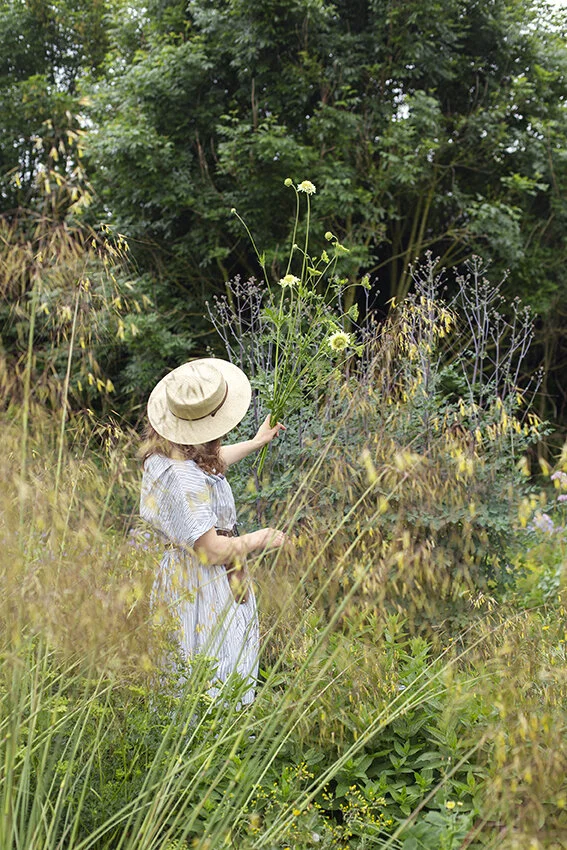
Stipa gigantea or ‘golden oats’ has been flowering now for a fortnight or so. The seedheads rise above the other plants, shimmering and swaying. Despite their great height they are still overshadowed by patches of towering Thalictrum ‘Elin’ and Cephalaria gigantea nearby.

Our first year of growing Eremurus himalaicus the ‘foxtail lily’. After such a relentlessly cold winter and given their shallow planting depth, we were unconvinced we would see these this year, but they have shot up and flowered beautifully.

The plan for the perennial beds has been to make the most of every bit of space, growing something for each season. Here the alliums and Eremurus rise up out of the clumps of grass and Aster foliage, which will be harvested later in the summer.

We’ve sadly lost several peonies this year, but the Itoh varieties seem happy and full of life. This lemon yellow ‘Canary Brilliants’ variety has a bright red eye in the centre - we arranged it with buttery Sisyrinchium spires for a photoshoot.
Seasonal wedding flowers
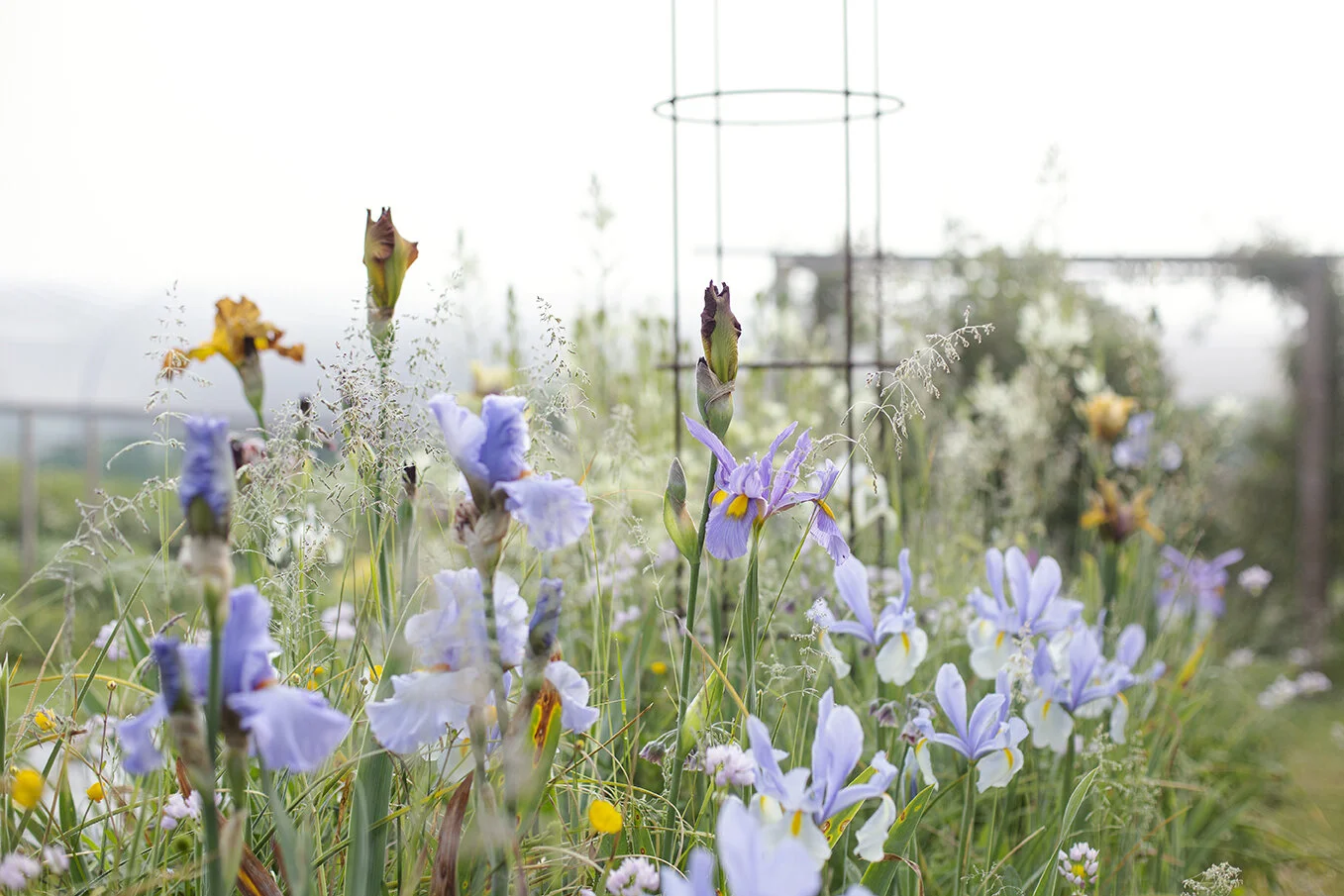
We’ve been lucky to experience some beautiful misty June mornings at the garden this year.
On arriving early one morning we were greeted by a sea of Dutch iris and their statuesque bearded neighbours rising from the bed in the centre of the garden. The air was swirling with moisture, dripping spiders’ webs trailing between each pale blue, mustard and mauve petalled head.
We’ve been lucky to experience some beautiful misty June mornings at the garden this year.
On arriving early one morning we were greeted by a sea of Dutch iris and their statuesque bearded neighbours rising from the bed in the centre of the garden. The air was swirling with moisture, dripping spiders’ webs trailing between each pale blue, mustard and mauve petalled head.


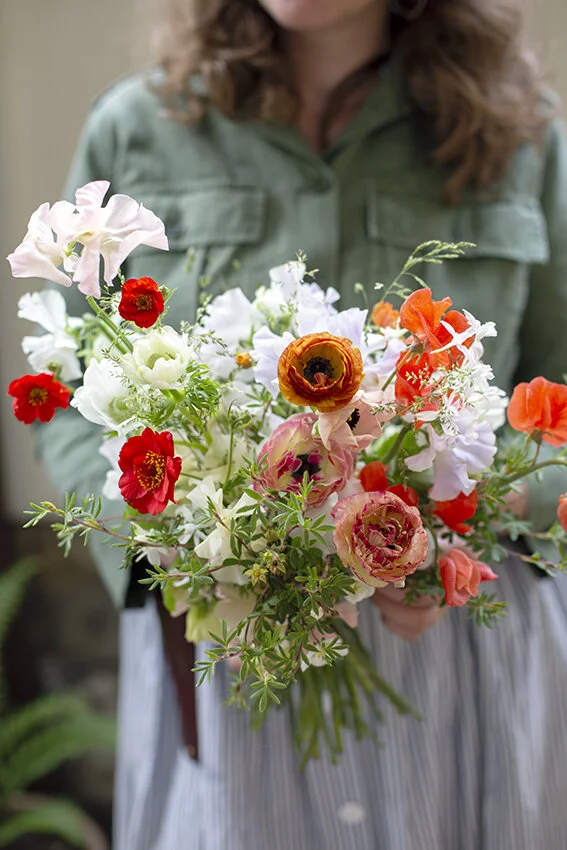


As fortune would have it that very week the studio had been asked to create the flower decorations for Vanessa and Reuben’s wedding. Vanessa’s initial reference image was of a poppy-strewn wildflower meadow with pops of scarlet red and cornflower blue. As we gathered buckets of cheery red geums, pale blue sweet peas, flax flowers and wild grasses, the timing of the moment wasn’t lost on the pickers and several days later an ecstatic bride messaged her thanks.
Seasonal synchronicity at its best!

Bouquets for brides
SPRING MEETS SUMMER | A moment in time that sings of hope - the first sweet peas blooming as the tulips come to an end. This allows for the creation of effortlessly feminine and romantic bouquets; blowsy petals, ruffles, tendrils and all.

SPRING MEETS SUMMER | A moment in time that sings of hope - the first sweet peas blooming as the tulips come to an end. This allows for the creation of effortlessly feminine and romantic bouquets; blowsy petals, ruffles, tendrils and all.

MASSED | Sometimes simple is best - a combination of three ingredients really allows each to stand out - pale intricate Omphalodes linifolia, impossibly fluffy Pennisetum villosum and opium poppy heads make for a textural summer bouquet.

A ROSE BY ANY OTHER NAME | There is a subtle dark to light gradation in this bouquet, but really all the attention is taken by the honey-centred ‘Julia’s Rose’ in the middle. Around the edges are sprinkled sprigs of scented calamint and hydrangea.

CHOCOLATE & LEMONADE | This bouquet doesn’t contain any ‘focal’ flowers, more a mass of ‘small faces’ - from pom pom dahlias to China asters and lots of pretty cosmos - ‘Apricot Lemonade’ and 'Chocolate’.

Familiar faces in March
Narcissus ‘Fragrant Breeze’ has beautiful wide cups in soft egg-yolk yellow - all the better for indulging in a long deep sniff!

After what seems to have been the longest winter, some familiar faces are brightening up the garden, and our mood!

Narcissus ‘Fragrant Breeze’ has beautiful wide cups in soft egg-yolk yellow - all the better for indulging in a long deep sniff!

A sweet little Easter tablescape of antique medicine bottles and a happy mix of Helleborus, Fritillaria, Narcissus, Tulips and Anemones

Colours and patterns galore: speckled Helleborus ‘Harvington Double White’, chequered Fritillaria meleagris and tiny yellow Narcissus ‘Minnow’

From the garden in February
A clutch of rain-splattered Helleborus feels like the sweetest gift on dark days

A clutch of rain-splattered Helleborus feels like the sweetest gift on dark days

An injection of brights from Rainbow Chard - citrine leaves, fuchsia and red stalks

Galanthus Nivalis - their delicately nodding heads are sweetly scented

Creative play - a small arrangement made with snippets from the snowy garden, in anticipation of spring

2020 in 20
Arranging flowers gave us calmness and hope in a difficult year - proof if it was needed of just how powerful nature can be
Like most, we breathed a loud sigh of relief as the end of 2020 came into sight. We ended last year more despondent than usual, quietly grateful for our health and the survival of our small events business. However… it is our strong belief there are always good things to be found amongst bad, and this is never more true than when immersed in the natural world. Shining bright amongst the awfulness of 2020, there were some truly beautiful moments to remember.

All dressed up and no weddings to go - the tulip beds flowered in the spring without hope of harvesting

We fell firmly in love with orange - a bright and happy, often overlooked colour
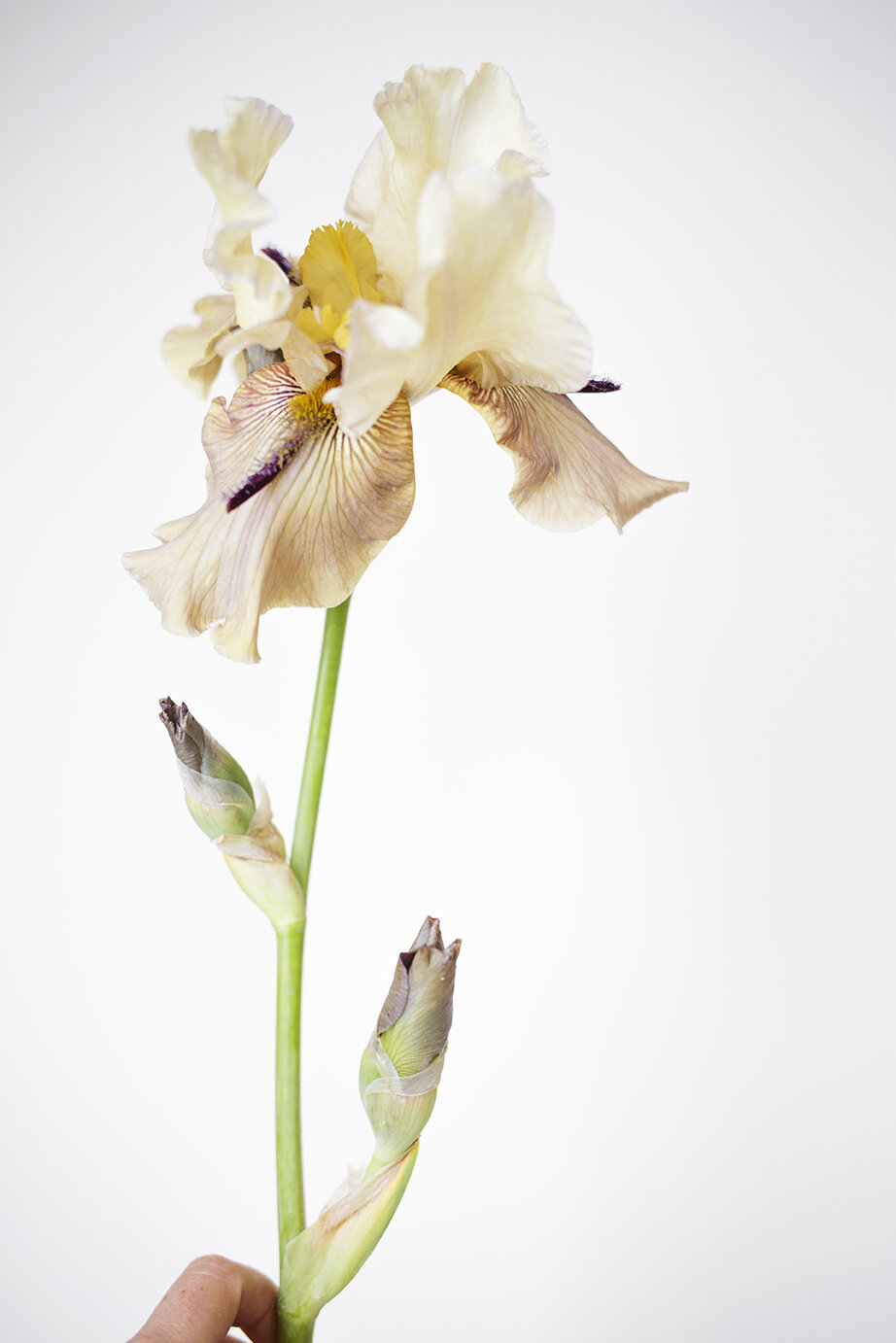
Regal, strange, beautiful - the bearded iris flowered wonderfully in the May sunshine

Beating the blues with armfuls of iris and warm sunny days in the garden

We fell in love with delphiniums, our tunnel crop growing over our heads in spires of blue and mauve

We experimented with COLOUR! Reds, oranges, pinks, yellows, purples, blues…

In the August heat the garden was a riot of colour, bolstering our spirits on low days

We grew our most successful zinnia crop and are looking forward to putting new gardening lessons into practise this year

Our baby shrub roses, planted at the end of 2019, settled in well and flowered profusely

Who ever gets to enjoy this many beautiful Belle Epoque tulips for themselves?!

Mavis missed welcoming students to the studio for their classes and wondered where everyone had gone

But she did get lots of kisses and attention from the two of us, which made her very happy

We grew plump China Asters - destined for special weddings - we’ll grow them again in 2021!

We discovered the magical beauty of Valerian - and its hellish self-seeding tenancies if left for pretty pictures!

We celebrated and cherished each flower variety more than ever this year

The new perennial section at the garden was grateful for the quiet year and settled in well without too much snipping!

We loved these ‘Blue Bayou’ tomatoes - on the plate and in the vase

We missed making bridal and bridesmaids bouquets, buttonholes, table flowers, urns, installations…

Free time meant more creative time for experimenting with different shapes and techniques

Arranging flowers gave us calmness and hope in a difficult year - proof if it was needed of just how powerful nature can be

New perennial beds
Our new perennial garden at the farm, with shrub beds in the foreground. This patch is still in its infancy but settling in as the weeks pass. We’re excited to witness these plants develop over time - many of them will be waist or shoulder height once established and will provide beauty and interest throughout the whole year, not just in summer; the spires and globes of flowers becoming seed heads, the grasses producing fluffy tails and then drying, the umbels evolving to architectural skeletons in winter.

An arrangement of hosta leaf and Dutch iris ‘Silvery Beauty’, with wild meadow-grasses ‘Yorkshire Fog’, ‘Downy Brome’ and ‘Pendulous Sedge’.
May. The third month of our ‘season’. These are some of the most beautiful weeks of the year. Early mornings cutting at the farm, afternoons in the cool of the studio with the novelty of all the doors thrown open and the breeze fluttering through, the lengthening shadows in the evenings, the first days of restless heat and the promise they bring for the months to come. Every day we remind ourselves to live it to the full, that this is a fleeting moment in time and that these calm, quiet days should be cherished - for the unfurling iris, for the scent of coffee brewing on our camping stove at the garden, for the sleepy lizards sunbathing on the tunnel roofs and for the slower pace of life that is allowing us the freedom, for a time, to reflect and breathe.


Our new perennial garden at the farm, with shrub beds in the foreground. This patch is still in its infancy but settling in as the weeks pass. We’re excited to witness these plants develop over time - many of them will be waist or shoulder height once established and will provide beauty and interest throughout the whole year, not just in summer; the spires and globes of flowers becoming seed heads, the grasses producing fluffy tails and then drying, the umbels evolving to architectural skeletons in winter.
The garden continues to feed our work at the studio. Both literally and metaphorically, a flow of materials, gaining in quantity and variety by the week, and the propulsion of its natural energy carrying us along with it further into the year. Without the flurry and hustle of our usual schedule, this month has allowed us a unique and deep immersion in using our plants to fuel our design work and enabled us to dig deeper into the overlap of horticulture and flower arrangement. The collaborative relationship between our studio and the garden, and the tension and beauty this can create has become a total obsession and it has been a luxury to spend several weeks focussing on this alone.


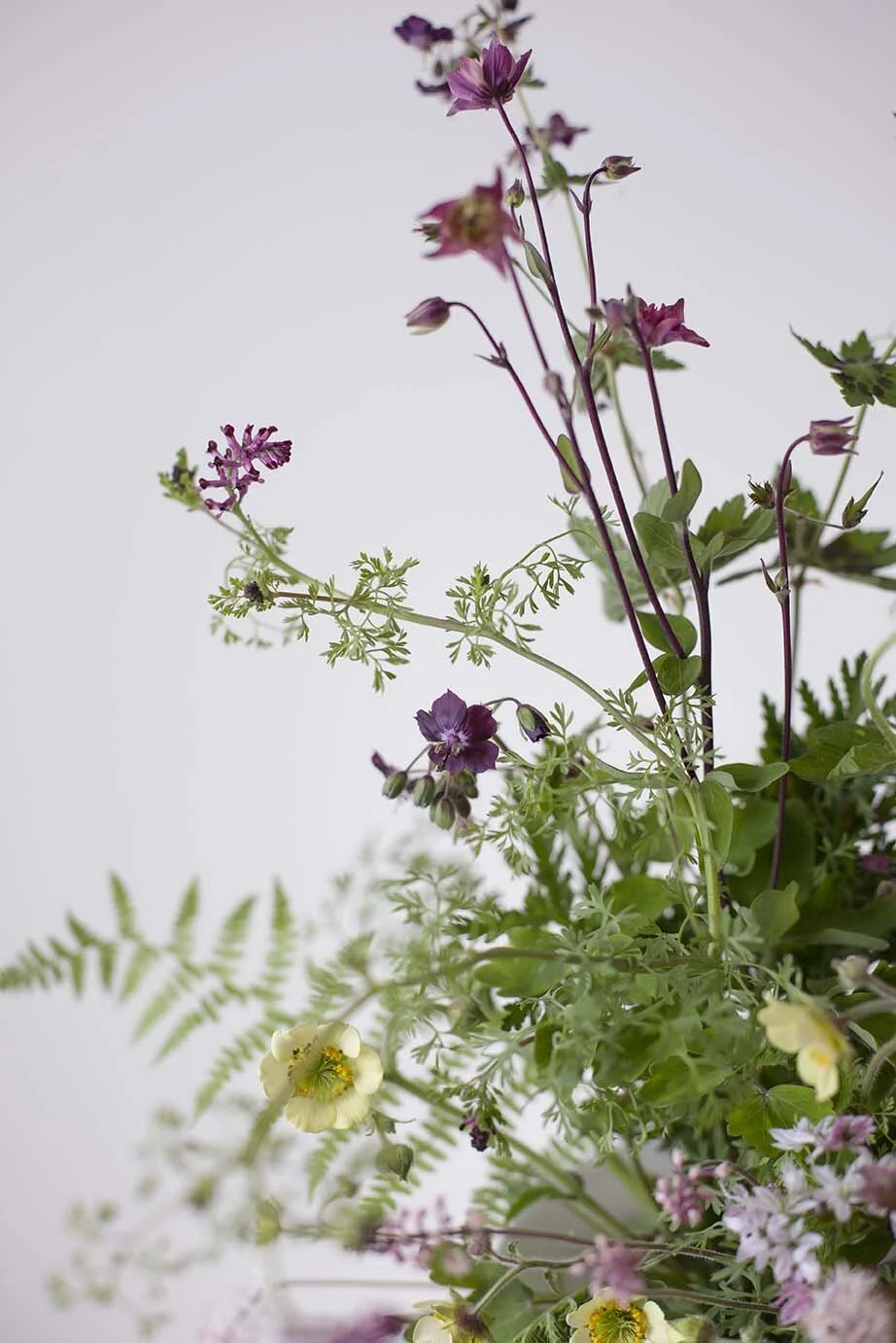
Working on an arrangement of rowan, hawthorn, cow parsley, Camassia, Agrostemma and buttercups - a true reflection of our garden and the surrounding hedgerows, mid May.


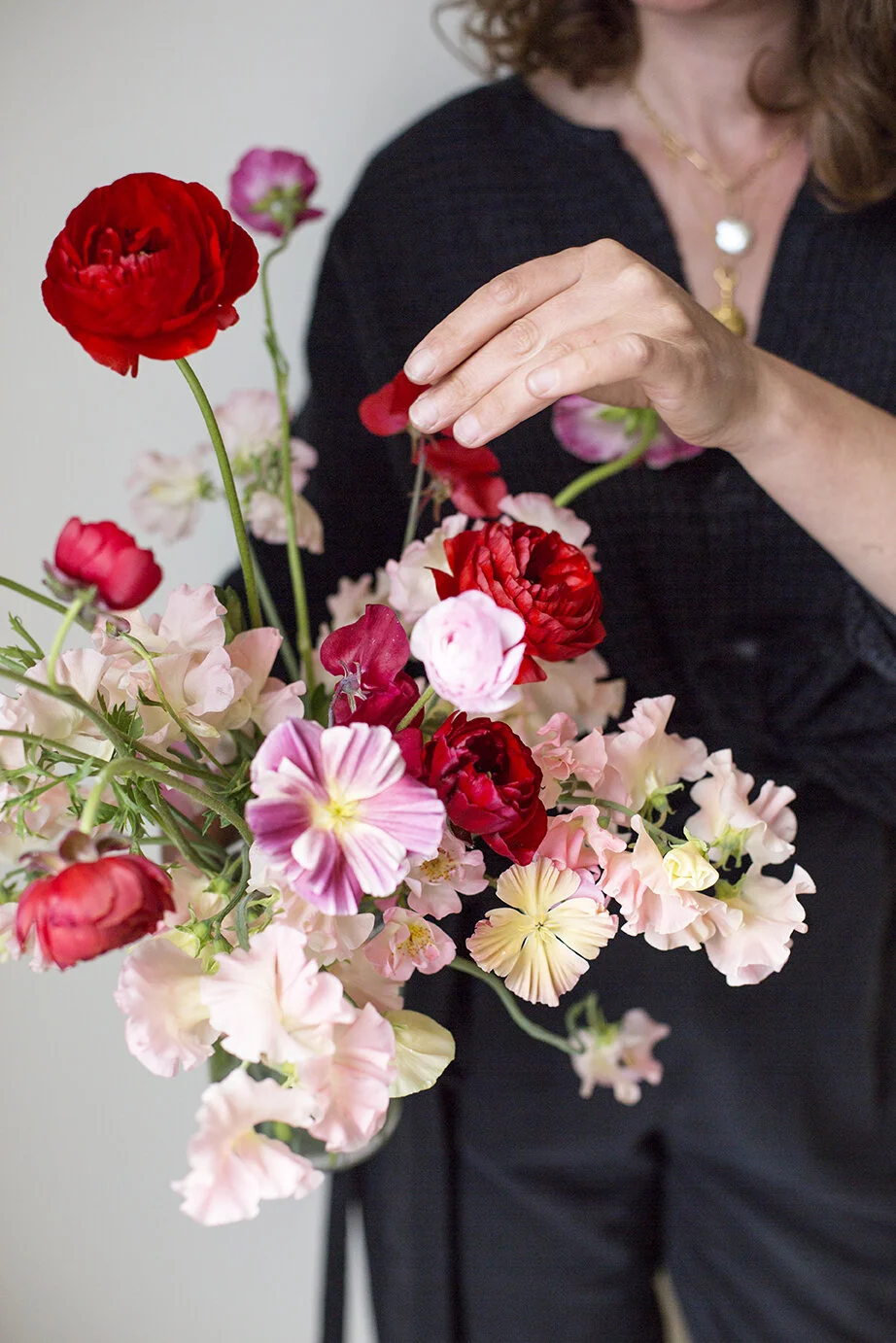


Ranunculus, Dutch and bearded iris, sweet peas and Allium siculum.
The more we delve into these concepts, the more we are slowly deepening and developing our nature-inspired design philosophy and in the process the more layers there are to uncover, and the more there is to learn and think about and research. What flowers and gardens mean to us, why we grow plants for decoration and bring them into our homes. Why and how they have the power to move us, to bring us joy, to change the energy in a room. How to create arrangements with natural materials that are truly evocative of season and place. How to combine them in a way that is reflective of how and where they were grown. How to balance colour and texture. How to edit, to strip out the unnecessary and allow the materials to reveal their true characters and complexities, to distill and elevate the essence of each ingredient. On the surface, growing and arranging flowers seems whimsical - the ultimate frivolity. But there is so much more to explore, technically, intellectually than meets the eye at first glance. You can just graze the surface, dip your toe in, you can go deep as you like. These questions have preoccupied us for years but we’ve had time to really dive down this year - every time we come up for air we find we want to go further in.


The large bed in the main garden being prepared for the changeover from spring bulbs to dahlias.


A handful of vines of ‘Heavenscent’, a beautiful sweet pea with frilly, creamy flowers flushed with pale pink and a rich, heady perfume. We cut it long on the vine to enjoy its leaves, whiskery tendrils and contorted stems.

Flowers in lockdown
April. We gardened mostly. Re-scheduled 2020 to next year. A paschal moon rose. Lightening-jagged faultlines appeared in the soil after weeks of sun. The rain finally came.

I lost myself on a cool damp night
I gave myself in that misty light
Was hypnotized by a strange delight
Under a lilac tree
I made wine from the lilac tree
Put my heart in its recipe
It makes me see what I want to see
And be what I want to be
lyrics from ‘Lilac Wine’ written by James Shelton

April. We gardened mostly. Re-scheduled 2020 to next year. A paschal moon rose. Lightening-jagged faultlines appeared in the soil after weeks of sun. The rain finally came.


Driving from London to the farm it seems that only weeks ago the roads were carving through meadows of iced umbels, casting the first golden-pink light of the day on the wool of sheep in the fields. Now the woods are a blur of bluebells, the verges indistinct, a billowing daze of cow parsley, the occasional daub of lilac.


The cutting garden has become the epicentre of our lives during the crisis. It gives us a rhythm to hold onto, the anchor holding us steady. There is always much to do, so much more to be done. Creating and maintaining anything is fulfilling but caring for plants and relying on them for harvest is a great leveller too. And gardening is really just the constant draining and re-filling of essential tasks ad infinitum. It keeps your head down, keeps you connected to the earth. For Jess and I a fairly dogged work ethic is coiled into our DNA - we don’t stop, ever. And right now that’s something I’m grateful for. It’s a slower place - there is more time for eating well, for reflection and all that. But too much introspection isn’t good for anyone. Some hard graft, however – that’s always good for the mind (if not the body!).




New routines and rituals begin to replace the old. Today we’d be entering the third week of a relentless schedule of weddings and teaching that in normal times would last through until mid to late October. Every few days we say ‘today we’d be teaching this’ or ‘tomorrow we’d be cutting for so and so’s wedding’ I guess as a way to keep abreast of a reality that is no longer in existence. And who knows whether it will be again soon – I suspect not. And when it is it will be another time, it will be different.


We had this private little thing that we used to do in the studio before a big workshop. We would select one of the cones of incense we brought back from Japan and light it, the smoke would drift through the studio and out into the back garden. Jess, Yukiko and I would be going about our tasks but it was this moment of calm and centeredness. And gratitude - for our beautiful studio, for the flowers, for eachother, and for the people we would be lucky enough to share them with. We miss Yukiko so much.


Sometimes we talk about what’s ahead and sometimes what’s been and gone – reminiscing has become a bittersweet pastime. This usually revolves around food. Going to restaurants. Hardly essential but it’s what we miss the most at the moment besides parents and friends. Most other things are superfluous but eating a meal in a roomful of strangers is the one luxury I’d keep if I could. The intimacy and theatre and excitement of a restaurant is like nothing else. I am relishing reading The Restaurant: A History of Eating Out by William Sitwell at the moment. He is a wonderful writer. “One of the main attributes that separates us from animals is that we consume things for more than thirst or hunger. We derive pleasure from what we eat and drink. There is satisfaction in flavour, texture and the wider experience. Indeed, much of the story of eating out is predicated on the fact that it is fundamentally unnecessary. Whatever anyone tells you, we do not need to visit restaurants to survive - but they make survival considerably more enjoyable.'“
With the time now to spend far more of it cooking we are eating better than ever – healthy, nourishing food that is prepared slowly, whilst working our way through a delicious bottle of something, and reading a book at the same time. But the meals out ‘before’ have taken on a mythic quality in memory. I can’t stop thinking about a bowl of pasta at Campania & Jones – whilst excitedly planning our autumn workshop in Paris with Clementine. An excellent steak at The Brackenbury Wine Rooms when the Icelandic family owners took over the next-door table, with a gradually increasing number of small children and emptying wine bottles. That was one of the last nights before the lockdown and they were certainly making the most of it. Yukiko’s first bowl of kedgeree at 202 – that was just before too. I read this great article recently by Ruthie Rogers, owner of the amazing River Cafe. Yes, I thought - that explains it. Food is all about people. Flowers are too.


April saw many beautiful flowers that didn’t have homes to go to and that was regrettable. Although we did enjoy working on a few creative projects of our own and luxuriated in arranging flowers for the sheer love of it again. There were tulips, anemones, hellebores, narcissi, spiraea. Brown, gold and lipstick-red ranunculus. But above all we were in thrall to the iris. Silvery blue, tall, architectural – we adore them. I brought a bucketload home with me last week and am hoarding them until the petals shrivel at the edges.


At this time of the year you can feel the shift in energy in the garden, the sudden surge of momentum. After the rain the plants puff out immediately and then its as though they double in size day by day. Everything begins to flower at once. It’s like an orchestra. The symphony begins!


May is all about the most exquisite of flowers - the bearded iris. There will be camassia too, aquilegia, geums, sweet peas, corncockle, the first roses of the season. But don’t let me get carried away! That’s a whole new chapter.
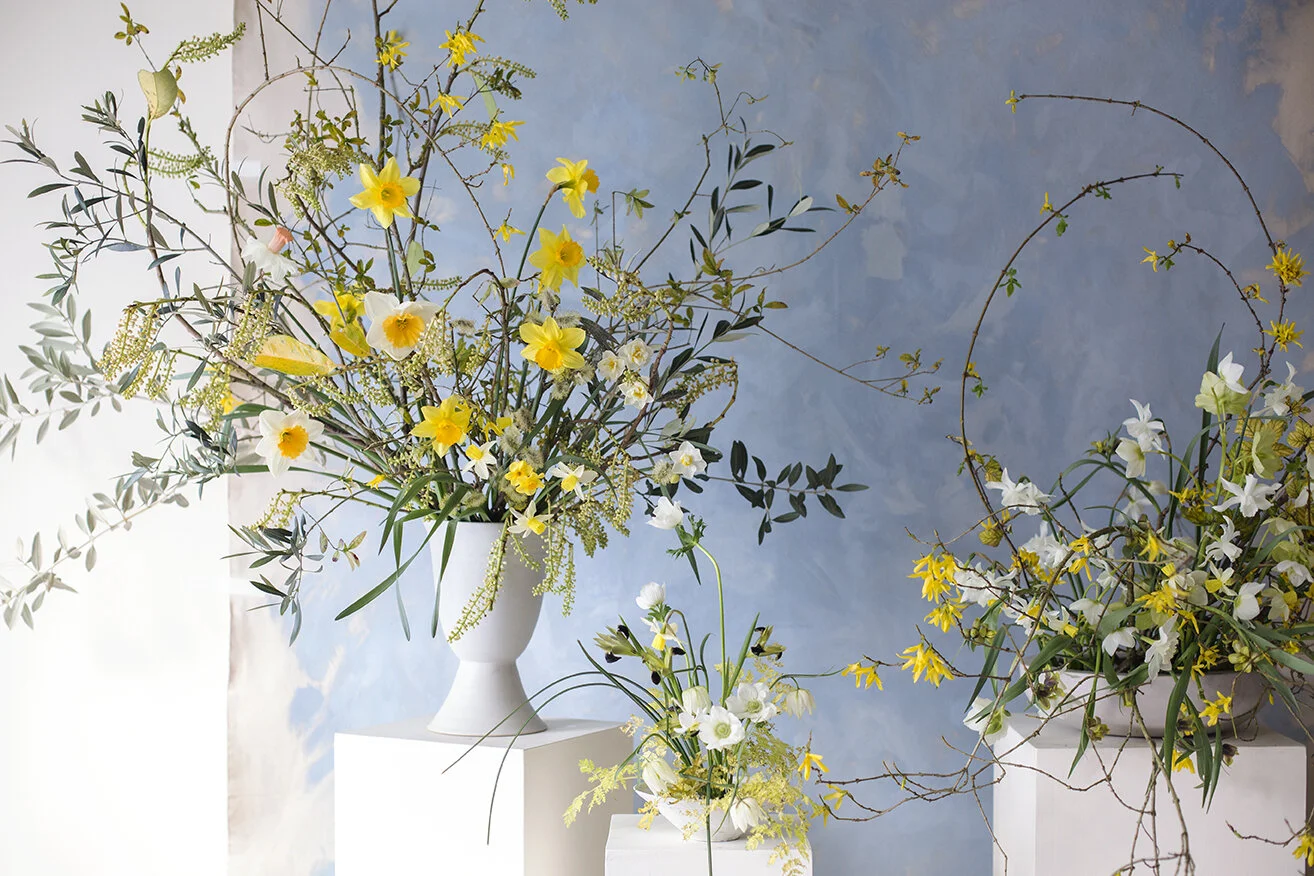
Flowers in the time of Covid
The next few months we plan to go back to basics. Growing flowers, learning how to arrange them, studying plants, photographing them, writing about them. It’s safe to say that until much later this year there will be no weddings, no parties, no workshops - this is going to be one long research trip! But while we have our health, we will be in the garden, slowly building on what we’ve started there for the future. We hope to share more with you here as we go.

This is the time to be slow,
Lie low to the wall
Until the bitter weather passes.
Try, as best you can, not to let
The wire brush of doubt
Scrape from your heart
All sense of yourself
And your hesitant light.
If you remain generous,
Time will come good;
And you will find your feet
Again on fresh pastures of promise,
Where the air will be kind
And blushed with beginning.
- John O’Donohue

Everything is different now. So very different, for all of us. This pandemic has robbed us of many things. In a business sense - cash flow, our work for the season ahead, our wonderful team, our certainty for the immediate future and weekly routines. It has robbed us of brushing past people in crowded rooms, of shaking hands, of coffee shops and wine bars and kissing our friends and parents, our freedom to go out and be in the world. For the time being, at least, we are restricted, isolated, distanced. But I don’t want to write about that. What I want to write about is hope, and change for the better. Because, while none of us expected THIS, there are, perhaps, silver linings to be found. For the moment time - to realign, to refocus - being one of them.
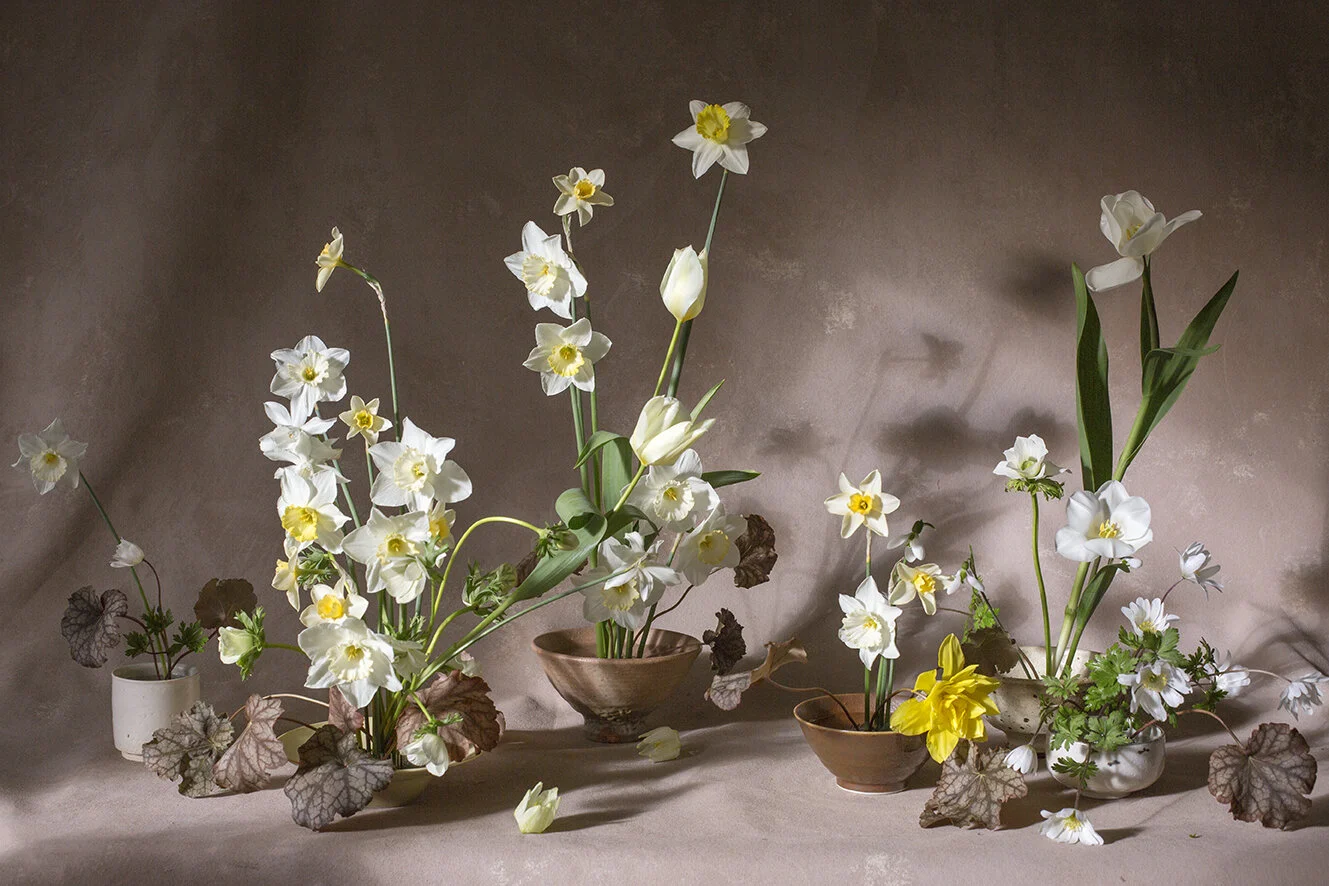
This week we were due to re-open the studio and flower school for the new season, preparing to welcome brides and mothers-of-brides and planners through our doors to discuss colour schemes and hash out itineraries and students coming to study floral design with us for a day, or a week - it’s one of the most exciting stages of the year, the cusp, when everything is just about to get going. For us there’s nothing we love more than a full diary of dates stretching ahead, that blissful workaholic haze of early mornings and challenge and adrenaline, one project after the other until the winter when we exhaustedly crawl back into hibernation again until spring. For the last five years this has been the annual dance, a rhythm we are familiar with and thrive on. We’d lined up the perfect team to work alongside us - all similarly champing at the bit to get off the starting blocks and into the field to join the flowery fray. And then out of nowhere - Covid-19. BOOM!


A week into the UK lockdown and we are only just beginning to come to terms with what this means. Everything looks different. London is deserted; our beautiful city boarded up and unrecognisable. On one of those grim mornings last week I made my usual pot of strong coffee and took a mug out into the garden. My husband was listening to the news, the air was tense with anxiety and everything was eerily still - no children playing in the school playground, no cars on the road, no planes. I stood amongst the potted pelargoniums and drank my coffee. I had a childish and self-indulgent urge to cry but couldn’t. Crying seems to get harder as you get older, perhaps that’s as it should be. Instead I concentrated on the silence in an effort to compose my thoughts and get on with the day. And then I realised something. The world around me was far from silent - to the contrary, the whole morning was full of birdsong. Every day since I’ve tuned into the blackbirds and starlings whistling and chirruping to each other, and the swaying canopy of holm oaks in the wind at the end of the garden sighing like the ocean. In these moments I find I can cling onto a sense of peace, that at some point all will again be right with the world.


In the meantime nature carries on, regardless of us and our viruses. It has its own schedule to keep to. The earth warms, birds chirrup, stag beetles have sex in the sun, the honeysuckle scrambles up over the fence and unfurls its grey leaves. In the garden time slows - yet at this time of the year every day is like watching the plants fast-forward to fuller, more vigorous versions of themselves. This is where we’ve been the past week, in among the leaves and new fronds, keeping close to the earth. Raking soil, planting, watering, making good. These simple acts, the rhythmic, methodical processes of keeping a garden, are utterly life affirming.


The flowers are blooming, more and more every week. We have time to really think about them and give them the attention they deserve. Each harvest we are collecting all the treasures that might be taken for granted in the rapid pace of usual life - tiny narcissus and fritillaria, the first of the tulips, ranunculus unfurling their petticoat skirts.


Against all odds the past few weeks have been a strangely fertile time of creativity and ideas. Even though its just us the two of us now, and far from the jazzy, busy season of hustle we were expecting. Perhaps, without the racing and dashing of everyday life as we know it, there is now the space to reconsider whether all the usual freneticism is worth it, whether there are other ways of operating, as a business, as a family. For us, a chink of light has illuminated what’s important and what’s superfluous. What we thought achievement meant and what it should. And what we want to focus on for the future of Aesme - what it is, really and truly - that we’re trying to do here. Refocus, reposition, make the most of the time available.


The next few months we plan to go back to basics. Growing flowers, learning how to arrange them, studying plants, photographing them, writing about them. It’s safe to say that until much later this year there will be no weddings, no parties, no workshops - this is going to be one long research trip! But while we have our health, we will be in the garden, slowly building on what we’ve started there for the future. We hope to share more with you here as we go.
