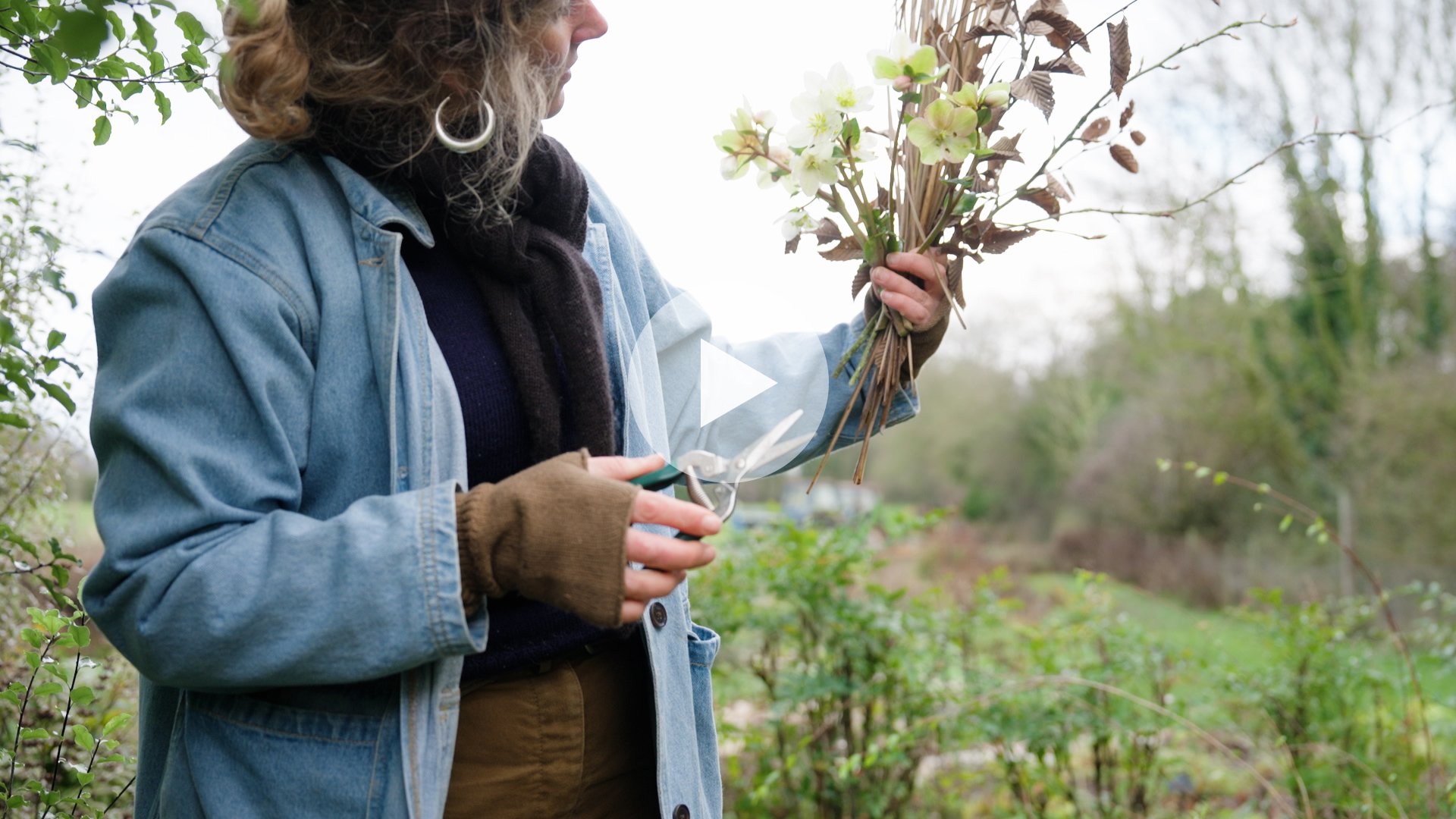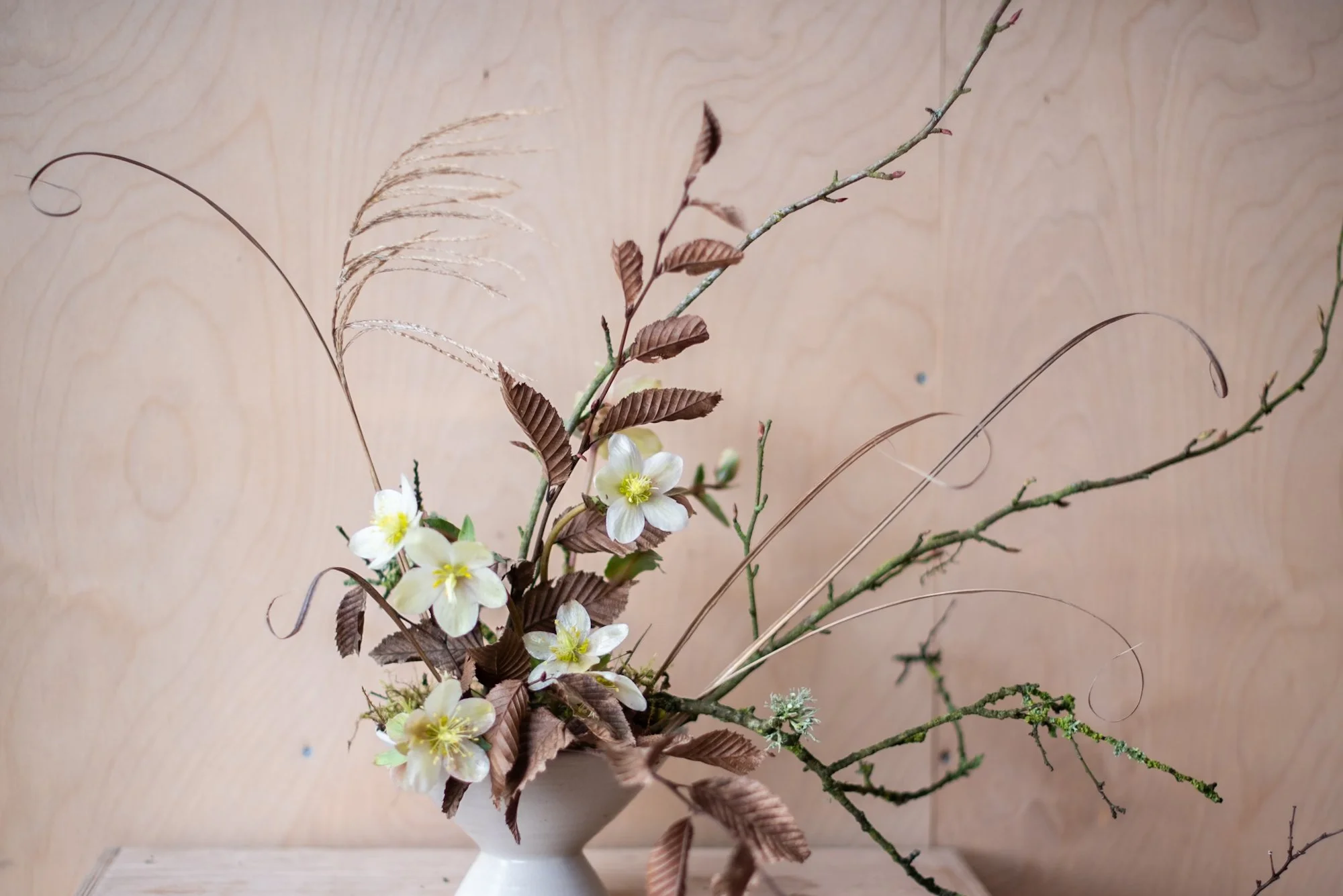
Hornbeam, silver grass, oracle ROSE
An exercise in restraint ~ gnarled branches, tiny buds, and rosy white hellebores
JANUARY
INGREDIENTS
Prunus spinosa (blackthorn)
Carpinus betulus (hornbeam)
Ribes sanguineum ‘White Icicle’ (flowering currant)
Helleborus x ballardiae ‘Maestro’ (oracle rose)
Miscanthus sinensis 'Kleine Fontaine' (silver grass)
TOOLS
Secateurs
Small kenzan
NOTES
In Saxon England, January was known as ‘wulfmonath’ (wolf month). At this coldest time of the year hungry packs of wolves would leave the forests in search of food. In their desperation they would attack villages, picking off livestock and people. I find it helpful to remind myself of this towards the end of January when it has been raining and grey for weeks on end and the garden is a sea of mud. We’re not under attack by wild, starving wolves and there is much to be grateful for.
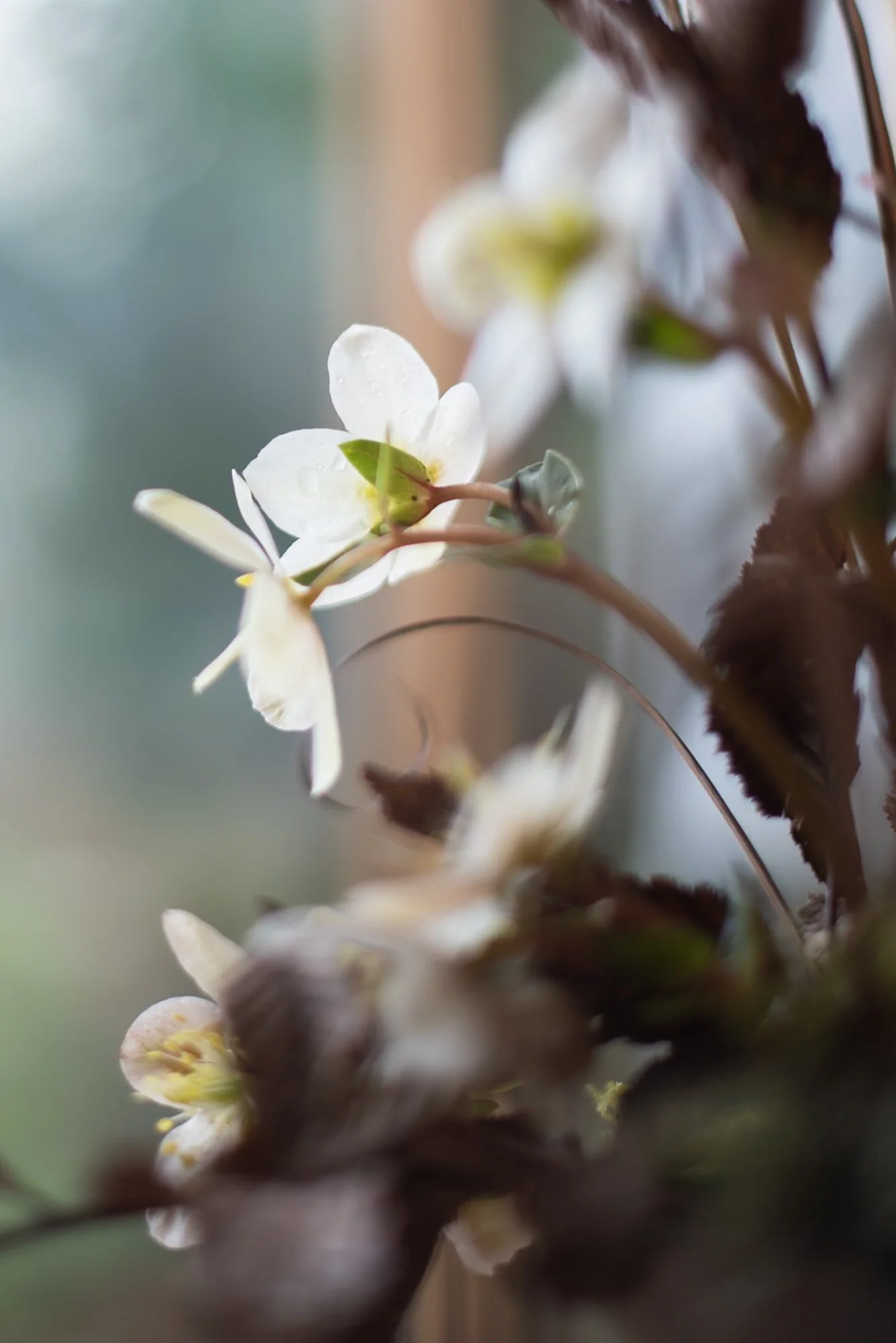
I’m grateful for hellebores, especially. Because in this sparsest of months in the garden, there they are, taking up the baton. Hellebores are the floral lifeline that carries us through all the way from before Christmas until spring gets its feet under the table in March.
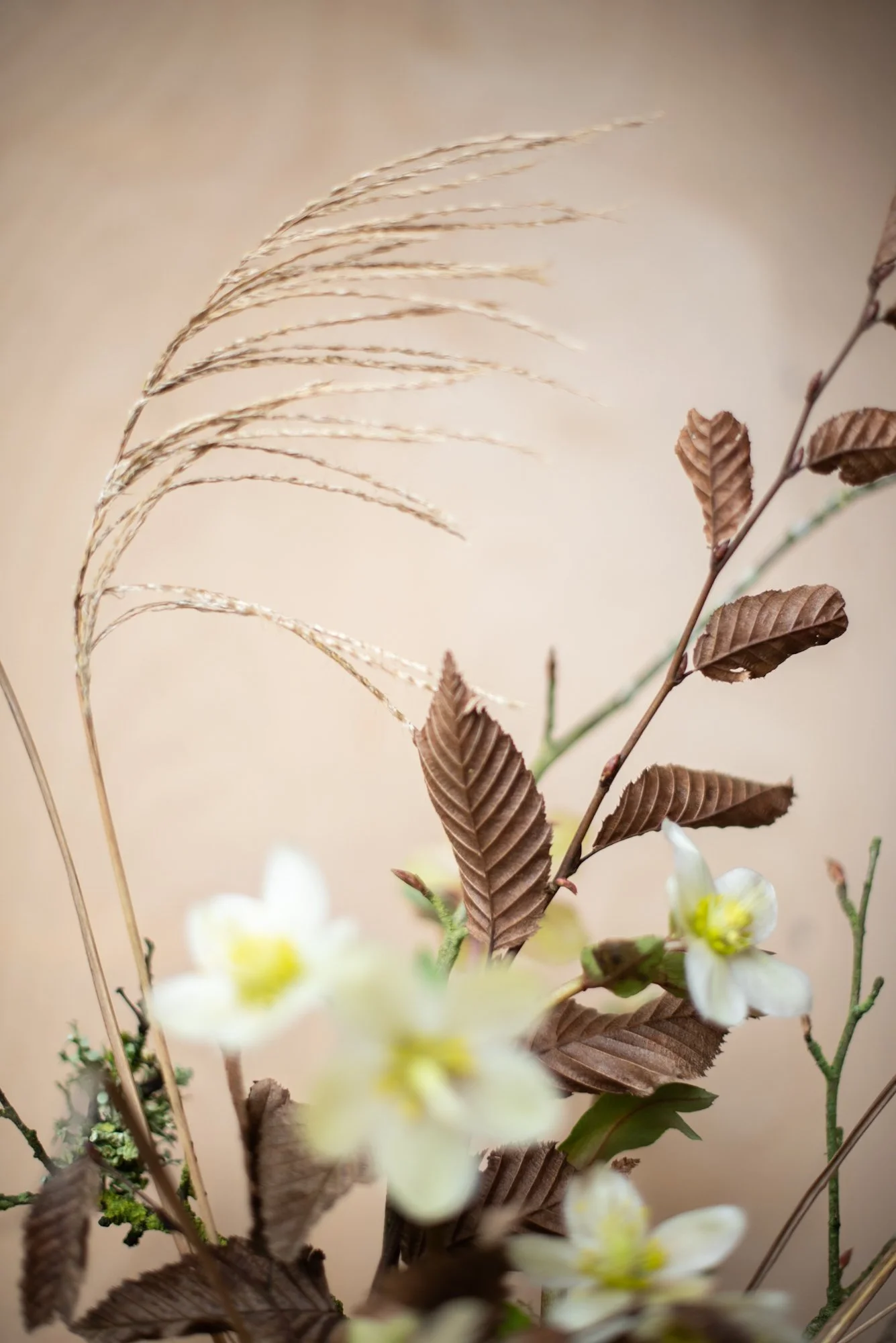
What I love about arranging flowers is just that - the active arranging, the creation in the moment. I value the process over the fait accompli which is by then passive, a static object no longer in motion. Arranging is dynamic, and exciting, because with the addition or subtraction of every individual stem it changes fundamentally from the arrangement it was before.
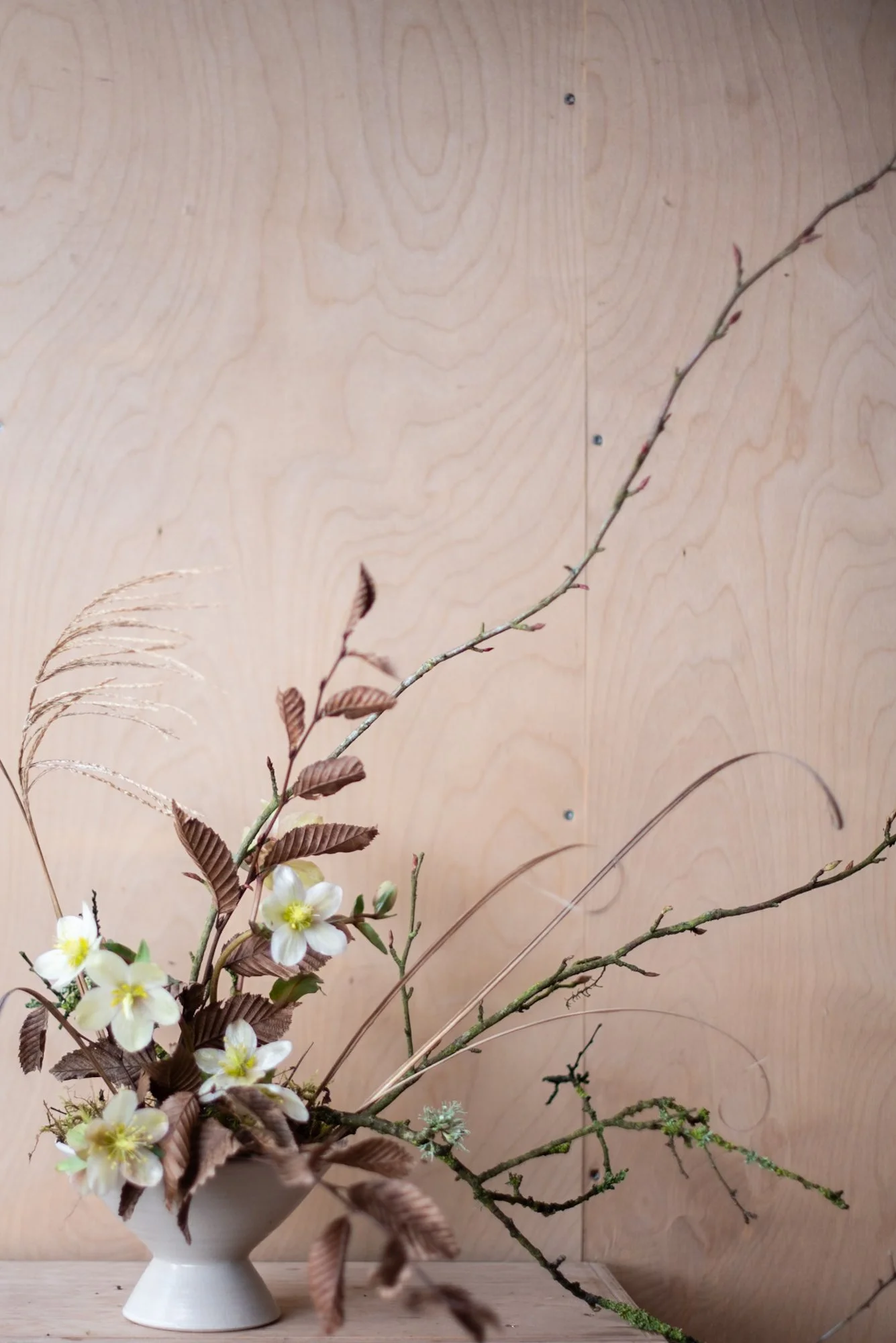
This arranging session for Flowers on Film was experimental, rather than intended to produce a specific outcome. I wanted to explore how minor amendments would impact the form and energy of the composition. The accompanying photographs here show the final iteration - v. 3 - but in truth most arrangements are a series of actions, layers of editing, and they have multiple interpretations.
Multiple narratives, too, because arranging is also a time to dwell upon the past. If you love history, myth and legend, every botanical material is an invitation to marvel at these extraordinary plants, their long parallel existence with the human race and their origins, uses and symbolism, whether factual or imagined.
I began with a forked, lichen-wrapped branch for structural integrity. Blackthorn - in Celtic folklore a ‘faery tree’ and liminal boundary to the otherworld.
Hornbeam, from which the Romans built their chariots. A tall tree of ancient woodlands whose seeds are a favourite of the Hawfinch, the largest finch and one of the rarest of Britain’s woodland birds.
Flowering currant. Sanguineum the Latin for ‘blood red’ though the buds are a dusky terracotta and this variety has creamy-white flowers when it blooms in early spring. First introduced to us Brits by an adventurous Scot in 1826 who sent the seeds were sent back from Fort Vancouver on the north bank of the Columbia river in Oregon - they flowering in 1828.
Hellebore, nicknamed the ‘Christmas rose’, for the bloom that sprung from the tears of a poor shepherdess travelling to pay homage to the newborn Christ in Bethlehem, and lamenting her lack of a gift and ‘Lenten rose’, since they continue to flower through the forty days of Lent to holy week. I rather like the common name of ‘oracle rose’ originating from the tradition of putting twelve hellebore flower buds in a glass of water, each representing one month of the following year, the idea being that if a bud opens to a flower by Christmas Eve, the weather is predicted to be good for that particular month, whereas if it remains closed, you can expect poor conditions!
My final ingredient: Miscanthus, the fountainous ‘silver grass’, here serving as a gestural flower. Referred to as ‘susuki’ in Japan, where it is native to, and celebrated as far back as the 8th-century, appearing in the Man’yōshū (‘Collection of Ten Thousand Leaves’) - the oldest and most revered anthology of Japanese poetry compiled around AD 759.
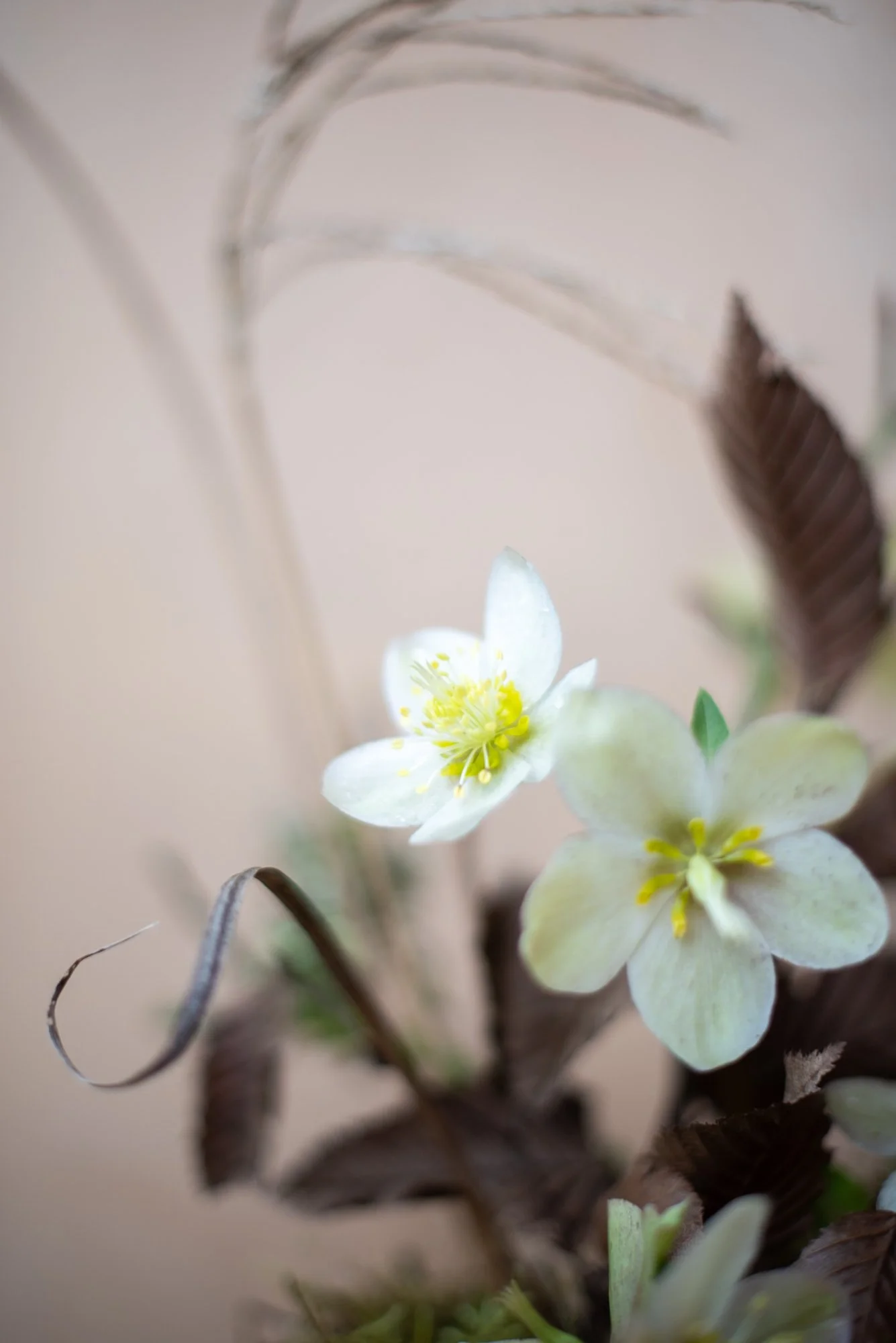
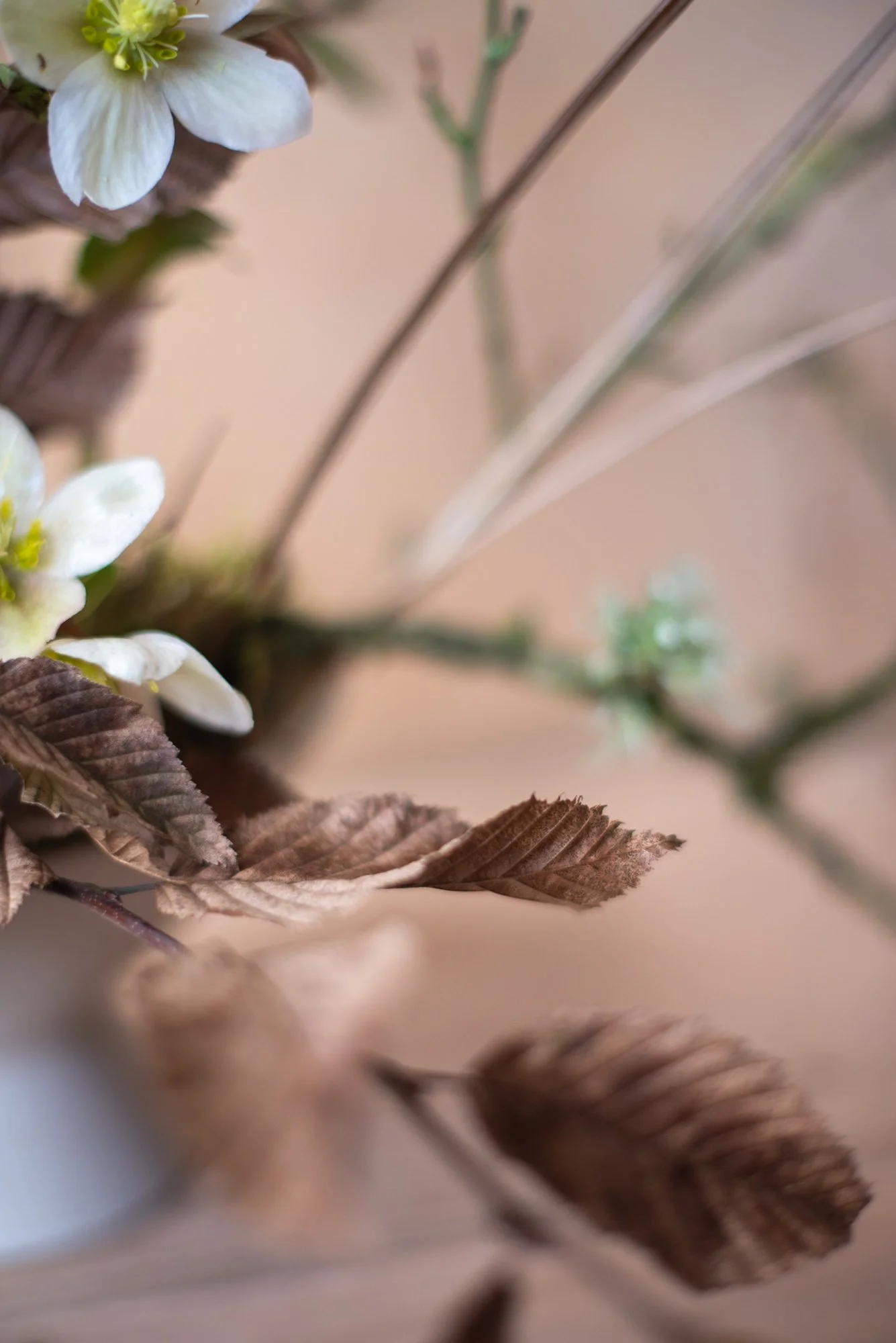
Flower arranging has been practiced for thousands of years; the first record dating back to 2,800 BC when the ancient Egyptians arranged flowers in vases to honour their deities. Through the cornucopias of the ancient Greeks, the evolution of Ikebana in Japan, the shadowed churches of the Middle Ages, through the still-life paintings of Renaissance Europe and the strict floral etiquette of the Victorian age, flower arrangement has been used as a means of celebrating the beauty of the natural world, exploring and documenting our place within it. It has been a means of honouring the divine, a means of creative expression and even meditation. Whether we are perceiving its two-dimensional form via the medium of photography or film, or experiencing it in real time, every arrangement is a conduit to stories of plants, places and people. So, here’s to another year of discovery and learning. And in the meantime here’s to hellebores!